

From Publishers Weekly
Bloch, famed creator of Psycho , treats us to a whirlwind, goodhumored survey of his long and impressive career. He chronicles his beginnings as a writer for horror and science fiction pulp magazines ( Weird Tales , Unknown Worlds , etc.), his early dabblings in radio and TV scripts, the appearance of Psycho and his subsequent adventures in Hollywood and his return to novels with Psycho II . Bloch entertains with accounts of his forays into politics in Milwaukee, Wis., and his tongue-in-cheek footnotes spice the text with humor, but his faux-naif puns (on statutory rape: "Why anyone would want to rape a statue I'll never know") wear thin. Bloch has been friend or acquaintance to generations of horror and suspense writers, and fans will enjoy his tales of science fiction conventions. But in this view of his life, Bloch substitutes glibness and easy wit for depth, falling back on name-dropping and anecdote when he might have offered his readers a glimpse of his emotional landscape at such times as the breakup of his first marriage or during his struggle as an impoverished writer for many years. Photos.
Copyright 1993 Reed Business Information, Inc.--This text refers to an out of print or unavailable edition of this title.
From Kirkus Reviews
The irrepressible Bloch (Psycho, and gobbets of brethren) kicks off his bouncy autobiography by calling it ``unauthorized,'' as if it appeared from apparitional fingers without his permission. Don't believe it: This show more is pure Bloch--and much better than his recent excelsior-packed novel, Psycho House (1990). Bloch sets out with gusto and never falls into doldrums, which suggests that even at age 77, if given a strong subject, he can summon the same youthful zest that flowed in Weird Stories and Amazing Stories back in the mid-30's, when he first published at age 18. Phony footnotes abound, including: ``This is not a footnote'' and ``Why anyone would want to be known as the author of Psycho is beyond me. For some time I've attempted to persuade the editors of Who's Who to amend my listing as follows: `Robert Bloch is the author of The Iliad, The Odyssey, Romeo and Juliet, and The Complete Works of Isaac Asimov.' '' Bloch, we learn, is a midwesterner of German Jewish parentage who first worked as a pulp writer (his mock-Runyonesque character Lefty Feep, he intimates, introduced a slangy new daffiness to sf and fantasy), then as a greatly admired pulp writer with a fan club, then as an aspiring hack for Milwaukee politicians (he actually got a mayor elected), then as a radio-drama writer. His winning a Hugo for his story ``That Hellbound Train'' and the filming, in midlife, of Psycho boosted his career ever upward. Throughout the memoir, anecdotes abound concerning great writing friends (Arthur C. Clarke; August Derleth; H.P. Lovecraft, whose correspondence with the youthful Bloch set Bloch on his writing career) and actor folk (from Karloff to Joan Crawford): Alfred Hitchcock, Bloch tells us, forever said that Bloch was responsible for everything in the film version of Psycho, including the last famous line, ``I wouldn't hurt a fly.'' Brilliant, loopy, Blochian, and a towering example of modest self-deprecation and lampoonery on a Lilliputian scale. Seriously. -- Copyright ©1993, Kirkus Associates, LP. All rights reserved.--This text refers to an out of print or unavailable edition of this title. show less
Bloch, famed creator of Psycho , treats us to a whirlwind, goodhumored survey of his long and impressive career. He chronicles his beginnings as a writer for horror and science fiction pulp magazines ( Weird Tales , Unknown Worlds , etc.), his early dabblings in radio and TV scripts, the appearance of Psycho and his subsequent adventures in Hollywood and his return to novels with Psycho II . Bloch entertains with accounts of his forays into politics in Milwaukee, Wis., and his tongue-in-cheek footnotes spice the text with humor, but his faux-naif puns (on statutory rape: "Why anyone would want to rape a statue I'll never know") wear thin. Bloch has been friend or acquaintance to generations of horror and suspense writers, and fans will enjoy his tales of science fiction conventions. But in this view of his life, Bloch substitutes glibness and easy wit for depth, falling back on name-dropping and anecdote when he might have offered his readers a glimpse of his emotional landscape at such times as the breakup of his first marriage or during his struggle as an impoverished writer for many years. Photos.
Copyright 1993 Reed Business Information, Inc.--This text refers to an out of print or unavailable edition of this title.
From Kirkus Reviews
The irrepressible Bloch (Psycho, and gobbets of brethren) kicks off his bouncy autobiography by calling it ``unauthorized,'' as if it appeared from apparitional fingers without his permission. Don't believe it: This show more is pure Bloch--and much better than his recent excelsior-packed novel, Psycho House (1990). Bloch sets out with gusto and never falls into doldrums, which suggests that even at age 77, if given a strong subject, he can summon the same youthful zest that flowed in Weird Stories and Amazing Stories back in the mid-30's, when he first published at age 18. Phony footnotes abound, including: ``This is not a footnote'' and ``Why anyone would want to be known as the author of Psycho is beyond me. For some time I've attempted to persuade the editors of Who's Who to amend my listing as follows: `Robert Bloch is the author of The Iliad, The Odyssey, Romeo and Juliet, and The Complete Works of Isaac Asimov.' '' Bloch, we learn, is a midwesterner of German Jewish parentage who first worked as a pulp writer (his mock-Runyonesque character Lefty Feep, he intimates, introduced a slangy new daffiness to sf and fantasy), then as a greatly admired pulp writer with a fan club, then as an aspiring hack for Milwaukee politicians (he actually got a mayor elected), then as a radio-drama writer. His winning a Hugo for his story ``That Hellbound Train'' and the filming, in midlife, of Psycho boosted his career ever upward. Throughout the memoir, anecdotes abound concerning great writing friends (Arthur C. Clarke; August Derleth; H.P. Lovecraft, whose correspondence with the youthful Bloch set Bloch on his writing career) and actor folk (from Karloff to Joan Crawford): Alfred Hitchcock, Bloch tells us, forever said that Bloch was responsible for everything in the film version of Psycho, including the last famous line, ``I wouldn't hurt a fly.'' Brilliant, loopy, Blochian, and a towering example of modest self-deprecation and lampoonery on a Lilliputian scale. Seriously. -- Copyright ©1993, Kirkus Associates, LP. All rights reserved.--This text refers to an out of print or unavailable edition of this title. show less
Amazon.com
Counterfactuals--what-if scenarios--fueled countless bull sessions in smoke-filled dorm rooms in the 1960s. What if Sitting Bull had had a machine gun at Little Big Horn? What if Attila the Hun had had a time machine? What if Columbus had landed in India after all? Some of those dorm-room speculators grew up to be historians, and their generation (along with a few younger and older scholars) makes a strong showing in this anthology of essays, in which the what-ifs are substantially more plausible. What if Hitler had not attacked Russia when he did? He might have moved into the Middle East and secured the oil supplies the Third Reich so badly needed, helping it retain its power in Europe. What if D-Day had been a failure? The Soviet Union might have controlled all of Europe. What if Sennacherib had pressed the siege of Jerusalem in 701 B.C.? Then the nascent, monotheistic Jewish religion might never have taken hold among the people of Judah--and the daughter religions of Christianity and Islam would never have been born.
So suggest some of the many first-rate contributors to this collection, which grew from a special issue of MHQ: The Quarterly Journal of Military History. One of them is classicist Josiah Ober, who suggests that if Alexander the Great had died at the age of 21 instead of 32, Greece would have been swallowed up by Persia and Rome, and the modern Western world would have a much different sensibility--and probably little idea of democratic show more government. Still other contributors are Stephen E. Ambrose, Caleb Carr, John Keegan, David McCullough, and James McPherson, who examine a range of scenarios populated by dozens of historical figures, including Sir Walter Raleigh, Chiang Kai-shek, Robert E. Lee, Benito Mussolini, and Themistocles. The result is a fascinating exercise in historical speculation, one that emphasizes the importance of accident and of roads not taken in the evolution of human societies across time. --Gregory McNamee--This text refers to the Hardcover edition. show less
Counterfactuals--what-if scenarios--fueled countless bull sessions in smoke-filled dorm rooms in the 1960s. What if Sitting Bull had had a machine gun at Little Big Horn? What if Attila the Hun had had a time machine? What if Columbus had landed in India after all? Some of those dorm-room speculators grew up to be historians, and their generation (along with a few younger and older scholars) makes a strong showing in this anthology of essays, in which the what-ifs are substantially more plausible. What if Hitler had not attacked Russia when he did? He might have moved into the Middle East and secured the oil supplies the Third Reich so badly needed, helping it retain its power in Europe. What if D-Day had been a failure? The Soviet Union might have controlled all of Europe. What if Sennacherib had pressed the siege of Jerusalem in 701 B.C.? Then the nascent, monotheistic Jewish religion might never have taken hold among the people of Judah--and the daughter religions of Christianity and Islam would never have been born.
So suggest some of the many first-rate contributors to this collection, which grew from a special issue of MHQ: The Quarterly Journal of Military History. One of them is classicist Josiah Ober, who suggests that if Alexander the Great had died at the age of 21 instead of 32, Greece would have been swallowed up by Persia and Rome, and the modern Western world would have a much different sensibility--and probably little idea of democratic show more government. Still other contributors are Stephen E. Ambrose, Caleb Carr, John Keegan, David McCullough, and James McPherson, who examine a range of scenarios populated by dozens of historical figures, including Sir Walter Raleigh, Chiang Kai-shek, Robert E. Lee, Benito Mussolini, and Themistocles. The result is a fascinating exercise in historical speculation, one that emphasizes the importance of accident and of roads not taken in the evolution of human societies across time. --Gregory McNamee--This text refers to the Hardcover edition. show less
From Publishers Weekly
As she did in her previous anthology, I Shudder at Your Touch , Slung assembles stories that come together at the nexus of sex and horror. She has selected works from a diverse group of authors who use different means to portray the nightmarish side of such ordinary human emotions as jealousy, envy and unrequited love. Three of the best tales have never before been published. "Aphra," by Nancy Collins, wittily follows the evolution of the narrator's boyhood fascination with X-Ray Specs into a spooky adult fetish. David Kuehls's morbidly humorous "The First Time" depicts an aging bachelor of the not-far-distant future who finds unwelcome his co-workers' gift of an android to re-enact his first sexual experience. In the sober, affecting "On the Lake of Last Wishes," Claudia O'Keefe writes of a young woman with AIDS who finds sexual fulfillment only in the dream world at the edge of death. Rarely seen classics by Robert Aickman, Arthur Conan Doyle and T.H. White, blend with entries from such modern masters as Harlan Ellison and Ray Bradbury to give this collection a freewheeling variety that highlights the entertainment value of its volatile themes.
Copyright 1993 Reed Business Information, Inc.--This text refers to an out of print or unavailable edition of this title.
From Booklist
This anthology is a follow-up to Slung's previous effort, I Shudder at Your Touch (1991). Both books offer a kinder, gentler version of psycho-sexual horror than the show more graphically described intercourse-with-an-exit-wound variety that pervades the market. The tales, featuring a host of familiar names, were originally published from the 1890s through the 1990s. In the former category is "The Parasite" (1894), in which Arthur Conan Doyle examines the then-trendy subject of hypnotism, effectively extrapolating the ultimate result of being able to control another person's will. In the middle of the time span (1955) falls Charles Beaumont's classic story "The Crooked Man," which is set in a world where hetero- and homosexuality are inverted in terms of social acceptance. There's also a crisp yarn by Ray Bradbury, "Heavy Set," that's atypical of his usual style. Except for a clunker here and there, this is an interesting assembly of low-key, nongraphic horror tales with some sensual or sexual theme. Some will find the stories tasteful, others tame. Elliott Swanson--This text refers to an out of print or unavailable edition of this title. show less
As she did in her previous anthology, I Shudder at Your Touch , Slung assembles stories that come together at the nexus of sex and horror. She has selected works from a diverse group of authors who use different means to portray the nightmarish side of such ordinary human emotions as jealousy, envy and unrequited love. Three of the best tales have never before been published. "Aphra," by Nancy Collins, wittily follows the evolution of the narrator's boyhood fascination with X-Ray Specs into a spooky adult fetish. David Kuehls's morbidly humorous "The First Time" depicts an aging bachelor of the not-far-distant future who finds unwelcome his co-workers' gift of an android to re-enact his first sexual experience. In the sober, affecting "On the Lake of Last Wishes," Claudia O'Keefe writes of a young woman with AIDS who finds sexual fulfillment only in the dream world at the edge of death. Rarely seen classics by Robert Aickman, Arthur Conan Doyle and T.H. White, blend with entries from such modern masters as Harlan Ellison and Ray Bradbury to give this collection a freewheeling variety that highlights the entertainment value of its volatile themes.
Copyright 1993 Reed Business Information, Inc.--This text refers to an out of print or unavailable edition of this title.
From Booklist
This anthology is a follow-up to Slung's previous effort, I Shudder at Your Touch (1991). Both books offer a kinder, gentler version of psycho-sexual horror than the show more graphically described intercourse-with-an-exit-wound variety that pervades the market. The tales, featuring a host of familiar names, were originally published from the 1890s through the 1990s. In the former category is "The Parasite" (1894), in which Arthur Conan Doyle examines the then-trendy subject of hypnotism, effectively extrapolating the ultimate result of being able to control another person's will. In the middle of the time span (1955) falls Charles Beaumont's classic story "The Crooked Man," which is set in a world where hetero- and homosexuality are inverted in terms of social acceptance. There's also a crisp yarn by Ray Bradbury, "Heavy Set," that's atypical of his usual style. Except for a clunker here and there, this is an interesting assembly of low-key, nongraphic horror tales with some sensual or sexual theme. Some will find the stories tasteful, others tame. Elliott Swanson--This text refers to an out of print or unavailable edition of this title. show less

Amazon.com
Price invokes Susan Sontag on camp, and Jacques Derrida on writing, to support his incisive view of what works and what doesn't work in contemporary Lovecraftian fiction.
The basic idea of a Mythos tale . . . is an interior skeleton like a mammal's, a frame on which to grow . . . It forms the baseline against which the new variations may be measured. It is not a denial of flexibility; it is something to be flexible with.
Preface by Ramsey Campbell, fascinating introduction by Price, beautiful cover art by Gahan Wilson, and 26 tales by Campbell, Lumley, Sutton, Wagner, Tierney, Lupoff, Ligotti, Burleson, Rainey and others. No overlap with previous anthologies.
Price invokes Susan Sontag on camp, and Jacques Derrida on writing, to support his incisive view of what works and what doesn't work in contemporary Lovecraftian fiction.
The basic idea of a Mythos tale . . . is an interior skeleton like a mammal's, a frame on which to grow . . . It forms the baseline against which the new variations may be measured. It is not a denial of flexibility; it is something to be flexible with.
Preface by Ramsey Campbell, fascinating introduction by Price, beautiful cover art by Gahan Wilson, and 26 tales by Campbell, Lumley, Sutton, Wagner, Tierney, Lupoff, Ligotti, Burleson, Rainey and others. No overlap with previous anthologies.
This book consists of a series of letters exchanged by Howard Phillips Lovecraft and Willis Conover, a 12-year-old boy at the time, in 1936 and 1937. It gives us a surprisingly relaxed and informal view of Lovecraft. Included is one of Lovecraft's poems, Homecoming, which was later published in his "Fungi From Yuggoth", his ideas on how the short story must be written, and a general discusssion of topics that interested him. He syas bluntly here the the Necronomicon was a book that he made up, and he goes to a great deal of trouble to answer Conover's questions in an intelligent and mature manner (I wonder how many other writers would have shown as much consideration to a 12-year-old child?). Also, he discusses his economic situation, "Weird Tales" magazine, his love of the eighteenth century, his critical view of his own work, and various topics that other writers have talked to him about. included are several pictures as well as the letter that Lovecraft's aunt wrote to Conover upon his death of stomach cancer. A very intimate look at the father of modern horror literature.
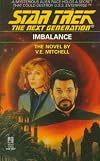
The Jarada are a mysterious race of insectoid being with an extreme devotion to protocol. When this usually reclusive race offer to open diplomatic relations with the Federation, Captain Picard and the U.S.S. Enterprise™ are quickly ordered to Jarada to negotiate the exchange of Ambassadors.
When the ship arrives, the Jarada seem uncharacteristically friendly. They invite Picard to send down members of his crew and negotiations proceed both quickly and smoothly. Suddenly, however, the Jarada change. They cut off Commander Riker and his away team from the U.S.S. Enterprise and initiate an unprovoked attack on the ship, Now Picard must unravel the aliens' mystery before it's too late for the away team -- and the U.S.S. Enterprise.
When the ship arrives, the Jarada seem uncharacteristically friendly. They invite Picard to send down members of his crew and negotiations proceed both quickly and smoothly. Suddenly, however, the Jarada change. They cut off Commander Riker and his away team from the U.S.S. Enterprise and initiate an unprovoked attack on the ship, Now Picard must unravel the aliens' mystery before it's too late for the away team -- and the U.S.S. Enterprise.
From Publishers Weekly
When the narcotics cartel hires renegade Cubans flying jet fighters to protect large shipments, enter the Hammerheads, a new paramilitary border security force. PW called this techno-thriller a "smooth blend of plot, action and gadgetry. . . a reader's delight from first page to last, a model of the genre."
Copyright 1991 Reed Business Information, Inc.--This text refers to the Mass Market Paperback edition
When the narcotics cartel hires renegade Cubans flying jet fighters to protect large shipments, enter the Hammerheads, a new paramilitary border security force. PW called this techno-thriller a "smooth blend of plot, action and gadgetry. . . a reader's delight from first page to last, a model of the genre."
Copyright 1991 Reed Business Information, Inc.--This text refers to the Mass Market Paperback edition
From AudioFile
In what should be subtitled, "Sex and the Sometimes Single Cyborg," the author tells the story of a female artificial person (Friday) and her adventures as a secret courier in the unidentified future. Edward Lewis has a robotic quality to his voice, which is great for science fiction as it gives the book a futuristic sound.Unfortunately, he reads too fast, doesn't emphasize key words and makes Friday sound like an interstellar airhead. Lewis gives her voice a schoolgirl breathiness which, when combined with Heinlein's misogynistic writing, severely undercuts Friday's authority. She seems preoccupied with sex, and Lewis never gives her voice irony, humor or worldliness. His other characterizations are varied and interesting, and although he reads too fast, Lewis's pacing keeps the story moving. R.I.G. (c)AudioFile, Portland, Maine --This text refers to the Audio Cassette edition.
Book Description
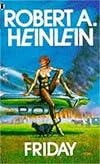
Engineered from the finest genes, and trained to be a secret courier in a future world, Friday operates over a near-future Earth, where chaos reigns. Working at Boss's whimsical behest she travels from far north to deep south, finding quick, expeditious solutions as one calamity after another threatens to explode in her face....--This text refers to the Paperback edition.
In what should be subtitled, "Sex and the Sometimes Single Cyborg," the author tells the story of a female artificial person (Friday) and her adventures as a secret courier in the unidentified future. Edward Lewis has a robotic quality to his voice, which is great for science fiction as it gives the book a futuristic sound.Unfortunately, he reads too fast, doesn't emphasize key words and makes Friday sound like an interstellar airhead. Lewis gives her voice a schoolgirl breathiness which, when combined with Heinlein's misogynistic writing, severely undercuts Friday's authority. She seems preoccupied with sex, and Lewis never gives her voice irony, humor or worldliness. His other characterizations are varied and interesting, and although he reads too fast, Lewis's pacing keeps the story moving. R.I.G. (c)AudioFile, Portland, Maine --This text refers to the Audio Cassette edition.
Book Description
Engineered from the finest genes, and trained to be a secret courier in a future world, Friday operates over a near-future Earth, where chaos reigns. Working at Boss's whimsical behest she travels from far north to deep south, finding quick, expeditious solutions as one calamity after another threatens to explode in her face....--This text refers to the Paperback edition.
From AudioFile
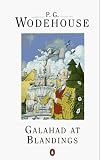
Lord Emsworth's prized pig, the Empress of Blandings, is at the center of Wodehouse's hilarious tale of mistaken identity, the triumph of young love, and general mayhem among the twits at Blandings Castle. Jeremy Sinden gives a wonderful performance, using a completely difference voice for each character through layers and layers of zany dialogue. Especially delightful is Sinden's depiction of the aunts, those fearsome, intrepid ladies encrusted with family jewels and names like Hermoine and Daphne. Although Wodehouse published the Blandings novels in the mid-sixties, his stories and characters are finding new fans in every generation. Productions of this quality will ensure continuing popularity. Oh, quite! B.V. (c)AudioFile, Portland, Maine
Lord Emsworth's prized pig, the Empress of Blandings, is at the center of Wodehouse's hilarious tale of mistaken identity, the triumph of young love, and general mayhem among the twits at Blandings Castle. Jeremy Sinden gives a wonderful performance, using a completely difference voice for each character through layers and layers of zany dialogue. Especially delightful is Sinden's depiction of the aunts, those fearsome, intrepid ladies encrusted with family jewels and names like Hermoine and Daphne. Although Wodehouse published the Blandings novels in the mid-sixties, his stories and characters are finding new fans in every generation. Productions of this quality will ensure continuing popularity. Oh, quite! B.V. (c)AudioFile, Portland, Maine
From Publishers Weekly
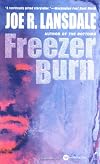
Professional loser Bill Roberts's mother has died, and if he buries her he'll lose her pension checks, which he's also afraid to cash. Out of money and food, he joins two idiot friends and concocts a robbery of a neighboring firecracker stand. They botch the job and flee into the swamps, where Bill escapes, his face so swollen with mosquito bites that John Frost, manager of a traveling carnival and freak show, takes him in. Frost is married to the gorgeous, blonde Gidget, a virtual sex-machine and the most desirable woman Bill has ever seen. Bill is soon immersed in a world of freaks, where he makes friends with Conrad the Wonder Dog and U.S. Grant, the bearded lady, and quickly becomes embroiled with Gidget in a Double Indemnity-style plot to kill Frost and take over the business. Lansdale outdoes himself in rendering sophomoric sexual fantasy and graphic, stomach-turning passages of lurid behavior. There's also an inordinate amount of concern with penile size, bouncing breasts and tiny jeans shorts. As protagonist, Bill is not as much a hero as victim of circumstance, a man who "everywhere he turned is socked by the mallet of stupidity." But at the story's climax, Lansdale reveals Bill to be a true sucker, and unfortunately, readers may not be sympathetic to or appreciative of his folly. The details of East Texas swamps and forests seem on target, although the humor often misfires with overloaded similes and strained attempts to be outrageous. show more Still, this a page-turner suitable for bus or beach and for anyone with a predilection for tacky raunchiness and a yen for what teenagers call "gross-outs." (Sept.) FYI: Lansdale is the winner of the British Fantasy Award, the American Horror Award and five Bram Stoker Awards from the Horror Writers of America. He has written or edited 31 books, including 16 novels.
Copyright 1999 Reed Business Information, Inc.--This text refers to the Hardcover edition.
From Library Journal
While not dumber than a fence post, Bill Roberts is not noticeably smarter either. When his mother dies abruptly, Bill douses her remains with cologne, swathes the whole in plastic bags, and hopes that he can continue to cash her social security checks. His next brainstorm involves recruiting two buddies to rob a fireworks stand. During the holdup and its aftermath, the storeowner is shot, one of the accomplices gets a Roman candle lodged in his brain, and the other is bitten to death by water moccasins. Bill ends up as part of a traveling freak show, where he gets acquainted with a pair of African American Siamese twins, the Dog Man, and the Ice Man, a shadowy presence and the show's star attraction. This menagerie is presided over by a benevolent beardless Santa Claus whose curvaceous wife uses her manifold charms to persuade Bill that they ought to murder her husband. The irrepressible Lansdale (Rumble Tumble) continues to amuse and astonish with his outrageous storytelling. Definitely not for the squeamish, but highly recommended for those who enjoy the worm in their mezcal.ABob Lunn, Kansas City P.L., MO
Copyright 1999 Reed Business Information, Inc.--This text refers to the Hardcover edition. show less
Professional loser Bill Roberts's mother has died, and if he buries her he'll lose her pension checks, which he's also afraid to cash. Out of money and food, he joins two idiot friends and concocts a robbery of a neighboring firecracker stand. They botch the job and flee into the swamps, where Bill escapes, his face so swollen with mosquito bites that John Frost, manager of a traveling carnival and freak show, takes him in. Frost is married to the gorgeous, blonde Gidget, a virtual sex-machine and the most desirable woman Bill has ever seen. Bill is soon immersed in a world of freaks, where he makes friends with Conrad the Wonder Dog and U.S. Grant, the bearded lady, and quickly becomes embroiled with Gidget in a Double Indemnity-style plot to kill Frost and take over the business. Lansdale outdoes himself in rendering sophomoric sexual fantasy and graphic, stomach-turning passages of lurid behavior. There's also an inordinate amount of concern with penile size, bouncing breasts and tiny jeans shorts. As protagonist, Bill is not as much a hero as victim of circumstance, a man who "everywhere he turned is socked by the mallet of stupidity." But at the story's climax, Lansdale reveals Bill to be a true sucker, and unfortunately, readers may not be sympathetic to or appreciative of his folly. The details of East Texas swamps and forests seem on target, although the humor often misfires with overloaded similes and strained attempts to be outrageous. show more Still, this a page-turner suitable for bus or beach and for anyone with a predilection for tacky raunchiness and a yen for what teenagers call "gross-outs." (Sept.) FYI: Lansdale is the winner of the British Fantasy Award, the American Horror Award and five Bram Stoker Awards from the Horror Writers of America. He has written or edited 31 books, including 16 novels.
Copyright 1999 Reed Business Information, Inc.--This text refers to the Hardcover edition.
From Library Journal
While not dumber than a fence post, Bill Roberts is not noticeably smarter either. When his mother dies abruptly, Bill douses her remains with cologne, swathes the whole in plastic bags, and hopes that he can continue to cash her social security checks. His next brainstorm involves recruiting two buddies to rob a fireworks stand. During the holdup and its aftermath, the storeowner is shot, one of the accomplices gets a Roman candle lodged in his brain, and the other is bitten to death by water moccasins. Bill ends up as part of a traveling freak show, where he gets acquainted with a pair of African American Siamese twins, the Dog Man, and the Ice Man, a shadowy presence and the show's star attraction. This menagerie is presided over by a benevolent beardless Santa Claus whose curvaceous wife uses her manifold charms to persuade Bill that they ought to murder her husband. The irrepressible Lansdale (Rumble Tumble) continues to amuse and astonish with his outrageous storytelling. Definitely not for the squeamish, but highly recommended for those who enjoy the worm in their mezcal.ABob Lunn, Kansas City P.L., MO
Copyright 1999 Reed Business Information, Inc.--This text refers to the Hardcover edition. show less
Amazon.com
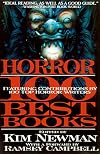
First published in 1988, Horror: The 100 Best Books has remained the only book of its kind: a solid (and entertaining) annotated reading list spanning the range of horror fiction from the 16th to the 20th century. The device of asking 100 horror, fantasy,and science fiction writers to write about their favorite horror books might seem at first to capture an idiosyncratic sample, but through diplomacy and diligence, editors Stephen Jones and Kim Newman succeeded in obtaining short essays on most (if not all) of the well-known classics, as well as many more lesser-knowns that are well worth discovering. Readers who follow up on these recommendations will find tips about books by writers mostly known for other genres--such as Iain Banks, Robert Holdstock, Lisa Tuttle, and David Morrell.
Also valuable are write-ups on literary works not always acknowledged as horror, such as Kingsley Amis's The Green Man, Jerzy Kosinski's The Painted Bird, and John Gardner's Grendel. And the write-ups offer a fascinating peek into the minds of the contributors, who include just about all the top horror writers of the'60s-'80s. This 10th anniversary edition makes no changes in the list of 100 books, but updates the entries and includes a 9-page reading list of titles from 458 B.C. to 1997. --Fiona Webster
From Independent Publisher
The continuing growth in popularity of speculative fiction (an all-encompassing term for horror, fantasy, and science fiction) has resulted in a recent spate show more of suggested reading lists. Strangely enough, these two collections, while possessing corresponding publishers, titles, and concepts, utilize vastly different approaches to compile their "best of' lists.Of the two, Jones' and Newman's entry is more interesting, as they have imbued their book with a bit of novelty by garnering the opinions of 100 authors, editors, and others in the genre. Each contributor offers a personal essay on why they made their selection. Contributors include the field's current bestselling authors (such as Stephen King, Clive Barker, and Robert McCammon) as well as deceased luminaries (such as Edgar Allen Poe, Robert Howard, and H.P. Lovecaft). Chronologically, the selections range from The Tragical History of Dr. Faustus (Christopher Marlowe, 1592) to Dark Feasts (Ramsey Campbell, 1987). By soliciting the opinions of so many varied voices, Jones and Newman avoid overloading the list with personal bias, and they achieve an eclectic touch that makes the choices extremely interesting. Acknowledging the potential quirky nature of such a selection process, a further recommended reading list is appended, giving the reader enough material to keep him or her busy into the next century. Taking a somewhat converse approach, Cawthorn and Moorcock simply list their personal selections for the 100 best books in the field of fantasy. While the editors' credentials are clearly topnotch, the uniform viewpoint doesn't measure up the variety offered in Jones' and Newman's collection. To their credit, the picks of Cawthorn and Moorcock are wide-ranging, spanning from Gulliver's Travels (Jonathan Swift, 1726) to Expecting Sonteone Taller (Tom Holt~ 1987) chronologically, and encompassing commensurate ground thematically. Indicative of the narrow, sometimes imperceptible boundary between definitions of fantasy and horror is the fact that fourteen works have achieved mention in both of these lists. Regardless of the dissimilar methods used in compiling these two listings, there's no question that both offer plenty of interesting and provocative suggestions for future reading.--This text refers to an out of print or unavailable edition of this title. show less
First published in 1988, Horror: The 100 Best Books has remained the only book of its kind: a solid (and entertaining) annotated reading list spanning the range of horror fiction from the 16th to the 20th century. The device of asking 100 horror, fantasy,and science fiction writers to write about their favorite horror books might seem at first to capture an idiosyncratic sample, but through diplomacy and diligence, editors Stephen Jones and Kim Newman succeeded in obtaining short essays on most (if not all) of the well-known classics, as well as many more lesser-knowns that are well worth discovering. Readers who follow up on these recommendations will find tips about books by writers mostly known for other genres--such as Iain Banks, Robert Holdstock, Lisa Tuttle, and David Morrell.
Also valuable are write-ups on literary works not always acknowledged as horror, such as Kingsley Amis's The Green Man, Jerzy Kosinski's The Painted Bird, and John Gardner's Grendel. And the write-ups offer a fascinating peek into the minds of the contributors, who include just about all the top horror writers of the'60s-'80s. This 10th anniversary edition makes no changes in the list of 100 books, but updates the entries and includes a 9-page reading list of titles from 458 B.C. to 1997. --Fiona Webster
From Independent Publisher
The continuing growth in popularity of speculative fiction (an all-encompassing term for horror, fantasy, and science fiction) has resulted in a recent spate show more of suggested reading lists. Strangely enough, these two collections, while possessing corresponding publishers, titles, and concepts, utilize vastly different approaches to compile their "best of' lists.Of the two, Jones' and Newman's entry is more interesting, as they have imbued their book with a bit of novelty by garnering the opinions of 100 authors, editors, and others in the genre. Each contributor offers a personal essay on why they made their selection. Contributors include the field's current bestselling authors (such as Stephen King, Clive Barker, and Robert McCammon) as well as deceased luminaries (such as Edgar Allen Poe, Robert Howard, and H.P. Lovecaft). Chronologically, the selections range from The Tragical History of Dr. Faustus (Christopher Marlowe, 1592) to Dark Feasts (Ramsey Campbell, 1987). By soliciting the opinions of so many varied voices, Jones and Newman avoid overloading the list with personal bias, and they achieve an eclectic touch that makes the choices extremely interesting. Acknowledging the potential quirky nature of such a selection process, a further recommended reading list is appended, giving the reader enough material to keep him or her busy into the next century. Taking a somewhat converse approach, Cawthorn and Moorcock simply list their personal selections for the 100 best books in the field of fantasy. While the editors' credentials are clearly topnotch, the uniform viewpoint doesn't measure up the variety offered in Jones' and Newman's collection. To their credit, the picks of Cawthorn and Moorcock are wide-ranging, spanning from Gulliver's Travels (Jonathan Swift, 1726) to Expecting Sonteone Taller (Tom Holt~ 1987) chronologically, and encompassing commensurate ground thematically. Indicative of the narrow, sometimes imperceptible boundary between definitions of fantasy and horror is the fact that fourteen works have achieved mention in both of these lists. Regardless of the dissimilar methods used in compiling these two listings, there's no question that both offer plenty of interesting and provocative suggestions for future reading.--This text refers to an out of print or unavailable edition of this title. show less

The first full scale biography of George Lucas. Sympathetic and unauthorized. Excellent peek at a man who together with Spielberg changed the way we view and market movies.

The definitive exploration of sex and horror in european cinema.

David J Schow was (and is) one of the best american horror writers. In 1988 he edited this anthology of stories centered around cinema in all it's forms and malforms. This book also became a sort of centrepiece for the, then young, literary form called splatterpunk. Many excellent stories in this one and a huge afterword.
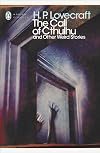
This collection includes some of the best short stories written by H.P. Lovecraft. The stories themselves have been recollated and proofed against the original sources and are the definitive texts. Good introduction to Lovecraft for novices.
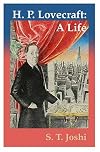
Excellent biography of "the man from Providence." This book sums up 25 years of Joshi's scholarship. It is funny,revealing and sympathetic. Lovecraft gets his Boswell with this one.
This is quite possibly the funniest book on armageddon ever. When two very funny authors cooperate and obvioulsy have fun - the result is extraordinary.
Complete collection of all Lovecrafts work. It includes quite a lot of uninspired poetry but all of his best work is here.