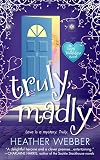
In the middle of the coldest winter my town had seen in over 30 years I received a very timely package, the ARC for this book. Though not a serious, important book by any means, it was perfect for lightening the winter dark a bit.
The romance was fun. The touch of magic even funner. The mystery part a bit pedestrian but enjoyable. The ending came abruptly and was the weakest part of the story.
A cute story, just right for a light-hearted afternoon's read.
The romance was fun. The touch of magic even funner. The mystery part a bit pedestrian but enjoyable. The ending came abruptly and was the weakest part of the story.
A cute story, just right for a light-hearted afternoon's read.
 This review was written for LibraryThing Early Reviewers.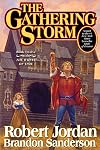
I have been waiting for this book for approximately four years. That's when the last book in this series came out. Then the author died and I gave up. Then a spectacular new author picked up the burden and delivered and oh boy did he deliver.
I have been waiting almost two weeks to write this as my local bookstore evidently thinks release dates are for sissies. Not that I am complaining. I read this 740 page novel in around six hours. It was that good. And more than just good, it was satisfying.
So often when you read books in a series, often in this series, you get to the end of the novel and there is no real conclusion. There might be some sort of ending, but no conclusion. It makes me want to throw the book and send nasty letters to the author for stringing me along. It also doesn't help that I am a sucker and get drawn in this way on a regular basis. (On a side note, this is one reason I like Brandon Sanderson so much. He writes stand alone novels, which is getting to be a lost art in sci-fi/fantasy.)
This book ended so well that even though there are two more books to come, I was content to just be at the place the story ended. Until next October anyway.
I have been waiting almost two weeks to write this as my local bookstore evidently thinks release dates are for sissies. Not that I am complaining. I read this 740 page novel in around six hours. It was that good. And more than just good, it was satisfying.
So often when you read books in a series, often in this series, you get to the end of the novel and there is no real conclusion. There might be some sort of ending, but no conclusion. It makes me want to throw the book and send nasty letters to the author for stringing me along. It also doesn't help that I am a sucker and get drawn in this way on a regular basis. (On a side note, this is one reason I like Brandon Sanderson so much. He writes stand alone novels, which is getting to be a lost art in sci-fi/fantasy.)
This book ended so well that even though there are two more books to come, I was content to just be at the place the story ended. Until next October anyway.
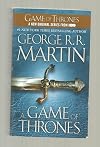
As far as epic fantasies go, this one is fair to middling. There are others much more compelling, even at the same length. I got tired of having to keep track of who was what, and the battle scenes were too drawn out for my taste. I don't need to know about every charge and swing of the sword.
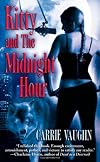
Meh. It was OK, but not great, a wonderful example of what happens when a genre gets really popular and many things are published just because they are perfectly moderate examples of what is currently "hot." I wonder what will come after the urban fantasy craze? I blame you Stephanie Meyers.
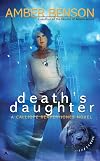
I read this one just for the name of the main character: Calliope Reaper-Jones. That must be one of the best names I've seen in a while. The rest of the novel was only so-so. The ending wasn't a surprise, a serious flaw in a whodunit, even a fantasy one, and the heroine seemed purposefully dense, which is annoying.
Why We Make Mistakes: How We Look Without Seeing, Forget Things in Seconds, and Are All Pretty Sure We Are Way Above Average by Joseph T. Hallinan
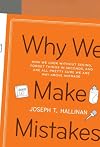
This was the most comforting book I have read in a long while. It explains that our brains are wired in a certain way and so are the mistakes we all make. For example, names are hard to remember because they have very little meaning, other than as random syllables that indicate a certain person. We can remember their job or their family status or their connection to us much more easily because that has more content we can remember.
The book was full of that type of explanation for mistakes we all make. It suggests that instead of trying to change the way people are, we make adjustments for it to prevent errors; things like checklists and written reminders.
The book was full of that type of explanation for mistakes we all make. It suggests that instead of trying to change the way people are, we make adjustments for it to prevent errors; things like checklists and written reminders.
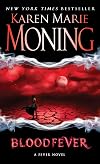
These books are too easy to read. When it takes only a couple of hours to finish it is too easy to read a couple of them in not very long. I still like the idea of this series but the sexual tension thing, which seems to have become mandatory, is getting on my nerves. It is irritating and makes the strong, independent heroine lose a lot of the respect I might have had for her.
This book is another urban fantasy, very similar to the Dresden Files. The twist in this one is the protagonist is a happy-go-lucky young woman who has no desire for powers, detests wearing black and is as completely pink and rainbows as you could imagine. Putting her in a dark fantasy world causes some interesting conflicts.
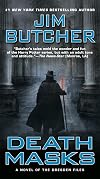
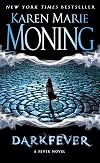
Another Dresden Files book, but I must admit, as much as I like these books, when the Shroud of Turin showed up I almost quit. The only reason I kept going was because the silliness of it was not lost to the characters involved. If he had written it 100% straight it would have been too corny and I would have had to stop. As it was, not too bad, followed up the previous one quite nicely. I like the ideas of extended consequences that Butcher is working with in this series. That some things have more repercussions that just the next book.
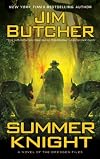
This series is like M&Ms. You start reading and think, just a little more. I like the noir-ish voice of the main character, along with the sense of the ridiculous that makes the horror aspects of the novel not so dark that I won't read it. The continuing thread of the series is beginning to get deeper and more interesting as the main character becomes more important to the "unreal" world and discovers more about himself.
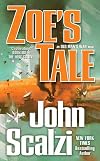
This was a book that reminded me of the teenager I think I was. After twenty years I realize my memories are a bit subjective, but the narrator of this book felt much more real than most and much more appealing that others I have tried to read (4 book series beginning with T.) The plot is a standard science fiction one but the honesty of s an almost child telling the story was compelling and wonderful.

I didn't like this one as well as the others. It was slower and not nearly as funny. Perhaps when I have teenagers it will be funnier.
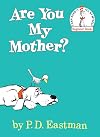
My first Heinlein and I still feel sentimental about it. Rather uneven, but has some great bits, especially about pioneering a new planet.

Sort of silly, but in that great Heinlein way. One of my favorites when I was a teenager.
one of my least favorite Pratchett books. More heavy-handed than usual.
The series is well written, with really good battle scenes. It reminds me a little bit of David Weber. You get the feeling that the author knows what he is talking about, at least as much as someone living today can. It has a concrete magic system, with definite rules and restrictions and characters I enjoy reading about. It feels real, as much as a fantasy book can.
This is a sequel to The Apprentice Wizard which I liked. This one was good too, but in an odd way. I was in the mood for a light book, which this was, sort of. The style and dialogue and even the plot tends to be light, but the reactions of the characters is not. It is like watching James Bond and then having all the spies agonize over the killing. It throws you out of the story and makes you see that all the violence is bad and a normal person couldn't jump into being a spy without some deep soul searching and regrets. It was handled well, not over the top and preachy, nor tear laden and melodramatic, just sincere.
So here we have a light spy/fantasy book with some deep morality issues. I can't decide if I liked the book because of this, or in spite of it.
I like the setting as well. Fantasy books have really started to branch out in the last few years, no more strictly medieval castles. This one is set in a sort of Edwardian period, lots of rules yet an awareness that maybe the rules should be changed. This time was the real era of suffragettes and progressive government as well as lots of new scientific discoveries. Mills got the feel of the era down well, and then put magic in.
I am interested in where the series is going and what she will do with the characters now she has them all working together.
So here we have a light spy/fantasy book with some deep morality issues. I can't decide if I liked the book because of this, or in spite of it.
I like the setting as well. Fantasy books have really started to branch out in the last few years, no more strictly medieval castles. This one is set in a sort of Edwardian period, lots of rules yet an awareness that maybe the rules should be changed. This time was the real era of suffragettes and progressive government as well as lots of new scientific discoveries. Mills got the feel of the era down well, and then put magic in.
I am interested in where the series is going and what she will do with the characters now she has them all working together.

Have you ever read a book in which you just didn't connect with all the characters, but still found the book entertaining? I enjoyed reading this book, it was a light mystery, very funny, which I was in the mood for. But I just couldn't feel like I was reading about a real person. Perhaps there are people like the main characters, but her voice felt so different from my experience that it didn't seem realistic to me.
The main character, the first person narrative voice, is a 28-yr old woman who lives with her parents and has worked for them in their PI business since she was 12. Because she doesn't feel she can get away from her parents she does all sorts of destructive things instead. As a teenager she was every kind of trouble and as an adult she doesn't pass out on the lawn anymore, but she still acts like she is 13 in a lot of ways.
It is funny, as long as I just read the book, and didn't think about her much, it was an enjoyable read. But now as I sit here and think about the family and how they worked together it is sad. Rather than get out and work out whether she wants to be a part of the family business, the main character sneaks out of windows and lies. There are more books in this series and I don't think I could stand to read them unless she starts to grow up a bit.
The main character, the first person narrative voice, is a 28-yr old woman who lives with her parents and has worked for them in their PI business since she was 12. Because she doesn't feel she can get away from her parents she does all sorts of destructive things instead. As a teenager she was every kind of trouble and as an adult she doesn't pass out on the lawn anymore, but she still acts like she is 13 in a lot of ways.
It is funny, as long as I just read the book, and didn't think about her much, it was an enjoyable read. But now as I sit here and think about the family and how they worked together it is sad. Rather than get out and work out whether she wants to be a part of the family business, the main character sneaks out of windows and lies. There are more books in this series and I don't think I could stand to read them unless she starts to grow up a bit.
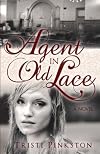
Reading this book was a life changing experience for me. Not hugely, like having a kid or getting married, more like discovering a new good restaurant or discovering a new type of music you like. I admit, I have said some not very nice things about LDS genre fiction in the past; cliche is probably one of the more moderate words I have used. I was nervously looking forward to getting the review copy of this book because if it lived up (down) to my expectations, what would I write?
But it didn't. In fact, I will say this is one of the best thrillers (-ish) that I have read in a long time, because it so wasn't cliched. Having the girl not meekly go along with the threatening gunman made me give a shout of joy just in the first few pages. I've never understood why someone would go along with their own removal to a more easily disposed of location.
The heroine felt like a real person, not just a stick figure to get into trouble and then rescued. She jumps out of a car and actually hurts herself. How's that for a departure from regular fiction?
The writing was crisp and fresh. Though that sounds like more of a description of salad than prose, it truly was light and easy to read. Without getting bogged down in horrific descriptions of the evilness of the bad guy (we can figure it out) or of ballistics, or meandering, long passionate monologues about the tormented romance.
Tristi Pinkston has single-handledly convinced me to try more LDS fiction. I might actually start shopping show more Deseret Book instead of B&N. I'm sure your fellow authors will thank you, I certainly do. show less
But it didn't. In fact, I will say this is one of the best thrillers (-ish) that I have read in a long time, because it so wasn't cliched. Having the girl not meekly go along with the threatening gunman made me give a shout of joy just in the first few pages. I've never understood why someone would go along with their own removal to a more easily disposed of location.
The heroine felt like a real person, not just a stick figure to get into trouble and then rescued. She jumps out of a car and actually hurts herself. How's that for a departure from regular fiction?
The writing was crisp and fresh. Though that sounds like more of a description of salad than prose, it truly was light and easy to read. Without getting bogged down in horrific descriptions of the evilness of the bad guy (we can figure it out) or of ballistics, or meandering, long passionate monologues about the tormented romance.
Tristi Pinkston has single-handledly convinced me to try more LDS fiction. I might actually start shopping show more Deseret Book instead of B&N. I'm sure your fellow authors will thank you, I certainly do. show less

The plot device of an innocent person in jail and the brave legal defendant comes to find the true villain has been used from Perry Mason and before. It is enough of a trope that when you see a book following this pattern, you assume that something new and different will happen, not the same old Perry Mason-esque plot. That is what I wanted from this book, a new twist on something very familiar.
The writer was working very hard to give the reader a good experience. There were some good lines, "He was the salt of the earth, yet you could tell he didn't have many spices to choose from." is one example that I chuckled at. But it felt too forced. Good descriptive writing feels effortless, this felt plodding and labored. Describing a person's clothing in detail is fine if it is important to set the tone and for a plot point, which it was the first time. The second and third and more it felt more like a box to be checked off. OK, they get up, I describe in detail the clothes they put on, they go about their day.
That was one thing that bothered me, but I finally had to quit writing when I realized that I didn't care about the characters, and I felt that they didn't either. The situation is a woman accused of witchcraft and a magistrate sent with his young clerk to try her case. Because of a convoluted plot sequence the young man ends up in jail next to the witch. The magistrate is supposed to be worried for the young man because of his proximity to evil. Perhaps he will be show more tempted and effected by her presence. That is a legitimate concern for 17th century minds. But the dialogue and internal monologue that went with this was so unconvincing I had to quit. If an author is going to write a book about people of faith, he should be able to convincingly portray them.
It was the reading equivalent of watching a Jr high production of The Crucible. I was going to just read the end to see if the ending was how I guessed it would be. When I came back to the book the next day I realized didn't even care enough to do that. Watch an episode of Perry Mason instead. show less
The writer was working very hard to give the reader a good experience. There were some good lines, "He was the salt of the earth, yet you could tell he didn't have many spices to choose from." is one example that I chuckled at. But it felt too forced. Good descriptive writing feels effortless, this felt plodding and labored. Describing a person's clothing in detail is fine if it is important to set the tone and for a plot point, which it was the first time. The second and third and more it felt more like a box to be checked off. OK, they get up, I describe in detail the clothes they put on, they go about their day.
That was one thing that bothered me, but I finally had to quit writing when I realized that I didn't care about the characters, and I felt that they didn't either. The situation is a woman accused of witchcraft and a magistrate sent with his young clerk to try her case. Because of a convoluted plot sequence the young man ends up in jail next to the witch. The magistrate is supposed to be worried for the young man because of his proximity to evil. Perhaps he will be show more tempted and effected by her presence. That is a legitimate concern for 17th century minds. But the dialogue and internal monologue that went with this was so unconvincing I had to quit. If an author is going to write a book about people of faith, he should be able to convincingly portray them.
It was the reading equivalent of watching a Jr high production of The Crucible. I was going to just read the end to see if the ending was how I guessed it would be. When I came back to the book the next day I realized didn't even care enough to do that. Watch an episode of Perry Mason instead. show less
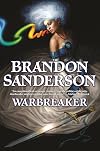
Some people have questioned why I like sci-fi and fantasy so much. Reading Warbreaker made me realize that this book is the epitome of all that I love about the speculative genres.
To begin with, there is an incredible amount of stuff going on. I have always had an inability to be content with only a portion of my brain engaged. I read while I listen to music. I used to do homework with music on ( it used to bug roommates and siblings alike). I sew or crochet or fold laundry while I watch movies. Unless the experience is completely immersive, like in the theater, I need something else to do. I also tend to bite my nails when I read so I've recently tried crocheting while reading, with mixed results.
The best books, the ones I can read and do nothing else; the ones that I read and really do nothing else and my house suffers, have so many different things to think about that various parts of my brain can all be kept busy, even while reading the same book. Fantasy and Science Fiction does this best. There is a new world to explore, new people to meet, a new magic system to learn about and (in the best ones) a great plot to follow.
Most great literary novels are great because of the characterisations. I have read many of them and though Jane Austen is nice, her plots fit in a teacup (nicely enameled with a gold rim). Mystery novels are supposed to be plot driven, but lately they have fallen into a more character driven style, unfortunately leaving behind the twists and turns of show more the classic puzzle detective story. I am a plot junkie. I want to find out what happens. It seems that the last truly plot based fiction genres are science fiction and fantasy.
That is not to say that I don't like a good character study. A plot is not interesting if you don't care if the people live or die or explosively decompress out the airlock. When you like the people you are reading about the plot takes on an extra urgency. The kind that makes you stay up until 3 am and count it worth it for a restful sleep. You think about the people later and talk about them as if they are real. If all human experience is ultimately what happens in our minds, perhaps they are as real to me as the people I only read about in cyberspace.
The best fiction has all of these elements, blended together in a nice package that you can get for only 27.95 at the nearest bookseller. Which brings me back to the pretty picture at the head of the post: Warbreaker has all of these things, blended together in a style that I am beginning to see as uniquely Brandon Sanderson's and no one else's. Not only did it have a plot that twisted and wound enough for any three mystery novels, it had an ending that had me pausing in amazement for hours after I finished it. Oscar Wilde's dialogue with the action of the Bourne Identity.
I read this book in one day. 592 pages. It is good that Sanderson only puts out a few books a year. I am still amazed by the complexity, intelligence, ending and general awesomeness (I don't use that word lightly) of this book. Warbreaker is why I love fantasy and science fiction. show less
To begin with, there is an incredible amount of stuff going on. I have always had an inability to be content with only a portion of my brain engaged. I read while I listen to music. I used to do homework with music on ( it used to bug roommates and siblings alike). I sew or crochet or fold laundry while I watch movies. Unless the experience is completely immersive, like in the theater, I need something else to do. I also tend to bite my nails when I read so I've recently tried crocheting while reading, with mixed results.
The best books, the ones I can read and do nothing else; the ones that I read and really do nothing else and my house suffers, have so many different things to think about that various parts of my brain can all be kept busy, even while reading the same book. Fantasy and Science Fiction does this best. There is a new world to explore, new people to meet, a new magic system to learn about and (in the best ones) a great plot to follow.
Most great literary novels are great because of the characterisations. I have read many of them and though Jane Austen is nice, her plots fit in a teacup (nicely enameled with a gold rim). Mystery novels are supposed to be plot driven, but lately they have fallen into a more character driven style, unfortunately leaving behind the twists and turns of show more the classic puzzle detective story. I am a plot junkie. I want to find out what happens. It seems that the last truly plot based fiction genres are science fiction and fantasy.
That is not to say that I don't like a good character study. A plot is not interesting if you don't care if the people live or die or explosively decompress out the airlock. When you like the people you are reading about the plot takes on an extra urgency. The kind that makes you stay up until 3 am and count it worth it for a restful sleep. You think about the people later and talk about them as if they are real. If all human experience is ultimately what happens in our minds, perhaps they are as real to me as the people I only read about in cyberspace.
The best fiction has all of these elements, blended together in a nice package that you can get for only 27.95 at the nearest bookseller. Which brings me back to the pretty picture at the head of the post: Warbreaker has all of these things, blended together in a style that I am beginning to see as uniquely Brandon Sanderson's and no one else's. Not only did it have a plot that twisted and wound enough for any three mystery novels, it had an ending that had me pausing in amazement for hours after I finished it. Oscar Wilde's dialogue with the action of the Bourne Identity.
I read this book in one day. 592 pages. It is good that Sanderson only puts out a few books a year. I am still amazed by the complexity, intelligence, ending and general awesomeness (I don't use that word lightly) of this book. Warbreaker is why I love fantasy and science fiction. show less
Could easily be titled, random information you would never find in school history books in small two page summaries.
Random information in quick, easy to read while in the bathroom format.
Stiff by Mary Roach

This is the type of book I will almost always pick up if I have the chance, a funny book about an odd science topic. It was well-written, funny, in a dreadfully morbid way and I learned somethings. But it was not a good book to pick up and read through quickly. There was just too much of it. Dead bodies are fine for a chapter or two, but after half of the book I was done, though the writer wasn't.

I appreciated the tone of the book. Since depressed people don't need something else to feel guilty about, it was felt more like sharing than telling. As the authors told their stories, and how the knowledge of the atonement had helped them, it was a gentle invitation to do the same.
I liked the information shared and the way it was presented.
I liked the information shared and the way it was presented.
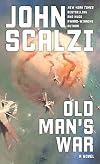
This was an excellent book. Anyone who enjoys military Sci-fi will like it. But to really enjoy it you have to have read another favorite of mine; Starship Troopers by Robert Heinlein. If you have seen the movie please try to not think about it while I am talking about the original. In fact, try to wipe it from your memory entirely and then read these two books to replace the void.
Starship Troopers is a coming of age novel. A young man joins the intergalactic army (can't remember the name) and we see how he matures and you get some cool tech stuff and fighting aliens. Bad description, but a good book, especially if you remember that it was written as YA and also don't mind a bit of politics with your novels.
Old Man's War tells the same story, but from the other end. The premise is that to join the intergalactic army you have to be 75. You will never some back but you promise to be a soldier for no less than 2 years, maximum of 10. This immediately throws the entire soldier novel tropes out the window because most of them deal with some sort of coming of age theme. What if the soldier thrust into new and difficult situations is an old man? Set in his ways, wiser and less apt to just accept everything he is told?
The amazing thing about this story is how well it works when you already basically know the plot. The general outline is very similar to Starship Troopers, but the details are so very different. Scalzi is a very talented writer to have pulled this off. He manages to show more pay tribute to Heinlein without feeling like a copy or a repudiation of the original. show less
Starship Troopers is a coming of age novel. A young man joins the intergalactic army (can't remember the name) and we see how he matures and you get some cool tech stuff and fighting aliens. Bad description, but a good book, especially if you remember that it was written as YA and also don't mind a bit of politics with your novels.
Old Man's War tells the same story, but from the other end. The premise is that to join the intergalactic army you have to be 75. You will never some back but you promise to be a soldier for no less than 2 years, maximum of 10. This immediately throws the entire soldier novel tropes out the window because most of them deal with some sort of coming of age theme. What if the soldier thrust into new and difficult situations is an old man? Set in his ways, wiser and less apt to just accept everything he is told?
The amazing thing about this story is how well it works when you already basically know the plot. The general outline is very similar to Starship Troopers, but the details are so very different. Scalzi is a very talented writer to have pulled this off. He manages to show more pay tribute to Heinlein without feeling like a copy or a repudiation of the original. show less
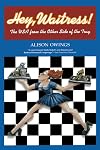
This was a bit of a flashback book. Even though I haven't spent that much of my life waitressing, reading this book provoked some strong memories. The best thing about it was that it wasn't some sort of scholarly examination of waitressing. There were no statistics: 73% of waitresses have experienced some form of sexual harassment, 47% have worked in unsafe conditions, 39% have tried illegal drugs, etc. The author interviewed a lot of waitresses and let their own words speak for what happens on the job.
It takes a special kind of interviewer to let the interviewee just talk, and not need a lot of your own words in between. Owings did a wonderful job of giving women who don't often have a voice the opportunity to speak plainly about what it is like to serve people all the time. Studs Terkel, another historian, could do this as well. By placing the interviews together the reader doesn't need the analysis, you can see what happens in this profession, or any other group. Terkel did several books like this, most notably on the Great Depression.
If this book can get even a few people to consider thinking more about their server than whether or not their food was perfect it will have accomplished something. One woman pointed out that she could switch places with a co-worker and the diners wouldn't even notice the change. Too many people think that someone serving them loses their humanity, making them vulnerable to behavior that wouldn't be tolerated in any other setting.
The worst show more part is the sexual harassment, at least it was for me. It doesn't come from the customers (mostly) but there is a great deal of tension between the male cooking and dish washing crew and the female wait staff. The ladies interviewed talked about handling that tension in a variety of ways, but the restaurant business is very physical, and many times that tension plays out in physical ways as well.
The tension between the servers and the customers differs with each meal served, but the classic human need to feel superior to someone else can be very ugly sometimes.
This was a good book, informative for those that have never picked up one of those big black trays, and respectful to those that have. I was very impressed by the author's handling of a topic that has been treated with condescension so many times before. show less
It takes a special kind of interviewer to let the interviewee just talk, and not need a lot of your own words in between. Owings did a wonderful job of giving women who don't often have a voice the opportunity to speak plainly about what it is like to serve people all the time. Studs Terkel, another historian, could do this as well. By placing the interviews together the reader doesn't need the analysis, you can see what happens in this profession, or any other group. Terkel did several books like this, most notably on the Great Depression.
If this book can get even a few people to consider thinking more about their server than whether or not their food was perfect it will have accomplished something. One woman pointed out that she could switch places with a co-worker and the diners wouldn't even notice the change. Too many people think that someone serving them loses their humanity, making them vulnerable to behavior that wouldn't be tolerated in any other setting.
The worst show more part is the sexual harassment, at least it was for me. It doesn't come from the customers (mostly) but there is a great deal of tension between the male cooking and dish washing crew and the female wait staff. The ladies interviewed talked about handling that tension in a variety of ways, but the restaurant business is very physical, and many times that tension plays out in physical ways as well.
The tension between the servers and the customers differs with each meal served, but the classic human need to feel superior to someone else can be very ugly sometimes.
This was a good book, informative for those that have never picked up one of those big black trays, and respectful to those that have. I was very impressed by the author's handling of a topic that has been treated with condescension so many times before. show less
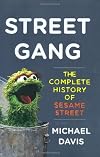
I have heard writing described as weaving a tapestry. This was a book that you could see the weaving being done. The author gives half-chapter biographies of all the people involved in creating Sesame Street, starting from way before they met. Eventually all the threads converge and you have a public television show. It was an enjoyable read, and I learned some things, but a lot of those things I didn't really want to know. For example, the politics and bickering involved in making a television show; I knew it was there, didn't appreciate so many pages explaining it in detail. The liberal policies of mid-60s intellectuals wasn't all that high on my interest list either.
What you hope for in a book like this are amusing anecdotes and a new insight into people you already knew. There were some of both, but since the real story was the development, the book gave a cursory look at the actual production of the show.
And I now feel really old because this year is Sesame Street's 40th anniversary.
What you hope for in a book like this are amusing anecdotes and a new insight into people you already knew. There were some of both, but since the real story was the development, the book gave a cursory look at the actual production of the show.
And I now feel really old because this year is Sesame Street's 40th anniversary.
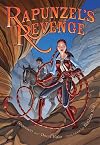
The most telling thing about this book was that I was the last person in my house to read it. Even my 7-yr-old loved it so much she sat and read it in one afternoon. All of my kids who can read, read this book in one sitting. So I think as far as the pre-teen audience goes, this is a great book.
I liked it too, but I'm not that much into graphic novels. It was a cute book, a reworking of the Rapunzel story (obviously) and the pictures are great. I just like longer books, something that only takes me a half-hour to read is too short.
I loved the place names (Devil's Armpit for example) and the people. I do need to take some more time and look over the map more closely.
I liked it too, but I'm not that much into graphic novels. It was a cute book, a reworking of the Rapunzel story (obviously) and the pictures are great. I just like longer books, something that only takes me a half-hour to read is too short.
I loved the place names (Devil's Armpit for example) and the people. I do need to take some more time and look over the map more closely.