Originally posted at Read. Run. Study.
Received from free from the publisher through LibraryThing EarlyReviewers program in exchange for an honest review.
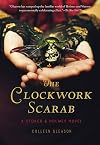
I requested The Clockwork Scarab because I loved the cover and was intrigued by the synopsis. Bram Stoker’s sister (Evaline) and Sherlock Holmes’ niece (Mina) team up to solve mysteries in a steampunk-inspired London. Yes, please! Unfortunately, while the concept behind The Clockwork Scarab was interesting, it took me a while to get through it because the book as a whole didn’t work for me.
Basically, the book takes a fairly simple plot and throws in several “cool” elements like vampires, time travel, secret societies, romance, and murder. Unfortunately, the plot felt too contrived and I wasn’t happy with the direction it took (I’m still not satisfied with the ending). Additionally, the characterization lacked consistency and distinction. Both girls were supposed to have personality traits similar to their namesakes (ex: Mina was supposed to be extremely observant/intelligent and Evaline was supposed to be unusually strong), but they both seemed pretty ordinary in the scheme of YA protagonists. They bumbled about quite a bit more than would be expected of them based on the set up given, and they really didn’t seem to differ from one another enough (Evaline was just as likely to deduce something as Mina was and Mina was just as likely to run headlong into danger). Additionally, Gleason seemed to be setting show more up a couple of romantic possibilities for each of the girls, but they felt forced and I couldn’t get behind them.
The story was further hindered by cumbersome language such as unnecessarily large words (ex: appellation, supercilious, vexation, countenance, rejoinder, extricate, capricious, apprised) and weird phrases (ex: “extricating the recalcitrant heel”). I’m not sure if this is common for steampunk novels or not, but I found it jarring because it didn’t feel natural. I actually started listing the words as I came across them. Fundamentally, it felt like it was trying too hard and I couldn’t get past that.
In the end, while there were some parts of the book that I did like, it was mostly just okay. I think too many elements were thrown into too short of a story to really work well. It just felt like a hodgepodge of ideas married a thesaurus too frequently. As a whole, the book could have used a lot more polishing and I doubt I will continue with the series unless I hear very high praise for the next installment. show less
Received from free from the publisher through LibraryThing EarlyReviewers program in exchange for an honest review.
I requested The Clockwork Scarab because I loved the cover and was intrigued by the synopsis. Bram Stoker’s sister (Evaline) and Sherlock Holmes’ niece (Mina) team up to solve mysteries in a steampunk-inspired London. Yes, please! Unfortunately, while the concept behind The Clockwork Scarab was interesting, it took me a while to get through it because the book as a whole didn’t work for me.
Basically, the book takes a fairly simple plot and throws in several “cool” elements like vampires, time travel, secret societies, romance, and murder. Unfortunately, the plot felt too contrived and I wasn’t happy with the direction it took (I’m still not satisfied with the ending). Additionally, the characterization lacked consistency and distinction. Both girls were supposed to have personality traits similar to their namesakes (ex: Mina was supposed to be extremely observant/intelligent and Evaline was supposed to be unusually strong), but they both seemed pretty ordinary in the scheme of YA protagonists. They bumbled about quite a bit more than would be expected of them based on the set up given, and they really didn’t seem to differ from one another enough (Evaline was just as likely to deduce something as Mina was and Mina was just as likely to run headlong into danger). Additionally, Gleason seemed to be setting show more up a couple of romantic possibilities for each of the girls, but they felt forced and I couldn’t get behind them.
The story was further hindered by cumbersome language such as unnecessarily large words (ex: appellation, supercilious, vexation, countenance, rejoinder, extricate, capricious, apprised) and weird phrases (ex: “extricating the recalcitrant heel”). I’m not sure if this is common for steampunk novels or not, but I found it jarring because it didn’t feel natural. I actually started listing the words as I came across them. Fundamentally, it felt like it was trying too hard and I couldn’t get past that.
In the end, while there were some parts of the book that I did like, it was mostly just okay. I think too many elements were thrown into too short of a story to really work well. It just felt like a hodgepodge of ideas married a thesaurus too frequently. As a whole, the book could have used a lot more polishing and I doubt I will continue with the series unless I hear very high praise for the next installment. show less
 This review was written for LibraryThing Early Reviewers.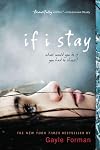
Originally posted at Read. Run. Study.
I picked up If I Stay after hearing a lot of praise for Gayle Forman and seeing the previews for the movie. The story follows 17-year-old Mia in the aftermath of a devastating car accident. It looked like an interesting premise and it was touted as an emotional rollercoaster.
I liked the way the story was laid out. The accident happens very early in the book and then we learn about Mia’s relationships with her friends/family through a series of flashbacks. Unfortunately, the book as a whole didn’t do anything for me. For as much as the writing is praised, it felt generic and the story was too predictable. I expected (and wanted) the whole book to be extremely emotional, but it wasn’t. For example, the description of the crash scene felt about as dramatic as a stroll through the park. That kind of made sense given the out of body type experience being portrayed, but I expected something more intense. It just really didn’t grip me and there wasn’t anything terribly memorable about it.
I will say there were a couple of semi-sweet moments that I liked, but nothing that tugged at the heartstrings like I expected. Also, I liked that the parents were actually present in the story and clearly played an integral role in Mia’s life. However, I was kind of annoyed by the constant reestablishment of her parents’ “coolness” and Mia’s nerdiness. Overall, I had difficulty connecting to the characters, though I sort of liked a few show more (Mia’s grandparents, Willow, and Kim ). Basically, I was disappointed by the book and I really only finished the book because it was short.
Additionally, there were several WTF moments that pulled me out of the story. (SPOILER SECTION:Highlight to see text. What the heck was happening when Mia & Adam “play” each other like their respective instruments? Was that supposed to be cute/sexy? Because no, it was not. It was kind of cringe inducing to be honest. I just rolled my eyes and pushed on. Oh, and bad science ruined some stuff for me. Mia says something about getting O- blood so that must be her blood type. O- is a universal donor type, so it is common for trauma victims to get it before anyone has had time to test for their real blood type. I’m not sure why this was included when it wasn’t even really correct. Also, Mia makes a huge deal about her and her parents’ eye colors before completely dropping it with no further explanation. While it is possible for blue eyed parents to have a brown eyed child, it is very rare and is not how it gets taught to the book’s target-age audience. I was just confused by its inclusion when it gets dropped with no further explanation. So for all we know, Mia really was switched at the hospital as a baby. That seemed weird to me. )
In the end, I thought this was an okay read with a few parts that I liked. I may or may not read the sequel, Where She Went (let me know if you think I should). Having said all that, I do think this has the bones to make a decent movie, so I may still see that. Maybe the movie will have more emotional impact for me.
Rating: 2.5 Stars show less
I picked up If I Stay after hearing a lot of praise for Gayle Forman and seeing the previews for the movie. The story follows 17-year-old Mia in the aftermath of a devastating car accident. It looked like an interesting premise and it was touted as an emotional rollercoaster.
I liked the way the story was laid out. The accident happens very early in the book and then we learn about Mia’s relationships with her friends/family through a series of flashbacks. Unfortunately, the book as a whole didn’t do anything for me. For as much as the writing is praised, it felt generic and the story was too predictable. I expected (and wanted) the whole book to be extremely emotional, but it wasn’t. For example, the description of the crash scene felt about as dramatic as a stroll through the park. That kind of made sense given the out of body type experience being portrayed, but I expected something more intense. It just really didn’t grip me and there wasn’t anything terribly memorable about it.
I will say there were a couple of semi-sweet moments that I liked, but nothing that tugged at the heartstrings like I expected. Also, I liked that the parents were actually present in the story and clearly played an integral role in Mia’s life. However, I was kind of annoyed by the constant reestablishment of her parents’ “coolness” and Mia’s nerdiness. Overall, I had difficulty connecting to the characters, though I sort of liked a few show more
Additionally, there were several WTF moments that pulled me out of the story. (SPOILER SECTION:
In the end, I thought this was an okay read with a few parts that I liked. I may or may not read the sequel, Where She Went (let me know if you think I should). Having said all that, I do think this has the bones to make a decent movie, so I may still see that. Maybe the movie will have more emotional impact for me.
Rating: 2.5 Stars
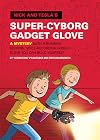
Nick and Tesla's Super-Cyborg Gadget Glove: A Mystery with a Blinking, Beeping, Voice-Recording Gadget Glove You Can Build Yourself by Bob Pflugfelder
Originally posted at Read. Run. Study.
I wasn’t sure what to expect going into this one because it is technically the fourth book in a series. However, I found myself surprisingly intrigued by this fun children’s book full of science and adventure. Despite picking it up without any previous knowledge from the first three books, I never felt lost in the story. The book follows Nick and Tesla, a brother-sister duo, as they work with a couple of friends to uncover a mystery at the science museum where their uncle is working. The plot moves very quickly and smoothly, so I think it would have no trouble keeping a kid’s attention.
My favorite part was the science element. Readers are introduced to several key science figures through one of the museum’s exhibits and the kids are clearly budding inventors themselves. In fact, they even provide directions to create their super-cyborg gadget glove. This is a great outlet to get creative kids working on something cool and learning at the same time. And it ties beautifully into the story.
I liked that the kids were largely self-sufficient, but that the authority figures (museum workers and their uncle) are not completely absent or unaware of their activities. I also appreciated the inclusion of both male and female characters on either side of the good guy/bad guy plane. And I enjoyed the little references to other books/shows (ex: Scooby Doo and Lord of the Rings) and the references to famous scientists and inventors.
I am show more definitely not the target audience for this series, but I enjoyed it and will be sharing it with my nephews. They are at the perfect ages for it and I think they will enjoy the story. Maybe it will also spark a little more interest in science for them.
Rating: 3.5 Stars show less
I wasn’t sure what to expect going into this one because it is technically the fourth book in a series. However, I found myself surprisingly intrigued by this fun children’s book full of science and adventure. Despite picking it up without any previous knowledge from the first three books, I never felt lost in the story. The book follows Nick and Tesla, a brother-sister duo, as they work with a couple of friends to uncover a mystery at the science museum where their uncle is working. The plot moves very quickly and smoothly, so I think it would have no trouble keeping a kid’s attention.
My favorite part was the science element. Readers are introduced to several key science figures through one of the museum’s exhibits and the kids are clearly budding inventors themselves. In fact, they even provide directions to create their super-cyborg gadget glove. This is a great outlet to get creative kids working on something cool and learning at the same time. And it ties beautifully into the story.
I liked that the kids were largely self-sufficient, but that the authority figures (museum workers and their uncle) are not completely absent or unaware of their activities. I also appreciated the inclusion of both male and female characters on either side of the good guy/bad guy plane. And I enjoyed the little references to other books/shows (ex: Scooby Doo and Lord of the Rings) and the references to famous scientists and inventors.
I am show more definitely not the target audience for this series, but I enjoyed it and will be sharing it with my nephews. They are at the perfect ages for it and I think they will enjoy the story. Maybe it will also spark a little more interest in science for them.
Rating: 3.5 Stars show less
This review was written for LibraryThing Early Reviewers.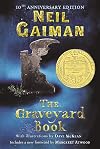
Originally posted at Read. Run. Study.
I liked the movie-adaptations of Neil Gaiman’s Stardust and Coraline, but I had never read one of his novels. I have been trying to fix that for a while, and finally did when I picked up The Graveyard Book.
The first thing that struck me when I opened the book were the illustrations by Dave McKean. I loved the illustrations! They were lovely and dark, but not exactly scary – they just worked beautifully.
As for the story, The Graveyard Book is nothing if not unique. We are, after all, talking about a book that follows the development of a child as he is raised by the inhabitants of a graveyard. I didn’t know what to expect going into the book, and I’m glad for that so I’m not going to tell you much. Let’s just say I developed a little crush on Silas (Please someone tell me I’m not alone on that.) Gaiman’s writing is beautiful, even in a book targeted towards children. His command of language is simply impressive. Somehow, he leaves you with a book that is easy enough for a child to read and enjoy, yet speaks to an adult as well.
My first instinct upon finishing it was to give it 4 stars – I really enjoyed the story, but I felt as though it lacked something. As I’ve considered the story further, it has grown on me and now I’m torn. Do I leave it at 4 stars, or bump it to 5? I think the answer is to split the difference, and assure you that this will not be my last foray into Gaiman’s novels.
Rating: 4.5/5
As I was show more writing this review, I found video clips from The Graveyard Book Tour in which Neil Gaiman narrates each chapter of the book. The book, as narrated by Neil Gaiman, gets 5 stars. His narration finds what I couldn’t in the book which may simply be his accent and inflection. show less
I liked the movie-adaptations of Neil Gaiman’s Stardust and Coraline, but I had never read one of his novels. I have been trying to fix that for a while, and finally did when I picked up The Graveyard Book.
The first thing that struck me when I opened the book were the illustrations by Dave McKean. I loved the illustrations! They were lovely and dark, but not exactly scary – they just worked beautifully.
As for the story, The Graveyard Book is nothing if not unique. We are, after all, talking about a book that follows the development of a child as he is raised by the inhabitants of a graveyard. I didn’t know what to expect going into the book, and I’m glad for that so I’m not going to tell you much. Let’s just say I developed a little crush on Silas (Please someone tell me I’m not alone on that.) Gaiman’s writing is beautiful, even in a book targeted towards children. His command of language is simply impressive. Somehow, he leaves you with a book that is easy enough for a child to read and enjoy, yet speaks to an adult as well.
My first instinct upon finishing it was to give it 4 stars – I really enjoyed the story, but I felt as though it lacked something. As I’ve considered the story further, it has grown on me and now I’m torn. Do I leave it at 4 stars, or bump it to 5? I think the answer is to split the difference, and assure you that this will not be my last foray into Gaiman’s novels.
Rating: 4.5/5
As I was show more writing this review, I found video clips from The Graveyard Book Tour in which Neil Gaiman narrates each chapter of the book. The book, as narrated by Neil Gaiman, gets 5 stars. His narration finds what I couldn’t in the book which may simply be his accent and inflection. show less
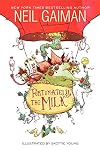
Originally posted at Read. Run. Study.
I picked this up from the library on a whim because I have enjoyed most of what I have read by Neil Gaiman so far and it looked cute.
It was a very short, simply written book – it took me about 45 minutes to read it – but I kind of loved it. The story was cute and imaginative and the illustrations were adorable. There were aliens, dinosaurs, volcanoes, and – of course – the milk. As with Gaiman’s other children’s books, this has elements that will speak to both children and adults.
Fortunately, the Milk is definitely on the short list of gifts to give to my 9-year-old nephew who is into all things weird but hasn’t really picked up reading fiction yet. I think he (and other children his age) will enjoy it and it has the added benefit of showing him (and other born storytellers) that stories can be found everywhere.
I picked this up from the library on a whim because I have enjoyed most of what I have read by Neil Gaiman so far and it looked cute.
It was a very short, simply written book – it took me about 45 minutes to read it – but I kind of loved it. The story was cute and imaginative and the illustrations were adorable. There were aliens, dinosaurs, volcanoes, and – of course – the milk. As with Gaiman’s other children’s books, this has elements that will speak to both children and adults.
Fortunately, the Milk is definitely on the short list of gifts to give to my 9-year-old nephew who is into all things weird but hasn’t really picked up reading fiction yet. I think he (and other children his age) will enjoy it and it has the added benefit of showing him (and other born storytellers) that stories can be found everywhere.
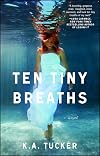
Originally posted at Read. Run. Study.
Ten Tiny Breaths wasn’t even on my radar until I saw the cover staring at me from the new books display at the library. That cover was too intriguing not to take a closer look. I picked it up and read the synopsis, then checked the Goodreads rating. The synopsis sounded a little cheesy, but the ratings were surprisingly good (Avg. 4.27 over ~24k ratings). Once I brought it home and mentioned it on the blog, everyone seemed to agree that it was a fantastic, quick read so I gave it a shot.
I started reading Ten Tiny Breaths at midnight and didn’t put it down until I was finished about five hours later. I loved almost everything about it. Tucker’s writing is beautiful and the plot was excellently paced. The reader is thrown right into the deep blind panic that consumes Kacey’s world, and the story doesn’t let up until Kacey learns to feel and forgive.
Along the way, we meet a wide cast of characters ranging from the devilishly handsome Trent Emerson to the buxom blond Barbie (Storm) next door. Each of the characters Tucker introduces are complex, realistic, flawed people that the reader grows to care about. I loved that Tucker fleshed out all of her characters – even the supporting characters aren’t the stereotypical, stock-type characters they may seem to be at first. Just when you feel like you have someone figured out, they’ll surprise you.
While this is Kacey’s story, it isn’t her story alone. The reader learns a lot show more about the supporting characters as the plot takes several interesting twists. Most are very well done, but my biggest complaint is that I figured out the major plot twist long before it was revealed. However, Tucker took the remainder of the story in an unexpected direction. Honestly, I’m not sure how I felt about that direction and that is part of where the story lost its 5-star rating, but I can’t say more without spoiling it.
Overall, this was a fantastic read that I would definitely recommend. This wasn’t your average love story – this is a story that sucks you in and makes you feel.
Rating: 4.5 Stars
Note 1: This was my first foray into the New Adult genre, and I think it would be a good choice for someone unsure about the genre. There are a few steamy bedroom scenes, but they are all pretty tame.
Note 2: While this is technically the first book in a series, it easily reads as a standalone. show less
Ten Tiny Breaths wasn’t even on my radar until I saw the cover staring at me from the new books display at the library. That cover was too intriguing not to take a closer look. I picked it up and read the synopsis, then checked the Goodreads rating. The synopsis sounded a little cheesy, but the ratings were surprisingly good (Avg. 4.27 over ~24k ratings). Once I brought it home and mentioned it on the blog, everyone seemed to agree that it was a fantastic, quick read so I gave it a shot.
I started reading Ten Tiny Breaths at midnight and didn’t put it down until I was finished about five hours later. I loved almost everything about it. Tucker’s writing is beautiful and the plot was excellently paced. The reader is thrown right into the deep blind panic that consumes Kacey’s world, and the story doesn’t let up until Kacey learns to feel and forgive.
Along the way, we meet a wide cast of characters ranging from the devilishly handsome Trent Emerson to the buxom blond Barbie (Storm) next door. Each of the characters Tucker introduces are complex, realistic, flawed people that the reader grows to care about. I loved that Tucker fleshed out all of her characters – even the supporting characters aren’t the stereotypical, stock-type characters they may seem to be at first. Just when you feel like you have someone figured out, they’ll surprise you.
While this is Kacey’s story, it isn’t her story alone. The reader learns a lot show more about the supporting characters as the plot takes several interesting twists. Most are very well done, but my biggest complaint is that I figured out the major plot twist long before it was revealed. However, Tucker took the remainder of the story in an unexpected direction. Honestly, I’m not sure how I felt about that direction and that is part of where the story lost its 5-star rating, but I can’t say more without spoiling it.
Overall, this was a fantastic read that I would definitely recommend. This wasn’t your average love story – this is a story that sucks you in and makes you feel.
Rating: 4.5 Stars
Note 1: This was my first foray into the New Adult genre, and I think it would be a good choice for someone unsure about the genre. There are a few steamy bedroom scenes, but they are all pretty tame.
Note 2: While this is technically the first book in a series, it easily reads as a standalone. show less
Originally posted at Read. Run. Study.
I went through a period of time where I was looking to read books written by runners. This story really appealed to me as a college student who is interested in distance running and loves traveling. I don’t remember how I first found this, or how I didn’t notice it was self-published, but I bought it when I found it on Amazon marketplace for a good deal.
Ryan “Sanford” Pancoast narrates the story, but he includes accounts by the other runners and drivers throughout. It was really interesting to see how the group approached the run, and what it meant to each of them. As can be expected in any cross country trip, there were quite a few mishaps and unexpected adventures. Most of all, I was surprised by how easily I felt I could relate. Obviously, I’ve never attempted a coast-to-coast run, but Pancoast made it easy to imagine the cramped quarters, the runner’s funk, and the overall feel of the experience. One review I read mentioned crude language, but it really wasn’t anywhere near as crude as they made it out to be and it definitely didn’t detract from the story.
Overall, this was a quick, fun read and I liked the book. I think it was well-written and well-organized, and I loved the sketches at the end (Pancoast’s major was Illustration). It’s not for everyone, but I’d recommend it to runners and anyone who ever considered a cross country road trip with a large group of friends.
Rating: 3/5
I went through a period of time where I was looking to read books written by runners. This story really appealed to me as a college student who is interested in distance running and loves traveling. I don’t remember how I first found this, or how I didn’t notice it was self-published, but I bought it when I found it on Amazon marketplace for a good deal.
Ryan “Sanford” Pancoast narrates the story, but he includes accounts by the other runners and drivers throughout. It was really interesting to see how the group approached the run, and what it meant to each of them. As can be expected in any cross country trip, there were quite a few mishaps and unexpected adventures. Most of all, I was surprised by how easily I felt I could relate. Obviously, I’ve never attempted a coast-to-coast run, but Pancoast made it easy to imagine the cramped quarters, the runner’s funk, and the overall feel of the experience. One review I read mentioned crude language, but it really wasn’t anywhere near as crude as they made it out to be and it definitely didn’t detract from the story.
Overall, this was a quick, fun read and I liked the book. I think it was well-written and well-organized, and I loved the sketches at the end (Pancoast’s major was Illustration). It’s not for everyone, but I’d recommend it to runners and anyone who ever considered a cross country road trip with a large group of friends.
Rating: 3/5
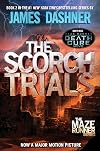
Originally posted at Read. Run. Study.
While I wasn’t dying to continue the trilogy, I was curious to see how things unfolded, so I picked up The Scorch Trials from the library. As with The Maze Runner, this was a fast-paced read that easily held my attention. Dashner continued to do a great job keeping the characters and the reader guessing, particularly when it came to who could and could not be trusted. As with the first book, some of the twists were predictable, but I got caught up in the story anyway.
The Scorch Trials was still very plot-driven, but I did find myself becoming more attached to the characters. I particularly felt for Thomas at several key points, though his character still frustrated me a little. I think the most frustrating aspect to Thomas’s character is the frequency with which Thomas seemed to conveniently forget vital information until it was too late. And if I wasn’t afraid of spoiling the story, there would be a lot more to say, but I think I’ll leave it there.
Overall, I think The Scorch Trials was a good sequel, and I really liked the story even if some events frustrated me. It left me ready to finish the trilogy. There are still a lot of questions Dashner left unanswered, and there is a lot I still want to know about the world.
Rating: 4/5
While I wasn’t dying to continue the trilogy, I was curious to see how things unfolded, so I picked up The Scorch Trials from the library. As with The Maze Runner, this was a fast-paced read that easily held my attention. Dashner continued to do a great job keeping the characters and the reader guessing, particularly when it came to who could and could not be trusted. As with the first book, some of the twists were predictable, but I got caught up in the story anyway.
The Scorch Trials was still very plot-driven, but I did find myself becoming more attached to the characters. I particularly felt for Thomas at several key points, though his character still frustrated me a little. I think the most frustrating aspect to Thomas’s character is the frequency with which Thomas seemed to conveniently forget vital information until it was too late. And if I wasn’t afraid of spoiling the story, there would be a lot more to say, but I think I’ll leave it there.
Overall, I think The Scorch Trials was a good sequel, and I really liked the story even if some events frustrated me. It left me ready to finish the trilogy. There are still a lot of questions Dashner left unanswered, and there is a lot I still want to know about the world.
Rating: 4/5
Originally posted at Read. Run. Study.
I had mixed feelings about The Death Cure as a the final book in the trilogy. I liked the book overall – it was packed with action and maintained the same quick pace of the first two books. It drew me in and I felt like I needed to know what happened next, but it could have been better.
I liked that Dashner finally revealed more about the state of the world and answered many of the questions that burned in my mind. However, he left a lot of questions unanswered. I’m not sure if he intended for the reader to fill in the gaps or if he just hoped the reader wouldn’t notice. Some of the issues (Thomas’s “specialness” and weak characterization) were similar to issues I had with the previous two books, but there were some new issues as well. There were several points where the characters’ actions or plot development just didn’t work for me. However, the ultimate resolution surprised me and worked well enough to bring the book up to 3.5 stars.
Having said all that, I’m glad I read the trilogy because I did enjoy it and it was definitely an interesting idea. Unfortunately, I think this was a case where the idea was better than the execution. Because of that, I’m not planning to read the prequel (The Kill Older) unless someone tells me it is worthwhile.
Rating: 3.5/5
I had mixed feelings about The Death Cure as a the final book in the trilogy. I liked the book overall – it was packed with action and maintained the same quick pace of the first two books. It drew me in and I felt like I needed to know what happened next, but it could have been better.
I liked that Dashner finally revealed more about the state of the world and answered many of the questions that burned in my mind. However, he left a lot of questions unanswered. I’m not sure if he intended for the reader to fill in the gaps or if he just hoped the reader wouldn’t notice. Some of the issues (Thomas’s “specialness” and weak characterization) were similar to issues I had with the previous two books, but there were some new issues as well. There were several points where the characters’ actions or plot development just didn’t work for me. However, the ultimate resolution surprised me and worked well enough to bring the book up to 3.5 stars.
Having said all that, I’m glad I read the trilogy because I did enjoy it and it was definitely an interesting idea. Unfortunately, I think this was a case where the idea was better than the execution. Because of that, I’m not planning to read the prequel (The Kill Older) unless someone tells me it is worthwhile.
Rating: 3.5/5
Originally posted at Read. Run. Study.
I think this is the first book I have read since beginning this blog that I can’t pin down a rating for. Does it deserve 3 stars, 4 stars, or 5 stars? I don’t know. I kind of loved and hated it all at the same time for reasons that I can’t seem to articulate.
Let’s start with the things that I liked. I will admit that I haven’t read a lot of contemporary fiction lately, but part of this book’s charm was the unique story. At its most basic level, this was a tale of self-discovery as Ezra struggled to come to terms with his injury and settle into a new identity. But it wasn’t a straight-forward, predictable story. In fact, one of the things I most appreciated about the book was the twists and turns I didn’t see coming.
I liked most of the characters and some of the associated mystery. If I had to choose a favorite character, it probably would have been Toby. I’d really like to have heard more about his story and ideas. Having said that, I liked Ezra well enough as a narrator – his character was well-written and I liked his character development. And, while I didn’t connect to all of Ezra’s character, I do feel like I understood him.
I loved the lost/misfit angle because I could relate to that. Toby’s group reminded me a lot of the group I hung out with in high school. We were sort of a misfit group that grew close because, at least initially, we didn’t belong in any of the established groups. On the other hand, show more I didn’t identify with Ezra’s jock and party-body sides. I had a particularly hard time with the way under-aged drinking was normalized and almost glorified. While I understand there are groups of people who party and drink in high school, that was completely incongruous with my own experiences.
The biggest downsides of the book for me were the extensive swearing/crude language and the unlikeliness of some of the events/situations. If you’ve read my other reviews, you know that swearing and crude language almost never bother me. In fact, swearing doesn’t normally even register for me, but it did in this book and not in a good way. As for the unlikeliness of events and situations, I’m going to have to use an example (not really a spoiler though). On a school-related trip, there are boys and girls in an adjoining hotel room. They are told not to co-mingle, but we all know what happens next, right? That just wasn’t believable for me. While I can’t speak for all schools, I don’t know of any schools where that would have happened. Also, I never figured out the what was up with the coyotes.
I loved the prose – the writing really was as lyrical and witty as the book jacket claimed. However, I have to say I was really frustrated/disappointed with the ending. I did like that it highlighted Ezra’s growth, but it didn’t really work for me. With that said, I am sure there are other people who will love the ending so that wouldn’t stop me from recommending it.
Rating: 4/5 (But like I said, I don’t even know)
PS: If puns annoy you, you may spend a lot of time rolling your eyes. If you want to get a feel for Robyn Schneider’s sense of humor, check out her YouTube channel. That may help you decide if this is a book you want to try. show less
I think this is the first book I have read since beginning this blog that I can’t pin down a rating for. Does it deserve 3 stars, 4 stars, or 5 stars? I don’t know. I kind of loved and hated it all at the same time for reasons that I can’t seem to articulate.
Let’s start with the things that I liked. I will admit that I haven’t read a lot of contemporary fiction lately, but part of this book’s charm was the unique story. At its most basic level, this was a tale of self-discovery as Ezra struggled to come to terms with his injury and settle into a new identity. But it wasn’t a straight-forward, predictable story. In fact, one of the things I most appreciated about the book was the twists and turns I didn’t see coming.
I liked most of the characters and some of the associated mystery. If I had to choose a favorite character, it probably would have been Toby. I’d really like to have heard more about his story and ideas. Having said that, I liked Ezra well enough as a narrator – his character was well-written and I liked his character development. And, while I didn’t connect to all of Ezra’s character, I do feel like I understood him.
I loved the lost/misfit angle because I could relate to that. Toby’s group reminded me a lot of the group I hung out with in high school. We were sort of a misfit group that grew close because, at least initially, we didn’t belong in any of the established groups. On the other hand, show more I didn’t identify with Ezra’s jock and party-body sides. I had a particularly hard time with the way under-aged drinking was normalized and almost glorified. While I understand there are groups of people who party and drink in high school, that was completely incongruous with my own experiences.
The biggest downsides of the book for me were the extensive swearing/crude language and the unlikeliness of some of the events/situations. If you’ve read my other reviews, you know that swearing and crude language almost never bother me. In fact, swearing doesn’t normally even register for me, but it did in this book and not in a good way. As for the unlikeliness of events and situations, I’m going to have to use an example (not really a spoiler though). On a school-related trip, there are boys and girls in an adjoining hotel room. They are told not to co-mingle, but we all know what happens next, right? That just wasn’t believable for me. While I can’t speak for all schools, I don’t know of any schools where that would have happened. Also, I never figured out the what was up with the coyotes.
I loved the prose – the writing really was as lyrical and witty as the book jacket claimed. However, I have to say I was really frustrated/disappointed with the ending. I did like that it highlighted Ezra’s growth, but it didn’t really work for me. With that said, I am sure there are other people who will love the ending so that wouldn’t stop me from recommending it.
Rating: 4/5 (But like I said, I don’t even know)
PS: If puns annoy you, you may spend a lot of time rolling your eyes. If you want to get a feel for Robyn Schneider’s sense of humor, check out her YouTube channel. That may help you decide if this is a book you want to try. show less
Originally posted at Read. Run. Study.
I was weary going into this book, because it has gotten mixed reviews and it is marketed as “for fans of The Hunger Games”. I loved The Hunger Games trilogy, but I hate books that try to advertise on another book’s coattails. For those reasons, I almost didn’t pick it up. However, I ultimately decided to buy it and see what I thought for myself.
I’m glad I gave it a chance, because I actually really liked it. Once I got used to Dashner’s use of made-up words, The Maze Runner was a fun, fast-paced read. It was one of those books that I found difficult to put down, because something new (and usually crazy) seems to happen on nearly every page. I felt that some of the plot devices (like the erased memories) felt a little too convenient, but I am willing to forgive that for now because I didn’t always see the twists and turns coming. I also liked that Dashner doesn’t answer all of the readers questions – he gives the reader and the characters the same amount of information, so you discover things as the characters do.
My biggest complaint is that I didn’t get all that attached to any of the characters. The Maze Runner is almost exclusively plot-driven, so we don’t see a lot of character development. I like to see the characters I am reading about really grow and learn as the story progresses. I’m also not big on super special snowflake type characters, and though Dashner tries to provide a reasonable explanation for show more it, Thomas gives off that vibe a little too frequently. However, it wasn’t the worst I’ve seen in YA literature, and, after reading a lot of female-oriented books lately, it was a nice change of pace to follow a male character.
Overall, The Maze Runner was an enjoyable read and I do plan to continue reading the series. I don’t necessarily care what happens to the specific characters we are following, but I want to learn more about their world. I want to know who built the maze. I want to know why they built it. I want to know what else is out there.
Rating: 4/5
PS: I know the screen adaptation of The Maze Runner is in progress, and I’m actually interested in seeing it. I think this has the potential to do well in theaters, because you should be able to walk in blind and enjoy it. It isn’t like the other YA films coming out that resonate with readers, but fall flat with movie goers. And, because the characters are fairly undeveloped, the actors have a lot of room to play with them. show less
I was weary going into this book, because it has gotten mixed reviews and it is marketed as “for fans of The Hunger Games”. I loved The Hunger Games trilogy, but I hate books that try to advertise on another book’s coattails. For those reasons, I almost didn’t pick it up. However, I ultimately decided to buy it and see what I thought for myself.
I’m glad I gave it a chance, because I actually really liked it. Once I got used to Dashner’s use of made-up words, The Maze Runner was a fun, fast-paced read. It was one of those books that I found difficult to put down, because something new (and usually crazy) seems to happen on nearly every page. I felt that some of the plot devices (like the erased memories) felt a little too convenient, but I am willing to forgive that for now because I didn’t always see the twists and turns coming. I also liked that Dashner doesn’t answer all of the readers questions – he gives the reader and the characters the same amount of information, so you discover things as the characters do.
My biggest complaint is that I didn’t get all that attached to any of the characters. The Maze Runner is almost exclusively plot-driven, so we don’t see a lot of character development. I like to see the characters I am reading about really grow and learn as the story progresses. I’m also not big on super special snowflake type characters, and though Dashner tries to provide a reasonable explanation for show more it, Thomas gives off that vibe a little too frequently. However, it wasn’t the worst I’ve seen in YA literature, and, after reading a lot of female-oriented books lately, it was a nice change of pace to follow a male character.
Overall, The Maze Runner was an enjoyable read and I do plan to continue reading the series. I don’t necessarily care what happens to the specific characters we are following, but I want to learn more about their world. I want to know who built the maze. I want to know why they built it. I want to know what else is out there.
Rating: 4/5
PS: I know the screen adaptation of The Maze Runner is in progress, and I’m actually interested in seeing it. I think this has the potential to do well in theaters, because you should be able to walk in blind and enjoy it. It isn’t like the other YA films coming out that resonate with readers, but fall flat with movie goers. And, because the characters are fairly undeveloped, the actors have a lot of room to play with them. show less
Originally posted at Read. Run. Study.
Thoughts on the Book:
I wasn’t originally going to read Ender’s Game due to the controversy surrounding Orson Scott Card’s political views. But a friend begged me to read the book and go see the movie with him, so I gave it a shot. After making an effort to separate the author from the book so I could evaluate the book on its own merit, I have to say I liked it more than I expected.
I felt like the story took a little while to get going, but it definitely held my attention once it did. My biggest problem with the book was getting over the characters’ ages. Ender is only six years old at the beginning of the book, but he never acts like it. This is explained away because he is a genius, but I had trouble with it because above average intelligence doesn’t equate to adult-like maturity. Honestly, I came close to putting it down because I just wasn’t believing the characters.
However, I was able to push through because the further I read, the more I got wrapped up in the story and I forgot about the kids’ ages. The story was full of action, the writing was well-paced, and the twists didn’t feel forced. I felt for Ender as the story progressed – Card definitely didn’t let him get off easy. I appreciated that Card didn’t neglect what was happening elsewhere like many authors often do. While most of the story was focused on Ender’s life in Space, we also got to see what was happening on Earth through his siblings. It show more was also refreshing to read a young adult novel without a single hint of romance.
Overall, I liked the story even if I didn’t love it. Its message of compassion and tolerance was clear without being heavy-handed. (Perhaps Card should reread his own book as this message is one he may need to revisit.) I saw the twist coming at the end, but I was satisfied with the conclusion of the book. Even though this is technically the first book in a series, I think it can stand alone. Finally, this is another one of those books I may have enjoyed more if I read it as a kid.
Rating: 3.5/5
Thoughts on the Movie:
I have mixed feelings about the movie. Visually, it was fantastic. However, the plot and characters deviated from the book substantially. I was happy they aged Ender up, but they condensed the action that took place over 5-6 years down to what felt like a couple of months and added some weird romantic tension between Ender and Petra. Between that and eliminating the Peter/Valentine sections, it gave the movie a very different feel from the book. Overall, it wasn’t the worst movie adaptation, but it could have been better. show less
Thoughts on the Book:
I wasn’t originally going to read Ender’s Game due to the controversy surrounding Orson Scott Card’s political views. But a friend begged me to read the book and go see the movie with him, so I gave it a shot. After making an effort to separate the author from the book so I could evaluate the book on its own merit, I have to say I liked it more than I expected.
I felt like the story took a little while to get going, but it definitely held my attention once it did. My biggest problem with the book was getting over the characters’ ages. Ender is only six years old at the beginning of the book, but he never acts like it. This is explained away because he is a genius, but I had trouble with it because above average intelligence doesn’t equate to adult-like maturity. Honestly, I came close to putting it down because I just wasn’t believing the characters.
However, I was able to push through because the further I read, the more I got wrapped up in the story and I forgot about the kids’ ages. The story was full of action, the writing was well-paced, and the twists didn’t feel forced. I felt for Ender as the story progressed – Card definitely didn’t let him get off easy. I appreciated that Card didn’t neglect what was happening elsewhere like many authors often do. While most of the story was focused on Ender’s life in Space, we also got to see what was happening on Earth through his siblings. It show more was also refreshing to read a young adult novel without a single hint of romance.
Overall, I liked the story even if I didn’t love it. Its message of compassion and tolerance was clear without being heavy-handed. (Perhaps Card should reread his own book as this message is one he may need to revisit.) I saw the twist coming at the end, but I was satisfied with the conclusion of the book. Even though this is technically the first book in a series, I think it can stand alone. Finally, this is another one of those books I may have enjoyed more if I read it as a kid.
Rating: 3.5/5
Thoughts on the Movie:
I have mixed feelings about the movie. Visually, it was fantastic. However, the plot and characters deviated from the book substantially. I was happy they aged Ender up, but they condensed the action that took place over 5-6 years down to what felt like a couple of months and added some weird romantic tension between Ender and Petra. Between that and eliminating the Peter/Valentine sections, it gave the movie a very different feel from the book. Overall, it wasn’t the worst movie adaptation, but it could have been better. show less
Originally posted at Read. Run. Study.
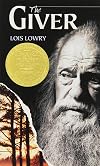
The Giver was immensely popular among my classmates in middle school. I am not sure why I didn’t read it at the time, but I wish I had because I think I may have liked it more if I had read it then. As it stands, I feel like I missed something. Everyone and their brother seems to love The Giver. I wanted to love it, but I didn’t. I liked it well enough, but I didn’t think it was amazing.
While I appreciated Lowry’s message regarding the importance of individual choices and feelings, the world just didn’t make sense to me. I can suspend a good deal of disbelief, but I couldn’t figure out how the population lost color vision, how they lost the ability to love, how they controlled the weather, etc. Basically, I couldn’t figure out how this society was supposed to have come into existence. It just didn’t make sense. Sometimes I can look past a world that doesn’t make sense to me and thoroughly enjoy the story anyway. Unfortunately, I felt like the book was too short to really get the story going. While there were a few parts I liked, the plot and characters ultimately fell flat for me.
Overall, I wouldn’t discourage someone from reading The Giver. I think it is worthwhile to read if only because everyone seems to have and it is a short, easy read. However, I wouldn’t go out of my way to recommend it.
The Giver was immensely popular among my classmates in middle school. I am not sure why I didn’t read it at the time, but I wish I had because I think I may have liked it more if I had read it then. As it stands, I feel like I missed something. Everyone and their brother seems to love The Giver. I wanted to love it, but I didn’t. I liked it well enough, but I didn’t think it was amazing.
While I appreciated Lowry’s message regarding the importance of individual choices and feelings, the world just didn’t make sense to me. I can suspend a good deal of disbelief, but I couldn’t figure out how the population lost color vision, how they lost the ability to love, how they controlled the weather, etc. Basically, I couldn’t figure out how this society was supposed to have come into existence. It just didn’t make sense. Sometimes I can look past a world that doesn’t make sense to me and thoroughly enjoy the story anyway. Unfortunately, I felt like the book was too short to really get the story going. While there were a few parts I liked, the plot and characters ultimately fell flat for me.
Overall, I wouldn’t discourage someone from reading The Giver. I think it is worthwhile to read if only because everyone seems to have and it is a short, easy read. However, I wouldn’t go out of my way to recommend it.
Originally posted at Read. Run. Study.
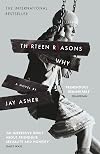
Thirteen Reasons Why is a heartbreaking story that most people would benefit from reading. Asher’s writing is straight-forward and accessible, but he isn’t afraid to tackle difficult subjects. The story isn’t a happy one, but you keep reading because Asher knows just how much he needs to tell the reader to keep the mystery and suspense up.
I liked the format of Hannah’s voice interspersed with Clay’s thoughts and actions. Despite the fact that the book follows two stories simultaneously – Hannah’s tapes relay the events in the past, while we follow Clay as he moves through the present – I never felt lost. I don’t want to give anything away, but I liked the choice of Clay as a narrator. I saw how he fit into Hannah’s story before we were explicitly told, and I really liked that choice. While some reviewers have questioned the believably of Hannah’s thoughts and her motivation for recording the tapes, I found Hannah’s thought processes as she descends into depression both convincing and credible.
Because Thirteen Reason Why’s place on the list of top ten challenged books of 2012 was one of the reasons I picked it up, I’d like to address the reasons it has been challenged. The reasons listed by the American Library Association are 1) drugs/alcohol/smoking, 2) sexually explicit, 3) suicide, and 4) unsuited for age group. Yes, the book talks about drugs, sex, and suicide, and some scenes may upset a sensitive show more reader; however, Asher doesn’t glorify any of these subjects. He doesn’t portray Hannah as a victim or a hero – she is just a girl with her own faults and history who couldn’t cope. Ultimately, it is a tragic story of guilt, grief, and missed opportunities.
Far from banning it, I think Thirteen Reasons Why should be required reading. This is exactly the kind of book we should be discussing in schools. There are so many great discussion points and teachable moments interspersed throughout this engaging book. A few topics that come to mind are death, suicide, friendship, consequences, consent, and empathy. That’s just to name a few. One particularly poignant moment was when Hannah points out the dismissive way we talk about suicide in society. She tried to bring it up anonymously in a class that was made for that kind of discussion, but her peers’ immediate reaction was to ask who wrote the note. I see that time and time again. For as common as depression (and even suicide) is among young people, we don’t seem to know how to talk about depression and suicide in a healthy way. Reading and discussing stories like Thirteen Reasons Why in the classroom would be one way to broach those subjects in a safe environment.
This is a story I wish I would have read in high school. It’s strong message about the effects of our behavior on others is one everyone should read. I’d highly recommend Thirteen Reasons Why, especially those of you who are looking for something fresh. It’s sad, but worth it!
Rating: 5/5 show less
Thirteen Reasons Why is a heartbreaking story that most people would benefit from reading. Asher’s writing is straight-forward and accessible, but he isn’t afraid to tackle difficult subjects. The story isn’t a happy one, but you keep reading because Asher knows just how much he needs to tell the reader to keep the mystery and suspense up.
I liked the format of Hannah’s voice interspersed with Clay’s thoughts and actions. Despite the fact that the book follows two stories simultaneously – Hannah’s tapes relay the events in the past, while we follow Clay as he moves through the present – I never felt lost. I don’t want to give anything away, but I liked the choice of Clay as a narrator. I saw how he fit into Hannah’s story before we were explicitly told, and I really liked that choice. While some reviewers have questioned the believably of Hannah’s thoughts and her motivation for recording the tapes, I found Hannah’s thought processes as she descends into depression both convincing and credible.
Because Thirteen Reason Why’s place on the list of top ten challenged books of 2012 was one of the reasons I picked it up, I’d like to address the reasons it has been challenged. The reasons listed by the American Library Association are 1) drugs/alcohol/smoking, 2) sexually explicit, 3) suicide, and 4) unsuited for age group. Yes, the book talks about drugs, sex, and suicide, and some scenes may upset a sensitive show more reader; however, Asher doesn’t glorify any of these subjects. He doesn’t portray Hannah as a victim or a hero – she is just a girl with her own faults and history who couldn’t cope. Ultimately, it is a tragic story of guilt, grief, and missed opportunities.
Far from banning it, I think Thirteen Reasons Why should be required reading. This is exactly the kind of book we should be discussing in schools. There are so many great discussion points and teachable moments interspersed throughout this engaging book. A few topics that come to mind are death, suicide, friendship, consequences, consent, and empathy. That’s just to name a few. One particularly poignant moment was when Hannah points out the dismissive way we talk about suicide in society. She tried to bring it up anonymously in a class that was made for that kind of discussion, but her peers’ immediate reaction was to ask who wrote the note. I see that time and time again. For as common as depression (and even suicide) is among young people, we don’t seem to know how to talk about depression and suicide in a healthy way. Reading and discussing stories like Thirteen Reasons Why in the classroom would be one way to broach those subjects in a safe environment.
This is a story I wish I would have read in high school. It’s strong message about the effects of our behavior on others is one everyone should read. I’d highly recommend Thirteen Reasons Why, especially those of you who are looking for something fresh. It’s sad, but worth it!
Rating: 5/5 show less
Originally posted at Read. Run. Study.
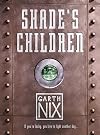
Let me start by saying, for anyone who hasn’t noticed, I absolutely adore Garth Nix’s Abhorsen trilogy. I had been looking to read more of his works, so I picked up Shade’s Children when I saw it on clearance at Half Price Books. I didn’t even read the back of the book before I purchased it – I just grabbed it and took it home. When I finally did read the back cover (see above), it sounded creepy, but interesting and different.
I don’t really know how to describe my thoughts on Shade’s Children. I really liked it, but I didn’t love it, and I can’t quite articulate why. It was original, interesting, intense, and disturbing. While there aren’t too many characters you get to know, the characters we meet are distinct and relatable even if their world is alien. I liked the book’s organization and pacing. The video archive chapters interspersed between action chapters seemed a little random at times, but they added to the overall depth of the characters and story. The quick pace fit the storyline, and I liked that Nix didn’t lay all the cards out on the table for the reader. There was just something missing for me, and I can’t figure out what it was.
In the end, if you pick this up looking for something akin to the Abhorsen trilogy, you may be disappointed. It definitely has a different feel, and it isn’t as captivating. However, I think it is a good book in its own right – it kept me engaged and I did really show more like it.
Rating: 4/5 show less
Let me start by saying, for anyone who hasn’t noticed, I absolutely adore Garth Nix’s Abhorsen trilogy. I had been looking to read more of his works, so I picked up Shade’s Children when I saw it on clearance at Half Price Books. I didn’t even read the back of the book before I purchased it – I just grabbed it and took it home. When I finally did read the back cover (see above), it sounded creepy, but interesting and different.
I don’t really know how to describe my thoughts on Shade’s Children. I really liked it, but I didn’t love it, and I can’t quite articulate why. It was original, interesting, intense, and disturbing. While there aren’t too many characters you get to know, the characters we meet are distinct and relatable even if their world is alien. I liked the book’s organization and pacing. The video archive chapters interspersed between action chapters seemed a little random at times, but they added to the overall depth of the characters and story. The quick pace fit the storyline, and I liked that Nix didn’t lay all the cards out on the table for the reader. There was just something missing for me, and I can’t figure out what it was.
In the end, if you pick this up looking for something akin to the Abhorsen trilogy, you may be disappointed. It definitely has a different feel, and it isn’t as captivating. However, I think it is a good book in its own right – it kept me engaged and I did really show more like it.
Rating: 4/5 show less
Originally posted at Read. Run. Study.
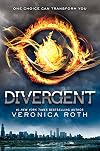
I knew very little about Divergent going into it, except that it has been touted as the next Hunger Games, seems popular among the book blogging community, and is being made into a movie. I wasn’t sure if I was going to like it, but I purposefully avoided spoiling myself on the story (and I will do my best not to spoil it for you if you haven’t read it).
I knew a tiny bit about the factions, because I had stumbled across a couple of reviews complaining about how unrealistic they thought the factions were. Honestly, I didn’t have a problem with the idea of the factions. Do I see any chance of a society like this developing? Well, no. But when you read science fiction and fantasy, you have to suspend disbelief a little. It did take me a little while to get the factions straight in my mind, but I think Roth did a good job with them and everything clicked into place as I read further.
Once the story got rolling, I loved it. Sure, Roth made a few choices with the plot that seemed a little too convenient, but it was a fun read and it worked. I think Roth did an excellent job with her characters – I easily connected with Tris and Four, and felt like I understood the other characters. This may be a spoiler, but I loved the way the relationship between Tris and Four developed. For once, a book romance didn’t feel forced – this felt real. It was slow and tentative, which was adorable and I loved it.
Oh, and I’m in love with Four. He show more is smart and masculine, but also sweet and vulnerable which is basically my perfect guy. It has been a while since I found myself this smitten with a book character, but Four is just awesome. I also liked Tris as a protagonist – I’m not sure that I can describe her character well, but she worked for me. My only annoyance was that Roth fell into some of the standard female protagonist traps with her a couple of times (the “what do you see in me?” and “I’m not pretty” kind of thing). But it wasn’t often and Tris was cool enough that I can forgive that.
Divergent was a fun, intense read with a lot of action that kept me hooked throughout. I needed to know what happened next. I even liked where Roth ended the book – it was satisfying, but left me wanting more. I understand where the Hunger Games comparison comes from, but Divergent didn’t feel like a clone. It was unique and interesting, and I think it could be a wildly successful trilogy if the second and third books hold up. I’m even looking forward to the movie – the trailers look good, though I’m hoping I can see Shailene Woodley as someone other than the Secret Life girl. I highly recommend Divergent to anyone who likes dystopians, but hasn’t picked it up yet. show less
I knew very little about Divergent going into it, except that it has been touted as the next Hunger Games, seems popular among the book blogging community, and is being made into a movie. I wasn’t sure if I was going to like it, but I purposefully avoided spoiling myself on the story (and I will do my best not to spoil it for you if you haven’t read it).
I knew a tiny bit about the factions, because I had stumbled across a couple of reviews complaining about how unrealistic they thought the factions were. Honestly, I didn’t have a problem with the idea of the factions. Do I see any chance of a society like this developing? Well, no. But when you read science fiction and fantasy, you have to suspend disbelief a little. It did take me a little while to get the factions straight in my mind, but I think Roth did a good job with them and everything clicked into place as I read further.
Once the story got rolling, I loved it. Sure, Roth made a few choices with the plot that seemed a little too convenient, but it was a fun read and it worked. I think Roth did an excellent job with her characters – I easily connected with Tris and Four, and felt like I understood the other characters. This may be a spoiler, but I loved the way the relationship between Tris and Four developed. For once, a book romance didn’t feel forced – this felt real. It was slow and tentative, which was adorable and I loved it.
Oh, and I’m in love with Four. He show more is smart and masculine, but also sweet and vulnerable which is basically my perfect guy. It has been a while since I found myself this smitten with a book character, but Four is just awesome. I also liked Tris as a protagonist – I’m not sure that I can describe her character well, but she worked for me. My only annoyance was that Roth fell into some of the standard female protagonist traps with her a couple of times (the “what do you see in me?” and “I’m not pretty” kind of thing). But it wasn’t often and Tris was cool enough that I can forgive that.
Divergent was a fun, intense read with a lot of action that kept me hooked throughout. I needed to know what happened next. I even liked where Roth ended the book – it was satisfying, but left me wanting more. I understand where the Hunger Games comparison comes from, but Divergent didn’t feel like a clone. It was unique and interesting, and I think it could be a wildly successful trilogy if the second and third books hold up. I’m even looking forward to the movie – the trailers look good, though I’m hoping I can see Shailene Woodley as someone other than the Secret Life girl. I highly recommend Divergent to anyone who likes dystopians, but hasn’t picked it up yet. show less
Originally posted at Read. Run. Study.
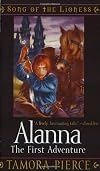
I picked Alanna up, because I had heard good things about the story. Unfortunately, it didn’t live up to my expectations. I liked the story and cared about some of the characters (Alanna, Jon, and George), but I didn’t love it. While a few parts grabbed me, it was underwhelming as a whole.
Alanna is a fairly typical middle-grade/young-adult protagonist – she is a tough little tomboy with a bit of stubborn streak. Alanna has a desire to follow her dream and fight her own battles, but she also knows when to turn to her friends and mentors. However, I felt like the relationships she had with some of the characters seemed weird given their ages. Alanna is only 11 years old at the beginning of the story, but all of the friends she makes are much older than she is (Jon and George are 4 and 7 years older, respectively). It was difficult to believe and didn’t feel right. Also, I may have read into things too much, but Pierce seemed to be laying the foundations of a future romance that made me squirm a little.
Having said all that, I think I would have liked it a lot more if I had read it as a kid. It was a short, easy read that could be a good introduction to the fantasy genre for a young girl. I’ll probably give this to my niece and nephew to see what they think and I’ll pick up the next installment if I see it, but I’m not desperate for it.
I picked Alanna up, because I had heard good things about the story. Unfortunately, it didn’t live up to my expectations. I liked the story and cared about some of the characters (Alanna, Jon, and George), but I didn’t love it. While a few parts grabbed me, it was underwhelming as a whole.
Alanna is a fairly typical middle-grade/young-adult protagonist – she is a tough little tomboy with a bit of stubborn streak. Alanna has a desire to follow her dream and fight her own battles, but she also knows when to turn to her friends and mentors. However, I felt like the relationships she had with some of the characters seemed weird given their ages. Alanna is only 11 years old at the beginning of the story, but all of the friends she makes are much older than she is (Jon and George are 4 and 7 years older, respectively). It was difficult to believe and didn’t feel right. Also, I may have read into things too much, but Pierce seemed to be laying the foundations of a future romance that made me squirm a little.
Having said all that, I think I would have liked it a lot more if I had read it as a kid. It was a short, easy read that could be a good introduction to the fantasy genre for a young girl. I’ll probably give this to my niece and nephew to see what they think and I’ll pick up the next installment if I see it, but I’m not desperate for it.
Originally posted at Read. Run. Study.
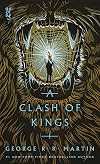
There are so, so many things I want to say about this book, but I promise there will be no spoilers. I’m going to start by saying that I loved it, and it definitely left me wanting more. George R. R. Martin isn’t for everyone – this series is full of coarse language, sex, violence, and death - but I think he is an amazing storyteller.
While this book read a little slower than A Game of Thrones overall, I think the pacing fit the plot well. As in A Game of Thrones, George R. R. Martin used multiple points of view to follow the events as they unfolded in different regions. I felt like A Clash of Kings was a little less linear in the narrative than A Game of Thrones. This fit the story, but could be confusing. I will say I reread more than a couple of chapters to be sure I knew what was going on.
A Clash of Kings followed many of the same characters that we met in the first book, but also introduced many new ones. Each character had their own motivations and approached situations in a unique way – there were no cookie cutter characters. While I hated some characters and loved others, I don’t think there was a single character that I couldn’t sympathize with. Even the seemingly vilest characters that I wanted to detest had some quality that made me almost want to root for them. I think we saw a lot of character development in this book, with many of the “old” characters learning new things about themselves. True to form, show more George R. R. Martin definitely abused his characters and had no qualms killing them off. Was I secretly terrified that he was going to kill off all of my favorite characters? Absolutely, but I kept on reading anyway.
I just love the way that George R. R. Martin can keep me guessing. There were a few points where I knew exactly where he was going with something, but I have to admit he frequently caught me off guard. I love that, because it seems so rare in the books I’ve read lately. He usually gives you clues, but doesn’t dangle the answers in front of your face immediately. For example, I love that he hinted at magic throughout A Game of Thrones, but we actually got to see it in A Clash of Kings. I’m actually really loving the way magic/sorcery has been handled in the series so far. I’m not sure I would have found it believable if I’d been confronted with it at the onset of the story, but he has done a good job of weaving it into the story.
I think I have nearly written a book myself here. I’m sure I sound like a fangirl, but I’m just going to say that I am completely captivated by this series, and it may honestly be one of the best epic fantasy series I have read. show less
There are so, so many things I want to say about this book, but I promise there will be no spoilers. I’m going to start by saying that I loved it, and it definitely left me wanting more. George R. R. Martin isn’t for everyone – this series is full of coarse language, sex, violence, and death - but I think he is an amazing storyteller.
While this book read a little slower than A Game of Thrones overall, I think the pacing fit the plot well. As in A Game of Thrones, George R. R. Martin used multiple points of view to follow the events as they unfolded in different regions. I felt like A Clash of Kings was a little less linear in the narrative than A Game of Thrones. This fit the story, but could be confusing. I will say I reread more than a couple of chapters to be sure I knew what was going on.
A Clash of Kings followed many of the same characters that we met in the first book, but also introduced many new ones. Each character had their own motivations and approached situations in a unique way – there were no cookie cutter characters. While I hated some characters and loved others, I don’t think there was a single character that I couldn’t sympathize with. Even the seemingly vilest characters that I wanted to detest had some quality that made me almost want to root for them. I think we saw a lot of character development in this book, with many of the “old” characters learning new things about themselves. True to form, show more George R. R. Martin definitely abused his characters and had no qualms killing them off. Was I secretly terrified that he was going to kill off all of my favorite characters? Absolutely, but I kept on reading anyway.
I just love the way that George R. R. Martin can keep me guessing. There were a few points where I knew exactly where he was going with something, but I have to admit he frequently caught me off guard. I love that, because it seems so rare in the books I’ve read lately. He usually gives you clues, but doesn’t dangle the answers in front of your face immediately. For example, I love that he hinted at magic throughout A Game of Thrones, but we actually got to see it in A Clash of Kings. I’m actually really loving the way magic/sorcery has been handled in the series so far. I’m not sure I would have found it believable if I’d been confronted with it at the onset of the story, but he has done a good job of weaving it into the story.
I think I have nearly written a book myself here. I’m sure I sound like a fangirl, but I’m just going to say that I am completely captivated by this series, and it may honestly be one of the best epic fantasy series I have read. show less
Originally posted at Read. Run. Study.
I don't think any review I could ever write would do this book justice as this is honestly one of the best book I have ever read.
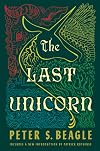
The Last Unicorn may be the most hauntingly beautiful story ever told. I remember watching the animated film adaptation of this book as a child, but somehow never read the book itself until now. Despite my familiarity with the storyline, I found myself drawn deep into Beagle's complex world. Reading this book was truly a magical experience. Beagle's command of language is beyond compare. The enchanting prose has a lyrical quality that enhances the story without threatening to overpower it. The narrative itself is deceptively simple, but it is an elaborate fairy tale that speaks of the human condition. The tale's bittersweet quality makes it all the more beautiful.
To say reading this book was a delightful experience is a vast understatement. This is a classic that will stay with me.
I don't think any review I could ever write would do this book justice as this is honestly one of the best book I have ever read.
The Last Unicorn may be the most hauntingly beautiful story ever told. I remember watching the animated film adaptation of this book as a child, but somehow never read the book itself until now. Despite my familiarity with the storyline, I found myself drawn deep into Beagle's complex world. Reading this book was truly a magical experience. Beagle's command of language is beyond compare. The enchanting prose has a lyrical quality that enhances the story without threatening to overpower it. The narrative itself is deceptively simple, but it is an elaborate fairy tale that speaks of the human condition. The tale's bittersweet quality makes it all the more beautiful.
To say reading this book was a delightful experience is a vast understatement. This is a classic that will stay with me.
Originally posted at Read. Run. Study.
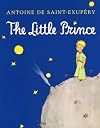
This is one of my favorite children’s books. It is a charming little story full of childish wonder and whimsy. The story can stand alone, but it can also serve as a thought provoking read and a teaching tool. Personally, my favorite lessons in this book are: 1) relationships require an investment of time and effort, and 2) our experiences shape our perspectives.
While I read the entire novella in just a couple of hours, I could easily see reading just a chapter or two a night to a young child. With a total of 26 chapters, this could provide several days of enjoyment. I also love the illustrations!
This is one of my favorite children’s books. It is a charming little story full of childish wonder and whimsy. The story can stand alone, but it can also serve as a thought provoking read and a teaching tool. Personally, my favorite lessons in this book are: 1) relationships require an investment of time and effort, and 2) our experiences shape our perspectives.
While I read the entire novella in just a couple of hours, I could easily see reading just a chapter or two a night to a young child. With a total of 26 chapters, this could provide several days of enjoyment. I also love the illustrations!
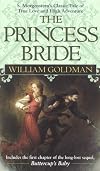
Originally posted at Read. Run. Study.
I love the characters and the story itself. Goldman is an excellent storyteller. He easily balances the dramatic with the humorous both within the narrative itself and in his asides regarding the S. Morgenstern book. In fact, he writes so seriously about the S. Morgenstern book that it would be easy to believe it was real. Goldman's asides are funny and entertaining, and I got caught up in the story despite knowing what was going to happen.
Having said all that, I don't think this book can be reviewed without also considering the movie. The movie is a very accurate adaptation of the book with mostly minor changes. While I preferred the way Inigo and Fezzik enter the Zoo of Death in the book, I preferred the overall tone and the ending of the movie. Between the incredible casting and the more satisfying ending, this is a rare case in which I actually liked the movie adaptation better than the book.
That is not to say; however, that I would not recommend the book. I absolutely would recommend this book. Goldman is an original and there is genius in this narrative. Just don't take him (or yourself) too seriously. (Oh, and feel free to skip Buttercup's Baby - it doesn't really add anything worthwhile.)
I love the characters and the story itself. Goldman is an excellent storyteller. He easily balances the dramatic with the humorous both within the narrative itself and in his asides regarding the S. Morgenstern book. In fact, he writes so seriously about the S. Morgenstern book that it would be easy to believe it was real. Goldman's asides are funny and entertaining, and I got caught up in the story despite knowing what was going to happen.
Having said all that, I don't think this book can be reviewed without also considering the movie. The movie is a very accurate adaptation of the book with mostly minor changes. While I preferred the way Inigo and Fezzik enter the Zoo of Death in the book, I preferred the overall tone and the ending of the movie. Between the incredible casting and the more satisfying ending, this is a rare case in which I actually liked the movie adaptation better than the book.
That is not to say; however, that I would not recommend the book. I absolutely would recommend this book. Goldman is an original and there is genius in this narrative. Just don't take him (or yourself) too seriously. (Oh, and feel free to skip Buttercup's Baby - it doesn't really add anything worthwhile.)
Originally posted at Read. Run. Study.
I have always been fascinated with African wildlife, so I am drawn to books like this one. The author, Peter Allison, tells a series of stories from his time as a safari guide in Africa. The book is an easy, lighthearted read. Mr. Allison has a great sense of humor and clearly has a lot of respect and admiration for the animals he shares his life with. Some of his adventures were reckless, but he acknowledges that and pokes fun at himself for them. Overall, this is a quick read that provides a fun behind the scenes look at the life of a young safari guide while letting you learn a little about the region and the animals that inhabit it.
I have always been fascinated with African wildlife, so I am drawn to books like this one. The author, Peter Allison, tells a series of stories from his time as a safari guide in Africa. The book is an easy, lighthearted read. Mr. Allison has a great sense of humor and clearly has a lot of respect and admiration for the animals he shares his life with. Some of his adventures were reckless, but he acknowledges that and pokes fun at himself for them. Overall, this is a quick read that provides a fun behind the scenes look at the life of a young safari guide while letting you learn a little about the region and the animals that inhabit it.
Originally posted at Read. Run. Study.
This book has always been a favorite in my family. I enjoyed this book when I read it as a child, and also enjoyed rereading it now as an adult. The characters are likable and the concepts are well done. I easily saw myself in the time savers as I realized how much effort I expend on improving efficiency without feeling like I have gained the time I tried so hard to save. I found this especially haunting given that the book was originally written in the early 70's. Overall, this is a cute story with a great message to children and adults alike - take time to slow down and relax.
This book has always been a favorite in my family. I enjoyed this book when I read it as a child, and also enjoyed rereading it now as an adult. The characters are likable and the concepts are well done. I easily saw myself in the time savers as I realized how much effort I expend on improving efficiency without feeling like I have gained the time I tried so hard to save. I found this especially haunting given that the book was originally written in the early 70's. Overall, this is a cute story with a great message to children and adults alike - take time to slow down and relax.
Originally posted at Read. Run. Study.
Reading even the first few pages of Dear John tells you this story will not have a happy ending. The story is written as if John is telling it himself, and he already knows how it ends. There is a touch of sadness to the way the story is told, but I still felt the joy of John and Savannah's first carefree summer together. Overall, I loved Nicholas Sparks' writing style and the way he lead me through each emotion with John. I loved the characters and while John and Savannah's relationship blossomed quickly it was written realistically. The relationship is affected as much by internal factors (personality, history, etc) as the external factors shown in most books. As much as I wanted a happy ending for everyone, the bittersweet ending was more or less what I expected.
In the end, this was the first Nicholas Sparks novel I have read, but it will likely not be my last.
Reading even the first few pages of Dear John tells you this story will not have a happy ending. The story is written as if John is telling it himself, and he already knows how it ends. There is a touch of sadness to the way the story is told, but I still felt the joy of John and Savannah's first carefree summer together. Overall, I loved Nicholas Sparks' writing style and the way he lead me through each emotion with John. I loved the characters and while John and Savannah's relationship blossomed quickly it was written realistically. The relationship is affected as much by internal factors (personality, history, etc) as the external factors shown in most books. As much as I wanted a happy ending for everyone, the bittersweet ending was more or less what I expected.
In the end, this was the first Nicholas Sparks novel I have read, but it will likely not be my last.
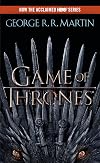
Originally posted at Read. Run. Study.
I’m going to deviate from my typical format and list my thoughts here in bullets.
•It is refreshing to have an author who is willing (though maybe a little too eager) to kill his characters. It allows me to actually worry about the characters when they get into dangerous situations, because I know they aren’t invincible.
•Unlike a lot of fantasy series that focus on magic, destiny, romance and whatnot, George R. R. Martin focuses on political intrigue and posturing. It almost feels like historical fiction with magic undertones, but I’m told there is more magic later in the series.
•Nothing in this book is black and white – everything is a shade of gray, which adds an air of realism to the story.
•The story switches perspectives between 9 viewpoint characters. It took a few chapters to get used to, but I liked it because it showed more of the world and events than following a single protagonist would have been able to. (A single protagonist cannot be everywhere and know everything despite some author’s beliefs.) It also lets you get into each character’s head so you can better understand their motivations.
•Also, it is a welcome relief to read about characters with realistic motivations.
•Unfortunately, I will say I had some difficulty keeping the non-perspective characters straight. I’m pretty sure I still have a few of them confused.
•Definitely geared towards a mature audience – lots of swearing, sex, incest, show more and violence. I did not have a problem with it, but I know some people do.
•I definitely want to read on – my only hesitation is that this is book #1 of 7 and the last two have not been published. show less
I’m going to deviate from my typical format and list my thoughts here in bullets.
•It is refreshing to have an author who is willing (though maybe a little too eager) to kill his characters. It allows me to actually worry about the characters when they get into dangerous situations, because I know they aren’t invincible.
•Unlike a lot of fantasy series that focus on magic, destiny, romance and whatnot, George R. R. Martin focuses on political intrigue and posturing. It almost feels like historical fiction with magic undertones, but I’m told there is more magic later in the series.
•Nothing in this book is black and white – everything is a shade of gray, which adds an air of realism to the story.
•The story switches perspectives between 9 viewpoint characters. It took a few chapters to get used to, but I liked it because it showed more of the world and events than following a single protagonist would have been able to. (A single protagonist cannot be everywhere and know everything despite some author’s beliefs.) It also lets you get into each character’s head so you can better understand their motivations.
•Also, it is a welcome relief to read about characters with realistic motivations.
•Unfortunately, I will say I had some difficulty keeping the non-perspective characters straight. I’m pretty sure I still have a few of them confused.
•Definitely geared towards a mature audience – lots of swearing, sex, incest, show more and violence. I did not have a problem with it, but I know some people do.
•I definitely want to read on – my only hesitation is that this is book #1 of 7 and the last two have not been published. show less