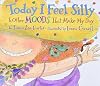
I got this book when I turned 5 years old. I remember when I would get upset that my mom would bring me the book and flip to the last page where you can turn a wheel and put different expressions on the young girl's face. I would suggest to parents not to give the book to a child who is very angry, like my mom did to me, because I ripped the last page of the book out. No worries, my dad fixed it. Overall, great book to show children different types of mood and GREAT illustrations.
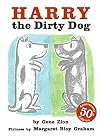
This is a silly, fun read for young readers. Harry the dog hates his bathes, so he runs away in the hopes of avoiding bath time. When he gets homesick, he goes home but his family does not recognize him. He has become so dirty that he changed from a white dog with black spots to a black dog with white spots. The story has a feel-good ending with Harry sleeping soundly back at home after a bath. There is a small moral, (if you run away there is a chance you may not get to go back home) but overall I think the book's purpose is for entertainment.
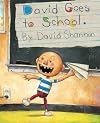
When David goes to school, his teacher is constantly correcting all his misdoings. David chews gum in class, doesn't keep his hands to himself, and draws all over the desk. I noticed how patient the teacher was, continually correcting him up until he writes on the desk. He then receives a punishment to stay after school and clean all the desks. My favorite part of this book is that he receives a star for cleaning the desk even though he was in "detention." This reminded the teacher in me to, even if there is a misbehaving student, be sure and point out the positive aspects of the student.
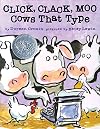
Reading this book now, compared to when I read it as a little girl, I noticed more of the text instead of the concept. The book contains great vocabulary words like: strike, impatient, neutral party, ultimatum. I think that when I read this when I was young, I would just skip over the word not knowing what it meant. This could be a great opportunity to read to children and ask them to use context clues. A funny, great book.
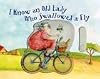
This sill book was one of my favorites when I was a young girl. The more and more animals the old lady ate, the harder I laughed. I especially liked this book because while my mother read, I would get to pull string and paper cut-outs and make the illustrations come to life. This kept me interested and made me feel important. I love how each page not only explains why she ate said animals, but it repeats the long list of previous eaten animals so we remember all the things rumbling around in her tummy. Still a classic to me!
Red by Jan De Kinder
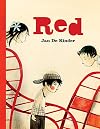
Bullying is, unfortunately, a common thing among children. Actually, it is a common thing among people. Jan De Kinder creates a situation where a young boy is being teased about his blushing cheeks. When the teacher intervenes, at first, no one will speak up. Eventually, the girl who's point of view the story is told from, has the courage to be the first to raise her hand. She is followed by other students who wish to answer the teacher truthfully. This book shows the important of sticking up for what is right, and coming together as a group to be stronger.

This book would be great for pre-k - kindergarten students. It flows very nicely, not always rhyming, but almost like a see-saw. I related to this book because when I was younger, I felt out of place because I was being bullied at school. My mom noticed my loneliness and decided to get me a puppy. I remember loving my dog, Zoe, and feeling like she was my best friend. This is a very sweet book that warms the reader's heart about how good a pet can be for a lonely heart.
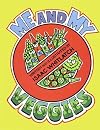
I am thoroughly impressed with the skills of this young author! I loved how dramatic he made his hate for vegetables and the lengthy descriptions of each one. I was reading this to my mom and we were both cracking up! I think this book is easily, I know it was for me, relatable for children. We all had our way of getting rid of unwanted food, and Isaac Whitlatch gives us his "secret weapons." I would have liked to see the ending showing us that maybe Isaac changed his mind about how he feels about vegetables, but maybe he made it that way because he never did change his mind about veggies! A very well written and illustrated book.
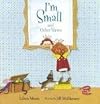
This poem book focuses a lot on the different senses. Some poems go into detail about the whether, the feel of sand or an arm that has fallen asleep, and sight. They are short, simple poems that make it easy for young readers to read and follow along.
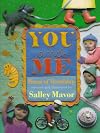
"You and Me: Poems of Friendship" covers the different friendships between boys and girls, children and their pets, and children and their parents. The book contains many poems selected by Sally Mavor. It was interesting to see how she chose certain poems and drew what she gained from those poems. I was happy to see Langston Hughes' poem, "Hope," because we are currently reading his novel, "Not Without Laughter," in my African American literature class. I think this book would be a introduction to poetry for 1st-3rd grade. I would assign each student a different poem and ask them what they think it means and what it means to them.
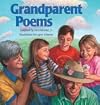
When I first started reading these poems they made me sad since I have lost both grandfathers. I began to think this was not the best book for every child because it could be painful to read if they had lost a grandparent. Throughout the book, I began to see the author write poems for grandchildren who lost a grandparent and for those who have never met their grandparent (which I completely forgot was a very real possibility). I also noticed that the poems are diverse, including different races and building off different cultures. This is a beautiful, loving picture book.
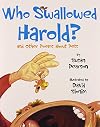
"Who Swallowed Harold?" is filled with goofy animal poems that vary in length and reading level. My favorite is "Do Goldfish Pee?" I cracked up over this poem, so I know many young readers would as well. I think that this could be used as a reward or something to I could use to close my lessons. I remember when I was in second or third grade, my teachers would say, "If you all are quiet and we get done all the work we have planned for today, I will read a story out of Chicken Soup for the Soul." We all made sure we remind quiet and stayed focus in the hopes of having a chapter read to us at the end of class. Some of these poems are very still, so I think to use it at the end of a lesson would be the best option.
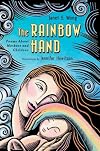
I really enjoyed these poems about mothers. I agree with the author in her forward message about how she did not appreciate all her mother had done for her until she recently became a mother. Although I am not a mother yet, since I have gotten older, I see all that my mother sacrifices and does for me and my family. Some of these poems touched my heart because I could relate them back to when I was younger. Other poems, especially "Crazy Mother," I had a hard time understanding. Overall, I enjoyed the different tones and styles of each poem.
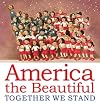
This is a beautifully illustrated and written book. It shows many cultures and races coming together in America as one. Each page is filled with different and unique illustrations, which I think represents the uniqueness of each individual represented on the different pages. I like how there are different ways you could read this book. One way is to go through each page only saying the lyrics to the song, "America, The Beautiful." Another way is once you have read the lyrics, you can start from the beginning of the book and only read the quotes that are on each page. The last way you could read it is by alternating on each page reading the lyrics or the song. I think another important aspect of this book are the symbols presented on each page. In the back of the book, it lists the national landmarks and symbols and their significance. I would definitely use this book in a social studies class for grades 1st-2nd.
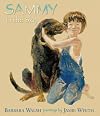
Death is always a hard topic to talk about and begin to explain to young children. I think the author, Barbara Walsh, does a great job telling a short story of a family losing their beloved dog. I was surprised at how in detail she went in describing the dog's passing, but I think it was not too overwhelming and was a crucial to her point. She wants her readers to see the reality of death and paint a sad, but realistic, picture. This reminded me of when my first dog, Midnight, died when I was a young girl. It was hard for me to understand and accept, and I feel that I, along with other children, could have benefited from this picture book.
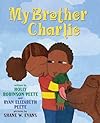
This book brought me to tears. From experience, I know the fear that comes with being told by doctors that your bother might not ever let you hug him, kiss him, or say, “I love you.” Doctors told my family and I that my brother would probably never do all those things, but he does. This book gives a perfect representation of what life is like to have a sibling with autism. I enjoyed seeing Charlie grow and learn how to show love in different ways and his family accepting his differences, loving him for who he is. I also like how the book ends with them completing a puzzle and Charlie putting in the last piece. I think it is not a coincidence that he is not only putting in the last piece to complete the puzzle (like he completes his family) but also that a puzzle piece represents the complexity of autism. Charlie has autism, but autism doesn’t have autism. This is such a powerful statement, and my favorite part of the whole book.
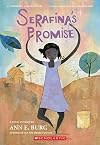
Serafina is an eleven-year-old girl who is growing up in poverty in Haiti. Her loving mother, father, and grandmother live with her in a small shack house. Everyday, she helps with chores around the house and walks a long ways in oder to give her pregnant mother water to use for cooking and cleaning. She aspires to go to school and study to become a doctor, but her family already struggles to put food on the table, let alone have enough money for school. Eventually, even after a flood washes away their home, Serafina's garden helps saves enough money for her to begin school. Not long after Christmas break is over, an earthquake leaves her dazed and confused, far away from home. Although she is bruised and weak, she carries herself to go find her father. She is reunited with him, but confesses she did not go straight home after school. Apologetic and sorrowful, Serafina continuities to apologize when her father tells her that if she had not come looking for him, he would have died under the debris.
This novel broke my heart and made me feel somewhat guilty. I am constantly forgetting how blessed I am to have a roof over my head, food always available, and a bed to sleep in at night. As I look at the characters, especially Julie Marie) that live day by day in undesirable conditions, yet their hearts are filled with nothing but love and joy. They praise God for what little they own and always have hope, while I complain about stupid things like running out of ketchup or show more forgetting my laptop charger at my friend's house. This book shows the raw reality of the living situations in other countries. I think it is an amazing book and would easily grab young reader's attention and help them, as it did me, to remember to appreciate the things we take for granted.
I don't fully understand why the author, Ann Burg, wrote in verse form, but it somehow made the book more meaningful. Because it was broken into parts and not chapters, I felt like it flowed more easily and we could walk with Serafina and all the obstacles she had to overcome. I would 100% have this book in my classroom library. show less
This novel broke my heart and made me feel somewhat guilty. I am constantly forgetting how blessed I am to have a roof over my head, food always available, and a bed to sleep in at night. As I look at the characters, especially Julie Marie) that live day by day in undesirable conditions, yet their hearts are filled with nothing but love and joy. They praise God for what little they own and always have hope, while I complain about stupid things like running out of ketchup or show more forgetting my laptop charger at my friend's house. This book shows the raw reality of the living situations in other countries. I think it is an amazing book and would easily grab young reader's attention and help them, as it did me, to remember to appreciate the things we take for granted.
I don't fully understand why the author, Ann Burg, wrote in verse form, but it somehow made the book more meaningful. Because it was broken into parts and not chapters, I felt like it flowed more easily and we could walk with Serafina and all the obstacles she had to overcome. I would 100% have this book in my classroom library. show less
David Adler created a book that incorporates geometry with a twist of monsters. Throughout the book, the reader follows along, using mathematics, to solve and help out characters with things like knowing how much fence to build around a house, which popcorn container is larger, and what size raincoats each monster needs to stay dry. The only thing I questioned is if the storyline would grab the interest of a 4th or 5th grader. I’m not positive on when some of these methods are taught, but I would judge this book by illustrations and storyline to be around 1st and 2nd grade. I would judge the text and concepts to be around 4th and 5th grade. I do think, however, that it explains in the text and the illustrations very as to not loose the reader during some of the math equations.
At the beginning of this book, I thought that it has a cute storyline and I was interested in the plot. As the book continued, I started to get more and more confused. At a family reunion, family members start arriving and rearranging the tables in the hopes of being able to sit by each other. Mrs. Comfort, the hostess, tries to explain to her guests that if they continue to push tables together, it will not leave enough seats for the other guests. As more and more people arrive, the guests continue to change the seating arrangements. At the end, the tables and chairs are put back the way they were originally set up in order to fit all 32 family members and friends. I think that this was a good idea to explain to children perimeter and possibly other mathematics, but it was lost, for me, in the confusion of trying to picture each new arrangement. I think it would have been very beneficial if on each page the new arrangement could have been drawn on the side. Because I got lost in the text, I'm not sure if I would use this in my classroom. I could possibly use it as a teaching opportunity and ask the students to go on the board and try and draw the different arrangements.
"An Egg Is Quiet" is filled with different types of animals and the eggs they lay. Throughout the book, it goes into detail about the appearance, life, and habitat of different types of eggs. I did not notice until halfway through the book that almost all the illustrations were labeled with the type of egg or animal. I had to restart the book so I could properly appreciate the time and effort that went into making a seemingly simple book have so much research and detail put into the illustrations. My favorite part of this book was the end pages. It was neat to see the eggs at the beginning and all the animals they hatch into at the end. My only suggestion would have been to place the animals in the same place they were located at as eggs in the beginning. This would make it easier for the reader to flip back and forth to more easily see the egg that matches the hatched animal. I think this book is very interesting and informative. I would include this book in my science class.
I was shocked after I read this book to see that it was published in 1987. I know the weather has probably not changed a great deal in the past 30 years, but it seemed like a recently published book. "Wild, Wet, and Windy" goes into detail about the many different weather conditions that takes place throughout the world. It breaks down step by step how things like rain, hurricanes, tornados, and snow form. There are also facts all over the pages about that particular weather condition. I think this is would be a great book for science class for not only its detailed text, but also its organization. All the steps and facts are outlined in boxes and are numbered. This really helps the reader not get overwhelmed with all the information provided on the page. I would definitely have this book in my science class, despite its age.
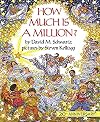
I think this book is a fantastic book! I truly believe it would grab many reader's attention, as it grabbed my attention as a young adult. It puts large numbers like a million and a billion into perspective. I enjoyed learning that counting to a million years would take about 23 days and counting to a billion would take about 95 years. I did not think about, until we discussed it in class, how David Schwartz, the author, came up with these measurements. I think that it is crucial to have the last page which explains how he did all his calculations. Although I did not think about it, I'm sure one of my students would ask, "How did he know that?" The only thing I did not particularly like was the ending. I turned the last page without even knowing it and was slightly surprised. Overall, I enjoyed this book, and I know my students/children would as well.

I think Rebecca Dotlich, the author, created the perfect book to introduce square shapes. She gives young readers (toddlers) realistic examples of squares on each page. I think rhyming throughout the book is another great way to keep the readers interested. My favorite part of the book is the last page, where she put many objects (square, triangular and round) on a page and encouraged the reader to find the squares. I think this book would be beneficial when introducing squares to young children.
Amelia Bedelia is going to help Miss Edwards at the science fair. She is not as helpful as she thinks because she gets confused easily and takes everything that is told to her very literally. Whenever she tries to help a student, she ends up making a mess. I enjoyed Amelia Bedelia books when I was younger. I was always laughing at the funny things she would say and do. Looking at it from an academic perspective, it can provide young readers with a relaxing, easy read, but, I think, it is not the most beneficial book for a science class. It briefly covered some scientific topics but nothing too in depth. I think overall it was a funny and interesting book, but I do not think I would use it in my lesson plan. I do think, however, I would have it in my classroom library.
Jim Haskins and Kathleen Benson take readers through numbers one through ten while giving informational background on Brazil. The number has some significance as to what the information will be about. The book goes over things including: food, regions ethnic groups, and animals. I think that this is a good, short, information picture book that gives kids an insight on another countries culture and history.
This book was very informative about money and taught me things I did not know. It went over the history of money, how it is made, and what the future of money might be. Although this book is very informative and at times interesting, I found that it was somewhat dragged out. I found myself loosing interest, possibly because I am not a big history person, towards the end of the book. I cannot help but think if I was loosing interest, would other young readers? Overall, I do think that this book would be beneficial during a social studies class and to have in my classroom library.
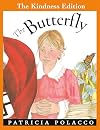
This story is set in Paris, France during World War II. Monique discovers a young girl around her age, Sevrine, has been living in her basement without her knowing for "a very long time." They develop a friendship despite the inconvenience that they can only see each other at night without anyone knowing they are together. The story shows the reader a struggling jewish family during WWII. They are forced to live in hiding in Monique's basement in fear that they will be taken away from the Nazi soldiers. Throughout the story, Monique tries to bring happiness from the outside world to her new friend, but in the end, Sevrine and her family must leave in order to stay safe.
At the end of the book, Monique tells her mother, "Sevrine sent them, I know it! She and her parents are safe." She is talking about the butterflies and how she and Sevrine once played with them. I didn't know if I should take this as they are safe from the Nazis or they are safe in a "better place" and they passed away. Either way, I love how the author connected the butterflies to life and joy throughout the book.
At the end of the book, Monique tells her mother, "Sevrine sent them, I know it! She and her parents are safe." She is talking about the butterflies and how she and Sevrine once played with them. I didn't know if I should take this as they are safe from the Nazis or they are safe in a "better place" and they passed away. Either way, I love how the author connected the butterflies to life and joy throughout the book.
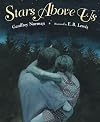
This is a heart warming story about a young girl, Amanda, and her father who is leaving for the armed forces. The story starts by having Amanda explain to her father that she does not want to go to sleep because she is afraid of the dark. Her father takes her outside and shows her all the beautiful things that come out during the night time. He points out different stars and she finds comfort in them. He decorates her room just like the stars in the night sky so she will not be scared when he is away. The story surprised me by having the dad sent away for a long time to go into the military. I loved how the author, Geoffrey Norman, did not sugarcoat the situation. The book tells that the father will be gone for a long time and it is dangerous where he is instead of saying "I'll be right back" or "You shouldn't worry, I'll be fine." I appreciate this realistic picture Norman is painting for his readers and in return, I believe his readers can feel more connected to the story.
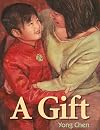
Amy’s mother always feels homesick whenever it’s Chinese New Year because her family is half way across the world. Amy has never meet her Uncle Zhong, Uncle Ming, or Aunt Mei, but they often send her letters. This Chinese New Year, her aunt and uncles sent her a dragon necklace that is the symbol of China. This short story allows the reader to take a brief tour of parts of China through the text but also through the beautiful illustrations. It surprised me that the main point was not about the Chinese New Year, but about how Amy's aunt and uncles found and made her necklace. I wished that the book gave more information about Chinese New Year's (although it does go into detail on the author's note page). Overall, I really enjoyed the illustrations and gain a small insight of a different culture.
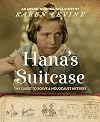
Every time I read a book about the Holocaust, I wonder if it will not appeal to me because it will be similar to previous stories I have already read or heard. Each time, I am confronted with a new person's horrific story and become engrossed in the story. "Hana's Suitcase" tells the tragic story of a family being torn apart during the Holocaust. The author, Karen Levine, combines Hana and her family's story with Fumiko Ishioka and her journey to find out more about Hana's life. The author organized this book in a particular way so that the reader can follow along two different journeys. As we see Fumiko discovering new things about Hana and her life, we are thrown back into time to see Hana discovering new, but harsh and depressing places. Where Hana's journey ends (death), we see Fumiko take off uncovering new information, such as Hana's brother George, who gives her more information than she thought might be impossible to find. I think this method of arrangement was done to not only show both Hana and Fumiko side by side, but it showed me, the reader, the true struggles of this book. Once the struggle of discovering and searching for Hana and her family was finished, we could only then see the true struggle of a Jewish family during the Holocaust.