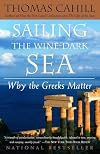
From Audible.com: Best selling history writer Thomas Cahill continues his series on the roots of Western civilization with this volume about the contributions of ancient Greece to the development of contemporary culture. Tracing the origin of Greek culture in the migrations of armed Indo-European horsemen into Attica and the Peloponnesian peninsula, he follows their progress into the creation of the Greek city-states, the refinement of their machinery of war, and the flowering of intellectual and artistic culture. Cahill credits the Greeks with creating Western militarism, shaping Christianity, and giving us the intellectual foundations on which we base everything from dictionaries to filing systems. Cahill ably demonstrates the fascinating uniqueness of ancient Greek culture, but also shows its startling reincarnations in contemporary contexts.

(1962-66) Here are 69 issues of a monthly journal on the theory and application of Objectivism. This 1,120-page volume covers a fascinating range of issues -- from a radical analysis of the nature of concepts to a piercing description of life for dissidents in Soviet Russia, from an examination of the requirements of mental health to an intriguing explanation of why Calumet "K" was Ayn Rand's favorite novel.
Special Bonus: Six pages of the essay, "The Rational Faculty," from her personal journal of 1945, revealing her "thinking out loud" about the crucial philosophic link between individualism and reason.
Special Bonus: Six pages of the essay, "The Rational Faculty," from her personal journal of 1945, revealing her "thinking out loud" about the crucial philosophic link between individualism and reason.

(1962-66) This 224-page volume is a penetrating, philosophical dissection of the events and ideas dominating our culture.
Among its contents: an elucidation of the two political issues with which the practical fight for freedom should begin; a moving tribute to Marilyn Monroe; illuminating reviews of books by authors as diverse as Victor Hugo and Mickey Spillane; and replies to questions about Objectivism in the "Intellectual Ammunition Dept."
Special Bonus: A page from Ayn Rand's handwritten manuscript -- with her editorial changes -- containing The Fountainhead's opening and closing paragraphs.
Among its contents: an elucidation of the two political issues with which the practical fight for freedom should begin; a moving tribute to Marilyn Monroe; illuminating reviews of books by authors as diverse as Victor Hugo and Mickey Spillane; and replies to questions about Objectivism in the "Intellectual Ammunition Dept."
Special Bonus: A page from Ayn Rand's handwritten manuscript -- with her editorial changes -- containing The Fountainhead's opening and closing paragraphs.
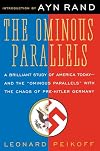
Subtitle: The End of Freedom in America
Nazism, Dr. Peikoff argues, was made possible by the German philosophers who advocated unreason and self-sacrifice—and whose ideas now rule American universities.
"The Ominous Parallels offers a truly revolutionary idea in the field of the philosophy of history. (It) is clear, tight, disciplined, beautifully structured and brilliantly reasoned."—AynRand
Nazism, Dr. Peikoff argues, was made possible by the German philosophers who advocated unreason and self-sacrifice—and whose ideas now rule American universities.
"The Ominous Parallels offers a truly revolutionary idea in the field of the philosophy of history. (It) is clear, tight, disciplined, beautifully structured and brilliantly reasoned."—AynRand
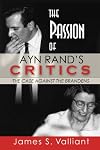
This explosive book lays to rest the myths about Ayn Rand's life and character that have been promulgated by her detractors. It is highlighted by extensive, never-before-published personal journal entries of Ayn Rand. These passages are immensely valuable, not only in revealing the claims of Rand's critics to be profoundly inaccurate and unjust, but also in showcasing her epochal mind at work resolving complex questions of personal life.

From the title essay: "A philosophic system is an integrated view of existence. As a human being, you have no choice about the fact that you need a philosophy. Your only choice is whether you define your philosophy by a conscious, rational, disciplined process of thought . . . or let your subconscious accumulate a junk heap of unwarranted conclusions."

In this profoundly original presentation of a rational esthetics, Miss Rand holds that the distinguishing characteristic of top rank Romantic writers ". . . (apart from their purely literary genius) is their full commitment to the premise of volition in both of its fundamental areas: in regard to consciousness and to existence, in regard to man's character and to his actions in the physical world. Maintaining a perfect integration of these two aspects, unmatched in the brilliant ingenuity of their plot structures, these writers are enormously concerned with man's soul (i.e., his consciousness).
"They are moralists in the most profound sense of the word; their concern is not merely with values, but specifically with moral values and with the power of moral values in shaping human character. Their characters are 'larger than life,' i.e., they are abstract projections in terms of essentials. In their stories, one will never find action for action's sake, unrelated to moral values."
"The events of their plots are shaped, determined and motivated by the characters' values (or treason to values), by their struggle in pursuit of spiritual goals and by profound value-conflicts."
"Their themes are fundamental, universal, timeless issues of man's existence—and they are the only consistent creators of the rarest attribute of literature: the perfect integration of theme and plot, which they achieve with superlative virtuosity."
"If philosophical significance is the criterion of what is show more to be taken seriously, then these are the most serious writers in world literature."
A profoundly original presentation of a rational esthetics. show less
"They are moralists in the most profound sense of the word; their concern is not merely with values, but specifically with moral values and with the power of moral values in shaping human character. Their characters are 'larger than life,' i.e., they are abstract projections in terms of essentials. In their stories, one will never find action for action's sake, unrelated to moral values."
"The events of their plots are shaped, determined and motivated by the characters' values (or treason to values), by their struggle in pursuit of spiritual goals and by profound value-conflicts."
"Their themes are fundamental, universal, timeless issues of man's existence—and they are the only consistent creators of the rarest attribute of literature: the perfect integration of theme and plot, which they achieve with superlative virtuosity."
"If philosophical significance is the criterion of what is show more to be taken seriously, then these are the most serious writers in world literature."
A profoundly original presentation of a rational esthetics. show less
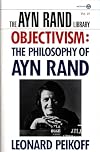
"The book presents Ayn Rand's entire philosophy, building it up step by step from its axiomatic base to its value-implications for man's life—from 'existence exists' to egoism in ethics, capitalism in politics and Romanticism in esthetics. The 12 terse chapter headings are indicative of the book's essentialized, absolutist approach: Reality, Sense Perception and Volition, Concept-Formation, Objectivity, Reason, Man, The Good, Virtue, Happiness, Government, Capitalism, and Art. The book is the product and pinnacle of a lifetime devoted to understanding Objectivism."

The first and only electronically searchable, totally comprehensive reference work for the history-changing ideas of Ayn Rand. Including Anthem, We The Living, The Fountainhead, Atlas Shrugged, and the vast majority of her non-fiction writing, as well as Objectivism: The Philosophy of Ayn Rand, and other works.
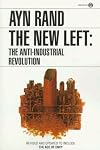
In the original edition, Ayn Rand named the intellectual roots of the New Left. Her articles ranged from a discussion of the fundamental goals of the student "rebellion," to an examination of egalitarianism in our "age of envy," to a dissection of the evils of "Progressive" education.
This new edition underscores the continuing relevance of Ayn Rand's analysis of the period. Now, Mr. Schwartz writes, "The trappings of the New Left are gone, but its substance has endured." The same "anti-industrial revolution" is being waged today—primarily in the form of two powerful movements: environmentalism and multiculturalism, which "are scions of the New Left, zealously carrying on its campaign of sacrificing progress to primitivism." Mr. Schwartz develops this theme of primitivism in each of his three essays: "The Philosophy of Privation," "Multicultural Nihilism" and "Gender Tribalism."
Read this book and discover how our culture is being slowly dragged back to the age of primitivism—and what needs to be done to establish the opposite: an age of reason, individualism and progress.
This new edition underscores the continuing relevance of Ayn Rand's analysis of the period. Now, Mr. Schwartz writes, "The trappings of the New Left are gone, but its substance has endured." The same "anti-industrial revolution" is being waged today—primarily in the form of two powerful movements: environmentalism and multiculturalism, which "are scions of the New Left, zealously carrying on its campaign of sacrificing progress to primitivism." Mr. Schwartz develops this theme of primitivism in each of his three essays: "The Philosophy of Privation," "Multicultural Nihilism" and "Gender Tribalism."
Read this book and discover how our culture is being slowly dragged back to the age of primitivism—and what needs to be done to establish the opposite: an age of reason, individualism and progress.
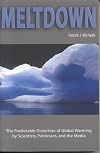
Meltdown: The Predictable Distortion of Global Warming by Scientists, Politicians, and the Media by Patrick J. Michaels
Amazon Description:
This spirited critique challenges the conventional doom saying about global warming. Climatologist Michaels acknowledges that the earth is warming because of anthropogenic emissions of carbon dioxide and other greenhouse gases, but he insists that the warming will probably be modest and that nature and humanity will easily adjust to it. Writing in a lucid, engaging style supported by a mountain of data, he debunks such recent scare stories as melting ice caps and glaciers, intensifying storms and droughts, species die-offs and a Day After Tomorrow–style ice age. He argues that researchers and reporters mistakenly ascribe normal fluctuations in local weather to global warming and commonly ignore the facts (reports that the Pacific island nation of Tuvalu is being submerged by rising sea levels, for example, ignored research demonstrating that sea levels in that region have actually been falling). Michaels, who is a fellow at the libertarian Cato Institute, sometimes allows his own agenda to intrude. Advocates of the precautionary principle will note that he fails to demonstrate his claim that "there is no known, feasible policy that can stop or even slow these climate changes." And while he chalks up global warming alarmism to an unholy alliance of climatologists hungry for grants and media sensationalism, his remedy for biased science is not better science but a "wider source of bias" in the form of more funding of climatology by the fossil fuel show more industry. He also calls for the abolition of academic tenure—a crushing blow against an independent professorate that libertarians and their allies in the world of academia view as the intellectual wellspring of the regulatory state. Nonetheless, Michaels’s challenge to global warming orthodoxy should invigorate the debate over climate change. show less
This spirited critique challenges the conventional doom saying about global warming. Climatologist Michaels acknowledges that the earth is warming because of anthropogenic emissions of carbon dioxide and other greenhouse gases, but he insists that the warming will probably be modest and that nature and humanity will easily adjust to it. Writing in a lucid, engaging style supported by a mountain of data, he debunks such recent scare stories as melting ice caps and glaciers, intensifying storms and droughts, species die-offs and a Day After Tomorrow–style ice age. He argues that researchers and reporters mistakenly ascribe normal fluctuations in local weather to global warming and commonly ignore the facts (reports that the Pacific island nation of Tuvalu is being submerged by rising sea levels, for example, ignored research demonstrating that sea levels in that region have actually been falling). Michaels, who is a fellow at the libertarian Cato Institute, sometimes allows his own agenda to intrude. Advocates of the precautionary principle will note that he fails to demonstrate his claim that "there is no known, feasible policy that can stop or even slow these climate changes." And while he chalks up global warming alarmism to an unholy alliance of climatologists hungry for grants and media sensationalism, his remedy for biased science is not better science but a "wider source of bias" in the form of more funding of climatology by the fossil fuel show more industry. He also calls for the abolition of academic tenure—a crushing blow against an independent professorate that libertarians and their allies in the world of academia view as the intellectual wellspring of the regulatory state. Nonetheless, Michaels’s challenge to global warming orthodoxy should invigorate the debate over climate change. show less
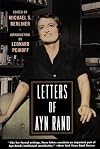
Discover the "personal" Ayn Rand in this wondrous collection of her letters. Read what she wrote to an amazing array of people—from Barry Goldwater, Frank Lloyd Wright and Mickey Spillane, to Barbara Stanwyck, Robert Stack and Cecil B. DeMille. Whether she is writing to philosophers, artists, Hollywood celebrities, family members, captains of industry or her admiring fans, her unmistakable style and character are always in evidence.
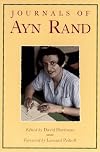
Ayn Rand was an endless fount of brilliantly original ideas. This book is a collection of her exploratory (and occasionally final) thoughts, from 1927 through the 1960s, on a variety of subjects. Journals includes her work on a movie she planned to write about the atomic bomb project—on The Moral Basis of Individualism, her first attempt at a systematic, non-fiction presentation of her ethics—on her notes for a post-Atlas novel titled To Loren Dieterling.
Leonard Peikoff writes in the Foreword: "One great pleasure in reading the book is to see hints of later discoveries mentioned at first casually, even parenthetically. . . . In terms of cognitive value to the reader, the new material alone in this volume warrants the price. It is new to me also. No matter how clear Objectivism is in my mind, every time I read another Ayn Rand book, it becomes clearer. This book is no exception."
Leonard Peikoff writes in the Foreword: "One great pleasure in reading the book is to see hints of later discoveries mentioned at first casually, even parenthetically. . . . In terms of cognitive value to the reader, the new material alone in this volume warrants the price. It is new to me also. No matter how clear Objectivism is in my mind, every time I read another Ayn Rand book, it becomes clearer. This book is no exception."
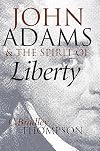
This book sets the record straight on "the neglected and often abused political thought" of John Adams. It is popular among academic historians to characterize Adams as a once-idealistic revolutionary who became cynical and conservative, and to dismiss his ideas as irrelevant to the development of American political thought. A similar view existed among many politicians and intellectuals during Adams's life.
In this thorough examination of Adams's political thought, C. Bradley Thompson—an Objectivist professor of history at Ashland University in Ohio—reveals a very different John Adams: a profound thinker, a brilliant constitutional architect and a principled, lifelong defender of liberty, whose ideas helped shape the U.S. Constitution.
The brilliance of Adams, according to Thompson, lay in his scientific approach to political science and constitutional design. While his contemporaries in France attempted to deduce proper constitutions from rationalistic "first principles," Adams undertook a systematic study of history to discover the basic causes behind successful and unsuccessful political systems. It was these inductive observations that led him to advocate such vital constitutional measures as separation of powers and checks and balances; history had shown him they would work, and logic had shown him why. Many of his proposals would later become hallmarks of the U.S. Constitution.
The extent of Adams's study and thought was staggering. Fortunately, Thompson presents show more his intellectual development in terms of essentials, making it readily digestible to the reader. (Still, this is an academic work, and includes a depth of analysis of this Founding Father's writings that may be too detailed for some readers.)
The author shows that most of the critics who question Adams's commitment to liberty have taken various statements out of context. By specifying the proper context, Thompson portrays Adams as an individual who devoted his entire life to discovering how to best preserve freedom in America for many generations. The author says: "I have tried to establish the status and integrity of Adams as an independent thinker, one who would not concede the truth to popular opinion as he attempted to secure the American Revolution with a just and lasting constitutional order."
However, Thompson does not address one of Adams's most notorious actions while President: the passage of the Alien and Sedition Acts, which curtailed certain criticism of government officials. These were major assaults on liberty, and a defense of John Adams as a consistent advocate of freedom is incomplete without addressing them.
Despite this omission, John Adams and the Spirit of Liberty is an outstanding presentation of Adams's under-appreciated political thought, and a much-needed act of justice toward an American hero. show less
In this thorough examination of Adams's political thought, C. Bradley Thompson—an Objectivist professor of history at Ashland University in Ohio—reveals a very different John Adams: a profound thinker, a brilliant constitutional architect and a principled, lifelong defender of liberty, whose ideas helped shape the U.S. Constitution.
The brilliance of Adams, according to Thompson, lay in his scientific approach to political science and constitutional design. While his contemporaries in France attempted to deduce proper constitutions from rationalistic "first principles," Adams undertook a systematic study of history to discover the basic causes behind successful and unsuccessful political systems. It was these inductive observations that led him to advocate such vital constitutional measures as separation of powers and checks and balances; history had shown him they would work, and logic had shown him why. Many of his proposals would later become hallmarks of the U.S. Constitution.
The extent of Adams's study and thought was staggering. Fortunately, Thompson presents show more his intellectual development in terms of essentials, making it readily digestible to the reader. (Still, this is an academic work, and includes a depth of analysis of this Founding Father's writings that may be too detailed for some readers.)
The author shows that most of the critics who question Adams's commitment to liberty have taken various statements out of context. By specifying the proper context, Thompson portrays Adams as an individual who devoted his entire life to discovering how to best preserve freedom in America for many generations. The author says: "I have tried to establish the status and integrity of Adams as an independent thinker, one who would not concede the truth to popular opinion as he attempted to secure the American Revolution with a just and lasting constitutional order."
However, Thompson does not address one of Adams's most notorious actions while President: the passage of the Alien and Sedition Acts, which curtailed certain criticism of government officials. These were major assaults on liberty, and a defense of John Adams as a consistent advocate of freedom is incomplete without addressing them.
Despite this omission, John Adams and the Spirit of Liberty is an outstanding presentation of Adams's under-appreciated political thought, and a much-needed act of justice toward an American hero. show less
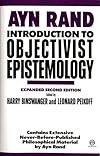
2nd edition, edited by Harry Binswanger and Leonard Peikoff
Ayn Rand states her revolutionary theory of concepts; transcripts of invaluable epistemology workshops she conducted are also included.
Topics covered include: What qualifies as an entity? How the act of abstracting is volitionally initiated. Do definitions narrow or expand as knowledge increases? How to validate induction. The meaning of "implicit concept."
Ayn Rand states her revolutionary theory of concepts; transcripts of invaluable epistemology workshops she conducted are also included.
Topics covered include: What qualifies as an entity? How the act of abstracting is volitionally initiated. Do definitions narrow or expand as knowledge increases? How to validate induction. The meaning of "implicit concept."
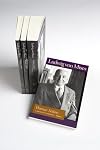
Ludwig von Mises is to economics what Albert Einstein is to physics, and Human Action is his greatest work. It is a systematic study that covers every major topic in the science of economics. It is also one of the most convincing indictments of socialism and statism ever penned. When it first appeared in 1949, it ignited an eruption of critical acclaim. For instance, Rose Wilder Lane wrote, "I think Human Action is unquestionably the most powerful product of the human mind in our time, and I believe it will change human life for the better during the coming centuries as profoundly as Marxism has changed all of our lives for the worse in this century." Henry Hazlitt wrote, "It should become the leading text of anyone who believes in freedom, in individualism and in a free market economy." The acclaim has not ceased, and the book is universally recognized as a classic in the field of modern economics.
Global Warming and Other Eco Myths: How the Environmental Movement Uses False Science to Scare Us to Death by Ronald Bailey
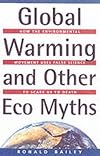
The modern environmental movement began with the publication of three seminal works, Rachel Carson's Silent Spring, Paul Ehrlich's The Population Bomb, and the Club of Rome's The Limits to Growth. These books' dismal visions of a poisoned, over-populated, resource-depleted world spiraling down toward environmental collapse are today's conventional wisdom. And every year we hear about new "conclusive" reports from special interest groups claiming that our atmosphere's temperatures are soaring, our air and water are more polluted, our cities are more crowded, and our global food supply is more precarious than ever before. However, according to a number of leading scientists from around the world, members of the environmental movement are guilty of twisting—sometimes manufacturing—the facts in an effort to frighten people into joining their cause.
In this eye-opening book, some of the most respected researchers in the country explode the myths behind much of the doom and gloom of today's environmental movement. You will discover how the hysteria about global warming, overpopulation, mass extinctions, imminent famines, biotechnology, energy shortages, and more are grounded not in reason but in false science and a fear of progress. When placed beside the overwhelming facts, some of the most pervasive eco-myths crumble.
In this eye-opening book, some of the most respected researchers in the country explode the myths behind much of the doom and gloom of today's environmental movement. You will discover how the hysteria about global warming, overpopulation, mass extinctions, imminent famines, biotechnology, energy shortages, and more are grounded not in reason but in false science and a fear of progress. When placed beside the overwhelming facts, some of the most pervasive eco-myths crumble.
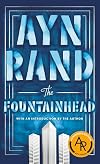
An intransigently independent architect refuses to compromise his standards in work and in life.
The Fountainhead is an uncompromising examination of the virtue of individualism.
The Fountainhead is an uncompromising examination of the virtue of individualism.
The main philosophic passages from Ayn Rand's novels, targeted at "those who wish to assume the responsibility of becoming the new intellectuals."
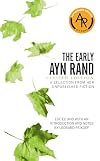
Edited and with an introduction and notes by Leonard Peikoff
This remarkable, newly revised collection of Ayn Rand's early fiction—now including her previously unpublished short story, "The Night King"—ranges from beginner's exercises to excerpts from early versions of We the Living and The Fountainhead. Arranged chronologically, from 1926 through 1940, these works allow readers to follow the extraordinary trajectory of Rand's literary and intellectual growth, from a twenty-one-year-old Russian immigrant struggling to master English to the brilliant prose stylist she was to become in her mature work.
This remarkable, newly revised collection of Ayn Rand's early fiction—now including her previously unpublished short story, "The Night King"—ranges from beginner's exercises to excerpts from early versions of We the Living and The Fountainhead. Arranged chronologically, from 1926 through 1940, these works allow readers to follow the extraordinary trajectory of Rand's literary and intellectual growth, from a twenty-one-year-old Russian immigrant struggling to master English to the brilliant prose stylist she was to become in her mature work.
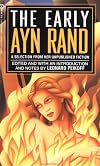
This collection of Ayn Rand's early, unpublished fiction offers spellbinding insights into her artistic development.
The Capitalist Manifesto: The Historic, Economic and Philosophic Case for Laissez-Faire by Andrew Bernstein
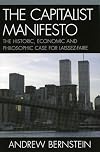
The Capitalist Manifesto defends capitalism as the world's most moral and practical social system. This book is written for the rational mind, whether the reader is a professional intellectual or an intelligent layman. It makes the case for individual rights and freedom in terms intelligible to all rational men.
"The key to explaining capitalism's unparalleled economic success is dual: to show that it alone is the system that guarantees individual liberties, and to demonstrate that political liberty is an indispensable requirement of man's life on earth."—Andrew Bernstein
"The key to explaining capitalism's unparalleled economic success is dual: to show that it alone is the system that guarantees individual liberties, and to demonstrate that political liberty is an indispensable requirement of man's life on earth."—Andrew Bernstein
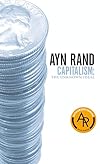
A comprehensive defense of the only social system consistent with man's requirements as a rational being: laissez-faire capitalism.
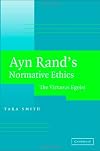
Ayn Rand is well known for advocating egoism, but the substance of that instruction is rarely understood. Far from representing the rejection of morality, selfishness, in Rand's view, actually demands the practice of a systematic code of ethics. This book explains the fundamental virtues that Rand considers vital for a person to achieve their objective well-being: rationality, honesty, independence, justice, integrity, productiveness, and pride. Tracing Rand's account of the value and harmony of human beings' rational interests, Smith examines what each of these virtues consists of, why it is a virtue, and what it demands of people in practice. Along the way she addresses the status of several conventional virtues within Rand's theory, considering traits such as kindness, charity, generosity, temperance, courage, forgiveness, and humility. Ayn Rand's Normative Ethics thus offers an in-depth exploration of several specific virtues and an illuminating integration of these with the broader theory of egoism.

Ayn Rand was convinced of the life-or-death importance of ideas. Consequently, every intellectual statement she encountered elicited a passionate response from her. When reading books or articles, she conveyed such responses, to herself, in the form of margin notes (or marginalia). Now, in this volume, they are conveyed to all.
These notes are not idle jottings, but a trove of serious, pithy observations—many on issues she never publicly addressed. In her inimitable approach to ideas, Ayn Rand typically takes a writer's statement, questions it, translates it, dissects it, explains its implications—and then demolishes it.
She comments on hundreds of selections from over 20 authors, from Ludwig von Mises to Friedrich Hayek to Bishop Fulton Sheen. (There is also a section of marginalia on Supreme Court decisions and on magazine clippings—including her response to a questionnaire called "What is Your Love Quotient?") Some of her subjects include: the irrationality of contrasting the "logically possible" with the "empirically possible"; the contradictions in von Mises' concept of "praxeology" and of value-free economics; how Henry Hazlitt's moral code corrupted his defense of capitalism; Barry Goldwater's "false dichotomy of freedom vs. life"; how liberals "distort Aristotle, the father of the U.S.A., into a totalitarian statist." Both her notes and the text to which they refer are contained in this intellectual gold mine.
These notes are not idle jottings, but a trove of serious, pithy observations—many on issues she never publicly addressed. In her inimitable approach to ideas, Ayn Rand typically takes a writer's statement, questions it, translates it, dissects it, explains its implications—and then demolishes it.
She comments on hundreds of selections from over 20 authors, from Ludwig von Mises to Friedrich Hayek to Bishop Fulton Sheen. (There is also a section of marginalia on Supreme Court decisions and on magazine clippings—including her response to a questionnaire called "What is Your Love Quotient?") Some of her subjects include: the irrationality of contrasting the "logically possible" with the "empirically possible"; the contradictions in von Mises' concept of "praxeology" and of value-free economics; how Henry Hazlitt's moral code corrupted his defense of capitalism; Barry Goldwater's "false dichotomy of freedom vs. life"; how liberals "distort Aristotle, the father of the U.S.A., into a totalitarian statist." Both her notes and the text to which they refer are contained in this intellectual gold mine.
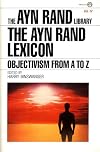
This "mini-encyclopedia" of Objectivism is compiled from Ayn Rand's own statements on some 400 topics in philosophy, economics, psychology and history.
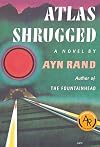
The incomparable novel about the men of the mind on strike against the creed of self-sacrifice.
Ayn Rand's epochal novel, first published in 1957, has been a continual bestseller as well as an intellectual landmark. It is the story of a man who said that he would stop the motor of the world--and did. Was he a destroyer or the greatest of liberators? Why did he have to fight his battle, not against his enemies but against those who needed him most--and his hardest battle against the woman he loved? What is the world's motor--and the motive power of every man?
Tremendous in its scope, this novel presents an astounding panorama of human life--from the productive genius who becomes a worthless playboy to the great steel industrialist who does not know that he is working for his own destruction to the philosopher who becomes a pirate to the composer who gives up his career on the night of his triumph to the woman who runs a transcontinental railroad to the lowest track worker in her Terminal tunnels.
Peopled by larger-than-life heroes and villains, charged with towering questions of good and evil, Atlas Shrugged is Ayn Rand's masterpiece. It is a philosophical revolution told in the form of an action thriller.
Ayn Rand's epochal novel, first published in 1957, has been a continual bestseller as well as an intellectual landmark. It is the story of a man who said that he would stop the motor of the world--and did. Was he a destroyer or the greatest of liberators? Why did he have to fight his battle, not against his enemies but against those who needed him most--and his hardest battle against the woman he loved? What is the world's motor--and the motive power of every man?
Tremendous in its scope, this novel presents an astounding panorama of human life--from the productive genius who becomes a worthless playboy to the great steel industrialist who does not know that he is working for his own destruction to the philosopher who becomes a pirate to the composer who gives up his career on the night of his triumph to the woman who runs a transcontinental railroad to the lowest track worker in her Terminal tunnels.
Peopled by larger-than-life heroes and villains, charged with towering questions of good and evil, Atlas Shrugged is Ayn Rand's masterpiece. It is a philosophical revolution told in the form of an action thriller.
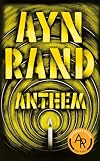
In a regimented world, where the word "I" no longer exists, one defiant man rediscovers the meaning of individualism.
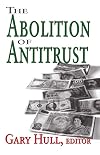
The Abolition of Antitrust asserts that antitrust laws—on economic, legal and moral grounds—are bad, and provides convincing evidence supporting arguments for their total abolition. The Sherman Antitrust Act and the body of case law that it has generated must be seen in the broader context of traditional concerns that government has always had with monopolies in the United States, from the nineteenth century onwards. Every year new antitrust prosecutions arise in the U.S. courts, as in the cases against 3M and Visa/MasterCard, as well as a number of ongoing antitrust cases, such as those involving Microsoft and college football's use of the Bowl Championship Series (BCS). Gary Hull and the contributing authors show that these cases—as well as the very Antitrust Act itself—are based on an erroneous interpretation of the history of American business, are premised on bad economics and equivocate between economic and political power—the power to produce versus the power to use physical force. They argue that antitrust prosecutions are based on a horrible moral inversion: that it is acceptable to sacrifice America's best producers.
Amazon Description:
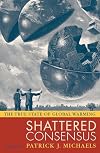
Shattered Consensus: The True State of Global Warming convincingly demonstrates the remarkable differences between what we commonly read about global warming and what is really happening. Nine chapters describe major problems with computer simulations of future climate that are the basis for wrenching policies being proposed by world leaders. Anyone who reads this book will come away with a new appreciation of the complexity of the climate issue and will question the need for expensive policies that are likely to have little or no detectable effect on the planet's temperature.
Shattered Consensus: The True State of Global Warming convincingly demonstrates the remarkable differences between what we commonly read about global warming and what is really happening. Nine chapters describe major problems with computer simulations of future climate that are the basis for wrenching policies being proposed by world leaders. Anyone who reads this book will come away with a new appreciation of the complexity of the climate issue and will question the need for expensive policies that are likely to have little or no detectable effect on the planet's temperature.