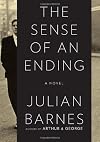
The first thing I noticed was the shortness of this novel. How does a 100 page novel win the Booker Prize? So I am looking for how an author delivers meaning and purpose in such a short space of words.
The novel is divided into two parts, and in the first part the narrator relates his boyhood with his group of male friends, late in their secondary school days, just before they go their separate ways to University. The history is detailed around this period of time, as the narrator describes the relationships with his friends, and the early impact of girls upon the group.
The story speeds up towards the end of the first part, revealing the later life of the narrator, thus setting the pieces into place for the beginning of the second part, where the narrator is forced to question the accuracy of his recollections, and he learns new (and disturbing) information about his friendships.
The novel reads easily, testimony to the quality of the writing, and through the story, the narrator presents scenarios that cause me to think about my current life, and what it might be like in many years. I too, wonder if my recollections are accurate of my earlier days.
And I keep turning the pages, curious to follow our narrator on his journey towards the truth, no matter how unsettling that might be.
The novel is divided into two parts, and in the first part the narrator relates his boyhood with his group of male friends, late in their secondary school days, just before they go their separate ways to University. The history is detailed around this period of time, as the narrator describes the relationships with his friends, and the early impact of girls upon the group.
The story speeds up towards the end of the first part, revealing the later life of the narrator, thus setting the pieces into place for the beginning of the second part, where the narrator is forced to question the accuracy of his recollections, and he learns new (and disturbing) information about his friendships.
The novel reads easily, testimony to the quality of the writing, and through the story, the narrator presents scenarios that cause me to think about my current life, and what it might be like in many years. I too, wonder if my recollections are accurate of my earlier days.
And I keep turning the pages, curious to follow our narrator on his journey towards the truth, no matter how unsettling that might be.

This novel is a fun read. It also proves a point - that a strong and interesting character can overcome many less strong points in a novel. There are points where credibility is stretched - moments when you it is impossible to believe that Reacher can join all the dots and come up with the correct answer. The writing is interesting - the voice generated comes from this voice - with staccato sentences lacking structurally correct grammar. Good enough for me to move on to Book 2 - curious to see how his writing evolves. It's a guilty pleasure though - average writing, plot flaws - covered by an exciting character. Don't forget my bias - I like characters believable enough to do what they do - a la - David Gemmell. Lee Child's version of Jack Reacher is a lot like Ian Fleming's James Bond - presented as a little bit lucky. Luck should not play a part - the character should be tough enough to make it happen on his / her own.

A story about a true event - the unsolved gruesome killing of Betty Short in 1947. It's written from the perspective of a policeman accidentally caught up in the case, and then revolves around his part in the investigation, along with his partner. Police life is described in uncomfortable detail, with street bashings and shootings, corruption, etc. The language evokes the movie like depictions of life in the mid 20th century - hard boiled crime fiction.
I struggled with the numbers of characters and their various roles, and combined with a language style not easily accessible, I regularly lost track of the proceedings. I'm not too sure why this makes the 1001 book list - the language and style lacked originality; the storyline was confusing; and even when you hoped that the plot was unravelled, Ellroy found another twist to add to the complexity.
I struggled with the numbers of characters and their various roles, and combined with a language style not easily accessible, I regularly lost track of the proceedings. I'm not too sure why this makes the 1001 book list - the language and style lacked originality; the storyline was confusing; and even when you hoped that the plot was unravelled, Ellroy found another twist to add to the complexity.

Much has been written about this book, and I have taken too long to get around to reading it. I was impressed at the reaction it generated within me. The satirical style of describing clothes worn, fashion etiquette and restaurant foods was interesting in that it was sustained throughout the entire novel. The style of describing the sex and violence could be described as gratuitous, but my definition of gratuitous is unnecessary, and Ellis uses it for effect. I am not squeamish, but found myself horrified at times.
All in all, very glad I read this, and it has provoked much thought about the shallowness of our consumerist society and the very little impact we have on it, no matter what we do. The parallel I read into this novel is that despite being a mass murderer happy to tell people, nobody acknowledges or believes him, and he is rarely recognised as himself throughout the novel.
Not an easy book to recommend - strap yourself in if you intend to tackle this one.
All in all, very glad I read this, and it has provoked much thought about the shallowness of our consumerist society and the very little impact we have on it, no matter what we do. The parallel I read into this novel is that despite being a mass murderer happy to tell people, nobody acknowledges or believes him, and he is rarely recognised as himself throughout the novel.
Not an easy book to recommend - strap yourself in if you intend to tackle this one.
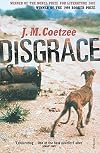
A reflection on mankind. A story of a 50+ uni professor still chasing women (and catching them), and succeeding one time too many. Disgraced as an outcome, without a job, the story demonstrates a nasty parallel with his daughter, and we then see the womaniser become old man, helpless, irrelevant. A salutory lesson, and a reflection for us old buggers. Beautifully written, and I will keep it by my side for a few weeks to watch how a master writes a third person story that keeps the POV on the shoulder of our protaganist. Very glad I read this.

I never expected to find tears in this book. That only happens through resonance and empathy with the characters, and Neil Cronk is a drug addled arty individual sleeping his way through a myriad of women, deserting his friends, and yet we, and everyone in the story loves him. The pages turn - we want him to escape the drugs, to find a way out, yet at every turn he finds a way to stuff things up. Despite his challenges, he also provides a window into those around him, which in turn causes me to reflect on myself, a great achievement. Whilst set in Cronulla, and clearly a large set of challenges there, this resonates with our own childhoods, and the coming of age we all go through.
Cell by Stephen King
I think Stephen King is fantastic. But this book is not his best. Do you know, I went back and re-read the first page, because that is where the big failure was for me. 'a young man of no particular importance to history came walking - almost bouncing - east along Boylston Street' This sentence refers to the hero, and for me, too lightly. I struggled from here to give the main character any real credence.
Now, the main character aside, this book seemed like a revisit of my favourite King novel, The Stand. Event wipes out people / civilisation and sets two groups of people against each other. One of the weaknesses by comparison was the inability for me to care about the characters in the story. And the other key weakness was the frailty of the plot.
Still - I needed an easy read after Wolf Hall - and this delivered! King delivers a really easy read - his language skills on this front are remarkable. And given the numbers of people on LibraryThing that have this novel - all power to King's success.
Now, the main character aside, this book seemed like a revisit of my favourite King novel, The Stand. Event wipes out people / civilisation and sets two groups of people against each other. One of the weaknesses by comparison was the inability for me to care about the characters in the story. And the other key weakness was the frailty of the plot.
Still - I needed an easy read after Wolf Hall - and this delivered! King delivers a really easy read - his language skills on this front are remarkable. And given the numbers of people on LibraryThing that have this novel - all power to King's success.

I made it! One of the slowest books I have ever read. My wife told me several times to give up and move on - but I finally finished it today.
I can't say that this was a page turner - normally I chew through books - but this took me months...
So did I enjoy it? I was fascinated by the view of the court of Henry VIII from a very strong character - Thomas Cromwell. I always knew how it ended - we've all read 'A Man for all Seasons' - and so I stayed interested and stuck with the book. There were so many characters that are notable in history that wandered through this book.
What did I not enjoy? Many of the characters were called by multiple names, and not clearly delinated to me. Dukes of Norfolk and Suffolk - who was who, especially when they called them by their family names etc?
It took me a bit to get used to Hilary's technique of referring to the hero as 'He' without prior reference.
Would I recommend this - be prepared for a long read - rewarding in the end.
I immediately went to Wikipedia to check the facts. Clearly based on the truth, and I was saddened to follow through to the end...
I can't say that this was a page turner - normally I chew through books - but this took me months...
So did I enjoy it? I was fascinated by the view of the court of Henry VIII from a very strong character - Thomas Cromwell. I always knew how it ended - we've all read 'A Man for all Seasons' - and so I stayed interested and stuck with the book. There were so many characters that are notable in history that wandered through this book.
What did I not enjoy? Many of the characters were called by multiple names, and not clearly delinated to me. Dukes of Norfolk and Suffolk - who was who, especially when they called them by their family names etc?
It took me a bit to get used to Hilary's technique of referring to the hero as 'He' without prior reference.
Would I recommend this - be prepared for a long read - rewarding in the end.
I immediately went to Wikipedia to check the facts. Clearly based on the truth, and I was saddened to follow through to the end...

Well. I'm a grown man (just kidding ladies), but this book reduced me to tears. I am envious of this lady for delivering a first novel that sold 2.5m copies.
The key was the character development and the effort expended on building them up. It was a great lesson for me as I write my novel, and I am inspired to keep going.
It helped me with the flaws, and showed me the way.
I hope everyone else enjoys this as much as I did.
The key was the character development and the effort expended on building them up. It was a great lesson for me as I write my novel, and I am inspired to keep going.
It helped me with the flaws, and showed me the way.
I hope everyone else enjoys this as much as I did.
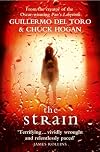
Picked this up whilst researching modern horror. It's a vampire story, but - no love story...no classical view of vampires. More like zombies crossed with vampires, out to convert everyone to vampires as quickly as possible. It's made interesting by the ususal factor - a solid cast of heroes. It's vol 1, and the real test, is that I am keen to read the next one to see what happens. Tension is built nicely - some genuinely scary moments - or was that the nightmares I had afterwards? It isn't ground breaking - a variation of I am Legend - but a modern take, and it rattles along nicely.
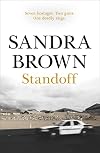
Well, another of those books scored from someone emptying their shelves. I should know better. I thought this was going to be a thriller - but no - it was a romance novel with the storyline approximating a thriller.
It wasn't terrible. I made it all the way through without hurling it against the wall. What was wrong about it was the characters. The heroine was not believable (ask me for examples). The plot was full of coincidence to throw the girl and the tall dark handsome cowboy with a mysterious past (avoiding spoilers) together.
I'm trying to write a sex scene at the moment - I hope I do a more realistic job than the fluffy piece of erotica at the end of this. (I probably won't).
For what it's worth - I have nothing against romance novels - and if I had read it for this purpose then maybe it would pass muster.
It wasn't terrible. I made it all the way through without hurling it against the wall. What was wrong about it was the characters. The heroine was not believable (ask me for examples). The plot was full of coincidence to throw the girl and the tall dark handsome cowboy with a mysterious past (avoiding spoilers) together.
I'm trying to write a sex scene at the moment - I hope I do a more realistic job than the fluffy piece of erotica at the end of this. (I probably won't).
For what it's worth - I have nothing against romance novels - and if I had read it for this purpose then maybe it would pass muster.
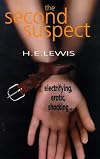
I picked this book up when a relative was throwing out a pile of books. Seemed to be a crime story - and the front page included the word EROTIC. So now, researching for my novel, seemed like a good choice. So disappointing. Mainly made up of conversations between dysfunctional characters, going nowhere, advancing the story little.
And then, reality check. Police that don't follow process. Police that discharge weapons in apartment buildings and no one notices, no reports filed, the shot person escaping with no pursuit or report.
And every police person except one or two on the payroll of the rich bad guy.
And a dead person, carried by the killer in a golf bag, into a police station, with the police completely aware, and no one chooses to open the bag.
And nothing erotic in any sense...
And then I was just glad to finish...
And then, reality check. Police that don't follow process. Police that discharge weapons in apartment buildings and no one notices, no reports filed, the shot person escaping with no pursuit or report.
And every police person except one or two on the payroll of the rich bad guy.
And a dead person, carried by the killer in a golf bag, into a police station, with the police completely aware, and no one chooses to open the bag.
And nothing erotic in any sense...
And then I was just glad to finish...
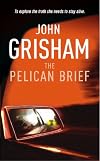
I've just read The Firm, and now The Pelican Brief. The former hooked me in very quickly. The Pelican Brief has a confusing start, dumping a pile of unrelated events upon us, setting the scene. It takes a little while for us to meet the main character, and at no stage do we get a strong understanding of her. Sure, she's clever, resourceful, etc., but she is two dimensional. Hence, I don't care about what happens, and this lessens the tension of the story.
Having read both of these books back to back, I can also see the similarities of Grisham's view of the legal profession, and whilst he is the expert, and I am not, I find it hard to believe that the lawyer firms he describes are just big sweatshops, where everyone works 12-18 hour days, six days a week. Lawyers are supposed to be intelligent...
Not sure now if I am going to keep reading Grisham - the lack of attention to character development is the big miss for me.
Having read both of these books back to back, I can also see the similarities of Grisham's view of the legal profession, and whilst he is the expert, and I am not, I find it hard to believe that the lawyer firms he describes are just big sweatshops, where everyone works 12-18 hour days, six days a week. Lawyers are supposed to be intelligent...
Not sure now if I am going to keep reading Grisham - the lack of attention to character development is the big miss for me.