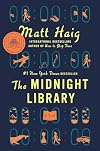
What made this book really special for me was the last third, filled with a series of quiet moments underscoring the things that make life worth living. Nora can be frustrating as a protagonist, as she struggles to grasp the deeper themes of the many adventures she goes on through the library, and the ultimate destination of the book is a bit predictable. But again, even if the overall arch of the plot is not necessarily unique, it is the way it is told, especially towards the end, that carries it. The book does feel a bit repetitive at times, especially in the middle, even if it is fun to read about Nora's many lives. I would've likely given this book a 4.5 if that was an option, but I ultimately felt I leaned more towards a 5 than a 4, hence my final rating.
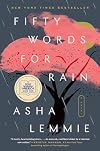
This is a book that I felt started strong but couldn't maintain its steam for its entirety. It is excellent at points, and has some wonderful prose to both depict the world and the challenges and difficulties the characters all face. That said, after the first half of the book, it slowly starts to feel like the narrative is a succession of good ideas and great lines strung together with an inconsistently developed plot which just kind of... happens.
There are plenty of difficulties the characters, especially the protagonist, Nori, face, but it doesn't always feel like the grow in any meaningful capacity from those struggles - be they positive or negative. Because of this, it pulls out the aforementioned feeling of things just happening because the plot commands it and not because it is a logical progression of the characters and story. Also, because the story heavily features upper class characters, they have a tendency to be a bit grating because they often feel like caricatures of the upper class, which is inconsistent with the narrative the author is trying to tell, and makes it very difficult to consistently generate sympathy for the very real plights these characters face.
All in all, I did enjoy large segments of this book, and thought the first half was especially powerful, the issues I noted here kept me from enjoying the book as much as I hoped I would, and only left me wondering at what it might have been.
There are plenty of difficulties the characters, especially the protagonist, Nori, face, but it doesn't always feel like the grow in any meaningful capacity from those struggles - be they positive or negative. Because of this, it pulls out the aforementioned feeling of things just happening because the plot commands it and not because it is a logical progression of the characters and story. Also, because the story heavily features upper class characters, they have a tendency to be a bit grating because they often feel like caricatures of the upper class, which is inconsistent with the narrative the author is trying to tell, and makes it very difficult to consistently generate sympathy for the very real plights these characters face.
All in all, I did enjoy large segments of this book, and thought the first half was especially powerful, the issues I noted here kept me from enjoying the book as much as I hoped I would, and only left me wondering at what it might have been.
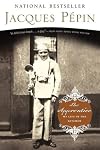
An enjoyable memoir which carries the feel of Pepin sitting down and telling you the many tales of his long and colorful life, ripe with countless descriptions of the many foods he made (and ate) along the way. In doing so, the book peels back the evolution of food in Pepin's life, from rustic French country cuisine, to the rigidity of the French restaurant brigades, to the relative informality of American cuisine and his experiences beyond those worlds. Every chapter ends with a related recipe, a fun little nugget to reset before reading about his next set of adventures.
A couple of minor quibbles, however. First, while the descriptions of the food are usually wonderful, there are times these descriptions overpower the story being told, causing the book to occasionally lose focus. Second, there are several serious moments in the story which had the potential to be a little something more, but lacked a bit of oomph to really bring a meaningful impact. It might be a byproduct of Pepin's relentless optimism, implicitly demonstrating the variable trait of learning to move on without dwelling on past tragedy.
A couple of minor quibbles, however. First, while the descriptions of the food are usually wonderful, there are times these descriptions overpower the story being told, causing the book to occasionally lose focus. Second, there are several serious moments in the story which had the potential to be a little something more, but lacked a bit of oomph to really bring a meaningful impact. It might be a byproduct of Pepin's relentless optimism, implicitly demonstrating the variable trait of learning to move on without dwelling on past tragedy.

This was certainly a book that I have read, and probably will remember for quite a while for how weird it felt the whole time I read it. Suskind does and incredible job portraying the incredible, disgusting, beautiful, and profound scents in the book to the point where they jump off the page and into the room. Grenouille's disdain and cold indifference towards his fellow humans is made clear through Suskind's often-detached prose.
That said, the general plot of the book was just weird and, when combined with the aforementioned detached prose, made for a book that felt slow and sometimes arduous to read.Suskind gets so deep in some of his descriptions that I just zoned out for some pages. When all put together, it presented a package that had potential, but I couldn't consistently stay interested in.
That said, the general plot of the book was just weird and, when combined with the aforementioned detached prose, made for a book that felt slow and sometimes arduous to read.Suskind gets so deep in some of his descriptions that I just zoned out for some pages. When all put together, it presented a package that had potential, but I couldn't consistently stay interested in.
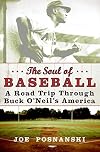
An incredible read which lives, breathes, and jumps off the page with the kind of electricity Buck O'Neill lived. You can hear O'Neill's deep baritone and hearty laugh throughout, hearing tales from his life in and fighting for the memory of the Negro Leagues. Through these tales, O'Neill (and Posnanski in writing it all), serves a reminder that baseball was, and still is, a microcosm of America - in both its glory and ugliness. Buck O'Neill's attitude to hardship is admirable and inspiring, as is his tireless work to keep the story of the legends he played with alive. More than anything, his insistence in refusing to accept any sort of "second rate" moniker or associated pity for the Negro Leagues, just because they couldn't play in the Major Leagues, is a reminder that they were legends and heroes of their own merit. Their stories, and Buck O'Neill's story, deserves to stand tall on its own merit, with their triumphs, hardships, and failures alike. This truly is a wonderful book that I recommend to all.
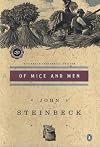
Wonderful and short, Steinbeck beautifully captures the power of hopes and dreams, interweaving it with how those ideals clash with the reality of everyday life. Steinbeck layers meaning in every sentence, giving this slim novel great depth. Each character is unique and memorable in minimal screentime, though it can be a little overwhelming to be introduced to all of them early on. Between that and a bit of a slow start to the novel, it takes some time to get going, but it does a great job at setting up a sense of unease throughout the work which is essential at telling the tale Steinbeck wishes to tell.
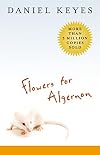
Beautiful, devastating, and a poignant illustration of what it means to be human. Keyes' use of the first person elevates the book from good to truly great, and even though it is generally evident how the plot will progress, it is the knowledge of what is coming that makes it resonate all the more. More than anything, it is a reminder to be decent to one another, remember our common humanity, and treasure every moment we have.
Simply put, it's something everyone should read.
Merged review:
Beautiful, devastating, and a poignant illustration of what it means to be human. Keyes' use of the first person elevates the book from good to truly great, and even though it is generally evident how the plot will progress, it is the knowledge of what is coming that makes it resonate all the more. More than anything, it is a reminder to be decent to one another, remember our common humanity, and treasure every moment we have.
Simply put, it's something everyone should read.
Simply put, it's something everyone should read.
Merged review:
Beautiful, devastating, and a poignant illustration of what it means to be human. Keyes' use of the first person elevates the book from good to truly great, and even though it is generally evident how the plot will progress, it is the knowledge of what is coming that makes it resonate all the more. More than anything, it is a reminder to be decent to one another, remember our common humanity, and treasure every moment we have.
Simply put, it's something everyone should read.