2006.05.03 12.56
Wicked Game
So, I'm back and I think it's time for a little update on what it is that I've been doing for the past two weeks... because, really, it's been *great*, absolutely, totally, incredibly awesome!!! (please, bare with me while I talk like a 13 year old... I promise it won't last)
How it all began (sounds melodramatic, doesn't it? well that's too much epic fantasy for me ;-)
Remember this entry? Well, the point of this entry, behind all the cat deaths and clothes dilemnas, there was a conference. I did go to the conference and got to meet with the lady in question who is the head of the publicity department of this huge English publishing house and ta-da, she accepted to let me do some work experience in her department!
Getting There
Well it did take a grand total of three hours to get from Heathrow to the youth hostel which was located in north London. Three hours added to the hours spent on the plane to Heathrow and in the train that got me to Paris in the first place! I was tired, hungry and exhausted and couldn't quite remember what it was that I was doing in London when I could've been in Malta with my family.
It's kinda remembering a nightmare in which you're being chased by a huge tamarin; when you wake up, you can't remember why you didn't pause for a sec and ask the huge tamarin what it was that it wanted to begin with... what if you had accidentally left with its car keys or its egg mayo sandwich (granted I can't picture a tamarin eating an egg show more mayo sandwich, but you got the point... didn't you? ... the point was, I was feeling unsure and undecided conerning my being in a big unknown city all alone... got it? and a tamarin is a fruit found in the Caribbean in case you were wondering... and don't laugh I did have a nightmare like that when I was little... it was frightening, terrifying... well, terrifyingly hilarious now that I look back on it... let's get back to the epic adventure shall we?)
First day: I wasn't quite aware, or at least, my brain had somehow forgotten to remind me that it was indeed a big company. I arrive in front of this huge building (16 floor glass building like in movies, not the kind you see in Tours!) and spent a whole 10 minutes fighting against the idea of running off and going shopping or getting drunk with Antoine (remember my gay buddy who's doing his second semester in London!) in some gay bar and have a great laugh with transgendered listenning to Britney Spears... bless that well hidden moral conscience because I didn't give in! I did get inside the building, my heart desperately trying to get out of its cage... which was actually my ribcage... yeah, my heart gets funny like that.
On our floor (notice the "our" and how I act like I own the place... which I wish I did!), everybody was just so relaxed and nice and doing an amazingly interesting job... up until then, active life was well... work and therefore boring right? well at some times it was, but being around all those people who wrote, read and loved books (did I mention the shelves packed with books???? they told me to pick anything I liked... my suitcase weighed 32 kg on the way back! I took their word on it and picked pratically everything that looked good... the reviews in the coming months will probably be very Hodder & Stoughton oriented... ye be warned)
The Job
Basically, I was everybody's assistant.
Answering phone calls, ringing people up (which is a bit tricky when not in your mother tongue... I realize that at times, I'm lacking basic vocabulary... like I didn't know what was an underscore and that's kinda problematic when noting somebody's email address... lol!
I also went into the BBC, radio 4's locals because one of our authors was being interviewed, I met authors (they publish Stephen King and Jasper Fforde but unfortunately they weren't around while I was there), I did flyers and showcards, organised a launch party for an author, Jodi Picoult.
I got a morning out with one of the reps, I got to meet two people from editorial, one from marketing, one from sales, one from rights... they were all so nice and answered all my questions and there were quite a lot of those... apparently some were pertinent, or so I was told... maybe they just said that so that I would shut up *shugs*
The Fun
I sent the last weekend at Antoine's who lives on campus which is why he couldn't have me over for two weeks. Gay night was saved for the last night... the theme of the evening was single's night. Basically, at the entrance of the club, after being searched (by men for Antoine, by women for me) you're asked if you're single, in an open relationship or in a serious relationship and according to your answer, a green, yellow or red sticker is put on your chest. Antoine asked for a green one, I asked for a red one (my boyfriend was immensely pleased to find out that I was going to a gay club... figures). The guy sticks it on my top and as gay as he asked:
GAY GUY: Are those real?
ME: Um... last time I checked they were.
GAY GUY: They look great!
Being asked if your boobs are real in the same tone as being asked to pass the salt is a bit disturbing. I took it as a compliment ;-)
Later on that evening, some guys approaches me:
GUY: Hey, you alone?
ME pointing at my top and then stopping when realize the guy's more looking at my so called fake boobs than at my red sticker: I'm not available.
GUY: Oh, you a lesbian?
ME a born lier: Yep.
GUY: Just a lesbian or bisexual?
(Just how lame can you be?)
ME: Just a lesbian.
GUY coming closer: You sure?
ME: Yeah, I'm sure so fuck off!
He more or less ran away then lol!
Anyway, I can't remember having this much fun in a club before. Gays really know how to have fun and they listen to the music I like and that you can dance to. No techno here.
In London, girls have straw looking artefact in their noses, imagine how they sip their beer... this could be worth quite an analysis.
The Books
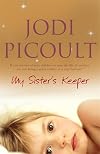
Jodi Picoult who is a very nice American lady (I got to pack the result of her hours of shopping in London) said she liked my skirt when I was at her launch party, so I picked up one of her books that she signed for me.
My Sister's Keeper is said to be one of her best works and has nothing to do with what I usually read. Getting out of SF & Fantasy for a few pages was refreshing since it was all I had been reading during the past year.
Anna is 13 and her older sister has a rare sort of leukumia... how does that sound? While most of us wonder what our purpose in life is, Anna knows why she was born; to save her sister. She was conceived with specific genetic markers that make a her a perfect donor for her sister. She spends as much time in hospital as her sister and can't exactly live a normal teenage life either. At 13, as her sister needs one of her kidneys, Anna decides to sue her parents for the rights to her own body and medical emancipation.
Picoult tackles sensitive subjects that will probably leave very few untouched. She brought tears to my eye several times but then when it comes to parent-child relationship, that's something quite easy to do. This isn't high quality literature but it explores interesting ethical issues and makes a good job at gripping you, getting you caught up in the story and attached to the characters... and that's a good result since it didn't intend anything more. show less
Wicked Game
So, I'm back and I think it's time for a little update on what it is that I've been doing for the past two weeks... because, really, it's been *great*, absolutely, totally, incredibly awesome!!! (please, bare with me while I talk like a 13 year old... I promise it won't last)
How it all began (sounds melodramatic, doesn't it? well that's too much epic fantasy for me ;-)
Remember this entry? Well, the point of this entry, behind all the cat deaths and clothes dilemnas, there was a conference. I did go to the conference and got to meet with the lady in question who is the head of the publicity department of this huge English publishing house and ta-da, she accepted to let me do some work experience in her department!
Getting There
Well it did take a grand total of three hours to get from Heathrow to the youth hostel which was located in north London. Three hours added to the hours spent on the plane to Heathrow and in the train that got me to Paris in the first place! I was tired, hungry and exhausted and couldn't quite remember what it was that I was doing in London when I could've been in Malta with my family.
It's kinda remembering a nightmare in which you're being chased by a huge tamarin; when you wake up, you can't remember why you didn't pause for a sec and ask the huge tamarin what it was that it wanted to begin with... what if you had accidentally left with its car keys or its egg mayo sandwich (granted I can't picture a tamarin eating an egg show more mayo sandwich, but you got the point... didn't you? ... the point was, I was feeling unsure and undecided conerning my being in a big unknown city all alone... got it? and a tamarin is a fruit found in the Caribbean in case you were wondering... and don't laugh I did have a nightmare like that when I was little... it was frightening, terrifying... well, terrifyingly hilarious now that I look back on it... let's get back to the epic adventure shall we?)
First day: I wasn't quite aware, or at least, my brain had somehow forgotten to remind me that it was indeed a big company. I arrive in front of this huge building (16 floor glass building like in movies, not the kind you see in Tours!) and spent a whole 10 minutes fighting against the idea of running off and going shopping or getting drunk with Antoine (remember my gay buddy who's doing his second semester in London!) in some gay bar and have a great laugh with transgendered listenning to Britney Spears... bless that well hidden moral conscience because I didn't give in! I did get inside the building, my heart desperately trying to get out of its cage... which was actually my ribcage... yeah, my heart gets funny like that.
On our floor (notice the "our" and how I act like I own the place... which I wish I did!), everybody was just so relaxed and nice and doing an amazingly interesting job... up until then, active life was well... work and therefore boring right? well at some times it was, but being around all those people who wrote, read and loved books (did I mention the shelves packed with books???? they told me to pick anything I liked... my suitcase weighed 32 kg on the way back! I took their word on it and picked pratically everything that looked good... the reviews in the coming months will probably be very Hodder & Stoughton oriented... ye be warned)
The Job
Basically, I was everybody's assistant.
Answering phone calls, ringing people up (which is a bit tricky when not in your mother tongue... I realize that at times, I'm lacking basic vocabulary... like I didn't know what was an underscore and that's kinda problematic when noting somebody's email address... lol!
I also went into the BBC, radio 4's locals because one of our authors was being interviewed, I met authors (they publish Stephen King and Jasper Fforde but unfortunately they weren't around while I was there), I did flyers and showcards, organised a launch party for an author, Jodi Picoult.
I got a morning out with one of the reps, I got to meet two people from editorial, one from marketing, one from sales, one from rights... they were all so nice and answered all my questions and there were quite a lot of those... apparently some were pertinent, or so I was told... maybe they just said that so that I would shut up *shugs*
The Fun
I sent the last weekend at Antoine's who lives on campus which is why he couldn't have me over for two weeks. Gay night was saved for the last night... the theme of the evening was single's night. Basically, at the entrance of the club, after being searched (by men for Antoine, by women for me) you're asked if you're single, in an open relationship or in a serious relationship and according to your answer, a green, yellow or red sticker is put on your chest. Antoine asked for a green one, I asked for a red one (my boyfriend was immensely pleased to find out that I was going to a gay club... figures). The guy sticks it on my top and as gay as he asked:
GAY GUY: Are those real?
ME: Um... last time I checked they were.
GAY GUY: They look great!
Being asked if your boobs are real in the same tone as being asked to pass the salt is a bit disturbing. I took it as a compliment ;-)
Later on that evening, some guys approaches me:
GUY: Hey, you alone?
ME pointing at my top and then stopping when realize the guy's more looking at my so called fake boobs than at my red sticker: I'm not available.
GUY: Oh, you a lesbian?
ME a born lier: Yep.
GUY: Just a lesbian or bisexual?
(Just how lame can you be?)
ME: Just a lesbian.
GUY coming closer: You sure?
ME: Yeah, I'm sure so fuck off!
He more or less ran away then lol!
Anyway, I can't remember having this much fun in a club before. Gays really know how to have fun and they listen to the music I like and that you can dance to. No techno here.
In London, girls have straw looking artefact in their noses, imagine how they sip their beer... this could be worth quite an analysis.
The Books
Jodi Picoult who is a very nice American lady (I got to pack the result of her hours of shopping in London) said she liked my skirt when I was at her launch party, so I picked up one of her books that she signed for me.
My Sister's Keeper is said to be one of her best works and has nothing to do with what I usually read. Getting out of SF & Fantasy for a few pages was refreshing since it was all I had been reading during the past year.
Anna is 13 and her older sister has a rare sort of leukumia... how does that sound? While most of us wonder what our purpose in life is, Anna knows why she was born; to save her sister. She was conceived with specific genetic markers that make a her a perfect donor for her sister. She spends as much time in hospital as her sister and can't exactly live a normal teenage life either. At 13, as her sister needs one of her kidneys, Anna decides to sue her parents for the rights to her own body and medical emancipation.
Picoult tackles sensitive subjects that will probably leave very few untouched. She brought tears to my eye several times but then when it comes to parent-child relationship, that's something quite easy to do. This isn't high quality literature but it explores interesting ethical issues and makes a good job at gripping you, getting you caught up in the story and attached to the characters... and that's a good result since it didn't intend anything more. show less
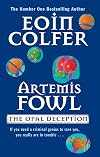
The fairy people have wiped all knowledge of their world from the brain of the only human they're scared of: criminal genius Artemis Fowl. But now they need him... and fast. Another young adult novel, 4th book in the Artemis Fowl series, the teenage criminal genius is back and so are his fairy buddies... If you've liked the previous ones, there's no reason why you shouldn't find this one as engaging and delightful.
The fifth one (The Last Colony) came out on August 2nd and seems very promising.
Anyway, in the fourth book, villain from book 2 (The Artic Incident) wakes up from her coma and is ready to take revenge on both the fairies that put her there and the humans... Artemis and Butler are in for a treat... their major trouble being that since their mind wipe, to them, fairies, pixies, dwarfs and goblins only exist in children's book.
The fifth one (The Last Colony) came out on August 2nd and seems very promising.
Anyway, in the fourth book, villain from book 2 (The Artic Incident) wakes up from her coma and is ready to take revenge on both the fairies that put her there and the humans... Artemis and Butler are in for a treat... their major trouble being that since their mind wipe, to them, fairies, pixies, dwarfs and goblins only exist in children's book.
This was my first experience of Miéville's work which I'd heard the most wonderful praises about... disappointement... couldn't even finish it... did go about 200 pages... 200 pages of boredom...
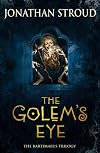
Volume II of the Bartimeus trilogy. I read the first volume (the Amulet of Samarkand) about a year back and tremendously enjoyed it, regardless of the fact that it is a young adult trilogy. These days when looking into the YA section, most of the books have to do with magic... possible Harry Potter side-effect? Anyway, it gets really hard making your way through the really good stuff and the really bad... this trilogy is part of the really good stuff....
I remember the first one as refreshing, hilarious and witty... the second one dwells more on characters while still keeping the humorous edge of the first book. The development of the character of Kitty was one I wasn't quite looking foreword to (mainly because I thought it meant less Bartimeus first person narration which is a delight every time), but surprisingly, I genuinely became attached to her and the cause she was defending through the Resistance.
Though this is a teenage book, I found the ethic and moral issues Stroud mentioned were mature themes. Recommended to both young and adult readers looking for something fresh.
I remember the first one as refreshing, hilarious and witty... the second one dwells more on characters while still keeping the humorous edge of the first book. The development of the character of Kitty was one I wasn't quite looking foreword to (mainly because I thought it meant less Bartimeus first person narration which is a delight every time), but surprisingly, I genuinely became attached to her and the cause she was defending through the Resistance.
Though this is a teenage book, I found the ethic and moral issues Stroud mentioned were mature themes. Recommended to both young and adult readers looking for something fresh.
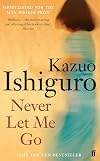
: I'm not quite sure in what category this book should be, it tackles themes that are without any doubt linked to SF but really, this book is nothing like any traditional SF I've ever read.
Kazuo Ishiguro is a remarkable Japanese author and Never Let Me Go is his latest publication.
Everything about this book comes in tiny, sublte touches, like an impressionist painting, maybe that's why it's so hard to classify because most things are hinted at and yet, everything is rendered so clearly in the end.
To even give you a glimpse of the story is difficult, so I'll just type down what the back cover says:
From the Booker Prize-winning author of The Remains of the Day comes a devastating new novel of innocence, knowledge, and loss. As children Kathy, Ruth, and Tommy were students at Hailsham, an exclusive boarding school secluded in the English countryside. It was a place of mercurial cliques and mysterious rules where teachers were constantly reminding their charges of how special they were.
Now, years later, Kathy is a young woman. Ruth and Tommy have reentered her life. And for the first time she is beginning to look back at their shared past and understand just what it is that makes them special–and how that gift will shape the rest of their time together. Suspenseful, moving, beautifully atmospheric, Never Let Me Go is another classic by the author of The Remains of the Day
I love first person narrations, I like being in the character's head, knowing exactly what he's show more thinking even when he's dead wrong and his perceptions and interpretations aren't exact.
Never Let Me Go was no exception. Throughout the book, Kathy goes back in time with us, from her childhood memories to when she's a 30 year old carer. The fact that she's really telling us her memories as they are coming to her, gives the reader the impression that there is no traditional chronological order and yet, nothing about this book is random, from Kathy's "oh, but before I tell you about this, I must tell you about this and that" to the strong symbolic scene at the end which perfectly illustrates the book's title. I haven't read The Remains of the Day or any of Ishiguro's other books but chances are you will hear about him again in this journal. Only 282 pages long, Never Let Me Go is a true delight. Recommended to all. show less
Kazuo Ishiguro is a remarkable Japanese author and Never Let Me Go is his latest publication.
Everything about this book comes in tiny, sublte touches, like an impressionist painting, maybe that's why it's so hard to classify because most things are hinted at and yet, everything is rendered so clearly in the end.
To even give you a glimpse of the story is difficult, so I'll just type down what the back cover says:
From the Booker Prize-winning author of The Remains of the Day comes a devastating new novel of innocence, knowledge, and loss. As children Kathy, Ruth, and Tommy were students at Hailsham, an exclusive boarding school secluded in the English countryside. It was a place of mercurial cliques and mysterious rules where teachers were constantly reminding their charges of how special they were.
Now, years later, Kathy is a young woman. Ruth and Tommy have reentered her life. And for the first time she is beginning to look back at their shared past and understand just what it is that makes them special–and how that gift will shape the rest of their time together. Suspenseful, moving, beautifully atmospheric, Never Let Me Go is another classic by the author of The Remains of the Day
I love first person narrations, I like being in the character's head, knowing exactly what he's show more thinking even when he's dead wrong and his perceptions and interpretations aren't exact.
Never Let Me Go was no exception. Throughout the book, Kathy goes back in time with us, from her childhood memories to when she's a 30 year old carer. The fact that she's really telling us her memories as they are coming to her, gives the reader the impression that there is no traditional chronological order and yet, nothing about this book is random, from Kathy's "oh, but before I tell you about this, I must tell you about this and that" to the strong symbolic scene at the end which perfectly illustrates the book's title. I haven't read The Remains of the Day or any of Ishiguro's other books but chances are you will hear about him again in this journal. Only 282 pages long, Never Let Me Go is a true delight. Recommended to all. show less
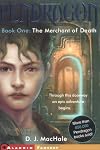
The Merchant of Death is the story of Bobby Pendragon, a normal fourteen year old boy who is going to save the world... yeah, nothing out of the ordinary so far I know, your basic fantasy story... Bobby doesn't know it until his Uncle Press takes him through the gates of an alternative world called Denduron, preventing Bobby from attending a basketball game... the basketball game and a certain Courtney Chedwynde are pretty much all that are on Bobby's mind.
Imagine his surprise when he learns that he is Traveller, meant to go through time and space to help prevent the end of Halla (all time, space, world that ever existed, exist and will exist)... he's not the only Traveller. His uncle is one of them too, so are Osa and Loor; a mysterious mother and daughter couple of dangerous warriors. Loor, the daughter, regards Bobby as a nuisance, half way between a coward and a fraud... which he himself pretty much recognizes that he is.
The world of Denduron is ruled by an evil tyrant who enslaves part of the population... but the Milagos are tired of being slaves and so Denduron is on the verge of a bloody revolution.
So yeah, like I said, your basic, typical fantasy story... but MacHale marks a few points in originality for the way in which he chose to relate his story... Bobby's tale takes the form of a journal that his bestfriend Mark and near-girlfriend Courtney read... but Mark and Courtney are also active throughout the story, trying to get things done on their side of the show more universe.
Overall, it's a fast and entertaining read. Bobby's narration made me laugh outloud a few times and I'll admit that I was gripped enough to want to read the following books... apparently there are seven in the series already and book 8 is due in 2007.
Recommended if you're looking for something light and fast and of course if you enjoy yound adult books. I think my little cousin would really appreciate this.
http://edroxy.livejournal.com/22989.html show less
Imagine his surprise when he learns that he is Traveller, meant to go through time and space to help prevent the end of Halla (all time, space, world that ever existed, exist and will exist)... he's not the only Traveller. His uncle is one of them too, so are Osa and Loor; a mysterious mother and daughter couple of dangerous warriors. Loor, the daughter, regards Bobby as a nuisance, half way between a coward and a fraud... which he himself pretty much recognizes that he is.
The world of Denduron is ruled by an evil tyrant who enslaves part of the population... but the Milagos are tired of being slaves and so Denduron is on the verge of a bloody revolution.
So yeah, like I said, your basic, typical fantasy story... but MacHale marks a few points in originality for the way in which he chose to relate his story... Bobby's tale takes the form of a journal that his bestfriend Mark and near-girlfriend Courtney read... but Mark and Courtney are also active throughout the story, trying to get things done on their side of the show more universe.
Overall, it's a fast and entertaining read. Bobby's narration made me laugh outloud a few times and I'll admit that I was gripped enough to want to read the following books... apparently there are seven in the series already and book 8 is due in 2007.
Recommended if you're looking for something light and fast and of course if you enjoy yound adult books. I think my little cousin would really appreciate this.
http://edroxy.livejournal.com/22989.html show less

To describe the book in a word: duality.
Much like in the The Separation but for different reasons, Priest likes to mislead and confuse his readers and characters... you never really know where the illusion or delusion begins and where it ends.
A pair of rival magicians (Alfred Borden and Rupert Angier) in late nineteenth century London. Each has a famous trick the other craves. Two different vision of the purpose magic should serve. A battle that will have repercussions over several generations.
http://edroxy.livejournal.com/22758.html
Much like in the The Separation but for different reasons, Priest likes to mislead and confuse his readers and characters... you never really know where the illusion or delusion begins and where it ends.
A pair of rival magicians (Alfred Borden and Rupert Angier) in late nineteenth century London. Each has a famous trick the other craves. Two different vision of the purpose magic should serve. A battle that will have repercussions over several generations.
http://edroxy.livejournal.com/22758.html
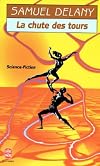
The galaxy suffered from a great fire centuries before, which caused the destruction of the transfering device (I've read this in French so I don't know the exact term used in English for this) humans' only access to the stars, cutting off all the planets from one another. At the planets' surface, the great fire also caused the emergence of a barrier of radiations which prevents humans from settling beyond a certain point.
The Empire of Toromon on Earth has therefore been forced to grow and develop isolated for several centuries; cut off from part of its own continent by the radiations and cutt off from the rest of the galaxy. But lately, the barrier of radiations has expanded and the dead city of Telphar is now beyond human reach. Toron's government sees this, as well as the shooting down of several of its aircrafts on recognition missions as the act of an invisible enemy... invisible and unknown enemy upon which it decides to declare war.
In this political, economical and technological mess, lifetime-sentenced Jon Koshar manages to escape from the mines of tetron and makes his way back to Toron. Trouble is, no one has ever managed to escape the terrible guardians of the forest (once again, not sure the translation is correct). The thing is, Jon's not exactly alone and free. He's been contacted by an extraterrestrial triple life form and so have two other humans. This triple being warns them of the intrusion of the Lord of the Flames in their world.
Is the Lord of the show more Flames responsible for the expansion of the radiations? Who are the other two humans selected by the triple being and how is Jon with their help supposed to counteract the irresponsible actions of his government?
While I've taken my time reading this trilogy (yeah... two weeks. Hey, I've been busy, 'k?), I must say that I've greatly enjoyed this space opera. The intervention of two extraterrestrial life forms never draws the reader's attention away from Delany's first concern, human reactions and interactions. Supported by strong characterization, Delany introduces us to a world full of diversity (the radiations have had some interesting effects on parts of the human population).
The only thing that bothered me at times were the transitions and the conveniency of some situations... this may be because none of the books are very long (count about 500 pages for the whole trilogy). Some things just happened too quickly in my taste, decision taking, change of minds that I would've liked to have a little bit more time and pages to consider and understand... but maybe I'm just slow on the uptake... but like I said, this was one of his earlier pieces of work... some young writers have done far worse and let's not give out names ;-). Same went for certain situations, for example Jon and Alter witness an explosion and they decide to alert Arkor and Petra about it. They take refuge into some kind of bar and ta-da here come Arkor and Petra in the very same bar, saying they know about the explosion and want Jon and Alter to go on some sort of expedition... there were similar types of shortcuts throughout the book, nothing big, but without them, the plot would have appeared more solid and real.
http://edroxy.livejournal.com/23185.html show less
The Empire of Toromon on Earth has therefore been forced to grow and develop isolated for several centuries; cut off from part of its own continent by the radiations and cutt off from the rest of the galaxy. But lately, the barrier of radiations has expanded and the dead city of Telphar is now beyond human reach. Toron's government sees this, as well as the shooting down of several of its aircrafts on recognition missions as the act of an invisible enemy... invisible and unknown enemy upon which it decides to declare war.
In this political, economical and technological mess, lifetime-sentenced Jon Koshar manages to escape from the mines of tetron and makes his way back to Toron. Trouble is, no one has ever managed to escape the terrible guardians of the forest (once again, not sure the translation is correct). The thing is, Jon's not exactly alone and free. He's been contacted by an extraterrestrial triple life form and so have two other humans. This triple being warns them of the intrusion of the Lord of the Flames in their world.
Is the Lord of the show more Flames responsible for the expansion of the radiations? Who are the other two humans selected by the triple being and how is Jon with their help supposed to counteract the irresponsible actions of his government?
While I've taken my time reading this trilogy (yeah... two weeks. Hey, I've been busy, 'k?), I must say that I've greatly enjoyed this space opera. The intervention of two extraterrestrial life forms never draws the reader's attention away from Delany's first concern, human reactions and interactions. Supported by strong characterization, Delany introduces us to a world full of diversity (the radiations have had some interesting effects on parts of the human population).
The only thing that bothered me at times were the transitions and the conveniency of some situations... this may be because none of the books are very long (count about 500 pages for the whole trilogy). Some things just happened too quickly in my taste, decision taking, change of minds that I would've liked to have a little bit more time and pages to consider and understand... but maybe I'm just slow on the uptake... but like I said, this was one of his earlier pieces of work... some young writers have done far worse and let's not give out names ;-). Same went for certain situations, for example Jon and Alter witness an explosion and they decide to alert Arkor and Petra about it. They take refuge into some kind of bar and ta-da here come Arkor and Petra in the very same bar, saying they know about the explosion and want Jon and Alter to go on some sort of expedition... there were similar types of shortcuts throughout the book, nothing big, but without them, the plot would have appeared more solid and real.
http://edroxy.livejournal.com/23185.html show less
Now here's unusual and unique fantasy everyone should give a try. Rec to all.
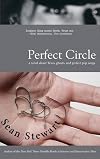
Ok so this is one of those stories that actually means something, i.e. the author is using supernatural elements to pass on a certain message… the theme would be the understanding of the problems of the living through the dead.
We’ve had problems back on bookwyrmmes to categorize this book. At first I thought it was SF, but as a ghost story, I guess it should be classified as horror and some parts of the book comfort me in this idea. Yet, many consider it as urban fantasy as the author uses magic realism… meaning that the magical elemental (here, the fact that Will can see dead people) is presented as part of everyday life, something almost casual if not ordinary. I guess it is the case here.
Perfect Circle is written in a very colloquial way and with many American references, things you wouldn’t necessarily get if you’re not a native or don’t know the country very well… still I managed so I guess it’s not that big of a problem.
The first person narration helping, I thought Will’s character was very nicely portrayed and believable all the way from his love for his ex-wife to his habit of taking the bus (because on the street, ghosts look just like normal people) or to his incredibly large family (at times, I wished the author has given us a genealogy I was so lost). I don’t think it would have worked so well if not written from his POV… his witty and cynical remarks might’ve been less funny.
Anyway, this isn’t a story of great adventure, epic show more quest or anything. Will is a total failure, he’s only talent which gets him more in trouble than out of, is his capacity to see ghosts and communicate with them. Ghosts are presented as homeless black and white people Will tries to avoid seeing. Ghosts are hungry, they always want something. They can’t do anything to you but they can make you do horrible things to yourself. So Will tries to fight off both his metaphorical ghosts (he sees his ex-wife dead) and other people’s ghosts… because sometimes a guy a haunted for a good reason as he puts it.
The author tries to reveal the relationships between life and death, love and hate… Will tells is that he’s never loved a woman enough to kill her…
This book is very different from the fantasy that I’m used to reading… the hero doesn’t come out of it as your typical I-defeated-the-real-big-bad-guy hero… and this only makes the whole situation more believable. The author is just relating part of the life of this thirty-ish total failure who can’t even keep his job at Petco… this is not his entire story, it’s just a part… long enough for the author to illustrate his POV.
I think this is definitely something I’ll be coming back to… as much for the plot than for the sometimes critical eye the author lays on Texas or even Americans in general. I would recommend it to fantasy fans that are looking for something a bit different from your usual epic quest fantasy. show less
We’ve had problems back on bookwyrmmes to categorize this book. At first I thought it was SF, but as a ghost story, I guess it should be classified as horror and some parts of the book comfort me in this idea. Yet, many consider it as urban fantasy as the author uses magic realism… meaning that the magical elemental (here, the fact that Will can see dead people) is presented as part of everyday life, something almost casual if not ordinary. I guess it is the case here.
Perfect Circle is written in a very colloquial way and with many American references, things you wouldn’t necessarily get if you’re not a native or don’t know the country very well… still I managed so I guess it’s not that big of a problem.
The first person narration helping, I thought Will’s character was very nicely portrayed and believable all the way from his love for his ex-wife to his habit of taking the bus (because on the street, ghosts look just like normal people) or to his incredibly large family (at times, I wished the author has given us a genealogy I was so lost). I don’t think it would have worked so well if not written from his POV… his witty and cynical remarks might’ve been less funny.
Anyway, this isn’t a story of great adventure, epic show more quest or anything. Will is a total failure, he’s only talent which gets him more in trouble than out of, is his capacity to see ghosts and communicate with them. Ghosts are presented as homeless black and white people Will tries to avoid seeing. Ghosts are hungry, they always want something. They can’t do anything to you but they can make you do horrible things to yourself. So Will tries to fight off both his metaphorical ghosts (he sees his ex-wife dead) and other people’s ghosts… because sometimes a guy a haunted for a good reason as he puts it.
The author tries to reveal the relationships between life and death, love and hate… Will tells is that he’s never loved a woman enough to kill her…
This book is very different from the fantasy that I’m used to reading… the hero doesn’t come out of it as your typical I-defeated-the-real-big-bad-guy hero… and this only makes the whole situation more believable. The author is just relating part of the life of this thirty-ish total failure who can’t even keep his job at Petco… this is not his entire story, it’s just a part… long enough for the author to illustrate his POV.
I think this is definitely something I’ll be coming back to… as much for the plot than for the sometimes critical eye the author lays on Texas or even Americans in general. I would recommend it to fantasy fans that are looking for something a bit different from your usual epic quest fantasy. show less
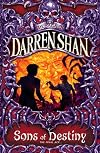
I liked this series; in fact I would recommend it to younger readers. I was easily caught up in Darren Shan’s fight against the Vampeneze and an inevitable future. The books are short, so you can grab one and read it in a few hours, in-between more serious books.
There were a few things that I didn’t like though. The first thing was that while some passage of the books seemed a bit frightening and gore for young readers (I have in mind a specific passage at the end of Book II in which Darren was to drink blood from his dying friend who by the way has his guts hanging out because of the Wolf Man!), the way it was written would annoy an older readership if they didn’t bare in mind that this wasn’t meant for them. Well, that’s what it did for me. I didn’t like the fact that it was written in the first person though it was necessary to the story line (but you only find that out in the last pages), because the characterization just wasn’t good enough. In the end, Darren is just an ordinary boy and I can’t think of any adjectives to describe him even after reading twelve books about him! I mean that beside his extraordinary destiny, the character appeared very flat to me. Perhaps that was done on purpose, to make it easier for kids to relate to the character… but I found it hard to do that. There were some things in the world the author created which weren’t credible either… I’m thinking about horrible monsters ready to bust into our world if Evanna, her show more brother or Mr. Tiny trespassed specific laws. I didn’t like a few of the revelations that happened in the last book either though they perfectly explained what had happened in the previous books. Still, the series ended well though a bit sad and I would’ve liked to know what had happened to the other characters beside Darren. show less
There were a few things that I didn’t like though. The first thing was that while some passage of the books seemed a bit frightening and gore for young readers (I have in mind a specific passage at the end of Book II in which Darren was to drink blood from his dying friend who by the way has his guts hanging out because of the Wolf Man!), the way it was written would annoy an older readership if they didn’t bare in mind that this wasn’t meant for them. Well, that’s what it did for me. I didn’t like the fact that it was written in the first person though it was necessary to the story line (but you only find that out in the last pages), because the characterization just wasn’t good enough. In the end, Darren is just an ordinary boy and I can’t think of any adjectives to describe him even after reading twelve books about him! I mean that beside his extraordinary destiny, the character appeared very flat to me. Perhaps that was done on purpose, to make it easier for kids to relate to the character… but I found it hard to do that. There were some things in the world the author created which weren’t credible either… I’m thinking about horrible monsters ready to bust into our world if Evanna, her show more brother or Mr. Tiny trespassed specific laws. I didn’t like a few of the revelations that happened in the last book either though they perfectly explained what had happened in the previous books. Still, the series ended well though a bit sad and I would’ve liked to know what had happened to the other characters beside Darren. show less
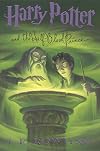
I think this may become my second favorite in the series. PoA will, forever I think, be my number one.
Some will call this one a bad remake of CoS but I completely disagree. First, because obviously Harry needs to use all of his previous adventures, all of his experience now that he is getting closer and closer to the final encounter with Voldemort. Second, because the HBP’s book had nothing to do with Riddle’s diary… It wasn’t alive and never answered back, nor was it a piece of a random soul. The book was just that, a book, well Snape’s book which explains why Harry became a genius in Potions all over sudden.
There was a lot of romance… well, more likely snogging. Ron finally got some action and so did Harry. True it was a little bit cheesy at times, especially when it came to Ron and Hermione trying to attract each other’s attention and making the other one jealous, but then isn’t teenage romance always a bit cheesy? I was a bit surprised by the pairing Harry/Ginny… it came as quite unexpected to me but then I think Harry felt the same way. I also didn’t think he broke up with her for the right reasons. Let’s face it, now that the Death Eaters have got Draco on their side, Ginny will be in danger whether or not, she’s going out with Harry. Perhaps, Rowling is using that as an excuse so that in book 7, Hermione will become the leading female character again.
Draco… I must admit I really like the way Rowling portrayed him in this book. Long gone show more is the simplistic evil bully. Here, Draco’s grown up and showed a conscience, a strategic mind and determination. I found it funny that of all the people he’s surrounded with, the only he thought safe to confide in was Moaning Myrtle… this further uncovers this fake image of himself he’s trying to put up.
The HBP was, according to the title, supposed to be the main plot element; however, there are times when it is completely forgotten by the reader. In the end though, when looking back on the entire book, Rowling did give a much major role to Snape. I’m an active believer in the theory that Dumbledore didn’t not as much beg Snape to spare him (I could never imagine Dumbledore begging even less if he knew that Harry was around) than begging for Snape to kill him. They are both accomplished Legilimens after all and they didn’t break eye contact until Snape cursed Dumbledore. However, I felt more than ready to know what it was that Dumbledore knew about Snape that made him trust him so. However, Dumbledore’s sacrifice saved both Harry and Draco in the end, making the whole experience less definitive for the latter.
The fact that Dumbledore wanted to give private lessons to Harry at the beginning of the year kinda tipped me off. It meant that Dumbledore no longer thought that he was invincible, especially when he asked Harry his opinion. It kinda of deprived him of his untouchable image and prepared the reader for what was to come. That exactly make the pill easier to swallow but now that look back on it, I see the link.
RAB… um, my best guess would obviously be Regulus Black, Sirius’ brother. That would probably explain why he was killed but it also lift the question: did Regulus destroy others of Voldemort’s horcruxes.
One of the main criticism that I would make would be the total disappearance of characters that had become important in the OoTP… I desperately wanted to see more Lupin, Luna and Neville. Speaking of Lupin… the pairing with Tonks more than surprised me… he hardly seemed convinced by it himself lol!
Overall, I disagree with those who claim that this volume was much darker than the previous one, I found it lighter (in all sense of the term!), like it was Harry’s last fun days before the big stuff got in the way. That’s probably one of the reasons why Ginny’s character withdraws at the end of the book. There won’t much time left for romance in the seventh book… well Ron and Hermione maybe cuz they still really have a long way to go. show less
Some will call this one a bad remake of CoS but I completely disagree. First, because obviously Harry needs to use all of his previous adventures, all of his experience now that he is getting closer and closer to the final encounter with Voldemort. Second, because the HBP’s book had nothing to do with Riddle’s diary… It wasn’t alive and never answered back, nor was it a piece of a random soul. The book was just that, a book, well Snape’s book which explains why Harry became a genius in Potions all over sudden.
There was a lot of romance… well, more likely snogging. Ron finally got some action and so did Harry. True it was a little bit cheesy at times, especially when it came to Ron and Hermione trying to attract each other’s attention and making the other one jealous, but then isn’t teenage romance always a bit cheesy? I was a bit surprised by the pairing Harry/Ginny… it came as quite unexpected to me but then I think Harry felt the same way. I also didn’t think he broke up with her for the right reasons. Let’s face it, now that the Death Eaters have got Draco on their side, Ginny will be in danger whether or not, she’s going out with Harry. Perhaps, Rowling is using that as an excuse so that in book 7, Hermione will become the leading female character again.
Draco… I must admit I really like the way Rowling portrayed him in this book. Long gone show more is the simplistic evil bully. Here, Draco’s grown up and showed a conscience, a strategic mind and determination. I found it funny that of all the people he’s surrounded with, the only he thought safe to confide in was Moaning Myrtle… this further uncovers this fake image of himself he’s trying to put up.
The HBP was, according to the title, supposed to be the main plot element; however, there are times when it is completely forgotten by the reader. In the end though, when looking back on the entire book, Rowling did give a much major role to Snape. I’m an active believer in the theory that Dumbledore didn’t not as much beg Snape to spare him (I could never imagine Dumbledore begging even less if he knew that Harry was around) than begging for Snape to kill him. They are both accomplished Legilimens after all and they didn’t break eye contact until Snape cursed Dumbledore. However, I felt more than ready to know what it was that Dumbledore knew about Snape that made him trust him so. However, Dumbledore’s sacrifice saved both Harry and Draco in the end, making the whole experience less definitive for the latter.
The fact that Dumbledore wanted to give private lessons to Harry at the beginning of the year kinda tipped me off. It meant that Dumbledore no longer thought that he was invincible, especially when he asked Harry his opinion. It kinda of deprived him of his untouchable image and prepared the reader for what was to come. That exactly make the pill easier to swallow but now that look back on it, I see the link.
RAB… um, my best guess would obviously be Regulus Black, Sirius’ brother. That would probably explain why he was killed but it also lift the question: did Regulus destroy others of Voldemort’s horcruxes.
One of the main criticism that I would make would be the total disappearance of characters that had become important in the OoTP… I desperately wanted to see more Lupin, Luna and Neville. Speaking of Lupin… the pairing with Tonks more than surprised me… he hardly seemed convinced by it himself lol!
Overall, I disagree with those who claim that this volume was much darker than the previous one, I found it lighter (in all sense of the term!), like it was Harry’s last fun days before the big stuff got in the way. That’s probably one of the reasons why Ginny’s character withdraws at the end of the book. There won’t much time left for romance in the seventh book… well Ron and Hermione maybe cuz they still really have a long way to go. show less
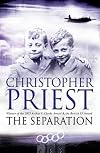
I’ve just finished reading this and I must admit that I’m a bit confused… I’m confused but I’m also pretty sure that I haven’t enjoyed – no wait, I think I can say – loved a SF book this way in a very long time.
The Separation is the story of twins during the WWII; Joe and Jack known as JL. It starts in 1936, as they both leave for Berlin to participate in the Olympic Games. On their journey back, they bring back a young Jewish woman who they are both madly in love with… until she marries Joe. Priest provides us two (or perhaps even more) stories as Joe and JL both deal with the war and its consequences separately. JL becomes a pilot in the RAF while Joe, a pacifist joins the Red Cross. From then on, their paths go different way though they can never free themselves of this special bond that links as twins. However, History itself goes its own way as well and the reader is never quite sure which reality he is in and exactly how many realities there are. Is Joe dead or alive? Or is JL the one who’s dead? Did the war truly end on May 11th 1941 when Churchill signed a separate peace treaty with Rudolf Hess, Hitler’s dophin?
The Separation can be classified as an “uchronie‿ (that would be the French term, perhaps in English you just stick to alternative history) but I would even go further than that and say that it’s an “uchronie‿ about “uchronie‿ because unlike other novels of the genre, the author doesn’t change on particular event so as show more to end up in a completely different world. There isn’t a clear distinction between our world and the world(s) in which the characters evolve.
Priest also uses this to explore the various possibilities offered by History. He raises the question of interpretation and perception of event and how people witnessing the same event never quite have the same point of view on what truly did happen… from then on, what is the truth?
I was particularly interested by the twin’s awkward love-hate-envy relationship and how in the end even though they were separated both because of the war and because of their opposite views of the war, their actions were often defined by their relationship… but then I’ve always found twins fascinating and I suppose Priest knows what he’s talking about since he’s got two of his own.
Some will love and others will hate, my point is that I don’t think you can remain indifferent to this novel. Some will find it brilliant while others will find that it completely missed the point but then, isn’t that what the entire novel is about? Interpretation.
I was immediately caught up in the twin’s everyday life. Here, the battles are mostly inner turmoil and the author uses SF to concentrate and analyse his characters.
This is a novel I would recommend to all even those who don’t usually read SF because they sometimes have the feeling that there’s more science than fiction. Here it is not the case. If you aren’t afraid of unexpected turn than go read it! Why are you still here? show less
The Separation is the story of twins during the WWII; Joe and Jack known as JL. It starts in 1936, as they both leave for Berlin to participate in the Olympic Games. On their journey back, they bring back a young Jewish woman who they are both madly in love with… until she marries Joe. Priest provides us two (or perhaps even more) stories as Joe and JL both deal with the war and its consequences separately. JL becomes a pilot in the RAF while Joe, a pacifist joins the Red Cross. From then on, their paths go different way though they can never free themselves of this special bond that links as twins. However, History itself goes its own way as well and the reader is never quite sure which reality he is in and exactly how many realities there are. Is Joe dead or alive? Or is JL the one who’s dead? Did the war truly end on May 11th 1941 when Churchill signed a separate peace treaty with Rudolf Hess, Hitler’s dophin?
The Separation can be classified as an “uchronie‿ (that would be the French term, perhaps in English you just stick to alternative history) but I would even go further than that and say that it’s an “uchronie‿ about “uchronie‿ because unlike other novels of the genre, the author doesn’t change on particular event so as show more to end up in a completely different world. There isn’t a clear distinction between our world and the world(s) in which the characters evolve.
Priest also uses this to explore the various possibilities offered by History. He raises the question of interpretation and perception of event and how people witnessing the same event never quite have the same point of view on what truly did happen… from then on, what is the truth?
I was particularly interested by the twin’s awkward love-hate-envy relationship and how in the end even though they were separated both because of the war and because of their opposite views of the war, their actions were often defined by their relationship… but then I’ve always found twins fascinating and I suppose Priest knows what he’s talking about since he’s got two of his own.
Some will love and others will hate, my point is that I don’t think you can remain indifferent to this novel. Some will find it brilliant while others will find that it completely missed the point but then, isn’t that what the entire novel is about? Interpretation.
I was immediately caught up in the twin’s everyday life. Here, the battles are mostly inner turmoil and the author uses SF to concentrate and analyse his characters.
This is a novel I would recommend to all even those who don’t usually read SF because they sometimes have the feeling that there’s more science than fiction. Here it is not the case. If you aren’t afraid of unexpected turn than go read it! Why are you still here? show less
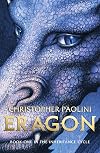
For some reason, I was a little reluctant to buy this book, I thought it was going to be for children. But when it came up as the fantasy book of the month on bookwyrmmes, I actually gave it a try and was pleasantly surprised. It is said to be a young adult’s book… true, the author’s really young; 18 when first published! And while you could certainly feel it at times (more in the first chapters), I didn’t really mind as it got better on all levels (fluidity in descriptions, characterization, complexity of the plot).
I liked the world he created with the Riders and their Dragons and the special link between them. It reminded me of the “Valheri peopleâÂ? in FeistâÂÂs Magician at first, though PaoliniâÂÂs developed much further. ItâÂÂs starts off as your basic fantasy novel, orphan hero finds something by chance (yeah right!) and is forced to leave his home and launches on an epic quest⦠thereâÂÂs the Gandalf: Brom, thereâÂÂs an elfish princess: Arya, thereâÂÂs the mysterious friend: Murtag, the big bad guy: Galvaratorix. But it goes much further than your usual clichés as you find out about the world of Alagaesïa, its past and how our hero struggles to understand how he fits in all this. PaoliniâÂÂs also created several different languages, among them, the ancient language in which you cannot lie. This language is necessary for our hero to use magic; he needs to know the show more name of the object of his magic before he can do anything. At some point, Brom explained that this was because the ancient language gave the real appellation of an object and that language more or less shaped your way of thinking⦠you might wonder if Paolini hasnâÂÂt been attending linguistic lessons. This is only one of the details that make me think that while this first volume may be considered as a young adult book, the rest of the coming books may not as the author and his writing style matures. show less
I liked the world he created with the Riders and their Dragons and the special link between them. It reminded me of the “Valheri peopleâÂ? in FeistâÂÂs Magician at first, though PaoliniâÂÂs developed much further. ItâÂÂs starts off as your basic fantasy novel, orphan hero finds something by chance (yeah right!) and is forced to leave his home and launches on an epic quest⦠thereâÂÂs the Gandalf: Brom, thereâÂÂs an elfish princess: Arya, thereâÂÂs the mysterious friend: Murtag, the big bad guy: Galvaratorix. But it goes much further than your usual clichés as you find out about the world of Alagaesïa, its past and how our hero struggles to understand how he fits in all this. PaoliniâÂÂs also created several different languages, among them, the ancient language in which you cannot lie. This language is necessary for our hero to use magic; he needs to know the show more name of the object of his magic before he can do anything. At some point, Brom explained that this was because the ancient language gave the real appellation of an object and that language more or less shaped your way of thinking⦠you might wonder if Paolini hasnâÂÂt been attending linguistic lessons. This is only one of the details that make me think that while this first volume may be considered as a young adult book, the rest of the coming books may not as the author and his writing style matures. show less

Everything about this book from the cover to the glossy pages to the words written on them enchanted me. I was in love with the story and the characters before the first chapter was over.
At first glance, the book doesn’t seem as though it’s going to be that interesting. After all, it’s just a story about a guy who travels in time. There doesn’t seem to be anything he needs to accomplish when he time travels, and the focus of the story is his romance with his wife. Well, a romance-centric story turns a lot of readers away, as does a time-travel story. The book starts off with two strikes against it before it’s even opened.
Now, I like Science Fiction and Fantasy, so the time travel aspect doesn’t bother me at all, but I was slightly concerned about the romance aspect. However, it was done so wonderfully and realistically that I found it amazingly believable and enjoyable.
I really liked the way that Niffenegger handled the time travel aspect of the book. Rather than using some artificial device to aid the time travel, she made it a genetic disorder and took away all the control that’s normally associated with time travel. Most protagonists get to choose when they leave their time and a modicum of control over when they end up and how long they stay there. Henry had none of that. All he could do was avoid things he knew could trigger time travel.
I thought that added a lot of drama and emotion to the story. Although it was the means by which Henry met Claire and show more the thing that enabled them to fall in love, it was for the most part a curse. After all, it made it difficult for them to have children, led to Henry’s death, and prevented him from doing a lot of things that most people take for granted, like driving and watching television. It kept him from getting close to a lot of people because he couldn’t tell them about his affliction, and it would be noticeable that something was amiss if he spent too much time around them.
I was amazed at how Niffenegger managed to make the book make sense despite the hops through time. I would have thought that with all the time traveling Henry does that it would be difficult to keep events straight. After all, he doesn’t time travel in any logical order, he often ends up further in the past than he has been on previous occasions and then the next time he won’t go as far back, or perhaps he’ll go to the future. Still, it seemed that the book was rather in chronological order, going through Henry’s life, or Claire’s life if she was narrating a certain part. I guess chronological order wasn’t quite the right term, but the transitions made sense and I was never lost wondering when something was happening.
I thought the characters of Henry and Claire were both amazingly developed. I could feel their joy and their anguish at various times throughout the story. They both really felt like real people, dealing with real things, and it was easy to care about them, easy to get inside their heads. It was among the best characterization that I’ve read in a long time. To me, Henry and Claire were real, and this was something that could have really been happening.
As a side note, I was impressed with her handling of 9/11 in the book as well. I wasn’t really expecting to see it in the book, and it was a little surprised, but I thought she handled it very well. After all, it is a Science Fiction book, so she could easily have pretended that it didn’t happen in that universe. However, I think that the fact that she included it made the book seem that much more real and believable.
The only thing that I didn’t completely like about the book was the ending. Henry’s death was never really explained to my satisfaction. I figured out what was going on when Claire saw Henry with her brother and father—they found the spot that the future Henry had been when he was shot (I assume), but there was never really a satisfactory explanation as to how he was shot. Everything was just inferred, and I really wanted to know for sure what had happened.
Still, other than that, I was highly impressed with the book. Everything else that confused me at one point in the book was satisfactorily explained later. I would honestly rate this among the best books that I’ve ever read. It is definitely something that I will be coming back to in the future. show less
At first glance, the book doesn’t seem as though it’s going to be that interesting. After all, it’s just a story about a guy who travels in time. There doesn’t seem to be anything he needs to accomplish when he time travels, and the focus of the story is his romance with his wife. Well, a romance-centric story turns a lot of readers away, as does a time-travel story. The book starts off with two strikes against it before it’s even opened.
Now, I like Science Fiction and Fantasy, so the time travel aspect doesn’t bother me at all, but I was slightly concerned about the romance aspect. However, it was done so wonderfully and realistically that I found it amazingly believable and enjoyable.
I really liked the way that Niffenegger handled the time travel aspect of the book. Rather than using some artificial device to aid the time travel, she made it a genetic disorder and took away all the control that’s normally associated with time travel. Most protagonists get to choose when they leave their time and a modicum of control over when they end up and how long they stay there. Henry had none of that. All he could do was avoid things he knew could trigger time travel.
I thought that added a lot of drama and emotion to the story. Although it was the means by which Henry met Claire and show more the thing that enabled them to fall in love, it was for the most part a curse. After all, it made it difficult for them to have children, led to Henry’s death, and prevented him from doing a lot of things that most people take for granted, like driving and watching television. It kept him from getting close to a lot of people because he couldn’t tell them about his affliction, and it would be noticeable that something was amiss if he spent too much time around them.
I was amazed at how Niffenegger managed to make the book make sense despite the hops through time. I would have thought that with all the time traveling Henry does that it would be difficult to keep events straight. After all, he doesn’t time travel in any logical order, he often ends up further in the past than he has been on previous occasions and then the next time he won’t go as far back, or perhaps he’ll go to the future. Still, it seemed that the book was rather in chronological order, going through Henry’s life, or Claire’s life if she was narrating a certain part. I guess chronological order wasn’t quite the right term, but the transitions made sense and I was never lost wondering when something was happening.
I thought the characters of Henry and Claire were both amazingly developed. I could feel their joy and their anguish at various times throughout the story. They both really felt like real people, dealing with real things, and it was easy to care about them, easy to get inside their heads. It was among the best characterization that I’ve read in a long time. To me, Henry and Claire were real, and this was something that could have really been happening.
As a side note, I was impressed with her handling of 9/11 in the book as well. I wasn’t really expecting to see it in the book, and it was a little surprised, but I thought she handled it very well. After all, it is a Science Fiction book, so she could easily have pretended that it didn’t happen in that universe. However, I think that the fact that she included it made the book seem that much more real and believable.
The only thing that I didn’t completely like about the book was the ending. Henry’s death was never really explained to my satisfaction. I figured out what was going on when Claire saw Henry with her brother and father—they found the spot that the future Henry had been when he was shot (I assume), but there was never really a satisfactory explanation as to how he was shot. Everything was just inferred, and I really wanted to know for sure what had happened.
Still, other than that, I was highly impressed with the book. Everything else that confused me at one point in the book was satisfactorily explained later. I would honestly rate this among the best books that I’ve ever read. It is definitely something that I will be coming back to in the future. show less
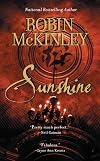
Sunshine takes a place in an alternate universe not unlike those of Buffy, Angel or even Charmed. As a matter of fact, I’ve heard this book being compared to BTVS. Though I don’t like the comparison much (and not because I wasn’t a Buffy fan, on the contrary), I suppose it does to a certain extent; you do find this extraordinary and surprising mixture of dark material and hilariousness but that’s about as far as the comparison goes.
Rae Seddon alias Raven Blaise alias Sunshine is a twenty-somethingish baker working at Charlie’s, the family coffeehouse. She leads a nice, normal life, surrounded by her step father Charlie, her incredibly normal mother, her two more than normal teenage brat half brothers (Kenny and Billy) and her quiet biker boyfriend Mel. Sunshine seems to have no life apart from the coffeehouse; she starts at 4:00 AM and sometimes finishes at 10:00 PM. One night, she decides to skip away from the ritual Monday family movie evening and goes by the lake where she used to hang around when she was younger with her real father (Onyx Blaise) and later on, meet secretly with her grandmother. Sunshine is looking for a little time on her own; away from the people and the life she loves as she wonders if there isn’t more to life than making cinnamon rolls. She is given an explicit answer pretty fast as soon as vampires enter the picture.
The book is split of four parts. The first one includes her kidnapping by Bo (Vampire Master)’s acolytes and her show more captivity with Constantine (another vampire) and how she manages to escape with him. By then, the reader has pretty much figured out that Sunshine isn’t your average girl no matter how hard she’s tried her whole life to be her mother’s daughter. Your average girl doesn’t transmute pocket-knives into keys.
Part two, Sunshine tells us about her return to normal life, the cut on her chest that doesn’t seem to heal no matter what and the reader gets the impression that there aren’t that much people in the world McKinley’s created who are normal or so to speak. The Others are everywhere and partbloods and magic handlers are quite common though not all of them are registered by the government. Everybody agrees on the fact that vampires are the worst among the Others and are therefore Special Other Forces (SOF)’s top priority, way behind demons, were, ghouls. Con (Constantine) is absent from the second part and I was impatient for him to get back into the light (artificial spotlight of course!)… the author got me feeling like a fan girl and I don’t like feeling like a fan girl, but I couldn’t help it, eventually he came back as Sunshine seemed as impatient as I was to see him again.
Part three describes Con and Sunshine getting ready to face Bo and how she unsuccessfully tries not to raise SOF’s suspicions. She also realizes that her enigmatic landlady Yolande is a retired ward keeper, definitely something you want to have on your side when a facing a Master vampire. Part Four, how they defeat Bo, whose only power resides in his will like most old vampire and Sunshine deals with the fact that her world’s changed because of what she’s seen and done and realizes that she has to embrace not only her power due to her affinity with daylight but also what Yolande called her counter-affinity, the side of darkness Con is part of. Con and she remain bound from the time she saved him and then he healed her wound in a very ahem kinda way. In the end, they leave together at night, though we know that Sunshine has to be at the Charlie’s at 4:30 AM to bake cinnamon rolls…
The author makes it quite clear that Sunshine doesn’t have to choose between light and darkness, not that the reader expected her too… it’s all part of her affinity, counter-affinity dealio and accepting both only makes her stronger… The same way, we don’t expect her to choose between being her mother’s daughter and her father’s inheritance, but at times in the book, Sunshine is lost because she feels she has to. But what I’d like her making a choice about is Mel or Con… she never does make a choice or even come close to the idea that she’ll have to make one at some point. Unless she’s planning on having both, on during the day and one at night. We know that magic handlers tend to live much longer maybe not as long as vampires but longer still, so the life expectancy thing isn’t a real problem and Con could use some company. Anyway, that’s just me being all fan girl-like.
McKinley lost me at some point, perhaps this is because I am not a native speaker but, I’m still not sure what ‘bad spots’ are. I know they are the result of the Voodoo Wars (the wars that opposed humans to the Others). Even when Sunshine passed through one with her SOF buddies (Pat and Jesse) in their SOF almost everything-proofed car, I wasn’t sure what it was we were dealing with here. Another thing I felt required more information was the globenet and the whole cosmail and combox ideas. I got the vague impression that it was Sunshine’s world’s equivalent for computer and internet but it seemed to work in slightly different way as sometimes Sunshine seemed to travel or at least to search in it the same way she want into what she called ‘nowheresville’.
I think these elements lacked description because we directly dived into Sunshine’s world. I mean that in the first part, the character never tells you clearly, my name is…, Charlie is my stepfather, my mother is named Sadie… she talks to you like you’re someone from her world listening to the turning point of her life. I actually like this way of writing, making the reader do his own bit of thinking and piecing things together. When the writer explains everything to you, that’s what usually annoys me in first person narrations, even though sometimes during the book it felt like you had a few things to catch up on. But then like I said, I’m not a native speaker and I did red this book pretty fast I found it so enthralling.
The first person narration is also a success because Sunshine is such a credible, endearingly funny character. But I thought McKinley’s done a great work on Mel, Con and Yolande, as well as on characters of lesser importance such as Maud or Mrs Bialosky.
I didn’t think it was possible to write a story so dark in such a humorous way. Ok so Buffy comes to mind… I’ve only watch the show and never read the books but I still think that it’s easier to create a dark atmosphere on screen than in a book especially when the main character keeps raving on whether or not vampire pee or can be considered as fairy godmothers. On screen, you can play with the lighting and a thousand other elements. When you’re writing it gets slightly more complicated or so I believe.
I don’t know how to classify this book. In bookwyrmmes, it was running in the SF section but I’m not too sure about that, but then I don’t think it’s fantasy either… I think it would fit in what the French describe as ‘fantastique’.
This was my first experience with this author. I know little about her other works; I know she’s done a retelling of Sleeping Beauty and Beauty and the Beast and also a book with her husband Peter Dickinson. Anyway, I really think that this is a novel I will come back to and maybe on a second read I’ll be more comfortable with comboxes and bad spots.
Oh and one thing, I would really *need* to know is: Mrs Bialosky is a were, but a were-what? show less
Rae Seddon alias Raven Blaise alias Sunshine is a twenty-somethingish baker working at Charlie’s, the family coffeehouse. She leads a nice, normal life, surrounded by her step father Charlie, her incredibly normal mother, her two more than normal teenage brat half brothers (Kenny and Billy) and her quiet biker boyfriend Mel. Sunshine seems to have no life apart from the coffeehouse; she starts at 4:00 AM and sometimes finishes at 10:00 PM. One night, she decides to skip away from the ritual Monday family movie evening and goes by the lake where she used to hang around when she was younger with her real father (Onyx Blaise) and later on, meet secretly with her grandmother. Sunshine is looking for a little time on her own; away from the people and the life she loves as she wonders if there isn’t more to life than making cinnamon rolls. She is given an explicit answer pretty fast as soon as vampires enter the picture.
The book is split of four parts. The first one includes her kidnapping by Bo (Vampire Master)’s acolytes and her show more captivity with Constantine (another vampire) and how she manages to escape with him. By then, the reader has pretty much figured out that Sunshine isn’t your average girl no matter how hard she’s tried her whole life to be her mother’s daughter. Your average girl doesn’t transmute pocket-knives into keys.
Part two, Sunshine tells us about her return to normal life, the cut on her chest that doesn’t seem to heal no matter what and the reader gets the impression that there aren’t that much people in the world McKinley’s created who are normal or so to speak. The Others are everywhere and partbloods and magic handlers are quite common though not all of them are registered by the government. Everybody agrees on the fact that vampires are the worst among the Others and are therefore Special Other Forces (SOF)’s top priority, way behind demons, were, ghouls. Con (Constantine) is absent from the second part and I was impatient for him to get back into the light (artificial spotlight of course!)… the author got me feeling like a fan girl and I don’t like feeling like a fan girl, but I couldn’t help it, eventually he came back as Sunshine seemed as impatient as I was to see him again.
Part three describes Con and Sunshine getting ready to face Bo and how she unsuccessfully tries not to raise SOF’s suspicions. She also realizes that her enigmatic landlady Yolande is a retired ward keeper, definitely something you want to have on your side when a facing a Master vampire. Part Four, how they defeat Bo, whose only power resides in his will like most old vampire and Sunshine deals with the fact that her world’s changed because of what she’s seen and done and realizes that she has to embrace not only her power due to her affinity with daylight but also what Yolande called her counter-affinity, the side of darkness Con is part of. Con and she remain bound from the time she saved him and then he healed her wound in a very ahem kinda way. In the end, they leave together at night, though we know that Sunshine has to be at the Charlie’s at 4:30 AM to bake cinnamon rolls…
The author makes it quite clear that Sunshine doesn’t have to choose between light and darkness, not that the reader expected her too… it’s all part of her affinity, counter-affinity dealio and accepting both only makes her stronger… The same way, we don’t expect her to choose between being her mother’s daughter and her father’s inheritance, but at times in the book, Sunshine is lost because she feels she has to. But what I’d like her making a choice about is Mel or Con… she never does make a choice or even come close to the idea that she’ll have to make one at some point. Unless she’s planning on having both, on during the day and one at night. We know that magic handlers tend to live much longer maybe not as long as vampires but longer still, so the life expectancy thing isn’t a real problem and Con could use some company. Anyway, that’s just me being all fan girl-like.
McKinley lost me at some point, perhaps this is because I am not a native speaker but, I’m still not sure what ‘bad spots’ are. I know they are the result of the Voodoo Wars (the wars that opposed humans to the Others). Even when Sunshine passed through one with her SOF buddies (Pat and Jesse) in their SOF almost everything-proofed car, I wasn’t sure what it was we were dealing with here. Another thing I felt required more information was the globenet and the whole cosmail and combox ideas. I got the vague impression that it was Sunshine’s world’s equivalent for computer and internet but it seemed to work in slightly different way as sometimes Sunshine seemed to travel or at least to search in it the same way she want into what she called ‘nowheresville’.
I think these elements lacked description because we directly dived into Sunshine’s world. I mean that in the first part, the character never tells you clearly, my name is…, Charlie is my stepfather, my mother is named Sadie… she talks to you like you’re someone from her world listening to the turning point of her life. I actually like this way of writing, making the reader do his own bit of thinking and piecing things together. When the writer explains everything to you, that’s what usually annoys me in first person narrations, even though sometimes during the book it felt like you had a few things to catch up on. But then like I said, I’m not a native speaker and I did red this book pretty fast I found it so enthralling.
The first person narration is also a success because Sunshine is such a credible, endearingly funny character. But I thought McKinley’s done a great work on Mel, Con and Yolande, as well as on characters of lesser importance such as Maud or Mrs Bialosky.
I didn’t think it was possible to write a story so dark in such a humorous way. Ok so Buffy comes to mind… I’ve only watch the show and never read the books but I still think that it’s easier to create a dark atmosphere on screen than in a book especially when the main character keeps raving on whether or not vampire pee or can be considered as fairy godmothers. On screen, you can play with the lighting and a thousand other elements. When you’re writing it gets slightly more complicated or so I believe.
I don’t know how to classify this book. In bookwyrmmes, it was running in the SF section but I’m not too sure about that, but then I don’t think it’s fantasy either… I think it would fit in what the French describe as ‘fantastique’.
This was my first experience with this author. I know little about her other works; I know she’s done a retelling of Sleeping Beauty and Beauty and the Beast and also a book with her husband Peter Dickinson. Anyway, I really think that this is a novel I will come back to and maybe on a second read I’ll be more comfortable with comboxes and bad spots.
Oh and one thing, I would really *need* to know is: Mrs Bialosky is a were, but a were-what? show less
I really think the editor should've written a preface in which he explained exactly how much and how Fritz Leiber changed fantasy and more especially sword and sorcery.
I think I can honestly say that I *liked* this book. It was a light, funny read. I wasn’t completely cracked up but I wasn’t bored either. The idea of Heaven and Hell is an ideal one for a parody, or at least a humoristic work.
In Only Human, God and his eldest son Jay go away on a fishing trip leaving things in the hand of Kevin (God’s younger son)… well, things concerning the Cosmo are supposed to be in the hands of Mainframe, God’s computer designed by KIC… until Kevin decides to push a few keys and pouf! A several century old painting takes over the body of a young attractive accountant at KIC, Britain’s Prime Minister ends up stuck in a lemming, a bored machine takes the place of the human in charge of keeping an eye on him and a Duke of Hell switches body with a vicar… interesting beginning, isn’t? But things take yet another turn as Kevin who still doesn’t know what he’s doing, tries to make things right. Result: a permanent eclipse, an overzealous robot, an alien coming in peace, a living limited company throwing doughnuts at police officers. May I quote Joshua by saying “This is wackâÂ? because thereâ truly no other word.
I think it was a nice introduction to this otherâÂÂs style and I will probably pick other books from him in the future if IâÂÂm looking for an original light and entertaining read but I canâÂÂt live off humoristic fantasy. But then, thatâÂÂs just me.
In Only Human, God and his eldest son Jay go away on a fishing trip leaving things in the hand of Kevin (God’s younger son)… well, things concerning the Cosmo are supposed to be in the hands of Mainframe, God’s computer designed by KIC… until Kevin decides to push a few keys and pouf! A several century old painting takes over the body of a young attractive accountant at KIC, Britain’s Prime Minister ends up stuck in a lemming, a bored machine takes the place of the human in charge of keeping an eye on him and a Duke of Hell switches body with a vicar… interesting beginning, isn’t? But things take yet another turn as Kevin who still doesn’t know what he’s doing, tries to make things right. Result: a permanent eclipse, an overzealous robot, an alien coming in peace, a living limited company throwing doughnuts at police officers. May I quote Joshua by saying “This is wackâÂ? because thereâ truly no other word.
I think it was a nice introduction to this otherâÂÂs style and I will probably pick other books from him in the future if IâÂÂm looking for an original light and entertaining read but I canâÂÂt live off humoristic fantasy. But then, thatâÂÂs just me.
I must admit that I was deeply annoyed… at first. Fitz just kept getting on my nerves and the only thing I wanted to do was slap him and order him to go to Verity… eventually Verity did that all by himself but not until 400 pages into the book.
Anyway, first things first: Fitz is recovering (doesn’t he seem to be doing that at the beginning of each book?)… I mean, technically the guy’s been dead, wolf and all so that’s comprehensible. But he took quite some time to recover all his wits and I’m not talking about going back to human… I’m talking about realizing that Molly had left him because she was pregnant (that had seemed quite obvious to me since in book two as well as the fact that she wasn’t going to wait for him all her life, especially if she thought that he was still dead! *sighs* men!) and also realizing that going after Verity would solve the Regal problem as well as other problems, faster than trying to kill his uncle! Somehow, Fitz didn’t see that and that led me to feel that this book’s general rhythm was less steady than the previous one’s had been. Fitz never did what I thought he should be doing as that got quite frustrating… especially the part when he chose not to stay with those of the Old Blood, that would’ve answered many questions regarding the Wit that the reader had been wondering since the first book… answers that are never given in the end, well Fitz learns them as we learn that he’s gone back to Black Rolf but show more we never really know anything about it.
Other than that, I appreciated the new characters that Hobb introduced, Starling, for all the times that she got on my nerves was an interesting character but not half as intriguing as Kettle… I was sad she went with the dragon in the end, I would’ve thought that the Farseers needed a qualified Skillmaster and she would’ve filled that occupation just fine.
Some call the end of this trilogy bittersweet. It’s true but wouldn’t it have appeared unnatural for everything to turn out perfectly well after all that the characters had gone through, there were bound to be losses and Hobb managed to make it both realistic and happy.
I’m glad though she decided to come back to these characters later on because somehow I felt that there was more to tell on this world and these characters. I’m hoping that since the Tawny Man trilogy takes place fifteen years after the war, Fitz will have matured a bit. show less
Anyway, first things first: Fitz is recovering (doesn’t he seem to be doing that at the beginning of each book?)… I mean, technically the guy’s been dead, wolf and all so that’s comprehensible. But he took quite some time to recover all his wits and I’m not talking about going back to human… I’m talking about realizing that Molly had left him because she was pregnant (that had seemed quite obvious to me since in book two as well as the fact that she wasn’t going to wait for him all her life, especially if she thought that he was still dead! *sighs* men!) and also realizing that going after Verity would solve the Regal problem as well as other problems, faster than trying to kill his uncle! Somehow, Fitz didn’t see that and that led me to feel that this book’s general rhythm was less steady than the previous one’s had been. Fitz never did what I thought he should be doing as that got quite frustrating… especially the part when he chose not to stay with those of the Old Blood, that would’ve answered many questions regarding the Wit that the reader had been wondering since the first book… answers that are never given in the end, well Fitz learns them as we learn that he’s gone back to Black Rolf but show more we never really know anything about it.
Other than that, I appreciated the new characters that Hobb introduced, Starling, for all the times that she got on my nerves was an interesting character but not half as intriguing as Kettle… I was sad she went with the dragon in the end, I would’ve thought that the Farseers needed a qualified Skillmaster and she would’ve filled that occupation just fine.
Some call the end of this trilogy bittersweet. It’s true but wouldn’t it have appeared unnatural for everything to turn out perfectly well after all that the characters had gone through, there were bound to be losses and Hobb managed to make it both realistic and happy.
I’m glad though she decided to come back to these characters later on because somehow I felt that there was more to tell on this world and these characters. I’m hoping that since the Tawny Man trilogy takes place fifteen years after the war, Fitz will have matured a bit. show less
This volume starts off right where the first one ended: Fitz is still recovering from his poisoning experience. He is still in Jhaampe with Jonqui and Burrick (and Hands) while all others have departed weeks ago for Buckkeep. Fitz is suffering from trembling and seizures and therefore thinks he will no longer be of any use to his King as an assassin. He’s even considered never going back till he has a dream of Molly being attacked by Forged ones. Only this persuades him that he has to go back, if only to know whether or not she survived.
Fitz comes back to Buckkeep and is barely recognizable. Not only because of his sickness but also because he was grown and much more resembles his father in many way (in Jhaampe he was being treated as prince regardless the fact that he was a bastard so adjustments are required) still, the character seems to have grown from the last time he were with him.
This second book covers about a year and a half. The Raiders haven’t stopped their attacks, the Forged ones seem to be all converging on Buckkeep, Verity’s marriage is not exactly the fairy tale Kettricken was waiting for (she too experiences troubles adjusting to her closed life in Buckkeep and the fact that she no longer is the Sacrifice), King Shrewd is gravely sick and his new valet Wallace (or Wall’s Ass) is feeding him suspicious looking herbs.
To this already complex plot a few more things come in addition to further twist it: Fitz bonds with a wolf called Nighteyes, the show more Fool reveals his past as well as an interesting prophecy, Molly is alive, working as Patience’s servant and very much in love with our hero, but so is another called Celerity, daughter of the Duck of Bearns. Verity’s ships are being built but things get slightly more complicated when he starts wanting to use the Galen’s coterie (who turns out being loyal to Regal and not Verity), Verity sets off on a quest to find the Elderlings as he and Kettricken believe they are the only ones capable of saving the Six Duchies from the Raiders. Fitz sees a White Ship twice when fighting the Raiders. His gift of the Skill is slowly coming together and becoming less erratic thanks to Verity’s teaching.
Still as Verity leaves, he leaves the Six Duchies into the hands of Regal as Queen-in-waiting Kettricken is often set aside though she does as much as she can to hold the kingdom together (the fact that there’s a little spy among her people doesn’t quite help), and King Shrewd is invalid.
In the end, King Shrewd dies using the Skill, on the day of Regal’s ceremony as King-in-waiting (the coterie says they know Verity is dead), Fitz is arrested for avenging him and killing Serene and Justin. His tortured, executed but before that, he leaves his human body behind to take shelter in Nighteyes’ and becomes a wolf. The volume ends as he comes back to life (or to his own body). We don’t know where Chade is, neither do we know where the Fool and Kettricken and her unborn baby are. Verity is alive but that’s about as much as we know.
Once again, Hobb caught me as I was immediately enthralled in this exciting, page turning adventure. The romances were sweet, the characters believable, Hobb’s whole world credible… 750 pages and still wishing there was more… but hopefully there is. show less
Fitz comes back to Buckkeep and is barely recognizable. Not only because of his sickness but also because he was grown and much more resembles his father in many way (in Jhaampe he was being treated as prince regardless the fact that he was a bastard so adjustments are required) still, the character seems to have grown from the last time he were with him.
This second book covers about a year and a half. The Raiders haven’t stopped their attacks, the Forged ones seem to be all converging on Buckkeep, Verity’s marriage is not exactly the fairy tale Kettricken was waiting for (she too experiences troubles adjusting to her closed life in Buckkeep and the fact that she no longer is the Sacrifice), King Shrewd is gravely sick and his new valet Wallace (or Wall’s Ass) is feeding him suspicious looking herbs.
To this already complex plot a few more things come in addition to further twist it: Fitz bonds with a wolf called Nighteyes, the show more Fool reveals his past as well as an interesting prophecy, Molly is alive, working as Patience’s servant and very much in love with our hero, but so is another called Celerity, daughter of the Duck of Bearns. Verity’s ships are being built but things get slightly more complicated when he starts wanting to use the Galen’s coterie (who turns out being loyal to Regal and not Verity), Verity sets off on a quest to find the Elderlings as he and Kettricken believe they are the only ones capable of saving the Six Duchies from the Raiders. Fitz sees a White Ship twice when fighting the Raiders. His gift of the Skill is slowly coming together and becoming less erratic thanks to Verity’s teaching.
Still as Verity leaves, he leaves the Six Duchies into the hands of Regal as Queen-in-waiting Kettricken is often set aside though she does as much as she can to hold the kingdom together (the fact that there’s a little spy among her people doesn’t quite help), and King Shrewd is invalid.
In the end, King Shrewd dies using the Skill, on the day of Regal’s ceremony as King-in-waiting (the coterie says they know Verity is dead), Fitz is arrested for avenging him and killing Serene and Justin. His tortured, executed but before that, he leaves his human body behind to take shelter in Nighteyes’ and becomes a wolf. The volume ends as he comes back to life (or to his own body). We don’t know where Chade is, neither do we know where the Fool and Kettricken and her unborn baby are. Verity is alive but that’s about as much as we know.
Once again, Hobb caught me as I was immediately enthralled in this exciting, page turning adventure. The romances were sweet, the characters believable, Hobb’s whole world credible… 750 pages and still wishing there was more… but hopefully there is. show less
This book finally helped me make up with first person narration. Even though Fitz is young in this first book (6 to about 15) the author didn’t choose to write in a childish way which would have unnerved me immediately. Her character is perfectly credible as well as her world. It’s not action packed or extremely fast paced but original and Hobb’s done an extremely great work at characterisation (and not only with Fitz but also Shrewd, the Fool, Burrick), setting up the first basis of what is sure to be an extraordinary trilogy.
Hi, hi, hi… one thing I could say is that I completely disagree with those who’ve said that this was the worst that ever came out of these two authors… yep that’s it… completely disagree…
: Preludes and Nocturnes was my first experience with a graphic novel. I'd had several friends tell me that The Sandman books were must-reads, but for a while I was wary. I just don't do comic books. I do enjoy comic strips, but I tend to lose interest if the strip is longer than two or three rows in the newspaper. I just can't follow them.
I had, however, been told that The Sandman books read like a traditional story and since I love Neil Gaiman, I decided to give them a try.
Based on Preludes and Nocturnes, I've come to two conclusions. First, though they don't read quite like a novel, as some of the story is told through the pictures rather than narration, these particular books are easy to follow and read enough like a traditional book to keep my attention.
Second, these books are addicting. Every time I picked up Preludes and Nocturnes, I found it difficult to put down. I just wanted to keep reading and reading and reading and now that I've finished the book, I want to read the next one. I cannot wait until tomorrow when I get to pick up my copy of The Doll's House so I can read both that and Dream Country, which I already have. Unfortunately, the chances that those two books will occupy me until I can pick up book for are slim.
One complaint that I've heard a couple of times about The Sandman is that the DC-universe characters were awkward because when the book was started they weren't sure how it was going to fit into the DC Universe, and it ended up that they created show more a new label for it anyway. I suppose this may be true, but as my familiarity with DC superheroes is limited to a small percentage of the movies that have been made about them, I would be the first to admit that I'm not the right person to judge that.
For me, it was a little strange to have Batman referred to in the book as an actual person, but other than that I didn't see anything wrong with how they were portrayed.
The rest of the characters were vibrant and interesting, though definitely very different than what I'm used to reading. Just the concepts of some of the characters were vastly different from any that I had seen before. It was very refreshing and I was impressed by all the different personalities that came through as I was reading.
The only thing that I didn't really like about Preludes and Nocturnes is some of the art. Most of it, I really liked as I thought that it helped tell the story very well and added elements that wouldn't have been possible in a traditional novel. However, there were a few panels that I just didn’t like the art in. They were a bit too graphic and they weren’t depicting things that I wanted to see. They made reading that particular part uncomfortable for me.
That, however, is my only complaint about Preludes and Nocturnes. It's definitely a book that I'll be coming back to again and again in the years to come. show less
I had, however, been told that The Sandman books read like a traditional story and since I love Neil Gaiman, I decided to give them a try.
Based on Preludes and Nocturnes, I've come to two conclusions. First, though they don't read quite like a novel, as some of the story is told through the pictures rather than narration, these particular books are easy to follow and read enough like a traditional book to keep my attention.
Second, these books are addicting. Every time I picked up Preludes and Nocturnes, I found it difficult to put down. I just wanted to keep reading and reading and reading and now that I've finished the book, I want to read the next one. I cannot wait until tomorrow when I get to pick up my copy of The Doll's House so I can read both that and Dream Country, which I already have. Unfortunately, the chances that those two books will occupy me until I can pick up book for are slim.
One complaint that I've heard a couple of times about The Sandman is that the DC-universe characters were awkward because when the book was started they weren't sure how it was going to fit into the DC Universe, and it ended up that they created show more a new label for it anyway. I suppose this may be true, but as my familiarity with DC superheroes is limited to a small percentage of the movies that have been made about them, I would be the first to admit that I'm not the right person to judge that.
For me, it was a little strange to have Batman referred to in the book as an actual person, but other than that I didn't see anything wrong with how they were portrayed.
The rest of the characters were vibrant and interesting, though definitely very different than what I'm used to reading. Just the concepts of some of the characters were vastly different from any that I had seen before. It was very refreshing and I was impressed by all the different personalities that came through as I was reading.
The only thing that I didn't really like about Preludes and Nocturnes is some of the art. Most of it, I really liked as I thought that it helped tell the story very well and added elements that wouldn't have been possible in a traditional novel. However, there were a few panels that I just didn’t like the art in. They were a bit too graphic and they weren’t depicting things that I wanted to see. They made reading that particular part uncomfortable for me.
That, however, is my only complaint about Preludes and Nocturnes. It's definitely a book that I'll be coming back to again and again in the years to come. show less
Long and boring though the idea of reading people out of a book was good and you could certainly feel the author’s will to pass on her love for books.
When I picked up this book, I was expecting something along the lines of The Portrait of Dorian Gray. There are a few similarities; in fact the Portrait of Dorian Gray is mentioned at the beginning of the book. Both of them lift questions they don’t really answer but that’s about as far as the similarities go. This book is actually quite hard to define and classify… it’s fiction and fantasy and mystery all at once… and then when you look back on it, there’s no real supernatural explanation…
What I found interesting, more than the plot and the progression of the story towards finding out more about the Charbuques, was the characters: Pambo and Shenz, but also the Man from the Equator and Borne, the turdologist who reads the future in your past meals (once digested if I may add). I thought Ford did an amazing at capturing the real essence of those characters as his main character tries to capture Mrs Charbuques. To get back to the Pambo, at first I was surprised by the author’s style and his sometime heavy metaphors and I started wondering whether that was his style in general (this is the first book I’ve read of him) or if he was just portraying Pambo as an artist (the book is a first person narration)… I think the latter comes closer to the truth… in addition to that, there’s Ford’s attempt (and success!) at reproducing the late 19th century writing style.
Overall, I found intriguing and somewhat philosophical in the questions it asks and the show more paradox it put forward. I’m certainly going to give a try to Ford’s other books. show less
What I found interesting, more than the plot and the progression of the story towards finding out more about the Charbuques, was the characters: Pambo and Shenz, but also the Man from the Equator and Borne, the turdologist who reads the future in your past meals (once digested if I may add). I thought Ford did an amazing at capturing the real essence of those characters as his main character tries to capture Mrs Charbuques. To get back to the Pambo, at first I was surprised by the author’s style and his sometime heavy metaphors and I started wondering whether that was his style in general (this is the first book I’ve read of him) or if he was just portraying Pambo as an artist (the book is a first person narration)… I think the latter comes closer to the truth… in addition to that, there’s Ford’s attempt (and success!) at reproducing the late 19th century writing style.
Overall, I found intriguing and somewhat philosophical in the questions it asks and the show more paradox it put forward. I’m certainly going to give a try to Ford’s other books. show less
While I thought this extremely well written, I found that the plot lacked complexity or even real assets. I know you have to take into account the fact that it’s directed at a much younger readership and that these are short stories not novels but still… I found all three of them predictable, lacking credibility. Perhaps it would have been better if the three stories had actually taken place in the same world, rather than happening in three different ones. In the end, you have trouble defining what the author calls “the otherworldâÂ?.
This is the first novel by this author that I read… yes that only helps to show the incredible blanks in my SF culture. I also read somewhere that the author had a very particular style that didn’t appeal to all readers and that perhaps it would be better for one unfamiliar with Dick’s to start with other, more accessible novels such as Ubik or The Man in the High Castle. Far from stopping me, this statement, of course, only encouraged me to pick up the book and I didn’t put it down till I was done.
Eric Sweetscent is an artiforg doctor working at TF&D and trapped in a doomed marriage with a hot looking, cold hearted bitch. He’s responsible for the health of Mr. Ackerman himself who’s something over a 150 years old. The storyline takes place in 2055; Earth or Terra is the middle of war, on her side Lilistar (some long distant and more advanced cousins), opposite them the reegs who need a box to communicate with them. Gino Molinari is Terra’s Supreme leader, elected years before but his health is gradually deteriorating and so Eric is sent to Cheyenne in order to cure him… but the old man refuses artiforg and more than that when Eric consults his medical file, he’s confronted with questions and event he can’t find a rational explanation to. This gets further complicated when Terra realizes that she’s probably locked in the wrong war and against the wrong enemy… Freneksy and his ‘Starmen turn out to be much bigger threat than the reegs. On top of show more that, add a recently manufactured drug, JJ 180 which allows transport in time and you’ve got yourself an enthralling twisted and complex intrigue.
The author’s future is filled with robants, talking cabs and babylands on Mrs for those who can afford it… for example, Ackerman has a precise replica of 1935’s Washington which is where he grew up.
Anyway, Eric is the kind of hero unwillingly trapped into this huge adventure and everything he tries to do doesn’t always quite work out the way he had planned. If you like time travelling novels, you’ll definitely love this one and even you’re not used to the author’s style, like I was, you won’t get lost. show less
Eric Sweetscent is an artiforg doctor working at TF&D and trapped in a doomed marriage with a hot looking, cold hearted bitch. He’s responsible for the health of Mr. Ackerman himself who’s something over a 150 years old. The storyline takes place in 2055; Earth or Terra is the middle of war, on her side Lilistar (some long distant and more advanced cousins), opposite them the reegs who need a box to communicate with them. Gino Molinari is Terra’s Supreme leader, elected years before but his health is gradually deteriorating and so Eric is sent to Cheyenne in order to cure him… but the old man refuses artiforg and more than that when Eric consults his medical file, he’s confronted with questions and event he can’t find a rational explanation to. This gets further complicated when Terra realizes that she’s probably locked in the wrong war and against the wrong enemy… Freneksy and his ‘Starmen turn out to be much bigger threat than the reegs. On top of show more that, add a recently manufactured drug, JJ 180 which allows transport in time and you’ve got yourself an enthralling twisted and complex intrigue.
The author’s future is filled with robants, talking cabs and babylands on Mrs for those who can afford it… for example, Ackerman has a precise replica of 1935’s Washington which is where he grew up.
Anyway, Eric is the kind of hero unwillingly trapped into this huge adventure and everything he tries to do doesn’t always quite work out the way he had planned. If you like time travelling novels, you’ll definitely love this one and even you’re not used to the author’s style, like I was, you won’t get lost. show less
: Once again, the myth of King Arthur is taken and made into fiction. While I found it at first difficult to truly get in the story, after a few pages, this first narration fiction really caught me. It’s a sweet children’s story and is not pretending to be anything more. It was entertaining and if you’re a sucker for Arthurian legends like I am, you’ll definitely enjoy it. I will certainly read the two following books of this series if I come across them.
Kushiel’s Chosen being the second book by Carey that I’ve read, I guess
you can say that I’m slowly getting accustomed to her style and characters. For one
thing, it felt relaxing going back to characters I’d grown to appreciate in the first book,
namely Phèdre and Joscelin but also Ysandre and Drustan.
The question as to how Melisande had managed to escape from her cell was the
main question throughout the first pages as well as to her current whereabouts.
The writing is as in the previous book excellent, you always this impression of clear
water flowing out of a fountain even in the most awful moments. The main plot is
cleverly woven and is smartly intertwined with several subplots. Plan within plans as
Phèdre points out. The political intrigues of both the court of Terre d’Ange and that of
La Serenissima are a delight to those who enjoy such things in a novel, I know I do.
Characterization is at its best. It’s nice to see Ysandre bloom in her role as queen
and wife and we just wish the heroin could find a similar balance in her life. Joscelin
and Phèdre split up in the first few pages, once she announces that she wishes to
return to the service of Namaah… can hardly blame to poor fellow but then, these
D’Angelines always have a surprising way of seeing things.
Gods whether they be D’Angelines (Namaah, Kushiel and Cassiel) or foreign
(Asherat of the sea) are omnipresent as Phèdre often claims that she is guided by
them and it’s hard to believe she show more would ever have succeeded all that she has
managed to without a little divine help. This only adds a touch of originality to the
whole trilogy as religion is very little often treated in the way Carey treats it in other
fantasy novels.
One main criticism that I wish to mention however, would be the same as the one for
previous book and more than likely will one in the third and final book of this
trilogy, namely, the length of each tome. While I am never truly bored while reading
Carey’s books and never finding any real flaws in her writing or plotting, I still find her
books are a bit too long for comfort… perhaps some of the subplots weren’t quite
necessary. I’m sure that after everything that Phèdre’s gone through, the reader
wouldn’t have mind a bit less vicissitudes but then, that’s just my personal advice and
it’s but a minor one… really. show less
you can say that I’m slowly getting accustomed to her style and characters. For one
thing, it felt relaxing going back to characters I’d grown to appreciate in the first book,
namely Phèdre and Joscelin but also Ysandre and Drustan.
The question as to how Melisande had managed to escape from her cell was the
main question throughout the first pages as well as to her current whereabouts.
The writing is as in the previous book excellent, you always this impression of clear
water flowing out of a fountain even in the most awful moments. The main plot is
cleverly woven and is smartly intertwined with several subplots. Plan within plans as
Phèdre points out. The political intrigues of both the court of Terre d’Ange and that of
La Serenissima are a delight to those who enjoy such things in a novel, I know I do.
Characterization is at its best. It’s nice to see Ysandre bloom in her role as queen
and wife and we just wish the heroin could find a similar balance in her life. Joscelin
and Phèdre split up in the first few pages, once she announces that she wishes to
return to the service of Namaah… can hardly blame to poor fellow but then, these
D’Angelines always have a surprising way of seeing things.
Gods whether they be D’Angelines (Namaah, Kushiel and Cassiel) or foreign
(Asherat of the sea) are omnipresent as Phèdre often claims that she is guided by
them and it’s hard to believe she show more would ever have succeeded all that she has
managed to without a little divine help. This only adds a touch of originality to the
whole trilogy as religion is very little often treated in the way Carey treats it in other
fantasy novels.
One main criticism that I wish to mention however, would be the same as the one for
previous book and more than likely will one in the third and final book of this
trilogy, namely, the length of each tome. While I am never truly bored while reading
Carey’s books and never finding any real flaws in her writing or plotting, I still find her
books are a bit too long for comfort… perhaps some of the subplots weren’t quite
necessary. I’m sure that after everything that Phèdre’s gone through, the reader
wouldn’t have mind a bit less vicissitudes but then, that’s just my personal advice and
it’s but a minor one… really. show less