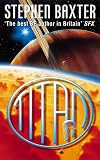
So humans go to Titan after discovering life there. All this done using leftover hardware from the STS & Apollo programs.
A very good book if quite quite depressing at the end. As always with Baxter the science is interesting and well presented, but unlike normal Baxter I found myself caring for the characters, he seems here to have cracked his normal Achilles heel of being unable to write characters.
Spoiler Warning:
I just found the end too depressing and marginally improbable and forced to give it the full 5 star recommendation. I can see why he did what he did, trying to give the exploration of space as humanity's only hope of survival and pointing out just how stupid mankind often is, however i think he really did take it too far to make this point and to make this disaster that was the outcome of the mission actually a success beyond anything else mankind has achieved. A good idea, just slightly forced and certainly improbable how they were brought back to life.
A very good book if quite quite depressing at the end. As always with Baxter the science is interesting and well presented, but unlike normal Baxter I found myself caring for the characters, he seems here to have cracked his normal Achilles heel of being unable to write characters.
Spoiler Warning:
I just found the end too depressing and marginally improbable and forced to give it the full 5 star recommendation. I can see why he did what he did, trying to give the exploration of space as humanity's only hope of survival and pointing out just how stupid mankind often is, however i think he really did take it too far to make this point and to make this disaster that was the outcome of the mission actually a success beyond anything else mankind has achieved. A good idea, just slightly forced and certainly improbable how they were brought back to life.
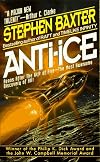
Synopsis:
In the heart of the industrial revolution an English expedition discovers anti-ice - a fuel source that gives the Victorian age England access to anti-matter power. They head for the moon, all the while smoking cigars and drinking spheres of finest brandy.
Comments:
All in all an enjoyable read, an amusing idea. As long as you take it as a bit of fun, otherwise too much depends on this single genius Traveller - I had real problems with this one guy inventing everything from the anti-matter based rockets to the air reclamation system, to the guidance clockwork. Still it is very amusing to hear the description of how they'd do a space suit with Victorian technology.
An early Stephen Baxter and it shows, but this is a positive thing in many ways - always good to see the genesis of authors.
In the heart of the industrial revolution an English expedition discovers anti-ice - a fuel source that gives the Victorian age England access to anti-matter power. They head for the moon, all the while smoking cigars and drinking spheres of finest brandy.
Comments:
All in all an enjoyable read, an amusing idea. As long as you take it as a bit of fun, otherwise too much depends on this single genius Traveller - I had real problems with this one guy inventing everything from the anti-matter based rockets to the air reclamation system, to the guidance clockwork. Still it is very amusing to hear the description of how they'd do a space suit with Victorian technology.
An early Stephen Baxter and it shows, but this is a positive thing in many ways - always good to see the genesis of authors.
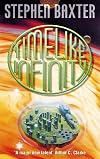
Humans discover how to make wormholes that can pass a ship through. So we'll attach one end to a station around jupiter and send another one on a near light speed ship so that time passes more slowly for that end of the wormhole. This way you create a bridge to the future.
Only in the future man has been conquered by a hostile alien race and they've now got a doorway to the past...
----
An interesting thought experiment dealing with the consequences of crating a doorway to the future. As always with Stephen Baxter his characterisation is somewhat lacking, but a little better than some of his other books. Worth a read, but do yourself a favour and lookup somewhere what a timelike curve, a timelike infinity and spacelike infinities are before you read the book. I waited until after reading it to hit wikipedia and it would have helped my understanding no end if I'd have been familiar with the terminology first.
Only in the future man has been conquered by a hostile alien race and they've now got a doorway to the past...
----
An interesting thought experiment dealing with the consequences of crating a doorway to the future. As always with Stephen Baxter his characterisation is somewhat lacking, but a little better than some of his other books. Worth a read, but do yourself a favour and lookup somewhere what a timelike curve, a timelike infinity and spacelike infinities are before you read the book. I waited until after reading it to hit wikipedia and it would have helped my understanding no end if I'd have been familiar with the terminology first.

The end of the Xeelee sequence of novels. very good tie up of the series.
As with all Stephen Baxter, the characterisation is somewhat lacking, but for me the rest of the book more than made up for it. Some interesting concepts for the characters, such as the 5 million year old AI, or the immortality experiments going on made it a worthwhile read just for those. However the big thing about this book being that it brings together all other threads that had been hinted at or suggested in other novels and gives it some meaning.
I couldn't however recommend this book unless you have a reasonable background in physics, or at least a computer nearby and the willingness to do some research on some of the physics theory he relies upon. None of it is really needed for the plot, but it otherwise would make it hard reading. Then again the physics he delves into is one of the greatest strengths of this book and if you're not following it I imagine you wouldn't get anything out of this book.
So overall, highly recommended if you like your science fiction heavy on the science and don't worry too much about the characters. Stay clear if you need to empathise with your characters
As with all Stephen Baxter, the characterisation is somewhat lacking, but for me the rest of the book more than made up for it. Some interesting concepts for the characters, such as the 5 million year old AI, or the immortality experiments going on made it a worthwhile read just for those. However the big thing about this book being that it brings together all other threads that had been hinted at or suggested in other novels and gives it some meaning.
I couldn't however recommend this book unless you have a reasonable background in physics, or at least a computer nearby and the willingness to do some research on some of the physics theory he relies upon. None of it is really needed for the plot, but it otherwise would make it hard reading. Then again the physics he delves into is one of the greatest strengths of this book and if you're not following it I imagine you wouldn't get anything out of this book.
So overall, highly recommended if you like your science fiction heavy on the science and don't worry too much about the characters. Stay clear if you need to empathise with your characters
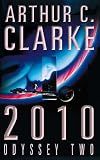
I can't remember anything of the movie it has been so long since I have seen it, so...
This is not a sequel to the book 2001; it is the sequel to the movie 2001. This is an important difference because just having read 2001 the day before, that even with the foreword explaining this I was a bit put out by the fact that things had shifted from Saturn to Jupiter. This I can accept and deal with, the only issue I have with this is that there were a few details of what happened with HAL that were different between the 2001 movie and the book that now being more familiar with the book left me confused.
Therefore if you are to read this and are not fluent with the film 2001 I suggest you watch it before reading this.
Now onto the book itself.
Uninspiring. I worry that people new to science fiction will read something like this and be put off. Yes it's average hard sci-fi, but nothing really stood out as being that interesting.
I guess the reason I was unimpressed is because the characterisation was really nothing much to write about; there was no exceptional sense of mystery that wasn't blatantly engineered.
On it's good points I liked the description of the Europan life forms, I was hoping more development would be done on this, but seemingly as part of some grander scheme Clarke had in mind, this was left undeveloped.
This is not a sequel to the book 2001; it is the sequel to the movie 2001. This is an important difference because just having read 2001 the day before, that even with the foreword explaining this I was a bit put out by the fact that things had shifted from Saturn to Jupiter. This I can accept and deal with, the only issue I have with this is that there were a few details of what happened with HAL that were different between the 2001 movie and the book that now being more familiar with the book left me confused.
Therefore if you are to read this and are not fluent with the film 2001 I suggest you watch it before reading this.
Now onto the book itself.
Uninspiring. I worry that people new to science fiction will read something like this and be put off. Yes it's average hard sci-fi, but nothing really stood out as being that interesting.
I guess the reason I was unimpressed is because the characterisation was really nothing much to write about; there was no exceptional sense of mystery that wasn't blatantly engineered.
On it's good points I liked the description of the Europan life forms, I was hoping more development would be done on this, but seemingly as part of some grander scheme Clarke had in mind, this was left undeveloped.
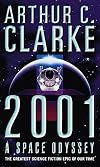
You know I never liked the film much - never did anything for me. I hated the mysterious seemingly drug induced ending that pointlessly baffled the viewer.
That I can now put down to a limitation in the medium of film; the book is able to tell the story of what was happening there so much better. In fact it shows how much better this story is told in book form.
I much preferred this to the film, so taking it as a standalone entity:
A good bit of hard sci-fi; an intersting concept well executed - if he could just have left out the pseudo religious stuff at the end and left it as a good bit of science fiction then it would be much better for it. Not that I really have a problem with what he wrote there really, just that it was totally out of character with the rest of the book.
That I can now put down to a limitation in the medium of film; the book is able to tell the story of what was happening there so much better. In fact it shows how much better this story is told in book form.
I much preferred this to the film, so taking it as a standalone entity:
A good bit of hard sci-fi; an intersting concept well executed - if he could just have left out the pseudo religious stuff at the end and left it as a good bit of science fiction then it would be much better for it. Not that I really have a problem with what he wrote there really, just that it was totally out of character with the rest of the book.
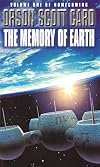
OSC has always been fond of mixing religion into his books. This book could be considered to start asking the question, "what if God was a gigantic supercomputer in orbit that remotely controls us all". After all, who hasn't asked that question?
Joking aside it is an interesting description of a society that once was advanced and forced themselves and their descendants into a more primitive life in an attempt to find a greater quality of life. To enforce this they have a computer that watches over and maintains the society until it is ready for greater things. However what happens if they never reach this stage and the computer starts to break down?
So we have the story of a group of people who begin to find this out and start the journey to fix it. Once again OSC seems most interested in telling stories of characters who you may or may not care about. The problem i had was that OSC didn't spend much time making me care for the characters before putting them in peril - which is fine, if the peril is short lived/interesting, however it wasn't and I didn't find it so.
Not a bad book, but I'm in no rush to read the next one.
Joking aside it is an interesting description of a society that once was advanced and forced themselves and their descendants into a more primitive life in an attempt to find a greater quality of life. To enforce this they have a computer that watches over and maintains the society until it is ready for greater things. However what happens if they never reach this stage and the computer starts to break down?
So we have the story of a group of people who begin to find this out and start the journey to fix it. Once again OSC seems most interested in telling stories of characters who you may or may not care about. The problem i had was that OSC didn't spend much time making me care for the characters before putting them in peril - which is fine, if the peril is short lived/interesting, however it wasn't and I didn't find it so.
Not a bad book, but I'm in no rush to read the next one.
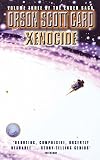
Continuation of the Ender saga taking off where speaker for the dead left off.
OSC does his usual excellent job of painting this world. Things do drag a bit when you're just wanting him to get on with it. If anything I feel there is too much characterisation and back story; or at least he is writing too much detail for the amount that I cared about the character.
Still a nice continuation of the series, I just believe that speaker, xenocide and children could have been condensed into a single book and would have benefitted from this.
OSC does his usual excellent job of painting this world. Things do drag a bit when you're just wanting him to get on with it. If anything I feel there is too much characterisation and back story; or at least he is writing too much detail for the amount that I cared about the character.
Still a nice continuation of the series, I just believe that speaker, xenocide and children could have been condensed into a single book and would have benefitted from this.
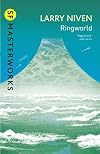
Ringworld; hard to be a geek these days and not be expected to know about the concept.
The plot of the book is minimal and in many respects immaterial and unimportant. What Niven seems to be interested in is describing the artefact and trying to explain its mind-numbing vastness.
In this it does it's job - not a stunning bit of sci-fi by any means, but something every sci-fi enthusiast probably should read.
The plot of the book is minimal and in many respects immaterial and unimportant. What Niven seems to be interested in is describing the artefact and trying to explain its mind-numbing vastness.
In this it does it's job - not a stunning bit of sci-fi by any means, but something every sci-fi enthusiast probably should read.
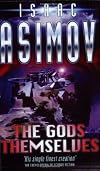
A unique thing for Asimov, a book that stands by itself. I hear he referred to this as his best work and I can see why. Given that Asimov is one of the ABCs of science fiction, this made me expect a lot.
What we find inside is true science fiction, no magic, a narrative that pulls you into it, human stupidity, pride and arrogance almost destroying the world - what more can you ask for.
Well arguably one of the most alien races ever described in described in science fiction - but with just enough relevance to human drives to make them comprehendable.
Some interesting twists and a great story. Well worth a read.
What we find inside is true science fiction, no magic, a narrative that pulls you into it, human stupidity, pride and arrogance almost destroying the world - what more can you ask for.
Well arguably one of the most alien races ever described in described in science fiction - but with just enough relevance to human drives to make them comprehendable.
Some interesting twists and a great story. Well worth a read.

A collection of short stories by Larry Niven.
I would say it is quite different from his normal stuff and regardless what you think of his politics this is separate from those and worth reading regardless. Some classic short segments in here - the famous "Man of Steel, woman of Kleenex" springs to mind, although the two discussion on the therory of teleportation and time travel are also an interesting read.
Some excellent short stories too, if a little predictable at times.
All in all a good average book, well worth a read but nothing to get too excited about.
I would say it is quite different from his normal stuff and regardless what you think of his politics this is separate from those and worth reading regardless. Some classic short segments in here - the famous "Man of Steel, woman of Kleenex" springs to mind, although the two discussion on the therory of teleportation and time travel are also an interesting read.
Some excellent short stories too, if a little predictable at times.
All in all a good average book, well worth a read but nothing to get too excited about.
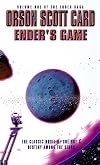
One of the classics of sci-fi.
A child is drafted into war school to fight the buggers, he is their best weapon, but surviving school seems harder than saving humanity from a deadly enemy.
Don't want to say more and risk spoiling the plot - suffice to say read it and then I'll risk saying more and spoiling the plot.
A child is drafted into war school to fight the buggers, he is their best weapon, but surviving school seems harder than saving humanity from a deadly enemy.
Don't want to say more and risk spoiling the plot - suffice to say read it and then I'll risk saying more and spoiling the plot.
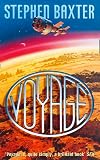
Every space geek has fantasised about what would happen if nasa had chased Mars instead of the space shuttle. Most people think the shuttle was a mistake, and so therefore Mars would have been a much better thing.
This book charts an alternate history where NASA did shoot for Mars, but does so with similar style to how we saw the shuttle pan out. Politics are real an interfere with things, budgets are cut, accidents happen and suddenly the wet dream that is Mars suddenly becomes the harsh and unforgiving mistress that she probably is.
All that said I still think this is a positive and hopeful look at what NASA could have done and what it might have got wrong. If you've ever looked hopefully to Mars and considered the shuttle program a mistake then do read this book and see if it gives you second thoughts.
A very good book that avoids the pose coloured glasses many people see avenues untaken with yet still maintains the wonder at what we missed.
Personally after reading it, I was left thinking the boondongle that was the shuttle program was a better choice than the Mars mission as portrayed here - I know others disagree, but that is a discussion for another place...
This book charts an alternate history where NASA did shoot for Mars, but does so with similar style to how we saw the shuttle pan out. Politics are real an interfere with things, budgets are cut, accidents happen and suddenly the wet dream that is Mars suddenly becomes the harsh and unforgiving mistress that she probably is.
All that said I still think this is a positive and hopeful look at what NASA could have done and what it might have got wrong. If you've ever looked hopefully to Mars and considered the shuttle program a mistake then do read this book and see if it gives you second thoughts.
A very good book that avoids the pose coloured glasses many people see avenues untaken with yet still maintains the wonder at what we missed.
Personally after reading it, I was left thinking the boondongle that was the shuttle program was a better choice than the Mars mission as portrayed here - I know others disagree, but that is a discussion for another place...
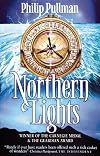
The Northern Lights (not the golden compass as our transatlatic brethren would have it) - starts off as a clasic children's book. Seriously my girlfriend insisted I read it and I wondered exactly what she was thinking forcing me to read something like that.
About 1/2 way through I had forgiven her.
About 3/4 of the way through I was already trying to get my hands on the next one so I could have something to read the next night.
Light fantasy as it should be. When you get it make sure you get the rest of the trilogy because you'll want them.
A great book, an even better trilogy.
About 1/2 way through I had forgiven her.
About 3/4 of the way through I was already trying to get my hands on the next one so I could have something to read the next night.
Light fantasy as it should be. When you get it make sure you get the rest of the trilogy because you'll want them.
A great book, an even better trilogy.
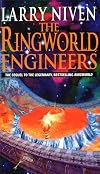
The follow on to the classic Ringworld.
This book seems to be an excuse to discuss some of the backstory and engineering of the ringworld. In that it does exactly what it says on the cover.
TBH at times for what is covered in this book you might be better off reading the wikipedia page on the ringworld and it tells you what you learn from this book.
Still if you enjoy the thoughts of stellar engineering and thinly veiled exposition (which I do) then this is a pleasant read for the train or such like. Otherwise not as powerful a book as ringworld but has the feeling of a stepping stone to a larger arc - I look forward to Ringworld Children to find out what happens next
This book seems to be an excuse to discuss some of the backstory and engineering of the ringworld. In that it does exactly what it says on the cover.
TBH at times for what is covered in this book you might be better off reading the wikipedia page on the ringworld and it tells you what you learn from this book.
Still if you enjoy the thoughts of stellar engineering and thinly veiled exposition (which I do) then this is a pleasant read for the train or such like. Otherwise not as powerful a book as ringworld but has the feeling of a stepping stone to a larger arc - I look forward to Ringworld Children to find out what happens next
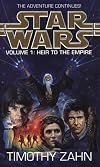
Picks up where Episode 6 left off - well kind of.
The empire isn't dead, it's alive and kicking and appears to have found a new leader who is making some inroads into new republic space.
A good follow onto the Star Wars movies we know and love - a good clean baddie, good clean goodies.
The empire isn't dead, it's alive and kicking and appears to have found a new leader who is making some inroads into new republic space.
A good follow onto the Star Wars movies we know and love - a good clean baddie, good clean goodies.
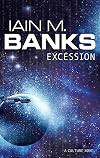
A culture novel. A post scarcity society - so always interesting there.
The idea in this novel is that an excession event is one where a society comes across something so advanced, so far outside it's experience that it is destroyed by it. An example given is that tribespeople experience an excession event when European visitors turn up on your island and come and introduce you to things like Christianity and taxation and smallpox.
The culture believes it has spotted a galleon homing into view and is understandably concerned.
It's great, read it.
The idea in this novel is that an excession event is one where a society comes across something so advanced, so far outside it's experience that it is destroyed by it. An example given is that tribespeople experience an excession event when European visitors turn up on your island and come and introduce you to things like Christianity and taxation and smallpox.
The culture believes it has spotted a galleon homing into view and is understandably concerned.
It's great, read it.
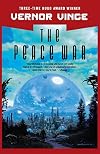
Someone invents a perfect forcefield and uses it as a weapon - opposing armies are neutralised, nuke weapons are useless.
A new order arises and peace is achieved for the first time in human history and peace not through force but the removal of any possible force.
All this sounds perfect, but far from it peace isn;t all it's cracked up to be - when someone else is dictating terms and holding back research to stop anyone else threatening their power/the peace.
Things get interesting when these forcefields (that were assumed to last indefinitly) start to fail and suddenly events of the past are catching up with the current order.
Simply put, a good example of exploration of a technological breakthrough and its effect on society. Vernor takes what is a seemingly simple technology and plays with it and the associated power struggles such a technology engenders.
A new order arises and peace is achieved for the first time in human history and peace not through force but the removal of any possible force.
All this sounds perfect, but far from it peace isn;t all it's cracked up to be - when someone else is dictating terms and holding back research to stop anyone else threatening their power/the peace.
Things get interesting when these forcefields (that were assumed to last indefinitly) start to fail and suddenly events of the past are catching up with the current order.
Simply put, a good example of exploration of a technological breakthrough and its effect on society. Vernor takes what is a seemingly simple technology and plays with it and the associated power struggles such a technology engenders.
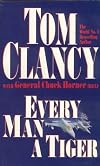
I wish I could give negative stars - I'll summarise what this book has to say:
The American Air Force it great
It has great weapons
and the best tactics
and did I mention it was great?
and that it had the best people?
There's this one guy who was really cool - no seriously cool - look he did all these cool things like blowing stuff up - even when people didn't want him to blow it up.
Did I mention that the Air force is really cool and has the best weapons? Yes? Oh well it is very true so I'll mention it again! It has the best people and the best training you know because they're all so very very cool and hip and so American and well just generally great...
Repeat for more pages than any bookshelf should have to suffer holding. No book ever deserves burning, but in this case it's because it'd be an insult to the flames.
The American Air Force it great
It has great weapons
and the best tactics
and did I mention it was great?
and that it had the best people?
There's this one guy who was really cool - no seriously cool - look he did all these cool things like blowing stuff up - even when people didn't want him to blow it up.
Did I mention that the Air force is really cool and has the best weapons? Yes? Oh well it is very true so I'll mention it again! It has the best people and the best training you know because they're all so very very cool and hip and so American and well just generally great...
Repeat for more pages than any bookshelf should have to suffer holding. No book ever deserves burning, but in this case it's because it'd be an insult to the flames.
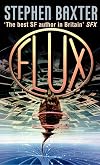
What would life be like that lived on a neutron star? How would life have got there in the first place? How on earth could humans live there? How do you have sex when you live in a frictionless superfluid? What sports would you play in such an environment? What would happen when civilisation that built all of this collapsed?
A great example of a simple thought experiment taken to an extreme conclusion. Oh and there's a plot and character development and links into a larger storyline and everything!
Knowledge of advanced quantum physics a bonus when reading this book, either that or a permanent line to wikipedia for those of us who don't know what an electron gas is
A great example of a simple thought experiment taken to an extreme conclusion. Oh and there's a plot and character development and links into a larger storyline and everything!
Knowledge of advanced quantum physics a bonus when reading this book, either that or a permanent line to wikipedia for those of us who don't know what an electron gas is

Don't get me wrong I love Asimov, i just think this book is missing something, some spark that set out Asimov as the genius we all love him to be.
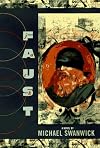
Ranks as possibly my favorite book I have ever read, possibly than for no other reason than this is tackling my favourite thought experiment - if I could go back in time with what I know, how would I change the world.
Except that's not really the thought experiment being tackled, but good enough. We see the story of a man who wants scientific knowledge and is offered it in abundance. He thinks it will improve mankind, those who offer it him do so because they are convinced it will destroy mankind.
Not sufficient to tell just this story it does track his pursuit, capture and eventual fall of his sweetheart. Again asking the question that if something comes with too much ease is it worth having anymore?
nothing i can say can do this book justice - if you like alternate timeline thought experiments then this is the book for you.
Except that's not really the thought experiment being tackled, but good enough. We see the story of a man who wants scientific knowledge and is offered it in abundance. He thinks it will improve mankind, those who offer it him do so because they are convinced it will destroy mankind.
Not sufficient to tell just this story it does track his pursuit, capture and eventual fall of his sweetheart. Again asking the question that if something comes with too much ease is it worth having anymore?
nothing i can say can do this book justice - if you like alternate timeline thought experiments then this is the book for you.
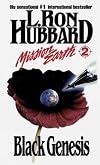
The first of the mission earth books I read. TBH this book did hook me to the series.
What a mistake, the rest of the series is addictive but disappointing.
Most of the amusement in this book is found in what I considerted at the time to be excellent satire - after reading the rest of the books I'm not so sure anymore if it is satire or just paranoid delusion. Either way I'd certainly recommend reading this book, but not reading the rest of the series
What a mistake, the rest of the series is addictive but disappointing.
Most of the amusement in this book is found in what I considerted at the time to be excellent satire - after reading the rest of the books I'm not so sure anymore if it is satire or just paranoid delusion. Either way I'd certainly recommend reading this book, but not reading the rest of the series
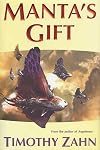
In the future we explore Jupiter only to find there are creatures living there already. the book tells the story of an invalid who is converted to one of their species so that he can provide a bridge between the two cultures.
You really think any society would be that altruistic? No? Neither did Timothy. Not to worry both humans and the aliens have ulterior motives for this crossover - the question is who will succeed in their motives.
This book takes what is already an interesting idea and successfully drives out an exploration of the new societies with Manta's alienation from both societies leaving him with an interesting commentary on the situation he is placed in.
You really think any society would be that altruistic? No? Neither did Timothy. Not to worry both humans and the aliens have ulterior motives for this crossover - the question is who will succeed in their motives.
This book takes what is already an interesting idea and successfully drives out an exploration of the new societies with Manta's alienation from both societies leaving him with an interesting commentary on the situation he is placed in.
Good book of semi-hard sci fi. Considers amoung other things the implications of relativistic weapons.
Set in a world where bureaucracy has gone a bit mad - this gets a bit boring after a while but is a good commentary on one possible society. Interesting take on the economies of interstellar colonisation.
Set in a world where bureaucracy has gone a bit mad - this gets a bit boring after a while but is a good commentary on one possible society. Interesting take on the economies of interstellar colonisation.