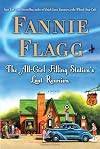
A real pleasure to read - light-hearted, feel-good, and warm. The characters are spot-on, especially Sookie, the 59 year-old long-suffering daughter (or is she 60? Read the book to find out). She has a revelation, a drastic turning point in her life (I won't give away the details!) and is forced to regroup and re-evaluate everything, from her family to her personality. But it all comes out OK in the end.
This is women's fiction - not much here for guys. But I enjoyed it. There are some nice details about a long-lost slice of American history, the WASPS, a group of female pilots in WWII.
This is women's fiction - not much here for guys. But I enjoyed it. There are some nice details about a long-lost slice of American history, the WASPS, a group of female pilots in WWII.
 This review was written for LibraryThing Early Reviewers.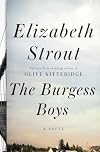
Elizabeth Strout is a master at the hyper-realistic novel. These characters are so real they could bleed. But they are also depressing and so, so sad. I actually read about half the book and had to set it aside for awhile it was so depressing.
The novel centers around the Burgress brothers, both lawyers from Maine, but living and working in New York city. It also follows their sister, nephew, wives and ex-wives and so forth. The nephew is the catalyst for the change that occurs in the book, since he does a really dumb thing that has repercussions for the whole family.
There is a family secret (which I won't spoil) that is revealed about three quarters of the way through the novel, that really picks up the depressing mood and propels the novel to the end. Without that revelation it would have been a lesser novel, but with it there is a more hopeful conclusion and some of the depression is lifted.
The novel centers around the Burgress brothers, both lawyers from Maine, but living and working in New York city. It also follows their sister, nephew, wives and ex-wives and so forth. The nephew is the catalyst for the change that occurs in the book, since he does a really dumb thing that has repercussions for the whole family.
There is a family secret (which I won't spoil) that is revealed about three quarters of the way through the novel, that really picks up the depressing mood and propels the novel to the end. Without that revelation it would have been a lesser novel, but with it there is a more hopeful conclusion and some of the depression is lifted.
This review was written for LibraryThing Early Reviewers.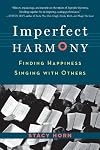
This intriguing book is part memoir and part an examination of the psychological and physiological aspects of singing in groups. The author has a long history of singing in the Choral Society of Grace Church in New York, and she shares with the reader how the process of collaborating and cooperating with the other singers produces something that is more than the sum of it's parts.
Well written and enjoyable to read. Highly recommended for music lovers.
Well written and enjoyable to read. Highly recommended for music lovers.
This review was written for LibraryThing Early Reviewers.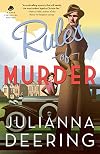
An enjoyable cozy mystery in the style of Agathe Christie, a delightful throwback to an "old-school" murder mystery. The primary attraction of novels like this is figuring out whodunit before the author reveals the answers. There are lots of plot twists, likeable characters, plenty of red-herrings and false leads, and an unexpected moral slant to the story hat makes it suitable for readers of any age.
Well done.
Well done.
This review was written for LibraryThing Early Reviewers.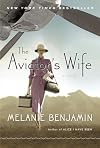
An introspective novel, examining the life of Anne Lindbergh, the wife of the famous aviator Charles Lindbergh. The first celebrity couple in US history, they captured the imagination of millions at the dawn of aviation and broadcast radio. The novel is fiction, of course, and examines the innermost thoughts of Anne as she copes with life in the shadow of her legendary husband, the death of her child, the notoriety of his anti-semitism and pro-nazi stance before WWII, and the revelation of his many affairs and illegitimate children.
It is fascinating reading, if a little too introspective for my taste. Anne is portrayed as continually questioning her marriage, while still acquiescing to everything her husband asks of her. Understandable actions on Anne's part, given the times that she lived in. At times I wished the novel would deal more directly with the action of the characters lives, rather than simply reflecting events as Anne attempted to decipher their meaning.
It is fascinating reading, if a little too introspective for my taste. Anne is portrayed as continually questioning her marriage, while still acquiescing to everything her husband asks of her. Understandable actions on Anne's part, given the times that she lived in. At times I wished the novel would deal more directly with the action of the characters lives, rather than simply reflecting events as Anne attempted to decipher their meaning.
This review was written for LibraryThing Early Reviewers.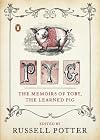
There was an actual pig named Toby, who had a famous stage act in the late 18th century. He could respond to questions by spelling out words with placards that he manipulated with his snout. The act was very popular, so much so that there were many imitators, and Toby was mentioned in the popular press of the day.
This is a work of fiction, an imagined memoir of Toby. It seems to be very accurate in it's treatment of the historical characters around the pig. Toby is presented as being extremely intelligent . The writing is in the style of works from the period, and is very reminiscent of Jonathon Swift and Gulliver's Travels.
Unfortunately, it left me wanting more. Very little is mentioned about how Toby attained the spark of intelligence, or about how a pig would respond so differently than a human to stimulus. Toby is portrayed as a mute human more than anything else, and nothing like a pig. There is very little drama. I thought that the story could have been so much better, along the lines of the novels by Richard Adams.
This is a work of fiction, an imagined memoir of Toby. It seems to be very accurate in it's treatment of the historical characters around the pig. Toby is presented as being extremely intelligent . The writing is in the style of works from the period, and is very reminiscent of Jonathon Swift and Gulliver's Travels.
Unfortunately, it left me wanting more. Very little is mentioned about how Toby attained the spark of intelligence, or about how a pig would respond so differently than a human to stimulus. Toby is portrayed as a mute human more than anything else, and nothing like a pig. There is very little drama. I thought that the story could have been so much better, along the lines of the novels by Richard Adams.
This review was written for LibraryThing Early Reviewers.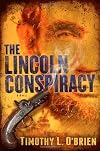
Ho-hum. A thriller like so many others, it follows the usual formula. The maguffin in this case is a pair of diaries, one belonging to the widow of Lincoln and the other to John Wilkes Booth. The setting is Washington DC just after the assassination of Lincoln. A police detective intercepts the diaries, and then risks his life and that of his wife and friends to keep them from other armed thugs. It reminded me of the improbable TV series, “The Wild Wild West”. Historical figures make appearances. There is much chasing around on horses, gun play, and fights between armed gangs. The hero and heroine get captured and escape. There are coverups, plots, and coded messages.
So it’s very formulaic, containing all the required aspects of a thriller. It’s not particularly convincing or even very novel. In the end, as is usually the case, the maguffin (the diaries) are not very important after all and get lost in the shuffle. There is a twist at the end (of course), but ultimately its just another historical thriller.
So it’s very formulaic, containing all the required aspects of a thriller. It’s not particularly convincing or even very novel. In the end, as is usually the case, the maguffin (the diaries) are not very important after all and get lost in the shuffle. There is a twist at the end (of course), but ultimately its just another historical thriller.
This review was written for LibraryThing Early Reviewers.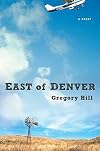
A black comedy. A son cares for his senile father on the family farm that they are slowly losing to an unscrupulous banker. Through in a paraplegic childhood friend, an overweight "girlfriend", the local drug dealer, and set it all in the dry prairie east of Denver.
It's just a little too dark for my taste. One of my favorite novels is "As I Lay Dying" by Faulkner. That is a masterpiece of the black comedy. "East of Denver" has comic moments that border of brilliant, but the big picture is missing. At times the novel lacks direction. Is it about the son's relationship with the senile father? At one point, I thought the whole odd assortment of characters was going to rob a bank - now that would have been an odyssey worthy of a modern-day Faulkner. But in the end it's just about the son's failure to help his father keep the family farm.
So I was disappointed with the arc of the story, but the comic moments almost make up for it...
It's just a little too dark for my taste. One of my favorite novels is "As I Lay Dying" by Faulkner. That is a masterpiece of the black comedy. "East of Denver" has comic moments that border of brilliant, but the big picture is missing. At times the novel lacks direction. Is it about the son's relationship with the senile father? At one point, I thought the whole odd assortment of characters was going to rob a bank - now that would have been an odyssey worthy of a modern-day Faulkner. But in the end it's just about the son's failure to help his father keep the family farm.
So I was disappointed with the arc of the story, but the comic moments almost make up for it...
This review was written for LibraryThing Early Reviewers.
An excellent novel, one of the best I have read this year. It’s not a traditional novel with a strong central character, and not a set of short stories, but something in-between. It’s a set of loosely connected characters, all sharing the same small-town setting. Whatever it is, it works extremely well. The characters are interesting and engaging, their problems are real and easy to relate to, the setting is alive, and there is just enough plot to move each character along. Even the ending is satisfying. Well done and highly recommended.
This review was written for LibraryThing Early Reviewers.
An adequate novel, set in the early days of Scotland Yard, right after the Jack the Ripper murders. It’s not a mystery, since the murderers are revealed to the reader in the early pages. It’s not particularly suspenseful or thrilling – the plot follows predictable lines. It is entertaining and enjoyable, although there seems to me to be a needless emphasis on blood and gore.
There are anachronisms, which can quickly ruin a historical novel. The insistence by a married woman that she be called by her first name by a complete stranger seems out of character with dialog from the novels of the period, as does the use of the American slang “okay”. That may not technically be an anachronism, but it jars and seems out of place.
So an enjoyable read, but nothing to get excited about.
There are anachronisms, which can quickly ruin a historical novel. The insistence by a married woman that she be called by her first name by a complete stranger seems out of character with dialog from the novels of the period, as does the use of the American slang “okay”. That may not technically be an anachronism, but it jars and seems out of place.
So an enjoyable read, but nothing to get excited about.
This review was written for LibraryThing Early Reviewers.
A clever, thoughtful novel, this is a retelling of Shakespeare’s Othello from the viewpoint of Iago, the villain of the play. Like many of Shakespeare’s plays, the motives of the characters in Othello are open to interpretation. Volumes of literary commentary have been written about Othello, but by retelling the story as a novel, this book takes a fresh look at the character of Iago and his motives.
We all know what happens, of course. Iago plays on the jealousy and insecurity of the Moor Othello, the general of the Venetian Army, and his innocent wife Desdemona. Things get out of hand, of course, since it is a tragedy. Othello murders Desdemona, and Iago murders his best friend and his wife.
The novel starts, not with the beginning of the play, but with the childhood of Iago, and fills us in on the backstory of his character that is missing from the play, thus giving us a better understanding of his motives. The second half of the novel covers the action of the play, but since it is told from the first person perspective of Iago, we do not see any of the action in which he is not involved, and are not privy to the private thoughts of any of the other characters. This is very effective. My take on Iago, as presented in the novel, is that he loved Othello, and was jealous after being passed over in his promotion, and at the attention given to Desdemona.
I was also impressed with the author’s use of dialog. She used modern English, of course, but it has the flavor of show more Shakespeare’s dialog, with it’s use of word play and puns and double entendres.
The novel is clever, carefully planned, and well written. Highly recommended. show less
We all know what happens, of course. Iago plays on the jealousy and insecurity of the Moor Othello, the general of the Venetian Army, and his innocent wife Desdemona. Things get out of hand, of course, since it is a tragedy. Othello murders Desdemona, and Iago murders his best friend and his wife.
The novel starts, not with the beginning of the play, but with the childhood of Iago, and fills us in on the backstory of his character that is missing from the play, thus giving us a better understanding of his motives. The second half of the novel covers the action of the play, but since it is told from the first person perspective of Iago, we do not see any of the action in which he is not involved, and are not privy to the private thoughts of any of the other characters. This is very effective. My take on Iago, as presented in the novel, is that he loved Othello, and was jealous after being passed over in his promotion, and at the attention given to Desdemona.
I was also impressed with the author’s use of dialog. She used modern English, of course, but it has the flavor of show more Shakespeare’s dialog, with it’s use of word play and puns and double entendres.
The novel is clever, carefully planned, and well written. Highly recommended. show less
This review was written for LibraryThing Early Reviewers.
This is an interesting book, very creative and intriguing. The author has borrowed characters and plot lines from two of my favorite Victorian novels: “Bleak House” by Charles Dickens and “The Woman in White” by Wilkie Collins. The villain is the lawyer Tulkinghorn from Bleak House, and Collins’ plot has been adapted and expanded and merged with Dickens’ characters.
The hero is a new character, a private detective. Inspector Bucket from Bleak House makes an appearance too. The plot is well thought out and more modern than anything that Dickens or Collins could have used.
So if you haven’t read “Bleak House” or “The Woman in White”, why not? I think you will enjoy this novel more if you read them first. “Bleak House” is arguably Dickens best novel, and “The Woman in White” is a classic early mystery novel.
“The Solitary House” is a great read, very entertaining and creative.
The hero is a new character, a private detective. Inspector Bucket from Bleak House makes an appearance too. The plot is well thought out and more modern than anything that Dickens or Collins could have used.
So if you haven’t read “Bleak House” or “The Woman in White”, why not? I think you will enjoy this novel more if you read them first. “Bleak House” is arguably Dickens best novel, and “The Woman in White” is a classic early mystery novel.
“The Solitary House” is a great read, very entertaining and creative.
This review was written for LibraryThing Early Reviewers.
These sisters, and their female descendants, cannot catch a break. Bad luck in the form of sexual abuse, poor choice of husband and sexual partners, misunderstandings and miscommunications, and so forth. The original two sisters are separated when they are teenagers because of a tragedy, and one of them disappears and stays lost on purpose.
An essential part of the book is the genealogical chart in the beginning - without it, keeping track of the many descendants would be impossible. The chapters skip years and narrators, so careful attention to the details is needed.
Fortunately the characters and their situations are all interesting, and the writing is excellent, so as a reader I was captivated enough to keep track of the complicated events and numerous characters.
Of course, I wanted a happier ending, but I cannot argue with the author's decisions.
An essential part of the book is the genealogical chart in the beginning - without it, keeping track of the many descendants would be impossible. The chapters skip years and narrators, so careful attention to the details is needed.
Fortunately the characters and their situations are all interesting, and the writing is excellent, so as a reader I was captivated enough to keep track of the complicated events and numerous characters.
Of course, I wanted a happier ending, but I cannot argue with the author's decisions.
This review was written for LibraryThing Early Reviewers.
A memoir of the relationship between pianist Anna Goldsworthy and piano teacher Eleonora Sivan. Anna started lessons with Sivan at age 9, and she chronicles the relationship with her teacher and the lessons she learned about music, life, love, and playing the piano. A good read, very true to the the experience of learning a musical tradition.
An excellent novel. Frazier has all the right tools in his arsenal. Nightwoods tells the story of Luce, who inherits her sister’s twin children, after her sister is murdered by her husband. The children witness the murder, and are damaged by the experience and the abuse they suffered at the hands of their father. They don’t speak, they kill chickens, and they start fires. A suspenseful plot pulls the reader along.
The other significant character is the setting, the mountains of western North Carolina and other areas of the South, from the 1960s. Maybe this is why I enjoyed the novel so much – that is the South of my childhood, and it rang true and vivid for me.
Much better, in my opinion, that Frazier’s Cold Mountain or Thirteen Moons. It is violent, but the ending is much more satisfactory than his earlier novels. Highly recommended.
The other significant character is the setting, the mountains of western North Carolina and other areas of the South, from the 1960s. Maybe this is why I enjoyed the novel so much – that is the South of my childhood, and it rang true and vivid for me.
Much better, in my opinion, that Frazier’s Cold Mountain or Thirteen Moons. It is violent, but the ending is much more satisfactory than his earlier novels. Highly recommended.
This review was written for LibraryThing Early Reviewers.
A surprisingly good first novel, a traditional coming-of-age story. Jack is thirteen, and the youngest son of the white-trash Witcher family. As is usual in coming-of-age novels, he begins to see his parents and brother as they really are, makes friends with an adult (a Jewish jeweler) outside the family, and has his first girlfriend and kiss. His brother is also implicated in the murder of his girlfriend’s brother.
It’s told throughout from Jack’s viewpoint, which does wear thin part way through, but the suspense of the mystery pulls us through the rough spots. The ending is satisfying if not unexpected. Overall an excellent novel.
It’s told throughout from Jack’s viewpoint, which does wear thin part way through, but the suspense of the mystery pulls us through the rough spots. The ending is satisfying if not unexpected. Overall an excellent novel.
This review was written for LibraryThing Early Reviewers.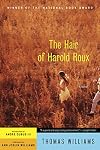
Harold Roux is a minor character in this re-printing of a literary novel from 1974, but he and his hair stand as a symbol for what happens to the major characters. Harold is bald, at 24, and desperately hiding that fact with a bad toupee. He is intent and learning and embracing the finer, higher, things in life, but is assaulted on all sides by the other young WWII veterans at college. Ultimately Harold loses his toupee, and and is violated and assaulted to the point that he flees.
He is a symbol, of course, for what happens to the Catholic virgin freshman Mary, and to some extent all the other characters. The book is a strange mix of novel-within-novel. At the top level is Aaron Benham, writing a novel – “The Hair of Harold Roux”, about Allard Benson, himself a writer and friend of Harold Roux, who is also writing a novel. All these fictional worlds collide and mirror each other. It’s clear that Aaron Benham is chronicling his own life as he writes, which makes the reader wonder if the real author, Thomas Williams, is doing the same with the entire complex construction of stories within stories.
It’s a reprint of a novel that first appeared in 1974 and which won the National Book Award, deservedly brought back to life. Warning: there are some really nasty jokes and smutty incidents – typical of college humor, but which may be highly offensive and shocking to some readers.
He is a symbol, of course, for what happens to the Catholic virgin freshman Mary, and to some extent all the other characters. The book is a strange mix of novel-within-novel. At the top level is Aaron Benham, writing a novel – “The Hair of Harold Roux”, about Allard Benson, himself a writer and friend of Harold Roux, who is also writing a novel. All these fictional worlds collide and mirror each other. It’s clear that Aaron Benham is chronicling his own life as he writes, which makes the reader wonder if the real author, Thomas Williams, is doing the same with the entire complex construction of stories within stories.
It’s a reprint of a novel that first appeared in 1974 and which won the National Book Award, deservedly brought back to life. Warning: there are some really nasty jokes and smutty incidents – typical of college humor, but which may be highly offensive and shocking to some readers.
This review was written for LibraryThing Early Reviewers.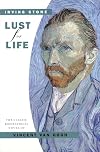
The classic biographical novel about Vincent Van Gogh. Stone, in the end note, says that, aside from a few fictional scenes, “… the book is entirely true.” He based his fictional account of Van Gogh’s life on his letters, which were saved by his brother, Theo Van Gogh.
The facts may be true, but there is certainly a spin placed on the interpretation of those facts by the author. The novel spends most of it’s time and energy on Van Gogh’s early life – his failed love affair in England, his attempt to be an Evangelist, his early training as an artist. Throughout he is described as someone who takes a passionate love for something to an extreme.
The most interesting period of his life is his time in the south of France when he first had his “attacks” and when he had his most creative period. Sloan seems to say that Van Gogh’s illness was epilepsy that started late in middle age, exacerbated by the absinthe that he drank and his years of near starvation.
If you’ve seen the excellent movie of the same title based on the book with Kirk Douglas then it’s difficult not to picture Van Gogh as Kirk Douglas or vice versa!
The facts may be true, but there is certainly a spin placed on the interpretation of those facts by the author. The novel spends most of it’s time and energy on Van Gogh’s early life – his failed love affair in England, his attempt to be an Evangelist, his early training as an artist. Throughout he is described as someone who takes a passionate love for something to an extreme.
The most interesting period of his life is his time in the south of France when he first had his “attacks” and when he had his most creative period. Sloan seems to say that Van Gogh’s illness was epilepsy that started late in middle age, exacerbated by the absinthe that he drank and his years of near starvation.
If you’ve seen the excellent movie of the same title based on the book with Kirk Douglas then it’s difficult not to picture Van Gogh as Kirk Douglas or vice versa!
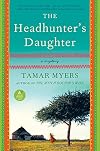
At first I couldn’t decide if this was intended to be drama, satire, or comedy. Now I think it is a clever combination of all three. It’s the story of a white baby raised by black Africans in the Belgian Congo back in the 1950s. It’s told with humor and satire combined with a keen sense of the different cultures – the author is the daughter of missionaries and spent time in the Congo as a child. Well done and insightful.
This review was written for LibraryThing Early Reviewers.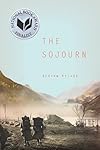
No happy ending here. But then it’s a war novel, the Austrian/Italian front in WWI. The hero is a young US citizen, whose father took him back to Hungary as a child. He grows up herding sheep with his father, enlists, becomes a sniper for the Austrians, and has some horrific adventures before the war ends. His troubles don’t end there, since he has to get “home”. But where is home?
It’s well written and captivating, if depressing. An interesting look at a forgotten front in a war that is fast receding from human memory.
It’s well written and captivating, if depressing. An interesting look at a forgotten front in a war that is fast receding from human memory.
This review was written for LibraryThing Early Reviewers.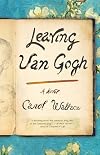
An interesting novel. An account of the last year or so of Van Gogh’s life, told from the viewpoint of the doctor and art lover, Dr. Gachet, who befriended Vincent and Theo Van Gogh. The good doctor has problems of his own, and the book spends more time with his character as observer than with Van Gogh’s. The author has remarkable insight into Van Gogh and his art, the the affect that his personality had on his brother Theo and Doctor Gachet. Highly recommended.
This review was written for LibraryThing Early Reviewers.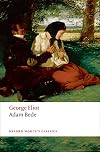
George Eliot (aka Marian Evans) was so far ahead of her contemporaries. Her realist novels read as if they had been written a hundred years later. Of course, she skirts around some of the more difficult subjects in Adam Bede: the relations between Hetty and Arthur are only hinted at, and the murder of the child is related after the fact.
But her characterizations are so much more realistic than anything that Dickens produced it is hard to even draw a comparison. Pip seems a caricature next to Adam Bede. And all of Dickens' female characters lack the depth of a Hetty or even a Mrs. Poyser from Adam Bede.
An excellent novel, well worth reading again and again.
But her characterizations are so much more realistic than anything that Dickens produced it is hard to even draw a comparison. Pip seems a caricature next to Adam Bede. And all of Dickens' female characters lack the depth of a Hetty or even a Mrs. Poyser from Adam Bede.
An excellent novel, well worth reading again and again.
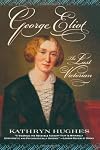
An excellent biography of a fascinating author. Mary Ann Evans, or Marian Evans, or Marian Lewes, or Marian Evans Lewes Cross, or George Eliot: the profusion of names gives you a hint of how complicated her life was. In a time when divorce was difficult (if not impossible), she lived happily with a married man for decades. Her life is as complex as the characters in her novels, and this biography deals with the details without obscuring the big picture.
After reading it, I wish that I had know her, which is the ultimate proof that this biography works.
After reading it, I wish that I had know her, which is the ultimate proof that this biography works.
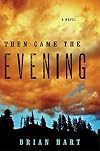
A dark, somber, moody novel, but expertly written. It tells the tale of a shattered family: the father in prison for murder, the mother hitting rock bottom, the 20 year-old son never knowing his father. Things really get going when the father gets out of prison and the son attempts to bring the family together on the deceased grandparent's old ranch. But the father cannot change, the mother's guilt is overpowering, and the son grows away from them, forming new bonds.
What is disturbing is the cavalier attitude of the father toward murder. He is not a psychopath, or even even disturbed - he seems perfectly normal, yet thinks nothing of shooting a policeman, for instance.
Despite the dark tone, it is an excellent book, well written.
What is disturbing is the cavalier attitude of the father toward murder. He is not a psychopath, or even even disturbed - he seems perfectly normal, yet thinks nothing of shooting a policeman, for instance.
Despite the dark tone, it is an excellent book, well written.
This review was written for LibraryThing Early Reviewers.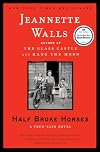
A historical memoir, which I think points out the problems with this genre. How can one write a memoir for someone other than the author? In this case, the author is writing her grandmother’s life, even though she died when the author was only a child.
It reads like a series of anecdotes, and lacks any cohesion. A much better plan would have been to write fiction, and include the modern granddaughter in the story. A good example would be Fannie Flagg’s “Fried Green Tomatoes”.
It reads like a series of anecdotes, and lacks any cohesion. A much better plan would have been to write fiction, and include the modern granddaughter in the story. A good example would be Fannie Flagg’s “Fried Green Tomatoes”.
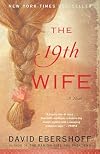
An intriguing book that tells two parallel stories. The historical fiction of Ann Eliza Young, the 19th wife of Brigham Young in 1875, and Jordan Scott, a gay man kicked out of his fundamentalist Mormon sect. The details revealed about the history of polygamy in the Mormon Church are interesting and insightful, and the modern portion of the book brings everything full circle and reads like the headlines of current events.
The Man Who Loved Books Too Much: The True Story of a Thief, a Detective, and a World of Literary Obsession by Allison Hoover Bartlett
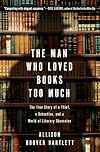
I bought this book because of the title - since it resembled me a little too much. But it turned out not to be about a man who loved books, as much as a man who had a compulsion to collect books. It could have just as well been about a man who collects guitars, or a woman who collects quilts. It's creative non-fiction, and suffers, like most books in that genre, from having to adhere to fact. It would have been much better as fiction with a different plot.
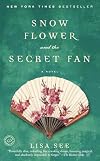
An intriguing look at life for women in China before the abolition of foot-binding. Lily and Snow Flower, tow pre-pubescent girls, become laotong, or sort of cross between pen-pals and best friends for life. They also have their feet bound and undergo the cultural discrimination against women of their time. Women are nothing, and girl children are less than nothing. It’s a very interesting glimpse of a culture that is, fortunately, gone (I hope).
A look at life through the eyes of a autistic teenage boy. Very well written and convincing. Christopher, the autistic boy, sets out to discover the mystery of who killed the neighbor’s dog, and in the process overcomes obstacles that seem insurmountable for someone like him. He also discovers secrets about his family that mean little to him, but affect the reader.
The real estate novel, and of course it is about greed and corruption. An odd man comes to town – Marcus Burns, and finds everyone willing to go along with his plans to get rich with little effort. Of course, there is quite a revelation late in the novel, which I won’t spoil here. It’s well written by Pulitzer winner Jane Smiley.