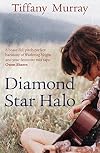
This was another book I picked up in Kindle's Daily Deal. I wasn't too sure about it but the music element to it persuaded me - and afterall it only cost 99p so not a huge gamble! It is about a family who run a music studio in rural Wales, that is used by a steady stream of rock stars over the years. It begins in the 1970s when the middle child, Halo or Lo-Lo befriends the young female singer from an American band that otherwise consists of seven brothers. The singer, Jenny, is heavily pregnant with Halo's gran predicting that the baby will be born there. Turns out the gran is right and for reasons I won't spoil here, baby Fred is taken in by Halo's family and grows up as their brother. The story moves from the 1970s, through their childhood and teenager years until near enough present day when they are adults.
I have mixed feelings about this book. My main issue with it was that I felt very uncomfortable with the sexualisation of a child in Fred. From birth he is described as being like Heathcliff, the older Halo has feelings for him that are sexual from an early age and he is described in a very sexual way at the age of eight. Now I don't have children myself and am from a family that is dominated by females, so I have very little experience of 8 year old boys, but it didn't sit right with me. My other gripe was Halo - who was another one of these too good to be true female characters, totally self-sacrificing for her family and seemingly so beautiful herself that people show more are equally obsessed with her, yet she doesn't notice it - she reminded me a bit of the 50 Shades of Grey heroine! She was by far the least interesting person in the whole story.
But just as I was considering giving up on it, I was won back over. Halo's mother suffers from depression throughout the book, but later she becomes physically ill and this is where Tiffany Murray showed herself to be an excellent writer. Her own mother, Minny, comes to visit - a tough little woman with a ascerbic tongue about the rest of the family, but so tender with her daughter that it was heartbreaking. So what was the saddest part of the book, was for me by far the best part.
Putting aside dubious relationships with foundling children and rock stars, Tiffany Murray can write about complex real family relationships. show less
I have mixed feelings about this book. My main issue with it was that I felt very uncomfortable with the sexualisation of a child in Fred. From birth he is described as being like Heathcliff, the older Halo has feelings for him that are sexual from an early age and he is described in a very sexual way at the age of eight. Now I don't have children myself and am from a family that is dominated by females, so I have very little experience of 8 year old boys, but it didn't sit right with me. My other gripe was Halo - who was another one of these too good to be true female characters, totally self-sacrificing for her family and seemingly so beautiful herself that people show more are equally obsessed with her, yet she doesn't notice it - she reminded me a bit of the 50 Shades of Grey heroine! She was by far the least interesting person in the whole story.
But just as I was considering giving up on it, I was won back over. Halo's mother suffers from depression throughout the book, but later she becomes physically ill and this is where Tiffany Murray showed herself to be an excellent writer. Her own mother, Minny, comes to visit - a tough little woman with a ascerbic tongue about the rest of the family, but so tender with her daughter that it was heartbreaking. So what was the saddest part of the book, was for me by far the best part.
Putting aside dubious relationships with foundling children and rock stars, Tiffany Murray can write about complex real family relationships. show less
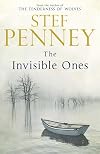
The book starts with private investigator Ray Lovell lay in a hospital bed, partly paralysed trying to remember how he got there. He had been hired by a gypsy man to track down his daughter who he hadn't seen since she married into another travelling family, who then claimed she had ran off with another man. Ray has been chosen for this job as he is part gypsy, although his father married outside and settled in a house. Ray has an awareness of gypsy culture, but is still something of an outsider to it.
The other narrator is 14 year old JJ, the nephew of the missing woman's husband. He is more part of traditional gypsy culture than Ray, but his young age means he doesn't fully understand everything that is going on but is starting to questions things. The story moves between the two of them as Ray digs deeper into the history of the Janko family.
To be honest I guessed the twist/explanation fairly early on in the story, but this didn't actually spoil the book for me as I liked both the main characters and was just as interested in how things worked out for them as I was about the mystery being solved.
The other narrator is 14 year old JJ, the nephew of the missing woman's husband. He is more part of traditional gypsy culture than Ray, but his young age means he doesn't fully understand everything that is going on but is starting to questions things. The story moves between the two of them as Ray digs deeper into the history of the Janko family.
To be honest I guessed the twist/explanation fairly early on in the story, but this didn't actually spoil the book for me as I liked both the main characters and was just as interested in how things worked out for them as I was about the mystery being solved.
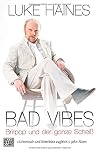
An autobiography by Luke Haines is never going to be able to compete with the usual celebrity memoirs that fill supermarket shelves as he is far from a household name. In fact most people probably haven't heard of him - a fact which he probably feels unjust and fuels some of the bile in his writing. For the uninitiated, I'll explain. In the 1990s, Haines was in a band called the Auteurs who enjoyed a reasonable amount of success in the indie/alternative sphere. For a time, their debut album New Wave was probably my second favourite album.
The book works through the early days of his music business career, starting in a band called The Servants, through his time in the Auteurs and then his solo project Baader Meinhof. He recounts his run-ins with record label management and bands he considers inferior that he must share the bill with - and Haines considers pretty much every band to be inferior to his. The book is filled with withering put-downs and scathing comments about this contemporaries - Blur and the Boo Radleys receiving the worst of his disdain, Suede probably coming off best. Whether he is really this bitter and resentful or if it is just a persona he has adopted is up for debate, but either way the result is a witty look at the music business in the 1990s.
The book works through the early days of his music business career, starting in a band called The Servants, through his time in the Auteurs and then his solo project Baader Meinhof. He recounts his run-ins with record label management and bands he considers inferior that he must share the bill with - and Haines considers pretty much every band to be inferior to his. The book is filled with withering put-downs and scathing comments about this contemporaries - Blur and the Boo Radleys receiving the worst of his disdain, Suede probably coming off best. Whether he is really this bitter and resentful or if it is just a persona he has adopted is up for debate, but either way the result is a witty look at the music business in the 1990s.
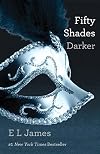
The first book was rubbish, but intriguing addictive rubbish. The second book failed to live up to those low standards. The action takes place about a week after the first one ends and to the surprise of nobody, the couple get back together. This time what is threatening their relationship is not so much Christian's bedroom preferences, but his past lovers who are jealous of Ana. The promise of any more deep dark secrets from his past don't really materialise and the book is much more standard romance than the first one (although there is the promise of saucy sex for a birthday present as a reminder of where the whole thing began). The way it ends setting up the plot for the third installments suggests a move towards unthrilling thriller rather than unerotic erotica. I don't think I'll be tempted to indulge further.
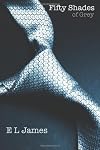
Fifty Shades of Grey is not the sort of thing I normally read. I normally avoid romances and chick lit - and I haven't read any of those other hugely popular series about wizards and vampires. And erotica is certainly not my cup of tea. So why did I read Fifty Shades of Grey? My sister wanted my opinion on it. She was enjoying the books but for the wrong reason - far from being filled with romantic/erotic feelings, she was laughing out loud at them and wanted to know if there was something wrong with her for not getting it in the same way as other women were.
Well if there is something wrong with her, it must run in the family because Fifty Shades of Grey did nothing for me either. The piercing grey eyes, the long fingers, the messy auburn hair, the kinky preferences - Christian Grey left me cold - although a boyfriend with his own helicoptor, boat and multibillion but ethical environmentally-friendly corporation is often a bonus. The heroine, Anastasia Steele was deeply irritating - a 23 year old virgin is rare enough these days, but one who is so amazing looking that everyman she knows is in love with her. And she must be something to look at because she has a paperthin personality that even with three parts to it (herself, the conscience and her backflipping inner goddess) she barely has any noticeable character traits. What these two cliches did in the bedroom or the Red Room didn't excite me. The descriptions of the sex were appalling - I did blush a bit, but I show more cringed more and laughed even more still - the comparison of the orgasm as being like the spin cycle on a washing machine being my particular favourite. In my report back to my sister, I described it as like an S&M Sweet Valley High book, but on later reflection that is unfair to the nuanced, well-plotted teenage series.
So it is poorly written, cliched fantasy that many 14 year olds would find unsophisticated. And yet, I read it in one day, devouring it like a Dominant billionaire with submissive virgin. Why? The plot was so ludicrous that I wanted to see how things worked out. So I kept reading - I felt cheap and some what dirty at the end - not so much because of the sex as the low-brow quality - but I finished it and then bought the second installment. show less
Well if there is something wrong with her, it must run in the family because Fifty Shades of Grey did nothing for me either. The piercing grey eyes, the long fingers, the messy auburn hair, the kinky preferences - Christian Grey left me cold - although a boyfriend with his own helicoptor, boat and multibillion but ethical environmentally-friendly corporation is often a bonus. The heroine, Anastasia Steele was deeply irritating - a 23 year old virgin is rare enough these days, but one who is so amazing looking that everyman she knows is in love with her. And she must be something to look at because she has a paperthin personality that even with three parts to it (herself, the conscience and her backflipping inner goddess) she barely has any noticeable character traits. What these two cliches did in the bedroom or the Red Room didn't excite me. The descriptions of the sex were appalling - I did blush a bit, but I show more cringed more and laughed even more still - the comparison of the orgasm as being like the spin cycle on a washing machine being my particular favourite. In my report back to my sister, I described it as like an S&M Sweet Valley High book, but on later reflection that is unfair to the nuanced, well-plotted teenage series.
So it is poorly written, cliched fantasy that many 14 year olds would find unsophisticated. And yet, I read it in one day, devouring it like a Dominant billionaire with submissive virgin. Why? The plot was so ludicrous that I wanted to see how things worked out. So I kept reading - I felt cheap and some what dirty at the end - not so much because of the sex as the low-brow quality - but I finished it and then bought the second installment. show less
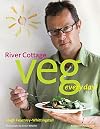
I don't normally watch cookery shows and I don't normally buy cook books, but I watched one episode of River Cottage Vegetables Every Day and was so inspired that I had to buy the book too. The recipes are probably available on the Channel 4 website, but the book was still well worth buying as it is a gorgeous book beautiful photography that is sure to make you feel hungry.
The aim of the book is not to convert everyone to vegetarianism (and Hugh himself is a committed carnivore) but to encourage people to eat more vegetables and to have a few meat and fish free days a week, as it is both healthier and better for the environment. The book is divided into sections such as Comfort Food and Feasts, Hearty Salads, Soups, Side Dish, Bready Things and Tapas. The Bready Things chapter contains things that are incredibly simple to make, but provides vital inspiration for sandwiches and snacks without having to resort to boring veggie standards of cheese and pickle or egg and cress. The recipes are always easy to follow and he isn't too precious about things, often saying things are optional or giving other alternatives.
The aim of the book is not to convert everyone to vegetarianism (and Hugh himself is a committed carnivore) but to encourage people to eat more vegetables and to have a few meat and fish free days a week, as it is both healthier and better for the environment. The book is divided into sections such as Comfort Food and Feasts, Hearty Salads, Soups, Side Dish, Bready Things and Tapas. The Bready Things chapter contains things that are incredibly simple to make, but provides vital inspiration for sandwiches and snacks without having to resort to boring veggie standards of cheese and pickle or egg and cress. The recipes are always easy to follow and he isn't too precious about things, often saying things are optional or giving other alternatives.
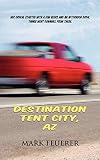
Not being from the USA, I hadn't heard of Tent City in Arizona before, but I must have been significantly intrigued enough to request the book. I think I was probably expecting a work of fiction set in a real place, but with fiction being its driving force. But what I got instead was a surmon about the dangers of drink-driving - or more accurately the dangers of being caugher drink-driving. It is billed as "as told to" suggesting it is entirely a true story - but it really could have done with some selection in what was included. A lot of the details of her routine weren't particularly interesting and added nothing to my understanding.
Another issue I had with the book is that I don't like being preached to. Whilst many books will have an agenda to them, it is usually hidden or disguised amongst a plot. Not so here. I objected to the assumption that drinking and driving is something that everyone does until they are caught. I don't and I'm pretty sure a good percentage of the population doesn't either. I'm sure there are many people out there with stories that would turn even the most reckless drink-driver against it, but this wasn't one of them. It was hard to feel a whole amount of sympathy for the protagonist, for whom the whole thing was an inconvenience, financial burden and an embarrassment, but not exactly life shattering. What about the stories of those people who've been seriously injured or lost loved ones in drink-driving incidents?
Having said that, I did find show more it an easy read and I was compelled to keep reading. But there could be a so much better story on the same subject caught up somewhere amongst this. show less
Another issue I had with the book is that I don't like being preached to. Whilst many books will have an agenda to them, it is usually hidden or disguised amongst a plot. Not so here. I objected to the assumption that drinking and driving is something that everyone does until they are caught. I don't and I'm pretty sure a good percentage of the population doesn't either. I'm sure there are many people out there with stories that would turn even the most reckless drink-driver against it, but this wasn't one of them. It was hard to feel a whole amount of sympathy for the protagonist, for whom the whole thing was an inconvenience, financial burden and an embarrassment, but not exactly life shattering. What about the stories of those people who've been seriously injured or lost loved ones in drink-driving incidents?
Having said that, I did find show more it an easy read and I was compelled to keep reading. But there could be a so much better story on the same subject caught up somewhere amongst this. show less
 This review was written for LibraryThing Early Reviewers.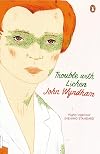
Sci-fi is just not my sort of thing, but I love John Wyndham and am gradually working my way through his books. In this one, Diana, a bright, beautiful but unconventional bio-chemist accidently discovers that a lichen possess the powers to slow the aging process. Her boss and mentor has also discovered this secret, but while he doesn't quite know what to do with it, Diana puts into place a masterplan that she hopes will change society forever. The book was published in 1960, so some of the dialogue and the attitudes expressed by some characters about a woman's role seem a bit dated, but, as with his other books, the big ideas about the implications of science of still relevant today. The book poses the question of what would happen if people lived longer - although we aren't reaching 200 years old, recent medical advances mean that an aging population in a very real issue in our society today and the other issue of women's limited years of fertility has also become more of an issue in recent years as woman have careers and delay becoming parents. Many other reviewers have said that it isn't his best work, and whilst it isn't a classic like Day of the Triffids or The Chrysalids, I still thought it was thought-provoking and a good story too.

Maxwell Sim is a middle-aged man, whose wife has left him, moving to the other end of the country with their daughter. His relationship with his cold, distant father isn't much better and he envys the intimacy and intellect of others. A meeting with an old work colleague leds to him taking part in a promotional event for a new brand of toothbrushes, which involves driving to Scotland. This description makes the book sound like a fairly typical middle-life crisis story, but what elevates it above this is its literary allusions and interesting structure. T S Eliot's Four Quartets is mentioned and the book follows this structure, constructed in four parts named after the elements. Within each main section as narrated by Maxwell, there is another story that is connected to the overall narrative but written by someone else, for example a short story written by his wife and a college report by an old family friend. The first of these interludes is about a real life person Donald Crowhurst, an amateur yachtsman who attempted to circumnavigate the world for a competition in the 1960s, but turned out to be a fake. Maxwell feels a kinship with Crowhurst and his own life starts to mirror Crowhurst's. There are also references to the Reginald Perrin books here and it has a similar bitter-sweet humour. I can't make up my mind about whether I liked the way the book ended or not, but I enjoyed the rest of the book so much that I won't hold that against it. I would have probably been show more disappointed however it ended because I didn't want it to end at all. show less
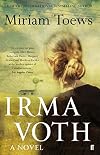
I received this book through the Early Reviewers programme, so thank you for that. It is set in Mexico in a settlement of the Mennonite religious group and is narrated by 19 year old Irma. She has been disowned by her father when she married a Mexican man, but he has since walked out on her. A film crew has come to make a film set in their community which sets off a chain of events that leds to Irma leaving her home. I like the character of Irma, although at times it was hard to remember that she was 19 as she seemed more child-like, which was probably intentional due to her sheltered upbringing. I found my interest in the film-crew and this part of the story waning, so I was glad when the story moved on from here, and I really enjoyed the part about Irma away from home.
This review was written for LibraryThing Early Reviewers.
The narrative of Divinity Road is split into four, with chapters focusing on two couples, who have been divided by tragedies. It begins with a chapter about Greg, who appears to be the sole survivor of a plane crash. This startling event might appear improbable, but it was an exciting start to the book and it grabbed my attention quickly.
The story then moves to Aman, an Eritrian separated from his family through a different type of tragedy, who finds himself in England, hoping to gain asylum. The other strands of the book are their wives, Nuala and Samira, who are brought together later in the story and give the book its only shreds of optimism and hope.
I was concerned at first that the subject matter might be too worthy, but the characters and plot were well-crafted so it didn't feel like an agenda swamped the story. To find fault with it, this subject matter has been covered before and it didn't feel hugely original, but I liked the characters and enjoyed reading it.
The story then moves to Aman, an Eritrian separated from his family through a different type of tragedy, who finds himself in England, hoping to gain asylum. The other strands of the book are their wives, Nuala and Samira, who are brought together later in the story and give the book its only shreds of optimism and hope.
I was concerned at first that the subject matter might be too worthy, but the characters and plot were well-crafted so it didn't feel like an agenda swamped the story. To find fault with it, this subject matter has been covered before and it didn't feel hugely original, but I liked the characters and enjoyed reading it.
This review was written for LibraryThing Early Reviewers.
It is an ambitious project to attempt to cover the whole of a decade in one book and it felt like rather a big task to just read it. DeGroot's central premise is that the 1960s weren't the idealistic revolutionary decade that is looked back through rose tinted glasses and its legacy isn't necessary the things most people immediately think of. In his introduction, he admits that he can't include everything and whilst the USA forms the most of his text, he does cover events in other places too. For the most part I enjoyed the book and I think his assessment is very fair and well reasoned.
Probably one of the most interesting aspects of the book for me is the idea that rather than left-wing liberal ideas, it was the conservative movement that really took hold in this decade and would have the biggest impact on the future - this was the decade Regan went into politics which is an interest chapter here as is the part of conservative youth politics. I also found the chapters on the Provos in the Netherlands and Cesar Chavez interesting as I didn't know anything about them.
The weakest parts of the book were mainly the ones which I already knew quite a bit about. The chapter on mods was poorly written with the author seeming to confuse various English seaside towns as if they were one in the same place. Having read Mark Kurlansky's 1968 The Year that Rocked the World , I wasn't as interested in the sections on 1968. But these are small grumbles and overall I'm glad I read this show more book as it offered a different perspective on a well-worn subject. show less
Probably one of the most interesting aspects of the book for me is the idea that rather than left-wing liberal ideas, it was the conservative movement that really took hold in this decade and would have the biggest impact on the future - this was the decade Regan went into politics which is an interest chapter here as is the part of conservative youth politics. I also found the chapters on the Provos in the Netherlands and Cesar Chavez interesting as I didn't know anything about them.
The weakest parts of the book were mainly the ones which I already knew quite a bit about. The chapter on mods was poorly written with the author seeming to confuse various English seaside towns as if they were one in the same place. Having read Mark Kurlansky's 1968 The Year that Rocked the World , I wasn't as interested in the sections on 1968. But these are small grumbles and overall I'm glad I read this show more book as it offered a different perspective on a well-worn subject. show less
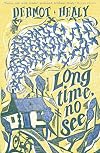
I thought I would love this book - from the description it sounded like a combination of Flan O'Brien's Third Policeman, Dan Rhodes' Gold or Paul Murray's books. But I was hugely disappointed. The book consists of a lot of dialogue which normally makes for a quick and easy read, but not in this case. Here it felt like constantly eavesdropping on conversations where I'd arrived half way through and I was never entirely sure who was saying what. If I was to be charitable, I'd say he has a good ear for dialogue as I could hear the Irish brogue as I read the conversations. The blurb on the back has Anne Enright proclaiming Healy as a "writer's writer" - that he may be, but ont he basis of this, he certainly isn't a readers writer, which surely is more important?
This review was written for LibraryThing Early Reviewers.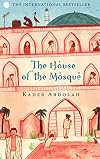
The book is about an extended family of three cousins, who live in the house attached to the mosque in a town in Iran. The central character is Aqa Jaan, a wise and respected man, who runs the household and the town bazaar. when the story begins, it is 1950 and Iran is under the rule of the Shah, and the imam of the mosque is the ineffectual Alsaberi. But things will change dramatically. There is unrest at America's influence over the Shah, and the increasing Americanisation of Iran through radio, television and cinema, which conflict with the traditional Muslim way of life.
My edition has a chart showing the main characters in the front and a glossary of Arabic words in the back - two things that make me groan - I like to read uninterupted without having to flick back and forth for explanations and reminders. But I needn't have worried, as the characters were, on the whole, well-formed and distinctive so I didn't really need the extra help.
The book covers an important and fascinating part of recent history, a story which should be told in the West, where perhaps not enough is known about it. The first part of the book which introduces Persian customs and the relationships across the family was an absolute delight - I particularly liked the part about the Grandmothers who want to go to Mecca. However, when the story reached the time of the revolution and the fictional characters came up against real life events and people, I found that rather than being the exciting show more climax I was expecting, the book lost its way somewhat. Too much bland historical information was given, breaking from the flow of the narrative about the characters. It would have been better if this could have been integrated better with the story, rather than reported blankly. That's not to say that I didn't enjoy the book - it is just that that flaw made it just a good read rather than a great one. show less
My edition has a chart showing the main characters in the front and a glossary of Arabic words in the back - two things that make me groan - I like to read uninterupted without having to flick back and forth for explanations and reminders. But I needn't have worried, as the characters were, on the whole, well-formed and distinctive so I didn't really need the extra help.
The book covers an important and fascinating part of recent history, a story which should be told in the West, where perhaps not enough is known about it. The first part of the book which introduces Persian customs and the relationships across the family was an absolute delight - I particularly liked the part about the Grandmothers who want to go to Mecca. However, when the story reached the time of the revolution and the fictional characters came up against real life events and people, I found that rather than being the exciting show more climax I was expecting, the book lost its way somewhat. Too much bland historical information was given, breaking from the flow of the narrative about the characters. It would have been better if this could have been integrated better with the story, rather than reported blankly. That's not to say that I didn't enjoy the book - it is just that that flaw made it just a good read rather than a great one. show less
This review was written for LibraryThing Early Reviewers.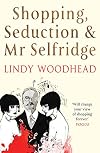
This is a biography of Harry Gordon Selfridge and his famous London department store. Selfridge was an American, who started his career at Marshall Field's in Chicago, "retired" at 40, then moved to London to start his own department store. He has grand plans and some of his idea revolutionised shopping - he invented the bargain basement and the whole shopping experience with art and entertainment that Selfridges does so well today, was started by him. There is a lot of interesting information in here about society in the early part of the last century, obviously about shopping habits, but also about women's place in society and the changing class system. Selfridge led a glamorous life and there is as much about his various lady friends as there is about shopping, and whilst it offers an interesting insight into the lifestyles of the rich and famous of that period, by the end of the book, I still don't feel that I know Selfridge himself that well.
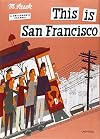
Beautfiul children's illustrated book, originally from the 1960s, the second of Miroslav's "This is" series about various cities. He draws the city's landmarks and attractions in his wonderful distinctive style. Each page has a brief amount of text explaining about the city's features, but the images work alone. Although it was originally a children's book, his work is now considered a cult classic and would be appreciated by adults with an interest in retro illustration or anyone who loves San Francisco.
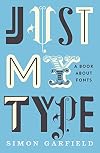
I do have some strong ideas about design, including the use of fonts. I'm not such an expert as the author of this book or the people in it, but the very fact that I chose to read it at all probably does indicate a level of geekiness. Suffice to say, I found this book fascinating. Chapters look at fonts in relation to different subjects, such as music, politics or transport, or looks at issues including piracy, who to design a font and the world's worst fonts. Interspersed with the main chapters, are shorter sections called "Font Breaks" which focus on an individaul font, its history and usage. The book itself is beautifully designed, with the title written in some unusual fonts, a font periodic table on the inside cover, lots of illustrations and text written in the font being discussed. If I had to pick fault with the book, I would have liked a little more about the DIY fonts the 60s and punk movement, but overall, I found it very informative and surprisingly fun read.
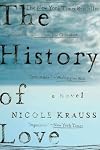
Leo Gurksky escaped from Poland during the Holocaust, when everyone who knew him assumed he had died. He goes to New York, where the one woman he ever loved went a few years before him, but finds she is already married and he has a son he didn't know about and who knows nothing of him. He lives a lonely life, fearing that when he dies his body won't be found for dies, so creates small commotions wherever he goes to get noticed. Interwoven with this story, is the story of a teenage girl called Alma, who was named after the female characters in a book called "The History of Love". Her father died years ago and her mother is still in deep grief.
It is a book infused with sadness, but also love. It is wonderfully written with both the main characters being delightful. There are several writers in the story and quite a few literary references, and at one point, I thought I might be a bit confused by it all, but it turned out I wasn't and pretty much all was explained.
A really beautiful book, which I'm so glad I read.
It is a book infused with sadness, but also love. It is wonderfully written with both the main characters being delightful. There are several writers in the story and quite a few literary references, and at one point, I thought I might be a bit confused by it all, but it turned out I wasn't and pretty much all was explained.
A really beautiful book, which I'm so glad I read.
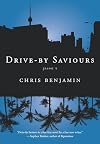
The book begins on a small Indonesian island with the birth of Bumi, a boy who seems to be remarkably intelligent from an early age, learning to speak very quickly and as a small child suggesting ways for the local fishermen to improve their techniques. His childhood is tough, with him first at the mercy of his violent father, then sent away to school as part of a Government education programme. Alternating with these chapters, are chapters from the point of view of Mark, a failed social worker in Toronto, who is bored with his work and falling out of love with his girlfriend. Although worlds apart, fortunes will conspire to bring these two characters together and inevitably this will have a profound effect on both their lives.
I enjoyed the early chapters about Bumi's life, which at first almost seemed to have a magical realism quality, but then turned much darker, mixing the political history of the country with Bumi's story. And although less interesting, I didn't mind the parts about Mark's life, but for me, the book actually went downhill when the two characters came together. In these parts, we lost the narrative about Bumi and the whole thing was told from Mark's point of view, whereupon he became deeply irritating,
At times the book feels like the author has a lot of social injustice issues that they want to discuss and they are all piled into the book, so that the plot feels like just an excuse to discuss these issues. Also, a key point of the plot hinges on an show more illness (I won't say what here) and we are expected to believe that Mark, an educated man who works with healthcare professionals, has never heard of it.
Overall, it was an interesting subject matter, but it would have been better if the focus had stayed with Bumi more and the author had been a bit less obvious with agenda. show less
I enjoyed the early chapters about Bumi's life, which at first almost seemed to have a magical realism quality, but then turned much darker, mixing the political history of the country with Bumi's story. And although less interesting, I didn't mind the parts about Mark's life, but for me, the book actually went downhill when the two characters came together. In these parts, we lost the narrative about Bumi and the whole thing was told from Mark's point of view, whereupon he became deeply irritating,
At times the book feels like the author has a lot of social injustice issues that they want to discuss and they are all piled into the book, so that the plot feels like just an excuse to discuss these issues. Also, a key point of the plot hinges on an show more illness (I won't say what here) and we are expected to believe that Mark, an educated man who works with healthcare professionals, has never heard of it.
Overall, it was an interesting subject matter, but it would have been better if the focus had stayed with Bumi more and the author had been a bit less obvious with agenda. show less
This review was written for LibraryThing Early Reviewers.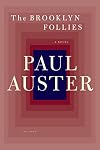
Absolutely brilliant - so much here that I loved.
The book is written from the point of view of Nathan Glass, an ex-insurance saleman, recovering from cancer and recently divorced with a bad relationship with his daughter. He moves back to Brooklyn, where he was born, with the intention of dying there, having all but given up on life. He occupies his time working on a book of Human Follies, a collection of mishaps he has witnessed in his life, then he bumps into his nephew Tom, with whom he had lost touch, and whose only life is in a slump, and this encounter leds to a series of events that gives new purpose to both their lives.
Less tricksy post-modern than some of Auster's other books, it nonetheless still has a rich tapestry of tangents, literary allusions and classic cinema references that are a feature of his work. Like the other books of his that I have really loved, the humanity really shines through here from a cast of unusual, but always believable characters.
The book is written from the point of view of Nathan Glass, an ex-insurance saleman, recovering from cancer and recently divorced with a bad relationship with his daughter. He moves back to Brooklyn, where he was born, with the intention of dying there, having all but given up on life. He occupies his time working on a book of Human Follies, a collection of mishaps he has witnessed in his life, then he bumps into his nephew Tom, with whom he had lost touch, and whose only life is in a slump, and this encounter leds to a series of events that gives new purpose to both their lives.
Less tricksy post-modern than some of Auster's other books, it nonetheless still has a rich tapestry of tangents, literary allusions and classic cinema references that are a feature of his work. Like the other books of his that I have really loved, the humanity really shines through here from a cast of unusual, but always believable characters.
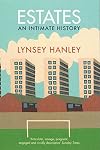
A very interesting book that mixes social history with the personal experience of the author on the subject of the UK's council housing estates. The author grew up on an estate on the edge of Birmingham and then as an adult lived on an estate in inner London, so knows all too well the difficulties faced by residents of these areas.
The book looks at the history of council houses, from the slum clearances, the building of estates, then towerblock, and Thatcher's selling off the stock with "Right to Buy". The historical parts, although fairly familiar to me, were interesting and I was particularly interested in the parts about Modernist architecture, a style I have a soft-spot for in terms of public buildings (my uni was a notable example), but is so wrong for homes. However, where the book really came alive was the part about her childhood, how she always felt different from other in her estate school, and how her horizons were broadened doing her A levels at a college with a mixture of social classes - this made me think about the tragedy of so many children being written off so young. The author also raised the thought-provoking point about why has state-provided housing become so stigmatised, whilst we don't feel the same about state schools or healthcare.
On the whole, I agree with her opinions, although her comments about large families waiting for houses rankled me a bit as whilst I agree there shouldn't be such shame in council housing, I do believe that since the show more housing shortage in the South is well-known that there needs to be some personal responsibility. Also she doesn't have any real solutions to the genuine problem families that exist on these estates and glosses over this. The optimistic note the book ends on, having been written a couple of years ago, now seems naive given the current Government. show less
The book looks at the history of council houses, from the slum clearances, the building of estates, then towerblock, and Thatcher's selling off the stock with "Right to Buy". The historical parts, although fairly familiar to me, were interesting and I was particularly interested in the parts about Modernist architecture, a style I have a soft-spot for in terms of public buildings (my uni was a notable example), but is so wrong for homes. However, where the book really came alive was the part about her childhood, how she always felt different from other in her estate school, and how her horizons were broadened doing her A levels at a college with a mixture of social classes - this made me think about the tragedy of so many children being written off so young. The author also raised the thought-provoking point about why has state-provided housing become so stigmatised, whilst we don't feel the same about state schools or healthcare.
On the whole, I agree with her opinions, although her comments about large families waiting for houses rankled me a bit as whilst I agree there shouldn't be such shame in council housing, I do believe that since the show more housing shortage in the South is well-known that there needs to be some personal responsibility. Also she doesn't have any real solutions to the genuine problem families that exist on these estates and glosses over this. The optimistic note the book ends on, having been written a couple of years ago, now seems naive given the current Government. show less
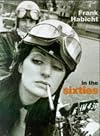
A brilliant collection of black & white photographs from the German photographer, who was famous for his era-defining images of the 1960s. These are all taken in London and cover the rich and famous, alongside ordinary people. There are pictures of the Rolling Stones' Hyde Park concert, Sandie Shaw, Vanessa Redgrave, but my favourites are of the unnamed people. There is also a nice juxtaposition between the idea of Swinging London and more traditional images of the Salvation Army, the Royal Guards and a typical city gent.
One tiny criticism - the captions for the images are all at the back of the book, which keeps the pages looking great, but is a little annoying when you want to know what it is you are looking at, to have to keep flicking back.
One tiny criticism - the captions for the images are all at the back of the book, which keeps the pages looking great, but is a little annoying when you want to know what it is you are looking at, to have to keep flicking back.
At first I thought I was going to hate this book. Why? The first person plural - I think that is the right term anyway - by which I mean rather than the third person or the regular first person use of "I", this book is written from the perspective of "we". I find this hard to get to grips with - I want to know exactly who is speaking and this devise stops that from ever being reveal. But actually it is appropriate here in a book about the workplace and the collective mentality of employees. It is set in a Chicago advertising agency in 2001, where a first wave of redundancies has started and everyone is fearing for their job. What starts of seeming incredibly mundane (who afterall really wants to spend any more time in a dull workplace after all day in a real one themselves?) comes to life as gradually individual personalities shine through the collective voice. And for all the detail about meeting procedures, redundancy, gossip and office etiquette etc, quite a lot does actually happen here - this is a workplace affected by cancer and the murder of a child, depression and threats of violence, as well as the usual rumour of office romance. In the end, I did quite enjoy it, although I would question the reviews that describe it as funny.
I won't pretend to have read this from cover to cover, but rather I have dipped into it, which I think is the idea with this type of book.
500 photographers have a page each, consisting of a key photograph with a description of both the image and that photographer's work in general. There are cross-referencing suggestions of other photographers, either from the same movement, working in a similar style or covering a similar subject matter.
Obviously with any book like this, there willl seem to be some omissions - if I was compiling such a book Terenence Donavan and Brian Duffy would be in there with their contemporary David Bailey, but that might just be my 1960s obsession. I would have also included John Hinde, but again that might be a British bias. And Mick Rock and Anton Corbin? But this is just my personal (and fairly limited knowledge) and there are some interesting inclusions such as Neil Armstrong's photograph of Buzz Aldrin on the moon, surely one of the most iconic images of all time, and the photograph of the mushroom cloud.
500 photographers have a page each, consisting of a key photograph with a description of both the image and that photographer's work in general. There are cross-referencing suggestions of other photographers, either from the same movement, working in a similar style or covering a similar subject matter.
Obviously with any book like this, there willl seem to be some omissions - if I was compiling such a book Terenence Donavan and Brian Duffy would be in there with their contemporary David Bailey, but that might just be my 1960s obsession. I would have also included John Hinde, but again that might be a British bias. And Mick Rock and Anton Corbin? But this is just my personal (and fairly limited knowledge) and there are some interesting inclusions such as Neil Armstrong's photograph of Buzz Aldrin on the moon, surely one of the most iconic images of all time, and the photograph of the mushroom cloud.
Jones charts his recent obsession with the iPod and his life-long obsession with music. He moves through his interest in music in a pretty much chronlogical order, adding in chapters about Apple. I really enjoyed the early parts of the book, both about his music tastes and surprisingly the stuff about Apple's origins and innovations. The later chapters, where several in a row were just about his opinions on music and his obsessive compiling of playlists and adding music to the iPod were less successful - particularly a chapter about uploading formats, which started off as being about a trip to Ibiza and I never quite understood the relationship between the two. There are some nice little anecdotes in here (many in the footnotes) as Dylan has been a lifestyle journalist so has met a lot of famous people and heard a lot of good stories about them. The book ends with appendices of some of his playlists, which were interesting, although apart from the sheer quantity of his music, I didn't feel particularly inspired by his tastes. Overall his writing lacked the emotional quality of Nick Hornby's 31 Songs or Rob Sheffield's Love is Mix Tape.
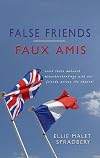
It is a short and simple book, basically lists of vocabulary. The first section looks at the False Friends, words in French that sound like English words, but have a different meaning. The second section is French Expressions, where the English equilivent, rather than a direct translation is given and then letter in the book English expressions are given. Section 3 lists French words with a variety of different meanings. But then sections 4 and 5 seemed just like padding for the book - 4 is a series of lists of specific vocabulary for example types of trees, flowers and boats, which doesn't really seem to fit with the False Friends topic, and 5 is a Miscellaneous section for words that don't fit anywhere else. The book is probably very useful if you are seriously learning French, but I was expecting something with more explanation or stories about misuse rather than just lists of words.
This review was written for LibraryThing Early Reviewers.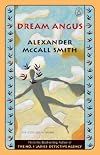
This book in the Canongate Myths series is about the celtic god of dreams, Angus. The short book comprises of tales about Angus' birth, childhood and life, mixed in with stories where dreams play an important role, and the god of dreams can be glimpsed. An enjoyable read, although I hadn't heard of Angus before so was unfamiliar with the original myths.
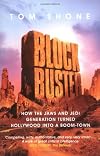
A fantastic read for anyone interested in the film industry, even if, like me, you don't think of yourself as a fan of big blockbuster films. The author is a film critic, but first and foremost he is film fan, which shows in the enthusiastic way he writes about the classic films of the genre. Starting with Jaws then Star Wars, he traces the path of the big summer blockbuster, making some interesting points about box office records and production costs, along with some interesting stories about how the films were made.
In part the book is a counter-argument to Peter Biskind's 'Easy Riders, Raging Bulls' which blames Spielberg and Lucas for the demise of 'quality' filmmaking and the dumb-downing of cinema. Shone takes an even-handed view of their impact, appreciating these films for their own value and how the best of the genre made cinema exciting for audiences, but being criticial of the blockbusters that were poor films. He doesn't, thanfully, try to over-intellectualise any of these films and is just as sceptical of the acedemics who do, as he is of the film snobs who dismiss all of these films.
Like Biskind's book, there are lots of anecdotes about how these films were made. Whilst Spielberg is so normal and decent that he doesn't provide much in the way of drama, James Cameron more than makes up for it.
In part the book is a counter-argument to Peter Biskind's 'Easy Riders, Raging Bulls' which blames Spielberg and Lucas for the demise of 'quality' filmmaking and the dumb-downing of cinema. Shone takes an even-handed view of their impact, appreciating these films for their own value and how the best of the genre made cinema exciting for audiences, but being criticial of the blockbusters that were poor films. He doesn't, thanfully, try to over-intellectualise any of these films and is just as sceptical of the acedemics who do, as he is of the film snobs who dismiss all of these films.
Like Biskind's book, there are lots of anecdotes about how these films were made. Whilst Spielberg is so normal and decent that he doesn't provide much in the way of drama, James Cameron more than makes up for it.
Story of the Scene: The inside scoop on famous moments in film (Professional Media Practice) by Roger Clarke
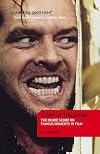
There are often myths and rumours surrounding films, how they were made and what went on behind the scenes. This book attempts to find the truth behind some popular myths and reveal what how certain famous shots were achieved. About 80 films are looked here, with a two page spread given to each, which includes an image from the film. There are some interesting tit-bits of information in here, but it is restricted by the rigid format - some films are obviously more interesting than others and it would be good to have more detail, whilst others don't really have enough to fill the two pages
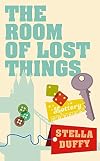
This is about the residents of an area of south London near Loughborough Junction station, an area I'm fairly familiar with as I used to know someone who lived round there. The main part of the plot is about Robert, who owns the dry cleaners, but is going to sell up to Akeel, a young Muslim man. He teaches Akeil the business and that as a cleaner, he sees secret parts of his customers lives. Wooven around this story, we see the lives of some of his customers, including an Australian nanny, a mixed-race social worker, a gay dance instructor, a criminal.
When I first moved to London, I loved reading books set here where the location and London's mix of people was an important part of the story, but now I'm ready to leave London, I'm less keen on that type of book, so I didn't think I would like this that much. But it managed to surprise me and was much more memorable than I was expecting. It becomes clear early in the book that Robert has a secret, but what it was took me completely by surprise. There were also a couple of other little twists that made me question by own assumptions. It also has a beautifully poignant ending.
When I first moved to London, I loved reading books set here where the location and London's mix of people was an important part of the story, but now I'm ready to leave London, I'm less keen on that type of book, so I didn't think I would like this that much. But it managed to surprise me and was much more memorable than I was expecting. It becomes clear early in the book that Robert has a secret, but what it was took me completely by surprise. There were also a couple of other little twists that made me question by own assumptions. It also has a beautifully poignant ending.