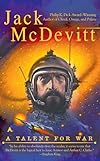
A Talent for War is a space opera unlike most, with the the excitement of epic space battles being told through the medium of historical archives as our protagonist, Alex Benedict, seeks closure following the death of his uncle, a man driven to solve a mystery unknown to most. Those craving action will have to be satisfied with historiography or be willing to wait until the last 50 pages or so. Not that there aren't satisfying story beats to be found throughout.
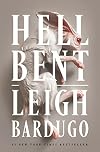
I was pleased to return to Dark Yale in Leigh Bardugo's sequel to Ninth House to find everything in its place where I left it. Beginning her second year, Alex Stern and her (mostly) faithful companions are decided that they will be attempting a rescue of her mentor Darlington, even if means journeying through hell and back. Which it does. Great fun, and no sophomore slump, Hell Bent once again delivers a rousing fish out of water adventure in a Dark Academia setting.
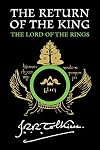
And finally we have come to the epic finale of the Lord of the Rings "trilogy". It is here that we find our wayward companions coming to the ends of their journeys, for better and worse. It's no surprise that in the end, good defeats evil, the King has returned (for the first time), and our Fellowship is reunited. However, though peace has been restored, the ring bearers are wounded beyond healing. Not a physical, mortal wound, but a wound of the soul. The bittersweet end reveals that our heroes will be separated one last time, as the ring bearers join the elves, and Gandalf, as they leave Middle Earth for the undying lands of Valinor, hopefully to find peace in the end.

Body horror meets ethical consumption in Michel Faber's deliciously disturbing Under the Skin. Quite appropriately titled, the story follows the unusual protagonist as she drives through the remote Scottish high country in search of men whom no one is likely to miss. These men are a valuable resource for her and her companions and few, if any, escape their gruesome fate. While dealing with this difficult and dangerous work, she also questions her identity and beauty standards, as well as what brought her to this unpleasant fate. A not so subtle allegorical tale, UtS can't help but disturb the reader and will linger a while, like a bad taste in your mouth.
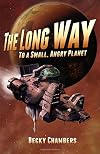
The most common recommendation for a "cozy, sci-fi adventure", A Long Way to a Small, Angry Planet (Becky Chambers has a way with titles), couches a number of vignettes highlighting the lives of a small, alien "tunneling" crew in a larger narrative of a new and dangerous frontier mission. The narrative magic happens in these shorter explorations into daily life, influenced through each crew members alien culture as they encounter challenges with their alien companions as well as their own species. Blending comfort, care, recognition, and compassion; Chamber's crew are able to overcome some of the worst the galaxy can throw at them while also inspiring readers with the hope that good can and will overcome evil.

Short treatise by famed German Theravada Buddhist and co-founder of the Buddhist Publication Society, Protection Through Satipatthana outlines how mindfulness practices serve as an ethical force for good for both the practitioner and those they meet through daily life. A short, but inspiring read for Buddhists of all types.
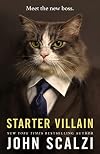
A satirical take on James Bond and iconic adversary Ernst Blofeld, Starter Villain follows the unexpected rise of perpetual loser Charlie Fitzer following the windfall gained through the death of his uncle. Scalzi is adept at satirizing tropes from genre fiction and this latest entry is no exception. Fun for those that enjoyed Red Shirts, Kaiju Preservation Society, or James Bond in general.

A short study of two young girl's travels through what appears to be a massive, post-apocalyptic city. What happened to the other people? Why is the city so massive? What is their destination? With each short chapter acting as a meditation on a specific theme; art, books, war, death, play, etc... we ultimately find that the answers to our questions aren't as important as the time we have together, no matter how short. (less) [edit]
Fantastic short anthology of some of Zen's most important early primary texts bound in a beautiful hardcover edition. Red Pine never disappoints.

More Murderbot! What else needs to be said? This one picks up almost immediately where the first leaves off and introduces us to ART, a sentient research/transport vessel. With more of the same charm and wit, fans of the first will enjoy the follow up effort.
The first I've read by this author and I had high expectations based on her reputation. The plot was engaging and contained some great ideas, however I found the conflict to be too simple and relatively unsophisticated.
Brilliant and engrossing story of an outsider willing to go far beyond what can be tolerated by received morality in order to be accepted by an elite group of young scholars at a small and quirky New England liberal arts college. A mystery told in reverse, it's not the revelation that drives the narrative, but the atmospheric characterization of the players and the setting. What has brought them to this point, how will they deal with the consequences of their actions, and to what ends do they find themselves driven?
A short, fun adventure between worlds. Reads like a YA novel, but enough thrills to engage those looking for a brief diversion. Some interesting ideas that are briefly touched upon, but much is left up to the reader's imagination.
Simple and unsurprising, but enjoyable for fans of the character.
Sat on this one for too long. A short but driving action/mystery from the perspective of an android security bot currently assigned to a contract to protect a research expedition on a remote, uninhabited planet. Well written, witty and engaging, Murderbot gives us just enough to leave us wanting more.
Disturbing, foreboding, and melancholy; We Have Always Lived in the Castle is a quiet exploration of family when things go horribly, horribly wrong. Told via the deliberate and careful observations of the youngest family member, an 18 year old with an atavistic and mysterious relationship with the outside world; We Have Always Lived in the Castle will leave you chilled and sober long after you read the final page.
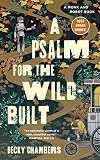
Though the premise is intriguing, it's undercut by an unlikeable and annoying lead character. The setting, a world where machines have spontaneously developed sentience and have decided en-masse to withdraw from human contact, is interesting but the human response to this is fairly unbelievable and feels naive. I found myself annoyed more often than not and only finished because I was hopeful for some surprise turn in the narrative; also it's short. Fans of comfortable and unchallenging travelogues may enjoy this if they can overlook some of the issues noted above.
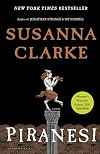
Short but compelling mystery in a fantastical labyrinth. Quite different from Jonathan Strange and Mr. Norrell, but fans of Clarke's magical world building should enjoy this well written journey of self-discovery and memory.
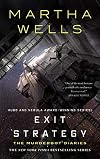
I'm a simple man. Hand me a book starring Murderbot and I'll be occupied for the next 2 to 3 hours. Exit Strategy continues to develop the evolving GrayCris/Preservation Survey story-lines as they near conclusion. Fans should not be disappointed.
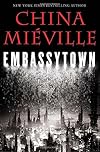
With exemplary world-building, perfectly paced narrative, and inventively crafted idiomatic language; Embassytown tells a story of unique human-alien relationship on a frontier planet, where language is more than just a representation of reality, it IS reality. In this setting, Mieville crafts a suspenseful story of political intrigue where seemingly inconsequential actions have world-altering consequences.
I've reviewed all prior entries in the Murderbot series and all I'll say about this 5th entry is that the franchise survives the transition from short fiction to standard length novel fully intact. Well done and worthy of your time.
Sundiver does not hold up well upon reread. The lead, Jacob, comes off as too much of a Marty Stu and the women are all fairly one-dimensional and suffer from a serious case of male gaze. Brin has some good ideas in here (uplifted species, traveling to the sun) but this plays out more like a whodunnit in space and I don't think it's worth revisiting with so much excellent science fiction out there.
An astonishing accomplishment. Gnomon requires some effort on the part of the reader but it pays back in spades. Weaving a narrative from the perspective of 5 characters from different moments in time, Gnomon tells the story of a near future British Police Inspector investigating an accidental death during an interrogation in an authoritarian utopia where privacy is a thing of the past. However, all is not what it seems... Gnomon blends a dizzying array of symbolic images and acts linking characters through time and space. The symbolism is so dense it's a wonder that Harkaway keeps everything together over more than 700 pages, but for the most part he does, leading the reader through a dizzying maze of mystery, myth, tragedy, and triumph.
Insomnia tells the story of a widower who begins to suffer insomnia revealing a hidden reality existing unseen under our perception of a mundane world. King excels when he builds the backstory of his every-men and women, filling their lives with mundane and folksy details which tend to ring true. He also succeeds when he presents the outlines and shadows of mysterious and paranormal events, leading the reader to speculate about what in the hell is actually going on. However, he tends to miss the mark when he over-reaches with too much telling, and too little showing. Insomnia is an example of both these successes and failures, and would have benefited from a more rigorous editing. If you are a "Constant Reader" and can't get enough of King's world-building and connected narratives, you'll enjoy this extended adventure; if you're new to King, perhaps start with a more noted entry such as Carrie, The Shining, or even IT.
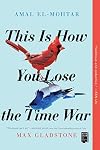
With chapters framed by alternating missives penned by 2 rival agents in a time war spanning millions of years across countless timelines, "This is How..." is a tragic, sci-fi romance unlike any you've read. Though short in length and set in a world only indirectly described, this co-authored work deftly presents a compelling story told through the medium of craftily designed "letters" revealing a growing relationship, first of taunting adversaries, and ultimately of star-crossed lovers. Though a beautiful and poetic epistolary work; "This is How..." is also compelling sci-fi that has something for fans of both genres.
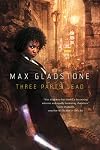
Blending fantasy, steam-punk, noir-ish legal drama, and a magic/religious system based on economics; Three Parts Dead tells the story of a young, disgraced "Craftswoman" (humans who have trained themselves to use magic, typically a talent only available to gods) who is hired to represent a powerful church whose god has apparently been murdered. Though made up of a mix of intriguing ingredients, I struggled to complete TPD. There was nothing inherently wrong with Max Gladstone's narrative; the plotting was well crafted, the characters were well fleshed out, and the world-building was satisfyingly complex and believable; but I struggled to lose myself in the world and found myself moving too quickly to get through to the end. Despite my issues with the book, I would recommend this to fans of genre fiction looking to lose themselves in something a little different than the usual fantasy.
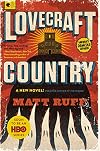
Overall I enjoyed reading Lovecraft Country, more a series of connected vignettes than a cohesive narrative, however I couldn't help but feel that the voices of the black characters were lacking in some authenticity. It's expected that authors will speak through a variety of characters with life experiences wholly unlike the authors', but I still couldn't shake the slight flavor of appropriation while reading.
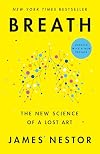
Nestor's pop-sci journey into the history and current state of breath science is an enjoyable and informative read similar in scope to Christopher McDougall's Born to Run. Alternating between expected waypoints including Pranayma and the Wim Hoff method, to surprising encounters with dental health and nutrition, Breath is a recommended read for those interested on the impact of breathing on human health.
The Path to Nibbana: How Mindfulness of Loving-Kindness Progresses through the Tranquil Aware Jhanas to Awakening by David C. Johnson
TWIM or Tranquil Wisdom Insight Meditation is effectively a slightly different framework for traditional metta (loving-kindness) meditation. Though a good framework with very clear instructions utilizing the 6 Rs, an effective mnemonic that helps recenter the meditator while encountering the traditional meditation hindrances, it could probabaly have been half as long while remaining just as effective.
BLAME! is an atmospheric exploration into the future of a humanity severed from it's own creation, a runaway all powerful Artificial Intelligence, and trapped in an endlessly expansive, continuosly growing city-scape. Kyrii is a mysterious wanderer who is travelling the endless city, seeking humans with the genetic ability to interface with the netscape and thus gain control over the AI, a skill now lost after eons of evolution. Consisting of a series of vignettes tied together by this overarching narrative, BLAME! does more showing then telling, letting the visual design of the cityscape tell the story. Recommended for manga fans who are tired of the ever popular shonen genre and are more interested in cereberal and atmospheric sci-fi.