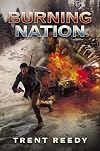
This book was provided by the publisher in exchange for an honest review.
(Description nicked from B&N.com.)
“At the end of Divided We Fall, Danny Wright’s beloved Idaho had been invaded by the federal government, their electricity shut off, their rights suspended. Danny goes into hiding with his friends in order to remain free. But after the state declares itself a Republic, Idaho rises to fight in a second American Civil War, and Danny is right in the center of the action, running guerrilla missions with his fellow soldiers to break the Federal occupation. Yet what at first seems like a straightforward battle against governmental repression quickly grows more complicated, as more states secede, more people die, and Danny discovers the true nature of some of his new allies.”
Continue reading
(Description nicked from B&N.com.)
“At the end of Divided We Fall, Danny Wright’s beloved Idaho had been invaded by the federal government, their electricity shut off, their rights suspended. Danny goes into hiding with his friends in order to remain free. But after the state declares itself a Republic, Idaho rises to fight in a second American Civil War, and Danny is right in the center of the action, running guerrilla missions with his fellow soldiers to break the Federal occupation. Yet what at first seems like a straightforward battle against governmental repression quickly grows more complicated, as more states secede, more people die, and Danny discovers the true nature of some of his new allies.”
Continue reading
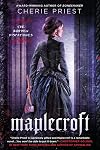
(Description nicked from B&N.com.)
“Lizzie Borden took an axe and gave her mother forty whacks; and when she saw what she had done, she gave her father forty-one....
The people of Fall River, Massachusetts, fear me. Perhaps rightfully so. I remain a suspect in the brutal deaths of my father and his second wife despite the verdict of innocence at my trial. With our inheritance, my sister, Emma, and I have taken up residence in Maplecroft, a mansion near the sea and far from gossip and scrutiny.
But it is not far enough from the affliction that possessed my parents. Their characters, their very souls, were consumed from within by something that left malevolent entities in their place. It originates from the ocean’s depths, plaguing the populace with tides of nightmares and madness.
This evil cannot hide from me. No matter what guise it assumes, I will be waiting for it. With an axe.”
Continue reading...
“Lizzie Borden took an axe and gave her mother forty whacks; and when she saw what she had done, she gave her father forty-one....
The people of Fall River, Massachusetts, fear me. Perhaps rightfully so. I remain a suspect in the brutal deaths of my father and his second wife despite the verdict of innocence at my trial. With our inheritance, my sister, Emma, and I have taken up residence in Maplecroft, a mansion near the sea and far from gossip and scrutiny.
But it is not far enough from the affliction that possessed my parents. Their characters, their very souls, were consumed from within by something that left malevolent entities in their place. It originates from the ocean’s depths, plaguing the populace with tides of nightmares and madness.
This evil cannot hide from me. No matter what guise it assumes, I will be waiting for it. With an axe.”
Continue reading...
Random by Tom Leveen
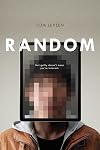
(Description nicked from B&N.com.)
“Who’s the real victim here? This tense and gripping exploration of cyberbullying and teen suicide is perfect for fans of Before I Fall and Thirteen Reasons Why.
Late at night Tori receives a random phone call. It’s a wrong number. But the caller seems to want to talk, so she stays on the line.
He asks for a single thing—one reason not to kill himself.
The request plunges her into confusion. Because if this random caller actually does what he plans, he’ll be the second person connected to Tori to take his own life. And the first just might land her in jail. After her Facebook page became Exhibit A in a tragic national news story about cyberbullying, Tori can’t help but suspect the caller is a fraud. But what if he’s not? Her words alone may hold the power of life or death.
With the clock ticking, Tori has little time to save a stranger—and maybe redeem herself—leading to a startling conclusion that changes everything…”
Continue reading...
“Who’s the real victim here? This tense and gripping exploration of cyberbullying and teen suicide is perfect for fans of Before I Fall and Thirteen Reasons Why.
Late at night Tori receives a random phone call. It’s a wrong number. But the caller seems to want to talk, so she stays on the line.
He asks for a single thing—one reason not to kill himself.
The request plunges her into confusion. Because if this random caller actually does what he plans, he’ll be the second person connected to Tori to take his own life. And the first just might land her in jail. After her Facebook page became Exhibit A in a tragic national news story about cyberbullying, Tori can’t help but suspect the caller is a fraud. But what if he’s not? Her words alone may hold the power of life or death.
With the clock ticking, Tori has little time to save a stranger—and maybe redeem herself—leading to a startling conclusion that changes everything…”
Continue reading...
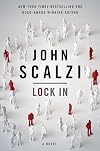
(Description nicked from B&N.com.)
“Not too long from today, a new, highly contagious virus makes its way across the globe. Most who get sick experience nothing worse than flu, fever and headaches. But for the unlucky one percent – and nearly five million souls in the United States alone – the disease causes "Lock In": Victims fully awake and aware, but unable to move or respond to stimulus. The disease affects young, old, rich, poor, people of every color and creed. The world changes to meet the challenge.
A quarter of a century later, in a world shaped by what’s now known as "Haden’s syndrome," rookie FBI agent Chris Shane is paired with veteran agent Leslie Vann. The two of them are assigned what appears to be a Haden-related murder at the Watergate Hotel, with a suspect who is an "integrator" – someone who can let the locked in borrow their bodies for a time. If the Integrator was carrying a Haden client, then naming the suspect for the murder becomes that much more complicated.
But "complicated" doesn’t begin to describe it. As Shane and Vann began to unravel the threads of the murder, it becomes clear that the real mystery – and the real crime – is bigger than anyone could have imagined. The world of the locked in is changing, and with the change comes opportunities that the ambitious will seize at any cost. The investigation that began as a murder case takes Shane and Vann from the halls of corporate power to the virtual spaces of the locked in, show more and to the very heart of an emerging, surprising new human culture. It’s nothing you could have expected.”
Continue reading... show less
“Not too long from today, a new, highly contagious virus makes its way across the globe. Most who get sick experience nothing worse than flu, fever and headaches. But for the unlucky one percent – and nearly five million souls in the United States alone – the disease causes "Lock In": Victims fully awake and aware, but unable to move or respond to stimulus. The disease affects young, old, rich, poor, people of every color and creed. The world changes to meet the challenge.
A quarter of a century later, in a world shaped by what’s now known as "Haden’s syndrome," rookie FBI agent Chris Shane is paired with veteran agent Leslie Vann. The two of them are assigned what appears to be a Haden-related murder at the Watergate Hotel, with a suspect who is an "integrator" – someone who can let the locked in borrow their bodies for a time. If the Integrator was carrying a Haden client, then naming the suspect for the murder becomes that much more complicated.
But "complicated" doesn’t begin to describe it. As Shane and Vann began to unravel the threads of the murder, it becomes clear that the real mystery – and the real crime – is bigger than anyone could have imagined. The world of the locked in is changing, and with the change comes opportunities that the ambitious will seize at any cost. The investigation that began as a murder case takes Shane and Vann from the halls of corporate power to the virtual spaces of the locked in, show more and to the very heart of an emerging, surprising new human culture. It’s nothing you could have expected.”
Continue reading... show less
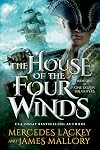
(Description nicked from B&N.com.)
“The rulers of tiny, impoverished Swansgaard have twelve daughters and one son. While the prince’s future is assured, his twelve sisters must find their own fortunes.
Disguising herself as Clarence, a sailor, Princess Clarice intends to work her way to the New World. When the crew rebels, Clarice/Clarence, an expert with rapier and dagger, sides with the handsome navigator, Dominick, and kills the cruel captain.
Dominick leads the now-outlawed crew in search of treasure in the secret pirate haven known as The House of Four Winds. They encounter the sorceress Shamal, who claims Dominick for her own—but Clarice has fallen hard for Dominick and won’t give him up without a fight.”
Continue reading...
“The rulers of tiny, impoverished Swansgaard have twelve daughters and one son. While the prince’s future is assured, his twelve sisters must find their own fortunes.
Disguising herself as Clarence, a sailor, Princess Clarice intends to work her way to the New World. When the crew rebels, Clarice/Clarence, an expert with rapier and dagger, sides with the handsome navigator, Dominick, and kills the cruel captain.
Dominick leads the now-outlawed crew in search of treasure in the secret pirate haven known as The House of Four Winds. They encounter the sorceress Shamal, who claims Dominick for her own—but Clarice has fallen hard for Dominick and won’t give him up without a fight.”
Continue reading...
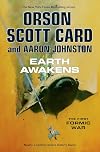
(Description nicked from B&N.com.)
“Nearly 100 years before the events of Orson Scott Card’s bestselling novel Ender’s Game, humans were just beginning to step off Earth and out into the Solar System. A thin web of ships in both asteroid belts; a few stations; a corporate settlement on Luna. No one had seen any sign of other space-faring races; everyone expected that First Contact, if it came, would happen in the future, in the empty reaches between the stars. Then a young navigator on a distant mining ship saw something moving too fast, heading directly for our sun.
When the alien ship screamed through the solar system, it disrupted communications between the far-flung human mining ships and supply stations, and between them and Earth. So Earth and Luna were unaware that they had been invaded until the ship pulled into Earth orbit, and began landing terra-forming crews in China. Politics and pride slowed the response on Earth, and on Luna, corporate power struggles seemed more urgent than distant deaths. But there are a few men and women who see that if Earth doesn’t wake up and pull together, the planet could be lost.”
Continue reading...
“Nearly 100 years before the events of Orson Scott Card’s bestselling novel Ender’s Game, humans were just beginning to step off Earth and out into the Solar System. A thin web of ships in both asteroid belts; a few stations; a corporate settlement on Luna. No one had seen any sign of other space-faring races; everyone expected that First Contact, if it came, would happen in the future, in the empty reaches between the stars. Then a young navigator on a distant mining ship saw something moving too fast, heading directly for our sun.
When the alien ship screamed through the solar system, it disrupted communications between the far-flung human mining ships and supply stations, and between them and Earth. So Earth and Luna were unaware that they had been invaded until the ship pulled into Earth orbit, and began landing terra-forming crews in China. Politics and pride slowed the response on Earth, and on Luna, corporate power struggles seemed more urgent than distant deaths. But there are a few men and women who see that if Earth doesn’t wake up and pull together, the planet could be lost.”
Continue reading...
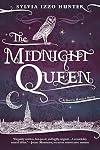
(Description nicked from B&N.com.)
“Gray’s deep talent for magick has won him a place at Merlin College. But when he accompanies four fellow students on a mysterious midnight errand that ends in disaster and death, he is sent away in disgrace—and without a trace of his power. He must spend the summer under the watchful eye of his domineering professor, Appius Callender, working in the gardens of Callender’s country estate and hoping to recover his abilities. And it is there, toiling away on a summer afternoon, that he meets the professor’s daughter.
Even though she has no talent of her own, Sophie Callender longs to be educated in the lore of magick. Her father has kept her isolated at the estate and forbidden her interest; everyone knows that teaching arcane magickal theory to women is the height of impropriety. But against her father’s wishes, Sophie has studied his ancient volumes on the subject. And in the tall, stammering, yet oddly charming Gray, she finally finds someone who encourages her interest and awakens new ideas and feelings.
Sophie and Gray’s meeting touches off a series of events that begins to unravel secrets about each of them. And after the king’s closest advisor pays the professor a closed-door visit, they begin to wonder if what Gray witnessed in Oxford might be even more sinister than it seemed. They are determined to find out, no matter the cost.”
Continue reading...
“Gray’s deep talent for magick has won him a place at Merlin College. But when he accompanies four fellow students on a mysterious midnight errand that ends in disaster and death, he is sent away in disgrace—and without a trace of his power. He must spend the summer under the watchful eye of his domineering professor, Appius Callender, working in the gardens of Callender’s country estate and hoping to recover his abilities. And it is there, toiling away on a summer afternoon, that he meets the professor’s daughter.
Even though she has no talent of her own, Sophie Callender longs to be educated in the lore of magick. Her father has kept her isolated at the estate and forbidden her interest; everyone knows that teaching arcane magickal theory to women is the height of impropriety. But against her father’s wishes, Sophie has studied his ancient volumes on the subject. And in the tall, stammering, yet oddly charming Gray, she finally finds someone who encourages her interest and awakens new ideas and feelings.
Sophie and Gray’s meeting touches off a series of events that begins to unravel secrets about each of them. And after the king’s closest advisor pays the professor a closed-door visit, they begin to wonder if what Gray witnessed in Oxford might be even more sinister than it seemed. They are determined to find out, no matter the cost.”
Continue reading...
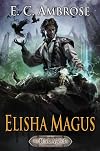
(Description nicked from B&N.com.)
“Elisha, a barber-surgeon from the poorest streets of benighted fourteenth-century London, has come a long way from home. He was always skilled at his work, but skill alone could not protect him on the day that disaster left his family ruined and Elisha himself accused of murder. With no other options, Elisha accepted a devil’s bargain from Lucius, a haughty physician, to avoid death by hanging—by serving under the sadistic doctor as a battle surgeon of the king’s army, at the front lines of an unjust war.
Elisha worked night and day, both tending to the wounded soldiers and protecting them from the physician’s experiments. Even so, he soon found that he had a talent for a surprising and deadly sort of magic, and was drawn into the clandestine world of sorcery by the enchanting young witch Brigit—who had baffling ties to his past, and ambitious plans for his future. Yet even Brigit did not understand the terrible power Elisha could wield, until the day he was forced to embrace it and end the war...by killing the king.
Now, Elisha has become a wanted man—not only by those who hate and fear him, but by those who’d seek to woo his support. Because, hidden behind the politics of court and castle, it is magic that offers power in its purest form. And the players in that deeper game are stranger and more terrifying than Elisha could ever have dreamed.
There are the magi, those who have grasped the secrets of affinity and knowledge show more to manipulate mind and matter, always working behind the scenes. There are the indivisi, thought mad by the rest of the magical world: those so devoted to their subject of study that they have become “indivisible” from it, and whose influence in their realm is wondrous beyond even the imaginations of “normal” magi. And then there are—there may be—the necromancers, whose methods, motives, and very existence remain mysterious. Where rumors of their passing go, death follows.
But death follows Elisha, too.”
Continue reading... show less
“Elisha, a barber-surgeon from the poorest streets of benighted fourteenth-century London, has come a long way from home. He was always skilled at his work, but skill alone could not protect him on the day that disaster left his family ruined and Elisha himself accused of murder. With no other options, Elisha accepted a devil’s bargain from Lucius, a haughty physician, to avoid death by hanging—by serving under the sadistic doctor as a battle surgeon of the king’s army, at the front lines of an unjust war.
Elisha worked night and day, both tending to the wounded soldiers and protecting them from the physician’s experiments. Even so, he soon found that he had a talent for a surprising and deadly sort of magic, and was drawn into the clandestine world of sorcery by the enchanting young witch Brigit—who had baffling ties to his past, and ambitious plans for his future. Yet even Brigit did not understand the terrible power Elisha could wield, until the day he was forced to embrace it and end the war...by killing the king.
Now, Elisha has become a wanted man—not only by those who hate and fear him, but by those who’d seek to woo his support. Because, hidden behind the politics of court and castle, it is magic that offers power in its purest form. And the players in that deeper game are stranger and more terrifying than Elisha could ever have dreamed.
There are the magi, those who have grasped the secrets of affinity and knowledge show more to manipulate mind and matter, always working behind the scenes. There are the indivisi, thought mad by the rest of the magical world: those so devoted to their subject of study that they have become “indivisible” from it, and whose influence in their realm is wondrous beyond even the imaginations of “normal” magi. And then there are—there may be—the necromancers, whose methods, motives, and very existence remain mysterious. Where rumors of their passing go, death follows.
But death follows Elisha, too.”
Continue reading... show less
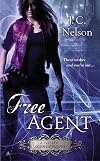
(Description nicked from B&N.com.)
“When it comes to crafting happily-ever-afters, the Agency is the best in the land of Kingdom. The Fairy Godfather Grimm can solve any problem—from eliminating imps to finding prince charming—as long as you can pay the price.
Working for Grimm isn’t Marissa Locks’s dream job. But when your parents trade you to a Fairy Godfather for a miracle, you don’t have many career options. To pay off her parents’ debt and earn her freedom, Marissa must do whatever Grimm asks, no matter what fairy-tale fiasco she’s called on to deal with.
Setting up a second-rate princess with a first-class prince is just another day at the office. But when the matchmaking goes wrong, Marissa and Grimm find themselves in a bigger magical muddle than ever before. Not only has the prince gone missing, but the Fae are gearing up to attack Kingdom, and a new Fairy Godmother is sniffing around Grimm’s turf, threatening Marissa with the one thing she can’t resist: her heart’s wishes.
Now Marissa will have to take on Fairies, Fae, dragons, and princesses to save the realm—or give up any hope of ever getting her happy ending.”
Continue reading...
“When it comes to crafting happily-ever-afters, the Agency is the best in the land of Kingdom. The Fairy Godfather Grimm can solve any problem—from eliminating imps to finding prince charming—as long as you can pay the price.
Working for Grimm isn’t Marissa Locks’s dream job. But when your parents trade you to a Fairy Godfather for a miracle, you don’t have many career options. To pay off her parents’ debt and earn her freedom, Marissa must do whatever Grimm asks, no matter what fairy-tale fiasco she’s called on to deal with.
Setting up a second-rate princess with a first-class prince is just another day at the office. But when the matchmaking goes wrong, Marissa and Grimm find themselves in a bigger magical muddle than ever before. Not only has the prince gone missing, but the Fae are gearing up to attack Kingdom, and a new Fairy Godmother is sniffing around Grimm’s turf, threatening Marissa with the one thing she can’t resist: her heart’s wishes.
Now Marissa will have to take on Fairies, Fae, dragons, and princesses to save the realm—or give up any hope of ever getting her happy ending.”
Continue reading...
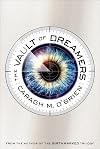
(Description nicked from B&N.com.)
“The Forge School is the most prestigious arts school in the country. The secret to its success: every moment of the students' lives is televised as part of the insanely popular Forge Show, and the students' schedule includes twelve hours of induced sleep meant to enhance creativity. But when first year student Rosie Sinclair skips her sleeping pill, she discovers there is something off about Forge. In fact, she suspects that there are sinister things going on deep below the reaches of the cameras in the school. What's worse is, she starts to notice that the ridges of her consciousness do not feel quite right. And soon, she unearths the ghastly secret that the Forge School is hiding—and what it truly means to dream there.”
Continue reading...
“The Forge School is the most prestigious arts school in the country. The secret to its success: every moment of the students' lives is televised as part of the insanely popular Forge Show, and the students' schedule includes twelve hours of induced sleep meant to enhance creativity. But when first year student Rosie Sinclair skips her sleeping pill, she discovers there is something off about Forge. In fact, she suspects that there are sinister things going on deep below the reaches of the cameras in the school. What's worse is, she starts to notice that the ridges of her consciousness do not feel quite right. And soon, she unearths the ghastly secret that the Forge School is hiding—and what it truly means to dream there.”
Continue reading...
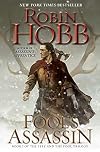
(Description nicked from B&N.com.)
“FitzChivalry—royal bastard and former king’s assassin—has left his life of intrigue behind. As far as the rest of the world knows, FitzChivalryFarseer is dead and buried. Masquerading as Tom Badgerlock, Fitz is now married to his childhood sweetheart, Molly, and leading the quiet life of a country squire.
Though Fitz is haunted by the disappearance of the Fool, who did so much to shape Fitz into the man he has become, such private hurts are put aside in the business of daily life, at least until the appearance of menacing, pale-skinned strangers casts a sinister shadow over Fitz’s past . . . and his future.
Now, to protect his new life, the former assassin must once again take up his old one. . . .”
Continue reading...
“FitzChivalry—royal bastard and former king’s assassin—has left his life of intrigue behind. As far as the rest of the world knows, FitzChivalryFarseer is dead and buried. Masquerading as Tom Badgerlock, Fitz is now married to his childhood sweetheart, Molly, and leading the quiet life of a country squire.
Though Fitz is haunted by the disappearance of the Fool, who did so much to shape Fitz into the man he has become, such private hurts are put aside in the business of daily life, at least until the appearance of menacing, pale-skinned strangers casts a sinister shadow over Fitz’s past . . . and his future.
Now, to protect his new life, the former assassin must once again take up his old one. . . .”
Continue reading...
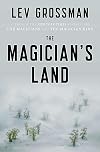
(Description nicked from B&N.com.)
“Quentin Coldwater has lost everything. He has been cast out of Fillory, the secret magical land of his childhood dreams that he once ruled. Everything he had fought so hard for, not to mention his closest friends, is sealed away in a land Quentin may never again visit. With nothing left to lose he returns to where his story began, the Brakebills Preparatory College of Magic. But he can’t hide from his past, and it’s not long before it comes looking for him. Meanwhile, the magical barriers that keep Fillory safe are failing, and barbarians from the north have invaded. Eliot and Janet, the rulers of Fillory, embark on a final quest to save their beloved world, only to discover a situation far more complex—and far more dire—than anyone had envisioned.
Along with Plum, a brilliant young magician with a dark secret of her own, Quentin sets out on a crooked path through a magical demimonde of gray magic and desperate characters. His new life takes him back to old haunts, like Antarctica and the Neitherlands, and old friends he thought were lost forever. He uncovers buried secrets and hidden evils and ultimately the key to a sorcerous masterwork, a spell that could create a magical utopia. But all roads lead back to Fillory, where Quentin must face his fears and put things right or die trying.”
Continue reading...
“Quentin Coldwater has lost everything. He has been cast out of Fillory, the secret magical land of his childhood dreams that he once ruled. Everything he had fought so hard for, not to mention his closest friends, is sealed away in a land Quentin may never again visit. With nothing left to lose he returns to where his story began, the Brakebills Preparatory College of Magic. But he can’t hide from his past, and it’s not long before it comes looking for him. Meanwhile, the magical barriers that keep Fillory safe are failing, and barbarians from the north have invaded. Eliot and Janet, the rulers of Fillory, embark on a final quest to save their beloved world, only to discover a situation far more complex—and far more dire—than anyone had envisioned.
Along with Plum, a brilliant young magician with a dark secret of her own, Quentin sets out on a crooked path through a magical demimonde of gray magic and desperate characters. His new life takes him back to old haunts, like Antarctica and the Neitherlands, and old friends he thought were lost forever. He uncovers buried secrets and hidden evils and ultimately the key to a sorcerous masterwork, a spell that could create a magical utopia. But all roads lead back to Fillory, where Quentin must face his fears and put things right or die trying.”
Continue reading...
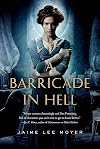
(Description nicked from B&N.com.)
“In Jaime Lee Moyer's Barricade in Hell, Delia Martin has been gifted (or some would say cursed) with the ability to peer across to the other side. Since childhood, her constant companions have been ghosts. She used her powers and the help of those ghosts to defeat a twisted serial killer terrorizing her beloved San Francisco. Now it's 1917—the threshold of a modern age—and Delia lives a peaceful life with Police Captain Gabe Ryan.
That peace shatters when a strange young girl starts haunting their lives and threatens Gabe. Delia tries to discover what this ghost wants as she becomes entangled in the mystery surrounding a charismatic evangelist who preaches pacifism and an end to war. But as young people begin to disappear, and audiences display a loyalty and fervor not attributable to simple persuasion, that message of peace reveals a hidden dark side.
As Delia discovers the truth, she faces a choice—take a terrible risk to save her city, or chance losing everything?”
Continue reading...
“In Jaime Lee Moyer's Barricade in Hell, Delia Martin has been gifted (or some would say cursed) with the ability to peer across to the other side. Since childhood, her constant companions have been ghosts. She used her powers and the help of those ghosts to defeat a twisted serial killer terrorizing her beloved San Francisco. Now it's 1917—the threshold of a modern age—and Delia lives a peaceful life with Police Captain Gabe Ryan.
That peace shatters when a strange young girl starts haunting their lives and threatens Gabe. Delia tries to discover what this ghost wants as she becomes entangled in the mystery surrounding a charismatic evangelist who preaches pacifism and an end to war. But as young people begin to disappear, and audiences display a loyalty and fervor not attributable to simple persuasion, that message of peace reveals a hidden dark side.
As Delia discovers the truth, she faces a choice—take a terrible risk to save her city, or chance losing everything?”
Continue reading...
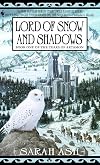
Urban fantasy is becoming more common, with authors such as Charles de Lint heading the pack. But Sarah Ash has broken away from the custom of setting magic in modern-day settings, instead creating a new world where magic and burgeoning modernism exist side-by-side.
Science and magic collide in Lord of Snow and Shadows.
Gavril Andar's quiet life as a painter is shattered when he receives news of his father's death. Lord Volkh hadn't seen his son in years, but now his bloodline's inheritance must be passed on, whether Gavril wants it or not. He must become the Drakhaon, a war leader, and avenge his father's murder.
But mysteries abound when he reaches Azhkendir and assumes leadership. This is a land where restless spirits walk the earth, and treachery waits around every corner. With Volkh's men divided and betrayal souring any chance of an accord, Gavril must form some unlikely alliances if he's to survive. Nothing, however, can protect him from the demonic powers coursing through his own blood. The very thing that makes him his father's true heir may be his ultimate undoing.
Continue reading...
Science and magic collide in Lord of Snow and Shadows.
Gavril Andar's quiet life as a painter is shattered when he receives news of his father's death. Lord Volkh hadn't seen his son in years, but now his bloodline's inheritance must be passed on, whether Gavril wants it or not. He must become the Drakhaon, a war leader, and avenge his father's murder.
But mysteries abound when he reaches Azhkendir and assumes leadership. This is a land where restless spirits walk the earth, and treachery waits around every corner. With Volkh's men divided and betrayal souring any chance of an accord, Gavril must form some unlikely alliances if he's to survive. Nothing, however, can protect him from the demonic powers coursing through his own blood. The very thing that makes him his father's true heir may be his ultimate undoing.
Continue reading...
I don't use star ratings, so please read my review!
(Description nicked from B&N.com.)
“San Francisco, California. Father Xavier Church has spent his life ministering to unfortunate souls, but he has never witnessed horror like this. After he forsakes his vows in the most heartrending of ways, he watches helplessly as a zombie nun takes a bite out of a fellow priest’s face.
University of California, Berkeley. Skye Dennison is moving into her college dorm for the first time, simultaneously excited to be leaving the nest and terrified to be on her own. When her mother and father are eaten alive in front of her, she realizes the terror has just begun.
Alameda, California. Angie West made millions off her family’s reality gun show on the History Channel. But after she is cornered by the swarming undead, her knowledge of heavy artillery is called into play like never before.
Within weeks, the world is overrun by the walking dead. Only the quick and the smart, the strong and the determined, will survive—for now.”
Continue reading...
(Description nicked from B&N.com.)
“San Francisco, California. Father Xavier Church has spent his life ministering to unfortunate souls, but he has never witnessed horror like this. After he forsakes his vows in the most heartrending of ways, he watches helplessly as a zombie nun takes a bite out of a fellow priest’s face.
University of California, Berkeley. Skye Dennison is moving into her college dorm for the first time, simultaneously excited to be leaving the nest and terrified to be on her own. When her mother and father are eaten alive in front of her, she realizes the terror has just begun.
Alameda, California. Angie West made millions off her family’s reality gun show on the History Channel. But after she is cornered by the swarming undead, her knowledge of heavy artillery is called into play like never before.
Within weeks, the world is overrun by the walking dead. Only the quick and the smart, the strong and the determined, will survive—for now.”
Continue reading...
I don't use star ratings, so please read my review!
(Description nicked from B&N.com.)
“When Daniel Blackland was six, he ingested his first bone fragment, a bit of kraken spine plucked out of the sand during a visit with his demanding, brilliant, and powerful magician father, Sebastian.
When Daniel was twelve, he watched Sebastian die at the hands of the Hierarch of Southern California, devoured for the heightened magic layered deep within his bones.
Now, years later, Daniel is a petty thief with a forged identity. Hiding amid the crowds in Los Angeles—the capital of the Kingdom of Southern California—Daniel is trying to go straight. But his crime-boss uncle has a heist he wants Daniel to perform: break into the Hierarch's storehouse of magical artifacts and retrieve Sebastian's sword, an object of untold power.
For this dangerous mission, Daniel will need a team he can rely on, so he brings in his closest friends from his years in the criminal world. There's Moth, who can take a bullet and heal in mere minutes. Jo Alverado, illusionist. The multitalented Cassandra, Daniel’s ex. And, new to them all, the enigmatic, knowledgeable Emma, with her British accent and her own grudge against the powers-that-be. The stakes are high, and the stage is set for a showdown that might just break the magic that protects a long-corrupt regime.”
Continue reading...
(Description nicked from B&N.com.)
“When Daniel Blackland was six, he ingested his first bone fragment, a bit of kraken spine plucked out of the sand during a visit with his demanding, brilliant, and powerful magician father, Sebastian.
When Daniel was twelve, he watched Sebastian die at the hands of the Hierarch of Southern California, devoured for the heightened magic layered deep within his bones.
Now, years later, Daniel is a petty thief with a forged identity. Hiding amid the crowds in Los Angeles—the capital of the Kingdom of Southern California—Daniel is trying to go straight. But his crime-boss uncle has a heist he wants Daniel to perform: break into the Hierarch's storehouse of magical artifacts and retrieve Sebastian's sword, an object of untold power.
For this dangerous mission, Daniel will need a team he can rely on, so he brings in his closest friends from his years in the criminal world. There's Moth, who can take a bullet and heal in mere minutes. Jo Alverado, illusionist. The multitalented Cassandra, Daniel’s ex. And, new to them all, the enigmatic, knowledgeable Emma, with her British accent and her own grudge against the powers-that-be. The stakes are high, and the stage is set for a showdown that might just break the magic that protects a long-corrupt regime.”
Continue reading...
I don't use star ratings, so please read my review!
(Description nicked from B&N.com.)
“TWO MILLION DOLLARS...
“It’s the kind of score Karyn Ames has always dreamed of—enough to set her crew up pretty well and, more important, enough to keep her safely stocked on a very rare, very expensive black market drug. Without it, Karyn hallucinates slices of the future until they totally overwhelm her, leaving her unable to distinguish the present from the mess of certainties and possibilities yet to come.
The client behind the heist is Enoch Sobell, a notorious crime lord with a reputation for being ruthless and exacting—and a purported practitioner of dark magic. Sobell is almost certainly condemned to Hell for a magically extended lifetime full of shady dealings. Once you’re in business with him, there’s no backing out.
Karyn and her associates are used to the supernatural and the occult, but their target is more than just the usual family heirloom or cursed necklace. It’s a piece of something larger. Something sinister.
Karyn’s crew and even Sobell himself are about to find out just how powerful it is--and how powerful it may yet become.”
Continue reading...
(Description nicked from B&N.com.)
“TWO MILLION DOLLARS...
“It’s the kind of score Karyn Ames has always dreamed of—enough to set her crew up pretty well and, more important, enough to keep her safely stocked on a very rare, very expensive black market drug. Without it, Karyn hallucinates slices of the future until they totally overwhelm her, leaving her unable to distinguish the present from the mess of certainties and possibilities yet to come.
The client behind the heist is Enoch Sobell, a notorious crime lord with a reputation for being ruthless and exacting—and a purported practitioner of dark magic. Sobell is almost certainly condemned to Hell for a magically extended lifetime full of shady dealings. Once you’re in business with him, there’s no backing out.
Karyn and her associates are used to the supernatural and the occult, but their target is more than just the usual family heirloom or cursed necklace. It’s a piece of something larger. Something sinister.
Karyn’s crew and even Sobell himself are about to find out just how powerful it is--and how powerful it may yet become.”
Continue reading...
(Description nicked from B&N.com.)
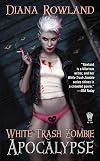
“Our favorite white trash zombie, Angel Crawford, has enough problems of her own, what with dealing with her alcoholic, deadbeat dad, issues with her not-quite boyfriend, the zombie mafia, industrial espionage and evil corporations. Oh, and it’s raining, and won’t let up.
But things get even crazier when a zombie movie starts filming in town, and Angel begins to suspect that it’s not just the plot of the movie that's rotten. Soon she's fighting her way through mud, blood, bullets and intrigue, even as zombies, both real and fake, prowl the streets.
Angel’s been through more than her share of crap, but this time she’s in way over her head. She’ll need plenty of brainpower to fit all the pieces—and body parts—together in order to save herself, her town, and quite possibly the human race.”
Continue reading…
“Our favorite white trash zombie, Angel Crawford, has enough problems of her own, what with dealing with her alcoholic, deadbeat dad, issues with her not-quite boyfriend, the zombie mafia, industrial espionage and evil corporations. Oh, and it’s raining, and won’t let up.
But things get even crazier when a zombie movie starts filming in town, and Angel begins to suspect that it’s not just the plot of the movie that's rotten. Soon she's fighting her way through mud, blood, bullets and intrigue, even as zombies, both real and fake, prowl the streets.
Angel’s been through more than her share of crap, but this time she’s in way over her head. She’ll need plenty of brainpower to fit all the pieces—and body parts—together in order to save herself, her town, and quite possibly the human race.”
Continue reading…
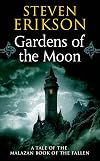
"Doorstop fantasy" is the affectionate term for a fantasy series made up of thick, weighty books. Robert Jordan and George R.R. Martin immediately spring to mind in this category. British author Steven Erikson's Malazan Book of the Fallen, a projected 10-book series, has come to the States with the breakout first novel, Gardens of the Moon.
The Malazan Empire has been slowly but surely expanding as the years pass, but this world-altering sequence of events has awakened cosmic forces beyond imagining. A young girl named Sorry is possessed by the assassin's god's avatar; a thief named Crokus bears the coin of Oponn, the twin god of chance; and an elder god with no knowledge of why he's awake haunts the dreams of the seer Kruppe.
Mortals are always desperate to control their own fates, of course, and none more so than Col. Whiskeyjack. Commander of the last of the Bridgeburners, an elite fighting force, he and his men know that the Empress has targeted them for destruction for the sin of being the last of the "old guard." But no matter who wants them dead, gods or men, they won't give up easily. Caught between an empire and the gods, their actions may well determine the course of history for all concerned.
Continue reading…
The Malazan Empire has been slowly but surely expanding as the years pass, but this world-altering sequence of events has awakened cosmic forces beyond imagining. A young girl named Sorry is possessed by the assassin's god's avatar; a thief named Crokus bears the coin of Oponn, the twin god of chance; and an elder god with no knowledge of why he's awake haunts the dreams of the seer Kruppe.
Mortals are always desperate to control their own fates, of course, and none more so than Col. Whiskeyjack. Commander of the last of the Bridgeburners, an elite fighting force, he and his men know that the Empress has targeted them for destruction for the sin of being the last of the "old guard." But no matter who wants them dead, gods or men, they won't give up easily. Caught between an empire and the gods, their actions may well determine the course of history for all concerned.
Continue reading…
(Description nicked from B&N.com.)
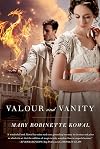
“After Melody's wedding, the Ellsworths and Vincents accompany the young couple on their tour of the continent. Jane and Vincent plan to separate from the party and travel to Murano to study with glassblowers there, but their ship is set upon by Barbary corsairs while en route. It is their good fortune that they are not enslaved, but they lose everything to the pirates and arrive in Murano destitute.
Jane and Vincent are helped by a kind local they meet en route, but Vincent is determined to become self-reliant and get their money back, and hatches a plan to do so. But when so many things are not what they seem, even the best laid plans conceal a few pitfalls. The ensuing adventure is a combination of the best parts of magical fantasy and heist novels, set against a glorious Regency backdrop.”
Continue reading...
“After Melody's wedding, the Ellsworths and Vincents accompany the young couple on their tour of the continent. Jane and Vincent plan to separate from the party and travel to Murano to study with glassblowers there, but their ship is set upon by Barbary corsairs while en route. It is their good fortune that they are not enslaved, but they lose everything to the pirates and arrive in Murano destitute.
Jane and Vincent are helped by a kind local they meet en route, but Vincent is determined to become self-reliant and get their money back, and hatches a plan to do so. But when so many things are not what they seem, even the best laid plans conceal a few pitfalls. The ensuing adventure is a combination of the best parts of magical fantasy and heist novels, set against a glorious Regency backdrop.”
Continue reading...
I don't use star ratings, so please read my review!
(Description nicked from B&N.com.)
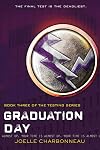
“She wants to put an end to the Testing
In a scarred and brutal future, The United Commonwealth teeters on the brink of all-out civil war. The rebel resistance plots against a government that rules with cruelty and cunning. Gifted student and Testing survivor, Cia Vale, vows to fight.
But she can't do it alone.
This is the chance to lead that Cia has trained for – but who will follow? Plunging through layers of danger and deception, Cia must risk the lives of those she loves—and gamble on the loyalty of her lethal classmates.
Who can Cia trust?
The stakes are higher than ever—lives of promise cut short or fulfilled; a future ruled by fear or hope—in the electrifying conclusion to Joelle Charbonneau's epic Testing trilogy. Ready or not…it’s Graduation Day.”
Where I thought the second book in this trilogy was very firmly a “middle book”—setting up action but not containing a lot of forward plot movement—this final installment doesn’t slow down from the get-go. This time there are no sections that mimic the Testing games of the first book, which keeps the narrative from getting bogged down. It’s pretty much wall-to-wall action, with the United Commonwealth’s best and brightest being pitted against each other in a real-life bid for power.
The author keeps readers in suspense about the loyalties of many of Cia’s friends throughout most of the book. The tension is very show more high, making you hold your breath every time Cia chooses to trust someone, because past betrayals have shown her (and us) that trust is a dangerous thing in this world. And Charbonneau doesn’t make the ultimately trustworthy ones out to be saints or some kind of hero. They’re just people doing what they believe to be right, even in the face of possible death. They make mistakes and miscalculations, and one character in particular is still proving himself due to events in the first book.
What I really appreciated about this novel is the twists and turns in the plot. In fact, by the time the story is done, you’re going to be questioning whether or not Cia was in the know or not… and you’ll even wonder whose side she was really fighting for. It casts the tale in shades of gray that you weren’t expecting, and I thought it was a bold choice to leave things ambiguous in the end. I liked it, though. It felt more realistic to still have a few questions when all was said and done.
One thing I would have liked to have seen was a broader picture of the country in this version of America. We see a bit during the times when Cia is studying maps and diagrams for the President, but the story is pretty well confined to Tosu City. This isn’t a flaw in the novel, because the way this particular story was being told, a broader view might have detracted from the plot. I do hope the author returns to write more in this world, though.
In my opinion, this trilogy is just as strong as The Hunger Games, and it has some plot elements and characters that rival Katniss and the Mockingjay rebellion. Graduation Day is a powerful conclusion to one of the most enjoyable teen dystopian trilogies that I’ve read.
This review originally appeared on Owlcat Mountain on June 13, 2014. show less
(Description nicked from B&N.com.)
“She wants to put an end to the Testing
In a scarred and brutal future, The United Commonwealth teeters on the brink of all-out civil war. The rebel resistance plots against a government that rules with cruelty and cunning. Gifted student and Testing survivor, Cia Vale, vows to fight.
But she can't do it alone.
This is the chance to lead that Cia has trained for – but who will follow? Plunging through layers of danger and deception, Cia must risk the lives of those she loves—and gamble on the loyalty of her lethal classmates.
Who can Cia trust?
The stakes are higher than ever—lives of promise cut short or fulfilled; a future ruled by fear or hope—in the electrifying conclusion to Joelle Charbonneau's epic Testing trilogy. Ready or not…it’s Graduation Day.”
Where I thought the second book in this trilogy was very firmly a “middle book”—setting up action but not containing a lot of forward plot movement—this final installment doesn’t slow down from the get-go. This time there are no sections that mimic the Testing games of the first book, which keeps the narrative from getting bogged down. It’s pretty much wall-to-wall action, with the United Commonwealth’s best and brightest being pitted against each other in a real-life bid for power.
The author keeps readers in suspense about the loyalties of many of Cia’s friends throughout most of the book. The tension is very show more high, making you hold your breath every time Cia chooses to trust someone, because past betrayals have shown her (and us) that trust is a dangerous thing in this world. And Charbonneau doesn’t make the ultimately trustworthy ones out to be saints or some kind of hero. They’re just people doing what they believe to be right, even in the face of possible death. They make mistakes and miscalculations, and one character in particular is still proving himself due to events in the first book.
What I really appreciated about this novel is the twists and turns in the plot. In fact, by the time the story is done, you’re going to be questioning whether or not Cia was in the know or not… and you’ll even wonder whose side she was really fighting for. It casts the tale in shades of gray that you weren’t expecting, and I thought it was a bold choice to leave things ambiguous in the end. I liked it, though. It felt more realistic to still have a few questions when all was said and done.
One thing I would have liked to have seen was a broader picture of the country in this version of America. We see a bit during the times when Cia is studying maps and diagrams for the President, but the story is pretty well confined to Tosu City. This isn’t a flaw in the novel, because the way this particular story was being told, a broader view might have detracted from the plot. I do hope the author returns to write more in this world, though.
In my opinion, this trilogy is just as strong as The Hunger Games, and it has some plot elements and characters that rival Katniss and the Mockingjay rebellion. Graduation Day is a powerful conclusion to one of the most enjoyable teen dystopian trilogies that I’ve read.
This review originally appeared on Owlcat Mountain on June 13, 2014. show less
I don't use star ratings, so please read my review!
(Description nicked from B&N.com.)
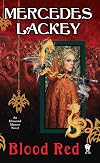
“Rosamund is an Earth Master in the Schwarzwald, the ancient Black Forest of Germany. Since the age of ten, she has lived with her teacher, the Hunt Master and Earth Magician of the Schwarzwald Foresters, a man she calls “Papa.” Her adoptive Papa rescued her after her original Earth Master teacher, an old woman who lived alone in a small cottage in the forest, was brutally murdered by werewolves. Rosa herself barely escaped, and this terrifying incident molded the course of her future.
For like her fellow Earth Masters of the Schwarzwald Lodge, Rosa is not a healer. Instead, her talents lead her on the more violent path of protection and defense— “cleansing” the Earth and protecting its gentle fae creatures from those evil beings who seek to do them harm.
And so Rosa becomes the first woman Hunt Master and the scourge of evil creatures, with a deadly specialty in werewolves and all shape¬shifters.
While visiting with a Fire Master—a friend of her mentor from the Schwarzwald Lodge— Rosa meets a pair of Elemental Magicians from Hungary who have come looking for help. They suspect that there is a dark power responsible for a string of murders happening in the remote countryside of Transylvania, but they have no proof. Rosa agrees to help them, but there is a catch: one of the two men asking for aid is a hereditary werewolf.”
Well, I’m happy to see that the Elemental show more Masters series has bounced back after a couple of sub-par books. It’s not that the writing has been bad, it’s just that the plots have been a bit, shall we say, meandering. With Blood Red, Lackey has done something a bit different: the original fairy tale, “Little Red Riding Hood”, is merely the jumping-off point to the novel. It’s an origin story for the main character, if you will. By establishing Rosa’s genesis in the prologue, the author is then free to spin her tale from there, far beyond the restrictions of the classic story.
Another welcome change is the setting. Most novels in this series take place in cities, or at least in more populated areas. The only real exception was Home From the Sea, which was one of those entries in which nothing really happened. There’s nothing wrong with that, and Lackey certainly changed things up by putting her characters in theaters and London backalleys. This time, our main character does spend some time traveling through cities, but ultimately ends up in the forests of Eastern Europe.
And that’s another change that I approve of: this story has moved beyond the bounds of Western Europe for what I think is the first time. It puts the story squarely into the lands that spawned vampire mythology and the places where werewolves were said to roam. It gives the characters the opportunity to encounter foreign cultures and unfamiliar customs and superstitions. I have no clue about the accuracy of anything written about in the book, but it was nice to see something different.
Rosa herself is one of the stronger female heroines in this series. She defiantly refuses to conform to gender norms and is eventually appointed a Hunt Master, and this is a time where a woman wielding a weapon would send most people into apoplectic shock. She habitually wears breeches and boots, has no trouble in the wilderness, and has earned the respect of men for whom a competent female hunter is something like a unicorn—heard of but never seen. Refreshingly, there’s really no romance at hand either. Oh, Rosa occasionally has thoughts like “Wow, that guy is cute!” or “Dresses aren’t my thing, but this is actually kind of nice”, but they’re less rather than more prevalent. I like Rosa just as she is—no nonsense and tough.
With its strong female main character and some welcome deviations from other books in the series, Blood Red is a fairy tale adaptation that I can heartily recommend. Lackey seems to have gotten her spark back with regards to this series, and I find myself looking forward to future installments more than I have in a while.
This review originally appeared on Owlcat Mountain on June 4, 2014. show less
(Description nicked from B&N.com.)
“Rosamund is an Earth Master in the Schwarzwald, the ancient Black Forest of Germany. Since the age of ten, she has lived with her teacher, the Hunt Master and Earth Magician of the Schwarzwald Foresters, a man she calls “Papa.” Her adoptive Papa rescued her after her original Earth Master teacher, an old woman who lived alone in a small cottage in the forest, was brutally murdered by werewolves. Rosa herself barely escaped, and this terrifying incident molded the course of her future.
For like her fellow Earth Masters of the Schwarzwald Lodge, Rosa is not a healer. Instead, her talents lead her on the more violent path of protection and defense— “cleansing” the Earth and protecting its gentle fae creatures from those evil beings who seek to do them harm.
And so Rosa becomes the first woman Hunt Master and the scourge of evil creatures, with a deadly specialty in werewolves and all shape¬shifters.
While visiting with a Fire Master—a friend of her mentor from the Schwarzwald Lodge— Rosa meets a pair of Elemental Magicians from Hungary who have come looking for help. They suspect that there is a dark power responsible for a string of murders happening in the remote countryside of Transylvania, but they have no proof. Rosa agrees to help them, but there is a catch: one of the two men asking for aid is a hereditary werewolf.”
Well, I’m happy to see that the Elemental show more Masters series has bounced back after a couple of sub-par books. It’s not that the writing has been bad, it’s just that the plots have been a bit, shall we say, meandering. With Blood Red, Lackey has done something a bit different: the original fairy tale, “Little Red Riding Hood”, is merely the jumping-off point to the novel. It’s an origin story for the main character, if you will. By establishing Rosa’s genesis in the prologue, the author is then free to spin her tale from there, far beyond the restrictions of the classic story.
Another welcome change is the setting. Most novels in this series take place in cities, or at least in more populated areas. The only real exception was Home From the Sea, which was one of those entries in which nothing really happened. There’s nothing wrong with that, and Lackey certainly changed things up by putting her characters in theaters and London backalleys. This time, our main character does spend some time traveling through cities, but ultimately ends up in the forests of Eastern Europe.
And that’s another change that I approve of: this story has moved beyond the bounds of Western Europe for what I think is the first time. It puts the story squarely into the lands that spawned vampire mythology and the places where werewolves were said to roam. It gives the characters the opportunity to encounter foreign cultures and unfamiliar customs and superstitions. I have no clue about the accuracy of anything written about in the book, but it was nice to see something different.
Rosa herself is one of the stronger female heroines in this series. She defiantly refuses to conform to gender norms and is eventually appointed a Hunt Master, and this is a time where a woman wielding a weapon would send most people into apoplectic shock. She habitually wears breeches and boots, has no trouble in the wilderness, and has earned the respect of men for whom a competent female hunter is something like a unicorn—heard of but never seen. Refreshingly, there’s really no romance at hand either. Oh, Rosa occasionally has thoughts like “Wow, that guy is cute!” or “Dresses aren’t my thing, but this is actually kind of nice”, but they’re less rather than more prevalent. I like Rosa just as she is—no nonsense and tough.
With its strong female main character and some welcome deviations from other books in the series, Blood Red is a fairy tale adaptation that I can heartily recommend. Lackey seems to have gotten her spark back with regards to this series, and I find myself looking forward to future installments more than I have in a while.
This review originally appeared on Owlcat Mountain on June 4, 2014. show less
I don't use star ratings, so please read my review!
(Description nicked from B&N.com.)
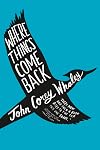
“In the remarkable, bizarre, and heart-wrenching summer before Cullen Witter’s senior year of high school, he is forced to examine everything he thinks he understands about his small and painfully dull Arkansas town. His cousin overdoses; his town becomes absurdly obsessed with the alleged reappearance of an extinct woodpecker; and most troubling of all, his sensitive, gifted fifteen-year-old brother, Gabriel, suddenly and inexplicably disappears.
Meanwhile, the crisis of faith spawned by a young missionary’s disillusion in Africa prompts a frantic search for meaning that has far-reaching consequences. As distant as the two stories initially seem, they are woven together through masterful plotting and merge in a surprising and harrowing climax.”
Okay, first of all, you should know that this review has spoilers. I can’t think of any way to talk about the book in any depth without talking about certain twists that take place, so you have been warned. HERE BE SPOILERS.
To those of you still with us after that dire warning, you should know that I’m not entirely sure if I liked this book or not. I think I get what Whaley was trying to accomplish with this narrative, and I applaud him for working in as many layers of story as he did. However, I also think there were some flaws in his execution that kept me from really enjoying the book.
One of the things that I think worked well was the show more inclusion of the different points of view for different characters. The chapters alternate between Cullen, who gives us the first-person view of the plot, and Benton and Cabot, whose stories are narrated in third person. Even in Cullen’s chapters, though, there are moments of third-person point of view, which I eventually came to think of as dissociative episodes. More on that later.
The Lazarus woodpecker, the bird that everyone is so excited about, seems to be both a symbol of hope and a symbol of delusion. Initially, the town embraces the idea that this supposedly extinct bird has been found alive, and they look forward to the benefits that the town will reap in tourism and national attention. By the end of the book, it has been proven that the woodpecker is not, after all, still around, and the town is now in the grip of crushing disappointment. In fact, Cullen characterizes the Lazarus woodpecker as a false hope in the final chapter.
Unfortunately, being so firm in stating that the woodpecker never was real kind of ruins what Whaley tries to do on the last page, which is to introduce ambiguity as to whether or not Cullen’s brother Gabriel comes back home. I say this because I think the author was trying to have his readers cling to that little bit of hope—and indeed, in reading other reviews of this book, many readers did assume that Gabriel made it home safely. The thing is that there are many clues to point to the fact that he doesn’t, and that detracts from the ending. The entire book seems to run on the theme of second chances—the woodpecker popping up and Gabriel coming home being the two big ones—but then the author blatantly says that there are none.
On top of this, there is a dangling plotline—or, if not dangling, one that really doesn’t fit into the rest of the story. Cullen’s cousin Oslo dies of an overdose at the start of the book, and there really doesn’t seem to be any reason for him to be there, or to have died, or to even be mentioned. It does cause Oslo’s mother, Cullen’s aunt, to descend into terrible grieving; however, she doesn’t factor into the plot much either. In fact, given that the novel is supposed to feature the mystery around Gabriel’s disappearance, throwing another family tragedy into the mix seems clunky.
Finally, readers are going to get more than eighty percent of the way through this book before they find out that the two timelines being followed are not concurrent at all. The Benton/Cabot timeline begins a full year before Cullen’s, and it was really jarring to see the point where the stories intersect, because it is completely different from what you’ve been led to believe. I’m all for twists in stories, but they need to be set up properly so that when they’re brought to light, the reader doesn’t have a “WTF?” moment and go searching back through the book to see if they missed something important. That’s pretty much what I did, and I was annoyed to realize that the moment of intersection came out of the clear blue sky.
So, here’s what I think the author was doing: he was writing a book in which the first person narrator (Cullen) is a man who is looking back at a particular summer in his childhood. This older Cullen is in therapy, as borne out by his frequent mentions of a Dr. Webb whom he speaks with about things. Cullen is chronicling not just the summer that his brother vanished, but also the summer when he himself had a psychotic break. Cullen often speaks in third person during his chapters, sometimes spinning out elaborate fantasy sequences, and sometimes describing “real life” events that he’s part of. His final episode is on the final page, and it consists of him fantasizing that his brother has returned, and doing so in such a powerful way that he reacts to the phantoms he sees in his head.
Is this a lot to read into a short young adult novel? Maybe. But the other choice is to say that Whaley put in mentions of a doctor and dissociative episodes that have no bearing on the story. This is possible as well. Personally, my brain tries to make sense of things, and this is the supplemental tale that I told myself after finishing the book. I have no clue if I’m correct or not. I’m not entirely sure that it matters.
Did I like this book? I’m not sure. Did I appreciate the attempt at this particular brand of storytelling? Yes. Do I think that the author knocked it out of the park? No. Do I think that it was worth the read? Yes. Make of all of that what you will. I suspect this one will simmer in my thoughts for a while, regardless of any opinion I might have on the matter.
This review originally appeared on Owlcat Mountain on June 2, 2014. show less
(Description nicked from B&N.com.)
“In the remarkable, bizarre, and heart-wrenching summer before Cullen Witter’s senior year of high school, he is forced to examine everything he thinks he understands about his small and painfully dull Arkansas town. His cousin overdoses; his town becomes absurdly obsessed with the alleged reappearance of an extinct woodpecker; and most troubling of all, his sensitive, gifted fifteen-year-old brother, Gabriel, suddenly and inexplicably disappears.
Meanwhile, the crisis of faith spawned by a young missionary’s disillusion in Africa prompts a frantic search for meaning that has far-reaching consequences. As distant as the two stories initially seem, they are woven together through masterful plotting and merge in a surprising and harrowing climax.”
Okay, first of all, you should know that this review has spoilers. I can’t think of any way to talk about the book in any depth without talking about certain twists that take place, so you have been warned. HERE BE SPOILERS.
To those of you still with us after that dire warning, you should know that I’m not entirely sure if I liked this book or not. I think I get what Whaley was trying to accomplish with this narrative, and I applaud him for working in as many layers of story as he did. However, I also think there were some flaws in his execution that kept me from really enjoying the book.
One of the things that I think worked well was the show more inclusion of the different points of view for different characters. The chapters alternate between Cullen, who gives us the first-person view of the plot, and Benton and Cabot, whose stories are narrated in third person. Even in Cullen’s chapters, though, there are moments of third-person point of view, which I eventually came to think of as dissociative episodes. More on that later.
The Lazarus woodpecker, the bird that everyone is so excited about, seems to be both a symbol of hope and a symbol of delusion. Initially, the town embraces the idea that this supposedly extinct bird has been found alive, and they look forward to the benefits that the town will reap in tourism and national attention. By the end of the book, it has been proven that the woodpecker is not, after all, still around, and the town is now in the grip of crushing disappointment. In fact, Cullen characterizes the Lazarus woodpecker as a false hope in the final chapter.
Unfortunately, being so firm in stating that the woodpecker never was real kind of ruins what Whaley tries to do on the last page, which is to introduce ambiguity as to whether or not Cullen’s brother Gabriel comes back home. I say this because I think the author was trying to have his readers cling to that little bit of hope—and indeed, in reading other reviews of this book, many readers did assume that Gabriel made it home safely. The thing is that there are many clues to point to the fact that he doesn’t, and that detracts from the ending. The entire book seems to run on the theme of second chances—the woodpecker popping up and Gabriel coming home being the two big ones—but then the author blatantly says that there are none.
On top of this, there is a dangling plotline—or, if not dangling, one that really doesn’t fit into the rest of the story. Cullen’s cousin Oslo dies of an overdose at the start of the book, and there really doesn’t seem to be any reason for him to be there, or to have died, or to even be mentioned. It does cause Oslo’s mother, Cullen’s aunt, to descend into terrible grieving; however, she doesn’t factor into the plot much either. In fact, given that the novel is supposed to feature the mystery around Gabriel’s disappearance, throwing another family tragedy into the mix seems clunky.
Finally, readers are going to get more than eighty percent of the way through this book before they find out that the two timelines being followed are not concurrent at all. The Benton/Cabot timeline begins a full year before Cullen’s, and it was really jarring to see the point where the stories intersect, because it is completely different from what you’ve been led to believe. I’m all for twists in stories, but they need to be set up properly so that when they’re brought to light, the reader doesn’t have a “WTF?” moment and go searching back through the book to see if they missed something important. That’s pretty much what I did, and I was annoyed to realize that the moment of intersection came out of the clear blue sky.
So, here’s what I think the author was doing: he was writing a book in which the first person narrator (Cullen) is a man who is looking back at a particular summer in his childhood. This older Cullen is in therapy, as borne out by his frequent mentions of a Dr. Webb whom he speaks with about things. Cullen is chronicling not just the summer that his brother vanished, but also the summer when he himself had a psychotic break. Cullen often speaks in third person during his chapters, sometimes spinning out elaborate fantasy sequences, and sometimes describing “real life” events that he’s part of. His final episode is on the final page, and it consists of him fantasizing that his brother has returned, and doing so in such a powerful way that he reacts to the phantoms he sees in his head.
Is this a lot to read into a short young adult novel? Maybe. But the other choice is to say that Whaley put in mentions of a doctor and dissociative episodes that have no bearing on the story. This is possible as well. Personally, my brain tries to make sense of things, and this is the supplemental tale that I told myself after finishing the book. I have no clue if I’m correct or not. I’m not entirely sure that it matters.
Did I like this book? I’m not sure. Did I appreciate the attempt at this particular brand of storytelling? Yes. Do I think that the author knocked it out of the park? No. Do I think that it was worth the read? Yes. Make of all of that what you will. I suspect this one will simmer in my thoughts for a while, regardless of any opinion I might have on the matter.
This review originally appeared on Owlcat Mountain on June 2, 2014. show less
I don't use star ratings, so please read my review!
(Description nicked from B&N.com.)
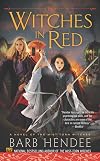
“Far to the north, the men of an isolated silver mining community are turning into vicious “beasts” that slaughter anyone in sight. The mines belong to the noble family of Prince Anton—ruler of Castle Sèone and Céline and Amelie’s patron—and Anton’s tyrannical father has ordered his son to solve the mystery as a test of his leadership. He has no choice but to send the witches into the perilous north to use their abilities to discover the cause of the transformations. Given how much they owe the prince, the sisters have no choice but to go.
Together with the overprotective Lieutenant Jaromir, Céline and Amelie enter the dark world of a far-off mining camp tainted by fear, mistrust, and enslavement—and haunted by men turning into massive mad wolves without warning. Now the two must draw upon strength and cunning they never thought they possessed not only to solve the mystery, but to survive....”
I have to compliment Hendee on her character creation. Celine and Amelie are both feminine and tough. Here, feminine doesn’t mean fragile and waifish, and tough doesn’t mean just mentally strong. Amelie is the more physical of the two sisters, but even dressed in a fighter’s clothes and wielding a weapon, I think she’s still a lovely lady. Celine exudes beauty and caring, but no one could ever accuse her of being a maiden in distress. The two complement each other well, show more quite aside from their opposing powers.
In many ways, this series reminds me of another of my favorite re-reads, the Dubric Byerly books by Tamara Siler Jones. Although the setting is a fantasy universe and magic plays key roles in the plot, there’s a definite overtone of real sleuthing techniques. Magic isn’t the cure-all in this series, either; as often as not, neither reading the past nor the future helps with the deduction. It might give the sisters a nudge in the right direction, but they do a lot of regular investigating as well.
There are a few undertones of romance running through this story, but it’s not in the forefront by any means. That’s actually refreshing, as a good chunk of the novels available these days include romance as an obligatory element. The focus is firmly on the sisters and their work uncovering the secret of the transforming soldiers.
This book is a fun read with plenty of diverse elements—fantasy, mystery, action, adventure—to whet the appetite of just about any reader. I think this would also be a good series to give to those interested in the fantasy genre but not sure where to dive in. Witches in Red is one of those books that you can revisit again and again and never get bored.
This review originally appeared on Owlcat Mountain on May 29, 2014.
Review copy provided by the publisher as an e-ARC through NetGalley. show less
(Description nicked from B&N.com.)
“Far to the north, the men of an isolated silver mining community are turning into vicious “beasts” that slaughter anyone in sight. The mines belong to the noble family of Prince Anton—ruler of Castle Sèone and Céline and Amelie’s patron—and Anton’s tyrannical father has ordered his son to solve the mystery as a test of his leadership. He has no choice but to send the witches into the perilous north to use their abilities to discover the cause of the transformations. Given how much they owe the prince, the sisters have no choice but to go.
Together with the overprotective Lieutenant Jaromir, Céline and Amelie enter the dark world of a far-off mining camp tainted by fear, mistrust, and enslavement—and haunted by men turning into massive mad wolves without warning. Now the two must draw upon strength and cunning they never thought they possessed not only to solve the mystery, but to survive....”
I have to compliment Hendee on her character creation. Celine and Amelie are both feminine and tough. Here, feminine doesn’t mean fragile and waifish, and tough doesn’t mean just mentally strong. Amelie is the more physical of the two sisters, but even dressed in a fighter’s clothes and wielding a weapon, I think she’s still a lovely lady. Celine exudes beauty and caring, but no one could ever accuse her of being a maiden in distress. The two complement each other well, show more quite aside from their opposing powers.
In many ways, this series reminds me of another of my favorite re-reads, the Dubric Byerly books by Tamara Siler Jones. Although the setting is a fantasy universe and magic plays key roles in the plot, there’s a definite overtone of real sleuthing techniques. Magic isn’t the cure-all in this series, either; as often as not, neither reading the past nor the future helps with the deduction. It might give the sisters a nudge in the right direction, but they do a lot of regular investigating as well.
There are a few undertones of romance running through this story, but it’s not in the forefront by any means. That’s actually refreshing, as a good chunk of the novels available these days include romance as an obligatory element. The focus is firmly on the sisters and their work uncovering the secret of the transforming soldiers.
This book is a fun read with plenty of diverse elements—fantasy, mystery, action, adventure—to whet the appetite of just about any reader. I think this would also be a good series to give to those interested in the fantasy genre but not sure where to dive in. Witches in Red is one of those books that you can revisit again and again and never get bored.
This review originally appeared on Owlcat Mountain on May 29, 2014.
Review copy provided by the publisher as an e-ARC through NetGalley. show less
I don't use star ratings, so please read my review!
(Description nicked from B&N.com.)
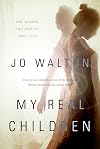
“It’s 2015, and Patricia Cowan is very old. “Confused today,” read the notes clipped to the end of her bed. She forgets things she should know—what year it is, major events in the lives of her children. But she remembers things that don't seem possible. She remembers marrying Mark and having four children. And she remembers not marrying Mark and raising three children with Bee instead. She remembers the bomb that killed President Kennedy in 1963, and she remembers Kennedy in 1964, declining to run again after the nuclear exchange that took out Miami and Kiev.
Her childhood, her years at Oxford during the Second World War—those were solid things. But after that, did she marry Mark or not? Did her friends all call her Trish, or Pat? Had she been a housewife who escaped a terrible marriage after her children were grown, or a successful travel writer with homes in Britain and Italy? And the moon outside her window: does it host a benign research station, or a command post bristling with nuclear missiles?”
I absolutely adored Walton’s previous novel Among Others, and so I eagerly picked up this one. I found it to be odd, and I’m not entirely sure of my reaction to it. On the one hand, I really enjoyed it, but on the other hand, I’m not quite sure what I read and what I should take away from it.
On the plus side, Walton’s writing is, as usual, very evocative. The close focus show more on the life of Trish/Pat lets readers get intimately acquainted with her and her inner life. Bear in mind that the author is portraying two completely different timelines in alternating chapters, so I’m impressed that the main character is so different in each of them and yet so recognizably the same woman.
The other major characters are similarly well-drawn, although this is aided by the fact that each timeline only has one or two people that are closely involved with Trish/Pat through most of her life. In the Trish chapters, this person is her husband Mark, and it segues later into her daughter Helen. In the Pat chapters, Bee is the dominant person and remains so through the lion’s share of the story. There are other characters around them, obviously, but the major relationships dominate the narrative.
Unfortunately, in later chapters the sheer proliferation of characters who pop up and don’t spend much time in the story makes it a little difficult to follow. There were a few times that I had to flip back through the pages to remind myself who had just shown up in the narrative. It kind of feels like the minor characters pop in and out without making much of a ripple in the story, at least as far as the reader is concerned. They do affect Trish/Pat, but the reader doesn’t get as much of a look at that.
My big issue with this book is that I’m not sure what the plot was supposed to be. In fact, I’m not sure there was one, and this may simply be a portrait of two different lives separated by a single decision. The implication that we seem meant to take from it is that everybody’s life is important and affects the world around them (mentions of the butterfly effect seem to support this), but there’s never any indication of how this would be, or of why. I don’t need all of the answers spelled out for me, but the complete lack of detail on this subject bothered me. And then there’s always the persistent question: is all of this just a product of Patricia’s dementia? You’re not going to get any answers. On some level, you don’t need them—at least as far as this question goes, the fact that either timeline is “real” for Patricia is enough. But there’s no plot to support a reason for the world that she lives in to be so different based on a single choice.
Jo Walton had an interesting idea when she wrote My Real Children, but I’m not convinced that she handled it as well as she could have. I will say that, taken simply as a chronicle of two very different lives, this book is a rewarding read. If you are in the mood for an exploration of how a choice may affect a single life, this is the book for you.
This review originally appeared on Owlcat Mountain on May 28, 2014.
Review copy provided by the publisher. show less
(Description nicked from B&N.com.)
“It’s 2015, and Patricia Cowan is very old. “Confused today,” read the notes clipped to the end of her bed. She forgets things she should know—what year it is, major events in the lives of her children. But she remembers things that don't seem possible. She remembers marrying Mark and having four children. And she remembers not marrying Mark and raising three children with Bee instead. She remembers the bomb that killed President Kennedy in 1963, and she remembers Kennedy in 1964, declining to run again after the nuclear exchange that took out Miami and Kiev.
Her childhood, her years at Oxford during the Second World War—those were solid things. But after that, did she marry Mark or not? Did her friends all call her Trish, or Pat? Had she been a housewife who escaped a terrible marriage after her children were grown, or a successful travel writer with homes in Britain and Italy? And the moon outside her window: does it host a benign research station, or a command post bristling with nuclear missiles?”
I absolutely adored Walton’s previous novel Among Others, and so I eagerly picked up this one. I found it to be odd, and I’m not entirely sure of my reaction to it. On the one hand, I really enjoyed it, but on the other hand, I’m not quite sure what I read and what I should take away from it.
On the plus side, Walton’s writing is, as usual, very evocative. The close focus show more on the life of Trish/Pat lets readers get intimately acquainted with her and her inner life. Bear in mind that the author is portraying two completely different timelines in alternating chapters, so I’m impressed that the main character is so different in each of them and yet so recognizably the same woman.
The other major characters are similarly well-drawn, although this is aided by the fact that each timeline only has one or two people that are closely involved with Trish/Pat through most of her life. In the Trish chapters, this person is her husband Mark, and it segues later into her daughter Helen. In the Pat chapters, Bee is the dominant person and remains so through the lion’s share of the story. There are other characters around them, obviously, but the major relationships dominate the narrative.
Unfortunately, in later chapters the sheer proliferation of characters who pop up and don’t spend much time in the story makes it a little difficult to follow. There were a few times that I had to flip back through the pages to remind myself who had just shown up in the narrative. It kind of feels like the minor characters pop in and out without making much of a ripple in the story, at least as far as the reader is concerned. They do affect Trish/Pat, but the reader doesn’t get as much of a look at that.
My big issue with this book is that I’m not sure what the plot was supposed to be. In fact, I’m not sure there was one, and this may simply be a portrait of two different lives separated by a single decision. The implication that we seem meant to take from it is that everybody’s life is important and affects the world around them (mentions of the butterfly effect seem to support this), but there’s never any indication of how this would be, or of why. I don’t need all of the answers spelled out for me, but the complete lack of detail on this subject bothered me. And then there’s always the persistent question: is all of this just a product of Patricia’s dementia? You’re not going to get any answers. On some level, you don’t need them—at least as far as this question goes, the fact that either timeline is “real” for Patricia is enough. But there’s no plot to support a reason for the world that she lives in to be so different based on a single choice.
Jo Walton had an interesting idea when she wrote My Real Children, but I’m not convinced that she handled it as well as she could have. I will say that, taken simply as a chronicle of two very different lives, this book is a rewarding read. If you are in the mood for an exploration of how a choice may affect a single life, this is the book for you.
This review originally appeared on Owlcat Mountain on May 28, 2014.
Review copy provided by the publisher. show less
(Description nicked from B&N.com.)
“Valerie McTeague’s business model is simple: provide the students of Edgewood College with a late-night study haven and stay as far away as possible from the underworld conflicts of her vampire brethren. She’s experienced that life, and the price she paid was far too high for her to ever want to return.
Elly Garrett hasn’t known any life except that of fighting the supernatural beings known as Creeps or Jackals. But she always had her mentor and foster father by her side—until he gave his life protecting a book that the Creeps desperately want to get their hands on.
When the book gets stashed at Night Owls for safekeeping, those Val holds nearest and dearest are put in mortal peril. Now Val and Elly will have to team up, along with a mismatched crew of humans, vampires, and lesbian succubi, to stop the Jackals from getting their claws on the book and unleashing unnamed horrors.”
Okay, any book that takes place in a bookstore has my attention. Boy, I wish there had been a store like this when I was in college—I’d have definitely worked there! The setting is guaranteed to appeal to all book-geeks like me. Night Owl Books is open extremely late, carries all kinds of cool books, and even has a rare book room. Plus, it’s run by a friendly vampire. What’s not to like?
There are some fairly typical fantasy elements at play here: super-secret organizations that fight monsters; books that hold magical secrets in strange languages; show more kindly professors with esoteric interests; and so on. I’m not saying that these things make the book trite or boring, but you’re sure to see some familiar tropes here that are combined in a way that’s fun to read.
I would have liked some more background on the Jackals (or Creeps, as Elly calls them). Most of the other creatures are common enough not to need explanation, like vampires or succubi, but Creeps are something new. I’m certainly willing to grant an author the right to make up their own things that go bump in the night, but I do want them to have some reason for existing.
Something that amused me was a running reference to Sacramento. Apparently, Val was part of a hunting group in Sacramento where something went horribly wrong, and the details are dangled in front of us for most of the book. We do eventually get the gist of the tale, thus saving it from becoming like the Calvin and Hobbes “noodle incident”, and it both explains why the story takes place back East and also seems to sow the seeds of maybe heading out West in a future novel.
Night Owls was a decent read with some unique monsters and a good dollop of action. I’ll be curious to see what the author does with this story next, and very curious to see if her characters head out our way.
This review originally appeared on Owlcat Mountain on April 7, 2014. show less
“Valerie McTeague’s business model is simple: provide the students of Edgewood College with a late-night study haven and stay as far away as possible from the underworld conflicts of her vampire brethren. She’s experienced that life, and the price she paid was far too high for her to ever want to return.
Elly Garrett hasn’t known any life except that of fighting the supernatural beings known as Creeps or Jackals. But she always had her mentor and foster father by her side—until he gave his life protecting a book that the Creeps desperately want to get their hands on.
When the book gets stashed at Night Owls for safekeeping, those Val holds nearest and dearest are put in mortal peril. Now Val and Elly will have to team up, along with a mismatched crew of humans, vampires, and lesbian succubi, to stop the Jackals from getting their claws on the book and unleashing unnamed horrors.”
Okay, any book that takes place in a bookstore has my attention. Boy, I wish there had been a store like this when I was in college—I’d have definitely worked there! The setting is guaranteed to appeal to all book-geeks like me. Night Owl Books is open extremely late, carries all kinds of cool books, and even has a rare book room. Plus, it’s run by a friendly vampire. What’s not to like?
There are some fairly typical fantasy elements at play here: super-secret organizations that fight monsters; books that hold magical secrets in strange languages; show more kindly professors with esoteric interests; and so on. I’m not saying that these things make the book trite or boring, but you’re sure to see some familiar tropes here that are combined in a way that’s fun to read.
I would have liked some more background on the Jackals (or Creeps, as Elly calls them). Most of the other creatures are common enough not to need explanation, like vampires or succubi, but Creeps are something new. I’m certainly willing to grant an author the right to make up their own things that go bump in the night, but I do want them to have some reason for existing.
Something that amused me was a running reference to Sacramento. Apparently, Val was part of a hunting group in Sacramento where something went horribly wrong, and the details are dangled in front of us for most of the book. We do eventually get the gist of the tale, thus saving it from becoming like the Calvin and Hobbes “noodle incident”, and it both explains why the story takes place back East and also seems to sow the seeds of maybe heading out West in a future novel.
Night Owls was a decent read with some unique monsters and a good dollop of action. I’ll be curious to see what the author does with this story next, and very curious to see if her characters head out our way.
This review originally appeared on Owlcat Mountain on April 7, 2014. show less
(Description nicked from B&N.com.)
“Touchstone, the magical theater troupe, continues to build audiences. But Cayden is increasingly troubled by his “elsewhens,” the uncontrolled moments when he is plunged into visions of the possible futures. He fears that his Fae gift will forever taint his friendships; his friends fear that his increasing distance will destroy him.
But worldly success follows them—an apparent loss in the Trials leads to Touchstone being selected to travel to the Continent with a Royal Embassy to collect Prince Ashgar’s new bride. They are the first theater artists to appear outside Albeyn for at least seventy years—for magic is suspect and forbidden elsewhere, and the Kingdom’s easy race mixing and magic use horrifies the people they are to travel among.”
I admit that when I picked up the first book in this series, I was a bit skeptical. Although I love Melanie Rawn, I wasn’t sure I could get behind the way she constructed this new world of hers. Once I read it, though, I was absolutely enchanted and this second book, Elsewhens, captivated me just as deeply.
The characters take a very different journey than you’re used to seeing. Many books on the shelves have heroic battles and daring rescues and the like, but this story follows two men struggling with their inner lives. Cayden is tormented by visions of what could be, and he never knows what may or may not lead to that future. His friend Mieka, often the subject of Cayden’s show more visions, slips further and further into self-destructive behavior while losing much of what makes him extraordinary. The two play off of each other in a friendship that is both as strong as iron and threatens to unravel at a moment’s notice.
Of course the novel isn’t all brooding and introspection. The Touchstone troop travels to a distant land where magic is anathema, in the hopes that they can begin to ease fears about such powers. Subtle politics and worldbuilding are woven into the tale, much the way Rawn’s characters weave magic into their storytelling. By the end of the book, you realize you’ve gotten much more out of the novel than you were conscious of during the reading.
As someone who does a bit of artistic stuff myself, I also find the story interesting as a portrait of what it’s like to be a person with strong creative impulses. Cayden’s struggles as a writer hit close to home for me, as I can certainly identify with getting writer’s block! Mieka is the one whose situation is really heartbreaking, though, because his personality burns too brightly for even he himself to handle. He’s the celebrity of the group, mirroring the many actors and artists we see in rea life as they self-destruct. Because of how Rawn shows the various sides of creativity, both the glories and the pitfalls, I think it deserves much more attention than it has gotten.
Elsewhens is another incredible book from Melanie Rawn—different in pace and tone than most, but possessing a shine and depth all its own. If you’d like something a bit more introspective, pick up this series and prepare to be dazzled.
This review originally appeared on Owlcat Mountain on April 8, 2014. show less
“Touchstone, the magical theater troupe, continues to build audiences. But Cayden is increasingly troubled by his “elsewhens,” the uncontrolled moments when he is plunged into visions of the possible futures. He fears that his Fae gift will forever taint his friendships; his friends fear that his increasing distance will destroy him.
But worldly success follows them—an apparent loss in the Trials leads to Touchstone being selected to travel to the Continent with a Royal Embassy to collect Prince Ashgar’s new bride. They are the first theater artists to appear outside Albeyn for at least seventy years—for magic is suspect and forbidden elsewhere, and the Kingdom’s easy race mixing and magic use horrifies the people they are to travel among.”
I admit that when I picked up the first book in this series, I was a bit skeptical. Although I love Melanie Rawn, I wasn’t sure I could get behind the way she constructed this new world of hers. Once I read it, though, I was absolutely enchanted and this second book, Elsewhens, captivated me just as deeply.
The characters take a very different journey than you’re used to seeing. Many books on the shelves have heroic battles and daring rescues and the like, but this story follows two men struggling with their inner lives. Cayden is tormented by visions of what could be, and he never knows what may or may not lead to that future. His friend Mieka, often the subject of Cayden’s show more visions, slips further and further into self-destructive behavior while losing much of what makes him extraordinary. The two play off of each other in a friendship that is both as strong as iron and threatens to unravel at a moment’s notice.
Of course the novel isn’t all brooding and introspection. The Touchstone troop travels to a distant land where magic is anathema, in the hopes that they can begin to ease fears about such powers. Subtle politics and worldbuilding are woven into the tale, much the way Rawn’s characters weave magic into their storytelling. By the end of the book, you realize you’ve gotten much more out of the novel than you were conscious of during the reading.
As someone who does a bit of artistic stuff myself, I also find the story interesting as a portrait of what it’s like to be a person with strong creative impulses. Cayden’s struggles as a writer hit close to home for me, as I can certainly identify with getting writer’s block! Mieka is the one whose situation is really heartbreaking, though, because his personality burns too brightly for even he himself to handle. He’s the celebrity of the group, mirroring the many actors and artists we see in rea life as they self-destruct. Because of how Rawn shows the various sides of creativity, both the glories and the pitfalls, I think it deserves much more attention than it has gotten.
Elsewhens is another incredible book from Melanie Rawn—different in pace and tone than most, but possessing a shine and depth all its own. If you’d like something a bit more introspective, pick up this series and prepare to be dazzled.
This review originally appeared on Owlcat Mountain on April 8, 2014. show less
(Description nicked from B&N.com.)
“Freelancing for the Atlanta PD isn’t exactly a secure career; my job’s been on the line almost as much as my life. But it’s a paycheck, and it keeps me from falling back into the drug habit. Plus, things are looking up with my sometimes-partner, Cherabino, even if she is still simmering over the telepathic Link I created by accident.
When my ex, Kara, shows up begging for my help, I find myself heading to the last place I ever expected to set foot in again—Guild headquarters—to investigate the death of her uncle. Joining that group was a bad idea the first time. Going back when I’m unwanted is downright dangerous.
Luckily, the Guild needs me more than they’re willing to admit. Kara’s uncle was acting strange before he died—crazy strange. In fact, his madness seems to be slowly spreading through the Guild. And when an army of powerful telepaths loses their marbles, suddenly it’s a game of life or death.…”
This book takes readers further into the Guild, the society of telepaths that kicked Adam out after they got him addicted to a powerful drug. It turns out that there’s quite the little power struggle going on behind the scenes. Adam’s ex Kara is fairly deep into the politicking that’s going on, mostly because of her family but some of it on her own account. It turns out there’s quite a bit more to the Guild than just a bunch of telepaths policing themselves. We get a glimpse of what makes the Guild tick, show more and also what its goals might be.
There’s finally some movement in the “will-they-won’t-they” relationship between Adam and Cherabino. I’m glad that the author didn’t drag the tension out longer (although I wouldn’t say that the situation is fully resolved), because having the drug problem is quite enough for the main character to deal with. This is especially true with Adam being more in contact with the Guild in this novel and being exposed to the conditions in which he initially got hooked.
On that subject, Adam’s fight against addiction is pretty prominent throughout the story. I think he’s a good role model for someone who has successfully come back from the brink but who doesn’t hide the fact that the journey is a difficult one. This isn’t a case of “Go to a few AA meetings and all will be well.” This is a man who is constantly tormented by the demon of addiction, and while time might dilute the craving, it will always be with him.
Overall, the mystery in the story was really well handled. Combining the solving of the murder with the look inside the walls of the Guild gave the plot an extra level of depth that it might not otherwise have had. Hughes has created a strong world and backdrop here, and I’m glad that she’s stretching her writer’s chops and exploring it in creative ways.
Marked is another great entry in the Mindspace Investigations series. Fleshing out the culture in which the main character spent many years gives this book a boost, and Adam’s slowly evolving relationships with those around him give it a good deal of heart. I can’t wait to see where this series goes next.
This review originally appeared on Owlcat Mountain on April 14, 2014. show less
“Freelancing for the Atlanta PD isn’t exactly a secure career; my job’s been on the line almost as much as my life. But it’s a paycheck, and it keeps me from falling back into the drug habit. Plus, things are looking up with my sometimes-partner, Cherabino, even if she is still simmering over the telepathic Link I created by accident.
When my ex, Kara, shows up begging for my help, I find myself heading to the last place I ever expected to set foot in again—Guild headquarters—to investigate the death of her uncle. Joining that group was a bad idea the first time. Going back when I’m unwanted is downright dangerous.
Luckily, the Guild needs me more than they’re willing to admit. Kara’s uncle was acting strange before he died—crazy strange. In fact, his madness seems to be slowly spreading through the Guild. And when an army of powerful telepaths loses their marbles, suddenly it’s a game of life or death.…”
This book takes readers further into the Guild, the society of telepaths that kicked Adam out after they got him addicted to a powerful drug. It turns out that there’s quite the little power struggle going on behind the scenes. Adam’s ex Kara is fairly deep into the politicking that’s going on, mostly because of her family but some of it on her own account. It turns out there’s quite a bit more to the Guild than just a bunch of telepaths policing themselves. We get a glimpse of what makes the Guild tick, show more and also what its goals might be.
There’s finally some movement in the “will-they-won’t-they” relationship between Adam and Cherabino. I’m glad that the author didn’t drag the tension out longer (although I wouldn’t say that the situation is fully resolved), because having the drug problem is quite enough for the main character to deal with. This is especially true with Adam being more in contact with the Guild in this novel and being exposed to the conditions in which he initially got hooked.
On that subject, Adam’s fight against addiction is pretty prominent throughout the story. I think he’s a good role model for someone who has successfully come back from the brink but who doesn’t hide the fact that the journey is a difficult one. This isn’t a case of “Go to a few AA meetings and all will be well.” This is a man who is constantly tormented by the demon of addiction, and while time might dilute the craving, it will always be with him.
Overall, the mystery in the story was really well handled. Combining the solving of the murder with the look inside the walls of the Guild gave the plot an extra level of depth that it might not otherwise have had. Hughes has created a strong world and backdrop here, and I’m glad that she’s stretching her writer’s chops and exploring it in creative ways.
Marked is another great entry in the Mindspace Investigations series. Fleshing out the culture in which the main character spent many years gives this book a boost, and Adam’s slowly evolving relationships with those around him give it a good deal of heart. I can’t wait to see where this series goes next.
This review originally appeared on Owlcat Mountain on April 14, 2014. show less
(Description nicked from B&N.com.)
“Neutrality is the key to longevity. This motto has governed 16 year-old Autumn's life in the mid-21st century Centrist cult, which believes that expressing emotions leads to Essence drain and premature death.
But Autumn's younger brother’s death casts her faith into question.
While sprinting through a park in violation of Centrist teachings, she encounters Ryder Stone, an Outsider who claims Essence drain is nothing more than a Centrist scare tactic. She agrees to join his Community, a utopia of adrenaline junkies living in the abandoned remains of Yosemite National Park.
Autumn learns about sex, drugs, and living life to the fullest. But as she discovers dark secrets beneath the Community's perfect exterior, she realizes that this illusion of paradise could be shattered…”
The short form of my impressions about this book can be summed up in four words: Divergent goes to Yosemite. The basic elements are all there: sheltered girl hides herself in a group of thrill-seekers and learns to find her courage while doing death-defying stunts. There are, of course, quite a few differences as well, the biggest being that the conflict in this book is between two small groups instead of a society-spanning struggle for dominance. Admittedly, I reacted the same to both books—they seem to be thinly-veiled excuses to write about cool stunts while pushing through a romance.
I did feel the same way about Autumn that I did about Tris—a combination show more of admiration for their guts and annoyance at their recklessness. At least in this book, I can understand the lure of her forays into adrenaline-junky territory, because Yosemite is the perfect playground for letting your inner daredevil run wild. The author apparently spent a summer in the park, and I can attest that her descriptions of locations and scenery is spot-on. For me, Yosemite itself was the most vivid “character” in this story, interacting with the people in a way that you can’t really appreciate unless you’ve been to the High Sierras. But Autumn’s reasons for running to Yosemite are understandable to just about anyone, since teenage emotions are something we all go through to one extent or another.
I found myself more focused on the setting than on the characters or plot. That comes of how fond I am of Yosemite, I suppose, but it really did seem that the setting was more vibrant and alive than those inhabiting it. A couple of characters stood out, young companions of Autumn and Ryder who help Autumn learn to “slackline”, which is a kind of tightrope walking. Beyond that, I wish I’d gotten more of a sense of the rest of community as a whole. It seems like the author rushes past that to get to the Community.
The biggest problem I had with the premise was the basis for the changes in California society: a massive earthquake has apparently struck and caused a great deal of destruction. The author, however, states that the quake destroyed roads into Yosemite (high in the Sierra Nevada) and also caused damage in San Francisco (a few hundred miles away). An earthquake with the ability to cause damage in two such disparate locations would have barely left anything standing in the entire Central Valley, and yet readers are given to believe that there are still plenty of “pre-quake” structures standing, and towns and cities seem to be much as they always were. Quakes here, no matter how big, can’t radiate too far into surrounding areas due to the geography beneath our feet—it would have to be a cataclysmic event to do so, and as I mentioned, the destruction would be much worse. Since the quake was talked about from nearly the beginning of the book, I had trouble getting into the rest of the story with that hanging over the narrative.
The description of a cult based in San Francisco, though?... that, I had no trouble believing. Counterculture will likely be alive and well no matter the circumstances, so Autumn’s early upbringing was plausible enough. I kind of wish we’d seen more of it before the story moves to Yosemite.
Essence is an okay book, one that you’ll likely enjoy if you’ve ever been lucky enough to spend time in Yosemite. The story’s strength lies in its evocative setting and the vicarious thrill of wild parties and daring stunts in one of the most beautiful natural areas in the United States. It’s weak in character and plotting, true, but if you can handwave aside some inconsistencies, you’ll probably like this quick and action-packed read.
This review originally appeared on Owlcat Mountain on April 16, 2014. show less
“Neutrality is the key to longevity. This motto has governed 16 year-old Autumn's life in the mid-21st century Centrist cult, which believes that expressing emotions leads to Essence drain and premature death.
But Autumn's younger brother’s death casts her faith into question.
While sprinting through a park in violation of Centrist teachings, she encounters Ryder Stone, an Outsider who claims Essence drain is nothing more than a Centrist scare tactic. She agrees to join his Community, a utopia of adrenaline junkies living in the abandoned remains of Yosemite National Park.
Autumn learns about sex, drugs, and living life to the fullest. But as she discovers dark secrets beneath the Community's perfect exterior, she realizes that this illusion of paradise could be shattered…”
The short form of my impressions about this book can be summed up in four words: Divergent goes to Yosemite. The basic elements are all there: sheltered girl hides herself in a group of thrill-seekers and learns to find her courage while doing death-defying stunts. There are, of course, quite a few differences as well, the biggest being that the conflict in this book is between two small groups instead of a society-spanning struggle for dominance. Admittedly, I reacted the same to both books—they seem to be thinly-veiled excuses to write about cool stunts while pushing through a romance.
I did feel the same way about Autumn that I did about Tris—a combination show more of admiration for their guts and annoyance at their recklessness. At least in this book, I can understand the lure of her forays into adrenaline-junky territory, because Yosemite is the perfect playground for letting your inner daredevil run wild. The author apparently spent a summer in the park, and I can attest that her descriptions of locations and scenery is spot-on. For me, Yosemite itself was the most vivid “character” in this story, interacting with the people in a way that you can’t really appreciate unless you’ve been to the High Sierras. But Autumn’s reasons for running to Yosemite are understandable to just about anyone, since teenage emotions are something we all go through to one extent or another.
I found myself more focused on the setting than on the characters or plot. That comes of how fond I am of Yosemite, I suppose, but it really did seem that the setting was more vibrant and alive than those inhabiting it. A couple of characters stood out, young companions of Autumn and Ryder who help Autumn learn to “slackline”, which is a kind of tightrope walking. Beyond that, I wish I’d gotten more of a sense of the rest of community as a whole. It seems like the author rushes past that to get to the Community.
The biggest problem I had with the premise was the basis for the changes in California society: a massive earthquake has apparently struck and caused a great deal of destruction. The author, however, states that the quake destroyed roads into Yosemite (high in the Sierra Nevada) and also caused damage in San Francisco (a few hundred miles away). An earthquake with the ability to cause damage in two such disparate locations would have barely left anything standing in the entire Central Valley, and yet readers are given to believe that there are still plenty of “pre-quake” structures standing, and towns and cities seem to be much as they always were. Quakes here, no matter how big, can’t radiate too far into surrounding areas due to the geography beneath our feet—it would have to be a cataclysmic event to do so, and as I mentioned, the destruction would be much worse. Since the quake was talked about from nearly the beginning of the book, I had trouble getting into the rest of the story with that hanging over the narrative.
The description of a cult based in San Francisco, though?... that, I had no trouble believing. Counterculture will likely be alive and well no matter the circumstances, so Autumn’s early upbringing was plausible enough. I kind of wish we’d seen more of it before the story moves to Yosemite.
Essence is an okay book, one that you’ll likely enjoy if you’ve ever been lucky enough to spend time in Yosemite. The story’s strength lies in its evocative setting and the vicarious thrill of wild parties and daring stunts in one of the most beautiful natural areas in the United States. It’s weak in character and plotting, true, but if you can handwave aside some inconsistencies, you’ll probably like this quick and action-packed read.
This review originally appeared on Owlcat Mountain on April 16, 2014. show less
(Description nicked from B&N.com.)
“Frank Blackthorne's most recent heist did not end optimally. The sacrificial virgin survived, but the whole incident left Frank, a respectable career thief, on the run from a kingdom full of evil cultists eager to replace their sacrifice.
So, when the Court Wizard of Lendowyn, Elhared the Unwise, comes to him intending to hire someone to save Lendowyn’s princess from an evil dragon in return for riches, glory, and help with the bloodthirsty cultists problem, Frank is rightfully suspicious. Frank is also not in a position to refuse.
Perhaps unsurprisingly, Frank’s rescue fails—in an explosion of spectacularly misapplied magic. When the dust settles, all parties involved find themselves body-swapped. Frank is left stranded in the Princess Lucille’s body, halfway across the kingdom. The understandably angry Princess Lucille finds herself inhabiting the body of the dragon. In order to set things right, they will have to team up and face down thugs, slavers, elvish bookies, knights in shining armor, an evil Queen, and the hordes of the Dark Lord Nâtalc.”
I was a bit skeptical of this book when I first started reading it, because the humor is so prevalent and so in-your-face that it almost felt forced. After a few chapters, though, the story found its rhythm and I began to really enjoy it. I think it’s mostly that the type of humor that the author is utilizing is better suited to the madcap hijinks post-body-swap than to the plot show more set-up of the earlier chapters.
Once the novel found its footing, I really enjoyed it. It’s hilarious to watch Frank try to navigate the logistics of a woman’s body, clothing, and social mores without betraying that he has no clue what he’s doing. This leads to the realization that you can’t run well in heels, the acquisition of sexy leather clothing, and the problem of how to use your cleavage to best advantage. There are also some sobering moments when Frank really comprehends how much danger he might be in simply because he’s female.
As mentioned in the synopsis, Lucille ends up in the dragon’s body, which neatly sidesteps the trite “let’s swap genders and see what happens!” trope. She’s dealing with something that disadvantages her just as much as Frank is disadvantaged by being a woman—namely, Lucille is no longer human. The question for both of these characters then becomes whether or not they can turn those disadvantages around and learn to capitalize on what they’ve got.
While the plot is definitely not as light as the humor, it does give Frank and Lucille the excuse for a pretty varied roster of adventures. They come into contact with different races and different social classes, as well as many ways of making a living and surviving in harsh circumstances. The story isn’t repetitive, that’s for sure! It’s fun without being fluffy, and entertaining without being inane. It straddles the line between humorous fantasy and some of the darker stuff and does so with style.
Dragon Princess has wit, action and hilarity in equal measures and should prove an enjoyable read for those looking for something fast-paced and fun. I hope the author does more in this vein, because I enjoyed the writing style and would love to see Frank and Lucille’s further adventures.
This review originally appeared on Owlcat Mountain on April 23, 2014. show less
“Frank Blackthorne's most recent heist did not end optimally. The sacrificial virgin survived, but the whole incident left Frank, a respectable career thief, on the run from a kingdom full of evil cultists eager to replace their sacrifice.
So, when the Court Wizard of Lendowyn, Elhared the Unwise, comes to him intending to hire someone to save Lendowyn’s princess from an evil dragon in return for riches, glory, and help with the bloodthirsty cultists problem, Frank is rightfully suspicious. Frank is also not in a position to refuse.
Perhaps unsurprisingly, Frank’s rescue fails—in an explosion of spectacularly misapplied magic. When the dust settles, all parties involved find themselves body-swapped. Frank is left stranded in the Princess Lucille’s body, halfway across the kingdom. The understandably angry Princess Lucille finds herself inhabiting the body of the dragon. In order to set things right, they will have to team up and face down thugs, slavers, elvish bookies, knights in shining armor, an evil Queen, and the hordes of the Dark Lord Nâtalc.”
I was a bit skeptical of this book when I first started reading it, because the humor is so prevalent and so in-your-face that it almost felt forced. After a few chapters, though, the story found its rhythm and I began to really enjoy it. I think it’s mostly that the type of humor that the author is utilizing is better suited to the madcap hijinks post-body-swap than to the plot show more set-up of the earlier chapters.
Once the novel found its footing, I really enjoyed it. It’s hilarious to watch Frank try to navigate the logistics of a woman’s body, clothing, and social mores without betraying that he has no clue what he’s doing. This leads to the realization that you can’t run well in heels, the acquisition of sexy leather clothing, and the problem of how to use your cleavage to best advantage. There are also some sobering moments when Frank really comprehends how much danger he might be in simply because he’s female.
As mentioned in the synopsis, Lucille ends up in the dragon’s body, which neatly sidesteps the trite “let’s swap genders and see what happens!” trope. She’s dealing with something that disadvantages her just as much as Frank is disadvantaged by being a woman—namely, Lucille is no longer human. The question for both of these characters then becomes whether or not they can turn those disadvantages around and learn to capitalize on what they’ve got.
While the plot is definitely not as light as the humor, it does give Frank and Lucille the excuse for a pretty varied roster of adventures. They come into contact with different races and different social classes, as well as many ways of making a living and surviving in harsh circumstances. The story isn’t repetitive, that’s for sure! It’s fun without being fluffy, and entertaining without being inane. It straddles the line between humorous fantasy and some of the darker stuff and does so with style.
Dragon Princess has wit, action and hilarity in equal measures and should prove an enjoyable read for those looking for something fast-paced and fun. I hope the author does more in this vein, because I enjoyed the writing style and would love to see Frank and Lucille’s further adventures.
This review originally appeared on Owlcat Mountain on April 23, 2014. show less