
A very comprehensive history of the system, not (despite the title) confined to social and economic matters. A star knocked off due to the shortage of maps (only one!) and the keenly felt absence of a human proofreaader.

A comprehensive history (at an outrageous price), somewhat marred by many typos and some distorted and poorly reproduced pictures. Could have done without repeating most of the text of 'The Manchester Trolleybus', as well.
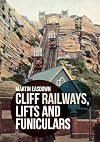
A brief illustrated rundown of all the funiculars and cliff lifts there have been in the UK (and the Isle of Man). Of the 12 surviving examples of funiculars, I have been on five, and also the now closed Folkestone Leas lift. Also included are two cable tramways, Matlock and Upper Douglas, but if those two, why not Highgate Hill, Hockley Hill or indeed Edinburgh?
The histories and specification of each line are not very detailed, but it's a good enough overview, if rather overpriced.
The histories and specification of each line are not very detailed, but it's a good enough overview, if rather overpriced.
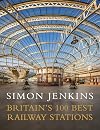
I got this half price, which is just as well, as it's not worth forking out full whack for. It's a good enough coffee-table book, but doesn't go into much detail about the stations. I agree with most of the 48 stations chosen I have been to, but not Birmingham New Street! The platforms are still a dismal lightless hole, whatever improvements have gone on above. And Liverpool Street and Manchester Victoria really only count as half a good station each (and the new roof at Victoria leaks). St. Pancras has always been my favourite - boring and conventional choice, I know, and yes, the domestic platforms are a bit poor, but the roof and the hotel (not to mention the Betjeman Arms) outweigh all faults. If I was going to add a station to the 100 it would be Birmingham Moor Street, a lovely contrast to the pits that are New Street and Snow Hill.

Eminently readable it might be, but there is far too much padding. Detailed lists of clothes, banquets and tournaments distract from the narrative. Furthermore for most of the last quarter of the book Mary and Margaret are sidelined as Perry goes over the familiar ground of the King's Great Matter. Neither woman really emerges as distinct personality, but it would have made a good book of some 150 pages or so. And I am now officially fed up of the Tudors.

I had this book on my shelves for 20 years before reading it. I really shouldn't have left it that long. Heaney's translation brings the old poem to life, blowing off the cobwebs of nearly two hundred years of it being studied rather than read. His translation was contentious, especially with Angl0-Saxon purists, but I have no complaints to make; he manages to make the old words meaningful, and evokes marvellously the atmosphere of a society that was long gone even when the poem was written.
Of course one cannot discuss Beowulf without mentioning Tolkien; as Heaney acknowledges, he was the first to treat the poem as literature rather than merely an ancient artefact. Every Tolkien fan should read this; they will understand him much better, and they will find therein the originals of many scenes and phrases in his works.
Of course one cannot discuss Beowulf without mentioning Tolkien; as Heaney acknowledges, he was the first to treat the poem as literature rather than merely an ancient artefact. Every Tolkien fan should read this; they will understand him much better, and they will find therein the originals of many scenes and phrases in his works.
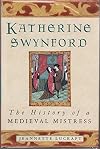
An example of that well-known genre, the thesis worked up into a book. Kind of interesting for what it says about the status of medieval women, but very dry. TL:DR - nobody knows jack about Katherine Swynford herself, here's some ideas of what she *might* have been like.

Good overview, many interesting photos, but as with the rest of this series the maps are dreadful, if somewhat more legible than usual.


This is one of those books I can't possibly review objectively. When I was a child, my best friends were William Brown, Nancy Blackett ... and Arrietty Clock. I loved the Borrowers stories passionately as a child, and I still do. Their world was so beautifully and vividly drawn (and the original illustrations by Diana Stanley were also enchanting) it felt very real. The characterisation was superb, too, and the stories were involving and interesting. I still think the first four books are the best children's books ever written. Avenged is the reason this collection only gets four stars; it was written many years after the others, and while still very good, it doesn't have the same tone as the rest. Maybe the pointless introduction of ghosts and psychic Lady Mullings are the reason why I never liked it as much, or perhaps it was that Miss Menzies seemed to have changed into a different person since Aloft, but whatever, it loses the series a star.

Good overview, nice pics, but the maps are terrible.

I had actually read this before, it turned out, but didn't finish it then. It was a very readable account, centred as it should be on the six women, and not the old swine who, one way or another, victimised them all. I think it has been somewhat overtaken by recent research, and Fraser's biases did show up now and then, but it was largely fair and mainly objective.
Of them all I think I liked Anna von Kleve best - I admired Catalina de Aragón for her spirit and tenacity, and Nan Bullen was probably the most interesting as a person, but Anna is the one I'd like to be friends with.
Flibbertigibbet Katherine Howard is definitely the bottom of this league :)
Of them all I think I liked Anna von Kleve best - I admired Catalina de Aragón for her spirit and tenacity, and Nan Bullen was probably the most interesting as a person, but Anna is the one I'd like to be friends with.
Flibbertigibbet Katherine Howard is definitely the bottom of this league :)
The World of Ice and Fire: The Untold History of Westeros and the Game of Thrones (Song of Ice & Fire) by George R. R. Martin
I possibly wouldn't have bought this if Amazon hadn't offered it very cheaply, but it was a good read, a worthy addition to the bookshelf of any fan of A Song of Ice & Fire/Game of Thrones. The artwork is all of good quality, and the fictional history was interesting and entertaining. Not for anyone who isn't a committed fan, but recommended to those who are. The only gripe I have is that for those parts of the world that GRR Martin isn't all that interested in, far away from the main action, the co-authors seem to have trawled through every fantasy trope they could think of to fill them out (lost cities in the jungle, etc.).

I really wanted to like this. I like Simon Armitage's TV presence, I like his prose, I like his dry wit, I like that he lives in and writes about places I know ... but I can't get into his poetry. So much of it just seemed to be random jottings that didn't line up on the right-hand margin, with no coherence to it. There were odd flashes of brilliance, but nothing like enough to keep me interested.

Given the scenery and railway history, this could have been a brilliant book. Instead the large format is wasted on small and indifferently reproduced photos. Good, but could have been so much better.
The Young Hornblower Omnibus: "Mr. Midshipman Hornblower", "Lieutenant Hornblower", & "Hornblower & the "Hotspur" by C. S. Forester

Hornblower is an old friend of mine who I have a long-standing affection for, and my rating reflects this, even though I admit they are hardly works of first class literature. Except, perhaps, for 'Lieutenant Hornblower'; the only book written not from Hornblower's point of view, but from that of Bush, it is on a higher literary plane than all the others, and a much more interesting and satisfying read.
This is the book that taught me what writing about history could be. Discursive, opinionated, and entertaining, Professor Taylor leads us through the history of England between and during two world wars in his own inimitable style, culminating in the last, glorious, uplifting paragraph, expressive of an optimism long gone.
This is a wonderful book. It is not just a list of all the birds one might see in Britain (although it is). It is not just lavishly illustrated with stunning photographs of each (although it is that, too). It is not just a book of ornithological observations (although they are here, as well). But more than this, it relates the story of each species in its cultural context, in how the people of Britain have thought, wrote and made use of the bird in question. A marvellous book for dipping into and looking up, a treasure hoard to be raided again and again. The only problem is, it's damned heavy.
Brilliant, thorough examination of the way Lloyd George and Clemenceau used Wilson's windy, high-minded hypocrisy as a cover for their own self-interest and empire-building, and so screwed Europe over for another generation.
I am a sucker for alternative history, and this is alternative history on the grand scale, from the initial premise that the Black Death killed *everybody* in Europe, not just a lot of us, right through to the 'present day'. In this new world the Chinese and Arab Muslim cultures dominate and vie for world power, and through the rise and falls of these two empires travel a band of repeatedly (but unknowingly) re-incarnated characters. This is a marvellous plot device, allowing the author to tell the story of 800 years of history through his characters without having to introduce a new lot every generation. It also allows him to use the central characters' slowly growing awareness of their predicament as a metaphor for the growth of the human mind and the journey toward enlightenment here on earth (rather than in Nirvana). Some readers found the interludes in between the history, where our band spend time between incarnations in the bardo, a sort of Buddhist Limbo, annoying, but despite having very little tolerance for mysticism of any sort I didn't. As a further delight, each chapter is written in a style appropriate to the subject matter, beginning with a pastiche of the Chinese Buddhist classic 'Journey to the West'. Literate, intelligent, educational, moving, compelling: this book is a challenge for the reader; a challenge well worth taking.

This is the book in which John Wyndham steps out of his comfort zone of writing 1950s 'cosy catastrophes' and produced something darker, deeper, and much much better. Set in post-apocalyptic Labrador, 'The Chrysalids' is the story of how it is to be different in a closed-minded, backwards-looking fundamentalist religious society. Grim, in short. There is none of the light tone and mild humour of his other works, and it eventually becomes disturbing, not to say harrowing. When I first read this book, these many long years ago, I thought it had a happy ending. I am not at all sure it does, now.
Like all English football fans I once regarded Germany as our greatest rival (Scotland being beneath us these days). Then I read this book. Uli Hesse-Lichtenberger has complied an informative, readable, fascinating and very likeable account of the history and ethos of German football, and I was greatly enlightened. Now I see German football as something to admire, emulate, envy and like (apart from Bayern, obviously), to the point where I was disappointed they didn't win in South Africa. As for England, I've given up on them. Enough is enough.
A compact guide (German text) to all locomotives, power cars and multiple units operated by the Swiss Federal Railways from 1902 to 2010. Each is illustrated with a colour picture, a basic information table, and a short text. Non-German readers should not have too much trouble making use of this guide provided they are aware of commonly used railway technical terms.

Spelling mistakes (including contributors' names), factual mistakes, incorrectly captioned photographs, mislabelled maps ... proof reading, who did it? Overall this doesn't add anything to previously published books on OCPTD; most of the photographs have been seen before, and the text adds very little new information. Poor effort.

Not up to Schweers + Wall's usual standard. The scale just isn't big enough to show any kind of detail, and there are far too many errors.
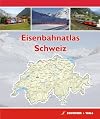
Not so much an atlas, more a work of art. Absolutely stuffed full of detailed information, clearly presented. Please, Schweers+Wall, please do an atlas for the British Isles. The only downside is, it would be sacrilege to go colouring in which lines you've been over on such superior maps as these.
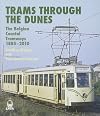
The Belgian Kustlijn is one of transport's great survivors; now billed as the world's longest tramline, it is the sole significant survivor of the legendary Vicinal interurban system. This book is an illustrated account of the line's history, and was a fascinating and informative read. But it could have been better: the formatting and photo presentation look amateurish, and the maps lack detail. What really stood out as missing, though, were any mention of what cars from the line still exist as preserved items, and where they might be seen, and, most glaring of all, no real account of the line today, showing the intending visitor where it goes and what might be seen on the way, good photo locations etc. Good but not the definitive account.
I quite like Maconie's writings - no Orwell he, but he's a genial and amusing companion around interesting places. But, lord, lord, the mistakes! Do yourself a favour, Stuart, and hire a competent research assistant, who could put you straight as to what direction Gateshead is from Newcastle, which bank of the Tyne Jarrow is on, how many countries from outside Europe played in the World Cup finals before North Korea did (even if you meant first country from East Asia, South Korea played in 1954), the dominant religion in Ethiopia ... I could go on. Actually, I think I will: the bridge used by the Metro to cross the Tyne, the name of the trophy Wigan Athletic were runners up in (NOT winners of) in 1973, the number of football clubs there have been in Accrington (you sure you're a football fan, Stuart?), Queen Victoria's first name ... The book even starts with a bogus quote from Mao Zedong.
Two stars off for shoddy research.
Two stars off for shoddy research.
I gave up on this ... it was too trendily rive-gauche leftie (and I'm a leftie myself).