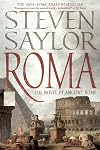
For any reader interested in the history of Early Rome (up to about 44 B.C.), one could do far worse than to start with this well-written generational saga. It traces the history of Ancient Rome before it was a twinkle in the eye of either Romulus or Aeneus.
The author, Steven Saylor, has written a series of historical detective novels that take place in Rome as well. This book is filled with the same period detail, the same eye for character, dialogue, and setting. Additionally this is one author who knows hoe to spin out a tail.
Beautifully written, at times strangely evocative, this is novel for all who want to know more about ancient Rome. The only way to learn more is to read through the books Mr. Saylor recommends in his bibliography. And this novel is a good deal easier than any of those sources
The author, Steven Saylor, has written a series of historical detective novels that take place in Rome as well. This book is filled with the same period detail, the same eye for character, dialogue, and setting. Additionally this is one author who knows hoe to spin out a tail.
Beautifully written, at times strangely evocative, this is novel for all who want to know more about ancient Rome. The only way to learn more is to read through the books Mr. Saylor recommends in his bibliography. And this novel is a good deal easier than any of those sources
 This review was written for LibraryThing Early Reviewers.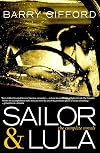
An odd and interesting compendium. The first ofbthe seven novels is probably best known because it was made into a film by David Lynch. Sometimes pointlessly violent, nearly always lurid--one is reminded of the pulp paperbacks of the fifties. There is an initial nourish charm, that doesn't really sustain a complete reading. But for noir completistsban essential compendium.
This review was written for LibraryThing Early Reviewers.
Not as dreadful as one might expect of a collection of poems written largely by prose artists for an occasion. Occasional poems are often not up to par, and so that should not come as a surprise when reading through many of these. Some are dreadful, cynical, foul-mouthed, and written merely to get a rise out of the reader, but come off deader than their subject matters.
However, some are surprisingly good and surprisingly powerful. "Beggar's Night" --"But half pas nine, flashlight batteries die,/ buzzing streetlamps flicker to silent black/ as scudding clouds blot the gibbous moon,/ manly hearts jump as small sweaty fingers/impatiently twist free from daddies' hands." That captures a moment perfectly.
Tom Disch delivers two wonderful poems, as in this excerpt from "Another Horror Flick from DeSica"--"It's odd how the undead seem unaware/ of their altered social status. The still struggle/ with their ties in the morning. . ."
The uneven quality of the poetry aside, the book is a package including some excellent pencil sketches. There is enough good here to give the seasonal reader a moment or two of something to think about and enjoy.
However, some are surprisingly good and surprisingly powerful. "Beggar's Night" --"But half pas nine, flashlight batteries die,/ buzzing streetlamps flicker to silent black/ as scudding clouds blot the gibbous moon,/ manly hearts jump as small sweaty fingers/impatiently twist free from daddies' hands." That captures a moment perfectly.
Tom Disch delivers two wonderful poems, as in this excerpt from "Another Horror Flick from DeSica"--"It's odd how the undead seem unaware/ of their altered social status. The still struggle/ with their ties in the morning. . ."
The uneven quality of the poetry aside, the book is a package including some excellent pencil sketches. There is enough good here to give the seasonal reader a moment or two of something to think about and enjoy.
This review was written for LibraryThing Early Reviewers.
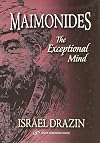
For those unacquainted with the thought of Moses Maimonides (known by various names, and one of the Great Minds of Medieval Europe), this book serves as an introduction and analysis. Focusing primarily on the rational aspects of faith, Israel Drazin explains and analyses the thought of this great philosopher and Author of _Guide for the Perplexed._
This is one of those books that you want to take time and savor. As such, I'll be posting excerpts and a continuing review as I reread at floscarmeli.stblogs.org, please feel free to join me there. But, in the meantime, if you have an interest in Jewish thought, Medieval thought, or the origins of modern thought, this book might well serve as an introduction to one of the most fascinating people of all time. It may surprise you how much we owe to this scholar and doctor.
This is one of those books that you want to take time and savor. As such, I'll be posting excerpts and a continuing review as I reread at floscarmeli.stblogs.org, please feel free to join me there. But, in the meantime, if you have an interest in Jewish thought, Medieval thought, or the origins of modern thought, this book might well serve as an introduction to one of the most fascinating people of all time. It may surprise you how much we owe to this scholar and doctor.
This review was written for LibraryThing Early Reviewers.
_Rashomon_ in 17th century England. The same events from four different narrators with four different "solutions." Nicely wrought prose and interesting characters and points of view.
First Agatha Christie in which a device she is to use frequently is introduced into the novel of unusual complexity for her usual plotting. See _Evil Under the Sun_, _Death on the Nile_, for other examples.
Known in America as _Fumerals Are Fatal_ uses one to the many A.C. plot tricks. Keep an eye on the almost murdered. See also _Peril at End House_ amongst others.

Intriguing snippets from the welsh bardic tradition. Most interesting is triad 56, which speaks of the three wives of Arthur, all of whom are named Gvenhvyuar. And for those of you who thought Arthur a goody-goody--57 gives the names of his three mistresses.
King Arthur's Death; The Middle English Stanzaic Morte Arthur and Alliterative Morte Arthure (The Library of Litera by Larry Dean Benson

Stanzaic and Aliterative Morte D'arthur
Graelendinga Saga and Eirik's Saga


Erec and Enid, Yvain, Lancelot, Cliges

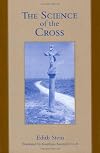
Despite the fact that Teresa Benedicta did not have time to edit the final manuscript for this book before she was hauled off to the death camps at Auschwitz, this is a brilliant, searching, and completely approachable and understandable study of the Spirituality of St. John of the Cross. A masterpiece of Carmelite Spirituality and sensibility.
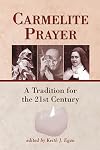
Superb collection of essays on the Carmelite tradition of prayer. While it is focused on and oriented to Carmelite spirituality, it has insights for anyone interested in broadening and deepening their relationship with God.
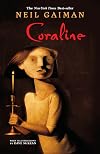
Creepy ring of changes on the alienated young-person motif. In this case she finds her way to a wonderful place within her own house only to discover that it is perhaps not so wonderful. Superb.
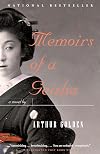
A true Victorian novel in Japanese drag. Interesting, purportedly accurate representation of life among Geishas. It is probably accurate enough from a Western point of view, but the Japanese themselves do not seem to so highly regard much of the profession
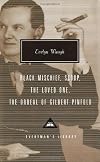
Four unbeatable novels. "The Loved One" made into a superb movie.
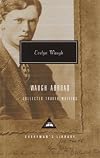
Labels, Remote People, Ninety-Two Days, Waugh in Abyssinia, Robbery Under Law, The Holy Places, A Tourist in Africa. Waugh in Abyssinia gave rise to _Black Mischief_