Very informative book. Not really flashy and the author has the unfortunate habit of referring to his own research but well documented and does a good job of following up on the many conspiracy theories and debunking them. Recommended for anyone who is interested in a deeper insight into the Lincoln assassination and the conspiracies theories surrounding it. Side note: I came away believing that there are many they should have prosecuted but didn't.
The Cosgrove Report: Being the Private Inquiry of a Pinkerton Detective Into the Death of President Lincoln by G. J. A. O'Toole
Really would like to rate this higher but frankly there are too many issues. Interesting, for me anyway, in that I knew very little about assassination conspiracy theories relating to Lincoln. The book is well researched and the information it presents is both amazing and in many cases true. Some of the characters who were involved I did not know of and learned a great deal. That is really the good. The negative is that the plot wanders, is both farcical and predictable. I think the author got to a point where he just did not know what to do with what he had created. The last half of the book IMO just fell apart. The premise is amazing, the initial direction fantastic but then it just falls apart. No spoilers but when you get to the section you will know what I mean. I would recommend it as a nice summer read but not much more.
Just finished this and not sure what to make of it. I enjoyed it, it was interesting but in the end it just left me empty. I am not sure that there was really any point and the conclusion I did draw from it was less than satisfying. Winchester writes well, is an interesting person but I never felt like he was really invested in what was going on around him. It seemed like just another trip through a chaotic war zone. Maybe after a few days I will come back and change my opinion but for now ... it's a nice read.
A short story disguised as a novel. Really too much fluff, although I liked some of Caleb Carr's other work. This one had potential, lots of points of interest and then seems to fall flat. Holmes is not really Holmesian, Watson is treated as a near equal but the book as a whole is forgettable.
Out of Character: Surprising Truths About the Liar, Cheat, Sinner (and Saint) Lurking in All of Us by David DeSteno
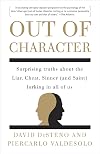
Interesting, written in a light humorous style but covering some pretty weighty topics. Lot's of research and case studies presented with reasonably well laid out conclusions and discussions of why they were chosen and what they meant. Recommended.
History, Non-Fiction, War, Politics, Vietnam War
Road to Valour: A True Story of World War II Italy, the Nazis, and the Cyclist Who Inspired a Nation by Aili McConnon
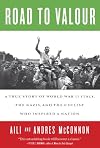
Really great story, quick to read that is well written and researched about one of the more amazing Tour de France winners. The chapters on his last major victory are especially compelling but the book moves along quickly in general. Recommended to anyone interested in WWII or feats of endurance. It left me wondering how our world could produce people with characters like that of Gino Barati (truly a courageous human) who barely earned enough to survive and yet in our current society we reward financially and famously Kanye West and Kim Kardashian who contribute nothing. Is capatalism to blame, democracy, media? Unfortunately, I didn't find answers to these questions here or even the questions. If the book had been a little more probing on what Gino Bartali or his efforts meant rather than trotting out the time worn the holocaust was terrible (it was) and thank god for unrewarded heroes like this (thank god indeed) stanza's I would have given it 5. Again very enjoyable.

For the last time, no this has nothing to do with the British Statesman. Winston Churchill was an American Author who peaked in the late 1800's. He was most famous for his historical novels and The Crisis is considered by most to be his crowning work. I enjoyed this book enough that I read two other Churchill books after, so that is saying something. In fact I went to a lot of work to find them as most of his stuff is out of print (probably all of it). This novel is built around the Civil War and is (in my opinion) a very entertaining piece of historical fiction. There is some interaction with the periods greats, some melodrama (it gets a bit soapy at times) but uses real events without being campy. Churchill tends to go over the top in some of his other stuff and the plot lines are a little less plausible (his book on the Revolutionary War Period is ridiculous) but in The Crisis he focuses on developing real characters with understandable motivations. He also manages to weave in actual people for cameo's that are fairly unobtrusive and don't distract from the novel's overall direction. I think the fact that he wrote this book less than 20 years after the end of the Civil War accounts for his ability to accurately present the emotions, the drive and decision making of the characters and plot in such a way that makes it real. I for one, really felt like I was seeing what it was actually like to live through the period. It's not a war book per se, it is more of a romantic show more thriller and does nothing to glamorize conflict and killing. Overall, I found it quite enjoyable and really wish I would have enjoyed his others half as much. show less
The Age of Wonder: The Romantic Generation and the Discovery of the Beauty and Terror of Science (Vintage) by Richard Holmes
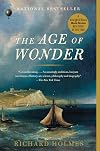
Entertaining, interesting but overall lighter fair. Simply put the author's premise I found less persuasive than his presentation of Davy's as a quack and attention seeker. The story of Caroline Herschel was really depressing though the stories of her and her brother were unknown to me. Again, more entertaining than illuminating.
Charlatan: America's Most Dangerous Huckster, the Man Who Pursued Him, and the Age of Flimflam by Pope Brock
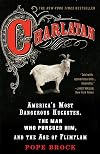
Moderately interesting story, decently written and entertaining. Not really a life changer but something nice to read as light non-fiction. Interesting in the juxtaposition of the AMA knew that big pharma has and was making drugs that were fake, that were hurting people etc. but chose to crush this guy because he didn't play by the rules. Also interesting is that you never get the sense that anyone wants to stop him because he is killing/harming people but only because he is loud and hurting "doctors" images.
Anatomy of an Epidemic: Magic Bullets, Psychiatric Drugs, and the Astonishing Rise of Mental Illness in America by Robert Whitaker

Consider this a must read for all those interested in Psychology, have anyone who they care for who is on meds or lives in America. Really, this book scratches the surface but if you really want to know why American Society is falling apart and why mass shootings happen, why there are so many unstable individuals on the streets and why things are breaking down this book reveals a great deal. Agree that it is more of an argument than an unemotional account. To me Whitaker seems angry and after reading this you will understand why. Again, highly recommended eye-opener.
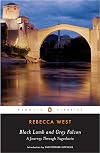
Very well worth the read. In some cases the author is bigoted, reductive and just plain wrong in her conclusions. But for a good portion of the book she provides some amazing insights, descriptive phrases and analysis that is totally relevant to today's world. This book is a sad reminder of how cultural and religious conflict has shaped our world and humanity for a thousand years. I actually found the second half of the book to be the most compelling. Once she starts to visit the smaller more remote villages and places she rises to her task.
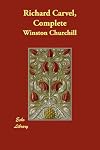
I have read several of Winston Churchill's (the American Author not the statesman) books and had looked forward to this since it previews some of the character history of his novel "The Crisis". The book is the fictional biography of a rich landowner who fought in the Revolutionary War and as is typical with Churchill you meet several key participants of the time. The main character has run-ins with John Paul Jones, George Washington and Charles Fox among other notables of the period. For me these books are a bit of a guilty pleasure, they are well written and move along (mostly) at a pretty good pace.
Personally, this particular book drug a bit in the early half of the book. There is a great deal of attention to the love story and intimate details of his gentlemanly impulses. I also thought that some of the intimacies with the
"great men" of the time were overwrought. I found that the second half of the book was something I just could not put down. There is more realistic adventure and the story, though somewhat tired, moved at a much faster pace. Overall I enjoyed the book and it certainly won't put me off Mr. Churchill.
During the reading of this it occurred to me that Churchill was kind of Alexandre Dumas light-American. He uses many of the same themes and plot devices that Dumas was the master at and also seems to endorse the same mythic good versus evil. Sadly, very few if any were Dumas's equal and the novelty of these books really is the time and location, the show more author certainly does not have Dumas's turn of phrase. I found the book overall enjoyable and an entertaining read.
By the way there is a very good Wiki page on the book that gives a detailed description of the book at https://en.wikipedia.org/wiki/Richard_Carvel show less
Personally, this particular book drug a bit in the early half of the book. There is a great deal of attention to the love story and intimate details of his gentlemanly impulses. I also thought that some of the intimacies with the
"great men" of the time were overwrought. I found that the second half of the book was something I just could not put down. There is more realistic adventure and the story, though somewhat tired, moved at a much faster pace. Overall I enjoyed the book and it certainly won't put me off Mr. Churchill.
During the reading of this it occurred to me that Churchill was kind of Alexandre Dumas light-American. He uses many of the same themes and plot devices that Dumas was the master at and also seems to endorse the same mythic good versus evil. Sadly, very few if any were Dumas's equal and the novelty of these books really is the time and location, the show more author certainly does not have Dumas's turn of phrase. I found the book overall enjoyable and an entertaining read.
By the way there is a very good Wiki page on the book that gives a detailed description of the book at https://en.wikipedia.org/wiki/Richard_Carvel show less
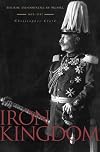
Recommendation: If you are looking for an in depth history of Prussia and pre-WWII Germany look no further. As a bonus there is a wealth of information on the Napoleonic Wars, the causes for the rise of the Third Reich and Kantian Philosophy. It takes some work but very rewarding.
Other readers have noted that this book takes a great deal of work to get "into" and I suppose that is true but it is extremely rewarding. This is not something that you sit down with and lightly read, it does take some effort and I can't imagine reading it without access to the Internet and the ability to look up many of the references. This is incredibly well researched and offers a wide range of topics to interest any historical reader. Personally, the descriptions of the enlightenment era of Frederick the Great and the strategies of the later Napoleonic Wars (presented from the Prussian viewpoint) were eye opening and I learned a great deal. I also found the section on Rosa Luxemburg and the Weimar riots excellent. Any book that forces you to delve deeper into other subjects and broaden your understanding is rare indeed and this book kept me searching. There is also a very well written discussion of the Battle of Jena-Auerstadt and you do come to understand how amazing it is that in a relatively short period of existence Prussia was amazingly influential.
Clark's premise is that the Allies over reacted by eliminating Prussia after WWII is a little more curious. After completing the book and show more rereading certain sections it seemed to me that he was even in doubt on the subject, it seemed as if the end of Prussia was both necessary and inevitable.
I really do recommend this book and will leave it off with the essential quote from Rosa Luxemburg, because any society that can produce thought this insightful deserves to be remembered:
Freedom only for the supporters of the government, only for the members of a party – however numerous they may be – is no freedom at all. Freedom is always the freedom of the dissenter. Not because of the fanaticism of "justice", but rather because all that is instructive, wholesome, and purifying in political freedom depends on this essential characteristic, and its effects cease to work when "freedom" becomes a privilege. show less
Other readers have noted that this book takes a great deal of work to get "into" and I suppose that is true but it is extremely rewarding. This is not something that you sit down with and lightly read, it does take some effort and I can't imagine reading it without access to the Internet and the ability to look up many of the references. This is incredibly well researched and offers a wide range of topics to interest any historical reader. Personally, the descriptions of the enlightenment era of Frederick the Great and the strategies of the later Napoleonic Wars (presented from the Prussian viewpoint) were eye opening and I learned a great deal. I also found the section on Rosa Luxemburg and the Weimar riots excellent. Any book that forces you to delve deeper into other subjects and broaden your understanding is rare indeed and this book kept me searching. There is also a very well written discussion of the Battle of Jena-Auerstadt and you do come to understand how amazing it is that in a relatively short period of existence Prussia was amazingly influential.
Clark's premise is that the Allies over reacted by eliminating Prussia after WWII is a little more curious. After completing the book and show more rereading certain sections it seemed to me that he was even in doubt on the subject, it seemed as if the end of Prussia was both necessary and inevitable.
I really do recommend this book and will leave it off with the essential quote from Rosa Luxemburg, because any society that can produce thought this insightful deserves to be remembered:
Freedom only for the supporters of the government, only for the members of a party – however numerous they may be – is no freedom at all. Freedom is always the freedom of the dissenter. Not because of the fanaticism of "justice", but rather because all that is instructive, wholesome, and purifying in political freedom depends on this essential characteristic, and its effects cease to work when "freedom" becomes a privilege. show less

Recommended: Anyone looking for a good general but detailed explanation of the motivations and actions before and during the American Civil War. Not much on military strategy but more focused on the how's and why's things happened.
Quick Take: The leaders of the Confederacy were fighting to preserve an economic and social order that had passed it time. The leaders of the North were fighting to create a new economic and social order. A great many fought for reasons they did not understand and great many of the liberties that Lincoln took with the Constitution (especially the suspension of it's rules were acceptable if the ends justified the means) are a good part of how America got to where it is today with the power of the President over that of the Congress and Judiciary.
This trilogy consists of The Coming Fury, The Terrible Swift Sword and Never Call Retreat. I had just finished rereading On Hallowed Ground when I came across these three sitting in a used bookstore in Arkansas.
The Coming Fury describes Lincoln's election, the events immediately prior to secession up to the first Bull Run. Catton's major emphasis in this volume is on the differences between how Lincoln viewed secession (wayward states acting illegally) as opposed to how those in the south viewed it (the founding of a new nation) and how these views affected the progression of the conflict. He maintains throughout this volume that Lincoln and others continued to believe that with a few tweaks both the show more Union and the "peculiar institution" could be saved.
The Terrible Swift Sword spends a great deal of time on the Army of the Potomac and the events in Washington between Bull Run and Sherman's foray into Georgia. Like most of the discussions of this period it presents a frustration mixture of incompetence, idiocy and at times outright lunacy. Catton presents Lincoln as a President who believes that the preservation of the Union throws out all the rules, meaning that he can ignore the constitution, the people and eventually even the rules of democracy in order to accomplish his goal. There is a lot here that portends our present situation of Presidents who flout the rights of the people and justify it by saying it is for our best. He presents Lincoln not as all knowing but as someone with a clear vision and though at times tentative, always focused on his goal. In contrast his discussions of the Southern Government shows a government that while in more than name was hamstrung by the foundation on which it was built.
Never Call Retreat takes over with the rise of U. S. Grant and the cohesion of a plan for the GAR. It is less focused on the major player's outlook and more on their reaction to circumstances that often were beyond their control. Although he remains sympathetic to Lee and Davis he makes few excuses for them and admits that both made some major mistakes. Having the advantage of time on his side it's a fairly hopeful ending, but it seems that in the 40 odd years since this was published there is a great deal that could be questioned.
Well worth the time to read them the writing is not up to "On Hallowed Ground". I got the feeling that at times the author was as tired of covering the same territory as I was reading the same descriptions. If you haven't read any of his other books and aren't heavily into American Civil War History I would start with one of the others before diving into this. On the other hand if you can find a full set at a used bookstore for $5.00 I can highly recommend it. show less
Quick Take: The leaders of the Confederacy were fighting to preserve an economic and social order that had passed it time. The leaders of the North were fighting to create a new economic and social order. A great many fought for reasons they did not understand and great many of the liberties that Lincoln took with the Constitution (especially the suspension of it's rules were acceptable if the ends justified the means) are a good part of how America got to where it is today with the power of the President over that of the Congress and Judiciary.
This trilogy consists of The Coming Fury, The Terrible Swift Sword and Never Call Retreat. I had just finished rereading On Hallowed Ground when I came across these three sitting in a used bookstore in Arkansas.
The Coming Fury describes Lincoln's election, the events immediately prior to secession up to the first Bull Run. Catton's major emphasis in this volume is on the differences between how Lincoln viewed secession (wayward states acting illegally) as opposed to how those in the south viewed it (the founding of a new nation) and how these views affected the progression of the conflict. He maintains throughout this volume that Lincoln and others continued to believe that with a few tweaks both the show more Union and the "peculiar institution" could be saved.
The Terrible Swift Sword spends a great deal of time on the Army of the Potomac and the events in Washington between Bull Run and Sherman's foray into Georgia. Like most of the discussions of this period it presents a frustration mixture of incompetence, idiocy and at times outright lunacy. Catton presents Lincoln as a President who believes that the preservation of the Union throws out all the rules, meaning that he can ignore the constitution, the people and eventually even the rules of democracy in order to accomplish his goal. There is a lot here that portends our present situation of Presidents who flout the rights of the people and justify it by saying it is for our best. He presents Lincoln not as all knowing but as someone with a clear vision and though at times tentative, always focused on his goal. In contrast his discussions of the Southern Government shows a government that while in more than name was hamstrung by the foundation on which it was built.
Never Call Retreat takes over with the rise of U. S. Grant and the cohesion of a plan for the GAR. It is less focused on the major player's outlook and more on their reaction to circumstances that often were beyond their control. Although he remains sympathetic to Lee and Davis he makes few excuses for them and admits that both made some major mistakes. Having the advantage of time on his side it's a fairly hopeful ending, but it seems that in the 40 odd years since this was published there is a great deal that could be questioned.
Well worth the time to read them the writing is not up to "On Hallowed Ground". I got the feeling that at times the author was as tired of covering the same territory as I was reading the same descriptions. If you haven't read any of his other books and aren't heavily into American Civil War History I would start with one of the others before diving into this. On the other hand if you can find a full set at a used bookstore for $5.00 I can highly recommend it. show less

Recommendation: A glimpse of what life was like for the wives and families of soldiers in the old west. Anyone looking for a light non-fiction read that moves along swiftly and will keep your attention. I enjoyed this book more than I care to admit.
Quick Summary: Certainly a different view from the historical one we have of General Custer. Elizabeth Custer was clearly not an unbiased observer of "The General" but she does make it clear that there was another side of the man that should be considered. What makes this book most interesting is not her excuses for the man but her descriptions of the daily life and her observations of all that was going on around her. The bottom line for Elizabeth is that General Custer was a good man maligned.
Elizabeth Barrett Custer was the wife of General George Armstrong Custer. Unlike many wives of the time she did not choose to remain behind in the East when her husband was assigned to Indian Territory. In this book (the first of three she penned) Mrs. Custer describes the time between their assignment to North Dakota and the fatal trip to Little Big Horn. In between she paints a descriptive and interesting picture of life on the prairie. There are limitations that must be accepted when reading this, her bias toward "The General", the time that the book was written in and the social conventions of that time but overall I found it to be a good read and quite enjoyable. At times it's hard to take some of her fawning (the men were all great show more looking and prime specimens of manhood for example) but some of the stories she tells are pretty gritty and definitely interesting.
This is another that I managed to pick up in a used book store and if you happen to stumble across it I highly recommend it. It is also available in a kindle version from Amazon. show less
Quick Summary: Certainly a different view from the historical one we have of General Custer. Elizabeth Custer was clearly not an unbiased observer of "The General" but she does make it clear that there was another side of the man that should be considered. What makes this book most interesting is not her excuses for the man but her descriptions of the daily life and her observations of all that was going on around her. The bottom line for Elizabeth is that General Custer was a good man maligned.
Elizabeth Barrett Custer was the wife of General George Armstrong Custer. Unlike many wives of the time she did not choose to remain behind in the East when her husband was assigned to Indian Territory. In this book (the first of three she penned) Mrs. Custer describes the time between their assignment to North Dakota and the fatal trip to Little Big Horn. In between she paints a descriptive and interesting picture of life on the prairie. There are limitations that must be accepted when reading this, her bias toward "The General", the time that the book was written in and the social conventions of that time but overall I found it to be a good read and quite enjoyable. At times it's hard to take some of her fawning (the men were all great show more looking and prime specimens of manhood for example) but some of the stories she tells are pretty gritty and definitely interesting.
This is another that I managed to pick up in a used book store and if you happen to stumble across it I highly recommend it. It is also available in a kindle version from Amazon. show less
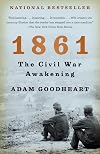
Recommendation: If you have already read Bruce Catton, Shelby Foote or any of the other major chroniclers of the Civil War and are looking for a different perspective this is the book for you. If you are just starting out it will have less resonance, read Catton first and come back to this later to get the most out of it.
Quick Take: Really solid in-depth exposure the causes and perspectives of the American Civil War. Presents some interesting perspectives for anyone interested in the emotional aspects of why Northerners ardently accepted war against their own fellow citizens.
I was really not that interested in this book to begin with as I had just finished the Bruce Catton trilogy and a book on reconstruction. Also having already read a multitude of books on the Civil War over the years - including the Shelby Foote trilogy, Shaara's "The Killer Angels", several Catton volumes and biographies on each of the major participants, I really didn't want another rehash of the causes of the war and especially not another rehash of why Lincoln was unsure or how Buchanan's cabinet was corrupt.
I need not have worried. Goodheart's excellently researched book asks interesting questions, adds a great deal of nuance and even manages to shed some light on things that Catton and others have passed over. The exposure of all this is done by asking relatively simple questions. "How does a nation of real people go from a relatively peaceful state to a willingness to engage in bloody civil war show more in just a short matter of time? What changed within the minds of individuals, never mind the political and military figures, that allowed for this to happen?"
In answering his questions the author exposes in greater detail than I have seen elsewhere the responses, motivations and actions of several lesser known characters in the drama that unfolded. His delineations of the character and outlook of Elmer Ellsworth, Benjamin Butler and Major Robert Anderson are insightful and well researched. They add the color that turns the historical work into something with the feel of a novel. While not a page turner the revelations make for interesting reading and the work moves along at a brisk pace. His somewhat sympathetic portrayal of Butler is particularly interesting, a controversial character that played a much larger role (both good and bad) in how the war played out.
Another aspect that is well dealt with is the overall impact and role of emancipation, while not an original argument the author does accept that slavery was the major motivation for the war and that despite both sides denials in the end it explains a good portion of why the war had to happen. Overall an excellent overview of the opening of the Civil War, albeit primarily from a Northern perspective and yes despite my misgivings he does explain that Buchanan's Cabinet was corrupt. This, in the end, is particularly relevant since there currently seems to be a push to re-invent Buchanan as a less inept figure in the contemporary perspective. Also recommended for anyone who is interested in this pivotal time in American History that wants to understand some of the sideshow aspects of the war's opening. I doubt there is anyone who can read the Elmer Ellsworth story and not shake their head in wonder at how it all played out. show less
Quick Take: Really solid in-depth exposure the causes and perspectives of the American Civil War. Presents some interesting perspectives for anyone interested in the emotional aspects of why Northerners ardently accepted war against their own fellow citizens.
I was really not that interested in this book to begin with as I had just finished the Bruce Catton trilogy and a book on reconstruction. Also having already read a multitude of books on the Civil War over the years - including the Shelby Foote trilogy, Shaara's "The Killer Angels", several Catton volumes and biographies on each of the major participants, I really didn't want another rehash of the causes of the war and especially not another rehash of why Lincoln was unsure or how Buchanan's cabinet was corrupt.
I need not have worried. Goodheart's excellently researched book asks interesting questions, adds a great deal of nuance and even manages to shed some light on things that Catton and others have passed over. The exposure of all this is done by asking relatively simple questions. "How does a nation of real people go from a relatively peaceful state to a willingness to engage in bloody civil war show more in just a short matter of time? What changed within the minds of individuals, never mind the political and military figures, that allowed for this to happen?"
In answering his questions the author exposes in greater detail than I have seen elsewhere the responses, motivations and actions of several lesser known characters in the drama that unfolded. His delineations of the character and outlook of Elmer Ellsworth, Benjamin Butler and Major Robert Anderson are insightful and well researched. They add the color that turns the historical work into something with the feel of a novel. While not a page turner the revelations make for interesting reading and the work moves along at a brisk pace. His somewhat sympathetic portrayal of Butler is particularly interesting, a controversial character that played a much larger role (both good and bad) in how the war played out.
Another aspect that is well dealt with is the overall impact and role of emancipation, while not an original argument the author does accept that slavery was the major motivation for the war and that despite both sides denials in the end it explains a good portion of why the war had to happen. Overall an excellent overview of the opening of the Civil War, albeit primarily from a Northern perspective and yes despite my misgivings he does explain that Buchanan's Cabinet was corrupt. This, in the end, is particularly relevant since there currently seems to be a push to re-invent Buchanan as a less inept figure in the contemporary perspective. Also recommended for anyone who is interested in this pivotal time in American History that wants to understand some of the sideshow aspects of the war's opening. I doubt there is anyone who can read the Elmer Ellsworth story and not shake their head in wonder at how it all played out. show less
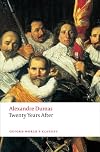
This book is often a forgotten entry in the Dumas oeuvre and that is really unfortunate. It is more than just a typical sequel, it takes place long after the original 3 Musketeers and then brilliantly back fills and recaps many events of the first novel without dragging down the new story. The plot promotes the same theories of a benevolent monarchy but subtly so and is enjoyable without considering the political ramifications of the characters motivations. All the humor and energy from the first book are there as Dumas once again shows that he belongs in the pantheon of great writers. For me, it is the occasional and casual line that the author throws in that stop you in mid-paragraph and cause you to recognize a great turn of phrase or an excellently developed scene that make this such a pleasurable read. In particular the first scene between Athos and the mother of his child.
The side benefit to all of Dumas writing is the historical recap and accuracy with which he details the period of the book. You can easily get lost in time and place while learning a good deal about European History. I suppose also that as a male, the romantic idea friendship that goes beyond political boundaries and differences carries a lot of weight as well as the ideas that truth and honor are something more than pet phrases but actually provide rules to live by, has an attraction. This is not The Count of Monte Cristo but still one of the better historical adventure books to be show more read.
Recommended to anyone who enjoyed The Count or The Three Musketeers. While a somewhat long book, don't be put off by it. It is one of those books that should be taken and drunk in slowly to appreciate the excellent writing and turn of phrase. This is a book I have come back to several times and enjoyed with each reading. show less
The side benefit to all of Dumas writing is the historical recap and accuracy with which he details the period of the book. You can easily get lost in time and place while learning a good deal about European History. I suppose also that as a male, the romantic idea friendship that goes beyond political boundaries and differences carries a lot of weight as well as the ideas that truth and honor are something more than pet phrases but actually provide rules to live by, has an attraction. This is not The Count of Monte Cristo but still one of the better historical adventure books to be show more read.
Recommended to anyone who enjoyed The Count or The Three Musketeers. While a somewhat long book, don't be put off by it. It is one of those books that should be taken and drunk in slowly to appreciate the excellent writing and turn of phrase. This is a book I have come back to several times and enjoyed with each reading. show less
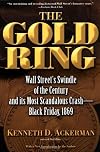
Admittedly I am a Kenneth Ackerman fan, I find his work on 19th Century America nearly faultless. It is always well researched, documented and compelling and this book is no exception. I had recently finished Grant's biography which, if you have read it, contains little more than a topographical cover of his life and times and looked to this book to get a little more meat on one of the major controversy's of his presidency. This book delivers that and much more. Grant is portrayed as naive at the least and Fisk and Gould (two of the more interesting characters of the period) are fleshed out in full order. The back story of how these two personalities worked the East Coast Financial Markets is still relevant today and the details of their machinations are worthy of a play by Shakespeare. If you are interested in the Gilded Age, the robber barons, financial markets or just human deviousness I highly recommend this book.
The Murder of Jim Fisk for the Love of Josie Mansfield: A Tragedy of the Gilded Age (American Portraits) by H. W. Brands
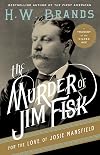
Personally, I would not call this "riveting" but would agree it is a short story. A pretty cursory view of the life and failings of Jim Fisk, one of the robber barons of the Gilded Age. Since I have more than a passing interest on the subject I have read quite a bit of this period and found this book to be a disappointment, albeit an enjoyable read. I could recommend any number of books over this one about the period or the major characters and actually got the impression that the author dashed this off in about an hour. It's not well documented nor really did I get any new insight from the book. If you are interested in this time period I would recommend that you read just about anything by Ken Ackerman particularly Boss Tweed. If you are specifically interested in James Fisk then I would point you to The Gold Ring. Both are far more interesting and informative.
I find it hard to recommend, give this a pass.
I find it hard to recommend, give this a pass.
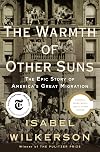
This is an depth study of the causes, impact and motivations for "The Great Migration" of African Americans out of the South into the North of the US between 1915-1970. The author follows the migration and lives after migration of 3 individuals covering 3 different decades and 3 cities and uses this to compare and contrast. The over arching themes of the book include supporting the understanding that migrants from the South were better educated, harder working and more stable than most sociologists would admit and that there is a compelling argument that these people were more like immigrants than migrants. It also offers an insightful look at individual and personal happiness based on how the individuals handled the cultural change from a personal perspective. This makes the book much more than just a social study, much more interesting because of the life lessons that are provided regarding how people adjust or don't. The all more telling side of human nature that human beings are unwilling to admit mistakes, unwilling to face realities and unable in the end to deny who they really are comes out in full force. I found the book much more interesting on the level of the personal behavior and how these people dealt with change than on the overall sociological level that was the authors stated purpose. This is a book I will undoubtedly re-visit, there is a great deal to it. I can easily recommend it.