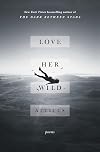
Atticus is an anonymous poet who gained online traction through his Instagram and Tumblr posts, and for the first time his work is being featured in a published paperback edition. The collection is divided into three different chapters: Love, which includes pieces about crushes, falling in love, and heartbreak; Her, detailing the beauty of a special unnamed woman who deserves great love; and Wild, a scattering of poems about travel, philosophy, and finding your true self.
I am impressed by the creative scope of his work, and admire his ability to express emotions about relationships, pride, and art that everyone will be able to relate to, combined with the typography aesthetic that has its own appeal. However, his poetry isn't particularly deep or significantly moving, and is actually quite basic. I think I would have enjoyed poetry like this back when I was twelve years old and just starting to write love poems about imaginary lovers, myself—a much simpler time in my life. The content of Love Her Wild will appeal primarily to middle-grade readers, particular preteen and teen girls, as they span the topics of pure and young love, wanderlust, and the importance of inner beauty.
That said, there are a few poems that truly stood out to me: Love could be labeled poison and we'd drink it anyways and When it comes to love we are primates breaking sticks while pointing to our hearts. There's just a charming simplicity and vulnerability to both of them. If all his poems were as show more effective as those two, I'd be much more inclined to recommend him to audiences other than teenagers.
Although in the end, this isn't fiction like I normally review but rather poetry, which is an entirely different art form; while Love Her Wild isn't groundbreaking to me, it can certainly be appreciated by anyone who knows what to make of it.
Pros: Plenty of poems to enjoy in the three different "chapters": Love, Her, and Wild // Beautiful black-and-white images in a softbound edition—would make a great gift or coffee table book // Atticus certainly has a way with words and some of the poems are touching
Cons: Much of the content is quite teen-angsty and melodramatic, attempting to be ~deep~ through simple, unstructured verse
Verdict: As Atticus's first print poetry compilation, Love Her Wild speaks to his success as an Internet-famous writer who has touched the hearts of young-and-in-love budding romantics, especially among adolescent audiences. The minimalistic style and tender words of this syrupy volume make it pleasant to read, aesthetically appealing, and highly quotable, especially through visual mediums (e.g. Instagram posts). I would not be surprised to see excerpts of Love Her Wild widely quoted in the mainstream.
Rating: 7 out of 10 hearts (3.5 stars): Not perfect, but overall enjoyable; would recommend, but borrow a copy before you buy!
Source: Complimentary copy provided by publisher in exchange for an honest and unbiased review (thank you, Atria Books!) show less
I am impressed by the creative scope of his work, and admire his ability to express emotions about relationships, pride, and art that everyone will be able to relate to, combined with the typography aesthetic that has its own appeal. However, his poetry isn't particularly deep or significantly moving, and is actually quite basic. I think I would have enjoyed poetry like this back when I was twelve years old and just starting to write love poems about imaginary lovers, myself—a much simpler time in my life. The content of Love Her Wild will appeal primarily to middle-grade readers, particular preteen and teen girls, as they span the topics of pure and young love, wanderlust, and the importance of inner beauty.
That said, there are a few poems that truly stood out to me: Love could be labeled poison and we'd drink it anyways and When it comes to love we are primates breaking sticks while pointing to our hearts. There's just a charming simplicity and vulnerability to both of them. If all his poems were as show more effective as those two, I'd be much more inclined to recommend him to audiences other than teenagers.
Although in the end, this isn't fiction like I normally review but rather poetry, which is an entirely different art form; while Love Her Wild isn't groundbreaking to me, it can certainly be appreciated by anyone who knows what to make of it.
Pros: Plenty of poems to enjoy in the three different "chapters": Love, Her, and Wild // Beautiful black-and-white images in a softbound edition—would make a great gift or coffee table book // Atticus certainly has a way with words and some of the poems are touching
Cons: Much of the content is quite teen-angsty and melodramatic, attempting to be ~deep~ through simple, unstructured verse
Verdict: As Atticus's first print poetry compilation, Love Her Wild speaks to his success as an Internet-famous writer who has touched the hearts of young-and-in-love budding romantics, especially among adolescent audiences. The minimalistic style and tender words of this syrupy volume make it pleasant to read, aesthetically appealing, and highly quotable, especially through visual mediums (e.g. Instagram posts). I would not be surprised to see excerpts of Love Her Wild widely quoted in the mainstream.
Rating: 7 out of 10 hearts (3.5 stars): Not perfect, but overall enjoyable; would recommend, but borrow a copy before you buy!
Source: Complimentary copy provided by publisher in exchange for an honest and unbiased review (thank you, Atria Books!) show less
Victoria: A novel of a young queen by the Creator/Writer of the Masterpiece Presentation on PBS by Daisy Goodwin
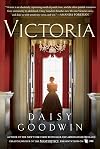
Most know her for her long-lived, powerful rule over Great Britain, but very few know her story outside of the monarchy. Victoria is a dazzling glimpse of Queen Victoria not only during her reign; rather, it covers the four-year timespan before she ever thought to ascend throne, to her first few years in.
There's a really interesting dynamic between the struggle for power that surrounds young Alexandrina (Victoria's birth name), as well as her hard-earned path to ascension. A great player in this is Lord Melbourne, Victoria's closest friend and confidante upon King William IV's death—unusual because he was 40 years her senior—who would go on to be a hugely successful mentor in Victoria's most critical years. Goodwin portrays him as a charismatic, hard-to-figure-out character, and I loved the ambiguous but wholly intriguing relationship between him and Victoria.
Victoria is also highly empowering; I loved reading about the obstacles she faced just for being a female ruler, and how she overcame them. Who would have thought, in 1837, that such a small girl, hardly a woman at eighteen, would end up ruling the world?
While well researched, this novel isn't bogged down with facts or a timeline of events that usually makes historical fiction difficult for me. It felt like a natural story, specifically about Victoria's development in her teenage years and early adulthood. It portrays the Queen in a relatable, human light—a perspective I've never seen before, and appreciate show more extremely. This is a very approachable account of the more intimate details of Victoria's life; Anglican history buffs and romance lovers alike will really enjoy this.
Pros: Story flows well and the ending is satisfying // Many points of rising action and tension // Well-fleshed characters: Victoria is easy to sympathize with and Lord Melbourne is fascinating // A great historical perspective of an endearing character
Cons: Some parts are melodramatic (not that they're overly dramatic, but the characters just act really scandalized over the smallest things) // I wish the subplot with Victoria's domineering mother had been more developed in the latter half of the book
Verdict: Less of an all-encompassing biopic and more of a glimmering coming-of-age story of one of the most powerful female rulers in history, Victoria is a historical drama that paints a vivid picture of the Queen's earliest, most transformative years. Daisy Goodwin is a natural storyteller; lovers of all things British Royalty will eat this book up. Equal parts political examination and budding romance, it left me thinking: What a beautiful novel. If you're curious about Queen Victoria as a person rather than just her political roles, go pick this up immediately.
Rating: 7 out of 10 hearts (3.5 stars): Not perfect, but overall enjoyable; would recommend, but borrow a copy before you buy!
Source: Complimentary copy provided by publicist via publisher in exchange for an honest and unbiased review (thank you, SheSpeaks and St. Martin's Press!) show less
There's a really interesting dynamic between the struggle for power that surrounds young Alexandrina (Victoria's birth name), as well as her hard-earned path to ascension. A great player in this is Lord Melbourne, Victoria's closest friend and confidante upon King William IV's death—unusual because he was 40 years her senior—who would go on to be a hugely successful mentor in Victoria's most critical years. Goodwin portrays him as a charismatic, hard-to-figure-out character, and I loved the ambiguous but wholly intriguing relationship between him and Victoria.
Victoria is also highly empowering; I loved reading about the obstacles she faced just for being a female ruler, and how she overcame them. Who would have thought, in 1837, that such a small girl, hardly a woman at eighteen, would end up ruling the world?
While well researched, this novel isn't bogged down with facts or a timeline of events that usually makes historical fiction difficult for me. It felt like a natural story, specifically about Victoria's development in her teenage years and early adulthood. It portrays the Queen in a relatable, human light—a perspective I've never seen before, and appreciate show more extremely. This is a very approachable account of the more intimate details of Victoria's life; Anglican history buffs and romance lovers alike will really enjoy this.
Pros: Story flows well and the ending is satisfying // Many points of rising action and tension // Well-fleshed characters: Victoria is easy to sympathize with and Lord Melbourne is fascinating // A great historical perspective of an endearing character
Cons: Some parts are melodramatic (not that they're overly dramatic, but the characters just act really scandalized over the smallest things) // I wish the subplot with Victoria's domineering mother had been more developed in the latter half of the book
Verdict: Less of an all-encompassing biopic and more of a glimmering coming-of-age story of one of the most powerful female rulers in history, Victoria is a historical drama that paints a vivid picture of the Queen's earliest, most transformative years. Daisy Goodwin is a natural storyteller; lovers of all things British Royalty will eat this book up. Equal parts political examination and budding romance, it left me thinking: What a beautiful novel. If you're curious about Queen Victoria as a person rather than just her political roles, go pick this up immediately.
Rating: 7 out of 10 hearts (3.5 stars): Not perfect, but overall enjoyable; would recommend, but borrow a copy before you buy!
Source: Complimentary copy provided by publicist via publisher in exchange for an honest and unbiased review (thank you, SheSpeaks and St. Martin's Press!) show less
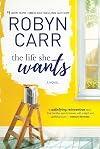
Not many authors who started off with romance can write about friendships just as well, but Robyn Carr has always been one of the queens of women's fiction in my book. A few years ago, I read and loved Four Friends so I was excited to give her newest release a try.
The Life She Wants relays the messy, complicated lives of Riley Kerrigan and Emma Shay, two women who were once inseparable, but are now no longer on speaking terms. When Emma moves back to her hometown Sebastopol filled with shame, the two women are forced to confront each other due to several interfering factors: Emma's desperate need for employment following her husband's disgraceful scandal, as well as her intimate involvement with old acquaintances who are also very close to her former best friend.
I love how elaborate details of each of their lives contributed to the main conflict, rather than having the story focus exclusively on the backstory and slow rebuilding of the friendship itself. Riley faces unique challenges, like raising her teenage daughter as a single mother and running her cleaning company, while Emma has some burdens of her own, like coming to terms with her hurtful past and facing financial turmoil, not for the first time in her life. When their lives intersect in a familiar setting, a memory-ripe town in Sonoma, California, old feelings—old grudges, disappointments, miscommunications, and apologies—begin to surface, demonstrating that although home is somewhere you can escape from, show more it's a place that never escapes you.
The cast of supporting characters is amazing, each person just as fleshed out and complex as any of Robyn Carr's characters are. The twist on the classic fairy tale this book takes is really enjoyable too; from rags to riches to rags is exactly how I'd describe it, and it's an emotionally engaging journey all throughout. While not mind-blowing, this is definitely a Cinderella story, and not the kind you've read before, either.
Pros: Great integration of each character's subplots in the main theme of rekindling friendship // Easy to read; Carr never fails to impress me with her storytelling // A beautiful modern take on Cinderella // Strong, empowering women characters that are still likable and relatable—ironically, these are often hard to find in the romance and women's fiction genres!
Cons: The ending regarding Emma's financial insecurities seems a little too inconvenient // Riley is a bit of a stubborn character; I didn't care for her playing the victim card when she's the one who betrayed Emma to begin with // Predictable in terms of outcome
Verdict: In her newest standalone novel, Robyn Carr considers a relatively unexplored topic in the women's fiction genre: two ex-best friends reconnecting in middle adulthood, and all the complications that accompany it. Featuring a multidimensional conflict, a strong ensemble of lovable characters, and the buildup of traditional small-town romance and heartbreaking family backstories we've all come to expect and love, The Life She Wants offers readers a glimmering portrait of true friendship, the meaning of forgiveness, and the value of self-worth.
Rating: 7 out of 10 hearts (3.5 stars): Not perfect, but overall enjoyable; would recommend, but borrow a copy before you buy!
Source: Complimentary copy provided by tour publicist in exchange for an honest and unbiased review (thank you, Little Bird Publicity!). show less
The Life She Wants relays the messy, complicated lives of Riley Kerrigan and Emma Shay, two women who were once inseparable, but are now no longer on speaking terms. When Emma moves back to her hometown Sebastopol filled with shame, the two women are forced to confront each other due to several interfering factors: Emma's desperate need for employment following her husband's disgraceful scandal, as well as her intimate involvement with old acquaintances who are also very close to her former best friend.
I love how elaborate details of each of their lives contributed to the main conflict, rather than having the story focus exclusively on the backstory and slow rebuilding of the friendship itself. Riley faces unique challenges, like raising her teenage daughter as a single mother and running her cleaning company, while Emma has some burdens of her own, like coming to terms with her hurtful past and facing financial turmoil, not for the first time in her life. When their lives intersect in a familiar setting, a memory-ripe town in Sonoma, California, old feelings—old grudges, disappointments, miscommunications, and apologies—begin to surface, demonstrating that although home is somewhere you can escape from, show more it's a place that never escapes you.
The cast of supporting characters is amazing, each person just as fleshed out and complex as any of Robyn Carr's characters are. The twist on the classic fairy tale this book takes is really enjoyable too; from rags to riches to rags is exactly how I'd describe it, and it's an emotionally engaging journey all throughout. While not mind-blowing, this is definitely a Cinderella story, and not the kind you've read before, either.
Pros: Great integration of each character's subplots in the main theme of rekindling friendship // Easy to read; Carr never fails to impress me with her storytelling // A beautiful modern take on Cinderella // Strong, empowering women characters that are still likable and relatable—ironically, these are often hard to find in the romance and women's fiction genres!
Cons: The ending regarding Emma's financial insecurities seems a little too inconvenient // Riley is a bit of a stubborn character; I didn't care for her playing the victim card when she's the one who betrayed Emma to begin with // Predictable in terms of outcome
Verdict: In her newest standalone novel, Robyn Carr considers a relatively unexplored topic in the women's fiction genre: two ex-best friends reconnecting in middle adulthood, and all the complications that accompany it. Featuring a multidimensional conflict, a strong ensemble of lovable characters, and the buildup of traditional small-town romance and heartbreaking family backstories we've all come to expect and love, The Life She Wants offers readers a glimmering portrait of true friendship, the meaning of forgiveness, and the value of self-worth.
Rating: 7 out of 10 hearts (3.5 stars): Not perfect, but overall enjoyable; would recommend, but borrow a copy before you buy!
Source: Complimentary copy provided by tour publicist in exchange for an honest and unbiased review (thank you, Little Bird Publicity!). show less
Behind Closed Doors: The most emotional and intriguing psychological suspense thriller you can't put down by B.A. Paris
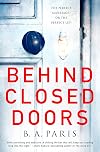
Jack and Grace Angel are the perfect couple, but from a keen eye's perspective, there are little things that are peppered throughout their marriage that raise many red flags, like Grace not even having her own cell phone (or email address), Jack's propensity to accompany Grace everywhere (including up to the door of the ladies' room), and Grace's eerily immaculate and calm exterior.
Sadly, in the book, no one sees this as particularly odd or toxic, which may reflect how domestic abuse manifests in the real world; despite actual cries for help, it may go unnoticed, or not taken seriously.
Behind Closed Doors takes a somber real-world matter and spins it into a hysterical, drama-filled novel that is narrated in alternating timelines: The Past—the first glimpses of Jack's private battery against Grace—and The Present—the buildup of Grace's plan to end it all.
Maybe I'm just desensitized to thrillers having read some very effed-up ones before, but overall I felt this book fell short of my expectations. After all, the back cover says in large red print: "Makes Gone Girl Seem Like a Fairy Tale," so I expected just that: something bigger and bolder and scarier than Gone Girl. Spoiler alert: Behind Closed Doors doesn't really measure up to Gone Girl at all. To me, it reads like a book-version of an over-the-top Lifetime movie. It revolves around an issue that shouldn't be taken lightly, but Grace's first-person narrative is pretty hard to take seriously, and all the "riveting" show more twists are quite predictable.
Are there parts that are extremely disturbing and sad? Yes. Jack is a venomous character with no chance of redemption at all, and it was hard to swallow some of his terrible actions. However, to me this was another extremely unrealistic point; characters, especially in real life, are rarely one-dimensional and I would have liked to see some conflict within his character, or maybe a dilemma between his thoughts/feelings and actions, but there was none of that. He's the big bad villain in this story, and nothing more. Grace's determination to free herself of this marital prison and plot her revenge against her husband is the almost impossible, excruciating journey readers are taken along on.
But did these disturbing scenes really keep me at the edge of my seat? I think that's the true indication of a good thriller, but unfortunately, Behind Closed Doors didn't do it for me. The so-called "scary" storyline is painfully obvious, and there is no mind-blowing twist like Gone Girl had. Grace's situation is more frustrating than suspenseful. As a reader, I felt bad for her and wanted to help her out of such a helpless situation, but I wasn't necessarily reveling in the psychological abuse.
While British author B.A. Paris's writing style is appropriately falsely cheery, it isn't wonderfully skilled. The book focuses on plain detail with no integral purpose (like paragraphs of what was served for dinner, what Grace is wearing, how long commute takes, etc.), and while the structural choice of jumbling up the past and present chapters is interesting, it can get quite confusing and seemed unnecessary.
Content-wise, Behind Closed Doors is definitely an anxiety attack kind of story: it's more the threat of death and violence that's scary about Jack's abuse, rather than the actual blood and gore itself. It doesn't really fit in the horror genre, so if you're the squeamish type, you'll be able to get through this one. But if you're easily disturbed by exaggerated threats and targeted psychological abuse, you may want to stay away.
Pros: Fast-paced, not difficult to read // Interesting timeline shifts that aren't too confusing // Original, convoluted storyline; props to B.A. Paris for creating the ultimate evil character
Cons: Writing style and narration is elementary, at best.. nothing special // Grace is an irritating character, although I do sympathize with her // There are multiple twists and turns throughout, but most of it, while pretty horrific, is barely shocking // Overall plot is too obvious; you don't have to do much guesswork based off the vague synopsis // All of the characters are flat and underdeveloped; none of them seem realistic or complex (including the main characters, Grace and Jack) // Doesn't really compare to Gone Girl, despite the rave reviews
Verdict: Behind Closed Doors is a lofty attempt at an intense psychological thriller, but reads more like a Lifetime drama about extreme emotional abuse than anything else. Part of my critique stems from the hype surrounding this novel; it isn't at all a bland read, but it's hardly "2016's answer to Gone Girl" (Women's Health), which is exactly what I was anticipating. If it had been marketed as a domestic showpiece rather than a psychological thriller that supposedly trumps Gone Girl (to reiterate: it doesn't), I may have enjoyed it more.
Rating: 6 out of 10 hearts (3 stars): Decent for a first read, but I'm not going back; this book is decidedly average (whatever that means!).
Source: Complimentary copy provided by publicist in exchange for an honest and unbiased review (thank you, Wunderkind PR!). show less
Sadly, in the book, no one sees this as particularly odd or toxic, which may reflect how domestic abuse manifests in the real world; despite actual cries for help, it may go unnoticed, or not taken seriously.
Behind Closed Doors takes a somber real-world matter and spins it into a hysterical, drama-filled novel that is narrated in alternating timelines: The Past—the first glimpses of Jack's private battery against Grace—and The Present—the buildup of Grace's plan to end it all.
Maybe I'm just desensitized to thrillers having read some very effed-up ones before, but overall I felt this book fell short of my expectations. After all, the back cover says in large red print: "Makes Gone Girl Seem Like a Fairy Tale," so I expected just that: something bigger and bolder and scarier than Gone Girl. Spoiler alert: Behind Closed Doors doesn't really measure up to Gone Girl at all. To me, it reads like a book-version of an over-the-top Lifetime movie. It revolves around an issue that shouldn't be taken lightly, but Grace's first-person narrative is pretty hard to take seriously, and all the "riveting" show more twists are quite predictable.
Are there parts that are extremely disturbing and sad? Yes. Jack is a venomous character with no chance of redemption at all, and it was hard to swallow some of his terrible actions. However, to me this was another extremely unrealistic point; characters, especially in real life, are rarely one-dimensional and I would have liked to see some conflict within his character, or maybe a dilemma between his thoughts/feelings and actions, but there was none of that. He's the big bad villain in this story, and nothing more. Grace's determination to free herself of this marital prison and plot her revenge against her husband is the almost impossible, excruciating journey readers are taken along on.
But did these disturbing scenes really keep me at the edge of my seat? I think that's the true indication of a good thriller, but unfortunately, Behind Closed Doors didn't do it for me. The so-called "scary" storyline is painfully obvious, and there is no mind-blowing twist like Gone Girl had. Grace's situation is more frustrating than suspenseful. As a reader, I felt bad for her and wanted to help her out of such a helpless situation, but I wasn't necessarily reveling in the psychological abuse.
While British author B.A. Paris's writing style is appropriately falsely cheery, it isn't wonderfully skilled. The book focuses on plain detail with no integral purpose (like paragraphs of what was served for dinner, what Grace is wearing, how long commute takes, etc.), and while the structural choice of jumbling up the past and present chapters is interesting, it can get quite confusing and seemed unnecessary.
Content-wise, Behind Closed Doors is definitely an anxiety attack kind of story: it's more the threat of death and violence that's scary about Jack's abuse, rather than the actual blood and gore itself. It doesn't really fit in the horror genre, so if you're the squeamish type, you'll be able to get through this one. But if you're easily disturbed by exaggerated threats and targeted psychological abuse, you may want to stay away.
Pros: Fast-paced, not difficult to read // Interesting timeline shifts that aren't too confusing // Original, convoluted storyline; props to B.A. Paris for creating the ultimate evil character
Cons: Writing style and narration is elementary, at best.. nothing special // Grace is an irritating character, although I do sympathize with her // There are multiple twists and turns throughout, but most of it, while pretty horrific, is barely shocking // Overall plot is too obvious; you don't have to do much guesswork based off the vague synopsis // All of the characters are flat and underdeveloped; none of them seem realistic or complex (including the main characters, Grace and Jack) // Doesn't really compare to Gone Girl, despite the rave reviews
Verdict: Behind Closed Doors is a lofty attempt at an intense psychological thriller, but reads more like a Lifetime drama about extreme emotional abuse than anything else. Part of my critique stems from the hype surrounding this novel; it isn't at all a bland read, but it's hardly "2016's answer to Gone Girl" (Women's Health), which is exactly what I was anticipating. If it had been marketed as a domestic showpiece rather than a psychological thriller that supposedly trumps Gone Girl (to reiterate: it doesn't), I may have enjoyed it more.
Rating: 6 out of 10 hearts (3 stars): Decent for a first read, but I'm not going back; this book is decidedly average (whatever that means!).
Source: Complimentary copy provided by publicist in exchange for an honest and unbiased review (thank you, Wunderkind PR!). show less
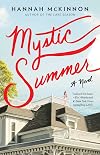
When she's blindsided by a trio of seemingly unconnected events—her best friend Erika's summer wedding, a heartbreaking potential layoff, and a chance run-in with an ex-boyfriend, Cam—Maggie Griffin has no idea that she's just embarked on a summer that will change her life and cause her to question everything she holds dear.
A devoted Boston resident, she makes the decision to return to her hometown of Mystic for the summer while she figures her life out, and that's when things start to fall apart... and together.
Personally I wasn't convinced by Maggie's relationship with her boyfriend, Evan. It seemed like a prop to make her relationship with Cam more complicated, but overall it seemed very cliché (and in the end, pretty obvious who she would choose). On the other end of the spectrum, her relationship with Cam is much more realistic with more depth, and I loved the complex feelings that arose from her struggle to come to terms with possibly still being in love with her first love.
Reminiscent of the Hamptons, Mystic resides on the sleepy Connecticut coast which makes for a rich summer backdrop with plenty of nostalgia and plenty of heart. I love the evocative descriptions of Maggie's childhood, glimpses into her friendships and family life. It made her seem like such a real, flawed person. She's an easy main character to sympathize with, although at times I felt she sounds slightly standoffish in the way she looks down on people. She tends to isolate herself and make show more others feel bad for her for it; she is a self-proclaimed outsider, being the last of her friends group to be married, and more disappointingly, with no actual plans to anytime soon.
Hannah McKinnon, however, is no amateur at characterization. Most of Maggie's shortcomings seem intentional, and the other characters such as Cam, Erika, and her family members, are all so well developed, almost painfully so. I can't get enough of McKinnon's writing style either—the perfect mix of breezy and sophisticated, yet also modern and trendy, setting an appropriate foundation for the book.
Mystic Summer is not necessarily a romance story, but more a journey of self-discovery that women's fiction lovers will rejoice in. It is the story of the fresh-faced Maggie's dilemma as she is faced with a choice that could lead to two very separate paths.
Pros: Beautifully written, with wonderful attention to literary detail // I'm a sucker for the "past lovers reunite" trope // Cam's background and his new start in Mystic is intriguing, and definitely my favorite plot point // Perfect beach reading—easy and uncomplicated // Light and airy tone gives it an apt summer vibe, although it's introspective and profound where it needs to be
Cons: I grew tired of Maggie's narration pretty quickly; wish we could have gotten other perspectives, like from Cam, Erika, or even Jane (her older sister) // The side plot with Evan, Maggie's current boyfriend, is a bit exasperating—the romance with Cam could have easily been a better and more realistic story without a current (and utterly forgettable) boyfriend in the way
Verdict: Imagine yachts, the seaside, and salty air—Mystic Summer perfectly embodies the warm-weather beach read, telling the story of a very ordinary girl, faced with a very extraordinary decision to make: hold tight to the life she's worked so hard to build, or let go and allow room for something better. Hannah McKinnon's gorgeous literary flow pairs well with this wistful New England backdrop to create a warmhearted and thoughtful novel about settling down, the keeping of friends, and self-knowledge.
Rating: 8 out of 10 hearts (4 stars): An engaging read that will be worth your while; highly recommended.
Source: Complimentary copy provided by tour publicist via publisher in exchange for an honest and unbiased review (thank you, TLC Book Tours and Atria Books!). show less
A devoted Boston resident, she makes the decision to return to her hometown of Mystic for the summer while she figures her life out, and that's when things start to fall apart... and together.
Personally I wasn't convinced by Maggie's relationship with her boyfriend, Evan. It seemed like a prop to make her relationship with Cam more complicated, but overall it seemed very cliché (and in the end, pretty obvious who she would choose). On the other end of the spectrum, her relationship with Cam is much more realistic with more depth, and I loved the complex feelings that arose from her struggle to come to terms with possibly still being in love with her first love.
Reminiscent of the Hamptons, Mystic resides on the sleepy Connecticut coast which makes for a rich summer backdrop with plenty of nostalgia and plenty of heart. I love the evocative descriptions of Maggie's childhood, glimpses into her friendships and family life. It made her seem like such a real, flawed person. She's an easy main character to sympathize with, although at times I felt she sounds slightly standoffish in the way she looks down on people. She tends to isolate herself and make show more others feel bad for her for it; she is a self-proclaimed outsider, being the last of her friends group to be married, and more disappointingly, with no actual plans to anytime soon.
Hannah McKinnon, however, is no amateur at characterization. Most of Maggie's shortcomings seem intentional, and the other characters such as Cam, Erika, and her family members, are all so well developed, almost painfully so. I can't get enough of McKinnon's writing style either—the perfect mix of breezy and sophisticated, yet also modern and trendy, setting an appropriate foundation for the book.
Mystic Summer is not necessarily a romance story, but more a journey of self-discovery that women's fiction lovers will rejoice in. It is the story of the fresh-faced Maggie's dilemma as she is faced with a choice that could lead to two very separate paths.
Pros: Beautifully written, with wonderful attention to literary detail // I'm a sucker for the "past lovers reunite" trope // Cam's background and his new start in Mystic is intriguing, and definitely my favorite plot point // Perfect beach reading—easy and uncomplicated // Light and airy tone gives it an apt summer vibe, although it's introspective and profound where it needs to be
Cons: I grew tired of Maggie's narration pretty quickly; wish we could have gotten other perspectives, like from Cam, Erika, or even Jane (her older sister) // The side plot with Evan, Maggie's current boyfriend, is a bit exasperating—the romance with Cam could have easily been a better and more realistic story without a current (and utterly forgettable) boyfriend in the way
Verdict: Imagine yachts, the seaside, and salty air—Mystic Summer perfectly embodies the warm-weather beach read, telling the story of a very ordinary girl, faced with a very extraordinary decision to make: hold tight to the life she's worked so hard to build, or let go and allow room for something better. Hannah McKinnon's gorgeous literary flow pairs well with this wistful New England backdrop to create a warmhearted and thoughtful novel about settling down, the keeping of friends, and self-knowledge.
Rating: 8 out of 10 hearts (4 stars): An engaging read that will be worth your while; highly recommended.
Source: Complimentary copy provided by tour publicist via publisher in exchange for an honest and unbiased review (thank you, TLC Book Tours and Atria Books!). show less
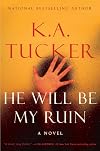
Maggie's life has always been a privileged breeze, being the sole heiress to Sparkes Energy and all. Money has never been a roadblock for her because she's always had it. Her best friend from childhood on the other hand, Celine, led a different life. A life so veiled and desperate that Maggie knew nothing about until discovering her old diaries in the wake of her purported suicide.
Upon hearing the news, Maggie uproots herself from her charity work—a self-professed duty only to combat the immorality of her family's money-grubbing energy empire—and moves into Celine's Manhattan apartment to help pack up her belongings. An antiques fanatic at heart and appraiser by trade, Celine left behind pieces that must amass to a fortune, and it's Maggie's responsibility to take care of it all. It isn't until she discovers tidbits of Celine's private life and the things she did to survive in the nasty slew of the city, that Maggie's suspicions that Celine's death was not a suicide are confirmed. Celine had so much going for her, so much to look forward to, both in her professional and personal life. Immediately, Maggie points her finger in the direction of murder, and sets off to find out everything she can about Celine's secret lover—the man she claims was her ruin.
He Will Be My Ruin spins the tragedy of an unexpected death into a murder mystery that unfolds with a furor. Maggie is determined to go to any length to find out the truth about her best friend, unknowingly stepping show more straight into the high-risk, greed-fueled minefield that got Celine killed in the first place. K.A. Tucker knows how to tell a suspenseful story; the plot moves quickly with surprising discoveries and dark revelations peppered throughout, as Maggie enters this unfamiliar, dangerous game.
I had no trouble getting through this book, and was definitely satisfied with its unpredictable outcome and frequent red herrings. So many complicated facets of Maggie's and Celine's lives are introduced to the backdrop of the crime, so while reading, there is no knowing of what matters in the case, and what has no relevance at all. A sizzling romantic distraction muddles Maggie's focus and creates a conflict of interest, while the emotional disaster she experiences when finding out about Celine's secret life almost destroys her.
That said, I wasn't particularly affected by most of the layers of the story. The emotional tragedy, I understood, and the unraveling of Celine's murderer, I found chilling, but after I finished the book I felt like not much stuck with me. The characters are rather simple and formulaic (with the exception of the late Celine, who always finds a way to surprise the reader), and Tucker's writing style rather gratuitous with lots of superficial details. Regardless, it's an enjoyable story overall that will have you squirming in the moment as Maggie narrows down the harrowing possibilities in her crime-solving spree.
In the end, she is forced to confront the scariest reality of them all: that the one person she trusted could be the person she should most fear, and that when it comes to murder, money, and sex, nothing is really what it seems to be on the surface.
Pros: Detailed and thorough in narration // Characters are deeply explored // Suspenseful, fast-paced // Lots of factors introduced that make the mystery unpredictable and complicated // Simple and easy to navigate structurally
Cons: Writing style, while effective, is slightly amateurish // I felt like I understood the characters well, but didn't really like any of them
Verdict: He Will Be My Ruin combines a blazing tumble of a romance with an emotionally charged murder mystery. Brimming with shocking discoveries and an ominous "sleeping with the enemy" vibe, K.A. Tucker's newest novel grapples with themes of morals and guilt, despair and desperation, and the fine hazards of money and art. While I didn't find this book to be mind-blowing, I guarantee it will keep you glued to its pages until Maggie's mission is complete... if it even ends well, that is.
8 hearts: An engaging read that will be worth your while; highly recommended.
Source: Complimentary copy provided by tour publicist via publisher in exchange for an honest and unbiased review (thank you, TLC Book Tours and Atria Books!). show less
Upon hearing the news, Maggie uproots herself from her charity work—a self-professed duty only to combat the immorality of her family's money-grubbing energy empire—and moves into Celine's Manhattan apartment to help pack up her belongings. An antiques fanatic at heart and appraiser by trade, Celine left behind pieces that must amass to a fortune, and it's Maggie's responsibility to take care of it all. It isn't until she discovers tidbits of Celine's private life and the things she did to survive in the nasty slew of the city, that Maggie's suspicions that Celine's death was not a suicide are confirmed. Celine had so much going for her, so much to look forward to, both in her professional and personal life. Immediately, Maggie points her finger in the direction of murder, and sets off to find out everything she can about Celine's secret lover—the man she claims was her ruin.
He Will Be My Ruin spins the tragedy of an unexpected death into a murder mystery that unfolds with a furor. Maggie is determined to go to any length to find out the truth about her best friend, unknowingly stepping show more straight into the high-risk, greed-fueled minefield that got Celine killed in the first place. K.A. Tucker knows how to tell a suspenseful story; the plot moves quickly with surprising discoveries and dark revelations peppered throughout, as Maggie enters this unfamiliar, dangerous game.
I had no trouble getting through this book, and was definitely satisfied with its unpredictable outcome and frequent red herrings. So many complicated facets of Maggie's and Celine's lives are introduced to the backdrop of the crime, so while reading, there is no knowing of what matters in the case, and what has no relevance at all. A sizzling romantic distraction muddles Maggie's focus and creates a conflict of interest, while the emotional disaster she experiences when finding out about Celine's secret life almost destroys her.
That said, I wasn't particularly affected by most of the layers of the story. The emotional tragedy, I understood, and the unraveling of Celine's murderer, I found chilling, but after I finished the book I felt like not much stuck with me. The characters are rather simple and formulaic (with the exception of the late Celine, who always finds a way to surprise the reader), and Tucker's writing style rather gratuitous with lots of superficial details. Regardless, it's an enjoyable story overall that will have you squirming in the moment as Maggie narrows down the harrowing possibilities in her crime-solving spree.
In the end, she is forced to confront the scariest reality of them all: that the one person she trusted could be the person she should most fear, and that when it comes to murder, money, and sex, nothing is really what it seems to be on the surface.
Pros: Detailed and thorough in narration // Characters are deeply explored // Suspenseful, fast-paced // Lots of factors introduced that make the mystery unpredictable and complicated // Simple and easy to navigate structurally
Cons: Writing style, while effective, is slightly amateurish // I felt like I understood the characters well, but didn't really like any of them
Verdict: He Will Be My Ruin combines a blazing tumble of a romance with an emotionally charged murder mystery. Brimming with shocking discoveries and an ominous "sleeping with the enemy" vibe, K.A. Tucker's newest novel grapples with themes of morals and guilt, despair and desperation, and the fine hazards of money and art. While I didn't find this book to be mind-blowing, I guarantee it will keep you glued to its pages until Maggie's mission is complete... if it even ends well, that is.
8 hearts: An engaging read that will be worth your while; highly recommended.
Source: Complimentary copy provided by tour publicist via publisher in exchange for an honest and unbiased review (thank you, TLC Book Tours and Atria Books!). show less
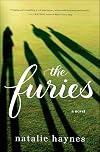
Theater director Alex Morris flees to Edinburgh in wake of her fiancé's brutal, unexpected death, seeking the position of a grade school drama teacher as refuge. But her background is not education, and this is no ordinary school; dubbed "The Unit," this alternative learning center takes in teenagers who have nowhere else to go, other than correctional facilities. The most troubled of these students, the oldest of the bunch, stand out to Alex as the darkest, the most mysterious, even though on the surface, they just seem like normal, albeit temperamental, adolescents.
The anxieties of a novice teacher and both the languid aftermath of tragedy are excellently portrayed through Alex's first-person voice. Although her character is rather stale and boring, I could easily relate to her concern for the troubled students, and her grief over her fiancé. When one particular student's interest is piqued by this newcomer teacher, Alex finds herself in a freaky whirlwind of events where the haunting tragedy of her past and the eerie environment of The Unit intersect.
Based loosely off Agamemnon and incorporating other Greek mythological symbols and themes into the plot line, The Furies is a provocative account of the danger of obsession and curiosity and the urgency for vengeance. Greek tragedies are discussed in vivid detail in Alex's classroom lessons, which I found fascinating. However, overall I found this book to be rather disappointing because it is lacking just a hair in every show more other area: a relatable but oftentimes lifeless protagonist, intriguing yet shallowly written character relationships, and a back-and-forth narration that had potential, but was ultimately exhausting.
Told in alternating past and present narratives, The Furies slowly unravels what happened before, and what happened after, but doesn't reveal what actually happened, until the near-end in a rather unexciting climax. I felt the tension regarding the uneasiness surrounding the students is well conveyed, but the "terrible and irrevocable fury" is not what I expected. The dark twist isn't necessarily predictable, but it just isn't thrilling, especially after all the long, slow (veerry slow) rising action that precedes it.
Pros: Incredible suspense created // Original, vibrant plot // Characters are memorable and entirely take on their own personalities within the story
Cons: Rather flat climax and ending // Past/present narratives are confusing // Slowly paced // As much as I loved the basic plot, I just don't think it was executed phenomenally; overall, I just didn't find it as electrifying as I expected it to be // Alex's voice is monotonous—it just didn't capture my attention most of the time
Verdict: Tied closely to common themes of Greek tragedy including revenge, fate vs. free will, and obsession, The Furies is a compelling exploration of the power that comes with awareness and education, as well as the power of naïve youth. While I found this novel to be thought-provoking in its discussion of grief and humanity, the thriller aspects were lost on me because of the rather anticlimactic ending—it could have been accomplished more cleverly. Regardless, Natalie Haynes's unusual plot and smooth-flowing storytelling combine memorably in this debut; it's certainly unlike any other book I've read before.
Rating: 6 out of 10 hearts (3 stars): Decent for a first read, but I'm not going back; this book is decidedly average (whatever that means!).
Source: Complimentary copy provided by publisher in exchange for an honest and unbiased review (thank you, St. Martin's Press!). show less
The anxieties of a novice teacher and both the languid aftermath of tragedy are excellently portrayed through Alex's first-person voice. Although her character is rather stale and boring, I could easily relate to her concern for the troubled students, and her grief over her fiancé. When one particular student's interest is piqued by this newcomer teacher, Alex finds herself in a freaky whirlwind of events where the haunting tragedy of her past and the eerie environment of The Unit intersect.
Based loosely off Agamemnon and incorporating other Greek mythological symbols and themes into the plot line, The Furies is a provocative account of the danger of obsession and curiosity and the urgency for vengeance. Greek tragedies are discussed in vivid detail in Alex's classroom lessons, which I found fascinating. However, overall I found this book to be rather disappointing because it is lacking just a hair in every show more other area: a relatable but oftentimes lifeless protagonist, intriguing yet shallowly written character relationships, and a back-and-forth narration that had potential, but was ultimately exhausting.
Told in alternating past and present narratives, The Furies slowly unravels what happened before, and what happened after, but doesn't reveal what actually happened, until the near-end in a rather unexciting climax. I felt the tension regarding the uneasiness surrounding the students is well conveyed, but the "terrible and irrevocable fury" is not what I expected. The dark twist isn't necessarily predictable, but it just isn't thrilling, especially after all the long, slow (veerry slow) rising action that precedes it.
Pros: Incredible suspense created // Original, vibrant plot // Characters are memorable and entirely take on their own personalities within the story
Cons: Rather flat climax and ending // Past/present narratives are confusing // Slowly paced // As much as I loved the basic plot, I just don't think it was executed phenomenally; overall, I just didn't find it as electrifying as I expected it to be // Alex's voice is monotonous—it just didn't capture my attention most of the time
Verdict: Tied closely to common themes of Greek tragedy including revenge, fate vs. free will, and obsession, The Furies is a compelling exploration of the power that comes with awareness and education, as well as the power of naïve youth. While I found this novel to be thought-provoking in its discussion of grief and humanity, the thriller aspects were lost on me because of the rather anticlimactic ending—it could have been accomplished more cleverly. Regardless, Natalie Haynes's unusual plot and smooth-flowing storytelling combine memorably in this debut; it's certainly unlike any other book I've read before.
Rating: 6 out of 10 hearts (3 stars): Decent for a first read, but I'm not going back; this book is decidedly average (whatever that means!).
Source: Complimentary copy provided by publisher in exchange for an honest and unbiased review (thank you, St. Martin's Press!). show less
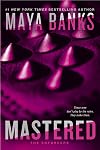
DNF @ 27%
I'm going to preface this review by acknowledging how painful it is to write. Maya Banks's KGI series is one of my favorite romantic suspense series ever, so I was over the moon when given the opportunity to give her newest series, The Enforcers, a shot.
Unfortunately, I have almost nothing good to say about Mastered, the first book in the series. I can't bash it completely or discredit her as an author because I know what she's capable of, but Mastered is a cheap, clichéd Fifty Shades knockoff, featuring even more despicable characters and written in as equally ridiculous writing style.
Mastered begins with Evangeline (literally, "angel") stuck in a wonderfully stupid scenario: her best friends/roommates collectively dolling her up for a night at Impulse, the most exclusive and expensive club in all of New York; of course, this is accompanied by some of the worst monologues of vain, gratuitous compliment barf I've ever read:
"You look hot. And I don't say that as your best friend trying to make you feel better about yourself. I say that as another female who is aware that a much hotter female is in her territory and I'd like to scratch her eyes out because I know I don't have a chance in hell of looking as good as she does."
"You don't get it, Vangie. And hell, I think that's half the turn-on for guys. You have no clue how beautiful you are. You're all big eyes, gorgeous hair, a figure to die for and you're good and sweet to your soul. If you had any hint of show more interest, you'd have men tripping over themselves to get next to you. They'd treat you like the queen you deserve to be treated as, but you honestly have no idea and that just makes them want you even more."
And of course, Evangeline bats these "you're sooooo hot" statements away—the innocent, doe-eyed, clueless saint she is:
[She] shook her head, utterly baffled. "You guys are crazy. I'm a twenty-three-year-old recently ex-virgin who's as gauche as they. I'm barely off the farm and have a southern drawl that makes New Yorkers roll their eyes and want to pat me on the head and say, 'Well, bless your heart.'"
Because we couldn't just have a flawless bombshell main character; we needed a completely un-self-realized idiot bombshell main character.
This huge night at Impulse is solely for the purpose of pissing off her abusive ex-boyfriend, Eddie, whom they know will be at the club that night, to "show him what he missed out on." As if that isn't immature enough, her friends are sending her alone, via taxi, because they only have one VIP pass among the five of them. Already, this is sounding like a bad teen rom-com, because there has to be a punchline to it. But there isn't. A girl alone in a dark sex club to confront her maniacal jackass ex? At least her friends are looking out for her safety. (The sex club part is a spoiler technically, but it won't spoil anything for you because it really is irrelevant).
The owner of Impulse, of course, is the predatory, unstable, neurotic Drake Donovan, who isn't only strong, tall, and handsome, but also rich, powerful, mean, and dominant in every which way, including in the bedroom. Oooh. Drake notices Evangeline standing out in Impulse like a sore thumb (hello? She's completely insecure and alone!) and it's love at first sight. He knows she's different, worth fighting for, etc. Just by looking at her from afar.
My immediate problem with Drake was not his all-encompassing dominant personality, but his utter lack of reason or manners. Yes, he's obviously a Dom who gets whatever he wants because he knows he can, but at the expense of treating others disrespectfully and being a temperamental dickhead. Drake treats any woman who isn't Evangeline like garbage, with very little forethought that goes into his infuriating thoughts and actions. Not sexy, not cute:
"Oh, I know damn well what I'm passing on," he drawled. "And I couldn't be any less interested in a skank who throws herself at me with promises to please me when the very sight of you displeases me very much."
Normally I would have powered on, but when Drake pretty much sexually assaults Evangeline upon their first meeting—yes, first—and it's supposed to be a sexy scene, but is so poorly written that it wouldn't have been sexy anyway, I knew at that moment that I couldn't give this book more than 1 star. It was just too outrageous (unrealistic, weird, strangely and coarsely executed) for me to continue.
I stopped reading completely when Drake, upon their second meeting, offers Evangeline a magical, optimistic solution to her current woes, including a new place to live (for free), complete responsibility over her financial worries, as well as her family's, and her roommates' (since they will be short one person's portion of rent if Evangeline moves in with him, after all), AND spoil her materialistically AND give her the best sex of her life. ...What? Literally, he spits out one paragraph saying all this and I knew I was done.
I wish I could tell you that it gets better, or the characters get some sense knocked into them, or the sex scenes improve, but alas, 100 or so pages in, I was faced with the same frustrating, static story, so I gave up. I don't know how the book ends, other than that there's a cliffhanger ending since the sequel, Dominated, is a direct continuation of Mastered—which I find distressing—so I can't comment on the broader story elements, such as the climax or ending. I have very little motivation to find out however, and when I finally put this book down, I was overcome with a giant wave of relief.
Pros: I thought I was a Maya Banks fan before this—it's really making me rethink my position though // Intriguing (albeit unoriginal) plot that had potential
Cons: Everything else. Every single thing.
Here's a collection of my favorite quotes due to their WTF-ness. I stopped at three because Drake's unreasonably hilarious behavior just goes on and on and on; consider this section a preview. It's NSFW, but mostly because you'll be laughing very hard which will make your boss and coworkers very suspicious. Unfortunately, it's also actually NSFW (warning: poorly executed smut ahead) so you don't want to be caught reading this in public:
"He sat her ass on the edge of his desk and with an impatient gesture, he swept the surface of his work area clean, knocking the contents to the floor. Shit scattered in all directions and her eyes widened, her pupils dilated so that only a thin ring of blue circled the black orbs as she stared warily at him.
Not only does this start off with a stock scene from any B-grade office porno, but that dilation thing just freaks me out. My pupils looked like that the one time I tried LSD, and it wasn't as angelic as the author makes it out to be.
It had taken every ounce of his restraint not to tear his pants down and plunge so deeply into her that she would feel him to her soul.
She would feel him TO HER SOUL. Because his peter's that big. Ha ha. Get it??
He was becoming more pissed by the minute, and he was seething as he stared at her. The idea of those bastards putting their hands on what he'd already claimed, fondling her, disrespecting her, had his teeth on edge, and his temper, already bad enough, was becoming overwhelmingly foul.
To provide some context, this is all in response to finding out that Evangeline works a night job as a bartender. A FREAKIN' BARTENDER. And this is literally the second time they've met, and he's already marked her as "what he'd already claimed." This dude has no chill.
Verdict: A nasty "hero," a moronic heroine, unintentionally comical dialogue, and a ludicrous storyline all litter this first installment of The Enforcers. Full of clichéd scenes, overused phrases, and a completely unoriginal and unappealing plot, Mastered is not Maya Banks's best work. Not only did I find the story untolerable, but also the writing unrefined and unseasoned. I'm sure there are authors out there who could have made even this smutty, absurd plot work, but Banks is not one of them. I cannot recommend Mastered to any audience—even romance and BDSM lovers won't find much to enjoyment in this—and I'm glad I didn't bother finishing it; reading this was ever only bad for my blood pressure.
Rating: 2 out of 10 hearts (1 star): A lost cause for me, although it may not be for others; did not finish and did not enjoy.
Source: Complimentary copy provided by publicist in exchange for an honest and unbiased review (thank you, Sullivan and Partners!). show less
I'm going to preface this review by acknowledging how painful it is to write. Maya Banks's KGI series is one of my favorite romantic suspense series ever, so I was over the moon when given the opportunity to give her newest series, The Enforcers, a shot.
Unfortunately, I have almost nothing good to say about Mastered, the first book in the series. I can't bash it completely or discredit her as an author because I know what she's capable of, but Mastered is a cheap, clichéd Fifty Shades knockoff, featuring even more despicable characters and written in as equally ridiculous writing style.
Mastered begins with Evangeline (literally, "angel") stuck in a wonderfully stupid scenario: her best friends/roommates collectively dolling her up for a night at Impulse, the most exclusive and expensive club in all of New York; of course, this is accompanied by some of the worst monologues of vain, gratuitous compliment barf I've ever read:
"You look hot. And I don't say that as your best friend trying to make you feel better about yourself. I say that as another female who is aware that a much hotter female is in her territory and I'd like to scratch her eyes out because I know I don't have a chance in hell of looking as good as she does."
"You don't get it, Vangie. And hell, I think that's half the turn-on for guys. You have no clue how beautiful you are. You're all big eyes, gorgeous hair, a figure to die for and you're good and sweet to your soul. If you had any hint of show more interest, you'd have men tripping over themselves to get next to you. They'd treat you like the queen you deserve to be treated as, but you honestly have no idea and that just makes them want you even more."
And of course, Evangeline bats these "you're sooooo hot" statements away—the innocent, doe-eyed, clueless saint she is:
[She] shook her head, utterly baffled. "You guys are crazy. I'm a twenty-three-year-old recently ex-virgin who's as gauche as they. I'm barely off the farm and have a southern drawl that makes New Yorkers roll their eyes and want to pat me on the head and say, 'Well, bless your heart.'"
Because we couldn't just have a flawless bombshell main character; we needed a completely un-self-realized idiot bombshell main character.
This huge night at Impulse is solely for the purpose of pissing off her abusive ex-boyfriend, Eddie, whom they know will be at the club that night, to "show him what he missed out on." As if that isn't immature enough, her friends are sending her alone, via taxi, because they only have one VIP pass among the five of them. Already, this is sounding like a bad teen rom-com, because there has to be a punchline to it. But there isn't. A girl alone in a dark sex club to confront her maniacal jackass ex? At least her friends are looking out for her safety. (The sex club part is a spoiler technically, but it won't spoil anything for you because it really is irrelevant).
The owner of Impulse, of course, is the predatory, unstable, neurotic Drake Donovan, who isn't only strong, tall, and handsome, but also rich, powerful, mean, and dominant in every which way, including in the bedroom. Oooh. Drake notices Evangeline standing out in Impulse like a sore thumb (hello? She's completely insecure and alone!) and it's love at first sight. He knows she's different, worth fighting for, etc. Just by looking at her from afar.
My immediate problem with Drake was not his all-encompassing dominant personality, but his utter lack of reason or manners. Yes, he's obviously a Dom who gets whatever he wants because he knows he can, but at the expense of treating others disrespectfully and being a temperamental dickhead. Drake treats any woman who isn't Evangeline like garbage, with very little forethought that goes into his infuriating thoughts and actions. Not sexy, not cute:
"Oh, I know damn well what I'm passing on," he drawled. "And I couldn't be any less interested in a skank who throws herself at me with promises to please me when the very sight of you displeases me very much."
Normally I would have powered on, but when Drake pretty much sexually assaults Evangeline upon their first meeting—yes, first—and it's supposed to be a sexy scene, but is so poorly written that it wouldn't have been sexy anyway, I knew at that moment that I couldn't give this book more than 1 star. It was just too outrageous (unrealistic, weird, strangely and coarsely executed) for me to continue.
I stopped reading completely when Drake, upon their second meeting, offers Evangeline a magical, optimistic solution to her current woes, including a new place to live (for free), complete responsibility over her financial worries, as well as her family's, and her roommates' (since they will be short one person's portion of rent if Evangeline moves in with him, after all), AND spoil her materialistically AND give her the best sex of her life. ...What? Literally, he spits out one paragraph saying all this and I knew I was done.
I wish I could tell you that it gets better, or the characters get some sense knocked into them, or the sex scenes improve, but alas, 100 or so pages in, I was faced with the same frustrating, static story, so I gave up. I don't know how the book ends, other than that there's a cliffhanger ending since the sequel, Dominated, is a direct continuation of Mastered—which I find distressing—so I can't comment on the broader story elements, such as the climax or ending. I have very little motivation to find out however, and when I finally put this book down, I was overcome with a giant wave of relief.
Pros: I thought I was a Maya Banks fan before this—it's really making me rethink my position though // Intriguing (albeit unoriginal) plot that had potential
Cons: Everything else. Every single thing.
Here's a collection of my favorite quotes due to their WTF-ness. I stopped at three because Drake's unreasonably hilarious behavior just goes on and on and on; consider this section a preview. It's NSFW, but mostly because you'll be laughing very hard which will make your boss and coworkers very suspicious. Unfortunately, it's also actually NSFW (warning: poorly executed smut ahead) so you don't want to be caught reading this in public:
"He sat her ass on the edge of his desk and with an impatient gesture, he swept the surface of his work area clean, knocking the contents to the floor. Shit scattered in all directions and her eyes widened, her pupils dilated so that only a thin ring of blue circled the black orbs as she stared warily at him.
Not only does this start off with a stock scene from any B-grade office porno, but that dilation thing just freaks me out. My pupils looked like that the one time I tried LSD, and it wasn't as angelic as the author makes it out to be.
It had taken every ounce of his restraint not to tear his pants down and plunge so deeply into her that she would feel him to her soul.
She would feel him TO HER SOUL. Because his peter's that big. Ha ha. Get it??
He was becoming more pissed by the minute, and he was seething as he stared at her. The idea of those bastards putting their hands on what he'd already claimed, fondling her, disrespecting her, had his teeth on edge, and his temper, already bad enough, was becoming overwhelmingly foul.
To provide some context, this is all in response to finding out that Evangeline works a night job as a bartender. A FREAKIN' BARTENDER. And this is literally the second time they've met, and he's already marked her as "what he'd already claimed." This dude has no chill.
Verdict: A nasty "hero," a moronic heroine, unintentionally comical dialogue, and a ludicrous storyline all litter this first installment of The Enforcers. Full of clichéd scenes, overused phrases, and a completely unoriginal and unappealing plot, Mastered is not Maya Banks's best work. Not only did I find the story untolerable, but also the writing unrefined and unseasoned. I'm sure there are authors out there who could have made even this smutty, absurd plot work, but Banks is not one of them. I cannot recommend Mastered to any audience—even romance and BDSM lovers won't find much to enjoyment in this—and I'm glad I didn't bother finishing it; reading this was ever only bad for my blood pressure.
Rating: 2 out of 10 hearts (1 star): A lost cause for me, although it may not be for others; did not finish and did not enjoy.
Source: Complimentary copy provided by publicist in exchange for an honest and unbiased review (thank you, Sullivan and Partners!). show less
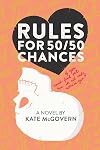
Rose Levenson lives by four rules:
1. Don't make plans you can't keep.
The Huntington's disease gene she has a 50% chance of having inherited from her progressively ailing mother is set in stone. Her mother will die from it, and Rose can see every day her condition getting worse—as for herself, she either has it, or she doesn't. Regardless, it seems like her fate is already written in the stars; what's the point of planning out a future, if by adulthood, she may not even be healthy enough to enjoy it?
2. Falling in love confuses everything (so don't do it).
Enter Caleb Franklin, a boy who understands what it's like to suffer under the weight of a genetic disorder, a boy from a completely different background, the first boy she's ever felt worthy enough of breaking her second rule.
While Rose and Caleb's budding relationship is nowhere near consuming or romantic—it just fell a little flat for me—I found Caleb to be a fascinating choice of love interest. McGovern intelligently explores race and class differences in a mature way, rather than solely throwing them in as character devices (aka "that one black friend") as I've seen other YA novels do. I totally appreciate how she doesn't gloss over Caleb's African-American background; she incorporates its relevance into his relationship with Rose, while carefully avoiding anything too political or current to make everything COMPLETELY about race. Because that's really not the point; the point is that race isn't something that show more can be ignored or glossed over, because it does make a different in real life, despite what white privilege will insist. White privilege isn't just about white people having it better than black people, etc., but the inability for non-minorities to recognize that this sort of stratification exists. McGovern handles this so gracefully and naturally, without being preachy; I've never seen it done in YA (that isn't primarily about race) before.
What's so conflicting about my opinions overall is that I found Rules for 50/50 Chances to be stunningly realistic and layered, but just couldn't stand Rose, our protagonist. For me to grow attached to a story relies heavily on a likable—if not relatable—narrator, and unfortunately Rose is my biggest quip about this entire book. I understand that her characterization was fully intentional on McGovern's part, especially since Rose's main flaws are pointed out by many of the secondary characters and eventually self-realized, but sludging through her narrow-minded first-person narrative was a little too irritating for me.
It isn't that she's particularly bratty or stupid or mean, but she's one of those types who wallows in her own pity—in this case, due to her genetic "curse" as she calls it, completely pulling the "you just don't know how I feel!" card at every instance, without leaving much room to understand that other people, in fact, also have issues, even if not the exact same as her own. There's one scene where Caleb, the love interest, calls Rose "exhausting," and that's exactly how I feel about her: tiring, drawn-out, worthy of eye rolls. It takes her a long, long time to figure this out, but when she finally does, I felt like the book finally redeemed itself.
3. Knowledge is power.
The novelty of the book's plot is something to praise, for sure. I wasn't even certain what Huntington's disease was before I read this book, so it was both an educational, and emotionally charged account on how it could affect a teenager's life, even before symptoms show.
The difficulty of living with a 50/50 chance for inheriting a degenerative disease is expertly illustrated from Rose's point of view. It isn't so much the misfortune of the disease itself, but rather a matter of knowing and not-knowing: a lifetime of uncertainty. This is mainly the reason why Rose is convinced that she needs to take the test to find out whether she carries the gene or not as soon as she turns eighteen. It's not HD she's concerned over, because she knows well too much about it already, watching it eat away at her mother every day. Rather, being kept in the dark is what she can't stand.
Rules for 50/50 Chances won't sugar-coat anything. From the frankness of dialogue between family members and friends, and the way Huntington's manifests uglily in her own mother, it gives you an honest, oftentimes abrasive account of Rose's life, which is already hard considering she's a senior in high school. To me, the plot about her ballet career and college decisions fell to the backdrop because the primary issues with Caleb and with her taking the genetic test took center stage. While not always pretty, teenage relationships and degenerative diseases are portrayed with extraordinary authenticity here.
4. Rules are meant to be broken.
As Rose slowly tests herself through the hardships of competing for a ballet scholarship, the acknowledgment of her genetic results, and through the turmoil of working out her first love—and heartbreak—she learns that everyone has their own problems, not exclusively herself. Soon, she finds herself breaking all her previous, pristinely set rules, and in this way, she discovers that everyone's human and that pain is not measurable on a spectrum; no one has it more or less "worse" than anyone else just because of superficial reasons.
It definitely took Rose a long time to come to this conclusion, but when she finally did, I felt triumphant. I honestly didn't enjoy this book to this extent until the last few chapters because it seemed to drag on and on with Rose complaining about this and that, but the ending was definitely worth it.
Amazingly, while the main characters are hard to relate to, the book itself isn't. Rose isn't the most sympathetic or level-headed character, but McGovern approaches this complex dilemma richly and with emotional resonance.
I learned a lot from this book, not only about race and difficult relationships and difficult genes, but also general astute observations from Rose's everyday life, from the lessons she learns during auditioning for her ballet scholarship, to her mom's passion for trains, which she also shares. I feel like this is the kind of book I would have loved to have read in middle school—and I don't say that to lower the audience age or cheapen its poignance; I only mean that it's an incredibly eye-opening and grounded account that has the power to vastly change the way most people think.
Pros: Plot, characters, and relationships are very lifelike and well-written // McGovern's prose flows naturally and swiftly; she is obviously a talented storyteller // I learned a lot about Huntington's disease and trains (look up the California Zephyr if you don't already know what it is) // Overall narrative contains sophistication and self-awareness, despite Rose's lack thereof // Rose's family dynamic is beautiful and diverse; we experience the touching highs and all the dysfunctional lows // Ending ties everything together beautifully, and actually is the saving grace considering how prolonged Rose's petty narrative is, prior
Cons: Rose is not the easiest character to like and relate to (condescending towards her friends, short-sighted, self-pitying) // There isn't anything romantic or clever about Rose and Caleb's relationship; it kind of just happens
Verdict: Kate McGovern tackles tough topics like genetic diseases, race and class issues, the ugliness of growing up, and the uncertainty—and blessing—of not knowing, with poise, wisdom, and cultural sensitivity in her debut novel. This is the kind of YA book I would like to turn back time and give to my adolescent self: fairly clean, but far from naïve; never happy-go-lucky, but still optimistic. It taught me a lot, and made me reflect a lot, and I think teenagers of all ages and reading levels will feel the same way. Rules of 50/50 Chances challenges perceptions and preconceptions, depicts a genetic disease that is as rarely informed on as it is hideous, and demonstrates that love, whether romantic or familial, is never as tidy or as faultless as it seems—even in a young adult novel. While I did find Rose's character to be a headache as a whole, the uncommon yet well-executed plot will stick with me forever. Mindful, mature, and genuine to its core, 50/50 Chances is a book you should 100% take a chance on.
Rating: 7 out of 10 hearts (3.5 stars): Not perfect, but overall enjoyable; would recommend, but borrow a copy before you buy!
Source: Complimentary copy provided by publicist in exchange for an honest and unbiased review (thank you, Goldberg McDuffie Communications!). show less
1. Don't make plans you can't keep.
The Huntington's disease gene she has a 50% chance of having inherited from her progressively ailing mother is set in stone. Her mother will die from it, and Rose can see every day her condition getting worse—as for herself, she either has it, or she doesn't. Regardless, it seems like her fate is already written in the stars; what's the point of planning out a future, if by adulthood, she may not even be healthy enough to enjoy it?
2. Falling in love confuses everything (so don't do it).
Enter Caleb Franklin, a boy who understands what it's like to suffer under the weight of a genetic disorder, a boy from a completely different background, the first boy she's ever felt worthy enough of breaking her second rule.
While Rose and Caleb's budding relationship is nowhere near consuming or romantic—it just fell a little flat for me—I found Caleb to be a fascinating choice of love interest. McGovern intelligently explores race and class differences in a mature way, rather than solely throwing them in as character devices (aka "that one black friend") as I've seen other YA novels do. I totally appreciate how she doesn't gloss over Caleb's African-American background; she incorporates its relevance into his relationship with Rose, while carefully avoiding anything too political or current to make everything COMPLETELY about race. Because that's really not the point; the point is that race isn't something that show more can be ignored or glossed over, because it does make a different in real life, despite what white privilege will insist. White privilege isn't just about white people having it better than black people, etc., but the inability for non-minorities to recognize that this sort of stratification exists. McGovern handles this so gracefully and naturally, without being preachy; I've never seen it done in YA (that isn't primarily about race) before.
What's so conflicting about my opinions overall is that I found Rules for 50/50 Chances to be stunningly realistic and layered, but just couldn't stand Rose, our protagonist. For me to grow attached to a story relies heavily on a likable—if not relatable—narrator, and unfortunately Rose is my biggest quip about this entire book. I understand that her characterization was fully intentional on McGovern's part, especially since Rose's main flaws are pointed out by many of the secondary characters and eventually self-realized, but sludging through her narrow-minded first-person narrative was a little too irritating for me.
It isn't that she's particularly bratty or stupid or mean, but she's one of those types who wallows in her own pity—in this case, due to her genetic "curse" as she calls it, completely pulling the "you just don't know how I feel!" card at every instance, without leaving much room to understand that other people, in fact, also have issues, even if not the exact same as her own. There's one scene where Caleb, the love interest, calls Rose "exhausting," and that's exactly how I feel about her: tiring, drawn-out, worthy of eye rolls. It takes her a long, long time to figure this out, but when she finally does, I felt like the book finally redeemed itself.
3. Knowledge is power.
The novelty of the book's plot is something to praise, for sure. I wasn't even certain what Huntington's disease was before I read this book, so it was both an educational, and emotionally charged account on how it could affect a teenager's life, even before symptoms show.
The difficulty of living with a 50/50 chance for inheriting a degenerative disease is expertly illustrated from Rose's point of view. It isn't so much the misfortune of the disease itself, but rather a matter of knowing and not-knowing: a lifetime of uncertainty. This is mainly the reason why Rose is convinced that she needs to take the test to find out whether she carries the gene or not as soon as she turns eighteen. It's not HD she's concerned over, because she knows well too much about it already, watching it eat away at her mother every day. Rather, being kept in the dark is what she can't stand.
Rules for 50/50 Chances won't sugar-coat anything. From the frankness of dialogue between family members and friends, and the way Huntington's manifests uglily in her own mother, it gives you an honest, oftentimes abrasive account of Rose's life, which is already hard considering she's a senior in high school. To me, the plot about her ballet career and college decisions fell to the backdrop because the primary issues with Caleb and with her taking the genetic test took center stage. While not always pretty, teenage relationships and degenerative diseases are portrayed with extraordinary authenticity here.
4. Rules are meant to be broken.
As Rose slowly tests herself through the hardships of competing for a ballet scholarship, the acknowledgment of her genetic results, and through the turmoil of working out her first love—and heartbreak—she learns that everyone has their own problems, not exclusively herself. Soon, she finds herself breaking all her previous, pristinely set rules, and in this way, she discovers that everyone's human and that pain is not measurable on a spectrum; no one has it more or less "worse" than anyone else just because of superficial reasons.
It definitely took Rose a long time to come to this conclusion, but when she finally did, I felt triumphant. I honestly didn't enjoy this book to this extent until the last few chapters because it seemed to drag on and on with Rose complaining about this and that, but the ending was definitely worth it.
Amazingly, while the main characters are hard to relate to, the book itself isn't. Rose isn't the most sympathetic or level-headed character, but McGovern approaches this complex dilemma richly and with emotional resonance.
I learned a lot from this book, not only about race and difficult relationships and difficult genes, but also general astute observations from Rose's everyday life, from the lessons she learns during auditioning for her ballet scholarship, to her mom's passion for trains, which she also shares. I feel like this is the kind of book I would have loved to have read in middle school—and I don't say that to lower the audience age or cheapen its poignance; I only mean that it's an incredibly eye-opening and grounded account that has the power to vastly change the way most people think.
Pros: Plot, characters, and relationships are very lifelike and well-written // McGovern's prose flows naturally and swiftly; she is obviously a talented storyteller // I learned a lot about Huntington's disease and trains (look up the California Zephyr if you don't already know what it is) // Overall narrative contains sophistication and self-awareness, despite Rose's lack thereof // Rose's family dynamic is beautiful and diverse; we experience the touching highs and all the dysfunctional lows // Ending ties everything together beautifully, and actually is the saving grace considering how prolonged Rose's petty narrative is, prior
Cons: Rose is not the easiest character to like and relate to (condescending towards her friends, short-sighted, self-pitying) // There isn't anything romantic or clever about Rose and Caleb's relationship; it kind of just happens
Verdict: Kate McGovern tackles tough topics like genetic diseases, race and class issues, the ugliness of growing up, and the uncertainty—and blessing—of not knowing, with poise, wisdom, and cultural sensitivity in her debut novel. This is the kind of YA book I would like to turn back time and give to my adolescent self: fairly clean, but far from naïve; never happy-go-lucky, but still optimistic. It taught me a lot, and made me reflect a lot, and I think teenagers of all ages and reading levels will feel the same way. Rules of 50/50 Chances challenges perceptions and preconceptions, depicts a genetic disease that is as rarely informed on as it is hideous, and demonstrates that love, whether romantic or familial, is never as tidy or as faultless as it seems—even in a young adult novel. While I did find Rose's character to be a headache as a whole, the uncommon yet well-executed plot will stick with me forever. Mindful, mature, and genuine to its core, 50/50 Chances is a book you should 100% take a chance on.
Rating: 7 out of 10 hearts (3.5 stars): Not perfect, but overall enjoyable; would recommend, but borrow a copy before you buy!
Source: Complimentary copy provided by publicist in exchange for an honest and unbiased review (thank you, Goldberg McDuffie Communications!). show less
It's been a long time since I've encountered a book that's moved me as much as The Lover's Dictionary has. I knew from page 1 that I'd end up treasuring it, mainly because I've anticipated it for so long and finally just sat down and picked it up—which I'm not sure why I didn't do sooner, since it's such a short read. Being a frequent retweeter from the book's Twitter page, I had high expectations with this one, and honestly, every single one of them were met.
Writing this review is proving to be difficult because The Lover's Dictionary's format and plot layout are both quite unusual. The obvious novelty of this story is that it's not narrated traditionally with chapters, but rather through individual dictionary entries, in second person by an unnamed protagonist to his lover. The whammy is that these little vignettes are arranged alphabetically, not chronologically—as dictionaries tend to be organized—so the lovers' story is non-linear, and is rather told in sporadic moments with which anyone who's been in love will be able to relate: frustration, butterflies, doubt, insecurity, optimism about the future, exasperation, elation. Each entry is its own story, spare on words but regardless extremely high-impact.
This non-chronological sequence of events is far from confusing or difficult to read, however; somehow, Levithan still makes it work because the story itself does not require a definitive beginning or end. All we know is that there is a couple, there is a show more conflict, and there is no clean resolution—because in real life, there hardly ever is. That's what I think makes it so potent; its implications regarding the ineffability of love are so relatable, so real.
The plot itself isn't necessarily a sweeping romance, nor a particularly profound love story—that's not why I love this book. In fact, the dictionary entries, while beautifully crafted, are vague and often unsettling, but each of them packs a strong punch. I was sucked in immediately because the main problem is introduced so early on, but it's only unraveled as you read further down the alphabet. The inevitable doom of the relationship's tragedy is always hanging in the air, impending, and the distressing feeling that it probably won't have a tidy tucked-away ending will constantly stick with you. You'll either be enchanted by Levithan's interpretation of each word, or find yourself relating to each on a near-spiritual level; there isn't a single page that I didn't like in this novel.
Pros: Touching, breathtaking // Relatable in the subtlest aspects that everyone notices in relationships, but don't necessarily always put to words // Portrays love beautifully, humanly // Unusual concept of book structure, but I found it clever and very absorbing // Conveys a realistic view of a romance, as deep and exhausting as it may be—they don't always "end" like they do in books and movies // A very quick read, since each "chapter" is composed of one dictionary entry (1-2 pages each)
Cons: Not a problem with the book itself, but with my inability to express with words how great it is: my review and the back cover synopsis do not do it justice!
Verdict: Remarkable in ways that my own words fail to sufficiently articulate, The Lover's Dictionary is a comforting, candid, and devastating characterization of love, and the parallel irony to ever be able to adequately write about it. If I don't have you convinced, check out the corresponding Twitter page for a more succinct preview of what the book is like. David Levithan has an extensive fan base for valid reason; his grasp on the written word is adept, his understanding of the human tendency to fall in love with flaws is painfully accurate, and when his dictionary entries are pieced together, the end result is simultaneously witty and evocative. This is the kind of book I wish I could write: a subtle masterpiece and a hefty accomplishment.
Rating: 10 out of 10 hearts (5 stars): I'm speechless; this book is an extraordinarily amazingly wonderfully fantastically marvelous masterpiece. Drop everything and go buy yourself a copy now!
Source: Purchased. show less
Writing this review is proving to be difficult because The Lover's Dictionary's format and plot layout are both quite unusual. The obvious novelty of this story is that it's not narrated traditionally with chapters, but rather through individual dictionary entries, in second person by an unnamed protagonist to his lover. The whammy is that these little vignettes are arranged alphabetically, not chronologically—as dictionaries tend to be organized—so the lovers' story is non-linear, and is rather told in sporadic moments with which anyone who's been in love will be able to relate: frustration, butterflies, doubt, insecurity, optimism about the future, exasperation, elation. Each entry is its own story, spare on words but regardless extremely high-impact.
This non-chronological sequence of events is far from confusing or difficult to read, however; somehow, Levithan still makes it work because the story itself does not require a definitive beginning or end. All we know is that there is a couple, there is a show more conflict, and there is no clean resolution—because in real life, there hardly ever is. That's what I think makes it so potent; its implications regarding the ineffability of love are so relatable, so real.
The plot itself isn't necessarily a sweeping romance, nor a particularly profound love story—that's not why I love this book. In fact, the dictionary entries, while beautifully crafted, are vague and often unsettling, but each of them packs a strong punch. I was sucked in immediately because the main problem is introduced so early on, but it's only unraveled as you read further down the alphabet. The inevitable doom of the relationship's tragedy is always hanging in the air, impending, and the distressing feeling that it probably won't have a tidy tucked-away ending will constantly stick with you. You'll either be enchanted by Levithan's interpretation of each word, or find yourself relating to each on a near-spiritual level; there isn't a single page that I didn't like in this novel.
Pros: Touching, breathtaking // Relatable in the subtlest aspects that everyone notices in relationships, but don't necessarily always put to words // Portrays love beautifully, humanly // Unusual concept of book structure, but I found it clever and very absorbing // Conveys a realistic view of a romance, as deep and exhausting as it may be—they don't always "end" like they do in books and movies // A very quick read, since each "chapter" is composed of one dictionary entry (1-2 pages each)
Cons: Not a problem with the book itself, but with my inability to express with words how great it is: my review and the back cover synopsis do not do it justice!
Verdict: Remarkable in ways that my own words fail to sufficiently articulate, The Lover's Dictionary is a comforting, candid, and devastating characterization of love, and the parallel irony to ever be able to adequately write about it. If I don't have you convinced, check out the corresponding Twitter page for a more succinct preview of what the book is like. David Levithan has an extensive fan base for valid reason; his grasp on the written word is adept, his understanding of the human tendency to fall in love with flaws is painfully accurate, and when his dictionary entries are pieced together, the end result is simultaneously witty and evocative. This is the kind of book I wish I could write: a subtle masterpiece and a hefty accomplishment.
Rating: 10 out of 10 hearts (5 stars): I'm speechless; this book is an extraordinarily amazingly wonderfully fantastically marvelous masterpiece. Drop everything and go buy yourself a copy now!
Source: Purchased. show less
The biggest disappointment about this book was that it actually sounded inspirational and intriguing in its sci-fi backdrop. An impending apocalypse combined with a mission from a stranger to spend the last day on Earth performing random acts of kindness—excellent. Add to that a developing "romance" between two teenage outcasts who've been surviving on the streets and only have each other—I really thought this story could have gone somewhere.
Unfortunately, it was subpar in pretty much every literary criteria. The cheesy and uneventful character interactions, story line, and so-called "inspirational" message actually had me wondering how exactly this could sit well with any reader. Unless you are a 10-year-old who has never experienced real-life conflict involving family, friends, and romantic love, I'm confident you'd read this and feel the same way. I cringed at a lot of the dialogue, and got really, really exasperated by the time I finished the last page.
Schroeder's writing itself is not incredibly flawed, but that's a pretty basic statement because it isn't profound or particularly thoughtful either. Her prose lacks an engaging element that I'd associate with a pre-apocalyptic and/or teen-oriented novel, and I feel the randomly interspersed pages of verse are unseasoned, as well. Most writers can get away with underdeveloped prose, but in poetry, the quality of writing shows. And I was shown how poor it was all throughout the book.
The worst part is the stilted and show more superbly unrealistic/cringe-worthy dialogue scenes. And before you try to argue that it's sci-fi, it isn't supposed to be realistic—that's not what I mean. Obviously "end of the world" stories aren't meant to be realistic contemporary fiction, but they should still immerse a reader into the fictional setting. All We Have Is Now failed miserable at doing this overall.
Emerson and Vince are supposedly each other's "one and only" (although not initially in a romantic way), but their dialogue is stiff and gives me secondhand embarrassment. Not only are the two protagonists poorly portrayed, but they're also VERY difficult to like and relate to, mostly because I found a lot of their characteristics to be inconsistent. For instance, Vince is the smooth-talking "cool" black guy whom Emerson doesn't realize she's in love with, but he has strange bouts of emotional outbursts, and can be really pushy and obnoxious. Emerson is the troubled runaway who is afraid to reconcile with her estranged family, but she's prude, whiny, equally as unnecessarily emotional, and just plain stupid at times. I'm not saying that to be offensive; she seriously reads like a one-dimensional cartoon character.
I could have gotten over the unpleasant characters (maybe) but what bothered me even more was the story itself. Yes, it starts off as a provocative Mitch Albom-esque plot, but turns into something I became weary of immediately. The ending takes a 180° turn and (if you can't guess it already), here's a quick spoiler to get off my chest: SPOILER START: The conclusion isn't dark and wish-welcoming like the synopsis suggests. In fact, the apocalypse turns out to be a government hoax to teach US citizens a lesson to appreciate what they have (WTF!) and everything returns to normal the next day. No end of the world, no lives lost, no deep, dark, revealing, or even remotely inspirational matter. Just a bunch of psychological effing-up. Literally that's what we encounter about 80% of the way in, and then there's a bunch of happy endings (yaaaayy) and a ridiculous last chapter. :SPOILER END. A better writer COULD have even made this ending jaw-dropping or uplifting in some sort of way, but Schroeder accomplished neither. The construction of the conclusion itself was poor, with very unlikely conflict resolutions that occur in a couple pages (that happens in real life?!) and a rushed, cheesy, and very unbelievable ending.
I didn't see it coming because I refused to even believe that the author would take a turn like that... it was completely out of the realm of possibility... and then it happened -_-
Pros: Appropriate for younger YA or middle-grade audiences (very clean "romance," and even the darker themes are portrayed lightly with a definite resolution) // Inspiring message about appreciating what you have // Extremely easy to read and flows well
Cons: Pretty much everything else: Stylized and very basic, unimpressive writing // Numerous unsuccessful attempts to be profound and engaging // Character interactions, action scenes, and overall plot (especially the ending) are difficult to believe // The verse portions don't have ANY effect on me; I could have gotten the same thing out of this book without them // The budding "romance" (romance in quotations throughout this entire review because I don't really even consider it one) between Vince and Emerson just doesn't make sense // Emerson is unlikable, unrelatable (typically characters are one or the other), shallowly written, talks in a ridiculous, childish way, has random inappropriate mood swings etc. etc. etc. // Vince is just as bad: tremendously cheesy, unbelievable, has similar weird mood swings (I know they're teenagers and all but c'mon...) // The worst ending/conclusion plot twist ever
Verdict: Unfortunately All We Have Is Now has very few redeeming qualities; it was unimpressive and quite cringe-worthy in almost every way. The characters are neither endearing nor enduring, the plot-line is very quick to resolve and painfully anticlimactic, and the ending just sealed the deal, leaving me dumbfounded (and NOT in a good way!). I feel like my standards have gotten much higher since when I first started reviewing, because I probably would have given this a decent 2.5-star rating previously; now, however, I'm just getting tired of tolerating stilted action and unintentional character flaws. While the suggested readership audience is ages 12-18, I would recommend it more for ages 10-14—if you even decide to pick this book up—because of its unrealistically optimistic plot and empty characters (maybe middle schoolers won't notice). My opinion may not sit well with Lisa Schroeder readers, as I know she has a large YA fan base, but I simply didn't like this book, even though it was a quick-paced and uncomplicated read.
Rating: 3 out of 10 hearts (1.5 stars): Not a fan; I don't recommend this book.
Source: Complimentary copy provided by author via tour publicist in exchange for an honest and unbiased review (thank you, Lisa Schroeder and CBB Book Promotions!). show less
Unfortunately, it was subpar in pretty much every literary criteria. The cheesy and uneventful character interactions, story line, and so-called "inspirational" message actually had me wondering how exactly this could sit well with any reader. Unless you are a 10-year-old who has never experienced real-life conflict involving family, friends, and romantic love, I'm confident you'd read this and feel the same way. I cringed at a lot of the dialogue, and got really, really exasperated by the time I finished the last page.
Schroeder's writing itself is not incredibly flawed, but that's a pretty basic statement because it isn't profound or particularly thoughtful either. Her prose lacks an engaging element that I'd associate with a pre-apocalyptic and/or teen-oriented novel, and I feel the randomly interspersed pages of verse are unseasoned, as well. Most writers can get away with underdeveloped prose, but in poetry, the quality of writing shows. And I was shown how poor it was all throughout the book.
The worst part is the stilted and show more superbly unrealistic/cringe-worthy dialogue scenes. And before you try to argue that it's sci-fi, it isn't supposed to be realistic—that's not what I mean. Obviously "end of the world" stories aren't meant to be realistic contemporary fiction, but they should still immerse a reader into the fictional setting. All We Have Is Now failed miserable at doing this overall.
Emerson and Vince are supposedly each other's "one and only" (although not initially in a romantic way), but their dialogue is stiff and gives me secondhand embarrassment. Not only are the two protagonists poorly portrayed, but they're also VERY difficult to like and relate to, mostly because I found a lot of their characteristics to be inconsistent. For instance, Vince is the smooth-talking "cool" black guy whom Emerson doesn't realize she's in love with, but he has strange bouts of emotional outbursts, and can be really pushy and obnoxious. Emerson is the troubled runaway who is afraid to reconcile with her estranged family, but she's prude, whiny, equally as unnecessarily emotional, and just plain stupid at times. I'm not saying that to be offensive; she seriously reads like a one-dimensional cartoon character.
I could have gotten over the unpleasant characters (maybe) but what bothered me even more was the story itself. Yes, it starts off as a provocative Mitch Albom-esque plot, but turns into something I became weary of immediately. The ending takes a 180° turn and (if you can't guess it already), here's a quick spoiler to get off my chest: SPOILER START: The conclusion isn't dark and wish-welcoming like the synopsis suggests. In fact, the apocalypse turns out to be a government hoax to teach US citizens a lesson to appreciate what they have (WTF!) and everything returns to normal the next day. No end of the world, no lives lost, no deep, dark, revealing, or even remotely inspirational matter. Just a bunch of psychological effing-up. Literally that's what we encounter about 80% of the way in, and then there's a bunch of happy endings (yaaaayy) and a ridiculous last chapter. :SPOILER END. A better writer COULD have even made this ending jaw-dropping or uplifting in some sort of way, but Schroeder accomplished neither. The construction of the conclusion itself was poor, with very unlikely conflict resolutions that occur in a couple pages (that happens in real life?!) and a rushed, cheesy, and very unbelievable ending.
I didn't see it coming because I refused to even believe that the author would take a turn like that... it was completely out of the realm of possibility... and then it happened -_-
Pros: Appropriate for younger YA or middle-grade audiences (very clean "romance," and even the darker themes are portrayed lightly with a definite resolution) // Inspiring message about appreciating what you have // Extremely easy to read and flows well
Cons: Pretty much everything else: Stylized and very basic, unimpressive writing // Numerous unsuccessful attempts to be profound and engaging // Character interactions, action scenes, and overall plot (especially the ending) are difficult to believe // The verse portions don't have ANY effect on me; I could have gotten the same thing out of this book without them // The budding "romance" (romance in quotations throughout this entire review because I don't really even consider it one) between Vince and Emerson just doesn't make sense // Emerson is unlikable, unrelatable (typically characters are one or the other), shallowly written, talks in a ridiculous, childish way, has random inappropriate mood swings etc. etc. etc. // Vince is just as bad: tremendously cheesy, unbelievable, has similar weird mood swings (I know they're teenagers and all but c'mon...) // The worst ending/conclusion plot twist ever
Verdict: Unfortunately All We Have Is Now has very few redeeming qualities; it was unimpressive and quite cringe-worthy in almost every way. The characters are neither endearing nor enduring, the plot-line is very quick to resolve and painfully anticlimactic, and the ending just sealed the deal, leaving me dumbfounded (and NOT in a good way!). I feel like my standards have gotten much higher since when I first started reviewing, because I probably would have given this a decent 2.5-star rating previously; now, however, I'm just getting tired of tolerating stilted action and unintentional character flaws. While the suggested readership audience is ages 12-18, I would recommend it more for ages 10-14—if you even decide to pick this book up—because of its unrealistically optimistic plot and empty characters (maybe middle schoolers won't notice). My opinion may not sit well with Lisa Schroeder readers, as I know she has a large YA fan base, but I simply didn't like this book, even though it was a quick-paced and uncomplicated read.
Rating: 3 out of 10 hearts (1.5 stars): Not a fan; I don't recommend this book.
Source: Complimentary copy provided by author via tour publicist in exchange for an honest and unbiased review (thank you, Lisa Schroeder and CBB Book Promotions!). show less
Graphic novels are always a pleasure to read, considering how rare a format they are in adult literature. Bagieu's debut is short and sweet, its cartoony, colorful illustrations being the biggest standout—everything is fashionable, yet minimalistic... think Lancôme ads (but more corrupt).
Zoe is a self-proclaimed non-intellectual, working various part-time jobs to make ends meet and totally reveling in, and simultaneously jaded with the bachelorette life. When she unintentionally stumbles into the apartment of Thomas Rocher, her unschooled lifestyle provides her no way of knowing he's the most critically acclaimed author of the 21st century. And that he "died" years ago, but is more successful dead than alive with all his "posthumous" work's publication. What a marvelous, quirky, almost fantastical plot we have to work with; I applaud Bagieu on the originality and that touch of just-crazy-enough-to-be-cute.
Disappointingly, the execution isn't as sharp. The book was very easy to get through due to its short length and simplistic structure, but I didn't find any of the writing compelling or absorbing. I'm positive (or positively hoping) that there was some tone and humor lost in translation with this book. The style was indeed unexquisite, rather blunt than beautiful—I just wasn't impressed. It was also full of run-on sentences that just tilted everything slightly off, but that's pretty typical of most French translated literature.
Zoe's entanglement in the deceit that show more Rocher and his ex-wife are committing is comical in a literary sense, but it's nothing that stood out as witty or clever. There's a huge plot twist at the end that I won't give away, but again, this wasn't anything that shocked me or drew me in. The book is only novella-length at 124 pages, but it's much, much less if you don't count the illustrations; I suppose undeveloped characters and a flat plot-line just come with the territory.
I feel I'd recommend this book solely on the basis of its wonderful and unique drawings, which Bagieu also did herself. The full-color pictures may convince you to pick this one up, but be prepared for a pretty underwhelming short story that isn't as exciting as the synopsis makes it out to be.
Pros: A very quick read; both short in length and in text since the graphics take up a lot of the pages // Easy to navigate; pleasant, simple, yet completely eye-catching illustrations // Quirky fairy-tale ending
Cons: A pretty passing read... not particularly memorable or noteworthy about it // The plot is too straightforward, without much emotional or suspenseful resonance to it
Verdict: Simple in narrative and easy to read, Exquisite Corpse is a book I enjoyed due to its cartoony and eccentric elements. This is definitely an adult's version of a picture book, with more mature themes of sex and deviousness running through it—at least PG-13 status, despite its frivolous, glitzily colorful drawings. Pénélope Bagieu's debut is among the easier and quicker graphic novels to read, although the short length and limited text space do result in underdeveloped story quality. As far as bande dessinées are concerned, Exquisite Corpse retains that slightly vintage Euro vibe that's classic to the genre, but still makes an offbeat splash in the scene, as it's totally minimalistic, sexy, and debauch—just as the Parisians do best.
Rating: 6 out of 10 hearts (3 stars): Decent for a first read, but I'm not going back; this book is decidedly average (whatever that means!).
Source: Complimentary copy provided by publisher in exchange for an honest and unbiased review (thank you, First Second!). show less
Zoe is a self-proclaimed non-intellectual, working various part-time jobs to make ends meet and totally reveling in, and simultaneously jaded with the bachelorette life. When she unintentionally stumbles into the apartment of Thomas Rocher, her unschooled lifestyle provides her no way of knowing he's the most critically acclaimed author of the 21st century. And that he "died" years ago, but is more successful dead than alive with all his "posthumous" work's publication. What a marvelous, quirky, almost fantastical plot we have to work with; I applaud Bagieu on the originality and that touch of just-crazy-enough-to-be-cute.
Disappointingly, the execution isn't as sharp. The book was very easy to get through due to its short length and simplistic structure, but I didn't find any of the writing compelling or absorbing. I'm positive (or positively hoping) that there was some tone and humor lost in translation with this book. The style was indeed unexquisite, rather blunt than beautiful—I just wasn't impressed. It was also full of run-on sentences that just tilted everything slightly off, but that's pretty typical of most French translated literature.
Zoe's entanglement in the deceit that show more Rocher and his ex-wife are committing is comical in a literary sense, but it's nothing that stood out as witty or clever. There's a huge plot twist at the end that I won't give away, but again, this wasn't anything that shocked me or drew me in. The book is only novella-length at 124 pages, but it's much, much less if you don't count the illustrations; I suppose undeveloped characters and a flat plot-line just come with the territory.
I feel I'd recommend this book solely on the basis of its wonderful and unique drawings, which Bagieu also did herself. The full-color pictures may convince you to pick this one up, but be prepared for a pretty underwhelming short story that isn't as exciting as the synopsis makes it out to be.
Pros: A very quick read; both short in length and in text since the graphics take up a lot of the pages // Easy to navigate; pleasant, simple, yet completely eye-catching illustrations // Quirky fairy-tale ending
Cons: A pretty passing read... not particularly memorable or noteworthy about it // The plot is too straightforward, without much emotional or suspenseful resonance to it
Verdict: Simple in narrative and easy to read, Exquisite Corpse is a book I enjoyed due to its cartoony and eccentric elements. This is definitely an adult's version of a picture book, with more mature themes of sex and deviousness running through it—at least PG-13 status, despite its frivolous, glitzily colorful drawings. Pénélope Bagieu's debut is among the easier and quicker graphic novels to read, although the short length and limited text space do result in underdeveloped story quality. As far as bande dessinées are concerned, Exquisite Corpse retains that slightly vintage Euro vibe that's classic to the genre, but still makes an offbeat splash in the scene, as it's totally minimalistic, sexy, and debauch—just as the Parisians do best.
Rating: 6 out of 10 hearts (3 stars): Decent for a first read, but I'm not going back; this book is decidedly average (whatever that means!).
Source: Complimentary copy provided by publisher in exchange for an honest and unbiased review (thank you, First Second!). show less
Day 21 picks up right where the distressing cliffhanger in The 100 left off, and the plot structure and narrative flow of the two books are almost identical. As with the first book, this sequel is told from the alternating third-person perspectives of Clarke, Wells, Bellamy, and Glass, and is a combination of present-day action and revealing snippets of backstory.
The biggest thing for me, personally, that has changed since I read the first book, is that I've since watched the CW television series. I just finished season 2 actually; it had me reeling for more, which is what inspired me to give the book series another try. Unfortunately, after having experienced the mastermind of the TV show, the books pale miserably in comparison. Not terrible by any means, as the journey of teenage delinquents determining the survivability of post-apocalyptic Earth is still a thrilling one, but just very, very weakly executed, when compared to the TV show.
In short, the TV show will have your jaw dropping and your heart racing at every scene; reading the books after watching the show will ruin everything for you. So I don't recommend the series if you've already seen the show.
For the most part, my quips with Day 21 are the exact same as they were in the book The 100, which I reviewed back in August: the characters are poorly developed and the writing style is highly unseasoned—it reads like a teenage fan-fiction novel that's meant to be super dramatic, but really isn't. In a purely show more literary sense, this series is a major disappointment. The concept of exploring Earth for the first time in over a century is amazing, but its presentation is just really lacking in Morgan's writing.
Day 21 presents the novel situation of dealing with Earthborns, or the "natives" of Earth that never left the ground during the Cataclysm (aka the nuclear disaster that sent Clarke's, Wells's, Bellamy's, and Glass's ancestors up to space as refuge in the first place). In the eyes of the Earthborns, Clarke and the other hundred aren't just foreigners from the sky... they're invaders. The mutual distrust between the two populations lead to the book's main conflicts, which are written to be shocking and suspense-ridden, but are actually just really drawn out and don't lead anywhere (unlike in the television series, where the action and suspense are immediate). While Day 21 does expose readers to darker themes, I feel like these twists and turns had the potential to be very powerful, but Morgan's mediocre writing dulls the majority of the impact of any serious or "life-changing" implications.
Add this to the fact that the characters are all equally generic and unlikable, and all the romantic relationships are incredibly shallow, and we've got ourselves a dud with Day 21. Insignificant and gratuitous romance plot lines are among my biggest book pet peeves, and they were at their mildest and most improbable in this second installment of the The 100 series, which only intensified my dissatisfaction with it further.
Pros: A consistent continuation of the first book; in style, structure, and content, the two are very similar // Plot picks up right where it left off in The 100 // New thrilling plot twists and revelations // Darker themes than the first book and more opportunity for adventure given
Cons: Most of the "shocking" revelations and plot twists are predictable, and not that potent // None of the romantic relationships seem realistic or at all complex; there are four ongoing in this book, if you count the Wells-Clarke-Bellamy "love triangle" and they're all lackluster // Most of the weaknesses in this book are identical to those in the first book, including annoying flashback scenes, constant, confusing narrative shifts, and very unimpressive writing style (read my review for that here) // Simply not as good as the TV series. Skip the books, just tune in to the CW!
Love
Bellamy shrugged. "I don't really know how to live any other way. I've always been taking care of her. It's like... we aren't born for ourselves alone. You have to take care of other people."
Verdict: While I acknowledged all the literary and stylistic shortcomings of the first book in The 100 series, I still ate it up because I was so impressed by the dystopian world-building and the dynamic plot line involving teenage delinquents exploring uncharted territory. That was before I started watching the TV show, though, and now that I have, coming back to the book series has been a cringe-filled bore. Kass Morgan really had her head in the right place when she created this entertaining YA sci-fi series, but unfortunately for her, the TV show just did a better job of bringing it to life. Day 21, the second book in series, has proven that the storyline just needed a fresh interpretation (and perhaps, a cinematic touch!) to really achieve something. My opinions are obviously completely biased due to having watched the TV show, but that doesn't stop me from recommending it wholeheartedly; on the other hand, the book series is agonizingly bland in comparison.
Rating: 5 out of 10 hearts (3 stars): Doesn't particularly light any of my fires; I feel indifferent about this book.
Source: Complimentary copy provided by publicist in exchange for an honest and unbiased review (thank you, FSB Media!). show less
The biggest thing for me, personally, that has changed since I read the first book, is that I've since watched the CW television series. I just finished season 2 actually; it had me reeling for more, which is what inspired me to give the book series another try. Unfortunately, after having experienced the mastermind of the TV show, the books pale miserably in comparison. Not terrible by any means, as the journey of teenage delinquents determining the survivability of post-apocalyptic Earth is still a thrilling one, but just very, very weakly executed, when compared to the TV show.
In short, the TV show will have your jaw dropping and your heart racing at every scene; reading the books after watching the show will ruin everything for you. So I don't recommend the series if you've already seen the show.
For the most part, my quips with Day 21 are the exact same as they were in the book The 100, which I reviewed back in August: the characters are poorly developed and the writing style is highly unseasoned—it reads like a teenage fan-fiction novel that's meant to be super dramatic, but really isn't. In a purely show more literary sense, this series is a major disappointment. The concept of exploring Earth for the first time in over a century is amazing, but its presentation is just really lacking in Morgan's writing.
Day 21 presents the novel situation of dealing with Earthborns, or the "natives" of Earth that never left the ground during the Cataclysm (aka the nuclear disaster that sent Clarke's, Wells's, Bellamy's, and Glass's ancestors up to space as refuge in the first place). In the eyes of the Earthborns, Clarke and the other hundred aren't just foreigners from the sky... they're invaders. The mutual distrust between the two populations lead to the book's main conflicts, which are written to be shocking and suspense-ridden, but are actually just really drawn out and don't lead anywhere (unlike in the television series, where the action and suspense are immediate). While Day 21 does expose readers to darker themes, I feel like these twists and turns had the potential to be very powerful, but Morgan's mediocre writing dulls the majority of the impact of any serious or "life-changing" implications.
Add this to the fact that the characters are all equally generic and unlikable, and all the romantic relationships are incredibly shallow, and we've got ourselves a dud with Day 21. Insignificant and gratuitous romance plot lines are among my biggest book pet peeves, and they were at their mildest and most improbable in this second installment of the The 100 series, which only intensified my dissatisfaction with it further.
Pros: A consistent continuation of the first book; in style, structure, and content, the two are very similar // Plot picks up right where it left off in The 100 // New thrilling plot twists and revelations // Darker themes than the first book and more opportunity for adventure given
Cons: Most of the "shocking" revelations and plot twists are predictable, and not that potent // None of the romantic relationships seem realistic or at all complex; there are four ongoing in this book, if you count the Wells-Clarke-Bellamy "love triangle" and they're all lackluster // Most of the weaknesses in this book are identical to those in the first book, including annoying flashback scenes, constant, confusing narrative shifts, and very unimpressive writing style (read my review for that here) // Simply not as good as the TV series. Skip the books, just tune in to the CW!
Love
Bellamy shrugged. "I don't really know how to live any other way. I've always been taking care of her. It's like... we aren't born for ourselves alone. You have to take care of other people."
Verdict: While I acknowledged all the literary and stylistic shortcomings of the first book in The 100 series, I still ate it up because I was so impressed by the dystopian world-building and the dynamic plot line involving teenage delinquents exploring uncharted territory. That was before I started watching the TV show, though, and now that I have, coming back to the book series has been a cringe-filled bore. Kass Morgan really had her head in the right place when she created this entertaining YA sci-fi series, but unfortunately for her, the TV show just did a better job of bringing it to life. Day 21, the second book in series, has proven that the storyline just needed a fresh interpretation (and perhaps, a cinematic touch!) to really achieve something. My opinions are obviously completely biased due to having watched the TV show, but that doesn't stop me from recommending it wholeheartedly; on the other hand, the book series is agonizingly bland in comparison.
Rating: 5 out of 10 hearts (3 stars): Doesn't particularly light any of my fires; I feel indifferent about this book.
Source: Complimentary copy provided by publicist in exchange for an honest and unbiased review (thank you, FSB Media!). show less
Coming-of-age stories are typical for YA audiences or teenage characters, but when they involve late-twenty-somethings in the backdrop of the bustling Bay Area, they unfold into an entirely different genre. Add a self-doubting underdog—our protagonist, Becca Muchmore—who has the power to cheer anyone up with her incredible baked goods, as well some ridiculously corny mishaps she encounters on her path to finding true love, and you've got How to Bake a Man, Jessica Barksdale Inclán's latest novel.
I'm new to this author, but was drawn to How to Bake a Man because it reads very contemporary—very feathery and cheerful and cutesy. The lightness of mood, however, comes at the expense of substance and depth, which this book thinks it has—slightly worse of an offense than a book that intentionally has no substance at all.
There are so many issues with the plot in terms of believability and (personal) tolerability, even for a romantic comedy-sque novel:
1. Becca Muchmore is a grad school dropout experiencing a crippling crisis after a terrible breakup.
Have we ever encountered anything more cliché?
2. To make ends meet, she starts a baked goods company, since baking has always been her lifelong passion. Immediately and effortlessly, she is picked up by the town's most prestigious law firm and asked to cater for their entire office; her business is a success right away.
Naturally.
3. At work, Becca meets Jennifer, the "ogress" of an antagonist of the story, who is her skinnier, show more prettier, smarter, wealthier, and more successful doppelgänger. She develops an obsession with Jennifer.
It is very uncomfortable.
4. Becca begins to suspect that Jennifer's equally perfect boyfriend is her soul mate. Her, as in Becca's, absolutely not Jennifer's.
Unrealistic dialogue and some very heavy petting occur.
5. Becca realizes she is terribly, terribly wrong about the soul mate thing... but all's okay because her actual soul mate turns out to be (at the last minute) her best friend. It was him all along! Surprise central!
As if the plot wasn't enough of a mess already.
Being a romance fanatic myself, I don't say this often... but the main love story should have been kept out of this book entirely. It would have made for a much cleaner, sharper novel about the coming-of-age of an unlikely heroine who finds herself, along with her true passions, by first being slammed with the harsh reality that is life. Instead, How to Bake a Man went the typical, overused route where Becca Muchmore faces a few career-related and personal complications (which, judging by the degree of their silliness and lack of depth, would only happen in some chick flick... or in this book) but instead ends up finding the love of her life in an unexpected—but entirely obvious—place.
Becca's obsession with Jennifer, her lookalike, is also really, really weird, and I don't understand how it even fits in with the main plot. There's so much concentration on this strange coincidence of her meeting a woman that could be her twin, that I thought the book was heading in the direction of The Parent Trap; alas, the situation didn't really give me such satisfaction, as it didn't have much purpose.
What's so ridiculously unappealing to me is how lacking in dimension and originality all the secondary characters are. They are written with such forced humor that they become laughable tropes. The only non-singular character is Becca, whom I'm conflicted about because I at once hate her and like (not love) her. On one hand she's delusional and really slow-witted—neither lovable nor admirable—but on the other, she's genuine and klutzy in an endearing way. Inclán could have strengthened the book immensely just by revising Becca's character (not to mention that of the rest).
The saving grace of the book is how much attention is given to all the desserts Becca bakes. Scattered among the chapters, are anecdotes on how each of her sugary, buttery treats is meaningful to her, along with full recipes. The absurd story made me really angry, but the recipes left me starving.
I now have felt everything, having finally experienced what it means to be hangry.
Pros: Light-hearted tone, like a cheesy rom-com movie // Well paced // Inclán has a warm, attentive writing style that makes Becca, the narrator, seem more personable // Actual recipes from the story included!
Cons: My opinions are Becca are polarized; I find her at times endearing and at others, completely intolerable // Predictable friends-to-lovers romance subplot // Would have been better without the "happily ever after" romance, just as an adult coming-of-age novel // All secondary characters seem like plot devices rather than real people // Voice is easy to read, but tries WAY too hard to be funny... ends up being not even remotely funny
Verdict: If you're in the mood for a cheesy contemporary romance whose premise will give any far-fetched soap opera a run for its money, you'd best give How to Bake a Man a try. Following the quarter-life crisis of a woman with little confidence but lots of baking vision, this friends-to-lovers story has an amusing story line, but is abundant in problems with characterization, voice, and authenticity. I like that Jessica Barksdale Inclán pursued a baking enthusiast's take on chick lit, but found it to be too all over the place to take seriously. I could have appreciated it more if it was satirical, extraordinarily well-written, or "packed with charm, sparkling humor, and a genuinely unforgettable cast" as advertised, but sadly, it was none of the above.
Rating: 4 out of 10 hearts (2 stars): So-so; reading this book may cause wrinkles (from frowning so much).
Source: Complimentary advanced reading copy provided by tour publicist via publisher in exchange for an honest and unbiased review (thank you, TLC Book Tours and Ghostwoods Books!) show less
I'm new to this author, but was drawn to How to Bake a Man because it reads very contemporary—very feathery and cheerful and cutesy. The lightness of mood, however, comes at the expense of substance and depth, which this book thinks it has—slightly worse of an offense than a book that intentionally has no substance at all.
There are so many issues with the plot in terms of believability and (personal) tolerability, even for a romantic comedy-sque novel:
1. Becca Muchmore is a grad school dropout experiencing a crippling crisis after a terrible breakup.
Have we ever encountered anything more cliché?
2. To make ends meet, she starts a baked goods company, since baking has always been her lifelong passion. Immediately and effortlessly, she is picked up by the town's most prestigious law firm and asked to cater for their entire office; her business is a success right away.
Naturally.
3. At work, Becca meets Jennifer, the "ogress" of an antagonist of the story, who is her skinnier, show more prettier, smarter, wealthier, and more successful doppelgänger. She develops an obsession with Jennifer.
It is very uncomfortable.
4. Becca begins to suspect that Jennifer's equally perfect boyfriend is her soul mate. Her, as in Becca's, absolutely not Jennifer's.
Unrealistic dialogue and some very heavy petting occur.
5. Becca realizes she is terribly, terribly wrong about the soul mate thing... but all's okay because her actual soul mate turns out to be (at the last minute) her best friend. It was him all along! Surprise central!
As if the plot wasn't enough of a mess already.
Being a romance fanatic myself, I don't say this often... but the main love story should have been kept out of this book entirely. It would have made for a much cleaner, sharper novel about the coming-of-age of an unlikely heroine who finds herself, along with her true passions, by first being slammed with the harsh reality that is life. Instead, How to Bake a Man went the typical, overused route where Becca Muchmore faces a few career-related and personal complications (which, judging by the degree of their silliness and lack of depth, would only happen in some chick flick... or in this book) but instead ends up finding the love of her life in an unexpected—but entirely obvious—place.
Becca's obsession with Jennifer, her lookalike, is also really, really weird, and I don't understand how it even fits in with the main plot. There's so much concentration on this strange coincidence of her meeting a woman that could be her twin, that I thought the book was heading in the direction of The Parent Trap; alas, the situation didn't really give me such satisfaction, as it didn't have much purpose.
What's so ridiculously unappealing to me is how lacking in dimension and originality all the secondary characters are. They are written with such forced humor that they become laughable tropes. The only non-singular character is Becca, whom I'm conflicted about because I at once hate her and like (not love) her. On one hand she's delusional and really slow-witted—neither lovable nor admirable—but on the other, she's genuine and klutzy in an endearing way. Inclán could have strengthened the book immensely just by revising Becca's character (not to mention that of the rest).
The saving grace of the book is how much attention is given to all the desserts Becca bakes. Scattered among the chapters, are anecdotes on how each of her sugary, buttery treats is meaningful to her, along with full recipes. The absurd story made me really angry, but the recipes left me starving.
I now have felt everything, having finally experienced what it means to be hangry.
Pros: Light-hearted tone, like a cheesy rom-com movie // Well paced // Inclán has a warm, attentive writing style that makes Becca, the narrator, seem more personable // Actual recipes from the story included!
Cons: My opinions are Becca are polarized; I find her at times endearing and at others, completely intolerable // Predictable friends-to-lovers romance subplot // Would have been better without the "happily ever after" romance, just as an adult coming-of-age novel // All secondary characters seem like plot devices rather than real people // Voice is easy to read, but tries WAY too hard to be funny... ends up being not even remotely funny
Verdict: If you're in the mood for a cheesy contemporary romance whose premise will give any far-fetched soap opera a run for its money, you'd best give How to Bake a Man a try. Following the quarter-life crisis of a woman with little confidence but lots of baking vision, this friends-to-lovers story has an amusing story line, but is abundant in problems with characterization, voice, and authenticity. I like that Jessica Barksdale Inclán pursued a baking enthusiast's take on chick lit, but found it to be too all over the place to take seriously. I could have appreciated it more if it was satirical, extraordinarily well-written, or "packed with charm, sparkling humor, and a genuinely unforgettable cast" as advertised, but sadly, it was none of the above.
Rating: 4 out of 10 hearts (2 stars): So-so; reading this book may cause wrinkles (from frowning so much).
Source: Complimentary advanced reading copy provided by tour publicist via publisher in exchange for an honest and unbiased review (thank you, TLC Book Tours and Ghostwoods Books!) show less
Jennifer Echols's Superlatives series stands out to me because it follows three best friends, Tia, Harper, and Kaye, and their romantic lives—each book designated for each respective girl—in a modern-day high school setting. Contemporary YA romance is probably my favorite genre (ever!) so I quite enjoyed Biggest Flirts, which is Tia's story. Perfect Couple is Harper's story, and while it does contain the same youthful charm as the first book did, I didn't find myself enjoying it as much.
This book wasn't boring or hard to read in the least bit; overall, I got through it quickly and did not regret picking it up. It's just that I wasn't very invested in the main characters which, in Biggest Flirts, was one of the main strengths.
Harper, our first-person narrator, is rather bratty and immature for being the smart one, which irritated me a lot. At first I was thrilled to that this second book was told in her perspective since she's the bookworm of the three friends, but I found myself rolling my eyes at her so-called intelligence frequently. It's one thing for a protagonist to be Type A, but completely another for her to overreact at every "injustice" that she is slammed with and to have the most redundant obsessive tendencies-slash-paranoia. She isn't just anxious, but also a generally bad person: flighty, superficial, completely absorbed in what other people think of her and her social status, instantly in love with Brody even though she has a boyfriend.
I think I feel show more this harshly because she isn't just unlikable, but she's also weakly characterized. Echols doesn't give her enough of a personality or relatable voice, as she did with Tia. Harper's dialogue comes off as rather stilted and her point of view is very info dumpy.
The second-most annoying part of the book: the insta-love. There are SO many things I can contribute to this topic (considering ~80% of the romance novels I've read involve an undeveloped romance plot line) but I'll refrain from using this review as a ranting space. But literally, Harper has always known Brody as the hot unachievable athlete, but suddenly decides she's worthy of him because of the yearbook superlatives—because other people think so. Not because she discovers she likes him, or because she discovers he likes her, but because other people told her so. Being voted for Perfect Couple that Never Was (is that REALLY a thing, people? Really?? Anyone have that in their own yearbook?!) does not mean they're together... but Harper thinks it means they're immediately in a relationship. Unfortunately, Brody doesn't see it that way (as expected) even though he does find her attractive, which is where things go awry.
Speaking of Brody, he's fun, but still a rather flat and undeveloped character. The instant love may have been problematic, but in addition he was just too plain—nothing special. More importantly, I didn't feel he and Harper had any chemistry, despite their superlative nominations. The whole relationship, the basis of the novel, just didn't convince me. A poor romance plot could be justified by likable leads or tons of character development, but in Perfect Couple, I found none. Brody remains the same dull "hero" until the end of the book, and Harper the equally snooty "heroine."
One thing I do applaud is how Harper has other things going on at home; her attention isn't solely fixated on Brody. She feels tied down to her mom's B&B, rarely lending her time to do what SHE wants—which, okay, isn't the toughest family situation YA has ever encountered, but it's still a refreshing break from the hardly believable Brody mess. Eventually, being named to the Perfect Couple title with him makes her realize something more than her attraction: that her world is smaller than it needs to be since she is doing what other people want or expect, instead of exploring all her possibilities. I think this is a valid lesson that all young adults will learn at some point in their lives, so I'm glad it was a part of Harper's story.
Pros: Light, easy-flowing plot // Lots of drama (that every good high school romance needs) // Recurring characters (Tia, Sawyer, Will, etc.) make the cast seem more familiar, like revisiting old friends // Grounding and realistic lessons about teenage love, not just a formulaic boy-meets-girl story
Cons: Weak dialogue // Unremarkable and unrealistic plot // Harper is unlikable and melodramatic // Brody is unmemorable // No character development. At all // Internal and external conflicts are too disparate // Echols's style isn't anything to write home about // Disappointing after Book 1, Biggest Flirts
Verdict: Fresh and entertaining yet still full of high school relationship drama, Perfect Couple is a decent continuation of the Superlatives series. Unlike the first book, whose characters really stood out and left an impression on me, this one seems more plot-driven—although admittedly, the plot itself isn't that strong either. I was more excited to revisit Tia and Will from Biggest Flirts in this book, and given the opportunity, I'd try Book 3 for Sawyer and Kaye, no doubt. While I am glad I got to read the second installment in this light-hearted romance series, I'm even gladder to leave Harper and Brody behind.
Rating: 6 out of 10 hearts (3 stars): Decent for a first read, but I'm not going back; this book is decidedly average (whatever that means!).
Source: Complimentary copy provided by publisher via tour publicist in exchange for an honest and unbiased review (thank you, Simon Pulse and Itching for Books!). show less
This book wasn't boring or hard to read in the least bit; overall, I got through it quickly and did not regret picking it up. It's just that I wasn't very invested in the main characters which, in Biggest Flirts, was one of the main strengths.
Harper, our first-person narrator, is rather bratty and immature for being the smart one, which irritated me a lot. At first I was thrilled to that this second book was told in her perspective since she's the bookworm of the three friends, but I found myself rolling my eyes at her so-called intelligence frequently. It's one thing for a protagonist to be Type A, but completely another for her to overreact at every "injustice" that she is slammed with and to have the most redundant obsessive tendencies-slash-paranoia. She isn't just anxious, but also a generally bad person: flighty, superficial, completely absorbed in what other people think of her and her social status, instantly in love with Brody even though she has a boyfriend.
I think I feel show more this harshly because she isn't just unlikable, but she's also weakly characterized. Echols doesn't give her enough of a personality or relatable voice, as she did with Tia. Harper's dialogue comes off as rather stilted and her point of view is very info dumpy.
The second-most annoying part of the book: the insta-love. There are SO many things I can contribute to this topic (considering ~80% of the romance novels I've read involve an undeveloped romance plot line) but I'll refrain from using this review as a ranting space. But literally, Harper has always known Brody as the hot unachievable athlete, but suddenly decides she's worthy of him because of the yearbook superlatives—because other people think so. Not because she discovers she likes him, or because she discovers he likes her, but because other people told her so. Being voted for Perfect Couple that Never Was (is that REALLY a thing, people? Really?? Anyone have that in their own yearbook?!) does not mean they're together... but Harper thinks it means they're immediately in a relationship. Unfortunately, Brody doesn't see it that way (as expected) even though he does find her attractive, which is where things go awry.
Speaking of Brody, he's fun, but still a rather flat and undeveloped character. The instant love may have been problematic, but in addition he was just too plain—nothing special. More importantly, I didn't feel he and Harper had any chemistry, despite their superlative nominations. The whole relationship, the basis of the novel, just didn't convince me. A poor romance plot could be justified by likable leads or tons of character development, but in Perfect Couple, I found none. Brody remains the same dull "hero" until the end of the book, and Harper the equally snooty "heroine."
One thing I do applaud is how Harper has other things going on at home; her attention isn't solely fixated on Brody. She feels tied down to her mom's B&B, rarely lending her time to do what SHE wants—which, okay, isn't the toughest family situation YA has ever encountered, but it's still a refreshing break from the hardly believable Brody mess. Eventually, being named to the Perfect Couple title with him makes her realize something more than her attraction: that her world is smaller than it needs to be since she is doing what other people want or expect, instead of exploring all her possibilities. I think this is a valid lesson that all young adults will learn at some point in their lives, so I'm glad it was a part of Harper's story.
Pros: Light, easy-flowing plot // Lots of drama (that every good high school romance needs) // Recurring characters (Tia, Sawyer, Will, etc.) make the cast seem more familiar, like revisiting old friends // Grounding and realistic lessons about teenage love, not just a formulaic boy-meets-girl story
Cons: Weak dialogue // Unremarkable and unrealistic plot // Harper is unlikable and melodramatic // Brody is unmemorable // No character development. At all // Internal and external conflicts are too disparate // Echols's style isn't anything to write home about // Disappointing after Book 1, Biggest Flirts
Verdict: Fresh and entertaining yet still full of high school relationship drama, Perfect Couple is a decent continuation of the Superlatives series. Unlike the first book, whose characters really stood out and left an impression on me, this one seems more plot-driven—although admittedly, the plot itself isn't that strong either. I was more excited to revisit Tia and Will from Biggest Flirts in this book, and given the opportunity, I'd try Book 3 for Sawyer and Kaye, no doubt. While I am glad I got to read the second installment in this light-hearted romance series, I'm even gladder to leave Harper and Brody behind.
Rating: 6 out of 10 hearts (3 stars): Decent for a first read, but I'm not going back; this book is decidedly average (whatever that means!).
Source: Complimentary copy provided by publisher via tour publicist in exchange for an honest and unbiased review (thank you, Simon Pulse and Itching for Books!). show less
Having interviewed Kass Morgan last year and given the success of the CW series based on the books, I was plenty eager to give The 100 a try. While I haven't read a staggering amount of YA dystopian, the books in the genre that I have tried (e.g. classics like The Giver and the Uglies series), I absolutely loved; given my background, my initial impressions of the premise were highly anticipatory.
The book is told from four different teenagers' perspectives—Clarke, Wells, Bellamy, and Glass. All narratives aside from Glass's are told in a concurrent timeline, through the eyes of the delinquents who have been forced to settle on Earth for the first time in centuries. While Glass's story, which takes place back on the mothership, was initially the least interesting, it eventually pans out to serve as an anchor—a tie to the surviving, but still unstable lifestyle back in space.
Kass Morgan creates a vivid high-tech world in The 100, where citizens are divided by social standing and resources are limited—of course, except to the upperclass. Back on Earth, the prospects are obviously grim, but it's still a thrill of a journey to follow Clarke, Wells, Bellamy, and the other 97, as they each rediscover a planet that they've only read about in books, yet have such a deep internal connection with. I appreciate the idea of providing different points of view, but think it was slightly too ambitious for the author to try to squeeze a Lord of the Flies-esque conflict AND a love show more triangle AND an undercurrent of radiation's aftereffects (say what?) into everything. It's all interesting until it just becomes too much; I'd have much preferred one central conflict with stronger relationship-building and more background insight.
While there is no one thing fatally wrong with any of the characters, all four of them are too generic, too idealized. Everyone loves having attractive/smart/clever characters to read about, but they all start to blend together when the author tries to make them all perfect, especially since everyone thinks in close third person. The unrealistic and unextraordinary characterization prevented me from developing any sort of attachment to any of them. The only one that seemed remotely human and believable was Bellamy, our resident rebel. But then again I've always been a sucker for bad boys with a past...
That said, the story itself is filled with drama and tension between the main characters (and secondary characters!) which makes The 100 exciting to read. The sheer nature of the resettlement of our planet is enthralling; Morgan does well with engaging readers to the surprises and twists scattered throughout the novel. There's definitely lots of action-filled scenes and, love it or hate, an INTENSE cliffhanger ending, that just leaves you thirsty for more.
Structurally, I found The 100 quite hard to work with. The constantly changing perspectives get a bit disorienting because it's not just a "he said, she said," but rather a "he said, she said, another he said, another she said." Kind of exhausting. On top of that, each of the narratives are very heavy on backstory which, in good fiction, is absolutely necessary. But when it takes up 50% of the book in the form of italicized flashbacks, it gets out of control.
Pros: Fascinating storyline and world-building // Engaging; keeps you hanging on constantly // Dramatic Earth-bound adventures and minor plot twists // Bellamy is a strongly written character // Ending makes me want to read the second book! That's what ultimately matters, right?
Cons: Abundance of flashbacks is annoying; causes disorder in the flow of the storytelling // Constant narrative shifts also gets chaotic // Stylistically unimpressive // All the characters are grossly idealized (i.e. sweet, pretty/handsome, kind, brave, etc.) and thus pretty forgettable (with the exception of Bellamy) // Cliffhanger ending may cause distress
Verdict: Despite my numerous quips with the lacking characters and structure of The 100, I found myself enjoying it while reading and left wanting more once finished. It's definitely a plot-driven sci-fi novel with lots of action and lots of suspense; if that's your thing, you should totally give it a chance. Kass Morgan's debut is one of those books that isn't mind-blowing, but is still hard to put down, so I definitely understand its appeal to mainstream young adult audiences. While unimpressive in a literary lens or by composition, The 100 is still a promising first installment in an exciting dystopian series.
Rating: 7 out of 10 hearts (4 stars): Not perfect, but overall enjoyable; borrow, don't buy!
Source: Complimentary copy provided by publicist in exchange for an honest and unbiased review (thank you, FSB Media!). show less
The book is told from four different teenagers' perspectives—Clarke, Wells, Bellamy, and Glass. All narratives aside from Glass's are told in a concurrent timeline, through the eyes of the delinquents who have been forced to settle on Earth for the first time in centuries. While Glass's story, which takes place back on the mothership, was initially the least interesting, it eventually pans out to serve as an anchor—a tie to the surviving, but still unstable lifestyle back in space.
Kass Morgan creates a vivid high-tech world in The 100, where citizens are divided by social standing and resources are limited—of course, except to the upperclass. Back on Earth, the prospects are obviously grim, but it's still a thrill of a journey to follow Clarke, Wells, Bellamy, and the other 97, as they each rediscover a planet that they've only read about in books, yet have such a deep internal connection with. I appreciate the idea of providing different points of view, but think it was slightly too ambitious for the author to try to squeeze a Lord of the Flies-esque conflict AND a love show more triangle AND an undercurrent of radiation's aftereffects (say what?) into everything. It's all interesting until it just becomes too much; I'd have much preferred one central conflict with stronger relationship-building and more background insight.
While there is no one thing fatally wrong with any of the characters, all four of them are too generic, too idealized. Everyone loves having attractive/smart/clever characters to read about, but they all start to blend together when the author tries to make them all perfect, especially since everyone thinks in close third person. The unrealistic and unextraordinary characterization prevented me from developing any sort of attachment to any of them. The only one that seemed remotely human and believable was Bellamy, our resident rebel. But then again I've always been a sucker for bad boys with a past...
That said, the story itself is filled with drama and tension between the main characters (and secondary characters!) which makes The 100 exciting to read. The sheer nature of the resettlement of our planet is enthralling; Morgan does well with engaging readers to the surprises and twists scattered throughout the novel. There's definitely lots of action-filled scenes and, love it or hate, an INTENSE cliffhanger ending, that just leaves you thirsty for more.
Structurally, I found The 100 quite hard to work with. The constantly changing perspectives get a bit disorienting because it's not just a "he said, she said," but rather a "he said, she said, another he said, another she said." Kind of exhausting. On top of that, each of the narratives are very heavy on backstory which, in good fiction, is absolutely necessary. But when it takes up 50% of the book in the form of italicized flashbacks, it gets out of control.
Pros: Fascinating storyline and world-building // Engaging; keeps you hanging on constantly // Dramatic Earth-bound adventures and minor plot twists // Bellamy is a strongly written character // Ending makes me want to read the second book! That's what ultimately matters, right?
Cons: Abundance of flashbacks is annoying; causes disorder in the flow of the storytelling // Constant narrative shifts also gets chaotic // Stylistically unimpressive // All the characters are grossly idealized (i.e. sweet, pretty/handsome, kind, brave, etc.) and thus pretty forgettable (with the exception of Bellamy) // Cliffhanger ending may cause distress
Verdict: Despite my numerous quips with the lacking characters and structure of The 100, I found myself enjoying it while reading and left wanting more once finished. It's definitely a plot-driven sci-fi novel with lots of action and lots of suspense; if that's your thing, you should totally give it a chance. Kass Morgan's debut is one of those books that isn't mind-blowing, but is still hard to put down, so I definitely understand its appeal to mainstream young adult audiences. While unimpressive in a literary lens or by composition, The 100 is still a promising first installment in an exciting dystopian series.
Rating: 7 out of 10 hearts (4 stars): Not perfect, but overall enjoyable; borrow, don't buy!
Source: Complimentary copy provided by publicist in exchange for an honest and unbiased review (thank you, FSB Media!). show less
Even after the finality of my 3-out-of-5-star rating for Little Black Lies, I still find the premise completely fascinating. The psychological thriller genre is one among my favorites, and combined with my personal/professional interest in the field (I'm currently studying psychopathology), I couldn't resist picking this one up. While the originality of the plot and extensive psychiatric research and experience that went into this book impress me greatly, I do have to say this book isn't exactly the thriller I expected—or wanted—it to be.
Dr. Zoe Goldman has a tragic past, having lost her birth family in a housefire as a baby. As an adult though, she's doing quite all right because she doesn't remember any of it. This was a fabulous starting point—I love the idea. Sudden dreams and flashbacks of the fire, which she hasn't had since she was a very young child, coincide with the arrival of her newest patient, Sophia Vallano, a beautiful sociopath who murdered her own mother. As both the nightmares and paranoia intensify and Zoe's own psychiatric care begins to go awry, she becomes obsessed with questions about her birth mother's death, including what really happened in that fire, especially when her adoptive mother begins to slip up on Zoe's own life facts, which are too eery to be due to the dementia.
The premise is excellent, and in summary, the book sounds complete. Completely for me. Unfortunately the poor characterization and technical annoyances disappointed me show more immensely, rendering the book to fall short of what I was initially hoping for.
My first problem was with Zoe herself; even acquainted with her as a first-person narrator, I just couldn't connect with her voice. She's clearly intelligent and very grounded, but as a character, she is stiff, more intellectual and mechanical than relatable. The few sequences of emotion she displays (sympathy for her mom, attraction to her boyfriend, etc.) come off very unconvincingly, which I feel is more an issue with Block's writing than anything else. In the same vein, I didn't like any of the characters in the book, so this reinforces the notion that Zoe isn't just a megabitch, but that the author created weak characters in general. While well edited and concise, Block's hand lacks the fluidity and style that a good novel needs to really reel me in.
That being said, I had no problem reading the book or following the plot. The directness and clarity of the story's progression made it effortless to get through, which is saying a lot, provided the disorientating nature of Zoe's random, mentally unstable flashbacks of her childhood. Block takes two distinct story lines—one in the present and one in the past, that, together, would otherwise be very confusing—and has produced a readable, manageable novel, which is a feat in and of itself.
The rising tension in the novel is so prolonged, that it actually eventually got boring... but I still didn't hate it. I was definitely engaged in following Zoe's journey of discovering the inconsistencies between her unreliable memory, actual childhood, and what she was told by her adoptive parents growing up.
My biggest quip is with the climax/ending. The entire point of the book was to culminate in a dark dangerous secret (which I will abbreviate as D.D.S. from now on) that even the synopsis on the back cover hints at, but it just didn't enthrall or terrify me, as a good thriller should. The climax isn't predictable necessarily—by which I mean, it did surprise me. However the D.D.S. revealed didn't exactly have me reeling, either; it was rather inevitable, and even the back cover teased it in the back of my mind from the beginning, so it was rather anticlimactic.
Pros: Original plot // Interesting medical/psychiatric background and terminology // Creative intentions
Cons: Not the most stylistically written // Inevitable, not-so-frightening D.D.S. // Hopeful premise, but overall not memorable or remarkable // Romance subplot not only is irrelevant/disjointed, but also cringe-worthy and clichéd // Zoe is a straightforward, no-nonsense protagonist, but rather irritating and unlikable // Weak secondary characters
Verdict: Slow paced, technically flawed, and lacking in developed and believable characters, Little Black Lies was a let-down for me all-around—mostly due to my enormous anticipation for it as a psychological thriller. Psychological and at times thrilling? Well, sure, but it's not one of those searing, edge-of-your-seat, mind-blowing thrillers, mostly due to its languid, stretched-out rising action and unavoidable climax. There are moments in the story, especially regarding the solidly researched and written medical topics, that did indeed excite me, but overall Sandra Block's debut novel doesn't particularly stand out to me as a top recommendation.
Rating: 6 out of 10 hearts (3 stars): Decent for a first read, but I'm not going back; this book is decidedly average (whatever that means!).
Source: Complimentary copy provided by publicist in exchange for an honest and unbiased review (thank you, Wunderkind PR!). show less
Dr. Zoe Goldman has a tragic past, having lost her birth family in a housefire as a baby. As an adult though, she's doing quite all right because she doesn't remember any of it. This was a fabulous starting point—I love the idea. Sudden dreams and flashbacks of the fire, which she hasn't had since she was a very young child, coincide with the arrival of her newest patient, Sophia Vallano, a beautiful sociopath who murdered her own mother. As both the nightmares and paranoia intensify and Zoe's own psychiatric care begins to go awry, she becomes obsessed with questions about her birth mother's death, including what really happened in that fire, especially when her adoptive mother begins to slip up on Zoe's own life facts, which are too eery to be due to the dementia.
The premise is excellent, and in summary, the book sounds complete. Completely for me. Unfortunately the poor characterization and technical annoyances disappointed me show more immensely, rendering the book to fall short of what I was initially hoping for.
My first problem was with Zoe herself; even acquainted with her as a first-person narrator, I just couldn't connect with her voice. She's clearly intelligent and very grounded, but as a character, she is stiff, more intellectual and mechanical than relatable. The few sequences of emotion she displays (sympathy for her mom, attraction to her boyfriend, etc.) come off very unconvincingly, which I feel is more an issue with Block's writing than anything else. In the same vein, I didn't like any of the characters in the book, so this reinforces the notion that Zoe isn't just a megabitch, but that the author created weak characters in general. While well edited and concise, Block's hand lacks the fluidity and style that a good novel needs to really reel me in.
That being said, I had no problem reading the book or following the plot. The directness and clarity of the story's progression made it effortless to get through, which is saying a lot, provided the disorientating nature of Zoe's random, mentally unstable flashbacks of her childhood. Block takes two distinct story lines—one in the present and one in the past, that, together, would otherwise be very confusing—and has produced a readable, manageable novel, which is a feat in and of itself.
The rising tension in the novel is so prolonged, that it actually eventually got boring... but I still didn't hate it. I was definitely engaged in following Zoe's journey of discovering the inconsistencies between her unreliable memory, actual childhood, and what she was told by her adoptive parents growing up.
My biggest quip is with the climax/ending. The entire point of the book was to culminate in a dark dangerous secret (which I will abbreviate as D.D.S. from now on) that even the synopsis on the back cover hints at, but it just didn't enthrall or terrify me, as a good thriller should. The climax isn't predictable necessarily—by which I mean, it did surprise me. However the D.D.S. revealed didn't exactly have me reeling, either; it was rather inevitable, and even the back cover teased it in the back of my mind from the beginning, so it was rather anticlimactic.
Pros: Original plot // Interesting medical/psychiatric background and terminology // Creative intentions
Cons: Not the most stylistically written // Inevitable, not-so-frightening D.D.S. // Hopeful premise, but overall not memorable or remarkable // Romance subplot not only is irrelevant/disjointed, but also cringe-worthy and clichéd // Zoe is a straightforward, no-nonsense protagonist, but rather irritating and unlikable // Weak secondary characters
Verdict: Slow paced, technically flawed, and lacking in developed and believable characters, Little Black Lies was a let-down for me all-around—mostly due to my enormous anticipation for it as a psychological thriller. Psychological and at times thrilling? Well, sure, but it's not one of those searing, edge-of-your-seat, mind-blowing thrillers, mostly due to its languid, stretched-out rising action and unavoidable climax. There are moments in the story, especially regarding the solidly researched and written medical topics, that did indeed excite me, but overall Sandra Block's debut novel doesn't particularly stand out to me as a top recommendation.
Rating: 6 out of 10 hearts (3 stars): Decent for a first read, but I'm not going back; this book is decidedly average (whatever that means!).
Source: Complimentary copy provided by publicist in exchange for an honest and unbiased review (thank you, Wunderkind PR!). show less
The synopsis of this book is what drew me in initially; disconnecting from the Internet entirely and searching for love as a single thirty-something in New York City? It sounded like the perfect modern-day fairytale. Generally, I did enjoy this book; it's a fresh, airy chick-lit that won't make you think too hard, perfect for a summer road trip or for the beach.
It's clear Friedland is a talented writer in this genre; Love and Miss Communication is an impressive debut. However, a series of minor details struck me as obnoxious, and paired with the pretentious and unlikable main character, Evie, I found myself docking points here and there, and well, eventually everywhere.
Evie, I think, is meant to be an endearing character. A career-driven recent breakup-ee surrounded by happily married friends, she's a protagonist we should sympathize with, root for. Unfortunately, it became very evident very quickly WHY Evie was single. I mean, she's gorgeous, smart, successful (I pulled these adjectives from the text, verbatim)—what's not to love?
Her personality, for starters. I can't imagine wanting to be acquainted with someone as envious and spiteful as her, let alone marry. While she is a funny, often klutzy, self-deprecating sort of gal, she's not nearly as scathing or socially aware enough to get away with her immaturity. Her observations and outlooks on life/dating are bratty, catty, and often borderline offensive... specifically, I feel Friedland crosses the line when she show more brings unnecessary details about race and class into question. For instance, every time someone is described as "hotter" than Evie or promiscuous, it's an Asian chick. All the manicurists or servers are described as "ethnic," and Evie's ex's new girlfriend is "a Turkish whore." She often expresses insane jealousy over her friends' perfect marriages, and even worse, acts upon these insecurities frequently. Some friend, right? There is one instance where she literally swoons over a guy because of his university credentials, which she calls "pedigree." PEDIGREE. (It becomes obvious that a primary reason she is single is that she won't even look twice at a guy who hasn't graduated from an Ivy League. It's really that simple).
I was able to count 6 more examples or stereotyping/objectification just by skimming through the book. Is there really a need to bring details of minority race/class into such trivial matters like these? I understand it may just be an enormous lapse in judgment but even if just a faux pas, it got on my nerves big-time. I'm not accusing the author of being racist or snobby, but do all the examples make Evie sound like your stereotypical privileged whiney white girl? Absolutely.
If you can get past all that, as well as Evie's unnecessarily competitive and stuck-up personality (and the fact that she doesn't ever grow or evolve into a better person), you'll have better luck appreciating the romance plot which, while unextraordinary, certainly wasn't poorly written, considering this is a light-hearted, feel-good novel. Evie's technology ban isn't as deeply explored as I expected it to be, but it does serve as a prominent theme throughout, so it sets the storyline apart from other contemporary reads.
Happily-ever-after fans will love the ending, regardless of how predictable or unrealistic it may be.
Pros: Laugh-worthy situations Evie gets herself into // Smart, sharp voice // Fluid, easy-to-read style // Hilariously accurate observations on modern dating and social media
Cons: Predictable // Romance portion seems unrealistic, more of the insta-love often found in chick-lit than actual romance // Evie is a self-absorbed and completely unlikable character // Repeated offensive/inferior references to racial and socioeconomic minorities that really ticked me off
Verdict: Overall a light, fluffy read that doesn't require too much thought or emotional investment, Love and Miss Communication provides extremely funny and relatable anecdotes about modern society from the perspective of a single city woman in the 21st century. While I had a huge issue with Evie's static, high and mighty character, I generally did enjoy this humor- and heart-filled story about breaking out of your comfort zone and finding love—along with finding yourself. Elyssa Friedland provides insightful observations on technology and the pressures of social media in this debut, but leaves a lot to be desired in terms of plot complexity and character development.
Rating: 6 out of 10 hearts (3 stars): Decent for a first read, but I'm not going back; this book is decidedly average (whatever that means!).
Source: Complimentary copy provided by publicist in exchange for an honest and unbiased review (thank you, Wunderkind PR!). show less
It's clear Friedland is a talented writer in this genre; Love and Miss Communication is an impressive debut. However, a series of minor details struck me as obnoxious, and paired with the pretentious and unlikable main character, Evie, I found myself docking points here and there, and well, eventually everywhere.
Evie, I think, is meant to be an endearing character. A career-driven recent breakup-ee surrounded by happily married friends, she's a protagonist we should sympathize with, root for. Unfortunately, it became very evident very quickly WHY Evie was single. I mean, she's gorgeous, smart, successful (I pulled these adjectives from the text, verbatim)—what's not to love?
Her personality, for starters. I can't imagine wanting to be acquainted with someone as envious and spiteful as her, let alone marry. While she is a funny, often klutzy, self-deprecating sort of gal, she's not nearly as scathing or socially aware enough to get away with her immaturity. Her observations and outlooks on life/dating are bratty, catty, and often borderline offensive... specifically, I feel Friedland crosses the line when she show more brings unnecessary details about race and class into question. For instance, every time someone is described as "hotter" than Evie or promiscuous, it's an Asian chick. All the manicurists or servers are described as "ethnic," and Evie's ex's new girlfriend is "a Turkish whore." She often expresses insane jealousy over her friends' perfect marriages, and even worse, acts upon these insecurities frequently. Some friend, right? There is one instance where she literally swoons over a guy because of his university credentials, which she calls "pedigree." PEDIGREE. (It becomes obvious that a primary reason she is single is that she won't even look twice at a guy who hasn't graduated from an Ivy League. It's really that simple).
I was able to count 6 more examples or stereotyping/objectification just by skimming through the book. Is there really a need to bring details of minority race/class into such trivial matters like these? I understand it may just be an enormous lapse in judgment but even if just a faux pas, it got on my nerves big-time. I'm not accusing the author of being racist or snobby, but do all the examples make Evie sound like your stereotypical privileged whiney white girl? Absolutely.
If you can get past all that, as well as Evie's unnecessarily competitive and stuck-up personality (and the fact that she doesn't ever grow or evolve into a better person), you'll have better luck appreciating the romance plot which, while unextraordinary, certainly wasn't poorly written, considering this is a light-hearted, feel-good novel. Evie's technology ban isn't as deeply explored as I expected it to be, but it does serve as a prominent theme throughout, so it sets the storyline apart from other contemporary reads.
Happily-ever-after fans will love the ending, regardless of how predictable or unrealistic it may be.
Pros: Laugh-worthy situations Evie gets herself into // Smart, sharp voice // Fluid, easy-to-read style // Hilariously accurate observations on modern dating and social media
Cons: Predictable // Romance portion seems unrealistic, more of the insta-love often found in chick-lit than actual romance // Evie is a self-absorbed and completely unlikable character // Repeated offensive/inferior references to racial and socioeconomic minorities that really ticked me off
Verdict: Overall a light, fluffy read that doesn't require too much thought or emotional investment, Love and Miss Communication provides extremely funny and relatable anecdotes about modern society from the perspective of a single city woman in the 21st century. While I had a huge issue with Evie's static, high and mighty character, I generally did enjoy this humor- and heart-filled story about breaking out of your comfort zone and finding love—along with finding yourself. Elyssa Friedland provides insightful observations on technology and the pressures of social media in this debut, but leaves a lot to be desired in terms of plot complexity and character development.
Rating: 6 out of 10 hearts (3 stars): Decent for a first read, but I'm not going back; this book is decidedly average (whatever that means!).
Source: Complimentary copy provided by publicist in exchange for an honest and unbiased review (thank you, Wunderkind PR!). show less
I was initially drawn to this book for its creative synopsis (as well as, let's face it, its beautiful cover), and while it isn't everything I hoped for it to be, it definitely surprised me in many areas, and I'm glad I was able to give it a chance.
Rose is a jaded housewife—a self-admitted "bad" mother and wife who hates tending to her kids and putting up with her loyal husband, but feels obligated to, in order to be a "good" person. Approaching middle age, she's not attractive, not strong, and feels like she isn't fulfilling anything, except for when she is asleep, in her nightly dreams, where she is a brave, slender adventurer with a handsome lifelong companion, Hugo.
When Rose encounters Hugo unexpectedly, jarringly, in her waking life, any literary audience would anticipate drama and threat to her mediocre living to unfold. True to expectation, this is a story about an ordinary woman with an extraordinary condition that follows the dangers of fantastical obsessions and idealized prospects when they intervene with real life.
While narrated in close third person, Rose is a very distant, detached character. I didn't necessarily not like her, and because she herself acknowledges her extreme defects (such as neglecting her children, pushing away her husband, Josh, etc.), I felt like she was somewhat relatable as a character who hasn't yet discovered herself, someone who just wants something more out of life. However, the path to her foolish decisions seemed very unnatural; show more I personally found myself wondering what was wrong with her inability to ever be rational.
One major thing that irked me was how Josh, Rose's husband, is an extremely two-dimensional character; more a plot device than anything. You would think that a literary/family story would incorporate more intimacy or complexity regarding the marriage or husband—the more you have, the more to lose—but he seemed thoroughly flat. What bothered me the most is that Foley relies on Josh (not completely, but heavily) to convey Rose's appearance and personality; he's constantly talking about how beautiful and wonderful a wife she is (which I personally couldn't see...) but it was a major point-of-view inconsistency, as the narrative is meant to be immediate to Rose.
Rose's obsessive, narrow-minded search for finding out what she really wants through incorporating Hugo into her waking life, when it's clear he was meant to only stay in her dreams, takes the thriller route in the last 25% of the book, which I didn't foresee at all, but still ate up every bit. The pure domestic suspense that expands into an actual struggle between life or death is flawlessly executed, and it was certainly my favorite part.
The interpretation of how Rose and Hugo are actually connected is beautiful, and quite haunting as well (I won't give it away, as it's a huge "aha!" scene in the book). The fantasy layer of the story drew me in at first, but I still appreciate how a real-life explanation was still provided; readers will find it moving, or interesting at least.
Pros: Unique plot, unlike anything I've ever come across before // Vividly imagined // Children are well characterized and lovable // Overall fascinating concept of connecting with another real-life person in dreams // Seamless backstory incorporated
Cons: Rose's character... I could relate to her in some respects but hated her most of the time because of her socially inept/questionable decision-making // Josh's character (Rose's husband) seemed like a plot device more than an actual person // Many clichéd phrases scattered throughout so-so quality writing // Very odd POV shifts
Verdict: Uniquely imagined and poignant in its implications about the human subconscious, Hugo and Rose is not your average things-fall-apart literary novel. Incorporating the fantastical element of dreams and a thrilling twist of a climax, it is captivating and thoroughly original, although not without faults. Looking past the annoying characters and problems I had with the narrative voice, I would definitely recommend Bridget Foley's debut for fans of strange but wondrous plots and blurry distinctions between dream and reality. It runs in the vein of magical realism, which in literature, is actually quite difficult to pull off, as Foley has.
Rating: 7 out of 10 hearts (3.5 stars): Not perfect, but overall enjoyable; borrow, don't buy!
Source: Complimentary copy provided by publisher in exchange for an honest and unbiased review (thank you, St. Martin's Press!) show less
Rose is a jaded housewife—a self-admitted "bad" mother and wife who hates tending to her kids and putting up with her loyal husband, but feels obligated to, in order to be a "good" person. Approaching middle age, she's not attractive, not strong, and feels like she isn't fulfilling anything, except for when she is asleep, in her nightly dreams, where she is a brave, slender adventurer with a handsome lifelong companion, Hugo.
When Rose encounters Hugo unexpectedly, jarringly, in her waking life, any literary audience would anticipate drama and threat to her mediocre living to unfold. True to expectation, this is a story about an ordinary woman with an extraordinary condition that follows the dangers of fantastical obsessions and idealized prospects when they intervene with real life.
While narrated in close third person, Rose is a very distant, detached character. I didn't necessarily not like her, and because she herself acknowledges her extreme defects (such as neglecting her children, pushing away her husband, Josh, etc.), I felt like she was somewhat relatable as a character who hasn't yet discovered herself, someone who just wants something more out of life. However, the path to her foolish decisions seemed very unnatural; show more I personally found myself wondering what was wrong with her inability to ever be rational.
One major thing that irked me was how Josh, Rose's husband, is an extremely two-dimensional character; more a plot device than anything. You would think that a literary/family story would incorporate more intimacy or complexity regarding the marriage or husband—the more you have, the more to lose—but he seemed thoroughly flat. What bothered me the most is that Foley relies on Josh (not completely, but heavily) to convey Rose's appearance and personality; he's constantly talking about how beautiful and wonderful a wife she is (which I personally couldn't see...) but it was a major point-of-view inconsistency, as the narrative is meant to be immediate to Rose.
Rose's obsessive, narrow-minded search for finding out what she really wants through incorporating Hugo into her waking life, when it's clear he was meant to only stay in her dreams, takes the thriller route in the last 25% of the book, which I didn't foresee at all, but still ate up every bit. The pure domestic suspense that expands into an actual struggle between life or death is flawlessly executed, and it was certainly my favorite part.
The interpretation of how Rose and Hugo are actually connected is beautiful, and quite haunting as well (I won't give it away, as it's a huge "aha!" scene in the book). The fantasy layer of the story drew me in at first, but I still appreciate how a real-life explanation was still provided; readers will find it moving, or interesting at least.
Pros: Unique plot, unlike anything I've ever come across before // Vividly imagined // Children are well characterized and lovable // Overall fascinating concept of connecting with another real-life person in dreams // Seamless backstory incorporated
Cons: Rose's character... I could relate to her in some respects but hated her most of the time because of her socially inept/questionable decision-making // Josh's character (Rose's husband) seemed like a plot device more than an actual person // Many clichéd phrases scattered throughout so-so quality writing // Very odd POV shifts
Verdict: Uniquely imagined and poignant in its implications about the human subconscious, Hugo and Rose is not your average things-fall-apart literary novel. Incorporating the fantastical element of dreams and a thrilling twist of a climax, it is captivating and thoroughly original, although not without faults. Looking past the annoying characters and problems I had with the narrative voice, I would definitely recommend Bridget Foley's debut for fans of strange but wondrous plots and blurry distinctions between dream and reality. It runs in the vein of magical realism, which in literature, is actually quite difficult to pull off, as Foley has.
Rating: 7 out of 10 hearts (3.5 stars): Not perfect, but overall enjoyable; borrow, don't buy!
Source: Complimentary copy provided by publisher in exchange for an honest and unbiased review (thank you, St. Martin's Press!) show less
Few YA novels are able to grasp the difficulties and injustices of teenhood while still remaining light and age-appropriate. The Truth About Us tackles painful and sometimes dark real-world struggles—this is no Twilight or Pretty Little Liars—but is still a clean read for younger audiences. Despite its "gripping" content claim, I actually found this a pretty light read. I breezed through it effortlessly; it's one of those books I didn't have to think too deeply about, which is perfect for lounging around with in the upcoming summer months.
There are a few things that just didn't click with me, though. My main issue is that I couldn't really connect with the characters, namely Jess (the narrator) and Flynn (the love interest). It isn't that they're necessarily unlikable, but they just seem too flat, too two-dimensional. Gurtler attempts to add emotional complexity and first-world flaws to Jess's ignorant, rather foolish persona, but it seemed rather forced. There are times her compelling vulnerabilities really shine through, but for the most part, her shallow character is randomly peppered with unrelated "insecurities." Half the time, I was irritated by her depressing, undeservedly bleak outlook on life, considering most of her problems could be easily solved if she would just step it up in the maturity game.
Jess's past remains a mystery throughout the majority of the first half of the book, which would normally be suspenseful, but quickly became annoying. Throughout, show more she alludes to two prominent tragedies frequently: the loss of her mother and her best friend (figuratively, not literally)—but when these moments are actually finally revealed, they're very much told, rather than shown! I feel like this rendered the entire conflict void; there was no emotional value or imagery connected to what she kept from readers for so long... an anti-suspense, of sorts.
That being said, The Truth About Us isn't completely lacking in redeeming qualities. Many teen romance novels feature a bad boy hero from the "wrong side of the tracks," but with Flynn, it doesn't feel like a YA trope. While his character is also only described on the surface level, I'm definitely impressed with the depth and conviction Gurtler uses to convey the very relevant and very real socioeconomic divide between him and Jess. I also enjoyed how both characters have their own hardships in their lives—whether in the past or present—that raise the stakes in the plot.
I have to admit I was disappointed by the romance aspect of this book, but that's because I'm a bit of a romance fanatic. If you're looking for a love story that'll knock you off your feet... The Truth About Us is definitely not the answer. Keep on searching. However, if you want a contemporary teen novel that deals with bigger issues than just the wobbly knees and stomach butterflies, I think you'll get something out of this one.
Pros: An easy read; quick to get through // Surprisingly sentimental (in a good way!) and emotional for a light YA novel // Interesting synopsis regarding romance obstructed by class difference
Cons: Didn't blow me away stylistically // Some unrealistic, "too fast, too easy" bits, particularly the underdeveloped insta-love // Jess and Flynn both fall flat as characters // Jess's past isn't explored as much as I would have liked // Rushed, stilted ending—overall unsatisfying
Verdict: Younger teen audiences will be intrigued by this chaste romance story about what happens when a girl who has everything (at least on the outside), meets a guy who lives the kind of poverty-stricken life she didn't even realize existed. While I had some issues with the superficially characterized protagonists and rather plain writing style, I did appreciate the overall conflict that faces real-life problems about social class, friends, and family, that is accented by tender moments of affection and teen love in between.
Rating: 6 out of 10 hearts (3 stars): Decent for a first read, but I'm not going back; this book is decidedly average (whatever that means!). show less
There are a few things that just didn't click with me, though. My main issue is that I couldn't really connect with the characters, namely Jess (the narrator) and Flynn (the love interest). It isn't that they're necessarily unlikable, but they just seem too flat, too two-dimensional. Gurtler attempts to add emotional complexity and first-world flaws to Jess's ignorant, rather foolish persona, but it seemed rather forced. There are times her compelling vulnerabilities really shine through, but for the most part, her shallow character is randomly peppered with unrelated "insecurities." Half the time, I was irritated by her depressing, undeservedly bleak outlook on life, considering most of her problems could be easily solved if she would just step it up in the maturity game.
Jess's past remains a mystery throughout the majority of the first half of the book, which would normally be suspenseful, but quickly became annoying. Throughout, show more she alludes to two prominent tragedies frequently: the loss of her mother and her best friend (figuratively, not literally)—but when these moments are actually finally revealed, they're very much told, rather than shown! I feel like this rendered the entire conflict void; there was no emotional value or imagery connected to what she kept from readers for so long... an anti-suspense, of sorts.
That being said, The Truth About Us isn't completely lacking in redeeming qualities. Many teen romance novels feature a bad boy hero from the "wrong side of the tracks," but with Flynn, it doesn't feel like a YA trope. While his character is also only described on the surface level, I'm definitely impressed with the depth and conviction Gurtler uses to convey the very relevant and very real socioeconomic divide between him and Jess. I also enjoyed how both characters have their own hardships in their lives—whether in the past or present—that raise the stakes in the plot.
I have to admit I was disappointed by the romance aspect of this book, but that's because I'm a bit of a romance fanatic. If you're looking for a love story that'll knock you off your feet... The Truth About Us is definitely not the answer. Keep on searching. However, if you want a contemporary teen novel that deals with bigger issues than just the wobbly knees and stomach butterflies, I think you'll get something out of this one.
Pros: An easy read; quick to get through // Surprisingly sentimental (in a good way!) and emotional for a light YA novel // Interesting synopsis regarding romance obstructed by class difference
Cons: Didn't blow me away stylistically // Some unrealistic, "too fast, too easy" bits, particularly the underdeveloped insta-love // Jess and Flynn both fall flat as characters // Jess's past isn't explored as much as I would have liked // Rushed, stilted ending—overall unsatisfying
Verdict: Younger teen audiences will be intrigued by this chaste romance story about what happens when a girl who has everything (at least on the outside), meets a guy who lives the kind of poverty-stricken life she didn't even realize existed. While I had some issues with the superficially characterized protagonists and rather plain writing style, I did appreciate the overall conflict that faces real-life problems about social class, friends, and family, that is accented by tender moments of affection and teen love in between.
Rating: 6 out of 10 hearts (3 stars): Decent for a first read, but I'm not going back; this book is decidedly average (whatever that means!). show less
When love's timeline is limited, does it make that love any less meaningful? Reading the premise of The Curiosity sent a thrill reverberating through my body. From the Frankenstein-meets-The-Time-Traveler's-Wife storyline, to the ultimate romantic tragedy of finding a soulmate from another time and place—another plane—this was the kind of sci-fi novel I knew I had been waiting for for a long time. The good news is, in so many ways, this book blew my mind with its originality and argumentative depth. The bad news is, in so many more ways, it also disappointed me. My feelings, clearly, are mixed.
The Curiosity is narrated in the alternating voices of four arguably essential figures behind the Lazarus Project: Kate (the jaded scientist), Carthage (her controlling, mad-genius supervisor), Jeremiah (the judge and human subject), and Daniel (a seedy, seemingly useless reporter with an inflated sense of self-importance). Each point of view gives interesting perspectives on the discovery of the "unfrozen" man, Jeremiah, and the muddiness and uncertainty between these three characters are what contribute to most of the novel's tension—this was very well done.
Kiernan has the tendency to go into specific, sometimes rambly detail about, well, everything. I love how his style is both straightforward and analytical—like the scientific method—yet still profound. However, sometimes I felt like it was a bit too much; frequently, there is elaboration on what doesn't need to be show more elaborated, and it was frustrating and quite laborious to have to skim through all that to get to the good parts. And trust me—when The Curiosity got good, it got really good. The most exciting scenes of the novel—namely, Jeremiah's reanimation—are absolutely electrifying; they will make your heart pound wildly against your ribcage and your fingers tremble. These are the scenes that motivated me to continue reading the book, and that surpassed my expectations. But considering these brilliant pieces were so few and far between—nestled within long chunks of backstory and redundant ruminations—and clocking in at 464 pages, The Curiosity wasn't exactly an easy, or overall enjoyable, read.
In terms of actual writing style, Stephen Kiernan is no doubt, extremely talented. His voice flows vibrantly and cinematically, but gets stiff during Kate's narrations; she just doesn't seem relatable or likable to me. It bothered me that Daniel had to comment about how "hot" she is every few pages, in order for her attractiveness to be conveyed, but more importantly, she personally doesn't feel genuine. I'm unsure of whether this is because her female perspective was written by a man, or if her personality was just built like that—rigid and impersonal—but I hardly found myself rooting for her as the protagonist.
Since romance is among my favorite genres, I am typically a huge sucker for these types of "falling in love at the most inopportune moment" stories, but I felt the romance was misplaced in this situation. Kiernan begins with a sensational plot, but adding the romance in kind of cheapened it. Given the circumstances of high-profile scientific research and Kate's professional career, I was turned off by how her first encounter with Jeremiah immediately turned into a romance—it felt inappropriate, and largely, unbelievable. It was very well written and I did find myself being swept away by the angst that came with Kate's budding affection for the off-limits Jeremiah, but overall, I think The Curiosity could have been successful not being a love story.
While romance is not the biggest accomplishment of this novel, the intensity of thought-provoking questions raised, certainly is. Obviously, an ethical debate will come naturally with a storyline about a man who becomes a lab specimen, and the fact that Jeremiah is humanized by becoming the object of Kate's attachment further heightens the issue of morals and ethics. Both the scientific rationalizations and the convoluted line of events present readers with heart-stopping revelations and the frenzy that follows, and this was what made The Curiosity so provocative and so stimulating. To me, this novel isn't simply about a man who is revived, and a woman who loves him, but it's about two lost people who experience everything for the first time in their lives again; people who, through each other, are brought back to life.
Pros: Creative, captivating plot // Multi-dimensional and deep-delving storytelling, rather than just spelling out what happens // Perspectives of different characters are very distinct (and switch from first to second to third person, something I've never encountered before) // Thought-provoking and controversial in topic
Cons: Long-winded writing style // Bland, rather unmemorable characters, even when given emotions and a backstory // I had trouble sympathizing with Kate, which in turn, defeated the purpose of the "tragic romance" for me
Verdict: The Curiosity is a fascinating study on human vulnerability, the virtues of love, the astonishing power of science, but it's also a rather bulky novel. Due to its drawn-out chapters and massive page count, I didn't have that much fun reading it, but do I recommend it to others? Yes, yes yes! It's an impressive debut, a force to be reckoned with. Stephen Kiernan begins with an original plotline and cleverly interconnected multiple perspectives to produce a thought-provoking, challenging, and incredibly dynamic debut that I can see doing well on the big screen (luckily, 20th Century Fox has already bought film rights!!!). I suggest you only pick this up if you have a lot of patience and some time on your hands—as much of a page-turner as this book is, it is NOT something you can read within a few sittings.
Rating: 7 out of 10 hearts (4 stars): Not perfect, but overall enjoyable; borrow, don't buy!
Source: Complimentary copy provided by tour publicist via publisher in exchange for an honest and unbiased review (thank you, TLC Book Tours and Harper Collins!). show less
The Curiosity is narrated in the alternating voices of four arguably essential figures behind the Lazarus Project: Kate (the jaded scientist), Carthage (her controlling, mad-genius supervisor), Jeremiah (the judge and human subject), and Daniel (a seedy, seemingly useless reporter with an inflated sense of self-importance). Each point of view gives interesting perspectives on the discovery of the "unfrozen" man, Jeremiah, and the muddiness and uncertainty between these three characters are what contribute to most of the novel's tension—this was very well done.
Kiernan has the tendency to go into specific, sometimes rambly detail about, well, everything. I love how his style is both straightforward and analytical—like the scientific method—yet still profound. However, sometimes I felt like it was a bit too much; frequently, there is elaboration on what doesn't need to be show more elaborated, and it was frustrating and quite laborious to have to skim through all that to get to the good parts. And trust me—when The Curiosity got good, it got really good. The most exciting scenes of the novel—namely, Jeremiah's reanimation—are absolutely electrifying; they will make your heart pound wildly against your ribcage and your fingers tremble. These are the scenes that motivated me to continue reading the book, and that surpassed my expectations. But considering these brilliant pieces were so few and far between—nestled within long chunks of backstory and redundant ruminations—and clocking in at 464 pages, The Curiosity wasn't exactly an easy, or overall enjoyable, read.
In terms of actual writing style, Stephen Kiernan is no doubt, extremely talented. His voice flows vibrantly and cinematically, but gets stiff during Kate's narrations; she just doesn't seem relatable or likable to me. It bothered me that Daniel had to comment about how "hot" she is every few pages, in order for her attractiveness to be conveyed, but more importantly, she personally doesn't feel genuine. I'm unsure of whether this is because her female perspective was written by a man, or if her personality was just built like that—rigid and impersonal—but I hardly found myself rooting for her as the protagonist.
Since romance is among my favorite genres, I am typically a huge sucker for these types of "falling in love at the most inopportune moment" stories, but I felt the romance was misplaced in this situation. Kiernan begins with a sensational plot, but adding the romance in kind of cheapened it. Given the circumstances of high-profile scientific research and Kate's professional career, I was turned off by how her first encounter with Jeremiah immediately turned into a romance—it felt inappropriate, and largely, unbelievable. It was very well written and I did find myself being swept away by the angst that came with Kate's budding affection for the off-limits Jeremiah, but overall, I think The Curiosity could have been successful not being a love story.
While romance is not the biggest accomplishment of this novel, the intensity of thought-provoking questions raised, certainly is. Obviously, an ethical debate will come naturally with a storyline about a man who becomes a lab specimen, and the fact that Jeremiah is humanized by becoming the object of Kate's attachment further heightens the issue of morals and ethics. Both the scientific rationalizations and the convoluted line of events present readers with heart-stopping revelations and the frenzy that follows, and this was what made The Curiosity so provocative and so stimulating. To me, this novel isn't simply about a man who is revived, and a woman who loves him, but it's about two lost people who experience everything for the first time in their lives again; people who, through each other, are brought back to life.
Pros: Creative, captivating plot // Multi-dimensional and deep-delving storytelling, rather than just spelling out what happens // Perspectives of different characters are very distinct (and switch from first to second to third person, something I've never encountered before) // Thought-provoking and controversial in topic
Cons: Long-winded writing style // Bland, rather unmemorable characters, even when given emotions and a backstory // I had trouble sympathizing with Kate, which in turn, defeated the purpose of the "tragic romance" for me
Verdict: The Curiosity is a fascinating study on human vulnerability, the virtues of love, the astonishing power of science, but it's also a rather bulky novel. Due to its drawn-out chapters and massive page count, I didn't have that much fun reading it, but do I recommend it to others? Yes, yes yes! It's an impressive debut, a force to be reckoned with. Stephen Kiernan begins with an original plotline and cleverly interconnected multiple perspectives to produce a thought-provoking, challenging, and incredibly dynamic debut that I can see doing well on the big screen (luckily, 20th Century Fox has already bought film rights!!!). I suggest you only pick this up if you have a lot of patience and some time on your hands—as much of a page-turner as this book is, it is NOT something you can read within a few sittings.
Rating: 7 out of 10 hearts (4 stars): Not perfect, but overall enjoyable; borrow, don't buy!
Source: Complimentary copy provided by tour publicist via publisher in exchange for an honest and unbiased review (thank you, TLC Book Tours and Harper Collins!). show less
Very few books can make me laugh out loud—particularly in the romance genre, unless it's over how ridiculous the dialogue or characters are—but Lauren Layne had me clutching my sides with her rare ability to combine heart-melting romance with caustic humor in this first full-length novel.
The magic lies in the protagonist, Sophie; a smart, but under-ambitious social butterfly who's always been happy with just being the fun one, she is probably one of the most lovable female characters I've "met," ever. Only with You is mostly from her third-person perspective, which sets the tone of the novel perfectly: just like her, it's snappy, sparkly, and witty. You can't not crack a smile every time Sophie makes a family-inappropriate remark or dives into a hilarious faux pas with Gray.
And it all starts when he mistakes her for a prostitute. The first time they meet.
Readers, you've been warned: this is not a sweet, love-at-first-sight kind of romance. It's a Wait—you're-not-a-gold-digger?!?!? kind of romance. And it's one of the best I've ever read.
Sophie's your typical fun-loving, confident party girl, but as her masked vulnerabilities are slowly revealed, readers discover she's also got a darker, more rebellious side. She refuses to fit into the cookie cutter mold of her lawyers-and-doctors family, or to live up to her boring-as-nude-pumps, perfect orthodontist sister—not because she isn't good enough, but because she doesn't want to risk disappointing anybody. For a girl show more who's always at ease with herself and possesses the uncanny gift of making others feel at ease with her, she's actually pretty vulnerable, and she's got quite a bit of figuring out in her life to do.
You'd think Grayson Wyatt would have less to worry about. For one thing, he's employed... hell, he's CEO, he's rich, he's respectable—and he's very much not as social as Sophie is. In his cold wall of solitude and brooding, he's a loner, always alone, but also... really lonely. There were deep aspects about his history that cut me deeply, but for the most part, his persona is hilariously stiff and awkward... not awkward in that he's poorly written, but awkward as in OMG!! The situations he and Sophie get themselves into will make you laugh so hard! His reserved personality is definitely a huge contrast to Sophie's bubbly, social demeanor, making them polar opposites, but you know what they all say: don't opposites attract?
The two spend the majority of the book hating each other's guts while constantly, secretly thinking about one another naked... the heated office arguments, the brilliant back-and-forth witticisms, and the sultry glances create the ultimate sexual tension. Gray's difficulty expressing genuine feelings, as well as Sophie's fear of being the class disappointment—as always—further accentuate the impossibility of an actual relationship between them, but somewhere along their journey of late-night, soul-searching talks, chance encounters, and small, but significant surprising revelations, they each find themselves falling into the least expected trap of all: love.
While the enemies-to-lovers plot isn't unheard of in the world of romance novels, Layne puts a sarcastic, but entirely provocative, spin to it. Nothing in the novel was trite or overdone; from the weighty characters, to the mortifying situations they get into, everything is so original, so entertaining, and best of all, so cuttingly hilarious.
The sizzling chemistry between Sophie and Gray (that could only result from such polar-opposite individuals) is so well developed and believable. The slow construction of their emotional connection made me ache and squirm and swoon, because it felt like real romance. It isn't ridiculous insta-love that gives romance novels such a bad rap—it's the real thing.
Only with You is a bright and playful romance that still manages to convey the painful, frustrating emotions of falling in love under resistance and the beautiful art of the unexpected human connection. As the heat builds up, and walls begin to fall, Sophie and Gray find themselves longing for things they vowed to never want, yet now find themselves aching for... but only with each other.
Pros: Funny!! Made me laugh out loud // Tone is light, fresh, and entertaining // Loved Sophie and her outrageous but hilarious family // Gray is your classic tall, dark, and handsome—the perfect wounded hero with a hard shell // SO MUCH PHYSICAL AND EMOTIONAL CHEMISTRY BETWEN SOPHIE AND GRAY. I CAN'T EVEN // Hot, hot makeout and sex scenes—wowwee! // Everything a good contemporary romance should be
Cons: He has steely gray eyes and his name is Gray? Where have we encountered this before?!
Verdict: A sexy, vibrant twist on the CEO-meets-secretary romance trope, Only with You is a modern, energetic, and masterfully portrayed love story that both smolders in sexual tension, and provides uproarious bouts of comic relief. Sophie's sarcastic, self-deprecating bits of humor and easygoing radiance (I dare you not to love Sophie Dalton!) and Gray's solid determination to resist her inevitable charms, make for a steamy, catch-and-release game with a corporate flush—but as we all know, love is never just a game. Lauren Layne combines all of my favorite things—colorful characters (is Gray a color?), amusing banter, hot sex, and heartfelt emotion—in this exemplary, hard-to-put-down first novel in the new The Best Mistake series; I confidently say it's my new favorite contemporary romance—which is pretty impressive, considering it's my favorite genre!!
Rating: 10 out of 10 hearts (5 perfect stars): I'm speechless; this book is an extraordinarily amazingly wonderfully fantastically marvelous masterpiece. Drop everything and go buy yourself a copy now!
Source: Complimentary ARC provided by author, via tour publicist, in exchange for an honest and unbiased review (thank you, Lauren Layne and Tasty Book Tours!). show less
The magic lies in the protagonist, Sophie; a smart, but under-ambitious social butterfly who's always been happy with just being the fun one, she is probably one of the most lovable female characters I've "met," ever. Only with You is mostly from her third-person perspective, which sets the tone of the novel perfectly: just like her, it's snappy, sparkly, and witty. You can't not crack a smile every time Sophie makes a family-inappropriate remark or dives into a hilarious faux pas with Gray.
And it all starts when he mistakes her for a prostitute. The first time they meet.
Readers, you've been warned: this is not a sweet, love-at-first-sight kind of romance. It's a Wait—you're-not-a-gold-digger?!?!? kind of romance. And it's one of the best I've ever read.
Sophie's your typical fun-loving, confident party girl, but as her masked vulnerabilities are slowly revealed, readers discover she's also got a darker, more rebellious side. She refuses to fit into the cookie cutter mold of her lawyers-and-doctors family, or to live up to her boring-as-nude-pumps, perfect orthodontist sister—not because she isn't good enough, but because she doesn't want to risk disappointing anybody. For a girl show more who's always at ease with herself and possesses the uncanny gift of making others feel at ease with her, she's actually pretty vulnerable, and she's got quite a bit of figuring out in her life to do.
You'd think Grayson Wyatt would have less to worry about. For one thing, he's employed... hell, he's CEO, he's rich, he's respectable—and he's very much not as social as Sophie is. In his cold wall of solitude and brooding, he's a loner, always alone, but also... really lonely. There were deep aspects about his history that cut me deeply, but for the most part, his persona is hilariously stiff and awkward... not awkward in that he's poorly written, but awkward as in OMG!! The situations he and Sophie get themselves into will make you laugh so hard! His reserved personality is definitely a huge contrast to Sophie's bubbly, social demeanor, making them polar opposites, but you know what they all say: don't opposites attract?
The two spend the majority of the book hating each other's guts while constantly, secretly thinking about one another naked... the heated office arguments, the brilliant back-and-forth witticisms, and the sultry glances create the ultimate sexual tension. Gray's difficulty expressing genuine feelings, as well as Sophie's fear of being the class disappointment—as always—further accentuate the impossibility of an actual relationship between them, but somewhere along their journey of late-night, soul-searching talks, chance encounters, and small, but significant surprising revelations, they each find themselves falling into the least expected trap of all: love.
While the enemies-to-lovers plot isn't unheard of in the world of romance novels, Layne puts a sarcastic, but entirely provocative, spin to it. Nothing in the novel was trite or overdone; from the weighty characters, to the mortifying situations they get into, everything is so original, so entertaining, and best of all, so cuttingly hilarious.
The sizzling chemistry between Sophie and Gray (that could only result from such polar-opposite individuals) is so well developed and believable. The slow construction of their emotional connection made me ache and squirm and swoon, because it felt like real romance. It isn't ridiculous insta-love that gives romance novels such a bad rap—it's the real thing.
Only with You is a bright and playful romance that still manages to convey the painful, frustrating emotions of falling in love under resistance and the beautiful art of the unexpected human connection. As the heat builds up, and walls begin to fall, Sophie and Gray find themselves longing for things they vowed to never want, yet now find themselves aching for... but only with each other.
Pros: Funny!! Made me laugh out loud // Tone is light, fresh, and entertaining // Loved Sophie and her outrageous but hilarious family // Gray is your classic tall, dark, and handsome—the perfect wounded hero with a hard shell // SO MUCH PHYSICAL AND EMOTIONAL CHEMISTRY BETWEN SOPHIE AND GRAY. I CAN'T EVEN // Hot, hot makeout and sex scenes—wowwee! // Everything a good contemporary romance should be
Cons: He has steely gray eyes and his name is Gray? Where have we encountered this before?!
Verdict: A sexy, vibrant twist on the CEO-meets-secretary romance trope, Only with You is a modern, energetic, and masterfully portrayed love story that both smolders in sexual tension, and provides uproarious bouts of comic relief. Sophie's sarcastic, self-deprecating bits of humor and easygoing radiance (I dare you not to love Sophie Dalton!) and Gray's solid determination to resist her inevitable charms, make for a steamy, catch-and-release game with a corporate flush—but as we all know, love is never just a game. Lauren Layne combines all of my favorite things—colorful characters (is Gray a color?), amusing banter, hot sex, and heartfelt emotion—in this exemplary, hard-to-put-down first novel in the new The Best Mistake series; I confidently say it's my new favorite contemporary romance—which is pretty impressive, considering it's my favorite genre!!
Rating: 10 out of 10 hearts (5 perfect stars): I'm speechless; this book is an extraordinarily amazingly wonderfully fantastically marvelous masterpiece. Drop everything and go buy yourself a copy now!
Source: Complimentary ARC provided by author, via tour publicist, in exchange for an honest and unbiased review (thank you, Lauren Layne and Tasty Book Tours!). show less
The highly anticipated prequel to Stephanie Evanovich's Big Girl Panties, The Sweet Spot is the story of how Chase and Amanda Walker met, fell in love, fell out, and ended up together—detailedly following the fiery couple with very singular tastes that we all know and love from the first book. I was a huge fan of the pair in Big Girl Panties, but was disappointed with them in The Sweet Spot. In BGP, we only had short, sporadic moments with both Chase and Amanda, but whenever we did, they were always funny, always charming, and always erotic. In The Sweet Spot, all of that fades to the background and what we're left with is a rather forceful and obsessed alpha hero, lots of unnecessary angst, and mediocre sex. Evanovich proves in this flashback novel that sometimes, using your imagination to know what goes on behind the scenes is better than actually going behind the scenes yourself.
It wasn't a terrible read, by any means. It isn't outstanding or anywhere near as funny as Big Girl Panties, but it is a simple, predictable boy-meets-girl romance with entertaining banter and a light flavor of kink. Featuring two characters who are feisty in their own way—a dominant, all-American celebrity athlete and a beautiful, fiercely independent restaurant owner—it's rather amusing and a light, airy read, but along those lines, it isn't complex or suspenseful either. The plot progresses very straightforwardly, and there's really no building action or climax; things just happen. show more Chase and Amanda just do things. There's no real action or development, and that's one of the biggest issues I had with the book.
Obviously, a complication in reviewing this novel is that my opinions are not absolute, but wholly relative. While reading The Sweet Spot, I couldn't help but compare it to Big Girl Panties the entire time—and by compare, I mean bitch to myself about how it wasn't as good as the prior. It just isn't. Evanovich's style is flatter, with lots of telling over showing, and her trademark humor (that I loved in Holly, the protagonist of BGP) just isn't there. I thought the aspect of Chase and Amanda's little bedroom hobby—a little light spanking, nothing explicit—would be sexy at least, but it wasn't. Whatever sexual chemistry that was supposed to be formed between them was completely rushed, and if anything, the "kink" is more of a tongue-in-cheek twist on eroticism; I found it more ridiculous than hot.
Lastly... the one character I couldn't take seriously was the ever-serious Mr. Chase Walker baseball-extraordinaire himself. I know his relentless pursuit of Amanda and over-the-top romantic affections are supposed to show he's the ultimate "alpha male," but they really made him seem corny, pathetic, and REALY CREEPY. –Spoiler alert!– When Amanda initially snubs him, he pretty much stalks her, showing up at her work every day for a few weeks straight, and even getting his security guys to find out where she lives. For a fictional Babe Ruth, he certainly has a lot of time on his hands!! –Spoiler end!– He also has the urge to consistently validate his masculinity by saying things like (verbatim!):
"My ego does not require I have a girlfriend half my size to make me a bigger man. I am already a monster. I do not want or need a woman I can bench-press. I prefer a woman of substance, with softness and curves. One I know is able to handle my passion, one that can nurture my babies."
Babies??????? He's about to bone a girl for the first time and he talks about babies???????!!!
Pros: Quickly paced, easy to get absorbed in // Entertaining banter between Chase and Amanda // Amanda is fun, likable
Cons: Rather disappointing; Chase and Amanda's relationship sounded better in Big Girl Panties than it actually was in The Sweet Spot // Very little character or relationship development // Overall pretty bland; very little excitement, no surprises, no twists // Chase sounds hot, but really annoying; I didn't think very highly of him // Logan is only mentioned once. What the hell is this a prequel for?!?!
Verdict: The Sweet Spot, an account of the coming-together of the fun, flirty couple we first fell in love with in Big Girl Panties, overall was disappointing; it doesn't go in-depth with the relationship that I perceived as sizzling and complicated, and in fact, is rather watery and lacks any plot-forward action. While there are some amusing anecdotes about the celebrity lifestyle, true-to-life struggles with control and trust, and some good 'n' clean spanking (yes, I just said clean! Who knew S&M could be made so proper?), I think I was mainly let down because I expected so much after reading the first book. Stephanie Evanovich's sophomore novel isn't anything grand, but it does serve as a mushy romance between a hunky baseball player and a nice-girl business woman with the tendency to misbehave.
Rating: 6 out of 10 hearts (3 stars): Decent for a first read, but I'm not going back; this book is decidedly average (whatever that means!).
Source: Complimentary ARC provided by publisher via tour publicist in exchange for an honest and unbiased review (thank you, Harper Collins and TLC Book Tours!). show less
It wasn't a terrible read, by any means. It isn't outstanding or anywhere near as funny as Big Girl Panties, but it is a simple, predictable boy-meets-girl romance with entertaining banter and a light flavor of kink. Featuring two characters who are feisty in their own way—a dominant, all-American celebrity athlete and a beautiful, fiercely independent restaurant owner—it's rather amusing and a light, airy read, but along those lines, it isn't complex or suspenseful either. The plot progresses very straightforwardly, and there's really no building action or climax; things just happen. show more Chase and Amanda just do things. There's no real action or development, and that's one of the biggest issues I had with the book.
Obviously, a complication in reviewing this novel is that my opinions are not absolute, but wholly relative. While reading The Sweet Spot, I couldn't help but compare it to Big Girl Panties the entire time—and by compare, I mean bitch to myself about how it wasn't as good as the prior. It just isn't. Evanovich's style is flatter, with lots of telling over showing, and her trademark humor (that I loved in Holly, the protagonist of BGP) just isn't there. I thought the aspect of Chase and Amanda's little bedroom hobby—a little light spanking, nothing explicit—would be sexy at least, but it wasn't. Whatever sexual chemistry that was supposed to be formed between them was completely rushed, and if anything, the "kink" is more of a tongue-in-cheek twist on eroticism; I found it more ridiculous than hot.
Lastly... the one character I couldn't take seriously was the ever-serious Mr. Chase Walker baseball-extraordinaire himself. I know his relentless pursuit of Amanda and over-the-top romantic affections are supposed to show he's the ultimate "alpha male," but they really made him seem corny, pathetic, and REALY CREEPY. –Spoiler alert!– When Amanda initially snubs him, he pretty much stalks her, showing up at her work every day for a few weeks straight, and even getting his security guys to find out where she lives. For a fictional Babe Ruth, he certainly has a lot of time on his hands!! –Spoiler end!– He also has the urge to consistently validate his masculinity by saying things like (verbatim!):
"My ego does not require I have a girlfriend half my size to make me a bigger man. I am already a monster. I do not want or need a woman I can bench-press. I prefer a woman of substance, with softness and curves. One I know is able to handle my passion, one that can nurture my babies."
Babies??????? He's about to bone a girl for the first time and he talks about babies???????!!!
Pros: Quickly paced, easy to get absorbed in // Entertaining banter between Chase and Amanda // Amanda is fun, likable
Cons: Rather disappointing; Chase and Amanda's relationship sounded better in Big Girl Panties than it actually was in The Sweet Spot // Very little character or relationship development // Overall pretty bland; very little excitement, no surprises, no twists // Chase sounds hot, but really annoying; I didn't think very highly of him // Logan is only mentioned once. What the hell is this a prequel for?!?!
Verdict: The Sweet Spot, an account of the coming-together of the fun, flirty couple we first fell in love with in Big Girl Panties, overall was disappointing; it doesn't go in-depth with the relationship that I perceived as sizzling and complicated, and in fact, is rather watery and lacks any plot-forward action. While there are some amusing anecdotes about the celebrity lifestyle, true-to-life struggles with control and trust, and some good 'n' clean spanking (yes, I just said clean! Who knew S&M could be made so proper?), I think I was mainly let down because I expected so much after reading the first book. Stephanie Evanovich's sophomore novel isn't anything grand, but it does serve as a mushy romance between a hunky baseball player and a nice-girl business woman with the tendency to misbehave.
Rating: 6 out of 10 hearts (3 stars): Decent for a first read, but I'm not going back; this book is decidedly average (whatever that means!).
Source: Complimentary ARC provided by publisher via tour publicist in exchange for an honest and unbiased review (thank you, Harper Collins and TLC Book Tours!). show less
At age fourteen, Cleo had the most painful, most obvious schoolgirl crush on her big brother's best friend: the dangerous, brooding Jax Monroe—and to be honest, she's always been in love with him, even after he left town without a word. Now, she's finally up on her feet with a handsomely paying casino job and the determination to make amends with her estranged mother, so it's a shock—and not even a pleasant one—when, after all these years, Jax comes barreling back into her life.
I was attracted to the "reunited after childhood" storyline of this novel but it was far from dramatic and really just didn't hit the spot for me. The plot revolving around the cute badboy all grown up is normally my thing—I love myself a reformed hero!—but the two main characters are so shallow and so irritatingly boring that I didn't like or sympathize with either of them.
Regarding the romance element, what Jax and Cleo feel for each other is definitely instalove; with poor relationship development, stilted dialogue, and absolutely no chemistry, the "romance" is unrealistic and mundane. There's nothing that stands out to me about this couple, nothing that makes me swoon or ache or smile. They're both just there, taking up space. The Return of the Rebel is a VERY chaste romance, very PG with no steam or sex at all; sure, it's sweet, but it's also rather flavorless. It didn't seem much like a romance novel to me, other than the (rather undeserved) happy ending.
My biggest issue with this show more book was Faye's tendency to draw out the blandest, most clichéd literary devices and conventions in her writing. She is not a bad writer; while not immensely commendable, her style is smooth, straightforward, and it gets the job done. However, her prose is full of trite metaphors and stereotypical romance tropes (the cool best friend, the loving but troubled family, the helpless heroine, the hero who instantly falls in love with her for no reason at all) that I had a hard time tolerating. At the climax of Cleo and Jax's emotional connection (or whatever constitutes for it), Cleo says, verbatim:
"[Life is] kinda like looking at a glass of water. You can either view it as a glass half-full or half-empty. I choose to look at it half-full."
Deep stuff, isn't it?
And of course, the last line is "I will always love you." Who didn't see that coming?
Pros: Easy, short-length novel // Quick, light read that doesn't make you think too much
Cons: Boring // Wordy and rambles off on irrelevant tangents about furniture and pets and clothing that contribute exactly nothing to the story // Characters are all two-dimensional, hard to like, and rather unintelligent-sounding // Romance is not romantic // No sexual tension... or sex, for that matter // Very formulaic, unoriginal // Flat, unmemorable
Verdict: The Return of the Rebel was not terribly unpalatable; it has a linear storyline and Cleo has a somewhat intriguing backstory that made it a quick, watery read. I was mostly annoyed by how dull the characters, insipid the plot, and unextraordinary the writing is. While Jennifer Faye's newest release serves as a quick, lighthearted, surface-skimming romance novel, I personally don't think it's anything to write home about.
Rating: 5 out of 10 hearts (3 stars): Doesn't particularly light any of my fires; I feel indifferent about this book.
Source: Complimentary copy provided by author via tour publicist in exchange for an honest and unbiased review (thank you, Jennifer and Tasty Book Tours!). show less
I was attracted to the "reunited after childhood" storyline of this novel but it was far from dramatic and really just didn't hit the spot for me. The plot revolving around the cute badboy all grown up is normally my thing—I love myself a reformed hero!—but the two main characters are so shallow and so irritatingly boring that I didn't like or sympathize with either of them.
Regarding the romance element, what Jax and Cleo feel for each other is definitely instalove; with poor relationship development, stilted dialogue, and absolutely no chemistry, the "romance" is unrealistic and mundane. There's nothing that stands out to me about this couple, nothing that makes me swoon or ache or smile. They're both just there, taking up space. The Return of the Rebel is a VERY chaste romance, very PG with no steam or sex at all; sure, it's sweet, but it's also rather flavorless. It didn't seem much like a romance novel to me, other than the (rather undeserved) happy ending.
My biggest issue with this show more book was Faye's tendency to draw out the blandest, most clichéd literary devices and conventions in her writing. She is not a bad writer; while not immensely commendable, her style is smooth, straightforward, and it gets the job done. However, her prose is full of trite metaphors and stereotypical romance tropes (the cool best friend, the loving but troubled family, the helpless heroine, the hero who instantly falls in love with her for no reason at all) that I had a hard time tolerating. At the climax of Cleo and Jax's emotional connection (or whatever constitutes for it), Cleo says, verbatim:
"[Life is] kinda like looking at a glass of water. You can either view it as a glass half-full or half-empty. I choose to look at it half-full."
Deep stuff, isn't it?
And of course, the last line is "I will always love you." Who didn't see that coming?
Pros: Easy, short-length novel // Quick, light read that doesn't make you think too much
Cons: Boring // Wordy and rambles off on irrelevant tangents about furniture and pets and clothing that contribute exactly nothing to the story // Characters are all two-dimensional, hard to like, and rather unintelligent-sounding // Romance is not romantic // No sexual tension... or sex, for that matter // Very formulaic, unoriginal // Flat, unmemorable
Verdict: The Return of the Rebel was not terribly unpalatable; it has a linear storyline and Cleo has a somewhat intriguing backstory that made it a quick, watery read. I was mostly annoyed by how dull the characters, insipid the plot, and unextraordinary the writing is. While Jennifer Faye's newest release serves as a quick, lighthearted, surface-skimming romance novel, I personally don't think it's anything to write home about.
Rating: 5 out of 10 hearts (3 stars): Doesn't particularly light any of my fires; I feel indifferent about this book.
Source: Complimentary copy provided by author via tour publicist in exchange for an honest and unbiased review (thank you, Jennifer and Tasty Book Tours!). show less
Neil Gaiman is one of those modern authors I automatically categorize as classic. I've loved his previous novels and all his little projects in between, and The Ocean at the End of the Lane solidifies his position as one of my all-time favorite writers.
Through a drowsy, overwhelming narrative, we follow the sudden, startling recollection of one man's past—one that is all of magical, terrible, and sobering. While visiting the little English country lane of his childhood, our unnamed protagonist reunites with a familiar face who prompts him to think of an old friend he hasn't thought about in years. Upon remembering one thing, he remembers everything.
Vividly Proust-like and told in calm, focused prose, this novel submerges readers into the sweet, wise, sometimes wondrous, and sometimes frightening mementos of a forgotten childhood, while expertly capturing the one-track mind of a seven-year-old boy. His memories immerse us into a world that is all of strange, fantastical, but still utterly believable—as well as introduce us to an intriguing character, Lettie Hempstock, who teaches us the most valuable lesson about being a friend.
The fantasy setting of the child's experiences is out of this world—literally. I don't know how Gaiman comes up with the most bizarre concepts and the most sinister of villains while still managing to sound so real, but he does it beautifully. The story definitely has dark undertones, but it is masked by the naïve tranquility of an ignorantly show more blissful child. Not only is this aspect of magical realism so smoothly incorporated, but the injustices and powerlessness of childhood are also exquisitely portrayed. Gaiman reminds us of what it is like to be young again—and through this reliving, we are forced to consider the underestimated wisdom of children, and the overlooked foolishness of adults.
Stylistically, The Ocean at the End of the Lane is quite easy and straightforward; at less than 200 pages, it is a slim volume—but it has a huge impact. In the veins of Marcel Proust and Georges Perec, Neil Gaiman acknowledges the sheer power or memory, imagination, and wonder, while providing a haunting reflection of what it means to remember, and what it means to forget.
Pros: Stunningly perceptive // Light but meaningful writing style // Poetic // Sinister and dark at times, yet overall enlivening // Fantastical while still startlingly realistic // Poignant observations on memory, storytelling, and youth // If you're a Neil Gaiman fan already, this may become your newest favorite of his // Simply put: a good story
Cons: Slow-moving at times
Verdict: Imaginative, chilling, and mournful to a past life, The Ocean at the End of the Lane is a powerful novel about the importance of stories, seen through the impressionable, vulnerable eyes of a nameless child. The book juxtaposes supernatural occurrences in a contemporary setting to create the ultimate urban fantasy world, with splashes of nostalgia added in between that really disorient the plot's flow. Told in Neil Gaiman's trademark voice—so dark, but so eloquent—that made Stardust a huge hit, this #1 New York Times Bestseller is completely deserving of its widespread praise. I loved this book; it is all of gloomy, heartbreaking, and magical; in the end, it is completely hope-filled.
Rating: 9 out of 10 hearts (5 stars): Loved it! This book has a spot on my favorites shelf.
Source: Complimentary copy provided by publisher via tour publicist in exchange for an honest and unbiased review (thank you, Harper Collins and TLC!). show less
Through a drowsy, overwhelming narrative, we follow the sudden, startling recollection of one man's past—one that is all of magical, terrible, and sobering. While visiting the little English country lane of his childhood, our unnamed protagonist reunites with a familiar face who prompts him to think of an old friend he hasn't thought about in years. Upon remembering one thing, he remembers everything.
Vividly Proust-like and told in calm, focused prose, this novel submerges readers into the sweet, wise, sometimes wondrous, and sometimes frightening mementos of a forgotten childhood, while expertly capturing the one-track mind of a seven-year-old boy. His memories immerse us into a world that is all of strange, fantastical, but still utterly believable—as well as introduce us to an intriguing character, Lettie Hempstock, who teaches us the most valuable lesson about being a friend.
The fantasy setting of the child's experiences is out of this world—literally. I don't know how Gaiman comes up with the most bizarre concepts and the most sinister of villains while still managing to sound so real, but he does it beautifully. The story definitely has dark undertones, but it is masked by the naïve tranquility of an ignorantly show more blissful child. Not only is this aspect of magical realism so smoothly incorporated, but the injustices and powerlessness of childhood are also exquisitely portrayed. Gaiman reminds us of what it is like to be young again—and through this reliving, we are forced to consider the underestimated wisdom of children, and the overlooked foolishness of adults.
Stylistically, The Ocean at the End of the Lane is quite easy and straightforward; at less than 200 pages, it is a slim volume—but it has a huge impact. In the veins of Marcel Proust and Georges Perec, Neil Gaiman acknowledges the sheer power or memory, imagination, and wonder, while providing a haunting reflection of what it means to remember, and what it means to forget.
Pros: Stunningly perceptive // Light but meaningful writing style // Poetic // Sinister and dark at times, yet overall enlivening // Fantastical while still startlingly realistic // Poignant observations on memory, storytelling, and youth // If you're a Neil Gaiman fan already, this may become your newest favorite of his // Simply put: a good story
Cons: Slow-moving at times
Verdict: Imaginative, chilling, and mournful to a past life, The Ocean at the End of the Lane is a powerful novel about the importance of stories, seen through the impressionable, vulnerable eyes of a nameless child. The book juxtaposes supernatural occurrences in a contemporary setting to create the ultimate urban fantasy world, with splashes of nostalgia added in between that really disorient the plot's flow. Told in Neil Gaiman's trademark voice—so dark, but so eloquent—that made Stardust a huge hit, this #1 New York Times Bestseller is completely deserving of its widespread praise. I loved this book; it is all of gloomy, heartbreaking, and magical; in the end, it is completely hope-filled.
Rating: 9 out of 10 hearts (5 stars): Loved it! This book has a spot on my favorites shelf.
Source: Complimentary copy provided by publisher via tour publicist in exchange for an honest and unbiased review (thank you, Harper Collins and TLC!). show less
This is one of those second-chance love stories that I thought I'd enjoy—I mean, cowboys? Texas? A forbidden relationship? What's not to love?—but there are so many issues I had with it. It's not a complete carwreck, I'll admit; it has a linear plot, characters easy to sympathize with, and the occasional witty line. But overall, I just didn't find it a very palatable novel.
Melody Spencer traded the wide skies of Cupid, Texas for the bright lights of New York City fifteen years ago, and hasn't looked back since. When her first love—the one with whom things never worked out because of a family feud—shows up in the Big Apple at her weakest moment, begging for her help, she can't help but remind herself that—even though she left Cupid behind—it is where her roots are, and she needs to do her part to save the crumbling town.
The aspect of a family feud keeping the two once-lovers apart attempts to create a modern-day Romeo and Juliet story, but it just didn't seem very complicated or tragic to me. I know the taboo aspect of the relationship is supposed to be sexy, but because Lori Wilde gave no depth to either character, it was hard to follow the romance.
Melody and Luke's cheesy instalove is also a huge problem. The moment Melody lays her eyes on Luke—again—her knees weaken, she swoons, she realizes she still loves him, etc. etc. etc. Every other line in the book is Luke noticing Melody's beauty or intelligence or kindness, which isn't only irritating, but also show more detrimental to the story because it reduces Wilde's style to simplistic telling, not showing. The dialogue and superfluous descriptions are not only stilted, but they're also ridiculous; I was literally laughing at the writing.
A few examples of the cringe-worthy dialogue and wording:
"'You're a terrific catch. Looks like someone would have snared you by now.'
'Thanks for the compliment," he said. "But I could ask you the same thing.'
...how romantic, how smoldering, how smooth!
"A seductive purr hummed over her lips, and a heavy breath drove her exquisite tits straight up into his chest. Through flaring nostrils he inhaled her feminine aroma, the flirty flavor of spice, licorice, and kiwi perfume permeating his olfactory receptors, sailing into his brain, flitting between neurons and skimming over synapses, firing off a timeless male response.
Exotic."
...flaring nostrils? Olfactory receptors?? A timeless male response???? What the fuck!!
"God, she was beautiful and sexy and irresistible. Luke genuinely liked her. She was quick-witted and professional, eager, goal-oriented, a real-go-getter. Beautiful and self-confident in maturity. Multifaceted."
...why don't we just put the thesaurus down, Lori, and stop going on like this..
"She wriggled beneath him and he was instantly hard enough to cut sheet metal with his dick."
...well, at least it's original.
"'Do you have any idea how damn sexy you are?' he whispered.
She laughed. (I would have laughed too.)
Of course she did, the seductive wench."
...seductive wench???/ ?? Is that normal??
"Did she have any idea what she did to him? Wearing that little red dress held up by strips of material no thicker than a strand of linguini?"
...beautiful and poetic, as you can see.
"He imagined chewing those straps right off her body, and licked his lips."
...okay, this is where I lost it. As did Lori Wilde.
Pros: An okay standalone novel, although it's the fourth (and last) in the series // Quick read; fast-paced
Cons: Romance is hardly romantic // Even the plot outside the romance, regarding saving Cupid, isn't well done // Both characters are idiots—no character development or depth at all // Instalove... or re-instalove? // Everything, from the flirting, the backstory, and the sex, is stilted, rushed, and just hard to get into // Unrealistic // Annoyingly repetitive
Verdict: While the author hasn't committed any major crimes in Love with a Perfect Cowboy, it was a sore disappointment because of how shallow and lacking the characters, the romance, and the subplots were. The synopsis seemed intriguing, but the "forbidden relationship" isn't explored deeply and just comes off as outrageously ignorant, and the forced dialogue and laughable descriptions don't help its case either. Maybe diehard Lori Wilde fans will be able to enjoy this last installment in the Cupid, Texas series, but I sure don't recommend it.
Rating: 4 out of 10 hearts (2 stars): So-so; reading this book may cause wrinkles (from frowning so much).
Source: Complimentary copy provided by publisher via tour publicist in exchange for an honest and unbiased review (thank you, Harper Collins and Tasty Book Tours!). show less
Melody Spencer traded the wide skies of Cupid, Texas for the bright lights of New York City fifteen years ago, and hasn't looked back since. When her first love—the one with whom things never worked out because of a family feud—shows up in the Big Apple at her weakest moment, begging for her help, she can't help but remind herself that—even though she left Cupid behind—it is where her roots are, and she needs to do her part to save the crumbling town.
The aspect of a family feud keeping the two once-lovers apart attempts to create a modern-day Romeo and Juliet story, but it just didn't seem very complicated or tragic to me. I know the taboo aspect of the relationship is supposed to be sexy, but because Lori Wilde gave no depth to either character, it was hard to follow the romance.
Melody and Luke's cheesy instalove is also a huge problem. The moment Melody lays her eyes on Luke—again—her knees weaken, she swoons, she realizes she still loves him, etc. etc. etc. Every other line in the book is Luke noticing Melody's beauty or intelligence or kindness, which isn't only irritating, but also show more detrimental to the story because it reduces Wilde's style to simplistic telling, not showing. The dialogue and superfluous descriptions are not only stilted, but they're also ridiculous; I was literally laughing at the writing.
A few examples of the cringe-worthy dialogue and wording:
"'You're a terrific catch. Looks like someone would have snared you by now.'
'Thanks for the compliment," he said. "But I could ask you the same thing.'
...how romantic, how smoldering, how smooth!
"A seductive purr hummed over her lips, and a heavy breath drove her exquisite tits straight up into his chest. Through flaring nostrils he inhaled her feminine aroma, the flirty flavor of spice, licorice, and kiwi perfume permeating his olfactory receptors, sailing into his brain, flitting between neurons and skimming over synapses, firing off a timeless male response.
Exotic."
...flaring nostrils? Olfactory receptors?? A timeless male response???? What the fuck!!
"God, she was beautiful and sexy and irresistible. Luke genuinely liked her. She was quick-witted and professional, eager, goal-oriented, a real-go-getter. Beautiful and self-confident in maturity. Multifaceted."
...why don't we just put the thesaurus down, Lori, and stop going on like this..
"She wriggled beneath him and he was instantly hard enough to cut sheet metal with his dick."
...well, at least it's original.
"'Do you have any idea how damn sexy you are?' he whispered.
She laughed. (I would have laughed too.)
Of course she did, the seductive wench."
...seductive wench???/ ?? Is that normal??
"Did she have any idea what she did to him? Wearing that little red dress held up by strips of material no thicker than a strand of linguini?"
...beautiful and poetic, as you can see.
"He imagined chewing those straps right off her body, and licked his lips."
...okay, this is where I lost it. As did Lori Wilde.
Pros: An okay standalone novel, although it's the fourth (and last) in the series // Quick read; fast-paced
Cons: Romance is hardly romantic // Even the plot outside the romance, regarding saving Cupid, isn't well done // Both characters are idiots—no character development or depth at all // Instalove... or re-instalove? // Everything, from the flirting, the backstory, and the sex, is stilted, rushed, and just hard to get into // Unrealistic // Annoyingly repetitive
Verdict: While the author hasn't committed any major crimes in Love with a Perfect Cowboy, it was a sore disappointment because of how shallow and lacking the characters, the romance, and the subplots were. The synopsis seemed intriguing, but the "forbidden relationship" isn't explored deeply and just comes off as outrageously ignorant, and the forced dialogue and laughable descriptions don't help its case either. Maybe diehard Lori Wilde fans will be able to enjoy this last installment in the Cupid, Texas series, but I sure don't recommend it.
Rating: 4 out of 10 hearts (2 stars): So-so; reading this book may cause wrinkles (from frowning so much).
Source: Complimentary copy provided by publisher via tour publicist in exchange for an honest and unbiased review (thank you, Harper Collins and Tasty Book Tours!). show less
Opening in tragedy, and confined by tragedy, The Heiresses follows the lives of the five—well, four—Saybrook heiresses: their lush, rich world, their deeply personal problems, and fate's cruel affinity for hurdling their family into a string of mysterious, sudden deaths, otherwise known as the Saybrook Curse by the public.
Upon the unthinkable loss of one of their own—the perfect Poppy Saybrook—the remaining four cousins set out to solve the dangerous, wildly eery crime, but approach a dilemma when they realize Poppy's murder can only be solved by revealing the scandals and secrets of their past. Each Saybrook cousin has a life-threatening secret—that one personal demon they want to take to the grave—and as each figures out who is a witness, who is an alibi, and who is a backstabber, the dark secrets are slowly revealed.
I was so enchanted by this book. Dramatic irony keeps it running, and the suspense is absolutely electrifying—hair-raising—in a creepy "someone's watching you" kind of way. I couldn't stop reading it because I was too scared to put it down! In the vein of the Gossip Girl series, Sara Shepard masters the sinister, omniscient tone that, in the backdrop of high-society New York City, is as extravagant as its characters are.
The Heiresses is not your average chick-lit novel; it's not just another happy day at the Hamptons. The calamities and misfortunes of the world-famous diamond empire will stun and frighten you, as well as teach you a thing or show more two about the dangers of money, misconceptions, and pride. It's a story of the consequences of deceit, greed, and lies from one generation to the next, but beneath it all, it's also an examination of four courageous women who bond and discover the values of fortune, trust, and always: family.
Pros: The ending!!!! // Characters aren't deep, but are understandable and lovable // Scintillating suspense // Cinematic, dramatic—I can easily see this being made into a TV show or movie // One of those books you can't put down // Eery, startling tone is so well done
Cons: Literally everybody is screwing everybody... this book is centered on infidelity and illicit sexual relations // Not a super deep, meaningful novel, but still a hell of an entertaining one
Verdict: With the addictive, crippling voice akin to Gossip Girl, the darkly comical tone found in Desperate Housewives, and allusions to the Kennedy curse we're all so familiar with, Sara Shepard's newest novel reads like Pretty Little Liars all grown up. The Heiresses is a juicy, sinful mystery about a legendary American dynasty so blessed with fortune and beauty, yet cursed in the worst of ways. I admit at times the plot resembles that of an overdone soap opera, but that doesn't make it any less entertaining; this series is bound to become everyone's newest guilty pleasure.
Rating: 9 out of 10 hearts (5 stars): Loved it! This book has a spot on my favorites shelf.
Source: Complimentary copy provided by publisher via tour publicist in exchange for an honest and unbiased review (thank you, Harper Collins and TLC!). show less
Upon the unthinkable loss of one of their own—the perfect Poppy Saybrook—the remaining four cousins set out to solve the dangerous, wildly eery crime, but approach a dilemma when they realize Poppy's murder can only be solved by revealing the scandals and secrets of their past. Each Saybrook cousin has a life-threatening secret—that one personal demon they want to take to the grave—and as each figures out who is a witness, who is an alibi, and who is a backstabber, the dark secrets are slowly revealed.
I was so enchanted by this book. Dramatic irony keeps it running, and the suspense is absolutely electrifying—hair-raising—in a creepy "someone's watching you" kind of way. I couldn't stop reading it because I was too scared to put it down! In the vein of the Gossip Girl series, Sara Shepard masters the sinister, omniscient tone that, in the backdrop of high-society New York City, is as extravagant as its characters are.
The Heiresses is not your average chick-lit novel; it's not just another happy day at the Hamptons. The calamities and misfortunes of the world-famous diamond empire will stun and frighten you, as well as teach you a thing or show more two about the dangers of money, misconceptions, and pride. It's a story of the consequences of deceit, greed, and lies from one generation to the next, but beneath it all, it's also an examination of four courageous women who bond and discover the values of fortune, trust, and always: family.
Pros: The ending!!!! // Characters aren't deep, but are understandable and lovable // Scintillating suspense // Cinematic, dramatic—I can easily see this being made into a TV show or movie // One of those books you can't put down // Eery, startling tone is so well done
Cons: Literally everybody is screwing everybody... this book is centered on infidelity and illicit sexual relations // Not a super deep, meaningful novel, but still a hell of an entertaining one
Verdict: With the addictive, crippling voice akin to Gossip Girl, the darkly comical tone found in Desperate Housewives, and allusions to the Kennedy curse we're all so familiar with, Sara Shepard's newest novel reads like Pretty Little Liars all grown up. The Heiresses is a juicy, sinful mystery about a legendary American dynasty so blessed with fortune and beauty, yet cursed in the worst of ways. I admit at times the plot resembles that of an overdone soap opera, but that doesn't make it any less entertaining; this series is bound to become everyone's newest guilty pleasure.
Rating: 9 out of 10 hearts (5 stars): Loved it! This book has a spot on my favorites shelf.
Source: Complimentary copy provided by publisher via tour publicist in exchange for an honest and unbiased review (thank you, Harper Collins and TLC!). show less
I'm torn over how I feel about this book; on one hand, it indeed is a beautiful portrait of how love manifests in the life of Eunice, but on the other, it moves so lethargically, that oftentimes I found myself zoning out, and even skimming towards the end because I just wanted to be finished. You have to have a lot of patience to appreciate a book like The Conditions of Love.
Because the book is split up into three distinct sections that trace the different types of love Eunice experiences in each one, it was like reading three separate stories, all fluidly interconnected.
The first part, in which Eunice comes to terms with accepting being abandoned by her highly glorified father, reads historically. It will definitely induce nostalgia for children of the fifties, and for any younger generations, it will feel like reading about your own grandmother's childhood—a deeply troubled childhood at that, but nonetheless lushly told. It's a solid introduction to our protagonist, and it moves with stunning detail and clarity.
The second part is languid, almost mystical, and drags on as time does throughout the novel. I love how Kushner paces Eunice's teenage years—in which she learns to love a mother figure of a stranger—to mimic how unhurriedly her own life passes at this sage.
The third part definitely has its exciting, wholly erotic moments, but honestly it was the wordiest for me. I pretty much lost interest in Eunice's keen, but unnecessarily lengthy, observations on show more everything, and began to skim this section, which is probably why some of the story might be lost on me.
This is hardly a devastating critique, however. Overall, I was highly impressed with Kushner's vivid flourish to a theatrically set, poignant first novel.
Pros: Gorgeously written // Eunice is well versed and lovable // Emotionally turbulent // Strongly personified characters
Cons: Very dense and slow moving (but never boring)
Verdict: Dazzlingly detailed, remarkably poised, and wise to its perceptive core, Dale M. Kushner's debut novel is a fictional young woman's autobiographical account of love's grandest entrances and most devastating exits throughout her life. While I was not a huge fan of how slowly the book moved, especially towards the end, I will never forget Eunice's heartbreaks, nor the striking cast of characters. A fascinating following of an ordinary girl's maturation and its extraordinary moments, The Conditions of Love strongly creates a sense of longing for a woman you've only met through paper.
Rating: 7 out of 10 hearts (4 stars): Not perfect, but overall enjoyable; borrow, don't buy!
Source: Complimentary copy provided by tour publicist via publisher in exchange for an honest and unbiased review (thank you, TLC and Hachette!). show less
Because the book is split up into three distinct sections that trace the different types of love Eunice experiences in each one, it was like reading three separate stories, all fluidly interconnected.
The first part, in which Eunice comes to terms with accepting being abandoned by her highly glorified father, reads historically. It will definitely induce nostalgia for children of the fifties, and for any younger generations, it will feel like reading about your own grandmother's childhood—a deeply troubled childhood at that, but nonetheless lushly told. It's a solid introduction to our protagonist, and it moves with stunning detail and clarity.
The second part is languid, almost mystical, and drags on as time does throughout the novel. I love how Kushner paces Eunice's teenage years—in which she learns to love a mother figure of a stranger—to mimic how unhurriedly her own life passes at this sage.
The third part definitely has its exciting, wholly erotic moments, but honestly it was the wordiest for me. I pretty much lost interest in Eunice's keen, but unnecessarily lengthy, observations on show more everything, and began to skim this section, which is probably why some of the story might be lost on me.
This is hardly a devastating critique, however. Overall, I was highly impressed with Kushner's vivid flourish to a theatrically set, poignant first novel.
Pros: Gorgeously written // Eunice is well versed and lovable // Emotionally turbulent // Strongly personified characters
Cons: Very dense and slow moving (but never boring)
Verdict: Dazzlingly detailed, remarkably poised, and wise to its perceptive core, Dale M. Kushner's debut novel is a fictional young woman's autobiographical account of love's grandest entrances and most devastating exits throughout her life. While I was not a huge fan of how slowly the book moved, especially towards the end, I will never forget Eunice's heartbreaks, nor the striking cast of characters. A fascinating following of an ordinary girl's maturation and its extraordinary moments, The Conditions of Love strongly creates a sense of longing for a woman you've only met through paper.
Rating: 7 out of 10 hearts (4 stars): Not perfect, but overall enjoyable; borrow, don't buy!
Source: Complimentary copy provided by tour publicist via publisher in exchange for an honest and unbiased review (thank you, TLC and Hachette!). show less
Languidly passing through her thirties, Livvy Berrington thinks her life is pretty ordinary with a job she hates, a best friend/flatmate she's desperately, one-sidedly smitten with, and absolutely no love prospects—until she receives a call that her former best friend, Sally Atkins, has been killed.
Sally's death is at first shocking, then increasingly somber as Livvy reveals—through a series of extended flashbacks that lead up to the explosive cause to the end of the brightly burning friendship—just what kind of relationship the two girls had in college. As Livvy learns to cope with losing her best friend she hasn't spoken to in decades, she becomes entangled in an unexpected, unfathomable relationship that arises from the ashes tragedy. Her grief is intertwined with intense, wild stories from her university years, the years that have caused her so much regret, loss, and heartbreak.
While Livvy's reflections of her early twenties are evocative and induce school-age nostalgia, the story itself is banal and way too linear. I found the book unnecessarily wordy at a whopping 504 pages; it contains lots of pointless action and inner dialogue the story could have done without. The lack of structure and actual point to the story made it a bit difficult to read, and the painfully predictable climax and conclusion did nothing to impress me either.
Livvy is a fickle character, and although it's easy to sympathize with her, it's also very easy to find her very pathetic. There show more were just some moments I wanted to take her by the shoulders and shake some sense into her. While her first-person narration is stylistically rather elementary, Livvy does have her moments of beautiful, introspective reflection. The only reason I enjoyed her perspective is because of her contemplative thoughts on human connections and coping.
Pros: Easy to read // Reflects on the meaning of friendship // Wonderfully nostalgic // Olivia is a deep, observant thinker
Cons: Slowly and irregularly paced // Messy, unmemorable plot // Most characters are insignificant and dislikable (I only really liked Jules, Olivia's sister) // Livvy is a weak character and narrator // Seems to drag on forever
Verdict: Eleanor Moran's most recent novel didn't sweep me away, but it was still an enjoyable story about the value of girl friends and the magic of hope-filled youth. I was mostly disappointed that the big mystery enshrouding Sally's "dark" secrets was calculable and unoriginal, but did appreciate how The Last Time I Saw You probingly explores the tendency we humans have for forever remembering those we have once loved.
Rating: 6 out of 10 hearts (3 stars): Decent for a first read, but I'm not going back; this book is decidedly average (whatever that means!).
Source: Complimentary copy provided by publicist in exchange for an honest and unbiased review (thank you, Wunderkind!). show less
Sally's death is at first shocking, then increasingly somber as Livvy reveals—through a series of extended flashbacks that lead up to the explosive cause to the end of the brightly burning friendship—just what kind of relationship the two girls had in college. As Livvy learns to cope with losing her best friend she hasn't spoken to in decades, she becomes entangled in an unexpected, unfathomable relationship that arises from the ashes tragedy. Her grief is intertwined with intense, wild stories from her university years, the years that have caused her so much regret, loss, and heartbreak.
While Livvy's reflections of her early twenties are evocative and induce school-age nostalgia, the story itself is banal and way too linear. I found the book unnecessarily wordy at a whopping 504 pages; it contains lots of pointless action and inner dialogue the story could have done without. The lack of structure and actual point to the story made it a bit difficult to read, and the painfully predictable climax and conclusion did nothing to impress me either.
Livvy is a fickle character, and although it's easy to sympathize with her, it's also very easy to find her very pathetic. There show more were just some moments I wanted to take her by the shoulders and shake some sense into her. While her first-person narration is stylistically rather elementary, Livvy does have her moments of beautiful, introspective reflection. The only reason I enjoyed her perspective is because of her contemplative thoughts on human connections and coping.
Pros: Easy to read // Reflects on the meaning of friendship // Wonderfully nostalgic // Olivia is a deep, observant thinker
Cons: Slowly and irregularly paced // Messy, unmemorable plot // Most characters are insignificant and dislikable (I only really liked Jules, Olivia's sister) // Livvy is a weak character and narrator // Seems to drag on forever
Verdict: Eleanor Moran's most recent novel didn't sweep me away, but it was still an enjoyable story about the value of girl friends and the magic of hope-filled youth. I was mostly disappointed that the big mystery enshrouding Sally's "dark" secrets was calculable and unoriginal, but did appreciate how The Last Time I Saw You probingly explores the tendency we humans have for forever remembering those we have once loved.
Rating: 6 out of 10 hearts (3 stars): Decent for a first read, but I'm not going back; this book is decidedly average (whatever that means!).
Source: Complimentary copy provided by publicist in exchange for an honest and unbiased review (thank you, Wunderkind!). show less
In the wake of a devastating professional mistake, Kitty Logan finds herself facing the harsh, vindictive public and struggles to cope with the consequences it has on her home, love life, and career. In attempts to salvage what is left of her reputation, she needs to pen a tribute story for Et Cetera magazine: the story her mentor, Constance, claimed she wanted Kitty to write.
The only lead Kitty has is a list of one hundred names she doesn't recognize, with no summary, synopsis, or anything to explain who the people are or what the story is about. The names are intriguing, but wildly unrelated to each other, and as the stresses of a two-week deadline mount, Kitty tries to connect the names, only to discover the futile connection is the least important aspect of all.
Fully illogical, deceiving, and fiercely interesting—just as Constance would have liked it—Kitty's uncertain story puts her in the paths of strangers she'd never take the chance to speak with otherwise. As her search for the perfect tribute continues, she learns a valuable lesson on the roots and heart of journalism, and meets the most diverse cast of everyday, unsung heroes along the way. It's not about uncovering secrets or lies or finding something earth-shattering that one hundred people are keeping from her; it's simply about listening to each of their truths because, as she discovers, everyone has a story.
I'm a huge fan of Cecelia Ahern (author of P.S. I Love You) and was delighted by One Hundred show more Names. It's fresh, quirky, and has a charming Irish undertone; this is the kind of book that will not only amuse you, but also stick with you for a long time to come. The plot is original—I expected nothing less!—and the weight of the loss, scrambling investigation, and finally, victorious redemption that Kitty goes through makes you think long and hard. At the same time, Ahern's style is breezy and hilarious, yet still tender—wholly inspirational. She'll make you reflect on the indications of the bravery and belief of everyday men and women in this hope-filled world, as well as sympathize with one desperate woman as she battles to find her own voice as an act of redemption—but ends of finding others' in the process.
To me, One Hundred Names is the ultimate rom com; it's a feel-good novel with refreshing, lovable secondary characters and satisfying, triumphant, fairy tale-like endings, but it puts the protagonist, Kitty, through hell before we get there. Oddly enough, Kitty was the one character I disliked. I felt bad for her often because of the pathetic situations she gets herself into, but she's quite annoying, and a huge ditz. I would not get along with, or remotely like, her in real life, and couldn't get myself to warm up to her in the book either.
Overall, One Hundred Names is a glorious chick lit novel—a must-read that recognizes the power of company, prayer, and hope, as well as sheds light on the complicated, glittering humanness of every single person, no matter how "normal" we label them to be.
Pros: Gorgeous, eclectic cast of unlikely characters // Entertainingly written // Meaningful // Quirkily Irish // Hard to put down—the story is full of literary action and drama // Amazing portrayal of how people are not what they seem on the surface
Cons: Didn't like Kitty
Verdict: Humans of New York meets Bridget Jones in this lively, but thoroughly moving Irish novel about the allure and wonder of not just the rich, famous, and world-renowned—but of the everyday individual. With Cecelia Ahern's signature warmth and humorous girly touch, One Hundred Names brings you a heart-warming, magical story that will immerse you completely; reading it was a complete transformative experience. I loved the adorable, entertaining style and the poignant wakeup call the book sends: that every single ordinary person has an extraordinary story.
Rating: 8 out of 10 hearts (4 stars): An engaging read that will be worth your while; highly recommended.
Source: Complimentary copy provided by tour publicist via publisher in exchange for an honest and unbiased review (thank you, TLC and Harper Collins!). show less
The only lead Kitty has is a list of one hundred names she doesn't recognize, with no summary, synopsis, or anything to explain who the people are or what the story is about. The names are intriguing, but wildly unrelated to each other, and as the stresses of a two-week deadline mount, Kitty tries to connect the names, only to discover the futile connection is the least important aspect of all.
Fully illogical, deceiving, and fiercely interesting—just as Constance would have liked it—Kitty's uncertain story puts her in the paths of strangers she'd never take the chance to speak with otherwise. As her search for the perfect tribute continues, she learns a valuable lesson on the roots and heart of journalism, and meets the most diverse cast of everyday, unsung heroes along the way. It's not about uncovering secrets or lies or finding something earth-shattering that one hundred people are keeping from her; it's simply about listening to each of their truths because, as she discovers, everyone has a story.
I'm a huge fan of Cecelia Ahern (author of P.S. I Love You) and was delighted by One Hundred show more Names. It's fresh, quirky, and has a charming Irish undertone; this is the kind of book that will not only amuse you, but also stick with you for a long time to come. The plot is original—I expected nothing less!—and the weight of the loss, scrambling investigation, and finally, victorious redemption that Kitty goes through makes you think long and hard. At the same time, Ahern's style is breezy and hilarious, yet still tender—wholly inspirational. She'll make you reflect on the indications of the bravery and belief of everyday men and women in this hope-filled world, as well as sympathize with one desperate woman as she battles to find her own voice as an act of redemption—but ends of finding others' in the process.
To me, One Hundred Names is the ultimate rom com; it's a feel-good novel with refreshing, lovable secondary characters and satisfying, triumphant, fairy tale-like endings, but it puts the protagonist, Kitty, through hell before we get there. Oddly enough, Kitty was the one character I disliked. I felt bad for her often because of the pathetic situations she gets herself into, but she's quite annoying, and a huge ditz. I would not get along with, or remotely like, her in real life, and couldn't get myself to warm up to her in the book either.
Overall, One Hundred Names is a glorious chick lit novel—a must-read that recognizes the power of company, prayer, and hope, as well as sheds light on the complicated, glittering humanness of every single person, no matter how "normal" we label them to be.
Pros: Gorgeous, eclectic cast of unlikely characters // Entertainingly written // Meaningful // Quirkily Irish // Hard to put down—the story is full of literary action and drama // Amazing portrayal of how people are not what they seem on the surface
Cons: Didn't like Kitty
Verdict: Humans of New York meets Bridget Jones in this lively, but thoroughly moving Irish novel about the allure and wonder of not just the rich, famous, and world-renowned—but of the everyday individual. With Cecelia Ahern's signature warmth and humorous girly touch, One Hundred Names brings you a heart-warming, magical story that will immerse you completely; reading it was a complete transformative experience. I loved the adorable, entertaining style and the poignant wakeup call the book sends: that every single ordinary person has an extraordinary story.
Rating: 8 out of 10 hearts (4 stars): An engaging read that will be worth your while; highly recommended.
Source: Complimentary copy provided by tour publicist via publisher in exchange for an honest and unbiased review (thank you, TLC and Harper Collins!). show less