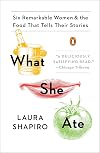
Fascinating approach to biography by the noted food historian Laura Shapiro. The chapters on Roosevelt and Pym are the strongest, followed by that on Brown (pretty sad) and Lewis. The Braun chapter is more about Hitler's food habits than about Braun's, probably because there is simply more info on him, but no less engrossing for that Highly recommended.
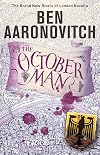
A new Rivers of London novel (although the cover says "novella") that's set in Trier, Germany and introduces us to Peter Grant's Deutsche counterpart, Tobias Winter. I'm not giving anything away by saying there's also a female version of Leslie (pre-face destruction) named Vanessa Sommer. Har har. The story is okay but feels much less substantial than the London tales. Tobias is just not as interesting as Peter Grant is, and certainly doesn't have near as much a sense of humor. There's no real extended team, although the leader of the Special Circumstances group, Elton, seems promising. Another element skimped on is Nightingale's opposite number, called simply "the Director". She appears briefly at the end of the book and Tobi's references to her are rather fleeting. I wish Aaronovitch had stretched himself and given us a female protagonist. He did make Tobi an apprentice of three years' standing, so we didn't wade through the basics with him. There are some mentions of The Folly, as well as the WW2 wizardry we heard about from Nightingale, but now from the other side so that at least was of interest. Aaronovitch continues his annoying habit of dropping in terms and titles without explanation or even, in this case, translation until several pages later, and sometimes not at all. My German is pretty decent but never covered police terminology, so stopping to figure out what he's referring to got old. Will wait and see how this new tack goes. I wouldn't call it fluff, but show more it's nowhere near as rich and engaging as are the London-based stories show less
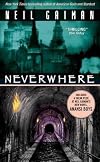
Re-read this after, oh, at least 10 years for a book club this week. It had never occurred to me back then how much of London Under seems to be based on Henry Mayhew's classic journalism on the East End, collected into London Labour and the London Poor. What's my first clue? The protagonist Richard Mayhew. In any case, it was enjoyable this time around, with the snappy pace I remember. The plot seemed a little thinner this time ... I've enjoyed other London-based fantasy or mystery, e.g., Ben Aronovitch or Christopher Fowler, more. It felt as though Gaiman was throwing everything he could think of into the mix, without it all being necessary (I'm thinking of the Beast of London - kinda weak).
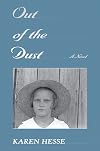
Another YA book that's worthwhile for adults. The series of free verse poems tells the story of a 14-year-old girl's coming of age in the Oklahoma Panhandle in the midst of the 1934/5 Dustbowl. Spare and powerful, with an authentic voice, sad but strong, that reminded me somewhat of the Spoon River poems, or some of Frost's.
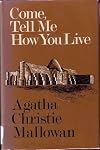
Breezy, affectionate memoirs of digging in Syria in the '30s with her husband, Max Mallowan. Christie wrote up her notes about 10 years later, when WW2 was still raging and pleasant memories of that lost world were welcome. Given that there is not a speck of humor in any of her mystery novels, I was pleasantly surprised to discover that she could see the funny side of what were often very rough and dirty conditions. She could also poke fun at herself, whether in the preparations for the journey (the clerks steer her toward the "OS" sizes, that is, out-sized) or in some of the strange encounters with the local villagers. Another surprise (to me, at least, who is not really a Christie mystery fan) is that Christie neither drank nor smoked. Shattered my image of her pounding away on a typewriter with a cigarette smoldering in an ashtray next to her and a glass of something on the table.

Amusing with occasional moments of high comedy, but too repetitious to be A-list Trollope. The will she-won't she scenes between Maryanne and Robinson wear thin. Worthwhile not just for AT completists. Some very trenchant and prescient comments on demand for ruinous bargain prices being the catalyst for far-reaching economic woes. Shades of today's garment industry!
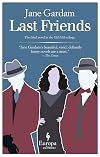
Look- if you are an Old Filth fan you can't pass this up. I'm just hoping that Jane Gardam repents the trilogy and gives us more (hey, Douglas Adams' Universe trilogy was, what, six volumes?). The Adventures of Dulcie and Fiscal-Smith would rival Burns and Allen. What about writing more about Veneering's wife and son? Harry was a great character. Just sayin, Jane.
Not as rich as Old Filth (how could it be?) and a cut below Man in The Wooden Hat (has ANYONE figured out the significance of that title? If so, please share!). As a previous LT reviewer said, too much 'i dotting' and that may be true, but also some hilarious scenes, e.g., Dulcie and Fiscal-Smith in the church. I got a bit tired of dwelling on Veneering's childhood. Would have liked more on his life as a young man and rising lawyer cum judge, most of which happens off-stage and is shared through V's musings. I still feel that V is not as well defined as was Old Filth, mainly because we're missing all those years, especially those of HIS marriage.
Not as rich as Old Filth (how could it be?) and a cut below Man in The Wooden Hat (has ANYONE figured out the significance of that title? If so, please share!). As a previous LT reviewer said, too much 'i dotting' and that may be true, but also some hilarious scenes, e.g., Dulcie and Fiscal-Smith in the church. I got a bit tired of dwelling on Veneering's childhood. Would have liked more on his life as a young man and rising lawyer cum judge, most of which happens off-stage and is shared through V's musings. I still feel that V is not as well defined as was Old Filth, mainly because we're missing all those years, especially those of HIS marriage.

Disappointing. The photos are great, but the text concentrates on the history of each of the cities or towns selected, with only a passing mention of the architecture at the end of each chapter. The only real architectural commentary is in the photo captions.

Solid B-list AT. Yes, at the beginning there's too much travelogue, but AT soon calms down and gets steadily down to work. Features a miserly rich uncle who won't name his heir, lovers' quarrels, a domineering mother tormenting her son the vicar and a less than admirable friend. The heroine isn't as icy as is Barchester's Griselda Grantly, later Marchioness of Hartletop, but her chilliness causes much grief to herself and the rather nebbishy hero. No hunting scenes, I'm NOT sorry to say, but a wicked depiction of a buncha old ladies at a whist party in a watering hole that's a few rungs down from Bath. In usual AT fashion, his "narrator" pretends to spill the beans while never actually revealing the plot twists. The much anticipated reading of the will is, unfortunately, not quite the tour de force one would hope, but you'll never guess who gets (or doesn't get) what. Overall, quite satisfactory.
Three Eighteenth Century Romances: the Castle of Otranto; Vathek; the Romance of the Forest by Harrison R. Steeves

THE CASTLE OF OTRANTO:
To borrow Virginia Woolf's comment on James Joyce, "What tosh." But entertaining tosh. If you're in the mood for something completely preposterous but short (only 123 pages) with great pacing, here's your gothic. I can see why it made such a splash back in the day - it's quite thrilling with a solid villain, proposals of infamous misconduct (marital, sexual), secret identities, prophecies, groaning portraits, secret passages and more . Wait for a dark and stormy night, then read it in bed by candlelight while wearing a frilly white nightgown (optional for males). Extra points if you have flowing wavy locks and a rosebud mouth.
To borrow Virginia Woolf's comment on James Joyce, "What tosh." But entertaining tosh. If you're in the mood for something completely preposterous but short (only 123 pages) with great pacing, here's your gothic. I can see why it made such a splash back in the day - it's quite thrilling with a solid villain, proposals of infamous misconduct (marital, sexual), secret identities, prophecies, groaning portraits, secret passages and more . Wait for a dark and stormy night, then read it in bed by candlelight while wearing a frilly white nightgown (optional for males). Extra points if you have flowing wavy locks and a rosebud mouth.

Solid AT but one of his most melancholy novels. The dreariness of our heroine's life made me a bit heartsore, having experienced some of her plight from time to time as a superfluous (i.e., unmarried) female who didn't marry until age 35. Okay - I wasn't nursing an invalid brother, wasn't sheltered and wasn't penniless, but our society still believes people should come in pairs. And I don't mean twins.
Surprise cameo by Lady Glencora late in the novel was a nice little extra, sort of like Sean Connery turning up as Richard the Lionheart at the end of the movie "Robin Hood: Prince of Thieves."
Surprise cameo by Lady Glencora late in the novel was a nice little extra, sort of like Sean Connery turning up as Richard the Lionheart at the end of the movie "Robin Hood: Prince of Thieves."

Of all the Trollope I've read so far, MSF is the most ingenious. It also has a curiously modern feel in its unflinching look at how unabashedly ugly people can get over money - even more appalling than his " The Way We Live Now." There, Melmotte was a crook and knew it. Here, Scarborough pere is a liar, cheat and abusive parent yet considers himself a stellar gentleman. With the legal wrangling over an estate as the center of interest, it's not just another Victorian romance (although that vein provides several sub-plots), yet you can't quite predict where it's going, and the main characters are, for the most part, unapologetic scoundrels or at least somewhat ethically challenged (that goes for Mrs. Mountjoy). The minor characters are greatly entertaining (Sir Magnus with his compulsory daily rides, Lady Mountjoy and her waddle, the infighting Brussels legation staff, Dolly Gray and her grim devotion to duty, the odious Carroll sisters). The chapter devoted to Mr. Prosper's wife-hunting was hilarious - my guffaws disturbed the cat, who has no sense of humor. Nobody handles scenes of marriage proposals quite as well as AT, and we get a good variety of them herein.
I was engrossed right to the end. Like many of the characters, I was wondering what other tricks the squire of Tretton had up his sleeve (he did have another big shocker about 1/4 from the finish line, for which his hapless attorney Grey will never forgive him, as the chapter title "Mr. Grey's Remorse" hints.) show more The periodic plot recaps, necessary for a novel that first appeared as a magazine serial (AT didn't live to see the final numbers published), were a minor nuisance. And like Mr. Grey, I did end up with a begrudging liking for Mountjoy, despite all the misery he brought on himself.
Be warned of the overt anti-Semitism of the era herein: the "Jew moneylenders" are not treated kindly. There is, however, a plug for the contemporary American girls who "carry latchkeys" and meet their young men at will, yet are no less virtuous than are their fair English cousins. Perhaps AT was thinking of his American friend, Kate Field? In any case, a generous nod across the pond. Altogether A-list Trollope. show less
I was engrossed right to the end. Like many of the characters, I was wondering what other tricks the squire of Tretton had up his sleeve (he did have another big shocker about 1/4 from the finish line, for which his hapless attorney Grey will never forgive him, as the chapter title "Mr. Grey's Remorse" hints.) show more The periodic plot recaps, necessary for a novel that first appeared as a magazine serial (AT didn't live to see the final numbers published), were a minor nuisance. And like Mr. Grey, I did end up with a begrudging liking for Mountjoy, despite all the misery he brought on himself.
Be warned of the overt anti-Semitism of the era herein: the "Jew moneylenders" are not treated kindly. There is, however, a plug for the contemporary American girls who "carry latchkeys" and meet their young men at will, yet are no less virtuous than are their fair English cousins. Perhaps AT was thinking of his American friend, Kate Field? In any case, a generous nod across the pond. Altogether A-list Trollope. show less

The Kellys and the O'Kellys starts awfully slowly - you have to plow (or plough) through a couple of chapters on Irish politics which were probably of high interest in their day but are of none now. You should just skim them, with no harm done to the rest of the story. The parallel love stories are handled well. The novel has some of the sharpest dialogue I've yet encountered in Trollope - reminded me of the best exchanges in Barchester Towers. Trollope had an extraordinary gift for dialogue - none of the flowery 19th century declamations that become excruciating - and he was at his best when his characters "go into battle." He captures the flavor and snap of Irish repartee without descending into mockery, which is no mean feat for a writer of his era or ours.. Plus there's a terrific villain (boo, hiss!) and good pacing (after those intro chapters). While this novel is often dismissed as "early Trollope" I think it better than a good number of subsequent efforts (such as The Belton Estate or Castle Richmond).

This last of the Palliser series is much more entertaining than its predecessor, The Prime Minister. The Duke's son, Lord Silverbridge will remind the reader of a scaled-down Phineas Finn but, I think, more endearing (as Lady Mab has discovered). The Duke himself is more sympathetic than in the previous volumes. In The Prime Minister he was either being overshadowed by his wife, the formidible Glencora, or indulging in those bouts of self-pity and hand-wringing that made most everyone he knew want to slap him. He now has a world of hurt and trouble visited on him in this last Palliser novel, and deserves some measure of, if not sympathy, then at least empathy.
Mrs. Finn, previously Madame Max, gets once more to kick some Palliser butt, and it's highly enjoyable to watch (i.e., read). She reminds me somewhat of Martha Dunstable, later Mrs. Dr. Thorne, but less puckish.
Major Tifto is a quite satisfactory heel, and Dolly Longstaff, now 35-years-young, gets a few aristocratic zingers in.
Mrs. Finn, previously Madame Max, gets once more to kick some Palliser butt, and it's highly enjoyable to watch (i.e., read). She reminds me somewhat of Martha Dunstable, later Mrs. Dr. Thorne, but less puckish.
Major Tifto is a quite satisfactory heel, and Dolly Longstaff, now 35-years-young, gets a few aristocratic zingers in.

Kept In the Dark, sort of "He Knew He Was Right-lite" is a Trollope novella for completists, i.e., not exactly one of his best efforts. Very repetitive to the point where I could skip an entire page and not miss anything. Endless hand-wringing over a trivial episode. Well, it was a paycheck, and that was what AT was looking for, I guess.

Dr. Wortle's School was enjoyable to a degree but left me vaguely dissatisfied - much like eating fruit for dessert when what you wanted was a hunk o' fudge cake. DWS is pure Victorian melodrama, albeit with plenty of Trollope's relentless ridicule of the society's hypocrisy and lack of Christian charity. After the initial description of the good doctor I was prepared to dislike him intensely, no matter how benevolent his depotism. Then came the description of him as being "in no respect a wicked man, and yet a little wickedness was not distasteful to him." We should all be so lucky, to be described thusly. By the end I was wishing to have such a friend by my side, should I ever encounter misfortunes on the magnitude of those besetting the perfect Peacockes.
Mr. Peacocke was almost unforgivably a paragon, yet what he undertook on behalf of his wife was the embodiment of romance. Forget poetry, roses, sweet nothings: the labors of Peacocke eclipse them all.
I was taken with Dr. Wortle himself. He was one of AT's most realistic characters, amid the sea of vividly-drawn, believable characters. The problem is, I think, that I've been spoiled by the likes of Barchester Towers and The Claverings (the latter still much underappreciated, I think), even The Way We Live Now, so breezing through an AT seemed wrong. I was prepared for heading into the wind and instead found mere breezes, delightful though they may be.
All that being said: this book was another "AT lite" effort. He did show more uncharacteristically get on with matters right from the start, and in a mere 273 pages tied up everything neatly. No subplots, no lovers' quarrels or triangles, no legal wrangling over an estate. Would make a very nice TV movie, for the Hallmark channel or Lifetime. show less
Mr. Peacocke was almost unforgivably a paragon, yet what he undertook on behalf of his wife was the embodiment of romance. Forget poetry, roses, sweet nothings: the labors of Peacocke eclipse them all.
I was taken with Dr. Wortle himself. He was one of AT's most realistic characters, amid the sea of vividly-drawn, believable characters. The problem is, I think, that I've been spoiled by the likes of Barchester Towers and The Claverings (the latter still much underappreciated, I think), even The Way We Live Now, so breezing through an AT seemed wrong. I was prepared for heading into the wind and instead found mere breezes, delightful though they may be.
All that being said: this book was another "AT lite" effort. He did show more uncharacteristically get on with matters right from the start, and in a mere 273 pages tied up everything neatly. No subplots, no lovers' quarrels or triangles, no legal wrangling over an estate. Would make a very nice TV movie, for the Hallmark channel or Lifetime. show less

B-list Trollope, maybe even a C+. AT gets off to a slow start with a repetitious first chapter, then plunges into the story: a most satisfactory love triangle, with an inheritance gone wrong to boot. The plot seems more straightforward than many other AT novels, with fewer side excursions (I make no complaint in either direction - merely an observation).
These convoluted or opaque first chapters put me in mind of someone who is getting settled to tell a story- slapping pockets looking for his cigar, loosening his tie, searching for matches - all the while paying only half-attention to the tale he's begun (thanks, I will have a glass), leaving his listeners impatient around him. Much "now where was I" and "as I was saying," false starts, and no one wanting to interrupt because he'll lose his place again.
The hero is much too perfect and WAY too conveniently falls for the heroine, but there is good give-and-take between the friends and a breath of scandal for relief
These convoluted or opaque first chapters put me in mind of someone who is getting settled to tell a story- slapping pockets looking for his cigar, loosening his tie, searching for matches - all the while paying only half-attention to the tale he's begun (thanks, I will have a glass), leaving his listeners impatient around him. Much "now where was I" and "as I was saying," false starts, and no one wanting to interrupt because he'll lose his place again.
The hero is much too perfect and WAY too conveniently falls for the heroine, but there is good give-and-take between the friends and a breath of scandal for relief