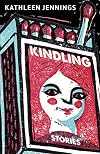
This collection of short stories read as fairy tales, often as a play on well known works and with a truth at its heart. Jennings uses different writing styles, allowing each story to be a surprise, both in content and in structure. The stories are full of remarkable characters and places, but speak to the universal truths: love, freedom, companionship, identity. And lots of birds! I didn’t love every story, but I did love most. Unfortunately, the most difficult story is the first; you may want to visit that one last.
 This review was written for LibraryThing Early Reviewers.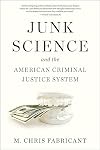
Utterly fascinating. Fabricant, working with the Innocence Project, takes us through the history of how poorly researched “science” has been used in courtrooms to convict men for crimes. He focuses on three different cases which all relied on bite mark evidence, but also discusses arson, hair analysis, lie detectors, and other areas of “junk science” where there are no peer reviewed studies or industry standards to support conclusions made by “experts” testifying in the courtroom. This “junk science” only reinforces the racist stereotypes that dominate in criminal justice and American culture, and keeps those with authority and power in control. While the topic is fascinating and worthy of pursuit, I do wish this book had been organized a little differently. It was tough to keep up with the changing cases, characters, and events, as the narrative revisits each several times. Another warning for some: the cases are terribly violent and troubling, and may be difficult to read about.
This review was written for LibraryThing Early Reviewers.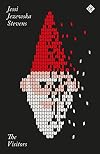
“You are who you let in,” muses the main character who is dealing with the regular appearance of a gnome-like argumentative man living in her apartment. The Visitors explores our modern sense of fear, loneliness, and identity in a world where the 1% strive and the rest struggle. C is trying to save her business, her relationship with her best friend, and her health, while living in a world she feels disconnected to; she is sometimes a visitor to her own life. While an excellent concept and some beautiful writing, this one ultimately was too disjointed by the end.
This review was written for LibraryThing Early Reviewers.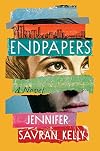
In this post-9/11 novel, Dawn grapples with a city and a self that feels increasingly fragile and blurred. Dawn is genderqueer, struggling to understand her identity, her relationships, her art, and her world. She realizes that like water, she has been molding herself to whatever container will hold her, and that she needs to break that mold. Gertrude, a survivor of WWII and the Lavender Scare, helps her find some clarity. This unique story is wrapped in themes of love, identity, compassion, art, and New York. It is the ‘imagined city’ that will appeal to many readers.
This review was written for LibraryThing Early Reviewers.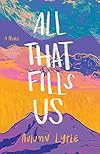
Recovery and self-healing are always nourishing topics to revisit, and we travel along with Melanie on her particular journey as she tries to overcome an eating disorder and all its associated emotions and perceptions. Note: this is Christian fiction, which I didn’t realize when I picked this title up, and may not be for everyone. Unfortunately, it wasn’t for me.
This review was written for LibraryThing Early Reviewers.
Ah, this scratched an itch. Better Luck Next Time is an enjoyable bit of escapism, back to the 1930’s, out in the Nevada desert, and with a memorable cast of characters. Our man Ward is empathetic, the ladies are eccentric and outspoken, and Sam has the best lines. Fun!
This review was written for LibraryThing Early Reviewers.
Polar vortex not only describes last winter’s weather event, but also the state of Priya’s closest relationships. Shani Mootoo exquisitely guides us through the thoughts, actions, and motives of Priya, her partner Alex, and Priya’s oldest friend Prakash. While the current events play out in a single day, we travel back forty years to understand beginnings and back stories, and learn not everyone remembers events the same way. This novel has a lot to say about memory and privacy, and what it means to come to terms with who you are. The barren Canadian setting does much to add to the mood and increasing tension building between the characters and what they will reveal.
This review was written for LibraryThing Early Reviewers.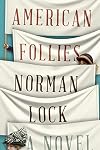
American Follies seeks to reveal our follies: the racism, sexism, and disenfranchisement endemic in America today, as it was in the nineteenth century. Through a circus, a minstrel show, a psychiatric hospital, etc., the social issues that plague the human race surface again and again. While occasionally humorous (although, if I had to read another Elizabeth Cady Stanton fat joke again, I was going to lose my mind), Locke seems to often lose the thread of his tale through wanderings and happenstance meetings with other nineteenth century figures of American history. While clearly satire, I sometimes wish it took itself a little more seriously.
This review was written for LibraryThing Early Reviewers.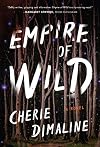
Dimaline cleverly re-imagines the Rogarou, a native legend of a werewolf-like creature, into modern-day life. Her story is steeped in commentary on how indigenous peoples have been manipulated by government, greed, and religion, and how turning to ancestral stories, family, and love, can help to persevere. I was captivated by the novel, it's characters, and the folklore behind it all. The story is not over, and I look forward to seeing what Dimaline delivers next.
This review was written for LibraryThing Early Reviewers.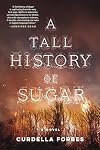
I struggled with finishing this one. While the characters and setting are undeniably interesting, the story felt too sluggish and I’d put the book down and forget to pick it back up again. It may be worth visiting again under a new mindset.
This review was written for LibraryThing Early Reviewers.
The premise of the Tiger Catcher, that great love knows no particular time or place, would have felt more true had the love story been more believable. I’ve read the Bronze Horseman trilogy and I know that Paullina Simons can write about great love, but it didn’t work for me here. I didn’t understand the draw that the characters felt towards each other and the rushed timeline didn’t help. I was also distracted by the vocabulary the characters used and their conversations; the tone was off, and just this side of believable, making it hard to buy the story. While I enjoyed some of the twists and parallels, I was expecting more.
This review was written for LibraryThing Early Reviewers.
I enjoyed this collection of richly layered, lyrical short stories about the inner lives of a group of women. Interwoven in the stories are elements of magical realism, hinting at truths behind action, and serving as the myths (and sometimes the fairy tales) of human nature and what it is to be a woman. This is the type of collection that deserves rereading for both the masterful writing as well as the story construction and meaning.
This review was written for LibraryThing Early Reviewers.
There is a lot that is refreshing about this novel; Emily is a young, smart, and ambitious woman, and seemingly confident in her professional abilities. She rarely doubts her intellect and skills and knows what she wants in the laboratory. It’s exciting to read about a woman excelling in the STEM fields and Emily, herself, is truly a fascinating character as she struggles to balance her naturally introverted and driven personality with an unexpected love interest and the challenges that arise out of being a working woman. But the relationships in her life are strange. She is dominated by two manipulative and selfish men and it is troublesome to watch her struggle with herself to please them both while being true to herself. I wish we could have seen Emily make some genuine friendships which would have better allowed her to explore her personality, interests, and goals. Instead, we just get these men imparting their expectations on her. Emily deserved better.
This review was written for LibraryThing Early Reviewers.
I want to hand this book out to every teenager I meet. With chapters on romantic relationships, appearance, careers, intersectionality, and finding allies with boys and men, this book covers a lot of ground. I was especially taken with the chapter on the history of feminism, and seeing the current movement in context with all that has come before. There are anecdotes, profiles, and images dotted throughout the text, which gives a fuller view of the issues at hand. The author helpfully provides a glossary and list of resources for further exploration. Many of the references and interviews are Canadian, giving a slightly more global perspective for an American audience.
This review was written for LibraryThing Early Reviewers.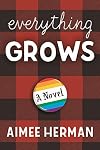
Eleanor’s schoolmate tormentor has just killed himself, and to help the students work through their grief, Eleanor’s teacher encourages them to write. Just write. To anyone, to just get their thoughts out. Eleanor chooses to write to her former bully, James, and in doing so, begins to figure out who she is, who James was, and to better understand those around her. Everything Grows deals with heavy topics; suicide, sexuality, gender identity. Understanding James’ torments, Eleanor learns to accept and love herself, even the parts of herself that she can’t find the words for and hasn’t yet figured out.
I enjoyed how realistically this novel dealt with changing relationships and varying levels of support during Eleanor’s process of coming out. Some stand by her easily while others are lost along the way. A lot happens to Eleanor in a small span of time, and the last third of the novel, including the introduction of some new characters, felt forced and rushed. As someone who was also 15 when Kurt Cobain ended his life, it was a sad and strange bit of nostalgia to visit that time again. Overall, this feels like a book that could provide great comfort to a young adult trying to figure themselves out and find their place in the world.
I enjoyed how realistically this novel dealt with changing relationships and varying levels of support during Eleanor’s process of coming out. Some stand by her easily while others are lost along the way. A lot happens to Eleanor in a small span of time, and the last third of the novel, including the introduction of some new characters, felt forced and rushed. As someone who was also 15 when Kurt Cobain ended his life, it was a sad and strange bit of nostalgia to visit that time again. Overall, this feels like a book that could provide great comfort to a young adult trying to figure themselves out and find their place in the world.
This review was written for LibraryThing Early Reviewers.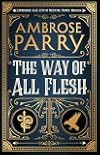
This novel is a smart and engaging tour of Victorian Edinburgh, rife with danger around every foggy corner. Our heroes are Raven, a young doctor, and Sarah, maid at the household where he is apprenticed. In pursuit of a charlatan taking advantage of women at the fringe of society, Raven and Sarah are participants in the era’s medical developments as well as the timeless barriers that women face, both in seeking an education and in the ability to control their own reproductive choices.
I greatly enjoyed the entwining of fiction and fact; several characters and their historic discoveries walk right out of the medical history books. There is also a delightful map of old Edinburgh in the preliminary pages. There are a number of characters to keep track of and I sometimes wished the chapters weren’t quite so short, but overall this was a memorable and thoughtful mystery to recline with.
I greatly enjoyed the entwining of fiction and fact; several characters and their historic discoveries walk right out of the medical history books. There is also a delightful map of old Edinburgh in the preliminary pages. There are a number of characters to keep track of and I sometimes wished the chapters weren’t quite so short, but overall this was a memorable and thoughtful mystery to recline with.
This review was written for LibraryThing Early Reviewers.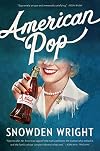
Reading this novel is taking a stroll through the Panola Cola Historical Museum. Each chapter contains a loose assemblage, a seemingly haphazard arrangement that guides the visitor through the history of Panola Cola, the Forster family, and the American South of the twentieth century. The chapter titles are curious hints of what’s to come as the story swiftly changes characters and jumps back and forth through time. The family genealogy at the beginning is a helpful tool in navigating the four generations of Forsters. I loved watching the pieces start to come together and understanding the characters more fully. While undoubtedly a serious novel, there is a lightness, sense of humor, and “sweetness” as well.
This review was written for LibraryThing Early Reviewers.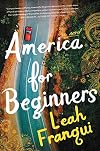
This book went a little way towards restoring my faith in humanity. This cross-country journey shared amongst three very different individuals was both humorous and poignant, as their American experiences affected them in different ways. My favorite passages were the conversations between Pival, the Bengali widow, and Rebecca, her young and brash American companion. Their perspectives on womanhood and autonomy were fascinating and I would have enjoyed more. In a world of tunnel vision and echo chambers, this novel is a refreshing foray into the “other” and lessons in empathy.
This review was written for LibraryThing Early Reviewers.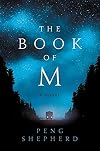
I will never look at shadows the same way again. A wholly original novel, full of surprises and creative turns, The Book of M is captivating. Told through several perspectives, the first half of the novel gradually fills in the background of the events leading up to the present, while the second half has those characters racing towards a resolution. Names are fluid, colors are important, and memories are fleeting. I’ll remember this one though.
This review was written for LibraryThing Early Reviewers.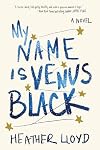
The mystery of what Venus did and why she did it has a slow reveal, bringing the reader along on her compelling journey back to herself. Venus, her family and friends, are well-drawn and flawed characters who have all made mistakes in trying to do the “right” thing. The more I read, the more I wanted to keep reading, rooting for them to succeed and find happiness. While some turns in the story seemed a bit implausible, nothing is stranger than real life and Venus’ life felt real to me.
This review was written for LibraryThing Early Reviewers.Talking as Fast as I Can: From Gilmore Girls to Gilmore Girls (and Everything in Between) by Lauren Graham
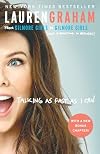
Fans of the Gilmore Girls will enjoy spending a few hours getting to know Lauren Graham and seeing the show through her eyes. Lauren, who comes across a bit like the fast-talking Lorelei, is funny, cheeky, and introspective about her path in life. You won’t find any real scoop or less-than-flattering details about the show, and you do get the sense sometimes that Lauren is keeping us at arms length. However, it may just make you want to head back to Stars Hollow for another trip with old friends.
This review was written for LibraryThing Early Reviewers.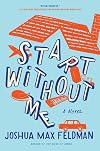
It's Thanksgiving Day and two strangers stumble into each others' lives and each others' demons. Adam, former musician and recovering alcoholic, cannot face his suburban family. Marissa, pregnant from a one-night stand with an ex, is struggling with her situation, her husband, and his wealthy and demanding family. Alcoholism and the residual effects of poverty and loneliness are stark on this holiday of togetherness. This book was sadder than it's marketing suggested. While it sometimes felt a little implausible and overwrought, it was an engaging read and did contain a few surprises.
This review was written for LibraryThing Early Reviewers.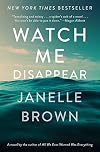
Watch Me Disappear is a character study of Billie Flanagan, whose various and seemingly contrary quirks and iterations we learn through the lens of her husband, daughter, friends, and past associates. When Billie disappears on a hike and is presumed dead, her loved ones try to make sense of who Billie really was. This novel is a gripping story, whose heart beats faster as the pages turn. It teaches us that we never really "know" anyone, sometimes only what they want us to see, and that we must try to love each other anyways.
This review was written for LibraryThing Early Reviewers.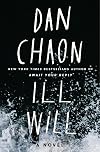
Dan Chaon's latest is a thriller that leaves us musing over the legacy of abuse and the instability of memory. Dustin Tillman suffered terrible tragedy as a child, but has become a husband, father, and practicing psychologist, using the lessons of his past to help those around him cope with their own unresolved issues. When he is introduced to a modern unsolved crime, Dustin's memory of the past starts to unravel and what seemed clear is no longer certain. With mounting dread and fascination, we watch our unreliable narrator try to come to terms with what is happening around him, and what happened in the past. To mirror the fracturing of time and memory, Chaon uses some interesting literary tricks to move us through the consciousness of several characters. A dark but compelling read!
This review was written for LibraryThing Early Reviewers.Outlander's Sassenachs: Essays on Gender, Race, Orientation and the Other in the Novels and Television Series by Valerie Estelle Frankel
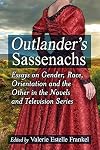
Fans of Diana Gabaldon's Outlander will enjoy this work, which critically explores themes of diversity, masculinity, feminism, and other topics within the novels and television show. While this is an academic text (complete with full citations), many of the essays are quite readable and make compelling and thoughtful arguments about the characters and their worlds. My favorite essays lay at the beginning and end of the book; the comparison of Highlander culture with the Native American experience is fascinating, and the feminist lens by which Claire (and the female reader) views sexual violence against women continues to reframe some key scenes for me. As someone who has read the books several times and watches the show, reading these essays has brought some of the material into a new perspective. Highly recommend!
This review was written for LibraryThing Early Reviewers.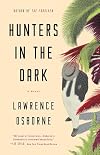
This dark tale, steeped in superstition and karma, kept me engaged to the end. Nearly all the characters we meet are wizened by their experiences with poverty and war; they are savvy about life and human nature, always looking for an edge to get ahead. This is contrasted by the protagonist, Robert, a young and disillusioned Englishman who is just trying to escape the boredom and disconnectedness he feels with his schoolteacher life. As a reader I became a little frustrated with Robert's naïveté, but I also appreciated the innocence that he brought to situations. Identity swapping, drug deals, a rotating bag of money, and steamy Cambodian location help keep the plot moving along.
This review was written for LibraryThing Early Reviewers.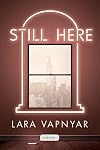
Four Russian friends and immigrants living in New York City are balancing impending middle age, relationship problems, unfulfilled ambitions of youth, and thoughts of legacy and life after death. Many of these issues arise out of Sergey's idea of Virtual Grave, an app that is algorithmically programmed to communicate with loved ones after one's death. This is a modern tool that gets at an age-old question. It's a also clever story with interesting, flawed characters who are navigating a world where online personas seem to often matter more than their real world counterparts.
This review was written for LibraryThing Early Reviewers.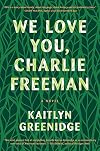
There's lots to mull over in this book and it would probably make a great choice for a book club discussion. The Freemans, a black family from Boston, move to an institute in the Massachusetts countryside to participate in an experiment where they teach sign language to a chimpanzee that lives with them as a family member. The experiment draws parallels with earlier racially motivated experiments conducted at the institute. The narrative switches largely between the Freemans' oldest daughter, Charlotte, and a woman named Nymphadora, who was involved with those early experiments. This wholly original story is disturbing, sad, and yet fascinating; topics of race, gender, and human nature are laid out for discussion. While some choices in the book are perplexing (how can a mother choose a chimp over her children?) and can sometimes distract from the story, the bigger questions keep it on track.
This review was written for LibraryThing Early Reviewers.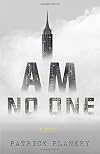
When we're texting a friend, emailing a colleague, purchasing an item online, or just walking down the street, our actions are being tracked whether we're conscious of it or not. This realization hits Jeremy O'Keefe when the historical records of such actions start showing up at his door. Why is someone tracking him? What has he done to elicit such interest? As Jeremy analyzes both his past activities and his current mental state, the reader is left to reflect on the freedoms and privacy that we give up in order to feel 'safe' in the 21st century. This is an important topic and I only wish that Jeremy's story was just a little more compelling. We're often bogged down with the rambling details of a man trying to piece together his past and justify his behavior. This may serve to emphasize the normalcy of Jeremy's life, but it slows the pulse of the story and I couldn't help wishing for crisper storytelling.
This review was written for LibraryThing Early Reviewers.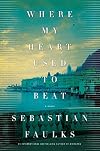
Robert Hendricks is a sad man, rattled by his memories of war and lost love. Through his connection with an elderly neurologist, Robert revisits the ghosts of his past and his relationships with war buddies, a beautiful Italian woman, and the father that he never knew. There are some thoughtful sentiments on solitude and memory, but Robert is not the most compelling of narrators and it was sometimes a challenge to stay with him as he worked through his past. His mental health and the reliability of his own memory is briefly questioned, although not thoroughly explored.
This review was written for LibraryThing Early Reviewers.