To pay tribute to childhood memories, I ordered a copy of Dreamfall to read after I would finally finish Catspaw. The world building is superb. I give it and the wordsmithing two stars. However, during the book, the lead hero experiences a chicken soup of trauma while never really standing up, himself. While he possesses the ability to be a great hero, he continually scrapes the bottom as others abuse him. This book would be more truthfully labeled as a psychological dystopian novel featuring abuse.
I once worked with a storyteller, briefly, who would share tales of a hero who was heroic because they would, on occasion, look back at their attacker before going back to the abusive stage. This feels like that. It's some folks' jam and should be more properly labeled.
This is not a hopeful novel; it's about the futility of existence.
Content warnings: Assault (sexual, physical), abuse (sexual, physical, emotional), dystopian
I once worked with a storyteller, briefly, who would share tales of a hero who was heroic because they would, on occasion, look back at their attacker before going back to the abusive stage. This feels like that. It's some folks' jam and should be more properly labeled.
This is not a hopeful novel; it's about the futility of existence.
Content warnings: Assault (sexual, physical), abuse (sexual, physical, emotional), dystopian

I read parts of Catspaw years ago, and went back to reread it in full, recently. I'm glad I never finished it as a teen. Catspaw experiences wonderful worldbuilding and wordsmithing. However, the series is a tale of a hero who exists for the purposes of experiencing pain and suffering. The story as written is abusive soup.
There are no wins in the book. There is no hope. There is only the trauma of surviving in a world run by corporations.
Content tags for the series: assault, rape, dystopia, abuse, psychological trauma
There are no wins in the book. There is no hope. There is only the trauma of surviving in a world run by corporations.
Content tags for the series: assault, rape, dystopia, abuse, psychological trauma
A lovely book, although my thoughts are the opposite of atimco's. The character relations have overtones of "I can fix him!" which is a popular trope but goodness is it exhausting. Though the story and book itself are lovingly and well-writ, I tire of Brinsbane's downsplaining, the way he keeps everything from Lady Grey while pretending to involve her, his "manful suffering" and so forth. His manful-suffering, his keeping things from her, results constantly for others, including Grey, being placed into mortal danger. In future books, he remarks how surprised he is that Grey has a brain or has facilities for reasoning at all.
At the quite end of the book, he somehow "justifies" his treatment of her; there would have been no mystery had he communicated.
Everything she does is criticized, and downplayed. I get it. I get it. It's Victorian England and suchlike. Women are useless children to be used as breeding hares and nothing more. She is addressed consistently as a child, spoken over, criticized, and everything about her attempted to be controlled by her male relatives.
Rated for the beautiful wordcraft and writing. I read these books in spite of Brisbane, and not because of him. I admit, I've begun skimming paragraphs where he speaks. I do suggest it.
At the quite end of the book, he somehow "justifies" his treatment of her; there would have been no mystery had he communicated.
Everything she does is criticized, and downplayed. I get it. I get it. It's Victorian England and suchlike. Women are useless children to be used as breeding hares and nothing more. She is addressed consistently as a child, spoken over, criticized, and everything about her attempted to be controlled by her male relatives.
Rated for the beautiful wordcraft and writing. I read these books in spite of Brisbane, and not because of him. I admit, I've begun skimming paragraphs where he speaks. I do suggest it.
[Non-Plot Spoilers Ahead]
I blame myself for this one.
My guard was down. Oh, I thought. A book! A book featuring a newspaper owner in a small town in Washington state. Strong female main character, quirky cast, the series promised. There being ~30 books in the set, I was aiming for a fun romp.
The series, for me, started with the book I found on the library shelf, began with interfamilial conflict alongside the murder storyline. Emma's, the MC, male relatives came into town. Both priests, they casually demanded to be waited on for housework and food, and didn't shy when it came to telling her what to do or making demands of her.
She snapped back at them, made them help with the dishes at least once, and the author depicted too, how the townsfolk would compete to invite the priests over as though they were some racehorses and frequently came home buzzed.
Nevertheless, she stood up even argued with them--save for bending over and spending most of her poor salary on her son's comfort, to fulfill his every request. That, I could buy. Mother's Blind Spot. Character Flaw.
Alright, I decided. The wordsmithing was alright. The characters were interesting. I'd give this another chance.
Picked up a few more books, and off we g--
...okay, there were murder(s). Check.
...aaand Emma ends up in a relationship with a guy who the story swears is long-term, true love. I mean, if you count how he:
- verbally abuses her
- manipulates her
- controls and remodels her house along his decision-making
- show more demands dinner be made for him and tells her what it's going to be
- controls when they hump
...at one point, she even "snugs" up at the foot of his chair when he sits in it (after near-yelling at a visitor that That Chair belonged to Muh Man). The two, too, spend time smoking indoors "despite the nonsmoking signs" while lamenting how privacy gets in the way of legal justice.
...aaaand the books are going back to the library.
That brings me to part two.
Why did the author turn this character into a toxic doormat?
My main thought is that she became tired of writing the series after so many novels, and despite her talent, ended up falling back on awful, awful romance tropes to sell the books. It's all I can think of; or, she just really meant to depict life in a small town that way. show less
I blame myself for this one.
My guard was down. Oh, I thought. A book! A book featuring a newspaper owner in a small town in Washington state. Strong female main character, quirky cast, the series promised. There being ~30 books in the set, I was aiming for a fun romp.
The series, for me, started with the book I found on the library shelf, began with interfamilial conflict alongside the murder storyline. Emma's, the MC, male relatives came into town. Both priests, they casually demanded to be waited on for housework and food, and didn't shy when it came to telling her what to do or making demands of her.
She snapped back at them, made them help with the dishes at least once, and the author depicted too, how the townsfolk would compete to invite the priests over as though they were some racehorses and frequently came home buzzed.
Nevertheless, she stood up even argued with them--save for bending over and spending most of her poor salary on her son's comfort, to fulfill his every request. That, I could buy. Mother's Blind Spot. Character Flaw.
Alright, I decided. The wordsmithing was alright. The characters were interesting. I'd give this another chance.
Picked up a few more books, and off we g--
...okay, there were murder(s). Check.
...aaand Emma ends up in a relationship with a guy who the story swears is long-term, true love. I mean, if you count how he:
- verbally abuses her
- manipulates her
- controls and remodels her house along his decision-making
- show more demands dinner be made for him and tells her what it's going to be
- controls when they hump
...at one point, she even "snugs" up at the foot of his chair when he sits in it (after near-yelling at a visitor that That Chair belonged to Muh Man). The two, too, spend time smoking indoors "despite the nonsmoking signs" while lamenting how privacy gets in the way of legal justice.
...aaaand the books are going back to the library.
That brings me to part two.
Why did the author turn this character into a toxic doormat?
My main thought is that she became tired of writing the series after so many novels, and despite her talent, ended up falling back on awful, awful romance tropes to sell the books. It's all I can think of; or, she just really meant to depict life in a small town that way. show less
Great writecraft, fun character writing, and as the series goes along the world gets more and more developed. The original villain begins to fade out by book three--a smart move, given that their mode of villainy means there'd be no end to them. A risk of repeats. The series looked to twist at that point, but...
I couldn't do it. I couldn't get past book 3. This, despite that I found myself invested in the characters and the story, as well as the world building. Sure, the author made The Corset Mistake, but hey, that's common. It's a funny, well-established myth, just like the Victorian's ankle fetish.
...
What drops this book for me is the author relies on abuse for shock value.
[Spoilers Ahead]
Not only does a MC's backstory involve his spouse cheating on him, he loses wife and both children to an unnamed plague, but only after discovering the children were illegitimate before everyone died.
Only one of those things needed to happen for it to be tragic. All three, or four (depending on count) pushes it into the realm of shockwriting and towards surrealism. Then there is the physical/sexual abuse, that goes beyond "realism" in terms of how women were treated and into shockwriting.
For a while, it seemed as though every villain, and every major history travel, seemed to involve a sexual assault attempt of the MC. Or, emotional abuse: For example, when the MC loses a child there's a whole set of her partner being emotionally abusive towards her, despite her near-death and show more extended suffering.
Mind, there's other tragedies in the series that don't get as much pagetime.
If the later books have less shock, I'd love to continue. The writing otherwise was great, the characters good, and the rest an excellent romp. However, it's probably also the shock that makes the book for many (thinking Game of Thrones, here). show less
I couldn't do it. I couldn't get past book 3. This, despite that I found myself invested in the characters and the story, as well as the world building. Sure, the author made The Corset Mistake, but hey, that's common. It's a funny, well-established myth, just like the Victorian's ankle fetish.
...
What drops this book for me is the author relies on abuse for shock value.
[Spoilers Ahead]
Not only does a MC's backstory involve his spouse cheating on him, he loses wife and both children to an unnamed plague, but only after discovering the children were illegitimate before everyone died.
Only one of those things needed to happen for it to be tragic. All three, or four (depending on count) pushes it into the realm of shockwriting and towards surrealism. Then there is the physical/sexual abuse, that goes beyond "realism" in terms of how women were treated and into shockwriting.
For a while, it seemed as though every villain, and every major history travel, seemed to involve a sexual assault attempt of the MC. Or, emotional abuse: For example, when the MC loses a child there's a whole set of her partner being emotionally abusive towards her, despite her near-death and show more extended suffering.
Mind, there's other tragedies in the series that don't get as much pagetime.
If the later books have less shock, I'd love to continue. The writing otherwise was great, the characters good, and the rest an excellent romp. However, it's probably also the shock that makes the book for many (thinking Game of Thrones, here). show less
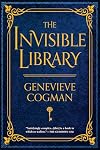
Loving this series; colorfully written, entertaining characters, and a beautiful setting. Enjoy the interpretation of the different supernaturals, and the featuring of a strong female lead. My only quiff with this series is it falls into the "corset sins." Corsets and stays were effectively bras. Women who made them molded to the individual, with "tight-lacing" being its own, separate thing. They wore them over an inner garmet, which kept the stiffer fabric from chafing, while providing back and ahem, curvature support. Though they're part of again ahem, certain industries, today, women wore them regularly, whether raising kids, or sweeping roofs. Women, working women, peasant and otherwise, could not have functioned as corsets are depicted as existing in fiction.
Corsets didn't reorganize the internal organs, nor did women have ribs removed (an incredibly risky surgery, at a time that most surgery was deadly, and one not recorded in medical histories...). The same medical textbooks described conditions such as "hysteria" and "miasma," describing how one ought to avoid the air over graveyards. Why those conditions are discounted, but "squished and relocated organ theory and surgical rib removal" are not, is and interesting consideration.
With the pandemic, sewing and fabric, women's fashion history and the history of women's crafts surged (haha). One of the things that came from that is "Augh, I faint!" was as true as "Augh! Scandalous ankles!" It's a lovely story and show more makes us laugh and chuckle; it's just a historical, reinterpretative quirk.
That said, I did enjoy the books. They would be easily translated into a roleplay setting, if someone wished for that. show less
Corsets didn't reorganize the internal organs, nor did women have ribs removed (an incredibly risky surgery, at a time that most surgery was deadly, and one not recorded in medical histories...). The same medical textbooks described conditions such as "hysteria" and "miasma," describing how one ought to avoid the air over graveyards. Why those conditions are discounted, but "squished and relocated organ theory and surgical rib removal" are not, is and interesting consideration.
With the pandemic, sewing and fabric, women's fashion history and the history of women's crafts surged (haha). One of the things that came from that is "Augh, I faint!" was as true as "Augh! Scandalous ankles!" It's a lovely story and show more makes us laugh and chuckle; it's just a historical, reinterpretative quirk.
That said, I did enjoy the books. They would be easily translated into a roleplay setting, if someone wished for that. show less
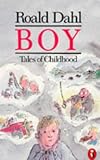
I think we should be afraid of Roald Dahl. He tells tales of canings, of lining up to say "sir" and "ma'am" inside of English boarding school. He tells of adults from his boyhood, a lens so quirky and dark we're given descriptions of lime-puckered lips, and rat-like glee...we should be afraid of this man. Because after reading, he leaves us smiling. There's something wonderfully wrong with him.
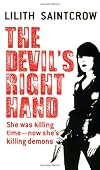
I normally enjoy a psychological aspects to books I read, but this was spinning terrible in places, good in others in a way that can't let me give it over a 3. Good points are: the detail and setting and world, especially the language, the way the main character's anger acts on and influences her life, her vein of distrust that poisons her worldview. The less-than-good-points are: at-times cliche dialogue and the forced over-your-head-I-have-a-secret vibe that felt as though the author was beating it against my head through much of the book. I wanted to slap Japh and Dante both, for the writing, themselves, and for having to slough through pages of mental spiraling and...the dialogue. Jeph, you annoying bastard. Alternate-mindset or no, it was difficult to believe that he had a rationale or reason behind it all, other than attempting to be suave and silent... a stereotype further played upon by the men Japh hired on to assist them. They spent the usual boring time flexing jaws and muscles and sizing one another up.
The mixture of qualities gives me a mixed overall view of the work, and the author.
The mixture of qualities gives me a mixed overall view of the work, and the author.
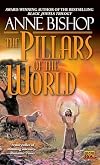
Author depicts the unusual life of a young woman who exists as part of one mythology while the antagonists, if they could be antagonists, believe another. Bishop depicts a struggle of belief versus belief and differing values, as well as illustrating how a mythology can be created over time. The world comes across as rich, and I enjoy how the writer lets the (spoiler) lead character end up with not the dangerous but suave bastard in the book. It must be a first.
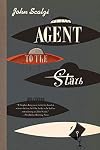
Scalzi's opening line to Old Man's War will stick with me for years to come, and Agent to the Stars evidences the same strong writing. Here he spins a yarn of alien first-contact, of aliens who have an image problem, and know it. They attempt an unusual approach to the solution, taking them into Hollywood territory, and an entertaining clash of personalities.
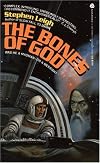
Yes, the cover is somewhat cheesy--Leigh admits as much in a review of his own--but this story has a panache. It's a twisting sort of panache that settles into a gut and flares with a painful, bright light, buzzing there like a half-dozen gutflies. The writing is, as usual for Leigh, entertaining. This is one of his starker subject matters even without religion thrown into the mix. I found myself asking if the man depicted were a monster, and was entertained just the same. He includes a variety of writing in the book, varying from journal entries to memories to historic accounts to regular prose, and the species tension is in evidence here, also. Readers will find a well-developed alien species to marvel at, one of Leigh's trademarks.