I write this in June 2026 in the UK, where this book is being published. Our government institution for equality has recently released new guidance clarifying that I’m not equal at all. Everywhere I look my trans siblings are being killed for being themselves. A rich gay guy has just released a TV series saying “homophobia is bad” and people are acting as though this is a controversial statement. We’re sliding backwards.
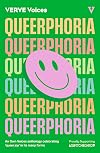
Into this maelstrom comes Queerphoria, a collection of short stories about queer joy, which I was lucky enough to read via NetGalley. I was hoping this book would be a stirring call to arms, something to ignite the passions and inspire resistance as it reminded us all why we came out in the first place, trying to find and nurture that tiny spark of realisation that makes all the bullshit worth wading through. What I found was slightly different.
NetGalley in all their infinite wisdom decided to remove access to the book before I could write this review, therefore I can’t namecheck the appropriate authors directly - thanks for that - but to me the best pieces here are excellent: weighty, oscillating with meaning and power whilst slipping a precise blade into the centre of my brain. The story about a widow returning to her family home after it had been converted into a gay bar hit very hard, layering the loss and regret of mourning someone else as well as the loss of the you that could’ve been, all while trying to be a functional human as drama show more unfolds around you. The story about the lighthouse keepers painted a rich oil painting of love, trust and security, the stability of the stone anchoring the emotions despite the winds of doubt assailed against them. I would mention more but my short-term memory is bad; suffice to say that I remember that there were multiple great moments scattered throughout, striking my brain, heart and gut frequently and powerfully.
However I found the stories describing joy within the mundane to be annoyingly complacent at this instant - if I don’t have a magical lesbian house of comfort and support to live in, hearing someone describe one pushes me towards jealousy and resentment - more a reflection on me than the book to be honest. And the piece turned in by the excellent Soula Emmanuel (whose Wild Geese reduced me to a wreck last year) was very well-written but cramped and stifled by its brevity.
The book is definitely good and is worthy of your support, but it seems to be less a strident treatise about finding joy despite adversity and more an all-rounder, trying to cover all bases at once. I should be more balanced I suppose, the fact that any publisher is willing to print queer perspectives is to be lauded right now, but my heart was longing for a bright Molotov Cocktail of a book instead of a buffet. show less
Into this maelstrom comes Queerphoria, a collection of short stories about queer joy, which I was lucky enough to read via NetGalley. I was hoping this book would be a stirring call to arms, something to ignite the passions and inspire resistance as it reminded us all why we came out in the first place, trying to find and nurture that tiny spark of realisation that makes all the bullshit worth wading through. What I found was slightly different.
NetGalley in all their infinite wisdom decided to remove access to the book before I could write this review, therefore I can’t namecheck the appropriate authors directly - thanks for that - but to me the best pieces here are excellent: weighty, oscillating with meaning and power whilst slipping a precise blade into the centre of my brain. The story about a widow returning to her family home after it had been converted into a gay bar hit very hard, layering the loss and regret of mourning someone else as well as the loss of the you that could’ve been, all while trying to be a functional human as drama show more unfolds around you. The story about the lighthouse keepers painted a rich oil painting of love, trust and security, the stability of the stone anchoring the emotions despite the winds of doubt assailed against them. I would mention more but my short-term memory is bad; suffice to say that I remember that there were multiple great moments scattered throughout, striking my brain, heart and gut frequently and powerfully.
However I found the stories describing joy within the mundane to be annoyingly complacent at this instant - if I don’t have a magical lesbian house of comfort and support to live in, hearing someone describe one pushes me towards jealousy and resentment - more a reflection on me than the book to be honest. And the piece turned in by the excellent Soula Emmanuel (whose Wild Geese reduced me to a wreck last year) was very well-written but cramped and stifled by its brevity.
The book is definitely good and is worthy of your support, but it seems to be less a strident treatise about finding joy despite adversity and more an all-rounder, trying to cover all bases at once. I should be more balanced I suppose, the fact that any publisher is willing to print queer perspectives is to be lauded right now, but my heart was longing for a bright Molotov Cocktail of a book instead of a buffet. show less

I am at a loss. I was not expecting how substantially this book would affect me. Grab a free novel to review, choose a spicy one as a bit of a treat I thought; I wasn’t expecting to fall into this world so completely.
Ancilla is a coming-of-age story in every sense. A browbeaten but determined young woman wresting herself from the clutches of oppressive parenthood and learning to stand on her own two feet could be clichéd in other hands, but the clarity and sheer focus of writing pulled me in like a tractor beam. The protagonist meets a guy (and what a guy! - swoon) and is pulled into an alternately dark and brilliant world, partially due to her amorous feelings but most magnetically by her ineffable need for knowledge. The primary characters deepen and grow richer chapter by chapter, and even an early prediction of the relationship’s arc doesn’t stop the ache of wanting them to cheat fate and ride off into some magickal sunset. But no, I mustn’t spoil the journey for others.
Now, some warnings: this is not a light read. The sexual scenes are VERY intense, even if you have familiarity with BDSM and the kinkier side of life. That intensity is frequently due to the depth of emotion and passion rather than anything graphic, but there are hard scenes that are definitely not for the squeamish. I can be squeamish, and had to put it down a couple of times to take breaks, but the pull of the characters always brought me back once I’d steadied myself.
The heart of the book show more is always the central relationship. However lost or frustrated Ancilla is, Magister is there to support, nurture, admonish and push when required. That central tenderness and concern for Ancilla wraps a warm blanket around what could’ve been a tale of impersonal sex and education. Every peak reached feels like it was a result of the relationship succeeding as much as physical (and metaphysical) effort, even if the first glance by an unaware observer would dismiss it as abusive. If only there was somewhere I could mail-order a Magister (wistful sigh).
In conclusion this is a deep immersive book; barbed wire and intellectualism wrapped around a cozy centre. As much as I don’t follow any of the esoteric magickal systems described within, the strength of writing and characters pulled me in comprehensively, like the warmth of an opiate. As this is intended to be the first part of a trilogy I eagerly await the next fix.
[Review of second edition] show less
Ancilla is a coming-of-age story in every sense. A browbeaten but determined young woman wresting herself from the clutches of oppressive parenthood and learning to stand on her own two feet could be clichéd in other hands, but the clarity and sheer focus of writing pulled me in like a tractor beam. The protagonist meets a guy (and what a guy! - swoon) and is pulled into an alternately dark and brilliant world, partially due to her amorous feelings but most magnetically by her ineffable need for knowledge. The primary characters deepen and grow richer chapter by chapter, and even an early prediction of the relationship’s arc doesn’t stop the ache of wanting them to cheat fate and ride off into some magickal sunset. But no, I mustn’t spoil the journey for others.
Now, some warnings: this is not a light read. The sexual scenes are VERY intense, even if you have familiarity with BDSM and the kinkier side of life. That intensity is frequently due to the depth of emotion and passion rather than anything graphic, but there are hard scenes that are definitely not for the squeamish. I can be squeamish, and had to put it down a couple of times to take breaks, but the pull of the characters always brought me back once I’d steadied myself.
The heart of the book show more is always the central relationship. However lost or frustrated Ancilla is, Magister is there to support, nurture, admonish and push when required. That central tenderness and concern for Ancilla wraps a warm blanket around what could’ve been a tale of impersonal sex and education. Every peak reached feels like it was a result of the relationship succeeding as much as physical (and metaphysical) effort, even if the first glance by an unaware observer would dismiss it as abusive. If only there was somewhere I could mail-order a Magister (wistful sigh).
In conclusion this is a deep immersive book; barbed wire and intellectualism wrapped around a cozy centre. As much as I don’t follow any of the esoteric magickal systems described within, the strength of writing and characters pulled me in comprehensively, like the warmth of an opiate. As this is intended to be the first part of a trilogy I eagerly await the next fix.
[Review of second edition] show less
 This review was written for LibraryThing Early Reviewers.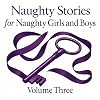
The author’s note at the start makes her point that writing sexy fiction is nothing to be ashamed of, and so should be taken seriously: I agree 100%. However this assumption also infers that any piece of literature should also succeed as literature not just as spice. So be warned, this review will not shy from criticism in that regard.
This compilation is Volume Three of an ongoing series, and consists of six short stories, all with sex as the central theme. However in all of them the eroticism is foregrounded so much the plots become almost incidental.
Take for example the fourth story. The premise of a spy infiltrating a secret organisation is a solid one, if slightly clichéd. The set-up is good, we get a solid sense of the protagonist’s character and dedication to the cause, but when she arrives at the central location we jump into the sex almost instantaneously. I’m not hugely knowledgeable about clandestine societies but I suspect they would be more cautious with new members than this. Hardly any waiting or steamy build-up to a pay off, just straight into the fairly workmanlike fucking. The scenes are disappointingly repetitive too, at times switching between penetration of the protagonist’s pussy and mouth automatically, as if they are the only sites of pleasure possible. The antagonist’s mouth ‘crashed’ into the protagonist’s with such regularity I was wincing each time they were in the same room. The most successful parts of the story are the intro show more and the end, when the author has to actually write the characters and plot; the conclusion does actually have an ambiguity and tension that could’ve been so successful if it had been the spine of the story, rather than the head and feet.
Of the other tales there are some high spots when plot and atmosphere combine with the heat generated, but all too often it relies on common tropes and ladles smut onto it, instead of interweaving emotion and erotic. I’m not scared of a long or obscure word either, but it felt like the frequent purple prose here suffocated any direction or impact, taking me out of the moment far too much for my liking. That’s the most annoying thing to me, there are the germs of good stories here, but they are buried under mediocre sex and poor pacing. Added to that there are frequent grammatical errors and just frankly confusing scenarios. Re-reading sections repeatedly to work out who’s who (and if bodies bends that way) pulls me out of the moment far too much.
I must also say that I had a problem downloading the review copy (as I’m not in the US) and the author was extremely helpful in getting a copy to me quickly, for which she deserves many thanks. This means I feel very bad about criticising her writings like this, but as she expressly said she wanted this taken seriously I am being as honest as I can be. Looking at the frequency of the releases in her bibliography I wonder if she is perhaps spreading herself too thinly? Maybe a focus on crafting something with more finesse and precision might suit her well? Whatever she does next, my intention with this was to be honest and constructive, so I hope she takes this as a challenge to improve her next release. show less
This compilation is Volume Three of an ongoing series, and consists of six short stories, all with sex as the central theme. However in all of them the eroticism is foregrounded so much the plots become almost incidental.
Take for example the fourth story. The premise of a spy infiltrating a secret organisation is a solid one, if slightly clichéd. The set-up is good, we get a solid sense of the protagonist’s character and dedication to the cause, but when she arrives at the central location we jump into the sex almost instantaneously. I’m not hugely knowledgeable about clandestine societies but I suspect they would be more cautious with new members than this. Hardly any waiting or steamy build-up to a pay off, just straight into the fairly workmanlike fucking. The scenes are disappointingly repetitive too, at times switching between penetration of the protagonist’s pussy and mouth automatically, as if they are the only sites of pleasure possible. The antagonist’s mouth ‘crashed’ into the protagonist’s with such regularity I was wincing each time they were in the same room. The most successful parts of the story are the intro show more and the end, when the author has to actually write the characters and plot; the conclusion does actually have an ambiguity and tension that could’ve been so successful if it had been the spine of the story, rather than the head and feet.
Of the other tales there are some high spots when plot and atmosphere combine with the heat generated, but all too often it relies on common tropes and ladles smut onto it, instead of interweaving emotion and erotic. I’m not scared of a long or obscure word either, but it felt like the frequent purple prose here suffocated any direction or impact, taking me out of the moment far too much for my liking. That’s the most annoying thing to me, there are the germs of good stories here, but they are buried under mediocre sex and poor pacing. Added to that there are frequent grammatical errors and just frankly confusing scenarios. Re-reading sections repeatedly to work out who’s who (and if bodies bends that way) pulls me out of the moment far too much.
I must also say that I had a problem downloading the review copy (as I’m not in the US) and the author was extremely helpful in getting a copy to me quickly, for which she deserves many thanks. This means I feel very bad about criticising her writings like this, but as she expressly said she wanted this taken seriously I am being as honest as I can be. Looking at the frequency of the releases in her bibliography I wonder if she is perhaps spreading herself too thinly? Maybe a focus on crafting something with more finesse and precision might suit her well? Whatever she does next, my intention with this was to be honest and constructive, so I hope she takes this as a challenge to improve her next release. show less
This review was written for LibraryThing Early Reviewers.
Oh wow, this book is a lot. You might think I brought it upon myself by requesting a review copy of something about such a contentious topic, and you’d have a very good point. I was dearly hoping that the author could eloquently weave a story around this current chapter of the ongoing violence in the eastern Mediterranean in a thoughtful and most importantly balanced manner. How wrong I was.
October 7 is less a novel, more a selection of individual propaganda stories clumsily woven together in a confusing manner. Its characters are embarrassingly one-dimensional on both sides; every single one of the Israelis is without exception kind, strong, brave, resilient, compassionate, pious and so on. Not one of them has any faults at all, apart from being too considerate to Palestinians. I take that back, musician Gil is called “sensitive” so often I suspect the author didn’t have the courage to say ‘gay’. The Palestinians are also insultingly simplistic, they’re repeatedly described as “monsters” and “evil”, start every conversation with a shout of “Allahu Akbar!”, and are described as violent, cruel and even smelly without rest or logic. When we meet the one Palestinian family in Gaza that aren’t, they don’t get names, don’t speak and are puppets of Hamas. Their home later gets invaded by the IDF and they get drugged, which is supposed to be compassionate I guess.
Then there is the backdrop of the events of October 7th 2023 itself. I suspected show more that the narrative pushed here would be the one officially approved by the Israeli government and I was not at all wrong. The debunked stories of mass rapes and beheaded babies by Hamas fighters are repeated here verbatim and without specifics as per usual. I could add thousands of words to this review refuting the vast majority of the claims made about that day by Netanyahu and his government, and I could equally detail the huge numbers of atrocities committed by the IDF starting on October 8th and during the past two years, but I won’t because all this info is readily available with an internet search. I will mention that the United Nations and numerous other official organisations have formally declared that numerous actions by the IDF are war crimes, and the famine in Gaza caused by the IDF blockade is a genocide. These are unequivocal truths, and this info is completely ignored by this book.
What really sticks in my throat is the continual push to present the Israeli narrative at all costs. For example the book’s repeated claims that the IDF try to minimise casualties, when official Israeli figures state that 83% of the Palestinians killed by them since October 8th were civilians (a figure much higher than virtually every other modern conflict). There’s never any ambiguity in the narrative at all - the Israelis are the goodies and the Palestinians are the baddies. At times the military protagonists give lip service to compassion about the terrible acts of destruction they’re committing, but not once do they consider stopping perpetrating their violence on Gaza. A pilot has these thoughts as he’s literally dropping bombs directly where hostages are being held (which results in the deaths of numerous hostages) and yet the myth of compassionate precision bombing is parroted.
Apart from all else, this book is monumentally badly written. The first page of the novel itself attempts to introduce us to no less than seventeen characters, and that’s even with the chapter title taking up the first third of the page. I genuinely had to draw a family tree to have the faintest idea of who was who. That comes directly after an introduction and prologue which both try to bias the reader’s views against the Palestinians before the narrative even begins. The narrative in the following chapters is so badly fractured each chapter seemingly starts and ends at arbitrary points along a wildly oscillating timeline. We skip between between protagonists’ viewpoints as if trapped in a badly-edited kids TV show, jumping to the next atrocity committed by the faceless evil captors, briefly pausing to ruminate on the experiences of an elderly holocaust survivor before using sexual assault as a blunt weapon of sympathy. Add all that to the multiple character confusions and it’s a thoroughly disorientating experience.
The book does pay lip service to providing a counter perspective however, pointing out Benjamin Netanyahu’s failure to prioritise recovering Israeli hostages in a couple of places. But nowhere is mentioned (let alone condemned) the intentions to completely colonise Gaza or kill all Palestinians trumpeted by ministers Ben Gvir and Smotrich in the media. Even in the epilogue the numbers of Palestinian people who have lost their lives since Oct 7th are not even mentioned (Israeli figures in May 2025 say at least 53,000; other sources say many times greater) which seems to be the minimum if a supposedly peaceful position is being proposed. I suspect it’s another example of Palestinians not shown to be worthy of our compassion, hence their deaths don’t matter.
So in conclusion this book is a mess. There are so many inaccuracies and untruths littered throughout its pages that calling it fiction is almost an understatement. It is deeply deeply bigoted and prejudiced towards Palestinians, and I would suggest it’s one of the most blatantly transparent examples of propaganda I have ever seen, though I would not count myself an expert in that. Obviously it has been written from a place of great shock and pain at the events of October 7th (which is understandable as the events of that date are terrible and I condemn them), and I agree with the author that the suffering of the hostages has been neglected by those in power in Israel. However there is no understanding whatsoever of the plight of the people of Gaza or Palestine who have existed under an oppressive invading regime for over 70 years, nor that the people of Gaza have been under siege since the early 1990s.
I’ll end with one section of text that comes tantalisingly close to self-realisation: “”You know”, his friend said… “I wonder what God wanted to tell us on October 7… Did we go wrong somewhere?”” If only the Israeli government and the author had asked themselves that question a long time ago. show less
October 7 is less a novel, more a selection of individual propaganda stories clumsily woven together in a confusing manner. Its characters are embarrassingly one-dimensional on both sides; every single one of the Israelis is without exception kind, strong, brave, resilient, compassionate, pious and so on. Not one of them has any faults at all, apart from being too considerate to Palestinians. I take that back, musician Gil is called “sensitive” so often I suspect the author didn’t have the courage to say ‘gay’. The Palestinians are also insultingly simplistic, they’re repeatedly described as “monsters” and “evil”, start every conversation with a shout of “Allahu Akbar!”, and are described as violent, cruel and even smelly without rest or logic. When we meet the one Palestinian family in Gaza that aren’t, they don’t get names, don’t speak and are puppets of Hamas. Their home later gets invaded by the IDF and they get drugged, which is supposed to be compassionate I guess.
Then there is the backdrop of the events of October 7th 2023 itself. I suspected show more that the narrative pushed here would be the one officially approved by the Israeli government and I was not at all wrong. The debunked stories of mass rapes and beheaded babies by Hamas fighters are repeated here verbatim and without specifics as per usual. I could add thousands of words to this review refuting the vast majority of the claims made about that day by Netanyahu and his government, and I could equally detail the huge numbers of atrocities committed by the IDF starting on October 8th and during the past two years, but I won’t because all this info is readily available with an internet search. I will mention that the United Nations and numerous other official organisations have formally declared that numerous actions by the IDF are war crimes, and the famine in Gaza caused by the IDF blockade is a genocide. These are unequivocal truths, and this info is completely ignored by this book.
What really sticks in my throat is the continual push to present the Israeli narrative at all costs. For example the book’s repeated claims that the IDF try to minimise casualties, when official Israeli figures state that 83% of the Palestinians killed by them since October 8th were civilians (a figure much higher than virtually every other modern conflict). There’s never any ambiguity in the narrative at all - the Israelis are the goodies and the Palestinians are the baddies. At times the military protagonists give lip service to compassion about the terrible acts of destruction they’re committing, but not once do they consider stopping perpetrating their violence on Gaza. A pilot has these thoughts as he’s literally dropping bombs directly where hostages are being held (which results in the deaths of numerous hostages) and yet the myth of compassionate precision bombing is parroted.
Apart from all else, this book is monumentally badly written. The first page of the novel itself attempts to introduce us to no less than seventeen characters, and that’s even with the chapter title taking up the first third of the page. I genuinely had to draw a family tree to have the faintest idea of who was who. That comes directly after an introduction and prologue which both try to bias the reader’s views against the Palestinians before the narrative even begins. The narrative in the following chapters is so badly fractured each chapter seemingly starts and ends at arbitrary points along a wildly oscillating timeline. We skip between between protagonists’ viewpoints as if trapped in a badly-edited kids TV show, jumping to the next atrocity committed by the faceless evil captors, briefly pausing to ruminate on the experiences of an elderly holocaust survivor before using sexual assault as a blunt weapon of sympathy. Add all that to the multiple character confusions and it’s a thoroughly disorientating experience.
The book does pay lip service to providing a counter perspective however, pointing out Benjamin Netanyahu’s failure to prioritise recovering Israeli hostages in a couple of places. But nowhere is mentioned (let alone condemned) the intentions to completely colonise Gaza or kill all Palestinians trumpeted by ministers Ben Gvir and Smotrich in the media. Even in the epilogue the numbers of Palestinian people who have lost their lives since Oct 7th are not even mentioned (Israeli figures in May 2025 say at least 53,000; other sources say many times greater) which seems to be the minimum if a supposedly peaceful position is being proposed. I suspect it’s another example of Palestinians not shown to be worthy of our compassion, hence their deaths don’t matter.
So in conclusion this book is a mess. There are so many inaccuracies and untruths littered throughout its pages that calling it fiction is almost an understatement. It is deeply deeply bigoted and prejudiced towards Palestinians, and I would suggest it’s one of the most blatantly transparent examples of propaganda I have ever seen, though I would not count myself an expert in that. Obviously it has been written from a place of great shock and pain at the events of October 7th (which is understandable as the events of that date are terrible and I condemn them), and I agree with the author that the suffering of the hostages has been neglected by those in power in Israel. However there is no understanding whatsoever of the plight of the people of Gaza or Palestine who have existed under an oppressive invading regime for over 70 years, nor that the people of Gaza have been under siege since the early 1990s.
I’ll end with one section of text that comes tantalisingly close to self-realisation: “”You know”, his friend said… “I wonder what God wanted to tell us on October 7… Did we go wrong somewhere?”” If only the Israeli government and the author had asked themselves that question a long time ago. show less
This review was written for LibraryThing Early Reviewers.
It’s not often I finish a book cherishing a sense of unease, but Prickle is that sort of read. Set in a Russia both hygienically modern yet murkily ancient, it focuses on tattoo artist Duscha and her feelings both towards the art she practices and the demons within. Her allies (her girlfriend Valentina and her babushka) are diametrically at odds with each other, leaving confusion about their knowledge and agendas, as well the nature of the truth itself.
Duscha’s demons, or chudo-kraska, become more ravenous throughout, and the initial revulsion to their violent transformative actions changes as the atmosphere of the text becomes more cloying and suffocating. Is the hunger felt by Duscha a weakness to be fought, or an inevitable process of some unknown nature? And is the grisly black ichor seeping into the veins of hosts making them better or only ‘better’?
What I didn’t expect is how skillfully the text turns what starts as initially a straightforward moral choice that any hero could feel into something more ambiguous and seductive. The irrationally tempting desire to drop polite conventions for the unapologetic confrontation of being outside the norm. That ‘letting go’ or submitting to the truth about ourselves is presented as defiantly alluring here, the willingness to be inked presenting us with the delicious prize of no longer caring how we’re seen by others, glittering just out of reach.
So if the lure of the forbidden and unacceptable side of ourselves show more has ever felt compelling, if the pull of the dark has ever tugged upon your soul, this book might be a good fit for you. If I have one criticism it is that the pace is very swift throughout, and the airlessness of the text isn’t given enough time to become truly suffocating. However it also feels like there are more stories to tell about this protagonist and situation in future, so this could easily be the start of a series about the chudo-kraska. That is unless the author hasn’t developed a similar devotion to unholy ink that overrides her benevolent impulses too. Should we check her shelves for a copy of the Necronomicon? show less
Duscha’s demons, or chudo-kraska, become more ravenous throughout, and the initial revulsion to their violent transformative actions changes as the atmosphere of the text becomes more cloying and suffocating. Is the hunger felt by Duscha a weakness to be fought, or an inevitable process of some unknown nature? And is the grisly black ichor seeping into the veins of hosts making them better or only ‘better’?
What I didn’t expect is how skillfully the text turns what starts as initially a straightforward moral choice that any hero could feel into something more ambiguous and seductive. The irrationally tempting desire to drop polite conventions for the unapologetic confrontation of being outside the norm. That ‘letting go’ or submitting to the truth about ourselves is presented as defiantly alluring here, the willingness to be inked presenting us with the delicious prize of no longer caring how we’re seen by others, glittering just out of reach.
So if the lure of the forbidden and unacceptable side of ourselves show more has ever felt compelling, if the pull of the dark has ever tugged upon your soul, this book might be a good fit for you. If I have one criticism it is that the pace is very swift throughout, and the airlessness of the text isn’t given enough time to become truly suffocating. However it also feels like there are more stories to tell about this protagonist and situation in future, so this could easily be the start of a series about the chudo-kraska. That is unless the author hasn’t developed a similar devotion to unholy ink that overrides her benevolent impulses too. Should we check her shelves for a copy of the Necronomicon? show less
This review was written for LibraryThing Early Reviewers.1