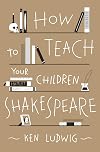
Awesome resource for memory work from Shakespeare! I will definitely be using this for homeschooling my girls, probably starting in 3rd or 4th grade.
 This review was written for LibraryThing Early Reviewers.
Tiger Babies Strike Back: How I Was Raised by a Tiger Mom but Could Not Be Turned to the Dark Side by Kim Wong Keltner
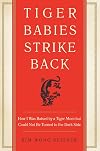
Synopsis:
Subtitled: “How I Was Raised by a Tiger Mom but Could Not Be Turned to the Dark Side.”
Review:
My interest in Tiger Babies Strike Back petered out in the first 30 pages. Kim Wong Keltner is a good writer but I just grew weary of the memoir aspect of the story. I know it’s not entirely fair to judge the book you wish you were reading, but honestly I really wished she had talked to more families in an effort to present a nuanced picture of Chinese American families in all their complexity, instead of solely telling her own story. But take that with a grain of salt–memoir is one of my least favorite genres.
Subtitled: “How I Was Raised by a Tiger Mom but Could Not Be Turned to the Dark Side.”
Review:
My interest in Tiger Babies Strike Back petered out in the first 30 pages. Kim Wong Keltner is a good writer but I just grew weary of the memoir aspect of the story. I know it’s not entirely fair to judge the book you wish you were reading, but honestly I really wished she had talked to more families in an effort to present a nuanced picture of Chinese American families in all their complexity, instead of solely telling her own story. But take that with a grain of salt–memoir is one of my least favorite genres.
This review was written for LibraryThing Early Reviewers.
This book offers a terrific exegesis of the Reformed view of justification and as such is a great tool for the uncertain believer who needs a deeper theological grounding in the faith.
This review was written for LibraryThing Early Reviewers.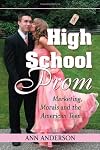
A sociological overview of prom that hits on fashion, music, and class issues.
This review was written for LibraryThing Early Reviewers.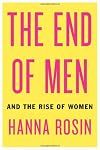
Synopsis:
A sociological look at the transformation of gender roles in 21st century America and beyond.
Review:
While there was a lot of fascinating research in The End of Men, I couldn't help but wonder what she was leaving out. I think her claims make for a media-ready argument, but she's hardly described the totality of the world. People are way more complicated than she's giving them credit for--particularly the working class types she patronizes by larding their dialogue with colloquialisms.
I really don't like how reductive Rosin's arguments are, either. All college girls having casual sex are doing so on their own terms. None of them are acting out because of prior abuse or trauma. All career women have the ability to shut off their biological hardwiring and go back to the office--or if they don't, they're weak (perhaps addled by too much breastfeeding). All working class women have evolved to a place where they can do without men at all, and thank goodness that domestic violence no longer exists! And women have now changed so much that all of us are prone to get into a bar fight given the right circumstances. Meanwhile the men are just sitting around playing video games and wondering why we're all laughing at "The Office."
And does anyone remember that Susan Faludi tried to write this book 12 years ago? In her book, Stiffed, she goes on about how our culture is emasculating men left and right. Seriously, are men such pussies that they can't stick up for themselves? show more Let natural selection sort them all out. As Luscious Jackson put it:
A sociological look at the transformation of gender roles in 21st century America and beyond.
Review:
While there was a lot of fascinating research in The End of Men, I couldn't help but wonder what she was leaving out. I think her claims make for a media-ready argument, but she's hardly described the totality of the world. People are way more complicated than she's giving them credit for--particularly the working class types she patronizes by larding their dialogue with colloquialisms.
I really don't like how reductive Rosin's arguments are, either. All college girls having casual sex are doing so on their own terms. None of them are acting out because of prior abuse or trauma. All career women have the ability to shut off their biological hardwiring and go back to the office--or if they don't, they're weak (perhaps addled by too much breastfeeding). All working class women have evolved to a place where they can do without men at all, and thank goodness that domestic violence no longer exists! And women have now changed so much that all of us are prone to get into a bar fight given the right circumstances. Meanwhile the men are just sitting around playing video games and wondering why we're all laughing at "The Office."
And does anyone remember that Susan Faludi tried to write this book 12 years ago? In her book, Stiffed, she goes on about how our culture is emasculating men left and right. Seriously, are men such pussies that they can't stick up for themselves? show more Let natural selection sort them all out. As Luscious Jackson put it:
Conquering, stealingshow less
Wheeling and dealing
Tell me is this planet
Healing?
When a man knows
Where he came from
He can't tell me
I am shameful
And I will call him
Supersolid
I will call him
Supersolid
It takes a strongman
To stand by a strong woman
It takes a strongman
To stand by a strong woman
It takes a strongman
He can stop trying
To get even
He will know he's
Here for a reason
To stand beside
His woman in peace
She's got the way
To release him
This review was written for LibraryThing Early Reviewers.
Synopsis:
A brokedown junkie, ex-cultist and mass murder survivor gets a mysterious invitation to become an Unlikely Scholar investigating odd phenomena across America.
Review:
Wow, wow, wow, wow, wow. Big Machine rocked my world. Stylistically, it’s a mash-up of Haruki Murakami and Stephen King, with a bit of Ralph Ellison for good measure.
When junkie Ricky Rice becomes an Unlikely Scholar under way mysterious circumstances, he finds himself scouring newspapers for stories that give evidence to The Voice. His journey grows ever more wild, and as he travels across the country from Vermont to northern California on the trail of the Voice and something more human and more ominous, he reflects back on the journey that got him to this point. His childhood in a cult, his years as a junkie and petty criminal, and his efforts to stay on the straight and narrow become more than just a life story. It’s a Pilgrim’s Progress founded on doubt–but a doubt that might be stronger than the faith of some.
LaValle has a lot to say about American fanaticism of all stripes. The social commentary here is fascinating, specific, and outrageously funny. Ricky Rice will become one of my favorite characters for the unique voice LaValle gives him, at once guileless and sneaky, wise and foolish, a street smart risk taker who has survived way too much.
The story is wild beyond imagining, with horror elements that don’t hold back. LaValle is not genre-slumming here. He genuinely wants to freak us show more out.
I was fortunate enough to hear LaValle read a large chunk of the opening of this book, and I was hooked. Definitely planning to read more of his work. show less
A brokedown junkie, ex-cultist and mass murder survivor gets a mysterious invitation to become an Unlikely Scholar investigating odd phenomena across America.
Review:
Wow, wow, wow, wow, wow. Big Machine rocked my world. Stylistically, it’s a mash-up of Haruki Murakami and Stephen King, with a bit of Ralph Ellison for good measure.
When junkie Ricky Rice becomes an Unlikely Scholar under way mysterious circumstances, he finds himself scouring newspapers for stories that give evidence to The Voice. His journey grows ever more wild, and as he travels across the country from Vermont to northern California on the trail of the Voice and something more human and more ominous, he reflects back on the journey that got him to this point. His childhood in a cult, his years as a junkie and petty criminal, and his efforts to stay on the straight and narrow become more than just a life story. It’s a Pilgrim’s Progress founded on doubt–but a doubt that might be stronger than the faith of some.
LaValle has a lot to say about American fanaticism of all stripes. The social commentary here is fascinating, specific, and outrageously funny. Ricky Rice will become one of my favorite characters for the unique voice LaValle gives him, at once guileless and sneaky, wise and foolish, a street smart risk taker who has survived way too much.
The story is wild beyond imagining, with horror elements that don’t hold back. LaValle is not genre-slumming here. He genuinely wants to freak us show more out.
I was fortunate enough to hear LaValle read a large chunk of the opening of this book, and I was hooked. Definitely planning to read more of his work. show less
I wasn't a fan of this book--the characters just seemed kind of cardboard to me.
This review was written for LibraryThing Early Reviewers.
The continuing adventures of the Irregulars, a band of disgraced ex-girl scouts protecting the Shadow City underneath the streets of Manhattan.
Review:
I picked up City of Bones after reading a rave review of the next book in the series on the Queens Public Library’s email newsletter for YA picks. It sounded like a fun read, and I was not disappointed. I just got a book light so I can read in bed while Superfast Baby snoozes in her crib in the family bedroom, and I clocked some pretty late nights making my way through this one.
City of Bones follows Clary, a teenage girl who stumbles upon a group of teen Shadowhunters at a night club. She’s not supposed to be able to see them, but she can, so the Shadowhunters bring her back to their lair, where Clary discovers that her mother was once a Shadowhunter before renouncing their ways. When Clary tries to return to her Park Slope home, she finds it infested with demons and her mother gone, kidnapped by her ex-husband, Valentine, the nemesis of the Shadowhunters. And then her best friend, Simon, is turned into a rat and kidnapped by vampires… what’s a girl to do? Kick some vampire ass, that’s what!
Fantastic action scenes, terrific romantic tension, and a fun look at New York City–anyone who likes Libba Bray, Kiki Strike, or the Poison Study series will love this book like I did. I can’t wait to read the next one!
I picked up City of Bones after reading a rave review of the next book in the series on the Queens Public Library’s email newsletter for YA picks. It sounded like a fun read, and I was not disappointed. I just got a book light so I can read in bed while Superfast Baby snoozes in her crib in the family bedroom, and I clocked some pretty late nights making my way through this one.
City of Bones follows Clary, a teenage girl who stumbles upon a group of teen Shadowhunters at a night club. She’s not supposed to be able to see them, but she can, so the Shadowhunters bring her back to their lair, where Clary discovers that her mother was once a Shadowhunter before renouncing their ways. When Clary tries to return to her Park Slope home, she finds it infested with demons and her mother gone, kidnapped by her ex-husband, Valentine, the nemesis of the Shadowhunters. And then her best friend, Simon, is turned into a rat and kidnapped by vampires… what’s a girl to do? Kick some vampire ass, that’s what!
Fantastic action scenes, terrific romantic tension, and a fun look at New York City–anyone who likes Libba Bray, Kiki Strike, or the Poison Study series will love this book like I did. I can’t wait to read the next one!
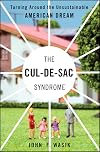
Synopsis:
Subtitled “Turning Around the Unsustainable American Dream,” this book analyzes the housing crisis and reflects upon ways that America can move forward with affordable, environmentally sustainable architecture.
Review:
The Cul-de-Sac Syndrome is a good companion piece to James Howard Kunstler’s A Geography of Nowhere. Author John F. Wasik offers a cogent overview of the current housing crisis along with an analysis of the unsustainability of the current fads in American housing. He explains trends in environmentally conscious architecture and building, and offers his ideas about what it will take to put the American dream back to rights.
I was most interested by his discussion of “spurbs,” housing clusters that are not connected to a metropolitan area, offer no public transportation, are not walkable, and are interspersed with strip malls and shopping centers. I grew up in a suburb of Baltimore and now I live in Queens, NY, so I’m not intimately familiar with these areas. They sound like nowhere I’d want to live. I love what I read about the New Urbanism, one of whose central tenets is “get people outside.” I love that I can walk everywhere–sure, it’s a 30 minute walk to the park but that’s great exercise, and it’s so fun to bump into people I know along the way.
Subtitled “Turning Around the Unsustainable American Dream,” this book analyzes the housing crisis and reflects upon ways that America can move forward with affordable, environmentally sustainable architecture.
Review:
The Cul-de-Sac Syndrome is a good companion piece to James Howard Kunstler’s A Geography of Nowhere. Author John F. Wasik offers a cogent overview of the current housing crisis along with an analysis of the unsustainability of the current fads in American housing. He explains trends in environmentally conscious architecture and building, and offers his ideas about what it will take to put the American dream back to rights.
I was most interested by his discussion of “spurbs,” housing clusters that are not connected to a metropolitan area, offer no public transportation, are not walkable, and are interspersed with strip malls and shopping centers. I grew up in a suburb of Baltimore and now I live in Queens, NY, so I’m not intimately familiar with these areas. They sound like nowhere I’d want to live. I love what I read about the New Urbanism, one of whose central tenets is “get people outside.” I love that I can walk everywhere–sure, it’s a 30 minute walk to the park but that’s great exercise, and it’s so fun to bump into people I know along the way.
This review was written for LibraryThing Early Reviewers.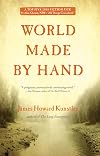
Synopsis:
The world has moved on, thanks to climate change, a worldwide oil shortage, and population devastation from superbugs, and in one small corner of New York State, the world is being rebuilt by hand.
Review:
Anyone who spends much time with me will eventually learn that I am obsessed with The Long Emergency, one of World Made By Hand author James Kunstler’s non-fiction treatises. I have always been drawn to the apocalyptic, and now that I am a mother I can worry about the world my daughter will inherit.
World Made By Hand is filled with Kunstlerisms–imagery and expressions that are familiar to anyone who has read his books or spent any time on his blog. He is always at his best when conjuring a decaying post-automobile America, where the suburbs are blighed ghettos and big box stores crumble without power to heat and cool them. The novel is a great introduction to the ideas that obsess Kunstler (and his acolytes, myself included), yet it’s far more hopeful than any of his jeremiads.
The protagonist of World Made By Hand is Robert, who once worked in corporate America, and who now finds himself mayor of an ersatz community in upstate New York. His townspeople just want to get by, but they’re caught between an encroaching band of religious fanatics, and a mini-despot who may have aggressively nefarious intentions towards the town. After a young man is murdered, Robert finds himself at the center of an ancient kind of conflict in a new world that looks like an old show more one.
I was not expecting World Made By Hand to be as lyrical as it is. If I didn’t know Kunstler’s non-fiction, I’d be taken by the poetry of many of the passages. However, as much as I was tickled to be in on Kunstler’s auto-intertextuality, it distracted me from engaging with the story. That won’t stop me from recommending it–I think it’s more accurate a picture of our future as anything found in the Jetsons! show less
The world has moved on, thanks to climate change, a worldwide oil shortage, and population devastation from superbugs, and in one small corner of New York State, the world is being rebuilt by hand.
Review:
Anyone who spends much time with me will eventually learn that I am obsessed with The Long Emergency, one of World Made By Hand author James Kunstler’s non-fiction treatises. I have always been drawn to the apocalyptic, and now that I am a mother I can worry about the world my daughter will inherit.
World Made By Hand is filled with Kunstlerisms–imagery and expressions that are familiar to anyone who has read his books or spent any time on his blog. He is always at his best when conjuring a decaying post-automobile America, where the suburbs are blighed ghettos and big box stores crumble without power to heat and cool them. The novel is a great introduction to the ideas that obsess Kunstler (and his acolytes, myself included), yet it’s far more hopeful than any of his jeremiads.
The protagonist of World Made By Hand is Robert, who once worked in corporate America, and who now finds himself mayor of an ersatz community in upstate New York. His townspeople just want to get by, but they’re caught between an encroaching band of religious fanatics, and a mini-despot who may have aggressively nefarious intentions towards the town. After a young man is murdered, Robert finds himself at the center of an ancient kind of conflict in a new world that looks like an old show more one.
I was not expecting World Made By Hand to be as lyrical as it is. If I didn’t know Kunstler’s non-fiction, I’d be taken by the poetry of many of the passages. However, as much as I was tickled to be in on Kunstler’s auto-intertextuality, it distracted me from engaging with the story. That won’t stop me from recommending it–I think it’s more accurate a picture of our future as anything found in the Jetsons! show less
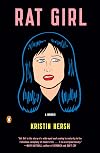
Kristin Hersh is one of the few people whose memoir I would want to read. I tend to hate the genre. And musicians in particular are not my favorite subject. But I have loved Kristin Hersh and her sister Tanya Donelly ever since my college days, and have been fascinated by their relationship, Hersh's bipolar issues, and their evolution as women as seen through their music.
So I was thrilled to score a copy of Rat Girl from Librarything's early reviewers program--and so disappointed to find it just another memoir, unfocused and unedited. I just couldn't stay interested. I guess I expected more because I love her music so much, but even she couldn't elevate a genre I pretty much detest.
So I was thrilled to score a copy of Rat Girl from Librarything's early reviewers program--and so disappointed to find it just another memoir, unfocused and unedited. I just couldn't stay interested. I guess I expected more because I love her music so much, but even she couldn't elevate a genre I pretty much detest.
This review was written for LibraryThing Early Reviewers.
I gave up halfway through this one. I found the world and characters interesting, but ultimately the book was underwritten and I got tired of having to fill in gaps without enough information.
This review was written for LibraryThing Early Reviewers.
I was not a fan of the narrator of these stories. I had a hard time appreciating them because his delivery was so stilted.
This review was written for LibraryThing Early Reviewers.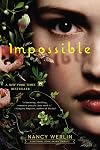
Synopsis:
A young woman discovers that she is cursed to go mad on the birth of her first child unless she can complete three impossible tasks.
Review:
Woven from the lyrics of the ballad Scarborough Fair, made famous by Simon and Garfunkel, Impossible successfully places a fairy tale in the context of modern life without sacrificing any magic at all.
Lucy Scarborough was raised by foster parents after her mother, Miranda, went mad on Lucy’s birth. Now Lucy finds herself pregnant at 17, and discovers a diary kept by Miranda during her pregnancy claiming that unless Lucy can complete the tasks named in the ballad, Lucy will go mad when her own daughter is born. Lucy chooses to believe, and sets out to weave a seamless shirt with no needles, find an acre of land between the saltwater and the sea strand, and plow it with one grain of corn using a goat’s horn. In the backdrop lurks the figure of the Elfin King, who seems to rule over Lucy’s plight, though she does not know yet exactly how.
I tore through this book. It’s fast paced, romantic, magical, and skillfully plotted. I’m not always a fan of updated fairy tales but this one really worked, I think because Werlin didn’t try to make it too contemporary. There was just enough realism for me to connect with the characters, and just enough magic for me to buy the premise.
A young woman discovers that she is cursed to go mad on the birth of her first child unless she can complete three impossible tasks.
Review:
Woven from the lyrics of the ballad Scarborough Fair, made famous by Simon and Garfunkel, Impossible successfully places a fairy tale in the context of modern life without sacrificing any magic at all.
Lucy Scarborough was raised by foster parents after her mother, Miranda, went mad on Lucy’s birth. Now Lucy finds herself pregnant at 17, and discovers a diary kept by Miranda during her pregnancy claiming that unless Lucy can complete the tasks named in the ballad, Lucy will go mad when her own daughter is born. Lucy chooses to believe, and sets out to weave a seamless shirt with no needles, find an acre of land between the saltwater and the sea strand, and plow it with one grain of corn using a goat’s horn. In the backdrop lurks the figure of the Elfin King, who seems to rule over Lucy’s plight, though she does not know yet exactly how.
I tore through this book. It’s fast paced, romantic, magical, and skillfully plotted. I’m not always a fan of updated fairy tales but this one really worked, I think because Werlin didn’t try to make it too contemporary. There was just enough realism for me to connect with the characters, and just enough magic for me to buy the premise.
Synopsis:
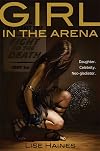
After the death of her mother’s seventh husband in the gladiatorial arena, a teenage girl finds herself betrothed to his killer–unless she can fight her way out of it.
Review:
When I first picked up Girl in the Arena, I was expecting some kind of Hunger Games ripoff. That’s not a bad thing, per se–I love those kinds of books. But my expectations weren’t that high, and so I was more than pleasantly surprised when I discovered how original, complex, and downright literary Girl in the Arena was.
more:
http://superfastreader.com/girl-in-the-arena-by-lise-haines.htm
Interview w/Lise Haines:
http://superfastreader.com/girl-in-the-arena-interview-with-lise-haines.htm
After the death of her mother’s seventh husband in the gladiatorial arena, a teenage girl finds herself betrothed to his killer–unless she can fight her way out of it.
Review:
When I first picked up Girl in the Arena, I was expecting some kind of Hunger Games ripoff. That’s not a bad thing, per se–I love those kinds of books. But my expectations weren’t that high, and so I was more than pleasantly surprised when I discovered how original, complex, and downright literary Girl in the Arena was.
more:
http://superfastreader.com/girl-in-the-arena-by-lise-haines.htm
Interview w/Lise Haines:
http://superfastreader.com/girl-in-the-arena-interview-with-lise-haines.htm
Synopsis:
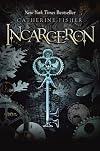
Incarceron is a living prison from which no one can escape, but when the warden’s daughter makes a shocking discovery, she works to break Incarceron’s protections with the aid of a boy who believes he was born on the outside.
Review:
I attempted to listen to the audio book of Incarceron, but the late stages of pregnancy has made it impossible for me to concentrate on anything more complicated than nursery rhymes. But the concept really grabbed me, so I snagged a copy through Interlibrary Loan–and devoured it in just a few short hours (thanks to some free babysitting by visiting Grandma). I literally read the last 10 pages standing up while setting the table for lunch–that’s how badly I wanted to know the ending.
more:
http://superfastreader.com/incarceron-by-catherine-fisher.htm
Incarceron is a living prison from which no one can escape, but when the warden’s daughter makes a shocking discovery, she works to break Incarceron’s protections with the aid of a boy who believes he was born on the outside.
Review:
I attempted to listen to the audio book of Incarceron, but the late stages of pregnancy has made it impossible for me to concentrate on anything more complicated than nursery rhymes. But the concept really grabbed me, so I snagged a copy through Interlibrary Loan–and devoured it in just a few short hours (thanks to some free babysitting by visiting Grandma). I literally read the last 10 pages standing up while setting the table for lunch–that’s how badly I wanted to know the ending.
more:
http://superfastreader.com/incarceron-by-catherine-fisher.htm
Synopsis:
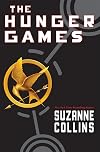
Katniss Everdeen takes her sister’s place in the annual Hunger Games, a fight to the death between teenagers, televised for the whole world.
Review:
I asked my YA librarian friend if The Hunger Games was any good, and her report was that it wasn’t the best book she’d ever read but she couldn’t keep it on the shelves and the kids in her school were passing it around like crazy. Being a fan of YA literature and of Rollerball-type stories, I had to check it out.
more:
http://superfastreader.com/the-hunger-games-by-suzanne-collins.htm
Katniss Everdeen takes her sister’s place in the annual Hunger Games, a fight to the death between teenagers, televised for the whole world.
Review:
I asked my YA librarian friend if The Hunger Games was any good, and her report was that it wasn’t the best book she’d ever read but she couldn’t keep it on the shelves and the kids in her school were passing it around like crazy. Being a fan of YA literature and of Rollerball-type stories, I had to check it out.
more:
http://superfastreader.com/the-hunger-games-by-suzanne-collins.htm
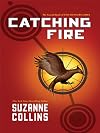
Synopsis:
After winning the Hunger Games, underdog Katniss Everdeen finds herself caught up in political intrigue as rebellion foments in other districts, and when the president himself makes a game-changing move, Katniss must choose between love and freedom.
Review:
I was totally and completely sucked in and swept away by Catching Fire, Suzanne Collins’s sequel to last year’s it novel Hunger Games. The series is starting to remind me a bit of Scott Westerfeld’s Uglies series, both in terms of the themes it addresses (the sicknesses of the media age), and the sheer addictive power of the action-packed narrative.
http://superfastreader.com/catching-fire-by-suzanne-collins.htm
After winning the Hunger Games, underdog Katniss Everdeen finds herself caught up in political intrigue as rebellion foments in other districts, and when the president himself makes a game-changing move, Katniss must choose between love and freedom.
Review:
I was totally and completely sucked in and swept away by Catching Fire, Suzanne Collins’s sequel to last year’s it novel Hunger Games. The series is starting to remind me a bit of Scott Westerfeld’s Uglies series, both in terms of the themes it addresses (the sicknesses of the media age), and the sheer addictive power of the action-packed narrative.
http://superfastreader.com/catching-fire-by-suzanne-collins.htm
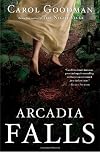
Synopsis:
Hired to teach at a secluded, artsy boarding school, a young widow discovers that mystery and murder roil below the bucolic surface.
Review:
I wanted to adore Arcadia Falls, but I only got about 80% there.
I loved the atmosphere that Carol Goodman created for Arcadia, the creepy boarding school in the middle of the woods in upstate New York. The backstory was most excellent, starting with a 1920s artists’ colony founded by two lesbians, one deeply conflicted and not entirely committed to Team Pink. For the most part, I was totally sucked into the story, eagerly turning the pages to get to the next scene.
However, the few missteps that I ignored at the beginning started to pile up so that by the end I had lost faith in the story’s ability to give me a transcendent experience. A few cardboard characters here, some overly expository dialogue there, added finally with an unfortunately predictable endgame led ultimately to disappointment for me.
Hired to teach at a secluded, artsy boarding school, a young widow discovers that mystery and murder roil below the bucolic surface.
Review:
I wanted to adore Arcadia Falls, but I only got about 80% there.
I loved the atmosphere that Carol Goodman created for Arcadia, the creepy boarding school in the middle of the woods in upstate New York. The backstory was most excellent, starting with a 1920s artists’ colony founded by two lesbians, one deeply conflicted and not entirely committed to Team Pink. For the most part, I was totally sucked into the story, eagerly turning the pages to get to the next scene.
However, the few missteps that I ignored at the beginning started to pile up so that by the end I had lost faith in the story’s ability to give me a transcendent experience. A few cardboard characters here, some overly expository dialogue there, added finally with an unfortunately predictable endgame led ultimately to disappointment for me.
This review was written for LibraryThing Early Reviewers.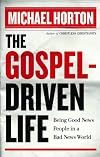
Synopsis:
An in-depth explanation of the Christian gospel, intended to teach believers what they believe and why the believe it.
Review:
The Gospel-Driven Life is a companion piece to Michael Horton’s paradigm-shifting Christless Christianity. Where the latter offers a critique of the sorry state of nominally Christian churches, The Gospel-Driven Life gives believers the meat and potatoes of real, saving faith in Christ.
I deeply heart Michael Horton. I am an obsessive listener of his podcast, The White Horse Inn, and just subscribed to his magazine, Modern Reformation. He and his colleagues are doing good work teaching Christians that the good news is not “Jesus lives in my heart and makes me a better person,” but that God intervened in history to provide a way of salvation through the life and death of Christ. I would go into more detail but fear I would end up just typing out the whole book for you. I dogeared so many great passages! I’ll be coming back to this book many times in my life.
An in-depth explanation of the Christian gospel, intended to teach believers what they believe and why the believe it.
Review:
The Gospel-Driven Life is a companion piece to Michael Horton’s paradigm-shifting Christless Christianity. Where the latter offers a critique of the sorry state of nominally Christian churches, The Gospel-Driven Life gives believers the meat and potatoes of real, saving faith in Christ.
I deeply heart Michael Horton. I am an obsessive listener of his podcast, The White Horse Inn, and just subscribed to his magazine, Modern Reformation. He and his colleagues are doing good work teaching Christians that the good news is not “Jesus lives in my heart and makes me a better person,” but that God intervened in history to provide a way of salvation through the life and death of Christ. I would go into more detail but fear I would end up just typing out the whole book for you. I dogeared so many great passages! I’ll be coming back to this book many times in my life.
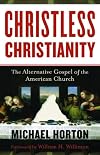
Synopsis:
An examination and critique of the current state of Christianity in America, which shows the pervasive influences of Pelagianism and Gnosticism–these heresies are closer than you think.
Review:
Michael Horton had me at “Joel Osteen.” I was blown away by the incisiveness of Christless Christianity, a stunning work that made me so, so thankful to be attending a church deeply rooted in Reformation orthopraxis.
The first section of the book deals with the prosperity gospel, looking at Osteen and others of his ilk who preach that God wants good things for you, but who never mention Jesus or the cross in any of their sermons. Horton shows that the “easy” road that these teachers proclaim is actually just another form of legalism. All you have to do to live the good life is to follow God and be a good person. God helps those who help themselves. The onus of salvation rests squarely on our shoulders. God does not come down to us; we build a stairway to him. This is Pelagianism, which says that we must play a part in our own redemption. The reformers (Calvin and Luther, etcetera) countered this heresy by preaching that salvation is by grace alone–we do nothing.
The second section of the book delves into the Emergent church and public spokesmen like Jim Wallis and Rick Warren, those who preach that churches are to take up where Jesus left off, and continue to redeem the world. This is the “living gospel” or “deed without creed.” Horton explains how these show more teachings betray Gnostic tendencies that elevate human beings above God.
Even more important in this section was Horton’s depiction of the church as a place where believers come to be served by God through the sacraments and the Word. Too often the modern church becomes another workplace, with believers encouraged to throw themselves into ministry. In fact, church itself is hardly necessary at all. Just go and “live the gospel.” The sacraments become “means of commitment” rather than “means of grace.” Here again, we find a legalistic gospel that says that our works are the most important thing in the salvation equation.
Horton emphatically states that believers need to receive the Word and the sacraments, out of which will flow worship and service. Too many churches get it the wrong way round, saying that we need to get our hearts right with God on our own. He writes,
"The church has a very narrow commission. It is not called to be an alternative neighborhood, circle of friends, political action committee, or public service agency; it is called to deliver Christ so clearly and fully that believers are prepared to be salt and light in the worldly stations to which God has called them. Why should a person go through all the trouble of belonging to a church and showing up each Sunday if God is the passive receiver and we are the active giver?
…Not only once upon a time, on a hill far away, but each week the Son of God comes to serve us. We may protest. We may think that it is we who need to serve God rather than vice versa. Nevertheless, Jesus tells us as he told Peter that this is actually an insult, a form of pride. We are the ones who need to be bathed, clothed, and fed, not God.
…the main purpose of singing in church is not to express our inner experience, piety and zeal but to serve each other by making ‘the word of Christ dwell in you richly, teaching and admonishing one another in all wisdom, singing psalms and hymns and spiritual songs, with thankfulness in your hearts to God” (Col. 3:16)… Pastors and teachers are not cruise director who provide venues for everyone to channel all of their gifts and energies to the church, but they are deliverers of the message of Christ."
So much good news here! show less
An examination and critique of the current state of Christianity in America, which shows the pervasive influences of Pelagianism and Gnosticism–these heresies are closer than you think.
Review:
Michael Horton had me at “Joel Osteen.” I was blown away by the incisiveness of Christless Christianity, a stunning work that made me so, so thankful to be attending a church deeply rooted in Reformation orthopraxis.
The first section of the book deals with the prosperity gospel, looking at Osteen and others of his ilk who preach that God wants good things for you, but who never mention Jesus or the cross in any of their sermons. Horton shows that the “easy” road that these teachers proclaim is actually just another form of legalism. All you have to do to live the good life is to follow God and be a good person. God helps those who help themselves. The onus of salvation rests squarely on our shoulders. God does not come down to us; we build a stairway to him. This is Pelagianism, which says that we must play a part in our own redemption. The reformers (Calvin and Luther, etcetera) countered this heresy by preaching that salvation is by grace alone–we do nothing.
The second section of the book delves into the Emergent church and public spokesmen like Jim Wallis and Rick Warren, those who preach that churches are to take up where Jesus left off, and continue to redeem the world. This is the “living gospel” or “deed without creed.” Horton explains how these show more teachings betray Gnostic tendencies that elevate human beings above God.
Even more important in this section was Horton’s depiction of the church as a place where believers come to be served by God through the sacraments and the Word. Too often the modern church becomes another workplace, with believers encouraged to throw themselves into ministry. In fact, church itself is hardly necessary at all. Just go and “live the gospel.” The sacraments become “means of commitment” rather than “means of grace.” Here again, we find a legalistic gospel that says that our works are the most important thing in the salvation equation.
Horton emphatically states that believers need to receive the Word and the sacraments, out of which will flow worship and service. Too many churches get it the wrong way round, saying that we need to get our hearts right with God on our own. He writes,
"The church has a very narrow commission. It is not called to be an alternative neighborhood, circle of friends, political action committee, or public service agency; it is called to deliver Christ so clearly and fully that believers are prepared to be salt and light in the worldly stations to which God has called them. Why should a person go through all the trouble of belonging to a church and showing up each Sunday if God is the passive receiver and we are the active giver?
…Not only once upon a time, on a hill far away, but each week the Son of God comes to serve us. We may protest. We may think that it is we who need to serve God rather than vice versa. Nevertheless, Jesus tells us as he told Peter that this is actually an insult, a form of pride. We are the ones who need to be bathed, clothed, and fed, not God.
…the main purpose of singing in church is not to express our inner experience, piety and zeal but to serve each other by making ‘the word of Christ dwell in you richly, teaching and admonishing one another in all wisdom, singing psalms and hymns and spiritual songs, with thankfulness in your hearts to God” (Col. 3:16)… Pastors and teachers are not cruise director who provide venues for everyone to channel all of their gifts and energies to the church, but they are deliverers of the message of Christ."
So much good news here! show less
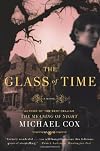
The Glass of Time by Michael Cox
April 19th, 2009 · 2 Comments
Synopsis:
Upon arriving at Evenwood as a lady’s maid, young Esperanza Gorst discovers that she is in the center of a plot to topple her mistress.
Review:
The Glass of Time is Michael Cox’s follow up to The Meaning of Night, continuing his Wilkie Collins-esque tale of intrigue and revenge with a Bronte-inspired suspense melodrama. I devoured it like a madwoman in an attic.
Raised a lady in France, Miss Gorst is an unlikely choice for a lady’s maid. Her breeding and manners make it clear that her fortunes ought to be much loftier. But her gentility is what appeals most to Lady Tansor, nee Emily Carteret, the woman beloved of Edward Glyver, ill-fated protagonist of The Meaning of Night. Still mourning the love of her life, Lady Tansor presides over Evenwood with a hauteur that repels Esperanza even has her generosity beguiles her. Esperanza knows only that she has been sent to Evenwood to perform a Great Task, but her guardian, Madame De L’Orme will not say more for now.
Readers of The Meaning of Night will quickly guess Esperanza’s true identity, and savvy readers will quickly discern the secret that tortures Lady Tansor. Yet this in no way diminishes the pleasures to be found in The Glass of Time. Cox revels in putting his characters through their emotional paces, savoring every nuance of attraction and offense between the various players. I enjoyed The Glass of Time tremendously and look forward to Cox’s show more next book.**
**I wrote this before receiving the sad news that Michael Cox passed away at the age of 60. I can’t help but think of the wonderful books that must have died with him. What a loss.
http://superfastreader.com/the-glass-of-time-by-michael-cox.htm show less
April 19th, 2009 · 2 Comments
Synopsis:
Upon arriving at Evenwood as a lady’s maid, young Esperanza Gorst discovers that she is in the center of a plot to topple her mistress.
Review:
The Glass of Time is Michael Cox’s follow up to The Meaning of Night, continuing his Wilkie Collins-esque tale of intrigue and revenge with a Bronte-inspired suspense melodrama. I devoured it like a madwoman in an attic.
Raised a lady in France, Miss Gorst is an unlikely choice for a lady’s maid. Her breeding and manners make it clear that her fortunes ought to be much loftier. But her gentility is what appeals most to Lady Tansor, nee Emily Carteret, the woman beloved of Edward Glyver, ill-fated protagonist of The Meaning of Night. Still mourning the love of her life, Lady Tansor presides over Evenwood with a hauteur that repels Esperanza even has her generosity beguiles her. Esperanza knows only that she has been sent to Evenwood to perform a Great Task, but her guardian, Madame De L’Orme will not say more for now.
Readers of The Meaning of Night will quickly guess Esperanza’s true identity, and savvy readers will quickly discern the secret that tortures Lady Tansor. Yet this in no way diminishes the pleasures to be found in The Glass of Time. Cox revels in putting his characters through their emotional paces, savoring every nuance of attraction and offense between the various players. I enjoyed The Glass of Time tremendously and look forward to Cox’s show more next book.**
**I wrote this before receiving the sad news that Michael Cox passed away at the age of 60. I can’t help but think of the wonderful books that must have died with him. What a loss.
http://superfastreader.com/the-glass-of-time-by-michael-cox.htm show less
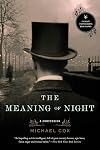
The Meaning of Night by Michael Cox
March 2nd, 2009 · 4 Comments
Synopsis:
Robbed of his fortune by a rival from his school days, Edward Glyver seeks vengeance and restoration under an assumed name.
Review:
The Meaning of Night is a cunningly plotted piece of faux-Victoriana, conjuring up Charles Dickens and Wilkie Collins with a soupcon of sex that doesn’t feel anachronistic at all.
Edward Glyver’s nesting-doll tale gives every character a chance to tell his or her own life story, and Cox makes each one fascinating in its own right. Despite the near-constant digressions, Cox never lets us forget that Edward is on a deadly mission, and keeps up the suspense throughout. The story opens with Edward’s murder of an innocent man but it’s not long before I came into full sympathy with his plight, despite my disdain for his wicked act.
Cox captures the Victorian tone perfectly, and I took a lot of pleasure in all the traces I found of books I love. It could be that The Meaning of Night is a little too insider-y to be enjoyed without a background in its influences, but the story is airtight and quite satisfying.
http://superfastreader.com/the-meaning-of-night-by-michael-cox.htm
March 2nd, 2009 · 4 Comments
Synopsis:
Robbed of his fortune by a rival from his school days, Edward Glyver seeks vengeance and restoration under an assumed name.
Review:
The Meaning of Night is a cunningly plotted piece of faux-Victoriana, conjuring up Charles Dickens and Wilkie Collins with a soupcon of sex that doesn’t feel anachronistic at all.
Edward Glyver’s nesting-doll tale gives every character a chance to tell his or her own life story, and Cox makes each one fascinating in its own right. Despite the near-constant digressions, Cox never lets us forget that Edward is on a deadly mission, and keeps up the suspense throughout. The story opens with Edward’s murder of an innocent man but it’s not long before I came into full sympathy with his plight, despite my disdain for his wicked act.
Cox captures the Victorian tone perfectly, and I took a lot of pleasure in all the traces I found of books I love. It could be that The Meaning of Night is a little too insider-y to be enjoyed without a background in its influences, but the story is airtight and quite satisfying.
http://superfastreader.com/the-meaning-of-night-by-michael-cox.htm
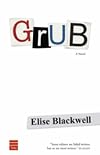
Grub by Elise Blackwell
August 2nd, 2007 · 12 Comments
Synopsis:
The trials and travails of a group of young New York City-based novelists.
Review:
Grub is a reworking of a 19th Century novel. I can’t speak to its success in that regard because I haven’t read the original, but I will say that author Elise Blackwell pulls off a rare bird: a satire brimming with humanism. I enjoyed every line of this book, which reminded me at times of Whit Stillman’s marvelous first feature Metropolitan. This is a galley I’ll be keeping, rereading, and recommending all over the place when the book comes out in stores in September.
from http://superfastreader.com/grub-by-elise-blackwell.htm
August 2nd, 2007 · 12 Comments
Synopsis:
The trials and travails of a group of young New York City-based novelists.
Review:
Grub is a reworking of a 19th Century novel. I can’t speak to its success in that regard because I haven’t read the original, but I will say that author Elise Blackwell pulls off a rare bird: a satire brimming with humanism. I enjoyed every line of this book, which reminded me at times of Whit Stillman’s marvelous first feature Metropolitan. This is a galley I’ll be keeping, rereading, and recommending all over the place when the book comes out in stores in September.
from http://superfastreader.com/grub-by-elise-blackwell.htm
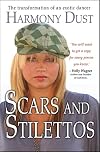
Synopsis:
How an exotic dancer left the profession and founded a ministry to help other women do the same.
Review:
Harmony Dust’s story as told in Scars and Stilettos is not without merit. The girl has been through a lot, from childhood sexual abuse to rape to poverty, all of which led her to a soul-crushing career as an exotic dancer. I just wish that the writing had been a little stronger. Nevertheless, this is a powerful story and I hope it helps a lot of women like Harmony.
How an exotic dancer left the profession and founded a ministry to help other women do the same.
Review:
Harmony Dust’s story as told in Scars and Stilettos is not without merit. The girl has been through a lot, from childhood sexual abuse to rape to poverty, all of which led her to a soul-crushing career as an exotic dancer. I just wish that the writing had been a little stronger. Nevertheless, this is a powerful story and I hope it helps a lot of women like Harmony.
This review was written for LibraryThing Early Reviewers.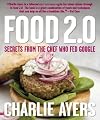
Not a cookbook I'll be reaching for. I always like to see how chefs do things, but these recipes just didn't appeal to me. I wasn't really sure why working for Google made him a chef of distinction, either.
This review was written for LibraryThing Early Reviewers.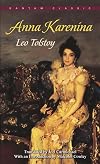
Synopsis:
The tale of a society woman and her unconventional love affair contrasts with that of a landowner struggling with faith and duty.
Review:
Anna Karenina. The very words have struck me with fear and awe ever since a disastrous Russian History class in 12th grade, where I discovered my superpower’s limits for the first time. I elected to read Anna for my final paper because I wanted to read Anna, but I had four AP exams happening at the same time and should’ve chosen something much shorter. The whole thing blew up in my face and I ended up getting in trouble for not reading the entire book, which at my school was an honor offense. Since other girls in my class had out-and-out cheated, I ended up just having to take a C on the paper (which was very well-written on the 200 pages I actually read). I think that might have been what kept me out of my top-choice college but I ended up loving the school I went to so, as you see, things worked out for the best even though AP exams are my Kryptonite.
Here I am *cough* years later, and I find that Anna Karenina is an astonishingly fast read. I couldn’t be more riveted by all of the characters Tolstoy presents to me: passionate, foolish Anna; tormented, brooding Levin; flighty, honest Kitty; and “he’s just not that into you” Vronsky. Tolstoy masterfully shifts between (rare) third person omniscient, first person stream-of-consciousness, and many scenes where point-of-view shifts between several characters as they show more interact with each other.
As Anna and Vronsky’s relationship implodes, Tolstoy ratchets up the tension by leaving us inside Anna’s head as she has the mother of all panic attacks. Anyone who’s ever been unable to let well enough alone in a relationship will connect with Anna’s torment as she tries to force Vronsky to be loving towards her without seeing that her need and dependence is driving him away. She’s a black hole that can’t be filled, and Vronsky responds with the cold hammer of indifference. It’s horrifying, because it’s so true to life, and Tolstoy doesn’t miss a single shade of the horror.
Levin’s story was a welcome reprieve from Anna’s darkness. Though he’s suffering metaphysical pangs related to his inability to have faith, he never seems in danger the way Anna does, even though he contemplates suicide from time to time. I think it’s because his struggles are honest. He’s not lying to himself the way Anna is. Anna wants her infidelity to be something other than it is. She wants to call evil good. Levin, on the other hand, wants to know the nature of goodness, because, despite his atheism, he sees good in the world and wants to be as close to it as he can. His frustration comes when he sees how his own innate selfishness and pettiness keep him from his goal.
Some the best passages in Anna Karenina concern the nature of marriage, which Tolstoy examines from all angles. There are the bad marriages, of course, like Anna’s, and like that of Anna’s brother Oblonsky who is a compulsive philanderer. But there is also a marriage that’s just a normal marriage between two people trying to get used to one another. They have ups and downs, times of tenderness and times of warfare, and Tolstoy shows it all.
There are scenes in Anna Karenina that I’ll never forget: Levin in the fields mowing with the peasants, Kitty at the ball, Karenin forgiving his wife as she gives birth to another man’s son, Levin’s brother on his deathbed, Kitty’s giving birth to her first child, and many others–but most of all, I will never forget Anna, proud Anna with her dark hair and sad eyes. I want to shake her by the shoulders and tell her to see the truth about Vronsky, that their love is counterfeit, that she doesn’t have to put up with it from him or put up with Karenin’s mocking piety or society’s stupid rules. I’m so angry because I love her so very, very much.
(A note on the translation: I found the Joel Carmichael translation to be accessible, and the introduction said it has a lot to do with the naming conventions, which are English, not Russian (where you get all the patronyms and nicknames and different people calling the same person different things at different times. It must have worked, because I had no problem keeping the vast amount of characters and their relationships straight. I definitely recommend this translation.) show less
The tale of a society woman and her unconventional love affair contrasts with that of a landowner struggling with faith and duty.
Review:
Anna Karenina. The very words have struck me with fear and awe ever since a disastrous Russian History class in 12th grade, where I discovered my superpower’s limits for the first time. I elected to read Anna for my final paper because I wanted to read Anna, but I had four AP exams happening at the same time and should’ve chosen something much shorter. The whole thing blew up in my face and I ended up getting in trouble for not reading the entire book, which at my school was an honor offense. Since other girls in my class had out-and-out cheated, I ended up just having to take a C on the paper (which was very well-written on the 200 pages I actually read). I think that might have been what kept me out of my top-choice college but I ended up loving the school I went to so, as you see, things worked out for the best even though AP exams are my Kryptonite.
Here I am *cough* years later, and I find that Anna Karenina is an astonishingly fast read. I couldn’t be more riveted by all of the characters Tolstoy presents to me: passionate, foolish Anna; tormented, brooding Levin; flighty, honest Kitty; and “he’s just not that into you” Vronsky. Tolstoy masterfully shifts between (rare) third person omniscient, first person stream-of-consciousness, and many scenes where point-of-view shifts between several characters as they show more interact with each other.
As Anna and Vronsky’s relationship implodes, Tolstoy ratchets up the tension by leaving us inside Anna’s head as she has the mother of all panic attacks. Anyone who’s ever been unable to let well enough alone in a relationship will connect with Anna’s torment as she tries to force Vronsky to be loving towards her without seeing that her need and dependence is driving him away. She’s a black hole that can’t be filled, and Vronsky responds with the cold hammer of indifference. It’s horrifying, because it’s so true to life, and Tolstoy doesn’t miss a single shade of the horror.
Levin’s story was a welcome reprieve from Anna’s darkness. Though he’s suffering metaphysical pangs related to his inability to have faith, he never seems in danger the way Anna does, even though he contemplates suicide from time to time. I think it’s because his struggles are honest. He’s not lying to himself the way Anna is. Anna wants her infidelity to be something other than it is. She wants to call evil good. Levin, on the other hand, wants to know the nature of goodness, because, despite his atheism, he sees good in the world and wants to be as close to it as he can. His frustration comes when he sees how his own innate selfishness and pettiness keep him from his goal.
Some the best passages in Anna Karenina concern the nature of marriage, which Tolstoy examines from all angles. There are the bad marriages, of course, like Anna’s, and like that of Anna’s brother Oblonsky who is a compulsive philanderer. But there is also a marriage that’s just a normal marriage between two people trying to get used to one another. They have ups and downs, times of tenderness and times of warfare, and Tolstoy shows it all.
There are scenes in Anna Karenina that I’ll never forget: Levin in the fields mowing with the peasants, Kitty at the ball, Karenin forgiving his wife as she gives birth to another man’s son, Levin’s brother on his deathbed, Kitty’s giving birth to her first child, and many others–but most of all, I will never forget Anna, proud Anna with her dark hair and sad eyes. I want to shake her by the shoulders and tell her to see the truth about Vronsky, that their love is counterfeit, that she doesn’t have to put up with it from him or put up with Karenin’s mocking piety or society’s stupid rules. I’m so angry because I love her so very, very much.
(A note on the translation: I found the Joel Carmichael translation to be accessible, and the introduction said it has a lot to do with the naming conventions, which are English, not Russian (where you get all the patronyms and nicknames and different people calling the same person different things at different times. It must have worked, because I had no problem keeping the vast amount of characters and their relationships straight. I definitely recommend this translation.) show less

Synopsis:
Rendered dispensable because she has not borne a child by the age of 50, Dorrit faces a future of human experiments and organ donations in an otherwise idyllic unit until she is called on to make her final donation.
Review:
Though not quite as poetically haunting as Kazuo Ishiguro’s Never Let Me Go, The Unit is a gripping account of a utilitarian world where humans constitute the ultimate resource.
Read the rest here:
http://superfastreader.com/the-unit-by-ninni-holmqvist-translated-by-marlaine-de...
Rendered dispensable because she has not borne a child by the age of 50, Dorrit faces a future of human experiments and organ donations in an otherwise idyllic unit until she is called on to make her final donation.
Review:
Though not quite as poetically haunting as Kazuo Ishiguro’s Never Let Me Go, The Unit is a gripping account of a utilitarian world where humans constitute the ultimate resource.
Read the rest here:
http://superfastreader.com/the-unit-by-ninni-holmqvist-translated-by-marlaine-de...
This review was written for LibraryThing Early Reviewers.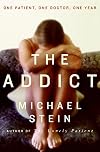
Synopsis:
One year in the treatment of a Vicodin addict, as told by the internist who treated her with medication.
Review:
Dr. Michael Stein is an internist specializing in prescribing a drug that blocks the effect of painkillers on a patient. In The Addict, subtitled One Patient, One Doctor, One Year, Stein recounts his journey treating Lucy, a promising young woman whose life has been stunted by an addiction to prescription medication. Lucy is meant to be an Everywoman; a college graduate, she’s a far cry from the stereotypical lower-income addict–unless, of course, you watch “Intervention” on A&E. If you do, you’ll know that Lucy’s story is quite common.
As an internist, Stein uses conversation as a means of diagnosis, not treatment as he would if he were a psychologist. He prescribes a strictly managed drug regimen meant to help Lucy restore her life. In doing so, he spends time talking with her as she describes the life she’d been living and how treatment is changing her.
As a narrative, The Addict was a little thin. In many ways, it’s a suitable companion to “Intervention,” showing what happens after the addict enters treatment. Yet Lucy’s story didn’t feel completely realistic, and I questioned at many points whether or not she was a composite of several of Stein’s patients.
Of course, the story is building to the “why.” What would turn a college-educated young woman into an addict? I don’t want to give it away, but I have to say that I show more found the story to be perplexing, even fishy. Either someone was covering up a crime or Lucy’s memory of the events was inaccurate. It was very strange to me. show less
One year in the treatment of a Vicodin addict, as told by the internist who treated her with medication.
Review:
Dr. Michael Stein is an internist specializing in prescribing a drug that blocks the effect of painkillers on a patient. In The Addict, subtitled One Patient, One Doctor, One Year, Stein recounts his journey treating Lucy, a promising young woman whose life has been stunted by an addiction to prescription medication. Lucy is meant to be an Everywoman; a college graduate, she’s a far cry from the stereotypical lower-income addict–unless, of course, you watch “Intervention” on A&E. If you do, you’ll know that Lucy’s story is quite common.
As an internist, Stein uses conversation as a means of diagnosis, not treatment as he would if he were a psychologist. He prescribes a strictly managed drug regimen meant to help Lucy restore her life. In doing so, he spends time talking with her as she describes the life she’d been living and how treatment is changing her.
As a narrative, The Addict was a little thin. In many ways, it’s a suitable companion to “Intervention,” showing what happens after the addict enters treatment. Yet Lucy’s story didn’t feel completely realistic, and I questioned at many points whether or not she was a composite of several of Stein’s patients.
Of course, the story is building to the “why.” What would turn a college-educated young woman into an addict? I don’t want to give it away, but I have to say that I show more found the story to be perplexing, even fishy. Either someone was covering up a crime or Lucy’s memory of the events was inaccurate. It was very strange to me. show less
This review was written for LibraryThing Early Reviewers.