
Herman's second book (Sex With the Queen) calls her a historian, and, as the daughter of a historian, that really gets up my nose. She doesn't do primary research. She isn't buried in ancient archives written in medieval languages, nor does she even cite translations of those documents. She compiles bits and pieces from books that other people have written about royalty. She's no Alison Weir.
Nor would even a self-respecting journalist take up her habit of assigning emotions and thoughts to people who lived so long ago: things like "we can imagine she must have thought...." or, worse, simply stating a person had certain thoughts when there's no evidence to prove it, is sloppy writing at best; for Herman, it's a bad habit, and one prone to misinform her readers.
I appreciated that Herman reminded us about the prevalence of bad smells, poor personal hygiene, sewage, cold, vermin, and other plagues of any life, even royal, in past eras, but she seems to have a hard time keeping that kind of realism in focus.
But that's not the kind of book this is. This is a fun read. It's dish not much different than a Kitty Kelley book about Princess Diana, but with a little more history and a little less guilt since the protagonists are so long gone. It's interesting, for sure, to read stories (the basics of which I think are generally correct) about royal mistresses and the negotiations and scandals, as well as the political intrigues, at royal courts through the centuries. I did learn show more something; for example, that "royal mistress" could be an almost official position; and simply about a lot of people I'd not have heard of otherwise.
Herman's strength is in pulling together variations on her general topic (sexual scandal and intrigue embroiling kings) to highlight certain themes and convey some general truths about long- ago times, all the while keeping her subjects human and accessible. It was a fast and addictive read. But, except when I had some prior knowledge of the history and people being discussed, because of her overdramatic writing habits I never fully felt that I could trust in the truth of the stories told. They became something in between real history and fairy tale.
On a somewhat more personal note, as a parent to young children, I found one story in the middle of the book extremely upsetting. I had to stop reading it for a while and, though I eventually finished, it ruined the light experience of the book for me and ensured I would never read it again. I am pretty sensitive so that might just be my problem, but although the story was relevant to the book, I found the level of detail too dark and awful. In general Herman does not strike me as sympathetic to the often hapless children who resulted from both royal marriages and affairs, in contrast to the royals themselves whose thoughts and feelings she so frequently describes.
But I'm giving it three and a half stars because there's definitely a place in my world for the light read, and it was good enough that I'm now reading the "sequel". show less
Nor would even a self-respecting journalist take up her habit of assigning emotions and thoughts to people who lived so long ago: things like "we can imagine she must have thought...." or, worse, simply stating a person had certain thoughts when there's no evidence to prove it, is sloppy writing at best; for Herman, it's a bad habit, and one prone to misinform her readers.
I appreciated that Herman reminded us about the prevalence of bad smells, poor personal hygiene, sewage, cold, vermin, and other plagues of any life, even royal, in past eras, but she seems to have a hard time keeping that kind of realism in focus.
But that's not the kind of book this is. This is a fun read. It's dish not much different than a Kitty Kelley book about Princess Diana, but with a little more history and a little less guilt since the protagonists are so long gone. It's interesting, for sure, to read stories (the basics of which I think are generally correct) about royal mistresses and the negotiations and scandals, as well as the political intrigues, at royal courts through the centuries. I did learn show more something; for example, that "royal mistress" could be an almost official position; and simply about a lot of people I'd not have heard of otherwise.
Herman's strength is in pulling together variations on her general topic (sexual scandal and intrigue embroiling kings) to highlight certain themes and convey some general truths about long- ago times, all the while keeping her subjects human and accessible. It was a fast and addictive read. But, except when I had some prior knowledge of the history and people being discussed, because of her overdramatic writing habits I never fully felt that I could trust in the truth of the stories told. They became something in between real history and fairy tale.
On a somewhat more personal note, as a parent to young children, I found one story in the middle of the book extremely upsetting. I had to stop reading it for a while and, though I eventually finished, it ruined the light experience of the book for me and ensured I would never read it again. I am pretty sensitive so that might just be my problem, but although the story was relevant to the book, I found the level of detail too dark and awful. In general Herman does not strike me as sympathetic to the often hapless children who resulted from both royal marriages and affairs, in contrast to the royals themselves whose thoughts and feelings she so frequently describes.
But I'm giving it three and a half stars because there's definitely a place in my world for the light read, and it was good enough that I'm now reading the "sequel". show less

I read this as a child and, when I came across it again, had to pick it up. Like many childhood books it was only hazily remembered but there was a gorgeous sense of rediscovery as I got to know its delightful characters again, and then a real grief as the book ended. I found myself poking around on the internet in the hopes I'd somehow find a sequel or at least another similar book by the same author. But this was written in the days before half the "young adult" books came with a set of predetermined sequels. And, like all great books, it is really for any age. Mostly I'm just so grateful I got to know the haughty, kind Phoenix and the inquisitive, sweet David again.
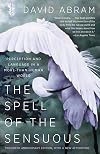
This book has become a touchstone for me since I read it: one of the most thought-provoking and life-changing books i've read. That said, it's been a while, so I don't want to try to write a detailed review at the moment, but the others currently here ring true to me.
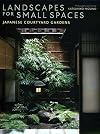
A lovely photography book about a certain kind of traditional Japanese garden: they're smaller and typically occur in courtyards within or between buildings. The photographs do an excellent job of conveying the sensibility and traditions of this particular garden type, and they cover a wide range of types, from stark or refined palace gardens and monastery gardens of gravel and rock to lush and relatively crowded private gardens of merchant houses, and all sorts of permutations and variations of location and style. I appreciated that the photographer did not always present the most accessible views of the gardens shown--for example some shots showed gardens covered in snow so that it took some effort to discern the garden's qualities. Each photograph is accompanied by a caption about the garden's location, some of its components, and notable qualities or features.
There is some introductory text as well as an epilogue describing how the author, who is also a designer of Japanese gardens, created one of the gardens shown in the book. I found myself wanting, if anything, a bit more text all around, but then again the photos were so interesting that I didn't want less of them, either.
The topic itself is fascinating and interesting, especially to me as a native of a culture where environment and building are kept much more separate than in traditional Japanese architecture. The very idea of a guest room or hallway that opens directly onto a courtyard, lush and filled with show more trees and plants, is foreign literally and emotional, but deeply appealing too. I can't get enough of reading about it.
Finally, I enjoy the cover of this book so much that I have had it propped up on my dressed for a couple weeks now. show less
There is some introductory text as well as an epilogue describing how the author, who is also a designer of Japanese gardens, created one of the gardens shown in the book. I found myself wanting, if anything, a bit more text all around, but then again the photos were so interesting that I didn't want less of them, either.
The topic itself is fascinating and interesting, especially to me as a native of a culture where environment and building are kept much more separate than in traditional Japanese architecture. The very idea of a guest room or hallway that opens directly onto a courtyard, lush and filled with show more trees and plants, is foreign literally and emotional, but deeply appealing too. I can't get enough of reading about it.
Finally, I enjoy the cover of this book so much that I have had it propped up on my dressed for a couple weeks now. show less
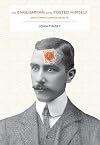
I found this a charming little book. It's simple, and it's not long. It describes the achievements of one man who challenged the British postal system by studying its regulations and pushing them to their limits; but he appeared to do so out of genuine love for the postal system and its workers rather than to show it up. He also amassed an enormous collection of autographs by mail, although I found this part of the book less exciting because the subject's actions were less whimsical and more attention-seeking at this stage.
One of the nicest things about this book was its quality of production (I read the hardcover)--very nicely done color plates, and lots of them, formed a significant part of the content. I also enjoyed the author's sheer interest in and enthusiasm for his subject. The book clearly grew out of this ongoing fascination, as opposed to many works that don't really take shape until the author determines to start writing about a general idea. But here I don't feel anybody's trying to sell me on anything, if that makes any sense. It's not an epic nor is it really revelatory, but it's an honest little gem.
One of the nicest things about this book was its quality of production (I read the hardcover)--very nicely done color plates, and lots of them, formed a significant part of the content. I also enjoyed the author's sheer interest in and enthusiasm for his subject. The book clearly grew out of this ongoing fascination, as opposed to many works that don't really take shape until the author determines to start writing about a general idea. But here I don't feel anybody's trying to sell me on anything, if that makes any sense. It's not an epic nor is it really revelatory, but it's an honest little gem.
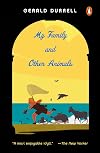
I think Amazon recommended this to me after I'd bought yet another James Herriot book. Not quite as laugh-out-loud funny, but charming, fascinating, a little sprawling, and dreamy. It makes me wonder why I don't live in Corfu, that's for sure! In addition, since we know Durrell grew up to be a dedicated zoologist, it's interesting (especially as a parent) to see how dedicated he was to that field even at age ten. (Similarly, his older brother Larry, who sounds a bit young and foolish about poetry and literature in the book, grew up to be a well- known author.) The prose can be a little thick at times; I'm not sure Durrell ever met an adjective he didn't like. But that fits well with the lush, abundant surroundings he describes, and in the dark of winter right now, you can tell me about all the translucent azure waters you'd like. I'd certainly read more of his work.
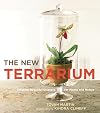
The strength of this book is in its beautiful photos that serve as inspiration and, simply, a sweet relief for my eyes in the midst of winter. In terms of hard cold facts about assembling and maintaining a terrarium? Eh, not so much. Go to the Kayatta book also in my library for that. And, beware--if this book is your sole source of information about keeping carnivorous plants in terraria, they will not last long.
Still, I will keep and enjoy it for its visuals and even its text on a high level.
Still, I will keep and enjoy it for its visuals and even its text on a high level.
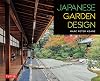
Not just pretty pictures, although it's got those too. Interweaves photos and layout drawings with clearly written, fascinating text that explains the historical origins of Japanese gardens, including how they changed over time with the political and cultural mores. A significant portion of text is dedicated to explaining important Japanese words and concept allied with garden design so that the reader can better understand the philosophies that shaped designs. Deeply interesting.
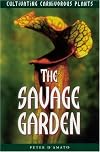
For anyone who wants to grow carnivorous plants, this is a must. Detailed descriptions of growing requirements--for instance, almost all CPs must be watered with distilled water--, soil mixes, light, temperatures, etc. If you've ever sadly watched one of those inexpensive carnivorous plants from a box store wither away, this is the book for you.
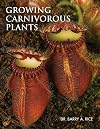
Great photos, and an enormous amount of in-depth information about carnivorous plants: where they are found, how to grow them, and cutting-edge information like how to grow plants using tissue cultures. Rice also discusses conservation in detail; an important topic for these plants which grow in particularly threatened habitats.
I will say I didn't enjoy this quite as much as The Savage Garden, but it's hard for me to pinpoint why. Perhaps because it is slightly more academic in its approach, or slightly less oriented toward the layperson grower. It didn't excite me quite as much about growing CPs. But I feel faintly guilty about this as it is such a complete and accessible book.
I will say I didn't enjoy this quite as much as The Savage Garden, but it's hard for me to pinpoint why. Perhaps because it is slightly more academic in its approach, or slightly less oriented toward the layperson grower. It didn't excite me quite as much about growing CPs. But I feel faintly guilty about this as it is such a complete and accessible book.
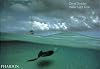
Finally bought this after having my eye on it for ages. It is out of print, so not inexpensive even used. However, the photos are spectacular. The text is interesting as well, though a relatively minor part of the book.
Although it is much less intrusive from a graphical design standpoint, it does irritate me that the captions are sideways ( oriented vertically). It's very hard on the eyes and neck to keep on twisting around to read them.
Although it is much less intrusive from a graphical design standpoint, it does irritate me that the captions are sideways ( oriented vertically). It's very hard on the eyes and neck to keep on twisting around to read them.

I bought this book after an Amazon review about a much newer terrarium book said this older book was still a much better reference. Completely true. It lacks the pretty pictures you might see elsewhere, and yes the macrame and outfits here and there date the photos you do see... But the text is clear, well-organized, and detailed. There's lots of information about soil mixes, how different terrarium types should be treated (woodland vs tropical vs desert vs some specialty plants), light requirements, learning how to plant in challenging containers, sourcing containers... Even how to have a terrarium party, which sounds like fun to dorky ol' me. If you are interested in terraria, it definitely belongs on your shelf.
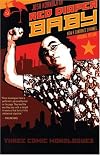
I read this years ago when I worked at the publishing house that published this book. It was hilarious, so much so that I gave copies to several people that Christmas. It disappeared from my collection at some point, but recently I was reminded of it and bought another copy. Now that I am older, I notice more of a bittersweet quality to the pieces, but that doesn't change the fact that it is still hilarious. I literally laughed out loud many times when reading the first piece, in particular--Kornbluth's recollections about growing up with both of his unusual, and separated, parents in New York: his mother, who gave him a double espresso every morning, and his father, a larger-than-life Communist who spent a lot of time naked and knocking down walls. The second piece chronicles Kornbluth's "hitting the wall" in math at Princeton, and has a more contemplative quality. The third piece recounts his temping experiences.
Everything is transcribed from what were originally monologues, so the writing is correspondingly punctuated, and has a somewhat informal feel--but that worked very well for me as a reader; I had a good sense of how the monologue probably sounded.
Everything is transcribed from what were originally monologues, so the writing is correspondingly punctuated, and has a somewhat informal feel--but that worked very well for me as a reader; I had a good sense of how the monologue probably sounded.
East by Edith Pattou
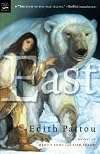
A lovely retelling of a classic fairy tale ( or maybe more than one). Simply told, compelling.
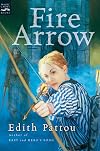
Stronger than the first in the series: smoother and more comfortable in its writing and description. With both I got the sense that Pattou's heart wasn't really in the denouement; the "climatic" battle scenes feel rushed and after the fact. But I enjoy the worlds and characters she constructs, and there are small pieces of loveliness, like the description of the sea sorcerer's littl "mote", or hut, that make the read well worth it.
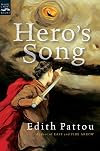
I found this book a little stilted and derivative... East, a later work by the same author, is much stronger. All the same, I enjoyed it enough to read the next one in the series.
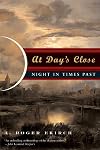
Ekirch, though he didn't set out to do so, has convinced me that modern light may be more of a scourge than a blessing. In a strange coincidence, we experienced a late afternoon/evening power outage while I was reading this book: what a way to really gain empathy with his subject!
The book examines the experience of nighttime in the late medieval and early modern eras. At a broad level, Ekirch discusses the fears and dangers associated with nighttime, the ways nighttime constrained daily activities, the things that people did do during the night, habits pertaining to the evening and sleep. His book is crammed full of evocative detail about all the specifics that fall under these general categories.
Though here and there I had quibbles with the organization, in truth I couldn't think how to do things much better. I think the subject material is just so layered and vast (the book is the product of almost 20 years of work) that it is bound to be difficult to separate into tidy categories.
Too, in places I thought "Well, these things are still true today"--e.g., about the rampaging of adolescents during the evening--and in response his concluding section, Cock-Crow (on the changes that came after the period of question, during the Industrial Revolution), does a wonderful job of reminding the reader of how vastly diluted and distant our experience of night is today by comparison. He also reminds us about the mysteries, subtleties, emotional states, and time for reflection and show more thought that have vanished as we more toward a 24-hour day. I wished this section was longer.
The rest of the book reminds us of what we've gained as well as lost since the times when night reigned: time that's no longer sunk into endless labor like midnight washing; fears and terrors, spiritual and material; time spent knitting together society; chances to escape or defy one's socially defined role; miserable, scratchy, bug-infested, noisy, and crowded sleeping conditions; and on and on.
As with all good histories of this sort, while Ekirch educates us about the myriad aspects of his chosen subject, he also illuminates the greater warp and weft of life during the medieval and early modern era.
Postscript: thanks to Ekirch, I'm now deeply interested in reading Samuel Pepys' diary. show less
The book examines the experience of nighttime in the late medieval and early modern eras. At a broad level, Ekirch discusses the fears and dangers associated with nighttime, the ways nighttime constrained daily activities, the things that people did do during the night, habits pertaining to the evening and sleep. His book is crammed full of evocative detail about all the specifics that fall under these general categories.
Though here and there I had quibbles with the organization, in truth I couldn't think how to do things much better. I think the subject material is just so layered and vast (the book is the product of almost 20 years of work) that it is bound to be difficult to separate into tidy categories.
Too, in places I thought "Well, these things are still true today"--e.g., about the rampaging of adolescents during the evening--and in response his concluding section, Cock-Crow (on the changes that came after the period of question, during the Industrial Revolution), does a wonderful job of reminding the reader of how vastly diluted and distant our experience of night is today by comparison. He also reminds us about the mysteries, subtleties, emotional states, and time for reflection and show more thought that have vanished as we more toward a 24-hour day. I wished this section was longer.
The rest of the book reminds us of what we've gained as well as lost since the times when night reigned: time that's no longer sunk into endless labor like midnight washing; fears and terrors, spiritual and material; time spent knitting together society; chances to escape or defy one's socially defined role; miserable, scratchy, bug-infested, noisy, and crowded sleeping conditions; and on and on.
As with all good histories of this sort, while Ekirch educates us about the myriad aspects of his chosen subject, he also illuminates the greater warp and weft of life during the medieval and early modern era.
Postscript: thanks to Ekirch, I'm now deeply interested in reading Samuel Pepys' diary. show less
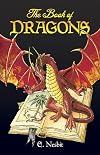
In the midst of this. I read 5 Children and It as a child, but had no idea of the range of E. Nesbit's writing, and had never heard of this one till I picked it up at the library. So sorry I missed it until now! It's so delightful: beautiful imagery, concisely written, and very true to the fairy-tale ethos; but funny, too. And a strange combination of modern (including asides to the reader) and ancient in feel.
I looked E. Nesbit up on Wikipedia and was fascinated to find that, at the turn of the century, she married at 7 months pregnant, had an open marriage, raised the children her husband had with his lover as her own, and co-founded a precursor to the modern Labour Party. She was clearly fairly radical, socially and politically speaking, and this makes reading her work all the more interesting. She mentions class-based signifiers (public and private schools, in the English sense; servants and royalty, of course, in the fairy-tale mode; Eton jackets, accepted and poor behavior) quite frequently, and I often can't tell whether she intends irony or subtle instruction to come of this.
But aside from her personal life, I would totally recommend this book simply because they're wonderful tales, wonderfully told.
I looked E. Nesbit up on Wikipedia and was fascinated to find that, at the turn of the century, she married at 7 months pregnant, had an open marriage, raised the children her husband had with his lover as her own, and co-founded a precursor to the modern Labour Party. She was clearly fairly radical, socially and politically speaking, and this makes reading her work all the more interesting. She mentions class-based signifiers (public and private schools, in the English sense; servants and royalty, of course, in the fairy-tale mode; Eton jackets, accepted and poor behavior) quite frequently, and I often can't tell whether she intends irony or subtle instruction to come of this.
But aside from her personal life, I would totally recommend this book simply because they're wonderful tales, wonderfully told.