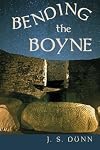
This book is more archaelogical fiction than historical fiction. Much time is spent on the stuff of the people in the story - their cups and things. But, of course, that's all we have from those people, so I guess that's what you have to go from. I actually enjoyed this book, but wouldn't recommend it to just anyone. It's a bit long and clunky in parts. Since I have no familiarity with the topic, I can't tell you how accurate it is, though the publisher sent me a letter telling me how amazing and accurate it is. Take that as you will. If you're into really early British Isles history, give it a try.
 This review was written for LibraryThing Early Reviewers.
(For the whole series): I blasted through all of these the first time I read them. Stewart and Riddell created an amazing world, where rocks float and there are a bunch of different humanoid beings running around, each with their own outlook on life and way of living. You can read them in published order or reorganize them into internal chronological order, as some of the characters turn out to be the grandparents of other characters. Either way, a good rollicking read with characters you might actually care about. The pen-and-ink illustrations top it off – interesting, complex, and perfect for the story.
(For the whole series): I blasted through all of these the first time I read them. Stewart and Riddell created an amazing world, where rocks float and there are a bunch of different humanoid beings running around, each with their own outlook on life and way of living. You can read them in published order or reorganize them into internal chronological order, as some of the characters turn out to be the grandparents of other characters. Either way, a good rollicking read with characters you might actually care about. The pen-and-ink illustrations top it off – interesting, complex, and perfect for the story.
(For the whole series): I blasted through all of these the first time I read them. Stewart and Riddell created an amazing world, where rocks float and there are a bunch of different humanoid beings running around, each with their own outlook on life and way of living. You can read them in published order or reorganize them into internal chronological order, as some of the characters turn out to be the grandparents of other characters. Either way, a good rollicking read with characters you might actually care about. The pen-and-ink illustrations top it off – interesting, complex, and perfect for the story.
(For the whole series): I blasted through all of these the first time I read them. Stewart and Riddell created an amazing world, where rocks float and there are a bunch of different humanoid beings running around, each with their own outlook on life and way of living. You can read them in published order or reorganize them into internal chronological order, as some of the characters turn out to be the grandparents of other characters. Either way, a good rollicking read with characters you might actually care about. The pen-and-ink illustrations top it off – interesting, complex, and perfect for the story.
(For the whole series): I blasted through all of these the first time I read them. Stewart and Riddell created an amazing world, where rocks float and there are a bunch of different humanoid beings running around, each with their own outlook on life and way of living. You can read them in published order or reorganize them into internal chronological order, as some of the characters turn out to be the grandparents of other characters. Either way, a good rollicking read with characters you might actually care about. The pen-and-ink illustrations top it off – interesting, complex, and perfect for the story.
(For the whole series): I blasted through all of these the first time I read them. Stewart and Riddell created an amazing world, where rocks float and there are a bunch of different humanoid beings running around, each with their own outlook on life and way of living. You can read them in published order or reorganize them into internal chronological order, as some of the characters turn out to be the grandparents of other characters. Either way, a good rollicking read with characters you might actually care about. The pen-and-ink illustrations top it off – interesting, complex, and perfect for the story.
(Whole series) In one kingdom, Gracelings are people born with two different eye colors and mystical powers. Some Gracelings have useful Graces, others are mistrusted. In another kingdom, separated by almost-impassible mountains, Monsters are found everywhere – magical and vicious versions of common animals. There is only one human Monster, and her name is Fire. Cashore has created an interesting world, and I imagine future books will explore all the various ramifications of Gracelings, Monsters, and other magical beings. These books are also a study of human nature – what makes us who we are? What do we do because of it?
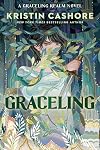
(Whole series) In one kingdom, Gracelings are people born with two different eye colors and mystical powers. Some Gracelings have useful Graces, others are mistrusted. In another kingdom, separated by almost-impassible mountains, Monsters are found everywhere – magical and vicious versions of common animals. There is only one human Monster, and her name is Fire. Cashore has created an interesting world, and I imagine future books will explore all the various ramifications of Gracelings, Monsters, and other magical beings. These books are also a study of human nature – what makes us who we are? What do we do because of it?
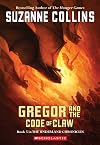
(Whole series) When Gregor falls through the hole in his laundry room, he ends up in a world under New York, populated by giant cockroaches, rats, bats, and very pale humans. Collins says she set out to write an urban Alice in Wonderland, and she generally succeeded. The series is fairly formulaic – Gregor gets a prophecy at the end of each book that gives us a hint for the next book. Not to be a spoiler, but the ending is fairly predictable and a little disappointing. But the characters are great (even the roaches!), and the adventures are real and engaging. (pannarrens)
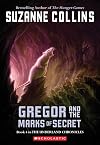
(Whole series) When Gregor falls through the hole in his laundry room, he ends up in a world under New York, populated by giant cockroaches, rats, bats, and very pale humans. Collins says she set out to write an urban Alice in Wonderland, and she generally succeeded. The series is fairly formulaic – Gregor gets a prophecy at the end of each book that gives us a hint for the next book. Not to be a spoiler, but the ending is fairly predictable and a little disappointing. But the characters are great (even the roaches!), and the adventures are real and engaging. (pannarrens)
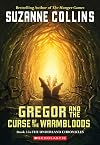
(Whole series) When Gregor falls through the hole in his laundry room, he ends up in a world under New York, populated by giant cockroaches, rats, bats, and very pale humans. Collins says she set out to write an urban Alice in Wonderland, and she generally succeeded. The series is fairly formulaic – Gregor gets a prophecy at the end of each book that gives us a hint for the next book. Not to be a spoiler, but the ending is fairly predictable and a little disappointing. But the characters are great (even the roaches!), and the adventures are real and engaging. (pannarrens)
(Whole series) When Gregor falls through the hole in his laundry room, he ends up in a world under New York, populated by giant cockroaches, rats, bats, and very pale humans. Collins says she set out to write an urban Alice in Wonderland, and she generally succeeded. The series is fairly formulaic – Gregor gets a prophecy at the end of each book that gives us a hint for the next book. Not to be a spoiler, but the ending is fairly predictable and a little disappointing. But the characters are great (even the roaches!), and the adventures are real and engaging. (pannarrens)

(For the whole trilogy): A utopian future on a planet with lowered gravity, psychic abilities, and naturally abundant food – what could be better? I read these books repeatedly as a kid, and still love them today. Of course, the utopia cracks under the pressure of the secrets it is keeping, and courageous children must save the day. The trilogy is a surprisingly sophisticated analysis of utopian ideals, for books aimed at children. The cultures that evolved on this planet are well-reasoned extensions of their histories, and the overall story is believable, given the premise. Plus, people get to fly and sleep in nests.

(For the whole trilogy): A utopian future on a planet with lowered gravity, psychic abilities, and naturally abundant food – what could be better? I read these books repeatedly as a kid, and still love them today. Of course, the utopia cracks under the pressure of the secrets it is keeping, and courageous children must save the day. The trilogy is a surprisingly sophisticated analysis of utopian ideals, for books aimed at children. The cultures that evolved on this planet are well-reasoned extensions of their histories, and the overall story is believable, given the premise. Plus, people get to fly and sleep in nests.

(For the whole trilogy): A utopian future on a planet with lowered gravity, psychic abilities, and naturally abundant food – what could be better? I read these books repeatedly as a kid, and still love them today. Of course, the utopia cracks under the pressure of the secrets it is keeping, and courageous children must save the day. The trilogy is a surprisingly sophisticated analysis of utopian ideals, for books aimed at children. The cultures that evolved on this planet are well-reasoned extensions of their histories, and the overall story is believable, given the premise. Plus, people get to fly and sleep in nests.
David’s father is a psychologist who specializes in troubled teens. His current patient is Zelda, a beautiful girl in a bikini who claims she is an alien from an all-female planet, sent to find her one true mate (who happens to be Johnny Depp.) I was expecting a sort of “is she or isn’t she?” story, where we would end the book unclear as to whether Zelda was mentally ill or actually an alien. That question is answered about halfway through, when the book takes a decidedly old-school sci-fi turn. I would have preferred the uncertainty. A strange little book.
This review was written for LibraryThing Early Reviewers.Ash by Malinda Lo

Retold fairy tales are some of my favorite books. This one retells Cinderella, complete with awful stepsisters and stepmother. However, her fairy godmother is now a fairy wannabe-lover (maybe), and she really wants the attention of the Huntress, not the Prince. While I generally liked this book, I think it thought it was more complex than I think it really was. There were a few plot-lines that didn’t totally gel, and some stuff felt left out and somewhat random. It came up on my list as a GLBT book, but the gay didn’t turn up until the last few pages.
For the whole series: These books are fascinatingly written. The frame story is that there are legends, songs, and tales about the women of Great Alta, and that historians fight constantly about the meanings of these legends. Each chapter includes some “history”, some “legend” and then the “true story” of what really happened. The women of Great Alta (and their shadow sisters) have a complex and magical way of life, which is brought to life all the more fully through the layered way Yolen constructs the books. The books are a great commentary on what we do or do not know about past cultures.
For the whole series: These books are fascinatingly written. The frame story is that there are legends, songs, and tales about the women of Great Alta, and that historians fight constantly about the meanings of these legends. Each chapter includes some “history”, some “legend” and then the “true story” of what really happened. The women of Great Alta (and their shadow sisters) have a complex and magical way of life, which is brought to life all the more fully through the layered way Yolen constructs the books. The books are a great commentary on what we do or do not know about past cultures.
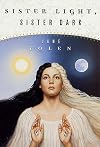
For the whole series: These books are fascinatingly written. The frame story is that there are legends, songs, and tales about the women of Great Alta, and that historians fight constantly about the meanings of these legends. Each chapter includes some “history”, some “legend” and then the “true story” of what really happened. The women of Great Alta (and their shadow sisters) have a complex and magical way of life, which is brought to life all the more fully through the layered way Yolen constructs the books. The books are a great commentary on what we do or do not know about past cultures.
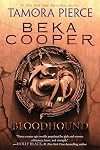
(For the whole series): Pierce excels at strong girl characters, and Beka is no exception. Placed two centuries before the Alanna books, the Beka series explores Tortall in a somewhat darker, grittier time. Beka wants nothing more than to be a Dog, a policewoman in the toughest neighborhood in the city. She is smart, tough, and can listen to ghosts. Useful. The first two books follow her rise from the rank of Puppy to Dog, and the final book should cover her life as an adult policewoman. N.B., she shares a last name with George Cooper, the King of Thieves from the Alanna books.
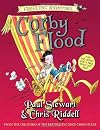
(For the whole series:) In a world just a little unlike our own, truly exceptional children go on truly strange adventures. While each of these books could be read separately, they are definitely a series, as the kids all end up at the same crazy school in the end. As always, Stewart and Riddell have created a world full of odd inventions, odder people, and strange beasties of different shapes and sizes. The kids are spunky and resourceful. The characters would make great fun for make-believe play. The illustrations are amazing. Riddell has a style I would recognize anywhere, which complements Stewart’s odd brain.
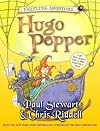
(For the whole series:) In a world just a little unlike our own, truly exceptional children go on truly strange adventures. While each of these books could be read separately, they are definitely a series, as the kids all end up at the same crazy school in the end. As always, Stewart and Riddell have created a world full of odd inventions, odder people, and strange beasties of different shapes and sizes. The kids are spunky and resourceful. The characters would make great fun for make-believe play. The illustrations are amazing. Riddell has a style I would recognize anywhere, which complements Stewart’s odd brain.
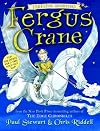
(For the whole series): own, truly exceptional children go on truly strange adventures. While each of these books could be read separately, they are definitely a series, as the kids all end up at the same crazy school in the end. As always, Stewart and Riddell have created a world full of odd inventions, odder people, and strange beasties of different shapes and sizes. The kids are spunky and resourceful. The characters would make great fun for make-believe play. The illustrations are amazing. Riddell has a style I would recognize anywhere, which complements Stewart’s odd brain.
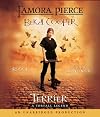
(For the whole series): Pierce excels at strong girl characters, and Beka is no exception. Placed two centuries before the Alanna books, the Beka series explores Tortall in a somewhat darker, grittier time. Beka wants nothing more than to be a Dog, a policewoman in the toughest neighborhood in the city. She is smart, tough, and can listen to ghosts. Useful. The first two books follow her rise from the rank of Puppy to Dog, and the final book should cover her life as an adult policewoman. N.B., she shares a last name with George Cooper, the King of Thieves from the Alanna books.
(For the whole series): I blasted through all of these the first time I read them. Stewart and Riddell created an amazing world, where rocks float and there are a bunch of different humanoid beings running around, each with their own outlook on life and way of living. You can read them in published order or reorganize them into internal chronological order, as some of the characters turn out to be the grandparents of other characters. Either way, a good rollicking read with characters you might actually care about. The pen-and-ink illustrations top it off – interesting, complex, and perfect for the story.
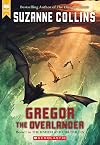
(Whole series) When Gregor falls through the hole in his laundry room, he ends up in a world under New York, populated by giant cockroaches, rats, bats, and very pale humans. Collins says she set out to write an urban Alice in Wonderland, and she generally succeeded. The series is fairly formulaic – Gregor gets a prophecy at the end of each book that gives us a hint for the next book. Not to be a spoiler, but the ending is fairly predictable and a little disappointing. But the characters are great (even the roaches!), and the adventures are real and engaging. (pannarrens)
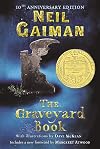
Bod, short for Nobody Owens, is a live boy raised by ghosts in a graveyard. His knowledge of the outside world is limited, but his knowledge of history is rather personal. Like the Jungle Book (the original – not the Disney movie), but with ghosts, vampires, werewolves, and Jacks of All Trades. A coming-of-age story, with a bittersweet ending and a twist. I truly enjoyed this one – dark, but not depressing. Filled with love and light, but not fluffy. Good triumphs over evil, but the hero doesn’t always get the girl, and the good guys don’t all wear white. (pannarrens)

Well, I loved it and would recommend it as a rollicking good silly adventure that a certain kind of kid around age 8 or 9 would love. But… the African Prince is on board to serve food. The “Red Indians” are too ignorant to raise their babies correctly. The monkey can travel because he looks so much like an African. You see the problem. I think that, with a long conversation about the book being old, you could read it with a kid. But not in a classroom – you can’t have that conversation with 25 kids at once. (pannarrens)