Lost at Sea: Poverty and Paradise Collide at the Edge of America―An Eye-Opening Account of the Profit-Driven Policies Exacerbating America's Housing Crisis by Joe Kloc
nonfiction, politics, sausalito, anchor outs, homelessness, poverty, capitalism, law enforcement, california,
I haven't written a review in a few years, but "Eileen" by Ottessa Moshfegh is outstanding. Roll with it without expectations, and you'll be glad you did.
Highly recommended if you followed major league baseball in the mid 1970s, particularly if you were a kid at the time.
A seemingly well-researched history of top-secret U.S. military and surveillance aircraft, bracketed by a cock-and-bull story about Joseph Stalin, Josef Mengele, and a flying saucer crash at Roswell.
Entertaining, but too much Susan Casey.
Clear, informative, exhaustively researched, and balanced in tone. Sheehan honestly subverts the drama of his narrative by noting early in the book that post-Cold War research in the Soviet archives suggests that the Soviet Union never intended to launch a nuclear first strike or ground invasion of Western Europe.
The Candy Bombers: The Untold Story of the Berlin Airlift and America's Finest Hour by Andrei Cherny
Cherny's Soviets are stereotypical baddies. Though the damage wrought by the Soviets on post-war Eastern Europe is undeniable, the opening of Soviet archives and the recent work of other historians would have provided the author with more information about the psychology behind Soviet actions before and during the blockade. Such information would have added depth to this engaging but lightweight take on the early days of the Cold War.
A Call to Conscience: The Landmark Speeches of Dr. Martin Luther King, Jr. by Martin Luther King, Jr.
[audiobook] Thrilling, inspiring, and humbling. The brilliance of Dr. King's speeches is marred only by the poor audio quality of the early recordings.
The story of the "wildman" in American culture, from P.T. Barnum's "What-Is-It?" to 21st century Bigfoot. Buhs lays his cards on the table in the preface: "I still don't think Bigfoot exists--indeed writing this book actually gave substance to what was before only a vague kind of skepticism."
A somewhat entertaining read that left me irritated on a few points. The author exploits the "great white explorer" mythos for glamour and dramatic effect. He uses spiritualist nonsense for pathos. And the author's own quest into the Amazon is ridiculous. Bottom line: circa 1910, Fawcett was a slight improvement over the typical western explorer, but was driven over the edge by the carnage of WWI. His madness drove him into the jungle one last time, bringing his worshipful son and the son's best friend along for an early death.


Great read, worth the wind-up as you get familiar with Reynolds' vivid characters, settings, and technologies.
Good for a flash of early Burroughs/Kerouac and depiction of lowlife Manhattan, circa 1944.
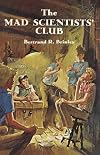
This was one of my favorites when I was a kid.

Genetic Soldier is from Australian writer George Turner's series of books that take as their base assumption a 21st century Earth that is ecologically overwhelmed by humanity. The novel presents the story of a spaceship launched during the ecological crisis to find new inhabitable worlds. The crew fail to find a hospitable planet and return to Earth circa 2700 (thanks to relativity and cryo-sleep). They find a radically depopulated Earth and a less-than-welcoming populace organized into workers, soldiers, and clerics. The main character is one of these future Earthers, the general of the soldiery of the Yarra Valley (outside what was once Melbourne). I won't attempt to summarize the plot, but would recommend Turner's book (and others in the series) to readers looking for science fiction that doesn't fit into a conventional genre. Note that the book is misrepresented by its title and the U.S. cover image which seem to promise take-no-prisoners military SF. In fact, the book is almost completely devoid of violent conflict.

A quick read but only recommended if you enjoy military science fiction.

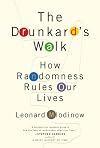
Engaging and made me rethink the way I look at numbers and statistics.
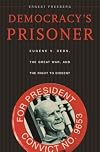
A look at the evolution of free speech rights in the WWI era through the lens of the imprisonment of Socialist leader Eugene Debs. Debs was convicted for a speech in Canton, Ohio, that allegedly had the "bad tendency" of discouraging men from participating in the military draft. The book is also a reminder that democracies have a long history of punishing dissent during times of national crisis, real or imagined. One criticism: I wished that there had been more elaboration of the world view of Debs and his vision of a Socialist America.

Enjoyable read unlikely to make a lasting impression.

A quirky assemblage of short stories, songs, reviews, and miscellanea related to the periodic resurrection of Upton Sinclair since his death in 1968. Upton returns to fight for the downtrodden and is repeatedly gunned down by reactionaries seeking glory and profit. It's an oddly moving, memorable book.
