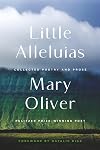
You can’t conjure up an image of Mary Oliver without thinking of nature, so I knew what was waiting for me before I even opened this book. The poems had an equal mix of animals, the earth, and how we–or Oliver at least–sit around pondering all that surrounds us. I enjoyed how many poems included different birds from herons to hummingbirds, how several poems came back to the snake, and her memorable poem about bats.
I felt like the essays on writers such as Hawthorne and Emerson, for example, could have been left out. They didn’t work well with the rest of her prose, and I felt lost at some of her critiques without knowing some of the pieces she was referring to.
The rest of the book made up for it, though, and I’m thankful to Netgalley for allowing me to read it. I felt both lighter and heavier after reading Little Alleluias, with Mary Oliver knowing just how to tear at your emotions.
I felt like the essays on writers such as Hawthorne and Emerson, for example, could have been left out. They didn’t work well with the rest of her prose, and I felt lost at some of her critiques without knowing some of the pieces she was referring to.
The rest of the book made up for it, though, and I’m thankful to Netgalley for allowing me to read it. I felt both lighter and heavier after reading Little Alleluias, with Mary Oliver knowing just how to tear at your emotions.
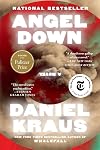
The format of this book is something completely different from anything I have ever read. I was definitely skeptical at first as to whether or not I would like it, but I ended up really enjoying it. It was so unique the way only commas were used at the end of each paragraph--no periods whatsoever--and if not done correctly, this book could have been horribly written. However, the way the author lays it out, it worked so well! I can see a lot of people not liking it as much as I did, or at all, but I found it so well-done that I couldn't help but thoroughly enjoy it, and after a while, you get so used to the odd punctuation that it doesn't bother you.
I liked the main character a lot. I liked his relationship with a few of the side characters–both his dislike and like for them–especially the young character Arno. The main character's quips and wit made me laugh and made me like him even more. He was charismatic and intelligent, and was surviving both the war and himself--mainly his own demons.
The war was covered in gory and vulgar detail, but that's war. It was incredibly vivid, and if you have a weak stomach, I don’t know how you can get around reading this book since there’s really no warning when something cruel or disgusting is about to happen. That did not deter me from reading it, though, and I found that, in some cases, this made it even more realistic.
I was on the fence–and still am–about the character of the angel and the situations involving her. She show more was vital to the story, yet I felt like she could’ve been used in different and better ways. I liked the idea of her appearance, and the scene of how they discovered her was incredible. However, parts were unclear at times with her and what she was or what she was doing there.
As for the ending, it did feel a little rushed and a bit odd at times. I think it could have been wrapped up a little better. But overall, this book really took me for a ride and I would easily recommend it to others.
I received this book from Netgalley to give my honest opinion and review. show less
I liked the main character a lot. I liked his relationship with a few of the side characters–both his dislike and like for them–especially the young character Arno. The main character's quips and wit made me laugh and made me like him even more. He was charismatic and intelligent, and was surviving both the war and himself--mainly his own demons.
The war was covered in gory and vulgar detail, but that's war. It was incredibly vivid, and if you have a weak stomach, I don’t know how you can get around reading this book since there’s really no warning when something cruel or disgusting is about to happen. That did not deter me from reading it, though, and I found that, in some cases, this made it even more realistic.
I was on the fence–and still am–about the character of the angel and the situations involving her. She show more was vital to the story, yet I felt like she could’ve been used in different and better ways. I liked the idea of her appearance, and the scene of how they discovered her was incredible. However, parts were unclear at times with her and what she was or what she was doing there.
As for the ending, it did feel a little rushed and a bit odd at times. I think it could have been wrapped up a little better. But overall, this book really took me for a ride and I would easily recommend it to others.
I received this book from Netgalley to give my honest opinion and review. show less
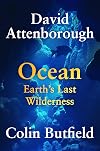
I appreciate not only David Attenborough and his work, experience, and advocacy, but through reading this book, I came to appreciate and respect the other people mentioned and how they have come together to try to save the ocean. With this book, so much of it was interesting--teaching you without feeling like a textbook. I believe I learned the most and enjoyed learning the most about coral reefs--both the fascinating and the decidedly depressing. Attenborough's very real experiences of sea animals, the ocean itself, and how to conserve it came well into play here (with him having been into the depths of the ocean more than once being just one example). One segment I particularly loved reading and learning about was the section on mangroves and how people have taken on a serious, lengthy, and beautiful mission to help regrow them.
However, parts of the book felt like you had to know more about the ocean that I already did in order to really take it in--or at least without looking something up first. There were a lot of animal species I surprisingly did not know, and to take time away from the book to look them up or terms related to them was a little annoying at times. (Just a pet peeve of mine.)
Overall, however, I did enjoy it. I think later on, it would be good to reread it with the knowledge I've gained from it and with fresh eyes (and known definitions). if you are interested in how much a blue whale’s tongue weighs, or if you are interested in what underwater animal show more has two different sized eyes, or really, if you are just interested in the ocean and how we can try our best to keep it and everything depending on it “afloat,” including us, read this book!
Thank you Netgalley for allowing me to read Ocean & give my honest review. show less
However, parts of the book felt like you had to know more about the ocean that I already did in order to really take it in--or at least without looking something up first. There were a lot of animal species I surprisingly did not know, and to take time away from the book to look them up or terms related to them was a little annoying at times. (Just a pet peeve of mine.)
Overall, however, I did enjoy it. I think later on, it would be good to reread it with the knowledge I've gained from it and with fresh eyes (and known definitions). if you are interested in how much a blue whale’s tongue weighs, or if you are interested in what underwater animal show more has two different sized eyes, or really, if you are just interested in the ocean and how we can try our best to keep it and everything depending on it “afloat,” including us, read this book!
Thank you Netgalley for allowing me to read Ocean & give my honest review. show less
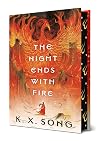
This book was a true ride full of adventure, fantasy, and even romance. While a slight take on the story of Mulan, it was no Disney fairytale. The main character, a female dressing up as a man in order to join the war, captivated me even though she was never really on team "good" or "bad" overall. Yes, there are similarities between K.X. Song's book and the Mulan movie we all loved as a kid: the main character as written above, a dragon, romance, adventure and action and fighting and camaraderie. However, this book delves deeper and everything regarded above still has a spin on it-- sometimes whimsical, sometimes distressing. The end was a cliffhanger and felt a little rushed, but I'm still excited to read the next book!
Thank you to Netgalley for allowing me to read this book.
Thank you to Netgalley for allowing me to read this book.
This book really could have been great; in fact, it took off in the beginning. However, everything that followed was a letdown. The ending—don't even get me started. None of the characters were likable. I kept reading the book to see how the main plot would be resolved, but it never was!
I'll be honest about this book; it let me down in some ways. For the most part, it had high reviews from others with many mentioning how scary, thrilling, and even how gory it was. I was looking forward to reading something along those lines; however, this book was not it.
It was set up to be interesting, but there was virtually no action until the second half, with most of it being towards the end. At times, the author began to go into meticulous detail about, for example, what a crow looks like or even what each character was wearing--down to the jean brand. I believe some of the details McKinty gave attention to could have been focused instead on, for instance, what the main characters looked like. I just finished reading it and can't remember the kids' hair colors.
What really saved the book for me (and why I bumped it up a star) was the Heather character gathering her strength and using survival skills her father taught her when she was young to really kick things up a notch. What I enjoyed even more was how I came in expecting there to be a creature–and there was–just not at all what I imagined, and how that part was unique and well-thought-out. It was a good place to end at without having it feel rushed or having a weird, unnecessary twist. It just felt right.
Thanks to Netgalley for an advanced copy in exchange for my honest review.
It was set up to be interesting, but there was virtually no action until the second half, with most of it being towards the end. At times, the author began to go into meticulous detail about, for example, what a crow looks like or even what each character was wearing--down to the jean brand. I believe some of the details McKinty gave attention to could have been focused instead on, for instance, what the main characters looked like. I just finished reading it and can't remember the kids' hair colors.
What really saved the book for me (and why I bumped it up a star) was the Heather character gathering her strength and using survival skills her father taught her when she was young to really kick things up a notch. What I enjoyed even more was how I came in expecting there to be a creature–and there was–just not at all what I imagined, and how that part was unique and well-thought-out. It was a good place to end at without having it feel rushed or having a weird, unnecessary twist. It just felt right.
Thanks to Netgalley for an advanced copy in exchange for my honest review.
This was a book I was excited to read mainly because of the sci-fi/military/thriller aspect. However, while the idea for this book was great, the execution of it didn't pan out as well as I thought it could have. The writing was beyond what I expected, and it was action-packed to the brim. But where I felt like there was something missing, I also felt like there was too much crammed into the book at the same time. In parts, I just felt lost and had to either put the book down for a bit, or go back and re-read a paragraph over and over again to make sure I hadn't forgotten something along the way. I did understand most of the military jargon, and I expect most other readers will too, but it does almost get in the way to the point where you just want to skip over whatever they are saying. But overall, I can't say I didn't enjoy the book. It was exciting and thrilling and even sad. I came to really like and appreciate some of the characters, and honestly, I would read more of what's to come after this.
Kristin Hannah's writing is superb and captivates you from the very beginning. From everything beautiful to everything brutal, you are forced to take it all in. This is a very raw and emotional book; I'm not going to lie--I teared up quite a few times. One night I made the mistake of reading a particularly heartbreaking scene before going to bed. I had trouble sleeping the rest of the night. That just goes to show how powerful this book can be. And it is indeed powerful! I received this book for free from SheSpeaks.
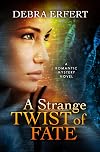
I received a free copy of this book from the Kindle Scout program.
While I liked the overall idea of the book, and something did make me want to keep reading (mainly because I won it), I just can't say that I truly enjoyed reading it.
I found the romance a bit cheesy, and maybe that's just me because I don't read many romance books, but everything felt too rushed and a bit unrealistic for me. Speaking of cheesy, while the action was at times, surprisingly well-thought-out, the word "cheesy" came to mind again because it just felt exaggerated.
I will say I enjoyed Erfert's writing; however, in the end, it was just not a book that really sucked me in.
While I liked the overall idea of the book, and something did make me want to keep reading (mainly because I won it), I just can't say that I truly enjoyed reading it.
I found the romance a bit cheesy, and maybe that's just me because I don't read many romance books, but everything felt too rushed and a bit unrealistic for me. Speaking of cheesy, while the action was at times, surprisingly well-thought-out, the word "cheesy" came to mind again because it just felt exaggerated.
I will say I enjoyed Erfert's writing; however, in the end, it was just not a book that really sucked me in.
This is a quick, easy-to-read book that really helps guide the reader to understand what's best for their own health without shouting the do's and don'ts of what a person thinks they SHOULD be doing into their ear. Instead, the author encourages us to find what works best for ourselves whenever it comes down to our health. Patel does a great job of letting us know that we are the boss of our body and that we should be our own advocates. I also learned something that I knew all along, really, but needed to be reminded of--I have to be selfish in order to be healthy. She stresses this a lot and I'm glad she does; there is great advice in this book about it. Speaking of "stress", it affects the body in so many ways and the author acknowledges that very well. I liked the advice Patel gives in general, the workbook-like questions that honestly make you think about your health and yourself, and just how well-written this book is. The only thing that bothered me a bit was how many case studies were involved. It became a bit of an interruption for me now and then. Overall, however, I would recommend this book and I enjoyed it.
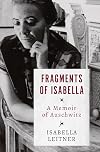
When I was asked if I would like to read Fragments of Isabella, I agreed. Auschwitz was one of the worst concentration camps of the Holocaust, so to be able to read a memoir from someone who was there would be, I knew, raw and emotional.
It is a short read, with short chapters, and even for the most part, short and concise sentences.
This makes for a one-day read that is overall, powerful and touching.
Josef Mengele is mentioned a few times, and I was astonished that the author actually came into contact with him. Of course it wouldn't be impossible, I just haven't read a memoir yet where the author spoke about actually being in close proximity with Mengele. There was just such indifference towards him, which was odd considering how he was notorious for being truly awful—even nicknamed the “Angel of Death.” Leitner was one tough cookie. Irma Grese was also briefly talked about and how she would choose specific women to be punished, mainly based on how attractive they were to her.
Because the chapters are so short, sometimes the book confused me as to where the characters were physically at, and the events take place so quickly that it's hard to wrap your head around what exactly is going on all the time. Most of the time you can regain your footing, brush yourself off, and realize what it is Leitner is describing. But a few times, you're still left lost.
I admit, Isabella Leitner's writing was a bit hard for me to read at first. I was enjoying the story, but not her show more too-short sentences or what seemed to me like almost apathetic emotional responses to the situations at hand. Trust me though when I say you need to read just a few more chapters—or even one more chapter—and you will read what I and others have read and thanked Leitner in our hearts for sharing.
What gripped me almost more than what happened in the camps to the Jews, was what happened outside and around them when they walked the streets and passed by everyone. Leitner says of this:
“But the Germans never saw us. Ask them. They never saw us. Come to think of it, they really didn't.”
One of the saddest quotes I found was Leitner telling herself, “...I don't know yet how people live, I know only how they die.” The author and so many of those members of the Holocaust had to watch their family members be murdered. Be burned right in front of them. Be shot down. So for Isabella to have survived—how wonderful! But how painful, to carry all those memories for the rest of her life.
With that said, you must read what her husband has to say on her account in the epilogue.
It can be a small and terrible world.
*I received a free copy of this book from Netgalley in exchange for an honest review show less
It is a short read, with short chapters, and even for the most part, short and concise sentences.
This makes for a one-day read that is overall, powerful and touching.
Josef Mengele is mentioned a few times, and I was astonished that the author actually came into contact with him. Of course it wouldn't be impossible, I just haven't read a memoir yet where the author spoke about actually being in close proximity with Mengele. There was just such indifference towards him, which was odd considering how he was notorious for being truly awful—even nicknamed the “Angel of Death.” Leitner was one tough cookie. Irma Grese was also briefly talked about and how she would choose specific women to be punished, mainly based on how attractive they were to her.
Because the chapters are so short, sometimes the book confused me as to where the characters were physically at, and the events take place so quickly that it's hard to wrap your head around what exactly is going on all the time. Most of the time you can regain your footing, brush yourself off, and realize what it is Leitner is describing. But a few times, you're still left lost.
I admit, Isabella Leitner's writing was a bit hard for me to read at first. I was enjoying the story, but not her show more too-short sentences or what seemed to me like almost apathetic emotional responses to the situations at hand. Trust me though when I say you need to read just a few more chapters—or even one more chapter—and you will read what I and others have read and thanked Leitner in our hearts for sharing.
What gripped me almost more than what happened in the camps to the Jews, was what happened outside and around them when they walked the streets and passed by everyone. Leitner says of this:
“But the Germans never saw us. Ask them. They never saw us. Come to think of it, they really didn't.”
One of the saddest quotes I found was Leitner telling herself, “...I don't know yet how people live, I know only how they die.” The author and so many of those members of the Holocaust had to watch their family members be murdered. Be burned right in front of them. Be shot down. So for Isabella to have survived—how wonderful! But how painful, to carry all those memories for the rest of her life.
With that said, you must read what her husband has to say on her account in the epilogue.
It can be a small and terrible world.
*I received a free copy of this book from Netgalley in exchange for an honest review show less
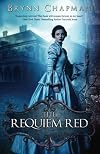
I'm sorry to say that the synopsis of this book sounded better than how the actual book is.
It's not necessarily the writing I had a problem with. Although I did find it odd that at times, you could tell by the dialogue the setting was Victorian while at others, it felt modern. The main obstacle that kept me from finishing this book sooner or really, thoroughly enjoying it was the quick, random jumping between the POV of characters. At times, it's unclear whose head we are in until a paragraph or so in; this uncertainty becomes frustrating after a while. I will say that the author did seem to do her research, but I almost wish more was brought up on the subject of mental disorders--especially the main one in particular. Overall, I was disappointed but will give the book credit for having a good bit of originality!
I received a free copy of this book in exchange for an honest review.
It's not necessarily the writing I had a problem with. Although I did find it odd that at times, you could tell by the dialogue the setting was Victorian while at others, it felt modern. The main obstacle that kept me from finishing this book sooner or really, thoroughly enjoying it was the quick, random jumping between the POV of characters. At times, it's unclear whose head we are in until a paragraph or so in; this uncertainty becomes frustrating after a while. I will say that the author did seem to do her research, but I almost wish more was brought up on the subject of mental disorders--especially the main one in particular. Overall, I was disappointed but will give the book credit for having a good bit of originality!
I received a free copy of this book in exchange for an honest review.
 This review was written for LibraryThing Early Reviewers.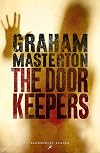
I don't normally fall for the time travel or parallel universe type of stories for some reason—but after reading my first book by Graham Masterton, The Doorkeepers, I realized how stupid I've been for skipping out on some great literature.
How action-packed this was and how quickly everything passed surprised me. Except, of course, for those truly horrific moments that made you want to close your eyes. But more than anything, you wanted to press on and keep reading to find out what in the world was going to happen!
The past few books' authors I read before The Doorkeepers didn't spend enough time with the characters; Masterton expanded on the characters in this book so much that you feel for each of them in several different (and I mean different) ways. Some truly grotesque ways at that.
While there is a LOT going on in this book—so much that you may need a breather here and there—Masterton never fails to weave everything together. That is miraculous to me considering there are some heavy, touchy elements in this book, and some writers could easily fail at the task and leave some giant plot holes in their wake.
A couple parts were pretty gruesome and made me wince. I almost felt a character's pain at one point and started squeezing my jaw so tight it became sore. I felt a character's deep sorrow, I felt curiosity and anger. I wanted to be swept up and away in these different Londons! I already want to read this book again...
*I received this book from Netgalley in show more exchange for an honest review. show less
How action-packed this was and how quickly everything passed surprised me. Except, of course, for those truly horrific moments that made you want to close your eyes. But more than anything, you wanted to press on and keep reading to find out what in the world was going to happen!
The past few books' authors I read before The Doorkeepers didn't spend enough time with the characters; Masterton expanded on the characters in this book so much that you feel for each of them in several different (and I mean different) ways. Some truly grotesque ways at that.
While there is a LOT going on in this book—so much that you may need a breather here and there—Masterton never fails to weave everything together. That is miraculous to me considering there are some heavy, touchy elements in this book, and some writers could easily fail at the task and leave some giant plot holes in their wake.
A couple parts were pretty gruesome and made me wince. I almost felt a character's pain at one point and started squeezing my jaw so tight it became sore. I felt a character's deep sorrow, I felt curiosity and anger. I wanted to be swept up and away in these different Londons! I already want to read this book again...
*I received this book from Netgalley in show more exchange for an honest review. show less
I have a high interest in war books--especially when it comes to anything related to WWII.
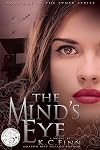
K.C. Finn's The Mind's Eye does a great job of going back and forth between both being a war story and focusing on the life of a young girl and her personal (fictional) story.
I didn't know how well I would become immersed in a young adult book considering I hadn't read one in a while, but overall, I really enjoyed myself and the book apart from a few hiccups here and there.
Kit, the main character of the story, has both a disability (juvenile arthritis), and psychic powers. So it's no surprise that I fell in love with her right away. I mean, someone I can finally relate to AND who has some cool attributes? Sign me up!
I definitely sympathized with Kit and how much pain she was constantly in. I easily felt anger towards her doctor, Bickerstaff. How he treated her with such disdain took me back to memories of doctors of my past. UGH!
Kit's feelings of being a huge burden on everyone because of her disability was like a smack in the face for me. Whether you have a physical or mental disability, you know what it's like to be helpless and feel like you're being a burden--even if you're really not. It's a struggle and I completely understood Kit's emotions. The author did a great job of describing what the main character was going through.
As for Kit's psychic powers, they definitely took over the story, which was nice because then the book didn't focus mainly on Kit's disability. Being able show more to see through the eyes of Kit's..."target"...was interesting and I was surprised that I never became confused when Kit was in the head of someone else. Everything was written in a way that was easily understood.
Some of the minor characters--even if you didn't get in their heads from Kit's perspective--were easy to care about. This isn't always something a writer achieves, and I really appreciated that with Finn. Sometimes I don't even feel for the main character in a story! But I remembered and had feelings for almost every single character in this book.
Speaking of characters...
I enjoyed the romance between the two main characters. But I also didn't.
It was just overplayed a bit. You knew what was going to happen, basically, and I didn't like that. I wish there had been more ZING to what they experienced, although what they went through together at the beginning was definitely exciting! The rest of the book had a lot of great twists and turns; it was a bit disappointing to see the romantic sub-plot go a bit flat.
I suffer from a chronic autoimmune disorder.
Or...chronic Lyme disease.
So when I read that the author, K.C. Finn, had M.E./CFS, it struck a chord with me and made the book even more special. I realized Finn could lend a piece of herself towards the main character. Yes, Kit had a severe disability in the book, and yes it plays a major part, and yes it is discussed heavily. But that's not the part she plays. She's not just the token disabled kid. She's so much more, and I love that.
(I did have a weird feeling about the ending, but that's neither here nor there in this review.)
So, cheers! Praise, praise, praise! Go read, read, read! show less
K.C. Finn's The Mind's Eye does a great job of going back and forth between both being a war story and focusing on the life of a young girl and her personal (fictional) story.
I didn't know how well I would become immersed in a young adult book considering I hadn't read one in a while, but overall, I really enjoyed myself and the book apart from a few hiccups here and there.
Kit, the main character of the story, has both a disability (juvenile arthritis), and psychic powers. So it's no surprise that I fell in love with her right away. I mean, someone I can finally relate to AND who has some cool attributes? Sign me up!
I definitely sympathized with Kit and how much pain she was constantly in. I easily felt anger towards her doctor, Bickerstaff. How he treated her with such disdain took me back to memories of doctors of my past. UGH!
Kit's feelings of being a huge burden on everyone because of her disability was like a smack in the face for me. Whether you have a physical or mental disability, you know what it's like to be helpless and feel like you're being a burden--even if you're really not. It's a struggle and I completely understood Kit's emotions. The author did a great job of describing what the main character was going through.
As for Kit's psychic powers, they definitely took over the story, which was nice because then the book didn't focus mainly on Kit's disability. Being able show more to see through the eyes of Kit's..."target"...was interesting and I was surprised that I never became confused when Kit was in the head of someone else. Everything was written in a way that was easily understood.
Some of the minor characters--even if you didn't get in their heads from Kit's perspective--were easy to care about. This isn't always something a writer achieves, and I really appreciated that with Finn. Sometimes I don't even feel for the main character in a story! But I remembered and had feelings for almost every single character in this book.
Speaking of characters...
I enjoyed the romance between the two main characters. But I also didn't.
It was just overplayed a bit. You knew what was going to happen, basically, and I didn't like that. I wish there had been more ZING to what they experienced, although what they went through together at the beginning was definitely exciting! The rest of the book had a lot of great twists and turns; it was a bit disappointing to see the romantic sub-plot go a bit flat.
I suffer from a chronic autoimmune disorder.
Or...chronic Lyme disease.
So when I read that the author, K.C. Finn, had M.E./CFS, it struck a chord with me and made the book even more special. I realized Finn could lend a piece of herself towards the main character. Yes, Kit had a severe disability in the book, and yes it plays a major part, and yes it is discussed heavily. But that's not the part she plays. She's not just the token disabled kid. She's so much more, and I love that.
(I did have a weird feeling about the ending, but that's neither here nor there in this review.)
So, cheers! Praise, praise, praise! Go read, read, read! show less
Fat Girl Walking: Sex, Food, Love, and Being Comfortable in Your Skin...Every Inch of It by Brittany Gibbons
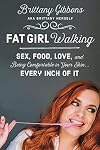
Brittany Gibbons is a blogger of brittanyherself which, unfortunately, I was never introduced to until reading her book. However, I actually like the direction of Gibbons' book better than her blog (I know, slay me now, bloggers). Gibbons does say the book is in a different layout than her blog, though, so maybe be gentle with me. Both Brittany's blog and her book are so blunt and honest. The book in particular will allow anyone easy access to relate to her many essays and funny anecdotes. One in particular would have made me uncomfortable in a different voice, but Brittany's friendly tone made me laugh at the horrific event.
There are a few things that break up the book nicely, like a list of pros and cons of being pregnant as well as bullet points of what to say to annoying people while you're pregnant. Even if you've never been pregnant, you can still laugh out loud at these lists.
I honestly didn't expect Fat Girl Walking to make me laugh so much or for me to relate so much to it. Yes, I'm a plus-size gal. But even if I wasn't, I could still relate. I'm not married, I'm childless, and I'm not in the same age range as the author, so I didn't know if the book would really be my thing. But the way Brittany Gibbons writes her experiences MAKES everything easy to relate to. Or so hilarious that you keep reading and feel as if you're a part of her life. Either way, you can't put the book down.
Issues covered in the book--that I actually wish were tackled more--are sure to make show more plus-size people nod and others think hard about what they say/think.I like how Fat Girl Walking speaks to all women. Not just women who are overweight, but women. Women. All women. And one quote really spoke to me that I've been trying to put into words for a long time:
If we don't say enough and stop the race to the beauty-standard finish line, the casualties and the resentment women have toward each other will grow.
Yes! We are women. (Hear us roar?) Let's stick together instead of constantly looking each other up and down or challenging each other to a race of the fittest. Instead, help each other out. Why scold someone for being overweight when evidence shows for one, it doesn't work to help motivate them to do anything you're trying to get them to do, and second, just why? Why question anything about another women or be judgmental? That's a part of what this book is trying to say along with--why question yourself? Let's just...not. I'm paraphrasing for Gibbons here, but stop criticizing others and yourself when your body is beautiful. You have to think of every part of your body as special--like a part of a scrapbook.
This book was made for anyone to read because it's full of wisdom, quirkiness, and experiences (mostly crazy) that the author has gone through so you don't have to. The author has a clear, strong voice and it's obvious she wants to convey a message of empowerment. This will be a great summer beach read (as long as you can control your emotions--laughter and tears).
The idea behind this book is great. To read about someone who is plus-size, who is REAL, and who is more than OK with their body and self--but who doesn't deny the trials of how hard it is to fall in love with their body--is special to me. And I think it will be to others as well.
I don't think I have to say anything else. I loved, loved this book. I recommend it to anyone and everyone show less
There are a few things that break up the book nicely, like a list of pros and cons of being pregnant as well as bullet points of what to say to annoying people while you're pregnant. Even if you've never been pregnant, you can still laugh out loud at these lists.
I honestly didn't expect Fat Girl Walking to make me laugh so much or for me to relate so much to it. Yes, I'm a plus-size gal. But even if I wasn't, I could still relate. I'm not married, I'm childless, and I'm not in the same age range as the author, so I didn't know if the book would really be my thing. But the way Brittany Gibbons writes her experiences MAKES everything easy to relate to. Or so hilarious that you keep reading and feel as if you're a part of her life. Either way, you can't put the book down.
Issues covered in the book--that I actually wish were tackled more--are sure to make show more plus-size people nod and others think hard about what they say/think.I like how Fat Girl Walking speaks to all women. Not just women who are overweight, but women. Women. All women. And one quote really spoke to me that I've been trying to put into words for a long time:
If we don't say enough and stop the race to the beauty-standard finish line, the casualties and the resentment women have toward each other will grow.
Yes! We are women. (Hear us roar?) Let's stick together instead of constantly looking each other up and down or challenging each other to a race of the fittest. Instead, help each other out. Why scold someone for being overweight when evidence shows for one, it doesn't work to help motivate them to do anything you're trying to get them to do, and second, just why? Why question anything about another women or be judgmental? That's a part of what this book is trying to say along with--why question yourself? Let's just...not. I'm paraphrasing for Gibbons here, but stop criticizing others and yourself when your body is beautiful. You have to think of every part of your body as special--like a part of a scrapbook.
This book was made for anyone to read because it's full of wisdom, quirkiness, and experiences (mostly crazy) that the author has gone through so you don't have to. The author has a clear, strong voice and it's obvious she wants to convey a message of empowerment. This will be a great summer beach read (as long as you can control your emotions--laughter and tears).
The idea behind this book is great. To read about someone who is plus-size, who is REAL, and who is more than OK with their body and self--but who doesn't deny the trials of how hard it is to fall in love with their body--is special to me. And I think it will be to others as well.
I don't think I have to say anything else. I loved, loved this book. I recommend it to anyone and everyone show less
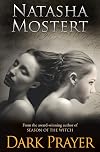
Reading Dark Prayer, an enthralling novel all about memory (and parkour), was a stretch for me at first. I thought the parkour segments were going to be too far out of my comfort zone because I wouldn't understand half of what was being explained, and I figured from what was first detailed that the memory bits would leave me feeling fatigued because the author would go too in-depth.
What I came to realize was that the book was actually surprisingly easy to read. Easier than I would've thought, by far. And that's what made it so enjoyable. Although this is the first book I've read for 2015, it has already made me want to read more for the year because everything just flowed so well and was so well-written. There were a great deal of quotes that I wanted to...quote...
I came to learn a lot about parkour, or free running, and reading this book made me nostalgic for my high school days when I saw a few buddies try it out. My friends, of course, were just beginners compared to these characters. Jungles, the name of the most skilled free runner of the bunch, is pretty much a ninja, and the author does a great job of describing how he (and the others) ran and climbed and jumped. But that doesn't mean the author of Dark Prayer treats you like you're automatically knowledgeable in the ways of imagining someone free running. Instead, Natasha Mostert lays the sport of parkour out in a way that is understandable to us amateurs without being condescending to those who actually have a show more good grip on the skill.
You could tell extensive research had to be done--both in parkour and in psychological matters. There's even a link to a real article in the Kindle edition of the book. In college, I minored in Psychology and volunteered at a traumatic brain injury rehab facility. So I like to think I know a fair amount about memory (and the absence of it). At least, I'm interested in it. The way Mostert incorporated aspects of psychology--especially regarding memory and trauma--into the life of main character Eloise was fascinating because it was realistic. However, I never once felt like I was reading a case story or out of a textbook when it came to these points.
Our main character is caught in a fugue state--this is what has caused her to wipe out all memory loss of her former and original self, Jenilee Gray, and to establish a new self, Eloise Blake. She has created new memories for herself. A new mother, a new father--circus performers. A new name. A new identity.
I've often thought how neat it would be to create a new identity for myself, leaving my past behind. But I wouldn't be me; I want my memories, all of them. The problem with Eloise, however, is that she did not consciously form for herself a new identity. And maybe there's something else going on behind the scenes. Gasp.
Now, there is another main character--named Jack--that I haven't meant to leave out, necessarily, but I just didn't find him to be that appealing. He wasn't near as interesting to me as Eloise, at least. But I can't leave out his name because 1) He's important to the story. And 2) I'm about to make a joke about him. Because if you were a free runner and your name was Jack, wouldn't you call yourself "Jack-B-Quick"?
If you read this, I hope the time flies by as quickly for you as it did for me. In a good way. show less
What I came to realize was that the book was actually surprisingly easy to read. Easier than I would've thought, by far. And that's what made it so enjoyable. Although this is the first book I've read for 2015, it has already made me want to read more for the year because everything just flowed so well and was so well-written. There were a great deal of quotes that I wanted to...quote...
I came to learn a lot about parkour, or free running, and reading this book made me nostalgic for my high school days when I saw a few buddies try it out. My friends, of course, were just beginners compared to these characters. Jungles, the name of the most skilled free runner of the bunch, is pretty much a ninja, and the author does a great job of describing how he (and the others) ran and climbed and jumped. But that doesn't mean the author of Dark Prayer treats you like you're automatically knowledgeable in the ways of imagining someone free running. Instead, Natasha Mostert lays the sport of parkour out in a way that is understandable to us amateurs without being condescending to those who actually have a show more good grip on the skill.
You could tell extensive research had to be done--both in parkour and in psychological matters. There's even a link to a real article in the Kindle edition of the book. In college, I minored in Psychology and volunteered at a traumatic brain injury rehab facility. So I like to think I know a fair amount about memory (and the absence of it). At least, I'm interested in it. The way Mostert incorporated aspects of psychology--especially regarding memory and trauma--into the life of main character Eloise was fascinating because it was realistic. However, I never once felt like I was reading a case story or out of a textbook when it came to these points.
Our main character is caught in a fugue state--this is what has caused her to wipe out all memory loss of her former and original self, Jenilee Gray, and to establish a new self, Eloise Blake. She has created new memories for herself. A new mother, a new father--circus performers. A new name. A new identity.
I've often thought how neat it would be to create a new identity for myself, leaving my past behind. But I wouldn't be me; I want my memories, all of them. The problem with Eloise, however, is that she did not consciously form for herself a new identity. And maybe there's something else going on behind the scenes. Gasp.
Now, there is another main character--named Jack--that I haven't meant to leave out, necessarily, but I just didn't find him to be that appealing. He wasn't near as interesting to me as Eloise, at least. But I can't leave out his name because 1) He's important to the story. And 2) I'm about to make a joke about him. Because if you were a free runner and your name was Jack, wouldn't you call yourself "Jack-B-Quick"?
If you read this, I hope the time flies by as quickly for you as it did for me. In a good way. show less
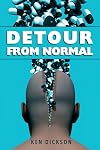
When I was reading this memoir, I really wanted to like it. I tried so hard to like it, almost straining my mind to make the decision that this was a wonderful book. Unfortunately, while it had some unbelievably great perks about it, when it came down to it, I just couldn't bring myself to be fully convinced that I liked it.
Ken Dickson, the man behind the memoir, packs a punch with a personal story. The problem I had was that, while the story was emotional and full of health information that actually kept my attention (some simply educational, some sad anecdotes), I simply didn't like the storyteller. I really don't know what you do when you like what the book is saying and what's inside of it, the inspiration involved, and the bravery it took to tell the story, but you just don't seem to connect with the narrator. I definitely felt for him, but the way he portrayed himself at times, and I don't just mean his mental state, turned me off towards him. Out of the all the reviews I read on Goodreads, I seem to be the only person with this problem, so I really don't know?!
Really the only other problem I had with this book was that Dickson would, in some random chapters, begin passionately describing in vivid detail how he was planning on creating a new Utopia. I thought at first, Oh that's kinda neat I guess, but as it continued to develop throughout the novel, I became frustrated and had to separate myself from the book several times actually.
On the opposite but positive end, show more Ken Dickson does quite the job of depicting what mania is and what life is like with it, especially going into detail with the symptoms; for example, hallucinations, irritability, racing thoughts, ideas of grandeur, and the main problem he faced--trouble sleeping. Because his mania affected his family to an extreme extent, like many mental illnesses (and illnesses in general) seem to do, he depicts the feelings of hopelessness anyone feels when their loved ones and people they trust seem to betray them, forget them, or even worse, become engulfed in anguish because of the scenario.
What's almost worse is how you put your trust--and your life, even--in the hands of doctors and healthcare facilities, becoming completely vulnerable, only to come out on the other side a completely different person. Dickson unveils in his book how disturbed our healthcare system can be--which I know all too well from firsthand experiences. Detour from Normal also shines a light on how doctors just seem to haphazardly prescribe medication, and in excess.
The health elements of this memoir stood out to me because I'm so heavily involved in medical elements due to my own predicament with Lyme disease and its symptoms, which involve cognitive and mental symptoms/disorders. However, as stated above, while Dickson's story was intriguing, I just could not find myself able to relate to him, and that can be a large problem in a memoir. show less
Ken Dickson, the man behind the memoir, packs a punch with a personal story. The problem I had was that, while the story was emotional and full of health information that actually kept my attention (some simply educational, some sad anecdotes), I simply didn't like the storyteller. I really don't know what you do when you like what the book is saying and what's inside of it, the inspiration involved, and the bravery it took to tell the story, but you just don't seem to connect with the narrator. I definitely felt for him, but the way he portrayed himself at times, and I don't just mean his mental state, turned me off towards him. Out of the all the reviews I read on Goodreads, I seem to be the only person with this problem, so I really don't know?!
Really the only other problem I had with this book was that Dickson would, in some random chapters, begin passionately describing in vivid detail how he was planning on creating a new Utopia. I thought at first, Oh that's kinda neat I guess, but as it continued to develop throughout the novel, I became frustrated and had to separate myself from the book several times actually.
On the opposite but positive end, show more Ken Dickson does quite the job of depicting what mania is and what life is like with it, especially going into detail with the symptoms; for example, hallucinations, irritability, racing thoughts, ideas of grandeur, and the main problem he faced--trouble sleeping. Because his mania affected his family to an extreme extent, like many mental illnesses (and illnesses in general) seem to do, he depicts the feelings of hopelessness anyone feels when their loved ones and people they trust seem to betray them, forget them, or even worse, become engulfed in anguish because of the scenario.
What's almost worse is how you put your trust--and your life, even--in the hands of doctors and healthcare facilities, becoming completely vulnerable, only to come out on the other side a completely different person. Dickson unveils in his book how disturbed our healthcare system can be--which I know all too well from firsthand experiences. Detour from Normal also shines a light on how doctors just seem to haphazardly prescribe medication, and in excess.
The health elements of this memoir stood out to me because I'm so heavily involved in medical elements due to my own predicament with Lyme disease and its symptoms, which involve cognitive and mental symptoms/disorders. However, as stated above, while Dickson's story was intriguing, I just could not find myself able to relate to him, and that can be a large problem in a memoir. show less
Traceless: Some people should never be found... (The Ellis Jones Mysteries) (Volume 1) by Joanne Clancy
I was on a rollercoaster of emotions with this book, and not necessarily in a good way.
When I first started reading, I was a little bored and a bit distracted by the mechanical writing until, of course, I became gripped by the suspense. The suspense in this book is one of wonders, and I admire it for that.
But because of the buildup of suspense, I was expecting much more of an outcome. Everything fell flat for me in the end. The ending felt like it was trying to be more of a twist than it actually was. There are still so many unanswered questions for me, and I understand this is part of a series, but I don't know if I have it in me to read any following books to find out what happens.
When I first started reading, I was a little bored and a bit distracted by the mechanical writing until, of course, I became gripped by the suspense. The suspense in this book is one of wonders, and I admire it for that.
But because of the buildup of suspense, I was expecting much more of an outcome. Everything fell flat for me in the end. The ending felt like it was trying to be more of a twist than it actually was. There are still so many unanswered questions for me, and I understand this is part of a series, but I don't know if I have it in me to read any following books to find out what happens.
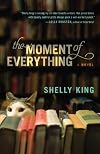
There is usually some off-the-wall thing that comes to mind with a novel that I can express how much I disliked. Even if just a little. The Moment of Everything surprised me when, writing this review, I just could not come up with anything. That's saying something, folks. And you know what it's saying? "Read me."
Shelly King has drawn up an exceptionally well-written book that has so much heart to it.
All of the characters are strikingly well-rounded with each having their own unique, endearing, and often geeky dialogue. So often I find myself reading dialogue that is just filling up space or is way too awkward, but in The Moment of Everything, it seemed completely natural...which is a wonderful thing!
Geek references seem to dominate in a lot of places. But, that's another thing I loved about it. The titles of the chapters even reminded me of the titles of video game quests you would go on with such distinctiveness as "The Silver Needle," "The Venus Glove," and "Fortunes and Foils." Do I think some audience members are going to understand bits of that or like it necessarily? Probably not. But what I do think is that it added a great deal of charm to the book, especially to the character of Maggie, who we focus on.
Following the main character, who seems so unsure of her life and herself, I was a little caught up in my emotions. I did not expect this book to be so emotional. There is a certain part of the book that just destroyed me--was it my hormones or was it just the show more fact that this book did such a good job of expressing love?
Before my emotions got the best of me, I was just trying my hardest not to rip my hair out, completely in suspense. I'm usually able to pat myself on the back when it comes to guessing what is about to happen next in a novel or what the entire plot is about, even. No no no. Shelly King put a blind fold on me, pushed me into a dark bookstore, and made me shuffle about to try to find the light switch. There are enough twists and turns to keep you in suspense (and still in the dark) that you have to keep reading, telling yourself another 20 pages won't hurt as long as you figure out what this Avi character is about or what it really means when someone gives you a bike.
I've been so horrified by endings lately that I literally started grimacing towards the end. Please don't let it suck, please don't let it suck. I was almost praying. But King delivered. The ending is reflective but not overly sentimental, it's not rushed, and for once in a long time, I actually liked it. (Collective gasp.)
*Thanks NetGalley for the copy of this book. show less
Shelly King has drawn up an exceptionally well-written book that has so much heart to it.
All of the characters are strikingly well-rounded with each having their own unique, endearing, and often geeky dialogue. So often I find myself reading dialogue that is just filling up space or is way too awkward, but in The Moment of Everything, it seemed completely natural...which is a wonderful thing!
Geek references seem to dominate in a lot of places. But, that's another thing I loved about it. The titles of the chapters even reminded me of the titles of video game quests you would go on with such distinctiveness as "The Silver Needle," "The Venus Glove," and "Fortunes and Foils." Do I think some audience members are going to understand bits of that or like it necessarily? Probably not. But what I do think is that it added a great deal of charm to the book, especially to the character of Maggie, who we focus on.
Following the main character, who seems so unsure of her life and herself, I was a little caught up in my emotions. I did not expect this book to be so emotional. There is a certain part of the book that just destroyed me--was it my hormones or was it just the show more fact that this book did such a good job of expressing love?
Before my emotions got the best of me, I was just trying my hardest not to rip my hair out, completely in suspense. I'm usually able to pat myself on the back when it comes to guessing what is about to happen next in a novel or what the entire plot is about, even. No no no. Shelly King put a blind fold on me, pushed me into a dark bookstore, and made me shuffle about to try to find the light switch. There are enough twists and turns to keep you in suspense (and still in the dark) that you have to keep reading, telling yourself another 20 pages won't hurt as long as you figure out what this Avi character is about or what it really means when someone gives you a bike.
I've been so horrified by endings lately that I literally started grimacing towards the end. Please don't let it suck, please don't let it suck. I was almost praying. But King delivered. The ending is reflective but not overly sentimental, it's not rushed, and for once in a long time, I actually liked it. (Collective gasp.)
*Thanks NetGalley for the copy of this book. show less
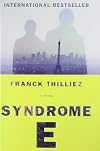
Franck Thilliez has created a thrilling piece of work which grabbed my attention at the beginning but ultimately left me somewhat disappointed.
While we first spend a lot of time with one of the main characters, Franck Sharko, on his case, we are suddenly thrust into a tangled web of other cases that are supposed to join together. My problem here isn't that I didn't enjoy the different cases nor that following the cases was confusing, but that when all is said and done, everything was just a mishmash that didn't express itself well to me.
In fact, it was almost to the point of being absurd.
There is a minor character, Ludovic, who the story begins with and works off of; however, he is really not ever mentioned again in the book after his ordeal with going blind. I would have actually enjoyed reading more about his character--especially since it is he who kicks the story into gear.
The character of Lucie was thought out much more than Ludovic, but not near as much as Sharko, and I would have liked to have heard more about her--like her back story. The book references it many times, but I was frustrated when no details were ever really given.
The small romantic sub-plot between Lucie and Sharko could have been expanded upon, but it was nice to have even been included in the story.
Sharko's character was fascinating to me because of his schizophrenia diagnosis. I hate to say it, but there aren't many books I've read that feature a main character with schizophrenia without that show more said character being portrayed as insane. It was interesting in this case to read how the character of Sharko dealt with his schizophrenia and how it affected his career, his relationships, and just his mentality.
Having said all that, I detested what the author decided to do with Sharko's character. I know we want the best for people but...ah! I may have said too much already.
The dry humor of Sharko was fantastic and placed perfectly as if to relax tense muscles after being on edge for so long due to some particularly thrilling scenes. The dialogue with Sharko's character and others was intriguing as well as genuine. His words seemed exactly like something this character I had created in my head would say.
Because this book is translated, I figured I would find myself having at least some trouble with the way things were worded. But I really didn't. Everything was actually well-handled, and there were some real gems in the language.
One of my favorite lines from this book, for a few reasons, appears when describing a very minor character:
"A brilliant brain beneath a high forehead, smooth as a coated pill."
Smooth as a coated pill resonated with me because of the unusual comparison, but also because it made me think of Sharko as more realistic, being that he is supposedly thinking this, and we readers know by now of his inner fight with taking pills.
What was interesting with this book but also the reason I said so many ideas were tangled up, is that we learn about film and its history, we learn about neuroscience, we learn details about several cases... I think there was almost too much information to swallow.
I did have a major problem with how the book--as thrilling as I've mentioned it is--would be suspenseful and engaging and suddenly, flatline. The story would either become really quite boring or just hard to grasp what was going on (like I said, too many elements).
I was pretty disappointed in the end. Having traveled through this entire book wanting to desperately learn what Syndrome E is all about to only discover that when laid out, it sounds just tacky and ludicrous, left me flabbergasted. Even Sharko said it was far-fetched.
However, like several pieces of the story in Thilliez's book, Syndrome E is apparently real.
I know what you're thinking, because I'm thinking it too: Truth is stranger than fiction.
Syndrome E is listed as an upcoming movie title, as well! I can't wait to see what they do with this and how they adapt it to the screen. (I hope it's a little bit better.)
*Thanks NetGalley for this free copy. show less
While we first spend a lot of time with one of the main characters, Franck Sharko, on his case, we are suddenly thrust into a tangled web of other cases that are supposed to join together. My problem here isn't that I didn't enjoy the different cases nor that following the cases was confusing, but that when all is said and done, everything was just a mishmash that didn't express itself well to me.
In fact, it was almost to the point of being absurd.
There is a minor character, Ludovic, who the story begins with and works off of; however, he is really not ever mentioned again in the book after his ordeal with going blind. I would have actually enjoyed reading more about his character--especially since it is he who kicks the story into gear.
The character of Lucie was thought out much more than Ludovic, but not near as much as Sharko, and I would have liked to have heard more about her--like her back story. The book references it many times, but I was frustrated when no details were ever really given.
The small romantic sub-plot between Lucie and Sharko could have been expanded upon, but it was nice to have even been included in the story.
Sharko's character was fascinating to me because of his schizophrenia diagnosis. I hate to say it, but there aren't many books I've read that feature a main character with schizophrenia without that show more said character being portrayed as insane. It was interesting in this case to read how the character of Sharko dealt with his schizophrenia and how it affected his career, his relationships, and just his mentality.
Having said all that, I detested what the author decided to do with Sharko's character. I know we want the best for people but...ah! I may have said too much already.
The dry humor of Sharko was fantastic and placed perfectly as if to relax tense muscles after being on edge for so long due to some particularly thrilling scenes. The dialogue with Sharko's character and others was intriguing as well as genuine. His words seemed exactly like something this character I had created in my head would say.
Because this book is translated, I figured I would find myself having at least some trouble with the way things were worded. But I really didn't. Everything was actually well-handled, and there were some real gems in the language.
One of my favorite lines from this book, for a few reasons, appears when describing a very minor character:
"A brilliant brain beneath a high forehead, smooth as a coated pill."
Smooth as a coated pill resonated with me because of the unusual comparison, but also because it made me think of Sharko as more realistic, being that he is supposedly thinking this, and we readers know by now of his inner fight with taking pills.
What was interesting with this book but also the reason I said so many ideas were tangled up, is that we learn about film and its history, we learn about neuroscience, we learn details about several cases... I think there was almost too much information to swallow.
I did have a major problem with how the book--as thrilling as I've mentioned it is--would be suspenseful and engaging and suddenly, flatline. The story would either become really quite boring or just hard to grasp what was going on (like I said, too many elements).
I was pretty disappointed in the end. Having traveled through this entire book wanting to desperately learn what Syndrome E is all about to only discover that when laid out, it sounds just tacky and ludicrous, left me flabbergasted. Even Sharko said it was far-fetched.
However, like several pieces of the story in Thilliez's book, Syndrome E is apparently real.
I know what you're thinking, because I'm thinking it too: Truth is stranger than fiction.
Syndrome E is listed as an upcoming movie title, as well! I can't wait to see what they do with this and how they adapt it to the screen. (I hope it's a little bit better.)
*Thanks NetGalley for this free copy. show less
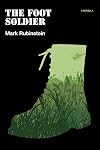
I admit, I initially picked this book to read thinking it would serve as an "easy" read in-between all the non-fiction on my reading list. I'm a bit of a war fanatic in the sense that I appreciate reading war materials, come from a military family that has served in several wars, and have worked with veterans. Still, I've never been in a war. So when I come across something like Mark Rubinstein's "The Foot Soldier," where he is able to take the reader inside of a war, inside of a humid jungle full of mosquitoes and predators and booby traps and probably most of all fear, I'm beyond captivated. Though it was a short read--less than an hour--I felt the pain of young Costa every step of the way, especially to the heart-breaking decision at the end. There are choices we have to make in our lives that are so mind-blowing, we can't even comprehend them at that second. I think no one knows the meaning of that sentence better than the men serving in our forces, the ones who make hard choices every single day. So--was this the best book about war I've ever read? No. Was the ending the best it could have been? Not really. But did it grip me emotionally? Absolutely. I nearly choked trying to hold back tears while reading certain passages. My body tensed up subconsciously as I read with a fast pace about Costa's journey serving "point." I'm done with the book and my nerves are frayed, my thoughts are scattered, and I'm anything but calm. That's what makes a good story.
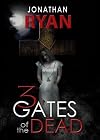
I think many of us can relate to the main character, Aidan, and his struggles with faith. If not, then the depth of Aidan's personality should qualify him as relatable.
I was surprised to see how much attention was given to the rest of the characters. Even if the book went long periods of time without any interaction from a certain character, you could still probably imagine what they were doing in their life from former details. In fact, so much detail was given, I was scared something bad was going to happen to every single one of them. I guess I've read too much of George R.R. Martin's work.
I wasn't crazy about some of the dialogue, especially between Aidan and his college buddy who he spent time chatting with on the Internet, but I understand sometimes you have to have that interaction or else it would just be the main character talking to himself in his head for, like, five pages. There was also a pet peeve of all the other characters repeating for Aidan to "be careful" to the point where it was as annoying as a fly buzzing around my nose.
One thing I cannot complain about, though--it was well-written! I loved the imagery and how effortlessly the words seemed to flow. It helped me to have a picture of the crime scenes in my mind as the characters went on this scavenger hunt of sorts. I wanted so badly to figure the mystery out with them (or before them). And I have to say...I love it when a book can give me goosebumps. I haven't read anything with even a hint of the show more supernatural or anything related to horror lately, but this book--a mixed genre of theology and suspense--really took me for a spin.
*I received a free copy of this book from the publisher. show less
I was surprised to see how much attention was given to the rest of the characters. Even if the book went long periods of time without any interaction from a certain character, you could still probably imagine what they were doing in their life from former details. In fact, so much detail was given, I was scared something bad was going to happen to every single one of them. I guess I've read too much of George R.R. Martin's work.
I wasn't crazy about some of the dialogue, especially between Aidan and his college buddy who he spent time chatting with on the Internet, but I understand sometimes you have to have that interaction or else it would just be the main character talking to himself in his head for, like, five pages. There was also a pet peeve of all the other characters repeating for Aidan to "be careful" to the point where it was as annoying as a fly buzzing around my nose.
One thing I cannot complain about, though--it was well-written! I loved the imagery and how effortlessly the words seemed to flow. It helped me to have a picture of the crime scenes in my mind as the characters went on this scavenger hunt of sorts. I wanted so badly to figure the mystery out with them (or before them). And I have to say...I love it when a book can give me goosebumps. I haven't read anything with even a hint of the show more supernatural or anything related to horror lately, but this book--a mixed genre of theology and suspense--really took me for a spin.
*I received a free copy of this book from the publisher. show less
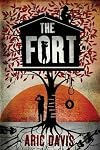
It was nice to have a suspenseful mystery in which the reader is able to grasp the perspective from the killer as well as from the main characters. I became very close to each of the characters, and I admit it, I felt empathy even for the killer--a Vietnam vet whose background was handled very well.
What struck me was how the kids learn that adults aren't "perfect"--they make mistakes, they can't fix everything, they don't have some kind of lie detector built in, and no, growing up isn't always as fun as it's built up to be. I remember perfectly well going through that stage of life, and I'm sure many other readers will nod their heads in agreement with the boys on many observations about the world around them.
One of the reasons I wasn't completely in love with this novel was due to the ending scene with the boys and the detective. I don't think I've ever read anything so utterly forced--it was uncomfortable to read. Another is that, although I don't think we really needed to be in another character's head too much, it would have been nice to either have more scenes with the kidnapped Molly or to hear some of her thoughts, or even dialogue. I wanted to get to know the person the killer was so entranced by (or thought he was).
I will say I don't typically "get into" detective/mystery books, but this one genuinely surprised me. Well-written and incredibly suspenseful. I wish it had been longer!
What struck me was how the kids learn that adults aren't "perfect"--they make mistakes, they can't fix everything, they don't have some kind of lie detector built in, and no, growing up isn't always as fun as it's built up to be. I remember perfectly well going through that stage of life, and I'm sure many other readers will nod their heads in agreement with the boys on many observations about the world around them.
One of the reasons I wasn't completely in love with this novel was due to the ending scene with the boys and the detective. I don't think I've ever read anything so utterly forced--it was uncomfortable to read. Another is that, although I don't think we really needed to be in another character's head too much, it would have been nice to either have more scenes with the kidnapped Molly or to hear some of her thoughts, or even dialogue. I wanted to get to know the person the killer was so entranced by (or thought he was).
I will say I don't typically "get into" detective/mystery books, but this one genuinely surprised me. Well-written and incredibly suspenseful. I wish it had been longer!
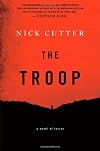
*I received this book from the publisher (ARC)
Nick Cutter’s The Troop is rich with detail, especially whenever it comes to the creature the characters are dealing with. Lately, I have found myself more into psychological thrillers, but this book gave me a creature I was actually scared of--Cutter's words left me feeling sick, itchy, prickly, and creepy-crawly. Definitely not the best book to read right before you go to bed, especially when you’re on a medication that claims to have a side effect of a “tingling sensation on arms and legs.”
I say I’m more into books of the psychological, but in reality, at some point in time, I felt this book grabbing at my psyche as it did the characters’. All the same, I could not put it down-—I had to find out who (if any) would survive this terrible ordeal!
The book definitely has quite some characters, but this also made it hard for me to “root” for one person in particular. I liked the description of the island the Scouts were on. Cutter did well by showing the entrapment of the boys but also by showing how they were going to try to survive on the island’s resources. There was one scene in particular that I won’t spoil but that involved trying to find food that utterly broke my heart.
The ending was not what I had expected, or I guess in reality, what I wanted, but I liked it.
This is probably the best book I’ve read so far this year. Cutter did a great job with horror, and I think this could be enjoyed by both show more teenagers and adults. The humor will definitely resonate with the younger audience, and the way he lays out horrifying situations in an almost apathetic tone will echo with the latter. show less
Nick Cutter’s The Troop is rich with detail, especially whenever it comes to the creature the characters are dealing with. Lately, I have found myself more into psychological thrillers, but this book gave me a creature I was actually scared of--Cutter's words left me feeling sick, itchy, prickly, and creepy-crawly. Definitely not the best book to read right before you go to bed, especially when you’re on a medication that claims to have a side effect of a “tingling sensation on arms and legs.”
I say I’m more into books of the psychological, but in reality, at some point in time, I felt this book grabbing at my psyche as it did the characters’. All the same, I could not put it down-—I had to find out who (if any) would survive this terrible ordeal!
The book definitely has quite some characters, but this also made it hard for me to “root” for one person in particular. I liked the description of the island the Scouts were on. Cutter did well by showing the entrapment of the boys but also by showing how they were going to try to survive on the island’s resources. There was one scene in particular that I won’t spoil but that involved trying to find food that utterly broke my heart.
The ending was not what I had expected, or I guess in reality, what I wanted, but I liked it.
This is probably the best book I’ve read so far this year. Cutter did a great job with horror, and I think this could be enjoyed by both show more teenagers and adults. The humor will definitely resonate with the younger audience, and the way he lays out horrifying situations in an almost apathetic tone will echo with the latter. show less
*I received this copy from the publisher.
I usually don't read collections of short stories anymore. Having said that, this is the best I've read in quite some time and has ultimately made me think twice about why I stopped reading them.
First of all, it was nice to start the book off with the classic Lewis Carroll story.
Secondly, I won't go into detail with each story, but I will say that I thoroughly enjoyed "What Aelister Found Here" and "House of Cards" the best, and "The World in a Thimble" the least. I think what pulled me to the Aelister story was that it had a very Victorian feel to it, and, let's not forget the Jack the Ripper character. The "House of Cards" story grabbed me because of its more thrill-inducing plot. It had me widening my eyes in fright or disbelief every other two seconds! With "The World in a Thimble," I'll be honest, I just wasn't interested in the story--and this had a lot to do with the slow writing.
Lastly, as an entire book, it was an easy read with unexpected humor at times (which was nice), horror (which was doubly nice), and magic galore! I definitely wouldn't recommend this to kids, though, even though it is loosely based around the adventures of Alice.
I usually don't read collections of short stories anymore. Having said that, this is the best I've read in quite some time and has ultimately made me think twice about why I stopped reading them.
First of all, it was nice to start the book off with the classic Lewis Carroll story.
Secondly, I won't go into detail with each story, but I will say that I thoroughly enjoyed "What Aelister Found Here" and "House of Cards" the best, and "The World in a Thimble" the least. I think what pulled me to the Aelister story was that it had a very Victorian feel to it, and, let's not forget the Jack the Ripper character. The "House of Cards" story grabbed me because of its more thrill-inducing plot. It had me widening my eyes in fright or disbelief every other two seconds! With "The World in a Thimble," I'll be honest, I just wasn't interested in the story--and this had a lot to do with the slow writing.
Lastly, as an entire book, it was an easy read with unexpected humor at times (which was nice), horror (which was doubly nice), and magic galore! I definitely wouldn't recommend this to kids, though, even though it is loosely based around the adventures of Alice.
I wanted to associate this piece with humor. In reality, I think I only ended up not feeling depressed or sorry for the narrator around three or four times. But hey, those one-liners were pretty funny...
I liked that everything wasn't necessarily in chronological order, but when it came to relationships, this becomes confusing, and the author expects us to remember everyone she's ever dated (OK, maybe I'm overreacting here).
Ali Berlinski's family history intrigued me the most, especially her father. I would have liked to hear more about their relationship instead of mostly her mother.
The gem of this book was definitely the ending, but it felt forcefully added, like it was a piece all to itself. If I were to be perfectly honest, for most of this book I was just bored. The odd bit of humor would intrigue me enough every now and then to keep reading, revving me up just enough to get over the hill of disinterest before I would creep down again and--ooh! something mildly entertaining, and it would happen all over.
I won't argue that Berlinski clearly has an interesting life. This book, however--not so much.
I liked that everything wasn't necessarily in chronological order, but when it came to relationships, this becomes confusing, and the author expects us to remember everyone she's ever dated (OK, maybe I'm overreacting here).
Ali Berlinski's family history intrigued me the most, especially her father. I would have liked to hear more about their relationship instead of mostly her mother.
The gem of this book was definitely the ending, but it felt forcefully added, like it was a piece all to itself. If I were to be perfectly honest, for most of this book I was just bored. The odd bit of humor would intrigue me enough every now and then to keep reading, revving me up just enough to get over the hill of disinterest before I would creep down again and--ooh! something mildly entertaining, and it would happen all over.
I won't argue that Berlinski clearly has an interesting life. This book, however--not so much.
Exactly the read I was looking for to take a break from all the hardcore scholarly journals I've been reading lately. Funny, well-written, heart-warming, and what's more--I actually cared about the main character.
My only problem? I wanted to shout at her the entire story. WHY ARE YOU DOING THIS? YOU KNOW WHAT'S GOING TO HAPPEN...etc, etc. And--you know how the story is going to end. It's cliche in that sense, but if it didn't work out that way, it wouldn't have been the read I was looking for either, so I'm divided in my liking of the ending.
While I don't normally read novels such as this, I was definitely glad I gave this one a shot. I was engrossed from the first sentences on, and I just had to find out what was going to happen--EVEN THOUGH I knew what was going to happen, and even though I was so frustrated with the main character. That's what makes a good story, and what's when you know you've caught a great author.
My only problem? I wanted to shout at her the entire story. WHY ARE YOU DOING THIS? YOU KNOW WHAT'S GOING TO HAPPEN...etc, etc. And--you know how the story is going to end. It's cliche in that sense, but if it didn't work out that way, it wouldn't have been the read I was looking for either, so I'm divided in my liking of the ending.
While I don't normally read novels such as this, I was definitely glad I gave this one a shot. I was engrossed from the first sentences on, and I just had to find out what was going to happen--EVEN THOUGH I knew what was going to happen, and even though I was so frustrated with the main character. That's what makes a good story, and what's when you know you've caught a great author.
It actually was tough going for me at first with this book because I was certain it was going to be a crummy romance novel.
While there is definitely a theme of love involved--it's what makes R trudge along--it's not what the book is all about. I was a fan of the action, definitely, especially with the Boneys. Loved the comedy--it kept me entranced on a hazy, wintry night. But most of all, I loved this idea of new beginnings.
R's voice is what struck me throughout. How it starts out and continues to evolve throughout the narrative as he begins to change. R is a character I rooted for whole-heartedly, and how could you not, considering he doesn't even have a heart? Give the poor guy a break!
All of the characters were interesting in their own way, and I would actually have liked to have gotten to know them better. I suppose R will though, if he and this new world he has created will continue to expand...
While there is definitely a theme of love involved--it's what makes R trudge along--it's not what the book is all about. I was a fan of the action, definitely, especially with the Boneys. Loved the comedy--it kept me entranced on a hazy, wintry night. But most of all, I loved this idea of new beginnings.
R's voice is what struck me throughout. How it starts out and continues to evolve throughout the narrative as he begins to change. R is a character I rooted for whole-heartedly, and how could you not, considering he doesn't even have a heart? Give the poor guy a break!
All of the characters were interesting in their own way, and I would actually have liked to have gotten to know them better. I suppose R will though, if he and this new world he has created will continue to expand...
I had many favorite quotes from this book, but unfortunately, since I read the ARC, I can't publish them yet. That's one of the reasons this book held up so far in my mind--because the author's language is, yes, that of a meth head at times (as it should be considering that's what the characters are) but these characters make choices which involve childhood memories, "why am I even here?" pity parties, and of course, the godforsaken trembling questions of someone who is about to step out into no man's land. That is, the land between them and the Chucks (the name for the zombies).
But I can't say I particularly liked the characters. Any of the characters, really. OK, I take that back. I liked one. And we all know what usually happens to that one character you actually end up mildly being able to stand. But perhaps that was the point. Probably, though, I'm wrong.
I enjoyed the story. What can I say--I'm all for zombies, and this book mapped out a different perspective on zombies than the norm. However, there were times when I just couldn't get into the story and other times when I let out a, "yuchhh" at how cliche parts of it were.
I did love the ending, though.
But I can't say I particularly liked the characters. Any of the characters, really. OK, I take that back. I liked one. And we all know what usually happens to that one character you actually end up mildly being able to stand. But perhaps that was the point. Probably, though, I'm wrong.
I enjoyed the story. What can I say--I'm all for zombies, and this book mapped out a different perspective on zombies than the norm. However, there were times when I just couldn't get into the story and other times when I let out a, "yuchhh" at how cliche parts of it were.
I did love the ending, though.
While this wasn't my favorite from The Hangman's Daughter series, I still relatively enjoyed it...at some parts.
It does seem to ramble, and I began to lose interest, putting it down for a week, and then later remembering I should probably try to finish the book. This kept happening so it was a little hard to get to the ending. When I finally braved through to the end, I was glad I did, however, because it was a nice little wrap-up. However, there were too many "dun dun duns." For example, "so and so was actually a part of so and so's clan" and "so and so was watching you the entire time" and "so and so knew about this all along!" Ugh. I get tired of that when it's all crammed together.
I still love Oliver Potzsch's writing, however--my favorite line was, "His knees buckled and he sank to the ground like a marionette whose strings had been cut." Or what about when he compares a character's beaten, tortured hands to "swollen...pig bladders."
We learn a lot more about Magdalena and Kuisl's relationship in this book, which I was grateful for, but they never actually interact except for maybe a chapter, which was disappointing.
I wish the book had been a bit shorter with a little minimization on the "who-dun-it" as well as more interaction between Magdalena and her father. But other than that, I did enjoy the book, and I will read the next one.
It does seem to ramble, and I began to lose interest, putting it down for a week, and then later remembering I should probably try to finish the book. This kept happening so it was a little hard to get to the ending. When I finally braved through to the end, I was glad I did, however, because it was a nice little wrap-up. However, there were too many "dun dun duns." For example, "so and so was actually a part of so and so's clan" and "so and so was watching you the entire time" and "so and so knew about this all along!" Ugh. I get tired of that when it's all crammed together.
I still love Oliver Potzsch's writing, however--my favorite line was, "His knees buckled and he sank to the ground like a marionette whose strings had been cut." Or what about when he compares a character's beaten, tortured hands to "swollen...pig bladders."
We learn a lot more about Magdalena and Kuisl's relationship in this book, which I was grateful for, but they never actually interact except for maybe a chapter, which was disappointing.
I wish the book had been a bit shorter with a little minimization on the "who-dun-it" as well as more interaction between Magdalena and her father. But other than that, I did enjoy the book, and I will read the next one.