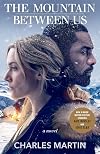
I really enjoyed this. It's a cross between a survival and romance novel. I think the survival aspects of this really work. The romance was a little less compelling and there came a point where I was annoyed by the female character's presence, but still, I thoroughly enjoyed it. And it was a novel I spoke about continuously with friends.
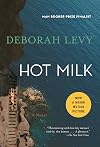
At the times the book felt overwritten and ungrounded, but it's essentially about a failure-to-launch woman who spends much of her life taking care of her mother who has this mysterious ailment that feels very psychosomatic. They go off to see this doctor who may or may not be a charlatan, and the daughter, our main character, Sofia starts to get her own life. She has a romance with a woman, she goes back to visit the father who abandoned her, and she comes back to deal with her mother once and for all. The mystery of the disease is what really carried me through on this story and once Sofia went to visit her father, I was all in and the pace picked up quite nicely. The twisty, uncertain ending was fun and gave this book a lot of reread potential for me.
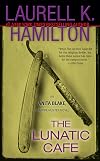
He laughed, and even now the sound curled along my skin like velvet. A joyous sociopath.
I love the way Hamilton writes about my husband.
This was a such a good time and my love for Jean-Claude continues to deepen. Best vampire ever written. In this book we're dealing with a shapeshifter mystery which was very compelling, but there's also a lot of time spent on the love triangle between, Anita, Richard, and Jean-Claude. I thought it was so masterfully done and by the end you have a pretty clear idea of how it will go, though in the afterward the author admits that she wasn't sure as she wrote it.
As in earlier books, we're watching Anita begin to recognize and reckon with the fact that she's a bit of a monster herself. She loves Richard the werewolf because he appears more human than Jean-Claude and gets a little skeeved when Richard goes all powerful wolf on her, but at her core Anita is more like Jean-Claude than Richard. Richard is a good guy who thinks the best of people and would only kill in pure self-defense. Anita is a killer and Jean-Claude is a sociopath. Even though Anita is repelled by how Jean-Claude manages his duties as a Master Vampire, she admires that he actually manages them. Richard is so much of a pacifist that he ain't managing shit.
From this book it's really easy to see how the Anita Blake series eventually turned into a poly story. Hamilton is so good at writing attractive men that it always begs the question, why choose? I wasn't a fan of Richard in show more the last book, but he grew on me a lot in this one. His passivity gets people killed but he's very hot while doing it, so it's forgivable. Very much looking forward to the next book where hopefully Anita gives Jean-Claude a real chance. show less
I love the way Hamilton writes about my husband.
This was a such a good time and my love for Jean-Claude continues to deepen. Best vampire ever written. In this book we're dealing with a shapeshifter mystery which was very compelling, but there's also a lot of time spent on the love triangle between, Anita, Richard, and Jean-Claude. I thought it was so masterfully done and by the end you have a pretty clear idea of how it will go, though in the afterward the author admits that she wasn't sure as she wrote it.
As in earlier books, we're watching Anita begin to recognize and reckon with the fact that she's a bit of a monster herself. She loves Richard the werewolf because he appears more human than Jean-Claude and gets a little skeeved when Richard goes all powerful wolf on her, but at her core Anita is more like Jean-Claude than Richard. Richard is a good guy who thinks the best of people and would only kill in pure self-defense. Anita is a killer and Jean-Claude is a sociopath. Even though Anita is repelled by how Jean-Claude manages his duties as a Master Vampire, she admires that he actually manages them. Richard is so much of a pacifist that he ain't managing shit.
From this book it's really easy to see how the Anita Blake series eventually turned into a poly story. Hamilton is so good at writing attractive men that it always begs the question, why choose? I wasn't a fan of Richard in show more the last book, but he grew on me a lot in this one. His passivity gets people killed but he's very hot while doing it, so it's forgivable. Very much looking forward to the next book where hopefully Anita gives Jean-Claude a real chance. show less
Dealing with Dragons: The Enchanted Forest Chronicles, Book One (Enchanted Forest Chronicles, 1) by Patricia C. Wrede
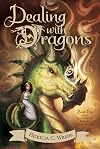
This was just good clean fun. Dealing with Dragons is about a girl who doesn't want to be a princess, so she runs away to do absolutely anything else and quickly finds herself working as a cook, maid, and librarian to a female dragon who plays an active role in dragon politics.
This is such a cozy book. I've never wanted to live in a cave until I read this. There's a lot of Cimorene reading and cooking, but there's also a great bit of plot that kicks off when wizards start showing up in places they don't belong. Its just a really good time, and the way Wrede tied up the end of the book was really masterful. Everything that felt like a joyful diversion earlier on in the novel became key in the end.
This is such a cozy book. I've never wanted to live in a cave until I read this. There's a lot of Cimorene reading and cooking, but there's also a great bit of plot that kicks off when wizards start showing up in places they don't belong. Its just a really good time, and the way Wrede tied up the end of the book was really masterful. Everything that felt like a joyful diversion earlier on in the novel became key in the end.
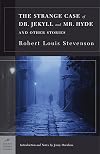
This story got better and better as it continued. Stevenson is straight forward, maybe a little too tell-y vs. show-y, but the content is so good. If you've ever struggled with your vices, then this is the book. It contains so much good food for thought. My first real exposure to this story was actually the BBC miniseries Jekyll where the writers more explicitly made Hyde a manifestation of love, which was a lot of fun to think about as I read this novella as well. This honestly just feels like one of those foundational stories that I can enjoy in any iteration. It speaks to me in a big way.
This was so much better than I was expecting, better than any adaptation I've ever watched at least. There is a lot of humor in the narration that gets lost when the story is translated to film. This was really a 5 star read for me for the first half, but as it progressed, I kind of felt like Dickens spent too much time describing every little detail in the rooms Scrooge visited. I've also always hated that Scrooge becomes a better man in the end. Even in this, it feels too easily won. Scrooge decides to do better as soon as he's exposed to how his actions have impacted others and it feels completely unrealistic. A good story for kids, but less interesting for adults.
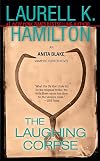
Amazing, show stopping, spectacular, never the same, totally unique, completely not ever been done before, absolutely loved it! I was waffling between a 4 and 5 star for most of the read, but the ending! Jean-Claude! Like many a teen girl, I had a thing for vampires back in the day. I've read and watched a lot of vampire stories and Jean-Claude has to be the best vampire in vampire history. I sped through this audiobook in two days and the voice acting was phenomenal. ma petite, Jean Claude's nickname for Anita, sounded like a come on every time he said it. I've never been a big fan of slow burn romances or enemies to lovers tropes, but this one works so much for me. Anita and JC are more frenemies than enemies. Anita has really sensible character-driven reasons for not engaging in a romance with him and JC has very sensible political reasons for wanting Anita in his corner/bed. So the tension between them makes sense.
Anita is so incredibly flawed that it's actually amazing that I find her so likeable. Anita is way too concerned about being "one of the guys," she always believes the ends justify the means, she's a black-and-white thinker, and a total prude. It's easy to see that Hamilton is setting Anita up for big character growth in some or possibly all of these areas throughout the rest of her series. This book in particular deals with Anita getting a better grip on her own identity. Is Anita a monster or not? We don't get a simple answer to that question. But in this show more book Anita psychology abuses a mentally ill clairvoyant, absolutely terrifies a disabled prostitute, and kills three humans. Several times in this book Anita is asked or asks herself "would you have really pulled the trigger? could you really kill me? could I be pushed to kill her?" Anita is pushed to wonder if she's a good guy or a bad guy and eventually she has to realize she's something in between, which would break her black-and-white view of the world.
Thematically, I found this book interesting. In particular there was a conversation between Anita and a necromancer who committed human sacrifice. Anita is trying to understand how someone so good could be pushed to kill. And it made me wonder if we're all capable of killing, but each of us has our own specific level of a metaphorical push needed to get there. While most of us need an incredibly hard and persistent shove to get there, Anita seems to only need a brush of the shoulder.
As much as I found this an entertaining ride, I'm also interested in it from a craft perspective. The Anita Blake is such a long-running best-seller series, that it's actually fascinating to see how Hamilton set it up. I love that she pushed romance to the background and gave Anita so many ways in which to grow and mature. There are always a few different plots or cases going on to keep things moving quickly and big life/death themes are touched on but never hamfisted into the story. It's just really solid storytelling. show less
Anita is so incredibly flawed that it's actually amazing that I find her so likeable. Anita is way too concerned about being "one of the guys," she always believes the ends justify the means, she's a black-and-white thinker, and a total prude. It's easy to see that Hamilton is setting Anita up for big character growth in some or possibly all of these areas throughout the rest of her series. This book in particular deals with Anita getting a better grip on her own identity. Is Anita a monster or not? We don't get a simple answer to that question. But in this show more book Anita psychology abuses a mentally ill clairvoyant, absolutely terrifies a disabled prostitute, and kills three humans. Several times in this book Anita is asked or asks herself "would you have really pulled the trigger? could you really kill me? could I be pushed to kill her?" Anita is pushed to wonder if she's a good guy or a bad guy and eventually she has to realize she's something in between, which would break her black-and-white view of the world.
Thematically, I found this book interesting. In particular there was a conversation between Anita and a necromancer who committed human sacrifice. Anita is trying to understand how someone so good could be pushed to kill. And it made me wonder if we're all capable of killing, but each of us has our own specific level of a metaphorical push needed to get there. While most of us need an incredibly hard and persistent shove to get there, Anita seems to only need a brush of the shoulder.
As much as I found this an entertaining ride, I'm also interested in it from a craft perspective. The Anita Blake is such a long-running best-seller series, that it's actually fascinating to see how Hamilton set it up. I love that she pushed romance to the background and gave Anita so many ways in which to grow and mature. There are always a few different plots or cases going on to keep things moving quickly and big life/death themes are touched on but never hamfisted into the story. It's just really solid storytelling. show less
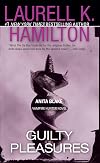
This was surprisingly good. I got into the Anita Blake series in college, right around when people began to complain about the series growing too smutty and romance heavy and Anita becoming out-of-character. I read a couple of books and never continued because I've always been bad with continuing series. This first book is such a good series opener. It's told in first person, which I usually hate, but Anita has a pretty pleasant mind to visit. She's funny and cool and likeable, while also having obvious flaws and making questionable decisions. She takes too long to figure out who's committing the crimes she's trying to solve and the motives of the Big Bad don't make a lot of sense, which is why it wasn't a five star read for me. But the ending line about her killing vampires and not sleeping with them is such a fist pump moment, even if you know that stance won't last for long.
This book is straight urban / paranormal fantasy, without any romance. I read this right after trying to read Pleasure Unbound and Angels' Blood, two series openers to PNR series. And I DNFed both because the main characters were unlikeable and the romances were so rushed and relied on the "not like other guys" trope. I think I prefer this low-romance start to a paranormal series. It gave me more time to appreciate the protagonist and to set up a frenemy dynamic between her and her first love interest.
Little things I also liked about this: so much diversity. I'm not sure it was perfectly executed show more but I appreciated that every other side character that was introduced was a POC. I also loved that Anita dressed like a 12-year-old hot mess. With the exception of two scenes, she put almost zero effort into her appearances and I loved it a lot. Very much looking forward to continuing the series this time around show less
This book is straight urban / paranormal fantasy, without any romance. I read this right after trying to read Pleasure Unbound and Angels' Blood, two series openers to PNR series. And I DNFed both because the main characters were unlikeable and the romances were so rushed and relied on the "not like other guys" trope. I think I prefer this low-romance start to a paranormal series. It gave me more time to appreciate the protagonist and to set up a frenemy dynamic between her and her first love interest.
Little things I also liked about this: so much diversity. I'm not sure it was perfectly executed show more but I appreciated that every other side character that was introduced was a POC. I also loved that Anita dressed like a 12-year-old hot mess. With the exception of two scenes, she put almost zero effort into her appearances and I loved it a lot. Very much looking forward to continuing the series this time around show less
This was a definite upswing in the series. The Barsoom series is at its best when there's a full cast of characters, we get reunited with old friends, bigger existential issues are tackled, and brevity is maintained. This story was about a mad scientist who allows people to pay to have their brains installed in newer, fresher bodies. The hero of this book is a John Carter dupe, a WWI soldier who finds himself dying on the battlefield and then suddenly gets transported to Barsoom which he's read about through all of Burroughs' previous writing. He ends up working for the mad scientist and falls for a beautiful young Barsoomian woman who's body was given to a mean, aging high priestess. In this book, he's quickly joined by a motley crew of warriors to help him retrieve his love's body.
Along the journey, Burroughs lightly tackles internal vs external beauty, war, religion, and sentimentality vs science. The war bit was oddly touching to me. Paxton, our hero, discovers a device that allows him to zoom into the surface of Earth and he sees all the destruction that the war he almost died in caused. That sort of hopeful, concerned homesickness was a nice touch of reality in this sci-fi/fantasy series.
I also have to give Burroughs some credit for how he wrote the heroine. She was once very beautiful and for the first half of the book she's in an old, ugly body. The hero could give her any of the other beautiful bodies that are in the lab, but she refuses. She'd rather have her show more own body or the old body dealt to her, and nothing else. She refuses to be so vain as to take beauty that doesn't belong to her. And the hero falls for her in her ugly body. Of course, he sets out on a mission to make her hot again, but I really liked that in this fairly shallow series, Burroughs took the time to acknowledge that beauty isn't just skin deep.
My only real complaint is that the pacing felt a little slow, which may just be because I've been in this universe for six books now. show less
Along the journey, Burroughs lightly tackles internal vs external beauty, war, religion, and sentimentality vs science. The war bit was oddly touching to me. Paxton, our hero, discovers a device that allows him to zoom into the surface of Earth and he sees all the destruction that the war he almost died in caused. That sort of hopeful, concerned homesickness was a nice touch of reality in this sci-fi/fantasy series.
I also have to give Burroughs some credit for how he wrote the heroine. She was once very beautiful and for the first half of the book she's in an old, ugly body. The hero could give her any of the other beautiful bodies that are in the lab, but she refuses. She'd rather have her show more own body or the old body dealt to her, and nothing else. She refuses to be so vain as to take beauty that doesn't belong to her. And the hero falls for her in her ugly body. Of course, he sets out on a mission to make her hot again, but I really liked that in this fairly shallow series, Burroughs took the time to acknowledge that beauty isn't just skin deep.
My only real complaint is that the pacing felt a little slow, which may just be because I've been in this universe for six books now. show less
I loved it and the ending was amazing, however it did drag a bit. Again we find ourselves on Mars with John Carter and he's on a mission to rescue his wife Deja Thoris. It requires a journey across the world and he encounters new races, new creatures and meets up with some old friends along the way. There are countless battles and near death experiences that John Carter escapes with unbelievable good luck, but that's par for the course for this series
Unlike the previous book in this series, Gods of Mars, John Carter is journeying alone in this novel and I do think the pacing suffers slightly for it. John Carter isn't the most interesting character in his own series, so I missed the big cast of characters that supported him in the previous novel. Their minor appearances in this one just wasn't enough for me.
However, all in all, it's a great, fun read.
Unlike the previous book in this series, Gods of Mars, John Carter is journeying alone in this novel and I do think the pacing suffers slightly for it. John Carter isn't the most interesting character in his own series, so I missed the big cast of characters that supported him in the previous novel. Their minor appearances in this one just wasn't enough for me.
However, all in all, it's a great, fun read.
I'm pretty sure this is the longest Barsoom book. It definitely felt like it. I started skim-reading about 100 pages in and only regained complete interest in the last couple of chapters. Princess Tara of Helium is great, like all princesses in this universe she has a tendency to get lost and kidnapped a lot. But she holds her own. My issue was actually the plot, it's broken up into Tara being held prisoner in two different Barsoomian societies. It could have been two books. The first society is one in which Barsoomians prioritize thought to the exclusion of all else and their bodies have physically adapted to that. This is written like it's a commentary on the dangers of intellectualism but its so absurd and extreme that I don't think a valid point ever coalesces. Tara's time in this society drags on for too long in my opinion and then she's off to a city that neighbors the city of a family friend. This section has more of the fast-paced storytelling I'm used to from Barsoom books. There's not much of a message, but there's a lot of political intrigue. I was already tired out by the first half of the novel though.
If I weren't committed to finishing this series and hopeful that the next books would be more enjoyable, I definitely would not have finished this. It was a low 2-star read for me, but the way things wrapped up in the end pushed it up to a 3-star for me. Tons of fun in those final chapters.
If I weren't committed to finishing this series and hopeful that the next books would be more enjoyable, I definitely would not have finished this. It was a low 2-star read for me, but the way things wrapped up in the end pushed it up to a 3-star for me. Tons of fun in those final chapters.
While I enjoyed the first novel in this series, Princess of Mars, it didn't blow me away and I expected more of the same from The Gods of Mars. However, a couple of chapters in I knew I would love this book. John Carter finds himself returned to Barsoom (Mars) at the beginning of this novel. He's landed in what many Barsoomians imagine to be heaven, but it's more like a hell on Mars. The entire book is basically John Carter's journey to reunite with his Princess / Wife / Baby Mama Deja and it is so glorious.
This book feels like the song The Boys Are Back in Town by Thin Lizzy. Every few chapters or so John Carter finds himself in a dangerous situation, turns around and is surprised to find one of his old friends from the last novel there just in time to help him save the day. It's so improbable and ridiculous, but you end up loving it because the boys are back in town and they're about to kick some ass.
As fun as this novel is it also does a great examination of religion. This is science fiction at its best, an out of this world story to examine very real world issues. Gods of Mars examines how so many different cultures believe their religion or faith is the "right" faith without deeply exploring and examining it or what else exists in the world.
Gods of Mars also examines how religion is used to justify the demeaning and degradation of others. I think this is an especially important theme because John Carter is a confederate soldier. White Christians in his time and show more before his time used Christianity to justify their "owning" of black slaves. Burroughs reverses the races (in my mind to make this story more comfortable for the white Americans he wrote this for) but his point is hammered home in a very light and fun way.
I love a good fun book with a message. 5/5 all the way. show less
This book feels like the song The Boys Are Back in Town by Thin Lizzy. Every few chapters or so John Carter finds himself in a dangerous situation, turns around and is surprised to find one of his old friends from the last novel there just in time to help him save the day. It's so improbable and ridiculous, but you end up loving it because the boys are back in town and they're about to kick some ass.
As fun as this novel is it also does a great examination of religion. This is science fiction at its best, an out of this world story to examine very real world issues. Gods of Mars examines how so many different cultures believe their religion or faith is the "right" faith without deeply exploring and examining it or what else exists in the world.
Gods of Mars also examines how religion is used to justify the demeaning and degradation of others. I think this is an especially important theme because John Carter is a confederate soldier. White Christians in his time and show more before his time used Christianity to justify their "owning" of black slaves. Burroughs reverses the races (in my mind to make this story more comfortable for the white Americans he wrote this for) but his point is hammered home in a very light and fun way.
I love a good fun book with a message. 5/5 all the way. show less
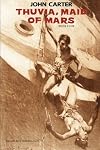
I stopped reading this series after the third book three years ago, as if I knew this one was gonna be some bullshit. In this novel, we pretty much do away with all the characters we know and love from the first three books and focus on John Carter's son Carthoris and his love Thuvia who we met briefly earlier in the series. I was re-reading my reviews of the first three books and at some point I commented that John Carter is the least interesting character in his own series. His son Carthoris is even less interesting. Reading this crystalized for me what I actually love about this series though and it's the male friendships.
I don't often read stories about straight men that frequently express their affection and loyalty to one another, where their survival is mostly dependent on their ability to form faithful friendships. It's fun. When multiple male characters are on the page, I get pumped because I know they're about to do amazing things. That being said, most of this book was a drag because Carthoris was a lone figure for the majority of it, sometimes accompanied by Thuvia, near the end accompanied by Kar Komak who made me laugh once with his too few lines.
Many complain about these books for always centering around a hero saving a damsel and that of course exists in this book, but given this was written in 1916 about a woman in an even more patriarchal society than the U.S. at that time, Thuvia is a progressive heroine. She could be put in a book today and wouldn't be show more entirely out of place. Thuvia murders two men who dare to touch her and she locks a third in a room with a man intent on killing him. She uses man's weapons to kill, a dagger. And a more feminine method in the form of a connection she's managed to form with wild animals. She is principled until the very end and only gives her principles up for love after her prospective partner proves he respects them. Thuvia is not to blame for the mediocrity of this book.
The fault of this book really lies in Burroughs not giving Carthoris a bigger supporting cast. The plot also includes a sort of commentary on religion that never really coalesced for me and seemed repetitive of previous novels. show less
I don't often read stories about straight men that frequently express their affection and loyalty to one another, where their survival is mostly dependent on their ability to form faithful friendships. It's fun. When multiple male characters are on the page, I get pumped because I know they're about to do amazing things. That being said, most of this book was a drag because Carthoris was a lone figure for the majority of it, sometimes accompanied by Thuvia, near the end accompanied by Kar Komak who made me laugh once with his too few lines.
Many complain about these books for always centering around a hero saving a damsel and that of course exists in this book, but given this was written in 1916 about a woman in an even more patriarchal society than the U.S. at that time, Thuvia is a progressive heroine. She could be put in a book today and wouldn't be show more entirely out of place. Thuvia murders two men who dare to touch her and she locks a third in a room with a man intent on killing him. She uses man's weapons to kill, a dagger. And a more feminine method in the form of a connection she's managed to form with wild animals. She is principled until the very end and only gives her principles up for love after her prospective partner proves he respects them. Thuvia is not to blame for the mediocrity of this book.
The fault of this book really lies in Burroughs not giving Carthoris a bigger supporting cast. The plot also includes a sort of commentary on religion that never really coalesced for me and seemed repetitive of previous novels. show less
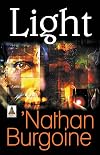
This was a re-read for me. I wanted to make sure it was still as amazing I'd remembered and worthy of sending off for a gift-exchange. I'm pretty sure nothing like this book has ever or will ever be written again. It is so unique and special. And I still get teary reading it. I kind of hate the synopsis and back cover blurb because it gives the impression that the book is more camp than it actually is.
Light is about Kieran, an out and proud gay man, who has a loving relationship with his family, friends, community, God, and himself. He's also a psychokinetic telepath. Like every other year, he takes off work for Ottawa's Pride Week, but he finds himself disappointed when Pride Week is crashed by a toxic fundamentalist religious group. Not only, are they shouting insults from the sidelines of every Pride event, they're also wielding some sort of power that allows them to slice open Pride attendees. Kieran, the good-hearted soul he is, can't stop himself from using his weak psychokinetic abilities to step in and help. How can one person save something as big as Pride though?
Light is a coming out story in that Kieran is closeted when it comes to his abilities. It's the softest sci-fi, thriller you will ever read in that Kieran remains very human as he runs toward the danger and let's us in on the science of his abilities. It's a reluctant superhero origin story in that when Kieran first uses his abilities to help people, the people of Pride turn him into one. It's a show more commentary on religion in that Burgoine chose to make Kieran a believer in God trying to defeat other believers in God. It's even a commentary on capitalism. But most importantly, it's really just a love letter to queer folks. I think the fact that Kieran is so clearly loved by so many people, that his love for his community both endangers him and rewards him is what makes this book truly special.
I'm so excited to pass this on to another reader! show less
Light is about Kieran, an out and proud gay man, who has a loving relationship with his family, friends, community, God, and himself. He's also a psychokinetic telepath. Like every other year, he takes off work for Ottawa's Pride Week, but he finds himself disappointed when Pride Week is crashed by a toxic fundamentalist religious group. Not only, are they shouting insults from the sidelines of every Pride event, they're also wielding some sort of power that allows them to slice open Pride attendees. Kieran, the good-hearted soul he is, can't stop himself from using his weak psychokinetic abilities to step in and help. How can one person save something as big as Pride though?
Light is a coming out story in that Kieran is closeted when it comes to his abilities. It's the softest sci-fi, thriller you will ever read in that Kieran remains very human as he runs toward the danger and let's us in on the science of his abilities. It's a reluctant superhero origin story in that when Kieran first uses his abilities to help people, the people of Pride turn him into one. It's a show more commentary on religion in that Burgoine chose to make Kieran a believer in God trying to defeat other believers in God. It's even a commentary on capitalism. But most importantly, it's really just a love letter to queer folks. I think the fact that Kieran is so clearly loved by so many people, that his love for his community both endangers him and rewards him is what makes this book truly special.
I'm so excited to pass this on to another reader! show less
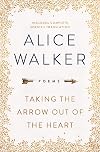
I had the great joy of listening to this read by Alice Walker. I kind of feel like all poetry collections should be turned into audiobooks. As a poet, Walker doesn't play around with language very much or come up with extremely creative ways of putting things, her poetry is very straightforward. It's something I appreciate, but it also makes the poetry feel less like poetry and more like expressed thoughts or short essays. This collection felt like it was about Walker reconciling or dealing with the fact that so many people do so many awful things throughout the world. She deals with it by focusing on the good in the world, she introduces this idea of earthlings vs. others (i.e. true earthlings wouldn't do these awful things), and she assures us goodness will win in the end. I don't really agree with those last two ideas, but I really loved the concept of this project and Walker's execution of it. I'm excited to get a physical copy to read more closely.
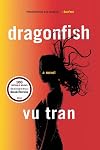
I'm not sure if I really loved this book or if it was just so different than everything I've read recently that I loved the novelty, but this was an incredibly enjoyable audiobook listen.
Vu Tran is an Vietnamese-American writer who wrote about a white cop that believes himself to be in love with is ex-wife, a Vietnamese-American woman. The racial identities feel important because throughout this story, there's a sort of underlying discussion about what makes interracial relationships difficult. And while this phenom isn't unique to white men, through this white male protagonist, Tran shows us how a man can claim to love a woman without really knowing her, how he can claim to love her while also hurting her. We also get a very keen sense of this white man's entitlement, of his inclination to forgive himself of his sins while also judging others (all Vietnamese people) of the same sins extremely harshly. His lack of self-awareness is...*chefs kiss*. Near the end of the book, a Vietnamese man calls our protagonist "pathetic" and I'd wholeheartedly agree. He's just another entitled white cop with daddy issues. But I loved reading about him.
What I like about Tran's writing though is that he plays it very straight. He writes the protagonist like a hero because the protagonist sees himself as a hero. He does things that make him unlikeable to me, but it didn't feel like the author was forcing that "unlikeable" characteristic on the hero, he was just telling the facts.
I also show more loved Suzy as a second protagonist. She falls into the "bad mom" trope that I love. She is a complex woman who never really let marriage or motherhood completely consume her. And it seemed like her core desire was to be understood, which was hard because of her complexity. We spend most of the book watching this cop make every effort to hunt her down and understand her, while also getting stories from Suzy about her past.
This was the first neo-noir I read and I could see myself reading a lot more. show less
Vu Tran is an Vietnamese-American writer who wrote about a white cop that believes himself to be in love with is ex-wife, a Vietnamese-American woman. The racial identities feel important because throughout this story, there's a sort of underlying discussion about what makes interracial relationships difficult. And while this phenom isn't unique to white men, through this white male protagonist, Tran shows us how a man can claim to love a woman without really knowing her, how he can claim to love her while also hurting her. We also get a very keen sense of this white man's entitlement, of his inclination to forgive himself of his sins while also judging others (all Vietnamese people) of the same sins extremely harshly. His lack of self-awareness is...*chefs kiss*. Near the end of the book, a Vietnamese man calls our protagonist "pathetic" and I'd wholeheartedly agree. He's just another entitled white cop with daddy issues. But I loved reading about him.
What I like about Tran's writing though is that he plays it very straight. He writes the protagonist like a hero because the protagonist sees himself as a hero. He does things that make him unlikeable to me, but it didn't feel like the author was forcing that "unlikeable" characteristic on the hero, he was just telling the facts.
I also show more loved Suzy as a second protagonist. She falls into the "bad mom" trope that I love. She is a complex woman who never really let marriage or motherhood completely consume her. And it seemed like her core desire was to be understood, which was hard because of her complexity. We spend most of the book watching this cop make every effort to hunt her down and understand her, while also getting stories from Suzy about her past.
This was the first neo-noir I read and I could see myself reading a lot more. show less
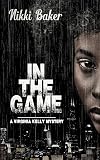
Has a better book ever been written? The answer is no. I loved this so much. It's both a fun time capsule and enduring in its themes. Ginny is a black lesbian amateur sleuth who has a world view shaped by her identity. Her best friend's girlfriend ends up dead and she decides to take on the case, all the while having these absurdly funny interactions with women she's trying to sleep with. I found this book hilarious and cinematic. I was put right into the late 80s / early 90s. And it had enough heart for it to be worth a reread at some point.
One of my critique partners helped me realize that the manuscript I've been revising is a hardboiled mystery. It was hard to recognize because my protag doesn't look like the typical hardboiled detective. So I immediately sought out all the hardboiled detective books I could find featuring black queer women. I found three, and this is the first I've read. It's honestly amazing how some things change, but so much stays the same. Ginny is still incredibly relatable, her observations on people and her place in society still tracks. The book is just a really good time. Very special.
One of my critique partners helped me realize that the manuscript I've been revising is a hardboiled mystery. It was hard to recognize because my protag doesn't look like the typical hardboiled detective. So I immediately sought out all the hardboiled detective books I could find featuring black queer women. I found three, and this is the first I've read. It's honestly amazing how some things change, but so much stays the same. Ginny is still incredibly relatable, her observations on people and her place in society still tracks. The book is just a really good time. Very special.
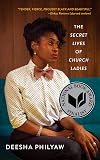
This won me over with the first couple of stories and all of the rest were honestly pretty great. There was only one that I didn't enjoy very much which is amazing for a short story collection. I listened to this on audiobook and it was so well performed. The stories are funny and touching and remind me of so many definitions of home.
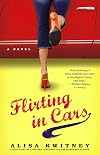
I bought this at a library sale years ago and it was the best reading experience I've had this year. This sits much more firmly in "chicklit" territory than romance since it's mostly about a 41 year old woman going through a rough transition for the sake of her child while the romance plot slowly simmers in the background.
This was much more diverse than I was expecting even though it's casually mentioned on the cover. It features an Iranian Jewish heroine, lesbian side characters, and a hero who has these moments of bi-curiosity. The heroine is 10 years older than the hero and says she has like 30 lbs on him too and I live. Beyond that though, there are intellectual, class, and lifestyle differences throughout and it makes the small town this is set in feel so pleasant, a place you'd want to live.
The hero / heroine felt like they were specifically written to my taste because I loved them both so much. Mack is a sweet and aimless army vet who's figuring his life out with the aide of stolen poetry books and the occasional brawl. Zoe is an uptight, multilingual, intellectual journalist who reads trashy romance novels, likes rough sex and is working on learning how to go with the flow. And they're perfect for each other in this moment. Loved them both, love them together.
This was much more diverse than I was expecting even though it's casually mentioned on the cover. It features an Iranian Jewish heroine, lesbian side characters, and a hero who has these moments of bi-curiosity. The heroine is 10 years older than the hero and says she has like 30 lbs on him too and I live. Beyond that though, there are intellectual, class, and lifestyle differences throughout and it makes the small town this is set in feel so pleasant, a place you'd want to live.
The hero / heroine felt like they were specifically written to my taste because I loved them both so much. Mack is a sweet and aimless army vet who's figuring his life out with the aide of stolen poetry books and the occasional brawl. Zoe is an uptight, multilingual, intellectual journalist who reads trashy romance novels, likes rough sex and is working on learning how to go with the flow. And they're perfect for each other in this moment. Loved them both, love them together.
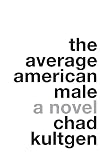
I read this once in my early twenties and decided to do a reread to see if I still liked it. I actually loved it. There's definitely a nostalgia factor to this. Our protagonist, the Average American Male (AAM), is constantly spending time in shopping centers, shopping in and eating at places that barely exist anymore. And he also talks in a way that you don't often hear anymore since the proliferation of social media has made people more PC and self aware. But it's also just a funny, sort of nihilist book that says a lot in a very quick and minimalist writing style.
Part of the fun of this book is deciding for yourself if Kultgen's version of The Average American Male is accurate. His AAM is a misogynist. He is a little bit racist, homophobic, and ableist. And given how our recent elections have gone, I'd argue that Kultgen is pretty spot on. There is a sort of oversimplification and exaggeration to it that keeps the book entertaining, but there is truth in his depiction. And Kultgen isn't just piling on and shitting on the AAM. The misogynist falls in love with women. The homophobe has a gay friend. The racist is attracted to Asian women. And the ableist finds joy in people with disabilities. It's totally fucked up in a lot of cases, but he's mostly harmless in his daily interactions and he does have true, genuine feelings for people. He is not a sociopath, he is an AAM. Also, it's definitely debatable, but I think Kultgen's actual portrayal of women, gay men, Asian show more women, and people with Down Syndrome ran contrary to stereotypes several times in this book. While we only see these people through AAM's very shallow eyes, it was easy to imagine them as unique individuals.
I've definitely met AAMs before, but I was also super interested in the women in this story and the book's general commentary on marriage. Average is also a synonym for "mediocre." And a big theme in this book is about settling. There are definitely women who care more about getting married than who they're actually getting married to. I've met women who have set deadlines for marriage and met them! The women AAM dated were sort of aimless in their careers, raised by parents who were pressuring them to marry, and clearly settling for an AAM who was giving them almost nothing in terms true love and devotion. Society had set them up to desire marriage above all else and they scheme to get it, to comedic outcomes. In a sort of nihilist fashion, AAM declares that every woman he dates will be the same so he should give up on shopping for an ideal partner. Of course, he never looks inward. He never asks himself why he only seems to be attracted to younger women without real careers or how his constant lying and inattention leave him not understanding the changing desires of his partners. The AAM is just so average, so basic, so mediocre...I love it. show less
Part of the fun of this book is deciding for yourself if Kultgen's version of The Average American Male is accurate. His AAM is a misogynist. He is a little bit racist, homophobic, and ableist. And given how our recent elections have gone, I'd argue that Kultgen is pretty spot on. There is a sort of oversimplification and exaggeration to it that keeps the book entertaining, but there is truth in his depiction. And Kultgen isn't just piling on and shitting on the AAM. The misogynist falls in love with women. The homophobe has a gay friend. The racist is attracted to Asian women. And the ableist finds joy in people with disabilities. It's totally fucked up in a lot of cases, but he's mostly harmless in his daily interactions and he does have true, genuine feelings for people. He is not a sociopath, he is an AAM. Also, it's definitely debatable, but I think Kultgen's actual portrayal of women, gay men, Asian show more women, and people with Down Syndrome ran contrary to stereotypes several times in this book. While we only see these people through AAM's very shallow eyes, it was easy to imagine them as unique individuals.
I've definitely met AAMs before, but I was also super interested in the women in this story and the book's general commentary on marriage. Average is also a synonym for "mediocre." And a big theme in this book is about settling. There are definitely women who care more about getting married than who they're actually getting married to. I've met women who have set deadlines for marriage and met them! The women AAM dated were sort of aimless in their careers, raised by parents who were pressuring them to marry, and clearly settling for an AAM who was giving them almost nothing in terms true love and devotion. Society had set them up to desire marriage above all else and they scheme to get it, to comedic outcomes. In a sort of nihilist fashion, AAM declares that every woman he dates will be the same so he should give up on shopping for an ideal partner. Of course, he never looks inward. He never asks himself why he only seems to be attracted to younger women without real careers or how his constant lying and inattention leave him not understanding the changing desires of his partners. The AAM is just so average, so basic, so mediocre...I love it. show less
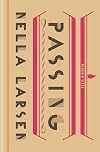
Second read review
I reread this sooner than I would have liked for a book club. My first read was by audiobook last fall. This time I read a physical copy of the book. I think the audiobook is actually better. During my second read, Larsen's writing never reached a point of feeling smooth or effortless. Sentence construction and vocab choices felt a little awkward at times. It may have been because I'd read this so recently and my mind wasn't completely engaged, but I know the awkwardness is completely unnoticeable in the audiobook.
During this second read, the biggest thing I took away was when this story was placed, shortly after the war. It made Brian easier to understand as a character. In matters of race, I also felt like Brian, Irene, and Clare represented a solid spectrum of how black people deal with racism in America. Brian is incredibly relatable, Irene is incredibly familiar, and I imagine most black people have known at least one Clare. The discussions these three characters have around race are so classic and enduring. They are the same discussions I've had with family and friends throughout my life.
I know some people read queerness in this book, so I tried to look out for it in this read, but I just don't see it. Irene and Clare's dynamic reminds me so much of a platonic friendship I had in my twenties. And Irene's loveless marriage didn't feel like it was anything deeper than a woman of her time not having many options. So, I won't be adding this to my own show more queer lit canon. But still an enjoyable read.
First read review
This book is tale of "fuck around and find out" and "play stupid games, win stupid prizes." Irene is a dream protagonist. I love watching a mature, socially competent, self-assured woman go through a difficult situation. And the difficult situation in this novel is Irene's cuckoo, passing childhood friend breezing back into her life. Irene is such a charming character with her ability to navigate all spaces and situations so eloquently while keeping true to herself and her core desires. And her cuckoo passing friend, Clare is a lovely antihero or villain. I have a special fondness for bad mothers. The first half of the book sets up their dynamic and things quickly begin ratcheting up for a very tense ending. Incredible.
I will say that Larsen is very straightforward about Irene's core desires and Clare's personality flaws, which are in direct conflict. I'm not so sure she had to be. Leaving it for the reader to figure out may have made it a little more engaging or mysterious or impactful. But no, this is a rather straight-forward story with an only slightly mysterious ending. Still, incredibly enjoyable. show less
I reread this sooner than I would have liked for a book club. My first read was by audiobook last fall. This time I read a physical copy of the book. I think the audiobook is actually better. During my second read, Larsen's writing never reached a point of feeling smooth or effortless. Sentence construction and vocab choices felt a little awkward at times. It may have been because I'd read this so recently and my mind wasn't completely engaged, but I know the awkwardness is completely unnoticeable in the audiobook.
During this second read, the biggest thing I took away was when this story was placed, shortly after the war. It made Brian easier to understand as a character. In matters of race, I also felt like Brian, Irene, and Clare represented a solid spectrum of how black people deal with racism in America. Brian is incredibly relatable, Irene is incredibly familiar, and I imagine most black people have known at least one Clare. The discussions these three characters have around race are so classic and enduring. They are the same discussions I've had with family and friends throughout my life.
I know some people read queerness in this book, so I tried to look out for it in this read, but I just don't see it. Irene and Clare's dynamic reminds me so much of a platonic friendship I had in my twenties. And Irene's loveless marriage didn't feel like it was anything deeper than a woman of her time not having many options. So, I won't be adding this to my own show more queer lit canon. But still an enjoyable read.
First read review
This book is tale of "fuck around and find out" and "play stupid games, win stupid prizes." Irene is a dream protagonist. I love watching a mature, socially competent, self-assured woman go through a difficult situation. And the difficult situation in this novel is Irene's cuckoo, passing childhood friend breezing back into her life. Irene is such a charming character with her ability to navigate all spaces and situations so eloquently while keeping true to herself and her core desires. And her cuckoo passing friend, Clare is a lovely antihero or villain. I have a special fondness for bad mothers. The first half of the book sets up their dynamic and things quickly begin ratcheting up for a very tense ending. Incredible.
I will say that Larsen is very straightforward about Irene's core desires and Clare's personality flaws, which are in direct conflict. I'm not so sure she had to be. Leaving it for the reader to figure out may have made it a little more engaging or mysterious or impactful. But no, this is a rather straight-forward story with an only slightly mysterious ending. Still, incredibly enjoyable. show less
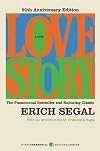
I inherited a bunch of Segal books from my grandmother when I was a teen and quickly fell in love with a few of them. I wanted to give this a re-read in adulthood to see if it'd be worth keeping and actually decided to listen to the audiobook which is read by Segal and has backing music from the film. It was so short and incredibly enjoyable. I've read the book, I've watched the film, Segal tells us she's gonna die with the first line, yet I still got all teary and weepy when it happened.
When I was a teen, I used to think the line that quickly became a tagline for this book "love means never having to say your sorry" was an extremely silly, misguided line. But as an adult, I realize that I've never really exchanged serious apologies with the people I love most in the world. We simply don't do things to each other that require apologies. We also know each other's intentions and hearts so well that the forgiveness is already assumed. At the moment Jenny utters this line, neither her or Oliver are owed an apology because their words and actions were completely consistent with who they were when they first met. They are who they are and an apology for their actions would mean they'd have to apologize for their identities, which one shouldn't have to do in a loving relationship.
When Oliver utters this line at the very end, it initially didn't sit as well with me because I felt Oliver owed his father an apology for the entire length of the book, something Jenny and I agreed show more on. But that actually reinforces the truth in Segal's line. Oliver's father feels he owes his son an apology because he knows his son doesn't love him nor accept the type of father he's been. And as a reader I think Oliver owes his father an apology because I don't understand how a parent can completely love and accept someone who's been so ungrateful. The relationship is so strained that they're practically strangers to each other, so apologies feel very necessary.
None of this is important though, because I actually hate that this line became what everyone remembered from Love Story. The most important line to me was from Jenny alone: "Screw Paris. Screw Paris and music and all the crap you think you stole from me." At its core, Love Story is really a story about holding on to the good things in life because you have no idea how long your life will be. Going out with no regrets is the major aim of living. If you have to let go of money and stability and success to hold onto something that really lights you up and makes you happy, then that's something you should probably do. Be happy and hope you live long enough for all that other stuff to come back around to you. show less
When I was a teen, I used to think the line that quickly became a tagline for this book "love means never having to say your sorry" was an extremely silly, misguided line. But as an adult, I realize that I've never really exchanged serious apologies with the people I love most in the world. We simply don't do things to each other that require apologies. We also know each other's intentions and hearts so well that the forgiveness is already assumed. At the moment Jenny utters this line, neither her or Oliver are owed an apology because their words and actions were completely consistent with who they were when they first met. They are who they are and an apology for their actions would mean they'd have to apologize for their identities, which one shouldn't have to do in a loving relationship.
When Oliver utters this line at the very end, it initially didn't sit as well with me because I felt Oliver owed his father an apology for the entire length of the book, something Jenny and I agreed show more on. But that actually reinforces the truth in Segal's line. Oliver's father feels he owes his son an apology because he knows his son doesn't love him nor accept the type of father he's been. And as a reader I think Oliver owes his father an apology because I don't understand how a parent can completely love and accept someone who's been so ungrateful. The relationship is so strained that they're practically strangers to each other, so apologies feel very necessary.
None of this is important though, because I actually hate that this line became what everyone remembered from Love Story. The most important line to me was from Jenny alone: "Screw Paris. Screw Paris and music and all the crap you think you stole from me." At its core, Love Story is really a story about holding on to the good things in life because you have no idea how long your life will be. Going out with no regrets is the major aim of living. If you have to let go of money and stability and success to hold onto something that really lights you up and makes you happy, then that's something you should probably do. Be happy and hope you live long enough for all that other stuff to come back around to you. show less
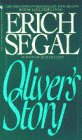
An interesting project. This is the story of Oliver eighteen months after his wife dies. He is getting pressured from all angles to get out there and start dating again so he doesn't end up permanently alone like his father-in-law Phil. Much of this book is consumed by Oliver dating a woman named Marcie, who unlike Jenny, is in the same class as Oliver's incredibly wealthy family.
This book gave me anxiety because I really did not want Oliver to move on from Jenny even though I knew he should. And then, as he enters into this relationship with Marcie, which is clearly happening too soon, its easy to see how unfair he's being to her and how hard she is trying to be the person she thinks he wants her to be when in reality all he wants is Jenny. He wants his wife back.
Marcie and Oliver have different communication styles and core values that make them a poor match no matter the situation, but Oliver can't see that because he's still trying to figure out what he wants out of life now that he can't have Jenny. He's a mess. And thankfully, he's seeing a therapist about it.
I've only known one person who's lost a spouse like this and pursued dating too soon afterwards and the issues presented in Oliver's Story feel fairly accurate. Weird judgements and decisions being made, impulsiveness, unfair treatment of potential partners. This felt like an accurate portrayal of dating while mourning.
I think I would have enjoyed this book more though if Segal had focused on more of show more Oliver's life, outside of work and dating Marcie. Every time his friends, his family, Phil or even his secretary Anita showed up in the book, it was so much more enjoyable. show less
This book gave me anxiety because I really did not want Oliver to move on from Jenny even though I knew he should. And then, as he enters into this relationship with Marcie, which is clearly happening too soon, its easy to see how unfair he's being to her and how hard she is trying to be the person she thinks he wants her to be when in reality all he wants is Jenny. He wants his wife back.
Marcie and Oliver have different communication styles and core values that make them a poor match no matter the situation, but Oliver can't see that because he's still trying to figure out what he wants out of life now that he can't have Jenny. He's a mess. And thankfully, he's seeing a therapist about it.
I've only known one person who's lost a spouse like this and pursued dating too soon afterwards and the issues presented in Oliver's Story feel fairly accurate. Weird judgements and decisions being made, impulsiveness, unfair treatment of potential partners. This felt like an accurate portrayal of dating while mourning.
I think I would have enjoyed this book more though if Segal had focused on more of show more Oliver's life, outside of work and dating Marcie. Every time his friends, his family, Phil or even his secretary Anita showed up in the book, it was so much more enjoyable. show less
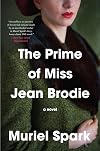
This was a grower for sure. I tried reading it awhile ago and gave up because its so boring. But I gave it another shot in audiobook format because I was hoping for some lesbian themes, and this book didn't disappoint. It's still fairly boring, there isn't much of a plot. But it does give you a lot to think about as you try to figure out what's going on with the three main characters. I think it may actually be worth a closer reread as well.
Miss Brodie is a bird. There's just not another way to describe her foolishness. She's a teacher who is completely unqualified for her job and doesn't care that she's unqualified because she's in her "prime." I love it, I love her. I wish for all women to be this unconcerned with their work and to view their entire 30s-60s as their prime. Miss Brodie is so self-obsessed that she views her students as an extension of herself. They are merely the props holding up her own ego. They don't have their own personalities or ambitions in her mind, they just have what she's assigned to them. And like many a bird, Miss Brodie is obsessed with an unattainable man. I usually don't encourage women sleeping with married men, but Miss Brodie is such a bird I don't think she could have gotten over him in any other way. She doesn't sleep with him and I feel like that's one of many social commentaries in the novel. The fact that someone as freewheeling as Miss Brodie doesn't feel free enough to take what is both wanted and on offer says a lot about how show more restrictive society is for women.
On that theme, throughout this entire book everyone is so incredibly critical of Miss Brodie. Yes, she's a vain ditz who has no business teaching, but the true villain of the story is Mr. Lloyd. Mr. Lloyd is a predator. He clearly has a lot of sex with his Catholic wife, who is forced to bear his children, yet it is not enough. He tries to lure Miss Brodie into a sexual affair even though he knows it would absolutely ruin her. He forces his lips onto a fifteen-year-old girl. And though it isn't explicitly stated, it seems pretty clear that Mr. Lloyd uses his passion for painting portraits as a way to lure young girls into his studio in the hopes of turning them into lovers. Yuck! The fact that almost no criticism lands at Mr. Lloyd's feet is a huge commentary in itself. Very typical of our society to blame a woman for possibly being loose and not a man for being a clear and obvious philanderer and predator.
Lastly, there is Sandy. My poor mess of a child. She is a hard character to understand because Spark doesn't give us a ton of info on her background. But halfway through this book, I figured Sandy must be in love with Miss Brodie and not understand or what to do with those feelings. Her obsession is weird. All of the other girls give Miss Brodie platonic friend energy, but Sandy holds back in weird ways. At one point she silently accuses Miss Brodie of being a lesbian and its like...girl, look in the mirror. She becomes so obsessed with Miss Brodie that she sleeps with the man Miss Brodie loves just to be closer to her in some sick way. She doesn't even like the man, she's just trying to understand why the man loves Miss Brodie so much...because maybe if she understands his obsession she'll understand her own. Eventually she retreats into Catholicism because she no longer wants to think for herself. Thinking for herself would mean sorting through all of her complicated feelings. It's so much easier to live by the strict rules of a nunnery. And of course, she turns Miss Brodie in because the woman stirred up so many feelings within her that she was upset with having to deal with. Like Miss Brodie, Sandy gives no indication of actually giving a shit about the kids that come after her.
Fun stuff. This also returned to me the concept of "being in my prime." I love that idea and will likely be saying it for years to come. show less
Miss Brodie is a bird. There's just not another way to describe her foolishness. She's a teacher who is completely unqualified for her job and doesn't care that she's unqualified because she's in her "prime." I love it, I love her. I wish for all women to be this unconcerned with their work and to view their entire 30s-60s as their prime. Miss Brodie is so self-obsessed that she views her students as an extension of herself. They are merely the props holding up her own ego. They don't have their own personalities or ambitions in her mind, they just have what she's assigned to them. And like many a bird, Miss Brodie is obsessed with an unattainable man. I usually don't encourage women sleeping with married men, but Miss Brodie is such a bird I don't think she could have gotten over him in any other way. She doesn't sleep with him and I feel like that's one of many social commentaries in the novel. The fact that someone as freewheeling as Miss Brodie doesn't feel free enough to take what is both wanted and on offer says a lot about how show more restrictive society is for women.
On that theme, throughout this entire book everyone is so incredibly critical of Miss Brodie. Yes, she's a vain ditz who has no business teaching, but the true villain of the story is Mr. Lloyd. Mr. Lloyd is a predator. He clearly has a lot of sex with his Catholic wife, who is forced to bear his children, yet it is not enough. He tries to lure Miss Brodie into a sexual affair even though he knows it would absolutely ruin her. He forces his lips onto a fifteen-year-old girl. And though it isn't explicitly stated, it seems pretty clear that Mr. Lloyd uses his passion for painting portraits as a way to lure young girls into his studio in the hopes of turning them into lovers. Yuck! The fact that almost no criticism lands at Mr. Lloyd's feet is a huge commentary in itself. Very typical of our society to blame a woman for possibly being loose and not a man for being a clear and obvious philanderer and predator.
Lastly, there is Sandy. My poor mess of a child. She is a hard character to understand because Spark doesn't give us a ton of info on her background. But halfway through this book, I figured Sandy must be in love with Miss Brodie and not understand or what to do with those feelings. Her obsession is weird. All of the other girls give Miss Brodie platonic friend energy, but Sandy holds back in weird ways. At one point she silently accuses Miss Brodie of being a lesbian and its like...girl, look in the mirror. She becomes so obsessed with Miss Brodie that she sleeps with the man Miss Brodie loves just to be closer to her in some sick way. She doesn't even like the man, she's just trying to understand why the man loves Miss Brodie so much...because maybe if she understands his obsession she'll understand her own. Eventually she retreats into Catholicism because she no longer wants to think for herself. Thinking for herself would mean sorting through all of her complicated feelings. It's so much easier to live by the strict rules of a nunnery. And of course, she turns Miss Brodie in because the woman stirred up so many feelings within her that she was upset with having to deal with. Like Miss Brodie, Sandy gives no indication of actually giving a shit about the kids that come after her.
Fun stuff. This also returned to me the concept of "being in my prime." I love that idea and will likely be saying it for years to come. show less
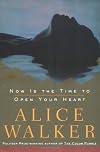
I really loved listening to this. It's about a lot of things, but what I took from it was how great it is to be black, bisexual, and free. On freedom, this most importantly deals with how hard it is to be free and how being free may not best serve you in the moment. Kate and Yolo are both considering giving up certain things like love, companionship, possessions, drugs, foods, and ego. In the story, these things are related to the general concept of bondage, things that keep you from being completely free. Kate and Yolo work on figuring out what they'll let go of and what they'll keep and how to deepen and cherish, make special, the things they're in bondage to.
In format, this book reminded me a lot of Between the Bridge and the River by Craig Ferguson, in that it's a spiritual / psychological journey that feels a little time & place jumpy and has little wisdoms sprinkled throughout. The writing style and subject also kind of reminded me of Kazuo Ishiguro's A Pale View of Hills, in that the writing is very clear and crisp and bare, extremely well-edited, and the protagonist in both is an older woman contemplating her past and her options, someone willing to blow up their current existence to find happiness. Very good stuff. This is definitely my jam when it comes to literary fiction.
In format, this book reminded me a lot of Between the Bridge and the River by Craig Ferguson, in that it's a spiritual / psychological journey that feels a little time & place jumpy and has little wisdoms sprinkled throughout. The writing style and subject also kind of reminded me of Kazuo Ishiguro's A Pale View of Hills, in that the writing is very clear and crisp and bare, extremely well-edited, and the protagonist in both is an older woman contemplating her past and her options, someone willing to blow up their current existence to find happiness. Very good stuff. This is definitely my jam when it comes to literary fiction.
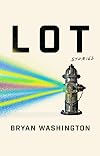
I read Memorial in one sitting and this one took a lot longer, but it was equally as good and maybe more meaningful / relatable to me. Bryan Washington is definitely my favorite contemporary author...for so many reasons.
The obvious...he does an amazing job of writing about place. It's so easy to feel immersed in the communities he writes about. And like many queer authors and authors who write about queer characters, found family is a big theme in the work. Peggy Park and Alief were my favorite stories in the collection because stories where strangers feel like family always hit me especially hard.
I read this shortly after reading the Death of Vivek Oji, another queer work and Lot:Stories felt refreshing in how it handled identity in that it barely did. Racial and sexual identities are just attributes to characters who are dealing with so much more. There is a matter-of-factness to how Washington handles it all. And I thought that was what I loved so much about it.
But, I was also re-reading The Fire Next Time as I read this and Baldwin has a line in it about being unseen. "Black people, mainly, look down or look up but do not look at each other, not at you, and white people, mainly, look away." And I think this idea is what I actually find relatable in Washington's work. He writes characters who aren't fully seen. No one's making a serious effort to pry them open and they don't know how or don't feel comfortable putting it all out there. The black queer characters show more specifically are not exposing their emotional interiors to anybody and they're quick to brush off any weak attempts by others to get in.
If you equate being seen to being loved, which Baldwin does in his essay, then this hold on privacy becomes an obstacle to love. So, every other short story, we follow Nicolás and his family and his journey toward figuring this shit out. And the hopeful ending to the collection really pushed this from like a 4.5 to a 5 star read for me.
Lastly, I have to shout out Bayou as my third favorite story because it's the only satisfying love story in the book, platonic guy friends who're full of forgiveness, hugging it out and fighting it out when necessary. Also CHUPACABRAS!
I borrowed this from the library and am excited to buy a physical copy so I can reread it whenever I want. show less
The obvious...he does an amazing job of writing about place. It's so easy to feel immersed in the communities he writes about. And like many queer authors and authors who write about queer characters, found family is a big theme in the work. Peggy Park and Alief were my favorite stories in the collection because stories where strangers feel like family always hit me especially hard.
I read this shortly after reading the Death of Vivek Oji, another queer work and Lot:Stories felt refreshing in how it handled identity in that it barely did. Racial and sexual identities are just attributes to characters who are dealing with so much more. There is a matter-of-factness to how Washington handles it all. And I thought that was what I loved so much about it.
But, I was also re-reading The Fire Next Time as I read this and Baldwin has a line in it about being unseen. "Black people, mainly, look down or look up but do not look at each other, not at you, and white people, mainly, look away." And I think this idea is what I actually find relatable in Washington's work. He writes characters who aren't fully seen. No one's making a serious effort to pry them open and they don't know how or don't feel comfortable putting it all out there. The black queer characters show more specifically are not exposing their emotional interiors to anybody and they're quick to brush off any weak attempts by others to get in.
If you equate being seen to being loved, which Baldwin does in his essay, then this hold on privacy becomes an obstacle to love. So, every other short story, we follow Nicolás and his family and his journey toward figuring this shit out. And the hopeful ending to the collection really pushed this from like a 4.5 to a 5 star read for me.
Lastly, I have to shout out Bayou as my third favorite story because it's the only satisfying love story in the book, platonic guy friends who're full of forgiveness, hugging it out and fighting it out when necessary. Also CHUPACABRAS!
I borrowed this from the library and am excited to buy a physical copy so I can reread it whenever I want. show less
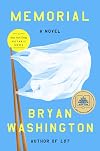
I really loved this book. I read it in one sitting. I started out loving the characters and main relationship it focused on but as layers began to be peeled back on their history, I also started to understand more about why they were falling apart. So heartbreaking, not in a tragic, over the top way, but in a life way. I was debating between a 4 and 5 star rating due to the ending, but the fact that I'm still thinking about it and want to talk about it and all of the themes this book brought up probably means the author made the right choice.
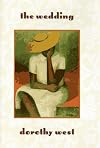
Rounding up from a 4.5. It was a beautiful story but not super impactful or relatable like my 5-star reads. I listened to the audiobook and it was so well done. The writing is beautiful, the themes are interesting, the characters are complex and we get to experience them all within a brief 24 hours or so of their lives. I really enjoyed seeing this looming wedding from all perspectives. The very end may have wrapped things up a little too neatly, but I think that's forgivable because we know there's so much more this family will continue to sort out.
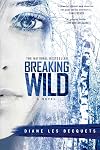
Maybe a 4.5. The ending of survival novels is always so damn satisfying. I listened to this on audiobook, which I wouldn't recommend. I had to to listen to the beginning chapters several times in order to follow the story since you're following two different POVs. And the first two-thirds of the book was a bit of a slog. It was fine but kind of boring. I didn't think it would win me over as much as it did. Things don't really kick off until we're deep into the survival part of the story and secrets about Amy Raye's life start to come out. I really loved her, she was a hot mess, emphasis on the hot. Prue's POV was epically boring, but necessary because through her we got to see how Amy Raye's secrets impacted her loved ones. This is probably the first book I've read about a "bad wife" and I want to read a thousand more. Loving, supportive, unproblematic husbands married to women hellbent on making a mess of their lives...*chefs kiss*.
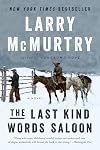
I really loved this. It was an enjoyable listen, but it would have been better read in print, like a short story collection. The chapters are super short and the novel follows a group of characters as they experience different setbacks and move from city to city. So there were a lot of decent points to put the book down and take a break. For entertainment value, it was a solid 4-star listen for me all the way through. But the message and the final chapter/epilogue really pushed it higher for me.
Lonesome Dove was the first western I read a few years ago. And while others may disagree with me, I think Larry McMurtry is especially good at not turning his protagonists into heroes. He doesn't make any real effort to get you to sympathize with his main characters. But he also doesn't turn them into evil villains or make them completely unlikeable. He just tells you the story straight without all the nostalgic sentimentality I always associated with the western genre before reading Lonesome Dove.
In the Last Kind Words Saloon, McMurtry leans into this talent. This book follows a pack of losers. They are drunks, abusers, killers, and entitled racists. You're not so much invested in the success of the characters, but in the plot. You want to know what's gonna happen to them and the book is strategically short so you don't lose interest in finding out. This is about the end of the wild west and throughout it there are two tones/feelings that were prominent for me.
1. Stoicism: show more these men and women experience so many setbacks and inconveniences and for the most part, they just move on with a "welp" and get on with living. On to the next setback.
2. Nihilism: we are experiencing the latter part of these characters lives, after their "glory" days and most of them barely have a pot to piss in and if they do have a pot, it's in an almost intolerable environment. So there's a question of "what was it all for? did any of it matter?"
It's dark, but McMurtry tells the story of these characters with a dash of humor that I found very amusing. As an aspiring stoic, I found the story somewhat inspiring and true to real life. You have to press on, no matter what life throws at you. As for the nihilism bit, which gets pressed hard near the end, I found it both amusing and an opportunity to reflect. I think most people have had nihilistic thoughts before, so many times we feel like nothing we do actually matters in the grand scheme of things and to see an author explore that darkness like this was actually fun. It also feels like the point is made in this book that for these men in particular, the convictions they so tightly held in their youth, those convictions that led them to hurt others and commit acts of violence...didn't matter at all in the end. So that felt like a major point of reflection to take away. Your beliefs and convictions and principles...none of it matters when you're old and senile or dead and buried. The only thing that matters is whatever good you left behind. And if your good, your "glory," includes some sort of harm to others, then it's very likely your legacy will be rewritten by future generations of writers like McMurtry. show less
Lonesome Dove was the first western I read a few years ago. And while others may disagree with me, I think Larry McMurtry is especially good at not turning his protagonists into heroes. He doesn't make any real effort to get you to sympathize with his main characters. But he also doesn't turn them into evil villains or make them completely unlikeable. He just tells you the story straight without all the nostalgic sentimentality I always associated with the western genre before reading Lonesome Dove.
In the Last Kind Words Saloon, McMurtry leans into this talent. This book follows a pack of losers. They are drunks, abusers, killers, and entitled racists. You're not so much invested in the success of the characters, but in the plot. You want to know what's gonna happen to them and the book is strategically short so you don't lose interest in finding out. This is about the end of the wild west and throughout it there are two tones/feelings that were prominent for me.
1. Stoicism: show more these men and women experience so many setbacks and inconveniences and for the most part, they just move on with a "welp" and get on with living. On to the next setback.
2. Nihilism: we are experiencing the latter part of these characters lives, after their "glory" days and most of them barely have a pot to piss in and if they do have a pot, it's in an almost intolerable environment. So there's a question of "what was it all for? did any of it matter?"
It's dark, but McMurtry tells the story of these characters with a dash of humor that I found very amusing. As an aspiring stoic, I found the story somewhat inspiring and true to real life. You have to press on, no matter what life throws at you. As for the nihilism bit, which gets pressed hard near the end, I found it both amusing and an opportunity to reflect. I think most people have had nihilistic thoughts before, so many times we feel like nothing we do actually matters in the grand scheme of things and to see an author explore that darkness like this was actually fun. It also feels like the point is made in this book that for these men in particular, the convictions they so tightly held in their youth, those convictions that led them to hurt others and commit acts of violence...didn't matter at all in the end. So that felt like a major point of reflection to take away. Your beliefs and convictions and principles...none of it matters when you're old and senile or dead and buried. The only thing that matters is whatever good you left behind. And if your good, your "glory," includes some sort of harm to others, then it's very likely your legacy will be rewritten by future generations of writers like McMurtry. show less