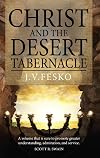
The Introduction to J.V. Fesko's _Christ and the Desert Tabernacle_ immediately resonated with me, as he described an all-too-familiar phenomenon: the attempt to read through the Bible in a year. More specifically, I resonated with how jarring it can be to transition from the narrative of Genesis and Exodus into the detailed, often tedious instructions for building the tabernacle. For many Christians, these chapters are alien and seemingly irrelevant to their faith and practice. Fesko's book is an attempt to help faithful readers see the significance of these chapters, not only for God's Old Testament people, but also for believers today. Though Fesko is a professor of theology at Westminster Seminary, California, he has written a very accessible book. As one blurb on the back cover states, "while the book is geared toward the average layperson, it is not simplistic, but profound." Having its origins in a sermon series on Exodus, the book conveys Fesko's pastoral concerns for Christians to understand and appreciate how the entire Bible works together to proclaim the Gospel of Jesus Christ.
The format of the book is pretty straight-forward: Fesko starts in Exodus 25 and works through the instructions given for the construction of the tabernacle. Each chapter focuses on a different section, such as the Building Materials, the Ark of the Covenant, the Table and Bread of the Presence, etc. For each section, Fesko begins by explaining the details given in the Exodus text, show more indicating the significance of particular items and possible symbolism (e.g., the requirement that a blue curtain be used to separate the most holy place from the rest of the tabernacle is meant to evoke the sky, and more specifically, the recurring motif of God's throne being in heaven). He then turns to the New Testament to interpret the tabernacle construction in light of the person and work of Christ (e.g., just as the Old Testament tabernacle represents God's presence among his people, John 1 uses that same word "tabernacle" to describe the incarnation of the Son of God, who took on flesh to dwell among his people). Finally, in each section, Fesko draws practical applications for Christian believers (e.g., the Israelites were to donate the building supplies for the tabernacle voluntarily, out of a generous heart -- their involvement in building the tabernacle was never described as repayment for God delivering them from Egypt. In the same way, Christians should respond to the grace we have received in Christ by giving generously to the building of his church, not out of obligation but from a desire to see the Gospel spread into all the world.) Having experience as both a professor and a pastor, Fesko is able to exegete the Old Testament text, interpret its theological significance in light of the New Testament, and then apply it to the Christian life in a very relevant and meaningful way.
The book is relatively short (133 pages), so it could be a quick read. But there's plenty to warrant pondering over. Each chapter strikes a good balance between content and application, and I could easily see it being used for small group Bible study, as well as devotional reading.
Overall, Christ and the Desert Tabernacle is recommended for anyone interested in learning not only about the Old Testament tabernacle, but also about how it fits into God's overall plan of redemption through Christ.
(Disclaimer: I received a copy of the book in exchange for writing a review. I was and am under no obligation to provide a favorable review.) show less
The format of the book is pretty straight-forward: Fesko starts in Exodus 25 and works through the instructions given for the construction of the tabernacle. Each chapter focuses on a different section, such as the Building Materials, the Ark of the Covenant, the Table and Bread of the Presence, etc. For each section, Fesko begins by explaining the details given in the Exodus text, show more indicating the significance of particular items and possible symbolism (e.g., the requirement that a blue curtain be used to separate the most holy place from the rest of the tabernacle is meant to evoke the sky, and more specifically, the recurring motif of God's throne being in heaven). He then turns to the New Testament to interpret the tabernacle construction in light of the person and work of Christ (e.g., just as the Old Testament tabernacle represents God's presence among his people, John 1 uses that same word "tabernacle" to describe the incarnation of the Son of God, who took on flesh to dwell among his people). Finally, in each section, Fesko draws practical applications for Christian believers (e.g., the Israelites were to donate the building supplies for the tabernacle voluntarily, out of a generous heart -- their involvement in building the tabernacle was never described as repayment for God delivering them from Egypt. In the same way, Christians should respond to the grace we have received in Christ by giving generously to the building of his church, not out of obligation but from a desire to see the Gospel spread into all the world.) Having experience as both a professor and a pastor, Fesko is able to exegete the Old Testament text, interpret its theological significance in light of the New Testament, and then apply it to the Christian life in a very relevant and meaningful way.
The book is relatively short (133 pages), so it could be a quick read. But there's plenty to warrant pondering over. Each chapter strikes a good balance between content and application, and I could easily see it being used for small group Bible study, as well as devotional reading.
Overall, Christ and the Desert Tabernacle is recommended for anyone interested in learning not only about the Old Testament tabernacle, but also about how it fits into God's overall plan of redemption through Christ.
(Disclaimer: I received a copy of the book in exchange for writing a review. I was and am under no obligation to provide a favorable review.) show less
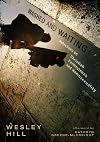
After reading several reviews, I was very interested to pick up a copy of Washed and Waiting: Reflections on Christian Faithfulness and Homosexuality by Wesley Hill. The topic of homosexuality is certainly a relevant one in our culture, but I was especially intrigued by Hill’s struggle with being a “gay Christian.” Usually, those who use such terminology view homosexuality as perfectly compatible with Christian faith and practice. But as an evangelical, Hill affirms the biblical prohibition against homosexual practices. Yet, despite this affirmation, he still struggles with same-sex attraction. As such, he has concluded that the only biblically faithful course of action for a “gay Christian” is to remain celibate.
Washed and Waiting is largely memoir, and as such is both readable and engaging. Hill does devote some space defending the traditional Christian prohibition against homosexuality, especially against recent claims to the contrary. But the book largely explores Hill’s own challenge to be a faithful Christian despite his own inclinations. Especially poignant are his descriptions of his own fears about telling fellow Christians about his struggles. I think too often, evangelical Christians think of homosexuality as a problem that exists outside the church: that is, if homosexuals would just come to Jesus, God would remove their same-sex attractions and it would cease to be an issue. And as Hill notes, sometimes this does happen. But other times, like in show more his own case, he has not yet been delivered from those sinful desires. I think many Christians would benefit from reading this book to get a better perspective on fellow Christians - possibly within their own congregations - who live under the oppressive weight of knowing the reality of their own sin yet finding no relief; worse yet, they feel that the stigma of their sin is too great to share their burden with fellow believers.
Despite its specific focus, I felt Hill’s book spoke to many broader issues as well. All Christians struggle with the persistence of sin in their own lives, and parts of the book could easily have substituted a host of other sins for homosexuality. Hill does a good job explaining how Christians have been “washed” from guilt for their sins by Jesus’ sacrifice, and yet they still live a life “waiting” for God to completely remove sin from their lives. It is in this interim period that God’s strength is made manifest in our weakness. The book also had some great reflections on Christians and loneliness, and how we find our fulfillment ultimately in Christ (with assistance from His Body). While Hill’s own experience of profound loneliness is in many ways linked to his life as a celibate gay Christian, his reflections on the matter speak to a more fundamental need for acceptance common to all people.
All in all, Washed and Waiting is well worth the read. It’s actually a short book, but provides much food for thought, not only on the specific questions of homosexuality and Christian faithfulness, but also on the larger issue of how Christ’s people can best glorify Him in the midst of a fallen world.
(Disclaimer: I received a free copy of the book in exchange for writing a review, with no obligation to provide a positive assessment.) show less
Washed and Waiting is largely memoir, and as such is both readable and engaging. Hill does devote some space defending the traditional Christian prohibition against homosexuality, especially against recent claims to the contrary. But the book largely explores Hill’s own challenge to be a faithful Christian despite his own inclinations. Especially poignant are his descriptions of his own fears about telling fellow Christians about his struggles. I think too often, evangelical Christians think of homosexuality as a problem that exists outside the church: that is, if homosexuals would just come to Jesus, God would remove their same-sex attractions and it would cease to be an issue. And as Hill notes, sometimes this does happen. But other times, like in show more his own case, he has not yet been delivered from those sinful desires. I think many Christians would benefit from reading this book to get a better perspective on fellow Christians - possibly within their own congregations - who live under the oppressive weight of knowing the reality of their own sin yet finding no relief; worse yet, they feel that the stigma of their sin is too great to share their burden with fellow believers.
Despite its specific focus, I felt Hill’s book spoke to many broader issues as well. All Christians struggle with the persistence of sin in their own lives, and parts of the book could easily have substituted a host of other sins for homosexuality. Hill does a good job explaining how Christians have been “washed” from guilt for their sins by Jesus’ sacrifice, and yet they still live a life “waiting” for God to completely remove sin from their lives. It is in this interim period that God’s strength is made manifest in our weakness. The book also had some great reflections on Christians and loneliness, and how we find our fulfillment ultimately in Christ (with assistance from His Body). While Hill’s own experience of profound loneliness is in many ways linked to his life as a celibate gay Christian, his reflections on the matter speak to a more fundamental need for acceptance common to all people.
All in all, Washed and Waiting is well worth the read. It’s actually a short book, but provides much food for thought, not only on the specific questions of homosexuality and Christian faithfulness, but also on the larger issue of how Christ’s people can best glorify Him in the midst of a fallen world.
(Disclaimer: I received a free copy of the book in exchange for writing a review, with no obligation to provide a positive assessment.) show less
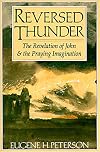
Eugene Peterson's short work on the Apocalypse was both interesting and enjoyable. It is not an exegetical commentary, nor does it address many of the usual questions that stem from reading Revelation (i.e., what's the deal with "666," what about the Rapture, what is the nature of the millennium, etc). Rather, Peterson provides a series of meditations on the "last words" that John gives on topics including worship, the church, evil, judgment, salvation and heaven, with particular emphasis on the pastoral implications that the vision has for each. I was particularly impressed by Peterson's ability to tie the Revelation's various themes and symbols back into the rest of the canon. Even those not interested in the minutiae of eschatology will likely find this book edifying and stimulating.