
In the play, The Tempest, by William Shakespeare, there is a strong theme of anti-feminism. Usually in feministic novels, the woman has an important role, and she is powerful and dominating. She takes the lead when usually the man would. An example of a feministic novel would be The Lover, where the main character, the girl, shows dominance and power in her relationship with the Chinese man. She is the controller, and he follows her and obeys her when she tells him to do something. Also, prior to meeting the Chinese man, the girl was a virgin, just as Miranda in the Tempest is. Therefore, they were both equally innocent at one point. But once she meets the Chinese man, she wants to assert her dominance over him and give the impression to him that she is experienced and powerful.
Unlike the Lover, the Tempest shows almost the complete opposite of this. The female in the novel, Miranda is an innocent, sheltered virgin who has been kept away from men her whole life by her father Prospero. Is goal was to preserve her innocence and virginity for as long as he could, but now he wants to arrange a marriage between her and a man named Ferdinand, a noble heir to the throne of Naples. The anti-feminism is blatant in the Tempest because Miranda is presented as innocent and weak, while Ferdinand, the male is strong, and a noble prince. The male is the dominant sex in this play, proving that feminism is non-existent.
This novel was not really an interesting one to read, mostly show more because there was not really that much suspense or action. But it was a nice change to see the opposition of feminism, because we have been reading a lot about feminism and feministic novels lately. show less
Unlike the Lover, the Tempest shows almost the complete opposite of this. The female in the novel, Miranda is an innocent, sheltered virgin who has been kept away from men her whole life by her father Prospero. Is goal was to preserve her innocence and virginity for as long as he could, but now he wants to arrange a marriage between her and a man named Ferdinand, a noble heir to the throne of Naples. The anti-feminism is blatant in the Tempest because Miranda is presented as innocent and weak, while Ferdinand, the male is strong, and a noble prince. The male is the dominant sex in this play, proving that feminism is non-existent.
This novel was not really an interesting one to read, mostly show more because there was not really that much suspense or action. But it was a nice change to see the opposition of feminism, because we have been reading a lot about feminism and feministic novels lately. show less

In the short novel, “The Lover” by Marguerite Duras, a main theme of the story is the idea and illustration of feminism throughout the text. I strongly believe that Duras is a feminist writer, because it is blatantly obvious in this novel. Duras does not only follow the true definition of feminism, she goes beyond it, and makes the female the controller and the strong, powerful sex. Feminism was a movement a while ago, where women sought to gain equal rights as that of males. But in this novel, Duras goes beyond this definition, by not only making the woman the dominant sex, but by also making the male weak, and powerless.
One example of the blatant feminism occurs when the girl has sexual intercourse with the Chinese man for the first time. With regards to the Chinese man, the narrator says, “The skin is sumptuously soft. The body. The body is thin, lacking in strength, in muscle, he may have been ill, may be convalescent, he’s hairless, nothing masculine about him but his sex, he’s weak, probably a helpless prey to insult, vulnerable” (Duras 38). The pure description of the Chinese man gives the reader a pretty good idea of what he looks like, and this description is meant to belittle him and make him look powerless and soft. The narrator also talks a little bit later about how the man weeps, and moans during intercourse, which just further establishes the woman as the boss in this novel. Duras is applying female traits and actions to men, such as the show more Chinese man’s hairless body, his lack of masculinity, and his moaning. Overall, the man is a symbol of weakness and lack of power in this novel, further proving the fact that it is written by a feminist writer.
Another example of the feminism in the novel comes about at another time when the girl and the Chinese man are engaging in sexual relations. She proves her dominance sexually when she says she “draws him to her and starts to undress him. With her eyes shut. Slowly. He makes as if to help her. She tells him to keep still. Let me do it. She wants to do it. And she does. Undresses him”. The Chinese man just lets the girl take control of him, even after he tries to do it himself. He does not have the power to take control of the situation like a man usually would when it comes to sex, he is weak, and lets a girl twelve years younger than him take control. The feminism keeps popping up in the novel like in situations like these. To me, it seems that Duras is trying to shove the feminism down the reader’s throat. She is so persistent with it in her writing, that it seems like she is trying to change the reader’s mind and convert their beliefs to that of feminism.
Altogether, I thought the novel was mediocre. What I did not enjoy about it was how at the beginning, the story would jump around from paragraph to paragraph, and you could never really get comfortable reading it, because the setting and time period was always changing, and it was very difficult to read without having to stop and think. Even though it was hard to follow the story because it was changing so often, the pure spontaneity of it made it very interesting. But as the story went on, it became easier to follow, and it was rather interesting. I had a lot of trouble putting the book down while I was reading it. Furthermore, I recommend it to someone looking for a short read, and someone who believes in feminism, or someone who wants to start believing in it. show less
One example of the blatant feminism occurs when the girl has sexual intercourse with the Chinese man for the first time. With regards to the Chinese man, the narrator says, “The skin is sumptuously soft. The body. The body is thin, lacking in strength, in muscle, he may have been ill, may be convalescent, he’s hairless, nothing masculine about him but his sex, he’s weak, probably a helpless prey to insult, vulnerable” (Duras 38). The pure description of the Chinese man gives the reader a pretty good idea of what he looks like, and this description is meant to belittle him and make him look powerless and soft. The narrator also talks a little bit later about how the man weeps, and moans during intercourse, which just further establishes the woman as the boss in this novel. Duras is applying female traits and actions to men, such as the show more Chinese man’s hairless body, his lack of masculinity, and his moaning. Overall, the man is a symbol of weakness and lack of power in this novel, further proving the fact that it is written by a feminist writer.
Another example of the feminism in the novel comes about at another time when the girl and the Chinese man are engaging in sexual relations. She proves her dominance sexually when she says she “draws him to her and starts to undress him. With her eyes shut. Slowly. He makes as if to help her. She tells him to keep still. Let me do it. She wants to do it. And she does. Undresses him”. The Chinese man just lets the girl take control of him, even after he tries to do it himself. He does not have the power to take control of the situation like a man usually would when it comes to sex, he is weak, and lets a girl twelve years younger than him take control. The feminism keeps popping up in the novel like in situations like these. To me, it seems that Duras is trying to shove the feminism down the reader’s throat. She is so persistent with it in her writing, that it seems like she is trying to change the reader’s mind and convert their beliefs to that of feminism.
Altogether, I thought the novel was mediocre. What I did not enjoy about it was how at the beginning, the story would jump around from paragraph to paragraph, and you could never really get comfortable reading it, because the setting and time period was always changing, and it was very difficult to read without having to stop and think. Even though it was hard to follow the story because it was changing so often, the pure spontaneity of it made it very interesting. But as the story went on, it became easier to follow, and it was rather interesting. I had a lot of trouble putting the book down while I was reading it. Furthermore, I recommend it to someone looking for a short read, and someone who believes in feminism, or someone who wants to start believing in it. show less
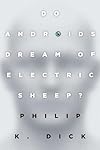
In the novel “Do Androids Dream of Electric Sheep?” by Philip K. Dick, one of the main themes is false reality, and the difficulty of distinction between real and fake. One of the first examples of this is of the animals that people own. Animals are seen as high status in society, so if you own a certain expensive one, then you are viewed as wealthy and powerful. But on the other hand, if you cannot afford one of these high-class animals, then there are fake animals that are almost the exact same as the real one. The only difference is that the fake animals are robots, and they are susceptible to breaking down. The main character Rick Deckhard owns a fake sheep, but he is very embarrassed of it, because it is not a rich man’s animal. One of his main goals in the novel is to save up the money to buy an expensive animal such as an ostrich or an owl.
Another one of the difficult distinctions between real and fake is the humans and the androids. What made this novel interesting is that the humans and androids were two different species, but they were very similar in their robotic ways. One example of how they are similar is the mood organ. With this, the humans can dial a certain combination of numbers, and this will change their mood to whatever setting they dialed. This struck me as quite inhuman when I read it because emotions are one of the most real things about humans. Everyone has different emotions, and people rarely feel the same as each other and that is what show more makes us who we are and it is what makes us different from the rest of the world. That is why I thought that humans and androids were not that different, because they are so difficult to tell apart.
One situation that involved the human and android interaction was the police station that Deckhard was taken to. It turned out that this police station was run by androids that had made a trip from Mars to earth years ago, and they have been running the police station without the city knowing because they are only in contact with each other. Deckhard discovers this, but there is also a man that works there named Phil Resch who is also a human. He did not know that Officer Garland and the other officers were androids, and he had been working there for a while. The only true way to tell the difference between androids and humans is the Voigt-Kampff test, which not many people could administer, so it would be quite difficult to distinguish a human from an android because they are almost exactly the same except for on the inside.
The false reality in this novel is very interesting, because it is almost impossible to distinguish the real from the fake. Whether it is the animals or the humans, you never know what is real or not, and that is why this society that they live in is dreadful. The mood displayed throughout the whole book is a bleak, boring world, where people, be they androids or humans, go through normal routines and nothing exciting ever happens. That is why I think the distinction between the two species was so difficult to decipher in the book, because there is really no action, or entertainment to catch your eye. You just read about different characters, and you really don’t care if they’re a human or android because you are just reading. Furthermore, I think that this book would have been a lot more interesting if action would have taken place, but I still would recommend it to someone, because it is very good science fiction book, with a good message within it. show less
Another one of the difficult distinctions between real and fake is the humans and the androids. What made this novel interesting is that the humans and androids were two different species, but they were very similar in their robotic ways. One example of how they are similar is the mood organ. With this, the humans can dial a certain combination of numbers, and this will change their mood to whatever setting they dialed. This struck me as quite inhuman when I read it because emotions are one of the most real things about humans. Everyone has different emotions, and people rarely feel the same as each other and that is what show more makes us who we are and it is what makes us different from the rest of the world. That is why I thought that humans and androids were not that different, because they are so difficult to tell apart.
One situation that involved the human and android interaction was the police station that Deckhard was taken to. It turned out that this police station was run by androids that had made a trip from Mars to earth years ago, and they have been running the police station without the city knowing because they are only in contact with each other. Deckhard discovers this, but there is also a man that works there named Phil Resch who is also a human. He did not know that Officer Garland and the other officers were androids, and he had been working there for a while. The only true way to tell the difference between androids and humans is the Voigt-Kampff test, which not many people could administer, so it would be quite difficult to distinguish a human from an android because they are almost exactly the same except for on the inside.
The false reality in this novel is very interesting, because it is almost impossible to distinguish the real from the fake. Whether it is the animals or the humans, you never know what is real or not, and that is why this society that they live in is dreadful. The mood displayed throughout the whole book is a bleak, boring world, where people, be they androids or humans, go through normal routines and nothing exciting ever happens. That is why I think the distinction between the two species was so difficult to decipher in the book, because there is really no action, or entertainment to catch your eye. You just read about different characters, and you really don’t care if they’re a human or android because you are just reading. Furthermore, I think that this book would have been a lot more interesting if action would have taken place, but I still would recommend it to someone, because it is very good science fiction book, with a good message within it. show less
The story, “On the Road”, by Langston Hughes illustrates the hatred and discrimination of African Americans during the time of the Great Depression. Hughes does a brilliant job of bringing the white man’s hatred to life through the text. Many symbols in the story display obscene racism against the main character, the Sergeant, who is an African American man. One of the symbols is when the Sergeant is trying to get in the church to sleep, and when he breaks down the door, the police come and beat him. What is interesting, is after this occurs, the church falls to the ground. “The big stone front of the church fell down, the walls and the rafters, the crucifix and the Christ” (Hughes). This is ironic because after the Sergeant is beaten, it seems that God brings down the church on all the police, and the people who were discriminating against him. The Sergeant was tortured, and then brought to salvation, just how Jesus was tortured, and brought the human race to salvation. It is the opposite of the story with Jesus, but it is important because after he is beaten, God brings the church down on the people except for him. He is saved by God, because God sees all as equal, and discrimination and torture against others is unacceptable.
Furthermore, I really enjoyed this story because of how the power of God is illustrated, and also the reality of the hatred and racism of the white men.
Furthermore, I really enjoyed this story because of how the power of God is illustrated, and also the reality of the hatred and racism of the white men.

In the short story, “The Gospel According to Mark”, by Jorge Luis Borges, there are many symbols that are similar to Biblical stories. The symbol that I am going to analyze appears at the end of the story when the naked girl comes to Baltazar and gets into bed with him. This symbol represents the temptation as in the story of Adam and Eve in the Bible. A naked woman came into his bed with him, and all he did was lay beside her, even though the seduction of a naked girl tempted him to sin. After the girl leaves, Baltazar says to himself that he will not speak of the encounter. Upon returning home, that night there is a knock on the door, and standing there are three men who had been following him. He saw the men, “Bowing their knees to the stone pavement, they asked his blessing. Then they mocked at him, spat on him and shoved him toward the part of the house” (Borges 187). This situation represents the trials of Jesus’s life, where many people would ask for his blessing and healing power. But it also illustrates the hatred against Jesus that led to his death at the end of his life. This story shows the struggle of Baltazar who represents Jesus at the end of the story. Although he did not do any wrong, and he lived his life only to help, he was crucified on the cross.
Ralph Ellison's "Battle Royal; or, The Invisible Man": A Study Guide from Gale's "Short Stories for Students" (Volume 11, Chapter 2) by Gale Cengage Learning
This piece, “Battle Royal”, by Ralph Ellison, allows the reader to relate to and see what kind of struggles the narrator is going through. One of the struggles and symbols is when the narrator is blindfolded and put in a ring with nine other men, where he is forced to fight against all of them. He is thrown into a situation blindly, and he in order to get out of it, he must win, or finish the fight. The reader can relate to this because many of us are thrown into situations that we have never experienced before. Things like college, where you are put into a place on your own, and you are expected to succeed and finish those four years, even though you have never done anything like it before. That is why I really enjoyed reading this novel. I have never been through the many struggles that the narrator has had to experience, but the way it is written, I can relate the story to my own life, and the experiences that I have had. I believe that the author’s intention was to write this piece in a way that a broad spectrum of people could relate to and understand the story in their own way, by comparing it to their own life. I strongly recommend this piece, because the symbols are straightforward, and easily related to one’s own life.
Ernest Hemingway's "Hills Like White Elephants": A Study Guide from Gale's "Short Stories for Students" (Volume 06, Chapter 8) by Tim Akers
In the short story, “Hills like White Elephants” by Ernest Hemingway, there are many significant symbols that make the story so interesting. One of the first symbols are the white hills. The girl sees these hills as a mother’s breasts which imply fertility and birth because she might be pregnant. But over the beautiful white hills, there is a barren desert, and this is the main focus of the man. He sees her as the barren desert, meaning that she is not pregnant and infertile. Another interesting art of this story is how Hemingway calls the characters “the man” and “the girl”. Granted, they are of those sexes, but why not call them “the man” and “the woman”, or “the boy” and the “the girl”? This illustrates Hemingway’s true sexism and how he does not see women as equals to men. The story also makes you think at the end when the girl says, “I feel fine. There’s nothing wrong with me, I feel fine” (Hemingway 573). This makes you wonder if the girl is really pregnant, or if she is fine because she is not. I believe she is pregnant because it seemed that is what was going to make her happy, but the story leaves you thinking, which is really why I enjoyed reading it.

In the short story “Cathedral” by Raymomd Carver, there are many deeper meanings and lessons within the actual story. The narrator, the husband, is a very jealous and close-minded person. He seeks attention from his wife, and when she gives it to Robert, he gets angry. He is also does not work, and every night he drinks and smokes dope until he falls asleep. Also, every night he does not go to bed with his wife, and he calls the bedroom his “wifes room” (Carver 284). This implies that he spends minimal time in the room with her, or just in the room itself. Many things that he says also shows how prejudice and ignorant he truly is. When he first hears of the blind man coming over, he asks if he should take him bowling. This statement illustrates how the husband does not know the first thing about how to entertain a guest and how prejudice he is. Even though he is so close-minded, once he starts spending time with Robert one on one, the reader starts to see that the husband is lightening up and getting more comfortable with Robert. He is being a welcoming host. The last scene is the husband drawing a picture of a cathedral so Robert can get an idea of what they are like, and he tells the husband to close his eyes while he guides his drawing hand. When Robert tells the husband to open his eyes and take a look, he keeps his eyes closed but says, “It’s really something” (285). He has accepted Robert as his friend and puts his prejudice ways behind him and puts show more himself at Robert’s level. This action showed that the husband could be caring and equal to someone different than him. show less