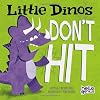
The book alternates pages of showing examples of appropriate and inappropriate behavior. There are very few words in the story so the reader could easily add more words to the story if it would be beneficial for the students. For example, there is a page where Dino is helping his sister ride bike and the teacher could say, "Dino is teaching his sister to ride bike. He is being a good helper." This book was perfect for my students as it was not too wordy for them.
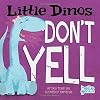
The book has very simple descriptions and pictures that match what is said in the story. It starts out with examples of what the dinosaurs shouldn't do. It then goes to show things the dinosaurs can do: yelling outside, being quiet inside, etc. My students need to know examples and nonexamples in order to understand the expectations.
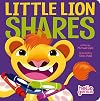
Little lion does not want to share his things. He does need to learn to do this in order to share something with his mother. The pictures and words are appropriate for my students and focuses on the skills many students need to work on.
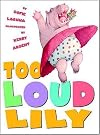
This book is about a hippo named Lily. She is frequently told she is too loud. Lily ends up in the school play where her loudness turns out to be appropriate. Lily continued to do what she had to despited people telling her she is too loud. they were always telling her to be quiet. This book is great for kindergarteners as the vocaulary is simple and the pictures are appropriate for the age group.
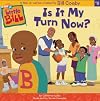
In this story, Bill has to learn to wait for his turn to get attention from something he does. He wants to watch television, but has to go to his brother's chess match. He comes home upset and feels nobody is paying attention to him, not even his hamster. Bill then gets a part in his school play as a walrus, but does not like his part. He goes to the zoo to learn more about walruses and ends up enjoying his part in the play. Bill learned that sometimes he will get attention from his family for his events, but also has to be happy for others to get attention. This is something my students need to work on as they do not understand the idea of having to wait for things.
The Social Skills Picture Book Teaching play, emotion, and communication to children with autism by Jed Baker
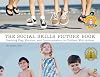
This book is a great resource for teachers. It addresses a variety of skills individuals with autism likely need to work on and can be easily adapted/modified to meet the needs of all students. The text is straight to the point so students do not become distracted with details that are not relevant to the skills.
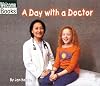
This book clearly outlined some things that may happen when a child visits the doctor. The pictures were also very realistic and there were not many things distracting from the main point of each page. The books that typically have the amount of words that are appropriate for my students tend to have so much going on that my students become distracted or overwhelmed. It would also be good to give to my parents as my students often have several behaviors when they visit the doctor, dentist, etc.
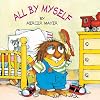
I like this book a lot because the words and pictures are straight to the point. For example, the author writes, "I can put on my socks and tie my shoes" and shows Little Critter doing just that. This is exactly what my students need in their daly routines as they become off task when things are too wordy or too much for them to comprehend. Of couse we can reduce the wording on our own, but it is nice to have a book you don't have to do that for.
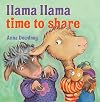
I like this story because it starts out showing what sharing does not look like (the neighbor is playing with llama's toys so he chooses to sit by himself in the chair). Good play skills are also shown and described at the beginning of the story. Llama later joins in and helps the neighbor do several different things (build a castle with blocks, make a moat). Llama then gets upset because his toy llama is taken from him and he does not want to share it. His toy ends up having its arm ripped off, but his mom sews it back up. Llama got upset with the neighbor at first, but their parents tell them they need to find other things to do. The book ends with them playing together and that they want to do it again someday.
This story models several things: playing appropriately, different things you can add to play (making a moat for the castle), and how to get along with others. This would be appropriate for my students even if I just describe what is happening in the picture.
This story models several things: playing appropriately, different things you can add to play (making a moat for the castle), and how to get along with others. This would be appropriate for my students even if I just describe what is happening in the picture.
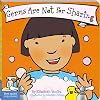
I really liked this book as it touches on hand washing, what to do when you sneeze, after you flush the toilet, etc. For example, a student in the book sneezed and the author pointed out two things the student can do: ask for a kleenex or get one yourself. Processes are also modeled such as washing your hands. It shows children getting soap and using water to wash off soap. It also has good repetition as "germs are not for sharing" is repeated throughout the story. The back of the book has tips for parents and caregivers regarding how to prevent spreading germs as much as possible.
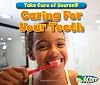
I recently read this book to my students and it was very appropriate for their needs. They are still learning to brush their teeth on their own and the author did a good job of pointing out the reasons to brush your teeth. The steps for brushing your teeth are also included in the story with a picture of a child doing that step. The text is also very minimal, but to the point. This is beneficial for my students, but if teachers have higher students, they can add in more details if they would like. There is also a comprehension question at the end for students to discuss and answer.
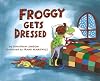
Summary:This book shows a little frog getting ready to go play in the snow, but he keeps forgetting to put on certain clothing items. For example, he puts his boots on and goes outside without any snowpants. He mixes up the order more than one time and mom has to remind him that he forgot something. The author shows the children examples and nonexamples of how to get ready correctly as Froggy does eventually get dressed appropriately toward the end of the story.
Reflection: The author makes it clear about the correct process for getting ready to play in the snow. The pictures clearly indicate what Froggy is missing when he forgets something to put on. The story is also easy to ask questions about (what is froggy missing, what did he forget, etc). To deepen the purpose of reading the book to my current students, I could point out what Froggy did right or wrong with getting dressed. I could also have pictures of winter clothes to use at the end of the story to demonstrate how to put them on in the correct order to retell the part of the story where Froggy gets dressed correctly. I want the part where he gets it right to be the last thing my students see and hear.
Reflection: The author makes it clear about the correct process for getting ready to play in the snow. The pictures clearly indicate what Froggy is missing when he forgets something to put on. The story is also easy to ask questions about (what is froggy missing, what did he forget, etc). To deepen the purpose of reading the book to my current students, I could point out what Froggy did right or wrong with getting dressed. I could also have pictures of winter clothes to use at the end of the story to demonstrate how to put them on in the correct order to retell the part of the story where Froggy gets dressed correctly. I want the part where he gets it right to be the last thing my students see and hear.