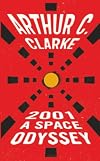
2001: A Space Odyssey is one of the most universally loved science-fiction books out there, and for that reason, I had to pick it up and give it a read. I can see why it's loved, but it's not without it's flaws (though minor they may be).The plot is both unique and interesting and Clarke really ropes you in during the first few chapters that set the stage for what is to come. I did, however, think the story was a bit slow in developing at times - Clarke seems to get distracted by the scenery in a few places and, at least for me, I found myself ready to move on and get back to the story before Clarke himself seemed to be.Other than that minor complaint, the writing is quite good. Clarke doesn't really let you get emotionally involved in the main characters, but somehow that seems to work - you're roped in more by the actual story itself which is unique, gripping and at times a bit frightening.
Great book full of short, practical, sometimes controversial, essays about how to successfully run a business.
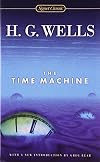
Another one of those classic books that I had somehow inexplicably made it this long without reading, The Time Machine was well worth the wait.What I enjoyed about the book, as is the case with many good science-fiction books, is how Wells manages to explore much deeper, philosophical issues over the course of an entertaining story. For example, Wells critiques the hierarchy of society by seeing two distinct classes eventually evolve into two distinct species.What's beautiful about his critique is that he manages to leave the reader to form their own opinion. He is equally harsh on the Eloi as he is on the Morlocks in pointedly remarking about each species lack of humanity, so you don't get the impression of favoritism towards one race versus the other (or one class versus the other).A quick, enjoyable read that has aged very well.
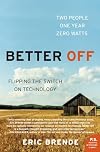
In "Better Off" the author explores what life would be like without all of the modern technological advancements we now take for granted. For 18 months, he and his newly wed wife live among the Mennonites, a group similar to the amish, but that utilize technology in their lives even less.The result of his 18 month experiment is this very engaging book that is difficult to put down. It serves both as an interesting glimpse into Mennonite culture and as a convincing, even persuasive, review of life without technology."Better Off" may not convince you that you can or should live your life with less technology, but it will certainly make you contemplate the possibility.
A fascinating introduction to sociology. While I can't say that I agree with every conclusion the author came too, I can say that the book has many moments that will make you stop and think about things from a perspective you've never considered. Ultimately, that's the point of the book - to open the readers mind to thinking about daily interactions in a new light based on the belief that every thought and every action is fundamentally related. Recommended.
Natural-Born Cyborgs offers an interesting perspective on the debate surrounding the integration of technology into everyday life. While Clark acknowledges some of the concerns surround posthumanism, he maintains a generally optimistic view of humanity's ability to successfully integrate technology into our lives, and of the benefits of doing so.His argument revolves around his belief that humans have always incorporated non-biological tools into their lives in order to counteract their limitations - essentially that we are natural cyborgs.It's certainly an interesting discussion, and many of his arguments are very convincing. While I don't share his unadultered optimism (yes the plasticity of our brains allow us to change and adapt, but not all change is good) I do think he's right in talking down the dooms-day stance taken by so many people. Worth a read, even if you disagree, since it will give you plenty to contemplate.
Ender's Game is my early pick for favorite book of the year. The story is captivating and Card tells it very well.In it you see a young boy (only 6 at the start of the book) progress through Battle School - "playing" grueling war games against computers and other children. You feel real sympathy as you watch this young boy put in difficult situation after difficult situation by his commanding officers - who are out to push him to his absolute limits in order to find out what he is capable of.I put this book right up in the same category as stories like the Lord of the Rings and the Dark Tower series - stories that captivate me from start to finish and truly cause me to lose track of time when I'm reading them.
The Search: How Google and Its Rivals Rewrote the Rules of Business and Transformed Our Culture by John Battelle
The Search is a good, but not great, book detailing Google's ascension to the top of the search world. It's interesting to hear the background story of how Google came about, and some of the other companies whose efforts paved the way.My only complaints with the book are that the author appears to be rather biased in favor of Google and that now, a few years after publication, some of the insights are a bit dated (though to be fair, that is to be expected with a book about such a fast-moving company in a fast-paced industry).Battelle only briefly touches on some of the potential imperfections of Google, but you can almost feel that he's forcing himself to put those brief sections in place simply to appear less biased. Not that I am opposed to Google, in fact, I have a lot of respect for them, but I would've enjoyed a more objective look.
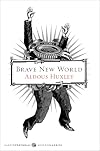
Brave New World, is perhaps at once both more realistic and slightly less vivid than Orwell's classic 1984. In Huxley's novel, the dystopian society he discusses is one in which everyone is happy and behaving outside the norm is strongly discouraged ("Unorthodoxy threatens more than the life of a mere individual; it strikes at Society itself"). People are happy, however, because of their ignorance and complacency. The lessons are haunting, disturbing and relevant - it doesn't take much imagination to see how this "brave new world" is very similar in many ways to todays entertainment-based society. As with many classic dystopian novels, there are some truly disturbing scenes (the final pages of this book are particularly powerful) that will stick with you well after the book is finished.Thoroughly thought-provoking and highly recommended.
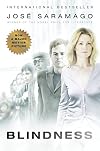
I went back and forth on whether to give this book 3 or 4 stars. On the one hand, it's not a particularly enjoyable book. In fact - it's ultimately very disturbing to watch society crumble and humans turn into little more than helpless, wild animals, and the author doesn't pull any punches.On the other hand, it sure does make you think about the way people treat each other, the way we allow ourselves to be swayed by our senses, and the effect that mass hysteria can have on a group of individuals. Plus, Saramago writes the book in a manner that allows us to relate, at least on some level, with the confusion the people in the story are going through. His run on sentences with limited punctuation and the lack of character names make it difficult at times to tell who is saying or doing what, and while initially that annoyed me, in the end I found it to be an interesting way of making the reader feel a small bit of that confusion and frustration.Ultimately I decided that the book was just too thought provoking for a 3 star rating. That being said, I don't recommend it to people who are easily upset by what they read. As I said before, Saramago doesn't hold back and really delivers some graphic and upsetting scenery.
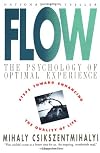
Flow was one of those books that kept being recommended to me, but I just never got around to reading. Now that I have, it's pretty easy to see why it's been brought up so many times. It's a very well written look at the factors involved in creating the "flow" effect, and the implications are widespread.Mihaly manages to write articulately and engagingly (for the most part - the latter parts of the book didn't hold my attention quite as strongly) about this topic - and he explores it in depth. While the phrase "optimal experience" may give the impression that this is another "self-help" book, it's a far deeper and more scientific exploration of the topic than books of that variety tend to be.
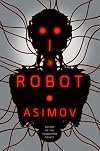
I'm not a big fan of story collections, but I'd heard so many good things about I, Robot so I decided to give it a go - and I was quite happy that I did.Asimov does a great job of stringing all the stories together with the premise that the stories are actually being told by an aging robot psychologist in an interview. It's incredible the range of stories Asimov is able to write based around the 3 simple rules he lays down for robotics.I thoroughly enjoyed it and fully intend on continuing on with the rest of the Robot series.
Disclaimer: I'm a pretty big fan of Gladwell. Prior to "What the Dog Saw" I had read each of his books (Outliers, Blink and Tipping Point) and enjoyed each of them. While I may not always agree with his conclusions, I consider him to be one of those rare authors whose writing is consistently truly thought provoking.WTDS is a collection of his essays from the New Yorker. The first third of the book, in my opinion, was borderline ethnography which I only have a marginal interest in. While the writing was excellent, those stories were not as engaging to me as his other books had been. The last two sections of the book, however, more than make up for it. Those are the kinds of essays you'd expect given his past body of work - well written, engaging articles that cause you to reconsider your preconceptions on a topic.If you like Gladwell, you'll probably enjoy the book. If you haven't liked his prior books, I'd still recommend giving this a try and seeing if you enjoy him in more "bite-size" chunks.
An important and valuable read, Postman's book was published in 1985, before the explosion of the internet. It's ideas, however, are still very relevant today.Postman argues, very articulately, that television has seriously altered our culture and, in fact, poses a serious threat to it. One might think he'd play the role of curmudgeon and point to all the "garbage" on television, but instead, he argues that tv is most dangerous "when it presents itself as a carrier of important cultural conversations". Informative, thought-provoking, and yes, even entertaining, this is definitely a recommended read.
Brain Rules: 12 Principles for Surviving and Thriving at Work, Home, and School (Book & DVD) by John Medina
Brain Rules is an excellent overview of some key principles to optimize your brain's performance. Medina does a great job of mixing the science behind how your brain works with practical takeaways. While there is a lot of science discussed, Medina manages to present the information in a very engaging and easily digestible format.There are so many things we should be doing to optimize our cognitive abilities at work and in the classroom that are currently being ignored for the sake of tradition. The adjustments sometimes sound fairly radical (Medina proposes that companies should block out 1/2 hour each day for employees to nap for example) but they are also fairly simple to execute, and well supported by scientific evidence of their potential impact.This should be a must read for anyone in business or education.
Do Androids Dream of Electric sheep is a thought-provoking look at what defines our humanity.In Dick's portrayal of the future, the line between humans and machines has blurred. Humans have a "mood organ" - a machine they can use to dial in one of a selection of moods while androids are being made from organic material. The interesting contrast then, is that humans have become more machine-like while machines have become more human-like.Ultimately, the main distinction between human and machine in the book is empathy - which not only serves as the center for the main religion throughout the story, but ultimately also serves as the foundation for Deckard's thoughts and actions.In the end, Do Androids Dream of Electric Sheep is an insightful look at humanity, morality and empathy, of course with some cool science fiction elements thrown in. Definitely recommended.
Lehrer's "How We Decide" is yet another book on the apparently quite popular topic of understanding how we make decisions. Having already read Gladwell's "Blink" and Brafman's "Sway", like many reviewers, I did notice a lot of overlap. However, I thought Jonah's more scientific approach to the topic was enough to make it well worth the read.For example, Gladwell mentions the Univeristy of Iowa study where participants played a gambling game with 4 decks of cards (two of which end up being far more likely to yield positive results). He explains that the participants brains recognized the pattern before the participants themselves were aware of it. Lehrer, however, tells you *why* those participants brains picked up on the patterns.In the end, I'd recommend this book to anyone interested in neuroscience. Even if you've read some of the other popular books, you'll still find value in Lehrer's more scientific, yet still approachable, discussion of the topic.
Turns out Dying Inside is a bit of a tough book for me to rate. I picked it up with very high expectations. The concept seemed very interesting - a man born with telepathic abilities suddenly finds those abilities fading when he enters middle age.But while "Dying Inside" is a fairly interesting character study, I never grew to like David Selig, the main character, and therefore, had a very hard time empathizing with him. His entire life, he's held a pity party for himself because of his "curse". He's incredibly judgmental of the people in his life and therefore, keeps them all at a distance. I believe that Silverberg was trying to show how having so much information about people (their inner thoughts and feelings) actually can create isolation...not closeness. However, he never gives David any redeeming traits - there's just nothing there to like about this guy, and so I end up feeling like David's isolation is self imposed and avoidable.That's not to say the book itself doesn't have some redeeming qualities. Silverberg does force the reader to contemplate questions about how we identify ourselves, and to contemplate how our attitude can determine whether something is a gift or a curse, a blessing or a burden. I just wish David would've been a character I could have felt some sympathy for.
Somehow I managed to get through high school and college without every being required to read this book. I'm actually very thankful for that, because I don't think I'd have appreciated it as much then.Orwell paints the picture of a very realistic, frightening dystopian future...one that is sure to haunt the reader well after they have completed the book. Absolutely recommended as a book that will challenge you to think, and stay with you long after you've finished the last sentence.
Maney does a good job of supporting the concept in this book - to be successful in business you need to decide whether you are high fidelity or high convenience, and you cannot be both. It certainly gets you thinking, and he poses a lot of really good questions to be asking yourself as you grow a business, or develop a product.
While it's commonly classified as science fiction, Replay's only tie to the science fiction genre is the time loop that the main character is caught up in. The book extends beyond the genre and is actually an surprisingly deep and interesting look at life in general - the choices we make throughout our lives, and the consequences and trade-offs that result from them.
If I could give half star reviews , this would've gotten 3 1/2 stars instead of four. I enjoyed the concepts being discussed, and agree with the overall premise - that play is an essential and underappreciated part of life.It just would've been nice to have more specifics about the studies he mentions, or at the very least, some footnotes so I could have a look at them in more detail.
Mistakes Were Made (But Not by Me): Why We Justify Foolish Beliefs, Bad Decisions, and Hurtful Acts by Carol Tavris
The book was full of good information, and good discussions around cognitive dissonance. It's fault, however, was that the anecdotes tended to be very politically charged, and very biased.Unfortunately, the authors bias came through very strongly in several of the examples used, and this distracts from the points the authors are attempting to make. In addition, a few of the examples felt like they didn't really fit in with the subject matter, and were instead used to continue to justify the authors biases (ironic I know).