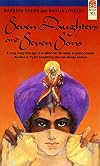
The last time I read this YA novel I was actually in the intended age group. To my happy surprise, it is just as good as I remember. Based on an Iraqi legend, the novel follows Buran, one (the Elizabeth Bennet one, to be precise) of seven daughters of a poor father. To help her family get some badly needed money (and to avoid having to marry anyone unpleasant), Buran dresses up as a boy and sets off to make her fortune. Enter: one prince, and oh man, it's just so much fun. There's a truly fantastic scene where a disguised Buran and Prince Mahmud go for a walk at dusk, and then—as boys do—decide to play a little chase-y chase-y. When Mahmud catches Buran, he pins her against a wall and they have a total *moment*—at which point Mahmud of course has a minor gay freak out. I loved that scene when I was younger; I should not have been at all surprised when I grew up to be a slasher.
I only have two complaints, really, which are that Mahmud makes the leap from "I like my male best friend!" to "OMG, he must be a chick!" a bit too fast and too easily, and that their final reunion scene doesn't quite have the impact I would like. But those are both minor. So...besides this and "The True Confessions of Charlotte Doyle," does anybody know of any other good crossdressing/genderfuck-y YA novels?
I only have two complaints, really, which are that Mahmud makes the leap from "I like my male best friend!" to "OMG, he must be a chick!" a bit too fast and too easily, and that their final reunion scene doesn't quite have the impact I would like. But those are both minor. So...besides this and "The True Confessions of Charlotte Doyle," does anybody know of any other good crossdressing/genderfuck-y YA novels?
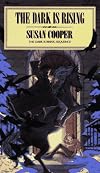
Reread. I saw the trailer for the upcoming movie—and more importantly, I saw my friend Darcy's furious reaction to the trailer for the upcoming movie, and I realized that I didn't remember these books well enough to be properly furious myself. I read the first two in the series, in the wrong order, when I was much younger, but didn't recall being particularly engaged by them, which was why I never continued. I figured that, rereading them as an adult, I'd see the error of my ways.
Sadly, I didn't. I still don't find these books very engaging. "Over Sea, Under Stone" is, as even Darcy admits, only so-so: the setting is great (the rambling old Cornish house, the standing stones perched on their cliffs, the sea-cave), and at least one of the siblings (Barney) is spunky and entertaining, yet the treasure hunt-plot is oddly slow, and the conclusion completely unsatisfying in my mind. (They give the grail to a museum and get 100 quid? Barney has his "Dude! Merlin!" revelation? Yawn.) I thought "The Dark Is Rising" would be better, but it didn't do much for me, either. There's a lot of portentous stuff, but I felt that every scrape Will gets into he gets out of either through the intervention of an adult or thanks to a deus ex machina. Meanwhile, the Dark Rider and the Dark in general seemed oddly unthreatening to me, while being an agent of the Light did not seem particularly exciting or pleasurable. I never wished I was *there*: with, say, the Narnia books, I wanted SO BADLY show more to go through a wardrobe or a painting of my own, even if it was dangerous; but being an Old One mostly seems dull and chanty to me, to the point that if the position were offered on craigslist, I think I might pass. What is wrong with me?
Because I really do feel, having this reaction, that there must be something wrong with me and not the books: so many people—and people whose opinions I trust—love them. Oh well. I suppose I didn't like "The Lord of the Rings," either. show less
Sadly, I didn't. I still don't find these books very engaging. "Over Sea, Under Stone" is, as even Darcy admits, only so-so: the setting is great (the rambling old Cornish house, the standing stones perched on their cliffs, the sea-cave), and at least one of the siblings (Barney) is spunky and entertaining, yet the treasure hunt-plot is oddly slow, and the conclusion completely unsatisfying in my mind. (They give the grail to a museum and get 100 quid? Barney has his "Dude! Merlin!" revelation? Yawn.) I thought "The Dark Is Rising" would be better, but it didn't do much for me, either. There's a lot of portentous stuff, but I felt that every scrape Will gets into he gets out of either through the intervention of an adult or thanks to a deus ex machina. Meanwhile, the Dark Rider and the Dark in general seemed oddly unthreatening to me, while being an agent of the Light did not seem particularly exciting or pleasurable. I never wished I was *there*: with, say, the Narnia books, I wanted SO BADLY show more to go through a wardrobe or a painting of my own, even if it was dangerous; but being an Old One mostly seems dull and chanty to me, to the point that if the position were offered on craigslist, I think I might pass. What is wrong with me?
Because I really do feel, having this reaction, that there must be something wrong with me and not the books: so many people—and people whose opinions I trust—love them. Oh well. I suppose I didn't like "The Lord of the Rings," either. show less
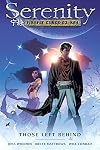
I think the biggest problem with this for me is that I just now got to read it; it may have had more of an impact if I'd actually read it BEFORE watching "Serenity," but alas. Post-movie, it's kind of pointless: it fills in some of the gaps between the series and the film, but not in any way the film fails to. The plot resurrects a character that in my mind should have stayed dead, only to kill him again, and makes very poor use of the Two by Two, Hands of Blue guys. Also, the art annoyed me. Some comic book artists are very good at conveying action, but the way the fights were drawn in this I couldn't actually figure out what was happening. I mean, I'm glad to have finally read this, I guess, but it was really not worth the desperate efforts to get it over the *last several years*.
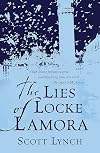
This book took me forever to read—through no fault of its own, I think. It's a fast-paced fantasy set in a world I am ACHING to read an entire history about; you can tell Lynch has really thought about this society and this city and this landscape he's created, and he doles out information about it in little bite-sized bits that leave you hungry for more rather than rolling your eyes at dialogue of the "Well, Locke, as you know it's been seventeen years that we've known each other; we of course met after you escaped from the plague and my parents died in a fire..." type. You really get to know Locke and his fellow Gentleman Bastards, the finest Camorri con men; their banter is fantastic, and you really do care about them. I think my biggest problem with this book is that it's incredibly, shockingly violent: there are numerous descriptions of torture that still make me shudder if I chance to think about them (...dammit). I keep wanting to say, "This would make a fantastic movie!" but I'd be honestly afraid to see some of this stuff on screen. Still, the novel is exciting, full of creativity and verve and sharp wit, and the relationships between the characters, especially Locke and Jean, make the "gah!" moments well worth it. I've already gotten my hands on the sequel, "Red Seas Under Red Skies," and am most pleased.

Most people I've talked to either love or at least rather like this book, but it seems it's my turn to feel all "bwah?" and left out, as Punk does with "The Dreyfus Affair" and Siria does with "Swordspoint." I hated it. I despised pretty much all the characters, other than Hugh and Rupert—Leonie was irritating, and Avon was just creepy. I know he was supposed to be "Satanas"—the devil of a man who isn't really that bad, but I found him neither enjoyably naughty nor charming; he was just kind of slimy. The idea of him and Leonie being together really skeeved me out, not because of the age difference—I actually *like* an age difference, when it's done well—but because of the power dynamic, I guess. All the power was Avon's, both practically and emotionally, and throughout the whole book Leonie was worshipful of him and he condescending towards her. Ew. I also didn't see the slash at all; Hugh was one of the few nice characters, as I said, so I guess it could be construed that he put up with Avon because he was in love with him, but Avon didn't seem particularly gay to me—he was just an 18th Century dude who lived in France and was a bit of a vain ass. The overall package was not appealing, and neither was this book, which is too bad, because I really enjoyed the only other Heyer I've read, "The Masqueraders."
I found the humor in "The Pirates! In an Adventure with Scientists" kind of one-note, so I'm really not sure why I read the sequel. It's been a few weeks now and I've almost completely forgotten it. But I believe I was somewhat pleasantly diverted for about an hour at the time?
A young adult novel based on an idea for a TV show Gaiman and Reaves could never get off the ground, this reads like the pilot for said TV show. It introduces a really fascinating world, one in which the main conflict is between the forces of magic and science, both of which have representatives who are trying to achieve dominance over the multiverse. Then from an Earth quite like ours comes Joey Harker, who discovers he is a Walker, with the power to move between universes and fight to keep those essential forces in check. The story is a lot of fun, and the potential Horrible Fate that could befall Joey and his friends is really, legitimately terrifying, but the first person narrative is much weaker than Gaiman's usual authorial voice, and ultimately, more questions are raised than answered. I want to know why Joey and all his infinite variations are special! Instead it's kind of frustrating that things leave off where they do. This would have made an even better show than a book, dammit.
A collection of themed book recommendation lists. I haven't really had the chance, yet, to see how good the recs are, though they seem interesting, and the book makes for a great resource if you're looking to catch up on a genre your background is lacking in. ("Cuban Literature—cool.") Some of the lits are a little too list-like, however (if that makes any sense)—I like to know why a book is being recommended to me, not just its title, and while Pearl sometimes provided nice explanations, she didn't always. Also, whoever copyedited this book deserves a good beating. (They can get in line behind the people who edited "The Road.") There were all kinds of blunders, including sentences with missing words and—worse—misspelled authors' names. NOT so good for a book of book recommendations! Finally, I wish this book read better *as a book*. It's really not for reading, but for referring to. Still, it seems like it may turn out to be a handy resource.
Another collection of sci-fi Holmes pastiches; this one is much better than "Sherlock Holmes Through Time and Space," despite opening, for some bizarre reason, with what's by *far* the worst story in the whole book. (Profic writers really could learn a thing or two from fandom. Rule No. 1: Don't character bash. Rule No. 2: DON'T CHARACTER BASH.) I suspect this is because all these stories were written specifically for this anthology, while the other was a collection of previously published stuff. Thus, the focus of these tales is much more *the actual Sherlock Holmes* (and sometimes—but not nearly enough—Watson), and not characters merely similar to him. So, while none of the stories were what I'd call revelatory—I still haven't found my ideal Sherlock Holmes sci-fi pastiche (maybe I'll have to write it myself)—the collection as a whole was quite enjoyable. Though I wish someone would give Watson a bit more love. *pouts*
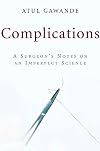
This is a fantastic account by a surgeon in the last year of his residency. Gawande blends discussion of interesting and curious cases with thoughts on both ethical and technical issues facing doctors today, and makes it all immanently readable—I was never, not once, confused by jargon or technical terms. Gawande is thoughtful and compassionate, and willing to recognize faults both in his profession and in himself. If you're at all interested in medicine, or enjoy watching "Scrubs" or "House" or any of those shows, this is really well worth checking out.
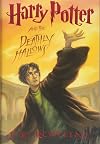
ONLY VERY MINOR SPOILERS FOLLOW — I TRIED VERY HARD TO KEEP MY DISCUSSION THEMATIC AND VAGUE WITH A SIDE OF VAGUE.
Ahem. Anyway. There are a lot of ways in which I found this a very satisfying conclusion to the series. I was pleased that Rowling took care to tie up a lot of outstanding plot threads—even minor ones—and I liked the central questy plot, and all of Harry, Ron, and Hermione's interaction. Also, NEVILLE. Everything to do with him made me insanely happy.
However, the narrative kind of derailed for me after the shrieking shack scene. Rowling's love of infodumping wasn't as overwhelming as in the last few books, but it was still pretty bad, and the second big battle, especially in comparison to the first one, which I thought was excellent, was way too talky. And kind of lame. And I really could have done without That Epilogue.
More importantly, however, there are certain aspects of Rowling's universe that continue to baffle me. Remember what the Sorting Hat said about inter-house cooperation in...was it "Order of the Phoenix"? Anyway, the Hat talked about the necessity for inter-house cooperation, and not only did it feel like that was one plot point Rowling *did* drop like a lead balloon, she really does seem to think all Slytherins are evil (with a few exceptions. MAYBE). And I really have to question a system that decides AT AGE ELEVEN whether you're going to be a good person or not. Even if that *were* possible, why would you want to put all the bad apples show more together? I just...ARGH. MAKES NO SENSE!
I never understood what was up with the Malfoys, either. WTF?
But Neville was cool. Gonna focus on that. show less
Ahem. Anyway. There are a lot of ways in which I found this a very satisfying conclusion to the series. I was pleased that Rowling took care to tie up a lot of outstanding plot threads—even minor ones—and I liked the central questy plot, and all of Harry, Ron, and Hermione's interaction. Also, NEVILLE. Everything to do with him made me insanely happy.
However, the narrative kind of derailed for me after the shrieking shack scene. Rowling's love of infodumping wasn't as overwhelming as in the last few books, but it was still pretty bad, and the second big battle, especially in comparison to the first one, which I thought was excellent, was way too talky. And kind of lame. And I really could have done without That Epilogue.
More importantly, however, there are certain aspects of Rowling's universe that continue to baffle me. Remember what the Sorting Hat said about inter-house cooperation in...was it "Order of the Phoenix"? Anyway, the Hat talked about the necessity for inter-house cooperation, and not only did it feel like that was one plot point Rowling *did* drop like a lead balloon, she really does seem to think all Slytherins are evil (with a few exceptions. MAYBE). And I really have to question a system that decides AT AGE ELEVEN whether you're going to be a good person or not. Even if that *were* possible, why would you want to put all the bad apples show more together? I just...ARGH. MAKES NO SENSE!
I never understood what was up with the Malfoys, either. WTF?
But Neville was cool. Gonna focus on that. show less
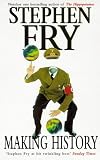
This was such a blast. Fry has a lot of fun with the "what if you could go back in time and kill Hitler?"—or in this case, go back in time and prevent Hitler from ever being born—plot. The alternate universe he creates is pretty cleverly developed and suitably creepy; it's also incredibly amusing that Michael's meddling has the first troublesome result of making him AMERICAN, oh noes. I wish there'd been a bit more about Michael and Steve's developing relationship, but mostly this was a romp in the best sense of the word, with a good dose of underlying scariness. Recommended.
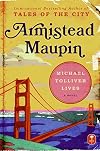
I was pleasantly surprised by how much I enjoyed this. I've complained before about my increasing frustration and even anger with the last few "Tales of the City" novels, in which all the female characters had to completely renounce their hetero- or bisexuality or instead become HIDEOUS HOME-DESTROYING BITCHES; however, I couldn't resist reading this new, seventh installment, because, well, I'm a completist. (Or an addict. Call it what you will.) But like I said: I was pleasantly surprised. This seventh volume finds Michael Tolliver, the gardener formerly known as Mouse, still alive in the present day despite having been HIV positive since the '80s. This book is much less wacky than its predecessors—there are no plotlines about child pornography rings or Jim Jones or the Bohemian Grove. Instead, most of the plot revolves around making peace with the past. Michael takes his new lover with him to Florida to visit his dying mother, and there's a lot of stuff about family (both the one you're born with and the one you make) that seemed very real to me. Maupin even managed to rehumanize Mary Ann a little bit; of course, he also had Michael use "my little spunk bucket" as a term of endearment. Um. It's a step up from "All straight women are EVIL!", anyway.
The Seventh Doctor meets Sherlock Holmes. How can that not be full of win? And it pretty much is—unlike a lot of the Holmes pastiches I've read, Lane isn't afraid to actually *do* things with Holmes canon; many pastiche writers seem VERY AFRAID that they're somehow going to damage Sir Arthur's toys, which 1) is ridiculous, and 2) leads to very boring stories. Lane, meanwhile, is more willing to take Holmes canon in hand—he allows for character development and doesn't simply maintain the status quo. He also, bless him, lets Watson shine; in fact, this novel ends up being much more about Watson than about Holmes, or even the Doctor. It's probably a better Holmes novel than it is a "Doctor Who" one, honestly. But I love both worlds so I enjoyed it.
The best and worst of Connie Willis, in one slim volume! The first half of this book annoyed me so much I almost considered not finishing it. In describing the problems facing interplanetary surveyors Carson and Findriddy, Willis, as she often does, pokes fun at the stupidity of bureaucracy; however, it felt like all the humor in this book totally missed the mark. It was like *actually* being stuck in line at the DMV as opposed to reading a funny satire about such a situation. But then, Willis does something very, very cool—a little narrative trick that I admire immensely and don't want to spoil here. It turns the whole narrative on its ear, and while it doesn't *cure* the other problems, it certainly made me want to keep reading.
The novel, however, remains uneven. The romance plotline(s) never seemed believable to me, which rather lessens the impact of the end. Still, that one twist—I do feel like all the annoying stuff was worth wading through for that. I'm glad I did.
The novel, however, remains uneven. The romance plotline(s) never seemed believable to me, which rather lessens the impact of the end. Still, that one twist—I do feel like all the annoying stuff was worth wading through for that. I'm glad I did.

A fun, witty fairy tale revamp in which a young princess, at her fairy christening, is given the gift of ordinariness. Kaye's prose style (which to me seemed wonderfully dry and English) was very enjoyable to read; I didn't, however, enjoy this quite as much as I thought I was going to. I'm actually totally willing to blame myself for this: I think I started overthinking it—"Wouldn't it be much more transgressive," I thought, "for the king to fall in love with and marry a *real* kitchen maid rather than a princess disguised as one? And Amy really isn't that bright." Shut up, brain. Sometimes I am just cranky.
Chuck Klosterman's essays are always interesting, even when I disagree with him, even when he makes me angry. There are even a couple of essays about musicans I really like in this volume (Bono and Morrissey) which is a fun bonus; considering that I've read Klosterman's book about heavy metal, which I am totally not interested in, it was a curious experience to hear his thoughts on something I honestly do care about. Klosterman doesn't shre my love, but he's fair to his subjects and really does raise interesting points—fine qualities in an essayist. However, the one example of his fiction at the conclusion of this volume does not display his finer qualities quite so well; it kind of reads like a bad Chuck Palahniuk/ Douglas Coupland fusion. Chuck Klosterman should stick to being Chuck Klosterman; he's very good at it.
The Casebook of Forensic Detection: How Science Solved 100 of the World's Most Baffling Crimes by Colin Evans
A really great book if you're feeling morbid. The focus on the early days of true forensic investigating is fantastic, and the cases share an apropriate degree of the creepy/chilling factor. For atmosphere, think Caleb Carr's "The Alienist," only real. This was one of my favorite books to read and reread when I was about fifteen, which proves at least one thing conclusively: I was a very strange fifteen-year-old.
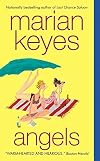
This book almost does something very interesting for chic lit: the main character, an Irish woman whose marriage is coming apart, comes to L.A. to escape from it all. She is shocked—shocked!—to discover that the old friend she's staying with has another friend who's a lesbian. Then she gets a little crush on the lesbian friend. Then she has a lesbian fling! This is almost cool like fanfic. But then the main character realizes that she really loves her husband and goes back to him. Sigh.
Keyes does the same thing with the flashback abortion plot. Main character (whose name, in case you can't tell, I've totally forgotten) goes to England to get an abortion. But at the last second she changes her mind! THEN SHE MISCARRIES ANYWAY! Now, in the present, she has angst because she thinks this has made her unable to have a baby now that she wants one. Um...wouldn't this plot have been better if it involved actual guilt from an actual abortion? There's too much trying to play to both sides in this book. It's annoying.
But the brief lesbian fling part was hot.
Keyes does the same thing with the flashback abortion plot. Main character (whose name, in case you can't tell, I've totally forgotten) goes to England to get an abortion. But at the last second she changes her mind! THEN SHE MISCARRIES ANYWAY! Now, in the present, she has angst because she thinks this has made her unable to have a baby now that she wants one. Um...wouldn't this plot have been better if it involved actual guilt from an actual abortion? There's too much trying to play to both sides in this book. It's annoying.
But the brief lesbian fling part was hot.

A very early Neil Gaiman collection, that I think is kind of hard to get now. Most of the short stories have since been reprinted, many of them in "Smoke and Mirrors," but what makes this volume cool is that it also contains a few examples of Gaiman's journalism, including a book review he wrote after he lost the book. He mostly ends up talking about peeing in styrofoam cups and elephant come, I believe. A treasure.
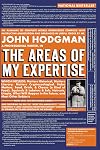
A humorous fake almanac. I was kind of disappointed by this, actually. It's certainly bizarre and quirky, and there were definitely moments that made me smile, but all and all it was just...much less funny than I thought it was going to be. Hodgman's humor is *very* dry; maybe I just picked this up when I wasn't quite in the right state of mind for dry. Will possibly try again later—the hoboes will still be there, of course, planning their revolution.
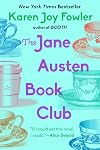
What a wonderful surprise. This was great, so much more than the light, fluffy lit it would seem to be. Fowler's story follows six protagonists as they read Austen's six novels, with each character linked to a specific novel; it's very cleverly, subtly done. There are some fantastic narrative tricks—none of which seems showoff-y: parts of the novel are written in the second person, the collective "we" of the book group; the book concludes with the characters' hilarious "discussion questions" to you, the novel's readers. There's also some interesting stuff about gender; I especially liked Grigg, the club's sole male, whom Fowler reveals to be "a born heroine." This book made me incredibly happy.

Third in Lodge's loosely-connected trilogy, following "Changing Places" and "Small World." I loved this. It's a study of opposing characters—opposing forces, almost—wherein factory manager Vic Wilcox and academic Robyn Penrose are brought together and forced to intermingle by bizarre political maneuverings (a governmentally-mandated "Industry Year" to breed understanding among different sectors of Lodge's fictionalized Birmingham; I think I just took more time to explain that than Lodge does). The culture clash is incredibly amusing, poking fun at both sides, and I love the way Lodge slowly draws out the growing understanding between the two parties. Unfortunately, Lodge is rather more cynical than I; I of course wanted those crazy kids to make it work. But despite the absence of my longed-for, if unrealistic, happy ending, this book was a total pleasure; it even made me newly glad that I had read "North and South." Quite a feat.
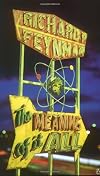
A trio of lectures Feynman gave in 1963 on the theme of "A Scientist Looks at Society." He discusses politics, religion, and the role of science. Feynman's thoughts aren't always perfectly organized, but much of what he says—especially about how people aren't trained to think scientifically, and how that's a detriment to a society that's pretty much conditioned to perceive itself as incapable of understanding science and logical thought—is still remarkably relevant today. This seemed to me almost like a book of psalms for irreligious people; I found it very calming.
"The Book of Judas" is almost 400 pages of poems, most of which are from Judas' perspective, but also which get into the hearts and minds of modern people, many of them Irish, many of them Dubliners. What's amazing about the book (aside from the poetry itself, which is *wow*) is that Kennelly essentially claims Judas for Ireland. He claims Judas for Ireland: he takes that which is, by the world, perhaps most feared and loathed and he asks it to step inside and make itself at home. He's not making excuses, but he's not afraid to sympathize, even empathize with it. How cool is that?
Unfortunately, it's almost impossible to get in America—but Wychwood just found a copy for me! *rejoices*
For those of you who can't find it, here's a small taste/poor substitute—my favorite poem from the book:
"No Image Fits"
I have never seen him and I have never seen
Anyone but him. He is older than the world and he
Is always young. What he says is in every ear
And has never been heard before.
I have tried to kill him in me,
He is in me more than ever.
I saw his hands smashed by dum-dum bullets,
His hands holding the earth are whole and tender.
If I knew what love is I would call him a lover.
Break him like glass, every splinter is wonder.
I had not understood that annihilation
Makes him live with an intensity I cannot understand.
That I cannot understand is the bit of wisdom I have found.
He splits my mind like an axe a tree.
He makes me heart deeper and fuller than my heart will dare to be.
He would make show more me at home beyond the sky and the black ground,
He would amaze me with the light on the brilliant sand,
He is the joy of the first word, the music of the undiscovered human.
Undiscovered! Yet I live as if my music were known.
He is what I cannot lose and cannot find
He is nothing, nothing but body and soul and heart and mind.
So gentle is he the gentlest air
Is rough by comparison
So kind is he I cannot dream
A kinder man
So distant is he the farthest star
Sleeps at my breast
So near is he the thought of him
Puts me outside myself
So one with love is he
I know love is
Time and eternity
And all their images.
No image fits, no rod, no crown.
I brought him down. show less
Unfortunately, it's almost impossible to get in America—but Wychwood just found a copy for me! *rejoices*
For those of you who can't find it, here's a small taste/poor substitute—my favorite poem from the book:
"No Image Fits"
I have never seen him and I have never seen
Anyone but him. He is older than the world and he
Is always young. What he says is in every ear
And has never been heard before.
I have tried to kill him in me,
He is in me more than ever.
I saw his hands smashed by dum-dum bullets,
His hands holding the earth are whole and tender.
If I knew what love is I would call him a lover.
Break him like glass, every splinter is wonder.
I had not understood that annihilation
Makes him live with an intensity I cannot understand.
That I cannot understand is the bit of wisdom I have found.
He splits my mind like an axe a tree.
He makes me heart deeper and fuller than my heart will dare to be.
He would make show more me at home beyond the sky and the black ground,
He would amaze me with the light on the brilliant sand,
He is the joy of the first word, the music of the undiscovered human.
Undiscovered! Yet I live as if my music were known.
He is what I cannot lose and cannot find
He is nothing, nothing but body and soul and heart and mind.
So gentle is he the gentlest air
Is rough by comparison
So kind is he I cannot dream
A kinder man
So distant is he the farthest star
Sleeps at my breast
So near is he the thought of him
Puts me outside myself
So one with love is he
I know love is
Time and eternity
And all their images.
No image fits, no rod, no crown.
I brought him down. show less
In a quantum computing accident worthy of a "Stargate" episode, a Neanderthal physicist from a parallel Earth where Homo sapiens died out while Homo neanderthalensis (or Homo sapiens neanderthalensis, if you prefer) thrived is sucked into our world. He's rescued from drowning by physics postdoc Louise Benoît, put under the medical care of Dr. Reuben Montego, and befriended by geneticist Mary Vaughan. Meanwhile, back in Ponter's, the Neanderthal's, world, his work and life partner Adikor is accused of his murder...
Most of this novel's focus is on comparing the Neanderthals' culture with ours: they live in a society where men and women are treated equally, but live separately; where everyone has two romantic partners, a man-mate and a woman-mate; and where crime has been almost eradicated through alibi cubes—monitoring devices implanted in everyone's wrists—chemical personality readjustment, and the forced sterilization not just of convicted criminals, but also of their immediate families. While I'll admit that *our* world is hugely fucked up—a fact Sawyer conveyed by having a man rape Mary when she's walking home from work; an event he dealt with well, I suppose, but which I still found traumatizing—Ponter's world didn't seem so great to me, either. Parts of this are addressed when Adikor is falsely accused and has to struggle to prove his innocence—oh yeah, was it mentioned that in Neanderthal land you're guilty until proved innocent?—but in general, Sawyer show more seemed to think that this alternate system he came up with was just AWESOME. Now, maybe this will be further addressed in the next two books in the series, but any society where forced sterilization = fantabulous legal policy is also pretty fucked in my mind. (I'm not so fond of the "women living separately from the men" idea, either.)
When the two societies were merely contrasted, I found this book very interesting; I also liked how Sawyer showed the rest of the world's reaction to Ponter. However, that the book seemed to come down so much in favor of the Neanderthal way was troubling to me. I mean, not only did Ponter have his "I am so ashamed of what you humans have done to this planet" moment, Mary had a "sterilization FTW!" one. I hope the next book readdresses this disparity; it would be much more interesting if the series were about how two societies can learn from each other, rather than how some Other can save us from ourselves. (With castration! It's fun for the whole family!) show less
Most of this novel's focus is on comparing the Neanderthals' culture with ours: they live in a society where men and women are treated equally, but live separately; where everyone has two romantic partners, a man-mate and a woman-mate; and where crime has been almost eradicated through alibi cubes—monitoring devices implanted in everyone's wrists—chemical personality readjustment, and the forced sterilization not just of convicted criminals, but also of their immediate families. While I'll admit that *our* world is hugely fucked up—a fact Sawyer conveyed by having a man rape Mary when she's walking home from work; an event he dealt with well, I suppose, but which I still found traumatizing—Ponter's world didn't seem so great to me, either. Parts of this are addressed when Adikor is falsely accused and has to struggle to prove his innocence—oh yeah, was it mentioned that in Neanderthal land you're guilty until proved innocent?—but in general, Sawyer show more seemed to think that this alternate system he came up with was just AWESOME. Now, maybe this will be further addressed in the next two books in the series, but any society where forced sterilization = fantabulous legal policy is also pretty fucked in my mind. (I'm not so fond of the "women living separately from the men" idea, either.)
When the two societies were merely contrasted, I found this book very interesting; I also liked how Sawyer showed the rest of the world's reaction to Ponter. However, that the book seemed to come down so much in favor of the Neanderthal way was troubling to me. I mean, not only did Ponter have his "I am so ashamed of what you humans have done to this planet" moment, Mary had a "sterilization FTW!" one. I hope the next book readdresses this disparity; it would be much more interesting if the series were about how two societies can learn from each other, rather than how some Other can save us from ourselves. (With castration! It's fun for the whole family!) show less

The first Christie I've read, aside from "The Mousetrap," which I acted in in 10th grade. (I played the victim, which means I got to be a real bitch before getting strangled at the end of Act I. It was awesome.) This was a lot of fun—I realize I like the methodical clarity of the type of detective story where the inspector interviews all the suspects, and carefully pursues each new piece of evidence. There were also some very fun secondary characters in this, though *man*, was I surprised at the emphasis placed on various people from various nationalities hating each other. (There were reasons behind some of this, but honestly, a lot of it was just, "Jeeze, those fucking Italians!")
I'm also puzzled by the common "well, I know you did it, but I am going to let you get away with it/not punish you in the traditional manner" wrap up of so many mystery stories. This happens often in the works of Doyle and Sayers...does no one ever get arrested? Y'all are conspiring to put ordinary policemen out of business, aren't you?
But, tangents aside: this proved a very fun way to spend a couple hours; I'm looking forward to reading more.
I'm also puzzled by the common "well, I know you did it, but I am going to let you get away with it/not punish you in the traditional manner" wrap up of so many mystery stories. This happens often in the works of Doyle and Sayers...does no one ever get arrested? Y'all are conspiring to put ordinary policemen out of business, aren't you?
But, tangents aside: this proved a very fun way to spend a couple hours; I'm looking forward to reading more.
Following a suicide attempt, Berman's nameless teen protagonist starts being able to see and speak to ghosts. He also falls in love with one: the spirit of a high school jock who was hit by a car in 1957. It's every emo kid's dream, right? Ahh, but of course there is a catch—namely, that the ghost, Josh, has major jealousy issues; his death may have been related to the fact that he thought his boyfriend, Roddy, was cheating on him with another guy.
Berman does a great job with atmosphere—his spirits are really creepy, and he achieves this without the slightest bit of Stephen King- (or even "Sixth Sense"-) level gore. He also creates for the nameless narrator a really interesting group of friends: goth gal extreme Trace; Trace's intriguing younger brother, Second Mike; girlfriends-on-the-outs Maggie and Liz. (Though why the fifth, Kim, is always referred to as "the annoying Asian girl" or "the skinny Asian girl" is beyond me. Dude, we get it: SHE'S ASIAN. Did someone of Asian-extraction dent your car or something?) Oddly, though, despite its promising beginnings, the book actually becomes *less* suspenseful as it goes along; the climax was not nearly as intense or as frightening as it ought to have been. The book is still compelling, but it needed a little extra oomph at the end. (Maybe Bruce Willis should've shown up just so the narrator could tell him he was already dead.)
Berman does a great job with atmosphere—his spirits are really creepy, and he achieves this without the slightest bit of Stephen King- (or even "Sixth Sense"-) level gore. He also creates for the nameless narrator a really interesting group of friends: goth gal extreme Trace; Trace's intriguing younger brother, Second Mike; girlfriends-on-the-outs Maggie and Liz. (Though why the fifth, Kim, is always referred to as "the annoying Asian girl" or "the skinny Asian girl" is beyond me. Dude, we get it: SHE'S ASIAN. Did someone of Asian-extraction dent your car or something?) Oddly, though, despite its promising beginnings, the book actually becomes *less* suspenseful as it goes along; the climax was not nearly as intense or as frightening as it ought to have been. The book is still compelling, but it needed a little extra oomph at the end. (Maybe Bruce Willis should've shown up just so the narrator could tell him he was already dead.)
This is a fun faux-encyclopedic guide to fantasy conventions. Jones mostly addresses high fantasy clichés, and I actually haven't read very much high fantasy at all, but almost everything Jones skewers still felt familiar to me. Tolkien has a lot to answer for.

"Bear V Shark" was Bachelder's first novel, "U.S.!" was his second, and reading them, you can really tell that they were written in that order. "U.S.!" is much more accomplished, whereas "Bear V Shark," while clever, suffers from being far too one-note. It's also more bleak and depressing, eviscerating American culture—which, in a not-too-distant future where televisions no longer turn off, involves a nation that has become obsessed with a virtual fight between the titular animals—without leaving even the shred of hope or optimism "U.S.!" offered. Plus, the (intentional) errors in fact that all the characters spout (a Gordian knot is referred to throughout as a guardian knot, for example) drove me *insane*. I can't stand that amount of dumb! Not even in the cause of satire!
However, it *is* very amusing to picture Stephen Colbert reading this novel. I'm thinking audio book?
However, it *is* very amusing to picture Stephen Colbert reading this novel. I'm thinking audio book?