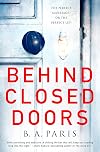
This is the first book being compared to Gone Girl that has lived up to the hype – not because they were anything alike in terms of writing style, plot, or book construction, but because it was the first book since Gone Girl that I couldn't put down. I sat down one evening and read the first half, only stopping because it was time for bed, and then I waited grumpily all day until I could sit down again and finish it. It was incredibly fast paced and, as fast a reader as I am, I was still irritated that I couldn't read it faster. That earns it the comparison, in my opinion.
This debut novel presents the perfect couple, Jack and Grace. They met one day in the park when Grace's younger sister Millie was dancing by herself and Jack stepped in to be her partner. After a whirlwind romance they were married and rushed off to an exotic honeymoon in Thailand. Upon their return Grace loses touch with her friends and quits her job, seemingly content to stay at home in the beautiful mansion that Jack bought for them and decorate, garden, and enjoy her new wonderful life. Soon, their friends notice that Grace and Jack are inseparable and Grace is less available for lunch dates alone.
Do you see where this is going? Don't worry if you don't because Paris shows you before long. By the time that happens you won't care, though, because you'll want to know how the situation is going to resolve itself. The story flips back and forth between two timelines, the first following Grace as she show more meets Jack, falls in love, and accepts his proposal, and the second as she details what her life is like in the present. This moved the story ahead in a way that highlighted the frantic rush Grace was in. I genuinely enjoyed the scenes with Millie, too. Her portrayal as a person with Down's Syndrome but still smart as a whip, fun, and present in her sister's life.
The book was not without flaws. Without giving too much away, it did require a slightly higher-than-normal suspension of disbelief because one of the characters was SO extreme. The circumstances were so perfectly plotted that it seems impossible for anyone to be as well-coordinated as would be necessary to pull off their plans. There are a lot of trigger warnings in this book – nothing graphic but a lot of allusions to things – and they're scattered liberally throughout the book (not problematic but something to keep in mind before deciding to read it).
I recommend it but don't pick it up when you have places to be or things to do. You won't be able to put it down.
(Thank you to NetGalley and St. Martin's Press for a copy of this book in exchange for an honest review.) show less
This debut novel presents the perfect couple, Jack and Grace. They met one day in the park when Grace's younger sister Millie was dancing by herself and Jack stepped in to be her partner. After a whirlwind romance they were married and rushed off to an exotic honeymoon in Thailand. Upon their return Grace loses touch with her friends and quits her job, seemingly content to stay at home in the beautiful mansion that Jack bought for them and decorate, garden, and enjoy her new wonderful life. Soon, their friends notice that Grace and Jack are inseparable and Grace is less available for lunch dates alone.
Do you see where this is going? Don't worry if you don't because Paris shows you before long. By the time that happens you won't care, though, because you'll want to know how the situation is going to resolve itself. The story flips back and forth between two timelines, the first following Grace as she show more meets Jack, falls in love, and accepts his proposal, and the second as she details what her life is like in the present. This moved the story ahead in a way that highlighted the frantic rush Grace was in. I genuinely enjoyed the scenes with Millie, too. Her portrayal as a person with Down's Syndrome but still smart as a whip, fun, and present in her sister's life.
The book was not without flaws. Without giving too much away, it did require a slightly higher-than-normal suspension of disbelief because one of the characters was SO extreme. The circumstances were so perfectly plotted that it seems impossible for anyone to be as well-coordinated as would be necessary to pull off their plans. There are a lot of trigger warnings in this book – nothing graphic but a lot of allusions to things – and they're scattered liberally throughout the book (not problematic but something to keep in mind before deciding to read it).
I recommend it but don't pick it up when you have places to be or things to do. You won't be able to put it down.
(Thank you to NetGalley and St. Martin's Press for a copy of this book in exchange for an honest review.) show less
"The best security is invisible security. The best safety is safety that one's object of protection doesn't know about."
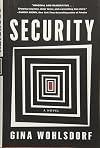
Security is really best described as a slasher film in book form and it hits all the right notes in that regard. It follows Tessa, the hotel manager at Manderly Resort, the newest, flashiest, high-profile resort hotel on the Santa Barbara coast. As she oversees the staff in their preparations for Manderly's grand opening the next day a killer is stalking the halls, murdering everyone that crosses his path. All of this is narrated by a mysterious stranger who is watching the bloodbath over the hotel's closed-circuit security system.
Told in a third-person omniscient voice, Security has a different feel that other novels. Because the narrator is telling the reader what happens as they view it on the hotel's incredibly comprehensive security cameras, we not only get a play-by-play of the horror as it happens but also this unknown viewers opinions which are often laced with a bit of dark humor. For example, we get this scene in the kitchen.
"Brian attacked the grease on his hands with a kitchen towel. The towel has red stains on it, most likely cherry coulis. One could not rule out the possibility that it was not cherry coulis."
One of the things that makes this book unique is how the author chooses to show simultaneous action. The pages are split in half, thirds, or quarters with each "scene" playing out in those sections, giving the impression that they're show more being viewed on side-by-side television screens as they are being relayed to the reader by our mysterious narrator. In any other book this might feel gimmicky but here it's used perfectly (and sparingly) to remind you how the narrator is privy to the events as they unfold. I also have to add that when you slowly start to realize who the narrator is your jaw will drop. It was a stroke of genius I never saw coming.
The characters were both stereotypical in their make-up - the tightly wound girl-boss, the faithful maid, the temperamental French chef, etc. - but incredibly well developed at the same time. The book follows traditional slasher-film rules so much that each death is predictable in a way that doesn't decrease enjoyment of the book. (I actually had fun guessing who would die next!) Despite all of the blood and gore there's a certain playfulness in it's tone that makes it a fun read. It doesn't take itself too seriously and, because of the format, as a reader you're able to join in on that fun. You'll find yourself thinking "NO! Don't open that door!" as you read, just like you would watching it on a screen. It was a total success in that regard.
With nods to Stephen King, Alfred Hitchcock, and of course Daphne du Maurier, this debut - DEBUT! - novel is a gift to horror fans. Security is funny, clever, bloody and tremendously incentive. It certainly isn't going to be for everyone, but if you like slasher films and don't mind a little gore in your life, give this a try.
(Thank you to Algonquin and LibraryThing for a copy of this book in exchange for a fair and honest review.) show less
Security is really best described as a slasher film in book form and it hits all the right notes in that regard. It follows Tessa, the hotel manager at Manderly Resort, the newest, flashiest, high-profile resort hotel on the Santa Barbara coast. As she oversees the staff in their preparations for Manderly's grand opening the next day a killer is stalking the halls, murdering everyone that crosses his path. All of this is narrated by a mysterious stranger who is watching the bloodbath over the hotel's closed-circuit security system.
Told in a third-person omniscient voice, Security has a different feel that other novels. Because the narrator is telling the reader what happens as they view it on the hotel's incredibly comprehensive security cameras, we not only get a play-by-play of the horror as it happens but also this unknown viewers opinions which are often laced with a bit of dark humor. For example, we get this scene in the kitchen.
"Brian attacked the grease on his hands with a kitchen towel. The towel has red stains on it, most likely cherry coulis. One could not rule out the possibility that it was not cherry coulis."
One of the things that makes this book unique is how the author chooses to show simultaneous action. The pages are split in half, thirds, or quarters with each "scene" playing out in those sections, giving the impression that they're show more being viewed on side-by-side television screens as they are being relayed to the reader by our mysterious narrator. In any other book this might feel gimmicky but here it's used perfectly (and sparingly) to remind you how the narrator is privy to the events as they unfold. I also have to add that when you slowly start to realize who the narrator is your jaw will drop. It was a stroke of genius I never saw coming.
The characters were both stereotypical in their make-up - the tightly wound girl-boss, the faithful maid, the temperamental French chef, etc. - but incredibly well developed at the same time. The book follows traditional slasher-film rules so much that each death is predictable in a way that doesn't decrease enjoyment of the book. (I actually had fun guessing who would die next!) Despite all of the blood and gore there's a certain playfulness in it's tone that makes it a fun read. It doesn't take itself too seriously and, because of the format, as a reader you're able to join in on that fun. You'll find yourself thinking "NO! Don't open that door!" as you read, just like you would watching it on a screen. It was a total success in that regard.
With nods to Stephen King, Alfred Hitchcock, and of course Daphne du Maurier, this debut - DEBUT! - novel is a gift to horror fans. Security is funny, clever, bloody and tremendously incentive. It certainly isn't going to be for everyone, but if you like slasher films and don't mind a little gore in your life, give this a try.
(Thank you to Algonquin and LibraryThing for a copy of this book in exchange for a fair and honest review.) show less
 This review was written for LibraryThing Early Reviewers.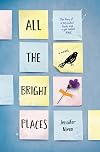
"It's my experience that people are a lot more sympathetic if they can see you hurting, and for the millionth time in my life I wish for measles or smallpox or some other easily understood disease just to make it easier on me and also on them."
**********
Finch and Violet meet on the ledge of their school's bell tower one fall afternoon, each wondering what it would be like to end it all, though stopping short of taking the leap after being surprised to find the other there. Finch, a self-proclaimed loner who is fascinated with death is surprised to find popular Violet in the same situation, though she won't admit to him her reasons for being on the ledge that day. While she resists his efforts to form a friendship, he arranges for them to be partners on a class project, determined to get to know her. During their year together, the two broken teens wander their state, finding beauty and happiness in odd places.
With this book, Jennifer Niven may have changed my mind about YA fiction. Usually I find that tales of heartbroken, "damaged" teens feel forced: rife with kids who can't send a text using full words then make melodramatic speeches (yeah, I'm looking at you, Fault in Our Stars) and parents who are a stereotype. All The Bright Places, however, manages to not only capture authentic teen voices, but also show their daily struggles (bullying, friendships, searching for identity, family dynamics, etc.) without being patronizing.
That's not to say there aren't problems with show more this novel. The school they attend seems woefully ill-equipped to deal with teenagers. A guidance counselor Finch sees regularly knows of his bell tower visit yet doesn't make any concerted effort to contact Finch's parents, voicemails home go unanswered for the entire year with no follow-up, Finch regularly misses weeks of school, yet there's also no fall-out. Also, the secondary characters are not well developed and sometimes fade into the background, with the possible exception of Finch's and Violet's parents, who demonstrate their dysfunction in opposing ways.
The remarkable thing about this novel, however, is how Niven realistically portrays depression and mental illness. Finch describes his dark times:
I get into these moods sometimes, and I can't shake them. Kind of black sinking moods. I imagine it's like what being in the eye of a tornado would be like, all calm and blinding at the same time. I hate them.
Finch copes by hiding in his closet, making his world small and manageable, until he feels "awake" again and can emerge to face everything again. A school counselor suggests he may have bipolar and Finch fights this suggestion, afraid that he will become even more of a "freak." Niven manages to capture Finch's desire for an understanding even as he resists the label of a diagnosis.
Strangely, even though others have said that they saw the ending coming, I was so swept up in the story and my concern for these two characters that I was as blindsided by the ending as the characters were - surprised even though, in retrospect, it was probably inevitable. I would recommend this book to anyone who enjoys John Greene and Rainbow Rowell…but also to those who don't. This book was pitch-perfect in a field of books that otherwise strain a bit too hard to hit the right note. show less
**********
Finch and Violet meet on the ledge of their school's bell tower one fall afternoon, each wondering what it would be like to end it all, though stopping short of taking the leap after being surprised to find the other there. Finch, a self-proclaimed loner who is fascinated with death is surprised to find popular Violet in the same situation, though she won't admit to him her reasons for being on the ledge that day. While she resists his efforts to form a friendship, he arranges for them to be partners on a class project, determined to get to know her. During their year together, the two broken teens wander their state, finding beauty and happiness in odd places.
With this book, Jennifer Niven may have changed my mind about YA fiction. Usually I find that tales of heartbroken, "damaged" teens feel forced: rife with kids who can't send a text using full words then make melodramatic speeches (yeah, I'm looking at you, Fault in Our Stars) and parents who are a stereotype. All The Bright Places, however, manages to not only capture authentic teen voices, but also show their daily struggles (bullying, friendships, searching for identity, family dynamics, etc.) without being patronizing.
That's not to say there aren't problems with show more this novel. The school they attend seems woefully ill-equipped to deal with teenagers. A guidance counselor Finch sees regularly knows of his bell tower visit yet doesn't make any concerted effort to contact Finch's parents, voicemails home go unanswered for the entire year with no follow-up, Finch regularly misses weeks of school, yet there's also no fall-out. Also, the secondary characters are not well developed and sometimes fade into the background, with the possible exception of Finch's and Violet's parents, who demonstrate their dysfunction in opposing ways.
The remarkable thing about this novel, however, is how Niven realistically portrays depression and mental illness. Finch describes his dark times:
I get into these moods sometimes, and I can't shake them. Kind of black sinking moods. I imagine it's like what being in the eye of a tornado would be like, all calm and blinding at the same time. I hate them.
Finch copes by hiding in his closet, making his world small and manageable, until he feels "awake" again and can emerge to face everything again. A school counselor suggests he may have bipolar and Finch fights this suggestion, afraid that he will become even more of a "freak." Niven manages to capture Finch's desire for an understanding even as he resists the label of a diagnosis.
Strangely, even though others have said that they saw the ending coming, I was so swept up in the story and my concern for these two characters that I was as blindsided by the ending as the characters were - surprised even though, in retrospect, it was probably inevitable. I would recommend this book to anyone who enjoys John Greene and Rainbow Rowell…but also to those who don't. This book was pitch-perfect in a field of books that otherwise strain a bit too hard to hit the right note. show less
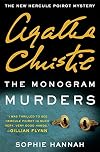
Hercule Poirot is having a quiet dinner in his favorite London coffeehouse when he encounters a young woman who is terrified of being murdered. Later that day Poirot hears of a murder at an upscale London hotel and accompanies the Scotland Yard detective staying in his boardinghouse to the scene of the crime. There he learns of a mysterious clue...a monogrammed cuff link left in the mouth of each of the three victims. He can't help but think that the young woman he met earlier that night may be the murder's fourth victim...
I personally really enjoyed this book, though I know it's taken some hard hits from other reviewers and even some critics. I didn't go into this expecting the writing to be anything like Christie's writing because - gasp - Sophie Hannah isn't Agatha Christie! Of course the writing won't be a replica of the original Poirot works. Hannah does, however, capture Poirot's personality - his disdain over a lack of imagination in his detective partner, his excitement when he's put two clues together, and his pompous explanations at the close of the book. Another thing she successfully manages to do is to capture the importance of motive and psychology to the plot. She is able to show us both the morality and the darkness of the characters in her story in a way that was vitally important in all of Christie's work.
In the end, the Monogram Murders should not be looked at as a "continuation" of the Poirot library, but rather a new interpretation of an old familiar show more character. The puzzling twists and turns of the plot, the voices of the characters, and the seeming impossibility of the mystery are all echoes of the Christie I love, with the fabulous writing of Hannah to pull it all together. show less
I personally really enjoyed this book, though I know it's taken some hard hits from other reviewers and even some critics. I didn't go into this expecting the writing to be anything like Christie's writing because - gasp - Sophie Hannah isn't Agatha Christie! Of course the writing won't be a replica of the original Poirot works. Hannah does, however, capture Poirot's personality - his disdain over a lack of imagination in his detective partner, his excitement when he's put two clues together, and his pompous explanations at the close of the book. Another thing she successfully manages to do is to capture the importance of motive and psychology to the plot. She is able to show us both the morality and the darkness of the characters in her story in a way that was vitally important in all of Christie's work.
In the end, the Monogram Murders should not be looked at as a "continuation" of the Poirot library, but rather a new interpretation of an old familiar show more character. The puzzling twists and turns of the plot, the voices of the characters, and the seeming impossibility of the mystery are all echoes of the Christie I love, with the fabulous writing of Hannah to pull it all together. show less
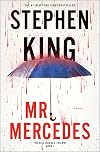
Hundreds of unemployed citizens line up for a job fair in the early morning hours of a Midwest city. A stolen Mercedes plows through the unsuspecting crowd, driven by a lone driver in a clown mask. When the chaos is over, eight innocent people are dead and more than a dozen more are injured.
Retired police detective Bill Hodges spends his days watching talk shows, haunted by the unsolved cases he left behind. When a letter arrives claiming to be from the Mercedes Killer, he decides to investigate on his own instead of going to the police. In doing so, he must match wits with a crazed psychopath, for whom one murderous rampage was not enough.
"I'm going to kill you. You won't see me coming."
Mr. Mercedes succeeds in hitting several of my favorite reading elements: a page-turning suspense thriller, well-developed, sympathetic characters, and a seriously creepy bad guy who got under my skin.
The telling of this story in the present tense, a departure from King's regular writing style, has the benefit of moving the narrative along at a rapid pace, which in turn heightened the race-against-the-clock feel for both Brady (the murderer) and Hodges and his crew.
At times the plot feels contrived, particularly the constant rationalization of why Hodges refuses to turn to the police for help even after it becomes clear that Brady is becoming unraveled. This, however, does nothing to diminish the suspense of the novel, as Hodges runs into roadblocks in his investigation and Brady grows show more more desperate and disorganized.
As usual, King's character development is unparalleled, with a connection being forged between the reader and characters that are only alive for ten pages. While on the surface some of the characters appear to be formulaic (the suicidal, retired detective, the brilliant tech-savvy young kid, the psychopathic maniac with mommy issues, etc.), King's development of these characters is still successful. They are sympathetic and accessible, with even Brady having his moment of sympathy (albeit a very, very brief one).
This book is classic King, probing the conflict between good and evil both within his characters and between them, though this time played out with purely human elements. Despite not being as strong a showing as his last few novels, this was a solid start to what will hopefully be an enjoyable trilogy. show less
Retired police detective Bill Hodges spends his days watching talk shows, haunted by the unsolved cases he left behind. When a letter arrives claiming to be from the Mercedes Killer, he decides to investigate on his own instead of going to the police. In doing so, he must match wits with a crazed psychopath, for whom one murderous rampage was not enough.
"I'm going to kill you. You won't see me coming."
Mr. Mercedes succeeds in hitting several of my favorite reading elements: a page-turning suspense thriller, well-developed, sympathetic characters, and a seriously creepy bad guy who got under my skin.
The telling of this story in the present tense, a departure from King's regular writing style, has the benefit of moving the narrative along at a rapid pace, which in turn heightened the race-against-the-clock feel for both Brady (the murderer) and Hodges and his crew.
At times the plot feels contrived, particularly the constant rationalization of why Hodges refuses to turn to the police for help even after it becomes clear that Brady is becoming unraveled. This, however, does nothing to diminish the suspense of the novel, as Hodges runs into roadblocks in his investigation and Brady grows show more more desperate and disorganized.
As usual, King's character development is unparalleled, with a connection being forged between the reader and characters that are only alive for ten pages. While on the surface some of the characters appear to be formulaic (the suicidal, retired detective, the brilliant tech-savvy young kid, the psychopathic maniac with mommy issues, etc.), King's development of these characters is still successful. They are sympathetic and accessible, with even Brady having his moment of sympathy (albeit a very, very brief one).
This book is classic King, probing the conflict between good and evil both within his characters and between them, though this time played out with purely human elements. Despite not being as strong a showing as his last few novels, this was a solid start to what will hopefully be an enjoyable trilogy. show less
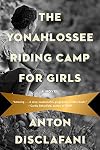
Thea Atwell, 15, has been sent from her family home in Florida to attend a girls boarding school for the southern elite, one at which she will learn to become an accomplished horsewoman. Over the course of her stay, she learns to navigate this world filled with other young women, much different from her isolated childhood, but yearns to rejoin her twin brother and parents back home, recovering from a mysterious tragedy in which she has played a central role.
I had high hopes for this novel, after all of the rave reviews it had received. It was described as spellbinding, lush, provocative, and smart. It was even on Oprah's Summer Reading List.
Initially, I found the book a page-turner. I was drawn into the vivid world DiSclafani described - first the hushed, sheltered world Thea grew up in, and then the majestic, wild of the mountains in which the camp was nestled. The social structure of the camp, with it's regional cliques and finishing school schedule (yes, French was included in the days lessons) created a picture of life for wealthy young women on the verge of the Great Depression.
My problem with this novel, however, is simply how unlikable Thea is. When we first meet Thea, she is a quiet girl reluctant to leave her father's side. She is timid and shy, but has a deep love for horses, and we are treated to hints about a family scandal that has ruined her family's life back home in Florida. As Thea becomes more acclimated to her new life at the camp, she has to make show more choices about her relationships with the other girls and with the adults in her life. She does not just simply make bad choices you would attribute to a girl her age, but she makes dangerous and disturbing choices that make me question the author's purpose for this character. Thea was also an extremely selfish character, which could be expected at that age, but without a transformation into a young woman more cognizant of her situation in life, the novel's ending was weak, rushed, and disappointing.
In addition, the characters were not well developed and felt like shallow stereotypes. Her brother was described as an animal lover with no other apparent characteristics. Sissy, Thea's friend at the camp, was the sweet girl that everyone liked at camp and is a little sheltered and foolish. The adults are even worse - Her parents are portrayed as having created a "progressive childhood", but it is never explained why they kept their children so sheltered and separate, or if they had desires and hopes of their own.
In the end, this was a book I truly wanted to like, but just couldn't find much about it to enjoy.
(I received a free copy of this book for review.) show less
I had high hopes for this novel, after all of the rave reviews it had received. It was described as spellbinding, lush, provocative, and smart. It was even on Oprah's Summer Reading List.
Initially, I found the book a page-turner. I was drawn into the vivid world DiSclafani described - first the hushed, sheltered world Thea grew up in, and then the majestic, wild of the mountains in which the camp was nestled. The social structure of the camp, with it's regional cliques and finishing school schedule (yes, French was included in the days lessons) created a picture of life for wealthy young women on the verge of the Great Depression.
My problem with this novel, however, is simply how unlikable Thea is. When we first meet Thea, she is a quiet girl reluctant to leave her father's side. She is timid and shy, but has a deep love for horses, and we are treated to hints about a family scandal that has ruined her family's life back home in Florida. As Thea becomes more acclimated to her new life at the camp, she has to make show more choices about her relationships with the other girls and with the adults in her life. She does not just simply make bad choices you would attribute to a girl her age, but she makes dangerous and disturbing choices that make me question the author's purpose for this character. Thea was also an extremely selfish character, which could be expected at that age, but without a transformation into a young woman more cognizant of her situation in life, the novel's ending was weak, rushed, and disappointing.
In addition, the characters were not well developed and felt like shallow stereotypes. Her brother was described as an animal lover with no other apparent characteristics. Sissy, Thea's friend at the camp, was the sweet girl that everyone liked at camp and is a little sheltered and foolish. The adults are even worse - Her parents are portrayed as having created a "progressive childhood", but it is never explained why they kept their children so sheltered and separate, or if they had desires and hopes of their own.
In the end, this was a book I truly wanted to like, but just couldn't find much about it to enjoy.
(I received a free copy of this book for review.) show less
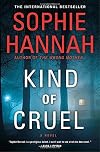
"There's nothing most of us love more than a plausible lie."
Amber Hewerdine can't sleep. She has suffered chronic insomnia since the death of her best friend in a mysterious house fire over a year ago. As a last resort, she decides to see a hypnotherapist for treatment and leaves in a hurry, disturbed by a phrase she utters while hypnotized - a phrase she at first assumes the therapist spoke first, but later realizes she has seen before. Soon after, Amber is arrested for the murder of a woman, and cannot clear her name until she remembers where she saw those words.
As with the previous novels in this series, Hannah focuses on developing her characters, allowing the reader to get inside their minds and fully understand their motivations, which in turn drives the plot. This results in a slightly meandering plot which can sometimes be confusing, but ultimately makes for a more compelling story (and series), since the reader never feels short-changed by having unanswered questions at the end. I especially enjoyed the insights of Amber's hypnotherapist, Ginny - they provided an interesting insight into Amber's memory and sleep issues, as well as occasionally bringing up a chilling question or observation that, on more than one occasion, led to an "aha!" moment for me in terms of the "whodunit" aspect of the plot. It was an interesting twist on the "unreliable narrator" idea, since Amber's memory is frequently not trustworthy, and her understanding of her motivations are show more frequently muddied by her biases regarding her current situation.
The fun in reading this novel, as well as the previous installments in the series, is following Simon Waterhouse as he follows a trail of disconnected clues to put together an incredible story to explain the novels central crime. Also, we get to spend some time with other less developed characters, including his unit chief, Sam, and his coworker, Gibbs. We also see what Charlie and Simon are like as a married couple, and get a peek into Charlie's sister Oliva's life.
As with all of Hannah's novels, the plot is twisting and dark, and sometimes feels convoluted. I enjoy this aspect - I've never yet been able to predict an outcome in one of her novels, not because they're not plausible, but because - like in a real investigation - there's a tremendous amount of information evidence to sift through before reaching the truth. For readers that might find these novels confusing, I would recommend reading them in several large sittings if at all possible. These are not books to read casually over the course of several weeks. Overall, this was a great installment in the series and I highly recommend it to fans of Hannah's, and I can't wait to read the next.
(I received a copy of this book from the Early Reviewer program in exchange for an honest review.) show less
Amber Hewerdine can't sleep. She has suffered chronic insomnia since the death of her best friend in a mysterious house fire over a year ago. As a last resort, she decides to see a hypnotherapist for treatment and leaves in a hurry, disturbed by a phrase she utters while hypnotized - a phrase she at first assumes the therapist spoke first, but later realizes she has seen before. Soon after, Amber is arrested for the murder of a woman, and cannot clear her name until she remembers where she saw those words.
As with the previous novels in this series, Hannah focuses on developing her characters, allowing the reader to get inside their minds and fully understand their motivations, which in turn drives the plot. This results in a slightly meandering plot which can sometimes be confusing, but ultimately makes for a more compelling story (and series), since the reader never feels short-changed by having unanswered questions at the end. I especially enjoyed the insights of Amber's hypnotherapist, Ginny - they provided an interesting insight into Amber's memory and sleep issues, as well as occasionally bringing up a chilling question or observation that, on more than one occasion, led to an "aha!" moment for me in terms of the "whodunit" aspect of the plot. It was an interesting twist on the "unreliable narrator" idea, since Amber's memory is frequently not trustworthy, and her understanding of her motivations are show more frequently muddied by her biases regarding her current situation.
The fun in reading this novel, as well as the previous installments in the series, is following Simon Waterhouse as he follows a trail of disconnected clues to put together an incredible story to explain the novels central crime. Also, we get to spend some time with other less developed characters, including his unit chief, Sam, and his coworker, Gibbs. We also see what Charlie and Simon are like as a married couple, and get a peek into Charlie's sister Oliva's life.
As with all of Hannah's novels, the plot is twisting and dark, and sometimes feels convoluted. I enjoy this aspect - I've never yet been able to predict an outcome in one of her novels, not because they're not plausible, but because - like in a real investigation - there's a tremendous amount of information evidence to sift through before reaching the truth. For readers that might find these novels confusing, I would recommend reading them in several large sittings if at all possible. These are not books to read casually over the course of several weeks. Overall, this was a great installment in the series and I highly recommend it to fans of Hannah's, and I can't wait to read the next.
(I received a copy of this book from the Early Reviewer program in exchange for an honest review.) show less
This review was written for LibraryThing Early Reviewers.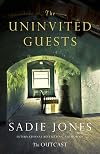
I'm not sure how to describe this novel, except to say it deserved to be read in one sitting.
Emerald Torrington is set to celebrate her 20th birthday with her family and a few close friends at a dinner at her family home, Sterne, in April 1912. The night is thrown into disarray when, as her guests arrive, so does news of a train derailment, sending dozens of passengers to Sterne for the evening to await rescue by the railway. The assembled group tries it's best to carry on with the party, but the arrival of an unexpected guest sends the night into an unexpected direction.
At first, the novel reminded me very much of the Flavia de Luce novels by Alan Bradley. The tone was playful, and the families were similar in some ways - emotionally distant but loving parents, a family living in genteel poverty, a precocious child, etc. However, that quickly changed as the plot began to turn toward more adult themes.
This is a great read that I would definitely recommend.
Emerald Torrington is set to celebrate her 20th birthday with her family and a few close friends at a dinner at her family home, Sterne, in April 1912. The night is thrown into disarray when, as her guests arrive, so does news of a train derailment, sending dozens of passengers to Sterne for the evening to await rescue by the railway. The assembled group tries it's best to carry on with the party, but the arrival of an unexpected guest sends the night into an unexpected direction.
At first, the novel reminded me very much of the Flavia de Luce novels by Alan Bradley. The tone was playful, and the families were similar in some ways - emotionally distant but loving parents, a family living in genteel poverty, a precocious child, etc. However, that quickly changed as the plot began to turn toward more adult themes.
This is a great read that I would definitely recommend.
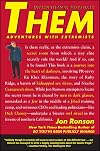
Journalist Jon Ronson investigates various extremist groups and finds a common element - they all believe that a secret, select group of individuals meet periodically to choose world leaders, sway economic policy,and otherwise rule the world. To discover if this group does exist, Ronson meets with everyone from the Weaver family of Ruby Ridge fame, Omar Bakri Mohammed, who supports the Taliban from his home in England, to KKK Grand Wizard Thom Robb, and the even stranger David Ickes. To his surprise, not only does this group actually exist...but they grant him an interview...
As hard as it is to believe sometimes, the people Ronson interviews in this book are real! Ronson does a good job showing off the personalities of these characters so you can really get a sense of what they believe and how strongly they believe it. It was, at times, a bit redundant, but I suppose that is to be expected, considering how similar the belief systems these groups are. And his interview with the alleged "One World Government" group is hysterical.
This book was filled with some pretty interesting information, and it was written with a humorous touch, so if you enjoy reading about conspiracy theories and the nuts that believe them, this could be the book for you.
As hard as it is to believe sometimes, the people Ronson interviews in this book are real! Ronson does a good job showing off the personalities of these characters so you can really get a sense of what they believe and how strongly they believe it. It was, at times, a bit redundant, but I suppose that is to be expected, considering how similar the belief systems these groups are. And his interview with the alleged "One World Government" group is hysterical.
This book was filled with some pretty interesting information, and it was written with a humorous touch, so if you enjoy reading about conspiracy theories and the nuts that believe them, this could be the book for you.