The Worldly Philosophers: The Lives, Times And Ideas Of The Great Economic Thinkers by Robert L. Heilbroner
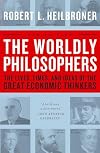
Some years ago i used to dislike (or even hate?) economics. I was not into that field anyway but even my slightest attempts to get in touch with the field were problematic. This was because i was probably not convinced that it was a scientific discipline or was unable to comprehend the "why" behind some economic theories (let alone the theories themselves) and thought of economic theories as boring. Needless to say that even not in my wildest dreams would i consider economists as philosophers.
Today, i don;t have the same opinion. In fact today i believe more or less the opposite.
What did happen that triggered this change? I just red this book.
Is it an accurate book on economic history? I don't know. Does it cover all important milestones of economic history adequately? Don;t know either. But what i do know is that it makes a very good case in convincing the reader that all the questions of "why" behind economics theories go far beyond profit, interest and similar domain specific concepts. It seems that economics is yet another way of manifesting the relationships, osmotic phenomena and interactions that are active within a society. In portraying the ideas of some economic thinkers its rather easy to witness this. But the interesting thing that the book also makes clear is how the different thinkers attempted - to express it in a worldlys philosophers way - not only to explain the world but also to change it. In such sense economics seemed to be a tool with which a show more society can be engineered rather that simply explained. Perceiving this dimension of economics was rather new to me. And of course the form the tool has depends heavily on the context of its conception and use: the form of the society and the life/habits of the tool-maker itself. The book makes each economic theory - as awkward as it may sounds - emerge naturally out of their contexts. Why is Marx's system so "brutal" and remorseless? Why would someone like Thorstein Veblen write a book entitled "The theory of the leisure class" ? How did Schumpeter come to the notion of Innovation? (and why is the main development plan of the European Union based on his ideas ?). The answers to these questions now look obvious. show less
Today, i don;t have the same opinion. In fact today i believe more or less the opposite.
What did happen that triggered this change? I just red this book.
Is it an accurate book on economic history? I don't know. Does it cover all important milestones of economic history adequately? Don;t know either. But what i do know is that it makes a very good case in convincing the reader that all the questions of "why" behind economics theories go far beyond profit, interest and similar domain specific concepts. It seems that economics is yet another way of manifesting the relationships, osmotic phenomena and interactions that are active within a society. In portraying the ideas of some economic thinkers its rather easy to witness this. But the interesting thing that the book also makes clear is how the different thinkers attempted - to express it in a worldlys philosophers way - not only to explain the world but also to change it. In such sense economics seemed to be a tool with which a show more society can be engineered rather that simply explained. Perceiving this dimension of economics was rather new to me. And of course the form the tool has depends heavily on the context of its conception and use: the form of the society and the life/habits of the tool-maker itself. The book makes each economic theory - as awkward as it may sounds - emerge naturally out of their contexts. Why is Marx's system so "brutal" and remorseless? Why would someone like Thorstein Veblen write a book entitled "The theory of the leisure class" ? How did Schumpeter come to the notion of Innovation? (and why is the main development plan of the European Union based on his ideas ?). The answers to these questions now look obvious. show less