
Part travelogue, part history, part love letter on a thousand-page scale, Rebecca West's Black Lamb and Grey Falcon is a genre-bending masterwork written in elegant prose. But what makes it so unlikely to be confused with any other book of history, politics, or culture--with, in fact, any other book--is its unashamed depth of feeling: think The Decline and Fall of the Roman Empire crossed with Let Us Now Praise Famous Men. West visited Yugoslavia for the first time in 1936. What she saw there affected her so much that she had to return--partly, she writes, because it most resembled "the country I have always seen between sleeping and waking," and partly because "it was like picking up a strand of wool that would lead me out of a labyrinth in which, to my surprise, I had found myself immured." Black Lamb is the chronicle of her travels, but above all it is West following that strand of wool: through countless historical digressions; through winding narratives of battles, slavery, and assassinations; through Shakespeare and Augustine and into the very heart of human frailty.
West wrote on the brink of World War II, when she was "already convinced of the inevitability of the second Anglo-German war." The resulting book is colored by that impending conflict, and by West's search for universals amid the complex particulars of Balkan history. In the end, she saw the region's doom--and our own--in a double infatuation with sacrifice, the "black lamb and grey falcon" of her title. show more It's the story of Abraham and Isaac without the last-minute reprieve: those who hate are all too ready to martyr the innocent in order to procure their own advantage, and the innocent themselves are all too eager to be martyred. To West, in 1941, "the whole world is a vast Kossovo, an abominable blood-logged plain." Unfortunately, little has happened since then to prove her wrong. --Mary Park
Review
A masterpiece . . . as astonishing in its range, in the subtlety and power of its judgment, as it is brilliant in expression. (_The Times_, London)
Surely one of the great books of our century. (Diana Trilling)
Rebecca West’s magnum opus . . . one of the great books of our time. (Clifton Fadiman, The New Yorker) show less
West wrote on the brink of World War II, when she was "already convinced of the inevitability of the second Anglo-German war." The resulting book is colored by that impending conflict, and by West's search for universals amid the complex particulars of Balkan history. In the end, she saw the region's doom--and our own--in a double infatuation with sacrifice, the "black lamb and grey falcon" of her title. show more It's the story of Abraham and Isaac without the last-minute reprieve: those who hate are all too ready to martyr the innocent in order to procure their own advantage, and the innocent themselves are all too eager to be martyred. To West, in 1941, "the whole world is a vast Kossovo, an abominable blood-logged plain." Unfortunately, little has happened since then to prove her wrong. --Mary Park
Review
A masterpiece . . . as astonishing in its range, in the subtlety and power of its judgment, as it is brilliant in expression. (_The Times_, London)
Surely one of the great books of our century. (Diana Trilling)
Rebecca West’s magnum opus . . . one of the great books of our time. (Clifton Fadiman, The New Yorker) show less
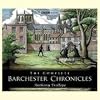
The "Chronicles of Barsetshire" is a series of six novels by English author Anthony Trollope, set in the west-country Cathedral city of Barchester.
The beautifully-written epic saga concerns the dealings of the clergy and the gentry, and the political, amatory, and social maneuverings that go on among and between them.
Barsetshire is the county in which the novels take place. The county town and cathedral town is Barchester. Other towns mentioned in the novels include Silverbridge, Hogglestock and Greshamsbury.
Included in this volume:
Book One: The Warden -- Mr Septimus Harding, elderly warden of Hiram's Hospital and Precentor of Barchester Cathedral. The story concerns the impact upon Harding and his circle when a zealous young reformer, John Bold, launches a campaign to expose the disparity in the apportionment of the charity's income between its object, the bedesmen, and its officer, Mr Harding. John Bold embarks on this campaign out of a spirit of public duty despite his romantic involvement with Eleanor and previously cordial relations with Mr Harding...
Book Two: Barchester Towers -- The much loved bishop having died, all expectations are that his son, Archdeacon Grantly, also a clergyman, will gain the office in his place. Instead, owing to the passage of the power of patronage to a new Prime Minister, a newcomer, Bishop Proudie, gains the see. His wife, Mrs Proudie, exercises an undue influence over the new bishop, making herself unpopular with right-thinking members show more of the clergy and their families...
Book Three: Doctor Thorne -- The romantic problems of Mary Thorne, niece of Doctor Thomas Thorne (a member of a junior branch of the family of Mr Wilfred Thorne who appeared in the previous novel), and Frank Gresham, the only son of the local squire. Major themes of the book are the social pain and exclusion caused by illegitimacy, the nefarious effects of the demon drink, and the difficulties of romantic attachments outside one's social class...
Book Four: Framley Parsonage -- Mark Robarts is a young vicar, newly arrived in the village of Framley in Barsetshire. This "living" has come into his hands through Lady Lufton, the mother of his childhood friend Ludovic, Lord Lufton. Mark has ambitions to further his career and begins to seek connections in the county's high society. He is soon preyed upon by local Member of Parliament Mr Sowerby...
Book Five: The Small House at Allington -- Lily has for a long time been secretly loved by John Eames, a junior clerk at the Income Tax Office, while Bell is in love with the local doctor, James Crofts. The handsome and personable, somewhat mercenary Adolphus Crosbie is introduced into the circle by the squire's nephew, Bernard Dale...
Book Six: The Last Chronicle of Barset -- An indigent but learned clergyman, the Reverend Josiah Crawley, the curate of Hogglestock, as he stands accused of stealing. It also features the courtship of the Rev. Mr Crawley's daughter, Grace, and Major Henry Grantly, son of the wealthy Archdeacon Grantly. The Archdeacon, although allowing that Grace is a lady, doesn't think her of high enough rank or wealth for his widowed son; his position is strengthened by the Reverend Mr Crawley's apparent crime. Almost broken by poverty and trouble, the Reverend Mr Crawley hardly knows himself if he is guilty or not...
These are wonderful, well-written thrilling and vigorous novels! show less
The beautifully-written epic saga concerns the dealings of the clergy and the gentry, and the political, amatory, and social maneuverings that go on among and between them.
Barsetshire is the county in which the novels take place. The county town and cathedral town is Barchester. Other towns mentioned in the novels include Silverbridge, Hogglestock and Greshamsbury.
Included in this volume:
Book One: The Warden -- Mr Septimus Harding, elderly warden of Hiram's Hospital and Precentor of Barchester Cathedral. The story concerns the impact upon Harding and his circle when a zealous young reformer, John Bold, launches a campaign to expose the disparity in the apportionment of the charity's income between its object, the bedesmen, and its officer, Mr Harding. John Bold embarks on this campaign out of a spirit of public duty despite his romantic involvement with Eleanor and previously cordial relations with Mr Harding...
Book Two: Barchester Towers -- The much loved bishop having died, all expectations are that his son, Archdeacon Grantly, also a clergyman, will gain the office in his place. Instead, owing to the passage of the power of patronage to a new Prime Minister, a newcomer, Bishop Proudie, gains the see. His wife, Mrs Proudie, exercises an undue influence over the new bishop, making herself unpopular with right-thinking members show more of the clergy and their families...
Book Three: Doctor Thorne -- The romantic problems of Mary Thorne, niece of Doctor Thomas Thorne (a member of a junior branch of the family of Mr Wilfred Thorne who appeared in the previous novel), and Frank Gresham, the only son of the local squire. Major themes of the book are the social pain and exclusion caused by illegitimacy, the nefarious effects of the demon drink, and the difficulties of romantic attachments outside one's social class...
Book Four: Framley Parsonage -- Mark Robarts is a young vicar, newly arrived in the village of Framley in Barsetshire. This "living" has come into his hands through Lady Lufton, the mother of his childhood friend Ludovic, Lord Lufton. Mark has ambitions to further his career and begins to seek connections in the county's high society. He is soon preyed upon by local Member of Parliament Mr Sowerby...
Book Five: The Small House at Allington -- Lily has for a long time been secretly loved by John Eames, a junior clerk at the Income Tax Office, while Bell is in love with the local doctor, James Crofts. The handsome and personable, somewhat mercenary Adolphus Crosbie is introduced into the circle by the squire's nephew, Bernard Dale...
Book Six: The Last Chronicle of Barset -- An indigent but learned clergyman, the Reverend Josiah Crawley, the curate of Hogglestock, as he stands accused of stealing. It also features the courtship of the Rev. Mr Crawley's daughter, Grace, and Major Henry Grantly, son of the wealthy Archdeacon Grantly. The Archdeacon, although allowing that Grace is a lady, doesn't think her of high enough rank or wealth for his widowed son; his position is strengthened by the Reverend Mr Crawley's apparent crime. Almost broken by poverty and trouble, the Reverend Mr Crawley hardly knows himself if he is guilty or not...
These are wonderful, well-written thrilling and vigorous novels! show less

When Barbara Pym died in 1980 she left a considerable amount of unpublished material. This volume contains an early novel, CIVIL TO STRANGERS, three novellas and an autobiographical essay, 'Finding a Voice', Pym's only written commentary on her writing career.
In CIVIL TO STRANGERS the lives of a young couple, Cassandra Marsh-Gibbon and her self-absorbed writer husband Adam, are thrown into upheaval when a mysterious Hungarian arrives in their village.
In CIVIL TO STRANGERS the lives of a young couple, Cassandra Marsh-Gibbon and her self-absorbed writer husband Adam, are thrown into upheaval when a mysterious Hungarian arrives in their village.

Against the Grain is a novel by the French novelist Joris-Karl Huysmans. It is a novel in which very little happens; its narrative concentrates almost entirely on its principal character, and is mostly a catalogue of the tastes and inner life of Jean Des Esseintes, an eccentric, reclusive aesthete and antihero, who loathes 19th century bourgeois society and tries to retreat into an ideal artistic world of his own creation. À Rebours contains many themes which became associated with the Symbolist aesthetic. In doing so, it broke from naturalism and became the ultimate example of "decadent" literature.

In this series of interweaving stories, Munro recreates the evolving bond between two women in the course of almost forty years. One is Flo, practical, suspicious of other people's airs, at times dismayingly vulgar. the other is Rose, Flo's stepdaughter, a clumsy, shy girl who somehow leaves the small town she grew up in to achieve her own equivocal success in the larger world.
Rose and her stepmother, Flo, live in Hanratty-across the bridge from the "good" part of town. Rose, alternately fascinated and appalled by the rude energy of the people around her, grows up nursing her hope of outgrowing her humble beginnings and plotting an escape to university.
Rose makes her escape and thinks herself free. But Hanratty's question Who Do You Think You Are? rings in her ears during her days in Vancouver, mocks her attempts to make her marriage successful, and haunts her new career.
In these stories of Rose and Flo, Alice Munro explores the universal story of growing up-Rose's struggle to accept herself tells the story of our lives.
Rose and her stepmother, Flo, live in Hanratty-across the bridge from the "good" part of town. Rose, alternately fascinated and appalled by the rude energy of the people around her, grows up nursing her hope of outgrowing her humble beginnings and plotting an escape to university.
Rose makes her escape and thinks herself free. But Hanratty's question Who Do You Think You Are? rings in her ears during her days in Vancouver, mocks her attempts to make her marriage successful, and haunts her new career.
In these stories of Rose and Flo, Alice Munro explores the universal story of growing up-Rose's struggle to accept herself tells the story of our lives.

One man's obsession with the mysterious life of a silent film star takes him on a journey into a shadow-world of lies, illusions, and unexpected love. After losing his wife and young sons in a plane crash, Vermont professor David Zimmer spends his waking hours mired in grief. Then, watching television one night, he stumbles upon a lost film by silent comedian Hector Mann, and remembers how to laugh . . .
Mann was a comic genius, in trademark white suit and fluttering black moustache. But one morning in 1929 he walked out of his house and was never heard from again. Zimmer's obsession with Mann drives him to publish a study of his work; whereupon he receives a letter postmarked New Mexico, supposedly written by Mann's wife, and inviting him to visit the great Mann himself. Can Hector Mann be alive? Zimmer cannot decide - until a strange woman appears on his doorstep and makes the decision for him, changing his life forever.
Written with breath-taking urgency and precision,...
Mann was a comic genius, in trademark white suit and fluttering black moustache. But one morning in 1929 he walked out of his house and was never heard from again. Zimmer's obsession with Mann drives him to publish a study of his work; whereupon he receives a letter postmarked New Mexico, supposedly written by Mann's wife, and inviting him to visit the great Mann himself. Can Hector Mann be alive? Zimmer cannot decide - until a strange woman appears on his doorstep and makes the decision for him, changing his life forever.
Written with breath-taking urgency and precision,...

Written by Thomas S. Klise (1928-1978) and subtitled An Epic Novel Portraying The Terrible Truth About Western Civilization. With its deceptively simple, fast paced story development, interlocking themes and brilliant images and archetypes, The Last Western was called a breakthrough in contemporary fiction when it was first published in 1974.
This scarce novel has caused growing buzz on the Internet. The story relates the life of Willie, a multi-racial, multi-national athlete, born in an obscure corner of the American Southwest, who rises to prominence first as a baseball phenomenon, then as a religious leader and peacemaker. The main character’s story has been likened to that of Barack Obama’s quick assent from relative obscurity to become President of the United States. There has also been comparison of this book written by Klise, who was a relatively unknown writer and producer of educational films, to that of David Foster Wallace’s hugely popular 1996 novel Infinite Jest. In a 2004 handwritten letter, Wallace (who committed suicide in 2008) addresses one fan’s question regarding Klise’s book as the inspiration for Infinite Jest.
Willie, an Irish-Indian-Negro-Chinese boy born in an obscure corner of the American Southwest rises to prominence as an athlete, religious leader, and peacemaker.
Published in Hardcover and subsequently Paperbacfk by Argus Publishing (1974).
This scarce novel has caused growing buzz on the Internet. The story relates the life of Willie, a multi-racial, multi-national athlete, born in an obscure corner of the American Southwest, who rises to prominence first as a baseball phenomenon, then as a religious leader and peacemaker. The main character’s story has been likened to that of Barack Obama’s quick assent from relative obscurity to become President of the United States. There has also been comparison of this book written by Klise, who was a relatively unknown writer and producer of educational films, to that of David Foster Wallace’s hugely popular 1996 novel Infinite Jest. In a 2004 handwritten letter, Wallace (who committed suicide in 2008) addresses one fan’s question regarding Klise’s book as the inspiration for Infinite Jest.
Willie, an Irish-Indian-Negro-Chinese boy born in an obscure corner of the American Southwest rises to prominence as an athlete, religious leader, and peacemaker.
Published in Hardcover and subsequently Paperbacfk by Argus Publishing (1974).

Summer 1914 brings the epic Les Thibaults novel to a close (1,800-odd pages in all) and also finishes off the Thibaults as a family.
When Summer 1914 opens, M. Thibault, racked by spasms of pain and terror, has died of convulsive uremia—a deathbed scene which Martin du Gard writes with the clean brutality of a clinical treatise. Jacques, matured and forceful, is a respected leader in a colony of revolutionists in Switzerland. He has decided that what he wants is a part in a revolutionary world change, but his soul is still troubled. He has a consuming pity for the mass of men, a great contempt for their rulers, but he lacks a blind faith in revolutionary slogans and formulas, and worse, he distrusts human nature, including that of revolutionists. "A man," he feels, "who is capable of ... brutal, bloodthirsty acts, and of calling them 'acts of justice,' such a man, when the battle's won, will never regain his decency. . . ."
Nevertheless, he joins an underground campaign of socialists all over Europe to prevent war. Dismayed at the sight of socialist spokesmen backsliding into patriotism, he hopes to the last for a miracle, a general strike—something. But the war begins and he loses his life in a last, wild, hallucinatory attempt to stop it. Then Author Martin du Gard hurdles clear over the war to 1918, when Antoine, mustard-gassed in medical service and dying of abscessed lungs, lives just long enough to see the Armistice.
Martin du Gard had a home in Normandy when the show more Germans invaded France. With his wife, who had a broken arm and shoulder in a plaster cast, he fled to the south of France. The Nazis thoroughly ransacked his Normandy house, but translator Stuart Gilbert, who was translating the last of Les Thibaults, managed to rescue the manuscript. show less
When Summer 1914 opens, M. Thibault, racked by spasms of pain and terror, has died of convulsive uremia—a deathbed scene which Martin du Gard writes with the clean brutality of a clinical treatise. Jacques, matured and forceful, is a respected leader in a colony of revolutionists in Switzerland. He has decided that what he wants is a part in a revolutionary world change, but his soul is still troubled. He has a consuming pity for the mass of men, a great contempt for their rulers, but he lacks a blind faith in revolutionary slogans and formulas, and worse, he distrusts human nature, including that of revolutionists. "A man," he feels, "who is capable of ... brutal, bloodthirsty acts, and of calling them 'acts of justice,' such a man, when the battle's won, will never regain his decency. . . ."
Nevertheless, he joins an underground campaign of socialists all over Europe to prevent war. Dismayed at the sight of socialist spokesmen backsliding into patriotism, he hopes to the last for a miracle, a general strike—something. But the war begins and he loses his life in a last, wild, hallucinatory attempt to stop it. Then Author Martin du Gard hurdles clear over the war to 1918, when Antoine, mustard-gassed in medical service and dying of abscessed lungs, lives just long enough to see the Armistice.
Martin du Gard had a home in Normandy when the show more Germans invaded France. With his wife, who had a broken arm and shoulder in a plaster cast, he fled to the south of France. The Nazis thoroughly ransacked his Normandy house, but translator Stuart Gilbert, who was translating the last of Les Thibaults, managed to rescue the manuscript. show less

as awarded the Literature Nobel Prize for "The Thibaults." Written between 1922 and 1929, this 800-page chronicle of a Parisian family is a rewarding work for readers interested primarily in psychological motivations of complex, life-like characters.
The book consists of six novels of varying length, although reading the novels out of sequence may result in a lack of overall clarity. The setting of the first novel is 1898, while the last novel concludes in 1913.
The panaoramic novels of Leo Tolstoy and Fyodor Dostoyevsky were the main literary influences on du Gard's writings. Like those famous Russian authors, du Gard applied objectivity to produce incorruptible realism.
Roger Martin Du Gard's masterpiece, LES THIBAULT and SUMMER 1914 were published between 1922 and 1940. The novels follow two bourgeois families, one Catholic and the other Protestant, and depict the degeneration of society prior WW I. The principal characters are Jacques Thibaut, a socialist revolutionary, and his brother Antoine, a Cartesian doctor who seeks change through evolution. Jacques and Antoine are opposing personalities – when one is restless the other is calm – and the first two volumes of the series focus on their conflict. Both fail to see the signs of the approaching war. Jacques distributes pacifist pamphlets by air, his plane crashes and he is accidentally shot as a spy. Antoine is caught by a gas attack. His health rapidly deteriorates but he keeps a diary recording his thoughts and show more finally commits suicide. show less
The book consists of six novels of varying length, although reading the novels out of sequence may result in a lack of overall clarity. The setting of the first novel is 1898, while the last novel concludes in 1913.
The panaoramic novels of Leo Tolstoy and Fyodor Dostoyevsky were the main literary influences on du Gard's writings. Like those famous Russian authors, du Gard applied objectivity to produce incorruptible realism.
Roger Martin Du Gard's masterpiece, LES THIBAULT and SUMMER 1914 were published between 1922 and 1940. The novels follow two bourgeois families, one Catholic and the other Protestant, and depict the degeneration of society prior WW I. The principal characters are Jacques Thibaut, a socialist revolutionary, and his brother Antoine, a Cartesian doctor who seeks change through evolution. Jacques and Antoine are opposing personalities – when one is restless the other is calm – and the first two volumes of the series focus on their conflict. Both fail to see the signs of the approaching war. Jacques distributes pacifist pamphlets by air, his plane crashes and he is accidentally shot as a spy. Antoine is caught by a gas attack. His health rapidly deteriorates but he keeps a diary recording his thoughts and show more finally commits suicide. show less