
Marred by disturbing and unnecessarily pervy sex scenes featuring a 15 year old girl, who is abused by her step-father and then sold into slavery to become firstly a 'bed slave' who is raped over and over again and then a courtesan. (Reminder: enslaved people cannot give consent due to the very nature of slavery). The 80s were clearly a different time; this would not have been published mainstream today.

This is a beautiful, magical, dreamlike book that tells the story of the Cirque de Reves, the Circus of Dreams, and the two star-crossed lovers who are bound together to compete in a game for which they don’t know the rules.
At six years old, Celia Bowen, daughter of Prospero the Enchanter (AKA Hector Bowen), is introduced by her father to the mysterious man in a grey suit who places a ring on her finger that sinks into her flesh and leaves a scar. Later, the man in grey removes a promising nine year-old boy from an orphanage, whom he eventually binds also by a ring. All the children know is that they are being ruthlessly trained in order to compete against their unknown rival in a magical competition.
Interspersed with the story are vignettes of the strange Cirque de Reves in which all things are black or white or grey, and which is only open at night. We view a contortionist tattooed with strange symbols who twists her body in remarkable ways, an impossible garden made of ice and other myriad wonders and delights.
It eventually becomes apparent that the circus is the stage on which the game between Celia and the boy (who calls himself Marco) will be played out. They each compete within its bounds, Marco from the outside, Celia from within, creating things of dreamlike beauty to outdo each other. Or, perhaps, to court each other.
Their love, however, is not part of the plan. It is dangerous to themselves, to the circus performers and to the fans of the circus who call show more themselves reveurs and wear just a splash of red.
This is Erin Morgenstern’s debut novel, and I can’t wait to see what she writes next. If you like the dark, phantasmagorical leanings of Neil Gaiman’s writing or Jonathan Strange & Mr Norrell by Suzanne Clarke, you will definitely love The Night Circus. Highly recommended. show less
At six years old, Celia Bowen, daughter of Prospero the Enchanter (AKA Hector Bowen), is introduced by her father to the mysterious man in a grey suit who places a ring on her finger that sinks into her flesh and leaves a scar. Later, the man in grey removes a promising nine year-old boy from an orphanage, whom he eventually binds also by a ring. All the children know is that they are being ruthlessly trained in order to compete against their unknown rival in a magical competition.
Interspersed with the story are vignettes of the strange Cirque de Reves in which all things are black or white or grey, and which is only open at night. We view a contortionist tattooed with strange symbols who twists her body in remarkable ways, an impossible garden made of ice and other myriad wonders and delights.
It eventually becomes apparent that the circus is the stage on which the game between Celia and the boy (who calls himself Marco) will be played out. They each compete within its bounds, Marco from the outside, Celia from within, creating things of dreamlike beauty to outdo each other. Or, perhaps, to court each other.
Their love, however, is not part of the plan. It is dangerous to themselves, to the circus performers and to the fans of the circus who call show more themselves reveurs and wear just a splash of red.
This is Erin Morgenstern’s debut novel, and I can’t wait to see what she writes next. If you like the dark, phantasmagorical leanings of Neil Gaiman’s writing or Jonathan Strange & Mr Norrell by Suzanne Clarke, you will definitely love The Night Circus. Highly recommended. show less
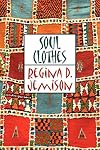
I read this volume of heart-felt poetry from cover to cover when I received it. The poems range from the very personal to the profound. She speaks of her own experiences - her frustrations, her joys and her very deeply felt relationship with God. The third section of the book changes slightly in tempo and feel, and it is refreshing to see the thematic development of the poetry as the volume is completed. I'm sure that these poems will help other, as it is clear the author intended.
 This review was written for LibraryThing Early Reviewers.
Sanderson definitely needed more time. The job he did with TGS was way better than TOM. I found the shifting POVs and the awkward dialogue grating and so distracting that 1/3 into the book I am wondering if I can stand to finish it! Yes, he has the task of advancing plot, but much of the delicacy, ( the game of houses, if you will) is bluntly spelled out rather than hinted at. That said, Sanderson does a great job of writing the 'heroic' passages such as Galad's early plotline. But he does not do interior dialogue or 'subtle' well in this book. A few more months to 'polish' would have been well spent.

This is the story of Deidre ending her abusive, violent marriage and reclaiming her life. She has to sneak her belongings out of the house, bag by bag, keeping them at work so as not to alert her controling husband (whom she always calls by his full name, Tim Davis) to her planned escape. But he still turns up at her workplace, threatening by his mere presence. Deidre has a fractured and co-dependent relationship with her schizoprhenic son, both blaming him for not leaving her marriage sooner, and using his mental instability as an excuse for staying.
Having witnessed my mother leave a violent relationship and her very real and justified fears about the consequences of doing so, I can testify to the verisimilitude of Deidre's situation; I found her a very real and engaging character in an extremely well written book. Highly recommended.
Having witnessed my mother leave a violent relationship and her very real and justified fears about the consequences of doing so, I can testify to the verisimilitude of Deidre's situation; I found her a very real and engaging character in an extremely well written book. Highly recommended.
This review was written for LibraryThing Early Reviewers.
Aidris is the princess of a troubled land, ruled by dual monarchs of the Firm and Zor. When Aidris's father, King of the Firn, and her mother are assassinated, she must go into hiding so she can, one day, fight for her right to the dual throne. Disguising herself as a common soldier in the neighbouring land of Anthron, she discovers her heritage of magic and mystery.

I really enjoyed this novel about an aging rock star Judas Coyne (who is supposedly contemporary to Ossie Osborn), who has 2 dogs called Angus and Bon (hahaha). Coyne is a collector of the magical, the strange and the macabre, so when a ghost is offered for purchase on the internet, he buys it, along with the dead man's suit. When the suit arrives, it become plain that there is indeed a ghost and that he has a particular vendetta against Coyne.


Wow. This book is a stinker. Poorly written, with confusing changes of view point, it seems like the sole goal of this book was to cash in on the Anne Rice and/or Furry market. I picked it up for 50 cents at a local library booksale, and wish I hadn't. It is not often that I put a book down 50 pages in and decide not to read the rest, but this is so bad I did just that.

The Lasts live a quiet life on their estate with few visitors and these days they rarely go to London. Tony's pride and joy is his family's Gothic manor, with rooms decked out in Authurian themes (Morgan Le Fay and Galahad, for instance), and it's dreadfully, dreadfully out of fashion. Brenda just wants more company, either in London or elegant parties at home. She develops an infatuation for a young man with no social graces, plenty of faults and very little money, much to the amusement of her social set. Despite her knowledge that it is an unwise move, Brenda makes excuses to go to London as often as possible to escape her dreary husband and the dank manor temporarily.

A straight forward historical fiction about the end of Pompeii from the point of view of Marcus Attilius, a young aquarius in charge of the aquaducts. When water fails in the aquaduct which supplies vital water to multiple cities, Attilius investigates and begins to suspect that Vesuvius will erupt. There are not really any cliff hangers here, but it's a nice, easy read.

The Graveyard Book is an evocative and beautiful coming of age story about a boy who lives in a disused graveyard and is protected by the dead and the undead. Neil Gaiman, once again, makes one weep with his lyrically beautiful prose. Magical.

While Anathem starts very tamely in a cloistered community fo scholars, it takes the reader to places very unexpected and daring. It is certainly not a book for everyone; Anathem is dense with physics, metaphysics and philosophy. But bear with it; Stephenson has managed to present the in a way that is comprehensible to the layperson (such as myself). Yes, it required actual thought at times (!!), but for me, the overall effect was to add to the novel's depth. Yet I can certainly understand why this book has garnered criticism from both people who don't like reading long passages that don't directly advance the plot and people who believe the explanations given are pop-physics. Overall, I found this novel far more readable and palatable than Quicksilver (which I am still getting up the courage to finish).

A lightweight read with some amusing moments. Rob is a record shop owner whose his long term girlfriend has just left him. He feels like a bit of a loser when he realises that he hasn't really achieved anything in life and that he doesn't really have any friends (post-break up) other than his two employees, Barry and Dick. Rob revisits his top 5 break ups, tracking down old girlfriends and finds out that maybe he should live in the present, not the past or an imagined future.

Karen Miller's writing is always engaging, and 'Hammer of God' is no exception... so why do I feel let down by this book?
The main characters in the first two books were Hekat and Rhian. They each embody the archetype of 'warrior woman' and - in different ways and with different methods - both had to fight overwhelming sexism and patriarchal society to gain ascendancy, despite being the chosen of their respective gods. Hekat, as an unvalued female child in a country where women had no status at all, did not even have a name until she named herself on the day she was sold as a slave. Rhian, as a privileged princess with two older brothers, was discounted as pretty, wilful and spoilt and was valued only for her potential on the marriage market.
Around these women, then, we saw a supporting cast of men of god, men of war and men of political power who variously helped or hindered. On the helpful side, we had Dexterity Jones, a toymaker whom god spoke to through his dead wife, and Zandakar, an exiled prince of Mijak who trained Rhian in personal combat, as well as Vortka, a fellow slave whose rise to Godspeaker cemented Hekat's power. On the hinder side, there was Marlon, the Prolate who sought to use Rhian as a pawn to gain both secular and religious power and Dmitrak, Hekat's despised son who loathes his mother, among others.
In this third book, particularly in its second half, I found it bewilderingly frustrating to watch Rhian and Hekat somewhat sidelined. Oh certainly, show more Hekat is wielding violent, blood-soaked power and Rhian is valiantly trying to unite the world against Mijak's invading force, which of themselves are huge tasks. But it gradually becomes apparent that the characters whose actions will make the critical difference are - wait for it - MEN. The supporting cast are revealed to be, in fact, the main characters and the agency of our warrior queens is almost stripped from them. Hekat is shown to be aged, physically weakened and misguided, while Rhian’s diplomatic efforts are somewhat ineffective. In the end, the much awaited showdown between two powerful women leading opposing armies is reduced to being merely a backdrop against which the fate of the world is played out, hinged critically on the actions of one man. show less
The main characters in the first two books were Hekat and Rhian. They each embody the archetype of 'warrior woman' and - in different ways and with different methods - both had to fight overwhelming sexism and patriarchal society to gain ascendancy, despite being the chosen of their respective gods. Hekat, as an unvalued female child in a country where women had no status at all, did not even have a name until she named herself on the day she was sold as a slave. Rhian, as a privileged princess with two older brothers, was discounted as pretty, wilful and spoilt and was valued only for her potential on the marriage market.
Around these women, then, we saw a supporting cast of men of god, men of war and men of political power who variously helped or hindered. On the helpful side, we had Dexterity Jones, a toymaker whom god spoke to through his dead wife, and Zandakar, an exiled prince of Mijak who trained Rhian in personal combat, as well as Vortka, a fellow slave whose rise to Godspeaker cemented Hekat's power. On the hinder side, there was Marlon, the Prolate who sought to use Rhian as a pawn to gain both secular and religious power and Dmitrak, Hekat's despised son who loathes his mother, among others.
In this third book, particularly in its second half, I found it bewilderingly frustrating to watch Rhian and Hekat somewhat sidelined. Oh certainly, show more Hekat is wielding violent, blood-soaked power and Rhian is valiantly trying to unite the world against Mijak's invading force, which of themselves are huge tasks. But it gradually becomes apparent that the characters whose actions will make the critical difference are - wait for it - MEN. The supporting cast are revealed to be, in fact, the main characters and the agency of our warrior queens is almost stripped from them. Hekat is shown to be aged, physically weakened and misguided, while Rhian’s diplomatic efforts are somewhat ineffective. In the end, the much awaited showdown between two powerful women leading opposing armies is reduced to being merely a backdrop against which the fate of the world is played out, hinged critically on the actions of one man. show less
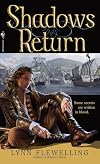
Distrusted by the Queen and quite out of fashion in Rhiminee society, Seregil and Alec are bored. Seregil and Alec have no choice to but to obey when the Queen challenges them to prove their loyalty by going on an errand to summon her sister, Klia (whom she also distrusts) home, despite their misgivings. Part way there they are abducted by slavers who clearly want to capture them specifically. Separated and sold, Alec and Seregil must firstly find out why they were captured and then find each other and escape.

One of my favourite quotes of all times comes from this book:
'Sanity,' said the mild man, 'is only a temporary ailment.'
'Sanity,' said the mild man, 'is only a temporary ailment.'

Scarlett O’Hara is one of fiction’s best-loved heroines, albeit a flawed one. She’s beautiful, feisty, selfish, vain, ambitious, savvy, ruthless and, above all, a survivor; Scarlett is everything a proper Southern lady, as exemplified by Melanie Wilkes, isn’t. And so we know that - even as her world comes crashing down around her ears at the end of 'Gone With The Wind' - Scarlett will, somehow, get through this setback and prosper. No wonder we have all fantasized about what happens after the curtains close on Scarlett declaring that "After all, tomorrow is another day!"
'The Winds of Tara' bravely attempts to satisfy our curiosity about what happens to Scarlett and Rhett; a daunting task when our dreams are so romantic and our expectations so high. Even more daunting is the Mitchell estate, which successfully banned Katherine Pinotti’s unauthorised sequel from the US and other major markets. Somehow or other, a new edition has been published in Australia which apparently cleverly bypasses the ban.
Scarlett’s separation from Rhett and the death of her staunch supporter, Melanie, has caused her to look at herself and her life in a new light. Returning to Tara to take comfort and regroup, Scarlett finds nothing is as she expects it to be; Suellen has grown a backbone, Jonas Wilkerson (the former overseer) believes he owns part of Tara and Careen has fled to the convent suffering from a mysterious illness and a broken romance with a Yankee. Scarlett resolves to show more fix all of that, repair her strained relationship with her children and get Rhett back to boot - and the first step is to find out what is going on with Careen. What she discovers at the convent sends Scarlett to England and back in a bid to save her family from a serious scandal.
Clearly, Ms Pinotti wants to provide Scarlett with the means for character growth and development, however the magnitude of the change we see, even in the first few pages, is somewhat unbelievable. In a few short months, apparently, Scarlett transforms into a caring, selfless person whose stubbornness is probably her only remaining fault (but, ah ha! that’s really a virtue, too). Careen’s predicament, which serves as part of the fuel for Scarlett’s change, is too convenient, a mere plot device. Similarly, the threat of divorce seems too modern and too simple; surely Rhett and Scarlett would simply agree to a genteel separation rather than brave further scandal with divorce, regardless of how maverick they both are. And, really, the ultimate fate of their relationship is never in doubt.
Although 'The Winds of Tara' is not, in my opinion, entirely successful in its approach to Margaret Mitchell’s characters and narrative, I am certain that 'Gone With The Wind' fans will enjoy the book. Despite its faults, this book fills in the gaps between tragedy to the happily ever after we all want for Scarlett. show less
'The Winds of Tara' bravely attempts to satisfy our curiosity about what happens to Scarlett and Rhett; a daunting task when our dreams are so romantic and our expectations so high. Even more daunting is the Mitchell estate, which successfully banned Katherine Pinotti’s unauthorised sequel from the US and other major markets. Somehow or other, a new edition has been published in Australia which apparently cleverly bypasses the ban.
Scarlett’s separation from Rhett and the death of her staunch supporter, Melanie, has caused her to look at herself and her life in a new light. Returning to Tara to take comfort and regroup, Scarlett finds nothing is as she expects it to be; Suellen has grown a backbone, Jonas Wilkerson (the former overseer) believes he owns part of Tara and Careen has fled to the convent suffering from a mysterious illness and a broken romance with a Yankee. Scarlett resolves to show more fix all of that, repair her strained relationship with her children and get Rhett back to boot - and the first step is to find out what is going on with Careen. What she discovers at the convent sends Scarlett to England and back in a bid to save her family from a serious scandal.
Clearly, Ms Pinotti wants to provide Scarlett with the means for character growth and development, however the magnitude of the change we see, even in the first few pages, is somewhat unbelievable. In a few short months, apparently, Scarlett transforms into a caring, selfless person whose stubbornness is probably her only remaining fault (but, ah ha! that’s really a virtue, too). Careen’s predicament, which serves as part of the fuel for Scarlett’s change, is too convenient, a mere plot device. Similarly, the threat of divorce seems too modern and too simple; surely Rhett and Scarlett would simply agree to a genteel separation rather than brave further scandal with divorce, regardless of how maverick they both are. And, really, the ultimate fate of their relationship is never in doubt.
Although 'The Winds of Tara' is not, in my opinion, entirely successful in its approach to Margaret Mitchell’s characters and narrative, I am certain that 'Gone With The Wind' fans will enjoy the book. Despite its faults, this book fills in the gaps between tragedy to the happily ever after we all want for Scarlett. show less
This review was written for LibraryThing Early Reviewers.
A father and daughter master glassworker team are sold into slavery to pay debts. They are sold to the sorcerous Magi to help construct Threshold, a glass encased pyramid that the Magi have created through mathematics and is supposed to connect creation with their world. The slaves on the site are highly skilled in their chosen crafts, and many of them are Elemental (meaning that they can communicate with glass, metal, gems) which the Magi have forbidden. The Elemental slaves hear the glass scream when it is placed in the pyramid and know that something is very, very wrong about Threshold and that the Magi are playing with forces they don't (or won't) understand.
There are some disturbing scenes of infanticide and domestic violence in this book, although it could be argued that these create the necessary level of horror at the wrongness of the Magi's work and as well as emotional poignancy.
This is a strong 'unputdownable' book.
There are some disturbing scenes of infanticide and domestic violence in this book, although it could be argued that these create the necessary level of horror at the wrongness of the Magi's work and as well as emotional poignancy.
This is a strong 'unputdownable' book.
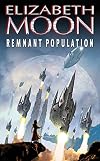
I first became a fan Elizabeth Moon fan after reading "Once A Hero" and have read any of her sci-fi books I can get my hands on (I'm not so big on her fantasy books).
Remnant Population is a standalone book and is a fascinating story of self-growth and first contact.
Ofelia is an unhappy old woman, controlled by her son, his wife and the company who employs them to be colonists on a newly terraformed planet. When the company decides to abandon the colony, Ofelia arranges to be amoung the last to go up in the shuttles, and then hides when it is time to go; who is going to bother looking for an old woman who is probably dead anyway?
Alone on 'her' planet, Ofelia has access to all that the colonists left behind - cows, sheep, their garden, clothing they were unable to take with them, the generator and a fabricator - and is able to live comfortably without anyone's interference for the first time in her life.
Ofelia eventually discovers that she is not alone on the planet. Another company attempts colonisation on the other side of the planet, and Ofelia witnesses, through the weather/communications satelite that the colonists left in orbit, the massacre of the new colonists by an indigenous population they had not suspected existed.
Ofelia finds that she is the on the front line in a First Contact, that could go disasterosly wrong. Who will take notice of what a frail, old woman has to say?
Remnant Population is a standalone book and is a fascinating story of self-growth and first contact.
Ofelia is an unhappy old woman, controlled by her son, his wife and the company who employs them to be colonists on a newly terraformed planet. When the company decides to abandon the colony, Ofelia arranges to be amoung the last to go up in the shuttles, and then hides when it is time to go; who is going to bother looking for an old woman who is probably dead anyway?
Alone on 'her' planet, Ofelia has access to all that the colonists left behind - cows, sheep, their garden, clothing they were unable to take with them, the generator and a fabricator - and is able to live comfortably without anyone's interference for the first time in her life.
Ofelia eventually discovers that she is not alone on the planet. Another company attempts colonisation on the other side of the planet, and Ofelia witnesses, through the weather/communications satelite that the colonists left in orbit, the massacre of the new colonists by an indigenous population they had not suspected existed.
Ofelia finds that she is the on the front line in a First Contact, that could go disasterosly wrong. Who will take notice of what a frail, old woman has to say?

Not the best of these woman's-guide-to-home-making-and-keeping-yourself-nice books that I have collected, but still interesting. It inexplicably contains a lengthy section on how to obtain employment for your teenager, including excrutiating detail on what they are to expect when they turn up at the Commonwealth Employment Service at 16 for assessment of their abilities and aptitudes.

Oh my. I am left with an impression that Jean-Jacques Rousseau was a seasoned whinger. Everyone is against him. But his genius is misunderstood. Blah, Blah, Blah.

Over-hyped, over-rated and over-read. This book is not worth the hype.

A lacklustre, walk-it-in retelling of Swan Lake. I really disliked this one.

I thoroughly enjoyed this classic Sci Fi tale, which stands the test of time against supposedly more sophisticated fiction. The mysterious Hee Chee have abandonded artifects all over the gallery. Humans have discovered a spacestation, Gateway, where hundreds of ships have been abandoned. Although they don't know how to operate or guide the ships, there are no shortage of volunteers to take the ships out on potentially lucrative runs that are equally risky since there is no way of controlling the ship's destination.

A band of travellers slowly drift together, tied by secrets and possibly magic. As they flee the plague, they are frightened to realise from howls during the night that they are being followed by a wolf or werewolf. During their journey each of the travellers tells their story, reminiscent of Chaucer, but have they each revealed the full truth?
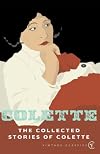
I love these beautifully poetic stories from Colette, ranging from the Belle Epoch to her later life. I particularly like the theatre stories. Their deceptive simplicity leaves me breathless. Ah, if only my French was good enough to read this in the original.

This was a 2nd hand pick up, but I really couldn't get in to it. I'm just not that in to mysteries and this one definitely didn't grab my attention.

An alternative view of Anne Boleyn, as a real woman, not merely the beheaded wife of Henry VIII.
I'm not too big on the detective genre at the best of times and combined with cyberpunk? Well, lets just say I anticipated 'meh' at best.
Thankfully, I was wrong. Altered Carbon, manages to take the best of both genres and subvert the cliches quite skilfully. The technology and the plot kept me guessing at every turn. Fantastic.
Thankfully, I was wrong. Altered Carbon, manages to take the best of both genres and subvert the cliches quite skilfully. The technology and the plot kept me guessing at every turn. Fantastic.