This book is likely good for someone who is a teenager. For someone who has more life experience much of this book will seem a bit trite and juvenile: feeling lonely for months or waiting for find someone a few years? That's life, it's not a big deal unless you are a teen or young adult. The emphasis on following after God, and letting God direct our lives is an important. I fear though, that the book sets some unrealistic expectations. The book seems to say people who follow God's calling will find great romance. I know numerous examples of people who followed hard after the Lord, who let the Lord write their lives with His pen, who desired a spouse and never found someone, or where it took decades. Sometimes we endure hard things in this life for other people's benefit, sometimes God has something else for us. We might not have one special person to share life's journey with. That's not to say we will be alone, thank God for the Body of Christ. While romantic, I was a bit troubled by the idea of living for your future spouse, writing letters, etc. Rather, I see our calling to live in in the present with our future hope being in the Lord. For all my negative comments, I would say this book is a 3 stars for someone younger, but more like a 1 for someone with significant life experience. For more mature folks, I would recommend Dating and Waiting by Bill Risk.

A personal account of what it's like to be on the "wrong side" of the Iranian "legal" system. Roxana Saberi accounts rings of truth. She discloses failings and mistakes, along with the courage and faith she found through her incarceration. It seems that in a number of countries, Iran, North Korean, etc that security issues often result in more "mundane" issues like human rights to be overlooked which I think is a grave mistake, because if a national can't treat it's own people well, how can we hope that they will deal well with others. In the conclusion of the book Roxana Saberi wrote the following observation, if not plea to the thought leaders in Iran (or anyone else) who attempt to hold on to power by suppressing dissent:
I do believe that certain Iranian authorities are genuinely trying to address some of their country’s human-rights violations and shortcomings. However, they face fierce opposition from extremists who seem blinded by their own pursuit of power and their failure to recognize that the key to long-term security lies not in control and intimidation but in tolerance, an exchange of ideas, and winning the hearts and minds of disaffected groups and independent thinkers. This security also depends on addressing the roots of problems instead of suppressing the people who speak or write about them. While suppression might silence people in the short run, it breeds discontent and distrust toward the regime in the long run. It can also push advocates of show more moderate change underground, where they might turn from evolutionaries into revolutionaries. show less
I do believe that certain Iranian authorities are genuinely trying to address some of their country’s human-rights violations and shortcomings. However, they face fierce opposition from extremists who seem blinded by their own pursuit of power and their failure to recognize that the key to long-term security lies not in control and intimidation but in tolerance, an exchange of ideas, and winning the hearts and minds of disaffected groups and independent thinkers. This security also depends on addressing the roots of problems instead of suppressing the people who speak or write about them. While suppression might silence people in the short run, it breeds discontent and distrust toward the regime in the long run. It can also push advocates of show more moderate change underground, where they might turn from evolutionaries into revolutionaries. show less
Loveology : God, love, marriage, sex and the never-ending story of male and female by John Mark Comer
I found loveology an enjoyable read. I think it would be an excellent book for someone born after 1985. In modern idioms explains how romantic / emotionally passionate "love" is inadequate to sustain a relationship, it paint an enticing picture for marriage and why marriage should be for life. It honestly talks about sex and hold out for no sex until marriage... not for arbitrary religious / moral resource, but because the nature / power of sex. I disagree with his "we leave a part of ourselves" with the person we have sex with, I think it would be more accurate to think of it as an entanglement which is great if you are sticking together, but can trip you, pull in, etc if you separate. The book directly takes to the modern issue of gender identity... starting with an needed apology for how the church has behaved in an awful way, but then makes the case for a classical biblical take on gender without stigmatize people. I think that Keller's Meaning of Marriage is a stronger book, but Loveology will be more approachable to people who are younger.

This was the first cookbook I used as a child in my parents home. The recipes are simple and quick to make. I have not used this cookbook in years but still have a fondness for it.
Bailor's book fits in with a number of authors who could be called amateur "experts". Bailor has clearly spent a lot of time looking at the literature related to weight lost and fitness and attempted to construct a general theory which integrated the research he has read. I agree with Bailor's assertion that calories in/calories out is an over simplification of how the body processes food. The metabolic system is very complicated with feedback, amplifiers, and cascade reactions with result in non-linear results. While Bailor attempts to distance himself from the low-carb diet, I see very little difference between what he advocates and something like the south beach diet or the Zone when you take into consideration that when they recommend complex carbs, you should be primarily going for non starchy veggies. I appreciate that Bailor's attempts to use science as the basis of his plan, but from the brief investigation I did, it seems that he sometimes misinterpreters the studies he cites resulting in at best overstatements of what the study revealed. When I have more time I plan to research the major studies Bailor cited. If they consistently support his assertions i would upgrade this book to 4-stars.
Secrets From the Eating Lab: The Science of Weight Loss, the Myth of Willpower, and Why You Should Never Diet Again by Traci Mann
Summary: Book which cites a fair amount of research which suggests that a diet which focuses primarily on weight lose by running are calorie deficient is likely to be unsuccessful in the long term. That such diets result in weight lost in the first 6-24 months, but then the majority of people find their weight yo-yo back up to the previous (or higher) level after the initial "success". It is suggested that yo-yo weight changes have even more health risks that being chronically overweight. The author suggests that people should understand that it's unwise to get below their genetic set point.
Thoughts: I have not done a full literature review, but I think her conclusions have some merit. I would have likely to see more research / examination of body composition changes (e.g. weight not changing but %body fat changing). Author seems to indicate that genetic set point can't be altered, but I have seen people go be "normal" to "obese" in a few years and then have a hard time reducing their weight back down to their "old normal". I suspect that genetics plays only a partial role in a person's weight.
Thoughts: I have not done a full literature review, but I think her conclusions have some merit. I would have likely to see more research / examination of body composition changes (e.g. weight not changing but %body fat changing). Author seems to indicate that genetic set point can't be altered, but I have seen people go be "normal" to "obese" in a few years and then have a hard time reducing their weight back down to their "old normal". I suspect that genetics plays only a partial role in a person's weight.
The Gifts of Imperfection: Let Go of Who You Think You're Suppose to Be and Embrace Who You Are: Let Go of Who You Think You're Supposed to Be and Embrace Who You Are by Brené Brown
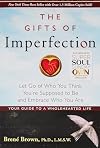
I really enjoyed Brene Brown's TED talks, and read this book hoping to get a more in-depth understanding. While I enjoyed this book, I don't find my understanding or perspective significantly deepened. For someone who hasn't spent much time reading or learning from people who come from a contemplative tradition and has looked at issues around shame, guilt, vulnerability, this would be a very valuable book. But I think there are numerous books which go in more depth, and some with deeper and more impactful insights. Brene's book is a great example of how a more rigorous social science approach is rediscovering millennia old tradition and then enriching the classic practices with much more refined models and explanations about why these practices have a positive impact on people's lives.
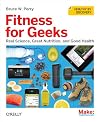
If you are looking for a book which presents a systematic model for fitness that is backed by well integrated science, you will be disappointed. Likewise, if you are looking from a book to give you a simple plan to follow, you will be disappointed. This book does cite a number of science studies, and has some broad organizing principles, but nothing I would bet my life on. We still don't really understand a lot about how our bodies work, they are extremely complex systems, so I shouldn't be surprised that this book fell short of my hopes. I have observed contradictory papers on nutrition and exercise in top peer reviewed journals within a few years of each other. Rather than offering a systematic in integrated model with a clear blueprint for an action plan, this book is more like highlights of what you would find visiting some of the better paleo diet and the quantify self movement websites. So if you are looking for a book to give you numerous ideas, techniques, and tools to consider, this would be a valuable book.
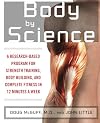
Most books about health and fitness seem to be filled with antidotal stories. This book attempts to back up every major assertion with high quality science. This book makes the case for high intensity strength training rather than the more traditional, moderate intensity training often referred to as cardio. The authors assert, and provides references to papers which found that short duration high intensity training provided all the benefits of more classic, static training, in a fraction of the time.

This is not a book to make you feel warm and fuzzy about dating in marriage. Rather, it a practical book that will challenge you to grow in your ability to love others, and by doing that, become prepared to have a successful marriage. The first chapter is a critique of "romantic love", pointing out that while it is pleasant, it is unable to sustain a relationship in the long run. The authors suggest that the only force sufficient to produce lasting relationships is sacrificial, agape love. The key to a successful marriage? "... is not to find the right person, but to become the right person: a person who has learned to practice Christian love at the most intimate level". A simple framework is provided to think about how one builds relationship: shared experience, understanding the persons inner works, and emotional connection. Building strong same-sex friendships develops skills that are critical to lasting marriages. It is often easier to gauge growth in these friendship than romantic relationships, because when romance is involved, things often seem better, deeper, more intimate than they actually are. The next section of the book discusses how important it is for both people in a relationship to have a shared spirituality (obviously in the case of Christian dating, but to be committed Christians), and that both parties are vitally involved in the life of people in church, serving others both as individuals and as a couple. The book next moves into what is the show more appropriate perspective on sexual love suggesting appropriate boundaries are about attitude. The book concludes with several chapters that discuss how to deal with baggage from past relationship and life choices. I believe this is a very valuable book, but it can be applied in a external, legalistic fashion. I would recommend reading this book along side "Dating and Waiting" which calls the reader to example their hearts and relationship with God as they explore dating and marriage. I think the Kellers' book The Meaning of Marriage is the single best book I have read on marriage. show less

I appreciate Chan's call to a radical lifestyle and found several sections of this book challenging. I believe the church in the west, especially in America, needs to wake up and start to love people more than things but Chan's prescription isn't sufficiently nuanced. Furthermore, while the book discusses how this should be fueled by an understanding of God's love for us, I did not feel my understand of God's love grew by reading this book.
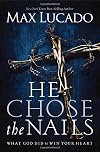
Read this book with a group leading up to easter. Sometimes books like this are too sedimental, but I found this book encouraged me to deepen my appreciate of Jesus' life and sacrifice. While I enjoyed reading this book, it's a bit like eating whip cream. Tastes good, but isn't necessarily very substantial, e.g. doesn't bring about changes.
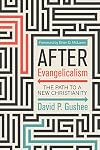
This book is a call to follow Jesus out of evangelicalism. The book posits that evangelicalism is in many ways a consumer culture remaking of fundamentalism from the early 1900s which has over identified itself with the US culture and has pursued power rather than God's agenda. I am sympathetic to many of his critiques of the evangelical movement but I was disappointed that he failed to connect his critiques and solutions more to the core of the gospel. I would have liked to see him place political power juxtaposed to people's hearts and lives being transformed through the gospel and a healthy local church.
While he acknowledge the already but not yet Kingdom, he didn't lean into this enough. That our citizenship is in God's kingdom and God's love for the whole world delivers a death blow to the over identification with any national agenda and can provide a powerful alternative to the pursue of power to effect change.
I found After Evangelicalism to be a frustration and uneven read. Gushee bounced between academic theory and antidotal stories. At times he calls for a return to ancient traditions and then asks us to reevaluation traditional interpretations in light of our current culture. It seems to me that Gushee has failed to recognize how US culture, with it's heavy emphasis on individual freedoms has colored his interpretation of the Bible.
While he acknowledge the already but not yet Kingdom, he didn't lean into this enough. That our citizenship is in God's kingdom and God's love for the whole world delivers a death blow to the over identification with any national agenda and can provide a powerful alternative to the pursue of power to effect change.
I found After Evangelicalism to be a frustration and uneven read. Gushee bounced between academic theory and antidotal stories. At times he calls for a return to ancient traditions and then asks us to reevaluation traditional interpretations in light of our current culture. It seems to me that Gushee has failed to recognize how US culture, with it's heavy emphasis on individual freedoms has colored his interpretation of the Bible.
The primary thesis of this book is that there are three long term responses to traumatic events. The most common is that people get through, and continue on in life. The second, getting a lot of press today are people who find themselves at a lose, losing capabilities, with the most extreme being PTSD. While this book looks at both these responses. it focuses on a third outcome (one much more common that PTSD), that people grow substantially as a result of the trauma. I would highly recommend this book if you are trying to love someone who wrestling through something that is traumatic for them. I appreciated the liberal use of footnotes which contain references to the studies / data which underlie the authors assertions.
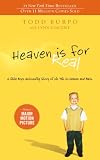
I believe Christians are called to examine experience through the lens of the Bible. While many of the experiences recorded in this book are in harmony with what I believe is true, there are a number of things which contradict my reading and understanding of the scripture. The Bible repeatedly warns that we must not be swayed by experiences and visions, but compare everything to what is revealed in the Bible.
The story is very moving, but I believe there are other explanations besides a little boy seeing and experiencing heaven. I believe that the authors son, even though he was only 4, picked up much more than his parents realized. He is, after all, a pastor's kid and someone who was around church people a lot. A credible explanation of his "insights" which he did not learn in sunday school and his parents don't remember teaching him, is that these are things he could have overhead as the adults in his life talked with each other.
The story is very moving, but I believe there are other explanations besides a little boy seeing and experiencing heaven. I believe that the authors son, even though he was only 4, picked up much more than his parents realized. He is, after all, a pastor's kid and someone who was around church people a lot. A credible explanation of his "insights" which he did not learn in sunday school and his parents don't remember teaching him, is that these are things he could have overhead as the adults in his life talked with each other.
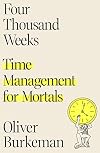
Quite different from the typical book about time management or productivity. Burkeman argues that people focus on productivity are often avoiding the fact that they are finite. There will not be enough time to do everything they want to do, and being more productive will not make a substantial difference in their experience. Rather, people would be best served to become comfortable with their limitations and choose what they will do, and let go of the things they can't accomplish. I think the author has a faulty new of how an eternal life would chance the equation, but I don't have an alternative to off at this time. This book helped me relax, to leave more slack in my life, and to make sure I choose to spend my time on things that matter to me, even if they weren't "productive" or likely to have a "significant impact". Good companions for this book at Essentialism by Mckeown, and How to Inhabit Time by James Smith.
Francis makes the case for the church to return to it's roots... radical communities of normal people who meet in homes or other gatherings without the need for building and big programs. Chan paints an attractive picture, but is sometimes overly hyperbolic in his points and has determined that house based churches is the only appropriate path. While this seems to be what was normative in the first century, there are not biblical mandates for this structure, just examples.
This is a feel good book which echo's Nike's "Just Do It". Goff encourages the reader to engage in life and live big. Try crazy things. Don't be afraid things will fail. For some people this might be just the encouragement they need to step out.
Each chapters has a funny story from Goff's life and illustrates what good things can come from just getting out and doing something. Following the story the book often highlights a life lesson in more general terms. I found the lessons learned sometimes touching and authentic, and sometimes a bit contrived. I wish there were more stories of how things failed and how those failures were as valuable as the successes in learning and growth.
My final criticism is that there was very little of the Gospel in this book. It was about what we can do, not about how God's love transforms our lives and allows amazing things to happen through our flaws and weaknesses.
Each chapters has a funny story from Goff's life and illustrates what good things can come from just getting out and doing something. Following the story the book often highlights a life lesson in more general terms. I found the lessons learned sometimes touching and authentic, and sometimes a bit contrived. I wish there were more stories of how things failed and how those failures were as valuable as the successes in learning and growth.
My final criticism is that there was very little of the Gospel in this book. It was about what we can do, not about how God's love transforms our lives and allows amazing things to happen through our flaws and weaknesses.
Jesus and John Wayne : how white evangelicals corrupted a faith and fractured a nation by Kristin Kobes Du Mez
I didn't enjoy this book, but it could be valuable for many. There are numerous heartbreaking stories.... both of individuals hurt, leaders gone wrong who dominating those they should be have been helping grow, and of individuals and organizations chasing after power. Kristin is right to criticize the church for its racism, homophobia, excessive patriarchy, chasing after power, and embracing a christian nationalism rather than prioritizing living in Jesus' kingdom. That said, it seems that Kristin sees these issues everywhere she looks which rings of some confirmation bias, and confuses correlation with causation. For people who know there are problems with the evangelical church I would recommend skipping this book and focus of finding solutions. since Kristin offered no solutions. For most people, I think the book The Kingdom, the Power, and the Glory by Tim Alberta will be better. There are many churches in the evangelical tradition that are quietly servicing their community, loving people, without a hit of racism, homophobia, power seeking, or nationalism. Some of these churches would be viewed by Kristin and excessively patriarchal, but when I look at the biblical text I am not as certain as Kristin on gender roles / engagement. Maybe that's because I am white male. One other critique is that Kristin fails to take into consideration that people evolve. One example is her seeing many of Jerry Falwell actions having racist roots. BTW: I have never been a fan of show more Falwell, especially given is chasing of power rather than loving service. Early in Falwell's ministry he was clearly racist but it seems like he had a genuine change of heart brought about by regular interactions with people who weren't caucasian and discovered they were people, just like everyone. show less
This is a good book for a first time manager who is working in a growing high tech company who has not been exposed to other books about management. The author using numerous anecdotes from her experience to illustrate her points and to humanize her principles. She is vulnerable, sharing both successes and failures. You can view this book as a gentle introduction to Radical Candor and High Output Management which I find to be deeper and more insightful. This books falls short of what it could be. The authors experience has been exclusively at Facebook during a period of explosive growth. It fails to address challenges faced by managers many other places such as highly constrained resources. I enjoyed the first chapters as the read can follow Julie's growth and learning but toward the end I was struggling to finish the book. The last couple of chapters seem to have a bit too much Facebook coolaid.
I picked up the original 20 Things I Want My Kids to Know in 1992 as my wife and I were starting to plan for children. We found the book encouraging and got us thinking about what life lessons we wanted to model and pass on to our kids. We found a significant overlap between the 20 lessons in this book to the lessons we thought where important. I had thought this book was out of print so I have been recommending the book Never Mind the Joneses which touches on many on the same themes though is more explicitly Christian in it morality. I discovered that Life's Greatest Lessons was essentially the same content, just with a new title and publisher. I likely this book enough to repurchase it in e-book form.
The 4-Hour Body: An Uncommon Guide to Rapid Fat-Loss, Incredible Sex, and Becoming Superhuman by Tim Ferriss
I am not fond of this book. I think Ferriss' claims over reach and are soemtimes just wrong. That said, this book started me on a path to rethink what I thought I knew about health, fitness, and nutrition. I thought the conception of minumum effective dose is importable for people with busy lives, appreciating that the metabolic is very complex and that a calorie is not a calorie, and lead me indirectly to discover the effectiveness of high intensity interval training.

Spark Joy is an a decent book for someone who has decided they want to simplify their life and focus on what matters the most to them. Kondo suggests her method is the best to bring about a "tidy" environment. I am sure her approach can be very effective for someone who has the time and energy to do a massive "tidy up" in one go. I believe there are other methods which happen over a longer period but are less disruption to life if a person can maintain their discipline over an extended period of time. Some of her stories reveal how an immature understanding of her "spark joy" approach can lead to mistakes such as her story of her now broken beloved ruler. I very much appreciated her emphasis of weeding out things that don't matter so you put all your focus on things which help you appreciate life. This book is filled with many useful and practical suggestions about how to tidy up with encouragement about what benefits you will enjoy when you finish tidying up. I believe most people would find The Minimalist Home by Joshua Becker more practical.
Breaks people into three interaction styles: givers, takers, and matchers and makes the case that effective givers end up producing the best results for themselves and their eco-system. I found this book suggests that outcomes of a giver style can beat what's described in Axerod's corporative matcher strategy described in The Evolution of Cooperation by growing the pie beyond a prisoner dilemma payout. I appreciate the number of studies that Adam Grant cites when making his assertions.
Distills much of what I have learned in the last several years as I have tried to understand what practices would lead to a good health span. This isn’t surprising since I have been greatly inspired by Attia’s The Drive podcast. Attia has moved me to be more proactive with my health, especially when it comes to early detection / testing. I have been inspired by his idea of the centenarian decathlon which now informs my fitness goals, and am doing more training in zone 2.
This book resonated in my heart more than nearly any book I have ever read, but with a caveat. While the themes Palmer discussed resonated with my heart, I didn't always find the specific example or the writing to be on par with the "truths" explored. The key truths for me were: Teach out of identity and core not technique. Fear and alienation are the enemies of effective teaching. Greater truths are often paradoxes. Trying to resolve paradoxes too quickly short-circuits learning. The tension from paradoxes can leave us open provide we have fuel to endure the tension which requires love and suffering. Finding truth as a community centered around a subject rather than "objective facts" and experts. Teaching from the microcosm. From an impact in my life this is a five start. From a completeness of the topic / writing quality, this is a three star.
"For someone who has their personal finances in order, this will be a boring and basic book. For someone who is just figuring out how to manage their finances, this is a great book. I read this book when I was feeling weighed down by our finances and debt. This book helped me think systematically about what we were doing with our finances, helped refine a plan to retire all our debt, and convinced me the need to save and invest for the future. Since I read this book, I have read a number of other books about personal finance and investing. While several of these books gave me a deeper understanding of the topics, not have contradicted what I learned in this book. Personal Finance for Dummies has all the advice I would hope a parent would pass onto their children about money. Unfortunately, a lot of parents don't know many of the things found in this book or don't think to teach their children how to effectively manage their money."
Organizing from the Inside Out: The Foolproof System for Organizing Your Home, Your Office and Your Life by Julie Morgenstern
"Julie Morgenstern helped me tame piles of paperwork and organize our house. In our modern life it seems like we have way to much stuff to manage. This book suggests simple but practices tools and techniques to organize things. I am particularly fond of her ""Kindergarten"" principle... everything should have a place to be put away right by where where they will be used. Reading this book also helped me appreciate how my tendency to want to organize things ""exactly"" can lead me to get nothing done... between to lump a few things together. I haevn't read it, but here later book about purging things would go well with this book."
I first read the Normal Christian Life in 1982. At the time, it seemed like a good book. I was wrong... it is a fantastic book. I know of no other book which does as a complete a job of explaining how Romans 5-8 plays out in our lives. Anyone who reads and understands this book will find themselves freed to follow God wholly. Too often we try to please God through our own efforts... this never works. The start and finish of life is God's gracious love.
This is a good introduction to minimalism, the difference between pursuing meaning rather than happiness, and the value of serving others. If these are new topics for someone, I think this is a 4-5 star read.
I rated it as three become while I likely the material, there was virtually nothing new to me. Each of the chapters could easily be a book... and there are full books which cover the material of each of the chapters with more depth, nuance, and insight.
In an attempt to keep this book generic enough to be welcome by people of different faiths, and people who would characterize themselves as having "no faith" Becker has avoiding directly referencing and expositing from scriptures which could be helpful for people who are from faith traditions similar to Beckers.
I rated it as three become while I likely the material, there was virtually nothing new to me. Each of the chapters could easily be a book... and there are full books which cover the material of each of the chapters with more depth, nuance, and insight.
In an attempt to keep this book generic enough to be welcome by people of different faiths, and people who would characterize themselves as having "no faith" Becker has avoiding directly referencing and expositing from scriptures which could be helpful for people who are from faith traditions similar to Beckers.