
Had this book in my library for years and finally got around to reading it. When I began the book, I wondered how 900 days could be covered in 583 pages, and it isn't. I was, in a way, disappointed by the book because it follows the first 300 days or so in great detail and then the last 600 days are over in about 50 or 60 pages. If you want to know how the poets and literati of Leningrad made it thru the first 300 days, this is your book. There is a rather superficial treatment of the military events in the first 300 days. Plenty of stuff on communist back-stabbing and executions for "failure" or on the other hand for exile for being right when the boss said the other thing and you disagreed. I am going to move on to David Glantz Battle for Leningrad.

Got this book for Christmas and was looking forward to it. Got to say that the book is as little interesting as the proposed stratum of "earth" to be left behind by Human Civilization. What you get is a recitation of how things Human will NOT survive into the far future with the sad exception of the thin stratum of soil polluted by our pumping of CO2 into the atmosphere and evidence of sea level change caused by global warming. Other than that the book is a concatenation of how everything will be destroyed by one or another geologic process. Oh. Sure, something, someone’s bones may fossilize. Might be found. But the book boils down to this: Not much except the soil stratum recording increased CO2 levels is likely to survive, all that there is to show for Human Civilization. You could have summed that up in one page – or one paragraph. Disappointing. Other than that the book is a polemic about how we are creating environmental havoc – and we are. But this book will do little to help avoid it I fear.
Militarism in a Global Age: Naval Ambitions in Germany and the United States before World War I by Dirk Bönker

Very - VERY - Disappointed in this book. A very academic analysis of the German and US navy in the 1890's to 1910.'s. Basically reads like a PHD thesis where the author is making his own argument for his own interpertation of history. Did not really find it to be consistent wiht other books I have read on the subject a period. Writing style is really turgid. A tough read.


This book is now 20 years old so I am really late to the party to write a review. I actually came across this book in the footnotes of a much more current book, but I was prompted to read it based upon that footnote. I was not disappointed, even though 20 years have likely made much in the book dated. First of all I found Harden’s prose exceptional. I cannot say that about many books I read. He begins with a narrative of his family that I found it very riveting. So, not to be too long winded I’ll just say he gives each side a fair representation concerning the Columbia. I learned allot that I did not know before and to me that is always a big plus from a book. What I learned from this book that I did not know is why I give it a 5 Star review. You can an East Sider, a West Sider, a Slackwater, a Hanford or a Native American. They all have their views and each has its value. Harden comes from the Columbia Basin and you might expect because of that he would conclude the book with a bias one way or another. He does not. The reader must make their own judgement after a very fair presentation of all sides. “A River Lost” is 20 years old but worth the read. I would like to someday read “A River Revisited.” How much more might I learn. Harden, are you out there? New book? Please!!!!

Entertaining book, but I have my doubts as to the actual validity of some of the word entries. I have seen post from Germans saying “I have never heard of this word.” Still they are good.
Favorites are Buchadlerauge – Book Eagle Eye - which means you remember where every book is on which self and Deppenfahrerbeäugung – Moron Drive Eyeballing - which is supposed to mean the urge to stare at the idiot driver you have just passed.
Favorites are Buchadlerauge – Book Eagle Eye - which means you remember where every book is on which self and Deppenfahrerbeäugung – Moron Drive Eyeballing - which is supposed to mean the urge to stare at the idiot driver you have just passed.

While an interesting book, it is a bit shallow. In many cases it is more like a thumbnail sketch of a nation’s participation. The fact that this is a translation is also apparent in the choice of some words such as circa in many instances where the word approximately would have been more appropriate.

Last night I finished Ricks' excellent book The Generals. This morning I began Millett and Murrays' Military Effectiveness, Volume I. In the introduction to this work I found three noteworthy lines. The first, by Millet and Murray read, "Combat (or tactical) superiority became rationalized as a way to make any strategy work." The next comes from a quote from Michael Howard "...the complex problem of running an army at all is liable to occupy his mind and skill so completely that it is very easy to forget what it is being run for." The third and last comes again from Millet and Murray, "The historical record suggests the opposite; instead of adapting their doctrine and approach to reality, for the most part military leaders and their organizations have attempted to make reality fit their preconceived notions until they and their forces fail or face obvious failure." Anyone having already read The Generals will recognize these comments. To a great degree they sum up The Generals. To anyone about to read The Generals, keep them in mind.
Now, as to the book itself, it is excellent. There are several hundred Amazon reviews attesting to this already. I will make only the following short comment: The book reinforces my long held belief that generals have become (business) managers over the last 30 plus years, gaining too many business management degrees in grad schools and too few of them really studying war.
As to the book, I have only two complaints; one with the author and one show more most likely with a type setter. This book, however an excellent work, lacks an adequate set of proper footnotes. You catch on, if you look, to the fact that there are notes relating to the text arranged by page number in the back. But you never know for sure what item of the book is, or is not, footnoted because it totally lacks any indication in the body of the text as to what is footnoted using the author's "personal" style. To do this properly should not have been that difficult. Second is my likely beef with an inept typesetter who on page 20 spells John "Black Jack" Pershing's name as a hyphenated "Back-jack" as the card game Blackjack would be, as opposed the proper "Black Jack." These two items aside, this is an eminently readable book and an exceptional essay on the state of the Army's current command structure. show less
Now, as to the book itself, it is excellent. There are several hundred Amazon reviews attesting to this already. I will make only the following short comment: The book reinforces my long held belief that generals have become (business) managers over the last 30 plus years, gaining too many business management degrees in grad schools and too few of them really studying war.
As to the book, I have only two complaints; one with the author and one show more most likely with a type setter. This book, however an excellent work, lacks an adequate set of proper footnotes. You catch on, if you look, to the fact that there are notes relating to the text arranged by page number in the back. But you never know for sure what item of the book is, or is not, footnoted because it totally lacks any indication in the body of the text as to what is footnoted using the author's "personal" style. To do this properly should not have been that difficult. Second is my likely beef with an inept typesetter who on page 20 spells John "Black Jack" Pershing's name as a hyphenated "Back-jack" as the card game Blackjack would be, as opposed the proper "Black Jack." These two items aside, this is an eminently readable book and an exceptional essay on the state of the Army's current command structure. show less

I gave the book only 2 stars. Heard the interview with the author on NPR and was expecting much more from the book than it delivered. I was expecting something meaty about virus hunting. What I got was pablum. Which in viruses is a good thing, but not in books.
If the Universe Is Teeming with Aliens... Where Is Everybody? Fifty Solutions to Fermi's Paradox and the Problem of Extr by Stephen Webb
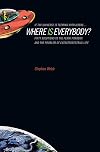
I was totally unimpressed by this book. If I could have given it a zero, I would have. As it is 1/2 star is the least I can give it. In some calculations I believe the basic math is wrong by factors for 10 or 100 due to misplaced decimal points.

THE INTIMATE PAPERS OF COLONEL HOUSE ARRANGED INTO A NARRATIVE. VOLUME IV THE ENDING OF THE WAR by Edward M. House

Diplomatic History, Military History, WW1 History

OK, I am in the obvious minority with this review, but it's how I see it.
This is a work filled with broad, sweeping suppositions, yet it seems that as always the devil is in the details and I was left unconvinced that the authors really had the details right to support their "Rare Earth" theory. It is an interesting, if ultimately unconvincing book. Interesting theory, lots of conjecture, and lots of "What if..." in every chapter.
To me it seems that in many places sweeping statements are made, but never supported. Take for instance the statement on page 110 "Changes in ocean chemistry caused by increased tectonic activity beginning a billion years ago facilitated the evolution of skeletons." But the section does not, to me, provide adequate support or explanation for this supposition.
Also take for example the Drake Equations which - while properly explained - is misstated in the details.
The equation is usually written: N = R* x fp x ne x fl x fi x fc x L where:
N = The number of civilizations in The Milky Way Galaxy whose electromagnetic emissions are detectable.
R* =The rate of formation of stars suitable for the development of intelligent life.
fp = The fraction of those stars with planetary systems.
Ne = The number of planets, per solar system, with an environment suitable for life.
fl = The fraction of suitable planets on which life actually appears.
fi = The fraction of life bearing planets on which intelligent life emerges
fc = The fraction of civilizations that show more develop a technology that releases detectable signs of their existence into space.
L = The length of time such civilizations release detectable signals into space.
(Source: Seti Institute, http://www.seti-inst.edu/science/drake-bg.html)
However, as given in the text of "Rare Earth" the formula is:
N* x fs x fp x ne x fi x fc x fl = N
This does not appear to be a big difference, however, the terms fi, fl, and fc are each mis-defined in the book. fi is defined as planets where life does arise, not intelligent life; fc as planets on which intelligent life emerges, not civilizations that develop a technology; and fl as percentage of lifetime of a planet that civilizations release detectable signals into space, not planets with life. This may seem nothing more then nit picking over details, but to me this is symptomatic of the entire work. If you can't even get a few simple 40 plus year old definitions right how accurate is the rest of the work? The belief that earth is the rarest of planets and then the selection of information to support that idea appears to be the main thrust here.
Good science uses data to take you to a logical, fact supported conclusion, you get the reverse when to select facts to support a preconceived conclusion.
In many ways I see this book as a thinnly disguised effort at Intelligent Design to explain why there is what there is on Earth.
Overall an unsatisfactory book. show less
This is a work filled with broad, sweeping suppositions, yet it seems that as always the devil is in the details and I was left unconvinced that the authors really had the details right to support their "Rare Earth" theory. It is an interesting, if ultimately unconvincing book. Interesting theory, lots of conjecture, and lots of "What if..." in every chapter.
To me it seems that in many places sweeping statements are made, but never supported. Take for instance the statement on page 110 "Changes in ocean chemistry caused by increased tectonic activity beginning a billion years ago facilitated the evolution of skeletons." But the section does not, to me, provide adequate support or explanation for this supposition.
Also take for example the Drake Equations which - while properly explained - is misstated in the details.
The equation is usually written: N = R* x fp x ne x fl x fi x fc x L where:
N = The number of civilizations in The Milky Way Galaxy whose electromagnetic emissions are detectable.
R* =The rate of formation of stars suitable for the development of intelligent life.
fp = The fraction of those stars with planetary systems.
Ne = The number of planets, per solar system, with an environment suitable for life.
fl = The fraction of suitable planets on which life actually appears.
fi = The fraction of life bearing planets on which intelligent life emerges
fc = The fraction of civilizations that show more develop a technology that releases detectable signs of their existence into space.
L = The length of time such civilizations release detectable signals into space.
(Source: Seti Institute, http://www.seti-inst.edu/science/drake-bg.html)
However, as given in the text of "Rare Earth" the formula is:
N* x fs x fp x ne x fi x fc x fl = N
This does not appear to be a big difference, however, the terms fi, fl, and fc are each mis-defined in the book. fi is defined as planets where life does arise, not intelligent life; fc as planets on which intelligent life emerges, not civilizations that develop a technology; and fl as percentage of lifetime of a planet that civilizations release detectable signals into space, not planets with life. This may seem nothing more then nit picking over details, but to me this is symptomatic of the entire work. If you can't even get a few simple 40 plus year old definitions right how accurate is the rest of the work? The belief that earth is the rarest of planets and then the selection of information to support that idea appears to be the main thrust here.
Good science uses data to take you to a logical, fact supported conclusion, you get the reverse when to select facts to support a preconceived conclusion.
In many ways I see this book as a thinnly disguised effort at Intelligent Design to explain why there is what there is on Earth.
Overall an unsatisfactory book. show less

This is a really bad book. Only the last chapter is devoted to the battle. The first half is a prosaic history of Prussia. The second half is a re-counting of the Russian Front. And the actual account of the battle is very thin. A book to AVOID!
