This is a fantastic book exploring the origins of a city that was carved from a swamp and which has spent its entire history living on the edge of calamity. Powell provides a detailed and nuanced history of the French and Spanish colonial periods, concluding with the opening chapter of the American experience. Powell spends a lot of time untangling the various threads of the Creole, Native American, free people of color and enslaved African communities. If you've ever wondered for whom Bienville, Carondolet, Pauger, Claiborne, Gravier, Kerlerec, Marigny and a dozen other local streets were named will find your answers here. Highly recommended.
The U.S. Navy's "Interim" LSM(R)s in World War II: Rocket Ships of the Pacific Amphibious Forces by Ron MacKay Jr.
This is a superb book. It is a detailed and fascinating look at the design, building and operation of the Interim LSM (R) classes. The work is well written and Ron Mackay does a deep dive on the short but eventful career of the Interim LSM (R) type, in particular a detailed look at their important service in the invasion of Okinawa and its lesser neighboring islands. Students of the Pacific War, particularly those who enjoyed Morison's History of U.S. Naval Operations in WW II, will find this an interesting read and a valuable reference source on the Interim LSM (R) type and the Okinawa Campaign. Highly recommended
 This review was written for LibraryThing Early Reviewers.
This is a splendid book.
It is part travelogue and part contemplation of Shakespeare's plays and how they are interpreted and have been interpreted outside of Britain over the last 400 years. Andrew Dickson starts with Germany and itinerant bands of 17th Century actors, moves to the western frontiers of the United States of the 19th Century, then to India and South Africa of the 20th Century and finishes in urban China of the 20th and 21st Centuries. Along the way Dickson wrestles with the familiar problems of text, editing, translation, staging and gender and some perhaps less obvious issues of literary criticism, political science, economics and the mass marketing of British culture.
While not every chapter is a success (the chapters on South Africa often felt aimless), this is a fascinating examination of the birth, growth and current state of the phenomenon that is Global Shakespeare. Recommended for those with a deep interest in Shakespeare and how his work is and has been performed.
It is part travelogue and part contemplation of Shakespeare's plays and how they are interpreted and have been interpreted outside of Britain over the last 400 years. Andrew Dickson starts with Germany and itinerant bands of 17th Century actors, moves to the western frontiers of the United States of the 19th Century, then to India and South Africa of the 20th Century and finishes in urban China of the 20th and 21st Centuries. Along the way Dickson wrestles with the familiar problems of text, editing, translation, staging and gender and some perhaps less obvious issues of literary criticism, political science, economics and the mass marketing of British culture.
While not every chapter is a success (the chapters on South Africa often felt aimless), this is a fascinating examination of the birth, growth and current state of the phenomenon that is Global Shakespeare. Recommended for those with a deep interest in Shakespeare and how his work is and has been performed.
This review was written for LibraryThing Early Reviewers.American-Built Packets and Freighters of the 1850s: An Illustrated Study of Their Characteristics and Construction by William L. Crothers
This is an exhaustive reference work on the working sailing vessels of the mid-19th Century American merchant fleet. It features stunningly detailed illustrations, tables and narrative descriptions of the building materials and designs of the freighters and packets of the period. Specific chapters include those focused on hull design, construction techniques, interior fittings, hull ornamentation, rigging and masts.
This is not a book for the casual reader, but will be indispensable for those with a focus on the golden age of sail.
Truly an impressive labor of love.
This is not a book for the casual reader, but will be indispensable for those with a focus on the golden age of sail.
Truly an impressive labor of love.
This review was written for LibraryThing Early Reviewers.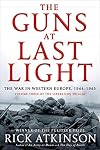
The third volume of Atkinson's history of the U.S. Army in the European Theater of Operations is a a satisfying conclusion to his Liberation Trilogy. As with the first two volumes, Atkinson's audience is the reader of popular history and he does a fine job of setting his military history into the the larger context of political, diplomatic and logistics matters which dominated the final year of the war in Europe. The war in Northwest Europe in 1944-45 has long been the focus of popular histories (Ryan, Keegan and Ambrose come to mind). While Atkinson covers the major battles as well as any of these, he also offers some insight into areas not often the focus of other popular historians such as the role of French ground forces in the area around Strasbourg and the encirclement of the Ruhr by American forces after the crossing of the Rhine. The best of his work in this volume are moving passages on the liberation of the concentration camps and the repatriation of the American dead following the war.
Atkinson's faults are minor and remain the same as in his other works, an overabundance of biographical detail on supporting players in his narrative and the occasional overly long focus on battles of indeterminate outcome. Still, The Guns at Last Light is very good and well worth the read.
Atkinson's faults are minor and remain the same as in his other works, an overabundance of biographical detail on supporting players in his narrative and the occasional overly long focus on battles of indeterminate outcome. Still, The Guns at Last Light is very good and well worth the read.
This review was written for LibraryThing Early Reviewers.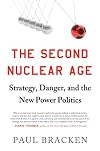
This book is a splash of cold water to the face for those of us raised in the Cold War. While we in the United States have lost our focus on the geopolitical implications of nuclear weapons in the post-Cold War world, the rest of the world hasn't, with Pakistan, North Korea and India starting or expanding nuclear programs and Iran poised to join the nuclear club. This book is a welcome reminder that nuclear strategy is still immensely important and that we have taken a 20 year holiday from thinking seriously about the topic.
As Paul Bracken astutely observes, the Second Nuclear Age will be multilateral instead of bilateral, regionally-focused and driven by nationalism rather than the systemic struggles of the Cold War. Much of our thinking, Bracken argues, is centered on the old models of Soviet-American arms control treaties and the increasingly dysfunctional Nuclear Non-Proliferation Treaty regime, while what we need is a thoughtful examination of how the nuclear component will affect regional confrontations in the Middle East, the Indian sub-continent and East Asia.
Bracken suggests that the Second Nuclear Age will have its own versions of the Berlin blockade and Cuban Missile Crisis and that America's national security players need to think now about the implications of the existence and possible use of nuclear weapons in the 21st Century's geopolitical confrontations.
This is a very fine book and a must read for serious student of diplomacy or national security.
As Paul Bracken astutely observes, the Second Nuclear Age will be multilateral instead of bilateral, regionally-focused and driven by nationalism rather than the systemic struggles of the Cold War. Much of our thinking, Bracken argues, is centered on the old models of Soviet-American arms control treaties and the increasingly dysfunctional Nuclear Non-Proliferation Treaty regime, while what we need is a thoughtful examination of how the nuclear component will affect regional confrontations in the Middle East, the Indian sub-continent and East Asia.
Bracken suggests that the Second Nuclear Age will have its own versions of the Berlin blockade and Cuban Missile Crisis and that America's national security players need to think now about the implications of the existence and possible use of nuclear weapons in the 21st Century's geopolitical confrontations.
This is a very fine book and a must read for serious student of diplomacy or national security.
This review was written for LibraryThing Early Reviewers.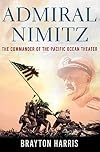
Brayton Harris's biography of Chester Nimitiz is a short (213 pages) and easy read about the man who headed American naval efforts in the Pacific during World War II. Harris has a clean and expressive writing style and favors the anecdote in describing Nimitz's impressive career. Particularly interesting were stories about Nimitz's time as a young officer in the Philippines (where his XO was John S. ("Slew") McCain) and his time, following WWII, as Chief of Naval Operations.
The book's weakness is a lack of detail about Nimitz's work as Commander in Chief, US Pacific Fleet, during WWII. While this thematically fits with the scope of the rest of the book (a light survey), it is frustrating that this work touches so lightly on Nimitz's major accomplishments. A student of the Pacific War will find little new here, which is a pity, as the author clearly has a gift for the narrative.
Read it to learn more about Nimitz's origins and temperament, but look elsewhere for a detailed history of his work during the war.
The book's weakness is a lack of detail about Nimitz's work as Commander in Chief, US Pacific Fleet, during WWII. While this thematically fits with the scope of the rest of the book (a light survey), it is frustrating that this work touches so lightly on Nimitz's major accomplishments. A student of the Pacific War will find little new here, which is a pity, as the author clearly has a gift for the narrative.
Read it to learn more about Nimitz's origins and temperament, but look elsewhere for a detailed history of his work during the war.
This review was written for LibraryThing Early Reviewers.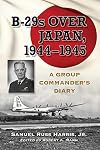
This book is a gem and a must for any student of the American strategic bombing campaign against Japan. The author, Colonel Samuel Harris, was the Commander of the 499th Bomb Group from its activation in late 1943, through its deployment to Saipan and initial operations out of the Marianas against the Japanese homeland. The backbone of the text is Harris's diary, but editor Robert A. Mann does a wonderful job of weaving Harris's diary entries with background information from the operational logs of the 73rd Bomb Wing and XXI Bomber Command. The result is a nice mix of the personal observations of a group commander with a fairly detailed recitation of overall Wing activities.
Harris's diary is written in the form of an extended letter to his wife Nancy and offers some frank comment on what Harris believed were the deficiencies of his Wing's operational plans, personnel and maintenance practices. Harris was a man of obvious intelligence and accomplishment (he flew more than 70 types of aircraft as a test pilot before the war and during the war set up the Army Air Corp's national air traffic control system) who did not suffer fools or inefficiency quietly.
This book is a nice complement to narrative histories of the B-29 campaign against Japan, focusing on the day to day demands on the men of the XXI Bomber Command. I recommend it highly.
Harris's diary is written in the form of an extended letter to his wife Nancy and offers some frank comment on what Harris believed were the deficiencies of his Wing's operational plans, personnel and maintenance practices. Harris was a man of obvious intelligence and accomplishment (he flew more than 70 types of aircraft as a test pilot before the war and during the war set up the Army Air Corp's national air traffic control system) who did not suffer fools or inefficiency quietly.
This book is a nice complement to narrative histories of the B-29 campaign against Japan, focusing on the day to day demands on the men of the XXI Bomber Command. I recommend it highly.
This review was written for LibraryThing Early Reviewers.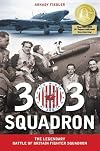
This is a lovingly prepared update of Fielder's 1942 account of the exploits of a cadre of Polish flyers fighting for the RAF in The Battle of Britain. Originally written as a tract to boost Allied morale in the darkest days of The Second World War, the book has apparently become a young adults' classic in Poland in the intervening years. While not an exhaustive history of the topic, 303 Squadron vividly describes the day to day exploits of a fearless and skilled group of fighter pilots.
This new edition of 303 Squadron is lavishly illustrated with period photos and contains an informative appendix of biographies of the pilots described in the book.
This is a fast and entertaining read for the general reader.
This new edition of 303 Squadron is lavishly illustrated with period photos and contains an informative appendix of biographies of the pilots described in the book.
This is a fast and entertaining read for the general reader.
This review was written for LibraryThing Early Reviewers.
This is an honest and well written account of a young Marine officer's first combat command. Campbell does a fine job of conveying the extraordinary responsibilities taken on and sacrifices made by teenage Marines, and officers who were not much older, in Iraq in 2004. Campbell paints a vivid picture of day to day operations in a hostile environment and the struggles of a young officer to accomplish his mission and to bring his men home alive.
This review was written for LibraryThing Early Reviewers.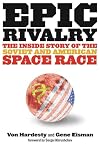
In "Epic Rivalry" Von Hardesty and Gene Eisman have crafted a good general survey of the Soviet and U.S. space programs (with a small dose of the German V-2 program, as well), from the end of the Second World War to the Apollo XI moon landing. This is a good book for those looking for their first general history of the pioneering days of the era of human space flight or those looking to "fill in" gaps in knowledge of the topic. For those already familiar with NASA's efforts in the 1960s, the portions of the book dealing with the Soviet Program will be particularly illuminating. My only complaint is that I was left wanting more. In particular, the history of the Apollo Program felt rushed. I would certainly enjoy seeing these authors make an attempt at a more detailed survey of either of the competing programs.
This review was written for LibraryThing Early Reviewers.