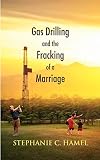
Hamel has written a truly captivating memoir chronicling a nearly-three-year period in which she dealt with the issues of gas fracking on an old family farmstead passed down to her, which she and husband Tom use for summer vacations in north central Pennsylvania. The core conflict of her memoir begins with a gas company offering $2,500 an acre to lease the land for gas drilling and fracturing (fracking) the shale beneath the surface to get to the gas. "We'll be 'Texas Rich,'" her husband happily declares. Hamel, with a PhD in environmental health sciences, has a completely different reaction. Thus begins the mild conflict between the two of them.
The memoir actually is poetically written, as stated in the cover notes, with imagery and emotion that puts the reader in the old farmhouse and out on the land Hamel loves. One also shares her difficult internal deliberations and conflicted desires both to make things better for her family and to protect the land. Disclaimer notes in the book state that gas fracking laws have changed since the time period (2008 - 2010) she worked on the book, but this is still a relevant look at the process those who try to live responsibly as caretakers of the planet go through when presented with near-impossible choices.
The book takes us along on Hamel's research process and lets us in on her communications to and from the gas company, environmental experts and others as she tries to find her way to a stand on the issue. Ultimately, her quest show more to reach a conclusion stalls during the daily routine of taking care of her family, but some of her best writing centers around her interactions with the children and flashbacks to her childhood on the land and her memories of family there. Yet, by the end of the book, her deliberation process has been so long detoured that the gas company is now no longer offering contracts on the land; but horizontal drilling from another location may pass under her land anyway. (The documentary, "Gaslands," was also released which raised public awareness of issues around fracking and made the term a household word.)
Hamel touches on a list of issues, such as eminent domain, that are timely concerns today for citizens all around the country as big power and utility companies stretch their influence across the states seeking more profit. "It is easier to identify a problem than to fix it. It is easier to ignore a problem than to prevent it," Hamel writes during her struggles.
What do we do? Take the money and build a better future for our family and perhaps spend the money on some other environmental issue we CAN win? Or do we keep fighting? My disappointment is that Hamel never made a choice. What came out of it, however, was a lovely memoir that raises important questions and resulted in a good read for lovers of memoir as well as environmental activists.
I found the title a bit misleading in that the marriage wasn't "fracked" at all, unless there's a lot that never made it into the memoir. show less
The memoir actually is poetically written, as stated in the cover notes, with imagery and emotion that puts the reader in the old farmhouse and out on the land Hamel loves. One also shares her difficult internal deliberations and conflicted desires both to make things better for her family and to protect the land. Disclaimer notes in the book state that gas fracking laws have changed since the time period (2008 - 2010) she worked on the book, but this is still a relevant look at the process those who try to live responsibly as caretakers of the planet go through when presented with near-impossible choices.
The book takes us along on Hamel's research process and lets us in on her communications to and from the gas company, environmental experts and others as she tries to find her way to a stand on the issue. Ultimately, her quest show more to reach a conclusion stalls during the daily routine of taking care of her family, but some of her best writing centers around her interactions with the children and flashbacks to her childhood on the land and her memories of family there. Yet, by the end of the book, her deliberation process has been so long detoured that the gas company is now no longer offering contracts on the land; but horizontal drilling from another location may pass under her land anyway. (The documentary, "Gaslands," was also released which raised public awareness of issues around fracking and made the term a household word.)
Hamel touches on a list of issues, such as eminent domain, that are timely concerns today for citizens all around the country as big power and utility companies stretch their influence across the states seeking more profit. "It is easier to identify a problem than to fix it. It is easier to ignore a problem than to prevent it," Hamel writes during her struggles.
What do we do? Take the money and build a better future for our family and perhaps spend the money on some other environmental issue we CAN win? Or do we keep fighting? My disappointment is that Hamel never made a choice. What came out of it, however, was a lovely memoir that raises important questions and resulted in a good read for lovers of memoir as well as environmental activists.
I found the title a bit misleading in that the marriage wasn't "fracked" at all, unless there's a lot that never made it into the memoir. show less
 This review was written for LibraryThing Early Reviewers.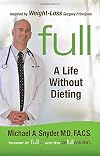
For anyone who seriously wants to change their eating habits, this book can be helpful in a practical way. Approached from a scientific aspect, the contents may be a bit more than the casual reader can digest, but for those who paid attention in science and biology classes, it makes sense. Unfortunately, someone borrowed the book before I was almost at the end, so this review won't be complete since the book never reappeared. In our food obsessed culture, A Life Without Dieting is something to aspire to. The information is useable and applicable - but this is NOT a quick fix for being overweight, rather it's a pragmatic look at how one's body works and why the body does what it does with the food you eat.
This review was written for LibraryThing Member Giveaways.
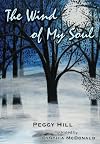
This sweet but intense book came out of a series of women's retreats held by the author, Peggy Hill. Perhaps sweet is the wrong word, because Peggy's soulful creative writing is evocative, stirring, and quite capable of sending the reader reaching for a tissue to dry his or her tears.
The Wind of My Soul softly blows through places we've all been and reaches us there with a truthful resonance because the author has also been there. The emotions sparkle and pinch from a place of authentic expression, not just pretty writing.
The nice thing about the book is that it's also a journaling tool. Unlike some of the more annoying journaling books on the market, it doesn't tell you how to feel or what to write - but once you begin reading, you know.
I give this one four stars for integrity, and would quote some of it here if I had it. Alas, I was so moved by one of the poems that I read it to a friend who just HAD to have it for the evening. I tried to wait for its return before writing this review but it never came home.
If it moves you enough to want to find out about the retreats that inspired its contents, there's more information at nativecircle.com.
The Wind of My Soul softly blows through places we've all been and reaches us there with a truthful resonance because the author has also been there. The emotions sparkle and pinch from a place of authentic expression, not just pretty writing.
The nice thing about the book is that it's also a journaling tool. Unlike some of the more annoying journaling books on the market, it doesn't tell you how to feel or what to write - but once you begin reading, you know.
I give this one four stars for integrity, and would quote some of it here if I had it. Alas, I was so moved by one of the poems that I read it to a friend who just HAD to have it for the evening. I tried to wait for its return before writing this review but it never came home.
If it moves you enough to want to find out about the retreats that inspired its contents, there's more information at nativecircle.com.
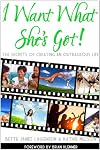
Who wouldn't be interested in "creating an outrageous life" - as the cover of "I Want What She's Got" advertises?
That's what drew me to request a review copy, but after reading the book, I'm not sure I do want what she's got.
I'm not even sure I want an outrageous life - just an authentic and happy one. However, kudos to authors Bette James Laughrun and her daughter Kathie Nelson for the courage and creativity of the lives they've embarked on and the lessons learned. Bette's enthusiastic excitement over discovering things many of us older women have known for a couple of decades, if not longer, is evident.
However, I learned nothing new from this book, which probably should have been a memoir instead of a self-help book.
The book reads like a box of snapshots which have been dumped out onto a table in no particular order. It's often hard to follow what happened when - or which time period the author is currently in. I found the constant "now you need to do this" pages disruptive and not always connected to the point of the chapter.
I think the book was just mismanaged, maybe misedited, and a bit misrepresented. There's probably a good story here, and maybe some life lessons, but somone should have taken the time to figure out how to market it and then tailor it to that market.
At the end, I found it somewhat of a jumble and I didn't learn any secrets of creating an outrageous life. Too bad the book got stuck with that promise. It might have worked with some TLC and show more development. show less
That's what drew me to request a review copy, but after reading the book, I'm not sure I do want what she's got.
I'm not even sure I want an outrageous life - just an authentic and happy one. However, kudos to authors Bette James Laughrun and her daughter Kathie Nelson for the courage and creativity of the lives they've embarked on and the lessons learned. Bette's enthusiastic excitement over discovering things many of us older women have known for a couple of decades, if not longer, is evident.
However, I learned nothing new from this book, which probably should have been a memoir instead of a self-help book.
The book reads like a box of snapshots which have been dumped out onto a table in no particular order. It's often hard to follow what happened when - or which time period the author is currently in. I found the constant "now you need to do this" pages disruptive and not always connected to the point of the chapter.
I think the book was just mismanaged, maybe misedited, and a bit misrepresented. There's probably a good story here, and maybe some life lessons, but somone should have taken the time to figure out how to market it and then tailor it to that market.
At the end, I found it somewhat of a jumble and I didn't learn any secrets of creating an outrageous life. Too bad the book got stuck with that promise. It might have worked with some TLC and show more development. show less
This review was written for LibraryThing Early Reviewers.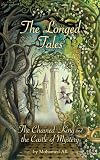
Final say:
I hope this author gets a second chance and a good heavy-handed editor because there's something worth saving here.
Good stuff:
This portal fantasy follows the journey of a selfish young man who falls asleep in his normal everyday life and wakes up in a wondrous world where he undertakes a personality-changing quest. Some of the characters, props and situations are an obvious nod to Tolkien, but still retain a freshness. The concept and tale are unique, and some of the character transformations near the end of the book are brilliant. I would be glad to see some of these characters again in the next book of the series.
Not so good stuff:
But if the writing style doesn't change, I won't be reading it. This book is so awkwardly written that it's actually stressful to read after the first couple of pages. My immediate impression was that The Longed Tales was written first in another language and translated to English. Some of the descriptives and phrases, along with the internal culture and sensibilities of the characters, simply don't resonate with Western thought. That's usually not a problem if the writing is top notch...but in this case, it's bulky and confusing. The inner dialog of the characters and their rapid mood swings from one sentence to the next (and sometimes in the same sentence) made one wonder if they weren't all psychopaths or schizophrenics.
Better stuff:
That being said, the author definitely has talent as a creative storyteller but could use a show more really good editor or perhaps even a ghost writer. His main characters had surprising levels of complexity, as it turned out, and the fantasy world he conceptualized was lovely and brilliant. There's definitely more to this tale and I hope it doesn't get lost. There's a charm and wonder here that deserves better writing if this series is to have a wider audience. show less
I hope this author gets a second chance and a good heavy-handed editor because there's something worth saving here.
Good stuff:
This portal fantasy follows the journey of a selfish young man who falls asleep in his normal everyday life and wakes up in a wondrous world where he undertakes a personality-changing quest. Some of the characters, props and situations are an obvious nod to Tolkien, but still retain a freshness. The concept and tale are unique, and some of the character transformations near the end of the book are brilliant. I would be glad to see some of these characters again in the next book of the series.
Not so good stuff:
But if the writing style doesn't change, I won't be reading it. This book is so awkwardly written that it's actually stressful to read after the first couple of pages. My immediate impression was that The Longed Tales was written first in another language and translated to English. Some of the descriptives and phrases, along with the internal culture and sensibilities of the characters, simply don't resonate with Western thought. That's usually not a problem if the writing is top notch...but in this case, it's bulky and confusing. The inner dialog of the characters and their rapid mood swings from one sentence to the next (and sometimes in the same sentence) made one wonder if they weren't all psychopaths or schizophrenics.
Better stuff:
That being said, the author definitely has talent as a creative storyteller but could use a show more really good editor or perhaps even a ghost writer. His main characters had surprising levels of complexity, as it turned out, and the fantasy world he conceptualized was lovely and brilliant. There's definitely more to this tale and I hope it doesn't get lost. There's a charm and wonder here that deserves better writing if this series is to have a wider audience. show less
This review was written for LibraryThing Member Giveaways.
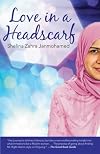
This is an interesting 200-page story told in 253 pages. While I found the author engaging, my desire to move along was occasionally hindered by having some things explained, recapped, and even explained or mentioned again in a later chapter. This may be good form for broadcasters and bloggers, but it didn't work well in book format. The repetition almost, but thankfully didn't, stop me from getting past the first few chapters.
Janmohamed wrote this book as a single woman living in London, where she arrived with her family from India via Africa along with the heritage of both cultures. The personal story of the author's search for true love by going the traditional route of an "arranged" marriage was educational, funny, intelligent, winsome, empowering and encouraging. I found the book insightful and uplifting.
Janmohamed has also done the service of humanizing the Muslim religion by virtue of her own gentle but unwavering commitment to the tenets of true Islam. This too, was by choice - not forced on her - which makes the reasons for her faith all the more compelling. She writes of them with ease, from a personal depth, and without proselytizing or preaching.
That she perseveres in the midst of a "Western" culture which changes day to day based on celebrity whim and peer pressure is almost astounding. Janmohamed's voice was a pleasure to hear in the cacophony of political rhetoric. If for some reason the words "Muslim" or "Islam" scare you, then give this book a try. And show more read it for sure if you’re thinking of settling for anything but true love. show less
Janmohamed wrote this book as a single woman living in London, where she arrived with her family from India via Africa along with the heritage of both cultures. The personal story of the author's search for true love by going the traditional route of an "arranged" marriage was educational, funny, intelligent, winsome, empowering and encouraging. I found the book insightful and uplifting.
Janmohamed has also done the service of humanizing the Muslim religion by virtue of her own gentle but unwavering commitment to the tenets of true Islam. This too, was by choice - not forced on her - which makes the reasons for her faith all the more compelling. She writes of them with ease, from a personal depth, and without proselytizing or preaching.
That she perseveres in the midst of a "Western" culture which changes day to day based on celebrity whim and peer pressure is almost astounding. Janmohamed's voice was a pleasure to hear in the cacophony of political rhetoric. If for some reason the words "Muslim" or "Islam" scare you, then give this book a try. And show more read it for sure if you’re thinking of settling for anything but true love. show less
This review was written for LibraryThing Early Reviewers.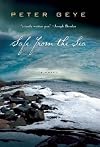
Non-spoiler review:
This is one of those books that introduces places and characters so engaging that they linger after the last page is read and the book is closed. Geye's writing style seemed a bit stilted to me at first, but warmed up by degrees as did the protagonist's (Noah) relationship with his father.
Geye has the coveted and rare ability to transport a reader to places unfamiliar on many levels and yet make him or her feel at home. Geye's descriptions of Minnesota locations make one feel the cold and smell the air.
The story is an honest accounting of both an emotional and a physical journey. It's also about communal and personal history. There's an engaging overhanging element of suspense both in the father's and son's stories that keeps the reader turning pages. Writers who love reading and can remember the prologue will be in for a treat when they get to the last page.
The only fault I can find, if there is one, is the occasional use of nautical terms which might be completely unfamiliar to anyone not raised around the shipping or boating industry. All in all, a tale well told in a first novel.
I look forward to reading this author again.
This is one of those books that introduces places and characters so engaging that they linger after the last page is read and the book is closed. Geye's writing style seemed a bit stilted to me at first, but warmed up by degrees as did the protagonist's (Noah) relationship with his father.
Geye has the coveted and rare ability to transport a reader to places unfamiliar on many levels and yet make him or her feel at home. Geye's descriptions of Minnesota locations make one feel the cold and smell the air.
The story is an honest accounting of both an emotional and a physical journey. It's also about communal and personal history. There's an engaging overhanging element of suspense both in the father's and son's stories that keeps the reader turning pages. Writers who love reading and can remember the prologue will be in for a treat when they get to the last page.
The only fault I can find, if there is one, is the occasional use of nautical terms which might be completely unfamiliar to anyone not raised around the shipping or boating industry. All in all, a tale well told in a first novel.
I look forward to reading this author again.
This review was written for LibraryThing Early Reviewers.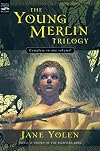
This book contains the trilogy of Passage, Hobby and Merlin - three names for a hawk in different stages of being - following the young Merlin's evolution from the time he was abandoned in the woods at age 8 until he formed a bond with a young Arthur at age 12. It's a well-told tale, and a great read for young adult and middle school aged children. Yolen adeptly combines imagination with what can be gleaned of quasi-historic writings about the youth of Merlin to come up with a compelling story. The harsh realities of early Medieval times are an informative background.
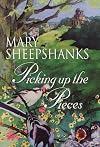
(This is a non-spoiler review)
This is an attention holding, if predictable, formula romance with strong extended family characters dealing with personal issues. It "moves" a little faster than Pilcher and is a bit edgier than the Binchey I've read. There's a mystery or two woven in with skill to keep the pages turning.
I enjoyed the fact that the main female character is in her mid-50s and unexpectedly comes across a chance for romance while restructuring her life on the one-year anniversary of her husband's death. She also has to consider her daughter's emotional problems, which in turn have caused problems for her granddaughter who she dearly loves.
A satisfying read and slice of (upscale) modern life in the Yorkshire countryside.
This is an attention holding, if predictable, formula romance with strong extended family characters dealing with personal issues. It "moves" a little faster than Pilcher and is a bit edgier than the Binchey I've read. There's a mystery or two woven in with skill to keep the pages turning.
I enjoyed the fact that the main female character is in her mid-50s and unexpectedly comes across a chance for romance while restructuring her life on the one-year anniversary of her husband's death. She also has to consider her daughter's emotional problems, which in turn have caused problems for her granddaughter who she dearly loves.
A satisfying read and slice of (upscale) modern life in the Yorkshire countryside.
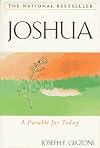
This book made me despair over education, and despair even more that it could get into print and be wildly popular as badly written as it was when there are so many undiscovered and really GOOD writers out there. Nonetheless, it was a compelling story and truly inspirational. There must have been a great hunger out there for this to sell so well. Good for Jesus.
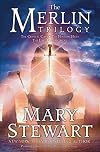
I discovered this trilogy in the 90s when someone left The Hollow Hills (the middle book in the trilogy) at my house, face down and open to a page in the middle of the book. I took a glance as I picked up the book and read a few lines...then stood there reading until I got to the end. I couldn't put the book down. Then I got in the tub (with the book) and started at the beginning. Then I got dressed and went straight to the library for the first book in the trilogy. That's how good this is (if you love good writing and a tale that keeps you moving from one page to the next).
The story follows Merlin's life from childhood to old age. The Arthurian legend is told from his perspective, but in a way that's completely plausible and based on the realities of the times and practices of the era, from the Druids to the Romans. The settings and sensibilities not only ring true, but are educational to boot.
Since then I've read every Mary Stewart available, but nothing compares to this obvious labor of love and research that is the Merlin Trilogy. The review written by Lisa Maria Clark says most of everything else I wanted to say about the books. I will just add that Stewart's imagery is wonderful. She puts the reader in a believable scene with every descriptive phrase, and her characters ring true - flawed as humans are. Her story was so so compelling that when I had occasion to visit the British Isles for 14 months, I followed Merlin's journeys just as she described them - and all show more the places were there. The adventure was just as good as the books.
I agree the Wicked Day, the fourth book, is nowhere near as good. I think Stewart was channeling something that may really have come close to the truth when she was writing the first three. It's a masterpiece in the genre. Worth reading again every year or so. show less
The story follows Merlin's life from childhood to old age. The Arthurian legend is told from his perspective, but in a way that's completely plausible and based on the realities of the times and practices of the era, from the Druids to the Romans. The settings and sensibilities not only ring true, but are educational to boot.
Since then I've read every Mary Stewart available, but nothing compares to this obvious labor of love and research that is the Merlin Trilogy. The review written by Lisa Maria Clark says most of everything else I wanted to say about the books. I will just add that Stewart's imagery is wonderful. She puts the reader in a believable scene with every descriptive phrase, and her characters ring true - flawed as humans are. Her story was so so compelling that when I had occasion to visit the British Isles for 14 months, I followed Merlin's journeys just as she described them - and all show more the places were there. The adventure was just as good as the books.
I agree the Wicked Day, the fourth book, is nowhere near as good. I think Stewart was channeling something that may really have come close to the truth when she was writing the first three. It's a masterpiece in the genre. Worth reading again every year or so. show less
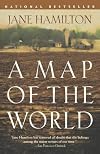
Insult added to trauma piled upon tragedy…and yet there is hope. First published in 1994, A Map of the World follows the journey of a counterculture couple, Alice and Howard Goodwin, through a cruel and life-altering year of their marriage.
Existence on Howard’s beloved 400-acre dairy farm in rural Wisconsin is insular enough, but the Goodwins are also shut out by the mistrust and misunderstanding of the small community around them. Except, that is, for Dan and Theresa, a couple with whom they have developed a comfortable friendship.
The book begins during a typically-hectic morning at home. Emma, one of the two Goodwin daughters, is having a tantrum at breakfast. In the midst of this, Theresa stops by to leave her own two daughters with Alice for the morning and departs. Distracted by Emma’s demands and the chance finding of her own childhood drawing of a peaceful world, Alice makes a fatal mistake that carries unbearable consequences for both families.
In the midst of dealing with one tragedy, and the loss of her only friend, Alice is soon dogged by the added burden of unfounded accusations from the mother of a neglected boy she often deals with (and dislikes) in her part-time job as the local school nurse.
Told first through Alice’s rich inner dialog, and then Howard’s, the story traces an unrelenting path through unthinkable circumstances before it ends in Alice’s voice once again. In the end almost everything has changed.
But be warned: the prose doesn’t show more just dog Alice and Howard’s footsteps; it deposits you straight into hearts and minds stripped raw as the pen of Jane Hamilton dips deftly again and again into the inkpot of pain and remorse. Yet, despite all, she has drawn characters illuminated with determination and hope amid the calligraphy of chaos. show less
Existence on Howard’s beloved 400-acre dairy farm in rural Wisconsin is insular enough, but the Goodwins are also shut out by the mistrust and misunderstanding of the small community around them. Except, that is, for Dan and Theresa, a couple with whom they have developed a comfortable friendship.
The book begins during a typically-hectic morning at home. Emma, one of the two Goodwin daughters, is having a tantrum at breakfast. In the midst of this, Theresa stops by to leave her own two daughters with Alice for the morning and departs. Distracted by Emma’s demands and the chance finding of her own childhood drawing of a peaceful world, Alice makes a fatal mistake that carries unbearable consequences for both families.
In the midst of dealing with one tragedy, and the loss of her only friend, Alice is soon dogged by the added burden of unfounded accusations from the mother of a neglected boy she often deals with (and dislikes) in her part-time job as the local school nurse.
Told first through Alice’s rich inner dialog, and then Howard’s, the story traces an unrelenting path through unthinkable circumstances before it ends in Alice’s voice once again. In the end almost everything has changed.
But be warned: the prose doesn’t show more just dog Alice and Howard’s footsteps; it deposits you straight into hearts and minds stripped raw as the pen of Jane Hamilton dips deftly again and again into the inkpot of pain and remorse. Yet, despite all, she has drawn characters illuminated with determination and hope amid the calligraphy of chaos. show less