This topic is currently marked as "dormant"—the last message is more than 90 days old. You can revive it by posting a reply.
1Cynara
Hi, all! I'm looking forward to seeing your reads in 2011 and tracking my own.
As long as I'm not teaching, I read constantly (on the couch; while cooking dinner; in the tub; on the bus; on my lunch break; while walking down the street) and without fretting much over high vs. low culture.
The only thing that bores me is running out of interesting books; from what I hear, this group should solve that.
So far:
The Girl who Played with Fire by Stieg Larsson
The Girl who Kicked the Hornet's Nest by Stieg Larsson
Ex Libris: Confessions of a Common Reader by Anne Fadiman
Shadowfever by Karen Marie Moning
Possession by A. S. Byatt
Changes by Jim Butcher
Lord of Scoundrels by Loretta Chase
Kick-Ass by Mark Millar
Cleopatra: A Life by Stacy Schiff
First Rider's Call by Kristen Britain
The High King's Tomb by Kristen Britain
In Defence of History by Richard J. Evans
The Eyre Affair By Jasper Fforde
Kitchen Confidential by Anthony Bourdain
An Assembly Such as This, Duty and Desire, and These Three Remain by Pamela Aidan
Missing in Death and Fantasy in Death by J. D. Robb
The Road to Civil War, Civil War: X-Men, Civil War: Iron Man, and Civil War: Front Lines, Book 2(Marvel)
As long as I'm not teaching, I read constantly (on the couch; while cooking dinner; in the tub; on the bus; on my lunch break; while walking down the street) and without fretting much over high vs. low culture.
The only thing that bores me is running out of interesting books; from what I hear, this group should solve that.
So far:
The Girl who Played with Fire by Stieg Larsson
The Girl who Kicked the Hornet's Nest by Stieg Larsson
Ex Libris: Confessions of a Common Reader by Anne Fadiman
Shadowfever by Karen Marie Moning
Possession by A. S. Byatt
Changes by Jim Butcher
Lord of Scoundrels by Loretta Chase
Kick-Ass by Mark Millar
Cleopatra: A Life by Stacy Schiff
First Rider's Call by Kristen Britain
The High King's Tomb by Kristen Britain
In Defence of History by Richard J. Evans
The Eyre Affair By Jasper Fforde
Kitchen Confidential by Anthony Bourdain
An Assembly Such as This, Duty and Desire, and These Three Remain by Pamela Aidan
Missing in Death and Fantasy in Death by J. D. Robb
The Road to Civil War, Civil War: X-Men, Civil War: Iron Man, and Civil War: Front Lines, Book 2(Marvel)
2alcottacre
Welcome to the group! Sounds like you will fit in just fine here - we never run out of recommendations, that is for sure!
3ronincats
I read a lot of genre fiction as well, and we share 1/6 of your library, so I'll be checking in regularly to see what you are reading.
5Cynara
Thanks for the welcome!
>3 ronincats: Holy cow, Ronincats, we do share a lot of books - some are old favourites, but some of the SF/Fantasy I haven't read yet.
>4 Kel_Light: I don't teach much of anything right now, Kel_Light - we'll see if that changes in September.
>3 ronincats: Holy cow, Ronincats, we do share a lot of books - some are old favourites, but some of the SF/Fantasy I haven't read yet.
>4 Kel_Light: I don't teach much of anything right now, Kel_Light - we'll see if that changes in September.
7drneutron
Welcome back! Check out our wiki for more group info...
http://www.librarything.com/wiki/index.php/Groups:75booksin2011
http://www.librarything.com/wiki/index.php/Groups:75booksin2011
8Cynara
Here we are! Book #1, in progress.
A friend gave me the Stieg Larsson trilogy for Christmas, and I'm about halfway through the second volume, The Girl Who Played With Fire.
While I'm undoubtedly involved with the characters, both books have been unpardonably wordy so far. If I'd been editing this thing, I would have trimmed the first half of both books by at least 60%, and done away with some characters entirely. At least by book two I'm interested in all the pointless faffing around the two main characters are doing, but the beginning of book one was tough.
Really, the main advantage the series has is Salander, its unconventional heroine. Her, I like.
Also, Penguin, please do not reveal plot twists from page 281 on the back of the book copy. Signed, the reader.
A friend gave me the Stieg Larsson trilogy for Christmas, and I'm about halfway through the second volume, The Girl Who Played With Fire.
While I'm undoubtedly involved with the characters, both books have been unpardonably wordy so far. If I'd been editing this thing, I would have trimmed the first half of both books by at least 60%, and done away with some characters entirely. At least by book two I'm interested in all the pointless faffing around the two main characters are doing, but the beginning of book one was tough.
Really, the main advantage the series has is Salander, its unconventional heroine. Her, I like.
Also, Penguin, please do not reveal plot twists from page 281 on the back of the book copy. Signed, the reader.
9Cynara

Oh, and here's my review of a 2010 read, Rennison's Sherlock Holmes: the Unauthorized Biography.
First line: "Dull, which a fictional biography shouldn't be, if it can possibly avoid it."
http://www.librarything.com/work/1101562/reviews/68164743
10alcottacre
#9: Nice review, Cynara. I think I will skip the book however and stick with Baring-Gould's fictional biography of Holmes.
12Aerrin99
> 8
I've been seeing a lot of people say that about the Larsson books - that they're worth it for Lisbeth, despite the extra problems. I've been waffling on reading them for that reason, but usually a great character - especially a kickass heroine - can win a lot for me.
Do you think they're worth it?
I've been seeing a lot of people say that about the Larsson books - that they're worth it for Lisbeth, despite the extra problems. I've been waffling on reading them for that reason, but usually a great character - especially a kickass heroine - can win a lot for me.
Do you think they're worth it?
13Cynara
I'll be more sure when I'm done book two; more in a day or so. I do love that I was expecting Salander to be a Mary Sue, and she's not.
14jlynn7
I am reading his first book The Girl with the Dargon Tatto and it put me almost to page 200 till it start getting interesting.
15jlynn7
I am reading his first book The Girl with the Dargon Tatto and it put me almost to page 200 till it start getting interesting.
16Cynara
It caught on for me at p. 150 or so. To be fair, some of the scenes after that are totally compelling, but I don't understand why Larsson thought we needed 100 pages to get a handle on Blomkvist.
19Cynara
I seem to be musing on subjects Holmsian - I just reviewed another 2010 read, O Jerusalem by Laurie King.

NB: much prettier than the cover of my version, which features the same meerschaum-smoking popsy in a bathrobe who blights the rest of their editions. So wrong, so inaccurate, so untrue to the mood of the book. I adore this cover.
First line: "A prime entry in King's Mary Russell series, O Jerusalem is a welcome return to the earlier stages of Russell's and Holmes' association. "
Review here: http://www.librarything.com/work/27093/reviews/62058906

NB: much prettier than the cover of my version, which features the same meerschaum-smoking popsy in a bathrobe who blights the rest of their editions. So wrong, so inaccurate, so untrue to the mood of the book. I adore this cover.
First line: "A prime entry in King's Mary Russell series, O Jerusalem is a welcome return to the earlier stages of Russell's and Holmes' association. "
Review here: http://www.librarything.com/work/27093/reviews/62058906
20alcottacre
#19: I love that series! You are right about that cover - it is so evocative, isn't it?
21Cynara
#1
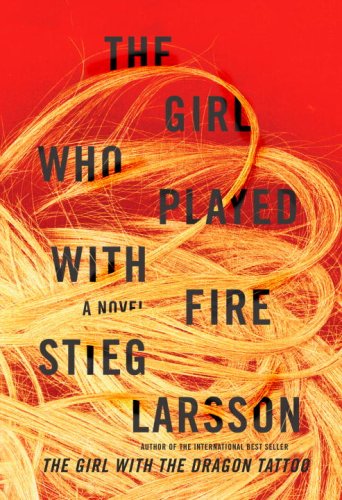
The Girl Who Played with Fire
and #3

The Girl Who Kicked the Hornet's Nest
Here's the text of my review (http://www.librarything.com/work/3167566/reviews/68113663) of book three:
I closed The Girl Who Kicked the Hornet's Nest with a sigh of mingled satisfaction and relief. Did I enjoy it? Y--eee-s. Did I enjoy it as much as I should have enjoyed such an expenditure of time and purse space? Probably not.
(Please note: there is a moderate spoiler towards the end of this review.)
The good parts:
1. The Swedishness of it all; the convincing feeling that it's set in a specific place and time.
2. Blomkvist: perhaps a Gary Sue for Larsson, but an interesting character nonetheless. He's driven and bright; willing to take great risks; loyal - and yet, somehow unformed as a person. His relationships with women are difficult to get a handle on.
3. Salander: infuriating, compelling, a punk angel descending from the clouds wielding her golf club of justice. Fearless, brilliant, and far from neurotypical. I admire her grit.
The bad parts:
1. The unforgivable wordiness of it all. I am not a professional editor, so I don't know what kinds of adversities they go through, but if it had been up to me I would have deleted about 45% of each book. Scenes, characters, whole storylines would have been left on the cutting room floor.
This book has the advantage of beginning in the middle of the action. The previous two pottered around aimlessly and refused to introduce anything of relevance to the plot until page 200 or so.
2. The structure of this book, which kept introducing new parties of players who slowly come up to speed on all the events we learned in book two.
I did enjoy the finale of the trial tremendously; Salander has gone through a tremendous amount of indignity and pain, and it's great fun watching her enemies crushed beneath her (metaphorical) booted heel.
While I understand why Larsson wanted the character development he shows in the subsequent two or three endings (like the final Lord of the Rings movie, this book ends three or four times), it was a lot to get through. Self-indulgent to the end.
The Girl Who Played with Fire
and #3

The Girl Who Kicked the Hornet's Nest
Here's the text of my review (http://www.librarything.com/work/3167566/reviews/68113663) of book three:
I closed The Girl Who Kicked the Hornet's Nest with a sigh of mingled satisfaction and relief. Did I enjoy it? Y--eee-s. Did I enjoy it as much as I should have enjoyed such an expenditure of time and purse space? Probably not.
(Please note: there is a moderate spoiler towards the end of this review.)
The good parts:
1. The Swedishness of it all; the convincing feeling that it's set in a specific place and time.
2. Blomkvist: perhaps a Gary Sue for Larsson, but an interesting character nonetheless. He's driven and bright; willing to take great risks; loyal - and yet, somehow unformed as a person. His relationships with women are difficult to get a handle on.
3. Salander: infuriating, compelling, a punk angel descending from the clouds wielding her golf club of justice. Fearless, brilliant, and far from neurotypical. I admire her grit.
The bad parts:
1. The unforgivable wordiness of it all. I am not a professional editor, so I don't know what kinds of adversities they go through, but if it had been up to me I would have deleted about 45% of each book. Scenes, characters, whole storylines would have been left on the cutting room floor.
This book has the advantage of beginning in the middle of the action. The previous two pottered around aimlessly and refused to introduce anything of relevance to the plot until page 200 or so.
2. The structure of this book, which kept introducing new parties of players who slowly come up to speed on all the events we learned in book two.
I did enjoy the finale of the trial tremendously; Salander has gone through a tremendous amount of indignity and pain, and it's great fun watching her enemies crushed beneath her (metaphorical) booted heel.
While I understand why Larsson wanted the character development he shows in the subsequent two or three endings (like the final Lord of the Rings movie, this book ends three or four times), it was a lot to get through. Self-indulgent to the end.
22mks27
Thanks for sharing your thoughts about the Millenium books. I very much enjoyed them, but agree it was a great investment of time. Some parts got into too much detail about the politics of Sweden and the organization to the secret police and the government. However, those were helpful in my understanding of the story, just boring and hard to get through. The characters, at least for me, drove the story and kept me loving it. They were interesting, unique, and they did evolve over the span of the novels, especially Salander and Berger, maybe even Blomkvist. I will miss them.
23Cynara
Thanks for the comment! I agree that the characters drove the story - and my desire to keep reading. I just wish the editors had been more ruthless!
24alcottacre
I have only read the first two books of the trilogy, but I agree with you, the editors should definitely have tightened those books up a bit.
25gennyt
Just working my way through the introductions thread and popping in to say hello. Interesting thoughts on the Millennium series. I read the first one back in Feb last year, and have the next two on my shelf but haven't rushed to read them, despite liking the character of Salander especially. You're right, the wordiness is a problem, for what they are.
26Cynara
#4

Ex Libris: Confessions of a Common Reader
What is it about slim books? I love reading something that's just long enough, and there's something elegant about the proportions of a small volume - like a lady's hand.
And there I go again. Anne Fadiman and I share an interest in books, language, and writing that is passionate, honest, and often teeters on the edge of becoming precious. This collection of essays is a fine example of its kind, and I'd say that LibraryThing users will find much that is familiar here.
The closest parallel I can draw is Hanff's 84 Charing Cross Road, which is my personal favourite book-about-books, so that's high praise. Fadiman's book is more reflective, but still very funny and erudite.
I have a sidebar here. As a teacher, you have to negotiate the balance between teaching the student and teaching the subject, if that makes any sense. You can't start assuming that the whole class shares your passion for the sonnets of Edna St. Vincent Millay or the journalism of Hunter S. Thompson - you have to find out where the students are, in terms of competence and areas of interest, and work from that.
On the other hand, I do believe in assuming that my students are strong and intelligent - it's unfair to assume anything else. They need to be able to tackle books head-on, and it's hard to guess what people will find interesting or relevant.
I guess it's just a salutary reminder - that the Anne Fadimans are out there, and that there are many, many of us on LT. We love books, and we love reading, and precious or not, we don't need to apologise for it.

Ex Libris: Confessions of a Common Reader
What is it about slim books? I love reading something that's just long enough, and there's something elegant about the proportions of a small volume - like a lady's hand.
And there I go again. Anne Fadiman and I share an interest in books, language, and writing that is passionate, honest, and often teeters on the edge of becoming precious. This collection of essays is a fine example of its kind, and I'd say that LibraryThing users will find much that is familiar here.
The closest parallel I can draw is Hanff's 84 Charing Cross Road, which is my personal favourite book-about-books, so that's high praise. Fadiman's book is more reflective, but still very funny and erudite.
I have a sidebar here. As a teacher, you have to negotiate the balance between teaching the student and teaching the subject, if that makes any sense. You can't start assuming that the whole class shares your passion for the sonnets of Edna St. Vincent Millay or the journalism of Hunter S. Thompson - you have to find out where the students are, in terms of competence and areas of interest, and work from that.
On the other hand, I do believe in assuming that my students are strong and intelligent - it's unfair to assume anything else. They need to be able to tackle books head-on, and it's hard to guess what people will find interesting or relevant.
I guess it's just a salutary reminder - that the Anne Fadimans are out there, and that there are many, many of us on LT. We love books, and we love reading, and precious or not, we don't need to apologise for it.
27Cynara
Up next: Possession by A. S. Byatt - or, if I get sidetracked, Shadowfever by Karen Marie Moning.
29alcottacre
#26: I love that book! I am glad to see it has found another fan.
30sibylline
I'll have to check this Shadowfever out! Possession was a darned good read, so.....
OK so I'm back -- which is the first one in the series?????
OK so I'm back -- which is the first one in the series?????
31mks27
Looking forward to hear your opinion of Possession, which I have thought of reading, but keep for some reason putting off.
32Cynara
#5

Shadowfever, by Karen Marie Moning
For my money, this is the best of the series. There were many unanticipated twists and turns, and some great character development. The ending was appropriately extreme - not hearts-and-flowers, but very satisfying and true to the characters Moning had developed.
I did feel like kicking our two protagonists in the shins (just have one conversation where you aren't defensive idiots, please), but I'm going to to back to this series more than once. As soon as I get it back from everyone I've loaned it out to.
Also, Dell went with an unusual cover design here; the woman with the tattoo is the image on the hardcover itself, and the intricate red and gold image is printed on a clear plastic dustjacket. The effect is really lovely. Though I don't prefer the feel of the plastic, I'm sure it will prove to be more durable than paper dustjackets, too.

Shadowfever, by Karen Marie Moning
For my money, this is the best of the series. There were many unanticipated twists and turns, and some great character development. The ending was appropriately extreme - not hearts-and-flowers, but very satisfying and true to the characters Moning had developed.
I did feel like kicking our two protagonists in the shins (just have one conversation where you aren't defensive idiots, please), but I'm going to to back to this series more than once. As soon as I get it back from everyone I've loaned it out to.
Also, Dell went with an unusual cover design here; the woman with the tattoo is the image on the hardcover itself, and the intricate red and gold image is printed on a clear plastic dustjacket. The effect is really lovely. Though I don't prefer the feel of the plastic, I'm sure it will prove to be more durable than paper dustjackets, too.
33Cynara
#6

Possession by A. S. Byatt
Two of my reading friends had independently suggested that I must read this book, and a relation pressed it into my hands during a November visit. Sometimes these things are meant to be!
My feelings about this book fluctuated as I read it.
First, it is subtitled "A Romance" in a knowing literary way - it has quests and damsels and knights, of a sort. Certainly the tension of the story lies in the relationship between two pairs of people. It has a really good first chapter which involves you in the world, making it seem appealing and compelling, and it also appealed to my love of poetry and the Life of Letters. However, the prevailing mood, particularly of the modern framing story, is not necessarily what I would call romantic.
In fact, I was sometimes troubled by the story of the modern scholars, the ones who uncover a previously unknown set of letters between two Victorian poets. Particularly at the beginning of the book there was a feeling of having missed the great years of arts and sciences, of love, of life. The first third of the book could have been titled Why One Should Never Enter English Academia; the stench of constriction, poverty, boredom, and cat pee was dispiriting. The 19th century poets are much more alive than either of our modern protagonists - a problem not entirely rectified by the end of the book.
On the other hand, the second half of the book turns it around fairly well. Byatt shakes up her cast of characters and recombines them in interesting ways. The last chapters have a refreshing feeling of renewal and new beginnings.
Byatt writes feelingly and well (and maybe a little too much) about the absurdities of literary criticism. Some parts of the book do feel a little calculated or dated, e.g. the supremacy of gender theory and women's studies.
On the other hand, her 19th century letters and poems are very 'period', she develops the writers' two distinct voices with precision, and some of their poems aren't bad, either. On the other hand, do you really feel like reading three hundred lines of pastiche Victorian poetry before you're allowed to read the next chapter? You'd be surprised.
Most of all, the plot is compelling. It's a literary mystery, and if it's awfully convenient that new journals and letters with pieces of the puzzle keep being discovered, well so be it. As a whole it led me on to the last page in fascination and enjoyment.
I love the cover. Rossetti's "Beguiling of Merlin" is perfect, visually and thematically. Also, I imagine I'm alone in this, but I found something powerfully familiar about Merlin's features; I eventually realised that one of the Dragonlance series' cover artists had used them as a basis for Raistlin's. Ha!
(Edit: mistycliff wrote a far better review than mine in fewer words: http://www.librarything.com/work/2222/reviews/67689054)

Possession by A. S. Byatt
Two of my reading friends had independently suggested that I must read this book, and a relation pressed it into my hands during a November visit. Sometimes these things are meant to be!
My feelings about this book fluctuated as I read it.
First, it is subtitled "A Romance" in a knowing literary way - it has quests and damsels and knights, of a sort. Certainly the tension of the story lies in the relationship between two pairs of people. It has a really good first chapter which involves you in the world, making it seem appealing and compelling, and it also appealed to my love of poetry and the Life of Letters. However, the prevailing mood, particularly of the modern framing story, is not necessarily what I would call romantic.
In fact, I was sometimes troubled by the story of the modern scholars, the ones who uncover a previously unknown set of letters between two Victorian poets. Particularly at the beginning of the book there was a feeling of having missed the great years of arts and sciences, of love, of life. The first third of the book could have been titled Why One Should Never Enter English Academia; the stench of constriction, poverty, boredom, and cat pee was dispiriting. The 19th century poets are much more alive than either of our modern protagonists - a problem not entirely rectified by the end of the book.
On the other hand, the second half of the book turns it around fairly well. Byatt shakes up her cast of characters and recombines them in interesting ways. The last chapters have a refreshing feeling of renewal and new beginnings.
Byatt writes feelingly and well (and maybe a little too much) about the absurdities of literary criticism. Some parts of the book do feel a little calculated or dated, e.g. the supremacy of gender theory and women's studies.
On the other hand, her 19th century letters and poems are very 'period', she develops the writers' two distinct voices with precision, and some of their poems aren't bad, either. On the other hand, do you really feel like reading three hundred lines of pastiche Victorian poetry before you're allowed to read the next chapter? You'd be surprised.
Most of all, the plot is compelling. It's a literary mystery, and if it's awfully convenient that new journals and letters with pieces of the puzzle keep being discovered, well so be it. As a whole it led me on to the last page in fascination and enjoyment.
I love the cover. Rossetti's "Beguiling of Merlin" is perfect, visually and thematically. Also, I imagine I'm alone in this, but I found something powerfully familiar about Merlin's features; I eventually realised that one of the Dragonlance series' cover artists had used them as a basis for Raistlin's. Ha!
(Edit: mistycliff wrote a far better review than mine in fewer words: http://www.librarything.com/work/2222/reviews/67689054)
34Cynara
Next, I hardly know what to choose. I have half-a-dozen fairly urgent to-be-reads, some of them more gleefully anticipated than others. I did a series of coin tosses last night, so it looks like a reread of Butcher's Changes might be up.
35mks27
I have not read Possession and like you have been contemplating it for some time. It is not now on my TBR list, but I believe it will be added in the future. I find it encouraging to read your ideas about the change in mood at the end of the book and your overall all enjoyment.
37Cynara
Thanks, sibyx! I'm still thinking that book through. I'm wondering if it's going to be a reread or not.
Next up was a reread:
#7
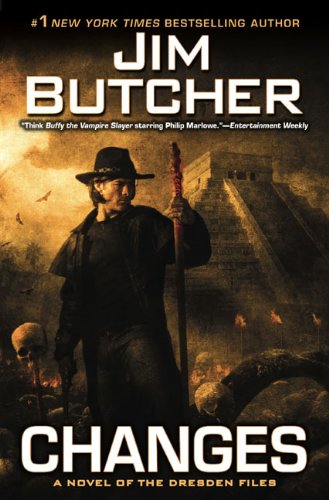
I really enjoyed returning to Changes. I've now read the series in its entirety at least twice, and it's become one of my favourites.
The early books are a bit uneven - Harry's knee-jerk protection of pretty females gets tiresome, and the witty writing and character development takes a little while to get going in earnest. The introduction of Michael Carpenter in Grave Peril is a turning point for me; he's such a great foil for Harry, and he and his family bring a new gravitas to the series. By Dead Beat Butcher is seriously on his game, and the books are as good as anything in the genre (not to put down the genre; I just don't like comparing apples and oranges).
However, a long-running series risks getting old and covering the same ground too many times. I could happily watch Harry cover this ground a dozen more times, but eventually, without noticing it, most series start to slip. I hate to say it, but I think my adored Amelia Peabody series did this, and though I truly enjoy Robb/Roberts' In Death series, there is a sameness after a while.
Well, Butcher has shaken everything up good and proper with this one. While still remaining true to the characters and world he's created, Butcher has made some significant changes here, and I hope they'll keep the series fresh while still being Harry Dresden books.
Anyway, this one has it all: jokes, twists, death, interesting new characters, explosions, revelations, and tears. I want the next book, Ghost Story. WANT!
Next up was a reread:
#7
I really enjoyed returning to Changes. I've now read the series in its entirety at least twice, and it's become one of my favourites.
The early books are a bit uneven - Harry's knee-jerk protection of pretty females gets tiresome, and the witty writing and character development takes a little while to get going in earnest. The introduction of Michael Carpenter in Grave Peril is a turning point for me; he's such a great foil for Harry, and he and his family bring a new gravitas to the series. By Dead Beat Butcher is seriously on his game, and the books are as good as anything in the genre (not to put down the genre; I just don't like comparing apples and oranges).
However, a long-running series risks getting old and covering the same ground too many times. I could happily watch Harry cover this ground a dozen more times, but eventually, without noticing it, most series start to slip. I hate to say it, but I think my adored Amelia Peabody series did this, and though I truly enjoy Robb/Roberts' In Death series, there is a sameness after a while.
Well, Butcher has shaken everything up good and proper with this one. While still remaining true to the characters and world he's created, Butcher has made some significant changes here, and I hope they'll keep the series fresh while still being Harry Dresden books.
Anyway, this one has it all: jokes, twists, death, interesting new characters, explosions, revelations, and tears. I want the next book, Ghost Story. WANT!
38Cynara
Now reading Loretta Chase's Lord of Scoundrels: I will never get to the TBR, mostly composed of stuff people have lent me, will I?
39fabtk
> I have seen the Jim Butcher series mentioned several times now, but your discussion has made me actually add it to my wishlist. The first books in a series are often a bit weaker and I'm used to persevering through but it's very helpful to know when they start to get really good. Thanks!
40Cynara
You could even start with Grave Peril if you wanted. I have to read things in order, but those who are less OCPD than I might find that approach rewarding. Butcher's good at sketching in the background at the beginning of each book, and the cast of characters is still fairly small.
I took a quick look at your library to see if I could recommend the Dresden Files in good conscience; we share quite a few books! Apart from the usual suspects, it's not many people with whom I share The Changeover, Sarah Caudwell, Rubicon, and Abhorsen.
I took a quick look at your library to see if I could recommend the Dresden Files in good conscience; we share quite a few books! Apart from the usual suspects, it's not many people with whom I share The Changeover, Sarah Caudwell, Rubicon, and Abhorsen.
41Aerrin99
Hm. I read the first three Butcher books this fall and found myself frustrated with them (and, as you mention, the 'pretty female' problem). Maybe I'll give another book or two a shot, given what you say here. I /did/ like Michael in Grave Peril, I must admit. He's probably the first character I did like, in fact. Do you think the writing gets better as well as plotting and character?
42fabtk
>40 Cynara: I love The Changeover, Sarah Caudwell and Abhorsen but I must admit I never made it all the way through Rubicon. I might get back to it one day, but I find most non-fiction much harder work than fiction.
43alcottacre
I still have not started the Jim Butcher series. *sigh* I either need to be triplets, cloned, or immortal - or all 3.
44Cynara
Aerrin, I'd definitely say yes. Butcher was a very 'young' author when he started writing Harry, and it shows. I actually put the series aside for a long time after book one, and only returned to it because my TBR was running thin and something had interested me. I thought of Harry as "John Constantine's nicer, chiller cousin" for a while, and I quite liked that concept.
I took them out of the library for a while, growing gradually more involved in the series - eventually, I couldn't wait for the holds to come in & started buying the books. Later, I realised that I'd been entirely won over by the later books & had to own the whole series. I actually enjoy the early books much more now that I know where Butcher's taking the series.
Don't expect the pretty ladies to go away - my husband, who's more censorious than I am, can be quite scathing about the frequent descriptions of breasts, but I'd say that the characters in general have (pardon me) rounded out, his women as well as his men. Charity Carpenter, Susan Rodriguez, and Karrin Murphy (to name the first examples to mind) are have all become complex characters who aren't defined by their looks any more than the male characters are.
I took them out of the library for a while, growing gradually more involved in the series - eventually, I couldn't wait for the holds to come in & started buying the books. Later, I realised that I'd been entirely won over by the later books & had to own the whole series. I actually enjoy the early books much more now that I know where Butcher's taking the series.
Don't expect the pretty ladies to go away - my husband, who's more censorious than I am, can be quite scathing about the frequent descriptions of breasts, but I'd say that the characters in general have (pardon me) rounded out, his women as well as his men. Charity Carpenter, Susan Rodriguez, and Karrin Murphy (to name the first examples to mind) are have all become complex characters who aren't defined by their looks any more than the male characters are.
45Cynara
Fabtk, I know what you mean. I had one false start with Rubicon, but the second time I found it as riveting as a good novel. Of course, now that I've seen the HBO series Rome, it's like watching a good miniseries, and I can attache faces to the names.
46Aerrin99
> 44
Thanks, that's a fairly convincing rally for Butcher! I think I could tolerate the pretty women if the rest of it impressed me. It's not the descriptions of breasts, actually, that bug me so much as the fact that despite being described as being great at their jobs, they are consistently really, really /dumb/ in the first three books. Don't you dare talk about breasts /and/ make her do dumb things! That is my line, apparently! ;)
I'll keep him in mind for when I'm feeling like something in that vein and we'll see how book 4 goes.
Thanks, that's a fairly convincing rally for Butcher! I think I could tolerate the pretty women if the rest of it impressed me. It's not the descriptions of breasts, actually, that bug me so much as the fact that despite being described as being great at their jobs, they are consistently really, really /dumb/ in the first three books. Don't you dare talk about breasts /and/ make her do dumb things! That is my line, apparently! ;)
I'll keep him in mind for when I'm feeling like something in that vein and we'll see how book 4 goes.
47ronincats
Having heard this, and after having read the first book a few years ago, I have now acquired the first three through bookmooch to try again with the Dresden Files. Someday. Soon.
48f_ing_kangaroo
This whole Dresden Files discussion is really making me want to re-read the whole series again.
Except for those first three. I remember not enjoying them much, but they're sounding worse and worse to me now. Also, I think I had managed to block out all memory of Susan Rodriguez and her inanity but now I'm getting flashbacks. Oh, I hate her so.
And Ghost Story is apparently not coming out until August when I thought it was coming out around March/April as the Dresden books normally do... DARN IT.
Except for those first three. I remember not enjoying them much, but they're sounding worse and worse to me now. Also, I think I had managed to block out all memory of Susan Rodriguez and her inanity but now I'm getting flashbacks. Oh, I hate her so.
And Ghost Story is apparently not coming out until August when I thought it was coming out around March/April as the Dresden books normally do... DARN IT.
49Cynara
I never really dug Susan; I thought it was her own damn fault.
What! They've pushed the release date back? Damn them.
What! They've pushed the release date back? Damn them.
50Cynara
#8

Chase's Lord of Scoundrels: in brief, I enjoyed it, though not as much as some. Heyer does better Regency atmosphere, but Chase's book is a lighter, easier read and the first two thirds of the book were just about perfect. My quibbles with the last third were:
a) I wasn't terribly interested in the plot twist that happens in the last bit; it works very well thematically, but I just didn't find it very compelling, and
b) our heroine, who really is quite wonderful, becomes a little too relentlessly right and wise for my taste.
However, this is an excellent read with intriguing, affecting characters and sharp writing. I might look up more of Chase's books; I loved the way our heroine cut through traditional hero/heroine banter by calmly telling the truth - I'd expect her to take a cheap shot or cover something up, and she'd disarm all of us by being absolutely direct.
I'll definitely read it again, and would happily recommend it to a friend. Profoundly mediocre cover, though.
#9

Kick-Ass didn't quite click for me, on the screen or in this graphic novel. Both seem to me like they're trying a little too hard to be edgy and relevant to teens. I couldn't get too worked up about any of the characters, it wasn't witty or original, and it didn't have much to say. Yeah.
That sounds pretty damning; it wasn't unreadable, and the movie did have some really good parts in the second half, but I don't think anyone's going to care in ten years.
Next; Schiff's Cleopatra biography: so far, really good!

Chase's Lord of Scoundrels: in brief, I enjoyed it, though not as much as some. Heyer does better Regency atmosphere, but Chase's book is a lighter, easier read and the first two thirds of the book were just about perfect. My quibbles with the last third were:
a) I wasn't terribly interested in the plot twist that happens in the last bit; it works very well thematically, but I just didn't find it very compelling, and
b) our heroine, who really is quite wonderful, becomes a little too relentlessly right and wise for my taste.
However, this is an excellent read with intriguing, affecting characters and sharp writing. I might look up more of Chase's books; I loved the way our heroine cut through traditional hero/heroine banter by calmly telling the truth - I'd expect her to take a cheap shot or cover something up, and she'd disarm all of us by being absolutely direct.
I'll definitely read it again, and would happily recommend it to a friend. Profoundly mediocre cover, though.
#9

Kick-Ass didn't quite click for me, on the screen or in this graphic novel. Both seem to me like they're trying a little too hard to be edgy and relevant to teens. I couldn't get too worked up about any of the characters, it wasn't witty or original, and it didn't have much to say. Yeah.
That sounds pretty damning; it wasn't unreadable, and the movie did have some really good parts in the second half, but I don't think anyone's going to care in ten years.
Next; Schiff's Cleopatra biography: so far, really good!
51Cynara
Also: I have a confession. I have a DNF: a did not finish. Worse, it's a an Early Reviewer book. I'm trying to figure out how to review it - it's a YA book set in the past & present. It could be a perfect book for a Gr. 7 or 8 Social Sci. class, so I read it hopefully.
I read several dozen pages, skimmed up to around p. 90, then peeked at the end. It was so poorly written I couldn't assign it and look the kids in the face. I despised one protagonist and was bored stiff by the other one. Review to follow.
I read several dozen pages, skimmed up to around p. 90, then peeked at the end. It was so poorly written I couldn't assign it and look the kids in the face. I despised one protagonist and was bored stiff by the other one. Review to follow.
52Cynara
#DNF

My shame revealed: Winter Shadows by Margaret Buffie.
http://www.librarything.com/work/9679603/reviews/68535572

My shame revealed: Winter Shadows by Margaret Buffie.
http://www.librarything.com/work/9679603/reviews/68535572
53f_ing_kangaroo
#49: Exactly!
#50: I thoroughly agree with you on Lord Of Scoundrels. I enjoyed it immensely, but not to the extent that it's been hyped. And man do I agree about that last third or so. It really fizzled out there.
#50: I thoroughly agree with you on Lord Of Scoundrels. I enjoyed it immensely, but not to the extent that it's been hyped. And man do I agree about that last third or so. It really fizzled out there.
54Morphidae
I'm putting Lord of Scoundrels on my TBR One Day list. I've seen it recommended in a few places.
55Cynara
#53
I thought Butcher did a dreadful job of setting Susan up as a romantic interest. Although she does return as a minor character later in the series, I think Butcher does it fairly well; by Changes I quite like her.
I thought Butcher did a dreadful job of setting Susan up as a romantic interest. Although she does return as a minor character later in the series, I think Butcher does it fairly well; by Changes I quite like her.
56Whisper1
Hi There
I'm compiling a list of birthdays of our group members. If you haven't done so already, would you mind stopping by this thread and posting yours.
Thanks.
http://www.librarything.com/topic/105833
I'm compiling a list of birthdays of our group members. If you haven't done so already, would you mind stopping by this thread and posting yours.
Thanks.
http://www.librarything.com/topic/105833
57PrincessT
Hi! Chiming in a little late for the Harry Dresden series. I read Changes a while ago for the first time (thereby completely ignoring my new rule about waiting for series to finish!!). I hated the ending, and snatched up the collection of short stories that Butcher did, called Side Jobs. These stories fit in and around the books of the Dresden Files, and give an extra insight to the characters. The first story, which Butcher says he submitted, and no one would publish it because it's not very good, and he sees their point etc etc, was actually pretty good (IMO). It introduces Dresden before he has his own office, and shows how he met Lt. Murphy. The last story is set three hours after the end of Changes. Awesome stuff! Except that I now really need to read Ghost Story and might start frothing at the mouth before August.
58f_ing_kangaroo
#55: I never came around on Susan. I am big on holding grudges against fictional characters. :)
#57: Ack. Ok, I'm going to exercise some rare self control and not read Side Jobs anytime soon as I really don't need to add fuel to the anticipation.
#57: Ack. Ok, I'm going to exercise some rare self control and not read Side Jobs anytime soon as I really don't need to add fuel to the anticipation.
59PrincessT
Has anyone here read Simon R Green's Nightside series? I'm thinking of doing a re-read while waiting for the next Dresden book, and Green's John Taylor shares a few traits with Harry Dresden. I'm just not sure if I can handle ten books' worth of imaginative descriptions. Well, by book six he starts to use a few phrases over and over. But the plot is good, and I like the way he incorporates legendary personages into his work.
61katiekrug
>60 Cynara: Love it!
62Cynara
Another thread just pointed me to Neil Gaiman's FAQ, and I was pleased by his description of Coraline as a book for "strange little girls of all ages and genders."
63Cynara
Also: Cleopatra: A Life almost done, and In Defence of History started. Review of the former soon!
64alcottacre
I already have the Cleopatra book in the BlackHole, so I am anxiously awaiting the review of In Defence of History :)
65Cynara
#10

Cleopatra: A Life by biographer Stacy Schiff is a remarkable work. Frankly, I wondered how she would pull it off. I wouldn't care, myself, to try to extricate the historical Cleopatra from the morass of Roman moralisation that followed her demise.
Schiff's Cleopatra isn't so much new as clarified. Many people know of her competent leadership, her multiple languages, her intellect and charm. Schiff's research into 1st century BCE culture helps her fill in much of the rest: the feisty Alexandrians, the endless Eastern client-kings, the uneasy pacts with Rome.
Schiff's Cleopatra is a pragmatic ruler first; in the difficult job of divining her subjects' motives, she looks at political expediency first. She acknowledges the possibility of personal love and passion gingerly, knowing that too many accounts of the Caesar-Cleopatra-Antony axis have reduced the whole political crisis to the trouser urgings of two and a half out-of-control libertines.
I was always aware of the tenuousness of our hold on the truth. As Schiff acknowledges, Cleopatra "ceases to exist without a Roman in the room" as far as the historical record goes. I felt this most keenly at the end, when our sources have dwindled down to two Roman chroniclers who give us differing and highly coloured narratives that probably have squat to do with the actual events.
Schiff balances the bareness of some of the accounts with vivid, colourful descriptions of Alexandria and Ptolomeic pagentry. These pages are so lush and, at times, hilarious, that I had to read them out loud.
This is a good book - well researched, well written, as compelling as a novel, and finally doing something I thought was impossible - bringing us a believable Cleopatra, mostly shorn of the last 2000-odd years of mythmaking.
The book is illustrated by some well-chosen colour plates, and I just love the cover; so evocative, and so reflective of the contents.
***
I'm currently reading In Defence of History - very readable so far, very interesting, and likely to be very helpful to me if/when I teach History.

Cleopatra: A Life by biographer Stacy Schiff is a remarkable work. Frankly, I wondered how she would pull it off. I wouldn't care, myself, to try to extricate the historical Cleopatra from the morass of Roman moralisation that followed her demise.
Schiff's Cleopatra isn't so much new as clarified. Many people know of her competent leadership, her multiple languages, her intellect and charm. Schiff's research into 1st century BCE culture helps her fill in much of the rest: the feisty Alexandrians, the endless Eastern client-kings, the uneasy pacts with Rome.
Schiff's Cleopatra is a pragmatic ruler first; in the difficult job of divining her subjects' motives, she looks at political expediency first. She acknowledges the possibility of personal love and passion gingerly, knowing that too many accounts of the Caesar-Cleopatra-Antony axis have reduced the whole political crisis to the trouser urgings of two and a half out-of-control libertines.
I was always aware of the tenuousness of our hold on the truth. As Schiff acknowledges, Cleopatra "ceases to exist without a Roman in the room" as far as the historical record goes. I felt this most keenly at the end, when our sources have dwindled down to two Roman chroniclers who give us differing and highly coloured narratives that probably have squat to do with the actual events.
Schiff balances the bareness of some of the accounts with vivid, colourful descriptions of Alexandria and Ptolomeic pagentry. These pages are so lush and, at times, hilarious, that I had to read them out loud.
This is a good book - well researched, well written, as compelling as a novel, and finally doing something I thought was impossible - bringing us a believable Cleopatra, mostly shorn of the last 2000-odd years of mythmaking.
The book is illustrated by some well-chosen colour plates, and I just love the cover; so evocative, and so reflective of the contents.
***
I'm currently reading In Defence of History - very readable so far, very interesting, and likely to be very helpful to me if/when I teach History.
66Aerrin99
Interesting! That book just came in the mail for our Popular Reading Collection and although I don't tend toward non fiction, it's certainly catching my interest!
67alcottacre
#65: Nice review, Cynara!
68Cynara
Thanks, alcottacre!
John Elder Robison is coming to my town on a tour for his new book. I've just written a review of his first one, which I read in '09.
http://www.librarything.com/work/3049597/reviews/46279191
John Elder Robison is coming to my town on a tour for his new book. I've just written a review of his first one, which I read in '09.
http://www.librarything.com/work/3049597/reviews/46279191
70mks27
Thank you, Cynara, for the excellent review. I very much enjoyed reading it! Cleopatra: A Life is already on my to be read list.
71Cynara
P. 108 of In Defence of Hist. - interesting and potentially useful, if not gripping. I feel a certain enthusiasm for getting it done.
72Cynara
...and yet, it hasn't happened. I picked up First Rider's Call, which a friend lent to me, and I'm more interested in it than I expected. I thought the first one was fine, but might not have picked up the second, except that my friend adores it, and my pop fiction TBR has been running a bit thin lately.
However, I've been enjoying it quite a bit so far. It's been distracting me from IDoH; plus, teaching myself fair isle knitting has taken over some reading time.
However, I've been enjoying it quite a bit so far. It's been distracting me from IDoH; plus, teaching myself fair isle knitting has taken over some reading time.
73alcottacre
Good luck with the knitting!
74Cynara
#11

This is the second book in Britain's Green Rider series, First Rider's Call. I'm currently reading the third. A few comments on the series so far:
1) I found the first book workmanlike and quite enjoyable, if derivative in bits and perhaps a bit too self-consciously now-we-need-girl-protagonists. Unlike The Golden Compass, where one never suspects Pullman of self-conscious gender balance, though no doubt he’s consciously writing the plucky heroine Lewis never did... where was I? Oh yes, Pullman’s Lyra is too much herself, too thoroughly crystallised as a character from the moment we meet her, to ever be a mere nod to gender balance; I’ve never warmed to Karrigan as thoroughly, though she’s a good heroine, and I am rooting for her.
2) Bits she took from Tolkein: “Elts” – magic ‘fair folk’ who live in the deep woods, have their own la-la-la language, have healing powers, sing a lot, make beautiful things, and have chips on their shoulders the size of the pyramids of Giza. Actually, the sheer dickishness of the elven nobility in this series is one of their major divergences from Tolkein. Given that they show our heroine glimpses of the future, present, and past in a bowl filled with magic water. Ahem. I don’t think I would have minded if she’d just gone ahead and called them Elves.
3) Bits that cross over with the Sabriel/Lirael/Abhorsen trilogy (leaving out all the normal fantasy common elements like wise old wizards, young people who discover their important magic powers, helpful spirits, and striving to Save the Land from its Destruction).
a. Powerful ancient wights who once almost Covered the Land in Evil and are reawoken;
b. magic walls and masonry that contain the wights and their destructive powers;
c. the intentional destruction of these walls and masonry by a servant of the Bad Old Wight;
d. ancient noble bloodlines who were once dedicated to repairing and preserving these structures, but who have lost the knowledge;
e. kings as romantic interests;
f. male friends of the protagonists who are mind-controlled into serving the servant of the Bad Old Wight and have really rough times as a result.
I’m not pointing any fingers here, as the books are significantly different in tone, and actually, I responded very, very differently to each (nor could I really say which ideas were published first, as they both started around ‘00). Nix’ trilogy about girl necromancers out to save the world utterly bewitched me with the vividness and originality of its worldbuilding – something that’s damn rare after you’ve read a few dozen fantasy novels, much as I love the genre. It is a profoundly imaginative work, one that still gives me chills when I think about it.
On the other hand, I suspect I’m going to find the Green Rider series far more satisfying, despite the business-as-usual feeling of the setting. Nix didn’t really know what to do with his characters emotionally. Sabriel is stoic to the point of appearing autistic, while Touchstone is a pouty mess in the first book. Lirael is better, but I don’t think the series ever found the emotional connection with the reader it needed to ground all the high-sorcery business.
Britain, on the other hand, has gathered together a cast of characters with understandable objectives who mostly act like mature adults (except for the occasional unbalanced mean-because-they're-mean villain). I'm really curious to see what happens with Karrigan in the long run, and I see a new book's just out. What next...?

This is the second book in Britain's Green Rider series, First Rider's Call. I'm currently reading the third. A few comments on the series so far:
1) I found the first book workmanlike and quite enjoyable, if derivative in bits and perhaps a bit too self-consciously now-we-need-girl-protagonists. Unlike The Golden Compass, where one never suspects Pullman of self-conscious gender balance, though no doubt he’s consciously writing the plucky heroine Lewis never did... where was I? Oh yes, Pullman’s Lyra is too much herself, too thoroughly crystallised as a character from the moment we meet her, to ever be a mere nod to gender balance; I’ve never warmed to Karrigan as thoroughly, though she’s a good heroine, and I am rooting for her.
2) Bits she took from Tolkein: “Elts” – magic ‘fair folk’ who live in the deep woods, have their own la-la-la language, have healing powers, sing a lot, make beautiful things, and have chips on their shoulders the size of the pyramids of Giza. Actually, the sheer dickishness of the elven nobility in this series is one of their major divergences from Tolkein. Given that they show our heroine glimpses of the future, present, and past in a bowl filled with magic water. Ahem. I don’t think I would have minded if she’d just gone ahead and called them Elves.
3) Bits that cross over with the Sabriel/Lirael/Abhorsen trilogy (leaving out all the normal fantasy common elements like wise old wizards, young people who discover their important magic powers, helpful spirits, and striving to Save the Land from its Destruction).
a. Powerful ancient wights who once almost Covered the Land in Evil and are reawoken;
b. magic walls and masonry that contain the wights and their destructive powers;
c. the intentional destruction of these walls and masonry by a servant of the Bad Old Wight;
d. ancient noble bloodlines who were once dedicated to repairing and preserving these structures, but who have lost the knowledge;
e. kings as romantic interests;
f. male friends of the protagonists who are mind-controlled into serving the servant of the Bad Old Wight and have really rough times as a result.
I’m not pointing any fingers here, as the books are significantly different in tone, and actually, I responded very, very differently to each (nor could I really say which ideas were published first, as they both started around ‘00). Nix’ trilogy about girl necromancers out to save the world utterly bewitched me with the vividness and originality of its worldbuilding – something that’s damn rare after you’ve read a few dozen fantasy novels, much as I love the genre. It is a profoundly imaginative work, one that still gives me chills when I think about it.
On the other hand, I suspect I’m going to find the Green Rider series far more satisfying, despite the business-as-usual feeling of the setting. Nix didn’t really know what to do with his characters emotionally. Sabriel is stoic to the point of appearing autistic, while Touchstone is a pouty mess in the first book. Lirael is better, but I don’t think the series ever found the emotional connection with the reader it needed to ground all the high-sorcery business.
Britain, on the other hand, has gathered together a cast of characters with understandable objectives who mostly act like mature adults (except for the occasional unbalanced mean-because-they're-mean villain). I'm really curious to see what happens with Karrigan in the long run, and I see a new book's just out. What next...?
75Cynara
I'll mention the covers; they're not totally embarrassing to read on the bus (NB, I mark my slow progress towards emotional maturity by tracking my insecurity with reading books with cover illustrations of ray guns/clinches/dragons on public transit) but for some reason they do strike me as a bit literal-minded.
I suppose it does mean they gave the artist an accurate summary for once, though why Karrigan looks twelve on the cover of book #2 when she must be in her late teens by now is a mystery to me. I do like that they show her at a reasonable body weight, and the apparition of Lil looks like a big, sturdy woman, the way I picture her.
The cover for the third book (soon to be posted below) is a little "OMG, ponies!": a pawing black stallion posed inside a hall of some kind. Our heroine is once more turned 3/4 away from us in the foreground. I am getting to know the back of that young woman's head quite well. I'm sure it'll all make sense soon enough, but it's a very 1995 cover for a book published a few years ago.
I suppose it does mean they gave the artist an accurate summary for once, though why Karrigan looks twelve on the cover of book #2 when she must be in her late teens by now is a mystery to me. I do like that they show her at a reasonable body weight, and the apparition of Lil looks like a big, sturdy woman, the way I picture her.
The cover for the third book (soon to be posted below) is a little "OMG, ponies!": a pawing black stallion posed inside a hall of some kind. Our heroine is once more turned 3/4 away from us in the foreground. I am getting to know the back of that young woman's head quite well. I'm sure it'll all make sense soon enough, but it's a very 1995 cover for a book published a few years ago.
76alcottacre
I am enjoying your thoughts on the book, Cynara. I do not know if I will ever get to the series since it is not complete. I have no intention of starting a series until I know the end is in sight :)
77souloftherose
Hi Cynara, I've just found your thread and have enjoyed reading your comments on the books you've read this year. You've prompted me to consider actually reading Possession soon. It's been lingering in the TBR piles for ages as I keep getting intimidated by it.
78Cynara
>76 alcottacre: Thanks, alcottre; I didn't realise it wasn't finished when I started it, and now I'm stuck. It's taken her 13 years to put out the first four books, so I'm hoping there isn't far to go; according to her FAQ she's working on the fifth already.
>77 souloftherose: Thanks! I do recommend Possession; it was a very rich experience - not always satisfying, but evocative, and the author's risks paid off. I am keeping it, and I'll very likely reread it some day.
>77 souloftherose: Thanks! I do recommend Possession; it was a very rich experience - not always satisfying, but evocative, and the author's risks paid off. I am keeping it, and I'll very likely reread it some day.
79alcottacre
#78: I am in the same boat with the Outlander series, which is the reason I am so reluctant these days to begin an incomplete series.
80mks27
#79 Diana Gabaldon's Outlander series? That totally confused me! I found #2 in the library one day and read it completely not knowing for a long while that there were 3 or 4 books (this was in 1997). I did not have the Internet then!
81alcottacre
#80: Yep, that's the one!
82Cynara
#12
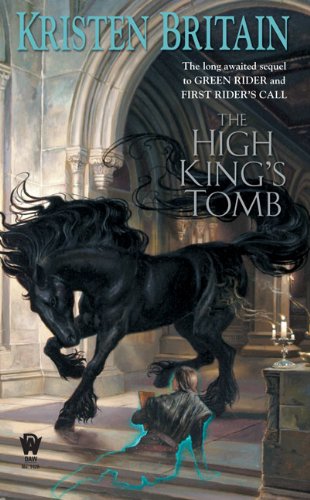
The High King's Tomb by Kristen Britain
Guilty of a couple of slow spots, but overall getting better and better. Looking at the number of plotlines far from resolution, I'm wondering how many books she's planning; let me know if you've heard. I particularly enjoyed the way she's starting to loop in some characters and threads from book 1.
I love how undomestic and swashbuckler-y Karigan is getting. I also love a new character, a roguish jewel thief; I have a terrible weakness for roguish thief characters. I'm hoping Karigan stops mooning over His Excellency Our-Classes-Divide-Us and takes up with the Raven Mask, but I ain't holding my breath, either. However, this is (appealingly) only one preoccupation of many for Karigan.
The High King's Tomb by Kristen Britain
Guilty of a couple of slow spots, but overall getting better and better. Looking at the number of plotlines far from resolution, I'm wondering how many books she's planning; let me know if you've heard. I particularly enjoyed the way she's starting to loop in some characters and threads from book 1.
I love how undomestic and swashbuckler-y Karigan is getting. I also love a new character, a roguish jewel thief; I have a terrible weakness for roguish thief characters. I'm hoping Karigan stops mooning over His Excellency Our-Classes-Divide-Us and takes up with the Raven Mask, but I ain't holding my breath, either. However, this is (appealingly) only one preoccupation of many for Karigan.
83alcottacre
#82: I am continuing to resist temptation! I must be strong! lol
84Cynara
I can hear it calling youuuu....
Dammit. I just read a review of the latest, Blackveil, and apparently it ends on a big cliffhanger. That's enough to make me think of putting it off for a while. Drat!
Dammit. I just read a review of the latest, Blackveil, and apparently it ends on a big cliffhanger. That's enough to make me think of putting it off for a while. Drat!
85alcottacre
#84: Aha! I stand firm in my resistance - and a good thing too after hearing about Blackveil :)
86Cynara
If they didn't come out four or five years apart, I might not care, though I still might delay a bit. As it is, I'm going to try to wait a year or two anyway.
I'm forging ahead with In Defence of History and am also getting some pages in on Forewords and Afterwords by W. H. Auden.
I'm forging ahead with In Defence of History and am also getting some pages in on Forewords and Afterwords by W. H. Auden.
87Cynara
#13

In Defence of History by Richard J. Evans
While I can't say I've read every word of the later chapters, I have read enough to satisfy my curiosity for now. I found the chapters on ancient through early 20th century historiography interesting, as well as the introduction to postmodernism, but my interest failed at his detailed description of the to-ings and fro-ings of the past forty years. I imagine that I'm just not conversant enough with major figures, specific trends, etc. to find it interesting. His afterword dealing with his reviewers was pleasingly waspish, though.
Now I'm reading the Auden I mentioned above; I'm largely skimming the first few essays on Christian books. As fascinating as I find religions in general, Auden's discussion has left me quite cold. I'm reading his foreword to Shakespeare's sonnets right now and enjoying it.
In Defence of History by Richard J. Evans
While I can't say I've read every word of the later chapters, I have read enough to satisfy my curiosity for now. I found the chapters on ancient through early 20th century historiography interesting, as well as the introduction to postmodernism, but my interest failed at his detailed description of the to-ings and fro-ings of the past forty years. I imagine that I'm just not conversant enough with major figures, specific trends, etc. to find it interesting. His afterword dealing with his reviewers was pleasingly waspish, though.
Now I'm reading the Auden I mentioned above; I'm largely skimming the first few essays on Christian books. As fascinating as I find religions in general, Auden's discussion has left me quite cold. I'm reading his foreword to Shakespeare's sonnets right now and enjoying it.
88alcottacre
#87: I am going to give In Defence of History a try despite your reservations. Thanks for the review, Cynara!
89Cynara
They're not reservations, really - just that I feel like I'm not the intended audience. While the generalities of the relationship between the historian and history are very interesting to me, I just don't have the specialised knowledge that would make the second half of the book compelling. I haven't spent much time with the European historians, and I definitely don't know enough about their separate schools to appreciate Evans' critique. Anyway, I'd love to know what you make of it.
Right now I'm reading the Auden (skimming the foreword about The Sorrows of Young Werther, which I haven't read), and The Eyre Affair which hasn't settled down yet, but will be either delightful or twee. With a protagonist named Thursday Next I have the direst suspicions, but will give it a good go anyway.
So far, it's reminded me most of Hugh Laurie's The Gun Seller, which I really wanted to like but was ultimately unsatisfying. Maybe I was just too grumpy to give that one a good chance, but for all the felicities of language, it just never quite gelled. Anyway, I'm not grumpy for The Eyre Affair, so it's getting a fair shake.
Right now I'm reading the Auden (skimming the foreword about The Sorrows of Young Werther, which I haven't read), and The Eyre Affair which hasn't settled down yet, but will be either delightful or twee. With a protagonist named Thursday Next I have the direst suspicions, but will give it a good go anyway.
So far, it's reminded me most of Hugh Laurie's The Gun Seller, which I really wanted to like but was ultimately unsatisfying. Maybe I was just too grumpy to give that one a good chance, but for all the felicities of language, it just never quite gelled. Anyway, I'm not grumpy for The Eyre Affair, so it's getting a fair shake.
90callen610
Enjoying your insights, Cynara...... I also keep running into recommendations for Byatt's Possession, so I may just HAVE to read it this year. I heard the author interviewed as part of a program called "The Uses of Enchantment" on To the Best of Our Knowledge. She was talking about fairy tales and her new book, The Children's Book.
92Cynara
#14

Jasper Fforde's The Eyre Affair
1. Very English.
2. Very English in that "oh my, look how silly I'm being! Very silly!" way.
3. So, yes, twee.
4. Labours under the delusion that names like "Dr. Runcible Spoon" will send me rolling in the aisles.
5. Set in a very appealing alternate reality where great literature is a subject of intense popular interest; door-to-door proselytisers trying to persuade you that Bacon wrote Shakespeare's plays, Richard III performed in the style of the Rockey Horror Picture Show, etc.
6. Heroine isn't an unforgettable character, but is at least no-nonsense.
7. Solid plot, good pacing.
8. Unsatisfying conclusion; I was rooting for the other potential romantic interest.
9. I loved the conceit around Jane Eyre.
A moderately enjoyable light read, but I don't think I'm going to chase the next book down.

Jasper Fforde's The Eyre Affair
1. Very English.
2. Very English in that "oh my, look how silly I'm being! Very silly!" way.
3. So, yes, twee.
4. Labours under the delusion that names like "Dr. Runcible Spoon" will send me rolling in the aisles.
5. Set in a very appealing alternate reality where great literature is a subject of intense popular interest; door-to-door proselytisers trying to persuade you that Bacon wrote Shakespeare's plays, Richard III performed in the style of the Rockey Horror Picture Show, etc.
6. Heroine isn't an unforgettable character, but is at least no-nonsense.
7. Solid plot, good pacing.
8. Unsatisfying conclusion; I was rooting for the other potential romantic interest.
9. I loved the conceit around Jane Eyre.
A moderately enjoyable light read, but I don't think I'm going to chase the next book down.
93mks27
The Eyre Affair is on my TBR list....but, because of your helpful list, I will save for when I need something light. Thanks!
94sibylline
Spot on reviewing, Cynara, esp of the Britain series and Fforde, just delightful to read.
95Cynara
Thank you, Sibyx; that's very kind!
(Edit; we share some very cool books! Your review of He Died with a Felafel in his Hand makes me want to pick it up.)
(Edit; we share some very cool books! Your review of He Died with a Felafel in his Hand makes me want to pick it up.)
96f_ing_kangaroo
#14: I recall liking the other Thursday Next books better than the first one. Much more of the action takes place in the bookworld.
On the subject of the silly names, one of the primary villains being named "Jack Schitt" never ceases to amuse me. I am quite easily amused. :)
On the subject of the silly names, one of the primary villains being named "Jack Schitt" never ceases to amuse me. I am quite easily amused. :)
97antqueen
I'm enjoying the Thursday Next books... but oh, yes, I do make sure I need a silly book before I pick one up. I don't think I could get through one when I'm in a serious mood.
98Cynara
That's promising, Kangaroo & Antqueen; maybe I will pick them up again some day.
Almost done Bourdain's Kitchen Confidential; more soon!
Almost done Bourdain's Kitchen Confidential; more soon!
99notmyrealname
For sure stick with the Thursday Next series - I think they are kind of like Harry Potter, in that they get better (1) as they go on and (2) with age/rereading. Not that I am remotely comparing them to Harry Potter in a broader sense!
And definitely have a go at He Died with a Felafel in his Hand, I seem to remember actually having to put it down because my stomach hurt so much, but maybe I am exaggerating. But worth a read no doubt!
And definitely have a go at He Died with a Felafel in his Hand, I seem to remember actually having to put it down because my stomach hurt so much, but maybe I am exaggerating. But worth a read no doubt!
100Cynara
#15

Kitchen Confidential, by Anthony Bourdain
This is a funny and informative book, as well as being profane and devil-may-care and all the rest. Bourdain’s professional memoir is a pungent, heady thing, full of descriptions upon descriptions, lists upon lists. It’s revealing that he describes being a chef as captaining a pirate ship.
I agree with one LT reviewer who said that some chapters benefited from the restraining hand of a New Yorker editor. Bourdain has much to say and an urgent, over-the-top style - it’s delightful for a few dozen pages, but I would probably have been happier if the book as a whole had been edited more aggressively or if I’d spaced the chapters out over a week or so.
Another LT reviewer remarked on Bourdain’s “macho posturing” - yeah. Drink, drugs, anatomy, swagger, aggression, etc. etc. He’s deprecating about his youthful affection for Hunter S. Thompson and Burroughs, but I think this is his Fear and Loathing in the Restaurant Kitchen. Thompson was a better prose stylist, but it’s not far off.
Both failings are tempered in the final chapters, in which he relates his visit to a kitchen very different from his own, and describes a trip to Japan. He’s uncharacteristically shy and chastened overseas, unsure of himself and his towering hairy gaijin self. If I had to guess, I’d say that Bourdain doesn’t really know what to do with himself outside of his own kitchen.
Anyway, forget about all that. It’s a great, great read and I recommend it highly.

Kitchen Confidential, by Anthony Bourdain
This is a funny and informative book, as well as being profane and devil-may-care and all the rest. Bourdain’s professional memoir is a pungent, heady thing, full of descriptions upon descriptions, lists upon lists. It’s revealing that he describes being a chef as captaining a pirate ship.
I agree with one LT reviewer who said that some chapters benefited from the restraining hand of a New Yorker editor. Bourdain has much to say and an urgent, over-the-top style - it’s delightful for a few dozen pages, but I would probably have been happier if the book as a whole had been edited more aggressively or if I’d spaced the chapters out over a week or so.
Another LT reviewer remarked on Bourdain’s “macho posturing” - yeah. Drink, drugs, anatomy, swagger, aggression, etc. etc. He’s deprecating about his youthful affection for Hunter S. Thompson and Burroughs, but I think this is his Fear and Loathing in the Restaurant Kitchen. Thompson was a better prose stylist, but it’s not far off.
Both failings are tempered in the final chapters, in which he relates his visit to a kitchen very different from his own, and describes a trip to Japan. He’s uncharacteristically shy and chastened overseas, unsure of himself and his towering hairy gaijin self. If I had to guess, I’d say that Bourdain doesn’t really know what to do with himself outside of his own kitchen.
Anyway, forget about all that. It’s a great, great read and I recommend it highly.
101Cynara
I had one of those frozen-at-the-bookcase-because-I-can't-decide-what-to-read-on-the-subway minutes yesterday. The books I've been loaned lately are too risky a source of entertainment for a three-hour round trip ride. What if they suck?
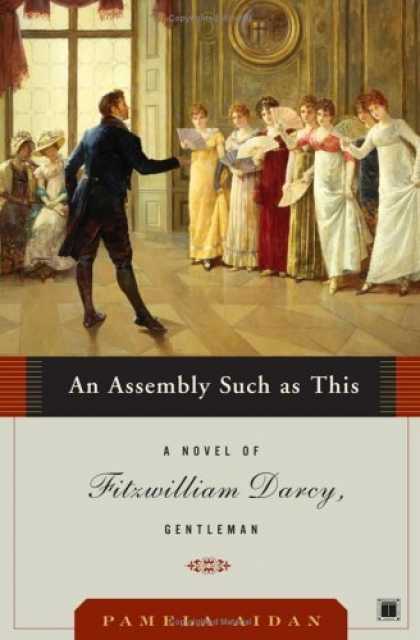
The Auden is too big. So... so... so... Augh! Pride and Prejudice? But I want to wait for the group read! A reread of Promethea? Too soon. Okay, an Austen pastiche, An Assembly Such As This, up for a reread after another 75er's review. This will lead to rereads of the next two in the trilogy, I'm sure.
The Auden is too big. So... so... so... Augh! Pride and Prejudice? But I want to wait for the group read! A reread of Promethea? Too soon. Okay, an Austen pastiche, An Assembly Such As This, up for a reread after another 75er's review. This will lead to rereads of the next two in the trilogy, I'm sure.
103Cynara
I've put in my first library holds of the year; very exciting! To hell with the books people loaned me!
104Cynara
Through LT I found my way to Auden's original review of Tolkein's Lord of the Rings trilogy. In his review of Return of the King, Auden observes of elves that they are "beings who know good and evil but have not fallen". Though I'm not saying Tolkein thought of it that way, that strikes me as a remarkable insight.
105Cynara
#2 (which I accidentally skipped)
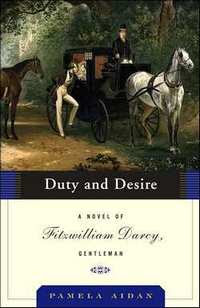
Duty and Desire by Pamela Aidan
While still very readable, this one goes off the rails a bit. While An Assembly Such as This gives us a plausible Darcy in a fairly recognizable Austen setting (except for the sincere religious feelings of Elizabeth and Darcy, which, although not essentially far-fetched, are quite alien to Austen's characters), this one goes weirdly off into the affairs of the ton and the doings of Gothic romance, neither of which Austen would have touched with a barge pole. I really don't see Austen's Darcy doing half the things he does in the second half of this book.
Anyway, I'm looking forward to These Three Remain; Aidan's period diction is excellent (Austen is my touchstone for the country, and Heyer for the London good-for-nothings), her humour bright, and her interpolations generally very enjoyable. It's a good reread.
Duty and Desire by Pamela Aidan
While still very readable, this one goes off the rails a bit. While An Assembly Such as This gives us a plausible Darcy in a fairly recognizable Austen setting (except for the sincere religious feelings of Elizabeth and Darcy, which, although not essentially far-fetched, are quite alien to Austen's characters), this one goes weirdly off into the affairs of the ton and the doings of Gothic romance, neither of which Austen would have touched with a barge pole. I really don't see Austen's Darcy doing half the things he does in the second half of this book.
Anyway, I'm looking forward to These Three Remain; Aidan's period diction is excellent (Austen is my touchstone for the country, and Heyer for the London good-for-nothings), her humour bright, and her interpolations generally very enjoyable. It's a good reread.
106Cynara
As I predicted, I'm enjoying These Three Remain; it's a mix. I like the characters she's added, and her construction of Darcy is appealing and convincing, if a bit of a mess internally. I mean, I always assumed that he was a roiling sea of emotion under all the starched withdrawal, but it almost becomes too much. Elizabeth! Et cetera.
Something else I've noticed - in some ways, this strikes me as a rewriting of the BBC miniseries more than Austen herself. Some of the moments the series created - e.g. Darcy's finishing of his letter to Elizabeth in the chill morning, extinguishing the candle, washing his face - are reproduced faithfully here. This isn't a good or bad thing; the series was truly excellent, and found ways to hint at Darcy's state of mind without violating the original text.
Something else I've noticed - in some ways, this strikes me as a rewriting of the BBC miniseries more than Austen herself. Some of the moments the series created - e.g. Darcy's finishing of his letter to Elizabeth in the chill morning, extinguishing the candle, washing his face - are reproduced faithfully here. This isn't a good or bad thing; the series was truly excellent, and found ways to hint at Darcy's state of mind without violating the original text.
107Donna828
I've enjoyed reading through your thread and have you starred. I'm so glad you stopped by my place so that I could pay this return visit.
>52 Cynara:: Too bad Winter Shadows was such a dud. I love the cover that reminds me of Conroy's My Reading Life cover.
>92 Cynara:: Your review on this 'twee' book confirms that I made a good decision that it would not be a book I'd enjoy. I do like your no-nonsense review, though. ;-)
>52 Cynara:: Too bad Winter Shadows was such a dud. I love the cover that reminds me of Conroy's My Reading Life cover.
>92 Cynara:: Your review on this 'twee' book confirms that I made a good decision that it would not be a book I'd enjoy. I do like your no-nonsense review, though. ;-)
108Cynara
Thanks for the visit, Donna! Yes, I love the cover design for Winter Shadows; they've got someone good working for them.
109Cynara
Warren Ellis blogged this interview with China Mieville; he's on my general TBR list. My general sense is that his work isn't unlike Palimpsest by Catherynne Valente, which makes me both interested and a little wary.
110sibylline
Falafel is indeed painfully funny. I know of someone (or I read about it) who has a bookcase devoted ONLY to books with great titles, and obviously, if nowhere else, this book belongs there!
111Cynara
#17

These Three Remain by Pamela Aidan, discussed above.
#18

Missing in Death by J. D. Robb
I can't read the (Noun or Gerund) In Death novellas without thinking of them as shortened novels. The rhythm of an In Death novel is so familiar to me now that I greet scenes like old friends – here’s a Peabody banter scene! Here’s a spat with Roarke scene! This is, of course, one of the joys of a long-running series. In the novellas, you don’t generally have room for more than one or two of a single kind of scene, and the subplot is will be vanishingly small. I enjoy them, but don’t think of them as more than hor d’oeuvres to the main novels.
#19

Fantasy in Death, J. D. Robb
Fantasy in Death was an enjoyable return to the series for me, after some time away from it. I think the intervening year meant I was less invested in the characters than I was at the end of my binge last year, but as I draw to the end of the published books I’m sure that I’ll want to reread them, maybe sooner rather than later.
That said, while this was a satisfying read, it’s not the best of the series. Eve’s personal life is relatively quiet for once, but I suppose the dear woman deserves the occasional week off from trauma and terror. The story is set in the geek subculture, which is dear to my heart. I had hoped it would feature more prominently in the story, but you can’t please everyone; there’s probably a jeweller somewhere wishing they got more screen time in the book about the diamonds.
Weirdly, I pegged the villain and his motive early in the book, which either means that it was poorly camouflaged, or I had an uncharacteristic burst of insight. The general means of murder was a bit obvious (we were present for the victim's death in the first chapter), but at the same time, its actual execution (sorry) depends on some details we had no way of figuring out.

These Three Remain by Pamela Aidan, discussed above.
#18

Missing in Death by J. D. Robb
I can't read the (Noun or Gerund) In Death novellas without thinking of them as shortened novels. The rhythm of an In Death novel is so familiar to me now that I greet scenes like old friends – here’s a Peabody banter scene! Here’s a spat with Roarke scene! This is, of course, one of the joys of a long-running series. In the novellas, you don’t generally have room for more than one or two of a single kind of scene, and the subplot is will be vanishingly small. I enjoy them, but don’t think of them as more than hor d’oeuvres to the main novels.
#19

Fantasy in Death, J. D. Robb
Fantasy in Death was an enjoyable return to the series for me, after some time away from it. I think the intervening year meant I was less invested in the characters than I was at the end of my binge last year, but as I draw to the end of the published books I’m sure that I’ll want to reread them, maybe sooner rather than later.
That said, while this was a satisfying read, it’s not the best of the series. Eve’s personal life is relatively quiet for once, but I suppose the dear woman deserves the occasional week off from trauma and terror. The story is set in the geek subculture, which is dear to my heart. I had hoped it would feature more prominently in the story, but you can’t please everyone; there’s probably a jeweller somewhere wishing they got more screen time in the book about the diamonds.
Weirdly, I pegged the villain and his motive early in the book, which either means that it was poorly camouflaged, or I had an uncharacteristic burst of insight. The general means of murder was a bit obvious (we were present for the victim's death in the first chapter), but at the same time, its actual execution (sorry) depends on some details we had no way of figuring out.
112Cynara
#20

The Road to Civil War, J. Michael Straczynski (and possibly others)
Oh, dear. Maybe this is why I don’t read Marvel’s mainstream stuff, unless it’s Ellis or Whedon writing it. This is a grab-bag from several series, showing the stormclouds of war gathering, etc. etc. over the Marvelverse.
The essential idea was an ambitious one – take post 9/11 feelings of concern about increased surveillance of Americans by their own government and the creation of the Department of Homeland Security, and bring some of these contemporary events into the Marvel timeline. What would happen if the government sought to register and regulate superheroes? It was an idea tabled by Watchmen some years earlier, but it’s still a promising ground for drama and political commentary.
Still, this volume is a bit of a mess. The first few issues included in the TBP are about meetings of the leaders of various superhero teams, with an attempt by Tony Stark to get them working together, or at least comparing notes every year or two. The Submariner, relatively unknown to me, stalks around making haughty comments and professing complete indifference to the survival of air-breathers. Yes, apparently Atlanteans are the high elves of the Marvel universe. Stark is uncharacteristically tentative, rummaging through his notes and suggesting that they could have a team, or a club, and maybe have meetings with votes and agendas and minutes and…. Even Professor Xavier, who is in favour, don’t seem convinced that this thing is ever going to get off the ground. The art style is very old-school Silver age, to my uneducated eyes- lots of saturated, flat colours with gritty black particulate details.
Then, weirdly, the next issue included is about the exiling of the Hulk to a satellite, with further internal disagreements revealed. Hum.
There’s an awful Fantastic Four arc, which is chiefly remarkable for the miserably lame banter and the hilarious appearance of Dr. Doom’s doombots. Really? Doombots? What is this, Nextwave? How can we take doombots seriously after the H.A.T.E. Group’s Human Resources broccoli men? Dr. Doom, with whom I’m mostly unfamiliar, shows up and reveals himself to be a campy villain of the most hilarious kind, all monologues and self-aggrandizement and brass cape clasps.
The last half of the volume is in a much slicker and more colourful modern style (a little too flourishy for my tastes, but there you go). The bill for registration of superheroes is being tabled, and Stark is taking a rest from haranguing the metahumans so he can harangue the senate committee. He’s doing his best to get young Peter Parker’s buy-in (which comes with some totally gratuitous eye-candy visits from Mary Jane, presumably to give us someone to look at who doesn’t have shoulders as wide as a piano bench), but Peter is still a boy at heart, and interrupts Stark’s politicking by speaking impulsively and from his gut. There’s some nice shading of Tony’s character in this issue, but even the appearance of a big titanium bruiser can’t keep this story from getting talky.

The Road to Civil War, J. Michael Straczynski (and possibly others)
Oh, dear. Maybe this is why I don’t read Marvel’s mainstream stuff, unless it’s Ellis or Whedon writing it. This is a grab-bag from several series, showing the stormclouds of war gathering, etc. etc. over the Marvelverse.
The essential idea was an ambitious one – take post 9/11 feelings of concern about increased surveillance of Americans by their own government and the creation of the Department of Homeland Security, and bring some of these contemporary events into the Marvel timeline. What would happen if the government sought to register and regulate superheroes? It was an idea tabled by Watchmen some years earlier, but it’s still a promising ground for drama and political commentary.
Still, this volume is a bit of a mess. The first few issues included in the TBP are about meetings of the leaders of various superhero teams, with an attempt by Tony Stark to get them working together, or at least comparing notes every year or two. The Submariner, relatively unknown to me, stalks around making haughty comments and professing complete indifference to the survival of air-breathers. Yes, apparently Atlanteans are the high elves of the Marvel universe. Stark is uncharacteristically tentative, rummaging through his notes and suggesting that they could have a team, or a club, and maybe have meetings with votes and agendas and minutes and…. Even Professor Xavier, who is in favour, don’t seem convinced that this thing is ever going to get off the ground. The art style is very old-school Silver age, to my uneducated eyes- lots of saturated, flat colours with gritty black particulate details.
Then, weirdly, the next issue included is about the exiling of the Hulk to a satellite, with further internal disagreements revealed. Hum.
There’s an awful Fantastic Four arc, which is chiefly remarkable for the miserably lame banter and the hilarious appearance of Dr. Doom’s doombots. Really? Doombots? What is this, Nextwave? How can we take doombots seriously after the H.A.T.E. Group’s Human Resources broccoli men? Dr. Doom, with whom I’m mostly unfamiliar, shows up and reveals himself to be a campy villain of the most hilarious kind, all monologues and self-aggrandizement and brass cape clasps.
The last half of the volume is in a much slicker and more colourful modern style (a little too flourishy for my tastes, but there you go). The bill for registration of superheroes is being tabled, and Stark is taking a rest from haranguing the metahumans so he can harangue the senate committee. He’s doing his best to get young Peter Parker’s buy-in (which comes with some totally gratuitous eye-candy visits from Mary Jane, presumably to give us someone to look at who doesn’t have shoulders as wide as a piano bench), but Peter is still a boy at heart, and interrupts Stark’s politicking by speaking impulsively and from his gut. There’s some nice shading of Tony’s character in this issue, but even the appearance of a big titanium bruiser can’t keep this story from getting talky.


114Cynara
Has anyone heard about HarperCollins' decision to limit library checkouts of their books to 26 per ebook? At that point, the file will lock until the library re-buys the book.
See, HarperCollins, this is the kind of thing that makes me wonder if I want an e-reader. You know I have a thing about real-book-books with pages and bookmarks and bite marks and inscriptions from that boy I wanted when I was twenty.
If you’re trying to make me want buy a reader I can’t take in the bath, then you’d better not pull crap like this. It makes me think that some day, through planned or enforced obsolescence, I’ll need to re-buy all my books for your new reader droid or personal literature satellite or transhumanist subcutaneous data chip.
I don’t care how much shelf space I’ll save. If I buy a book, I want to know I can keep it until I’m a hundred and three, then will it to my most bookish great-granddaughter. If I don’t want to own a book permanently, I will borrow it from the goddamn library.
See, HarperCollins, this is the kind of thing that makes me wonder if I want an e-reader. You know I have a thing about real-book-books with pages and bookmarks and bite marks and inscriptions from that boy I wanted when I was twenty.
If you’re trying to make me want buy a reader I can’t take in the bath, then you’d better not pull crap like this. It makes me think that some day, through planned or enforced obsolescence, I’ll need to re-buy all my books for your new reader droid or personal literature satellite or transhumanist subcutaneous data chip.
I don’t care how much shelf space I’ll save. If I buy a book, I want to know I can keep it until I’m a hundred and three, then will it to my most bookish great-granddaughter. If I don’t want to own a book permanently, I will borrow it from the goddamn library.
115souloftherose
#114 I saw an article about it on The Guardian books blog. There's a brilliant youtube video in response where two librarians from Oklahoma take a random selection of five HarperCollins bestsellers from their shelves and show that they're all in perfectly readable condition.
I imagine it's only a matter of time before they try and implement something similar in UK libraries as well.
And I know what you mean. In some ways I want a shiny new ereader but publishers seem to be using them as an excuse to try and get rid of all the things they haven't previously been able to control with paper books: second hand book shops, books being loaned to friends and libraries.
I imagine it's only a matter of time before they try and implement something similar in UK libraries as well.
And I know what you mean. In some ways I want a shiny new ereader but publishers seem to be using them as an excuse to try and get rid of all the things they haven't previously been able to control with paper books: second hand book shops, books being loaned to friends and libraries.
116Cynara
I saw that video - great point, though it was a bit long. Twenty-six is a ludicrously low threshold, if the idea is to duplicate the wear and tear on a paper book.
This makes me so mad; don't they realise that libraries, loaned books, and second-hand bookstores nurture the kinds of readers who then buy new books?
When I was in high school, I wasn't borrowing book from friends instead of spending $35 on a new hardback. However, now that I'm an adult with a job and a ravenous reading habit, I do that sometimes.
This makes me so mad; don't they realise that libraries, loaned books, and second-hand bookstores nurture the kinds of readers who then buy new books?
When I was in high school, I wasn't borrowing book from friends instead of spending $35 on a new hardback. However, now that I'm an adult with a job and a ravenous reading habit, I do that sometimes.
117Cynara
Thoughts on the rest of the Marvel Civil War trades my friend lent me.
Well, first, these were difficult to read because I'm not caught up on current events - even so far as reading all the Civil War collections, let alone recent events in each title. I had no clue what was going on in the X-Men volume; it seemed like a convention of the silliest characters in the series, and there were so many factions I couldn't sort out who was doing what to whom. The blazing skeleton in the background was never introduced or explained.
It was a very 'busy' arc, with no time for real dialogue, let alone character development or humour. There was one nice moment with Minimax, but the rest was a hot mess, as far as I'm concerned.
Iron Man was easier to read, as I had a little more context, and the pace wasn't as frenetic. Still, with the exception of the last issue, nothing out of the ordinary.
While I haven't read the first volume of Front Lines, I was more or less able to pick up the threads in the second one; perhaps I would have been more invested in the reporter characters if I'd had more background, but while it was readable, I wouldn't bother to read it again. The last issue with the big narrative twist was unsettling; if true, it indicates that the character is seriously mentally unbalanced.
Off to a new thread shortly! I'll post a link.
Well, first, these were difficult to read because I'm not caught up on current events - even so far as reading all the Civil War collections, let alone recent events in each title. I had no clue what was going on in the X-Men volume; it seemed like a convention of the silliest characters in the series, and there were so many factions I couldn't sort out who was doing what to whom. The blazing skeleton in the background was never introduced or explained.
It was a very 'busy' arc, with no time for real dialogue, let alone character development or humour. There was one nice moment with Minimax, but the rest was a hot mess, as far as I'm concerned.
Iron Man was easier to read, as I had a little more context, and the pace wasn't as frenetic. Still, with the exception of the last issue, nothing out of the ordinary.
While I haven't read the first volume of Front Lines, I was more or less able to pick up the threads in the second one; perhaps I would have been more invested in the reporter characters if I'd had more background, but while it was readable, I wouldn't bother to read it again. The last issue with the big narrative twist was unsettling; if true, it indicates that the character is seriously mentally unbalanced.
Off to a new thread shortly! I'll post a link.

