This topic is currently marked as "dormant"—the last message is more than 90 days old. You can revive it by posting a reply.
1countrylife
About my '75 Books Challenge for 2011' Reading List
I'm going to consider this my main reading list, with anything read for other challenges to be included and tallied up here. Dates for my reads will be attributed to the date I finished the book. My monthly-reads posts will be edited to keep my running list, noting which challenges each is applied to, with any book notes/reviews added in new posts.
My Current Challenges:
(Because it makes so much sense to have everything listed in one place, and this shall be that place for me.)
Fifty States Fiction:
..........The group. and My thread.
Canadian Fiction/Non-Fiction Reading Challenge:
..........The group. and My thread.
37 Oldies in 2011:
..........The group. and My thread.
Reading Through Time:
..........The group. and My thread.
The 11 in 11 Category Challenge:
..........The group. and My thread.
My 11/11 categories:
FROM THE LIBRARY – Categories 1 through 10:
Goal: 32 books which garnered favorable reviews from 10 favorite reviewers here on LT.
FROM THE BOXES – Category 11:
Goal: 30 books (as in – just moved, must read and reduce)
I'm going to consider this my main reading list, with anything read for other challenges to be included and tallied up here. Dates for my reads will be attributed to the date I finished the book. My monthly-reads posts will be edited to keep my running list, noting which challenges each is applied to, with any book notes/reviews added in new posts.
My Current Challenges:
(Because it makes so much sense to have everything listed in one place, and this shall be that place for me.)
Fifty States Fiction:
..........The group. and My thread.
Canadian Fiction/Non-Fiction Reading Challenge:
..........The group. and My thread.
37 Oldies in 2011:
..........The group. and My thread.
Reading Through Time:
..........The group. and My thread.
The 11 in 11 Category Challenge:
..........The group. and My thread.
My 11/11 categories:
FROM THE LIBRARY – Categories 1 through 10:
Goal: 32 books which garnered favorable reviews from 10 favorite reviewers here on LT.
FROM THE BOXES – Category 11:
Goal: 30 books (as in – just moved, must read and reduce)
2countrylife
JANUARY READS:
1, The Secret Life of CeeCee Wilkes by Diane Chamberlain
(For: 37. 11#11. TIOLI #10=proper name in the title)
Contemporary fiction, 522 pages (@ post 45) 3 stars
2, Latitudes of Melt by Joan Clark
(For: CA=Newfoundland. 37. 11#11. TIOLI#1=3.80 to 4.20 Star Rating.)
Fiction, generational saga, 329 pages (@ post 32) 3.7 stars
3, Jacob Have I Loved by Katherine Paterson
(For: 50=Maryland. 37. 11#1. TIOLI#10=proper name in title)
Fiction, young adult, 244 pages (@ post 44) 3.5 stars
4, Book Lust by Nancy Pearl
(For: TIOLI#5=book you received for Christ-mas)
Books about books, 256 pages (@ post 47) 4 stars
5, The Browns at Mt. Hermon by Isabella Alden
(For: 50=California. 37. 11#11. TIOLI#11=ranked below 10,000 on LT Popularity Index)
Didactic fiction, old-fashioned, 442 pages (@ post 60) 2.5 stars
6, The Winter Ghosts by Kate Mosse
(For: EarlyReviewers)
Fiction, 250 pages (@ post 41) 3.5 stars
7, The Language of Trees by Ilie Ruby
Fiction, magical realism, 339 pages (Details @ post 40)
(For: 50=New York, Hobnob with Authors) 4 stars
8, Sarah's Key by Tatiana de Rosnay
Historical fiction, 293 pages (@ post 66)
(For: 37. 11#11. TIOLI#10=proper name in title) 3.8 stars
9, Sing Them Home by Stephanie Kallos
(For: 50=Nebraska. 37. 11#11.)
Fiction, magical realism, 540 pages (@ post 39) 4 stars
JANUARY TALLY:
BOOKS READ: 9
PAGES READ: 3,215
FAVORITE BOOKS FROM JANUARY:
Fiction: The Language of Trees by Ilie Ruby
Non-fiction: Book Lust by Nancy Pearl
CHALLENGE PROGRESS:
50 States Fiction: 4 states
Canadian: 1 province/territory
37 oldies: 6 books
11 in 11: #1-1, #11-5
TIOLI Challenges: 6 books
1, The Secret Life of CeeCee Wilkes by Diane Chamberlain
(For: 37. 11#11. TIOLI #10=proper name in the title)
Contemporary fiction, 522 pages (@ post 45) 3 stars
2, Latitudes of Melt by Joan Clark
(For: CA=Newfoundland. 37. 11#11. TIOLI#1=3.80 to 4.20 Star Rating.)
Fiction, generational saga, 329 pages (@ post 32) 3.7 stars
3, Jacob Have I Loved by Katherine Paterson
(For: 50=Maryland. 37. 11#1. TIOLI#10=proper name in title)
Fiction, young adult, 244 pages (@ post 44) 3.5 stars
4, Book Lust by Nancy Pearl
(For: TIOLI#5=book you received for Christ-mas)
Books about books, 256 pages (@ post 47) 4 stars
5, The Browns at Mt. Hermon by Isabella Alden
(For: 50=California. 37. 11#11. TIOLI#11=ranked below 10,000 on LT Popularity Index)
Didactic fiction, old-fashioned, 442 pages (@ post 60) 2.5 stars
6, The Winter Ghosts by Kate Mosse
(For: EarlyReviewers)
Fiction, 250 pages (@ post 41) 3.5 stars
7, The Language of Trees by Ilie Ruby
Fiction, magical realism, 339 pages (Details @ post 40)
(For: 50=New York, Hobnob with Authors) 4 stars
8, Sarah's Key by Tatiana de Rosnay
Historical fiction, 293 pages (@ post 66)
(For: 37. 11#11. TIOLI#10=proper name in title) 3.8 stars
9, Sing Them Home by Stephanie Kallos
(For: 50=Nebraska. 37. 11#11.)
Fiction, magical realism, 540 pages (@ post 39) 4 stars
JANUARY TALLY:
BOOKS READ: 9
PAGES READ: 3,215
FAVORITE BOOKS FROM JANUARY:
Fiction: The Language of Trees by Ilie Ruby
Non-fiction: Book Lust by Nancy Pearl
CHALLENGE PROGRESS:
50 States Fiction: 4 states
Canadian: 1 province/territory
37 oldies: 6 books
11 in 11: #1-1, #11-5
TIOLI Challenges: 6 books
3countrylife
FEBRUARY READS:
10, The Memory Keeper's Daughter by Kim Edwards
(For: 50=Kentucky. 37. 11#11. TIOLI#1=embedded word in the title=theme.)
(@ post 38) Fiction, 401 pages, 3 stars
11, Tisha by Robert Specht
(For: 50=Alaska. 37. 11#11. TIOLI#10=Remix 2 previous TIOLI/May#1=one word title AND July#2=making a difference.)
(@ post 37) Biography, 342 pages, 3.8 stars
12, An Acquaintance with Darkness by Ann Rinaldi
(For: 50=Washington DC. 37. 11#11. TIOLI#12=someone trying to do things in a different way (teaching anatomy/surgery after American civil war.)
@ post 71) Historical fiction, YA, 384 pages, 3.2 stars
13, Freckles by Gene Stratton-Porter
(For: 50=Indiana. 37. 11#11. TIOLI#10/Remix:Jan#5=1st successful work AND May#1=1 word title AND Jun#12=author w/3 part name AND Aug#15=character from another book (Freckles) AND Oct#4=old fashioned type of children's story AND possibly even Nov#8=reprinted after being out of print for awhile (don't know how to check that)
(@ post 52) Fiction, old-fashioned, 352 pages,
14, Fever 1793 by Laurie Halse Anderson
(For: 50=Pennsylvania. 37. 11#1. TIOLI#5=book with 2 vowels in title word that makes you think of being warm.)
(@ post 61) Historical fiction, young adult, 251 pages, 3.5 stars
15, The Quilt by T. Davis Bunn
(For: 37. 11#11. TIOLI#8=touchstone confusion w/The Keeping Quilt by Patricia Polacco)
(@ post 51) Christian fiction, 125 pages, 2.5 stars
16, Tying the Knot by Susan May Warren
(For: 50=Minnesota. 37. RTT=theme-love/marriage. TIOLI#10/Remix: May#7=title suggests marriage AND Jun#14=review unreviewed book)
(@ post 36) Christian fiction, 313 pages, 3.25 stars
17, Daughter of the Land by Gene Stratton-Porter
(For: 50=Indiana. 37. 11#11. TIOLI#10: sentimental favorite w/ fewer than 100 copies on LT (Dec#5) AND word related to earth in the title (Dec#13))
(@ post 33) Fiction, old-fashioned, 475 pages, 3.2 stars
18, Friendship Bread by Darien Gee
(For: Early Reviewers. 50=Illinois, TIOLI#8: touchstone confusion w/Amish Friendship Bread)
(@ post 31) Contemporary fiction, 363 pages, 5 stars
19, The Horse and Buggy Doctor by Arthur E. Hertzler
(For: 50=Kansas. TIOLI#16: Doctor, Doctor)
(@ post 56) Memoir, 322 pages, 4 stars
20, Look to the Hills : The Diary of Lozette Moreau, a French slave Girl by Patricia C. Mckissack
(For: TIOLI#6: book by or about an African-American woman, 50=New York)
(@ post 57) Historical fiction, childrens, 183 pages, 3.6 stars
21, Objects of Our Affection: Uncovering My Family's Past, One Chair, Pistol, and Pickle Fork at a Time by Lisa Tracy
(For TIOLI#1=embedded word in the title/stone *shared read/Chatterbox)
(@ post 58) Biography/Memoir, 227 pages, 4 stars
22, Beauty: A Retelling of the Story of Beauty & The Beast by Robin McKinley
(For TIOLI#8 Touchstone Confusion w/ On Beauty by Zadie Smith. 11#9)
(@ post 59) Fiction, fairy tale retelling, YA, 325 pages, 4 stars
FEBRUARY TALLY:
Books read: 13
Pages read: 4,049
FAVORITE BOOKS FROM FEBRUARY:
Fiction: Friendship Bread by Darien Gee
Non-Fiction: Objects of Our Affection by Lisa Tracy
CHALLENGE PROGRESS:
50 States Fiction: 10 states
Canadian: 0 province/territory
37 oldies: 8 books (=14/37)
Reading Through Time: 1
11 in 11: #1-1 (=2/2 done), #9-1 (=1/5), #11-6 (=11/30)
TIOLI Challenges: 13 books
10, The Memory Keeper's Daughter by Kim Edwards
(For: 50=Kentucky. 37. 11#11. TIOLI#1=embedded word in the title=theme.)
(@ post 38) Fiction, 401 pages, 3 stars
11, Tisha by Robert Specht
(For: 50=Alaska. 37. 11#11. TIOLI#10=Remix 2 previous TIOLI/May#1=one word title AND July#2=making a difference.)
(@ post 37) Biography, 342 pages, 3.8 stars
12, An Acquaintance with Darkness by Ann Rinaldi
(For: 50=Washington DC. 37. 11#11. TIOLI#12=someone trying to do things in a different way (teaching anatomy/surgery after American civil war.)
@ post 71) Historical fiction, YA, 384 pages, 3.2 stars
13, Freckles by Gene Stratton-Porter
(For: 50=Indiana. 37. 11#11. TIOLI#10/Remix:Jan#5=1st successful work AND May#1=1 word title AND Jun#12=author w/3 part name AND Aug#15=character from another book (Freckles) AND Oct#4=old fashioned type of children's story AND possibly even Nov#8=reprinted after being out of print for awhile (don't know how to check that)
(@ post 52) Fiction, old-fashioned, 352 pages,
14, Fever 1793 by Laurie Halse Anderson
(For: 50=Pennsylvania. 37. 11#1. TIOLI#5=book with 2 vowels in title word that makes you think of being warm.)
(@ post 61) Historical fiction, young adult, 251 pages, 3.5 stars
15, The Quilt by T. Davis Bunn
(For: 37. 11#11. TIOLI#8=touchstone confusion w/The Keeping Quilt by Patricia Polacco)
(@ post 51) Christian fiction, 125 pages, 2.5 stars
16, Tying the Knot by Susan May Warren
(For: 50=Minnesota. 37. RTT=theme-love/marriage. TIOLI#10/Remix: May#7=title suggests marriage AND Jun#14=review unreviewed book)
(@ post 36) Christian fiction, 313 pages, 3.25 stars
17, Daughter of the Land by Gene Stratton-Porter
(For: 50=Indiana. 37. 11#11. TIOLI#10: sentimental favorite w/ fewer than 100 copies on LT (Dec#5) AND word related to earth in the title (Dec#13))
(@ post 33) Fiction, old-fashioned, 475 pages, 3.2 stars
18, Friendship Bread by Darien Gee
(For: Early Reviewers. 50=Illinois, TIOLI#8: touchstone confusion w/Amish Friendship Bread)
(@ post 31) Contemporary fiction, 363 pages, 5 stars
19, The Horse and Buggy Doctor by Arthur E. Hertzler
(For: 50=Kansas. TIOLI#16: Doctor, Doctor)
(@ post 56) Memoir, 322 pages, 4 stars
20, Look to the Hills : The Diary of Lozette Moreau, a French slave Girl by Patricia C. Mckissack
(For: TIOLI#6: book by or about an African-American woman, 50=New York)
(@ post 57) Historical fiction, childrens, 183 pages, 3.6 stars
21, Objects of Our Affection: Uncovering My Family's Past, One Chair, Pistol, and Pickle Fork at a Time by Lisa Tracy
(For TIOLI#1=embedded word in the title/stone *shared read/Chatterbox)
(@ post 58) Biography/Memoir, 227 pages, 4 stars
22, Beauty: A Retelling of the Story of Beauty & The Beast by Robin McKinley
(For TIOLI#8 Touchstone Confusion w/ On Beauty by Zadie Smith. 11#9)
(@ post 59) Fiction, fairy tale retelling, YA, 325 pages, 4 stars
FEBRUARY TALLY:
Books read: 13
Pages read: 4,049
FAVORITE BOOKS FROM FEBRUARY:
Fiction: Friendship Bread by Darien Gee
Non-Fiction: Objects of Our Affection by Lisa Tracy
CHALLENGE PROGRESS:
50 States Fiction: 10 states
Canadian: 0 province/territory
37 oldies: 8 books (=14/37)
Reading Through Time: 1
11 in 11: #1-1 (=2/2 done), #9-1 (=1/5), #11-6 (=11/30)
TIOLI Challenges: 13 books
4countrylife
MARCH READS:
23, Slow Waltz in Cedar Bend by Robert James Waller
(For: TIOLI#10/Style of dance in title. 50=Iowa. 37. 11#11.)
(@ post 64) Fiction. 197 pages.
24, The Snow Goose by Paul Gallico
(For: TIOLI#4/title words increase or decrease by 1 letter count. 11#10. RTT/1940s.)
(@ post 65) Historical fiction novella, childrens, 58 pages
25, The Whistling Season by Ivan Doig
(For: TIOLI#9 title containing a word=compound words. 11#8. 50=Montana)
(@ post 67) Fiction, 345 pages
26, A Lifetime of Secrets by Frank Warren
(For: TIOLI#2 book not primarily for reading)
(@ post 72) Art book, pages - N/A
27, Someone Cry for the Children by Michael Wilkerson
(For: TIOLI#1 name of city on page 17. 50=Oklahoma.)
(@ post 73) Non-fiction, true-crime, 249 pages
28, Mothers and Daughters by Rae Meadows
(For: TIOLI#9 compound word in title. Early Reviewers.)
(@ post 74) Fiction, 254 pages
29, Red Dirt: Growing Up Okie by Roxanne Dunbar Ortiz
(For: no apparent reason!, TIOLI #1/name of city on p.17=Milburn)
(@ post 75) Memoir, 224 pages
30, At Home : a Short History of Private Life by Bill Bryson
(TIOLI #1/name of city on p17)
(@ post 76) Non-fiction, 452 pages
31, Pride and Prejudice by Jane Austen
(For: TIOLI#15/17 letters in title, Group Read, 11#9)
(@ Post 77) Fiction, 367 pages
32, Fantomina : Or, Love in a Maze by Eliza Haywood
(For: TIOLI#11/little known book by author who deserves wider recognition=rec by keristars)
(@ Post 78) Fiction, 48 pages
33, The Stone Diaries by Carol Shields
(For: TIOLI#14/word diary in title. 11:#8. 11in11 group read)
(@ Post 79) Fiction, 361 pages
34, All Things Wise and Wonderful by James Herriot
(For: TIOLI#16/NYT bestseller list on 21st birthday. RTT/1940s)
(@ Post 83) Nonfiction, memoir, 404 pages, 4 stars
35, Celebrating Oklahoma by Mike Klemme
(For: TIOLI#2/not primarily meant for reading)
(@ Post 84) Photographic art book, pages N/A, 3 stars
36, Sophie's World: A Novel About the History of Philosophy by Jostein Gaardner
(For: TIOLI#12/book about philosophy)
(@ Post 86) Fiction, philosophy, 394 pages, 3 stars
37, The Food of a Younger Land by Mark Kurlanski
(For: TIOLI#6/letter repeated 13 times)
(@ Post 87)Non-fiction, 366 pages, 3 stars
MARCH TALLY:
Books read: 15
Pages read: 3,719
FAVORITE BOOKS FROM MARCH:
Fiction:
Pride and Prejudice by Jane Austen
The Stone Diaries by Carol Shields
The Whistling Season by Ivan Doig
Non-Fiction:
All Things Wise and Wonderful by James Herriot
CHALLENGE PROGRESS:
50 States Fiction: 6 states
Canadian: 1 province/territory
37 oldies: 1 books (=15/37)
Reading Through Time: 2
11 in 11: #8-2 (=2/4, #9-1 (=2/5), #10-1 (=1/5), #11-1 (=12/30)
TIOLI Challenges: 15 books
23, Slow Waltz in Cedar Bend by Robert James Waller
(For: TIOLI#10/Style of dance in title. 50=Iowa. 37. 11#11.)
(@ post 64) Fiction. 197 pages.
24, The Snow Goose by Paul Gallico
(For: TIOLI#4/title words increase or decrease by 1 letter count. 11#10. RTT/1940s.)
(@ post 65) Historical fiction novella, childrens, 58 pages
25, The Whistling Season by Ivan Doig
(For: TIOLI#9 title containing a word=compound words. 11#8. 50=Montana)
(@ post 67) Fiction, 345 pages
26, A Lifetime of Secrets by Frank Warren
(For: TIOLI#2 book not primarily for reading)
(@ post 72) Art book, pages - N/A
27, Someone Cry for the Children by Michael Wilkerson
(For: TIOLI#1 name of city on page 17. 50=Oklahoma.)
(@ post 73) Non-fiction, true-crime, 249 pages
28, Mothers and Daughters by Rae Meadows
(For: TIOLI#9 compound word in title. Early Reviewers.)
(@ post 74) Fiction, 254 pages
29, Red Dirt: Growing Up Okie by Roxanne Dunbar Ortiz
(For: no apparent reason!, TIOLI #1/name of city on p.17=Milburn)
(@ post 75) Memoir, 224 pages
30, At Home : a Short History of Private Life by Bill Bryson
(TIOLI #1/name of city on p17)
(@ post 76) Non-fiction, 452 pages
31, Pride and Prejudice by Jane Austen
(For: TIOLI#15/17 letters in title, Group Read, 11#9)
(@ Post 77) Fiction, 367 pages
32, Fantomina : Or, Love in a Maze by Eliza Haywood
(For: TIOLI#11/little known book by author who deserves wider recognition=rec by keristars)
(@ Post 78) Fiction, 48 pages
33, The Stone Diaries by Carol Shields
(For: TIOLI#14/word diary in title. 11:#8. 11in11 group read)
(@ Post 79) Fiction, 361 pages
34, All Things Wise and Wonderful by James Herriot
(For: TIOLI#16/NYT bestseller list on 21st birthday. RTT/1940s)
(@ Post 83) Nonfiction, memoir, 404 pages, 4 stars
35, Celebrating Oklahoma by Mike Klemme
(For: TIOLI#2/not primarily meant for reading)
(@ Post 84) Photographic art book, pages N/A, 3 stars
36, Sophie's World: A Novel About the History of Philosophy by Jostein Gaardner
(For: TIOLI#12/book about philosophy)
(@ Post 86) Fiction, philosophy, 394 pages, 3 stars
37, The Food of a Younger Land by Mark Kurlanski
(For: TIOLI#6/letter repeated 13 times)
(@ Post 87)Non-fiction, 366 pages, 3 stars
MARCH TALLY:
Books read: 15
Pages read: 3,719
FAVORITE BOOKS FROM MARCH:
Fiction:
Pride and Prejudice by Jane Austen
The Stone Diaries by Carol Shields
The Whistling Season by Ivan Doig
Non-Fiction:
All Things Wise and Wonderful by James Herriot
CHALLENGE PROGRESS:
50 States Fiction: 6 states
Canadian: 1 province/territory
37 oldies: 1 books (=15/37)
Reading Through Time: 2
11 in 11: #8-2 (=2/4, #9-1 (=2/5), #10-1 (=1/5), #11-1 (=12/30)
TIOLI Challenges: 15 books
5countrylife
APRIL READS:
38, Icefields by Thomas Wharton
For: TIOLI#1/Striking cover art. CA=Alberta. 11=?
(@ post 127) Fiction, 274 pages, 3.6 stars
39, Garden Spells by Sarah Addison Allen
For: TIOLI#14/Garden. 50=North Carolina.
(@ Post 110) Fiction, magical realism, 290 pages, 3.6 stars
40, The Perfect Storm by Sebastian Junger
For: TIOLI#6/Alex Award. 50=Massachusetts
(@ Post 109) Non-fiction, 225 pages,
41, The Seven Wonders of Sassafras Springs by Betty G. Birney
For: TIOLI#7/spring in title. 50=Missouri.
(@ Post 128) Children's fiction, 210 pages,
42, The Housekeeper and the Professor by Yoko Ogawa
For: TIOLI#8/Japan.
(@ Post 102) Fiction, 180 pages, 4 stars
43, The Various Flavors of Coffee by Anthony Capella
For: TIOLI#1/striking cover art
(@ Post 96) Fiction, 544 pages
44, My Garden by Kevin Henkes
For: TIOLI#14/garden.
(@ Post 129) Children's book, 26 pages
45, The Trail of Blood by J. M. Carroll
For: TIOLI#14/book written before I was born. RTT:religion in history.
(@ Post 130) Non-fiction, 55 pages
46, The Parable of the Lily by Liz Curtis Higgs
For: TIOLI#17/Easter.
(@ Post 131) Children's book, 32 pages
47, How Green Was My Valley by Richard Llewellyn
For: TIOLI#9/who,what,when,where,why, how
(@ Post 132) Fiction, 494 pages
48, Through Black Spruce by Joseph Boyden
For: TIOLI#2/prepositional phrase. CA:
(@ Post 133) Fiction, 359 pages
49, The Forest Lover by Susan Vreeland
For: TIOLI#5/4th book. CA:
(@ Posts 134) Fiction, 331 pages
APRIL TALLY:
Books read: 12
Pages read: 3,020
FAVORITE BOOKS FROM APRIL:
Fiction:
The Housekeeper and the Professor by Yoko Ogawa
How Green Was My Valley by Richard Llewellyn
Through Black Spruce by Joseph Boyden
Non-Fiction:
The Perfect Storm by Sebastian Junger
CHALLENGE PROGRESS:
50 States Fiction: 2 states
Canadian: 2 province/territory
37 oldies: 1 book
Reading Through Time: 1
TIOLI Challenges: 12 books
38, Icefields by Thomas Wharton
For: TIOLI#1/Striking cover art. CA=Alberta. 11=?
(@ post 127) Fiction, 274 pages, 3.6 stars
39, Garden Spells by Sarah Addison Allen
For: TIOLI#14/Garden. 50=North Carolina.
(@ Post 110) Fiction, magical realism, 290 pages, 3.6 stars
40, The Perfect Storm by Sebastian Junger
For: TIOLI#6/Alex Award. 50=Massachusetts
(@ Post 109) Non-fiction, 225 pages,
41, The Seven Wonders of Sassafras Springs by Betty G. Birney
For: TIOLI#7/spring in title. 50=Missouri.
(@ Post 128) Children's fiction, 210 pages,
42, The Housekeeper and the Professor by Yoko Ogawa
For: TIOLI#8/Japan.
(@ Post 102) Fiction, 180 pages, 4 stars
43, The Various Flavors of Coffee by Anthony Capella
For: TIOLI#1/striking cover art
(@ Post 96) Fiction, 544 pages
44, My Garden by Kevin Henkes
For: TIOLI#14/garden.
(@ Post 129) Children's book, 26 pages
45, The Trail of Blood by J. M. Carroll
For: TIOLI#14/book written before I was born. RTT:religion in history.
(@ Post 130) Non-fiction, 55 pages
46, The Parable of the Lily by Liz Curtis Higgs
For: TIOLI#17/Easter.
(@ Post 131) Children's book, 32 pages
47, How Green Was My Valley by Richard Llewellyn
For: TIOLI#9/who,what,when,where,why, how
(@ Post 132) Fiction, 494 pages
48, Through Black Spruce by Joseph Boyden
For: TIOLI#2/prepositional phrase. CA:
(@ Post 133) Fiction, 359 pages
49, The Forest Lover by Susan Vreeland
For: TIOLI#5/4th book. CA:
(@ Posts 134) Fiction, 331 pages
APRIL TALLY:
Books read: 12
Pages read: 3,020
FAVORITE BOOKS FROM APRIL:
Fiction:
The Housekeeper and the Professor by Yoko Ogawa
How Green Was My Valley by Richard Llewellyn
Through Black Spruce by Joseph Boyden
Non-Fiction:
The Perfect Storm by Sebastian Junger
CHALLENGE PROGRESS:
50 States Fiction: 2 states
Canadian: 2 province/territory
37 oldies: 1 book
Reading Through Time: 1
TIOLI Challenges: 12 books
6countrylife
MAY READS:
50, Home by Marilynne Robinson
For: TIOLI#12/1 word title, 50=Iowa
(@ post 123) Fiction, 325 pages, 4.5 stars
51, Joy for Beginners by Erica Bauermeister
For: E.R., 50=Washington
(@ post 118), fiction, 269 pages, 5 stars
52, Defiance by Nechama Tec
For: TIOLI#12/1 word title
(@ post 124 Non-fiction, 366 pages, 3.8 stars
53, Falling Leaves by Adeline Yen Mah
For: TIOLI#10/alternative to biological motherhood
(@ post 138 Non-fiction, 274 pages, 2.8 stars
54, Notes from the century before by Edward Hoagland
For: TIOLI#1/5 word title w/word repeated in previous entry
(@ post 139) Non-fiction, 273 pages, 3.0 stars
55, The riddle of the river by Catherine Shaw
For: TIOLI#1/5 word title w/word repeated in previous entry
(@ post 140) Fiction, cozy mystery, 365 pages, 3.6 stars
56, Eight Cousins by Louisa May Alcott
For: TIOLI#13/same vowel repeating in each word
(@ post 141) Fiction, 236 pages, 3.2 stars
57, The Endless Steppe by Esther Hautzig
For: TIOLI#11/place containing "iberia"
(@ post 142) Non-fiction, 243 pages, 4.2 stars
58, My name is Mary Sutter by Robin Oliveira
For: TIOLI#4/Civil war setting
(@ post 143) Fiction, 364 pages, 4.5 stars
59, Silent Letters Loud and Clear by Robin Pulver
For: TIOLI#5/word title w/word repeated in previous entry
(@ post 144) Fiction, children's, 30 pages, 3.0 stars
60, Murder at midnight by Avi
For: Reading through Time group / time period: Renaissance
(@ post 145) Fiction, 254 pages, 3.6 stars
61, The infamous Burke and Hare by R. Michael Gordon
For: TIOLI#5/word title w/word repeated in previous entry
(@ post 154) Non-fiction, 215 pages, 3.0 stars
62, Whose body? by Dorothy L. Sayers
For: TIOLI#13/same vowel repeating in each word
(@ post 155) Fiction, 288 pages, 3.4 stars
63, The Haunted Room by A.L.O.E.
For: TIOLI#6/author in top left-hand corner
(@ post 156) Fiction, 350 pages, 3.2 stars
MAY TALLY:
Books Read: 14
Pages Read: 3,852
FAVORITE BOOKS FROM MAY:
Fiction:
Joy for Beginners by Erica Bauermeister
Home by Marilynne Robinson
My Name is Mary Sutter by Robin Oliveira
Non-fiction:
Defiance by Nechama Tec
CHALLENGE PROGRESS:
75 books challenge: +14 books = 63 books so far.
50, Home by Marilynne Robinson
For: TIOLI#12/1 word title, 50=Iowa
(@ post 123) Fiction, 325 pages, 4.5 stars
51, Joy for Beginners by Erica Bauermeister
For: E.R., 50=Washington
(@ post 118), fiction, 269 pages, 5 stars
52, Defiance by Nechama Tec
For: TIOLI#12/1 word title
(@ post 124 Non-fiction, 366 pages, 3.8 stars
53, Falling Leaves by Adeline Yen Mah
For: TIOLI#10/alternative to biological motherhood
(@ post 138 Non-fiction, 274 pages, 2.8 stars
54, Notes from the century before by Edward Hoagland
For: TIOLI#1/5 word title w/word repeated in previous entry
(@ post 139) Non-fiction, 273 pages, 3.0 stars
55, The riddle of the river by Catherine Shaw
For: TIOLI#1/5 word title w/word repeated in previous entry
(@ post 140) Fiction, cozy mystery, 365 pages, 3.6 stars
56, Eight Cousins by Louisa May Alcott
For: TIOLI#13/same vowel repeating in each word
(@ post 141) Fiction, 236 pages, 3.2 stars
57, The Endless Steppe by Esther Hautzig
For: TIOLI#11/place containing "iberia"
(@ post 142) Non-fiction, 243 pages, 4.2 stars
58, My name is Mary Sutter by Robin Oliveira
For: TIOLI#4/Civil war setting
(@ post 143) Fiction, 364 pages, 4.5 stars
59, Silent Letters Loud and Clear by Robin Pulver
For: TIOLI#5/word title w/word repeated in previous entry
(@ post 144) Fiction, children's, 30 pages, 3.0 stars
60, Murder at midnight by Avi
For: Reading through Time group / time period: Renaissance
(@ post 145) Fiction, 254 pages, 3.6 stars
61, The infamous Burke and Hare by R. Michael Gordon
For: TIOLI#5/word title w/word repeated in previous entry
(@ post 154) Non-fiction, 215 pages, 3.0 stars
62, Whose body? by Dorothy L. Sayers
For: TIOLI#13/same vowel repeating in each word
(@ post 155) Fiction, 288 pages, 3.4 stars
63, The Haunted Room by A.L.O.E.
For: TIOLI#6/author in top left-hand corner
(@ post 156) Fiction, 350 pages, 3.2 stars
MAY TALLY:
Books Read: 14
Pages Read: 3,852
FAVORITE BOOKS FROM MAY:
Fiction:
Joy for Beginners by Erica Bauermeister
Home by Marilynne Robinson
My Name is Mary Sutter by Robin Oliveira
Non-fiction:
Defiance by Nechama Tec
CHALLENGE PROGRESS:
75 books challenge: +14 books = 63 books so far.
7countrylife
JUNE READS:
64, What to do with a dead lawyer by Bill Berger
(For: TIOLI#1/low book.)
(@ post 157) Fiction, 136 pages
65, The Postmistress by Sarah Blake
(For: TIOLI#7 flower on cover)
(@ post 158) historical fiction, 326 pages
66, The Tide in the Attic by Aleid Van Rhijn
(For: TIOLI#1/Low book.)
(@ post 163) historical fiction, 126 pages
67, The Red Umbrella by Christina Gonzalez
(For: TIOLI#3/Caribbean.)
(@ post 164) Historical Fiction, 284 pages
68, Edward's Eyes by Patricia MacLachlan
(For: TIOLI#8/Father's Name)
(@ post 165) Fiction, 116 pages
69, A Weekend in September by John Edward Weems
(TIOLI #8/Father's name)
(@ post 166) Non-fiction, 166 pages
70, The Wednesday Letters by Jason F. Wright
(For: TIOLI#19/Day of week in title)
(@ post 167) Fiction, 304 pages
71, The Sugar Queen by Sarah Addison Allen
(For: TIOLI#18/Equal number letters in main words)
(@ post 168) Fiction, 288 pages
72, Fried Green Tomatoes at the Whistlestop Cafe by Fannie Flagg
(For: TIOLI#5/Screenplay Oscar nomination)
(@ post 169) Fiction, 403 pages
73, Hospital Sketches by Louisa May Alcott
(For: TIOLI#21/Short work)
(@ posts 170) 102 pages
74, Broken Arrow: City of Roses and Pure Water by Donald A. Wise
(For: TIOLI#4/Set in my locale)
(@ posts 172) Photographic history book, pages 128, 2.5 stars
75, The View From Saturday by E.L. Konigsburg
(For: TIOLI#19/day of week in title)
(@ post 173) Fiction, 163 pages
76, Bulletproof George Washington by David Barton
(For: TIOLI#1/Low book)
(@ post 174) Non-fiction, 59 pages, 4 stars
JUNE TALLY:
Books read: 13
Pages read: 2,601
FAVORITE BOOKS FROM JUNE:
Fiction:
The Sugar Queen by Sarah Addison Allen
Non-Fiction:
A Weekend in September by John Edward Weems
Bulletproof George Washington by David Barton
CHALLENGE PROGRESS:
TIOLI Challenges: +13 books = 76 books so far.
64, What to do with a dead lawyer by Bill Berger
(For: TIOLI#1/low book.)
(@ post 157) Fiction, 136 pages
65, The Postmistress by Sarah Blake
(For: TIOLI#7 flower on cover)
(@ post 158) historical fiction, 326 pages
66, The Tide in the Attic by Aleid Van Rhijn
(For: TIOLI#1/Low book.)
(@ post 163) historical fiction, 126 pages
67, The Red Umbrella by Christina Gonzalez
(For: TIOLI#3/Caribbean.)
(@ post 164) Historical Fiction, 284 pages
68, Edward's Eyes by Patricia MacLachlan
(For: TIOLI#8/Father's Name)
(@ post 165) Fiction, 116 pages
69, A Weekend in September by John Edward Weems
(TIOLI #8/Father's name)
(@ post 166) Non-fiction, 166 pages
70, The Wednesday Letters by Jason F. Wright
(For: TIOLI#19/Day of week in title)
(@ post 167) Fiction, 304 pages
71, The Sugar Queen by Sarah Addison Allen
(For: TIOLI#18/Equal number letters in main words)
(@ post 168) Fiction, 288 pages
72, Fried Green Tomatoes at the Whistlestop Cafe by Fannie Flagg
(For: TIOLI#5/Screenplay Oscar nomination)
(@ post 169) Fiction, 403 pages
73, Hospital Sketches by Louisa May Alcott
(For: TIOLI#21/Short work)
(@ posts 170) 102 pages
74, Broken Arrow: City of Roses and Pure Water by Donald A. Wise
(For: TIOLI#4/Set in my locale)
(@ posts 172) Photographic history book, pages 128, 2.5 stars
75, The View From Saturday by E.L. Konigsburg
(For: TIOLI#19/day of week in title)
(@ post 173) Fiction, 163 pages
76, Bulletproof George Washington by David Barton
(For: TIOLI#1/Low book)
(@ post 174) Non-fiction, 59 pages, 4 stars
JUNE TALLY:
Books read: 13
Pages read: 2,601
FAVORITE BOOKS FROM JUNE:
Fiction:
The Sugar Queen by Sarah Addison Allen
Non-Fiction:
A Weekend in September by John Edward Weems
Bulletproof George Washington by David Barton
CHALLENGE PROGRESS:
TIOLI Challenges: +13 books = 76 books so far.
8countrylife
JULY READS:
77, Rebecca by Daphne du Maurier
For: TIOLI#2/title ends with your middle initial
(@ post 175
Genre:Fiction
Pages: 457
Rating: 3.8
78, Town in a blueberry jam by B.B. Haywood
For: TIOLI#13/blue or berry in title. 50=Maine
(@ post 176)
Genre: Fiction
Pages: 312
Rating: 3.5
79, ABC by David Plante
For: TIOLI#5/typography
(@ post 177)
Genre: Fiction
Pages: 250
Rating: 1/2
80, Down From Cascom Mountain by Ann Joslin Williams
For: TIOLI#12/directionality. 50=New Hampshire.
(@ post 178)
Genre: Fiction
Pages: 324
Rating: 3 stars
81, Three Day Road by Joseph Boyden
For: TIOLI#8/hot author. CA=Ontario.
Genre: Historical fiction
Pages: 368
Rating:
82, American Beauty by Edna Ferber
For: TIOLI#6/adjectival form of a country in title. 50=Connecticut.
Genre: Historical fiction
Pages: 192
Rating:
83, Hattie Big Sky by Kirby Larson
For: TIOLI#7/skies, grain, mountains in title. 50=Montana
Genre: Historical fiction, YA
Pages: 288
Rating:
84, The Sweetness at the Bottom of the Pie by C. Alan Bradley
For: TIOLI#3/2 sets double letters
Genre: Fiction
Pages: 416
Rating:
85, Death by Deep Dish Pie by Sharon Gwyn Short
For: TIOLI#2/title ends with your middle initial (matched). 50=Ohio.
Genre: Fiction, cozy mystery
Pages: 260
Rating:
86, Far North by Will Hobbs
For: TIOLI#12/directionality. CA=Northwest Territories.
Genre: Fiction, YA
Pages: 280
Rating:
87, Crooked Letter, Crooked Letter by Tom Franklin
For: TIOLI#10/Edgar nominated. 50=Mississippi.
Genre: Fiction
Pages: 288
Rating:
88, The Madonnas of Leningrad by Debra Dean
For: TIOLI#20/borrow from person following you in list
Genre: historical fiction
Pages: 228
Rating:
JULY TALLY:
Books read: 12
Pages read: 3,663
FAVORITE BOOKS FROM JULY:
Fiction:
Sweetness at the Bottom of the Pie by C. Alan Bradley
the Madonnas of Leningrad by Debra Dean
Rebecca by Daphne du Maurier
CHALLENGE PROGRESS:
50 States Fiction: 6
Canadian: 2
37 oldies: 0
Reading Through Time: 0
TIOLI Challenges: 12
75 books in 2011: + 12 = 88 books read so far this year.
77, Rebecca by Daphne du Maurier
For: TIOLI#2/title ends with your middle initial
(@ post 175
Genre:Fiction
Pages: 457
Rating: 3.8
78, Town in a blueberry jam by B.B. Haywood
For: TIOLI#13/blue or berry in title. 50=Maine
(@ post 176)
Genre: Fiction
Pages: 312
Rating: 3.5
79, ABC by David Plante
For: TIOLI#5/typography
(@ post 177)
Genre: Fiction
Pages: 250
Rating: 1/2
80, Down From Cascom Mountain by Ann Joslin Williams
For: TIOLI#12/directionality. 50=New Hampshire.
(@ post 178)
Genre: Fiction
Pages: 324
Rating: 3 stars
81, Three Day Road by Joseph Boyden
For: TIOLI#8/hot author. CA=Ontario.
Genre: Historical fiction
Pages: 368
Rating:
82, American Beauty by Edna Ferber
For: TIOLI#6/adjectival form of a country in title. 50=Connecticut.
Genre: Historical fiction
Pages: 192
Rating:
83, Hattie Big Sky by Kirby Larson
For: TIOLI#7/skies, grain, mountains in title. 50=Montana
Genre: Historical fiction, YA
Pages: 288
Rating:
84, The Sweetness at the Bottom of the Pie by C. Alan Bradley
For: TIOLI#3/2 sets double letters
Genre: Fiction
Pages: 416
Rating:
85, Death by Deep Dish Pie by Sharon Gwyn Short
For: TIOLI#2/title ends with your middle initial (matched). 50=Ohio.
Genre: Fiction, cozy mystery
Pages: 260
Rating:
86, Far North by Will Hobbs
For: TIOLI#12/directionality. CA=Northwest Territories.
Genre: Fiction, YA
Pages: 280
Rating:
87, Crooked Letter, Crooked Letter by Tom Franklin
For: TIOLI#10/Edgar nominated. 50=Mississippi.
Genre: Fiction
Pages: 288
Rating:
88, The Madonnas of Leningrad by Debra Dean
For: TIOLI#20/borrow from person following you in list
Genre: historical fiction
Pages: 228
Rating:
JULY TALLY:
Books read: 12
Pages read: 3,663
FAVORITE BOOKS FROM JULY:
Fiction:
Sweetness at the Bottom of the Pie by C. Alan Bradley
the Madonnas of Leningrad by Debra Dean
Rebecca by Daphne du Maurier
CHALLENGE PROGRESS:
50 States Fiction: 6
Canadian: 2
37 oldies: 0
Reading Through Time: 0
TIOLI Challenges: 12
75 books in 2011: + 12 = 88 books read so far this year.
9countrylife
AUGUST READS:
89, Great Son by Edna Ferber
For: TIOLI#20/history of a city (Seattle)
Genre: historical fiction
90, The Midwife's Apprentice by Karen Cushman
For: TIOLI#2/pig person trope
Genre: historical fiction
91, Grandfather's Journey by Allen Say
For: TIOLI#12=holiday/travel words in title; RTT=transportation;
Genre: children's fiction
92, Ashes of Roses by Mary Jane Auch
For: TIOLI#4=3 word title/middle word 'of';
Genre: YA historical fiction
93, The Girls in the Velvet Frame by Adele Geras
For: TIOLI#1='w' adjective/warm
Genre: YA historical fiction
94, Tea With Milk by Allen Say
For: TIOLI#5=word in title sounds like a letter
Genre: children's fiction
95, Private Peaceful by Michael Morpurgo
For: TIOLI#16=every word in title equal syllables
Genre: YA historical fiction
96, Memory of Love by Aminatta Forna
For: TIOLI#8=read with a friend
Genre: fiction
97, Town in a Lobster Stew by B.B. Haywood
For: TIOLI#15=food item in title
Genre: fiction, beach read
98, Arsenic and Old Paint by Hailey Lind
For: TIOLI #10=element of periodic table in title.
Genre: fiction,
99, The Legend of the Cranberry by Ellin Greene
For: TIOLI #15=food item in title.
Children's fiction, storytelling
100, Angle of Repose by Wallace Stegner
For: TIOLI #13=read a western.
Fiction,
89, Great Son by Edna Ferber
For: TIOLI#20/history of a city (Seattle)
Genre: historical fiction
90, The Midwife's Apprentice by Karen Cushman
For: TIOLI#2/pig person trope
Genre: historical fiction
91, Grandfather's Journey by Allen Say
For: TIOLI#12=holiday/travel words in title; RTT=transportation;
Genre: children's fiction
92, Ashes of Roses by Mary Jane Auch
For: TIOLI#4=3 word title/middle word 'of';
Genre: YA historical fiction
93, The Girls in the Velvet Frame by Adele Geras
For: TIOLI#1='w' adjective/warm
Genre: YA historical fiction
94, Tea With Milk by Allen Say
For: TIOLI#5=word in title sounds like a letter
Genre: children's fiction
95, Private Peaceful by Michael Morpurgo
For: TIOLI#16=every word in title equal syllables
Genre: YA historical fiction
96, Memory of Love by Aminatta Forna
For: TIOLI#8=read with a friend
Genre: fiction
97, Town in a Lobster Stew by B.B. Haywood
For: TIOLI#15=food item in title
Genre: fiction, beach read
98, Arsenic and Old Paint by Hailey Lind
For: TIOLI #10=element of periodic table in title.
Genre: fiction,
99, The Legend of the Cranberry by Ellin Greene
For: TIOLI #15=food item in title.
Children's fiction, storytelling
100, Angle of Repose by Wallace Stegner
For: TIOLI #13=read a western.
Fiction,
10countrylife
SEPTEMBER READS:
101, Little Black Dress by Susan McBride
102, The Day the World Came to Town : 9/11 in Gander, Newfoundland by Jim Defede
103, Outwitting History by Aaron Lansky
101, Little Black Dress by Susan McBride
102, The Day the World Came to Town : 9/11 in Gander, Newfoundland by Jim Defede
103, Outwitting History by Aaron Lansky
11countrylife
October reads
12countrylife
November reads
13countrylife
December reads
14countrylife
(for 2011 summation)
17qebo
Sadly, I'm pretty well starred out in this group, too many threads so I have to triage. But I starred yours, because I recognize you as one of my fellow advocates for hierarchical/bundled tags. I'll be interested to see what you read.
18thornton37814
Welcome to the 75 challenge. I've got you starred as well.
19countrylife
You're all so sweet, and a definite balm after a rough last year. Thank you for such a nice welcome back to LT! qebo - we'll need to keep up our united front on the tag situation. You never know what changes may be considered in the future!
20alcottacre
Welcome to the group!

23countrylife
Thanks, cbl! My birthday is actually today so your message was a bright spot this morning!
I'm smack-dab in the middle of the country, hubby is working on the east coast, my two youngest children are with me here, but the rest are scattered at their various colleges. But one of them sent me two Yankee candles, which I lit first thing this morning. And I bought myself a package of cashew sandies cookies at the miniature-mart last night for my birthday cake. (Not a cake fan, anyway, so not a loss.) PepsiOne, cookies, candles and LibraryThing - not a bad start to my birthday!
I'm smack-dab in the middle of the country, hubby is working on the east coast, my two youngest children are with me here, but the rest are scattered at their various colleges. But one of them sent me two Yankee candles, which I lit first thing this morning. And I bought myself a package of cashew sandies cookies at the miniature-mart last night for my birthday cake. (Not a cake fan, anyway, so not a loss.) PepsiOne, cookies, candles and LibraryThing - not a bad start to my birthday!
24countrylife
cbl and thornton, Some of the members of this group seem to maintain just a reading list, with no notes attached. Both of you ladies seem to be doing a review for every item on your 75 list. Do you ever resort to just listing your reads, or do you maintain reviews through your whole list through the whole year?
When I joined the 50 states challenge, my goal was to review each book I added there, which I really enjoyed doing. But with our chaotic last 9 months, first the half a year of job search and then the move and all that goes with that, I am SO far behind on reviews. Reading has been my sanity through it all, but my scribbles have not magically morphed into reviews.
When I joined the 50 states challenge, my goal was to review each book I added there, which I really enjoyed doing. But with our chaotic last 9 months, first the half a year of job search and then the move and all that goes with that, I am SO far behind on reviews. Reading has been my sanity through it all, but my scribbles have not magically morphed into reviews.
25cbl_tn
Since shortly after I joined LT I've developed a habit of reviewing everything I read. I think this has helped me to improve my skills as a reader, and it helps me to remember what I've read. I feel like I haven't finished a book until I've written down my thoughts about it. I've been surprised by how much I enjoy writing reviews. Writing has always been a difficult, painstaking process for me.
My reviews do seem to be longer than many people's. I often find that other people's one or two sentence comments about what they liked or didn't like about a book are just as useful as the longer reviews. I find lists of books useful too, especially monthly or annual summaries listing best and worst books read. If I've read and liked some of the books on a "best of" list, that tells me I might enjoy some of the other books on the list that I haven't yet tried. Likewise, if I've read and haven't liked some of the books on a "worst of" list, I'll be wary about reading some of the other books on that list.
I think reading should be pleasurable. If you're feeling stressed about getting caught up on reviews, my two cents worth of advice is to give yourself permission not to write them and spend more time doing what you enjoy!
My reviews do seem to be longer than many people's. I often find that other people's one or two sentence comments about what they liked or didn't like about a book are just as useful as the longer reviews. I find lists of books useful too, especially monthly or annual summaries listing best and worst books read. If I've read and liked some of the books on a "best of" list, that tells me I might enjoy some of the other books on the list that I haven't yet tried. Likewise, if I've read and haven't liked some of the books on a "worst of" list, I'll be wary about reading some of the other books on that list.
I think reading should be pleasurable. If you're feeling stressed about getting caught up on reviews, my two cents worth of advice is to give yourself permission not to write them and spend more time doing what you enjoy!
26alcottacre
Happy Birthday!
27qebo
24: There are no rules! Depends on what you want to achieve. I make an effort to "review" each book that I read, not in a formal manner but opinion and anecdotal information. Even if nobody reads my thread, it's a useful reference for me. I don't keep track of threads without reviews, but I've starred threads that review books I'm unlikely to read, because they provide glimpses into other worlds. 75 is a lot of books for me though, and even brief reviews can take hours to compose because I have to remember and organize, and sometimes I wonder while I'm writing whether the time might be better spent reading. So if reviewing is a burden or an entry into insanity, then skip that part. The 75-er police will not come after you.
And yes, I realize that you didn't ask me. :-)
And happy birthday!
And yes, I realize that you didn't ask me. :-)
And happy birthday!
28countrylife
cbl and qebo, Thank you for your comments.
My grandmother said, after her stroke, "but I've been making pies for 70 years; I FEEL like I should still be able to make a pie." My affliction, however, is just time, or rather the catching up on what that time of life took away. I've been reading and discussing books for 52 years; I FEEL like I should still be able to write a review!
Its wonderful how everyone is free to do things their own way here, and also to learn from each other along the way. I appreciate you sharing with me. So. I shan't worry over it, but instead just add reviews here and there as I'm able, and if not able to do a review, I'll just keep adding them to my reading list up top, 'as is'.
"Lady Catherine (er, the 75-er police) will never know!"
My grandmother said, after her stroke, "but I've been making pies for 70 years; I FEEL like I should still be able to make a pie." My affliction, however, is just time, or rather the catching up on what that time of life took away. I've been reading and discussing books for 52 years; I FEEL like I should still be able to write a review!
Its wonderful how everyone is free to do things their own way here, and also to learn from each other along the way. I appreciate you sharing with me. So. I shan't worry over it, but instead just add reviews here and there as I'm able, and if not able to do a review, I'll just keep adding them to my reading list up top, 'as is'.
"Lady Catherine (er, the 75-er police) will never know!"
29thornton37814
Happy Birthday!
I also made it a habit to write some sort of review for everything I read. As CBL noted, it does help me remember enough of what I've read to usually bring the rest of the book back to mind. I enjoy reading brief to medium length reviews best so that's the length that I target here. I do sometimes write reviews for other publications, but when I do that, I usually write a briefer one for LibraryThing.
Writing a review should not be a cause of stress though, so use your own judgment. If you are just intimidated by it, try it on a few as you feel comfortable. For me, it's a way to remember what I've read. I wish that I'd done that for everything through the years. Just today, I was looking at a book that someone had recommended on their thread. I read reviews and added it to my wish list, but I noted some of the other suggestions on LibraryThing. One was a book by an author for whom I had another title in LibraryThing. I looked and it was a book that I'd read sometime in the early 1990s when I was maintaining a reading diary which was nothing more than a list. I had recorded the book and even the library from which I had borrowed the book, but I honestly had little to no recollection of reading it. If I'd had even a short description there, I'm sure I would have remembered more about it and whether or not I'd enjoyed the book. As it was, I wasn't sure whether or not I wanted to add the second book to my wish list or not.
I also made it a habit to write some sort of review for everything I read. As CBL noted, it does help me remember enough of what I've read to usually bring the rest of the book back to mind. I enjoy reading brief to medium length reviews best so that's the length that I target here. I do sometimes write reviews for other publications, but when I do that, I usually write a briefer one for LibraryThing.
Writing a review should not be a cause of stress though, so use your own judgment. If you are just intimidated by it, try it on a few as you feel comfortable. For me, it's a way to remember what I've read. I wish that I'd done that for everything through the years. Just today, I was looking at a book that someone had recommended on their thread. I read reviews and added it to my wish list, but I noted some of the other suggestions on LibraryThing. One was a book by an author for whom I had another title in LibraryThing. I looked and it was a book that I'd read sometime in the early 1990s when I was maintaining a reading diary which was nothing more than a list. I had recorded the book and even the library from which I had borrowed the book, but I honestly had little to no recollection of reading it. If I'd had even a short description there, I'm sure I would have remembered more about it and whether or not I'd enjoyed the book. As it was, I wasn't sure whether or not I wanted to add the second book to my wish list or not.
30countrylife
Thank you, thornton. Since joining LT, I've regretted the years wasted, not writing notes about my reads. LT has been a big impetus to change my ways! I think I'll grab onto your "short description" and at least try for that in my reads (except for the ones owed to ER, anyway).
31countrylife
#18

FRIENDSHIP BREAD by Darien Gee
Capital “L” LOVED it!
This is a tender portrayal of friendship, and a beautiful story. I loved Ms. Gee's characters – Hannah, the Asian cellist in a troubled marriage; Madeline, the widow who opened the local tea-salon; Julia, the mother whose son died 5 years before; Connie, the young industrious laundromat attendant; the men, siblings and children in these ladies' lives – all very believable and very well written, from each character's introduction through the progression of the story, uncovering layers to their personalities. Even the minor players were so fleshed out; I cannot wait for the next book in the series to read more about all of them.
The catalyst which began these particular friendships, and the background story line here, is about an innocuous plate of friendship bread accompanied by a bag of starter, left on a neighborhood doorstep, and the evolution of things in that community begun of that one act. The vignettes of the various Avalonians encountering 'the stuff' for the first time bring a little lightheartedness. The story is entirely believable and well summed up in a newspaper article written by one of the characters, It's a slice of American contemporary history, an edible chain letter that fills people with equal amounts of hope and dread.
I loved the way the author wove together the different threads of her tapestry - baking, music, friendship, and particularly the ladies. I thought Julia was touchingly written.
Of Julia: Some well-meaning person gave her an article about bereaved parents and she made the mistake of reading it. It talked about how, when a child dies, a branch on the family tree is broken. New branches can grow, but they'll never replace the branch that has broken. For Julia, it's not just the branch that has broken. She feels as if the whole tree has been uprooted. And, 5 years after her son's death, meeting his best friend again: “He's bigger...” Julia tries to say, but the words get stuck in her throat.
Of Madeline: ..Madeline never craved youth the way some women did. … She doesn't mind the gray or the wrinkles, not even her failing eyesight. But it's the energy that she misses, the seemingly boundless well that young people take for granted.
Of the symphony: ..this moment, this perfect moment where she can witness 109 people of different ages, backgrounds, and ethnicities, each with their own stories and tragedies and moments of joy, play together in perfect harmony.
I found it endearing, the way she started the book with the 81 year old widower and ended it with his daughter, To me, it seemed as if she was emphasizing the circle, the continuity of life and love and community. Darien Gee (Mia King) is a new author to me, but I am head over heels in love with her writing, and will definitely seek out more of her work.
At the end of the book, she has provided information about Compassionate Friends and other helpful resources. And, of course, friendship bread recipes. Its probably been over a dozen years since I've made Friendship Bread. I think it may be time.
Highly recommended. (5 stars)
February Reads (#18).
Review.

FRIENDSHIP BREAD by Darien Gee
Capital “L” LOVED it!
This is a tender portrayal of friendship, and a beautiful story. I loved Ms. Gee's characters – Hannah, the Asian cellist in a troubled marriage; Madeline, the widow who opened the local tea-salon; Julia, the mother whose son died 5 years before; Connie, the young industrious laundromat attendant; the men, siblings and children in these ladies' lives – all very believable and very well written, from each character's introduction through the progression of the story, uncovering layers to their personalities. Even the minor players were so fleshed out; I cannot wait for the next book in the series to read more about all of them.
The catalyst which began these particular friendships, and the background story line here, is about an innocuous plate of friendship bread accompanied by a bag of starter, left on a neighborhood doorstep, and the evolution of things in that community begun of that one act. The vignettes of the various Avalonians encountering 'the stuff' for the first time bring a little lightheartedness. The story is entirely believable and well summed up in a newspaper article written by one of the characters, It's a slice of American contemporary history, an edible chain letter that fills people with equal amounts of hope and dread.
I loved the way the author wove together the different threads of her tapestry - baking, music, friendship, and particularly the ladies. I thought Julia was touchingly written.
Of Julia: Some well-meaning person gave her an article about bereaved parents and she made the mistake of reading it. It talked about how, when a child dies, a branch on the family tree is broken. New branches can grow, but they'll never replace the branch that has broken. For Julia, it's not just the branch that has broken. She feels as if the whole tree has been uprooted. And, 5 years after her son's death, meeting his best friend again: “He's bigger...” Julia tries to say, but the words get stuck in her throat.
Of Madeline: ..Madeline never craved youth the way some women did. … She doesn't mind the gray or the wrinkles, not even her failing eyesight. But it's the energy that she misses, the seemingly boundless well that young people take for granted.
Of the symphony: ..this moment, this perfect moment where she can witness 109 people of different ages, backgrounds, and ethnicities, each with their own stories and tragedies and moments of joy, play together in perfect harmony.
I found it endearing, the way she started the book with the 81 year old widower and ended it with his daughter, To me, it seemed as if she was emphasizing the circle, the continuity of life and love and community. Darien Gee (Mia King) is a new author to me, but I am head over heels in love with her writing, and will definitely seek out more of her work.
At the end of the book, she has provided information about Compassionate Friends and other helpful resources. And, of course, friendship bread recipes. Its probably been over a dozen years since I've made Friendship Bread. I think it may be time.
Highly recommended. (5 stars)
February Reads (#18).
Review.
32countrylife
#2

LATITUDES OF MELT by Joan Clark
Magnificent setting! Both the location itself and the descriptions employed to conjure it. The baby found adrift on an ice floe – fantastical improbability though it be – was the start of an interesting family saga. The child is raised by the family of the fisherman who found her, in a tiny seaside village on Newfoundland's south shore. Her childhood is covered very briefly, then her marriage, with most of the book covering her adult life, her children's adult lives, and then regressing to her birth parents' lives and the circumstances surrounding her drifting. Along the way, I learned a great deal about icebergs, lighthouses, Newfoundland, and small fishing villages.
I enjoyed reading about this foundling, her wanderings along the shore, belonging outdoors, the wild part of her nature, captured in her scrapbooks. This section just captures her life: I seldom look in the mirror. What is the point of looking when I'm not there? Since the day I took a long look at myself in the jagged kitchen mirror, {as a child} I've understood the futility of expecting to see myself in a reflection. I know no more about my appearance now than I did then and have gone all these years hanging clothes on my serviceable body, putting socks and shoes on my wandering feet, without ever knowing what I looked like, and it hasn't made any significant difference to my life.
If this book was a hot drink, it would be a huge mug of the very thickest cocoa. Tasting so flavorful, and going down so smoothly, its just an enjoyable experience. For me, though, it started getting cold and losing flavor during the last quarter of the book, which reading was tedium for me. Still, the rest of the story more than made up for those parts which I found less interesting. It was still a picture of a full life in all its phases, and extremely well captured.
Well worth the read. (3.7/5)
January Reads (#2).
Review.

LATITUDES OF MELT by Joan Clark
Magnificent setting! Both the location itself and the descriptions employed to conjure it. The baby found adrift on an ice floe – fantastical improbability though it be – was the start of an interesting family saga. The child is raised by the family of the fisherman who found her, in a tiny seaside village on Newfoundland's south shore. Her childhood is covered very briefly, then her marriage, with most of the book covering her adult life, her children's adult lives, and then regressing to her birth parents' lives and the circumstances surrounding her drifting. Along the way, I learned a great deal about icebergs, lighthouses, Newfoundland, and small fishing villages.
I enjoyed reading about this foundling, her wanderings along the shore, belonging outdoors, the wild part of her nature, captured in her scrapbooks. This section just captures her life: I seldom look in the mirror. What is the point of looking when I'm not there? Since the day I took a long look at myself in the jagged kitchen mirror, {as a child} I've understood the futility of expecting to see myself in a reflection. I know no more about my appearance now than I did then and have gone all these years hanging clothes on my serviceable body, putting socks and shoes on my wandering feet, without ever knowing what I looked like, and it hasn't made any significant difference to my life.
If this book was a hot drink, it would be a huge mug of the very thickest cocoa. Tasting so flavorful, and going down so smoothly, its just an enjoyable experience. For me, though, it started getting cold and losing flavor during the last quarter of the book, which reading was tedium for me. Still, the rest of the story more than made up for those parts which I found less interesting. It was still a picture of a full life in all its phases, and extremely well captured.
Well worth the read. (3.7/5)
January Reads (#2).
Review.
33countrylife
#17

A Daughter of the Land by Gene Stratton-Porter
My Review.
Kate, youngest daughter of an intractable man and his cowed wife, is expected to stay home to be the family drudge when all the rest of her siblings have flown. Were it necessary, it could be borne, but her father is a wealthy man, tightfisted. Each of the seven sons is given house, stock, and 200 acres of good land at twenty-one; and to each of nine daughters a bolt of muslin and a fairly decent dress when she married. Other sisters have had their chance at teaching, which was something that girls could 'do' in those days (late 19th/early 20th century) to earn their bread until they were married. Kate wants her chance, and takes it herself, in defiance of her father. This precipitates ten years forced absence from home, during which she learns much in the school of hard knocks.
In the town where she will teach, she boards with an unlikeable woman, whose unlikeable son tries to court her. She teaches successfully her first season, then goes to the Chautauqua Teacher's Meetings for more training, where she meets a wealthy businessman from Chicago, who also courts her. Her life takes some unexpected turns along the way, and through it all, she yearns for land.
The setting is, of course, Indiana, described quite nicely as usual. Some of the people were one-dimensional (Father). But the mother and her closest-in-age sister were written well, with the sister's relationship growing with maturity in the way that it did, and Kate's dawning understanding of her mother.
This is a love story, the love of a girl for the land, and the love of man and maiden. Both loves are beautifully fulfilled by the end. I'm a sucker for lilacs, cabbage roses and Chautauqua, and since the flowers and the camp both figured so prominently in it, I especially enjoyed this sweet, old-fashioned tale. (3.2/5)
February Reads (#17)
Genre/Subject: fiction, old-fashioned
Setting/Era: Indiana, late 19th, early 20th century
Read: 2/15/2011
Pages: 475
Challenges: TIOLI#10=remix: sentimental fav w/less than 100 LT copies (Dec#5) & word related to earth in title (Dec#13)
Stars:
...Writing: 3.5
...Story: 3.0
...Character: 3.0
...Sense of place: 3.0
...Enjoyment factor: 3.5
ARBITRARY OVERALL BOOK RATING: 3.2/5
A Daughter of the Land by Gene Stratton-Porter
My Review.
Kate, youngest daughter of an intractable man and his cowed wife, is expected to stay home to be the family drudge when all the rest of her siblings have flown. Were it necessary, it could be borne, but her father is a wealthy man, tightfisted. Each of the seven sons is given house, stock, and 200 acres of good land at twenty-one; and to each of nine daughters a bolt of muslin and a fairly decent dress when she married. Other sisters have had their chance at teaching, which was something that girls could 'do' in those days (late 19th/early 20th century) to earn their bread until they were married. Kate wants her chance, and takes it herself, in defiance of her father. This precipitates ten years forced absence from home, during which she learns much in the school of hard knocks.
In the town where she will teach, she boards with an unlikeable woman, whose unlikeable son tries to court her. She teaches successfully her first season, then goes to the Chautauqua Teacher's Meetings for more training, where she meets a wealthy businessman from Chicago, who also courts her. Her life takes some unexpected turns along the way, and through it all, she yearns for land.
The setting is, of course, Indiana, described quite nicely as usual. Some of the people were one-dimensional (Father). But the mother and her closest-in-age sister were written well, with the sister's relationship growing with maturity in the way that it did, and Kate's dawning understanding of her mother.
This is a love story, the love of a girl for the land, and the love of man and maiden. Both loves are beautifully fulfilled by the end. I'm a sucker for lilacs, cabbage roses and Chautauqua, and since the flowers and the camp both figured so prominently in it, I especially enjoyed this sweet, old-fashioned tale. (3.2/5)
February Reads (#17)
Genre/Subject: fiction, old-fashioned
Setting/Era: Indiana, late 19th, early 20th century
Read: 2/15/2011
Pages: 475
Challenges: TIOLI#10=remix: sentimental fav w/less than 100 LT copies (Dec#5) & word related to earth in title (Dec#13)
Stars:
...Writing: 3.5
...Story: 3.0
...Character: 3.0
...Sense of place: 3.0
...Enjoyment factor: 3.5
ARBITRARY OVERALL BOOK RATING: 3.2/5
34alcottacre
#31/32: Adding both of those to the BlackHole. Thanks for the reviews and recommendations!
35cbl_tn
There are quite a few Gene Stratton-Porter books I still haven't read and Daughter of the Land is one of them. I need to check and see how many of her books are available at Project Gutenberg or other free download sites. I recently bought a Sony Pocket eReader with Christmas money, and I think these would be great books to add to my device. I'm trying to stick to the free sources for books. Fortunately I like classics and older books that are now in the public domain!
36countrylife
#16

Tying the Knot by Susan May Warren
Wearing scars from her past, both physical and emotional, Anne Lundstrom leaves her EMT work in Minneapolis for the safety and security of a small town in northern Minnesota, where she hopes to get hired at the local hospital. Noah Standing Bear (Ojibwa and Swede) is working to open a wilderness challenge summer camp for inner-city kids and must find a camp nurse in order to secure funding.
Rather a beach-read kind of a romance. Predictable. You know who will end up together; you're just along for the ride. And the ride took me through some seedy parts of inner-city Minneapolis, but some beautiful Lake Superior scenery, nicely described. The characters were believable, both their insecurities and their spiritual longings. It felt like Anne continued too angsty too long through the story, but I haven't been through what the character (nor her author) has been through, so perhaps I'm not the best judge of that. I enjoyed the story, and the setting, though probably not enough to seek out another in the series.
Contemporary Christian fiction is a genre I seldom read, so I'm unsure how to rate this. Certainly it is much better than the Grace Livingston Hills (which nostalgia won't allow me to turn loose of). If LT was capable of nuance, I would probably give it a rating of 3.25.
Review.
February Reads (#16)
Tying the Knot by Susan May Warren
Wearing scars from her past, both physical and emotional, Anne Lundstrom leaves her EMT work in Minneapolis for the safety and security of a small town in northern Minnesota, where she hopes to get hired at the local hospital. Noah Standing Bear (Ojibwa and Swede) is working to open a wilderness challenge summer camp for inner-city kids and must find a camp nurse in order to secure funding.
Rather a beach-read kind of a romance. Predictable. You know who will end up together; you're just along for the ride. And the ride took me through some seedy parts of inner-city Minneapolis, but some beautiful Lake Superior scenery, nicely described. The characters were believable, both their insecurities and their spiritual longings. It felt like Anne continued too angsty too long through the story, but I haven't been through what the character (nor her author) has been through, so perhaps I'm not the best judge of that. I enjoyed the story, and the setting, though probably not enough to seek out another in the series.
Contemporary Christian fiction is a genre I seldom read, so I'm unsure how to rate this. Certainly it is much better than the Grace Livingston Hills (which nostalgia won't allow me to turn loose of). If LT was capable of nuance, I would probably give it a rating of 3.25.
Review.
February Reads (#16)
37countrylife
#11

Tisha: The Story of a Young Teacher in the Alaska Wilderness by Robert Specht
Thoroughly enjoyable memoir of Anne Hobbs (1901-1987), Alaskan schoolteacher, as told to author Robert Specht. He took some liberty with location and age, but if the rest of the account is to be believed, Anne's was a remarkable life.
Hired by the Bureau of Indian Affairs to teach in Chicken, a remote settlement in Alaska, this young 'white' woman does things her own way and treats all the children the same, white or Indian, which riles up the whites. Remembering her own youth, rejected for being part Cherokee while growing up in Missouri, and then dirt-poor in mining camps in Colorado, her Cherokee grandmother her only ally, Anne stands her ground to give her Indian charges an equal education and chance at life. Further complicating her role in the community, she falls in love with a half-breed.
This is the story of Anne's adventures in Alaska, learning to live with scarcity, dealing with extreme cold and poverty, and with extremes in people, as well – from gruff but kind-hearted 'old-timers' to openly resentful Indian-haters; from those who came to strike-it-rich and desperately want to leave but can't afford it, to those who love the wild country for what it is, the True Alaskans.
Anne, herself, became a True Alaskan, living there most of her life. The last chapter of her book, dated 1975, tells the rest of her story, and I shan't give away the end, but it was fitting to her initial goals and her heart life.
With a stunning sense of place, this is a nicely written story of courage and love. Recommended! (7 out of 10 stars)
Review.
February Reads (#11)
Tisha: The Story of a Young Teacher in the Alaska Wilderness by Robert Specht
Thoroughly enjoyable memoir of Anne Hobbs (1901-1987), Alaskan schoolteacher, as told to author Robert Specht. He took some liberty with location and age, but if the rest of the account is to be believed, Anne's was a remarkable life.
Hired by the Bureau of Indian Affairs to teach in Chicken, a remote settlement in Alaska, this young 'white' woman does things her own way and treats all the children the same, white or Indian, which riles up the whites. Remembering her own youth, rejected for being part Cherokee while growing up in Missouri, and then dirt-poor in mining camps in Colorado, her Cherokee grandmother her only ally, Anne stands her ground to give her Indian charges an equal education and chance at life. Further complicating her role in the community, she falls in love with a half-breed.
This is the story of Anne's adventures in Alaska, learning to live with scarcity, dealing with extreme cold and poverty, and with extremes in people, as well – from gruff but kind-hearted 'old-timers' to openly resentful Indian-haters; from those who came to strike-it-rich and desperately want to leave but can't afford it, to those who love the wild country for what it is, the True Alaskans.
Anne, herself, became a True Alaskan, living there most of her life. The last chapter of her book, dated 1975, tells the rest of her story, and I shan't give away the end, but it was fitting to her initial goals and her heart life.
With a stunning sense of place, this is a nicely written story of courage and love. Recommended! (7 out of 10 stars)
Review.
February Reads (#11)
38countrylife
#10

The Memory Keeper's Daughter by Kim Edwards
Closing the book for the last time, I was struck by my copy's cover – the snow that set the stage for events to unfold as they did, the darkness ahead, the empty toddler's dress; the cover designer's ethereal creation perfectly captured the book.
The Memory Keeper's Daughter was an interesting book, exploring the devastation caused in the lives of one family by one rash decision, kept secret, and its after-effects. Some of the subjects involved were grief, love, Down Syndrome, adultery, photography, siblings, parents and children, death and secrets.
Dr. Henry was motivated by the memory of his young sister's death due to medical issues; “This was the grief he had carried with him, heavy as a stone in his heart. This was the grief he had tried to spare Norah and Paul, only to create so many others.” “.. when he slid his arms around her again, he was thinking, I love you. I love you so much, and I lied to you. And the distance between them, millimeters only, the space of a breath, opened up and deepened, became a cavern at whose edge he stood.”
The setting was decently done, though not a riveting “sense of place”. Some stretches of plausibility, some inconsistencies, but overall, I enjoyed the story and the writing.
Review.
February Reads (#10).
The Memory Keeper's Daughter by Kim Edwards
Closing the book for the last time, I was struck by my copy's cover – the snow that set the stage for events to unfold as they did, the darkness ahead, the empty toddler's dress; the cover designer's ethereal creation perfectly captured the book.
The Memory Keeper's Daughter was an interesting book, exploring the devastation caused in the lives of one family by one rash decision, kept secret, and its after-effects. Some of the subjects involved were grief, love, Down Syndrome, adultery, photography, siblings, parents and children, death and secrets.
Dr. Henry was motivated by the memory of his young sister's death due to medical issues; “This was the grief he had carried with him, heavy as a stone in his heart. This was the grief he had tried to spare Norah and Paul, only to create so many others.” “.. when he slid his arms around her again, he was thinking, I love you. I love you so much, and I lied to you. And the distance between them, millimeters only, the space of a breath, opened up and deepened, became a cavern at whose edge he stood.”
The setting was decently done, though not a riveting “sense of place”. Some stretches of plausibility, some inconsistencies, but overall, I enjoyed the story and the writing.
Review.
February Reads (#10).
39countrylife
#9

Sing Them Home by Stephanie Kallos
I enjoyed this book, largely because the setting is Nebraska, a state I called home for many years.
If you've ever driven through Nebraska (it seems that people who say they've been to Nebraska usually mean that they've driven through it - in one side and out the other, driving the interstate on the way to somewhere else), you may remember the middle part, where land is flat and roads are laid out on a mile grid and dotted with farms. That was my home. For fun, we drove to the area where this book is set – as the author says, “southeastern Nebraska is hillier than many people realize” - for weekends of camping with beautiful scenery. Stephanie Kallos described it perfectly.
Nebraska holds pockets of ethnic groups in scattered communities; Czech, German and Swedish towns all were near our neck of the woods. I enjoyed the author's descriptions of Welsh culture, and their singing traditions.
She also got it right describing the University of Nebraska; I have a son who will soon graduate from there, so I've been on campus numerous times. Even her description about “ the granddaddy of all university programs, the one that inhabits the symbolic epicenter of severe storm reporting: the University of Oklahoma” brought smiles of remembrance of our visit to the meteorology center at OU during the time before another son graduated from the University of Oklahoma.
Just listen to me rambling on and on … unemployed for a very long stretch and now uprooted, I guess my heart-strings set to twangin' with this read. Moving on … with apologies ...
So the setting was evocatively descriptive. The characters, too - very real in their personal dimensions and their relationships, especially the grown siblings. I enjoyed the device of the mother's diary, filling in the back-story but lost to the tornado and never read by her family.
I'm not a believer in ghosts, but still smiled my way through the author's 'dead mothers' and 'dead fathers' and their thoughts about the goings-on happening around them.
Sing Them Home is a very emotional book. The pain of watching your own body degenerate with M.S., while wanting your children to remember you whole. Love lost, while substitutes try to fill the hole – food, working out, collecting, searching. Small town life – mediocrity and solace.
And all of it so very well written. (4 stars)
Review.
January Reads (#9)
Sing Them Home by Stephanie Kallos
I enjoyed this book, largely because the setting is Nebraska, a state I called home for many years.
If you've ever driven through Nebraska (it seems that people who say they've been to Nebraska usually mean that they've driven through it - in one side and out the other, driving the interstate on the way to somewhere else), you may remember the middle part, where land is flat and roads are laid out on a mile grid and dotted with farms. That was my home. For fun, we drove to the area where this book is set – as the author says, “southeastern Nebraska is hillier than many people realize” - for weekends of camping with beautiful scenery. Stephanie Kallos described it perfectly.
Nebraska holds pockets of ethnic groups in scattered communities; Czech, German and Swedish towns all were near our neck of the woods. I enjoyed the author's descriptions of Welsh culture, and their singing traditions.
She also got it right describing the University of Nebraska; I have a son who will soon graduate from there, so I've been on campus numerous times. Even her description about “ the granddaddy of all university programs, the one that inhabits the symbolic epicenter of severe storm reporting: the University of Oklahoma” brought smiles of remembrance of our visit to the meteorology center at OU during the time before another son graduated from the University of Oklahoma.
Just listen to me rambling on and on … unemployed for a very long stretch and now uprooted, I guess my heart-strings set to twangin' with this read. Moving on … with apologies ...
So the setting was evocatively descriptive. The characters, too - very real in their personal dimensions and their relationships, especially the grown siblings. I enjoyed the device of the mother's diary, filling in the back-story but lost to the tornado and never read by her family.
I'm not a believer in ghosts, but still smiled my way through the author's 'dead mothers' and 'dead fathers' and their thoughts about the goings-on happening around them.
Sing Them Home is a very emotional book. The pain of watching your own body degenerate with M.S., while wanting your children to remember you whole. Love lost, while substitutes try to fill the hole – food, working out, collecting, searching. Small town life – mediocrity and solace.
And all of it so very well written. (4 stars)
Review.
January Reads (#9)
40countrylife
#7

The Language of Trees by Ilie Ruby
This story gripped me from the very first words of the prologue: “The silken hair of the three children glows bone white in the moonlight as they paddle the stolen canoe out into the icy waters of Canandaigua Lake.”
Set in Canandaigua, New York, called the Chosen Spot by the Seneca, Ms. Ruby beautifully plants the scenes of her story in words that blossom full-screen in the mind. The landscape of this area of the Finger Lakes comes alive, and with those scenes of nature, the sense of history and significance of its first people with their reverent fusion of life and nature.
(Aside: So taken was I with this author, that I sought out her website (IlieRuby.com). When I clicked “Watch the Trailer”, the images of her story were just as I'd imagined them, so fully had she captured them in word.)
The writing is perfectly suited to the story, with a kind of lyricism that floats through the ages, that conjures images of secrets fluttering amidst the leaves of the trees; a lovely and lovingly written merging of present and past, groundedness and soaring, grief and healing, and painted in brushstrokes of magical realism. Peopled with believable, fully realized, characters and imagery, this is a story both heart-rending and hopeful.
I appreciate the author's participation in LibraryThing's 'Hobnob with Authors' group, and her gift of this book for my review. My heart was engaged with the story and its characters, my soul with the beauty of the setting, and my mind with the captivating writing. I loved this book. (4-1/2 stars)
Review.
January Reads (#7)
The Language of Trees by Ilie Ruby
This story gripped me from the very first words of the prologue: “The silken hair of the three children glows bone white in the moonlight as they paddle the stolen canoe out into the icy waters of Canandaigua Lake.”
Set in Canandaigua, New York, called the Chosen Spot by the Seneca, Ms. Ruby beautifully plants the scenes of her story in words that blossom full-screen in the mind. The landscape of this area of the Finger Lakes comes alive, and with those scenes of nature, the sense of history and significance of its first people with their reverent fusion of life and nature.
(Aside: So taken was I with this author, that I sought out her website (IlieRuby.com). When I clicked “Watch the Trailer”, the images of her story were just as I'd imagined them, so fully had she captured them in word.)
The writing is perfectly suited to the story, with a kind of lyricism that floats through the ages, that conjures images of secrets fluttering amidst the leaves of the trees; a lovely and lovingly written merging of present and past, groundedness and soaring, grief and healing, and painted in brushstrokes of magical realism. Peopled with believable, fully realized, characters and imagery, this is a story both heart-rending and hopeful.
I appreciate the author's participation in LibraryThing's 'Hobnob with Authors' group, and her gift of this book for my review. My heart was engaged with the story and its characters, my soul with the beauty of the setting, and my mind with the captivating writing. I loved this book. (4-1/2 stars)
Review.
January Reads (#7)
41countrylife
#6

The Winter Ghosts by Kate Mossr
The Winter Ghosts is rather a short story, but not a small one. Kate Mosse has chipped off some rocky moments from the mountains of history and used them to construct an intriguing tale of historical fiction.
This was a shivering, chilly, read. Not that it was scary; it wasn't, even with the “ghosts” of the title. I was chilled walking through the winter-time setting in these pages, so real was it, set in an area of the Pyrenees where a religious sect called the Cathars had been exterminated hundreds of years ago.
The story takes place in the years 1928 and 1933. Freddie's life is haunted by his older brother's death in the Great War. Unable to get past his grief, he is wandering France, when icy roads result in an auto accident that leaves him stumbling for shelter. In a small village in the valley, Freddie meets Fabrissa at the town festival, and they share an evening of deeply heart-felt conversation. By the end of the story, each has helped bring closure to the other's wounds of the past.
Three things took away a bit from my rating. The first pages were filled with a lot of French street and place names in the narrative, and I entered the story thinking this was another of those snobbish books that imply that the reader is an imbecile if they don't 'know' all those references. Which I don't believe was the case here, but made for a weak start for me.
Midway, there was a reference to “good men” that seemed designed to arouse interest in its meaning, but which was not fulfilled within the story. I learned a great deal more from the web after I finished the book. Which brings me to my last quibble – the story could have been much longer!
Still, it was a very satisfying winter's tale, imparting lines of history through a cleverly wrought story. I enjoyed it VERY much. (3-1/2 stars)
Review.
January Reads (#6)
The Winter Ghosts by Kate Mossr
The Winter Ghosts is rather a short story, but not a small one. Kate Mosse has chipped off some rocky moments from the mountains of history and used them to construct an intriguing tale of historical fiction.
This was a shivering, chilly, read. Not that it was scary; it wasn't, even with the “ghosts” of the title. I was chilled walking through the winter-time setting in these pages, so real was it, set in an area of the Pyrenees where a religious sect called the Cathars had been exterminated hundreds of years ago.
The story takes place in the years 1928 and 1933. Freddie's life is haunted by his older brother's death in the Great War. Unable to get past his grief, he is wandering France, when icy roads result in an auto accident that leaves him stumbling for shelter. In a small village in the valley, Freddie meets Fabrissa at the town festival, and they share an evening of deeply heart-felt conversation. By the end of the story, each has helped bring closure to the other's wounds of the past.
Three things took away a bit from my rating. The first pages were filled with a lot of French street and place names in the narrative, and I entered the story thinking this was another of those snobbish books that imply that the reader is an imbecile if they don't 'know' all those references. Which I don't believe was the case here, but made for a weak start for me.
Midway, there was a reference to “good men” that seemed designed to arouse interest in its meaning, but which was not fulfilled within the story. I learned a great deal more from the web after I finished the book. Which brings me to my last quibble – the story could have been much longer!
Still, it was a very satisfying winter's tale, imparting lines of history through a cleverly wrought story. I enjoyed it VERY much. (3-1/2 stars)
Review.
January Reads (#6)
43countrylife
Not a problem, Whisper. I had birthday cookies both days!
44countrylife
#3
Jacob Have I Loved by Katherine Paterson
A coming of age story, somehow both blunt and sensitive, about one girl's growing up on the Chesapeake.
The back of my book says, “Jacob have I loved, but Esau have I hated....” With her grandmother's taunt, Louise knew that she, like the biblical Esau, was the despised elder twin. Caroline, her selfish younger sister, was the one everyone loved. Perceiving the unjustness of her grandmother, this colors her reactions within all her other relationships, as Louise nurses those perceptions and misperceptions, creating for herself a harder childhood than it needed to have been. In the end, those things she learned in her youth stood her in good stead for her calling in life.
Katherine Paterson does an excellent job of setting, characterization and story. 3.5 stars
Review.
January Reads (#3)
Jacob Have I Loved by Katherine Paterson
A coming of age story, somehow both blunt and sensitive, about one girl's growing up on the Chesapeake.
The back of my book says, “Jacob have I loved, but Esau have I hated....” With her grandmother's taunt, Louise knew that she, like the biblical Esau, was the despised elder twin. Caroline, her selfish younger sister, was the one everyone loved. Perceiving the unjustness of her grandmother, this colors her reactions within all her other relationships, as Louise nurses those perceptions and misperceptions, creating for herself a harder childhood than it needed to have been. In the end, those things she learned in her youth stood her in good stead for her calling in life.
Katherine Paterson does an excellent job of setting, characterization and story. 3.5 stars
Review.
January Reads (#3)
45countrylife
#1
The Secret Life of CeeCee Wilkes by Diane Chamberlain
An imaginative, though it seems to me, implausible, story, yet written in a way to keep me turning the pages just to see what would happen next.
A pretty boy with pretty words. Give a lonely girl love to get something from her; in this case, her help with a crime. Then a newborn, a dead mother, an instantaneous decision, and a new life. The years roll on. Mothers and daughters, smothering love and insecurities. Secrets long-held, now revealed.
A quick and satisfying winter read. Yet, I find that it hasn't stuck with me. 3 stars.
Review.
January List
The Secret Life of CeeCee Wilkes by Diane Chamberlain
An imaginative, though it seems to me, implausible, story, yet written in a way to keep me turning the pages just to see what would happen next.
A pretty boy with pretty words. Give a lonely girl love to get something from her; in this case, her help with a crime. Then a newborn, a dead mother, an instantaneous decision, and a new life. The years roll on. Mothers and daughters, smothering love and insecurities. Secrets long-held, now revealed.
A quick and satisfying winter read. Yet, I find that it hasn't stuck with me. 3 stars.
Review.
January List
46Whisper1
I'm waiting to receive The Winter Ghosts from my library. There are two people ahead of me.
Thanks for your great review.
Thanks for your great review.
47countrylife
#4
Book Lust by Nancy Pearl
I received this book as a Christ-mas gift from our oldest child. Some time later, youngest daughter happens by as I sit ensconced in the book. “Mo-ah-om! What are you DOing?!” (She's my drama queen.) Say I, “I'm reading my new book.” Says she, “but that's not the kind of book you re-ead.” (I have a long way to go with that child!)
The book is chock full of notes now and I did enjoy the read! Also appreciated the index of authors and titles. Although some of her recommendations were accompanied by enough detail to get an idea about the book mentioned, some titles were just listed at the end of their section (as in Mothers and Sons). I would like to have seen at least a short line about every recommendation.
I am not well read, so I really look forward to seeking out some of her suggestions. This was a fun book to dive into. (3.8 stars)
Review.
January Reads
Book Lust by Nancy Pearl
I received this book as a Christ-mas gift from our oldest child. Some time later, youngest daughter happens by as I sit ensconced in the book. “Mo-ah-om! What are you DOing?!” (She's my drama queen.) Say I, “I'm reading my new book.” Says she, “but that's not the kind of book you re-ead.” (I have a long way to go with that child!)
The book is chock full of notes now and I did enjoy the read! Also appreciated the index of authors and titles. Although some of her recommendations were accompanied by enough detail to get an idea about the book mentioned, some titles were just listed at the end of their section (as in Mothers and Sons). I would like to have seen at least a short line about every recommendation.
I am not well read, so I really look forward to seeking out some of her suggestions. This was a fun book to dive into. (3.8 stars)
Review.
January Reads
48Whisper1
A friend gave me the gift of a copy of Book Lust. I really enjoy it. If you are at all inclined to read YA or children's literature, I highly recommend 1,001 Children's Books You Must Read Before You Grow Up.
It is delightful and chocked full of interesting stories about the authors and the books recommended.
It is delightful and chocked full of interesting stories about the authors and the books recommended.
49countrylife
Whisper/48: That sounds like a great resource! I do read some YA occasionally. In fact, two books I read this year, Fever 1793 and Jacob Have I Loved, were specifically read for my 11 in 11 Challenge, because of your own reviews. :)
50qebo
countrylife: Considering that a few days ago you were uncertain about getting into the reviewing business, you sure seem to be on a roll...
51countrylife
#15

The Quilt by T. Davis Bunn
A sweet little story about the grandmother in a family, who was really too old to quilt anymore, but decided to make just one more. Lady friends and family came to help her, to the consternation of her son, who thought she ought not to doing so much at her age. But the quilt was sewn with love and prayer, and a close community was made of those who helped. (2.3 Stars)
Review
February Reads
The Quilt by T. Davis Bunn
A sweet little story about the grandmother in a family, who was really too old to quilt anymore, but decided to make just one more. Lady friends and family came to help her, to the consternation of her son, who thought she ought not to doing so much at her age. But the quilt was sewn with love and prayer, and a close community was made of those who helped. (2.3 Stars)
Review
February Reads
52countrylife
#13

Freckles by Gene-Stratton-Porter
To see one little corner of the country undisturbed, look in the pages of Freckles. Gene Stratton-Porter has so vividly captured the Limberlost swamp area of Indiana, that you feel as though you've been there. Into that location, she sets Freckles, a 19 year old orphan, with one hand, but strong heart and initiative, who would do anything for the boss-man who shows him kindness and gives him a job. Freckles' adventures made for some happy reading, starting with his fear of the creatures on the land he must guard against timber thieves, his “chickens”, yearning for knowledge, and friendship with the Bird-Lady and the Swamp-Angel. A nice old-fashioned story. I enjoyed it. (3.5)
Review
February Reads
Freckles by Gene-Stratton-Porter
To see one little corner of the country undisturbed, look in the pages of Freckles. Gene Stratton-Porter has so vividly captured the Limberlost swamp area of Indiana, that you feel as though you've been there. Into that location, she sets Freckles, a 19 year old orphan, with one hand, but strong heart and initiative, who would do anything for the boss-man who shows him kindness and gives him a job. Freckles' adventures made for some happy reading, starting with his fear of the creatures on the land he must guard against timber thieves, his “chickens”, yearning for knowledge, and friendship with the Bird-Lady and the Swamp-Angel. A nice old-fashioned story. I enjoyed it. (3.5)
Review
February Reads
53countrylife
qebo/50: You made me laugh! My foray into my first LT challenge (Fifty States Fiction) in 2009 prompted me to want to review (if even just a leetle-tiny review) for each book. Then life got in the way - job loss, six months' of unemployment, looking for a new house, relocating, then finding a job. So, although I kept reading (my own self-medication! - reading myself to sleep every night), reviews suffered. I took these good ladies' advice and decided to go for a short note version til I get caught back up again. So, I've spent a couple of days working on that when I should be unpacking boxes. But hubby is in Poland right now, so while the cat's away...
54thornton37814
Great job! I've added a few to my GIGANTIC wish list.
55arubabookwoman
I'm so glad you decided to write reviews of the books you read. I've added a couple to my wishlist.
56countrylife
#19

The Horse and Buggy Doctor by Arthur e. Hertzler
To sum it up, this book might be called an anecdotal history of medicine as practiced in the rural west of the United States from the mid-1800's through 1938. But it is so much more.
In The Horse and Buggy Doctor, Dr. Hertzler tells the story of his life in rural Kansas. From his youthful yearnings to become a doctor, to his studies at home and abroad, and of his practice, where he spent hours on the road in his buggy responding to calls, of the trials of building his hospital and running it for 30 years, of his relationships with his patients, and many stories of his cases, including several operations that he did on himself.
The whole book was interesting; two sections I found particularly fascinating. The years of his study in Berlin, where he spent countless hours in the dissecting room, making him such a good anatomist and skillful surgeon. He describes his professors, their teaching methods, and his relationship with them. Also the section about kitchen surgery, with descriptions of many incidents in those years. Imagine how this one ends: a lady with a 50 pound tumor; she could not lie down. And imagine how this one begins, for it ends with there were no birds in the tree.
His was a hard youth and a hard life, but it didn't feel as though he was trying to feel sorry for himself here, rather it came across more along the lines of 'this is just how it was; these are the things that happened; and this is how its turned out'. One can't help but feel sorry for the child that endured what he did, but thankful for the man's contribution to medicine, his industrious tenacity and skill probably born from his early bitterness. Although he wrote this sentence regarding a patient, I believe that it sums up Dr. Hertzler's own life: ..it may be that in adversity the finest traits in all of us are developed. Talk as we will, it is intensive labor coupled with grief that builds character.
Dr. Arthur E. Hertzler was an amazing man and a dichotomy in so many ways:
Raised in Kansas, Arthur grew up poor, gangly, hungry and discouraged, amidst pitiful surroundings and rustic speech. His father was persuaded by a meddling church member to forbid his education: (At his undergraduate graduation, June 18, 1890:) The principal, being familiar with my struggles, was most kind to me, reciting some of my original achievements in mathematics; and, knowing the needlessness of my struggles, he said a number of things only he and my father understood. … On the way home my father said ... He realized then that the church which had engendered in him the fear that education was pernicious was a bad church. I could have told him that ten years earlier. Had I had those four years to live over again the bitterness which attended them would have been obviated. … The scars our souls receive in our childhood remain in our subconscious selves and all our philosophy and learning will not eradicate them. Unbidden they rise to the surface at the most inopportune times to haunt us the remainder of our lives.
Yet he pursued education with a tenacity and ended up studying under some great professors in Berlin, where his efforts and work were recognized for what they were: No American teacher ever showed me the many favors that many of these German professors did, me a poor scared foreign kid. To them there was no nationality, just somebody who seemed anxious to learn. That was enough. . . . At the end Waldeyer offered me an assistantship in anatomy and Virchow urged me to abandon the idea of becoming a surgeon and to stick to my researches. “A man with ideas should not waste his time treating the sick. At best, sometime the patient will die. Truth is eternal,” was his admonition.
Yet he returns to Kansas.
One nitpick: the book ended abruptly, as if he'd just stopped writing in mid-chapter. I thought the telling of such a life story could have been better wrapped-up. Also, although I had no problem with it, reading through the lens of a slice of history told as it really was, the sensitivities of some modern readers may be bothered by the animal studies and by some references to particular troublesome women, which he apologizes for writing about in a “cynical manner”.
The foreward in my copy was written by Milburn Stone, Gunsmoke's “Doc”, who, in his childhood, knew Dr. Hertzler. Further information about Arthur E. Hertzler found online: Dr. Hertzler's case books and other papers are maintained at the History of Medicine Library and Museum at the University of Kansas Medical Center. The Kansas Historical Society website says: The Hertzler Research Foundation, Agnes Hertzler memorial Clinic, Kansas Health Museum, and Halstead Hospital stand today as legacies of this outstanding Kansas country doctor.
Full of pithy down-home wit, masking a brilliant mind which was recognized in Berlin for what it was, but utilized back in Kansas for the good of his own kind, and mankind - this was a wonderful memoir. (4.6 stars)
Review
February Reads
The Horse and Buggy Doctor by Arthur e. Hertzler
To sum it up, this book might be called an anecdotal history of medicine as practiced in the rural west of the United States from the mid-1800's through 1938. But it is so much more.
In The Horse and Buggy Doctor, Dr. Hertzler tells the story of his life in rural Kansas. From his youthful yearnings to become a doctor, to his studies at home and abroad, and of his practice, where he spent hours on the road in his buggy responding to calls, of the trials of building his hospital and running it for 30 years, of his relationships with his patients, and many stories of his cases, including several operations that he did on himself.
The whole book was interesting; two sections I found particularly fascinating. The years of his study in Berlin, where he spent countless hours in the dissecting room, making him such a good anatomist and skillful surgeon. He describes his professors, their teaching methods, and his relationship with them. Also the section about kitchen surgery, with descriptions of many incidents in those years. Imagine how this one ends: a lady with a 50 pound tumor; she could not lie down. And imagine how this one begins, for it ends with there were no birds in the tree.
His was a hard youth and a hard life, but it didn't feel as though he was trying to feel sorry for himself here, rather it came across more along the lines of 'this is just how it was; these are the things that happened; and this is how its turned out'. One can't help but feel sorry for the child that endured what he did, but thankful for the man's contribution to medicine, his industrious tenacity and skill probably born from his early bitterness. Although he wrote this sentence regarding a patient, I believe that it sums up Dr. Hertzler's own life: ..it may be that in adversity the finest traits in all of us are developed. Talk as we will, it is intensive labor coupled with grief that builds character.
Dr. Arthur E. Hertzler was an amazing man and a dichotomy in so many ways:
Raised in Kansas, Arthur grew up poor, gangly, hungry and discouraged, amidst pitiful surroundings and rustic speech. His father was persuaded by a meddling church member to forbid his education: (At his undergraduate graduation, June 18, 1890:) The principal, being familiar with my struggles, was most kind to me, reciting some of my original achievements in mathematics; and, knowing the needlessness of my struggles, he said a number of things only he and my father understood. … On the way home my father said ... He realized then that the church which had engendered in him the fear that education was pernicious was a bad church. I could have told him that ten years earlier. Had I had those four years to live over again the bitterness which attended them would have been obviated. … The scars our souls receive in our childhood remain in our subconscious selves and all our philosophy and learning will not eradicate them. Unbidden they rise to the surface at the most inopportune times to haunt us the remainder of our lives.
Yet he pursued education with a tenacity and ended up studying under some great professors in Berlin, where his efforts and work were recognized for what they were: No American teacher ever showed me the many favors that many of these German professors did, me a poor scared foreign kid. To them there was no nationality, just somebody who seemed anxious to learn. That was enough. . . . At the end Waldeyer offered me an assistantship in anatomy and Virchow urged me to abandon the idea of becoming a surgeon and to stick to my researches. “A man with ideas should not waste his time treating the sick. At best, sometime the patient will die. Truth is eternal,” was his admonition.
Yet he returns to Kansas.
One nitpick: the book ended abruptly, as if he'd just stopped writing in mid-chapter. I thought the telling of such a life story could have been better wrapped-up. Also, although I had no problem with it, reading through the lens of a slice of history told as it really was, the sensitivities of some modern readers may be bothered by the animal studies and by some references to particular troublesome women, which he apologizes for writing about in a “cynical manner”.
The foreward in my copy was written by Milburn Stone, Gunsmoke's “Doc”, who, in his childhood, knew Dr. Hertzler. Further information about Arthur E. Hertzler found online: Dr. Hertzler's case books and other papers are maintained at the History of Medicine Library and Museum at the University of Kansas Medical Center. The Kansas Historical Society website says: The Hertzler Research Foundation, Agnes Hertzler memorial Clinic, Kansas Health Museum, and Halstead Hospital stand today as legacies of this outstanding Kansas country doctor.
Full of pithy down-home wit, masking a brilliant mind which was recognized in Berlin for what it was, but utilized back in Kansas for the good of his own kind, and mankind - this was a wonderful memoir. (4.6 stars)
Review
February Reads
57countrylife
#20

Look to the Hills: The Diary of Lozette Moreau, a French Slave Girl (New York Colony, 1763) by Patricia C. Mckissack
Part of the Dear America series, Look to the Hills: The Diary of Lozette Moreau, is written at a child's level, but full of the scholarship that author Patricia C. McKissack brings to her work. This story follows Lozette (Zettie), born on a slave ship as her mother dies, to a brief stay at a convent, then being sold as a companion to a young girl in France, where she lives on friendly terms with her mistress, Marie-Louise Boyer (Ree). Ree's oldest brother joins the military and is presumed dead in America, which news precipitates her father's death. Her next brother then squanders the family fortunes and sells everything to stay out of debtor's prison. Ree escapes with Zettie to America.
There is a good history and geography lesson here about Cape Breton Island, the great lakes, the New York wilderness, and Indian relations with the different Europeans. A “Historical Notes” section at the end, shows pictures of maps, slave ships, and the real persons depicted in this story.
A sample: That need to be free is a force that draws people to this land. It goes beyond being French, English, Dutch, Spanish, man, woman, rich, poor, slave, or free. I can feel the energy of that yearning all around me in the colonists, the trappers, the soldiers.
Very nicely done. 3.6 stars
Review
February Reads
Look to the Hills: The Diary of Lozette Moreau, a French Slave Girl (New York Colony, 1763) by Patricia C. Mckissack
Part of the Dear America series, Look to the Hills: The Diary of Lozette Moreau, is written at a child's level, but full of the scholarship that author Patricia C. McKissack brings to her work. This story follows Lozette (Zettie), born on a slave ship as her mother dies, to a brief stay at a convent, then being sold as a companion to a young girl in France, where she lives on friendly terms with her mistress, Marie-Louise Boyer (Ree). Ree's oldest brother joins the military and is presumed dead in America, which news precipitates her father's death. Her next brother then squanders the family fortunes and sells everything to stay out of debtor's prison. Ree escapes with Zettie to America.
There is a good history and geography lesson here about Cape Breton Island, the great lakes, the New York wilderness, and Indian relations with the different Europeans. A “Historical Notes” section at the end, shows pictures of maps, slave ships, and the real persons depicted in this story.
A sample: That need to be free is a force that draws people to this land. It goes beyond being French, English, Dutch, Spanish, man, woman, rich, poor, slave, or free. I can feel the energy of that yearning all around me in the colonists, the trappers, the soldiers.
Very nicely done. 3.6 stars
Review
February Reads
58countrylife
#21

Objects of Our Affection:Uncovering My Family's Past, One chair, Pistol, and Pickle Fork at a Time by Lisa Tracy
Part family biography, part memoir, part, as the cover says, cultural anthropology . . . a thoughtful meditation on the emotional resonance of objects. Author Lisa Tracy and her sister have decisions to make about the inherited furniture and belongings of generations of their military family. When an auction seems to be in order, they begin research on the individual pieces. From that research and the information gleaned from family documents, this book was birthed.
Objects of Our Affection will appeal to anyone who likes to read biographies, especially military. I found the history of the tunnels on the island of Corregidor in Manila Bay particularly interesting. From the gun batteries her grandfather, Charles E. Kilbourne, had had constructed in 1909, through his insistence that this island would be strategic in the future, and his 1931 plan to build what would become the Malinta Tunnel, completed in 1938. These corridors could accommodate tons of munitions and emergency supplies and sustain several thousand troops for an estimated six months … This was the tunnel that would shelter Douglas MacArthur and thousands of his shattered forces, along with the Philippine government, after the Japanese invaded the Philippine archipelago at the end of 1941. That story and others like it illustrate what Ms. Tracy refers to as 'almost famous' in the various histories of her forbears.
But my favorite parts of the book were her musings on the nature of the 'stuff' that people hold on to. It's hard to let go of objects because they are full of stories . . . They speak to us, as Yeats once said, of what is past and passing and to come. They speak to us of the life we had, and lives we never knew.
Loved it. (4 stars)
Review
February Reads
Objects of Our Affection:Uncovering My Family's Past, One chair, Pistol, and Pickle Fork at a Time by Lisa Tracy
Part family biography, part memoir, part, as the cover says, cultural anthropology . . . a thoughtful meditation on the emotional resonance of objects. Author Lisa Tracy and her sister have decisions to make about the inherited furniture and belongings of generations of their military family. When an auction seems to be in order, they begin research on the individual pieces. From that research and the information gleaned from family documents, this book was birthed.
Objects of Our Affection will appeal to anyone who likes to read biographies, especially military. I found the history of the tunnels on the island of Corregidor in Manila Bay particularly interesting. From the gun batteries her grandfather, Charles E. Kilbourne, had had constructed in 1909, through his insistence that this island would be strategic in the future, and his 1931 plan to build what would become the Malinta Tunnel, completed in 1938. These corridors could accommodate tons of munitions and emergency supplies and sustain several thousand troops for an estimated six months … This was the tunnel that would shelter Douglas MacArthur and thousands of his shattered forces, along with the Philippine government, after the Japanese invaded the Philippine archipelago at the end of 1941. That story and others like it illustrate what Ms. Tracy refers to as 'almost famous' in the various histories of her forbears.
But my favorite parts of the book were her musings on the nature of the 'stuff' that people hold on to. It's hard to let go of objects because they are full of stories . . . They speak to us, as Yeats once said, of what is past and passing and to come. They speak to us of the life we had, and lives we never knew.
Loved it. (4 stars)
Review
February Reads
59countrylife
#22
Beauty: A Retelling of the Story of Beauty & The Beast by Robin McKinley
Well imagined and sweet retelling of the old story of Beauty and the Beast. From the seaport city to their new village near the forest, the forest itself and the castle hidden within, the settings were rendered realistically. The Beast and the various members of Beauty's family, even her horse, but especially Beauty, herself, were vividly captured for our eyes.
I took nary a note as to names or places or quotations; I just floated along and enjoyed the story itself. And enjoy it I certainly did. 4 stars.
Review
February Reads
Beauty: A Retelling of the Story of Beauty & The Beast by Robin McKinley
Well imagined and sweet retelling of the old story of Beauty and the Beast. From the seaport city to their new village near the forest, the forest itself and the castle hidden within, the settings were rendered realistically. The Beast and the various members of Beauty's family, even her horse, but especially Beauty, herself, were vividly captured for our eyes.
I took nary a note as to names or places or quotations; I just floated along and enjoyed the story itself. And enjoy it I certainly did. 4 stars.
Review
February Reads
60countrylife
#5

The Browns at Mt. Hermon by Isabella Alden
Published in 1908, the setting for this book is the 'new' camp at Mt. Hermon, California. Her description of the locale, set amidst towering redwoods, is beautiful. Surprisingly enough, current photographs on the Mount Hermon website show the natural setting of the camp looking as Pansy described it over 100 years ago.
I've read all but a handful of Pansy's 88 books for adults and young adults, and this is the only one I recall being a comedy. The Browns of the title begin with Mary Brown, who continually meets more Browns as she travels west to this camp at Mount Hermon. Her experiences with her new Brown acquaintances form the comedy, yet at its heart, this, as all of Pansy's books are, is didactic fiction.
It is not one of her best works, but I enjoyed it, probably because I'm a die-hard Pansy fan. (3 stars)
Review
January Reads
The Browns at Mt. Hermon by Isabella Alden
Published in 1908, the setting for this book is the 'new' camp at Mt. Hermon, California. Her description of the locale, set amidst towering redwoods, is beautiful. Surprisingly enough, current photographs on the Mount Hermon website show the natural setting of the camp looking as Pansy described it over 100 years ago.
I've read all but a handful of Pansy's 88 books for adults and young adults, and this is the only one I recall being a comedy. The Browns of the title begin with Mary Brown, who continually meets more Browns as she travels west to this camp at Mount Hermon. Her experiences with her new Brown acquaintances form the comedy, yet at its heart, this, as all of Pansy's books are, is didactic fiction.
It is not one of her best works, but I enjoyed it, probably because I'm a die-hard Pansy fan. (3 stars)
Review
January Reads
61countrylife
#14

Fever 1793 by Laurie Halse Anderson
Matilda Cook, 16, finding herself in the middle of the yellow fever epidemic which raged through Philadelphia in the summer of 1793, learns about self-reliance in order to make it through that awful time. The story was well done, showing the horrors of the illness, the devastation of losing so many people, the heroics of the doctors and the members of the Free African Society, the desperation of being without food – no longer having a market there yet prevented from entering any other towns. This is a history lesson with a face.
Chapters are short, and each prefaced with writings from around the time pictured. The early chapters with notes from household management books: From Chapter Six: Directions to the housemaid: Always when you sweep a room, throw a little wet sand all over it, and that will gather up all the flue and dust. -Hannah Glasse, The Art of Cookery, 1747 Epigraphs in later chapters are excerpts from letters of the period. Chapter Twenty-two: Yesterday the worst day yet. Even those who are not sick have eyes tinged with yellow. More doctors are ill and dying. -Dr. Benjamin Rush, letter, 1793
The author's appendix was especially nice, with succinct sections about topics introduced in the text - Battle of the Doctors, Where are They Buried?, The Amazing Peale Family, Free African Society, Coffeehouses, the French Influence, Famous People Touched by the Fever, and more.
An excellent young adult historical fiction novel. (4 stars)
Review
February Reads
Fever 1793 by Laurie Halse Anderson
Matilda Cook, 16, finding herself in the middle of the yellow fever epidemic which raged through Philadelphia in the summer of 1793, learns about self-reliance in order to make it through that awful time. The story was well done, showing the horrors of the illness, the devastation of losing so many people, the heroics of the doctors and the members of the Free African Society, the desperation of being without food – no longer having a market there yet prevented from entering any other towns. This is a history lesson with a face.
Chapters are short, and each prefaced with writings from around the time pictured. The early chapters with notes from household management books: From Chapter Six: Directions to the housemaid: Always when you sweep a room, throw a little wet sand all over it, and that will gather up all the flue and dust. -Hannah Glasse, The Art of Cookery, 1747 Epigraphs in later chapters are excerpts from letters of the period. Chapter Twenty-two: Yesterday the worst day yet. Even those who are not sick have eyes tinged with yellow. More doctors are ill and dying. -Dr. Benjamin Rush, letter, 1793
The author's appendix was especially nice, with succinct sections about topics introduced in the text - Battle of the Doctors, Where are They Buried?, The Amazing Peale Family, Free African Society, Coffeehouses, the French Influence, Famous People Touched by the Fever, and more.
An excellent young adult historical fiction novel. (4 stars)
Review
February Reads
62DFED
I read Objects Of Our Affection last year and I thought it was wonderful as well!
63countrylife
Just occurred to me that I should be putting my tallies at the bottom of my thread instead of the top.
January List
February List
January List
JANUARY TALLY:
Books Read: 9
Pages Read: 3,215
FAVORITE BOOKS FROM JANUARY:
Fiction: The Language of Trees by Ilie Ruby
February List
FEBRUARY TALLY:
Books read: 13
Pages read: 4,063
FAVORITE BOOKS FROM FEBRUARY:
Fiction: Friendship Bread by Darien Gee
Non-Fiction: Objects of Our Affection by Lisa Tracy
64countrylife
#23

Slow Waltz in Cedar Bend by Robert James Waller
The man is apparently good at his craft; writes well and all that.
Sample: Down the halls of the administration building he went, admiring the waxed oak floors, inhaling the vapors of incompetent power radiating from the walls and oozing from under darkened doors like smoke from a burning village where truth and beauty had once been found.
The main setting is a fictional college town in Iowa, with background in Custer, South Dakota, and large portions of the story taking place in India. His most descriptive writing was of India, a place I've never been, but could feel myself there in his words. He was thorough with his characters, too, but the only ones I cared for were her father and his mother; all the rest, including the main characters of the middle-aged college professor, and the wife of another professor, rubbed me the wrong way. But he seemed to save his most lavish descriptions for the sex scenes, of which there were plenty. Had I known its substance, I would not have picked up this book; adultery stories aren't my cup of tea. If that isn't something that bothers you, you may enjoy this book for its writing.
For myself, it gets a personally-didn't-care-for-it rating of 2 stars.
Review
March Reads
Slow Waltz in Cedar Bend by Robert James Waller
The man is apparently good at his craft; writes well and all that.
Sample: Down the halls of the administration building he went, admiring the waxed oak floors, inhaling the vapors of incompetent power radiating from the walls and oozing from under darkened doors like smoke from a burning village where truth and beauty had once been found.
The main setting is a fictional college town in Iowa, with background in Custer, South Dakota, and large portions of the story taking place in India. His most descriptive writing was of India, a place I've never been, but could feel myself there in his words. He was thorough with his characters, too, but the only ones I cared for were her father and his mother; all the rest, including the main characters of the middle-aged college professor, and the wife of another professor, rubbed me the wrong way. But he seemed to save his most lavish descriptions for the sex scenes, of which there were plenty. Had I known its substance, I would not have picked up this book; adultery stories aren't my cup of tea. If that isn't something that bothers you, you may enjoy this book for its writing.
For myself, it gets a personally-didn't-care-for-it rating of 2 stars.
Review
March Reads
65countrylife
#24

The Snow Goose by Paul Gallico
This is a lovely little book. Full of tenderness – in the characters of the young girl who finds a hurt bird and in the hunchback who tends to its wounds; and in the language used to describe the great marsh, which sounds as if it would be a forbidding place, but which descriptions feel as if they are uttered with love by the author or perhaps felt by the artist he pens.
Primarily, The Snow Goose is a sweet story about relationships, of the snow goose and the two who saved it. But 1940 was a dangerous time in that part of the world, and breath is held awaiting the outcome, while one character waits, and two leave their marsh to assist in the rescue at Dunkirk.
Spanning ten years in 58 pages, but needing not a line more, the story is short but poignant. This book is a treasure and deserves every one of the 5 stars that is mine to give.
Review
March list
The Snow Goose by Paul Gallico
This is a lovely little book. Full of tenderness – in the characters of the young girl who finds a hurt bird and in the hunchback who tends to its wounds; and in the language used to describe the great marsh, which sounds as if it would be a forbidding place, but which descriptions feel as if they are uttered with love by the author or perhaps felt by the artist he pens.
Primarily, The Snow Goose is a sweet story about relationships, of the snow goose and the two who saved it. But 1940 was a dangerous time in that part of the world, and breath is held awaiting the outcome, while one character waits, and two leave their marsh to assist in the rescue at Dunkirk.
Spanning ten years in 58 pages, but needing not a line more, the story is short but poignant. This book is a treasure and deserves every one of the 5 stars that is mine to give.
Review
March list
66countrylife
#8
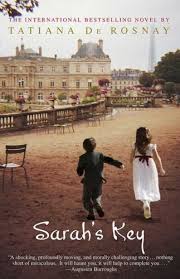
Sarah's Key by Tatiana de Rosnay
This book tells the story of the round-up and deportation of 13,000 French Jews in 1942, though the fictional account of one Parisian Jewish child, Sarah, and her family. In a dual time line, the author has an American journalist, Julia, married to a Frenchman, doing research for her article about Vel' d'Hiv', the place where they were held in horrible conditions awaiting the next atrocity. Searching for survivors or witnesses, she discovers a link between the family of her husband and one family affected in 1942.
Although the linkage seemed contrived, and the contemporary characters often felt like caricatures, the fact remains that she does illuminate a historical event often neglected in history books. I found myself echoing Julia's words, Sorry for not knowing. Sorry for being forty-five years old and not knowing.
After reading Sarah's Key, even if you can't remember the name Vel' d'Hiv', you will never forget about it. I am grateful to the author for telling the story. (3.8 stars)
Review
January list
Sarah's Key by Tatiana de Rosnay
This book tells the story of the round-up and deportation of 13,000 French Jews in 1942, though the fictional account of one Parisian Jewish child, Sarah, and her family. In a dual time line, the author has an American journalist, Julia, married to a Frenchman, doing research for her article about Vel' d'Hiv', the place where they were held in horrible conditions awaiting the next atrocity. Searching for survivors or witnesses, she discovers a link between the family of her husband and one family affected in 1942.
Although the linkage seemed contrived, and the contemporary characters often felt like caricatures, the fact remains that she does illuminate a historical event often neglected in history books. I found myself echoing Julia's words, Sorry for not knowing. Sorry for being forty-five years old and not knowing.
After reading Sarah's Key, even if you can't remember the name Vel' d'Hiv', you will never forget about it. I am grateful to the author for telling the story. (3.8 stars)
Review
January list
67countrylife
#25

The Whistling Season by Ivan Doig
Even when it stands vacant the past is never empty. In The Whistling Season, Paul Milliron returns to his childhood home in the capacity of Montana's Superintendent of Schools, on a hateful errand to shut down the state's one-room schools. Back at his vacant childhood home, the never-empty past of Paul's youth comes to us through the author's pen.
If you are of an age to remember the TV series, The Waltons, you'll understand what I mean when I say that this story played in my head like an episode of The Waltons. With just the merest hint of what is going on in his life in the story's 'now' (late 1950s), framing the story of what happened 'then', when he was about 13 (1910). It was spare living but a full life, lived with his father and brothers, and riding their horses to the one-room schoolhouse, same as the rest of the 'neighbors'. Arrow heads, buffalo bones, Halley's comet, irrigation projects, dryland farming, cooking, language and learning Latin, and dreaming are the stuff of Paul's youth.
Montana was real to me in this book. I may not have been in the saddle (thank you, says the horse), but I felt the dust and the frost. These people were real to me, too, especially the brothers. Their various personalities and temperaments were true to each throughout. Setting, characters and story – everything – was perfect.
Close the book for the last time, close your eyes, and you'll still hear the whistling – the wind, the woman and the swans. It is a harmony in the ears of my heart, the melody of a lost way of life, the song of one-room schoolhouses, of the young folks educated there, and the sturdy pioneers from which they descended.
I loved this book! (5 stars)
Review
March list
The Whistling Season by Ivan Doig
Even when it stands vacant the past is never empty. In The Whistling Season, Paul Milliron returns to his childhood home in the capacity of Montana's Superintendent of Schools, on a hateful errand to shut down the state's one-room schools. Back at his vacant childhood home, the never-empty past of Paul's youth comes to us through the author's pen.
If you are of an age to remember the TV series, The Waltons, you'll understand what I mean when I say that this story played in my head like an episode of The Waltons. With just the merest hint of what is going on in his life in the story's 'now' (late 1950s), framing the story of what happened 'then', when he was about 13 (1910). It was spare living but a full life, lived with his father and brothers, and riding their horses to the one-room schoolhouse, same as the rest of the 'neighbors'. Arrow heads, buffalo bones, Halley's comet, irrigation projects, dryland farming, cooking, language and learning Latin, and dreaming are the stuff of Paul's youth.
Montana was real to me in this book. I may not have been in the saddle (thank you, says the horse), but I felt the dust and the frost. These people were real to me, too, especially the brothers. Their various personalities and temperaments were true to each throughout. Setting, characters and story – everything – was perfect.
Close the book for the last time, close your eyes, and you'll still hear the whistling – the wind, the woman and the swans. It is a harmony in the ears of my heart, the melody of a lost way of life, the song of one-room schoolhouses, of the young folks educated there, and the sturdy pioneers from which they descended.
I loved this book! (5 stars)
Review
March list
68cbl_tn
I thought you'd like The Whistling Season. It reminded me of The Waltons, too. Thumbs up for your review!
69Donna828
>67 countrylife:: Great review on The Whistling Season. The only Doig I've read (so far) is Dancing at the Rascal Fair. The book is as good as it's title! I have English Creek by him at the top of my TBR stack.
70countrylife
Thanks. I can't wait to read another of his books! Just as soon as I finished my review, I ordered a copy for my father for his birthday coming up next week. I'm sure he'll love it, too. By the way, it was your recommendation and review, cbl, that prompted me to read it, and I'm SO glad I listened to you!
71countrylife
#12
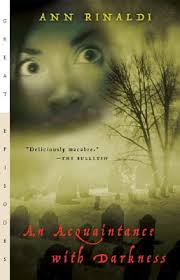
An Acquaintance with Darkness by Ann Rinaldi
Ann Rinaldi doing what she does so well – historical fiction for young adults. It is the spring of 1865 in Washington D.C., where 14 year old Emily Pigbush has just lost her mother. Now an orphan, her father having died in the civil war, she plans to live with her friend, Annie, and help out with the Surratt family's boardinghouse. When President Lincoln is assassinated and her friend's family comes under suspicion, her only other alternative is to live with her Uncle Valentine, against her mother's expressed wishes. For she had known something shady was going on there.
The American Civil War had made the physicians involved in it even more aware of the deficiencies of their medical education, specifically anatomy and dissection. Even as more people were training to be doctors, there were fewer bodies available for dissection. In the author's note, she details that in Vermont, between 1820 and 1840, there were more than 1600 medical students, needing 400 cadavers. “Only two bodies a year were made available legally. … State legislators had not yet made up laws to deal with supplying bodies for teaching. … Grave robbing became a lucrative activity.”
Emily and her uncle are fictional characters in this story, which also includes appearances by Elizabeth Keckley, John Wilkes Booth, Annie and Johnny Surratt, Dr. Samuel Mudd, General George Armstrong Custer and other people of historical significance. Ms. Rinaldi did a fine job of making her characters believable. The setting was adequately pictured. The story was engaging for a young adult history lesson. She covered the assassination, the city in mourning, and the trials well enough for a YA novel. I thought she gravitated too much to the eery side of the procurement of cadavers, and not enough to the medical advantages once procured. As that seemed to be the point of the book, I thought the story short-changed itself there.
Otherwise, a very good book. (3.2 stars)
Review
February list.
An Acquaintance with Darkness by Ann Rinaldi
Ann Rinaldi doing what she does so well – historical fiction for young adults. It is the spring of 1865 in Washington D.C., where 14 year old Emily Pigbush has just lost her mother. Now an orphan, her father having died in the civil war, she plans to live with her friend, Annie, and help out with the Surratt family's boardinghouse. When President Lincoln is assassinated and her friend's family comes under suspicion, her only other alternative is to live with her Uncle Valentine, against her mother's expressed wishes. For she had known something shady was going on there.
The American Civil War had made the physicians involved in it even more aware of the deficiencies of their medical education, specifically anatomy and dissection. Even as more people were training to be doctors, there were fewer bodies available for dissection. In the author's note, she details that in Vermont, between 1820 and 1840, there were more than 1600 medical students, needing 400 cadavers. “Only two bodies a year were made available legally. … State legislators had not yet made up laws to deal with supplying bodies for teaching. … Grave robbing became a lucrative activity.”
Emily and her uncle are fictional characters in this story, which also includes appearances by Elizabeth Keckley, John Wilkes Booth, Annie and Johnny Surratt, Dr. Samuel Mudd, General George Armstrong Custer and other people of historical significance. Ms. Rinaldi did a fine job of making her characters believable. The setting was adequately pictured. The story was engaging for a young adult history lesson. She covered the assassination, the city in mourning, and the trials well enough for a YA novel. I thought she gravitated too much to the eery side of the procurement of cadavers, and not enough to the medical advantages once procured. As that seemed to be the point of the book, I thought the story short-changed itself there.
Otherwise, a very good book. (3.2 stars)
Review
February list.
72countrylife
#26

A Lifetime of Secrets by Frank Warren
This is an art book, beautiful in the incredibly creative talents from many unknown hands, who each sent an anonymous postcard revealing innermost secrets to a website called PostSecret.
It seems that it is also supposed to be somewhat like a book of therapy. Aside from a mention on the jacket flap, The PostSecret project also received a special award from the national Mental Health Association for raising awareness and funds for suicide prevention., the book does not discuss suicide prevention. So the many postcards from the adolescent section discussing suicide and cutting, I frankly found disturbing. Was my generation that narcissistic in our youth? Or does a project like this kind, naturally pull narcissists. Viewing the book as a stand-alone, having never seen the website, it almost seems to me that reading about other people thinking those same thoughts might give impetus to action, rather than serve as a prevention. On the other hand, reading some of the words expressed by the senders, you get the sense that just expressing them could be somewhat healing in a way, as is seeing that they are not alone in their feelings. Postcards from senders in the adulthood and maturity sections covered topics that were not unexpected, and showed the secret having been lived with.
This is a book that caught my eye at the library, but I don't see myself seeking out any of the rest of the series. It gives someone, even one without such secrets, something to think about, and books like this may be a good vehicle for that. Although I'm still not sure what I think about it as suicide prevention, it was very nicely arranged and assembled. (3.4 stars)
Review
March list
A Lifetime of Secrets by Frank Warren
This is an art book, beautiful in the incredibly creative talents from many unknown hands, who each sent an anonymous postcard revealing innermost secrets to a website called PostSecret.
It seems that it is also supposed to be somewhat like a book of therapy. Aside from a mention on the jacket flap, The PostSecret project also received a special award from the national Mental Health Association for raising awareness and funds for suicide prevention., the book does not discuss suicide prevention. So the many postcards from the adolescent section discussing suicide and cutting, I frankly found disturbing. Was my generation that narcissistic in our youth? Or does a project like this kind, naturally pull narcissists. Viewing the book as a stand-alone, having never seen the website, it almost seems to me that reading about other people thinking those same thoughts might give impetus to action, rather than serve as a prevention. On the other hand, reading some of the words expressed by the senders, you get the sense that just expressing them could be somewhat healing in a way, as is seeing that they are not alone in their feelings. Postcards from senders in the adulthood and maturity sections covered topics that were not unexpected, and showed the secret having been lived with.
This is a book that caught my eye at the library, but I don't see myself seeking out any of the rest of the series. It gives someone, even one without such secrets, something to think about, and books like this may be a good vehicle for that. Although I'm still not sure what I think about it as suicide prevention, it was very nicely arranged and assembled. (3.4 stars)
Review
March list
73countrylife
#27

Someone Cry for the Children by Michael Wilkerson
Someone Cry for the Children: The Unsolved Girl Scout Murders of Oklahoma and the Case of Gene Leroy Hart is written by two brothers, formerly in Oklahoma law enforcement and both major players in this case.
On their first night of Girl Scout camp, in the summer of 1977, Lori Farmer (8), Michelle Guse (9), and Doris Milner (10), were brutally murdered. This is the story of many dedicated people seeking justice on their behalf. Although not a true-crime reader, I was able to follow the case as it was presented in the book - the facts of the case, the evidence, the process of eliminating suspects, determination of the likely killer, the manhunt, his capture, the trial and The Aftermath.
Some of the elements which drove the way the case played out were: the rugged tick infested hills of northeastern Oklahoma, a full-blooded Cherokee local-football-star as defendant, bad judgment by one of the good guys, and – believe it or not – medicine men.
If Hart had killed the children, he was standing upon their blood and swearing to God that he had not committed these acts. In the Cherokee religion where God is supreme and reigns over all men, truth is the medium which is found in the Cherokee tobacco. . . . He would use the Old One {the strongest medicine/tobacco} as a vehicle to determine who was telling the truth. Crying Wolf knew that the final determination would be exacting. He knew that either Pete Weaver or Gene Leroy Hart would die.
Although certainly adequate to the telling of the story, this book was not particularly well written, and perhaps had a whiff of self-aggrandizement. None of that bothered me, though, as the case deserved to be told.
Still, I had a couple of quibbles: For instance, I took offense (on the parents' behalf) to one sentence describing a scene in the courtroom where the jury is being shown slides of the crime scene. He says, The parents of the victims sat stoically with only an occasional bobbing of the head or a stare at the floor. They had long since become hardened to what had happened to their children. “Hardened” smacks of insensitivity or misunderstanding; he could have chosen a more appropriate word.
Another part that bothered me was (quoting himself), Buddy, let me tell you the people have forgotten about those kids. … You know, most murders and kidnappings are named after the victim. . . . Hell, in this case they can't even remember the victims' names. I run a little private survey all the time just to show people how they've forgotten about what happened. I ask them if they can name the defendant in this case. 'Of course. Gene Leroy Hart,' pops out immediately. . . . And then I ask them to name even one of the three victims. Usually they can't. And then he publishes a book with the subtitle being the name of the defendant, with no mention of the victims' names anywhere on the jacket.
Nonetheless, the case was covered in depth and fully, from what I could tell. A heartbreaking story to read about. How it all must have affected those working the case, for Afterward, over a dozen of them resigned their positions. (3 stars)
Review
March
Someone Cry for the Children by Michael Wilkerson
Someone Cry for the Children: The Unsolved Girl Scout Murders of Oklahoma and the Case of Gene Leroy Hart is written by two brothers, formerly in Oklahoma law enforcement and both major players in this case.
On their first night of Girl Scout camp, in the summer of 1977, Lori Farmer (8), Michelle Guse (9), and Doris Milner (10), were brutally murdered. This is the story of many dedicated people seeking justice on their behalf. Although not a true-crime reader, I was able to follow the case as it was presented in the book - the facts of the case, the evidence, the process of eliminating suspects, determination of the likely killer, the manhunt, his capture, the trial and The Aftermath.
Some of the elements which drove the way the case played out were: the rugged tick infested hills of northeastern Oklahoma, a full-blooded Cherokee local-football-star as defendant, bad judgment by one of the good guys, and – believe it or not – medicine men.
If Hart had killed the children, he was standing upon their blood and swearing to God that he had not committed these acts. In the Cherokee religion where God is supreme and reigns over all men, truth is the medium which is found in the Cherokee tobacco. . . . He would use the Old One {the strongest medicine/tobacco} as a vehicle to determine who was telling the truth. Crying Wolf knew that the final determination would be exacting. He knew that either Pete Weaver or Gene Leroy Hart would die.
Although certainly adequate to the telling of the story, this book was not particularly well written, and perhaps had a whiff of self-aggrandizement. None of that bothered me, though, as the case deserved to be told.
Still, I had a couple of quibbles: For instance, I took offense (on the parents' behalf) to one sentence describing a scene in the courtroom where the jury is being shown slides of the crime scene. He says, The parents of the victims sat stoically with only an occasional bobbing of the head or a stare at the floor. They had long since become hardened to what had happened to their children. “Hardened” smacks of insensitivity or misunderstanding; he could have chosen a more appropriate word.
Another part that bothered me was (quoting himself), Buddy, let me tell you the people have forgotten about those kids. … You know, most murders and kidnappings are named after the victim. . . . Hell, in this case they can't even remember the victims' names. I run a little private survey all the time just to show people how they've forgotten about what happened. I ask them if they can name the defendant in this case. 'Of course. Gene Leroy Hart,' pops out immediately. . . . And then I ask them to name even one of the three victims. Usually they can't. And then he publishes a book with the subtitle being the name of the defendant, with no mention of the victims' names anywhere on the jacket.
Nonetheless, the case was covered in depth and fully, from what I could tell. A heartbreaking story to read about. How it all must have affected those working the case, for Afterward, over a dozen of them resigned their positions. (3 stars)
Review
March
74countrylife
#28
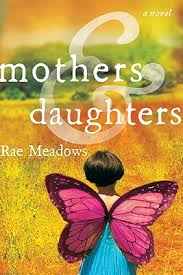
Mothers and Daughters by Rae Meadows
This is a beautiful book to look at. A slipcase cover designed to look like an antique keepsake box holds a book with a child in a beautiful country scene on the cover. (My edition is the 2011 Henry Holt paperback.)
I sometimes like to ponder the cover and its relationship to the story. The depicted keepsake box contains the remnants of a mother's life, which one of the daughters sifts through looking for clues to her mother's soul. The cover's country scene is an intriguing picture of a young girl wearing butterfly wings, gazing across a muted farmhouse scene. Except for the wings, she fits the description of Violet, only 11 years old in 1900, but who had to make some tough decisions because her mother was incapable. I picture the ramifications of her choices - both in regards to everyday things like locale, mate, and vocation, to those more subtle things like perceptions, underlying feelings about people, God and motherhood – flitting through time and generations on the wings of her early decisions, and coloring, as the cover is so vibrantly colored - even if some parts are so muted as to be unknown - the very essence of each female to come after her.
So, there's the story, summarized in it's cover! This is a book about relationships, and the unknown parts of a loved one's life. It is a story about children, wanted and unwanted, of mothers, trying or not, of regrets and of getting on with life in its many phases.
It was an interesting story, told in an engaging manner. The intertwined stories of the mothers and daughters, narrated hither and yon through time, I found to be an effective device, in portraying the thoughts and emotions of these women. Some personal nitpicks: The author seems antagonistic toward Christianity; all the bad guys are Christians. Besides that, though, there is something lacking here, but I can't quite put my finger on it.
Overall, I enjoyed the book. (3.6 stars)
Review
March list
Mothers and Daughters by Rae Meadows
This is a beautiful book to look at. A slipcase cover designed to look like an antique keepsake box holds a book with a child in a beautiful country scene on the cover. (My edition is the 2011 Henry Holt paperback.)
I sometimes like to ponder the cover and its relationship to the story. The depicted keepsake box contains the remnants of a mother's life, which one of the daughters sifts through looking for clues to her mother's soul. The cover's country scene is an intriguing picture of a young girl wearing butterfly wings, gazing across a muted farmhouse scene. Except for the wings, she fits the description of Violet, only 11 years old in 1900, but who had to make some tough decisions because her mother was incapable. I picture the ramifications of her choices - both in regards to everyday things like locale, mate, and vocation, to those more subtle things like perceptions, underlying feelings about people, God and motherhood – flitting through time and generations on the wings of her early decisions, and coloring, as the cover is so vibrantly colored - even if some parts are so muted as to be unknown - the very essence of each female to come after her.
So, there's the story, summarized in it's cover! This is a book about relationships, and the unknown parts of a loved one's life. It is a story about children, wanted and unwanted, of mothers, trying or not, of regrets and of getting on with life in its many phases.
It was an interesting story, told in an engaging manner. The intertwined stories of the mothers and daughters, narrated hither and yon through time, I found to be an effective device, in portraying the thoughts and emotions of these women. Some personal nitpicks: The author seems antagonistic toward Christianity; all the bad guys are Christians. Besides that, though, there is something lacking here, but I can't quite put my finger on it.
Overall, I enjoyed the book. (3.6 stars)
Review
March list
75countrylife
#29
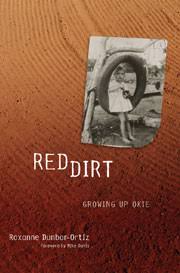
Red Dirt: Growing Up Okie by Roxanne Dunbar Ortiz
Really? Did I really just keep on reading this? All the way to the end? (1/2 star)
Review
March list
Red Dirt: Growing Up Okie by Roxanne Dunbar Ortiz
Really? Did I really just keep on reading this? All the way to the end? (1/2 star)
Review
March list
76countrylife
#30
At Home : a Short History of Private Life by Bill Bryson
...a fundamental change that had lately overtaken the thinking world: an almost obsessive urge to pin down every stray morsel of discernible fact and give it permanent recognition in print. (p.433) Well, maybe he didn't go quite that far, but still Mr. Bryson covered a lot of territory in this book. I might almost call it a short history of nearly everything pertaining to nearly everything related to domesticity.
Rambling through his own home, he gives a history of things associated with it. For instance, in just one chapter - the Kitchen: bread, flour, baking. Ice, refrigeration, railroad cars, canning. Housekeeping, housekeepers, cookbooks. Food, lobsters, menus through the ages, eating habits of the classes. Lest you think he forgot spices, spice trade is covered in the chapter, Dining Room, along with much else. And so it goes, covering topics as diverse as lawns, archeology, birthing, architecture, books, and probably just about anything else you can possibly think of. I found the lengthy index to be quite helpful, and he also includes a bibliography. Another nice touch - the endpapers are sketches of the layout of his own house, an old parsonage.
I found all these tidbits fascinating, yet had to be in the right mood for reading them, so it did take a while to finish the whole book. But it was educational and entertaining reading. (3.8 stars)
Review
(#30) March list
At Home : a Short History of Private Life by Bill Bryson
...a fundamental change that had lately overtaken the thinking world: an almost obsessive urge to pin down every stray morsel of discernible fact and give it permanent recognition in print. (p.433) Well, maybe he didn't go quite that far, but still Mr. Bryson covered a lot of territory in this book. I might almost call it a short history of nearly everything pertaining to nearly everything related to domesticity.
Rambling through his own home, he gives a history of things associated with it. For instance, in just one chapter - the Kitchen: bread, flour, baking. Ice, refrigeration, railroad cars, canning. Housekeeping, housekeepers, cookbooks. Food, lobsters, menus through the ages, eating habits of the classes. Lest you think he forgot spices, spice trade is covered in the chapter, Dining Room, along with much else. And so it goes, covering topics as diverse as lawns, archeology, birthing, architecture, books, and probably just about anything else you can possibly think of. I found the lengthy index to be quite helpful, and he also includes a bibliography. Another nice touch - the endpapers are sketches of the layout of his own house, an old parsonage.
I found all these tidbits fascinating, yet had to be in the right mood for reading them, so it did take a while to finish the whole book. But it was educational and entertaining reading. (3.8 stars)
Review
(#30) March list
77countrylife
#31
Pride and Prejudice by Jane Austen
Middle aged, and only just finished reading Jane Austen for the first time. Shame on me! Especially as much as I adore the five hour BBC movie, which, as I've now seen for myself, so beautifully reflects the book. There is just so much to love about this book - watching Elizabeth's lively wit get the better of her, obliging her to learn to judge first impressions more astutely; watching Mr. Darcy learning to govern his shy, almost haughty temper; the play between the ridiculous and the thoughtful; the interactions of the various relationships – what sparkling writing; what a great story! But why even bother to add a review to the hundreds already here? Just to add my voice to those who say, “I loved this book”! (5 stars)
Review
(#31) March list
Pride and Prejudice by Jane Austen
Middle aged, and only just finished reading Jane Austen for the first time. Shame on me! Especially as much as I adore the five hour BBC movie, which, as I've now seen for myself, so beautifully reflects the book. There is just so much to love about this book - watching Elizabeth's lively wit get the better of her, obliging her to learn to judge first impressions more astutely; watching Mr. Darcy learning to govern his shy, almost haughty temper; the play between the ridiculous and the thoughtful; the interactions of the various relationships – what sparkling writing; what a great story! But why even bother to add a review to the hundreds already here? Just to add my voice to those who say, “I loved this book”! (5 stars)
Review
(#31) March list
78countrylife
#32
Fantomina : Or, Love in a Maze by Eliza Haywood
Written in 1725, this story concerns a young woman who goes to quite extreme lengths to try to interest and then to keep a man on whom her sights are set. Both from exclusive families, her means for capturing his attention were limited. The methods she chose yield the usual result. It is written by an author unfamiliar to me, so I cannot tell if the story is meant to be one of caution to young folks, though probably not, as it seems to me to be more of a titillating read. I daresay the author caused quite a stir in her day! Personally, I did not find it to be my cup of tea, but appreciated the opportunity to try something different. Thank you to keristars for recommending this book.
Review
(#32) March list
Fantomina : Or, Love in a Maze by Eliza Haywood
Written in 1725, this story concerns a young woman who goes to quite extreme lengths to try to interest and then to keep a man on whom her sights are set. Both from exclusive families, her means for capturing his attention were limited. The methods she chose yield the usual result. It is written by an author unfamiliar to me, so I cannot tell if the story is meant to be one of caution to young folks, though probably not, as it seems to me to be more of a titillating read. I daresay the author caused quite a stir in her day! Personally, I did not find it to be my cup of tea, but appreciated the opportunity to try something different. Thank you to keristars for recommending this book.
Review
(#32) March list
79countrylife
#33

The Stone Diaries by Carol Shields
A fictional autobiography, Carol Shields has created a memorable character in Daisy Goodwill, and placed her life from 1903 to the 1990s, living in Manitoba and Ontario, Indiana and Florida. The Canadian places were especially well written. The story is told in many different voices (sometimes even when the same): The long days of isolation, of silence, the torment of boredom – all these pressed down on me, on young Daisy Goodwill and emptied her out.
I found the writing in the beginning and near the end of this book particularly beautiful, especially in Chapter 1, of the love of the shy young man for his chosen wife. After I'd closed the book and began to think back on the story, the “Old Jew”, revealed in spurts throughout the book, turned out to be a most interesting character to my mind, from his participation at the birth, to his diagnosis of her “sorrow”.
But the main character is Loneliness. The loneliness, so palpably wafting from these pages, expressed (or sometimes not specifically remarked upon) by Daisy, and felt, before her time, by her own mother and the neighbor lady, even her own jolly childhood friends with their life experiences. In one of her interviews, Ms. Shields mentioned “women who are erased from their lives”. That phrase succinctly captures this story. One woman's life, of her longings, suppressed or sought after, of trying to make a life working around disappointments - the author's skill at showing that life had me engrossed in this book from the moment I opened it.
Moving right along, and along, and along. The way she's done all her life. Numbly. Without thinking. And. That life “thus far” has meant accepting the doses of disabling information that have come her way, every drop, and stirring them with the spoon of her longing – she's done this for so many years it's become second nature.
This book really resonated with me. Although I found some parts uncomfortable, the writing and the story drew me in. It is a very worthwhile book.
Review
(#33) March list
The Stone Diaries by Carol Shields
A fictional autobiography, Carol Shields has created a memorable character in Daisy Goodwill, and placed her life from 1903 to the 1990s, living in Manitoba and Ontario, Indiana and Florida. The Canadian places were especially well written. The story is told in many different voices (sometimes even when the same): The long days of isolation, of silence, the torment of boredom – all these pressed down on me, on young Daisy Goodwill and emptied her out.
I found the writing in the beginning and near the end of this book particularly beautiful, especially in Chapter 1, of the love of the shy young man for his chosen wife. After I'd closed the book and began to think back on the story, the “Old Jew”, revealed in spurts throughout the book, turned out to be a most interesting character to my mind, from his participation at the birth, to his diagnosis of her “sorrow”.
But the main character is Loneliness. The loneliness, so palpably wafting from these pages, expressed (or sometimes not specifically remarked upon) by Daisy, and felt, before her time, by her own mother and the neighbor lady, even her own jolly childhood friends with their life experiences. In one of her interviews, Ms. Shields mentioned “women who are erased from their lives”. That phrase succinctly captures this story. One woman's life, of her longings, suppressed or sought after, of trying to make a life working around disappointments - the author's skill at showing that life had me engrossed in this book from the moment I opened it.
Moving right along, and along, and along. The way she's done all her life. Numbly. Without thinking. And. That life “thus far” has meant accepting the doses of disabling information that have come her way, every drop, and stirring them with the spoon of her longing – she's done this for so many years it's become second nature.
This book really resonated with me. Although I found some parts uncomfortable, the writing and the story drew me in. It is a very worthwhile book.
Review
(#33) March list
80cbl_tn
Love your review of The Stone Diaries! I too found some parts uncomfortable, yet I know it's one of those books that will stick with me for a long time. I know I missed a lot because there was so much to absorb. It's nice to read everyone else's comments about the book to pick up on some of the things I missed!
81countrylife
Thank you. I was hoping that by mentioning "Loneliness", it wouldn't be considered too spoiler-y. But it struck me so forcefully, that I found myself wanting to mention it in my review. And, again, I chose that read because of your recommendation! Say, is there going to be a Stone Diaries group read thread in 11in11? I saw it mentioned among regular posts, but never saw a thread of it's own.
82cbl_tn
Yes, there is a thread! It's here: http://www.librarything.com/topic/111837
83countrylife
#34
All Things Wise and Wonderful by James Herriot
Thoroughly delightful stories involving the veterinary practice of James Herriot in Yorkshire. Plucked from his vocation as a country vet, Dr. Herriot now belongs to the Royal Air Force. He shares some little bit of his RAF training and experiences, while with those incidents, his mind invariably wanders back to his happy home and memories of his patients and family, which stories, of course, form the bulk of the book. Nice, clean, warm and endearing. (4 stars)
Review
(#34) March list
All Things Wise and Wonderful by James Herriot
Thoroughly delightful stories involving the veterinary practice of James Herriot in Yorkshire. Plucked from his vocation as a country vet, Dr. Herriot now belongs to the Royal Air Force. He shares some little bit of his RAF training and experiences, while with those incidents, his mind invariably wanders back to his happy home and memories of his patients and family, which stories, of course, form the bulk of the book. Nice, clean, warm and endearing. (4 stars)
Review
(#34) March list
84countrylife
#35

Celebrating Oklahoma (The Oklahoma Centennial Photographic Survey) by Mike Klemme
Nicely done coffee table book, featuring the natural beauty, the people, communities, art, architecture, etc, of the state of Oklahoma. Photographs on each spread are accompanied by short blocks of information, which typeface color locates each photo on the accompanying map. (3 stars)
Review
(#35) March list
Celebrating Oklahoma (The Oklahoma Centennial Photographic Survey) by Mike Klemme
Nicely done coffee table book, featuring the natural beauty, the people, communities, art, architecture, etc, of the state of Oklahoma. Photographs on each spread are accompanied by short blocks of information, which typeface color locates each photo on the accompanying map. (3 stars)
Review
(#35) March list
85cbl_tn
I love the James Herriot books and I especially enjoy the audio version read by Christopher Timothy, who played James on the TV series. They're good for listening to in the car since they're like linked short stories rather than one continuous narrative.
86countrylife
#36

Sophie's World: A Novel About the History of Philosophy by Jostein Gaarder
The author has used a fictional story to illustrate philosophy, and into this story, he sets the unfolding of a teenage girl's education in philosophy. As a device to enfold this history, it worked alright. But I didn't find that part of the book very well done. Alberto, an older philosopher, sets out to educate Sophie (15) about the world of philosophy. Perhaps in Mr. Gaarder's heart and world that might work. (It was written in 1991/Sweden.) But read by me in contemporary America, the cold contact with a young girl and all their subsequent meetings felt a bit creepy.
The portions regarding the ancient philosophers were well done and presented in manageable chunks. Coming, quite ignorant, to the subject, I thought it a very good history of philosophy. (4 stars) But setting those into the story, while educating Sophie, the narrative then suffered. Alberto teaches in paragraphs punctuated by Sophie's “Can you give me an example?”, “Go on.”, “I see.”, “What do you mean?”, “I would agree.”, and other such banalities. Then the way that Sophie's world was spun felt like something out of Twilight Zone to me. I didn't at all care for the story in which the history was set. (2 stars)
Did I learn a lot? Yes. Did I enjoy it? No. (3 stars)
Review
(#36) March list
Sophie's World: A Novel About the History of Philosophy by Jostein Gaarder
The author has used a fictional story to illustrate philosophy, and into this story, he sets the unfolding of a teenage girl's education in philosophy. As a device to enfold this history, it worked alright. But I didn't find that part of the book very well done. Alberto, an older philosopher, sets out to educate Sophie (15) about the world of philosophy. Perhaps in Mr. Gaarder's heart and world that might work. (It was written in 1991/Sweden.) But read by me in contemporary America, the cold contact with a young girl and all their subsequent meetings felt a bit creepy.
The portions regarding the ancient philosophers were well done and presented in manageable chunks. Coming, quite ignorant, to the subject, I thought it a very good history of philosophy. (4 stars) But setting those into the story, while educating Sophie, the narrative then suffered. Alberto teaches in paragraphs punctuated by Sophie's “Can you give me an example?”, “Go on.”, “I see.”, “What do you mean?”, “I would agree.”, and other such banalities. Then the way that Sophie's world was spun felt like something out of Twilight Zone to me. I didn't at all care for the story in which the history was set. (2 stars)
Did I learn a lot? Yes. Did I enjoy it? No. (3 stars)
Review
(#36) March list
87countrylife
#37
The Food of a Younger Land by Mark Kurlansky
This book, The Food of a Younger Land, was birthed, as it says on the cover, “from the lost WPA files”. A part of the New Deal's Works Progress Administration, the Federal Writers' Project provided work for authors. Previous projects had yielded well-received books about the states. At the time, this project was called “America Eats”, but was abandoned in the 1940s before coming completely to fruition, with the work in progress languishing in the Library of Congress for 60 years, until Mark Kurlansky resurrected the old writings and transformed them into this book. Read like pieces of Americana, you glimpse the various regions of the country, what crops are plenteous in season, their specialties across time, occasional recipes and oral history. From Vermont's maple sugar to salmon in the Pacific, clam chowder in Massachusetts to gumbo file in Louisiana, and much else in between.
I found most of the book quite interesting. Why were they called “hush puppies”; what was the origin of “getting stewed”? Some parts were more readable than others; that would be the fault of the original contributors. There was sometimes repetition, though, which should have been caught before printing. Bottom line, though – it is what its title claims: A portrait of American food – before... (3 stars)
Review
(#37)March list
The Food of a Younger Land by Mark Kurlansky
This book, The Food of a Younger Land, was birthed, as it says on the cover, “from the lost WPA files”. A part of the New Deal's Works Progress Administration, the Federal Writers' Project provided work for authors. Previous projects had yielded well-received books about the states. At the time, this project was called “America Eats”, but was abandoned in the 1940s before coming completely to fruition, with the work in progress languishing in the Library of Congress for 60 years, until Mark Kurlansky resurrected the old writings and transformed them into this book. Read like pieces of Americana, you glimpse the various regions of the country, what crops are plenteous in season, their specialties across time, occasional recipes and oral history. From Vermont's maple sugar to salmon in the Pacific, clam chowder in Massachusetts to gumbo file in Louisiana, and much else in between.
I found most of the book quite interesting. Why were they called “hush puppies”; what was the origin of “getting stewed”? Some parts were more readable than others; that would be the fault of the original contributors. There was sometimes repetition, though, which should have been caught before printing. Bottom line, though – it is what its title claims: A portrait of American food – before... (3 stars)
Review
(#37)March list
88countrylife
Wow. This was a great month for me - in the way of good reads! I have several books to list for my favorites of the month!
MARCH TALLY:
Books read: 15
Pages read: 3,719
FAVORITE BOOKS FROM MARCH:
Fiction:
Pride and Prejudice by Jane Austen
The Stone Diaries by Carol Shields
The Whistling Season by Ivan Doig
Non-Fiction:
All Things Wise and Wonderful by James Herriot
CHALLENGE PROGRESS:
50 States Fiction: 6 states
Canadian: 1 province/territory
37 oldies: 1 books (=15/37)
Reading Through Time: 2
11 in 11: #8-2 (=2/4, #9-1 (=2/5), #10-1 (=1/5), #11-1 (=12/30)
TIOLI Challenges: 15 books
MARCH TALLY:
Books read: 15
Pages read: 3,719
FAVORITE BOOKS FROM MARCH:
Fiction:
Pride and Prejudice by Jane Austen
The Stone Diaries by Carol Shields
The Whistling Season by Ivan Doig
Non-Fiction:
All Things Wise and Wonderful by James Herriot
CHALLENGE PROGRESS:
50 States Fiction: 6 states
Canadian: 1 province/territory
37 oldies: 1 books (=15/37)
Reading Through Time: 2
11 in 11: #8-2 (=2/4, #9-1 (=2/5), #10-1 (=1/5), #11-1 (=12/30)
TIOLI Challenges: 15 books
89alcottacre
Congratulations on having such a great reading month in March!
90countrylife
FAVORITE BOOKS FROM THE FIRST QUARTER OF THE YEAR:
I find that I can't whittle any titles off, yet, from my monthly favorites. Listed in order of enjoyment.
Fiction:
Pride and Prejudice by Jane Austen (March)
The Whistling Season by Ivan Doig (March)
Friendship Bread by Darien Gee (February)
The Stone Diaries by Carol Shields (March)
The Language of Trees by Ilie Ruby (January)
Non-fiction:
All Things Wise and Wonderful by James Herriot (March)
Book Lust by Nancy Pearl (January)
Objects of Our Affection by Lisa Tracy (February)
I find that I can't whittle any titles off, yet, from my monthly favorites. Listed in order of enjoyment.
Fiction:
Pride and Prejudice by Jane Austen (March)
The Whistling Season by Ivan Doig (March)
Friendship Bread by Darien Gee (February)
The Stone Diaries by Carol Shields (March)
The Language of Trees by Ilie Ruby (January)
Non-fiction:
All Things Wise and Wonderful by James Herriot (March)
Book Lust by Nancy Pearl (January)
Objects of Our Affection by Lisa Tracy (February)
91labwriter
I have to run off this morning, but I just wanted to say Hi and that I've starred your very interesting thread. Bye for now.
92Whisper1
I'm very far behind on threads and apologize for not posting in awhile.
Your reading tastes and mine are very similiar.
I've read a lot of Ann Rinaldi's books, but haven't read An Acquaintance with Darkness by Ann Rinaldi. I'm adding this one to the list.
I recently read The Ever-After Bird. If you haven't read this one, I highly recommend it.
Message #61
Laurie Halse Anderson is one of my favorite authors. I recently read Chains. I like your review of Fever
Message #66, I have a copy of Sarah's Key and now after your review, I'll move it up toward the top of the pile of the tbr list.
Your reading tastes and mine are very similiar.
I've read a lot of Ann Rinaldi's books, but haven't read An Acquaintance with Darkness by Ann Rinaldi. I'm adding this one to the list.
I recently read The Ever-After Bird. If you haven't read this one, I highly recommend it.
Message #61
Laurie Halse Anderson is one of my favorite authors. I recently read Chains. I like your review of Fever
Message #66, I have a copy of Sarah's Key and now after your review, I'll move it up toward the top of the pile of the tbr list.
93countrylife
Nice to hear from you Whisper1! Between comments and tags, I have 16 books in my library and wishlist that say Whisper1. In fact, I'd already added The Ever-After Bird because of your review! I've noticed that we have similar reading tastes and I enjoy following your threads. In fact, one of my categories for my 11 in 11 challenge is for books recommended by Whisper1!
I wonder if having An Acquaintance with Darkness in my library caused me to win my newest ER book, The Infamous Burke and Hare: Serial Killers and Resurrectionists of Nineteenth Century Edinburgh, also about grave-robbing for medical science. While the doctors needed cadavers for study, people like this did the robbing for profit, in their case, apparently, taking it so far as to kill in order to make that profit. My son is a medical student, and after hearing of the respect afforded the families and the bodies of those who've volunteered themselves for medical science, I find myself interested in the topic and its history. I just received the book yesterday, but will post my thoughts here later. I hope to find it interesting, anyway.
I wonder if having An Acquaintance with Darkness in my library caused me to win my newest ER book, The Infamous Burke and Hare: Serial Killers and Resurrectionists of Nineteenth Century Edinburgh, also about grave-robbing for medical science. While the doctors needed cadavers for study, people like this did the robbing for profit, in their case, apparently, taking it so far as to kill in order to make that profit. My son is a medical student, and after hearing of the respect afforded the families and the bodies of those who've volunteered themselves for medical science, I find myself interested in the topic and its history. I just received the book yesterday, but will post my thoughts here later. I hope to find it interesting, anyway.
94alcottacre
I will be interested in seeing what you think of the Burke and Hare book!
95countrylife
Because I'm afraid this is going to be a really pathetic month for me, reading-wise (and reviewing-wise), I'm listing my initial TIOLI plans in this post so I can contrast the sad reality at the end of April.
TIOLI 1: STRIKING COVER ART:
............... Icefields - Thomas Wharton
............... The Various Flavours of Coffee - Anthony Capella
TIOLI 2: PREPOSITIONAL PHRASE:
............... In the Skin of a Lion - Michael Ondaatje
............... Through Black Spruce - Joseph Boyden
TIOLI 5: 4TH BOOK:
............... The Forest Lover - Susan Vreeland
TIOLI 6: ALEX AWARD:
............... The Perfect Storm - Sebastian Junger
TIOLI 7: SPRING:
............... The Seven Wonders of Sassafras Springs - Betty Birney
TIOLI 8: JAPAN:
............... The Housekeeper and the Professor - Yoko Ogawa
TIOLI 9: WHO, WHAT, WHERE, WHEN, WHY OR HOW:
............... How Green Was My Valley - Richard Llewellyn
TIOLI 10: BOOK INTO MOVIE:
............... Defiance - Nechama Tec
TIOLI 11: ORANGE LONGLIST:
............... The Tiger's Wife - Tea Obreht (4/25 - removed from Wiki, still too many ahead of me at the library)
TIOLI 13: PUBLISHED BEFORE I WAS BORN:
............... The Trail of Blood - J. M. Carroll
TIOLI 14: GARDEN/FLOWER:
............... Garden Spells - Sarah Addison Allen
............... My Garden by Kevin Henkes
TIOLI 16: WRITER'S AUTOBIOGRAPHY/MEMOIR:
............... Summer of the Great-Grandmother - Madeleine L'Engle
............... Notes From the Century Before - Edward Hoagland
TIOLI 17: EASTER
............... The Parable of the Lily - Liz Curtis Higgs
I'm only touchstoning the books I actually finish.
TIOLI 1: STRIKING COVER ART:
............... Icefields - Thomas Wharton
............... The Various Flavours of Coffee - Anthony Capella
TIOLI 2: PREPOSITIONAL PHRASE:
............... In the Skin of a Lion - Michael Ondaatje
............... Through Black Spruce - Joseph Boyden
TIOLI 5: 4TH BOOK:
............... The Forest Lover - Susan Vreeland
TIOLI 6: ALEX AWARD:
............... The Perfect Storm - Sebastian Junger
TIOLI 7: SPRING:
............... The Seven Wonders of Sassafras Springs - Betty Birney
TIOLI 8: JAPAN:
............... The Housekeeper and the Professor - Yoko Ogawa
TIOLI 9: WHO, WHAT, WHERE, WHEN, WHY OR HOW:
............... How Green Was My Valley - Richard Llewellyn
TIOLI 10: BOOK INTO MOVIE:
............... Defiance - Nechama Tec
TIOLI 11: ORANGE LONGLIST:
............... The Tiger's Wife - Tea Obreht (4/25 - removed from Wiki, still too many ahead of me at the library)
TIOLI 13: PUBLISHED BEFORE I WAS BORN:
............... The Trail of Blood - J. M. Carroll
TIOLI 14: GARDEN/FLOWER:
............... Garden Spells - Sarah Addison Allen
............... My Garden by Kevin Henkes
TIOLI 16: WRITER'S AUTOBIOGRAPHY/MEMOIR:
............... Summer of the Great-Grandmother - Madeleine L'Engle
............... Notes From the Century Before - Edward Hoagland
TIOLI 17: EASTER
............... The Parable of the Lily - Liz Curtis Higgs
I'm only touchstoning the books I actually finish.
96countrylife
#43

The Various Flavors of Coffee by Anthony Capella
It was a wonderful book, it was a horrible book.
The luscious descriptions of The Various Flavors of Coffee - their tastes and aromas – how beautifully it flowed. But the author's device of applying the same sorts of descriptives to the various flavors of various women's various body parts was a huge, HUGE, turnoff for me.
This is a fictional story of one young man's journey from a womanizing, collegiate failure to a steady business hand and learning to love one woman, all entwined within a setting of the coffee industry, featuring London and parts of Africa, and beginning in 1896. I loved reading about the history of coffee, in the bits of threads about its cultivation, transport, sale, blending, and roasting. It was both interesting and well written. Portions of the book that revolved around the main characters and their relationships with one another were less well done. Particularly, the main character's development into a more mature being felt like a shallow transition.
Definitely, the good parts of the book were about coffee. In his acknowledgments, the author mentions the books from which he's drawn to build his story. Some of those books were used as sources for the many epigraphs prefacing the sections of the book, and I enjoyed those mentions of coffee terms. For instance, this epigraph: ”Spicy” - this aroma is typical of the odour of sweet spices such as cloves, cinnamon and allspice. Tasters are cautioned not to use this term to describe the aroma of savoury spices such as pepper, oregano and Indian spices. -International Coffee Organisation, The Sensory Evaluation of Coffee.
Had he stuck to the coffee storyline, this would have been a five-star book. But with all the erotica thrown in, I cannot recommend it to other sensitive readers. 2-1/2 stars.
Review
(#43) April list
The Various Flavors of Coffee by Anthony Capella
It was a wonderful book, it was a horrible book.
The luscious descriptions of The Various Flavors of Coffee - their tastes and aromas – how beautifully it flowed. But the author's device of applying the same sorts of descriptives to the various flavors of various women's various body parts was a huge, HUGE, turnoff for me.
This is a fictional story of one young man's journey from a womanizing, collegiate failure to a steady business hand and learning to love one woman, all entwined within a setting of the coffee industry, featuring London and parts of Africa, and beginning in 1896. I loved reading about the history of coffee, in the bits of threads about its cultivation, transport, sale, blending, and roasting. It was both interesting and well written. Portions of the book that revolved around the main characters and their relationships with one another were less well done. Particularly, the main character's development into a more mature being felt like a shallow transition.
Definitely, the good parts of the book were about coffee. In his acknowledgments, the author mentions the books from which he's drawn to build his story. Some of those books were used as sources for the many epigraphs prefacing the sections of the book, and I enjoyed those mentions of coffee terms. For instance, this epigraph: ”Spicy” - this aroma is typical of the odour of sweet spices such as cloves, cinnamon and allspice. Tasters are cautioned not to use this term to describe the aroma of savoury spices such as pepper, oregano and Indian spices. -International Coffee Organisation, The Sensory Evaluation of Coffee.
Had he stuck to the coffee storyline, this would have been a five-star book. But with all the erotica thrown in, I cannot recommend it to other sensitive readers. 2-1/2 stars.
Review
(#43) April list
97DeltaQueen50
I am a few chapters into The Various Flavors of Coffee and have the same reaction as you. It could have been such a great book, but he overdoes the, shall we say, earthiness till I am quite grossed out. I will carry on and finish the book, but it certainly isn't as well done as I had hoped.
98countrylife
I'm glad to hear it wasn't just me. Wish I'd scanned a few reviews before I plopped that beautiful cover into the TIOLI challenge. Can't judge a book and all that!
99DeltaQueen50
You are right about judging the book by the cover, my entry in the TIOLI Striking Cover Challenge wasn't very good either.
101Whisper1
I was able to obtain a copy of An Acquaintance with Darkness at my local library sale. I hope to read it soon.
102countrylife
#42
The Housekeeper and The Professor by Yoko Ogawa
I've been duped! All the positive chatter about this book prompted me to pick it up. But be warned: there is MATH between the covers! I don't care HOW many times people tell me, “numbers are your friends”, that does not make it so. Yet this story may be the closest I've ever come to caring about numbers. Because – I LOVED this book!
The professor has suffered an accident that leaves him with a memory of only 80 minutes duration from the time of the accident. A relative has hired a housekeeping agency to send someone in to do his meals and cleaning. The ninth housekeeper to attempt the job comes with an understanding heart and a 10 year old son. There must be an untold story in the background of The Professor, for he so enthusiastically welcomes “Root” (nicknamed by the Professor for the shape of his hair resembling the square root sign) each time he appeared, even though he was unable to remember him from one time to the next. Yet, that relationship was so beautifully written, and the main thing I loved about this story.
Told in spare simplicity – the Professor and the Housekeeper are never even named, only the child who is at the 'root' of everything – this lovely little book will steal your heart, especially if you are a baseball or math fan. I am neither, but it ran away with my heart, anyway!
Review
April list (#42)
The Housekeeper and The Professor by Yoko Ogawa
I've been duped! All the positive chatter about this book prompted me to pick it up. But be warned: there is MATH between the covers! I don't care HOW many times people tell me, “numbers are your friends”, that does not make it so. Yet this story may be the closest I've ever come to caring about numbers. Because – I LOVED this book!
The professor has suffered an accident that leaves him with a memory of only 80 minutes duration from the time of the accident. A relative has hired a housekeeping agency to send someone in to do his meals and cleaning. The ninth housekeeper to attempt the job comes with an understanding heart and a 10 year old son. There must be an untold story in the background of The Professor, for he so enthusiastically welcomes “Root” (nicknamed by the Professor for the shape of his hair resembling the square root sign) each time he appeared, even though he was unable to remember him from one time to the next. Yet, that relationship was so beautifully written, and the main thing I loved about this story.
Told in spare simplicity – the Professor and the Housekeeper are never even named, only the child who is at the 'root' of everything – this lovely little book will steal your heart, especially if you are a baseball or math fan. I am neither, but it ran away with my heart, anyway!
Review
April list (#42)
103cushlareads
I've just found your thread with all these great reviews! I loved The Housekeeper and the Professor too and am giggling at your maths comments. (I love maths and books where it pops up.)
The coffee book sounds very skippable...
The coffee book sounds very skippable...
104Sandydog1
Yes indeed, thanks countrylife for providing such extensive reviews. I too shall seek out The Housekeeper and the Professor.
105Donna828
>98 countrylife:, 99: I actually liked my entry in the TIOLI 'striking cover' challenge. After reading Post #93, I would recommend The Dress Lodger to you, CL. Grave robbing and anatomy lessons galore!
I see from your profile that you and I are practically neighbors....OK/MO. "Howdy" from The Ozarks!
I see from your profile that you and I are practically neighbors....OK/MO. "Howdy" from The Ozarks!
106Whisper1
Thumbs up for your great review of The Housekeeper and the Professor. This was recommended awhile back by Darryl (Kidzdoc). Your review prompts me to move it up on the tbr list.
107porch_reader
OK, I may be the only person who read the phrase "there is MATH between the covers" in your review of The Housekeeper and the Professor and thought, "That's the book for me!" I was a math major as an undergrad and still have a little bit of math geek deep down inside. Your review definitely makes me want to get to that one soon!
108chinquapin
I loved The Housekeeper and the Professor also, and I am a fan of neither mathematics nor baseball. It was a beautifully written sweet story that touched my heart.
109countrylife
#40
The Perfect Storm by Sebastian Junger
In my own world, this book was unread, the movie based on it was unseen. But not so in my mother's world - and then she must get to Gloucester. We arranged flights, met at the airport, rented a car and drove to Gloucester, Massachusetts. We spent a lot of time at the Fishermen's Memorial, which made vivid the epigraph in this book: It's no fish ye're buying, it's men's lives. - Sir Walter Scott, The Antiquary, Chapter 11. We drank cokes at the Crow's Nest, walked around the piers and the museum, and contemplated such a life as lived by Fishermen. It was a very moving experience; I determined to read the book.
The Perfect Storm covers the hundred-year storm of October 1991 and centers its story on the sword boat fleet that was caught in it. Sword boats are called long-liners because their main line is up to 40 miles long. The author's descriptions of life on a sword boat will cause you to suddenly appreciate whatever job you have. Mr. Junger has created a harrowing sense of place on the seas during a monster storm, and in his setting of Gloucester.
A real-life nightmare well-written. 3.8 stars
Review
April list (#40)
The Perfect Storm by Sebastian Junger
In my own world, this book was unread, the movie based on it was unseen. But not so in my mother's world - and then she must get to Gloucester. We arranged flights, met at the airport, rented a car and drove to Gloucester, Massachusetts. We spent a lot of time at the Fishermen's Memorial, which made vivid the epigraph in this book: It's no fish ye're buying, it's men's lives. - Sir Walter Scott, The Antiquary, Chapter 11. We drank cokes at the Crow's Nest, walked around the piers and the museum, and contemplated such a life as lived by Fishermen. It was a very moving experience; I determined to read the book.
The Perfect Storm covers the hundred-year storm of October 1991 and centers its story on the sword boat fleet that was caught in it. Sword boats are called long-liners because their main line is up to 40 miles long. The author's descriptions of life on a sword boat will cause you to suddenly appreciate whatever job you have. Mr. Junger has created a harrowing sense of place on the seas during a monster storm, and in his setting of Gloucester.
A real-life nightmare well-written. 3.8 stars
Review
April list (#40)
110countrylife
#39

Garden Spells by Sarah Addison Allen
This is a fun little beach read about sisters and the things in life that really matter. Big sister Claire Waverley, 34, inherits her grandmother's Queen Anne house and its mysterious garden which includes an apple tree whose fruit can enable the eater to see his future. Little sister, Sydney, has come home with her daughter to escape an abusive relationship and the sisters become close as they never were in childhood, when being a Waverley meant nothing more than being the strange ones in the community. Predictably, the sisters grow into their name and embrace those things which make them different, as each Waverley has her own special gift.
Claire can cook, and uses her garden's abundance to concoct dishes that fit. She set up a table on the front porch and served turkey salad in zucchini blossoms. She knew Tyler was immune to her dishes, but Rachel wouldn't be, and zucchini blossoms aided in understanding. Rachel needed to understand that Tyler was hers. At the end, From the Waverley Kitchen Journal, gives notes about the various flowers and herbs in her garden. One listing is Dandelion – A stimulant encouraging faithfulness. Frequent side effects are blindness to flaws and spontaneous apologies.
Nothing more than a quick, fun little walk through a garden of magical realism, but I enjoyed it. (3-1/2 stars)
Review
April list (#39)
Garden Spells by Sarah Addison Allen
This is a fun little beach read about sisters and the things in life that really matter. Big sister Claire Waverley, 34, inherits her grandmother's Queen Anne house and its mysterious garden which includes an apple tree whose fruit can enable the eater to see his future. Little sister, Sydney, has come home with her daughter to escape an abusive relationship and the sisters become close as they never were in childhood, when being a Waverley meant nothing more than being the strange ones in the community. Predictably, the sisters grow into their name and embrace those things which make them different, as each Waverley has her own special gift.
Claire can cook, and uses her garden's abundance to concoct dishes that fit. She set up a table on the front porch and served turkey salad in zucchini blossoms. She knew Tyler was immune to her dishes, but Rachel wouldn't be, and zucchini blossoms aided in understanding. Rachel needed to understand that Tyler was hers. At the end, From the Waverley Kitchen Journal, gives notes about the various flowers and herbs in her garden. One listing is Dandelion – A stimulant encouraging faithfulness. Frequent side effects are blindness to flaws and spontaneous apologies.
Nothing more than a quick, fun little walk through a garden of magical realism, but I enjoyed it. (3-1/2 stars)
Review
April list (#39)
111Whisper1
Thanks for your comments regarding The Garden Spell. I liked this book very much!
112DeltaQueen50
Sarah Addison Allen is one of those authors I like to turn to when I am in the mood for something light and fun. I can rely on her books for a relaxing, pleasant read.
113countrylife
Thank you to everyone who has commented on my thread. I'm really enjoying hearing comments from others who have similar reactions to mine.
114countrylife
My May TIOLI plans:
#4: American Civil War
..........My name is Mary Sutter - Robin Oliveira
..........(or) Hospital Sketches - Louisa May Alcott
#6: Top left hand author in my gallery
..........The Haunted Room - "A.L.O.E" (aka "A Lady Of England" aka Charlotte Maria Tucker) (shared read)
..........(or) The zookeeper's wife by Diane Ackerman (if I can't find any ALOE book, she touches on 1,1)
#10: Alternative to naturally occurring biological motherhood
..........Falling Leaves: The Memoir of an Unwanted Chinese Daughter - Adeline Yen Mah (step parenting) (shared read)
#11: about a place with "iberia" in it
..........The endless steppe : growing up in Siberia - Esther Rudomin Hautzig
#12: One word title/not character in the book
..........Home - Marilynne Robinson
..........Defiance - Nechama Tec
#13: Same vowel repeating in each word of the title
..........Mansfield Park (a) – Jane Austen (shared read)
..........The Riddle of the River (i, e) - Catherine Shaw
#16: a word in the title or part of the author's name is a bird
..........The Raven: A Biography of Sam Houston - Marquis James
#4: American Civil War
..........My name is Mary Sutter - Robin Oliveira
..........(or) Hospital Sketches - Louisa May Alcott
#6: Top left hand author in my gallery
..........The Haunted Room - "A.L.O.E" (aka "A Lady Of England" aka Charlotte Maria Tucker) (shared read)
..........(or) The zookeeper's wife by Diane Ackerman (if I can't find any ALOE book, she touches on 1,1)
#10: Alternative to naturally occurring biological motherhood
..........Falling Leaves: The Memoir of an Unwanted Chinese Daughter - Adeline Yen Mah (step parenting) (shared read)
#11: about a place with "iberia" in it
..........The endless steppe : growing up in Siberia - Esther Rudomin Hautzig
#12: One word title/not character in the book
..........Home - Marilynne Robinson
..........Defiance - Nechama Tec
#13: Same vowel repeating in each word of the title
..........Mansfield Park (a) – Jane Austen (shared read)
..........The Riddle of the River (i, e) - Catherine Shaw
#16: a word in the title or part of the author's name is a bird
..........The Raven: A Biography of Sam Houston - Marquis James
115qebo
109 (countrylife): What a sweet experience, your trip to Gloucester MA! I have not read The Perfect Storm. When I've read about life at sea, it has generally been life 100s of years ago. (Over the Edge of the World comes to mind.) Maybe I should flesh out the picture with a modern tale.
116Donna828
Good morning, CL. You have some great reading plans lined up for May. I have a few titles in mind, but I'm waiting to see what I can pick up at the half-price library sale tomorrow before I make any commitments.
I also liked your personal story behind The Perfect Storm. I'm sure that's a book you'll treasure for the memories of that trip with your mother. I read South of Broad right after a trip to Charleston, and it made all the difference in my reaction to it.
I also liked your personal story behind The Perfect Storm. I'm sure that's a book you'll treasure for the memories of that trip with your mother. I read South of Broad right after a trip to Charleston, and it made all the difference in my reaction to it.
117mamzel
Did you notice that the vowel in #13 is also in both names of the author? That's quite a coup!
118countrylife
#51

Don't you just hate it when you can't get your current book to fit into a TIOLI?! :)
Joy for Beginners by Erica Bauermeister
Oh, what a lovely book. As I sit contemplating what I've just read, I sense the aromas surrounding my porch – geraniums, raindrops dripping off oak leaves, fresh piney breeze, newly stained logs, wet earth – a lovely combination of scents, yet each one distinct. Such are the women in this story of friendship. Their individual lives, the way they came to connect with one another, their backgrounds, family, foibles and strengths, and then their interactions, were richly drawn, beautifully written, and thoroughly believable.
Sara and Dan have a young son, and now, twins. Dan's boss's wife, Marion, arranges a baby-holding circle to help her out. She calls on her sister and a friend. The friend brings a friend. Sara's neighbor is invited, too. Six women. Six stories blended into one beautiful book. Later, one of their number, Kate, is diagnosed with breast cancer, and the ladies shift their focus to support her during her treatments. When Kate goes into remission, her daughter tries to convince her to go on a rafting trip down the Grand Canyon in a year's time. During a victory party held for Kate, the friends encourage her to go. With trepidation, she finally agrees to take the trip on the condition that each of the friends take a challenge, as well, … but … she gets to choose their challenges. And so – to the heart of the story, and the hearts of each of these women.
The story unfolds with each friend's life gently unwrapped in her own chapter, while their relationships with one another flowed throughout the whole book. Like watching an autumn leaf flowing gently down a stream, the story swirls and eddies, finds deep spots, and continues on its journey. A beautiful continuity is another thing to love – the beach rocks from the victory party and where they each landed, the food, the tears, the joy.
Everything about this book – writing, characters, settings, story – everything rates a full 5 stars from me. Just in case I haven't made it clear yet: I loved it.
Review
May list (#51)
Don't you just hate it when you can't get your current book to fit into a TIOLI?! :)
Joy for Beginners by Erica Bauermeister
Oh, what a lovely book. As I sit contemplating what I've just read, I sense the aromas surrounding my porch – geraniums, raindrops dripping off oak leaves, fresh piney breeze, newly stained logs, wet earth – a lovely combination of scents, yet each one distinct. Such are the women in this story of friendship. Their individual lives, the way they came to connect with one another, their backgrounds, family, foibles and strengths, and then their interactions, were richly drawn, beautifully written, and thoroughly believable.
Sara and Dan have a young son, and now, twins. Dan's boss's wife, Marion, arranges a baby-holding circle to help her out. She calls on her sister and a friend. The friend brings a friend. Sara's neighbor is invited, too. Six women. Six stories blended into one beautiful book. Later, one of their number, Kate, is diagnosed with breast cancer, and the ladies shift their focus to support her during her treatments. When Kate goes into remission, her daughter tries to convince her to go on a rafting trip down the Grand Canyon in a year's time. During a victory party held for Kate, the friends encourage her to go. With trepidation, she finally agrees to take the trip on the condition that each of the friends take a challenge, as well, … but … she gets to choose their challenges. And so – to the heart of the story, and the hearts of each of these women.
The story unfolds with each friend's life gently unwrapped in her own chapter, while their relationships with one another flowed throughout the whole book. Like watching an autumn leaf flowing gently down a stream, the story swirls and eddies, finds deep spots, and continues on its journey. A beautiful continuity is another thing to love – the beach rocks from the victory party and where they each landed, the food, the tears, the joy.
Everything about this book – writing, characters, settings, story – everything rates a full 5 stars from me. Just in case I haven't made it clear yet: I loved it.
Review
May list (#51)
119DeltaQueen50
Joy For Beginners sounds like a lovely book and one that I will want to read. I am a part of a group of four friends that have known each other since we all worked together in the seventies. Three of us had to stand by and watch as one of us has had to battle breast cancer, then leukemia. We feel so fortunate that she is still with us and this will be year five free from the leukemia and year nine from the breast cancer. I think this book will resonate with me.
120countrylife
DeltaQueen, I hope you fall in love with it, too. It's a tender and beautifully written book. One of my younger sisters has been battling some cancers, too, and during this read, I thought often of her. Friendship with one who has gone through something like that leaves you celebrating life, doesn't it. And this book certainly does that.
121alcottacre
I had not heard of Joy for Beginners before. Thanks for the review and recommendation! I will see if I can locate a copy.
If you have not read Bauermeister's other book, The School of Essential Ingredients, I would recommend that one to you.
If you have not read Bauermeister's other book, The School of Essential Ingredients, I would recommend that one to you.
122countrylife
Thanks, alcottacre. I've added that one to my wishlist and Ms. Bauermeister to my favorite authors! And, by the way, her publicist was really nice when I asked for a photograph to put on her author page; and she sent it on very quickly.
123countrylife
#50

Home by Marilynne Robinson
That magical blanket of words that this author nestles around her reader had me enveloped, from the first page, in the soft feel of “Home”, with all its remembered joys and sorrows. I happened to read Ms. Robinson's “Gilead” first, and was captivated by her writing, and touched by the simple stories of small town life and the two families portrayed there. This book is just as good. Her characters are so real; you feel what they are going through – the anguish of the heart over a child, the hope to help a sibling, the shame of past mistakes, the yearning for Home
This story is the flip-side of “Gilead”; and concerns the aged Reverend Robert Boughton, whose youngest daughter, Glory, (unmarried, and in her late 30s) has come home to help her father in his declining months. During that time, her brother, Jack, returns home after a twenty year absence. Never easy in the skin of his home-life, Jack's relationship with his father and sister was poignantly rendered. Only glimpses of his missing years are ever divulged. (May we hope for another book?) It is the interactions between these three characters, and Rev. Boughton's friend, John Ames, which make the story.
If you love writing of the simply pure and beautiful kind, you will love Home. (4-1/2 stars)
Review
May list (#50)
Home by Marilynne Robinson
That magical blanket of words that this author nestles around her reader had me enveloped, from the first page, in the soft feel of “Home”, with all its remembered joys and sorrows. I happened to read Ms. Robinson's “Gilead” first, and was captivated by her writing, and touched by the simple stories of small town life and the two families portrayed there. This book is just as good. Her characters are so real; you feel what they are going through – the anguish of the heart over a child, the hope to help a sibling, the shame of past mistakes, the yearning for Home
This story is the flip-side of “Gilead”; and concerns the aged Reverend Robert Boughton, whose youngest daughter, Glory, (unmarried, and in her late 30s) has come home to help her father in his declining months. During that time, her brother, Jack, returns home after a twenty year absence. Never easy in the skin of his home-life, Jack's relationship with his father and sister was poignantly rendered. Only glimpses of his missing years are ever divulged. (May we hope for another book?) It is the interactions between these three characters, and Rev. Boughton's friend, John Ames, which make the story.
If you love writing of the simply pure and beautiful kind, you will love Home. (4-1/2 stars)
Review
May list (#50)
124countrylife
#52

Defiance by Nechama Tec
This is a non-fiction book which sets down in chronological order, the events of WWII which impacted Polish Jews living in the area of Stankiewicze, Poland. From that town and that time was raised up heroes – the Bielski brothers. Fleeing to the forest for their lives, they came to the decision to save their fellow Jews, whatever the cost. This is the story of how they accomplished that goal, to the saving of over 1,200 Jews. Told in a straightforward way, and backed up with numerous personal interviews and historical documents, this was a horrifying look behind the scenes of hell in the forests of Poland. Thank God for such men. And for such who bring their stories to light.
Review
May list (#52)
Defiance by Nechama Tec
This is a non-fiction book which sets down in chronological order, the events of WWII which impacted Polish Jews living in the area of Stankiewicze, Poland. From that town and that time was raised up heroes – the Bielski brothers. Fleeing to the forest for their lives, they came to the decision to save their fellow Jews, whatever the cost. This is the story of how they accomplished that goal, to the saving of over 1,200 Jews. Told in a straightforward way, and backed up with numerous personal interviews and historical documents, this was a horrifying look behind the scenes of hell in the forests of Poland. Thank God for such men. And for such who bring their stories to light.
Review
May list (#52)
125alcottacre
#123: I have read Gilead, but still not gotten to Home yet. Thanks for the reminder about the book!
#124: I already have that one in the BlackHole. I read another book on the Bielski brothers a couple of years ago, The Bielski Brothers by Peter Duffy, and would not mind learning more about them.
#124: I already have that one in the BlackHole. I read another book on the Bielski brothers a couple of years ago, The Bielski Brothers by Peter Duffy, and would not mind learning more about them.
126Whisper1
Back up to message #71
Thanks for your recommendation of An Acquaintance With Darkness. I started to read the book a few hours ago. It is now 1:00 a.m. and I need to get some sleep, or I would continue reading the book.
Thanks for your recommendation of An Acquaintance With Darkness. I started to read the book a few hours ago. It is now 1:00 a.m. and I need to get some sleep, or I would continue reading the book.
127countrylife
#38

Icefields by Thomas Wharton
During a glacial expedition, Dr. Byrne has an accident which lands him upside down in a crevasse, where he thinks he sees something trapped in the ice. Rescued, his life then goes on, yet he obsesses over the image.
Immense pressure, coupled with extreme cold. Combining to produce hitherto unknown effects on matter. Or upon spirit. The possibility of a spiritual entity trapped, frozen, in ice. Enmeshed somehow in physical forces, immobilized, and thus rendered physical and solid itself. … And when it melted out of the ice, would it then just sublimate back into metaphysical space, leaving human time and scientific measurement behind? If I could be there, observe it, at the moment of escape.
Eventually dropping everything else, he becomes a glaciologist, spending summers encamped at the terminus of 'his' glacier. Because, Glaciers are rivers. During his years awaiting the moment of escape, he keeps a journal of his activities around the icefield. The reader learns a great deal about glaciers and some history of Canada. The story contains relationships, anecdotes of remote tourism, and beautifully told descriptions of wild Canada.
I enjoyed the story, the writing, the characters, and especially the setting.
Genre/Subject: fiction, glaciers, obsessions, tourism
Setting/Era: Alberta, Canada. 1910s-1920s
Read: 4/3/2011
Pages: 274
Challenges: TIOLI#1-striking cover art, Canada-Alberta
OVERALL BOOK RATING: 3.8 stars
My Review.
#38 on my Reading List- (April)
Icefields by Thomas Wharton
During a glacial expedition, Dr. Byrne has an accident which lands him upside down in a crevasse, where he thinks he sees something trapped in the ice. Rescued, his life then goes on, yet he obsesses over the image.
Immense pressure, coupled with extreme cold. Combining to produce hitherto unknown effects on matter. Or upon spirit. The possibility of a spiritual entity trapped, frozen, in ice. Enmeshed somehow in physical forces, immobilized, and thus rendered physical and solid itself. … And when it melted out of the ice, would it then just sublimate back into metaphysical space, leaving human time and scientific measurement behind? If I could be there, observe it, at the moment of escape.
Eventually dropping everything else, he becomes a glaciologist, spending summers encamped at the terminus of 'his' glacier. Because, Glaciers are rivers. During his years awaiting the moment of escape, he keeps a journal of his activities around the icefield. The reader learns a great deal about glaciers and some history of Canada. The story contains relationships, anecdotes of remote tourism, and beautifully told descriptions of wild Canada.
I enjoyed the story, the writing, the characters, and especially the setting.
Genre/Subject: fiction, glaciers, obsessions, tourism
Setting/Era: Alberta, Canada. 1910s-1920s
Read: 4/3/2011
Pages: 274
Challenges: TIOLI#1-striking cover art, Canada-Alberta
OVERALL BOOK RATING: 3.8 stars
My Review.
#38 on my Reading List- (April)
128countrylife
#41
The Seven Wonders of Sassafras Springs by Betty G. Birney
One hot, boring, summer day, Eben (who thinks always of traveling away from Sassafras Springs) begins, instead, a journey of discovery.
Sometimes extraordinary things begin in ordinary places. A fancy-dancy butterfly starts out in a plain little cocoon. A great big apple tree grows from a tiny brown speck of a seed. And the Wonders started right on our own front porch on a hot summer night I would have forgotten on the spot if it hadn't been for what got started then and kept on going.
A little bit of wonderment in seeing a child's eyes opened to more of the world around him. A little bit of nostalgia for a simple, small-town story. Just an adorable, feel-good children's book.
Genre/Subject: children's fiction, seven wonders of the world, small town life, story telling
Setting/Era: Missouri, early 1900s perhaps
Read: 4/13/2011
Pages: 210
Challenges: TIOLI#7-spring in the title, 50 States-Missouri
OVERALL BOOK RATING: 3.9 stars
My Review.
#41 on my Reading List- (April)
The Seven Wonders of Sassafras Springs by Betty G. Birney
One hot, boring, summer day, Eben (who thinks always of traveling away from Sassafras Springs) begins, instead, a journey of discovery.
Sometimes extraordinary things begin in ordinary places. A fancy-dancy butterfly starts out in a plain little cocoon. A great big apple tree grows from a tiny brown speck of a seed. And the Wonders started right on our own front porch on a hot summer night I would have forgotten on the spot if it hadn't been for what got started then and kept on going.
A little bit of wonderment in seeing a child's eyes opened to more of the world around him. A little bit of nostalgia for a simple, small-town story. Just an adorable, feel-good children's book.
Genre/Subject: children's fiction, seven wonders of the world, small town life, story telling
Setting/Era: Missouri, early 1900s perhaps
Read: 4/13/2011
Pages: 210
Challenges: TIOLI#7-spring in the title, 50 States-Missouri
OVERALL BOOK RATING: 3.9 stars
My Review.
#41 on my Reading List- (April)
129countrylife
#44

My Garden by Kevin Henkes
Read to a four-year old relative (over and over), who was delighted with it. A lot of whimsey - "If I had a garden, my garden would have ..." Simple, adorable illustrations. Just as cute as a button.
Genre/Subject: children's book, whimsey
Read: 4/12/2011
Pages: 26
Challenges: TIOLI#14 - garden
#44 on my Reading List- (April)

My Garden by Kevin Henkes
Read to a four-year old relative (over and over), who was delighted with it. A lot of whimsey - "If I had a garden, my garden would have ..." Simple, adorable illustrations. Just as cute as a button.
Genre/Subject: children's book, whimsey
Read: 4/12/2011
Pages: 26
Challenges: TIOLI#14 - garden
#44 on my Reading List- (April)
130countrylife
#45

The Trail of Blood by J. M. Carroll
This is a small booklet which is a handy reference for eventful dates in the history of the church. The author purports to establish 'The History of Baptist Churches From the Time of Christ, Their Founder, to the Present Day'. He lists those Biblical mandates which make a 'true' church, and lists those denominations which he calls 'erring', showing the history of each and when and where their errors began. At its bottom line, he seeks to remind his readers of two things: (1) that the history of the Baptist church is one of a continual line from the time of Christ, and that other denominations sprang up out of other religions, and (2) that the history of the Baptist church is one of persecution by other religions and other denominations.
There is a lot of church history crammed into this little booklet, and I found that fascinating reading. Though I don't agree with all his conclusions, I found this to be an interesting book.
Genre/Subject: non-fiction, church history, Baptists
Read: 4/21/2011
Pages: 55
Challenges: TIOLI#13-book written before I was born; Reading Through Time-religion in history;
OVERALL BOOK RATING: 3.3
My Review.
#45 on my Reading List- (April)

The Trail of Blood by J. M. Carroll
This is a small booklet which is a handy reference for eventful dates in the history of the church. The author purports to establish 'The History of Baptist Churches From the Time of Christ, Their Founder, to the Present Day'. He lists those Biblical mandates which make a 'true' church, and lists those denominations which he calls 'erring', showing the history of each and when and where their errors began. At its bottom line, he seeks to remind his readers of two things: (1) that the history of the Baptist church is one of a continual line from the time of Christ, and that other denominations sprang up out of other religions, and (2) that the history of the Baptist church is one of persecution by other religions and other denominations.
There is a lot of church history crammed into this little booklet, and I found that fascinating reading. Though I don't agree with all his conclusions, I found this to be an interesting book.
Genre/Subject: non-fiction, church history, Baptists
Read: 4/21/2011
Pages: 55
Challenges: TIOLI#13-book written before I was born; Reading Through Time-religion in history;
OVERALL BOOK RATING: 3.3
My Review.
#45 on my Reading List- (April)
131countrylife
#46

The Parable of the Lily by Liz Curtis Higgs
This is a sweet story about a special gift that a young girl receives and discards, only to find out its true worth and beauty on Easter morning.
Genre/Subject: children's fiction, Easter parable
Read: 4/22/2011
Pages: 32
Challenges: TIOLI#17-Easter
OVERALL BOOK RATING: 3.0
#46 on my Reading List- (April)
132countrylife
#47
How Green Was My Valley by Richard Llewellyn
Ah, my little one, such a good book it is.
If a sense of place is uppermost in your reading needs, this book delivers. The valleys of Wales come alive through this story of a family who make their living in the coal mines; the breath-taking beauty, then the heart-breaking change as mining scars their landscape.
In and out of the sunlight, under the shadow of the trees, into their coolnesses, where leaf mould was soft with richness and held a whispering of the smells of a hundred years of green that had grown and gone, through the lanes of wild rose that were red with blown flower, up past the flowering berry bushes, through the pasture that was high to the knees, and clinging, and that hissed at us with every step, up beyond the mossy rocks where the little firs made curtseys, and up again, to the briars, and the oaks, and the elms, where there was peace, and the sound of grasshoppers striking their flints with impatience, and birds playing hide and seek, and the sun blinding hot upon us, and the sky, plain bright blue.
This is the story of a large, close, family living in the time of Queen Victoria; their relationships, growing up, education, illnesses and deaths, home life and livelihood, … and song - all of it rich in detail. Huw Morgan prepares to leave his home of 50 years, all relatives having passed on, and the house overtaken by slag. With that ugly backdrop, the beauty of his memories of the valley of his youth fuel the story.
Fiction. 5 stars for character, setting, story, and writing all.
Genre/Subject: fiction, coal mining, coming of age
Setting/Era: Wales/during the reign of Queen Victoria
Read: 4/26/2011
Pages: 494
Challenges: TIOLI #9-who, what, when,where, why, how
Stars:
...Writing: 5
...Story: 5
...Character: 5
...Sense of place: 5
...Enjoyment factor: 5
OVERALL BOOK RATING: 5
My Review.
#47 on my Reading List- (April)
How Green Was My Valley by Richard Llewellyn
Ah, my little one, such a good book it is.
If a sense of place is uppermost in your reading needs, this book delivers. The valleys of Wales come alive through this story of a family who make their living in the coal mines; the breath-taking beauty, then the heart-breaking change as mining scars their landscape.
In and out of the sunlight, under the shadow of the trees, into their coolnesses, where leaf mould was soft with richness and held a whispering of the smells of a hundred years of green that had grown and gone, through the lanes of wild rose that were red with blown flower, up past the flowering berry bushes, through the pasture that was high to the knees, and clinging, and that hissed at us with every step, up beyond the mossy rocks where the little firs made curtseys, and up again, to the briars, and the oaks, and the elms, where there was peace, and the sound of grasshoppers striking their flints with impatience, and birds playing hide and seek, and the sun blinding hot upon us, and the sky, plain bright blue.
This is the story of a large, close, family living in the time of Queen Victoria; their relationships, growing up, education, illnesses and deaths, home life and livelihood, … and song - all of it rich in detail. Huw Morgan prepares to leave his home of 50 years, all relatives having passed on, and the house overtaken by slag. With that ugly backdrop, the beauty of his memories of the valley of his youth fuel the story.
Fiction. 5 stars for character, setting, story, and writing all.
Genre/Subject: fiction, coal mining, coming of age
Setting/Era: Wales/during the reign of Queen Victoria
Read: 4/26/2011
Pages: 494
Challenges: TIOLI #9-who, what, when,where, why, how
Stars:
...Writing: 5
...Story: 5
...Character: 5
...Sense of place: 5
...Enjoyment factor: 5
OVERALL BOOK RATING: 5
My Review.
#47 on my Reading List- (April)
133countrylife
#48

Through Black Spruce by Joseph Boyden
Life on a Cree reservation in Moosonee, in the arctic lowlands of northern Ontario. Uncle Will, son of Xavier, is in a coma, hospitalized, while his nieces, Annie and Suzanne Bird are on his mind. His mind is telling the story of his life, of his nieces childhood, and of his worries for them. Suzanne is missing. Annie spends time at her uncle's bedside, willing him back to consciousness, and also tries to find her sister. The stories of the girls and their uncle, the past and present, are interwoven.
A generation who remembers the old ways, or at least stories from their elders, trying to make a life proscribed by circumstance and government. The juxtaposition of life and time from old Canada to new; from Indian ways to town ways; from independence to dependence, on government, on drugs and on alcohol. The intermeshings and the collisions of all these things are the story of this book.
This author creates a stunning sense of place, from wintertime northern Ontario in its frozen beauty, to Toronto's seedier side; from a tiny, peaceful, trapping cabin near a frozen river to a model's penthouse strewn with discarded clothing and party remnants; from the run-down nature of a reservation town to campsites in the wild north.
I'm an early riser, me. … My favourite summer mornings were when the sun had begun to push through the black spruce ahead of me, pure thin threads of light heating the ground, the limbs of trees, the cold dissolving into mist. A new day. A better day for me. … A smoke or two and a cup of coffee. I'd shiver and watch the world brighten a bit at a time. … A part of life here I've been through more than fifty times.
Me, I liked this book very much.
Subject: fiction, Canadian, first nations, alcoholism, coping, culture change
Setting/Era:
Read: 4/27/2011
Pages: 359
Challenges: TIOLI#2-prepositional phrase
OVERALL BOOK RATING: 4.1
My Review.
#48 on my Reading List- (April)

Through Black Spruce by Joseph Boyden
Life on a Cree reservation in Moosonee, in the arctic lowlands of northern Ontario. Uncle Will, son of Xavier, is in a coma, hospitalized, while his nieces, Annie and Suzanne Bird are on his mind. His mind is telling the story of his life, of his nieces childhood, and of his worries for them. Suzanne is missing. Annie spends time at her uncle's bedside, willing him back to consciousness, and also tries to find her sister. The stories of the girls and their uncle, the past and present, are interwoven.
A generation who remembers the old ways, or at least stories from their elders, trying to make a life proscribed by circumstance and government. The juxtaposition of life and time from old Canada to new; from Indian ways to town ways; from independence to dependence, on government, on drugs and on alcohol. The intermeshings and the collisions of all these things are the story of this book.
This author creates a stunning sense of place, from wintertime northern Ontario in its frozen beauty, to Toronto's seedier side; from a tiny, peaceful, trapping cabin near a frozen river to a model's penthouse strewn with discarded clothing and party remnants; from the run-down nature of a reservation town to campsites in the wild north.
I'm an early riser, me. … My favourite summer mornings were when the sun had begun to push through the black spruce ahead of me, pure thin threads of light heating the ground, the limbs of trees, the cold dissolving into mist. A new day. A better day for me. … A smoke or two and a cup of coffee. I'd shiver and watch the world brighten a bit at a time. … A part of life here I've been through more than fifty times.
Me, I liked this book very much.
Subject: fiction, Canadian, first nations, alcoholism, coping, culture change
Setting/Era:
Read: 4/27/2011
Pages: 359
Challenges: TIOLI#2-prepositional phrase
OVERALL BOOK RATING: 4.1
My Review.
#48 on my Reading List- (April)
134countrylife
#49
The Forest Lover by Susan Vreeland
Emily Carr, who loved the Canadian forests in British Columbia, and painted her love into her art, has her life as a study in this fictionalized biography. I found Vreeland's depictions of British Columbia stunning, and although I don't personally care for Carr's art, the story of her life was interesting, as well.
(What is it that you want in these paintings?) “I thought I wanted to make an accurate record of the totem poles in their village or forest settings, before they're destroyed. They deserve a record.” (And now?) “Now it's bigger than that. It's that, but also to express their spirit, or my response to them. To make them send the drumbeats I hear when I'm standing in front of them.”
The author has drawn on Carr's own writings and much more in order to create her story. Emily Carr wrote: “There is something bigger than fact: the underlying spirit.” As she wanted to paint the spirit of a thing, so have I wanted to offer the spirit of her courageous and extraordinary life. I believe Vreeland accomplished her goal.
Genre/Subject: biographical fiction,
Setting/Era: Pacific northwest, British Columbia, Emily Carr, art, early 1900s
Read: 4/30/2011
Pages: 331
Challenges: TIOLI#5-4th book; Canada-British Columbia
OVERALL BOOK RATING: 3.3 stars
My Review.
#49 on my Reading List- (April)
The Forest Lover by Susan Vreeland
Emily Carr, who loved the Canadian forests in British Columbia, and painted her love into her art, has her life as a study in this fictionalized biography. I found Vreeland's depictions of British Columbia stunning, and although I don't personally care for Carr's art, the story of her life was interesting, as well.
(What is it that you want in these paintings?) “I thought I wanted to make an accurate record of the totem poles in their village or forest settings, before they're destroyed. They deserve a record.” (And now?) “Now it's bigger than that. It's that, but also to express their spirit, or my response to them. To make them send the drumbeats I hear when I'm standing in front of them.”
The author has drawn on Carr's own writings and much more in order to create her story. Emily Carr wrote: “There is something bigger than fact: the underlying spirit.” As she wanted to paint the spirit of a thing, so have I wanted to offer the spirit of her courageous and extraordinary life. I believe Vreeland accomplished her goal.
Genre/Subject: biographical fiction,
Setting/Era: Pacific northwest, British Columbia, Emily Carr, art, early 1900s
Read: 4/30/2011
Pages: 331
Challenges: TIOLI#5-4th book; Canada-British Columbia
OVERALL BOOK RATING: 3.3 stars
My Review.
#49 on my Reading List- (April)
135thornton37814
I recognized the cover on The Trail of Blood. I recently cataloged a copy or we had an additional copy arrive which made its way into the book sale. Our library has two copies (with two different imprints). One is in Baptist Archives; the other in the general collection.
137Donna828
Wonderful reviews! I especially loved the one for How Green Was My Valley, one of my old favorites. I'm reminded of why I liked it so much. Thanks for the memories, Cindy... And keep the reviews coming. ;-)
138countrylife
#53
Falling Leaves by Adeline Yen Mah
My Review.
Falling Leaves is a heartbreaking tale of a broken family in China. Madeline's mother dies after delivering her, and her father remarries to a beautiful but ruthless woman. She wants nothing to do with the baby and little to do with the other children. The others eventually work out a sort of peace with their stepmother. But this peace is not extended to her. Their father does not see what the new stepmother is inflicting on them, until it is too late and he suffers from her cruelty himself.
Their only allies in the family are their grandfather, Ye Ye, and their Aunt Baba. The elderly Ye Ye could not do much to offset the problem. But Aunt Baba - She became our surrogate mother, worrying about our meals, clothing, schooling and health. An invisible silken handcuff was thus slipped around her willing wrists, evaporating her chances of marriage and a family of her own.
When the cultural revolution creates hardship on the country, moves must be made, and the family split. Their father (a rich businessman) and his wife flee, taking Ye Ye and some of the children. Aunt Baba and Madeline are left elsewhere. Ye Ye's letters to Aunt Baba became more and more despondent. 'All of us clings tenaciously to life,' Ye Ye wrote, 'but there are fates worse than death: loneliness, boredom, insomnia, physical pain. I have worked hard all my lief and saved every cent. Now I wonder what it was all about. The agony and fear of dying, surely that is worse than death. In this house where I count for nothing, du ri ru nian (each day passes like a year). Could death really be worse. Tell me, daughter, what is there left for me to look forward to?
Madeline describes her childhood, unloved save for Ye Ye and Aunt Baba, and then separated from both of them, her experiences at school, and finally medical school, becoming a doctor, and still under the thumb of her stepmother.
After she is able to return to China, there is a poignant reunion with her Aunt Baba, and Madeline is able to stay with her aunt during her last days. Aunt Baba was not one to dwell on the bitter hardships she suffered during the Cultural Revolution. Love, generosity and humour never left her. Life had come full circle. Luo ye gui gen. (Falling leaves return to their roots.) I felt a wave of repose, a peaceful serenity.
Here is a story of life in China, a bit of Chinese history, a look into the culture and family life through the eyes of one Chinese girl. (3 stars)
May list (#53)
Falling Leaves by Adeline Yen Mah
My Review.
Falling Leaves is a heartbreaking tale of a broken family in China. Madeline's mother dies after delivering her, and her father remarries to a beautiful but ruthless woman. She wants nothing to do with the baby and little to do with the other children. The others eventually work out a sort of peace with their stepmother. But this peace is not extended to her. Their father does not see what the new stepmother is inflicting on them, until it is too late and he suffers from her cruelty himself.
Their only allies in the family are their grandfather, Ye Ye, and their Aunt Baba. The elderly Ye Ye could not do much to offset the problem. But Aunt Baba - She became our surrogate mother, worrying about our meals, clothing, schooling and health. An invisible silken handcuff was thus slipped around her willing wrists, evaporating her chances of marriage and a family of her own.
When the cultural revolution creates hardship on the country, moves must be made, and the family split. Their father (a rich businessman) and his wife flee, taking Ye Ye and some of the children. Aunt Baba and Madeline are left elsewhere. Ye Ye's letters to Aunt Baba became more and more despondent. 'All of us clings tenaciously to life,' Ye Ye wrote, 'but there are fates worse than death: loneliness, boredom, insomnia, physical pain. I have worked hard all my lief and saved every cent. Now I wonder what it was all about. The agony and fear of dying, surely that is worse than death. In this house where I count for nothing, du ri ru nian (each day passes like a year). Could death really be worse. Tell me, daughter, what is there left for me to look forward to?
Madeline describes her childhood, unloved save for Ye Ye and Aunt Baba, and then separated from both of them, her experiences at school, and finally medical school, becoming a doctor, and still under the thumb of her stepmother.
After she is able to return to China, there is a poignant reunion with her Aunt Baba, and Madeline is able to stay with her aunt during her last days. Aunt Baba was not one to dwell on the bitter hardships she suffered during the Cultural Revolution. Love, generosity and humour never left her. Life had come full circle. Luo ye gui gen. (Falling leaves return to their roots.) I felt a wave of repose, a peaceful serenity.
Here is a story of life in China, a bit of Chinese history, a look into the culture and family life through the eyes of one Chinese girl. (3 stars)
May list (#53)
139countrylife
#54

Notes from the Century Before by Edward Hoagland
My Review.
In 1966, Edward Hoagland, journalist, took a three month trip through the wilds of British Columbia. “I would be talking to the doers themselves, the men whom no one pays any attention to until they are dead, who give the mountains their names and who pick the passes that become the freeways.”
And so this book is filled with his encounters with these characters whose chosen home is life in the wild. Hunting, fishing, living off the land, making-do, trapping, homesteading, cooking, keeping warm, bringing babies into the world, their interactions with one another – native and white. A story from the husband of one couple he stayed with:
He boasts to me about a world-record “broad jump” she made years ago, after she'd brushed up against a hornet's nest. “That's quite a surprise, when you turn around and you see your wife in midair, doing fine, when you never knew before that she could jump at all, even a little ways. There she is, taking off.”
He sets his scenes beautifully. I can't get over the evenings – the balmy air, the late, late daylight. Life catches a perfervid quality, although nothing happens. The sky and the lake are the color of mercury; the moon is a slice of copper plate; the trees blow whimsically. The moments seem intense and precious.
I enjoyed this look back in time and place. (3 stars)
May list (#54)
Genre/Subject: non-fiction, travelogue, oral history
Setting/Era: Canada, British Columbia,
Read: 5/16/2011
Pages: 273
Challenges: TIOLI#1=5 word title using a previous word
ARBITRARY OVERALL BOOK RATING: 3
May list (#xx)

Notes from the Century Before by Edward Hoagland
My Review.
In 1966, Edward Hoagland, journalist, took a three month trip through the wilds of British Columbia. “I would be talking to the doers themselves, the men whom no one pays any attention to until they are dead, who give the mountains their names and who pick the passes that become the freeways.”
And so this book is filled with his encounters with these characters whose chosen home is life in the wild. Hunting, fishing, living off the land, making-do, trapping, homesteading, cooking, keeping warm, bringing babies into the world, their interactions with one another – native and white. A story from the husband of one couple he stayed with:
He boasts to me about a world-record “broad jump” she made years ago, after she'd brushed up against a hornet's nest. “That's quite a surprise, when you turn around and you see your wife in midair, doing fine, when you never knew before that she could jump at all, even a little ways. There she is, taking off.”
He sets his scenes beautifully. I can't get over the evenings – the balmy air, the late, late daylight. Life catches a perfervid quality, although nothing happens. The sky and the lake are the color of mercury; the moon is a slice of copper plate; the trees blow whimsically. The moments seem intense and precious.
I enjoyed this look back in time and place. (3 stars)
May list (#54)
Genre/Subject: non-fiction, travelogue, oral history
Setting/Era: Canada, British Columbia,
Read: 5/16/2011
Pages: 273
Challenges: TIOLI#1=5 word title using a previous word
ARBITRARY OVERALL BOOK RATING: 3
May list (#xx)
140countrylife
#55

The Riddle of the River by Catherine Shaw
My Review.
This is a mystery. And book number four in a series. I don't read mysteries, and I don't start in the middle of a series. But – dad gum – I enjoyed this!
Victorian England historical fiction, set in Cambridge, involving a missing Shakespearean actress, the Charles Darwin family, prostitution, social classes, scientific advances, boating, a bookstore, and a female detective. It was a good, fun, little mystery and I'll definitely look for the earlier books in this series.
May list (#55)
Genre/Subject: fiction, mystery,
Setting/Era: Cambridge, England, Victorian
Read: 5/17/2011
Pages: 365
Challenges: TIOLI #13 - same vowel repeating in each word of title.
Rating: 3.6 stars

The Riddle of the River by Catherine Shaw
My Review.
This is a mystery. And book number four in a series. I don't read mysteries, and I don't start in the middle of a series. But – dad gum – I enjoyed this!
Victorian England historical fiction, set in Cambridge, involving a missing Shakespearean actress, the Charles Darwin family, prostitution, social classes, scientific advances, boating, a bookstore, and a female detective. It was a good, fun, little mystery and I'll definitely look for the earlier books in this series.
May list (#55)
Genre/Subject: fiction, mystery,
Setting/Era: Cambridge, England, Victorian
Read: 5/17/2011
Pages: 365
Challenges: TIOLI #13 - same vowel repeating in each word of title.
Rating: 3.6 stars
141countrylife
#56

Eight Cousins by Louisa May Alcott
My Review.
This is a sweet little morality tale, of the type popular in its day. Little Rose, orphaned on another continent, is brought to live among the family she has never met. On a hill along the coast in Massachusetts, are the homes of all her other relatives. Her father's old aunts, Peace and Plenty, inhabit the ancestral manse, where all family members come to gather. Scattered on the hill are the homes of her other aunts and their husbands, all of whom have begotten BOYS!
Her father's brother, Alec, an unmarried ship's captain, comes to stay with the aunts, and commences Rose's education. He sets her to learning from the old aunts. “It was a pretty sight to see the rosy-faced little maid sitting between the two old ladies, listening dutifully to their instructions, and cheering the lessons with her lively chatter and blithe laugh.” He teaches her language, anatomy and physical education. Rose grows in strength, health and virtue.
For the boys, Ms. Alcott gives each cousin a unique personality, and their interactions with Rose, while each learns from the other, will bring a smile to your face.
A nice, old-fashioned sort of story.
May list (#56)
Subject: coming of age, orphans, extended family
Setting/Era: New England coastal city,
Genre: children's fiction
Read: 5/21/2011
Pages: 236
Challenges: TIOLI#10=alternative to biological motherhood
OVERALL BOOK RATING: 3.2

Eight Cousins by Louisa May Alcott
My Review.
This is a sweet little morality tale, of the type popular in its day. Little Rose, orphaned on another continent, is brought to live among the family she has never met. On a hill along the coast in Massachusetts, are the homes of all her other relatives. Her father's old aunts, Peace and Plenty, inhabit the ancestral manse, where all family members come to gather. Scattered on the hill are the homes of her other aunts and their husbands, all of whom have begotten BOYS!
Her father's brother, Alec, an unmarried ship's captain, comes to stay with the aunts, and commences Rose's education. He sets her to learning from the old aunts. “It was a pretty sight to see the rosy-faced little maid sitting between the two old ladies, listening dutifully to their instructions, and cheering the lessons with her lively chatter and blithe laugh.” He teaches her language, anatomy and physical education. Rose grows in strength, health and virtue.
For the boys, Ms. Alcott gives each cousin a unique personality, and their interactions with Rose, while each learns from the other, will bring a smile to your face.
A nice, old-fashioned sort of story.
May list (#56)
Subject: coming of age, orphans, extended family
Setting/Era: New England coastal city,
Genre: children's fiction
Read: 5/21/2011
Pages: 236
Challenges: TIOLI#10=alternative to biological motherhood
OVERALL BOOK RATING: 3.2
142countrylife
#57

The Endless Steppe by Esther Rudomin Hautzig
My Review.
When my children (or I) get to whining … “ it's so hot” … “ewww, that's not what I want for dinner” … I always think of these people and what they went through at the hands of other human beings – packed into cattle cars and left standing on tracks in the summer heat, perishing of thirst, freezing in the cold Siberia north with inadequate clothing and overwork, digging through the snow trying to find anything to sustain their bodies.
Esther was a happy young girl in Poland, when her world was changed. Her father had a business in Vilna, Poland and the whole extended family lived together in a nice, rambling home surrounding a garden which her grandfather tends meticulously.
In 1940 the Russians, who were then allied with Germany, occupied Vilna. They confiscated the family business and our property, but did not evict us from our house, our garden. … My world was still intact and I had not the slightest premonition that it was about to end.
Until the day the soldiers broke into their home. “… you are capitalists and therefore enemies of the people … you are to be sent to another part of our great and mighty country…”
The flatness of this land was awesome. There wasn’t a hill in sight; it was an enormous, unrippled sea of parched and lifeless grass. “Tata, why is the earth so flat here?” “These must be steppes, Esther.” “Steppes? But steppes are in Siberia.” “This is Siberia,” he said quietly.
Although Esther tells her story in a matter-of-fact way, it is heart-wrenching to picture what her family went through trying to survive. I found this book to have even more impact than The Diary of Anne Frank. (4.2 stars)
May list (#57)
Genre/Subject: non-fiction, autobiography, WWII, Siberia, Poland, Russia, exile, young adult
Setting/Era: Poland, Siberia/ 1940s
Read: 5/22/2011
Pages: 243
Challenges: TIOLI#11=place containing “iberia”
Stars:
...Writing: 3.0
...Story: 5.0
...Character: 3.5
...Sense of place: 5.0
...Enjoyment factor: 4.0
ARBITRARY OVERALL BOOK RATING: 4.2

The Endless Steppe by Esther Rudomin Hautzig
My Review.
When my children (or I) get to whining … “ it's so hot” … “ewww, that's not what I want for dinner” … I always think of these people and what they went through at the hands of other human beings – packed into cattle cars and left standing on tracks in the summer heat, perishing of thirst, freezing in the cold Siberia north with inadequate clothing and overwork, digging through the snow trying to find anything to sustain their bodies.
Esther was a happy young girl in Poland, when her world was changed. Her father had a business in Vilna, Poland and the whole extended family lived together in a nice, rambling home surrounding a garden which her grandfather tends meticulously.
In 1940 the Russians, who were then allied with Germany, occupied Vilna. They confiscated the family business and our property, but did not evict us from our house, our garden. … My world was still intact and I had not the slightest premonition that it was about to end.
Until the day the soldiers broke into their home. “… you are capitalists and therefore enemies of the people … you are to be sent to another part of our great and mighty country…”
The flatness of this land was awesome. There wasn’t a hill in sight; it was an enormous, unrippled sea of parched and lifeless grass. “Tata, why is the earth so flat here?” “These must be steppes, Esther.” “Steppes? But steppes are in Siberia.” “This is Siberia,” he said quietly.
Although Esther tells her story in a matter-of-fact way, it is heart-wrenching to picture what her family went through trying to survive. I found this book to have even more impact than The Diary of Anne Frank. (4.2 stars)
May list (#57)
Genre/Subject: non-fiction, autobiography, WWII, Siberia, Poland, Russia, exile, young adult
Setting/Era: Poland, Siberia/ 1940s
Read: 5/22/2011
Pages: 243
Challenges: TIOLI#11=place containing “iberia”
Stars:
...Writing: 3.0
...Story: 5.0
...Character: 3.5
...Sense of place: 5.0
...Enjoyment factor: 4.0
ARBITRARY OVERALL BOOK RATING: 4.2
143countrylife
#58

My Name is Mary Sutter by Robin Oliveira
My Review.
Mary Sutter is a midwife yearning to become a surgeon. Midwifery is in her blood, through a long maternal family line of midwives. Her longing to become a doctor seems to find an opening when the casualties in the American civil war demand nurses in the country's capital.
Mary manages to get to DC to answer the call to nurse, hoping to learn surgery. There she is assigned to a very poor hospital, under Dr. Stipp, who, along with the other doctors of that time and place, discover how much they need to learn about anatomy in order to perform the surgeries which this war made necessary. It was one thing to cut skin, another to sever muscles. Would they snap back? Disappear under the flesh? To what would he anchor them afterwards? Oh, curse his medical training! Six months of courses at Yale; not one surgery performed under anyone's auspices. … Any latent skill he possessed was merely guesswork augmented by common sense. What would a cut muscle do?
At Manassas ... a continuous, unbroken multitude of men lay on the rocky ground. She could not see the end of them. She had guessed before that there were perhaps five hundred wounded, but now she saw that there were thousands. … Stipp stopped and shut his eyes for a moment, as if he couldn't stand to see the unraveling scene before him. Then he said, “We don't have a choice. We'll have to transport the ones we can save first. That's what we'll do. Otherwise, we are all doomed. Afterwards, we'll load the rest.” He turned toward Mary, relieved he'd found the answer. “I need you to help, Mary. I need you to go down to the depot and sort them.”
“Sort them?”
“Organize the wounded into groups.”
It took a moment for what Stipp was saying to her to penetrate, and then its meaning entered her like a knife. “You want me to choose?”
“Listen to me, Mary. You see all those men? Most of them will die. If not here, then back in Washington. On the Peninsula, no one shot in the belly or chest or head survived, not one, no matter how fast we got to them. Do you understand? We have to save the most men. If we let one on the train who will die anyway, it will doom two.”
Through a woman's eyes, we see the brutality of war, the harsh reality of unnecessary deaths because of a necessity for more advanced surgical techniques, the need for advanced medicine. All of the aspects of the story were fascinating, the writing well done, the settings memorable, the characters lived. Mary, especially, as she made choices, had trod the impossible line. Had tried to reconcile need with mercy.
This one has become a sentimental favorite.
May list (#58)
Genre/Subject: historical fiction, civil war, nurses, midwifery, surgeons, twins, anatomy, farewell babies
Setting/Era: Albany, Washington DC, Manassas, Sharpsburg, 1860-1867
Read: 5/25/2011
Pages: 364
Challenges: TIOLI#4=civil war
Stars:
...Writing: 4
...Story: 4.5
...Character: 4.5
...Sense of place: 4
...Enjoyment factor: 5
ARBITRARY OVERALL BOOK RATING: 4.5

My Name is Mary Sutter by Robin Oliveira
My Review.
Mary Sutter is a midwife yearning to become a surgeon. Midwifery is in her blood, through a long maternal family line of midwives. Her longing to become a doctor seems to find an opening when the casualties in the American civil war demand nurses in the country's capital.
Mary manages to get to DC to answer the call to nurse, hoping to learn surgery. There she is assigned to a very poor hospital, under Dr. Stipp, who, along with the other doctors of that time and place, discover how much they need to learn about anatomy in order to perform the surgeries which this war made necessary. It was one thing to cut skin, another to sever muscles. Would they snap back? Disappear under the flesh? To what would he anchor them afterwards? Oh, curse his medical training! Six months of courses at Yale; not one surgery performed under anyone's auspices. … Any latent skill he possessed was merely guesswork augmented by common sense. What would a cut muscle do?
At Manassas ... a continuous, unbroken multitude of men lay on the rocky ground. She could not see the end of them. She had guessed before that there were perhaps five hundred wounded, but now she saw that there were thousands. … Stipp stopped and shut his eyes for a moment, as if he couldn't stand to see the unraveling scene before him. Then he said, “We don't have a choice. We'll have to transport the ones we can save first. That's what we'll do. Otherwise, we are all doomed. Afterwards, we'll load the rest.” He turned toward Mary, relieved he'd found the answer. “I need you to help, Mary. I need you to go down to the depot and sort them.”
“Sort them?”
“Organize the wounded into groups.”
It took a moment for what Stipp was saying to her to penetrate, and then its meaning entered her like a knife. “You want me to choose?”
“Listen to me, Mary. You see all those men? Most of them will die. If not here, then back in Washington. On the Peninsula, no one shot in the belly or chest or head survived, not one, no matter how fast we got to them. Do you understand? We have to save the most men. If we let one on the train who will die anyway, it will doom two.”
Through a woman's eyes, we see the brutality of war, the harsh reality of unnecessary deaths because of a necessity for more advanced surgical techniques, the need for advanced medicine. All of the aspects of the story were fascinating, the writing well done, the settings memorable, the characters lived. Mary, especially, as she made choices, had trod the impossible line. Had tried to reconcile need with mercy.
This one has become a sentimental favorite.
May list (#58)
Genre/Subject: historical fiction, civil war, nurses, midwifery, surgeons, twins, anatomy, farewell babies
Setting/Era: Albany, Washington DC, Manassas, Sharpsburg, 1860-1867
Read: 5/25/2011
Pages: 364
Challenges: TIOLI#4=civil war
Stars:
...Writing: 4
...Story: 4.5
...Character: 4.5
...Sense of place: 4
...Enjoyment factor: 5
ARBITRARY OVERALL BOOK RATING: 4.5
144countrylife
#59

Silent Letters Loud and Clear by Robin Pulver
From my sixteen-year-old: Oh, Mom, isn't this just the cutest book ever?! (And the four-year-old she was reading it to loved it, as well.)
3 stars.
May list (#59)

Silent Letters Loud and Clear by Robin Pulver
From my sixteen-year-old: Oh, Mom, isn't this just the cutest book ever?! (And the four-year-old she was reading it to loved it, as well.)
3 stars.
May list (#59)
145countrylife
#60

Murder at Midnight by Avi
Fabrizio, a young boy and servant in renaissance Italy, becomes entwined in a mystery. Political intrigue, the printing press, reading, reason, and magicians figure in the story. Well written and enjoyable. (3.6 stars)
May list (#60)
Genre/Subject: historical fiction, young adult, printing press, magicians
Setting/Era: Italy, renaissance
Read: 5/27/2011
Pages: 254
Challenges: Reading Through Time=May theme/Renaissance
ARBITRARY OVERALL BOOK RATING: 3.6

Murder at Midnight by Avi
Fabrizio, a young boy and servant in renaissance Italy, becomes entwined in a mystery. Political intrigue, the printing press, reading, reason, and magicians figure in the story. Well written and enjoyable. (3.6 stars)
May list (#60)
Genre/Subject: historical fiction, young adult, printing press, magicians
Setting/Era: Italy, renaissance
Read: 5/27/2011
Pages: 254
Challenges: Reading Through Time=May theme/Renaissance
ARBITRARY OVERALL BOOK RATING: 3.6
146Whisper1
You read such incredible books since I last visited here. I'm adding The Endless Steppe to the tbr pile.
147countrylife
In truth, Linda, I'm just playing catch-up. I've still been continuing to read 8-12 books a month, but have been prevented from getting online very much to post reviews and update my threads. In the last few days, I've updated April and most of May, and hope to be able to eventually catch myself up to date. So, right now, I'm just making hay while the sun shines!
149gennyt
Interesting to read another review of The Endless Steppe - I'd not heard of that before, but have just read about it on Luci (elkiedee)'s thread.
That's some catch up session you are having!
That's some catch up session you are having!
150DeltaQueen50
Glad to see you back, you are reading some pretty great sounding books and my wishlist has been growning accordingly!
151thornton37814
Glad to hear My Name Is Mary Sutter is good. It's already on my wish list!
152ronincats
I was just going to say, you are really catching up with a vengeance!
A funny note about Eight Cousins--I reread it and Rose in Bloom last year, and realized those two "old ladies" were younger than I am. What a shock!
A funny note about Eight Cousins--I reread it and Rose in Bloom last year, and realized those two "old ladies" were younger than I am. What a shock!
153thornton37814
The Endless Steppe is going onto my wish list. Our public library has a copy!
154countrylife
#61

The Infamous Burke and Hare by R. Michael Gordon
My Review.
With a son in medical school, I am interested in all things medical-education related. This book delves into that era when medical knowledge was exploding, when more cadavers were needed for anatomical and surgical learning, and when grave robbing became a trade to fill that need. Enter Burke and Hare to the meaner streets of Edinburgh. Running a low boardinghouse, a customer expires before paying his bill; they sell his body to one of the lecturing surgeons.
“The point was noted however, that any ailing inmate {of the lodging} might on occasion be converted into cash. Pending this desirable opportunity, they conceived the notion that it was unnecessary to await the co-operation of nature; judiciously assisted, and feeble, friendless wanderer would equally serve their purpose.” This line was not written by the author, but quoted from another book on the subject.
The story itself was interesting – the perpetrators' past history, their crimes, the gradual understanding of their community that something was happening to the poorest among them, the discovery, and the trial. A great deal of historical information is contained in the book – transcripts from trials, testimonies, and numerous confessions; writings from Sir Walter Scott, John James Audubon and others; contemporary drawings, etchings, and newspaper articles; broadsheets, fliers and pamphlets; and appendices galore. (Too much, actually, for this particular reader.)
I received my copy through the Early Reviewers program, so I reviewed this book's listing there; I've scoured the cover and looked for evidence inside, but do not find any notice whatsoever that this is an uncorrected proof. Therefore, I'm going to hold it accountable for it's editing problems, and they are pervasive. From the various garden-variety misspellings, to this sentence: The team did not good records of the merchandise they had supplied to Dr. Knox, and certainly the doctor was not, at least officially.(p162) At least one Chapter Note seems out of order. (I didn't follow too many.) Note #50 on page 33, is a quote from Audubon, attributed on the Chapter Notes page to Walter Scott's Wikipedia page.
Even with those problems, though, I did appreciate the book. It was enlightening as to medical education issues and contemporary living issues in 1828 Edinburgh.
May list (#61)
Genre/Subject: non-fiction, grave-robbing, anatomy, murder
Setting/Era: Edinburgh, early 1800s
Read: 5/28/2011
Pages: 252
Challenges: TIOLI#1=5 word title sharing a word with previous entry on list
ARBITRARY OVERALL BOOK RATING: 3 stars

The Infamous Burke and Hare by R. Michael Gordon
My Review.
With a son in medical school, I am interested in all things medical-education related. This book delves into that era when medical knowledge was exploding, when more cadavers were needed for anatomical and surgical learning, and when grave robbing became a trade to fill that need. Enter Burke and Hare to the meaner streets of Edinburgh. Running a low boardinghouse, a customer expires before paying his bill; they sell his body to one of the lecturing surgeons.
“The point was noted however, that any ailing inmate {of the lodging} might on occasion be converted into cash. Pending this desirable opportunity, they conceived the notion that it was unnecessary to await the co-operation of nature; judiciously assisted, and feeble, friendless wanderer would equally serve their purpose.” This line was not written by the author, but quoted from another book on the subject.
The story itself was interesting – the perpetrators' past history, their crimes, the gradual understanding of their community that something was happening to the poorest among them, the discovery, and the trial. A great deal of historical information is contained in the book – transcripts from trials, testimonies, and numerous confessions; writings from Sir Walter Scott, John James Audubon and others; contemporary drawings, etchings, and newspaper articles; broadsheets, fliers and pamphlets; and appendices galore. (Too much, actually, for this particular reader.)
I received my copy through the Early Reviewers program, so I reviewed this book's listing there; I've scoured the cover and looked for evidence inside, but do not find any notice whatsoever that this is an uncorrected proof. Therefore, I'm going to hold it accountable for it's editing problems, and they are pervasive. From the various garden-variety misspellings, to this sentence: The team did not good records of the merchandise they had supplied to Dr. Knox, and certainly the doctor was not, at least officially.(p162) At least one Chapter Note seems out of order. (I didn't follow too many.) Note #50 on page 33, is a quote from Audubon, attributed on the Chapter Notes page to Walter Scott's Wikipedia page.
Even with those problems, though, I did appreciate the book. It was enlightening as to medical education issues and contemporary living issues in 1828 Edinburgh.
May list (#61)
Genre/Subject: non-fiction, grave-robbing, anatomy, murder
Setting/Era: Edinburgh, early 1800s
Read: 5/28/2011
Pages: 252
Challenges: TIOLI#1=5 word title sharing a word with previous entry on list
ARBITRARY OVERALL BOOK RATING: 3 stars
155countrylife
#62
Whose Body? by Dorothy L. Sayers
My Review.
My first foray into the world of audio books and I found it hugely enjoyable. The narrator provided unique characters, and the story unfolded under her voice very nicely. And yet, I had no pages to mark, no notes to take; I am undone!
This is a book that I've seen recommended over and again through LT, so I was anxious to give it a try. Though written in the 1920s and set in England, a setting and era not familiar to me, I enjoyed the story very much. A murder mystery well written and narrated. (3.4 stars)
May list (#62)
Genre/Subject: fiction, mystery
Setting/Era: 1920s
Read: audio – 5/30/2011
Pages: (most listed paper book =) 288 pages
Challenges: TIOLI#13=same vowel repeating in each word
ARBITRARY OVERALL BOOK RATING: 3.4
Whose Body? by Dorothy L. Sayers
My Review.
My first foray into the world of audio books and I found it hugely enjoyable. The narrator provided unique characters, and the story unfolded under her voice very nicely. And yet, I had no pages to mark, no notes to take; I am undone!
This is a book that I've seen recommended over and again through LT, so I was anxious to give it a try. Though written in the 1920s and set in England, a setting and era not familiar to me, I enjoyed the story very much. A murder mystery well written and narrated. (3.4 stars)
May list (#62)
Genre/Subject: fiction, mystery
Setting/Era: 1920s
Read: audio – 5/30/2011
Pages: (most listed paper book =) 288 pages
Challenges: TIOLI#13=same vowel repeating in each word
ARBITRARY OVERALL BOOK RATING: 3.4
156countrylife
#63

The Haunted Room by A.L.O.E.
My Review.
A family from the city inherit a country estate and make the move to become gentlemen farmers. The housekeeper informs them that the room previously occupied by their deceased relative is haunted. There is a mystery slowly building and gradually solved. Family dynamics and individual personalities are well drawn. An uncle does his best to inculcate moral teachings into each visit with the three children.
Didactic fiction from the 1800s which I very much enjoyed. (3.2 stars)
May list (#63)

The Haunted Room by A.L.O.E.
My Review.
A family from the city inherit a country estate and make the move to become gentlemen farmers. The housekeeper informs them that the room previously occupied by their deceased relative is haunted. There is a mystery slowly building and gradually solved. Family dynamics and individual personalities are well drawn. An uncle does his best to inculcate moral teachings into each visit with the three children.
Didactic fiction from the 1800s which I very much enjoyed. (3.2 stars)
May list (#63)
157countrylife
#64

What to do with a dead lawyer by Bill Berger
My Review.
Found at a second hand store and read while waiting for my daughter to finish her shopping. And then reshelved; not my cup of tea!
Shakespeare said, “Let's kill all the lawyers!”, Henry VI, Part IV, ii, 86
And so, each page illustrates something that can be done with a dead lawyer, in a cartoon kind of book. For instance, a tobacco company's lawyer is shown as an ash try; an auto insurance lawyer as a speed bump. You get the drift. A silly bit of ridiculousness poking fun at his own profession by the author, who is a trial attorney.
Not for me. (1 star)
June list (#64)
Read: 6/5/2011
Pages: 136
Challenges: TIOLI#1=low book
ARBITRARY OVERALL BOOK RATING: 1 star

What to do with a dead lawyer by Bill Berger
My Review.
Found at a second hand store and read while waiting for my daughter to finish her shopping. And then reshelved; not my cup of tea!
Shakespeare said, “Let's kill all the lawyers!”, Henry VI, Part IV, ii, 86
And so, each page illustrates something that can be done with a dead lawyer, in a cartoon kind of book. For instance, a tobacco company's lawyer is shown as an ash try; an auto insurance lawyer as a speed bump. You get the drift. A silly bit of ridiculousness poking fun at his own profession by the author, who is a trial attorney.
Not for me. (1 star)
June list (#64)
Read: 6/5/2011
Pages: 136
Challenges: TIOLI#1=low book
ARBITRARY OVERALL BOOK RATING: 1 star
158countrylife
#65

The Postmistress by Sarah Blake
My Review.
What would happen if a postmistress chose not to deliver the mail?
Sarah Blake's three main characters find their lives crossed by circumstance. The postmistress of a small town on Cape Cod, getting on in years, the doctor in that town who has a case go awry, the journalist who seizes an opportunity and becomes a war correspondent in London.
Although her characters were, every one, written so life-like, I didn't care for any of them. Her settings, from the small town on the cape, to London's streets and tunnels, to the trains in Germany – very real! I didn't really love the writing or the story as I read this book. But, I find that I've kept thinking of it in the months since.
The postmistress, Iris James, a stickler for detail done right, has her finger on the pulse of the town. Dr. Will Fitch decides to go to London to help in their hospitals. Frankie Bard, radio reporter, reports on the Blitz from London.
One day someone you saw every day was there and the next he was not. This was the only way Frankie had found to report the Blitz. . . .
And what had Frankie thought? That she'd get over here and find the single story that would make the world sit up and listen? These are the Jews of Europe. Here is what is happening. “Pay attention.“ But there was no story. Or rather, she turned from the window and considered the portable recorder. There was no story over here that she could tell from beginning until the end. The story of the Jews lay in the edges around what could be told. She sucked in her breath, the doctor's words ghosting her thoughts. The parts that whisper off into the dark, the boy and the girl listening, the woman in the corner, the mother's distracted face looking up into the moonlight, her hand in her boy's curls as he slept. The sound of that little boy's laughter caught for one impossible second, caught and held. There in the wisps, was the truth of what was happening.
I find, in the end, that the book is worth more than my initial reaction gave it. (3.7 stars)
June list (#65)
Genre/Subject: historical fiction, WWII, war correspondents, blitz, holocaust
Setting/Era: 1940s, Cape Cod, London
Read: 6/7/2011
Pages: 326
Challenges: TIOLI#7=flower on cover
Stars:
...Writing: 2.8
...Story: 3.4
...Character: 3.7
...Sense of place: 4.5
...Enjoyment factor: 3.2
ARBITRARY OVERALL BOOK RATING: 3.7

The Postmistress by Sarah Blake
My Review.
What would happen if a postmistress chose not to deliver the mail?
Sarah Blake's three main characters find their lives crossed by circumstance. The postmistress of a small town on Cape Cod, getting on in years, the doctor in that town who has a case go awry, the journalist who seizes an opportunity and becomes a war correspondent in London.
Although her characters were, every one, written so life-like, I didn't care for any of them. Her settings, from the small town on the cape, to London's streets and tunnels, to the trains in Germany – very real! I didn't really love the writing or the story as I read this book. But, I find that I've kept thinking of it in the months since.
The postmistress, Iris James, a stickler for detail done right, has her finger on the pulse of the town. Dr. Will Fitch decides to go to London to help in their hospitals. Frankie Bard, radio reporter, reports on the Blitz from London.
One day someone you saw every day was there and the next he was not. This was the only way Frankie had found to report the Blitz. . . .
And what had Frankie thought? That she'd get over here and find the single story that would make the world sit up and listen? These are the Jews of Europe. Here is what is happening. “Pay attention.“ But there was no story. Or rather, she turned from the window and considered the portable recorder. There was no story over here that she could tell from beginning until the end. The story of the Jews lay in the edges around what could be told. She sucked in her breath, the doctor's words ghosting her thoughts. The parts that whisper off into the dark, the boy and the girl listening, the woman in the corner, the mother's distracted face looking up into the moonlight, her hand in her boy's curls as he slept. The sound of that little boy's laughter caught for one impossible second, caught and held. There in the wisps, was the truth of what was happening.
I find, in the end, that the book is worth more than my initial reaction gave it. (3.7 stars)
June list (#65)
Genre/Subject: historical fiction, WWII, war correspondents, blitz, holocaust
Setting/Era: 1940s, Cape Cod, London
Read: 6/7/2011
Pages: 326
Challenges: TIOLI#7=flower on cover
Stars:
...Writing: 2.8
...Story: 3.4
...Character: 3.7
...Sense of place: 4.5
...Enjoyment factor: 3.2
ARBITRARY OVERALL BOOK RATING: 3.7
159gennyt
Oh, I'm glad you enjoyed your first Dorothy Sayers mystery! Will you read more of them, do you think? I and others who love the series think that the best ones come further along.
160DeltaQueen50
I just read Whose Body a few months ago and I loved it as well. I love the cover you show, reminds me of when I used to paw through my grandfather's books many years ago. He was a great mystery fan and had them all - oh, how I wish we'd hung onto his books.
161porch_reader
#158 - I just finished The Postmistress, and I had mixed feelings about it too. I liked the three main characters well enough, although I enjoyed the parts about Frankie the most. It was interesting to get the perspective of people in the U.S. who didn't yet understand all that was happening in Europe. The ending just felt very abrupt to me. And I agree that the writing wasn't stellar. Your star breakdown is a good idea - for a book like this, it was hard to capture my reactions in a single rating.
162alcottacre
I seem to have lost you for a while, Cindy - I was 30+ messages behind. Hopefully I can keep up with you better from here on out!
163countrylife
#66

The Tide in the Attic by Aleid van Rhijn
My Review.
A catastrophe hit the Netherlands in the winter of 1953, when three forces collided along the Dutch coast - extremely strong and high tides caused by a total eclipse of the moon, a major and lengthy storm in the North Sea, and a depression south of Iceland with hurricane force winds. This fatal combination caused many dikes to break, flooding over 500,000 acres, killing over 1,700 people.
The Tide in the Attic is a young adult novel which follows a fictional family through the terrors of that night, January 31 to February 1, 1953. Some neighbors saw trouble ahead and evacuated. Most drove their livestock to higher ground. Those who stayed behind with their homes had to continually move higher as the water rose.
In this book, the Wielemaker family, along with their farm hand, a cat, dog and goat, stay put on Sunset Farm, which is on a 'polder' (a low-lying tract of land enclosed by dikes). The men try to make all the buildings secure as the storm grows near. The women gather food, warm clothing and coverings and move those goods higher as the water rises. Through a sleepless night, the family in the attic listen to their buildings disintegrating. As the water gets too deep in the attic, they punch a hole through the roof and spend the rest of the night sitting miserably freezing on the rooftop awaiting rescue. Those rescued were taken to Duivenisse, which remained above the flood; the queen visited there in the days following.
I had no previous knowledge of this event, and found this book to be a good introduction, though not very deeply informative; I found myself searching more online.
This is how the family in the story were rescued:

This is the effect of a dike breakage on a polder:

(3.5 stars)
June list (#66)

The Tide in the Attic by Aleid van Rhijn
My Review.
A catastrophe hit the Netherlands in the winter of 1953, when three forces collided along the Dutch coast - extremely strong and high tides caused by a total eclipse of the moon, a major and lengthy storm in the North Sea, and a depression south of Iceland with hurricane force winds. This fatal combination caused many dikes to break, flooding over 500,000 acres, killing over 1,700 people.
The Tide in the Attic is a young adult novel which follows a fictional family through the terrors of that night, January 31 to February 1, 1953. Some neighbors saw trouble ahead and evacuated. Most drove their livestock to higher ground. Those who stayed behind with their homes had to continually move higher as the water rose.
In this book, the Wielemaker family, along with their farm hand, a cat, dog and goat, stay put on Sunset Farm, which is on a 'polder' (a low-lying tract of land enclosed by dikes). The men try to make all the buildings secure as the storm grows near. The women gather food, warm clothing and coverings and move those goods higher as the water rises. Through a sleepless night, the family in the attic listen to their buildings disintegrating. As the water gets too deep in the attic, they punch a hole through the roof and spend the rest of the night sitting miserably freezing on the rooftop awaiting rescue. Those rescued were taken to Duivenisse, which remained above the flood; the queen visited there in the days following.
I had no previous knowledge of this event, and found this book to be a good introduction, though not very deeply informative; I found myself searching more online.
This is how the family in the story were rescued:

This is the effect of a dike breakage on a polder:

(3.5 stars)
June list (#66)
164countrylife
#67

The Red Umbrella by Christina Diaz Gonzalez
My Review.
Lucia Alvarez finds her life altered in 1961 Cuba. First crushes, swimming at the nearby beach, freedom to come and go to her friend's homes – Lucia doesn't understand why her life has to change. People are watched, arrested, detained, missing. Soldiers patrol the streets. So many frightening events. Mr. and Mrs. Alvarez are worried about their two children, Lucia, fourteen and a half, and Frankie, seven-years-old. Fearing the indoctrination (or worse) that may soon befall their children, they make the heart-wrenching decision to send them … alone … to the United States, while they still can.
Arriving in Miami, they spend some time at a Catholic charity camp for these displaced children. Each child is placed with foster parents through the Catholic network, and relocated among 30 states. Lucia and Frankie find out that they will be living in Nebraska with Mr. and Mrs. Baxter. They like their foster parents, but were disappointed to find that Grand Island was nothing like their own island. They miss their parents, and their old life, but gradually become acclimated to their new situation.
It wasn't the life we used to have, but that life didn't exist in Cuba, either.
This was another event in history that I was ignorant of, so learned a bit more online:
Over four decades ago, Cuban parents fearing indoctrination and that the Cuban government would take away their parental authority exercised one of the most fundamental human rights: the right to choose how their children would be educated. From December 1960 to October 1962, more than fourteen thousand Cuban youths arrived alone in the United States. What is now known as Operation Pedro Pan was the largest recorded exodus of unaccompanied minors in the Western Hemisphere.
Ms. Gonzalez has written a moving story about one family affected by Castro's regime and their choice of Operation Pedro Pan to save their children. (3.5)
June 12, 2011 (#67)

The Red Umbrella by Christina Diaz Gonzalez
My Review.
Lucia Alvarez finds her life altered in 1961 Cuba. First crushes, swimming at the nearby beach, freedom to come and go to her friend's homes – Lucia doesn't understand why her life has to change. People are watched, arrested, detained, missing. Soldiers patrol the streets. So many frightening events. Mr. and Mrs. Alvarez are worried about their two children, Lucia, fourteen and a half, and Frankie, seven-years-old. Fearing the indoctrination (or worse) that may soon befall their children, they make the heart-wrenching decision to send them … alone … to the United States, while they still can.
Arriving in Miami, they spend some time at a Catholic charity camp for these displaced children. Each child is placed with foster parents through the Catholic network, and relocated among 30 states. Lucia and Frankie find out that they will be living in Nebraska with Mr. and Mrs. Baxter. They like their foster parents, but were disappointed to find that Grand Island was nothing like their own island. They miss their parents, and their old life, but gradually become acclimated to their new situation.
It wasn't the life we used to have, but that life didn't exist in Cuba, either.
This was another event in history that I was ignorant of, so learned a bit more online:
Over four decades ago, Cuban parents fearing indoctrination and that the Cuban government would take away their parental authority exercised one of the most fundamental human rights: the right to choose how their children would be educated. From December 1960 to October 1962, more than fourteen thousand Cuban youths arrived alone in the United States. What is now known as Operation Pedro Pan was the largest recorded exodus of unaccompanied minors in the Western Hemisphere.
Ms. Gonzalez has written a moving story about one family affected by Castro's regime and their choice of Operation Pedro Pan to save their children. (3.5)
June 12, 2011 (#67)
165countrylife
#68

Edward's Eyes by Patricia MacLachlan
My Review.
Jake is three years old when his brother, Edward, is born. Holding him after his birth, all Jake can say is, “Edward's eyes”. And his eyes were striking. Everyone noticed. The boys grew the tightest of siblings in a large family on “the cape”, where their unconventional parents run a bookstore. The family's favorite pastime is baseball, especially the boys. Jake teaches Edward everything he knows; and Edward perfects his knuckleball as a surprise for their neighbors, an elderly baseball player and his father.
Of course, with the way this book is tagged, you can guess the story. But, do read it, for it is a beautiful, bittersweet, story of family life and sibling devotion. (3.6 stars)
Read June 13 (list) (#68)

Edward's Eyes by Patricia MacLachlan
My Review.
Jake is three years old when his brother, Edward, is born. Holding him after his birth, all Jake can say is, “Edward's eyes”. And his eyes were striking. Everyone noticed. The boys grew the tightest of siblings in a large family on “the cape”, where their unconventional parents run a bookstore. The family's favorite pastime is baseball, especially the boys. Jake teaches Edward everything he knows; and Edward perfects his knuckleball as a surprise for their neighbors, an elderly baseball player and his father.
Of course, with the way this book is tagged, you can guess the story. But, do read it, for it is a beautiful, bittersweet, story of family life and sibling devotion. (3.6 stars)
Read June 13 (list) (#68)
166countrylife
#69

A Weekend in September by John Edward Weems
My Review.
The Galveston hurricane of 1900 wreaks havoc before your eyes through the memories of its survivors. John Edward Weems interviewed many survivors of this deadly hurricane before he penned this work many years ago. His narrative covers individual stories interwoven during the time-line of the approaching storm, its full-force assault on the island, and the storm's aftermath.
Daisy Thorne's story stands out. Just a few blocks from the beach, she lives with her mother; while she's enjoying the summer break from her role as schoolteacher, she prepares her trousseau for her upcoming wedding. As the storm approaches, neighbors come to their sturdier building to wait it out. The severity of the storm is frightening as they watch buildings around them disintegrate. Then their own walls gradually start to crumble, forcing all the building's survivors into one central room. By the end of the storm, 22 people had weathered the nightmare standing in Daisy's bedroom.
This is Daisy's building; her bedroom being the only room left standing, and that only in pieces. See that picture - that bedroom is on the *second* floor!

Daisy's fiance raced as fast as transportation could carry him from his home in Austin to try to find her and they were the first couple wed after the storm, walking down the muddy aisle of the dilapidated church in borrowed finery. A few days after the storm, Daisy wrote, “I feel that I have been given a marvelous blessing,” she observed, “to have been brought so close to the infinite and to see how small finite things are.”
Mr. Weems does a good job of setting the stage for the storm, addressing the weather observation methods of the day and the things learned from this hurricane. His technique of telling the individual stories, intermeshing them along during the hours of the disaster, made it very real and personal. The cold numbers were: first estimates – 1,000 dead, final numbers were never known – between 6,000 and 12,000, with 8,000 being the most cited figure, and all this from one city.
He also goes on to explain what measures were taken by Galveston to ensure this deadly outcome not be repeated – the seawall which you see there today, and a raising of the island topography itself, by pumping more sand atop it. It was a fascinating telling of a horrible disaster, and the resiliency of a people. (4 stars)
Finished 6/14/2011 (June list) (#69)

A Weekend in September by John Edward Weems
My Review.
The Galveston hurricane of 1900 wreaks havoc before your eyes through the memories of its survivors. John Edward Weems interviewed many survivors of this deadly hurricane before he penned this work many years ago. His narrative covers individual stories interwoven during the time-line of the approaching storm, its full-force assault on the island, and the storm's aftermath.
Daisy Thorne's story stands out. Just a few blocks from the beach, she lives with her mother; while she's enjoying the summer break from her role as schoolteacher, she prepares her trousseau for her upcoming wedding. As the storm approaches, neighbors come to their sturdier building to wait it out. The severity of the storm is frightening as they watch buildings around them disintegrate. Then their own walls gradually start to crumble, forcing all the building's survivors into one central room. By the end of the storm, 22 people had weathered the nightmare standing in Daisy's bedroom.
This is Daisy's building; her bedroom being the only room left standing, and that only in pieces. See that picture - that bedroom is on the *second* floor!

Daisy's fiance raced as fast as transportation could carry him from his home in Austin to try to find her and they were the first couple wed after the storm, walking down the muddy aisle of the dilapidated church in borrowed finery. A few days after the storm, Daisy wrote, “I feel that I have been given a marvelous blessing,” she observed, “to have been brought so close to the infinite and to see how small finite things are.”
Mr. Weems does a good job of setting the stage for the storm, addressing the weather observation methods of the day and the things learned from this hurricane. His technique of telling the individual stories, intermeshing them along during the hours of the disaster, made it very real and personal. The cold numbers were: first estimates – 1,000 dead, final numbers were never known – between 6,000 and 12,000, with 8,000 being the most cited figure, and all this from one city.
He also goes on to explain what measures were taken by Galveston to ensure this deadly outcome not be repeated – the seawall which you see there today, and a raising of the island topography itself, by pumping more sand atop it. It was a fascinating telling of a horrible disaster, and the resiliency of a people. (4 stars)
Finished 6/14/2011 (June list) (#69)
167countrylife
#70

The Wednesday Letters by Jason F. Wright
My Review.
A promise made to himself – love letters written every Wednesday of his married life to his wife. The letters were discovered by their adult children after the parents were found dead in each other's arms. Mysteries revealed and mysteries solved by the letters. True relationships strengthened, and bad ones dissolved by the force of the letters. Forgiveness sought and given.
All told, this is a book about relationships – husband/wife, parent/child, siblings, relatives and friends. The story ended with an epilogue, of sorts, in the shape of a new Wednesday Letter from a new generation, tucked into a pocket in the back of the book.
A bit trite, but a sweet change of pace. (2.8 stars)
Genre/Subject: fiction, marriage, secrets, forgiveness
Setting/Era: contemporary
Read: 6/15/2011
Pages: 304
Challenges: June #19=day of week in title.
June list (#70)

The Wednesday Letters by Jason F. Wright
My Review.
A promise made to himself – love letters written every Wednesday of his married life to his wife. The letters were discovered by their adult children after the parents were found dead in each other's arms. Mysteries revealed and mysteries solved by the letters. True relationships strengthened, and bad ones dissolved by the force of the letters. Forgiveness sought and given.
All told, this is a book about relationships – husband/wife, parent/child, siblings, relatives and friends. The story ended with an epilogue, of sorts, in the shape of a new Wednesday Letter from a new generation, tucked into a pocket in the back of the book.
A bit trite, but a sweet change of pace. (2.8 stars)
Genre/Subject: fiction, marriage, secrets, forgiveness
Setting/Era: contemporary
Read: 6/15/2011
Pages: 304
Challenges: June #19=day of week in title.
June list (#70)
168countrylife
#71

The Sugar Queen by Sarah Addison Allen
My Review.
This is the second book I've read from this author and I thought I knew what to expect. So you can know what to expect, too, here's what you get with Sarah Addison Allen: You meet your characters. You know how things will turn out in the end. You enjoy a silly, sweet swirl through North Carolina till you get there. ~ ~ It's all about the trip.
Twenty-seven year-old Josey and her widowed mother, Margaret, have a poor relationship. Josey's life is all about trying to make it better, finding frustration in the attempt, and solace in sweet snacks. The day she finds a strange woman hiding in her closet, her life heads in a new direction. New bonds of friendship with two other girls, and a budding romance with her mailman give backbone to Josey and to the story. A little bit of magic is performed by the color red, the snow, friendship and books.
I find Ms. Allen's characters and stories delightful. Her setting is Bald Slope, North Carolina, a ski village: Snow flurries began to fall and they swirled around people's legs like house cats. It was magical, this snowglobe world. Her characters: Margaret - There was a certain power beautiful mothers held over their less beautiful daughters. Josey - In all my life, I've only ever been sure of one thing. Food makes everything better, at least until it's gone. Della Lee - You're going to lose yourself in this, Josey. It's going to happen if you don't change. I know. I lost myself trying to find happiness in things that didn't love me back.
Recommended to anyone who wants to get away for a little escape. (4 stars)
Genre/Subject: magical realism, mothers and daughters, sisters,
Setting/Era: contemporary
Read: 6/18/2011
Pages: 288
Challenges: June TIOLI #18 = Equal number of letters in main words of title
June list (#71)

The Sugar Queen by Sarah Addison Allen
My Review.
This is the second book I've read from this author and I thought I knew what to expect. So you can know what to expect, too, here's what you get with Sarah Addison Allen: You meet your characters. You know how things will turn out in the end. You enjoy a silly, sweet swirl through North Carolina till you get there. ~ ~ It's all about the trip.
Twenty-seven year-old Josey and her widowed mother, Margaret, have a poor relationship. Josey's life is all about trying to make it better, finding frustration in the attempt, and solace in sweet snacks. The day she finds a strange woman hiding in her closet, her life heads in a new direction. New bonds of friendship with two other girls, and a budding romance with her mailman give backbone to Josey and to the story. A little bit of magic is performed by the color red, the snow, friendship and books.
I find Ms. Allen's characters and stories delightful. Her setting is Bald Slope, North Carolina, a ski village: Snow flurries began to fall and they swirled around people's legs like house cats. It was magical, this snowglobe world. Her characters: Margaret - There was a certain power beautiful mothers held over their less beautiful daughters. Josey - In all my life, I've only ever been sure of one thing. Food makes everything better, at least until it's gone. Della Lee - You're going to lose yourself in this, Josey. It's going to happen if you don't change. I know. I lost myself trying to find happiness in things that didn't love me back.
Recommended to anyone who wants to get away for a little escape. (4 stars)
Genre/Subject: magical realism, mothers and daughters, sisters,
Setting/Era: contemporary
Read: 6/18/2011
Pages: 288
Challenges: June TIOLI #18 = Equal number of letters in main words of title
June list (#71)
169countrylife
#72

Fried Green Tomatoes at the Whistle Stop Cafe by Fannie Flagg
My Review.
Two women strike up a friendship at a nursing home, one a visitor and one a resident. They come to rely on one another, one for company and one for a titillating story told in installments during her weekly visits.
I've enjoyed two other Fannie Flagg books, and was getting accustomed to all the sunshine and rainbow writing. But this one was too overdone for me. In a large family in the 1920s American south, one discovers herself a lesbian, and every one in the family and town is just hunkie-dorie with it? That didn't seem realistic. All the families with 'colored' help, and the 'coloreds' just live and breathe and have their being, just as happy as they can be, in their white families. Come on, now.
Ms. Flagg's characterization runs as it always does, with her good old southern folk. Cleo said the reason the store failed was because Poppa couldn't say no to anybody, white or colored. Whatever people wanted or needed, he just put in a sack and let them have it on credit. Cleo said Poppa's fortune had walked right out the door on him in paper bags. But then, none of the Theadgoodes could ever say no to anybody. Honey, they would give you the shirt off their backs, if you asked for it.
Of course, she has her conflicts thrown in – wife-beating, promiscuity, murder, euthanasia, death, alzheimers – but the layers are all held together with that too-sweet frosting of her ideal of good old southern-ness. I didn't care for this one at all. (2.3 stars)
Genre/Subject: southern fiction, friendship
Setting/Era: primarily 1920s to 1940s and 1986
Read: 6/21/2011
Pages: 403
Challenges: June TIOLI #5 = screenplay oscar nomination
June list (#72)

Fried Green Tomatoes at the Whistle Stop Cafe by Fannie Flagg
My Review.
Two women strike up a friendship at a nursing home, one a visitor and one a resident. They come to rely on one another, one for company and one for a titillating story told in installments during her weekly visits.
I've enjoyed two other Fannie Flagg books, and was getting accustomed to all the sunshine and rainbow writing. But this one was too overdone for me. In a large family in the 1920s American south, one discovers herself a lesbian, and every one in the family and town is just hunkie-dorie with it? That didn't seem realistic. All the families with 'colored' help, and the 'coloreds' just live and breathe and have their being, just as happy as they can be, in their white families. Come on, now.
Ms. Flagg's characterization runs as it always does, with her good old southern folk. Cleo said the reason the store failed was because Poppa couldn't say no to anybody, white or colored. Whatever people wanted or needed, he just put in a sack and let them have it on credit. Cleo said Poppa's fortune had walked right out the door on him in paper bags. But then, none of the Theadgoodes could ever say no to anybody. Honey, they would give you the shirt off their backs, if you asked for it.
Of course, she has her conflicts thrown in – wife-beating, promiscuity, murder, euthanasia, death, alzheimers – but the layers are all held together with that too-sweet frosting of her ideal of good old southern-ness. I didn't care for this one at all. (2.3 stars)
Genre/Subject: southern fiction, friendship
Setting/Era: primarily 1920s to 1940s and 1986
Read: 6/21/2011
Pages: 403
Challenges: June TIOLI #5 = screenplay oscar nomination
June list (#72)
170countrylife
#73

Hospital Sketches by Louisa May Alcott
My Review.
Ms. Alcott shares her experiences as a nurse in one of the Washington DC hospitals sprung up to care for the Civil War wounded. Giving her character the name Tribulation Periwinkle, nurse Periwinkle's observations become the Sketches. We see through her eyes the panorama of a young DC, the various temperaments of doctors she works under and of other workers, and especially the personalities of the wounded boys and men who've come under her care.
...I maintain that the soldier who cries when his mother says “Good bye,” is the boy to fight best, and die bravest, when the time comes, or go back to her better than he went.
Short, but excellent. (4 stars)
Genre/Subject: memoir as fiction/nursing
Setting/Era: American Civil War era, Washington D.C.
Read: 6/22/2011
Pages: 1012
Challenges: June TIOLI #21 = short work
June list (#73)

Hospital Sketches by Louisa May Alcott
My Review.
Ms. Alcott shares her experiences as a nurse in one of the Washington DC hospitals sprung up to care for the Civil War wounded. Giving her character the name Tribulation Periwinkle, nurse Periwinkle's observations become the Sketches. We see through her eyes the panorama of a young DC, the various temperaments of doctors she works under and of other workers, and especially the personalities of the wounded boys and men who've come under her care.
...I maintain that the soldier who cries when his mother says “Good bye,” is the boy to fight best, and die bravest, when the time comes, or go back to her better than he went.
Short, but excellent. (4 stars)
Genre/Subject: memoir as fiction/nursing
Setting/Era: American Civil War era, Washington D.C.
Read: 6/22/2011
Pages: 1012
Challenges: June TIOLI #21 = short work
June list (#73)
171alcottacre
Great reviews! Thanks.
172countrylife
Book #74

Broken Arrow: City of Roses and Pure Water by Donald Allen Wise
Photographic history of the city of Broken Arrow, Oklahoma, issued to complement the town's 100th anniversary. There was not a great deal of substance to what narrative there was. Some of the old pictures were interesting, but I can see this book best being appreciated by descendants of those pictured, or by those whose identity is wrapped up in their town.
June list (#74)
Read for Challenge: June TIOLI #4 = set in my locale
2.5 stars

Broken Arrow: City of Roses and Pure Water by Donald Allen Wise
Photographic history of the city of Broken Arrow, Oklahoma, issued to complement the town's 100th anniversary. There was not a great deal of substance to what narrative there was. Some of the old pictures were interesting, but I can see this book best being appreciated by descendants of those pictured, or by those whose identity is wrapped up in their town.
June list (#74)
Read for Challenge: June TIOLI #4 = set in my locale
2.5 stars
173countrylife
#75

The View from Saturday by E. L. Konigsburg
My Review.
I don't care if you're a sixth-grader or a sixty-year-old, this is a witty book.
Sixth had once been the top grade in elementary school, and was now the bottom grade in middle school. But it was still the place where kids had mastered enough skills to be able to do something with them. It was still the place where kids could add, subtract, multiply and divide, and read. Mostly, they could read – really read. Sixth grade still meant that kids could begin to get inside the print and to the meaning.
The setting is a town in New York state – I did not know then that when I started sixth grade, I would be living in the state of divorce and New York. – and a retirement community in Florida – There are so many blond widows in the state of Florida, and they are all so much alike, they ought to have a kennel breed named and registered for them.
A sixth grade teacher must choose four students for her Academic Bowl team – or did they choose her? The students' background stories of what brought them together – their individual journeys – are interspersed with the story of their journey as a Team.
Good stuff here. Good settings, good characters, good story. And if you, too, have often thought, Sixth graders had stopped asking “Now what?” and had started asking “So what?”, you'll enjoy THIS bunch of sixth graders. (3.8 stars)
Read 6/24/2011 (June list) (#75)

The View from Saturday by E. L. Konigsburg
My Review.
I don't care if you're a sixth-grader or a sixty-year-old, this is a witty book.
Sixth had once been the top grade in elementary school, and was now the bottom grade in middle school. But it was still the place where kids had mastered enough skills to be able to do something with them. It was still the place where kids could add, subtract, multiply and divide, and read. Mostly, they could read – really read. Sixth grade still meant that kids could begin to get inside the print and to the meaning.
The setting is a town in New York state – I did not know then that when I started sixth grade, I would be living in the state of divorce and New York. – and a retirement community in Florida – There are so many blond widows in the state of Florida, and they are all so much alike, they ought to have a kennel breed named and registered for them.
A sixth grade teacher must choose four students for her Academic Bowl team – or did they choose her? The students' background stories of what brought them together – their individual journeys – are interspersed with the story of their journey as a Team.
Good stuff here. Good settings, good characters, good story. And if you, too, have often thought, Sixth graders had stopped asking “Now what?” and had started asking “So what?”, you'll enjoy THIS bunch of sixth graders. (3.8 stars)
Read 6/24/2011 (June list) (#75)
174countrylife
Book #76

The Bulletproof George Washington by Charles Barton
My Review:
Twenty-three-year-old Colonel George Washington offers some advice to his commanding officer, General Braddock, recently arrived from England. In his arrogance, Braddock discounts Washington, Franklin, and everyone else who warns him about about using British methods to fight Indians.
“The Indians,” said Braddock, “may frighten continental troops, but they can make no impression on the King's regulars!”
This book covers one battle of the French and Indian war – the battle on the Monongahela, on July 9th, 1755.
En-route to where they planned to fight, the British were ambushed by Indians who sided with the French. Braddock ordered his officers to remain on their horses, and for his men to maintain their formation and shoot from where they were. They were open targets for the Indians who shot from the woods. It was a slaughter that lasted two hours. Excepting Washington, Braddock was the last mounted officer to fall. When he fell, his regulars fled, abandoning everything. In letters home to his brother, Washington says,
...by the all-powerful dispensations of Providence, I have been protected beyond all human probability or expectation; for I had four bullets through my coat, and two horses shot under me, yet escaped unhurt, although death was leveling my companions on every side of me!
Fifteen years after that battle, during an exploratory trip west, a band of Indians approach Washington's group. Their chief speaks through an interpreter:
I am a chief and ruler over my tribes. My influence extends to the waters of the great lakes and to the far blue mountains. I have traveled a long and weary path that I might see the young warrior of the great battle. It was on the day when the white man's blood mixed with the streams of our forest that I first beheld this chief. I called to my young men and said, mark yon tall and daring warrior? He is not of the red-coat tribe—he hath an Indian's wisdom, and his warriors fight as we do—himself is alone exposed Quick, let your aim be certain, and he dies. Our rifles were leveled, rifles which, but for you, knew not how to miss--'twas all in vain, a power mightier far than we, shielded you. Seeing you were under the special guardianship of the Great Spirit, we immediately ceased to fire at you. I am old and soon shall be gathered to the great council fire of my fathers in the land of shades, but ere I go, there is something bids me speak in the voice of prophecy. Listen! The Great Spirit protects that man, and guides his destinies—he will become the chief of nations, and a people yet unborn will hail him as the founder of a mighty empire. I am come to pay homage to the man who is the particular favorite of Heaven, and who can never die in battle.”
The book is heavily illustrated with woodcuts, paintings and illustrations from over 150 years ago. Appendices include a map of the battle area, a time line of events, bibliography, and sources of illustrations.
This was a fascinating read, covering the events that led up to the French and Indian War and giving much detail of that particular battle. Although this is a juvenile/young adult book, there are many sources noted in the bibliography to get a more detailed read on the subject. It is interesting that this particular moment in history and Washington's response to it, was common knowledge for over one hundred and fifty years, until it was excised from American history books in the 1930s. (4 stars)
June list (#76)
Genre/Subject: George Washington, American history
Setting/Era: 1755
Read: June 25, 2011
Pages: 59
Challenges: June TIOLI #1 = low book

The Bulletproof George Washington by Charles Barton
My Review:
Twenty-three-year-old Colonel George Washington offers some advice to his commanding officer, General Braddock, recently arrived from England. In his arrogance, Braddock discounts Washington, Franklin, and everyone else who warns him about about using British methods to fight Indians.
“The Indians,” said Braddock, “may frighten continental troops, but they can make no impression on the King's regulars!”
This book covers one battle of the French and Indian war – the battle on the Monongahela, on July 9th, 1755.
En-route to where they planned to fight, the British were ambushed by Indians who sided with the French. Braddock ordered his officers to remain on their horses, and for his men to maintain their formation and shoot from where they were. They were open targets for the Indians who shot from the woods. It was a slaughter that lasted two hours. Excepting Washington, Braddock was the last mounted officer to fall. When he fell, his regulars fled, abandoning everything. In letters home to his brother, Washington says,
...by the all-powerful dispensations of Providence, I have been protected beyond all human probability or expectation; for I had four bullets through my coat, and two horses shot under me, yet escaped unhurt, although death was leveling my companions on every side of me!
Fifteen years after that battle, during an exploratory trip west, a band of Indians approach Washington's group. Their chief speaks through an interpreter:
I am a chief and ruler over my tribes. My influence extends to the waters of the great lakes and to the far blue mountains. I have traveled a long and weary path that I might see the young warrior of the great battle. It was on the day when the white man's blood mixed with the streams of our forest that I first beheld this chief. I called to my young men and said, mark yon tall and daring warrior? He is not of the red-coat tribe—he hath an Indian's wisdom, and his warriors fight as we do—himself is alone exposed Quick, let your aim be certain, and he dies. Our rifles were leveled, rifles which, but for you, knew not how to miss--'twas all in vain, a power mightier far than we, shielded you. Seeing you were under the special guardianship of the Great Spirit, we immediately ceased to fire at you. I am old and soon shall be gathered to the great council fire of my fathers in the land of shades, but ere I go, there is something bids me speak in the voice of prophecy. Listen! The Great Spirit protects that man, and guides his destinies—he will become the chief of nations, and a people yet unborn will hail him as the founder of a mighty empire. I am come to pay homage to the man who is the particular favorite of Heaven, and who can never die in battle.”
The book is heavily illustrated with woodcuts, paintings and illustrations from over 150 years ago. Appendices include a map of the battle area, a time line of events, bibliography, and sources of illustrations.
This was a fascinating read, covering the events that led up to the French and Indian War and giving much detail of that particular battle. Although this is a juvenile/young adult book, there are many sources noted in the bibliography to get a more detailed read on the subject. It is interesting that this particular moment in history and Washington's response to it, was common knowledge for over one hundred and fifty years, until it was excised from American history books in the 1930s. (4 stars)
June list (#76)
Genre/Subject: George Washington, American history
Setting/Era: 1755
Read: June 25, 2011
Pages: 59
Challenges: June TIOLI #1 = low book
175countrylife
Book #77

Rebecca by Daphne du Maurier
My Review:
Manderley – the house, the grounds, the shore – reading 'Rebecca' is to be there. The story flows in a kind of brooding, caution-running-under-your-skin kind of way. No overt danger, nothing to tip the hand; just a feeling that you'd better keep your eyes peeled.
I picked up this book after reading so many great and glowing reviews. I was not disappointed. Classic for a reason. (3.8 stars)
July list (#77)
Genre/Subject: suspense, gothic, mystery
Setting/Era: 1930s
Read: July 3, 2011
Pages: 457
Challenges: July TIOLI #2 = title ends with your middle initial

Rebecca by Daphne du Maurier
My Review:
Manderley – the house, the grounds, the shore – reading 'Rebecca' is to be there. The story flows in a kind of brooding, caution-running-under-your-skin kind of way. No overt danger, nothing to tip the hand; just a feeling that you'd better keep your eyes peeled.
I picked up this book after reading so many great and glowing reviews. I was not disappointed. Classic for a reason. (3.8 stars)
July list (#77)
Genre/Subject: suspense, gothic, mystery
Setting/Era: 1930s
Read: July 3, 2011
Pages: 457
Challenges: July TIOLI #2 = title ends with your middle initial
176countrylife
Book #78

Town in a Blueberry Jam by B. B. Haywood
My Review:
A fun cozy mystery with a seaside Maine setting, created by the writing team of Beth and Robert Feeman, writing as B. B. Haywood. From Cape Elizabeth, Maine, they live in the area they describe so well in this story. I found the happenings to be a bit far-fetched; not so far as to be slap-stick, but just so you know that it's all in fun. The characters were so likeable, and the seaside village just like the ones I remember from a once-in-a-lifetime vacation to the area, that I ended up loving it for that sake alone.
Divorcee Candy Holliday, having come to stay with her widowed father on his newly acquired blueberry farm, finds herself in the middle of a mystery. If you like cozies, or Maine, or blueberries (for there are recipes, too!), or fun, fast reads, you'll enjoy this, too.
July list (#78)
Genre/Subject: cozy mystery
Setting/Era: fictional Cape Willington, Maine/contemporary
Read: 7/6/2011
Pages: 312
Challenges: July TIOLI #13 = blue or berry in the title
ARBITRARY OVERALL BOOK RATING: 3.5 stars

Town in a Blueberry Jam by B. B. Haywood
My Review:
A fun cozy mystery with a seaside Maine setting, created by the writing team of Beth and Robert Feeman, writing as B. B. Haywood. From Cape Elizabeth, Maine, they live in the area they describe so well in this story. I found the happenings to be a bit far-fetched; not so far as to be slap-stick, but just so you know that it's all in fun. The characters were so likeable, and the seaside village just like the ones I remember from a once-in-a-lifetime vacation to the area, that I ended up loving it for that sake alone.
Divorcee Candy Holliday, having come to stay with her widowed father on his newly acquired blueberry farm, finds herself in the middle of a mystery. If you like cozies, or Maine, or blueberries (for there are recipes, too!), or fun, fast reads, you'll enjoy this, too.
July list (#78)
Genre/Subject: cozy mystery
Setting/Era: fictional Cape Willington, Maine/contemporary
Read: 7/6/2011
Pages: 312
Challenges: July TIOLI #13 = blue or berry in the title
ARBITRARY OVERALL BOOK RATING: 3.5 stars
177countrylife
Book #79

ABC by David Plante
My Review:
Without a doubt – the worst book I've ever read. A horrid mishmash of philology, philosophy, and obsession with “the dead”. His son dead from an accident, Gerard becomes obsessed with discovering the origin of the order of the alphabet. Makes perfect sense, doesn't it? During this quest he happens upon other lost souls who've lost dear ones to death. Each of these has the same alphabet-obsession, the same obsession with the book L'Histoire de L'Ecriture, and the same sense of being compelled by “the dead” (not their own dead, but the all-encompassing “dead”).
...to see on a wall the graffito of a political slogan, wasn't that, in each case, to see an icon with an iconography so vast it took in all of Greek history, and, more, all of Western history, and, even more, all of world history, and even more than that. What did it all mean? What did it all mean?
....all we can ever know of something, if this can be called knowing, Is to have an impression of that something, nothing more than an impression. He said we don't understand, we have impressions, in the same way we can only have an impression of everything all together and can never understand everything all together, because everything all together, everything in the world all together, is an impossibility. And that's the most we can expect of our reasoning minds, which can't say what anything really means.
No character development, very little sense of place, no real story. Just obsessions wrapped up in gobbledy-goop. (½ star)
July list (#79)
Read: 7/8/2011
Pages: 250
Challenges: July TIOLI #5 = typography
ARBITRARY OVERALL BOOK RATING: ½ star

ABC by David Plante
My Review:
Without a doubt – the worst book I've ever read. A horrid mishmash of philology, philosophy, and obsession with “the dead”. His son dead from an accident, Gerard becomes obsessed with discovering the origin of the order of the alphabet. Makes perfect sense, doesn't it? During this quest he happens upon other lost souls who've lost dear ones to death. Each of these has the same alphabet-obsession, the same obsession with the book L'Histoire de L'Ecriture, and the same sense of being compelled by “the dead” (not their own dead, but the all-encompassing “dead”).
...to see on a wall the graffito of a political slogan, wasn't that, in each case, to see an icon with an iconography so vast it took in all of Greek history, and, more, all of Western history, and, even more, all of world history, and even more than that. What did it all mean? What did it all mean?
....all we can ever know of something, if this can be called knowing, Is to have an impression of that something, nothing more than an impression. He said we don't understand, we have impressions, in the same way we can only have an impression of everything all together and can never understand everything all together, because everything all together, everything in the world all together, is an impossibility. And that's the most we can expect of our reasoning minds, which can't say what anything really means.
No character development, very little sense of place, no real story. Just obsessions wrapped up in gobbledy-goop. (½ star)
July list (#79)
Read: 7/8/2011
Pages: 250
Challenges: July TIOLI #5 = typography
ARBITRARY OVERALL BOOK RATING: ½ star
178countrylife
Book #80

Down From Cascom Mountain by Ann Joslin Williams
My Review:
A spectacular film of this fictional area of New Hampshire played in my mind as I read this book, so real was the author's setting. I just wish I'd been able to get a copy that would leave cuttings of all the sex scenes on the floor instead of playing in my mind. Too much. It was just too much.
And the story was so promising. Newlyweds, a girl from the rural mountains and a boy from the city, go back for a visit to her mountain home, where she becomes a widow in one heart-stopping moment on the mountaintop. A nearby lodge, with its summer help of a team of teenagers and its forest ranger, and a family in the valley whose mother is mentally disturbed are the other main characters in the book. Essentially, it is a story about moving on.
Even long-lying blowdowns, punky and flaking, turning back to soil, sprouted saplings and offshoots. Nurse logs, her father had called them. Grief was like a nurse log, she realized, lying heavy and dark and sinking into earth, while all the while life kindled inside, insisted on itself, and grew from it, sweet and new.
Loved the writing; hated how she played out her story. Apparently, you move on from a dysfunctional family of being tormented by your disturbed mother and watching your father painting nude pictures of her by going away to college. You move on from a summer of bedhopping with other teenagers working at camp by going home to your parents and getting abortions. You move on from your spouse's death by jumping into the sack with someone else a month later.
With such exquisite writing, someone else who goes for this kind of story would surely enjoy this one. It just wasn't the book for me.
July list (#80)
Genre/Subject: literary fiction/grief, loss, mountains
Setting/Era: New Hampshire/contemporary
Read: 7/10/2011
Pages: 324
Challenges: July TIOLI #12 = directionality
Stars:
...Writing: 4 stars
...Story: 2 stars
...Sense of place: 4 stars
...Enjoyment factor: 2 stars
ARBITRARY OVERALL BOOK RATING: 3 stars

Down From Cascom Mountain by Ann Joslin Williams
My Review:
A spectacular film of this fictional area of New Hampshire played in my mind as I read this book, so real was the author's setting. I just wish I'd been able to get a copy that would leave cuttings of all the sex scenes on the floor instead of playing in my mind. Too much. It was just too much.
And the story was so promising. Newlyweds, a girl from the rural mountains and a boy from the city, go back for a visit to her mountain home, where she becomes a widow in one heart-stopping moment on the mountaintop. A nearby lodge, with its summer help of a team of teenagers and its forest ranger, and a family in the valley whose mother is mentally disturbed are the other main characters in the book. Essentially, it is a story about moving on.
Even long-lying blowdowns, punky and flaking, turning back to soil, sprouted saplings and offshoots. Nurse logs, her father had called them. Grief was like a nurse log, she realized, lying heavy and dark and sinking into earth, while all the while life kindled inside, insisted on itself, and grew from it, sweet and new.
Loved the writing; hated how she played out her story. Apparently, you move on from a dysfunctional family of being tormented by your disturbed mother and watching your father painting nude pictures of her by going away to college. You move on from a summer of bedhopping with other teenagers working at camp by going home to your parents and getting abortions. You move on from your spouse's death by jumping into the sack with someone else a month later.
With such exquisite writing, someone else who goes for this kind of story would surely enjoy this one. It just wasn't the book for me.
July list (#80)
Genre/Subject: literary fiction/grief, loss, mountains
Setting/Era: New Hampshire/contemporary
Read: 7/10/2011
Pages: 324
Challenges: July TIOLI #12 = directionality
Stars:
...Writing: 4 stars
...Story: 2 stars
...Sense of place: 4 stars
...Enjoyment factor: 2 stars
ARBITRARY OVERALL BOOK RATING: 3 stars
179DeltaQueen50
Sounds like your last two reads have been less than stellar. Hope your next book comes across for you.
180countrylife
Book #81

Three Day Road by Joseph Boyden
My Review:
I listened to the audiobook of this title, which was very well done. In alternating chapters and viewpoints, Xavier Bird (narrated by the author) and his aunt Niska (narrated by Ruth Ann Phimister), assemble the puzzle pieces which show the picture of a Canadian Cree, his family's background, and his life as a sniper in WWI.
Niska's stories are told to a wounded Xavier, as she attempts to keep his soul alive, while she carries him in her canoe back to her home in the wilds. In Niska's narration, Xavier's youth is pictured. The day, as a very young child, that he first hunted alone; his early days in the white school, and his rescue from there by his aunt; his friendship with a schoolmate, Elijah Whiskeyjack and their early play, which became expert hunting for sustenance for the three of them. Her stories inform the background culture of the small bands of Cree and what they endured in the early days. She tells of windigo (an evil spirit that makes men mad when they resort to cannibalism), of how her father, the tribe's medicine man, was a windigo killer, in order to keep their tribe safe from its consequences; of how she took on his role after his passing.
Xavier's stories are of his and Elijah's service in the Canadian Army, where they enlisted to serve in the Great War. Their experience as expert hunters made them extraordinarily successful as snipers. The brutality of war is felt with Boyden's explosive descriptions. As their time in the army lengthens, more and more changes come over the two young men. Elijah becomes obsessed with killing; Xavier is obsessed over having killed.
In a searingly real battlefield, and a hauntingly disappearing Indian culture, these three characters will grip your imagination and your heart.
**** July list (#81) ****
Genre/Subject: historical fiction/friendship, native spirituality, war
Setting/Era: 1915-1917
Read: 7/12/2011
Pages: 368 (in the most popular print edition)
Challenges: July TIOLI #8 = hot author
ARBITRARY OVERALL BOOK RATING: 4.25

Three Day Road by Joseph Boyden
My Review:
I listened to the audiobook of this title, which was very well done. In alternating chapters and viewpoints, Xavier Bird (narrated by the author) and his aunt Niska (narrated by Ruth Ann Phimister), assemble the puzzle pieces which show the picture of a Canadian Cree, his family's background, and his life as a sniper in WWI.
Niska's stories are told to a wounded Xavier, as she attempts to keep his soul alive, while she carries him in her canoe back to her home in the wilds. In Niska's narration, Xavier's youth is pictured. The day, as a very young child, that he first hunted alone; his early days in the white school, and his rescue from there by his aunt; his friendship with a schoolmate, Elijah Whiskeyjack and their early play, which became expert hunting for sustenance for the three of them. Her stories inform the background culture of the small bands of Cree and what they endured in the early days. She tells of windigo (an evil spirit that makes men mad when they resort to cannibalism), of how her father, the tribe's medicine man, was a windigo killer, in order to keep their tribe safe from its consequences; of how she took on his role after his passing.
Xavier's stories are of his and Elijah's service in the Canadian Army, where they enlisted to serve in the Great War. Their experience as expert hunters made them extraordinarily successful as snipers. The brutality of war is felt with Boyden's explosive descriptions. As their time in the army lengthens, more and more changes come over the two young men. Elijah becomes obsessed with killing; Xavier is obsessed over having killed.
In a searingly real battlefield, and a hauntingly disappearing Indian culture, these three characters will grip your imagination and your heart.
**** July list (#81) ****
Genre/Subject: historical fiction/friendship, native spirituality, war
Setting/Era: 1915-1917
Read: 7/12/2011
Pages: 368 (in the most popular print edition)
Challenges: July TIOLI #8 = hot author
ARBITRARY OVERALL BOOK RATING: 4.25
181countrylife
Book #82

American Beauty by Edna Ferber
My Review:
Set in 1930, with a back story beginning about 1700, this is a tale about land – a certain section of Connecticut, and some of the people who claimed it for their own. Ms. Ferber's Connecticut timeline begins about 1700 with Captain Orrange Oakes, who has just bought himself thousands of acres from the natives, and is preparing to build a spectacular house for his family. Writing to one back in England, Orrange says of his new home, “It is grander, bolder, vaster, more sweeping. The sky looms larger, the trees grow higher, the rocks seem more grim. It has, I may say, quite another kind of beauty. A kind of American beauty.”
From the local Indians in their reverence for the land; to this group of aristocratic immigrants, who settle near one another, with their many slaves to tame their new land; through generations who leave because they don't want to be tied to the farms out in the boonies, neighborhood parcels are snapped up by other immigrants – hard-working peasant Poles. Through this story of these Connecticut land 'owners' runs the story of Captain Oakes splendid home and his descendants who continue on. Destitute, but aristocratic-minded, each generation clings to the Oakes Farm yet.
The setting takes your breath away here, along with its ups and downs in being used or abused and loved or dishonored. Characters were interesting, but sporadically fleshed-out. Connecticut is the main character here; secondarily, is her groom – aristocrat, peasant, native, immigrant – American.
Enjoyed. (3.25 stars)
**** July list (#82) ****
Genre/Subject: America, social history
Setting/Era: dual time lines - Connecticut, 1930 and 1700s on
Read: 7/15/2011
Pages: 192

American Beauty by Edna Ferber
My Review:
Set in 1930, with a back story beginning about 1700, this is a tale about land – a certain section of Connecticut, and some of the people who claimed it for their own. Ms. Ferber's Connecticut timeline begins about 1700 with Captain Orrange Oakes, who has just bought himself thousands of acres from the natives, and is preparing to build a spectacular house for his family. Writing to one back in England, Orrange says of his new home, “It is grander, bolder, vaster, more sweeping. The sky looms larger, the trees grow higher, the rocks seem more grim. It has, I may say, quite another kind of beauty. A kind of American beauty.”
From the local Indians in their reverence for the land; to this group of aristocratic immigrants, who settle near one another, with their many slaves to tame their new land; through generations who leave because they don't want to be tied to the farms out in the boonies, neighborhood parcels are snapped up by other immigrants – hard-working peasant Poles. Through this story of these Connecticut land 'owners' runs the story of Captain Oakes splendid home and his descendants who continue on. Destitute, but aristocratic-minded, each generation clings to the Oakes Farm yet.
The setting takes your breath away here, along with its ups and downs in being used or abused and loved or dishonored. Characters were interesting, but sporadically fleshed-out. Connecticut is the main character here; secondarily, is her groom – aristocrat, peasant, native, immigrant – American.
Enjoyed. (3.25 stars)
**** July list (#82) ****
Genre/Subject: America, social history
Setting/Era: dual time lines - Connecticut, 1930 and 1700s on
Read: 7/15/2011
Pages: 192
182countrylife
Book #83

Hattie Big Sky by Kirby Larson
My Review:
Time and again, it seems that the books I fall in love with are the ones based on an author's own ancestral family history. Such is the case here, with Kirby Larson's story about sixteen-year-old Hattie 'here-and-there', as she calls herself, shuffled from relative to relative after she was orphaned. When she gets a letter from her uncle in Montana, willing her his homestead, she finally has a place of her own. This is the story of Hattie's hard work in securing her own place in the world, of her friendships, her successes and failures, of her lessons learned, and where it takes her as she becomes Hattie Big-Sky. This is a great young adult novel. (4 stars)
**** July list (#83) ****
Genre/Subject: historical fiction, homesteading
Setting/Era: Montana/1910s
Read: 7/18/2011
Pages: 288
Challenges: July TIOLI #7 = skies, grain, mountains or plains in title

Hattie Big Sky by Kirby Larson
My Review:
Time and again, it seems that the books I fall in love with are the ones based on an author's own ancestral family history. Such is the case here, with Kirby Larson's story about sixteen-year-old Hattie 'here-and-there', as she calls herself, shuffled from relative to relative after she was orphaned. When she gets a letter from her uncle in Montana, willing her his homestead, she finally has a place of her own. This is the story of Hattie's hard work in securing her own place in the world, of her friendships, her successes and failures, of her lessons learned, and where it takes her as she becomes Hattie Big-Sky. This is a great young adult novel. (4 stars)
**** July list (#83) ****
Genre/Subject: historical fiction, homesteading
Setting/Era: Montana/1910s
Read: 7/18/2011
Pages: 288
Challenges: July TIOLI #7 = skies, grain, mountains or plains in title
183countrylife
Book #84

The Sweetness at the Bottom of the Pie by C. Alan Bradley
***** My Review: *****
This was simply the most delightful audiobook I've ever heard. I borrowed the Random House audiobook narrated by Jayne Entwistle from my library, and the reading performance was spot on. Eleven-year-old Flavia De Luce, who I could imagine being a smidge over the top precocious in print, was played adorably by Ms. Enwistle. The story was interesting, the characters engaging, the setting realistic, the writing witty. One of my favorite reads last month.
***** July list (#84) *****
Genre/Subject: cozy mystery, stamp collecting, chemistry
Setting/Era: 1950s England
Read: 7/21/2011
Pages: 416 pages (in the most popular cataloged edition)
Challenges: July TIOLI #3 = 2 sets of double letters in title
ARBITRARY OVERALL BOOK RATING: 4.4

The Sweetness at the Bottom of the Pie by C. Alan Bradley
***** My Review: *****
This was simply the most delightful audiobook I've ever heard. I borrowed the Random House audiobook narrated by Jayne Entwistle from my library, and the reading performance was spot on. Eleven-year-old Flavia De Luce, who I could imagine being a smidge over the top precocious in print, was played adorably by Ms. Enwistle. The story was interesting, the characters engaging, the setting realistic, the writing witty. One of my favorite reads last month.
***** July list (#84) *****
Genre/Subject: cozy mystery, stamp collecting, chemistry
Setting/Era: 1950s England
Read: 7/21/2011
Pages: 416 pages (in the most popular cataloged edition)
Challenges: July TIOLI #3 = 2 sets of double letters in title
ARBITRARY OVERALL BOOK RATING: 4.4
184countrylife
Book #85

Death by Deep Dish Pie by Sharon Gwyn Short
My Review:
Breezy in tone and action, cozy in style and readability. Chock full of small-town-isms: Now, in a small town, many things are Automatically Known. Like who is cheating, who is lying, who is purely sweet, and who is just pretending. … I reckon all of us in a small town trail around our invisible mantles of family history.
Josie Toadfern inherited the local laundromat from her uncle, along with his house and autistic son, Guy, who lives in a care center nearby. She sells the house, puts the proceeds in a trust fund for Guy, and moves into the apartment over her laundromat in Paradise, Ohio. The biggest employer in town is the family-owned Breitenstrater Pie Company; and pies are at the heart of this mystery.
All sorts of Paradisites inhabit the pages of this story, from quirky to endearing, friend to foe, black sheep to blue blood. And if a fun, fast read isn't enough, the back pages are stuffed full of Stain-Busting secrets, so – there you go!
**** July list (#85) ****
Genre/Subject: cozy mystery, small town life, friendship,
Setting/Era: Ohio/contemporary
Read: 7/24/2011
Pages: 260
Challenges: July TIIOLI #2 = title ends with your middle initial (matched read)
ARBITRARY OVERALL BOOK RATING: 3.2

Death by Deep Dish Pie by Sharon Gwyn Short
My Review:
Breezy in tone and action, cozy in style and readability. Chock full of small-town-isms: Now, in a small town, many things are Automatically Known. Like who is cheating, who is lying, who is purely sweet, and who is just pretending. … I reckon all of us in a small town trail around our invisible mantles of family history.
Josie Toadfern inherited the local laundromat from her uncle, along with his house and autistic son, Guy, who lives in a care center nearby. She sells the house, puts the proceeds in a trust fund for Guy, and moves into the apartment over her laundromat in Paradise, Ohio. The biggest employer in town is the family-owned Breitenstrater Pie Company; and pies are at the heart of this mystery.
All sorts of Paradisites inhabit the pages of this story, from quirky to endearing, friend to foe, black sheep to blue blood. And if a fun, fast read isn't enough, the back pages are stuffed full of Stain-Busting secrets, so – there you go!
**** July list (#85) ****
Genre/Subject: cozy mystery, small town life, friendship,
Setting/Era: Ohio/contemporary
Read: 7/24/2011
Pages: 260
Challenges: July TIIOLI #2 = title ends with your middle initial (matched read)
ARBITRARY OVERALL BOOK RATING: 3.2
185alcottacre
Nice reviews! Glad to see you enjoyed Three Day Road so much.
186gennyt
I was interested to read your review of The Tide in the Attic. I spent my school days living in the Netherlands, and although this was many years after that disaster, it still looms large in the Dutch psyche, it was such a devastating event. It also badly affected the east coast of England, though the fatalities were nowhere near so great.
188countrylife
Book #86

Far North by Will Hobbs
***** My Review: *****
The first thing you should know about the Northwest Territories is that it's big. It stretches from the Yukon practically to within spitting distance of Greenland. The N.W.T. Is twice as big as Alaska. … See if you can picture this: only sixty thousand people live in the entire N.W.T., and almost a third of them live in the city of Yellowknife.
And so. When the pilot engaged to return two natives back to their home, decides to take a sightseeing detour to show Texas teenager, Gabe, some of the territory he'd been describing, Gabe sees first-hand how remote and severely beautiful it is. Having chosen to go to school in Yellowknife in order to be nearer his father, who is working on the pipeline, Gabe wants to experience all he can. But he gets more experience than he bargained for, when everything goes horribly wrong and the plane's engine dies. The other two passengers, Raymond, a classmate of Gabe's who's abandoned school, and Johnny Raven, an elderly Dene indian are hard put to help each other survive. Johnny Raven must rely on the strength of their youth, and they, in turn, must rely on his years of wilderness wisdom.
This was a heart-pounding read; the author did a great job of laying out the story, making you wonder how and what the three would choose at each juncture of decision. The setting was wonderfully evocative, the characters very believable, the writing very well done.
***** July list (#86) – Notes: *****
Genre/Subject: wilderness adventure, plane crash, young adult
Setting/Era: Northwest Territories, Canada, contemporary
Read: 7/27/2011
Pages: 280
Challenges: TIOLI #12 = directionality
Stars: 4

Far North by Will Hobbs
***** My Review: *****
The first thing you should know about the Northwest Territories is that it's big. It stretches from the Yukon practically to within spitting distance of Greenland. The N.W.T. Is twice as big as Alaska. … See if you can picture this: only sixty thousand people live in the entire N.W.T., and almost a third of them live in the city of Yellowknife.
And so. When the pilot engaged to return two natives back to their home, decides to take a sightseeing detour to show Texas teenager, Gabe, some of the territory he'd been describing, Gabe sees first-hand how remote and severely beautiful it is. Having chosen to go to school in Yellowknife in order to be nearer his father, who is working on the pipeline, Gabe wants to experience all he can. But he gets more experience than he bargained for, when everything goes horribly wrong and the plane's engine dies. The other two passengers, Raymond, a classmate of Gabe's who's abandoned school, and Johnny Raven, an elderly Dene indian are hard put to help each other survive. Johnny Raven must rely on the strength of their youth, and they, in turn, must rely on his years of wilderness wisdom.
This was a heart-pounding read; the author did a great job of laying out the story, making you wonder how and what the three would choose at each juncture of decision. The setting was wonderfully evocative, the characters very believable, the writing very well done.
***** July list (#86) – Notes: *****
Genre/Subject: wilderness adventure, plane crash, young adult
Setting/Era: Northwest Territories, Canada, contemporary
Read: 7/27/2011
Pages: 280
Challenges: TIOLI #12 = directionality
Stars: 4
189countrylife
Book #87

Crooked Letter, Crooked Letter by Tom Franklin
***** My Review: *****
The title refers to the way Mississippi children are taught to spell the name of their state. The two main characters are Larry Ott, a white man suspected of murder, and Silas “32” Jones, a black man, now constable in their town. As children and neighbors, they were friends, until circumstances intervened. The best part of the book is Tom Franklin's portrayal of his characters and their relationships. The location of rural Mississippi in the 1970s and then twenty some years later – in both the physical descriptions and the mood of being there – was also well crafted. A murder mystery, with explorations of friendship and race relations. Very well done. (3.8 stars)
***** July list (#87) - NOTES: *****
Genre/Subject: fiction, mystery
Setting/Era: Mississippi/1970s and 1990s?
Read: 7/29/2011
Pages: 288 pages (in the most popular print version)
Challenges: July TIOLI #10 = Edgar nominated 2002-2011
ARBITRARY OVERALL BOOK RATING: 3.8

Crooked Letter, Crooked Letter by Tom Franklin
***** My Review: *****
The title refers to the way Mississippi children are taught to spell the name of their state. The two main characters are Larry Ott, a white man suspected of murder, and Silas “32” Jones, a black man, now constable in their town. As children and neighbors, they were friends, until circumstances intervened. The best part of the book is Tom Franklin's portrayal of his characters and their relationships. The location of rural Mississippi in the 1970s and then twenty some years later – in both the physical descriptions and the mood of being there – was also well crafted. A murder mystery, with explorations of friendship and race relations. Very well done. (3.8 stars)
***** July list (#87) - NOTES: *****
Genre/Subject: fiction, mystery
Setting/Era: Mississippi/1970s and 1990s?
Read: 7/29/2011
Pages: 288 pages (in the most popular print version)
Challenges: July TIOLI #10 = Edgar nominated 2002-2011
ARBITRARY OVERALL BOOK RATING: 3.8
190countrylife
Book #88

The Madonnas of Leningrad by Debra Dean
***** My Review: *****
This was a four-star book when I closed it's covers. In the two months I've since been pondering it, it's become a five-star book in my mind.
Marina's story is told in the present. Her present in the Pacific Northwest, an elderly married woman attending her granddaughter's wedding; her present in Leningrad under The Siege. It is the merging and crashing of her two lives that make this story.
As a young woman in Leningrad, she is working at The Hermitage Museum, among many who are frantically packing up the museum's treasures to be secreted away before anything happens to them. Most of the paintings are removed from their frames; the frames left hanging and the paintings packed among hundreds of thousands of the other holdings, on a train en route to somewhere safe.
Here is one of the few paintings that WAS packed away with its frame:

Madonna and Child (The Madonna Conestabile), 1504 Raphaello Santi. (Source hermitagemuseum.org)
With that work done, their jobs are to take turns standing guard on the roof, and to try to remain alive, while slowly freezing and starving to death. There is nothing left now to distract them from the miseries of cold and hunger except their own internal resources. And so, as the world gets smaller and colder and dimmer, Marina notices, people are becoming fixated.
Marina and Anya's fixation: Anya is helping Marina build a memory palace in the museum. “Someone must remember,” Anya says, “or it all disappears without a trace, and then they can say it never was.” So each morning, they get up early and the two women make their way slowly through the halls. They add a few more rooms each day, mentally restocking the Hermitage, painting by painting, statue by statue.
Nikolsky's fixation: He sketches so incessantly that at the end of the day his fist will not unclench to release his pencil. The other night, he staged a showing of these drawings. … He had sketched interiors of the cellar and its residents, odd little drawings of their makeshift lodgings. Sketch after sketch showed the low vaulted ceilings crossed with pipes, the clutter of furniture, and the stark shadows cast by a single oil lamp. … One drawing showed merely a hand with three marble-sized pieces of bread resting in the palm. … “My intention was not to suggest anything but what is. These are not meant to be art. They are documentation, so that those who come later will know how we lived.”
Here is one of Nikolsky's sketches:

The Hermitage Bomb Shelter, drawing by A. Nikolsky (1941-1942) (source: hermitagemuseum.org)
I found the history of the Hermitage during the siege to be a fascinating story, along with the glimpses of how people managed to survive during that time. Marina's present in her old age, suffering from Alzheimer's, gripped me as well.
Whatever is eating her brain consumes only the fresher memories, the unripe moments. Her distant past is preserved, better than preserved. Moments that occurred in Leningrad sixty-some years ago reappear, vivid, plump, and perfumed. . . . The bond that had first brought them together as children existed whether they spoke of it or not, the bond of survivors. … She was his country and he hers. They were inseparable. Until now. She is leaving him, not all at once, which would be painful enough, but in a wrenching succession of separations. One moment she is here, and then she is gone again, and each journey takes her a little farther from his reach. He cannot follow her, and he wonders where she goes when she leaves.
But it was the author's way of blending Marina's past and present, making them each the current thing in Marina's mind that kept haunting me.
More distressing than the loss of words is the way that time contracts and fractures and drops her in unexpected places.
Take, for instance, this selection: And looking around, one can see on the faces of the assembled family and guests the best of their humanity radiating a collective warmth around this fledgling young couple. There is music and tears and words. Commitment and love and cherish and community and honor.
And music and more words. Olga Markhaeva recites poetry and Anya sings a song she remembers from her childhood, romantic and sweet. If Marina lives to be eighty, she things, she will never forget this wonderful night.
The first two sentences are happening at her granddaughter's wedding, and the next three refer to something that happened sixty years ago in the bomb shelter in Leningrad. I think Ms. Dean did a masterful job of presenting a moment in history with a life unraveling mentally. I can just picture those thoughts of the disoriented happening something like that. More than picture it, I've begun to feel like that sometimes myself. Perhaps that's why this book spoke to me so strongly.
Highly recommended for historical fiction buffs, especially if you know someone suffering from Alzheimer's.
***** July list (#88) – Notes: *****
Genre/Subject: historical fiction, siege of Leningrad, art, Alzheimer's
Setting/Era: Leningrad, 1940s
Read: July 30, 2011
Pages: 228
Challenges: July TIOLI #20 = borrow from person below you
ARBITRARY OVERALL BOOK RATING: 5 stars

The Madonnas of Leningrad by Debra Dean
***** My Review: *****
This was a four-star book when I closed it's covers. In the two months I've since been pondering it, it's become a five-star book in my mind.
Marina's story is told in the present. Her present in the Pacific Northwest, an elderly married woman attending her granddaughter's wedding; her present in Leningrad under The Siege. It is the merging and crashing of her two lives that make this story.
As a young woman in Leningrad, she is working at The Hermitage Museum, among many who are frantically packing up the museum's treasures to be secreted away before anything happens to them. Most of the paintings are removed from their frames; the frames left hanging and the paintings packed among hundreds of thousands of the other holdings, on a train en route to somewhere safe.
Here is one of the few paintings that WAS packed away with its frame:

Madonna and Child (The Madonna Conestabile), 1504 Raphaello Santi. (Source hermitagemuseum.org)
With that work done, their jobs are to take turns standing guard on the roof, and to try to remain alive, while slowly freezing and starving to death. There is nothing left now to distract them from the miseries of cold and hunger except their own internal resources. And so, as the world gets smaller and colder and dimmer, Marina notices, people are becoming fixated.
Marina and Anya's fixation: Anya is helping Marina build a memory palace in the museum. “Someone must remember,” Anya says, “or it all disappears without a trace, and then they can say it never was.” So each morning, they get up early and the two women make their way slowly through the halls. They add a few more rooms each day, mentally restocking the Hermitage, painting by painting, statue by statue.
Nikolsky's fixation: He sketches so incessantly that at the end of the day his fist will not unclench to release his pencil. The other night, he staged a showing of these drawings. … He had sketched interiors of the cellar and its residents, odd little drawings of their makeshift lodgings. Sketch after sketch showed the low vaulted ceilings crossed with pipes, the clutter of furniture, and the stark shadows cast by a single oil lamp. … One drawing showed merely a hand with three marble-sized pieces of bread resting in the palm. … “My intention was not to suggest anything but what is. These are not meant to be art. They are documentation, so that those who come later will know how we lived.”
Here is one of Nikolsky's sketches:

The Hermitage Bomb Shelter, drawing by A. Nikolsky (1941-1942) (source: hermitagemuseum.org)
I found the history of the Hermitage during the siege to be a fascinating story, along with the glimpses of how people managed to survive during that time. Marina's present in her old age, suffering from Alzheimer's, gripped me as well.
Whatever is eating her brain consumes only the fresher memories, the unripe moments. Her distant past is preserved, better than preserved. Moments that occurred in Leningrad sixty-some years ago reappear, vivid, plump, and perfumed. . . . The bond that had first brought them together as children existed whether they spoke of it or not, the bond of survivors. … She was his country and he hers. They were inseparable. Until now. She is leaving him, not all at once, which would be painful enough, but in a wrenching succession of separations. One moment she is here, and then she is gone again, and each journey takes her a little farther from his reach. He cannot follow her, and he wonders where she goes when she leaves.
But it was the author's way of blending Marina's past and present, making them each the current thing in Marina's mind that kept haunting me.
More distressing than the loss of words is the way that time contracts and fractures and drops her in unexpected places.
Take, for instance, this selection: And looking around, one can see on the faces of the assembled family and guests the best of their humanity radiating a collective warmth around this fledgling young couple. There is music and tears and words. Commitment and love and cherish and community and honor.
And music and more words. Olga Markhaeva recites poetry and Anya sings a song she remembers from her childhood, romantic and sweet. If Marina lives to be eighty, she things, she will never forget this wonderful night.
The first two sentences are happening at her granddaughter's wedding, and the next three refer to something that happened sixty years ago in the bomb shelter in Leningrad. I think Ms. Dean did a masterful job of presenting a moment in history with a life unraveling mentally. I can just picture those thoughts of the disoriented happening something like that. More than picture it, I've begun to feel like that sometimes myself. Perhaps that's why this book spoke to me so strongly.
Highly recommended for historical fiction buffs, especially if you know someone suffering from Alzheimer's.
***** July list (#88) – Notes: *****
Genre/Subject: historical fiction, siege of Leningrad, art, Alzheimer's
Setting/Era: Leningrad, 1940s
Read: July 30, 2011
Pages: 228
Challenges: July TIOLI #20 = borrow from person below you
ARBITRARY OVERALL BOOK RATING: 5 stars
191thornton37814
Glad to see you enjoyed Far North.
192qebo
So your reviewing has reached August. That's progress. I was intrigued enough by the sketch of the bomb shelter to go to the Hermitage Museum web site.
193countrylife
Slowly but surely! Someday I hope to actually catch up. I worked against myself though, looking around on the Hermitage Museum web site for WAY longer than was necessary!
Guess I should put in the link for my new thread.
Guess I should put in the link for my new thread.
194Donna828
>190 countrylife:: Gee, Cindy, you've made me want to read The MaDonnas of Leningrad again. I agree that it's a book that stays in the mind.... oh, the irony. I remember going to the museum website and taking a virtual tour. Heading over to lurk on your new thread!

