This topic is currently marked as "dormant"—the last message is more than 90 days old. You can revive it by posting a reply.
1bakabaka84
Back again for another year, only got to 65 last year but still had fun. I think I can hit 75 this year as I finished by BA so I don't have to worry about graduation this year, although Skyrim might get in the way a bit. Here's to another fun year!
2011 reading list
how i grade
4.5 - 5 stars - great book can't say enough good things about it
4 stars - good book very enjoyable
3.5 stars - enjoyable but missing something to push it to a 4 star level
3 stars - solid performance but nothing spectacular does what it does well enough but doesn't stand out in its field
2 - 2.5 - I did not like/enjoy it much but might be worth a shot for others
.5-1.5 - could barely finish the book it was so bad. might make handy tinder for a fire.
2011 reading list
how i grade
4.5 - 5 stars - great book can't say enough good things about it
4 stars - good book very enjoyable
3.5 stars - enjoyable but missing something to push it to a 4 star level
3 stars - solid performance but nothing spectacular does what it does well enough but doesn't stand out in its field
2 - 2.5 - I did not like/enjoy it much but might be worth a shot for others
.5-1.5 - could barely finish the book it was so bad. might make handy tinder for a fire.
2alcottacre
Welcome back!
4bakabaka84
Well you know your a Bibliophile when you make it a goal to collect and read every book in a video game. I've been doing more reading in the virtual world then the real the last few weeks.
5bakabaka84
slow star for me this year didn't get a single book finished in January. I've also decided that from now one when dealing with omnibus editions in a book series i will treat each book in the omnibuses, with the exception of short story omnibuses as a separate review.

#1 Chronicles of the Black Company by Glen Cook book 1 The Black Company - ****
Although I have read some of Glen Cooks books before, mainly from his Garrett series the writing style in this one took a little getting use to. However once I did the story become more enjoyable. Although I still have reservations about some of the lack of character and battle descriptions which were somewhat nebulous and had me going back to reread parts. The exception to this were the characters Raven and Croaker who were the most fleshed out and were the main drivers of the story. The story itself at first seemed as just a series of random events in the life of the Black company as there were many scenes of the men siting around playing cards but as you kept reading little bits started to fall into place, manly as Croaker figured them out himself until at the end the story became more cohesive. Overall even with the trouble with the writing style I enjoyed the first book of the series.

#1 Chronicles of the Black Company by Glen Cook book 1 The Black Company - ****
Although I have read some of Glen Cooks books before, mainly from his Garrett series the writing style in this one took a little getting use to. However once I did the story become more enjoyable. Although I still have reservations about some of the lack of character and battle descriptions which were somewhat nebulous and had me going back to reread parts. The exception to this were the characters Raven and Croaker who were the most fleshed out and were the main drivers of the story. The story itself at first seemed as just a series of random events in the life of the Black company as there were many scenes of the men siting around playing cards but as you kept reading little bits started to fall into place, manly as Croaker figured them out himself until at the end the story became more cohesive. Overall even with the trouble with the writing style I enjoyed the first book of the series.
6bakabaka84
#2 Chronicles of the Black Company by Glen Cook book 2 Shadows Linger - ****1/2
Liked book two slightly better then book one. This one had less battles, although they were there and more cloak and dagger as the black company regulars (Croaker, One Eye, Elmo, and Goblin) have to infiltrate the city of Juniper to find out about the Dark Castle that feeds on human bodies.While trying to keep hidden the fact that Raven and Darling are in the city from their bosses the Lady and the Taken. I also liked the sub plot with Shed's and how low he sinks to try and pay off is debts and his interaction with Raven a nice change of pace from the first book. Overall another good read
7bakabaka84
#3 Chronicles of the Black Company by Glen Cook book 3 The White Rose - ****
And so ends the First Trilogy of the Black company. The Dominator makes one last attempt to free himself after Juniper and the Black company has switched sides fighting form the white rose rebellion now headed by Darling. I liked that the rebels were not romanticism and shown living in squalor in a place humorously called the "hole" such as most guerrilla movements do. I also like the major development of The Lady as she played a more prevalent part then in the past books and even though a major villein is shown to have a vulnerable side (as Croaker say why do they have to go all human on you) My only complant with the book was that when the back story about Bomanz was put in; it stopped the flow of the book making for a jerky reading experience at times. A nice conclusion to the trilogy that had some good character growth and an ending that was bitter sweet.
8bakabaka84

#4 The awakening of spring,: A tragedy of childhood by Frank Wedekind - **1/2
It would seem that even in the 19th century teenagers were full on angst. At its hart the play is a criticism of 19th century German society's sexual repressiveness. The main plot of the story is how through not teaching their children about sex and reproduction the parents and society at large doomed Wendla,Melchior, Moritz to a tragic end. Wendla, who gets pregnant after having sex with Melchior(and seems to be abliviouse to the fact that it was happening) but refuses to accept the fact due to her mother telling her that only people in love can have children dies of an abortion. Moritz, who is disturbed by his sexual urges get Melchior, who knows all about sex to right an essay about it but later is still distracted by his urges which causes his study's to suffer leading to his expulsion and him committing suicide. Melchior is blamed for Moritz death and also expelled with his parents sending him to a reform school where he agonizes over Moritz and Wendla. Eventually he escapes and stumbles into a graveyard where he finds Wendla's grave and encounters the ghost of Moritz who tries to trick Melchior into death saying that he's learned so much being dead. Melchior almost accepts but is stopped by a masked man who convinces Melchior that he still might have something to live for. the main problem I had was that Melchior was so unlikeable he was the epitome of whiny teenage angst. and I really couldn't feel sorry for him. I can see why the play has been banned when it came out as it does deal with subjects that polite society at the time did not talk about. I tried to like the play but it was thoroughly depressing and the angst got really annoying. I can appreciate it for it place in theater history and it's criticism of German society in the late 19th century but that's about it as its not a fun read.
9bakabaka84

#5 Death in Venice by Thomas Mann - ****
I actually liked this one more then I though I was going too. At first i thought i was going to be turned off by the topic ,an older man chasing after a young boy which I'll admit is kind of creepy. but once you get past that the you find that the book has many layers. To really get the most out of the book one should have some passing knowledge of Nietzsche's Birth of Tragedy as one of the central themes is how Aschemback goes form Appolonian restrained life to a Dionysian one of obsession once he meets Tadzio and how he struggles with this. There was also nice irony in that the inspiration for Ashenmack's urge to travel came form a personification of Death and that when he finally reaches Venice he's ferries a crossed the lagoon by a representation of Charon who ironically says that you will pay. Overall if you can get past the creepy man stalking a young boy and look at it through its Greek & Nietzsche influences you will find a very enjoyable book.
10bakabaka84
4 months into the year and I've only finished 5 books. going to have to pick i up if i want to hit 75 this year. Luckily the problems that have prevented me from reading are over. . . at least for now and i now find my self with a new abundance of free time so hopefully I'll have a few books up for reviews in a few days. Its been a rough few months but hopefully I'll be able to get back on track.
11bakabaka84

#6 Basic Aviation Modelling by Jerry Scutts - **
As i now have some time on my hands i decided to put together some of the models that have been collecting dust and remembered i had this laying around. figured that it wouldnt hurt to go through it to get a few pointers. however after reading it i found that there was not much to it. it does have some good general tips like that you should fill in the seams with putty, research your model, and use the right rush for the job but that's about it. the problem this book has is that it really doesn't go into the details about how to properly do the techniques it talks about. It pretty much say mix the paint and have at it. the book does have alot of nice pictures of models being painted but they dont flow well with the text. probably the best tips in the book are how to do weathering on a model and how to paint a wood propeller. I gave it 2 stars rather then 1 as it does have one or two good tips but you can probably find better tutorials on the web now a days and im sure there are bette books out there
12bakabaka84

#7 How to Read Hitler by Neil Gregor - ****
If you are going to study German history eventually you will have to deal with the 800 pound gorilla in the room that is Hitler and his writings. Luckily Neil Gregor provides a very readable introduction on how to analyze Hitlers writings and the messages one can take away from them without having to plod through Hitlers massive poorly written books themselves. The book itself is broken up into different topics found in his writings from his social ideas, views on Jewish and Polish peoples to the hints at eugenic. one important point that Gregor makes is that most study Hitlers writings with the hind site of the events of WW2 in mind, which Gregor states is intellectually lazy and for instance argues that although there are hints about riding Germany of its Jewish population as well as the physically and mentally handicapped the end result of the concentration camps can not be found from Hitlers writing. what you can learn about Hitler and a segment of the German population from his writings is that:
1. WW1 played an important role on the psyche of Hitler and the German people who felt that the army had never lost, but the leftest, Marxist, pacifists and in Hitlers mind Jews that controlled these groups were responsible for Germany lose.
2. Hitlers view of of that human history was based on an eternal struggle over land and that the eventual a nation of people must expand to be able to support its increasing population.
a. this expansion should be done by conquering neighboring territory's and not through over seas collectivization
b. the peoples that are conquered are weak do to not keeping their race pure leading to social decline
3. Hitler viewed himself as a man touched by destiny and was meant to lead the German people to a new golden age
4. Hitler world view was shaped by the idea of a mythical past golden age and the need to return to this age
5. That in his mind the Jews not having a nation to call home were parasites on their host nations weakening them and leading to social decline
6 that to reinvigorate the German people the weaker members of the race must be removed somehow and that a strong leader (Hitler viewed himself as this person) must guide that nation and that Germany must take a new path creating a stronger nation and not go back to the half measure taken up by the German empire.
There was some other points on topics of propaganda, mobilizing the masses, and his views on modernity that are also talked about as well. Overall the book does a good job of outlining the major points that shaped Hitlers worldview as well as his influences. furthermore it also gives you some incite into a segment of the German populations mindset during the interwar years as well as showing some of the anxieties left over from wwi. At only 111 pages it a quick read and a good introduction to the ideas that would lead to ww2 by one of the worlds most evil men.
13drneutron
Interesting review! I'm reading bios of all the US Presidents and am about to enter the Great Depression and WWII. This would be good background, I think.
14bakabaka84
I think it would be good for background material that gives you a gimps into the chaotic and violent interwar years in Germany. The topics in the book about the Germans view of the defeat in wwi and Hitlers view of the Weimar Republic and democracy in general would probably be the most relevant. In addition there's an interesting section in the modernity chapter that talks about the Hitler's and Germany's admiration for the Henry Ford model of industry and some interesting views of America in general. I think Gregor does a good job presenting the material objectively and keeps the hindsight to a minimum making it easier to approach a very dark topic.
15bakabaka84

#8 Artillery in Color, 1920-1963 by Ian V. Hogg - ***1/2
A nice little book that goes over the evolution of artillery from the end of World War I to early 60's. Although the book does talk about post World War II developments in artillery the bulk of the book deals with the years from 1920-1945. There is a lot of numbers and details and tech jargon thrown at you but the book does have some nice charts that breakdown the different statistics of the artillery pieces as well as a glossary so you can know what the difference between a "Gun" and a "Howitzer" is. The information seems to be accurate, although I'm no expert on Artillery but I couldn't find anything obviously wrong. The best part of the book however are the 75 color plates of a range of artillery from Brittan, USA, France, USSR, and Germany which are very nicely drawn with a surprising amount of detail.
There was also an interesting little story in the book that i had never heard of that dealt with Germany and anti-air equipment after WWI. According to the Treaty of Versailles Germany was not allowed to have any AA equipment other then what was aboard naval ships. So to get around this the Germans took off the AA sights from their guns and put wood blocks under the guns so they couldn't be elevated to shoot at plains telling the Allies that these were Field guns not AA guns. But as Germany started to rearm during the 30's the army would silently send men to the Navy to be trained in the operation of AA guns and the the "Field Guns" were moved to the east were almost overnight the blocks were removed and sights reinstalled turning them back into AA guns ready to be used against the Polish. Overall the book gives you a nice overview of artillery development and gives you some nice colored plates to look at.
16alcottacre
#12: That one looks very interesting. I doubt I will ever get around to reading Mein Kampf, but it looks like the Gregor book distills Hitler's writing well, so that I do not have to.
17bakabaka84
that pretty much sums it up
18bakabaka84

#9 Tin Can Sailors: USS Kidd (DD-661) by Robert F. Sumrall - ***1/2
My father picked this up for me when he was down in Baton Rouge and visited the USS Kidd. The book itself will tell you everything you wanted to know about the Fletcher class destroyers in general and the USS Kidd in particular. It goes over everything about the USS Kidd from its armaments to its Electronics to its power plants. In addition the book has a briefer bio of the Kidd's namesake Rear Admiral Isaac C. Kidd who died on the USS Arizona while directing anti-aircraft fire during the attack on Pearl Harbor, as well as going over the development of destroyers during the interwar years. There are lots of very nice pictures throughout the book however a few were blown up from their original size so they turn out fuzzy. The book finishes up with the service record of the USS Kidd and its eventual move to Baton Rouge were it was converted into a museum ship.Other then the pictures i would say my favorite part was the story of how the crew raised $400 to have an image of privateer William Kidd painted on the side of one of the funnels and the story of how during a training exercise the Kidd was accidentally shot by the USS North Carolina. Luckily no one was killed but when they were shot the Kidd was undergoing damage control training on how to remove injured sailors on a stretchers. Ironically enough the shell the hit the kid went right over the chest of the sailor who was playing the casualty giving him some minor cut and later leading the Captain to jokingly say that he had the best trained ship in the fleet as they had the wounded on a stretcher before they were wounded. To top it off the North Carolina treated the Kidd's crew to a Purple Heart cake and some ice cream. Overall a nice book if you are interested in destroyers or if you are a modeler who wants some good pictures for reference.
19bakabaka84

#10 Ordinary Men - By Christopher R. Browning - *****
In his most well know book Browning, use primary court documents looks at and tries to explains how ordinary men came to be willing participants in the Holocaust. To do this Browning looks at Reserve Police Battalion 101 which was made up of men who were older then the average German in the military with many having prior police experience. Furthermore Browning argues that most were not dyed in the wool followers of the Nazi government and came from the lower middle to working class. Browning starts the book with the battalions pivotal moment at the start of the Jozefow massacre when the Battalions commanding officer gave his men a choice saying that those who felt that they were not up to the task could step opt out of the shootings.
The book then goes on, with the exception of a few chapters about the organization of the Order Police and start the deployment of the battalion to Poland in gruesome detail to describe how a battalion of 500 men when on to be responsible for the deaths of at a minimum of 38,000 Jews and the deportation of at least 45,000 to death-camps. Browning findings show an interesting breakdown Vis a vis the battalion at the start of Jozfow only about 12 men opted not to participate in the shootings with others saying they could not continue after having shot some of the victim. At the end of the massacre everyone was mental and visually shaken according to testimony. However as the orders to kill continued to come down an increase callousness takes hold of the men. Browning then further breaks it down showing that by the end of the battalions involvement in the Final Solution about 20% became enthusiastic killer, 60% obeyed orders but took no pleasure in them, while no more then 20% (probably closer to 10%) refused or found ways out of participating.
The last chapter is probably the most important in the book that sum up Brownings view of how ordinary men came to be killers. Looking at the psychological studies done by Zimbardo and Milgram as well as other factors such as conformity, Nazi indoctrination, career advancement, and peer pressure to argue that given the right circumstances one can turn ordinary men into killer However as Browning says this does not absolve the men of their guilt as each had an individual choice to make and Human responsibility ultimately resided with the individual.
Overall you should read this book not only if you want a deeper understanding of the Holocaust but on how man can come to commit atrocity's. In addition it was surprisingly a quick read at only 189 pg for the main text and not bogged down in academic jargon. In addition the paperback edition also contains and afterwards that responds to Daniel Goldhagen's book Hitler's Willing Executioners which heavily criticized Brownings work. Having read about 150 pages of Goldhagens book for the same class I have to agree with Browning that Goldhagens work is flawed and poorly research. Although there are point that both he and Browning agree upon I can see why the academic community at large has heavily criticized Goldhagens book.
20bakabaka84

#11 Goliath by Scott Westerfeld - ****
A satisfying conclusion to Westerfeld's Leviathan trilogy. Although i enjoyed the book and was glad that everything was neatly tied up the story itself wasn't as griping as the first two. Maybe it was that the scenery constantly changed from Siberia, to Japan to the USA where as the first two books were in a constant setting. As always Keith Thompson's art is amazing and really adds to the book. Overall enjoyable but not as good as the first two. It would be interesting to see if Westerfeld adds to this alternate world he's crated.
21bakabaka84

#12 The Mall of Cthulhu by Seamus Cooper - ***1/2
A action packed humorous romp around the Cthulhu mythos. Ten years prior to the events of the story Nerdy Geek Ted saved Laura from a cult of vampires but the event left Ted an emotional wreck and Laura with trust issue. fast forward 10 years and Teds working at a coffee shop while Laura joined the FBI in Boston. There life seem to have returned to a state of normality but when Ted stumbles upon a plot to awake Cthulhu he knows Laura is the only other person who would believe him. The book reminded me a lot of Charles Stross' Laundry series and was a fun quick little read at a little over 200 pages. I think my only complaint is that at times Ted got a little to whiny at times which did start to get annoying and i did feel that the paranormal investigator at the end of the book came out of nowhere. Overall i did enjoy the book even with Teds whining but the action and humorous banter made up for it.
22bakabaka84

#13 The World's Worst Aircraft (From Pioneering Failures to Multimillion Dollar Disasters) by Jim Winchester - ***
A fun little book that show that not every idea on the principles of flight is good idea. Others were adequate when they were first planed but were outdated by the time they were completed. Overall fun if you like airplanes but nothing special
23bakabaka84

#14 The Roman Army: The Greatest War Machine of the Ancient World (General Military) by Chris McNab - ***1/2
A decent overview of the evolution of the Roman army that leaves some parts out and could have used one more round of proof reading and better editing. The book takes portions of Opsrey's previous books about the Roman army and combined then into one easy to read volume.The book is broken up in to 5 parts ,the early republic roman army, late republic, early imperial, and late imperial. as is the norm for Osprey books there are a lot of pictures of artifacts, maps and their beautiful colored plates. Overall the research they have done is very thorough and it leads you step by step from how early armies were modeled on the Greek tradition to the three tiered system of the republic to Marius reforms and finally the eclipse of the infantry to the cavalry during the Byzantine empire. The book also include numerous primary source excerpts to give the reader a better understanding of key concepts. However even with all the good work they did putting this book together I feel that they left out key elements that were pivotal in the development of the army. For insistence the disaster at Teutoburg Forest which stopped Roman expansion in the north and started, along with Hadrian Wall the defensive fortification of the Roman borders and the stationing of full time garrison troops, that it can be argued were the genesis of the troops that eventually evolved into Limitanei during the late imperial period is only given passing mention. Furthermore, the military victories of Trajan in the Dacian wars I don't think were mentioned at all. the last two chapters in the early imperial section instead talk about roman engineering and the wars in Judea which are informative, however the chapter on the wars in Judea repeats information that was already presented in the engineering chapter. I don't know why they decided to spend so much time on these wars and the siege of Masade as they are not indicative of any real shifts in roman military policy. Another problem I had is that i found some very easy to spot typos that should have been fixed but it seemed that all McNab did was cut and past from the other books without giving it at least a cursory once over. which leads to another problem i had, which was the book didn't seem to flow. As the book was made up of at least 4 different books McNab could have done a better job of editing to create a more uniformed voice for the book. The first half dealing with the republican army meshed rather well however in the imperial and late imperial it was glaringly obvious that each was written by different authors.
In closing what can i say about this one. It does have its goods points, I found the chapters on the republic army very enjoyable and the book is informative. However the sections on the imperial army are rather lacking and that, I feel drags the entire book down. The book on the whole is adequate but it could have been great with some better editing and a better selection of topics. I'd say pick it up for the chapters on the republican army alone (which is what really saved this book from a 2.5-3 * rating) but skip over the last half of the book on the imperial army as there are better books out there on that period.
24bakabaka84

#15 The Wall Jumper by Peter Schneider - ***
An interesting exploration of the absurdity of a city and more so a country that is divided against itself. The basic synopsis of the story is that the narrator constantly travels back and forth between West and East Berlin collecting stories about people who have jumped the Berlin Wall. What the author seems to find is that the people of each side inevitably become mouth peaces or their prospective government. the best example of this can be seen at the end of the book when the narrator and his east German friend are watching the Olympic Hockey game between the USA and Russia when there is a referee call. the man from east Germany sees a bogus call stating that the American player pushed the Russian player pining the goalie. while the narrator who is from west Germany sees an acceptable goal for the USA. there also an interesting concept about how in the west we re-innovate while in the east they build. The writing is a little hard to get into at first as its written almost like a journal or a collection of newspaper clippings but once you get past that it flows rather well. each chapter is set with the narrator on once side of the wall or the other (ie ch1 in the east ch2 west ch3 east ect). Overall an interesting little novel about how people can change in a short span of time and how people are shaped by where they grow up as well as how trying to isolate a population has its own troubles.
25bakabaka84
Just got my official letter saying that I have been accepted into the SJSU History departments Masters program for the fall. So happy day for me :D. However this also means I'm probably not going to hit my 75 again this year lol oh well I'll still try my best to get close to the 75 number :)
27bakabaka84

#16 After The Long Goodbye by Masaki Yamada - ****
Set up as sort of a prequel to the film, the book is on part philosophical musing, one part cyberpunk, one part detective story but at its hart the story is about a lost dog. The dogs owner Batou, who is a cyborg thinks that his dog left him after his electronic brain was reformatted because he is incapable of feeling and lacks any form of humanity. It might sound silly that this is a lost dog story but the author does a good job of using it as a vehicle to explore other themes such as: what are emotions and how do he know they are real, as humans augment themselves with technology do they lose their soul, what is a soul, and in a world where things can be easily faked what is reality. Another consent that is explored is that of Innocence. Humans in this philosophical musing(or at least how i viewed it) are not innocent we fluctuate are violent and greedy, we have desires and are selfish but can do acts of kindness or acts of cruelty. so we create things in this case androids who are not cluttered by human weaknesses and can remain "innocent." yet the more we try to attain this the more me make them human which scares us as we ourselves are constantly becoming less human. Or we put our energy into caring for pet who are also not tainted by being human and this innocent. I'm probably not doing the concept justice as it is kind of hard to wrap your head around but is thought provoking to say the least. the author throws in some action t break up the philosophy and by the end has come full circle with Batou finding his answer. Overall it was an interesting read although some of the philosophy might have you rereading passages. I'd say give it a shot as you can read it without much prior knowledge of Ghost in the Shell and I recommend watching the movie Innocence as it explores a lot of the same issues. Furthermore if you like cyberpunk themes you will feel right at home here.
As a side note at the end of the book there is a record of an interview that the author and film directer did and they ask a very interesting question saying "we should not be asking how we can make robots more human but how robotic humans are."
28bakabaka84

#17 Ghost in the Shell: Stand Alone Complex 1 by Yu Kinutani - ****1/2
After reading After the Long goodbye i was still in a ghost in the shell mood so i picked up the first vol. of the Manga version of the Stand Alone Complex series that had been siting on my shelf for a while. The first book encompasses the first episode of the series so if you have seen it (and if you haven't go out and watch it its good :D) there's not much new other then some slight change ups of some of the scene. However one think i did like was the last chapter served as an after action report that tied things up better i though then in the actual TV episode. Also there was a little more humor interjected then in the series. The art pairs well with Shirow's original concepts and the art from the show creating a nice balance but having its own it take as well. Overall I'd recommended it if you haven't seen the show or are a huge GitS fan like me as like i said other then the after action report it doesn't very much from the actual episode. It might be a good way to introduce some one to the GitS universe though as its a little lighter then the original ghost in the shell.
29bakabaka84

#18 Dance in the Vampire Bund, Vol. 2 by Nozomu Tamaki - ***1/2
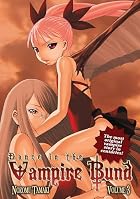
#19 Dance in the Vampire Bund, Vol. 3 by Nozomu Tamaki - ***1/2
I had to reread these as it had been a almost a year sense i read them and when i picked up the new volume i was completely lost as to what was going on. for my story summery of the volumes you can look at my post from last year. they were still enjoyable the 2nd read through and as always the art was good. However once again I'm going to reiterate that this Dance in the Vampire Bund is not for kids.
30bakabaka84
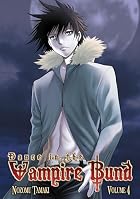
#20 Dance in the Vampire Bund, Vol. 4 by Nozomu Tamaki - ***1/2
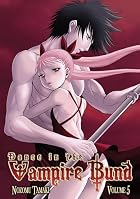
#21 Dance in the Vampire Bund, Vol. 5 by Nozomu Tamaki - ***1/2
The is a pretty good story arc for the series. hinted at in the final pages of vol.3 the vampire puppet masters decide to pay Mina Tepes a visit to assert their dominance over the ruler of all vampires and reinforce the view that she rules only at their pleasure. At the same they set a trap for Akira by sending assassin after him in a twisted game to see who will be the betrothed of Mina. Lots of action and some good character development as well as having some how worked the author Ambrose Bierce into the story and as always the art was good and stayed consistent. Overall another good addition to the series. hopefully it will not be an other year until I get another volume but with my odd collecting habits who knows.
31bakabaka84

#22 Hot and Steamy: Tales of Steampunk Romance edited by Jean Rabe, Martin H. Greenberg - ***
Another mixed bag of short steampunk short fiction with this collections theme being romance. even though i sound somewhat disappointing i found this collection was better then the last steampunk anthology i read as at least this one got it right that all the stories had a Victorian steampunk feel to them. Although the title seems to imply that the romances will be hot and heavy they are actually rather chaste with barely and ankle was shown. I found some of the stories rather engaging while others i had to slog through or just skimmed getting the main plot but skipping the dialog. Overall there are some good stories in here although i can only recommend the book if you a diehard romance fan or steampunk fan otherwise maybe check it out at the library. Even though its called Hot and Steamy it came out more like Tepid & Misty
some of the stories i liked
Chance Corrigan and the Queen of Hearts by Michael A. Stackpole
Absinthe-minded Archaeologist by Vicki Johnson-Steger
Automate Futura by Stephen D. Sullivan
Love comes to Abyssal City by Tobias S Buckell
For Queen and Country by Elizabeth A Vaughan
Grasping at Shadows by C.J. Henderson
32bakabaka84
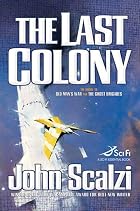
#23 The Last Colony by John Scalzi - ****1/2
A satisfying conclusion to Scalzi's Old Mans war series, I know there's still Zoe's tale but as that is a retelling of last colony from Zoe's perspective I consider this one the end. In this this book John Perry his wife Jane and their adopted daughter Zoe, who was introduced in the 2nd book of the series are recruited to lead the creation of a new colony. However unbeknownst to them they are a pawn in the Colonial Unions game against the Conclave and not everything they have been told seems to be the truth. Scalzi's first book was a nice SF military story and his second i could only classify as a spy novel but with this one Scalzi goes with the conspiracy/political thriller genre. Overall I think he was successful in doing this, although there were some plot threads that at one point seemed to be important that were left hanging. I also felt that some of these plot threads were not actually needed even before it turned out they would not play a major part in the overall story. I also liked how some of the character that you think are going to be major threats actually end up being major allies to John. In the end the good out ways the bad and I was satisfied with the ending. I still think that Old Mans war is the best of the series but i liked this one slightly better then book 2. I was also glad that i picked this one to be my first space opera SF book of the year as i felt i had been missing something in my reading selection this year and this was a good one to start getting back into SF.
33bakabaka84
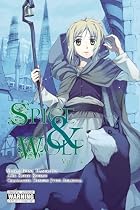
#24 Spice & Wolf, Vol. 4 (Manga) by Isuna Hasekura - ***1/2
Continuing the economic adventures of Lawrence and Holo volume 4 of the manga adaption based of the novels comprised about 1/3 of the story of the 2nd book. The main plot for this part of the story is that Lawrence has gotten ahead for once but he gets carried away and buys goods on margin only to find out later that he's been had. while traveling the meet a shepherdess who wants to escort them and use her skills to drive off any wolves they meet, not knowing that one is traveling with Lawrence. This one sets up problems for the rest of the story so might not be as interesting to some as the last volume. The art is good and adds a little more humor to the story then the art in the novels. however as i have stated in my other reviews of the manga i feel that much of the character growth and world building is lost from the novel in an effort to streamline the story for the manga genera. Overall the story is good and i like the visual interpretation of Lawrence and Holo's world and would recommend this if you haven't read the novels but i still feel that some of the richness of the world is lost between the two adaptions.
34bakabaka84

#25 Little Man, What Now? by Hans Fallada - ****1/2
An excellent book about the struggles of a newly wed couple in Germany during the 1930's. Johannes and Emma both start out optimistic about their future as so many couples do but as the story goes on you see that they are constantly powerless to state of the world around them. Johannes constantly fears getting fired by his various bosses and worries daily about barley making enough money to keep a roof over their heads. while at the same time Emma has to deal with being pregnant and keeping Johannes from the despair that seems to be all around them. At the same time you see both of them struggle to stay in the middle class and fear the thought of poverty and dropping into the poorer class. Fallada does good job at creating likeable and seemingly realistic characters that you want to root for. Even the scoundrels present in the book have some charm to them and are shown just as people rather then villeins. I think one of the main reasons i liked this one so much was that it can relate so much to our current economic problems and Johannes and Emma have many of the same worries and problems a lot of people today face. I especially felt i could relate the Johannes' trouble at work and dealing with the quota system that was forced on him mirrored exactly how i felt when the same was done to me at my former job by some number wiz who neither new our customers or had ever set foot in our store and thus knew the anxiety Johannes felt ever day worrying about how he was going to hit is quota and if he was going to get fired. If there is one problem some might find with the book it is that the political aspects of Germany in the 30's is largely ignored. However I feel that by doing this Fallada allows the reader a bottom up experience of what Germany must have been like rather then the normal top down and it further allows you to get more intimate with the characters. Overall its a very good book that certainly give you the feel of what it must have been like in the 30's for the ordinary person and provides examples that can relate to the world today.
35bakabaka84
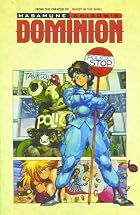
#26 Dominion: Tank Police by Masamune Shirow - ***
Not as well known as Shirow's Ghost in the Shell or Appleseed but still entertaining. In the future the police use tanks to fight crime although most of the time they end up doing more damage then the criminals. Not much else to the story other then the basic premiss each chapter is episodic and there really isn't an overarching plot to tie them together. As for the art, being this was one of Shirow's early works the it is a little rough compared to his current style. However Dominion does show some of Shirow's cool vehicle designs and introduced his well known Puma sisters. Overall I can only really recommend it if you are a Shirow fan as it can't really stand up to his much better GitS or Appleseed series, not that Dominion is bad its just that if you really want to get a feel for Shirow's work you should start with those and then move on to his older stuff like Dominion and Black Magic.
36bakabaka84

#27 Nova (StarCraft Ghost) by Keith R. A. DeCandido - ***
Some nice fluff for the StarCraft series that tells the back story of the Ghost Nova. The story goes over the early life of Nova and how she went from a pampered scion of one of the Old Family's that rule the Confederacy of Man until her family was targeted by radicals and her burgeoning psychic powers get her notes by the Governments Ghost program. Now forced to hide in the Slums Nova has to deal with the criminal underworld that runs the slums and the government agents looking for her. The story itself was good but nothing special and would probably only really interest die hard StarCraft fans. I also felt some of the sub plots could have been expanded as they seemed to start to go somewhere only to have the character killed of or never mentioned again. One thing I thought DeCandido did well was presenting the drug junkies as i think he got the thought proses of a junkie down pat. Overall like I said nice fluff for StarCraft fans but probably wouldn't interest the general sci-fi reader as the story is nothing new and its really just you basic reading junk food.
37bakabaka84

#28 Warrior Brood by C.S. Goto -**1/2
I had heard horror stories about Goto's writing on various Warhammer sites and while this one was not as bad as some of his other books apparently are, it still wasn't great. One of the main problem was there were a lot of awkwardly worded sentences that made me wonder if any proof reading was done on the book. In addition Gato seems to have taken some liberty's with the sources materiel which I normally don't have a problem with but in this case the liberty's seem to be due Gato not fully reading the source material (Space Marines don't have multi lassers, hellfire shells are not standard equipment, running out of a superior firing position so a sgt. can go to close combat with the enemy is not a standard Space Marine tactic, there are no arachnid 8 legged Tyranid ever created for the game ect.) I could probably go on but then i would have to go back through the book. The characters were stereotypical to the point of being hackneyed and the end itself was anticlimactic. The one think i did like about the book was the use of the Mantis Warriors chapter that i think up till this book had only been mentioned in the rule books as it was nice to see relatively unknown Space marine chapter given some screen time rather the the usual suspects such as the blood angles, black templars, or ultramarines. In the end the book could have been bumped up to merely average if Gato had done his homework and the editors at the black library had done their job. Is Gato the worst write o have read? No he isn't but he is a rather mediocre one, which is probably why they haven't given him the go ahead for a full book sense 2007. I have one more Goto book in my library to read but after that i will not be picking up any more with his name attached to it as their are better Warhammer 40k books out there.
If the Starcraft Nova book is an example of how to take source material and create descent fluff fiction for the series Goto's book is an example of how not to do it.
38bakabaka84

#29 Blackout by Mira Grant - *****
An awesome ending to the equally awesome Newsflesh Trilogy. Blackout tied up everything that had been building sense Feed. I don't want to say to much about the plot as i don't want to ruin it for people. Suffice it to say as bad as things had gotten at the end of Deadline they get worse in blackout. The conspirators start taking more open action and the body count continues to rise as they try to get to Shaun and his team. I liked the emotional turmoil that Shaun and the rest of the crew went through, which made them seem all the more human rather then cardboard action hero's. The story was paced rather well as there wasn't any boring parts and you actually can feel the tension rising as you get to the end. Overall as i said awesome ending to probably one of the best Trilogy's i have read in a long time. If you want something good to read this summer do you self a favor and stat reading Feed you will not be disappointed.
39bakabaka84
Happy 4th to everyone!
40bakabaka84
Found this over on Feca67's thread and as I did a survey last year thought I'd do another one this year
Hardback or trade paperback or mass market paperback?
I'd have to go with Hardback they just seem more permanent then mass market or even trade paperback. That and you cant wrinkle the spine which is a major pet peeve of mine. the only drawback is that they take up so much space so I've had to compromise my values and buy paperbacks unless its a special case such as i have other books in a series in hardback :D
Amazon or brick and mortar?
Amazon for the most part as there are no brick and mortar stores near me. although I do buy a lot of second had books from the friends of the library bookstore at sjsu
Barnes & Noble or Borders?
B&N as i think Borders is now defunct. however when Borders was around I always liked them better with the expedition of always tripping over kids in the manga aisle. Borders why u no shrinkwrap your manga when you were around!
Bookmark or dogear?
Bookmarks. I don't like defacing books. I'll use anything as a bookmark but most of the time it tends to be a random magic card i have laying around or receipt paper
Alphabetize by author or alphabetize by title or random?
I go by size larger books on the bottom shelf's smaller on the top. although i do try to keep books in a series or by the same author together if I can. I also keep books like penguin classics together as well
Keep, throw away, or sell?
I keep for the most part but give away books, mostly ones i got from friends of the library bookstore for cheep or that looked interesting but a year or two later still haven't read or found out it was book 3 or 4 in a series. These books I usually recycle through friends and family or give them to another library bookstore to sell
Keep dust jacket or toss it?
Keep it they have pretty pictures on them. However I do take them off when I'm reading a book so as not to damage them
Short story or novel?
Novels as I rarely read short stories unless its in a collection or anthology.
Collection (short stories by same author) or anthology (short stories by different authors)?
Both are fine with me but collections might slightly be ahead as the last few anthology's I have read have had a lot of stinkers in them and at least with collections there's some consistency in story telling.
Harry Potter or Lemony Snicket?
Neither, never was interested in Potter (I'll take Gandalf or Elminster and day over Potter) same thing for Snicket although I did like the cover art
Stop reading when tired or at chapter breaks?
If i start nodding off halfway through a page I stop unless I have less then a page and a half to go to finish the chapter then I'll finish the chapter and stop
"It was a dark and stormy night" or "Once upon a time"?
Once upon a time as my library is largely fantasy, sci-fi, and graphic novels. I like horror books but less so the blood and guts kind, with the exception of zombie books and more the creepy kind where something is not right and the protagonist slowly becomes more paranoid and deranged
Buy or Borrow?
I buy and rarely borrow as almost ever time I've borrowed a book I never read it
New or used?
Half and Half, I buy new when i can or if its a book i really wanted but if I'm testing the waters on a new author or series I'll buy it used if i can. again thanks to the friends of the library bookstore at sjsu i can get used hardbacks for a few dollars and paperback for 50 cents
Buying choice: book reviews, recommendation or browse?
I browse read, the back or inserts and then make m decision. Although a few times I have gone with recommendations and reviews this is manly if I can compare it to my reading habits to see if the book fits into what i like to read.
Tidy ending or cliffhanger?
As long as the story doesn't drag and it seems that for the moment things are resolved cliffhangers are fine but I hate it when a book uses an entire book to build a plot. I don't need to read 600 pages of a book explaining why 3000 years ago and evil wizard did bad thing "A" only to have the book end saying the real story about hero "B" starts in the next book . . . that will be out next year so stay tuned. I feel that even in a series each book should be able to stand alone if need be. The book can tie into the over aching plot but setting up the next book shouldn't be it raison de tra
Morning reading, afternoon reading or nighttime reading?
All of the above, heck I've sometimes gone from nighttime reading to afternoon reading in one sitting
Stand-alone or series?
Both are fine with me although like I said with cliffhangers the books in a series should stand by themselves if need be
Favorite series?
Newsflash, Claymore, Emma, Honor Harrington just to name a few
Favorite children's book?
Swiss Family Robinson as a kid who wouldn't have wanted their tree house
Favorite book of which "nobody" else has heard?
The Book of History Vol.16&17: The World War Vol.1&2, finished in 1920 and contributed to by military leaders who fought in the war these massive books go over a lot of details of the war and have a lot of nice illustrations. from what I've read so far (and I've only read about 50 pages or so when i was using it for a paper) its more of a chronology of the war rather then an analysis of why it happened so l really like it as a primary document
Favorite books read last year?
Feed and Deadline by Mira Grant
Favorite books of all time?
I really cant think of one as it is constantly in flux
Least favorite book you finished last year?
The Crusades from Ospreys Essential Histories series by David Nicolle it was just poorly put together and tried to do to much in only 90 pages
What are you reading right now?
My current reading list shows that I am reading a lot of books but that's because I start things then put them down to read other books as the mood hits me at the moment I'm finishing Storm of Steal by Ernst Jünge
What are you reading next?
Don't know yet
Hardback or trade paperback or mass market paperback?
I'd have to go with Hardback they just seem more permanent then mass market or even trade paperback. That and you cant wrinkle the spine which is a major pet peeve of mine. the only drawback is that they take up so much space so I've had to compromise my values and buy paperbacks unless its a special case such as i have other books in a series in hardback :D
Amazon or brick and mortar?
Amazon for the most part as there are no brick and mortar stores near me. although I do buy a lot of second had books from the friends of the library bookstore at sjsu
Barnes & Noble or Borders?
B&N as i think Borders is now defunct. however when Borders was around I always liked them better with the expedition of always tripping over kids in the manga aisle. Borders why u no shrinkwrap your manga when you were around!
Bookmark or dogear?
Bookmarks. I don't like defacing books. I'll use anything as a bookmark but most of the time it tends to be a random magic card i have laying around or receipt paper
Alphabetize by author or alphabetize by title or random?
I go by size larger books on the bottom shelf's smaller on the top. although i do try to keep books in a series or by the same author together if I can. I also keep books like penguin classics together as well
Keep, throw away, or sell?
I keep for the most part but give away books, mostly ones i got from friends of the library bookstore for cheep or that looked interesting but a year or two later still haven't read or found out it was book 3 or 4 in a series. These books I usually recycle through friends and family or give them to another library bookstore to sell
Keep dust jacket or toss it?
Keep it they have pretty pictures on them. However I do take them off when I'm reading a book so as not to damage them
Short story or novel?
Novels as I rarely read short stories unless its in a collection or anthology.
Collection (short stories by same author) or anthology (short stories by different authors)?
Both are fine with me but collections might slightly be ahead as the last few anthology's I have read have had a lot of stinkers in them and at least with collections there's some consistency in story telling.
Harry Potter or Lemony Snicket?
Neither, never was interested in Potter (I'll take Gandalf or Elminster and day over Potter) same thing for Snicket although I did like the cover art
Stop reading when tired or at chapter breaks?
If i start nodding off halfway through a page I stop unless I have less then a page and a half to go to finish the chapter then I'll finish the chapter and stop
"It was a dark and stormy night" or "Once upon a time"?
Once upon a time as my library is largely fantasy, sci-fi, and graphic novels. I like horror books but less so the blood and guts kind, with the exception of zombie books and more the creepy kind where something is not right and the protagonist slowly becomes more paranoid and deranged
Buy or Borrow?
I buy and rarely borrow as almost ever time I've borrowed a book I never read it
New or used?
Half and Half, I buy new when i can or if its a book i really wanted but if I'm testing the waters on a new author or series I'll buy it used if i can. again thanks to the friends of the library bookstore at sjsu i can get used hardbacks for a few dollars and paperback for 50 cents
Buying choice: book reviews, recommendation or browse?
I browse read, the back or inserts and then make m decision. Although a few times I have gone with recommendations and reviews this is manly if I can compare it to my reading habits to see if the book fits into what i like to read.
Tidy ending or cliffhanger?
As long as the story doesn't drag and it seems that for the moment things are resolved cliffhangers are fine but I hate it when a book uses an entire book to build a plot. I don't need to read 600 pages of a book explaining why 3000 years ago and evil wizard did bad thing "A" only to have the book end saying the real story about hero "B" starts in the next book . . . that will be out next year so stay tuned. I feel that even in a series each book should be able to stand alone if need be. The book can tie into the over aching plot but setting up the next book shouldn't be it raison de tra
Morning reading, afternoon reading or nighttime reading?
All of the above, heck I've sometimes gone from nighttime reading to afternoon reading in one sitting
Stand-alone or series?
Both are fine with me although like I said with cliffhangers the books in a series should stand by themselves if need be
Favorite series?
Newsflash, Claymore, Emma, Honor Harrington just to name a few
Favorite children's book?
Swiss Family Robinson as a kid who wouldn't have wanted their tree house
Favorite book of which "nobody" else has heard?
The Book of History Vol.16&17: The World War Vol.1&2, finished in 1920 and contributed to by military leaders who fought in the war these massive books go over a lot of details of the war and have a lot of nice illustrations. from what I've read so far (and I've only read about 50 pages or so when i was using it for a paper) its more of a chronology of the war rather then an analysis of why it happened so l really like it as a primary document
Favorite books read last year?
Feed and Deadline by Mira Grant
Favorite books of all time?
I really cant think of one as it is constantly in flux
Least favorite book you finished last year?
The Crusades from Ospreys Essential Histories series by David Nicolle it was just poorly put together and tried to do to much in only 90 pages
What are you reading right now?
My current reading list shows that I am reading a lot of books but that's because I start things then put them down to read other books as the mood hits me at the moment I'm finishing Storm of Steal by Ernst Jünge
What are you reading next?
Don't know yet
41bakabaka84
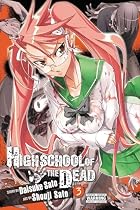
#30 Highschool of the Dead, Vol. 3 by Daisuke Sato - ****
The zombies and fanservice continues in vol. 3. After rescuing Alice the group makes it to Takagi's parents house where they seemingly can start to relax sense the dead started to rise. However now that the adrenaline has started to fade the must make a critical decision go with Takagi's parents or strike out on their own. The story is moved slightly forwards but not by much however the part that I really liked is that you essentially have four groups of people reacting to the zombies. You have people who are delusional and blind themselves to the fact that there are zombies clinging to the idea that they can go back to the way the world was, you have Takagi's parents who are willing to use whatever means necessary to survive but whose followers are not united still want to enforce old social orders. Then there is Shidou Sensai who manipulates the students under his control for pleasure and power hopes to join with Takagi's parents' group in what I guess is the hope to eventually use his charisma to manipulate it, and then you have Takashi's group stuck in the middle and unsure of which path to follow. I hope in the next Vol. they continue with this as I don't think most zombie stories deal with the plethora of reactions people can have to a zombie pandemic. As usual the art is really good but again there are elements that are not for kids. Overall another nice vol to the series.
42bakabaka84

#31 Battles that Changed Warfare by Kelly Devries - **
A coffee table book that is dull and in need of an editor. The book states that its purpose is to give the reader a set of battles that changed how wars were fought. the problem is that this is usually summed up in a little paragraph that hardly leaves you with an impression that the battle mentioned really changed warfare. Add to this very dull and generic overviews of the battle makes this one tedious read.
However as dull as the main text is it is essentially accurate yet the the text that explain the images is not. For example in the section on the battle Cynoscephalae on one page the image and text insert says that the Hastati was a spear welding infantry man who fought in the third line of battle in the roman army (which is untrue this was actually the Triarii) only to have main text and another insert contradict this a few pages later correctly stating that the Hastati fought in the first line of battle. Another example is in the chapter on the Battle of Sadowa (Koniggrarz) where the image text insert says that Emperor Frederick I (aka the medieval king Frederick Barbarossa) was the big winner of Sadowa which is funny as Barbarossa had been dead for 676 years so unless he built a time machine to warp to the 1860's I don't think that Barbarossa was the big winner at the battle. Who they actually meant and whose image they used was Crown Prince Frederick later Frederick III which the main text states on the very next page! I know that history books get things wrong sometimes but usually this is obscure facts or based on a particular interpretation of data or events but these are basic facts that you could easily check in even the most out of date encyclopaedia.
What I think happens is that the authors who are actually historians wrote and submitted the main text for each chapter to the publisher and then the images and insert text was organized by someone else who ether did not have access to the text or was in a rush and didn't care if facts were wrong. The one think that was nice about the book and saved it from a one start rating was that even with the basic historical mistake there were and abundance of very nice images ranging from contemporary pieces to modern line drawings. Also i liked the colored battle maps in each chapter. I know i shouldn't expect much from coffee table books but I at least think they should get the facts right and be entertaining, which is the main purpose for these kinds of books. If you do want a military history type coffee table book go with Battle: A Visual Journey Through 5,000 Years of Combat as it much better then this one
43bakabaka84
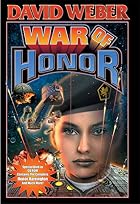
#32 War of Honor by David Weber - ***
This one was a bit of a struggle to get through. Its not that i didn't enjoy the story its just that the endless political meetings did get a little dull at times an the only real action was the last 50 pages or so of a 926 page book! I understand that the political maneuvering in this book was meant to set up things in the rest of the series and i usually enjoy political intrigue but almost a thousand pages of it in one book is a bit much. The one thing i did like about the overall plot was that it shows how it even when people of different nations don't want to go to war governments can still stumble into one. Overall probably my least favorite of the Honor books so far it moved the series along but was a a slog. i hope the next one have a little more action and less minutes of political meetings.
44bakabaka84

#33 The Sins of the Wolf By Anne Perry - ***
In my continuing trend to read the Monk series out of order, i picked up copy of Sins of the Wolf. Hester Latterly is charged with accompanying an elderly Scottish woman on her trip down to London. However, she dies mysteriously on the train down and when an examination of the body is called Hester is accused of poisoning the lady. Now Monk must travel to Edinburgh to try and find out who would want the respectable elderly lady dead. Of the Monk books I have read this was probably the weakest one. It had all the right elements and Perry's wonderful ability to draw you into the Victorian era but the mystery itself was somewhat substandard and the ending wasn't that satisfying to me. On the other hand the courtroom scene was very well done and the height of the book. Overall this one seems to be the odd duck of the series, at least of the ones i have read its not bad and it does have its moments but its not great ether.
45bakabaka84

#34 A Bride's Story Vol.1 by Kaoru Mori - *****
Set during the 19th century around the Caspian Sea Mori's Bride's story is about Amir and how she explores her new life with her new family. While the age difference between her, she's 20 and her husband Karluk, he's 12, is a little strange it only plays a minor role in the over all story and apparently at the time and place was a common practice to marry young so they could have more children over there life time to add to the family's available labor. Something that was probably not uncommon for most nomadic/agrarian society throughout history. Anyway most of the book was about slice of life stuff and was really enjoyable exploring the culture of the area from the story about the woodcarver to Karluk's uncle the nomadic sheep herder. Mori has done an outstanding on the costuming (i shudder to think how long it took her to draw the dresses) and seems to have done her research on the area making it seem very authentic. Also i like how even though the dress my be different Mori doesn't laps into treating the characters as exotic curiosity's but actual people with the same problems and joys we might have.
I think Mori's true gift is creating enduring believable characters who authenticity makes you think they are going to jump right out of the book. Almost all her characters seem to have an inner warmth to them that to me sets them apart from other manga's i have read. If i look at say the old woodcarver in the story and then try and visualize him in my mind I don't see him as the manga representation but can picture how he would look in real life. That's not something many artist or story tellers are able to do. After reading Mori's Emma series I was hooked and will read anything Mori writes and i wasn't disappointed with this. If you want a quick relaxing slice of life read with beautiful art, likable characters and interesting location pick this up.
46bakabaka84

#35 A Bride's Story Vol.2 by Kaoru Mori - *****
Another excellent volume that builds on the first. Amir's family has changed their mind about Amir's marriage and has come to take her back, which leads to some action packed chapters. There was also an interesting chapter that was about the role cloth and embroidering played in the family tradition which was rather interesting and also looked amazing. There's also an interesting chapter the deals with the English researcher staying with the family and at the end it is hinted at the worsening relations between England and Russia so I'm wondering if that will play a lager role in the story later on. As always the afterwords is informative, as Mori talks about little cultural things from the area that might of gone over the readers head and add to the enjoyment of the story.
47bakabaka84
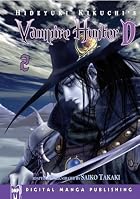
#36 Vampire Hunter D Manga Volume 2 by Hideyuki Kikuchi - ***1/2
The 2nd vol in the manga adaption of the Vampire hunter D novels didn't grab me as much as the first vol. I think the main problem i had was that the story seemed to jump around a lot. It seemed that they were trying to go for mystery with the big reveal at the end but to me it fell through. Everything was answered in the end but the journey there could have been streamlined a little better. however even with the problem with the story i still enjoyed it. The art was fitting and i did like the dichotomy between the nobility and the humans as in this case the humans seemed to be the more barbaric of the two wile the nobility even though not directly shown seemed to be the more compassionate even though there actions would lead to tragedy. Overall not as good as vol.1 for me but still enjoyable
48bakabaka84
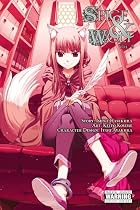
#37 Spice and Wolf, Vol. 5 (Manga) by Isuna Hasekura - ***1/2
This Vol. picks up right where vol 4 left off and goes over about another third of the 2nd novel. Finding out that he is in debt due to his rash perches, Lawrence try's to call in all the favors owed to him to pay it off. However when that fails he comes up with the plan to smuggle gold into the city. if successful he will not only wipe out his debt but the debt of the merchant house putting a lean on him. If you have read the novels there's not much new and as always the art is good. My only complaint was that I thought they went over the part were Lawrence is begging for money to fast. The whole point of his begging was to show how desperate he was and what would push him to consider the dangerous option of suggesting gold. but this was breezed over in about 4-5 pages and I though didn't have the impact as it did in the novel. Although even with this flaw I still enjoyed.
49bakabaka84
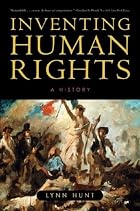
#38 Inventing Human Rights: A History by Lynn Hunt - ***1/2
An interesting little book about the evolution of human rights from he 1700's to today. At the beginning of the book Hunt asks an interesting question if human rights are "self evident" such as many decelerations of the time stated then why was it not until the 1700s that the issue of rights was championed? Hunt try's to answer this in the first half of the book saying that two things had to happen before human rights took center stage.
The First is that society had to develop a kind of social empathy for others. In her opinion the seed bed for this empathy came from the development of the epistolary novel as they gave the reader a seance of realism that a normal novel could not and made it easier for the reader, usually wealthy aristocrats to come to realize that there servants and peasants hand inner thoughts and problems just as they did thus humanizing them to an extent that it was harder to see just the social class. This would lead to other ideas of empathy that she discusses later in the chapter. The next change that had to happen was how the human body was viewed. According to Hunt prior to the 1700 the body was seen as just the shell holding the soul before death and thus not important but during the late1700's this changed into the idea that the body was sacred and belong to the individual. This would then lead to the protesting of judicial torture and movements all around Europe to abolish it.
Once empathy and the sacredness of the human body took place in society you then can have the start o the discussion of human rights which she devotes the rest of the book too. Hunt manly looks at the French Deceleration of Man and the problems they faced once stating all citizens had rights. such as realizing that each group such as Protestants, Jews, and slaves would argue for there rights and feel that there rights were being abused if not included. Which hunt also argues as one of the problems of declaring rights, that once done there will always be a group that seeks to address abuses and a society walks a thin line id dealing with each case while trying to live up to the ideals of their original intent. The last chapter looks more at the modern era and the creation of the UN's Universal Declaration of Human Rights and the limitations of empathy as a motivation for human rights. The most interesting argument Hunt makes can be found here at the end of the chapter were she argues that with the creation of human rights also brought with it a whole host of evil twins stating
The call for universal, equal and natural right stimulated the growth of new and sometimes fanatical ideologies of difference. New modes for gaining empathetic understanding opened the way to a sensationalism of violence. The effort to dislodge cruelty from the legal, judicial, and religious moorings made it more accessible as a everyday tool of domination and dehumanization. The utterly dehumanizing crimes of the twentieth century only become conceivable once everyone could claim to be equal members of the human family. . .Empathy has not been extinguished, as some have claimed. It has become a more powerful force for good then ever before. But the countervailing effect of violence, pain and domination is also greater then ever before.
Hunt end on a note that while humanity record on human rights has been rather mixed there is still hope as long as we strive for the ideals we have set.
The only real complaint i have with the book is that I wish some of the historical topics in the 2nd half of the book were covered more in-depth as a feel they were glossed over a little bit. Like I said a interesting little book that deals with some heavy stuff but presents in a very easy to understand way and gets to the hart of why human rights are important.
50bakabaka84
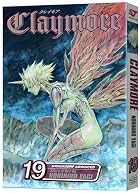
#39 Claymore vol.19 by Norihiro Yagi - ****1/2
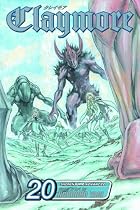
#40 Claymore vol.20 by Norihiro Yagi - ****1/2
Two more good volumes in the series the action iis tense and the story is moved forward. More info is given about priscilla and why she had amnesia and you are shown how powerful she is now that she has awoken. However Clare has taken a backseat to some of the other claymores and their move to crush the organization with vol 20 ending just on the cusp of what looks like a rebellion of the rank and file claymores still within the organization. looking forwards to the next vol.
51bakabaka84
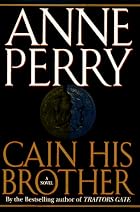
#41 Cain his Brother by Anne Perry - ***1/2
I liked this one better then the last book in the series as the case was more concrete and there was less traveling to and from places. I also liked that i wasn't able to guess the outcome of the mystery halfway into the book. My guess was close to the outcome but even I didn't see the end coming. The only thing i didn't like about the book was that the subplot with Monk being slandered by a society lady seemed half finished and there really wasn't a satisfactory conclusion in my eyes, maybe there will be more on this in the next book. All in all a solid Monk Mystery and for me makes up for the last book.
52bakabaka84
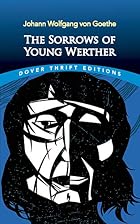
#42 The Sorrows of Young Werther by Johann Wolfgang Von Goethe - ****
The story of unrequited love might not be a new, but in Werther Goethe masterfully shows the internal struggle and decent into depression. As the book goes on the reader can see the change that happens to Werther. He goes from being happy and enjoying life to one off sorrow and anxiety were he can only see one way out. The biggest change in Wether can be seen in his love for Charlot. A first it is platonic but slowly it becomes an obsession to the point that it makes all around him uncomfortable not to mention Charlot and her husband. This strains their friendship and drives Werther deeper into a state of melancholy. At the end Weather is unable to get over Charlot and kills himself with a pistol he his given by Charlot's husband. The only problem i had was that the flowery language made me grown a bit wishing Werther would get to the point. This type of righting I'm guessing was common in the 1700's as I felt the same way when I read The Castle of Otranto. In all I can see why it is considers a classic as Goethe makes you feel the torment that Wether has. Moreover at about 100 pages (my copy was only 89) it short enough that might be a nice introduction to classic and/or Gernan Literature.
53alcottacre
#21: The Mall of Cthulhu looks fun! I am going to have to give that one a try. I play several board games that are set in Lovecraft's mythos.
54bakabaka84
The Mall is a little bit tongue in cheek with the Cthulhu Mythos but when dealing with Non-Euclidean geometry and unknowable horror who says you can't have a little fun
55drneutron
but when dealing with Non-Euclidean geometry and unknowable horror who says you can't have a little fun
Bwa-haaa-haa!
Bwa-haaa-haa!
56bakabaka84
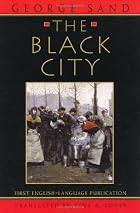
#43 The Black City by George Sand - ****1/2
A rather interesting story set in industrial revolution era France. At its hart its the story of the young smith Etienne Lavoute who is know in the Black City as Sept-Epees (Seven Blades) who is in love with the willful and independent Tonine. To this end he tries and to prove his worth to her by purchasing a run down factory on the outskirts of town hoping to strike it rich and move beyond his humble beginnings. However, as with life it rarely goes as planed and soon Sept-Epees find that he is ill-prepared to a business. Add to this the fact that Tonine continues to rebuff him treating him as nothing more then a friend make Sept-Epees sink deeper into despair as he feels that he will never be worthy in Tonine's eyes. More trials face Sept-Epees but I don't want to give ruin the rest of this engrossing story.
One of the most inserting parts of the book was Sands initial description of the Black City. She describes it as cut out of the side of a cliff with waterfalls to fed the mills and and a dividing area between the working class Low Town and the more affluent Upper Town. After reading the description I kept on viewing the city almost as an Industrialized Gondor. The other interesting part that Sand adds is the descriptions of the two quasi castes of workers n the city. The First are the smiths and gun makers who are the men of fire. Wile the second group is made of of the paper makers known as the men of water. This concept of the two castes also plays into Sept-Epees and Tonines relationship as he is from the men of fire while she is more alined to the men of water. This concept of opposites adds add some dynamics to why Tonine and Sept-Epees always seem to butt heads. However I wish she had developed the idea more as its such a cool concept and i feel that it gets forgotten a little by the end of the book.
There is a little bit of a socialist tint to the book as there is the subplot about class struggle and the nobility of the working class but its not heavy handed and fits rather well with the other subplot of a woman bucking the social norms of the day. In the end I was surprised by this little book having never heard of George Sand before and she seemed to be a rather talented writer yet not well know compared to other woman authors of the 19th century. I would say pick this one up if you can as its a quick little read that is beautifully written.
57alcottacre
#54: LOL
58bakabaka84
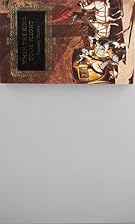
#44 When the King Took Flight by Timothy Tackett - ****
Tells the story of the kings Flight to Varennes and the consequences of the event. Tackett starts off with the end of the flight when the king reached Varennes and his stopped by the local citizens. He then goes back to the beginning and discusses the King and the initial planing of the flight. After that he goes on to look at the the rest of the flight. The rest of the book looks at how the different groups reacted to the event ranging from the citizens of Paris, the national assembly, the provincial citizens, and the eventual verdict of the assembly. The book ends with a synopsis of events that happened that would culminate into the Terror and the kings eventual execution.
Tackett's main argument was that the Flight to Varennes shocked the people of France to the point that they no longer had any faith in the monarchy or the constitutional monarchy that the National Assembly was trying to implement. Furthermore, the Kings actions sparked the divisive rivalry between the members that lead to the factionalism and rise of the Terror while playing into the paranoid feelings of members who feared a counter revolution.
I liked Tacketts book as it reminded me a lot of the writing style of Christopher Hibbert in that he presents loads of information but in a style that is accessible to a wider audience and doesn't bog you down with the usual dense academic analysis of events. In addition I liked how he was rather even handed when dealing with the different factions, showing their reactions without stating that one group had more legitimacy then another. If you are interested in the constitutional monarchy period of the French Revolution or how a single event could alter the course of history, Tucketts book is a good place to start.
59bakabaka84
FYI for those who are interested somehow there was a bad combination for volume 6 of the light novel and Manga I tried my best to separate them however if you use that ISBN for the novel you still might get directed to the manga entry so here's a link to the novel http://www.librarything.com/work/13081149
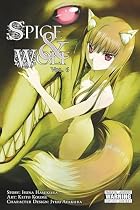
#45 Spice and Wolf Vol.6 by Isuna Hasekura ***1/2
Vol.6 contains the last third of the 2nd novel plus a side story. Trapped by the wolves that have been chasing them through the woods Lawrence and Holo come up with a plan to distract the wolves while the rest of the parity escapes. Later while waiting for a Holo, Lawrence is betrayed by the Remelio company, who want to silence any witnesses to their gold smuggling. Now Lawrence and Holo must race to catch up to the villains before they can kill Norah. The book does an adequate job of showing the last part of the second novel with the visuals really helping some of the action scenes. One thing I really like about this book is that the do a better job of explaining the events at the end than the novel did. I also liked the extra chapter at the end that shows Lawrence, Holo, and Norah celebrating after the events of the second book. This was not originally in the book, but was previously seen as an extra episode shown between the 1st and 2nd season of the TV series. Overall another good volume of the manga series.
#45 Spice and Wolf Vol.6 by Isuna Hasekura ***1/2
Vol.6 contains the last third of the 2nd novel plus a side story. Trapped by the wolves that have been chasing them through the woods Lawrence and Holo come up with a plan to distract the wolves while the rest of the parity escapes. Later while waiting for a Holo, Lawrence is betrayed by the Remelio company, who want to silence any witnesses to their gold smuggling. Now Lawrence and Holo must race to catch up to the villains before they can kill Norah. The book does an adequate job of showing the last part of the second novel with the visuals really helping some of the action scenes. One thing I really like about this book is that the do a better job of explaining the events at the end than the novel did. I also liked the extra chapter at the end that shows Lawrence, Holo, and Norah celebrating after the events of the second book. This was not originally in the book, but was previously seen as an extra episode shown between the 1st and 2nd season of the TV series. Overall another good volume of the manga series.
60bakabaka84
I have been busy with school so I fell behind on my reviews hopefully I'll be able catch back up.
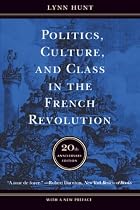
#46 Politics, Culture, and Class in the French Revolution By Lynn Hunt - ***1/2
This book, if I'm not mistaken start out as Hunt's PhD thesis. She started out trying to prove that there was still some merit to the Marxist interpretation of the revolution. However, it would seem her research then changed to studying the Symbology of the revolution which the first half of the book is dedicated to. In the first half of the book she looks at multiple symbols ranging from modes of the dress to seals to the minting of coins. It was interesting to see that in a revolution that wanted to see everyone is equal they wrestled with the idea of creating clothes that would distinguish the political leaders and ordinary citizen which in a way reinforce the old class distinctions. Another interesting thing that you see in the revolution is the use of a Hercules as an image to represent the people's will in the sense that it is an unstoppable and deadly force. While later on in the revolution, after the Terror images of the Hercules change to one of a more fatherly figure represented downswing in popular violence.
The second half of the book is more technical and looks at The revolution in the in a sociological mode which looks at the class breakdown across France during the revolution. It wasn't as interesting as the first half of the book and more than likely put in to have quantitative data to support her conclusion, which basically was that the politics of the day do not fit into the Marxist framework as there's too many things going on for the revolution just to be based on social classes. Although, it still has merit and can help you in understanding the revolution it just might be able to slog.
Overall the book was pretty interesting, however the average reader will probably only be interested in the first half of the book as the second half is bogged down with stats, that are probably only of interest to historical researchers.One thing I like about Hunt is that she'd are readable and although she takes complex topics shipwreck sit down and away that the average reader can understand. While probably not as interesting as the latest page turner if you're interested in the French revolution Hunt's is not a bad place to start.
#46 Politics, Culture, and Class in the French Revolution By Lynn Hunt - ***1/2
This book, if I'm not mistaken start out as Hunt's PhD thesis. She started out trying to prove that there was still some merit to the Marxist interpretation of the revolution. However, it would seem her research then changed to studying the Symbology of the revolution which the first half of the book is dedicated to. In the first half of the book she looks at multiple symbols ranging from modes of the dress to seals to the minting of coins. It was interesting to see that in a revolution that wanted to see everyone is equal they wrestled with the idea of creating clothes that would distinguish the political leaders and ordinary citizen which in a way reinforce the old class distinctions. Another interesting thing that you see in the revolution is the use of a Hercules as an image to represent the people's will in the sense that it is an unstoppable and deadly force. While later on in the revolution, after the Terror images of the Hercules change to one of a more fatherly figure represented downswing in popular violence.
The second half of the book is more technical and looks at The revolution in the in a sociological mode which looks at the class breakdown across France during the revolution. It wasn't as interesting as the first half of the book and more than likely put in to have quantitative data to support her conclusion, which basically was that the politics of the day do not fit into the Marxist framework as there's too many things going on for the revolution just to be based on social classes. Although, it still has merit and can help you in understanding the revolution it just might be able to slog.
Overall the book was pretty interesting, however the average reader will probably only be interested in the first half of the book as the second half is bogged down with stats, that are probably only of interest to historical researchers.One thing I like about Hunt is that she'd are readable and although she takes complex topics shipwreck sit down and away that the average reader can understand. While probably not as interesting as the latest page turner if you're interested in the French revolution Hunt's is not a bad place to start.
61bakabaka84
Happy birthday to me 28 today. instead of partying I'll end up doing the responsible thing and spend most of the day 12:00 -9:00
62bakabaka84

#47 The Butcher's Tale by Helmut Walser Smith - ****
A rather fascinating book about antisemitism and the myth of the blood ritual set in the small Prussian town of Konitz during the year 1900. The incident starts off when the torso of a local high school student Ernst Winter who had been missing was found. Quickly other parts were found and due and the autopsy that concluded, rather falsely that his blood had been drained before he was cut up. In addition, according to Hoffmann, Christian butcher in the town, whose family and newspaper connections would play a large part in whipping up the antisemitic frenzy identified the cuts as done by a Kosher butcher . This lead the public to believe that it was the Jewish community that had killed the boy so they could get his blood for the so called blood ritual that they believed Jews participated in. This view was then whipped into a frenzy by antisemitic newspapers that sent reporters to cover the case. Eventually it would get so bad that the mayor of the town had to call in the army to suppress rioters who had started to attack the Jewish people of the town and wanted to lynch the Jewish butch Adolf Lewy who was accused of committing the crime in his cellar. Once things started to cool investigates easily debunked the blood ritual charges however a large part of the community thought that they were shielding the Jews or had been paid off. At the end no one was ever charged for the crime but some people were sent to jail for perjury for lying about events during the case or in the case of Moritz Lewy, Adolfs son falsely sentenced for perjury because he couldn't remember if he had ever met Winter on the street.
Smith does a great job laying out the events of the crime and succeeding events as well as looking at all the people involved and analyzing their motives. My only real problem this the book was the chapter that accounts for the history and origin of the blood ritual charge. While it was interesting, I felt it took away from the main point of the book which was the Konitz Affair and the antisemitism during the event but could see why it was included so as to give the reader an idea why the people believed what they did. Although I think he makes up for it with the last chapter the presents some compelling cases as to who probably really killed Winter and why.
I also found it interesting that the authority throughout the affair never believed the Blood ritual charge and that it was mainly the poor and middle class who promoted it in what was for the most part settlements of old grudges. Another interesting point Smith makes is that it seemed that Germans of Catholic persuasion tended to be the majority of the persecutors during this time while the majority of blood ritual accusation happened predominantly in Protestant towns. It's rather sad that only 40 years later instead of protecting the Jewish people of Germany they would take part in their extinction allowing neighbors to turn on neighbor with no protection for the victims at all.
Overall if you're interested in cases of antisemitism prior to WW2 and/or are interested in trying to understand how you get to the outcome of the Holocaust this is a great book to pick up, as it show trends that might have been contributing factors. Furthermore, Smith as a nice writing style that at times makes you think you are reading a crime thriller and he as meticulously researched the event to create a very though provoking book on how easy it is for us to slide into our prejudges.
63bakabaka84

#48 Constantine the Emperor by David Potter - ***
I have to say book on the Rome/ Byzantine empire are usually my bread and butter but this one was a tough read. That is not to say that Potters book is bad just that it is every dense and probably not one that would be of interest to the casual reader. Potter has done is research and there is a lot to digest which might make it hard for the lay person. However, there are some nuggets of information that I particularly like such as the legal cases of Diocletion and the state of the empire during his rule.
Overall the book is very informative but a tough read and could use an index and better bibliography to make it a little more accessible for the non academic reader.
64bakabaka84
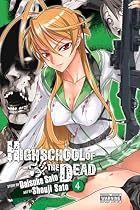
#49 Highschool of the Dead, Vol. 4 by Daisuke Satō - ***1/2
Has all the elements you would expect if you have read the previous vols, so good art and action. Takashi decides he still wants to look for his parents and makes plans only to have them interrupted by the return of Shidou. Things go from bad to worse when the safe haven is breached and an EMC knocks out almost all electronics. The group escapes but Takashi and Saeko have to play decoy but promise to meet back up with the group in 24h. In addition at the start of the book you finally get to meet the school nurses roommate who they hinted at in the last vol. I like this Vol just like I did the previous ones however I had to mark it down slightly as I felt the back story about Shidou sensei kind of came out of nowhere and seemed poorly inserted into the story and I felt didn't really add anything other than to make you hate him more and justify the events in the plot immediately after. Also this Vol didn't include the weapon reference afterwards like the others did which is sad as I liked reading those. Overall another good vol. but had to ding it for clunky insertion of back story.
65bakabaka84
#50 Highschool of the Dead, Vol.5 By Daisuke Sato - ****
Vol.5 gets back on track with the a better flow of the story than Vol. 4. Holed up in a mall with another group of survivors (can anyone say Dawn of the Dead?) led by an inexperienced traffic cop the group must make a decision on whether they will help this group of survivors or play along while they make ready to move on. What I liked in this one that I now realize was missing in the previous vol. was the struggle between the people who still cling to the semblance of the old order, such as the mall survivor group who vest power to the rookie cop just because she is a cop, and those who have come to accept that the game has changed the old rules do work anymore. I also liked that they touched on the aspect of Post Traumatic Stress Disorder and the fact that Takashi and Kohta are probably the most affected as they have done most of the killing with Saya remarking that if they are forced to keep this up they will eventual crack. In addition the extras are back with two bonus chapters with the first one showing events at the start of the series from Kohta and Sayas perspective while the second one has the group commenting that Rei should change her outfit and suggest one comical Cosplay outfit after another. Overall I think its series is back on track and I have to give it kudos for paying homage to one of my favorite zombie movies Dawn of the Dead.
66bakabaka84
#51 Highschool of the Dead Vol. 6 By Daisuke Sato ****
This was probably my favorite Vol. so far. Ending the mall arc the book starts off with some of the survivors from the mall on the roof being rescued by the military and then explaining what happened. Flashback to a few hours earlier and the story go's over how the zombies got into the mall and how the Takashi's group ended up saving most of them. At the end the few mall survivors left realize that through the entire event they were the ones acting like kids looking for others to do things for them while the highschools come out as the ones acting like adults. Sato sums it up nicely with the statement one of the survivors gives the military leader saying, "age doesn't mean a damn thing." The ones the that finally made a conscious decision to live ended up surviving those who were still in denial clinging to the pre-Zed ways ended up dying. This is not to say that everyone who fallows Takashi's group lives, they took some casualty's exiting the mall and for Kohta one was especially traumatic but the book ends with this so I will have to wait till the next vol. to find out how he deals with it. There are two extra chapters in the book this time. The first has Takashi reminiscing about one of his friends from school on the day before the zombies came where they compare who the sexiest girl in school is. The second extra section has some original concept art and an interview with Daisuke Sato and the artist Shouji Sato who talk about the book and other zombie things they like. Overall another good vol. and like I said probably my fave story wise so far with a good ending to the mall arc. . . well as good of an ending as you can have in a zombie apocalypse.
67bakabaka84
#52 No need for Tenchi vol 6 by Hitoshi Okuda - ***
Jumped around a little in the Tenchi continuity but the good thing about these manga is that the stories aren't that intricate so it not hard to figure out what's going on if you skip a Vol or two like I did. This one finishes up the arc that started I think in Vol 4 and then a few one shot side stories. It's about what you would expect if you have read Tenchi before, so some comedy a little action, and no real character development. Which isn't really a bad thing, I've been reading Tenchi on and off for about 15 years so it's always fun to go back and read characters like Tenchi or Ryoko and know they are exactly as I remember rather than having been reimagined to fit modern trends like some comics do. Overall its fun not to complicated and was a nice break from all the heavy reading I was doing the last two months
68bakabaka84
hope everyone had a happy holidays
69bakabaka84
#53 The All-New Tenchi Muyo! Vol. 5: Point and Shoot by Hitoshi Okuda - ***
This one didn't have any overarching plot but had a nice little collection of one shot adventures. The first story has the typical Setsubun not going as planned in the Tenchi household. The girls come up with a contest with the prize being Tenchi having to follow their orders for a day. The next story has one of Sasamis school friends graduating yet everything is not as it seems. In the third Mihoshi again breaks one of Washus experiments which results in Tenchi's personalty and appearance reverting to that of a 3 year old and further splitting into 5 parts. Story 5 has Ryoko being punished for her excessive drinking with the mother of all hangovers on the eve of a drinking contest. Finally the fifth story has the gang going out for sushi and Ryoko getting into a fight with a guy styling himself as the King of Sushi restaurants. Overall not a bad collection and they were good for a few laughs.
70bakabaka84
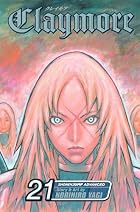
#54 Claymore, Vol.21 by Norihiro Yagi - ****1/2
The rebellion of the Claymores that you see at the end of Vol. 20 doesn't go as planned. Although all but one of the Claymores sides with Miria the organization releases their abyssal feeders to buy time for the completion of their experiment in resurrecting fallen #1 Claymores from a past age, and in the end choosing Cassandra The Dusteater, Hysteria The Elegant, and Roxanne of Love and Hate as they were the strongest available. Meanwhile during all the commotion Raki escapes and helps lead the Claymore trainees to safety proving that while still not a match for a high number Claymore he is more than a match for the orders human guards . Once the resurrected Claymores appear on the battlefield the story shifts slightly to flesh out the back story of the 3 ending with Cassandra remembers how she died due to Roxanne and losing control and apparently becoming an awakened one.
While not as intense as the last few vol. I still really liked this one as we got to see Raki kick some ass and see the organization frazzled. My only real complaint is that I wish they would get back to Clares story as she's been out of it for a few Vol's now. Overall another good Vol. with a few twists and some good action
71bakabaka84
#55 Eugénie Grandet by Honore de Balzac - ***1/2
The story itself was not that bad and I liked the social commentary on how money can corrupt and moving up in the world might not bring you happiness. Yet it takes forever for the story to start. I think the first 20 or so pages are just describing the house the story takes place in. In fact I bet you could cut out about 50 pages from the book and still have a good meaningful story but Balzac just has to describe every little thing which just drags the story out. Overall like I said a good story but you have to be able to get past the first 20 pages.
72bakabaka84
well only 55 this time oh well, still not bad.
now for my top 10 reads of 2012
1.Blackout by Mira Grant
2. A Bride's Story (1&2) by Kaoru Mori
3. Ordinary Men - By Christopher R. Browning
4. The Black City by George Sand
5. The Last Colony by John Scalzi
6. Highschool of the Dead (vol.5-6) by Daisuke Satō
7. The Butcher's Tale by Helmut Walser Smith
8. Cain his Brother by Anne Perry
9.The Mall of Cthulhu by Seamus Cooper
10. Highschool of the Dead, Vol. 4 by Daisuke Satō
Honorable mentions
Claymore by Norihiro Yagi - as much as I like it, until they bring Clare back and move the main plot a little more I can't justify it in the top 10
Little Man, What Now? by Hans Fallada - a very good story and nothing that really bad about it there were just a few more books I liked more
War of Honor by David Weber - tried to do too much in one book really should have been split into two.
After The Long Goodbye by Masaki Yamada good but really only of interest to Ghost in the Shell aficionados.
Inventing Human Rights: A History by Lynn Hunt- very nice summary of human rights that needed a little more in the 2nd half of the book
now for my top 10 reads of 2012
1.Blackout by Mira Grant
2. A Bride's Story (1&2) by Kaoru Mori
3. Ordinary Men - By Christopher R. Browning
4. The Black City by George Sand
5. The Last Colony by John Scalzi
6. Highschool of the Dead (vol.5-6) by Daisuke Satō
7. The Butcher's Tale by Helmut Walser Smith
8. Cain his Brother by Anne Perry
9.The Mall of Cthulhu by Seamus Cooper
10. Highschool of the Dead, Vol. 4 by Daisuke Satō
Honorable mentions
Claymore by Norihiro Yagi - as much as I like it, until they bring Clare back and move the main plot a little more I can't justify it in the top 10
Little Man, What Now? by Hans Fallada - a very good story and nothing that really bad about it there were just a few more books I liked more
War of Honor by David Weber - tried to do too much in one book really should have been split into two.
After The Long Goodbye by Masaki Yamada good but really only of interest to Ghost in the Shell aficionados.
Inventing Human Rights: A History by Lynn Hunt- very nice summary of human rights that needed a little more in the 2nd half of the book

