This topic is currently marked as "dormant"—the last message is more than 90 days old. You can revive it by posting a reply.
1bluemeanie11
In 2012 I completed 65 books for 20,074 pages (plus 80 something pages of a book I've abandoned - for now! - and about 150 of the one I started two days ago), so it was far and away my most productive reading year. But since it was really out of the ordinary for me, I'll stick to a 50 book goal for now. Maybe if, after a few years, I'm consistently reading a lot more I'll aim higher.
I'm also going to try to reread all of Les Miserables this year, one section a day (since there are conveniently 365 of them). We'll see how that goes; it's always taken me years before as I have basically no attention span.
Books:

Pages:

I'm also going to try to reread all of Les Miserables this year, one section a day (since there are conveniently 365 of them). We'll see how that goes; it's always taken me years before as I have basically no attention span.
Books:

Pages:

2bluemeanie11

1. The Woman Who Died A Lot by Jasper Fforde
I think Jasper Fforde's mind must be a terrifying, fascinating, bizarre place to be. And sometimes I'm jealous that I don't have that sort of an imagination.
I don't think this was the best of the Thursday Next books and in this more than anything else I've read by Fforde I did sometimes get the idea that he was just putting in random crazy stuff just because he could. A man in Starbucks saw me reading it and asked what it was about and I was pretty much at a loss to describe it - it seems to be mostly a free for all of whatever occurs to him. But overall it was just as much fun as the rest of the series. I especially liked the confrontation with Aornis, though I think wanting to keep memories of a child who never existed is a bit odd - but maybe if I had children myself I'd understand?
I did miss the Book World, and the sooner Thursday goes back there the better, but I'm looking forward to visiting dark reading matter in the next book.
I do have one major complaint, though, and that with the American publishers or editors or whoever thought the text needed Americanizing. It's bad enough when books and series get new titles but even worse when the text itself is changed. Because this is set in England, so Thursday and Landen should have gone to TK Maxx, not TJ Maxx. Luckily they didn't spend much time there or it would have annoyed me more. I also assume Home Depot was substituted in for some other store name, but I know basically nothing about British home improvement stores so maybe not.
4bluemeanie11

2. The Sign of the Four by Sir Arthur Conan Doyle
I didn't like this as much as The Hound of the Baskervilles, which I read last year. Something in the structure of it was off - instead of being part of the investigation/action through Watson's eyes as in the other book, this time there was a bit of set up, a bit of nothing much happening, and then the whole backstory simply told by the villain once he was caught.
Still, there was a boat chase, which is always fun. And overall I didn't dislike the book; I just think it would have been better - and there would have been more suspense - if everything had been unfolding as you read.
5bluemeanie11
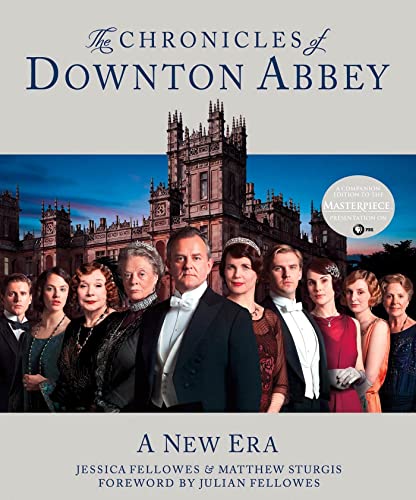
3. The Chronicles of Downton Abbey by Jessica Fellowes and Matthew Sturgis
I'm such a sucker for things like this; as long as I can remember, whenever there's been something I'm interested in, I get obsessed and have to have everything related to it. Downton Abbey is clearly no exception. Still, there's some historical content to the book so it's not entirely just nerdy, fannish geekiness. And it's interesting and I enjoy it even as I feel a bit silly for having wasted money on buying it and time on reading it.
I would have liked it better if there was more about the characters though - backstory and maybe info on their lives between episodes and seasons to fill in the blanks. Though I can see how they might want to keep that sort of thing back, in case it ever comes up in future episodes.
And I do wish PBS / Masterpiece hadn't stamped their little logo ad on the cover. As if anyone buying this book didn't already know where to watch the show.
6bluemeanie11
4. Coningsby by Benjamin Disraeli
As with Sybil, which I read last year, so long as Disraeli stuck to plot - whatever the plot was about - I was interested. But sometimes he goes on for pages, chapters even, about politics, history, the aristocracy, with little or no reference to the characters or storyline. And when that happens I tend to tune out - whether from disinterest or lack of knowledge in the subject I don't know, possibly some of each - and pages can go by without my really taking anything in. At the beginning of this book, it seemed to tend heavily in that direction.
Then, somewhere part way through, it shifted into almost entirely plot and from that point on I really enjoyed it. I liked all of the young characters and enjoyed their general naiveté - how different would the story inevitably have gone if they had all been say ten years older and more experienced, even if all other circumstances were the same. And I can't help agreeing with Mr. Millbank that it wouldn't be the worst thing if Coningsby had to work for a living. (And it was a little alarming that it seemed parliament was about to be dominated by a pack of idealistic 23 year olds.)
Early on, I thought possibly Coningsby might fall in love with Flora, so I was at first a bit disappointed that it didn't go that way, but I liked Edith as well, so that's okay. And it also seemed maybe he would have an affair with Lady Everingham - considering Disraeli himself apparently had affairs with older, married woman it didn't seem impossible. But I suppose even if you could do a thing, writing it as a plot for the hero in a novel was probably not looked well on.
I knew before reading this that it and Sybil were connected and immediately recognized the names Tadpole and Taper, but looking at Wikipedia it seems quite a few other characters that I had forgotten about were in both books, too. And now I really want to read the third, Tancred, though I've yet to find a reasonably priced copy so I may end up having to read on my iPad, which I hate.
7bluemeanie11

5. Right Ho, Jeeves by P.G. Wodehouse
Only nearly twelve years later, I've finally read this book. I bought the copy when it was assigned for a writing class freshman year in college, but as a teacher or professor assigning something to read has often been the best way to make sure I definitely don't, I never bothered with it and might never have had I not got the first season of the tv version for cheap at Half Price Books.
In the end I quite liked it, though I'm not sure I don't like the tv show better. It has most everything that's good in this book, but with the added benefit of fabulous actors perfectly inhabiting the roles. Hugh Laurie especially was perfect as Wooster.
I think if you knew him in real life, Bertie Wooster would be the most insufferable person imaginable, but as a narrator I liked his voice. And the entire cast of characters, though generally too absurd to be believed, were a lot of fun. I think I'd like to meet Aunt Dahlia.
8bluemeanie11
6. The Kings of Clonmel by John Flanagan
I continue to love this series and I'm sad that I'm getting so close to the end. I want Halt and Horace to keep going on adventures together forever - and if Will wants to come along, I suppose he can. Though if they need a third, I'd prefer Evanlyn - who was annoying absent from this book. That was definitely a downside to it.
I was glad when Horace referenced Halt's royal relations having come up in a previous book, cause I don't remember it at all so that whole development seemed completely out of nowhere to me. But if Horace said says it's backstory that's been mentioned before, I'll believe him. Especially since I have a terrible memory for books I've read anyway.
I kept expecting Halt's brother to turn out to be the mastermind behind everything; that would have been an interesting plot development. And I did think the two kids who are specifically mentioned have been let go at the beginning to reappear at some point.
Also, I'm not at all sure what Flanagan is doing with the Will/Alyss plotline - though I'd be perfectly happy if he dropped it all together. In the beginning, Will's distraught at the idea of being sent far away from her, then after being reunited for a short while there's a line that though he was sad to part from her he was perfectly happy once he was away. It seems an odd thing to include if they're supposed to be happy lovers.
9bluemeanie11
7. The Fourth Bear by Jasper Fforde
I think I liked this better than The Big Over Easy, though I don't remember that one well enough at the moment to say for certain, and anyway I like both of them. But as of course completely absurd as it is, the world of the story seems very solid. Fforde commits to it I guess and makes it seem real and its a nice place to visit.
I think Jasper Fforde did a good job of setting things up and sort of leaving hints along the way. Though on the one hand it did mean that at least some of the ending was pretty obvious even before it happened, on the other hand it made sense.
And now he just needs to write the next of these books. And the next Thursday Next book of course, and more and more besides.
10bluemeanie11
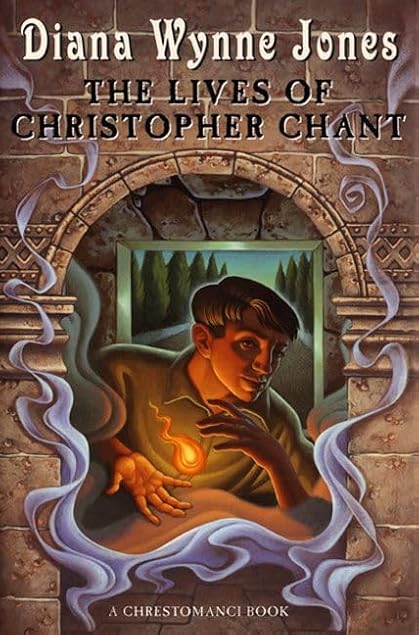
8. The Lives of Christopher Chant by Diana Wynne Jones
I do mean mostly to be reading new books (I've certainly got piles to get through) and not spend too much time rereading old ones. But then quite out of nowhere I felt I needed to revisit Christopher and Millie. And how can you say no to that? And anyway it's such a good book and not one that takes long to read.
As much as I love Christopher as the Chrestomanci, I wish there were more books about him, Millie and the other enchanters at the Castle before they're all grown up. They're a lot of fun and I'd like to join them all and especially go exploring the many worlds. And Christopher is a nice, rounded character. More than a little bit a brat, very much a child, but a good person despite it all.
11bluemeanie11

9. The Girl with the Dragon Tattoo by Stieg Larsson
This is really not my sort of book. I had an idea that it wouldn't be before I even started it, but I have a hand-me-down copy of it and the second book from my mother and I love Scandinavia so it seemed obvious that I should try it.
And I didn't hate it. The family history and the mystery of Harriet Vanger's disappearance interested me, at least until the point when secrets were finally revealed and it was all gruesome and horrible. Well, it still had my attention then, but I don't do so well with all the horrifying stuff. But Blomkvist's and Salander's personal lives and backstories and financial scandals and stuff were not at all interesting. If the book weren't such an incredibly easy read, I don't know if I would have carried on through it.
The writing style was interesting as well, in its own way. Almost journalistic, a simple recounting of information; at first I thought all the mentions of neighborhoods, whenever someone's home or work was introduced, was meant to offer insight into their character, but I think in the end it was just further cataloging of detail. Because if Larsson intended the book to have readers outside of Stockholm, such details wouldn't have done many people much good. Beyond basic things like stortorget and gamla stan, nothing meant anything to me and probably most don't even know what those refer to.
I think maybe it's not by chance that I spend most of my time reading fantasy (mostly young adult) and 19th century literature. I like to live in a happy little world away from the horrors in this book. And of course, horrible things happen in those other types of books as well, but there's a sort of distance - in fantasy things are so blatantly fake that it's a bit harder to be scared; I certainly don't worry that Voldemort is going to come knocking on my door (well, he probably wouldn't knock at any rate...) And as for the Victorians, things that were written more than a hundred years ago about fictional events equally old are too far away to hold the some danger as stories about now.
Which is all to say, I suppose, that maybe I'll read the second book and if I do, maybe I'll read the third. But maybe not. And if I do, I can't imagine it'll be anytime soon.
12bluemeanie11
10. Halt's Peril by John Flanagan
Wow, I have really not been reading much lately. I mean, I knew I had been taking a far-longer-than-neccessary time making my way though Vanity Fair (still working on that...) but I hadn't realized that I hadn't finished a book in more than a month.
Oh well. I've finished one now.
I continue to adore this world and these people. And I'm torn, because I'm almost to the end of the series and I want to put off finishing it as long as possible, and yet I also want to read more about them as soon as possible and find out how their stories end. It's a dilemma.
That said, I did find this book to be a bit heavy handed with the foreshadowing. I'd say maybe it's just that I'm a lot older than the target audience and thus able to see between the lines, etc, but actually I'm generally not very observant and rarely see anything coming. And yet several times I figured out what was going to happen or what the characters were going to do well before they did and was left thinking 'get on with it, will you' while they took so long to actually get there that I thought maybe I was wrong. Except I never was.
I suppose I should have complaints about there being virtually no female characters, but actually I don't care so much about that. And if it means little to no Alyss, that's just fine with me. Because I don't understand how Flanagan can spend the first several books building towards a relationship between Will and Evanlyn and then just discard it between books and instead of then building towards a relationship between Will and Alyss, just tell us that's how it's been all along and expect us to have no problems with it. But I've complained about that often enough before, and anyway her part in the series thus far has been minimal so I can almost ignore it entirely. Though I do wish Evanlyn would reappear, relationship with Will or not. Her I like.
13bluemeanie11
11. The Emperor of Nihon-Ja by John Flanagan
So much for waiting a while to finish this series. (Though I still have the short story book.) Somehow none of the other things I'm reading at the moment are holding my attention and so I ended up back here. But I'm definitely going to try to finish something before starting yet another book.
Though I've adored the series as a whole, I think the later books are not as good as the earlier ones. The stories have become more predictable - did anyone reading this not know the moment the Toscana first demonstrated their military technique that Will and Halt would be training an army to fight that way before the book was over? And now that he's sort of brought the romantic relationships to the front, it's clear that he doesn't write that sort of thing too well. In the early books, when there was the hint of something between Will and Evanlyn, it was a sort of natural, developing thing that went along with the plot. Now, it's like he just says Will and Alyss are in love and so are Horace and Evanlyn, and that's the way it is and there's been no development and it has nothing to do with the rest of the plot. It's tell, not show, when I've always learned that writing is supposed to be the other way around.
I was glad Evanlyn and Alyss finally got over their dislike of each other, I just wish it hadn't taken nearly the whole book to do it. It didn't reflect well on either of them, Alyss especially, since she was clearly the instigator. It's a shame when there's only two prominent female characters in the series, they have to spend most of it hating each other over a man.
But in the end, a visit with Halt and Horace, Evanlyn, Will and the others is always good fun and I'll miss them. I was glad Selethen turned up; I had almost forgotten about him. It would have been nice to see Gilan, Erak and Crowley one more time, but at a certain point it would get to feel like you're squeezing in characters just for the sake of it, so it's probably better they weren't there.
14bluemeanie11
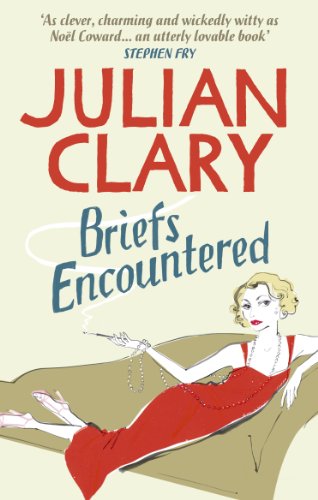
12. Briefs Encountered by Julian Clary
This book was a bit like an optical illusion - no matter how many pages I read, I never seemed to be any nearer the end. And Stephen Fry has really let me down - based on the title and cover picture, I would have dismissed this as a trashy romance novel, but it had a blurb from Stephen Fry and I thought he probably doesn't review trashy romances, so I'll have another look. And the back cover sounded like it was a witty ghost story about Noel Coward haunting a house.
And it was neither of those things. But it's not the book's fault that it wasn't what I expected it to be. And it was alright, with from time to time bits of interest, but for the most part sort of blah. And I don't know who told the author that putting yourself into the story as a character was charming or clever, but it isn't; it's just obnoxious. And somehow all the other characters hating him made it worse.
15bluemeanie11
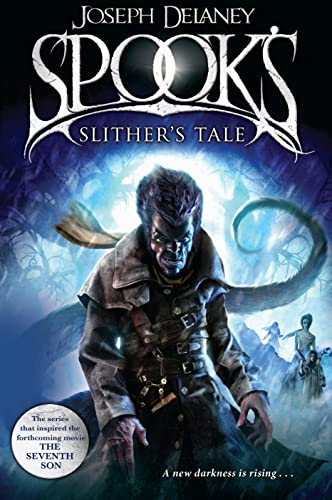
13. Slither's Tale by Joseph Delaney
This was an interesting diversion from the main plotline of this series and I think I liked it better than I am Grimalkin, but I still think these books are at their best when it's Tom narrating his adventures with the Spook and Alice.
Though Nessa was nice enough (and certainly better than her useless sisters) and Slither is intriguing, it was when Grimalkin showed up that this book became particularly interesting. Both because that's when things really started to happen and because it wasn't until then that there was any real relationship between this story and the previous ten books. And I'll be very interested to see how all this ties into future books, because I don't believe Delaney would have created Slither and the whole Kobalos culture only to have them never show up again. Otherwise there would be no point to this book at all. And I do hope there are future meetings between Slither and Grimalkin, if not a to-the-death battle, because I don't want either to die.
I'm not sure where this was supposed to be taking place. I've always assumed the 'county' was part of England, and this is said to be across the sea, so I would assume somewhere mainland Europe. Maybe Spain, since a 'southern peninsula' is mentioned. But then the sister's names sound English and the rest of it feels either northern or eastern European somehow. This is why I like books with maps in them; things like this bug me when I can't figure them out and anyway I don't visualize things well on my own.
16bluemeanie11
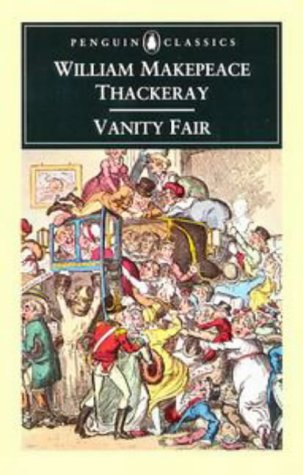
14. Vanity Fair by William Thackeray
Finally after nearly two months of reading (having followed on from some twelve or more years with the book on my shelf untouched), I've finished this. It often ends up this way, that I'll drag through a book in tiny portions over weeks, but then when I finally determine to have it finished, I pour through several hundred pages in a day.
Which is not to say I didn't like it; I did. I just seemed to generally prefer it in small doses, spaced widely apart. And then my interest varied depending on which characters were in focus at any particular time. Generally the despicable Becky was interesting, though she's just the sort of person I hate - one who uses, abuses, and takes advantage of anyone because she thinks the world owes her something. And I'm not sure she was ever honest or anything but conniving, but she was never boring. Unlike useless Amelia, who was perfectly kind but totally lifeless, without ever a thought of her own or even an interest of her own. For a moment at the beginning of her marriage, it looked like she might have seen through her husband, but then there she was later on calling him an angel.
The eldest generation of Crawleys generally bored me, though I did like to amuse myself by imaging the Crawleys of Downton Abbey descended from the miserable Sir Pitt. Obviously it wouldn't work but it would be amusing.
Dobbin I think was the only truly descent person in the book - both kind and not completely useless - and so he was easily my favorite, though he was sadly absent from most of the book. And I really must get me hands on the miniseries adaptation of this, because Phillip Glenister is really perfect casting for the part. But I was torn between wanting him to win Amelia because that's what he wanted and wanting him to come to his senses and find someone better, who wasn't wasting her life away on the memory of the worthless George.
By chance, I happened to be reading the Waterloo sections of this book and Les Miserables at about the same time, and the contrast is interesting. And not just because one is an account by a Frenchman and one by an Englishman - but the tones of the books are so different. The Waterloo of Vanity Fair seems almost lighthearted in comparison, what with the focus being on people and society and balls and town instead of battle plans and regiments and piles of horses and men dying in an unexpected ditch. Plus I've always thought Victor Hugo's tone is a bit that of a sore loser in that section (while at the same time never being quite sure if he was a supporter of Napoleon or not).
17bluemeanie11
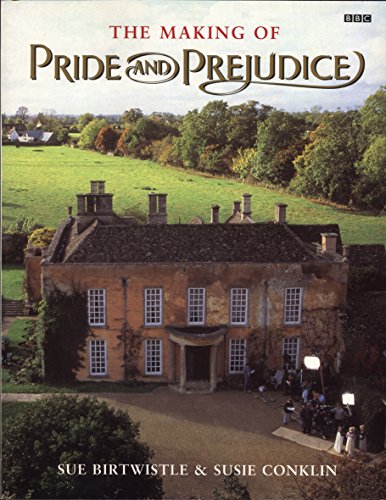
15. The Making of Pride and Prejudice by Sue Birtwistle and Susie Conklin
This wasn't as interesting as I hoped it would be, I think in large part because it seemed largely generic. I mean that much of it was discussion about making any film or, at least, any costume drama and didn't relate specifically to Pride and Prejudice. When they were talking about this particular production, it got more interesting - especially the interview with Colin Firth, because he wasn't just talking about acting as a general craft, but specifically the choices he made in playing Darcy.
18bluemeanie11
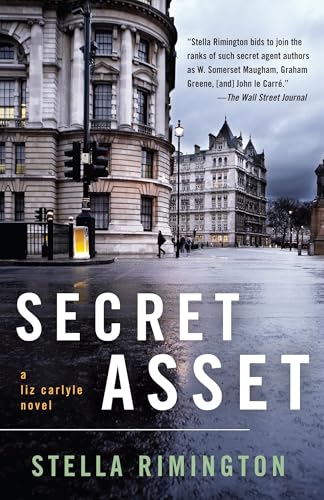
16. Secret Asset by Stella Rimington
I think this is probably the first spy novel I've ever read where I wasn't lost and confused through the majority of it. And though it's no great work of literature, I liked it anyway. It felt a bit like an episode of Spooks, back in the early years before it all got a bit silly. This is apparently the second book in a series, but it was quite self-contained so I don't feel I missed out on anything having not read the first - but now I'll definitely make a point to get others.
I did think the mole turned out to be the most likely of all the suspects, so that was a bit disappointing; I was hoping for a twist ending where it would turn out to be someone else. But overall it as a quick, enjoyable read. And sometimes that's all you need from a book.
I picked it off the clearance rack at Half Price Books thinking the cover looked like Paris and then, at a closer look realizing it was London. And then seeing the author's name I thought, "oh, she was the first woman in charge of MI-5." And I have no idea why that was something I knew.
19bluemeanie11
17. Looking Backward 2000-1887 by Edward Bellamy
This was a book of interesting ideas, and some not without merit, told in a most uninteresting way. I should have much preferred plot, and I think the same information could have been conveyed in the story of an accidental time traveler learning of this new world by exploration and adventure than by long-winded lectures from his host - lectures that always took the tone of 'look how much better and cleverer we all are than you were'.
I particularly liked the idea of work being rewarded based on effort rather than production - that is, that a person's best effort is no more or less valued based on his or her greater natural talents or weaknesses. It is a problematic system, of course, because how do you measure what any man's best effort is - particularly in intellectual fields, where feigning weakness would be easier.
And in some ways, this future Bellamy creates is more interesting in what he doesn't imagine than what he does. For all the value apparently placed on inventors, there seems to have been little technological advancement. I did like the telephone music system, though. And it seems little has changed in the relations between men and women - the first impression given of a woman's role was when Edith and her mother retire after dinner while the men smoke and drink. For most of the book, I assumed that their role was still restricted to the home; it's not till near the end that Dr. Leete mentions that they work as well - but in a system that reeks of 'separate but equal', because they have their own system of industry exclusive to women because they are 'not suited' to the same fields as men. Women are even referred to as a different race.
I do feel sorry for Bellamy though, because for all it's faults the world he imagines is an improvement. And from the postscript, it seems clear he really believes some great change is coming - he'd be so disappointed if he actually visited the real 2000.
On a personal note, I liked when Julian was wandering around Boston, because there he was in 1887 on all these streets I know! Edith even lived on Commonwealth Avenue! How lovely.
20bluemeanie11
18. The Lost Stories by John Flanagan
I think possibly my favorite part of this was the framing of it - that hundreds of years later, archaeologists are studying these characters and searching for proof of their existence. I don't know why that idea pleases me so much, but it does.
I did enjoy the stories themselves as well, of course, though a few bits bothered me - Alyss's use of the word 'boyfriend', first of all, because both the word and really the concept seem out of place in a medieval setting (not that these characters always behave in an appropriate medieval way). But it was one of those things that sort of pulls you out of the story by it's oddness. Also, the way of replacing retired Ranger horses by substituting in a new, near identical one with the same name. All through the series, the horses have been characters - friends, companions, equals - but in this the became just objects. I didn't like that at all.
But overall these stories filled in blanks that I hadn't before realized needed filling. I'd especially like to read more about Halt, Crowley, and Duncan as young men and the reforming of the Rangers. When that story ended, I thought, 'What, no! Can't stop there, I need more.' (And that after having originally thought the story dragged a bit.) So if John Flanagan decided he wanted to write a book or books on that, that'd be fine with me. And though it's been handled just as abruptly as every other romantic relationship in the series, I find I actually like the idea of Gilan and Jenny.
But best of all is there's another book coming out in November! The Royal Ranger - gee, I wonder who's kid that could turn out to be. :)
21bluemeanie11
19. Mary Poppins by P. L. Travers
This was lovely in its own way, but oh so different from both the movie and the stage musical (which are quite different from each other as well). And it's an odd feeling to read the book that is, of course, the original form of the story, and think, "oh, but that's not how it goes!" when of course it should be the other way around. But of course that's exactly how I felt, having seen the movie many times and the musical once, but having never read any of the books. (I vaguely remember my mother trying to get me to read one once when I was sitting in an office in the church she goes to - why I was there, I don't know - but I was a Babysitter's Club mad small child and these were old fashioned, warn hardcovers and I've always been very much a judge-a-book-by-its-cover sort of person, so it was never going to happen.)
I'm not sure which I like better, though. The movie/musical of course have the benefit of having songs. And dancing chimney sweeps. But I don't know that the story is any better. And this has animals keeping humans in cages in a zoo, which might have been my favorite part. So in the end, I think I won't pick favorites.
22bluemeanie11
20. American Gods by Neil Gaiman
Overall, I'm not sure how I feel about this one. I've only ever heard good things about it, and how much people love it, so I started it feeling like I should, too. And by the end - the last hundred pages or so - I did like it quite a lot, but before that point I changed pretty regularly between liking it, disliking it, and not caring enough about it one way or another to have an opinion. And I think it wasn't until things began to be explained a little bit - maybe a hundred or so pages in - that I liked it at all. So after all, I'm not sure.
It annoyed me through, well, most of the book, really, that Shadow was just called Shadow and was never given a real name. And by the time any explanation was given, it was just way too late. I think that may be a pet peeve of mind, characters having names that aren't names or that are not normal names - don't even get me started on real people I know calling their kids dumb things! I don't know why it should bother me so much, but it does and it was distracting; I spent far too much time wondering if Shadow was his real name, and if it was, then why, and if it wasn't, then what was his real name and why was he called Shadow. But that's my own problem; I imagine most people don't think much about it at all.
23bluemeanie11
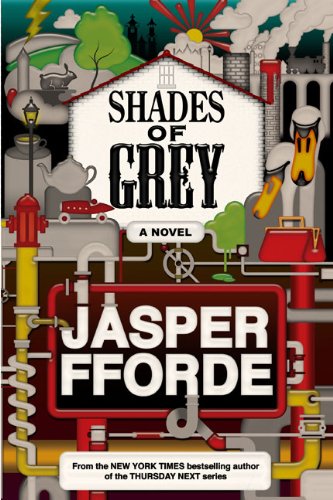
21. Shades of Grey by Jasper Fforde
It's funny how, when I started this I thought 'well, here's a world that makes Thursday Next seem sane', but somewhere along the way things sort of fall into place and it begins to make sense. In a completely nonsense sort of way. I think it's that Jasper Fforde doesn't hold your hand and take you along the way introducing and explaining everything. He just sort of throws you into the world and you're on your own to find your way in it - sort of like landing in a foreign country where you don't speak the language and having to make do. And it works, at least for me. Except I was never quite sure how the color vision worked - sometimes it seemed like people could only see their one color, other times they saw others. I would like more explanation of that.
The world in this book reminded me a lot of the world in Looking Backward, except a lot more sinister.
And now Jasper Fforde needs to write more of this series. He mentioned something about it at the book signing I went to, but I don't remember what it was and I didn't pay too close attention, having not yet read this book and not wanting to be spoiled. And I noticed when I started this, he wrote 'My' in front of the 'Shades of Grey' on the title page. Which amuses me more than it should.
24bluemeanie11
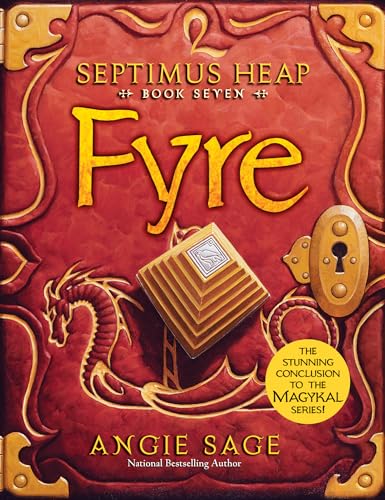
22. Fyre by Angie Sage
I will miss you, Septimus and company; it's been a lot of fun to come along on your adventures. I'm not sure these are the sort of books I'm ever likely to reread (as much as I do like them, I don't love them like I do some others), so farewell in case we never meet again. On the other hand, my memory for things I've read is so bad that I might like to read all seven back to back so I can get the whole story.
I liked, in the end, that it was Jenna and Marcia alone together who defeat the Ring Wizards; a bit odd for the title character not to be the main hero, I suppose, but yay for the girls saving the day. One thing I didn't like - and I don't know how I missed it in earlier books - is the very idea of the Dragon Boat. They've turned a living creature into a boat! Bad enough if it were dead, but it's still alive. The very idea of it is horrifying - what cruelty. Maybe I'm forgetting something in an earlier book that makes it less evil, ugh, you just don't do that to a creature.
Jenna's interesting with her ghost-mother was interesting; I think Queen Cerys must have been quite young when she died, because she acts like a bratty child - and since Jenna, while not overly bratty, is still a child as well, things don't go well. I think if either were older or more mature, they might not have had such trouble. Oh, that was another small complaint - that instead of going along on her Queen's journey with her, we just got a recap from Jenna after it was over.
On an entirely superficial note, I'm glad that the US edition of this book has the same style cover as all the rest, because apparently the UK one doesn't. Both because the UK one is ugly and because it annoys me to no end when publishers change covers mid-series. I like my books to be a matching set! On the downside, though, as with all the US edition, the magykal words are bolded. I know these books are aimed at young people, but surely not so young that they find that amusing?
25bluemeanie11
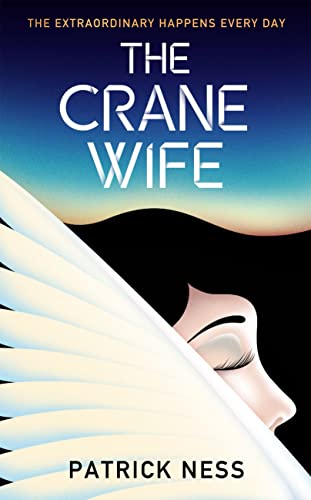
23. The Crane Wife by Patrick Ness
This was good, but not great. Which is to say, I did like it but not nearly so much as everything else I've ever read by Patrick Ness. It has nice characters, a decent plot, and is a quick, easy read, but is missing that something extra that his other books have had. For whatever reason, I preferred the present story - George, Amanda, and the others - to the mythology on the tiles.
But it fit its purpose quite well - to give me something to do indoors on a cold, rainy day in London. And after that I read most of it to pass the hours while queueing for various theater tickets; somehow I think Patrick Ness might approve of that.
26bluemeanie11
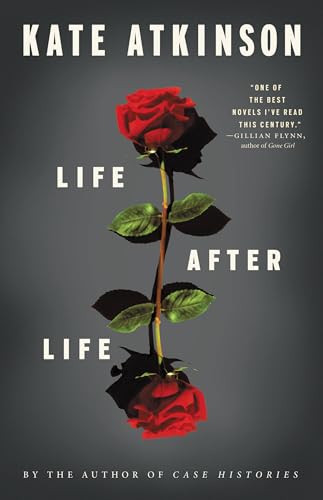
24. Life After Life by Kate Atkinson
When I saw her at a book signing a few years ago, Kate Atkinson mentioned that her next book was going to be about one of the wars (I can't remember which she said). It must have been this she was talking about, but I never would have imagined this was what she meant.
As you'd imagine from a Kate Atkinson book, it was quite weird (to hear my mother talk, you'd think weird was the worst thing a book could be - and yet she reads these), but I quite liked it, even if by the end I wasn't entirely clear which lives the last bits went with. But it's quite an interesting idea, if one thing was done differently what effect it might have on all of the future. The problem, though, with having a story where the main character dies repeatedly is you start looking out for all the places she might die and anticipating it.
The one part that made me uncomfortable was the section in Nazi Germany when Ursula is living in Hitler's retreat. I've read other Holocaust-related stories, but this bothered me more than any other has. I suppose the casual nature of it all. As though Hitler were just another person instead of a monster. So while some of that part was interesting, mostly I was just glad when it was over.
27bluemeanie11
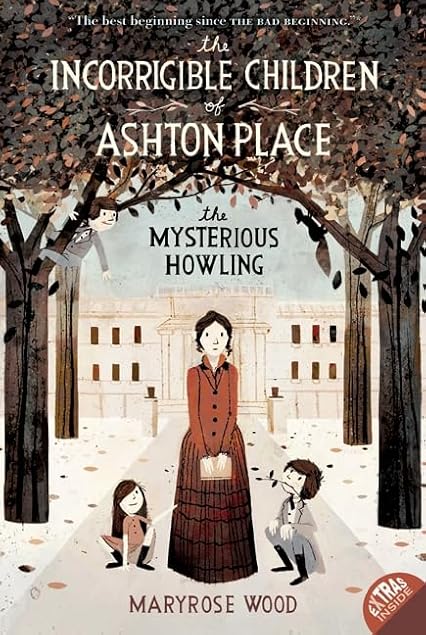
25. The Mysterious Howling by Maryrose Wood
This was a bit adorable. That really seems like the best word. A bit of the tone of Lemony Snicket (but without the tediousness of constant misfortune and horribleness) combined with a hint of the style of a 19th century novel all wrapped up in something of a parody of the governess novel. And amusing characters. I think I like Cassiopea the best, though that might be because she seems to be the best developed of the children. I hope there's more about the boys as well in future books.
This was never an exciting page turner for me, but I enjoyed it even so. The only complaint I have, if you can call it that, is that the children's progress seemed absurdly fast, especially with such an inexperienced teacher. But I'm sure it was perfectly intentional and part of the parody. Only I could never really suspend my disbelief (a concept I believe the narrator specifically refers to) about it.
I got this book in Foyles bookstore on Charing Cross Road in London, and yet it seems to be a US edition. Are there not UK ones? It seems odd.
28bluemeanie11
26. The Turn of the Screw by Henry James
I'm not sure what to make of this. Or indeed whether that's a good or a bad thing in this case. I think it may have worked better for me, at least in terms of horror or suspense, if I had been reading it around the time it was written. Because I was never quite clear of what danger Quint and Miss Jessel presented. Beyond the obvious problem of dead people reappearing, of course. But it seemed they were to be regarded as evil even in life, and yet the worst they seemed to have done was possibly have an affair and maybe spend too much time with the children?
Or maybe I'm just missing the point completely?
I did think the narrator (was she ever given a name, I can't remember?) was a pretty poor governess. She never seemed to have the least control of Flora and Miles and seemed to think it an impertinence to correct them when she saw them doing wrong, but surely it's her job to do just that? She was quite good, on the other hand, at jumping to wild conclusions based on no evidence and then being proved right, so maybe she ought to take up a job as a psychic.
What I have learned, though, is not to read the first twenty pages of a book, set it aside for almost a month, and then read the rest. I only had a vague memory of what I had read before and that may have been the main part of my problem.
29bluemeanie11

27. Matilda by Roald Dahl
And now Roald Dahl gets to join my why-haven't-I-read-anything-by-him-her-before list. Particularly why not when I was a kid? Well, obviously that I was too busy reading Babysitters Club - and I definitely don't regret that, I just wish I had read other things too.
So thank goodness for the musical version. Both because it was completely fabulous (and anyone in or near London or New York ought to go see it) and because after seeing it, I went and bought this book. And I might just barely prefer the musical over the book, but that's only because singing and dancing make what was already really good into something even better. And it seemed a very close adaptation, both in terms of plot and tone. So that when things were different, it really stuck out.
Matilda herself was adorable and I wish I was more like that (the very intelligent but sort of cool nerdiness, not the moving things around powers). And if the explanation for her powers is completely absurd, well I can overlook that.
It surprises me that this book was only first published in 1988. The society in it seems older, I would have guessed 50s or 60s. I suppose it could still be set around that time, though, and anyway I was young enough in 88 not to remember what things were like then. But particularly the bit where Miss Honey takes Matilda alone - and without telling her parents - to her secluded house on the edge of town. Today, it'd be accusations of abuse and a teacher out of a job.
30bluemeanie11
28. The Valley of Fear by Sir Arthur Conan Doyle
Of the three Sherlock Holmes books I've read, I liked this less than The Hound of the Baskervilles but a good deal more than The Sign of Four, which as I recall was quite dull. This did have a bit of the same downside as that book - one character simply telling the story once all is revealed. But it didn't bother me as much here.
That said, I did preferr the first half of the book - Holmes, Watson, and the others investigating the murder in England - to the second half, the backstory to the murder, in America years before, where only one of the characters we'd previously met appears. I didn't hate it, just didn't care as much. He did get me with the reveal at the end, though, so that was nice. It was pretty clear something was up, and I even thought I knew what it was, but it turns out I'm not as clever as all that, because I had not expected what actually turned out to be going on.
And now that I've read all the Sherlock Holmes books I have, I can feel justified in getting more. Not that I need to be buying more books of any sort, of course.
31bluemeanie11
29. Joy in the Morning by P.G. Wodehouse
I really must read more P.G. Wodehouse. I have two more of his books, neither of them Jeeves and Wooster, but until proven otherwise I'm going to assume they're just as amusing.
This book felt a bit like dropping in on old friends. If your old friends are absurd, rich young people who get themselves into silly predicaments and then get out of them by even sillier means. I doubt I could tolerate a real Bertie Wooster for more than a few minutes at a time, but on the page he's lovely. And in this book his troubles didn't seem to be solely of his own making.
It was often quite easy to see how things were going to go (or go wrong). And more than once I'd find myself cringing and thinking, 'oh, no, Bertie, don't do that. Don't you see how badly that'll turn out?' But even though there aren't many surprises, it's still a lot of fun to go along for the ride. And a few things did turn out differently than I was expecting, so that was okay, too. I think Nobby is my favorite female character in this world so far; unlike all the others, she seems like someone you actually might want to know. Terrible name, though.
I can't decide if there's been an episode of the tv show based on this book (or rather, whether I've seen it if there is, because I haven't watched the whole series yet.) Because some bits seemed familiar, but others not at all. The fake burglary rang a bell and I know I've heard the name Boko Fittleworth before, but I have no recollection of the fancy dress party or Florence, Edwin, Nobby, and Stilton.
32saraslibrary
Awesome reads! You're doing great; you'll make 50 by the end of this year, I'm sure. :)
33bluemeanie11
Yes, hopefully if I stay on track like I have been I'll have no trouble making 50!
34bluemeanie11
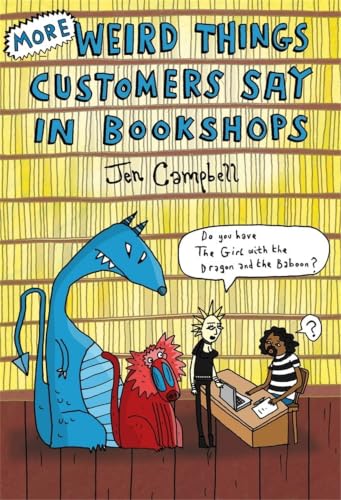
30. More Weird Things Customers Say in Bookshops by Jen Campbell
I saw this when I was in London last month and, having enjoyed the previous one, meant to get it. But somehow there I was in the airport heading back to the States and I hadn't got round to buying it. Luckily, internet to the rescue!
I've never worked in a bookshop, but I have worked in a shop and in other customer-service related jobs. And I have to say, stupid bookshop customers seem more amusing than the stupid customers I had to deal with. And I do wonder sometimes, if so many people are so dumb, how come I don't know any of them? You'd think they'd be hard to avoid. Or maybe people I know really are dumb, but are just good at hiding it?
35saraslibrary
More Weird Things Customers Say in Bookshops looks hilarious. I ILL'd a copy from my library for that one, as well as the first, so fingers cross it'll come through (one looks like it's only available outside the U.S.). Thanks for the recs! :)
36bluemeanie11
Oh they're definitely amusing, in a losing-all-hope-for-humanity sort of way. But at least these people made it into a bookshop, so maybe all is not lost.
I think these were originally on a blog, which seems maybe a better format for them than a book. But I like them and buy them nonetheless.
I think these were originally on a blog, which seems maybe a better format for them than a book. But I like them and buy them nonetheless.
37bluemeanie11

31. Decline and Fall by Evelyn Waugh
This was a surprising book. Not in a bad way. I had just somehow got it into my head, maybe because I hadn't read any Waugh in a while, that compared to the Wodehouse I just finished it would be quite serious. And though in quite a different way than the other, it was quite absurd itself. A nonsense novel, one of the reviews on the back cover calls it.
And it does deal somewhat with much more serious issues than the romantic entanglements of rich idiots. I think if I had been asked before reading it what I thought would come up in the story, sex trafficking ('white slavery', as Waugh puts it) would have been just about the last thing I would have imagined.
Paul Pennyfeather has to be one of the most naive, hopeless characters I've run into for a while. Still, I couldn't dislike him. I would have felt more sympathy for his predicaments, though, if he would have been just a bit more on top of things and a bit less useless.
According to my Bookpedia, I bought this book exactly a year ago today.
38saraslibrary
#36: Or maybe they walked into a bookstore by mistake, thinking it was something else. Could happen.
I'll try and google the blog you mentioned. It might be easier to read them online than wait for my ILL hold to show up. Thanks! :)
I'll try and google the blog you mentioned. It might be easier to read them online than wait for my ILL hold to show up. Thanks! :)
39bluemeanie11
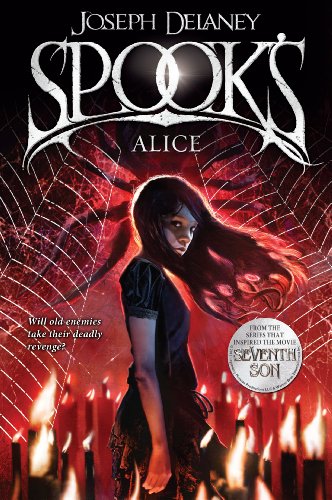
32. Spook's: Alice by Joseph Delaney
I want the next book now, please. And for Tom and Alice to survive and live happily ever after. And the Spook, too, and Grimalkin. And something good for poor Thorne (who even got her named misspelled on a chapter title, poor thing).
It was nice to have Alice's point of view. But it did feel a bit like Joseph Delaney suddenly realized Alice needed a back story for his big finale to work, so he just crammed it all in here. The Slither book and probably Grimalkin's are a bit like that as well - as though he decided what ending he wanted and realized he hadn't set up all the ground work for it, so stuck in these three books that are outside the regular narrative. Not that I'm complaining, since I've liked them all to various degrees, this one most of all, but it does seem like he maybe didn't plan things out as well as he should have in advance.
What I don't understand is why Grimalkin would have tried to help Alice at her testing, before she even knew her. Once they're all fighting the Fiend together it would make sense, but at that point I don't know that she knows anything about her.
But one thing's for sure: Alice is much braver than I am. I would have told Beelzebub everything he wanted to know, and a good bit more besides, just to keep all those bugs away.
40bluemeanie11

33. Nineteen Eighty-Four by George Orwell
When I decided to read this, I thought it would be interesting and probably relevant to the current state of the world. Somehow it never occurred to me that I would enjoy (if enjoy is the right word for such a terrifying society) reading it. Possibly because I haven't had great experiences with Orwell in the past. I read Animal Farm in middle or high school and I don't have a great memory of it beyond that I didn't have much use for it and The Road to Wigan Pier in college - again not a lot of memory of it beyond thinking Orwell must have been insane. I did go to Wigan once, to see the pier, so it must have made some impression on me.
But this I quite liked, for the most part (the part I didn't enjoy so much was Goldstein's book, which was every bit as dull and dry as I think I had imagined all of this would be).
Opposite to Matilda, which to me felt older than it was, this seemed quite modern and had a bit of a sci-fi/fantasy novel feel to it. Had I not known otherwise, I'd have no trouble believing it had been written within the past few years. Or maybe it really was, and Big Brother has changed history to make us all think otherwise...
41bluemeanie11
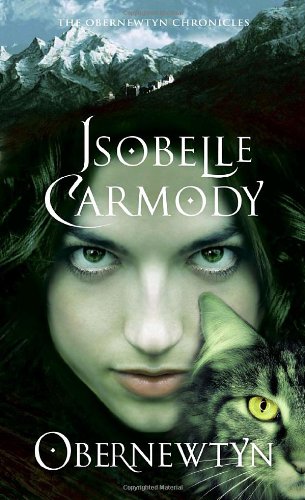
34. Obernewtyn by Isobelle Carmody
I got this several years ago having seen it recommended somewhere (possibly this site) and feeling I had to read it right away. And then somehow or other I never did. So, odd that, knowing almost nothing about it, I should pick it up right after finishing 1984, because right away - similarities! An old, lost society about which knowledge is banned. A totalitarian government who keep secrets. And undesirable people being disposed of. Obviously none of those are unique things to find in a story. It just seemed a coincidence. It also reminded me a bit of Tamora Pierce's Immortals books, what with a girl who communicates mentally with animals and is apparently meant to help them. Only thus far I like Daine better than Elspeth.
I liked the book and I look forward to reading more from the series, but I didn't love it. Which is pretty much ideal, because I think one thing that kept me from reading it before was the fear that if I read it and adored it I'd have to hurry and buy the rest of the series when the last thing I need is to be buying more books.
Until proven otherwise, I'm choosing to believe Jes isn't actually dead. Being killed 'off screen', as it were, and the main character only hearing about it second hand? It reeks of conspiracy and I'm expecting him to reappear in a surprise twist later on. Probably the Herders or the council will try to use him against Elspeth. But who knows? And I'm also expecting an eventual romance between Rushton and Elspeth. Not that I mind, of course, it just seems a bit obvious is all. Though I'm not sure how old either is meant to be, so maybe that's creepy?
42bluemeanie11
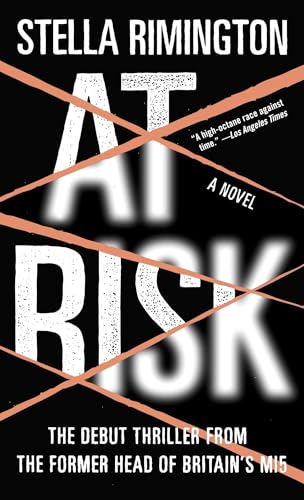
35. At Risk by Stella Rimington
It's really annoying, enjoying new books that are in a series, because now I have to get a bunch more books and read them when really I've got more than enough books to read already. Some of which I'm sure will be annoying in the same way. But I suppose it's the good sort of annoying.
I'm wondering now if an agent returning home from Pakistan appears in each of her books, because I think that's where the guy in the second book are from, too. And so I spent a lot of this book wondering if it was just going to be the same scenario again. But I like the characters. Well, Liz, mostly because the others - at least the ones that seem recurring - aren't so well developed in this. Oddly, the terrorists were and even as I thought what they were doing was horrible and wrong I couldn't really hate them. And though I'd be terrible at it to be sure, since I'm not always clear what's going on, I like seeing the process of spying, of their jobs. Even if what happens in the novel bears no resemblance to reality. Which seems likely.
I think one thing she might have done better, as a writer, is make the intertwining threads seem less random. Because, though by the end it was clear how everything was related, along the way it often seemed like she had just thrown in a random scene or character to no purpose. For example, Denzil, who was briefly introduced and then not mentioned again for so long that I did wonder why she had bothered making him up.
43bluemeanie11
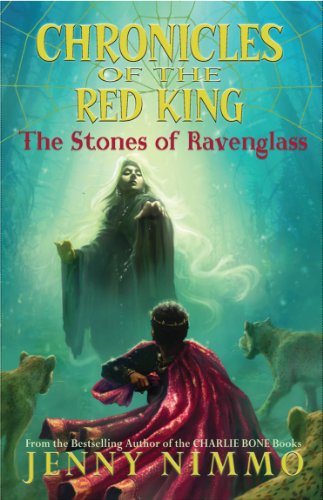
36. The Stones of Ravenglass by Jenny Nimmo
This was fun. Though I've only got a very vague memory of the first book in the series, so sometimes I wasn't entirely sure who was who and what was going on. And why there was a baby all of a sudden. But it was enjoyable anyway. I did think it a bit odd that she would sort of abandon most of the characters from the previous book and just follow Timoken and a pack of new kids for most of this one, but in the end maybe that's for the best, as I didn't have to try and remember who everyone was as much.
I do like the Charlie Bone books better though. I think because, unlike Timoken, Charlie and his friends - and enemies - aren't all powerful. They each have their own talents and have to work together, where Timoken seems to be able to do most anything he wants and the others just follow along. It makes a more interesting dynamic between the characters.
44bluemeanie11
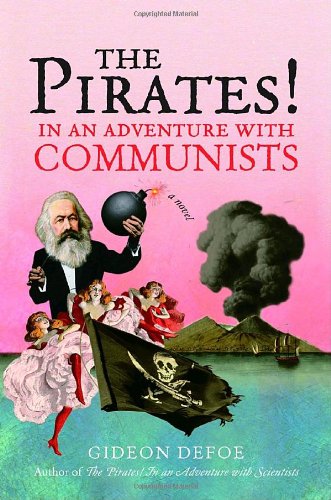
37. The Pirates! In an Adventure with Communists by Gideon Defoe
This is amusing and I did enjoy it (better than the first one, I think), but somehow it doesn't quite grab me. Which is the only excuse for a book this short to have taken me five days to read. I'm not sure exactly what it's lacking for me, because it's fun, intelligent, well written. And at times, especially at the beginning, the tone sounded just a bit like Bertie Wooster could have been narrating it. (Somehow it struck me as specifically Wooster and not Wodehouse generally.)
I don't know if I'll buy any more of these (I assume there's at least one more, since I have books 1 and 3). Probably I will if I find them for the right price (I paid a dollar each for the ones I have.)
45bluemeanie11
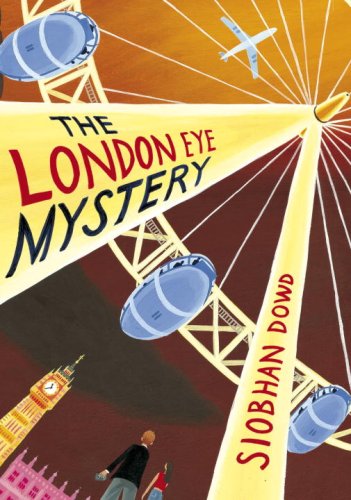
38. The London Eye Mystery by Siobhan Dowd
I hadn't actually intended to read an entire book in one sitting when I set out for a nice drink and a comfy chair at Starbucks, but that's what happened. And it's quite an easy read and I like anything to do with London, or it probably wouldn't have happened.
I liked Ted, but to almost an equal degree was annoyed by him. And I feel bad about it, because it's not his fault he is the way he is and sometimes I think I'm maybe just a little bit that way as well - at least with understanding / relating to other people. I didn't have terribly strong feelings about any of the other characters, beyond their feeling realistic enough. The teenagers seemed like teenagers, the adults like adults, etc.
But I did want to smack some sense into Kat and Ted. I know, I know, it's a young adult book, so the whole point is the kids solving the mystery. But oh my god, when your cousin has gone missing, possibly kidnapped by who knows who, you don't keep possible clues or evidence from the police. They should have handed over the camera immediately, they should have had police go looking for the man with the ticket. Their delaying could have gotten Salim - or themselves - killed.
46bluemeanie11
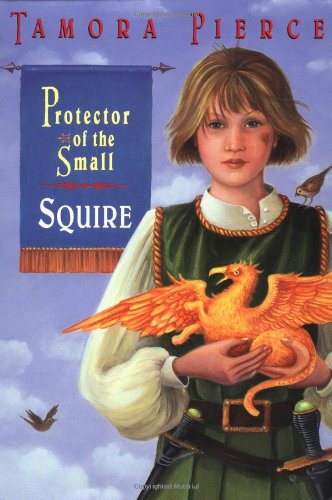
39. Squire by Tamora Pierce
I have fallen into a very bad habit lately of starting bunches of books without actually finishing any of them. So at least this one is done now.
This was the first of Tamora Pierce's books that I ever read and, thus far, the only one I've ever felt the need to reread (at least in full - I've reread a few pages here and there of other books many times). It's not my favorite of her books - that would be one or the other of the Immortals books, but I think objectively it's probably the best. I certainly thought so years ago when I first read the books; it maybe didn't seem quite as fabulous this time, but I still enjoyed it. And my memory from years ago of Raoul being the most awesome thing about this book was reconfirmed. He is wonderful.
I am a bit conflicted about all of these Tortall books though. On the one hand, I'm obviously all for girls being awesome and proving themselves to be every bit as good - or better than - boys at whatever they want to do. On the other hand, I'm absolutely anti-violence so people, boys or girls, training to be warriors as if that's a good thing is never going to sit well with me.
I had almost forgotten how riddled with typos and extra or missing words this book is. It doesn't say so, but I wonder if maybe it's a first edition and things just hadn't been caught yet. Only, I seem to remember most of the Tortall books I have being like that, and I have a whole mess of different editions.
47bluemeanie11
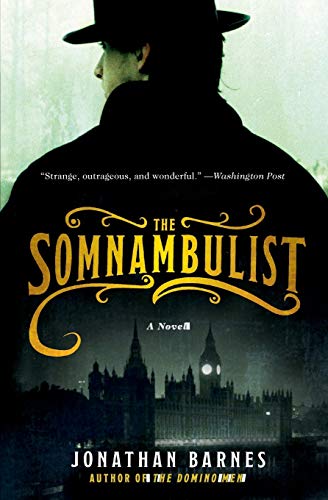
40. The Somnambulist by Jonathan Barnes
This was odd. Not in a bad way, but not entirely in a way I liked either. I'm not sure how I felt about it overall; undecided, with a tendency towards having enjoyed it, overall. Which isn't really having an opinion.
It was a very different story than I was expecting from the front cover and the description on the back. And it was the sort of mystery story where I would have preferred not to be kept quite so much in the dark. But mostly I wanted to know more about the Somnambulist himself - who and/or what he was, why he was called the Somnambulist, and did he have any other name? I think he interested me more than the rest of the plot.
It amuses me that they advertise Jonathan Barnes on the cover of this book as the author of what is apparently its sequel. I guess they expect people to be reading things out of order? I paid one dollar for this book; if I can find the sequel for a similar price, I might just be interested.
And it's been educational; before seeing this book I don't think I knew such a word as somnambulist existed, and certainly not what it meant. But it's maybe just a little disappointing that such a fabulous sounding word apparently means something so ordinary as sleepwalker.
48bluemeanie11
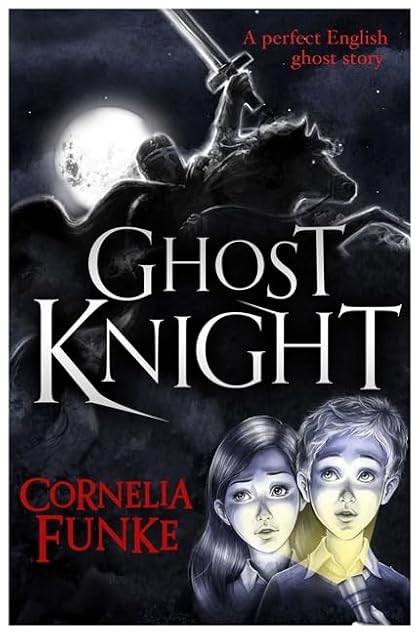
41. Ghost Knight by Cornelia Funke
This I liked. Cornelia Funke seems to be, for me, quite a consistent writer, in that while none of her books would come near to being favorites for me, I've quite liked them all. And this one maybe most of all. I especially liked Jon and Ella was nice as well. (Only I keep thinking of her as Alice, probably because the drawings of her in the book remind me of Alice in Joseph Delaney's Spooks books.) And on the one hand, I like how you're just thrown right into the plot, but sometimes I did feel some more build up would have been nice. I went back and forth on that.
The illustrations of buildings and landscapes were all really nice, but I thought the drawings of people looked pretty dumb - especially the adults, who looked just the same as the kids, but taller.
Two main things I took away from reading this: 1) I wish I had gone to this school; even without the ghosts it sounds fabulous, and 2) I want to read more about the real historical characters in the story, mostly Longespee.
Also, I want to visit Salisbury. But that's been on my wish list for a while, so not just down to this book.
49bluemeanie11
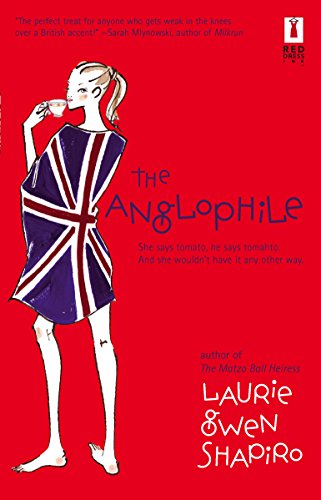
42. The Anglophile by Laurie Gwen Shapiro
This was stupid, possibly even more so than I thought it would be when I bought it. And poorly written - descriptions of things sounded more like a guidebook detailing facts than a novel setting the scene and it probably doesn't say much for the characters when I'm wishing bad things on the dull, stupid (how is she possibly working on a PhD?" protagonist. Actually it reads a bit like fanfiction and has had about that same level of editing as well - some sentences were just missing words!
For a supposed anglophile, Shari didn't seem to know so much about England. I have never, in all the time I've spent as an American in the UK, had to have so many things explained to me as she did on one short trip. And Kit never seemed like an actual British person, more a British person as written by an American based on bits and pieces she's picked up off wikipedia. It does make me wonder if the author has ever actually met a British person.
And since when is 'Blue Jay Way' an obscure Beatles song?
Still, it was amusing enough in it's own way. (A laugh at all the stupid kind of way.)
50bluemeanie11
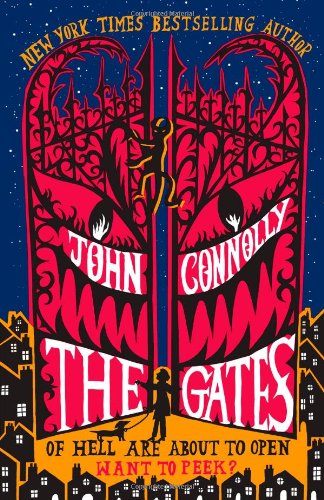
43. The Gates by John Connolly
This was completely different than I thought it would be (which I believe is just about the same reaction to the other of Connolly's books that I've read, The Book of Lost Things.)
Basically, with the whole 'the gates of hell are about to open' line on the front cover, I assumed it would be creepy/scary horror. Instead, it was quite funny. And if any of the stuff about CERN was accurate, a bit educational as well. Which is all to say, I liked it. Particularly, I liked Nurd and the other good (or at least not completely evil) demons - the one under the bed and the one in the pond. The human kids were nice as well and I liked that instead of cowering all the townspeople came out to fight back.
Before reading it, I had thought this was meant to be a 'grown up' books, but the tone seems a bit more young adult, so now I'm not at all sure what it's supposed to be. Not that it matters; it's just one more way it turned out to be not what I was expecting. And I will definitely have to read more of Connolly's books at some point.
51bluemeanie11

44. ArchEnemy by Frank Beddor
This was just dull, to be perfectly honest. Not that I'm terribly surprised, because though I remember enjoying the first book and I don't think I liked the second any more than this one. It feels like maybe Frank Beddor used up all his creativity in that first book. Which is a bit ironic, considering the book is about the battle to save imagination. But the characters are lifeless and since its always obvious that the good guys will win in the end, it seems like nothing more than a series of battles just to have battles. Which is a shame, because there were points when it could have been interesting. For one, I would have liked to see the reality of an alliance between Alyss and Redd complete with all the tension of both knowing they'll turn on each other just as soon as their common enemy is dead.
Oh well. Books can't all be winners. And if all goes to plan I'll have finished another before the day is over.
52bluemeanie11
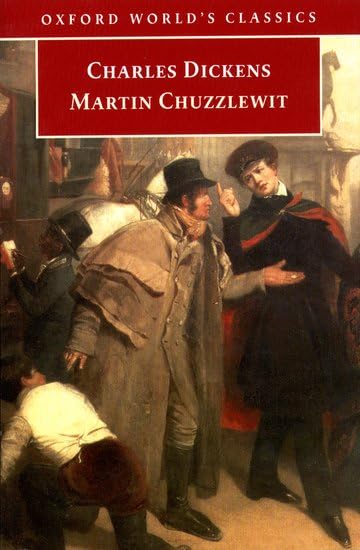
45. Martin Chuzzlewit by Charles Dickens
Somehow me and Mr. Dickens never quite get along. I want to like his books more than I actually like them, and this was no exception. I'm not sure why it is, generally, because I can't name anything in particular I dislike about his writing. In the case of this book, for the most part, I was an odd mixture of amused by and ambivalent to what was going on. And what a lot of horrors some of these people were, Mr. Pecksniff of course in particular. Simply vile. And I did think it interesting that, if most of the Americans Mark and Martin met were an accurate representation of the people at the time, things haven't really changed so much.
But somewhere around a couple of hundred pages from the end, I got really into the book. I think it probably not a coincidence that this was about the time when young Martin stopped being an ass and Tom stopped being a blind fool. Because the four young men - Martin, Mark, Tom, and John - were my favorites and I don't think I would have minded at all a book of the four of them going on adventures together or some such, if only Dickens had chosen to write it.
I never meant to take as long to read this as I have (nearly two months). In future, I really need to stop starting piles of books at once and first finish what I'm already reading.
53bluemeanie11
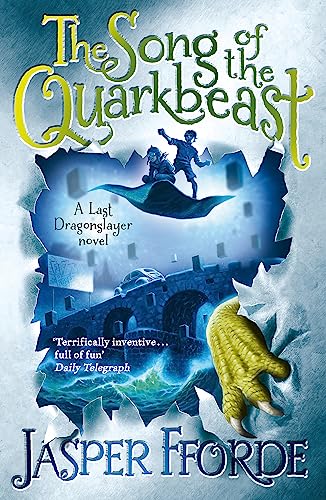
46. The Song of the Quarkbeast by Jasper Fforde
Jasper Fforde never fails to amuse me. I love the absolute absurdity of the worlds he creates, and also how he treats them as though they were completely normal. And I generally like the characters and plots as well, so really its a complete win.
As its been a while since I read the previous book, it did take me a while to reorient myself in this world and re-learn who was who and what was what, so I had a bit of a slow start with this one. But before long the plot picked up and I remembered enough to not be lost and from then on out I really enjoyed it. And Jasper Fforde really needs to get writing on more books - from this series or any of his others or something new entirely - because I think this was the last of his books I hadn't read and I want more.
Also, I think I'd like a quarkbeast of my own. I'm terrible at visualizing things, so I'm not at all clear what they're actually like, but still I'd like to have one. My cats might not appreciate it much though.
54bluemeanie11
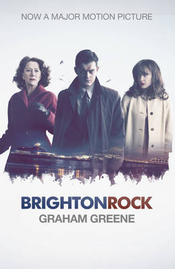
47. Brighton Rock by Graham Greene
This was a good one, but boy does Graham Greene just drop you right in the middle of the story with no explanations given. So much so that by the end I still wasn't 100% about some things. Mostly what the whole Kolley Kibber thing was about and to a lesser extent what the two gangs were about, what they did, etc.
But overall none of that affected my enjoyment, because the plot was good, Ida was a fabulous character, and Pinkie, miserable, evil little thing that he was, was interesting, too. Rose, on the other hand, I could never get my head around. She was just too pathetic and stupid to be sympathetic, and being young and naive only excuses so much. I could never understand what motivated her and why she believed and acted the way she did. At first I thought it was because none of the story was from her point of view, but then a bit was and it was still no clearer.
And I liked that things weren't all black and white. Of course Ida was right to pursue justice for Fred, but if she had never done that, another man might never have been killed and Rose might never have been caught up in it all. On the other hand, she can't be held responsible for the evils other people do.
And then there's that ending, which at the same time almost begs for a sequel, because you want to know what will happen, and recoils from the idea in horror because it could never be anything but terrible.
55bluemeanie11
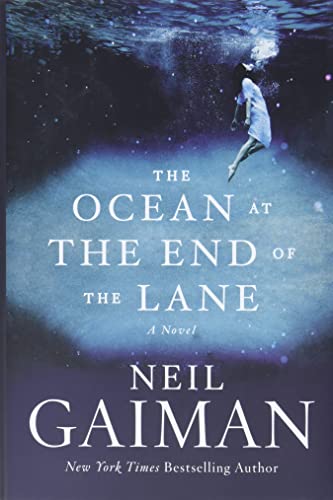
48. The Ocean at the End of the Lane by Neil Gaiman
This was lovely. Neil Gaiman's books have been a bit of a mixed thing for me - some I've really liked, some I really haven't and most have been somewhere in between, but this was definitely a good one. And very different than I was expecting; the opening seemed to ordinary, I suppose, that I thought maybe it wasn't going to be fantasy at all.
Lettie was my favorite, but somehow the Hempstock women collectively were a bit creepy. Individually, they're nice, interesting characters but I think any group of people with mysterious, unexplained powers tend to have a somewhat sinister quality, whoever and whatever they are.
One thing bugged me all through the book though. Specifically: how could the narrator have forgotten all of this? And though I assumed there would be an explanation and figured it would be something similar to what it turned out to be, it was still like something hanging over me being annoying the whole time I was reading. Maybe it was just me. But it seemed like there could have been a line in the beginning that, without spoiling anything, at least reassures the reader that we're not going to be expected to believe a boy could experience all of this and then just forget.
And one possible continuity issue: in the beginning, the bad birthday party is bad because no one comes because he hasn't got any friends, but in the end he thinks of his school friends alongside his family, the world, books, etc. as something worth sacrificing his life for.
56bluemeanie11

49. Ghosthunters and the Totally Moldy Baroness! by Cornelia Funke
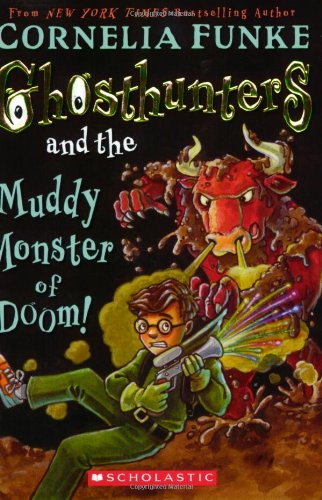
50. Ghosthunters and the Muddy Monster of Doom by Cornelia Funke
And that's 50; I've met my goal with not exactly the most literary choices I could have made, but they're cute and entertaining so it's okay with me. And I've had them sitting around for years unread, so it was about time. I think I probably got the whole series in a Cornelia-Funke-book-buying-spree and read the others years ago but never got around to these. I like the characters well enough, though there isn't a lot to them, and the same goes for the plots, overly simplistic though they may be, and that's rather how I would expect to feel when reading books aimed I'm sure at children 20+ years younger than me.
57saraslibrary
Congrats on making 50! :) I have yet to read the Ghosthunters series, but I plan on it...eventually. Thanks for reminding me.
59bluemeanie11
57, 58: Thanks!
I suppose finishing by 50 before the end of September means I ought to set my goal higher, but I don't want to end up rushing through books just to make up numbers so I'll stick with it for next year I think.
I suppose finishing by 50 before the end of September means I ought to set my goal higher, but I don't want to end up rushing through books just to make up numbers so I'll stick with it for next year I think.
60bluemeanie11
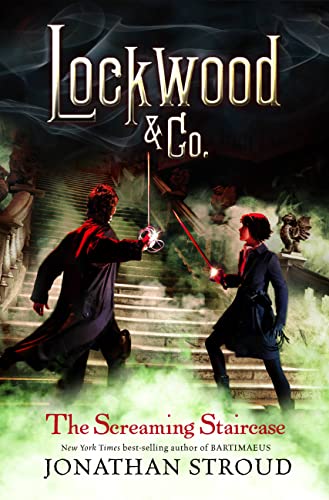
51. The Screaming Staircase by Jonathan Stroud
If this is anything to go by, Jonathan Stroud is on to another great series. I liked the three main characters a lot and I liked that, though they were talented, brave, and knowledgeable about their job, they still screwed up sometimes - and sometimes with very serious consequences. (And I definitely liked that all three of them made mistakes sometimes - if it had been just Lucy screwing up and the boys having to rescue her and/or fix things, that wouldn't have been cool.) I even like that they don't always like each other; it makes them more human, though I adored George so I don't know what Lucy's problem with him was.
It was an interesting book, story-wise, in that the title plot didn't even begin until quite near the end. Before that, it went in several different directions so I wasn't quite sure what the story would be. In the beginning, I assumed the staircase in the opening would be the screaming one, though obviously that was quickly proved unlikely. And I had figured Fairfax was up to basically what it turned out he was doing, but I was a little bit off on guessing his motivation - but I think what was actually the case was better than what I thought.
And, because possibly I have a twisted mind, when Lockwood, who has no parents, had a room in the house that he didn't want Lucy to go in and wouldn't tell her what was there, my first thought was that he kept the dead bodies of his mother and father in there, à la Norman Bates in Psycho. But I imagine that's probably too dark an idea, even for a book about children fighting malevolent ghosts.
61bluemeanie11
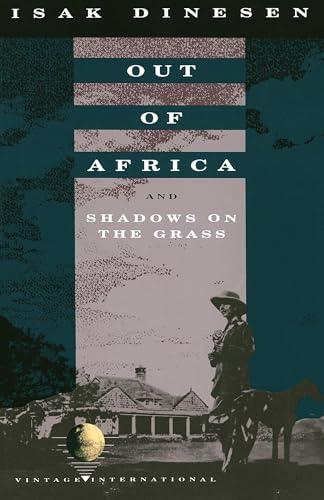
52. Out of Africa by Isak Dinesen
This was terribly interesting. It's a time and a place that I know virtually nothing about, so in a way it was as foreign to me as if it were a fantasy novel set in a made up planet. And I'm definitely glad I read it. But for all that, I can't really say that I liked it.
For the most part it was the horrifying racism that made it such an uncomfortable read. While Karen Blixen clearly liked the people she lived amongst, it was always in a 'I'm the superior and they are a subspecies' sort of way. They were always the savages, she was civilization, and their ways must be corrected. And even then it wasn't so much that she (and the other Europeans) didn't see anything wrong in this - it was that she saw it as absolutely right. It made for a hard read from that perspective, but at the same time I recognize perfectly that, considering the time at which these events took place, if it was not so I'd feel like the book had probably been cleaned up, sanitized for the sensibilities of the modern reader. And I'd rather read what she actually wrote, despite the discomfort.
And the way the human Africans were treated by the Europeans was nothing to how the animals were. The total disregard for their lives, the way they would be killed whenever they were inconvenient to the humans - to say nothing of the safaris that killed them for pleasure. It was pretty well summed up when she mentions a time when she felt she 'could not live' until she had killed at least one of each game animal.
In total, Out of Africa was good reminder of what horrors we humans tend to be as a species. But even then, glimpses of a better nature showed through - when she recognized the wrong, the sadness of taking giraffes to Europe to live in a traveling menagerie or that when you took the natives' land from them you took away their history and their identity. I just wish their had been more than just glimpses of it.
Somehow I think I had had a different idea of who Karen Blixen was. I think in my total lack of knowledge I had classed her in with the great naturalists, so there is a bit of disappointment in learning that she wasn't.
But most of all what I take from this is a renewed desire to go on a safari - just a photo safari, of course, I want nothing to do with killing. I can't think of much better than to see all these great animals free on their own land.
62bluemeanie11

53. The Book Thief by Markus Zusak
I absolutely, completely, totally adore this book*; I always have. I decided to reread it now in anticipation of the movie next month, which I'm so excited for that it can only end up a disappointment. But I can't help myself.
There's so much to love in this book. Max is my favorite character, but Hans, Rosa, Liesel, Rudy, the mayor's wife - they're all wonderful. And even the Nazis are fully drawn people, not cartoon character villains. So while I don't like them, they're still good characters. And I like the different perspective on a well known story - the ordinary Germans, the ones who were neither evil nor famously heroic, but just living their lives and doing the best they can. Because whatever we might say now with 70 years separating us from the horrors of the Holocaust, however nobly we might think we would act, I think most of us would have been Hans, Rosa the Steiners and those sort. (I would most likely been in a concentration camp - Hitler wouldn't have liked me at all - but otherwise I like to think I would have been as brave as the Hubermanns.)
But I think the thing I like best about this book, and everything else that Zusak has written, is the very language itself. I love the way he uses words. It's beautiful and completely unlike anyone else I've ever read. I would love to have that gift.
*Though from a purely physical point of view, I don't adore this copy. It's an Australian edition and it's so enormous it's hard to hold in your hands. The American and British editions aren't nearly so large; are all Aussie books like this? How do people get by? My hands would ache from holding it after reading for a while.
63kac522
I loved Zusak's language as well, especially the use of color and light and dark. And it is so true, his language is unlike any other I've read, and yet the words are simple and clear; you're rarely scratching your head over meanings or obscure references. It will be interesting to see the movie, but it will be a completely different experience without the language of the book.
64bluemeanie11
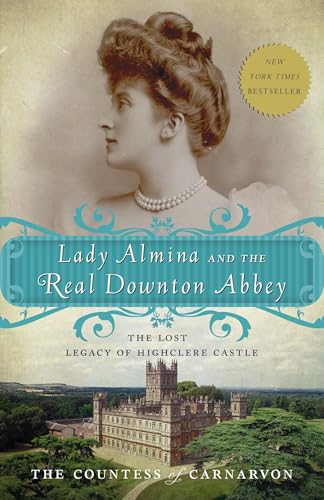
54. Lady Almina and the Real Downton Abbey by The Countess of Carnarvon
This turned out to be quite different than what it seemed it might be when I started it. It opens with a wedding, house parties, balls, descriptions of clothes, furnishings, and other largely superficial things - not that there's necessarily anything wrong with that, but I didn't really see how it could be sustained for the nearly 300 pages of the book.
But as time passes on, topics such as World War I and the horrors it entailed as well as archaeological excavations of Egypt and the discovery of King Tut's tomb, so there was something of substance as well. And it probably says more about the poor state of my education than anything else, but I'd say I learned something from it - particularly about the war. (That's always assuming everything here is correct; though there is a bibliography, there are never any specific citations or references given.)
Of course, considering who the author is, there's more than its fair share of 'look how fantastic and wonderful my family is', but on the whole it doesn't detract from the book too much.
It's a shame, when writing Downton Abbey, that Julian Fellowes doesn't stick as much to the history as he could. Because there were actual historical events in this book that could make more interesting (and certainly more realistic) plots for the show than the increasingly silly stories he comes up with. (Which isn't to say I don't love the show.) Because he must know at least some of these tales. One thing that struck me was a man briefly mentioned called Bates, who was apparently a big, tall man whose leg was injured in a war and so walked with a cane. He seems particularly to have nearly stepped right out of history and into Downton.
65bluemeanie11
55. Stiff Upper Lip, Jeeves by P.G. Wodehouse
I do enjoy dropping in on Jeeves and Wooster even if, in this case Jeeves seemed to barely be part of it and, generally, plots are always largely the same from book to book, only the details are different. They're just fun and I enjoy them. I do get confused sometimes, having read a few books and seen a couple of seasons of the tv show, as to whether the book I'm about to start is one I've already read, but so far I haven't accidentally reread any, so it seems to be working out.
I think the unfortunately-nicknamed Stiffy is probably the most likable female character I've met in these books, so I hope she appears more often. Though looking back on what I wrote about the last one I read, there was a likable girl in that one, too, and I've forgotten all about her. So maybe these books are actually full of fabulous but completely unmemorable women. Too bad their options to choose from for husbands aren't so great.
66bluemeanie11
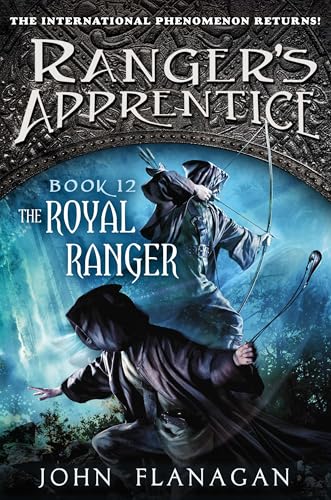
56. The Royal Ranger by John Flanagan
I continue to love these books. The first thing I thought when I heard about this book as I hope the new apprentice is a girl. Because, it seems, why not? Girls have had powerful and/or dangerous roles in this world before, so why not this? So I was glad that she was. But this book did start out a bit slow (which was a shame, since it was all my favorite characters together), but as I suspected once Will and Maddie were together - and she stopped being insufferable - it really picked up pace.
Basically, it seems that whatever other many talents they have, Cassandra and Horace aren't so great at the parenting. And why do they only have one child? Similarly, why was Cassandra an only child? Was that ever mentioned? You can't really maintain a very firm hold on the throne if there's only ever one heir. Especially when said heir gets into the dangerous situations these two do.
But I really hope this isn't the end of Will and Maddie's story. It says it's the last book, but there are hints on the cover and even in the epilogue that there's more to come, so I'm hoping maybe for a spinoff series. Especially if Halt, Horace, and Cassandra can play bigger parts. And I wouldn't mind if Tim appeared again; he seemed nice.
67bluemeanie11
57. Vile Bodies by Evelyn Waugh
Somehow, no matter how many of his books I read that definitely aren't, somehow I always imagine an Evelyn Waugh novel will be very serious before I start it. Maybe because the first one I read was Brideshead Revisited, and it is very different to I think all of the others that I've read so far.
But this was quite as absurd (in a good way) as Decline and Fall, and shares some of the same characters with it as well, though all in small, background roles. And the main characters were, for the most part, somehow horrible and likable all at once.
It seemed as I was reading it that the novel was almost all dialogue and little description, but now as I flip back through it I see quite a lot of description and even whole pages with little to no dialogue, so maybe I was imaging it. Or else that the dialogue was the more interesting part for me. But this was definitely a book I enjoyed. It's a shame Waugh apparently not a very nice person (racist and anti-semite at least, but maybe he was lovely in other ways?) because his books are fabulous.
68bluemeanie11
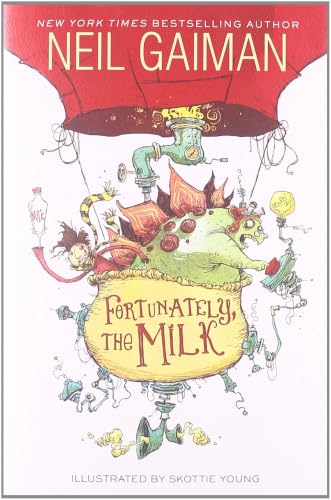
58. Fortunately, the Milk by Neil Gaiman
This was cute. Completely absurd, of course, but I rather think that was the point. I could have done with fewer pictures, though. They were perfectly cute, as well, of course, but there were so many of them and it was a bit distracting sometimes. (Though considering how bad I am at visualizing things as I read, it would seem I should want more pictures.)
I can't approve of the drinking of cows' milk, but I do wish my Dad had made up stories like this for my brother and I. Or, I wish that now, in any case; I expect when I was a kid we would have groaned and rolled our eyes and told him to stop.
69bluemeanie11
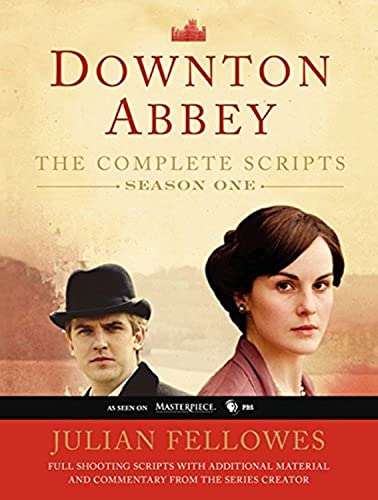
59. Downton Abbey Script book Season One by Julian Fellowes
Of course this was mostly just what I've seen on TV, minus the actors, sets, and costumes. But it was also a sort of behind the scenes look, with deleted scenes included and some commentary on why things were done the way they were. So it was interesting in that way - and of course, what I take away from watching any episode, or any scene within an episode, is not always what the creators intended. Which is of course how it should be, though sometimes I did get the impression Fellowes doesn't think so - a bit too much of the 'we did things this way so that you would feel this' or 'we find him sympathetic because'; I'll form my own opinions on what I watch, thanks.
Much as I enjoy the work he creates, I don't think I'd like to meet Julian Fellowes. He comes off, in this and in interviews I've seen and read, as more than a little bit arrogant, pompous, and certain of his own supreme importance in the universe.
70bluemeanie11
60. North and South by Elizabeth Gaskell
I so adore this book. Every time I decide to reread it, I worry that this time maybe I won't like it so much, but then I always do. And there's always something new to notice in it.
The variety of characters is really interesting - both in terms of station in life and society, but even within the same social groups. There's masters, men, and ladies and gentlemen, but no uniform stereotypes within them. Higgins is entirely different to Boucher, for example, though they are both working men, and is in the end probably more similar to Thornton, though he is the master. It makes for a real society, a real lived in world, for the story to exist in, which is nice.
Plus it's never a bad thing to be able to imagine Richard Armitage as one of the characters when you're reading a book.
Through one thing and another (partially just laziness), I've gotten out of the habit of reading lately. I really must work on that.
71kac522
Hmmm....I could use some Richard Armitage right about now....time for a look at North and South again. Thanks for reminding me!
72bluemeanie11
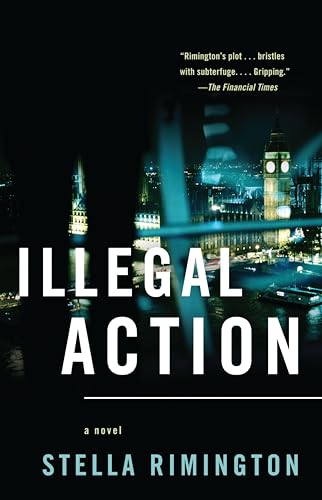
61. Illegal Action by Stella Rimington
Liz Carlyle certainly should count herself lucky that she's the main character in a series, or else there seems very little chance she would survive these situations she gets herself into. She and Harry Potter have a lot in common that way.
This book was enjoyable for a light read, but I think not as good as the previous two in the series. First of all, the writing itself seemed very basic - though I don't know how much that is simply because it's so different from the style of the last book I read. But it was an odd mix of confusing and completely predictable. The first part might be just my own fault, because I'm never on very firm ground in spy stories - the whole way of life makes little sense to me. But the other I think was due to the writing - it was so obvious that everyone was up to no good, even if Liz didn't see it, and that the villain would turn out to be not one of the obvious choices. And someone really ought to have told poor Michael that, when you're a character in a story, you don't make future plans with your estranged father just before you head off on a dangerous mission. I mean, I had pretty much guessed the direction he was heading long before that scene, but it pretty much cemented it.
One thing I thought was interesting - and I imagine was something very true from Rimington's own career in MI-5 - was when Liz, determined not to seem like a silly girl who can't cope in front of her male colleagues - ignores her instincts and downplays the danger she feels she is in. I would imagine a lot of female spies, feeling they needed to prove themselves, feel similarly at one time or another.
I do enjoy these books, though, for all their faults, and I definitely mean to read more.
73bluemeanie11
62. The Spook's Revenge by Joseph Delaney
I actually finished this last night but didn't come to post here right away, in part because I was tired, but mostly because I wasn't sure how I felt about it and thought it best to think on it a bit. Problem is, I'm still not sure.
Looking at other people's reviews/reactions, it seems to have generally been very popular, and certainly there was much that I had liked in the previous books in this one as well. And yet, it doesn't sit well with me. I was happy enough with Tom's storyline, the Spook's, even Grimalkin's. The problem was Alice. One thing I've never liked about these books is the idea that if I witch has malevolent powers, she must then be evil and part of the dark. It takes away all idea of free will. Surely you can know how to do bad things, and then still choose not to do them. So I was never going to like Alice going to the dark in any situation, but I think that it and her relationship with Lukrasta all happened 'off screen', as it were, made it all feel completely wrong. Hard to believe it wasn't a trick, for one. But also that I thought that Alice, being one of the main characters in this series, deserved better. If that was the way her story was going to go, we should have seen it happen. Plus, after twelve books building up the relationship between Tom and Alice, to discard it like that seems wrong.
Of course, it might have helped if I had known before I got to the preview at the end that there was going to be a new series. Because in retrospect it does feel more like dragging things out, in classic will they/won't they sitcom style, for more stories. And much as I will enjoy revisiting this world whenever the new books come out, I would have liked a cleaner finish for this series.
74bluemeanie11
63. Oscar Wilde and the Vatican Murders by Gyles Brandreth
This was something of a cheap, imitation Sherlock Holmes. A knock off, as it were, but reasonably enjoyable for all that. I spent most of the book not sure where the mystery was going to go, which is not necessarily a bad thing - I certainly don't want to have everything spoon fed like a baby; where's the suspense in that? - but it seemed less like being kept in the dark through ingenious twists and turns and more that the clues just weren't there for the reader to see. When all is revealed, you should be able to look back and see all the evidence you didn't realize the significance of at the time. Here that wasn't the case. It seemed like Oscar was just making it up as he went along and always turning out to be right. The one thing that was obvious all along was that Irene was a total fraud.
And who knew that all the priests and nuns were having so much sex. Tsk, tsk. Such naughty little Catholics.
Sadly, as with so much modern historical fiction, the writing and the characters never felt the least bit like they were actually from their appropriate historical period. But I can't really fault Brandreth too much for that; so few people seem to get it right and I don't know that I could ever do better.
75bluemeanie11
64. Les Miserables by Victor Hugo
This was an interesting experiment, reading one chapter a day for a year - and one I very nearly got exactly right, as I had only two chapters left for today. But, I think, an experiment I'm not likely to repeat. Even though many days the chapters were quite short and took only a few minutes to read, I very quickly began to resent the obligation to read them. Particularly when in the sections where Hugo goes on long diversions about topics only tangentially related to the plot. When a chapter was wholly taken up by plot, I didn't generally mind so much.
The first time I read Les Mis, it was in bits and pieces over the course of quite a few years. The second time, I only made it a couple of hundred pages - the bookmark is still in the book at the point I stopped. So in that respect, this was a much better way to go about it. Reading it so much more quickly, I haven't had nearly the time to forgot so much of what has gone before and I have a better grasp of the overall story.
I had something else to say, I know I did, before I started typing, but now I've entirely forgot it.
While I doubt I'll do a chapter a day sort of read again, I may, for longer books, try an extended, long read like this. Just, without the fixed schedule.
As I've still got a couple of hundred pages of the other book I'm reading now, I doubt I'll finish it today, so this will probably be my last for 2013.
76kac522
Well done! even if it wasn't the most satisfying read. Interesting how things worked out. I was thinking of reading Clarissa like that--a chapter a day. But now I'm not so sure, since I realized that I've tried to do this before and I didn't keep up with it. I haven't read Les Mis, but what you describe reminds me a bit of War and Peace, where the plot was easy to read, but Tolstoy's digressions bogged me down if I wasn't in the mood for it.
77bluemeanie11
Thanks! I'm glad I did it - and proud of myself for sticking with it. I tend to have a bad habit of giving up on things.
For the portions where Victor Hugo sticks to plot, Les Mis is one of my all time favorite books. I definitely recommend it. But he does have long digressions on Waterloo, the convent, slang, the sewer system... And even those sometimes start out interesting, but twenty odd pages later and I find myself not caring one bit about the exact battle plans of Napoleon versus Wellington.
I don't think I've ever read Tolstoy or any of the other Russians, excepting a short story by, I believe, Pushkin, in simplified Russian years ago in college, though I mean to. I did start Anna Karenina once, but somehow never finished it. Maybe I'll put that on my to-read list for 2014.
For the portions where Victor Hugo sticks to plot, Les Mis is one of my all time favorite books. I definitely recommend it. But he does have long digressions on Waterloo, the convent, slang, the sewer system... And even those sometimes start out interesting, but twenty odd pages later and I find myself not caring one bit about the exact battle plans of Napoleon versus Wellington.
I don't think I've ever read Tolstoy or any of the other Russians, excepting a short story by, I believe, Pushkin, in simplified Russian years ago in college, though I mean to. I did start Anna Karenina once, but somehow never finished it. Maybe I'll put that on my to-read list for 2014.

