This topic is currently marked as "dormant"—the last message is more than 90 days old. You can revive it by posting a reply.
1The_Hibernator

Hi Everyone! I'm hosting a Social Justice Theme Read this February on my blog, and I decided I'd also include a thread here on LibraryThing. :) I thought it would be nice to raise awareness of social justice / injustice issues by reading books on the topic. February 20th is the UN-recognized World Day of Social Justice, so February seemed like a good month.
If you read any social justice / injustice themed books this month, please include commentary on this thread.

On my blog, I will have an interview with Jeanette Windle, who will be giving away a copy of her new book Congo Dawn, released on February 1st. I'm currently reading my advance review copy of it, and I'm REALLY impressed. In addition to its social justice theme (medical missionary work in Democratic Republic of the Congo), the book has a meaty suspense plot that raises questions of "who really is the bad guy in war?" and "when fighting monsters, at what point do we, ourselves, turn into monsters?" I'll finish the book soon and post my own review on February 1st when it's released. If any of you want to be entered in Ms. Windle's giveaway, please PM me here on LT. I think this offer is only good for US and Canada.


In addition, on my blog I'll be hosting group reads of To Kill a Mockingbird, by Harper Lee, and Noughts and Crosses, by Malorie Blackman. If there's enough interest, I could start threads for these books here, as well.
If you're interested in following the theme read on my blog as well, it's here: http://rachelreadingnthinking.blogspot.com
2RidgewayGirl
Interesting! And I'm so happy we're having all these themed reads all over the place. It gets us talking. I'll look at what i have on my shelf and see if anything fits for this theme.
3mkboylan
Hi Rachel. I'm new to ClubRead this year. I love this idea of a social justice read. Just reserved Noughts and Crosses at my library
Yay! Are you speaking about fiction only?
My fav social justice fiction is by Raul Ramos y Sanchez, the first of a trilogy, all which stand alone, is America Libre. The third one just came out. Its about a young Hispanic man in Los Angeles struggling with unemployment who becomes radicalized. It was hard for me to put down.
Ill be watching your blog. Thanks for this great idea!
Merrikay
Yay! Are you speaking about fiction only?
My fav social justice fiction is by Raul Ramos y Sanchez, the first of a trilogy, all which stand alone, is America Libre. The third one just came out. Its about a young Hispanic man in Los Angeles struggling with unemployment who becomes radicalized. It was hard for me to put down.
Ill be watching your blog. Thanks for this great idea!
Merrikay
4The_Hibernator
Hi Merrikay! I plan on reading a couple of non-fiction works about social justice issues as well, so I'm definitely including non-fiction books. :)
5lauralkeet
Interesting! My daughter, a high school junior, just started a semester-long course reading Social Justice literature. They're going to read Hard Times, The Crucible, The Glass Castle, and Nickel and Dimed. Just throwing out some suggestions ...
6LovingLit
Id love to join the group read for To Kill a Mockingbird as guess what? Ive never read it before! *shock*
When I was involved in the NZ Human Rights Film Festival, there was a film about the Congo that resonated with me. It was about the culture of violence against women, and the attitudes that kept it alive. It was quite an eye-opener and some of the women I talked to afterwards talked about how a similar attitude existed in the 1970 here (the were asking for it wearing clothes like that etc etc).
So, your feature book looks very interesting, but Im not looking to expose myself to violence and sadness right now. So, Ill leave it for someone else to win :)
Social Justice is one of my biggest passions- so count me in.
When I was involved in the NZ Human Rights Film Festival, there was a film about the Congo that resonated with me. It was about the culture of violence against women, and the attitudes that kept it alive. It was quite an eye-opener and some of the women I talked to afterwards talked about how a similar attitude existed in the 1970 here (the were asking for it wearing clothes like that etc etc).
So, your feature book looks very interesting, but Im not looking to expose myself to violence and sadness right now. So, Ill leave it for someone else to win :)
Social Justice is one of my biggest passions- so count me in.
8streamsong
I've got at least three on Planet TBR that I think that will fit--let's see if I can manage a few of these in February:
Crooked Letter, Crooked Letter by Tom Franklin
The Lone Ranger and Tonto Fistfight in Heaven by Sherman Alexie
The Bean Trees by Barbara Kingsolver
Crooked Letter, Crooked Letter by Tom Franklin
The Lone Ranger and Tonto Fistfight in Heaven by Sherman Alexie
The Bean Trees by Barbara Kingsolver
10Chatterbox
A good book on this theme is War is a Force That Gives Us Meaning by Chris Hedges. It's about a decade old, but it's a powerful and thoughtful look at why war seems to be so pervasive. I find a lot of Hedges's more recent writings to be shaped by his opinions (rather than having his opinions shaped by the facts) and thus full of logical flaws and other holes, but this was an excellent book.
11mkboylan
10 - Oh oh oh I love me some Chris Hedges! I haven't read any of his books - just his columns and tv interviews.
Streamsong - I found Sherman Alexie through a mystery novel he wrote, Indian Killer. I LOVED that book and learned lots about cultural interaction. I've been getting his other stuff but haven't read it yet.
This is going to be fun!
Streamsong - I found Sherman Alexie through a mystery novel he wrote, Indian Killer. I LOVED that book and learned lots about cultural interaction. I've been getting his other stuff but haven't read it yet.
This is going to be fun!
12The_Hibernator
:) I'm glad people are getting so excited about the theme read. I think it's nice to have a thread to discuss all these great books. And you're right Merrikay (#7) if people like this theme we can just continue with it for longer than a month. :)
13rosalita
I loved 'Crooked Letter, Crooked Letter' when I read it a couple of years ago. I'm taking notes on everyone's suggestions because this is one of my favorite subjects.
14inge87
I'll be reading You Will See Fire: A Search for Justice in Kenya by Christoper Goffard, about a Catholic missionary who stood up to Daniel arap Moi's regime in Kenya and was found shot in the bush outside of Nairobi. The Catholic chaplain at my college was a former Mayknoll sister who had worked in Tanzania, so I find the subject particularly interesting.
Speaking of arap Moi, another good book that I may re-read after this one is Wangari Maathai's memoir Unbowed about founding the Green Belt Movement. She was not a fan of his government either.
Speaking of arap Moi, another good book that I may re-read after this one is Wangari Maathai's memoir Unbowed about founding the Green Belt Movement. She was not a fan of his government either.
15Chatterbox
Thinking of Maryknoll and finding my thoughts meandering onward, there are some very good books about the 1970s and 1980s in Latin America, such as Cry of the People by Penny Lernoux, which focuses on liberation theology.
16banjo123
Great idea of a group! I would like to read The New Jim Crow next month. And I might pick up To Kill a Mockingbird as well, but I'm not ready to commit to it yet.
17porch_reader
This is a great idea, Rachel. I'm enjoying everyone's suggestions. Some of you may know that Barbara Kingsolver gives a biennial prize called The Bellwether Prize for socially engaged fiction. Running the Rift and Mudbound are two of the past winners. I loved both of those books!
19Jim53
I'll be tackling Proud Shoes for my meetup group in the next couple of weeks. I'll be sure to post a reaction here.
20LovingLit
>17 porch_reader: I hadn't heard of that Prize, Amy. I think its a fabulous idea. Ill check out the two you have mentioned.
21The_Hibernator
>17 porch_reader: Yes, I wasn't aware of that prize either. I should look into it. Thanks!
22kidzdoc
I'll almost certainly participate in this challenge, but I need to determine which book(s) I'll read for it. If I have time I may join AnneDC in reading The New Jim Crow.
23The_Hibernator
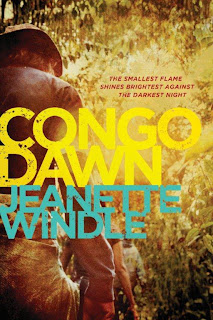
Congo Dawn, by Jeanette Windle
The author will be giving away a copy of this book to one lucky reader (shipping in US and Canada only). If you would like to enter into the giveaway, please send me a PM!
Review

When Robin Duncan takes on a security/translator contract in Democratic Republic of Congo, she doesn't expect all of her old wounds to open. Then she meets a man that she hoped to never see again, and she is reminded not only of her disappointment in humanity but also of the senseless death of her brother. Duncan must struggle inwardly with these issues while she maintains military efficiency in her team's efforts to capture a deadly insurgent leader. Soon, she learns that not all is as it seems - sometimes, good seems evil and evil seems good. Sometimes well-intentioned people can become monsters while fighting monsters.
Most Christian Suspense I've read is fairly fluffy, so I was surprised (and impressed) with the meatiness of this plot. I found the intensity of the mercenary action against the insurgency convincing. Often, I found myself unable to put the book down for suspense. The romantic tension was delicious, and added emotional depth to the characters without distracting from the suspense plot. And, of course, I always find stories about social justice medical personnel heartwarming. I also learned a lot about the Democratic Republic of Congo while reading this book. Windle has done a lot of research to back up all aspects of her plot - and it really shines through.
The only con would be a con ONLY to people who specifically avoid Christian Fiction. At one point, the suspense is, well, suspended by a philosophical discussion about why God allows bad things to happen to good people. This discussion would be interesting to any reader of Christian Fiction (i.e. the target audience), and the philosophy is demonstrated in the story by action. For those of you who generally avoid Christian Fiction because you feel it is "preachy," I recommend that you give this book a try anyway. Yes, there is that short section, but the rest of the book is all philosophy-demonstrated-by-action.
Overall, I really enjoyed this book. I am eager to read more of Windle's works now that I've had this taste.
24The_Hibernator
There's my first review! I think this was an interesting book involving medical missionary work in the Democratic Republic of Congo, but of course it was fiction so most of the book was about the weeding out of insurgents and conspiracy plot. :)
25tymfos
Would environmental issues fall under this Social Justice theme? (I've noticed that, somehow, bad environmental stuff more often happens in poor/economically struggling neighborhoods than in wealthy ones . . .) I'm reading a dynamite Early Reviewer book about toxic waste.
26The_Hibernator
sure Terri, you can include that. :)
27LovingLit
>23 The_Hibernator: Great first review! I hadn't an inkling of that book being written from a Christian perspective. The philosophy-demonstrated-by-action sounds more like me, so I am glad you have pointed out that the audience shoudnt be limited to those interested in Christian fiction.
28inge87
I've started You Will See Fire, and am struck by how much Daniel arap Moi's ascent to power in Kenya resembles Ceaușescu's in Romania: the puppet who was supposed to meekly obey turns against his masters and takes an iron hold on power through paranoia and violence.
Naturally, because he was not a Communist, the US gave his government tons of aid and thus kept him in power.
Naturally, because he was not a Communist, the US gave his government tons of aid and thus kept him in power.
29inge87

I finished You Will See Fire: A Search for Justice in Kenya and really enjoyed it. It's the kind of book that's good, not because it's fun, but because it makes you think. John Kaiser is an American missionary serving in Kenya who makes it his mission to tell the truth and expose the crimes of President Daniel arap Moi and his cronies against the Kenyan people. When he is found dead in the bush, the FBI is called in, but there are questions about the investigation's legitimacy from the start.
What the truth really is, no one will ever know, but Goffard makes an attempt to tell all sides of the story so that you really get a feel for what life was like in Moi's Kenya. I found it an excellent read.
My full review is here
30rebeccanyc
Interesting topic and read. I cannot recommend The New Jim Crow highly enough. Horrifying as it is, it was one of my top six (couldn't cut to five) reads of last year.
31LovingLit
I have just started To Kill a Mockingbird- were there enough of us reading that to generate discussion? (see post #1)
32LovingLit
To Kill a Mockingbird by Harper Lee
My summary:
It was great to approach this book without having prior knowledge of its content. It was as fresh as it could be when I began reading it a few days ago.
Atticus Finch is the hero of this book, and about him revolve the lives of his 2 children. Scout- a tomboy with a strong sense of right and wrong, and Jem her older brother, who is learning to fit in to the adult world and not liking what he sees. It is through Scouts eyes that we see the world, and her mature perspective let us get both quite adult insights along with the innocent and sweet musings that are universal to children.
The first half is all about growing up, long summers hanging out, new classrooms at school, negotiating parental boundaries and getting into mischief, the chief source of which is curiosity. It is a real immersion into the kids' lives, and feels so real. The second half is all about the trial of a local black man. It is about the injustice and the ingrained prejudices a society holds. It is about a lot of things. It is a smart and sensitive story, and told so well. I very much liked it.
My summary:
It was great to approach this book without having prior knowledge of its content. It was as fresh as it could be when I began reading it a few days ago.
Atticus Finch is the hero of this book, and about him revolve the lives of his 2 children. Scout- a tomboy with a strong sense of right and wrong, and Jem her older brother, who is learning to fit in to the adult world and not liking what he sees. It is through Scouts eyes that we see the world, and her mature perspective let us get both quite adult insights along with the innocent and sweet musings that are universal to children.
The first half is all about growing up, long summers hanging out, new classrooms at school, negotiating parental boundaries and getting into mischief, the chief source of which is curiosity. It is a real immersion into the kids' lives, and feels so real. The second half is all about the trial of a local black man. It is about the injustice and the ingrained prejudices a society holds. It is about a lot of things. It is a smart and sensitive story, and told so well. I very much liked it.
33The_Hibernator
Ah! Sorry, I've had issues that have been distracting me, sorry! I'll make a thread for To Kill a Mockingbird so that we can discuss it. :)
34LovingLit
Oh, yay. I have some questions and would love to discuss :)
(in an appropriately forewarned *spoiler* area)
(in an appropriately forewarned *spoiler* area)
36streamsong
I finished Sherman Alexie's The Lone Ranger and Tonto Fistfight in Heaven. I recommend it--review to follow soon.
37banjo123
Muhammad Ali's Greatest Fight: Cassius Clay vs. The United States of America by Howard Bingham
"I ain't got no quarrel with them Vietcong."
I wanted to read The New Jim Crow this month, for the Social Justice challenge, but my hold at the library hasn't come through yet. So I am substituting this book, which I chose after reading Maggie1944's excellent review.
This book is written with a very large pro-Ali and very liberal slant. (Which I share, so that didn't bother me.) The writing is fine, but not great. I really enjoyed the book for the detailed look at race and politics during a specific historical period, and for the research regarding the political and legal shenanigans surrounding Ali's court case. The most inspiring thing about the book was watching Ali grow as a moral leader as a result of his anti-war stance.
"I ain't got no quarrel with them Vietcong."
I wanted to read The New Jim Crow this month, for the Social Justice challenge, but my hold at the library hasn't come through yet. So I am substituting this book, which I chose after reading Maggie1944's excellent review.
This book is written with a very large pro-Ali and very liberal slant. (Which I share, so that didn't bother me.) The writing is fine, but not great. I really enjoyed the book for the detailed look at race and politics during a specific historical period, and for the research regarding the political and legal shenanigans surrounding Ali's court case. The most inspiring thing about the book was watching Ali grow as a moral leader as a result of his anti-war stance.
38streamsong
Quickie review on The Lone Ranger and Tonto Fistfight in Heaven.
This is the first book by Alexie that I’ve read, although I’ve read several other authors whose work centers on reservation life. I’ve found the genre tends to be bleak and shocking, focusing on the lack of opportunity and justice and the overabundance of despair. It’s a story that needs to be told, but sometimes repetition of victim-hood can lead to desensitization as to the humanity behind the stories.
While the first few short stories of this collection echoed many of these themes, I also found much more humor and love –love both of his people and their love for each other- than in other accounts. He mixes a bit of ancient times and vision quest into a magical realism element in several stories.
I was thoroughly won over by Alexie’s portrayal. He’s a marvelous spokesperson for his people and the experience of being Indian in the 20th century (originally published 1993). I will definitely look for others by him.
4 stars
This is the first book by Alexie that I’ve read, although I’ve read several other authors whose work centers on reservation life. I’ve found the genre tends to be bleak and shocking, focusing on the lack of opportunity and justice and the overabundance of despair. It’s a story that needs to be told, but sometimes repetition of victim-hood can lead to desensitization as to the humanity behind the stories.
While the first few short stories of this collection echoed many of these themes, I also found much more humor and love –love both of his people and their love for each other- than in other accounts. He mixes a bit of ancient times and vision quest into a magical realism element in several stories.
I was thoroughly won over by Alexie’s portrayal. He’s a marvelous spokesperson for his people and the experience of being Indian in the 20th century (originally published 1993). I will definitely look for others by him.
4 stars
39The_Hibernator
Hey everyone. Sorry I disappeared for my own social justice theme...I had a bit of a family emergency and so far have only finished one book this month. However, I decided to make a goal to read all of my "potential February social justice" books this year...so I'll keep updating this thread whenever I finish one of them. Here's the list I'd compiled before I dropped off the virtual face of the earth.
Non-Fiction books
Malcolm X: A Life of Reinvention, by Manning Marable
The Road of Lost Innocence, by Somaly Mam
The Autobiography of Malcolm X, by Malcolm X
The New Jim Crow, by Michelle Alexander
Nickel and Dimed, by Barbara Ehrenreich
Mountains Beyond Mountains, by Tracy Kidder
Half the Sky, by Nicholas D. Kristof
Dead Man Walking, by Helen Prejean
Fiction
Little Bee, by Chris Cleave
Running the Rift, by Naomi Benaron
The Jungle, by Upton Sinclair
Bleak House, by Charles Dickens
The Girl Who Fell From the Sky, by Heidi W. Durrow
Mudbound, by Hillary Jordan
Roots, by Alex Haley
Young Adult lit
Noughts and Crosses, by Malorie Blackman
To Kill a Mockingbird, by Harper Lee
The Absolutely True Diary of a Part-Time Indian, by Sherman Alexie
Let the Circle Be Unbroken, by Mildred D Taylor
Sold, by Patricia McCormick
The Outcasts of 19 Schuyler Place, by E. L. Konigsburg
Non-Fiction books
Malcolm X: A Life of Reinvention, by Manning Marable
The Road of Lost Innocence, by Somaly Mam
The Autobiography of Malcolm X, by Malcolm X
The New Jim Crow, by Michelle Alexander
Nickel and Dimed, by Barbara Ehrenreich
Mountains Beyond Mountains, by Tracy Kidder
Half the Sky, by Nicholas D. Kristof
Dead Man Walking, by Helen Prejean
Fiction
Little Bee, by Chris Cleave
Running the Rift, by Naomi Benaron
The Jungle, by Upton Sinclair
Bleak House, by Charles Dickens
The Girl Who Fell From the Sky, by Heidi W. Durrow
Mudbound, by Hillary Jordan
Roots, by Alex Haley
Young Adult lit
Noughts and Crosses, by Malorie Blackman
To Kill a Mockingbird, by Harper Lee
The Absolutely True Diary of a Part-Time Indian, by Sherman Alexie
Let the Circle Be Unbroken, by Mildred D Taylor
Sold, by Patricia McCormick
The Outcasts of 19 Schuyler Place, by E. L. Konigsburg
40LovingLit
I have read these ones and liked them all (loved in the case of Roots)
Little Bee, by Chris Cleave
The Girl Who Fell From the Sky, by Heidi W. Durrow
Roots, by Alex Haley
Nickel and Dimed, by Barbara Ehrenreich
To Kill a Mockingbird, by Harper Lee
With Nickel and Dimed, I thought she could have said a lot more on the subject. It was a little thin for me. But still, it was a great project she embarked on.
Little Bee, by Chris Cleave
The Girl Who Fell From the Sky, by Heidi W. Durrow
Roots, by Alex Haley
Nickel and Dimed, by Barbara Ehrenreich
To Kill a Mockingbird, by Harper Lee
With Nickel and Dimed, I thought she could have said a lot more on the subject. It was a little thin for me. But still, it was a great project she embarked on.
41SandDune
The only two of those that I've actually read are Nickled and Dimed which I found really interesting, and To kill a Mockingbird.
42elkiedee
I've only read Nickel and Dimed (and a couple of UK books on the same theme but not nearly so well written), To Kill a Mockingbird and Let the Circle Be Unbroken - a very long time ago in the last case, and I'm thinking of rereading. Actually, I read Nickel and Dimed about 10 years ago - I have quite a lot of other books by Barbara Ehrenreich I'd like to read.
43The_Hibernator
Well, if any of you read social justice themed books throughout the year, feel free to post your thoughts on this thread, since I plan on keeping it up. I'd be interested in seeing what else everyone is reading. :)
44bonsam
Thanks for sta rting this theme. The response is great to see!
I would like to suggest a couple of books on the theme:
"To the End of the Land" by David Grossman
"Lincoln" Doris Kearns Goodwin
I would like to suggest a couple of books on the theme:
"To the End of the Land" by David Grossman
"Lincoln" Doris Kearns Goodwin
45drneutron
So I took a look at the touchstones associated with this thread - 37 books, 33 authors. This represents a pretty good collection of ideas for reading in this subject!
46Jim53
I read Pauli Murray's Proud Shoes this month, and I think it fits the spirit of this thread. I was surprised to find no other reviews of it. Murray relates the history of her mother's biracial family, along with many of the challenges they faced. I hoped for more of Murray's own life, but I'll have to look fro that elsewhere.
47streamsong
I think it's great that you're continuing on with this challenge. I only made it through one of the titles I had hoped to read this month. I'll keep working on it, too.
Half the Sky blew me away when I listened to it on audio last year.
Half the Sky blew me away when I listened to it on audio last year.
48The_Hibernator

Noughts and Crosses, Written by by Malorie Blackman, Narrated by Syan Blake and Paul Chequer
Review

Callum McGregor and Sephy Hadley have been best friends for as long as they remember. But recently their feelings for each other have begun to develop into something...stronger. Unfortunately, Sephy is a member of the dark-skinned upper class of Cross, and Callum is a pale-skinned, low-class Nought. The teens' romantic problems intensify when Callum's family gets caught up in a terrorist liberation organization that Sephy's father (a politician) has sworn to stamp out. Sephy and Callum must learn to love each other in a tumultuous world of hatred. Does this scream out "star-crossed lover" to you? But soft, what light through yonder window breaks? (I got the same Romeo and Juliet vibe from Warm Bodies, which I just finished reading. I think it's fun when the cosmic net of connected concepts captures me.)
I've heard fantastic things about this book, but I wasn't as impressed as I thought I'd be. Maybe it's just because I wasn't in the mood to read depressing race-relations books (and they're all a bit depressing, aren't they?), but this book wasn't a slap in the face of my preconceived notions. It was just another book about racism, much like a book written about a white girl and teenaged member of the Black Panthers. The whole skin-color switcharoo seemed like an unnecessary literary device to me. Now, don't get me wrong, I'm not saying it was a bad book...I was just expecting more amazingness, that's all. It was a tragically-sweet love story about a very important issue - racism, and the ease with which we can be swept away by other people's causes. But I think the book would have been more powerful if she'd focused on the realism of the story instead of trying to build a new world that was simply too similar to our own to justify the effort of creation.
49The_Hibernator

Mountains Beyond Mountains
Written by Tracy Kidder, Narrated by Paul Michael
Review

In this moving biography of Paul Farmer, Tracy Kidder takes us on a world tour of medical missionary work. Farmer started his mission to save the world from tuberculosis one patient at a time in the slums of Haiti. Practically from scratch, he developed a clinic that would treat the poor. But Farmer not only treated his patients, he listened to them, he cared about each one with individual interest, and he provided food and supplies so that his patients wouldn't be saved from tuberculosis only to die of starvation.
As his mission in Haiti gained more and more momentum, Farmer's expertise on tuberculosis (especially antibiotic-resistant strains) became world-renowned. He was asked to help set up clinics in Peru. He worked with the health systems of prisons in Russia, where antibiotic-resistant tuberculosis was rampant. And he loved each and every patient, regardless of who they were.
While describing the incredible non-stop work of Farmer, Kidder managed to make the doctor more human. I could imagine Farmer, cheerful despite sleep-deprivation shadows under his eyes, flying from one country to another in a worn-down suit that he would never have time to replace. From the book, it seemed that Farmer might pause for hours to have a heart-felt conversation with a patient, even while a room-full of self-important Harvard doctors awaited his arrival. I could empathize with Olivia, Farmer's old flame, who once felt a twinge of satisfaction to realize that Farmer was only human - she could annoy him. Being around someone like that must be exhausting. Kidder painted a brilliant man with limitless energy, unimpeachable morals, and the charisma to make his dreams a reality. I felt overwhelmed just listening to the book. I can't imagine what it must be like to work for him (or date/marry him). And yet, it's impossible for me to not admire him.
I found this book fascinating not only because it was a description of an amazing man with a daring love for humanity, but also because I enjoyed learning more about the social/economic conditions of Haiti. The narrative flowed smoothly between Kidder's personal impressions of Farmer and Haiti to well-researched narratives of Farmer's life outside his work.
I enjoyed Paul Micheal's narration of the book - though I have little to comment on his style of reading. It was one of those audiobooks that I was so absorbed in the story that I forget to be distracted by the narrator - which means Micheal must have done a good job.
50LovingLit
The Shock Doctrine: The Rise of Disaster Capitalism, by Naomi Klein
In the light of Christchurch's recent devastating earthquakes, and ensuing changes to our school and education policies, I was excited to read in the first chapter about "Disaster Capitalism" being a well established method of pushing through unpopular economic reform. The economic reform is generally comprised of three things: privatisation, government spending cuts and deregulation (free-trade). And the disaster, although in our case was a natural one, can be in the form of war, civil unrest, the bottoming out of an economy- all of which can be manufactured, btw.
This book looks in depth at the situations we have all heard of in various countries over the last 40 years. Chile in the 1970s when popular socialist leader Allende was overthrown by US backed General Pinochet is heralded as the first "experiment" in using shock tactics to bring in free-trade. It was also one of the most harsh on the general population. People were "shocked" into submission by violence, torture, imprisonment, and by being "disappeared" if they displayed so much as a skerrick of left-wing ideals. With the public silenced, the economy was transformed into what would eventually leave a few multi-nationals very very rich, and Chileans without government/military connections, very very poor.
It is very difficult not to cast America as the bad guy here. The IMF and the World Bank both had policies to make loans dependent on the implementation of the three aspects discussed above- known collectively as the Washington Consensus. They stepped in when countries were in crisis, and then had them by the balls for the foreseeable future. The IMF and World Bank were (and are?) populated by proponents of the Chicago School of Economics thinking. Right-wing free-trade-at-any-cost economists. These guys hold tight to the idea that without any government controls, economies not only flourish, but have unlimited growth (personally I have huge problems with this theory, not the least of which is the fact the unlimited growth is impossible based on the fact that there is a limit to natural resources).
The book goes on to discuss Argentina, Russia's transformation from communist state to extreme capitalist zone, Britain under Thatcher, Poland, Chinas opening up, South Africa, Sri Lanka post tsunami, Iraq war and Isreal in great detail and providing a side of the story that you would never have read about in the papers. The lengths that were gone to to implement economic reform are incredible. The level of crony-ism and back room deals played out between politicians and US policy advisors, the IMF and business leaders is astounding.
This book reads like a thriller, one in which you cannot wait for the good guys to come in and rescue the masses. The idealist in me thinks the good guys are coming, but the realist in me knows that where there are multi-millions to be made, the greedy will take any measure to feather their own nests. 5 stars
In the light of Christchurch's recent devastating earthquakes, and ensuing changes to our school and education policies, I was excited to read in the first chapter about "Disaster Capitalism" being a well established method of pushing through unpopular economic reform. The economic reform is generally comprised of three things: privatisation, government spending cuts and deregulation (free-trade). And the disaster, although in our case was a natural one, can be in the form of war, civil unrest, the bottoming out of an economy- all of which can be manufactured, btw.
This book looks in depth at the situations we have all heard of in various countries over the last 40 years. Chile in the 1970s when popular socialist leader Allende was overthrown by US backed General Pinochet is heralded as the first "experiment" in using shock tactics to bring in free-trade. It was also one of the most harsh on the general population. People were "shocked" into submission by violence, torture, imprisonment, and by being "disappeared" if they displayed so much as a skerrick of left-wing ideals. With the public silenced, the economy was transformed into what would eventually leave a few multi-nationals very very rich, and Chileans without government/military connections, very very poor.
It is very difficult not to cast America as the bad guy here. The IMF and the World Bank both had policies to make loans dependent on the implementation of the three aspects discussed above- known collectively as the Washington Consensus. They stepped in when countries were in crisis, and then had them by the balls for the foreseeable future. The IMF and World Bank were (and are?) populated by proponents of the Chicago School of Economics thinking. Right-wing free-trade-at-any-cost economists. These guys hold tight to the idea that without any government controls, economies not only flourish, but have unlimited growth (personally I have huge problems with this theory, not the least of which is the fact the unlimited growth is impossible based on the fact that there is a limit to natural resources).
The book goes on to discuss Argentina, Russia's transformation from communist state to extreme capitalist zone, Britain under Thatcher, Poland, Chinas opening up, South Africa, Sri Lanka post tsunami, Iraq war and Isreal in great detail and providing a side of the story that you would never have read about in the papers. The lengths that were gone to to implement economic reform are incredible. The level of crony-ism and back room deals played out between politicians and US policy advisors, the IMF and business leaders is astounding.
This book reads like a thriller, one in which you cannot wait for the good guys to come in and rescue the masses. The idealist in me thinks the good guys are coming, but the realist in me knows that where there are multi-millions to be made, the greedy will take any measure to feather their own nests. 5 stars

