This topic is currently marked as "dormant"—the last message is more than 90 days old. You can revive it by posting a reply.
1StevenTX
Marguerite Duras wrote several plays and screenplays. In addition, she directed almost 20 films. Rather than do separate threads, I thought it would be simpler just to start a single thread for all her dramatic works.
2StevenTX
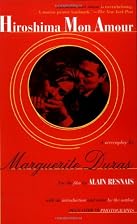
Hiroshima Mon Amour
Screenplay with synopsis and notes by the author, as well as stills from the film
Filmed 1959, first published in book form 1960
Translated by Richard Seaver 1961
My review of the screenplay:
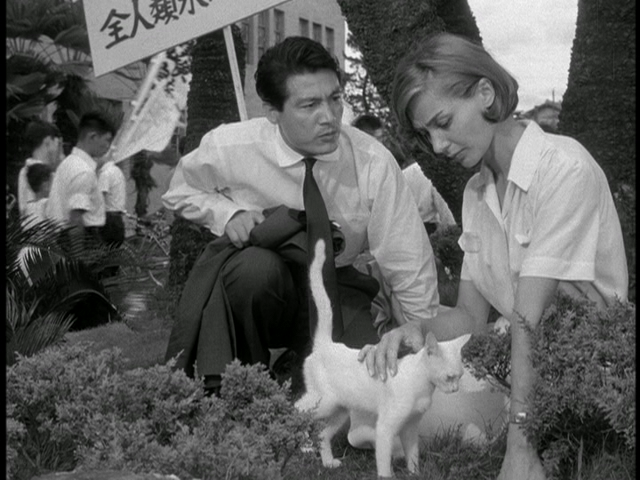
A French woman and a Japanese man meet in Hiroshima where the woman is playing a part in a film "about Peace." Though both are happily married, they fall in love with each other and spend the night together. In the morning she tells him she must leave Japan the following day, and they will never see one another again. "You saw nothing in Hiroshima. Nothing," he tells her. "I saw everything. Everything," she insists. Their conversation is interwoven with horrific images of the atomic bomb and its aftermath.
As the day passes and the filming ends, the man persists in seeing the woman and extracting the details of a personal history that has made her suddenly so melancholy. During World War II in her native city of Nevers, she fell in love with a German soldier. As the Allies advanced upon the city the soldier made plans for her to escape to Bavaria with him, but on the day they were to leave he was shot by a resistance fighter. He died in her arms. She was accused of collaboration and had her head shaved. Insane with grief, she was locked in a cellar for months.
What this script does is give us two powerful images of war and its impact: the very public horror of Hiroshima, and the intense private tragedy of the woman of Nevers.
The book gives us Marguerite Duras's instructions to the director and background sketches on the characters. Frequently she gives options for how a scene should be shot or alternative dialogue, and footnotes tell us which choices the director, Alain Resnais, made. The numerous photographs are well-chosen to illustrate how her directions were implemented and they give a good feel for the film overall.
I haven't actually seen the film. Has anyone else?
Screenplay with synopsis and notes by the author, as well as stills from the film
Filmed 1959, first published in book form 1960
Translated by Richard Seaver 1961
My review of the screenplay:
A French woman and a Japanese man meet in Hiroshima where the woman is playing a part in a film "about Peace." Though both are happily married, they fall in love with each other and spend the night together. In the morning she tells him she must leave Japan the following day, and they will never see one another again. "You saw nothing in Hiroshima. Nothing," he tells her. "I saw everything. Everything," she insists. Their conversation is interwoven with horrific images of the atomic bomb and its aftermath.
As the day passes and the filming ends, the man persists in seeing the woman and extracting the details of a personal history that has made her suddenly so melancholy. During World War II in her native city of Nevers, she fell in love with a German soldier. As the Allies advanced upon the city the soldier made plans for her to escape to Bavaria with him, but on the day they were to leave he was shot by a resistance fighter. He died in her arms. She was accused of collaboration and had her head shaved. Insane with grief, she was locked in a cellar for months.
What this script does is give us two powerful images of war and its impact: the very public horror of Hiroshima, and the intense private tragedy of the woman of Nevers.
The book gives us Marguerite Duras's instructions to the director and background sketches on the characters. Frequently she gives options for how a scene should be shot or alternative dialogue, and footnotes tell us which choices the director, Alain Resnais, made. The numerous photographs are well-chosen to illustrate how her directions were implemented and they give a good feel for the film overall.
I haven't actually seen the film. Has anyone else?
3MWinzar
I have seen it but afterwards realised the version I saw was quite a bit shorter than the 1 hr 30 it should be, I seem to recall there was a gap in the subtitles too. So I need to see it again, not sure what was missed. It was rather quietly romantic and melancholic but I don't think I was devastated by it, and I cry easily. The star Emmanuelle Riva recently made waves and picked up awards all over the place including the Cesar and BAFTA for Michael Haneke's Amour.
I love Jules Dassin's 10 30 pm Summer, but apparently Marguerite Duras hated it and this pushed her to become a director herself and have full creative control in the world of cinema auteurism. It wasn't quiet and dreamy, it was big, colourful and expressive. I am biased because it stars my great love, Peter Finch (he's a rotter - but the heart wants what it wants). You could have judged for yourself until recently because it was streaming in full online, DVDs are expensive and hard to come by.
Still online is Moderato Cantabile aka Seven Days...Seven Nights starring les plus grands vedettes de la nouvelle vague: Belmondo et Moreau, directed by Peter Brook. I will see it but I want to try reading some of her work first, this forum has inspired me. All my local library has is The Lover so I will get down to the second hand bookshop tomorrow!
I love Jules Dassin's 10 30 pm Summer, but apparently Marguerite Duras hated it and this pushed her to become a director herself and have full creative control in the world of cinema auteurism. It wasn't quiet and dreamy, it was big, colourful and expressive. I am biased because it stars my great love, Peter Finch (he's a rotter - but the heart wants what it wants). You could have judged for yourself until recently because it was streaming in full online, DVDs are expensive and hard to come by.
Still online is Moderato Cantabile aka Seven Days...Seven Nights starring les plus grands vedettes de la nouvelle vague: Belmondo et Moreau, directed by Peter Brook. I will see it but I want to try reading some of her work first, this forum has inspired me. All my local library has is The Lover so I will get down to the second hand bookshop tomorrow!
4StevenTX
India Song by Marguerite Duras
First published 1973
Translation by Barbara Bray 1976
(The title is the same in the French and English editions: the English phrase "India Song.")
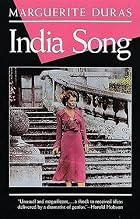
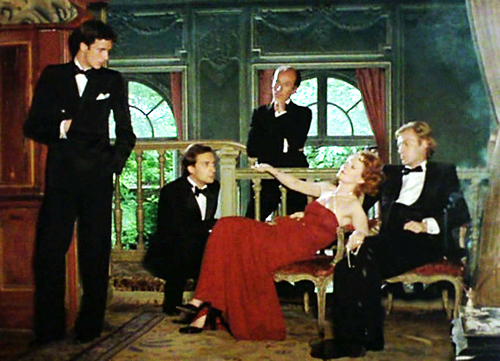
India Song is a play Marguerite Duras wrote in 1973 based largely on her own 1965 novel The Vice-Consul, which, in turn, used characters from her 1964 novel The Ravishing of Lol Stein. The play was both produced on stage and, in 1975, made into a film by Duras herself.
The drama takes place mostly in Calcutta (now Kolkata) at the French embassy. (Duras says in her preface that she knows full well the embassy would have been in New Delhi, not Calcutta, but she is deliberately imprecise in her geography.) The story centers on the ambassador's promiscuous wife, Anne-Marie Stretter, whose languorous beauty is irresistible to the younger men around her. She and her lovers suffer from a self-destructive despair because of the tropical heat and the human misery surrounding them, especially the leprous beggars who encircle every European compound.
The play is unique in that no words are spoken on stage. In the opening act the players are silent, and all we hear are two disembodied female voices. Voice 1 is fascinated with Anne-Marie and wants to know details of her background. Voice 2 supplies some of the answers, but is clearly in love with Voice 1. In the long second act the players speak, but only when they are off stage. We hear them conversing in an adjacent room, but when they step into sight they are silent. In the final three short acts the female voices return, accompanied by a pair of male voices. And once again the actors on stage are merely posing.
Like many of Duras's other works, India Song combines strong political opinions on colonialism and inequality with a haunting story of erotic obsession. It is well worth reading both the play and The Vice-Consul. The novel has many additional elements not found in the play, but the disembodied voices in the play add a new dimension to the story.
First published 1973
Translation by Barbara Bray 1976
(The title is the same in the French and English editions: the English phrase "India Song.")
India Song is a play Marguerite Duras wrote in 1973 based largely on her own 1965 novel The Vice-Consul, which, in turn, used characters from her 1964 novel The Ravishing of Lol Stein. The play was both produced on stage and, in 1975, made into a film by Duras herself.
The drama takes place mostly in Calcutta (now Kolkata) at the French embassy. (Duras says in her preface that she knows full well the embassy would have been in New Delhi, not Calcutta, but she is deliberately imprecise in her geography.) The story centers on the ambassador's promiscuous wife, Anne-Marie Stretter, whose languorous beauty is irresistible to the younger men around her. She and her lovers suffer from a self-destructive despair because of the tropical heat and the human misery surrounding them, especially the leprous beggars who encircle every European compound.
The play is unique in that no words are spoken on stage. In the opening act the players are silent, and all we hear are two disembodied female voices. Voice 1 is fascinated with Anne-Marie and wants to know details of her background. Voice 2 supplies some of the answers, but is clearly in love with Voice 1. In the long second act the players speak, but only when they are off stage. We hear them conversing in an adjacent room, but when they step into sight they are silent. In the final three short acts the female voices return, accompanied by a pair of male voices. And once again the actors on stage are merely posing.
Like many of Duras's other works, India Song combines strong political opinions on colonialism and inequality with a haunting story of erotic obsession. It is well worth reading both the play and The Vice-Consul. The novel has many additional elements not found in the play, but the disembodied voices in the play add a new dimension to the story.
5edwinbcn
094. Écrire
Finished reading: 24 August 2013
 In English: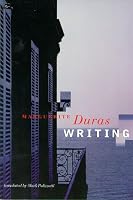
Écrire by Marguerite Duras consists of three film scripts and two short prose texts. Écrire is a short autobiographical film by Sylvie Blum and Claude Guisard. It is a documentary filmed in Duras' house in Neauphle-le-Château in which Marguerite Duras talks about writing.
In Écrire, Marguerite Duras speaks about the importance of her houses and the places where she has stayed for her writing. It is in a house that one is alone (p.1). She talks about the house, and the garden of her home in Neauphle-le-Château where she wrote some of her novels, as well as her house in Paris. She describes at length how she undertook an investigation about other people who had lived in her Paris home throughout the ages, and was surprised to find that among them there had never been anyone who wrote. The style of Écrire is contemplative, autobiographical memoires, and philosophical. It is probably not a good text for readers new to the author as it refers to several of her novels. The text does not give the reader many clues to Duras' writing, other than the prominence and importance of places, both as the setting for the work, the location where the work was written, and the way the house affects the author. It is obvious that at the time the film was made, Marguerite Duras was an author at the height of her career, aware that she could say or write anything and that all and anything would be recorded as if she were the oracle of Dephi. There is a long and sentimental passage about the death of a mouse: a passage which is clearly too long, and too sentimental. Seemingly, the author wants to point out how important her eye for detail, and small events, or petit drama is, but it verges on the ridiculous. On the other hand, some of Duras' novels are characterised by drawn out episodes. It is a pity that Écrire is not illustrated with photos of her homes.
The text is the script of a film with the title La mort du jeune aviateur anglais, a film by Benoît Jacquot. In the film Marguerite Duras tells the story of a young, 20-years old British pilot who died an agonizing death in a tree top after his plain was shot down over Vauville during the later days of World War II. It is remarkable and touching how the villagers bury and keep memorial services for the young soldier for many decades. The beauty of the piece is that in La mort du jeune aviateur anglais Marguerite Duras has touched on a small, personal story about World War II. Too often, the War is commemorated in large, official and impersonal narrative.
Third in this collection is a text called Roma, which is the script of a short film with the title La dialogue de Rome. This is a somewhat peculiar script, which reads more than anything like an off-stage recording of an irritated actress. While the text of Écrire consists of narrative monologue, and La mort du jeune aviateur anglais the telling of a story, Roma consists of dialogues. It can perhaps be read as a short, experimental play.
Added to the three scripts are two short prose compositions. Without a critical introduction it is hard to understand the significance or origin of these texts. The first, Le nombre pur seems to be about a project consisting of people recording all the names of people, places, etc which have occurred in their lives. These names together would then form a condense snap shot of their lives, or collectively of history. The last text, L'Exposition de la peinture is a descriptive piece of an exhibition of paintings.
Écrire consists of very varied types of text, autobiographical and experimental. Écrire is beautiful and interesting, but many other books, notable interviews such as Les lieux de Marguerite Duras (which is referred to in the text) exist which essentially cover the same material, with minor differences.

Other books I have read by Marguerite Duras :
L'Amant de la Chine du Nord
La maladie de la mort
Finished reading: 24 August 2013
 In English:
Écrire by Marguerite Duras consists of three film scripts and two short prose texts. Écrire is a short autobiographical film by Sylvie Blum and Claude Guisard. It is a documentary filmed in Duras' house in Neauphle-le-Château in which Marguerite Duras talks about writing.
In Écrire, Marguerite Duras speaks about the importance of her houses and the places where she has stayed for her writing. It is in a house that one is alone (p.1). She talks about the house, and the garden of her home in Neauphle-le-Château where she wrote some of her novels, as well as her house in Paris. She describes at length how she undertook an investigation about other people who had lived in her Paris home throughout the ages, and was surprised to find that among them there had never been anyone who wrote. The style of Écrire is contemplative, autobiographical memoires, and philosophical. It is probably not a good text for readers new to the author as it refers to several of her novels. The text does not give the reader many clues to Duras' writing, other than the prominence and importance of places, both as the setting for the work, the location where the work was written, and the way the house affects the author. It is obvious that at the time the film was made, Marguerite Duras was an author at the height of her career, aware that she could say or write anything and that all and anything would be recorded as if she were the oracle of Dephi. There is a long and sentimental passage about the death of a mouse: a passage which is clearly too long, and too sentimental. Seemingly, the author wants to point out how important her eye for detail, and small events, or petit drama is, but it verges on the ridiculous. On the other hand, some of Duras' novels are characterised by drawn out episodes. It is a pity that Écrire is not illustrated with photos of her homes.
The text is the script of a film with the title La mort du jeune aviateur anglais, a film by Benoît Jacquot. In the film Marguerite Duras tells the story of a young, 20-years old British pilot who died an agonizing death in a tree top after his plain was shot down over Vauville during the later days of World War II. It is remarkable and touching how the villagers bury and keep memorial services for the young soldier for many decades. The beauty of the piece is that in La mort du jeune aviateur anglais Marguerite Duras has touched on a small, personal story about World War II. Too often, the War is commemorated in large, official and impersonal narrative.
Third in this collection is a text called Roma, which is the script of a short film with the title La dialogue de Rome. This is a somewhat peculiar script, which reads more than anything like an off-stage recording of an irritated actress. While the text of Écrire consists of narrative monologue, and La mort du jeune aviateur anglais the telling of a story, Roma consists of dialogues. It can perhaps be read as a short, experimental play.
Added to the three scripts are two short prose compositions. Without a critical introduction it is hard to understand the significance or origin of these texts. The first, Le nombre pur seems to be about a project consisting of people recording all the names of people, places, etc which have occurred in their lives. These names together would then form a condense snap shot of their lives, or collectively of history. The last text, L'Exposition de la peinture is a descriptive piece of an exhibition of paintings.
Écrire consists of very varied types of text, autobiographical and experimental. Écrire is beautiful and interesting, but many other books, notable interviews such as Les lieux de Marguerite Duras (which is referred to in the text) exist which essentially cover the same material, with minor differences.

Other books I have read by Marguerite Duras :
L'Amant de la Chine du Nord
La maladie de la mort
6edwinbcn
Les lieux de Marguerite Duras
Finished reading: 1 september 2013

Les lieux de Marguerite Duras or "The Places of Marguerite Duras" is a fascinating book about places which are or have been important in the life and work of Marguerite Duras. Seemingly more than in other languages, French publishers publish books consisting of interviews with authors and other public personae. Thus, Les lieux de Marguerite Duras is based on two television programmes of the same title broadcast in 1976, in which Duras was interviewed by Michelle Porte while visiting places that are dear to her.
In the first part Marguerite Duras describes her farm house in Neauphle-le-Château, where she wrote many books, such as Lol Stein and Nathalie Granger. There is some overlap with Écrire as Duras refers to the story of the mouse. As in Écrire Duras described how investigated her Paris home and was surprised to find that among them there had never been anyone who wrote, in Les lieux de Marguerite Duras she relates how she meticulously combed the farm house for any writings, and found none but a year, 1875, scribbled on a wall in the attic.
Reflections on the forest, remind Duras of her brother and lead to reminiscences about her life in Vietnam and the writing of Un barrage contre le Pacifique. From there, follow descriptions of places in India, and places of importances for the writing of Ravishing of Lol Stein and India Song. Duras gaily explains that the location S. Thala is an error and that she had the name Thalassa is mind. As she discovered the mistake later, she decided to leave it unchanged (p.85).
The interview text is interspersed with fragments from films, and richly illustrated with historical photo materials and stills from films based on books by Marguerite Duras.
Other books I have read by Marguerite Duras:
Écrire
La maladie de la mort
L'Amant de la Chine du Nord
Finished reading: 1 september 2013

Les lieux de Marguerite Duras or "The Places of Marguerite Duras" is a fascinating book about places which are or have been important in the life and work of Marguerite Duras. Seemingly more than in other languages, French publishers publish books consisting of interviews with authors and other public personae. Thus, Les lieux de Marguerite Duras is based on two television programmes of the same title broadcast in 1976, in which Duras was interviewed by Michelle Porte while visiting places that are dear to her.
In the first part Marguerite Duras describes her farm house in Neauphle-le-Château, where she wrote many books, such as Lol Stein and Nathalie Granger. There is some overlap with Écrire as Duras refers to the story of the mouse. As in Écrire Duras described how investigated her Paris home and was surprised to find that among them there had never been anyone who wrote, in Les lieux de Marguerite Duras she relates how she meticulously combed the farm house for any writings, and found none but a year, 1875, scribbled on a wall in the attic.
Reflections on the forest, remind Duras of her brother and lead to reminiscences about her life in Vietnam and the writing of Un barrage contre le Pacifique. From there, follow descriptions of places in India, and places of importances for the writing of Ravishing of Lol Stein and India Song. Duras gaily explains that the location S. Thala is an error and that she had the name Thalassa is mind. As she discovered the mistake later, she decided to leave it unchanged (p.85).
The interview text is interspersed with fragments from films, and richly illustrated with historical photo materials and stills from films based on books by Marguerite Duras.
Other books I have read by Marguerite Duras:
Écrire
La maladie de la mort
L'Amant de la Chine du Nord

