lkernagh (Lori) ROOTs for 25 in 2014
Talk ROOT - 2014 Read Our Own Tomes
This group has been archived. Find out more.
Join LibraryThing to post.
1lkernagh
Lori's 2014 ROOT Challenge
I just barely squeaked by with 30 ROOTs read for 2013 so I could either aim big or go with a balance of reality.... I am going to go with a balance of reality and cut my 2014 goal down to 25 ROOTS read, five less than last year. Hopefully this means the year-end pressure is off or we will all discover that I am a procrastinator that is easily diverted by shiny new books!
The only caveat is that the books I read for this challenge need to have been in my possession as of December 31, 2013. That includes the numerous e-books I have downloaded and failed to enter into my LT library.

Books read:
1. The Gatekeeper of Lies by Anthony Bruce -
2. The Curse of Malenfer Manor by Iian McChesney -
3. The Innocent Mrs. Duff by Elisabeth Sanxay Holding - -
4. The Conventionalists by Robert Hugh Benson -
5. A Game of Thrones by George R.R. Martin -
6. Bleak House by Charles Dickens -
7. The Three Musketeers by Alexandre Dumas, père -
8. The Road by Cormac McCarthy -
9. Inamorata by Joseph Gangemi -
10. the curious incident of the dog in the night-time by Mark Haddon -
11. Blue by George Elliott Clarke -
12. The Keeper of Lost Causes by Jussi Adler-Olsen -
13. G is for Gumshoe by Sue Grafton -
14. The Island of the Day Before by Umberto Eco -
15. When Autumn Leaves by Amy S. Foster -
16. Little, Big by John Crowley -
17. H is for Homicide by Sue Grafton -
18. Water for Elephants by Sara Gruen -
19. Twenty Years After by Alexandre Dumas, père -
20. The Complete Essex County by Jeff Lemire - (review)
21. Drood by Dan Simmons -
22. Giovanni's Room James Baldwin -
23. The Viscount of Bragelonne by Alexandre Dumas, père -
24. The Pale Blue Eye by Louis Bayard -
25. Ten Years Later by Alexandre Dumas, père -
26. Louise de la Valliere by Alexandre Dumas, père -
I am looking forward to starting the challenge on January 1, 2014 (tomorrow!).
I just barely squeaked by with 30 ROOTs read for 2013 so I could either aim big or go with a balance of reality.... I am going to go with a balance of reality and cut my 2014 goal down to 25 ROOTS read, five less than last year. Hopefully this means the year-end pressure is off or we will all discover that I am a procrastinator that is easily diverted by shiny new books!
The only caveat is that the books I read for this challenge need to have been in my possession as of December 31, 2013. That includes the numerous e-books I have downloaded and failed to enter into my LT library.

Books read:
1. The Gatekeeper of Lies by Anthony Bruce -

2. The Curse of Malenfer Manor by Iian McChesney -

3. The Innocent Mrs. Duff by Elisabeth Sanxay Holding - -
4. The Conventionalists by Robert Hugh Benson -

5. A Game of Thrones by George R.R. Martin -
6. Bleak House by Charles Dickens -
7. The Three Musketeers by Alexandre Dumas, père -
8. The Road by Cormac McCarthy -

9. Inamorata by Joseph Gangemi -
10. the curious incident of the dog in the night-time by Mark Haddon -
11. Blue by George Elliott Clarke -
12. The Keeper of Lost Causes by Jussi Adler-Olsen -
13. G is for Gumshoe by Sue Grafton -
14. The Island of the Day Before by Umberto Eco -
15. When Autumn Leaves by Amy S. Foster -
16. Little, Big by John Crowley -

17. H is for Homicide by Sue Grafton -
18. Water for Elephants by Sara Gruen -
19. Twenty Years After by Alexandre Dumas, père -
20. The Complete Essex County by Jeff Lemire -
(review)21. Drood by Dan Simmons -
22. Giovanni's Room James Baldwin -
23. The Viscount of Bragelonne by Alexandre Dumas, père -
24. The Pale Blue Eye by Louis Bayard -
25. Ten Years Later by Alexandre Dumas, père -
26. Louise de la Valliere by Alexandre Dumas, père -
I am looking forward to starting the challenge on January 1, 2014 (tomorrow!).
3rabbitprincess
Welcome back and good luck! :D
4rainpebble
Hi Lori and good luck with your challenge. I see you are well set up for it. Here's to good reads!
7lkernagh
First ROOT completed!

ROOT #1 - The Gatekeeper of Lies by Anthony Bruce
Challenge(s): 75 Group, 2014 Category, ROOTs
2014 Category: Lunch to Go
CAT(s): RandomCAT
Source: TBR
Format: Trade Paperback
Original publication date: 2004
Acquisition date: January 21, 2012
Page count: 216 pages
Decimal/ Star rating: 3.40 out of 5 /
Book description/summary: From the Author's website:
Once I got past the fact that this was a completely different type of story than I was expecting, I managed to read it cover to cover over the course of two evenings. Is it just me, or does the cover image give the impression of a historical fiction read and not the spy/espionage story that it really is? The spy world is up to all of its usual dodges in this one with a mole in one spy agency reporting back to their true home agency, spies on the same 'team' with different mandates and a lot of "What are they up to?" and "What have they found?" type conversations. I loved the fact that part of this story takes place in the Pacific west coast on Salt Spring Island, so I am a bit biased about the book from that perspective. The plot was intricate enough to carry my interest, and the cast of characters was plausible and seemed to fit well with the plot. I also enjoyed how the story manages to involve the intelligence agencies of three countries - Canada, France and the United States - along with the RCMP without making me question where the story was going.
On the downside, I had a issue with one area of the story that just didn't jibe with me: you don't see the dawn breaking on the west coast and then apologize to an intelligence officer on the east coast for calling and waking them up. *Shakes head* I also started to wonder if the author has a shoulder fetish or something the way his characters were always touching, or grabbing, or shaking someone's shoulders. The flashback memory scenes were just 'meh' and seemed to interrupt the flow of the story more than provide any meaningful information to the reader.
Oh, and before I forget, that summary above from the Author' website.... it really doesn't do the story justice. If I had read the summary first, I never would have read the book.
Overall, not a bad little espionage read and I was rather excited to discover that the author has written other books, including, To Taunt a Wounded Tiger, which is supposed to be a diplomatic hostage drama set in the Empress Hotel in Victoria, BC. I am now on the hunt for a copy of that book!

ROOT #1 - The Gatekeeper of Lies by Anthony Bruce
Challenge(s): 75 Group, 2014 Category, ROOTs
2014 Category: Lunch to Go
CAT(s): RandomCAT
Source: TBR
Format: Trade Paperback
Original publication date: 2004
Acquisition date: January 21, 2012
Page count: 216 pages
Decimal/ Star rating: 3.40 out of 5 /
Book description/summary: From the Author's website:
From the beauty of western Canada's Gulf Islands to the killing fields of Rwanda and Bosnia. A man running from demons he cannot understand and the child that gives him back his soul... Two governments playing for great stakes and sacrificing as pawns the agents they betray....Review:
Once I got past the fact that this was a completely different type of story than I was expecting, I managed to read it cover to cover over the course of two evenings. Is it just me, or does the cover image give the impression of a historical fiction read and not the spy/espionage story that it really is? The spy world is up to all of its usual dodges in this one with a mole in one spy agency reporting back to their true home agency, spies on the same 'team' with different mandates and a lot of "What are they up to?" and "What have they found?" type conversations. I loved the fact that part of this story takes place in the Pacific west coast on Salt Spring Island, so I am a bit biased about the book from that perspective. The plot was intricate enough to carry my interest, and the cast of characters was plausible and seemed to fit well with the plot. I also enjoyed how the story manages to involve the intelligence agencies of three countries - Canada, France and the United States - along with the RCMP without making me question where the story was going.
On the downside, I had a issue with one area of the story that just didn't jibe with me: you don't see the dawn breaking on the west coast and then apologize to an intelligence officer on the east coast for calling and waking them up. *Shakes head* I also started to wonder if the author has a shoulder fetish or something the way his characters were always touching, or grabbing, or shaking someone's shoulders. The flashback memory scenes were just 'meh' and seemed to interrupt the flow of the story more than provide any meaningful information to the reader.
Oh, and before I forget, that summary above from the Author' website.... it really doesn't do the story justice. If I had read the summary first, I never would have read the book.
Overall, not a bad little espionage read and I was rather excited to discover that the author has written other books, including, To Taunt a Wounded Tiger, which is supposed to be a diplomatic hostage drama set in the Empress Hotel in Victoria, BC. I am now on the hunt for a copy of that book!
10Familyhistorian
I had to laugh when you wrote: you don't see the dawn breaking on the west coast and then apologize to an intelligence officer on the east coast for calling and waking them up. *Shakes head*. Obviously the author isn't aware of the West Coast feeling of being just a bit behind the rest of the country so we have to get up earlier to keep up with what is going on.
11rabbitprincess
Yes, that cover definitely looks like it would be more appropriate for Wolf Hall or something of that nature!
12lkernagh
Thanks everyone! A castle or something medieval comes to mind for me as well. As for the whole west coast/ east coast sunrise thing, I can only assume that the editors gave the book the same amount of attention the cover artist gave it..... a glancing pass, at best and didn't what most readers would stumble over. :-)
13lkernagh

ROOT #2 - The Curse of Malenfer Manor by Iian McChesney
Challenge(s): 75 Group, 2014 Category, ROOTs
2014 Category: Smorgasbord
Reading BINGO square: A Book Set on a Different Continent (Europe)
CAT(s): RandomCAT
Source: LTER
Format: Trade Paperback
Original publication date: September 21, 2013
Acquisition date: November 13, 2013
Page count: 228 pages
Decimal/ Star rating: 3.80 out of 5 /
Book description/summary: From the author's website:
Those in line to the Malenfer estate are succumbing to terrible ends – is a supernatural legacy at work, or something entirely more human? Young Irish mercenary Dermot Ward retreats to Paris at the close of World War I where he drinks to forget his experiences, especially the death of his comrade, Arthur Malenfer. But Arthur has not forgotten Dermot. Dead but not departed, Arthur has unfinished business and needs the help of the living. Upon his arrival at Malenfer Manor, Dermot finds himself embroiled in a mystery of murder, succession, and ambition. Dermot falls in love with the youngest Malenfer, the beautiful fey Simonne, but in his way are Simonne’s mismatched fiancé, her own connections to the spirit world, Dermot’s guilt over the circumstances of Arthur’s death… and the curse.Review:
I wasn't sure what I was in for with this one - a paranormal, Gothic mystery set in post WWI France, with a family cursed over 100 years previously at the centre of the story. What happened is I ended up enjoying this one more than I expected. The relationship between Dermot and Arthur, even a dead Arthur, made for some amusing, heartfelt moments, adding levity to a story otherwise cloaked in darkness. Malenfer Manor, the home, doesn't have the same overpowering presence as Mandalay does in Daphne du Maurier's Rebecca but it is a nice pairing for the steeled controlling matriarch of the family, Madame, and acts like a prison for Madame's daughter Sophie and her grand-daughter Simmone. Simmone's heightened awareness of her surroundings makes her the subject of local gossip. The superstitious and untrusting nature of the locals combine to give McChesney's story its eerie feel. So, Gothic most definitely. What about the mystery, you ask? As far as mysteries go, this was rather good in that I didn't figure out the case until just before the reveal occurred. The 'curse' and the activities lead to a number of possibilities and McChesney keeps things close to his chest as the body count mounts. Having an unwilling ex French Legionary mercenary as our hero also gave room for some interesting character development as Dermot grapples with why he is getting involved in such a mess as this, and Arthur isn't always helpful in that regard. Decisions, decisions. As for Arthur, he is a very curious character and McChesney invests a fair bit of time explaining how poor Arthur comes to terms with being dead and still being in our plane. This caught my interest as much as the mystery did.
Overall, a nice piece of writing that may appeal to readers of Gothic stories and readers who like mysteries with a somewhat military aspect to it.
This book was courtesy of LibraryThing's Early Reviewer Program.
14lkernagh

ROOT #3 - The Innocent Mrs. Duff by Elisabeth Sanxay Holding
Challenge(s): 75 Group, 2014 Category, ROOTs
2014 Category: Lunch to Go
Reading BINGO square: A Book at the Bottom of Your To Be Read Pile
CAT(s): N/A
Source: My library - found in a box of books I purchased back in my Uni days and stored at my parent's place ever since. Re-discovered in February, 2014.
Format: Hardcover pocket book
Original publication date: 1946
Acquisition date: Sometime in 1990
Page count: 199 pages
Decimal/ Star rating: 3.80 out of 5 /
Book description/summary:
Jacob Duff has it all: A beautiful and much younger second wife, a young son, a nice suburban house a train ride from the office in New York City and a position in society he was born into that shapes him. Now one year into his second marriage, Jacob questions his decision to wed a woman he feels will never fit into his mold of the proper wife for a man of his social station but he is cognizant that any decision he makes will face the stern scrutiny of his aunt, who's wealth Jacob will inherit upon her death. What to do.....Review:
I had no idea what to expect from this very plainly bound red hardcover book I purchased way, waaaayyy back in 1990 and which has been stored in a box in the crawlspace of my parent's home until now. I have never heard of Holding as an author and can only assume I purchased this one because I was going through a phase of finding and buying older books I would stumble across at garage sales and swap meets. According to Wikipedia, Holding was much admired during her day. Raymond Chandler, one of the top writers of detective fiction during its golden age of 1920–1940, said of Holding that she was “the top suspense writer of them all.” Well, okay then. Good to know.
Jacob Duff is anything but likeable as a character - he is rude, deems people that do not meet his standards of appropriate appearance, behaviour and manners as unworthy of his attention, and he has very little tolerance for much of anything.... not even the alcohol which he consumes like a fish. I started to get a hangover just reading about his drinking. Holding is a great writer for capturing a strong yet ordinary protagonist who makes a careless mistake and gets caught up in bizarre circumstances. The supporting cast are also strong but the focus of the story is all on Jacob, his thoughts and the actions he takes so the supporting characters remain a bit of a mystery to the reader - and are great for helping drive forward Holding's tightly woven plot.
Published in 1946, this story does have a dated quality to it, so I was rather surprised how much this story grew on me. Holding knows how to draw in a reader like me, who is a bit skeptical and who usually doesn't gravitate to novels of suspense or hard-boiled crime. By the time I had reached the half-way mark, I was hooked waiting for a train wreck but not 100% sure that a train wreck was going to happen. Will I read more Holding books? You bet I will, if I can get my hands on any. Might need to consider reading a Raymond Chandler novel, since I have never read any of his works, either.
As an aside, I was rather surprised to see that Holding actually started out her writing career writing romance novels during the 1920's and it wasn't until after the American stock market crash in 1929 that she shifted her writing focus to the more lucrative genre of the detective novel. Interesting fact, IMO.
15Merryann
"As an aside, I was rather surprised to see that Holding actually started out her writing career writing romance novels during the 1920's and it wasn't until after the American stock market crash in 1929 that she shifted her writing focus to the more lucrative genre of the detective novel. Interesting fact, IMO."
That is interesting! When love stopped paying, she moved to the seedier side of stories. I wonder what that says about me as a reader, that many times I'd rather read detective than romance. Lol!
That is interesting! When love stopped paying, she moved to the seedier side of stories. I wonder what that says about me as a reader, that many times I'd rather read detective than romance. Lol!
16lkernagh
I find it interesting when authors are able to successfully cross genres. Given the rather gritty strength with which Holden writes suspense, I wonder just how 'fluffy' her romances were!
17lkernagh
ROOT #4 - The Conventionalists by Robert Hugh Benson
Challenge(s): 75 Group, 2014 Category, ROOTs
2014 Category:
Reading BINGO square: N/A
CAT(s): N/A
Source: My library - found in a box of books I purchased back in my Uni days and stored at my parent's place ever since. Re-discovered in February, 2014.
Format: Hardcover pocket book
Original publication date: 1900 (according to Wikipedia)
Acquisition date: Sometime in 1990
Page count: 320 pages
Decimal/ Star rating: 3.20 out of 5 /
Book description/summary:
Algernon ("Algy") Banister is the middle son of a well to do country gentleman, attending Cambridge and trying to figure out what he wants out of life. As the middle child of family with 300 years of Protestant religious beliefs, the Law is the profession he is expected to enter, but Algy is a reflective soul, and when he isn't moon-calf in love over the older Mary Maple, he spends his time in contemplative thought, questioning the leisurely lifestyle of his family and their friends. A sudden death in the family acts as a catalyst to drive Algy forward down a path of abandoning the Law as a vocation, and the decision to assume a new vocation that will be a huge shock to his family. To quote directly from the book: "this book is written with all the odds against it; it deals with a hero who only comes into his own under circumstances which to most people appear the very heights of morbid folly."Review:
This is a tough book for me to pin down. Part social commentary, part theological examination, this story is considered to be contemporary fiction for the time period it was written in. Upon reading the author's background, I wonder just how much of the story is fiction and how much is autobiographical in nature, given some interesting parallels between Benson's own conversion from being an ordained priest of the Church of England to becoming a Roman Catholic priest. At the time this "story" was written, Benson is known to have been questioning the status of the Church of England. This is not a pious story and Benson does a good job of including characters representative of the society of the time period: the country gentleman and his family who view long held family beliefs to be paramount to considering any new viewpoints of their offspring; the flamboyantly converted (in the form our Lady Brasted) whose meddling in finding new converts to the Roman Catholic faith is enough to even have the priests in the story groaning at her self-sacrificing and yet, very self-serving actions; and lets not forget the questionable motives of younger women on the search for a suitable husband, also represented in this story.
As a snapshot of British society circa 1900, this is a well written commentary. As a work of fiction, it left me with just a 'meh' feeling. As a work of theological discussion, it raises some interesting, for me, points regarding the contemplatives of the time period and the contemplative life as a vocation, as something I had no knowledge of prior to reading this one.
Finally, as an aside, I was very surprised to see the extensive publication list of Benson's works, ranging from science fiction (really!?), historical fiction, contemporary fiction, children's books, devotional works, apologetic works and even a handful of plays!
18raidergirl3
I like the red books you are reading just before Valentine's Day. You are doing great on the ROOTs. Keep it up!
19lkernagh
Ha, ha... I didn't even think about the red books and Valentine's Day. It seems back in the early half of the 20th century, these books were designed as affordable books for the masses, so a plain red wrapper appears to have been the norm, or at least for the books I have managed to collect from published back in the day. ;-)
20lkernagh

ROOT #5 - A Game of Thrones by George R.R. Martin
Challenge(s): 75 Group, 2014 Category, ROOTs
2014 Category: Two Can Dine
Reading BINGO square: A Best-Selling Book
CAT(s): N/A
Source: TBR
Format: Trade Paperback
Original publication date: August 6, 1996
Acquisition date: September 10, 2011
Page count: 694 pages
Decimal/ Star rating: 3.90 out of 5 /
Book description/summary: From the Amazon.ca website:
Long ago, in a time forgotten, a preternatural event threw the seasons out of balance. In a land where summers can last decades and winters a lifetime, trouble is brewing. The cold is returning, and in the frozen wastes to the north of Winterfell, sinister and supernatural forces are massing beyond the kingdom’s protective Wall. At the center of the conflict lie the Starks of Winterfell, a family as harsh and unyielding as the land they were born to. Sweeping from a land of brutal cold to a distant summertime kingdom of epicurean plenty, here is a tale of lords and ladies, soldiers and sorcerers, assassins and bastards, who come together in a time of grim omens.Review:
"I have made more mistakes than you can possibly imagine," Ned said, "but that was not one of them."That sums up this whopping 694 page story quite nicely, I think. I thought I was going to have a lot of difficulty keeping the characters and the various plots straight, but no, I had no problem following the story. Martin writes with lush detail so it is easy to visualize the fantasy world he has built here, even without watching the HBO series! Some of the characters are really easy to hate. Others are more complicated and my desire to hate them waffles as they display good insight and sound judgement. Like the medieval period of our own timeline, treachery, killing and clashes between clans abound. Martin ended this book with enough interesting plot threads left hanging that I can see the appeal this book has for readers of epic novels, but I need a break from the Seven Kingdoms with its violence and conniving before I can think about picking up book two, A Clash of Kings.
"Oh, but it was, my lord," Cersei insisted. "When you play the game of thrones, you win or you die. There is no middle ground."
21connie53
I love The Game of Thrones. I need to start in book 4 soon. I think I feel a ROOT coming up.
22lkernagh
It is a good story and if I pace myself, book five in the series should be out before I finish book four!
23lkernagh

ROOT #6 - Bleak House by Charles Dickens
Challenge(s): 75 Group, 2014 Category, ROOTs
2014 Category: Ye Olde Traditional Fare
Reading BINGO square: A Book With More Than 500 Pages
CAT(s): N/A
Source: TBR
Format: e-book
Original publication date: published in 20 monthly installments between March 1852 and September 1853
Acquisition date: December 28, 2013 (in preparation for the January Group Read)
Page count: 976 pages
Decimal/ Star rating: 2.80 out of 5 /
Book description/summary: From the Amazon.com website:
Bleak House centers on the generations-long lawsuit Jarndyce and Jarndyce, through which “whole families have inherited legendary hatreds.” Focusing on Esther Summerson, a ward of John Jarndyce, the novel traces Esther’s romantic coming-of-age and, in classic Dickensian style, the gradual revelation of long-buried secrets, all set against the foggy backdrop of the Court of Chancery. Mixing romance, mystery, comedy, and satire, Bleak House limns the suffering caused by the intricate inefficiency of the law.Review:
Well, that was a bit of a slog but I managed to get through Dickens more than excessive verbiage by alternating between reading the e-book and listening to it on audiobook. Not one of his better works, IMO, and I don't hold to the idea that this should be considered his masterpiece. I don't mind reading stories with an array of characters, what appears to be an alternating narration or a myriad of subplots - I loved Catton's The Luminaries - but the differences between Bleak House and The Luminaries are like night and day for me, and the two books should never been compared as having any similarities beyond these very general statements. Dickens engages in an overkill with words, phrases and just overall excessive verbiage to the point where I was compelled to skim read (or hit the built in 15 second fast forward) to try and get to the meat of what he was trying to communicate. The first 1/2 of the book could have been cut down into four or five short chapters for all I cared about the whole Esther, Ada, Richard, Bleak House scene. It took an episode of spontaneous combustion and then a murder - and the ensuing investigations of Detective Bucket - to rescue this story enough for me to want to see it through to its final conclusion. The fact that the last 150 pages was once again a slog to read has me thinking I am being a tad generous with a 2.80 decimal/ 3 star rating for this one. It may get down-graded.
What intrigues me about Bleak House is that it was published in 20 monthly installments, making me wonder if this was one of the early precursors to our modern age soap operas, because it seems to have all the right elements of one: characters with mysterious (or unknown) pasts; family secrets; a long standing dispute over inheritance; some form of blackmail; romance; etc, etc.
Overall, this is a book I can really only recommend to either a new Dickens enthusiast or a lover of soap opera-style "over-the-top" drama. Instead, I am going to suggest to friends and family members to consider watching one of the TV adaptations instead. At least with the TV adaptations one is only subjected to the excess verbiage when it is spoken by a character.
24rabbitprincess
Hurray! I applaud your perseverance.
25lkernagh
Thanks RP! This one will NOT be a re-read, but my other half is interested in watching one of the TV adaptations. I am sure I can survive 'watching' it. ;-)
26lkernagh
A busy month but I have finally managed to complete my first ROOT read for March:

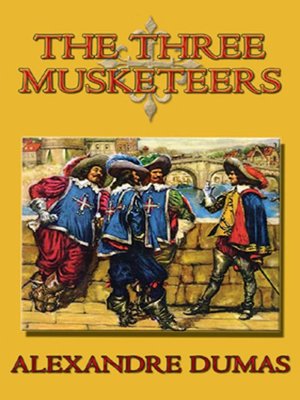
ROOT #7 - The Three Musketeers by Alexandre Dumas, père - audiobook narrated by Simon Vance
Challenge(s): 75 Group, 2014 Category
2014 Category: Ye Olde Traditional Fare
Reading BINGO square: A Book That Became a Movie
CAT(s): N/A
Source: TBR
Format: e-book (Project Gutenberg)/audiobook (GVPL)
Original publication date: first serialized March–July 1844
Acquisition date: December 2013
Page count: 786 pages / 22 hours, 47 minutes listening time
Decimal/ Star rating: 4.20 out of 5 /
Book description/summary: Quicky 'book blurb' from the audible.com website:
I am a huge fan of the adventure-filled story that is The Three Musketeers and while I have watched a number of film adaptations - some better than others - it has been a long, LONG time since I had last read the actual story written by Dumas. As the other books in the D'Artagnan Romancesseries have been on my future reading list for some time, I decided last year that 2014 will be the year that I am going to read all of the books in the series. After slogging my way through Dickens' Bleak House with his overly wordy prose, The Three Musketeers was a delight to revisit. I had forgotten the delightful caricatures Dumas presents his characters as .... d'Artagnan is a glowing example of an impetuous headstrong youth who falls in love at the drop of a hat while Athos, his surrogate father of sorts and opposite, is the moody brooder of past errors. Aramis, delightfully gifted writer that he is, is a man struggling to survive in a situation that is not wholly of his liking (or choosing) and Porthos, well, dear Porthos is a fun-loving social opportunist with an ardent love of a well-funded good life. As conniving as Cardinal Richelieu is, with his web of spies so that sees all and knows all, it is Dumas' character Milady - the Lady de Winter - who continues to fascinate me. She is so deliciously wicked and calculating! A true evil mastermind. The movie adaptations have never really captured her essence as cleverly as Dumas has, IMO.
While not as good as The Count of Monte Cristo - I know, I really shouldn't be comparing the two stories, they are so different in structure, mood and development - The Three Musketeers continues to hold a special place in this reader's heart for the entertaining story of romance, war, political intrigue and lasting friendships that it is, even if the older reader that I am now finds the "love at a drop of a hat" moments comically laughable as opposed to swoon-worthy and parts of the story bordering on silliness. It is escapism, pure and simple.

ROOT #7 - The Three Musketeers by Alexandre Dumas, père - audiobook narrated by Simon Vance
Challenge(s): 75 Group, 2014 Category
2014 Category: Ye Olde Traditional Fare
Reading BINGO square: A Book That Became a Movie
CAT(s): N/A
Source: TBR
Format: e-book (Project Gutenberg)/audiobook (GVPL)
Original publication date: first serialized March–July 1844
Acquisition date: December 2013
Page count: 786 pages / 22 hours, 47 minutes listening time
Decimal/ Star rating: 4.20 out of 5 /
Book description/summary: Quicky 'book blurb' from the audible.com website:
Mixing a bit of seventeenth-century French history with a great deal of invention, Alexandre Dumas tells the tale of young d'Artagnan and his musketeer comrades, Porthos, Athos, and Aramis. Together they fight to foil the schemes of the brilliant, dangerous Cardinal Richelieu, who pretends to support the king while plotting to advance his own power. Bursting with swirling swordplay, swooning romance, and unforgettable figures.Review:
I am a huge fan of the adventure-filled story that is The Three Musketeers and while I have watched a number of film adaptations - some better than others - it has been a long, LONG time since I had last read the actual story written by Dumas. As the other books in the D'Artagnan Romancesseries have been on my future reading list for some time, I decided last year that 2014 will be the year that I am going to read all of the books in the series. After slogging my way through Dickens' Bleak House with his overly wordy prose, The Three Musketeers was a delight to revisit. I had forgotten the delightful caricatures Dumas presents his characters as .... d'Artagnan is a glowing example of an impetuous headstrong youth who falls in love at the drop of a hat while Athos, his surrogate father of sorts and opposite, is the moody brooder of past errors. Aramis, delightfully gifted writer that he is, is a man struggling to survive in a situation that is not wholly of his liking (or choosing) and Porthos, well, dear Porthos is a fun-loving social opportunist with an ardent love of a well-funded good life. As conniving as Cardinal Richelieu is, with his web of spies so that sees all and knows all, it is Dumas' character Milady - the Lady de Winter - who continues to fascinate me. She is so deliciously wicked and calculating! A true evil mastermind. The movie adaptations have never really captured her essence as cleverly as Dumas has, IMO.
While not as good as The Count of Monte Cristo - I know, I really shouldn't be comparing the two stories, they are so different in structure, mood and development - The Three Musketeers continues to hold a special place in this reader's heart for the entertaining story of romance, war, political intrigue and lasting friendships that it is, even if the older reader that I am now finds the "love at a drop of a hat" moments comically laughable as opposed to swoon-worthy and parts of the story bordering on silliness. It is escapism, pure and simple.
27lkernagh

ROOT #8 - The Road by Cormac McCarthy
Challenge(s): 75 Group, 2014 Category, ROOTs
2014 Category: Lunch to Go
Reading BINGO square: N/A
CAT(s): N/A
Source: TBR
Format: trade paperback
Original publication date: 2006
Acquisition date: May 11, 2011
Page count: 287 pages
Decimal/ Star rating: 4.50 out of 5 /
Book description/summary: From the book back cover:
A father and his son walk alone through burned America. Nothing moves in the ravaged landscape save the ash on the wind. It is cold enough to crack stones, and when the snow falls it is gray. The sky is dark. Their destination is the coast, although they don't know what, if anything, awaits them there. They have nothing; just a pistol to defend themselves against the lawless bands that stalk the road, the clothes they are wearing, a cart of scavenged food - and each other.Review: This is my second McCarty read - the first one being Suttree - and McCarthy is now one of my favorite authors. He understands how to write a bleak story, and as crazy as this may sounds, it takes a certain amount of skill to be able to write a story that embodies bleakness as the main emotional element while still allowing other emotions - positive emotions - to dance off the pages. McCarthy has that special skill it takes to blend overpowering gloomy desolation with a glimmer of light and deep felt resignation with a faint warm glow of hope. I never imagined McCarthy writing a post-apocalyptic story of survival in a barren wasteland where you never know if the person you encounter is one of the 'good guys', so I wasn't really sure how I would react to this one. The bleakness of the story didn't bother me - I tend to gravitate to books with a bleak or somewhat desolate theme - and I really liked how it is the father-son relationship and their journey that takes precedent here, not the post-apocalyptic backdrop of their world. The father and son relationship tugged at my heartstrings as they struggled along on their journey and I love how McCarthy takes a minimalist approach in his use of the written word to draw his story. This story gave me a lot to think about.
Overall, I am very happy I have finally pulled this one down off my bookshelves for reading. I won't bother with watching the movie.... some how, I think the movie would ruin the thoughts, images and emotions I have conjured up while reading the book.
Favorite Quote:
"He walked out in the gray light and stood and he saw for a brief moment the absolute truth of the world. The cold relentless circling of the intestate earth. Darkness implacable. The blind dogs of the sun in their running. The crushing black vacuum of the universe. And somewhere two hunted animals trembling like groundfoxes in their cover. Borrowed time and borrowed world and borrowed eyes with which to sorrow it."
28Merryann
>27 lkernagh: That story would be far too bleak for me, but these words from your review:
"...to be able to write a story that embodies bleakness as the main emotional element while still allowing other emotions - positive emotions - to dance off the pages."
are beautiful! Excellent words!
"...to be able to write a story that embodies bleakness as the main emotional element while still allowing other emotions - positive emotions - to dance off the pages."
are beautiful! Excellent words!
30lkernagh

ROOT #9 - Inamorata by Joseph Gangemi
Challenge(s): 75 Group, 2014 Category, ROOTs
2014 Category: Lunch To Go
Reading BINGO square: A Book With a One Word Title
CAT(s): N/A
Source: TBR
Format: Trade Paperback
Original publication date: January 22, 2004
Acquisition date: March 17, 2012
Page count: 336 pages
Decimal/ Star rating: 3.90 out of 5 /
Book description/summary: From the amazon.com website:
It is 1920s Philadelphia, a time when the feverish popular obsession with the paranormal is confronted by the inevitable ascendance of the scientific method. With everyone from Houdini to Arthur Conan Doyle weighing in on the existence of parapsychological phenomena, the media is as fixated on the sensational debate as scientists and would-be psychics. Indeed, in 1922, Scientific American offers five thousand dollars for evidence of "conclusive psychic manifestations."Review:
Inspired by this real-life event, Inamorata follows Martin Finch, a twenty-three-year-old Harvard graduate student and member of Scientific American’s investigative committee, on the case of a lifetime — an attempt to determine whether Mina Crawley, a beautiful Philadelphia socialite, is able to contact the spirit realm. In the tiny upstairs room of the Crawleys’ elegant Rittenhouse Square townhouse, Finch is prepared to debunk a fraud. But instead the man of science breaks the cardinal rule of psychic investigation: Never fall in love with the medium...
For a debut novel, the writing style is well-honed, with a polished investigative style to it, even if the plot has its odd hiccups. This story has a lot of the journalistic flavour and the wonderful team dynamics of Caleb Carr's The Alienist, the differences being that instead of tracking a serial killer in cosmopolitan New York City in a race against time, the investigative team in this story is trying to debunk a possible society psychic fraud in Quaker-based Philadelphia, all in the interests of science and ensuring that the prize money goes to an actual psychic. For me, this story has pluses that made it an enjoyable read. For starters, Martin isn't as naive as he comes across. Hapless when it comes to love, but he still retains a good scientific mind that just keeps analyzing and paying attention to the little details, even when his heart is trying to get him to stop thinking. The clues and insights are doled out in a slow, steady fashion in pace with the plot, so I was able to settle in, enjoy the story and not feel rushed by events or a sudden landslide of information to digest. The historical elements of the time period are captured well here giving the story an interesting balance of history and science that seems to work well. You don't have to be a believer in Spiritualism to enjoy this one... if anything, Gangemi may slightly tug at your shirt sleeve to lead you into wondering what is real and what is all a charade. The following quote from the master of illusion himself, Harry Houdini, brings it all home:
"I have read with keen curiosity the articles by leading scientists on the subject of psychic phenomena... The fact that they are scientists does not endow them with an especial gift for detecting the particular sort of fraud used by mediums, nor does it bar them from being deceived."
31lkernagh

ROOT #10 - the curious incident of the dog in the night-time by Mark Haddon
Challenge(s): 75 Group, 2014 Category, ROOTs
2014 Category: Lunch To Go
Reading BINGO square: N/A
CAT(s): N/A
Source: TBR
Format: Trade Paperback
Original publication date: May 18, 2004
Acquisition date: May 14, 2011
Page count: 240 pages
Decimal/ Star rating: 4.2 out of 5 /
Book description/summary: adapted from the book back cover and the amazon.ca website:
Christopher John Francis Boone knows all the countries of the world and their capitals and every prime number up to 7,057. He relates well to animals but has no understanding of human emotions. He cannot stand to be touched. And he detests the colour yellow. At fifteen, Christopher’s carefully constructed world falls apart when he finds his neighbour’s dog Wellington impaled on a garden fork, and he is initially blamed for the killing. Christopher decides that he will track down the real killer, and turns to his favourite fictional character, the impeccably logical Sherlock Holmes, for inspiration. But the investigation leads him down some unexpected paths and ultimately brings him face to face with things he had no knowledge of before now.Review:
How does one get inside of the mind of an autistic 15 year old boy so that a believable character comes to life? For Haddon, his work with autistic individuals may have been something that he relied upon when he was creating the character of Christopher. I found Christopher to be a very life-like personality and one I was able to connect with, more so than I have with some other characters. Christopher doesn't come across as some wooden, two-dimensional paper doll character: he is complex, loveable and a frustrating puzzle to understand. While the story starts out as a mystery that needs to be solved, navigating the complex and very chaotic world we live in through Christopher' eyes is what made this such a fascinating read for me. I will never say that I understand what an autistic individual thinks and experiences, because I can never place myself in their shoes, but after reading this book, and experiencing what Christopher experiences, I now have a better appreciation for why some individuals have such a strong, compelling need for logic and order in their lives. The plot of the story has its interesting diverging tangents, following the logic and thought patterns of our narrator. At first, the very limited information about the other characters really bugged me. Once I remembered that I am supposed to be viewing everything as Christopher sees and experiences it, the lack of emotional information started to make more sense to me. I also love the fine details that went into this book, like having chapters numbered after prime numbers, not the usual cardinal numbering system, and including math formulas, diagrams and timetables. Some might call that gimmicky. but I like it, a lot! I also loved the fact that the story is based in Swindon (as well as London). I have wonderful memories of a family trip to Europe one summer when I was still a teenager. During that trip we stayed with family friends who lived just outside of Swindon in an old farm house (with a converted barn) that was surrounded by fallow land. They kept trained hawks that were absolutely fascinating to behold, but I digress.
This book would have probably continued to languish on my TBR bookcase if it hadn't been for the April Autism Awareness group read over on the 75 Group. Overall, a great story full of heart and awareness, that Christopher sums up quite nicely:
"And it's best if you know a good thing is going to happen, like an eclipse or getting a microscope for Christmas. And it's bad if you know a bad thing is going to happen, like having a filing or going to France. But I think it is worst is you don't know whether it is a good thing or a bad thing which is going to happen."
33VivienneR
>31 lkernagh: Haddon's book has been added to my wishlist a few times, and then always removed. I was never sure if I would like it or not. You have written an excellent review and convinced me that I must read it.
34Merryann
>33 VivienneR:, I add my recommendation, Vivienne. I'm glad I read The Curious Incident of the Dog in the Night-Time, a book that is admittedly quite outside the boundaries of what I'd normally read. I fell into the story in that rare way in which you forget you're reading. I laughed a little, cried sometimes, and felt that wonderful 'I just learned something' feeling when I was done with it.
35VivienneR
>34 Merryann: Thanks Mary Ann, that settles it. I must read it now. Your description is so enticing.
36lkernagh
>32 connie53: It was quite a surprising read for me. I am now curious to look into other Haddon books.
>33 VivienneR: Thanks! It is a hard book to describe to someone who hasn't read it before.... I know because I just had conversation like that the other day. I ended up by saying they will just have to read the book and decide for themselves what they think of it. It is a rather quick read, if that helps any.
>34 Merryann: What a fantastic experience reading Haddon's book was for you!
>33 VivienneR: Thanks! It is a hard book to describe to someone who hasn't read it before.... I know because I just had conversation like that the other day. I ended up by saying they will just have to read the book and decide for themselves what they think of it. It is a rather quick read, if that helps any.
>34 Merryann: What a fantastic experience reading Haddon's book was for you!
37connie53
>36 lkernagh: You should do just that, Lori!
I've read Een akkefietje which was excellent and Het Rode huis which was too. But my top Haddon book is still Het wonderbaarlijke voorval met de hond in de nacht
I've read Een akkefietje which was excellent and Het Rode huis which was too. But my top Haddon book is still Het wonderbaarlijke voorval met de hond in de nacht
38lkernagh

ROOT #11 - Blue by George Elliott Clarke
Challenge(s): 75 Group, 2014 Category, ROOTs
2014 Category: Smorgasbord
Reading BINGO square: A Book With a Blue Cover
CAT(s): RandomCAT (Poetry)
Source: TBR
Format: Trade Paperback
Original publication date: April 30, 2001
Acquisition date: October 18, 2012
Page count: 157 pages
Decimal/ Star rating: 3.1 out of 5 /
Book description/summary: from the book inside cover:
This incandescent book subscribes to the adage that "Good poems should rage like a fire, burning all things." Blue is black, profane, surly, damning - and unrelenting in its brilliance. George Elliott Clarke writes: "I craved to draft lyrics that would pour out like pentecostal fire - pell mell, scorching, bright, loud: a poetics of arson."Review:
I read this collection of poems for the April Poetry RandomCAT over on the 2014 Category Challenge Group. This is the only book of poetry on my TBR bookcase so I read it so that I could add another book to my ROOTs reading. This was a book randomly purchased one rainy day based solely on the author's name as I had a copy of Whylah Falls already at home should so I figured it would be a fitting read as part of a 'random' read, IMO. ;-)
The majority of the poems contained in this collection are raw, both for the emotions they transmit off the pages and the crude, almost guttural words that pepper a number of the poems. Clarke admits that he wrote these poems in the later half of the 1990's as a reaction to "The Great Republic's fiery liberty" - I have no idea what he is referring to with that statement - and obviously with the purpose to kindle a fire within the reader. He dives into the depths of black history, social demographics, political events and love affairs with a cuttingly honest, bare-all approach that made me feel like I was being hit repeatedly with an emotional battering ram. While Clarke labels these poems as "black, profane, surly, American", Clarke's years growing up in Nova Scotia and his Canadian life come through in these poems with references to Red Rose tea, Canadian politics and the Nova Scotian landscape. That being said, it is the passion that connects these poems, sometimes subtly and sometimes as the ringing force behind the words. My favorite poem in the collection is Elegy for Mona States, a moving poem of love and admiration for a cousin who has committed suicide. That poem is absolutely beautiful, but at 7 pages in length, I won't be reproducing it here. Instead, here is a shorter poem that I quite like:
Ecclesiastes 12Overall, Clarke's poems are more accessible for a non-poetry reader like me than are some other collections I have attempted to read in the past. Clarke writes his poems with a story-telling prose-like quality, so struggling to understand or follow what he is communicated is not a big challenge. I am not a big fan of crass and crude language that was used here, to drive home the message, even though it does so, very effectively. I have mixed feelings about this collection. Some of the poems are absolutely beautiful, some resonated with me in a way I won't forget but most of the poems left me wondering what I was missing or why the a particular turn of phrase was utilized. I came away feeling this was just an average reading experience for me. I preferred his earlier prose work Whylah Falls better.
I remember God during these liquored years -
While the penniless, pensioned days are far,
And the stars birth sunflowers in a black garden,
And the moon shellacks the river with teal light,
And the young bride sleeps and the greyed husband
Stands in the doorway and stares at the night,
And entrepreneurs turn, blinded, from windows,
And banks are flung open to assassins,
And lawyers moan, giving birth to money,
And vipers quarrel in the bowels of priests,
And statues wear away, leaving musick,
And the plump, elegant girls pluck apples,
And the pimp jollies his quarry with wine,
And desire fulfills each luscious limb,
And dragonflies darkle, gleaming through soot,
And the daughters of musick rise and go,
And the river shambles home, leaking stars,
And my poems are illuminated by many.
39lkernagh
>37 connie53: - Great to know. Thanks Connie!
40lkernagh

ROOT #12 - The Keeper of Lost Causes by Jussi Adler-Olsen
Challenge(s): 75 Group, 2014 Category
2014 Category: Petit Fours
Reading BINGO square: N/A
CAT(s): N/A
Source: TBR
Format: Trade paperback
Original publication date: 2007 (Danish) / July 31, 2012 (English re-print edition)
Acquisition date: May 4, 2013
Page count: 416 pages
Decimal/ Star rating: 3.80 out of 5 /
Book description/summary: from amazon.ca website:
Carl Mørck used to be one of Copenhagen’s best homicide detectives. Then a hail of bullets destroyed the lives of two fellow cops, and Carl—who didn’t draw his weapon—blames himself. So a promotion is the last thing he expects. But Department Q is a department of one, and Carl’s got only a stack of Copenhagen’s coldest cases for company. His colleagues snicker, but Carl may have the last laugh, because one file keeps nagging at him: a liberal politician vanished five years earlier and is presumed dead. But she isn’t dead … yet.Review:
I don't as a general rule read police procedural or gritty crime novels. I watch them on TV but usually I don't read them. My attention is prone to wander when a crime novel gets bogged down in details that don't interest me. Having finally gotten around to reading the Stieg Larsson Millennium Trilogy last year, I can see where some novels of this type has a certain appeal. While Larsson and Adler-Olsen each place their own stamp on the crime novels they have written, they do have similarities that made it easy for me to make a side-by-side comparison of their first books. One characteristic both books share is the focus on the person and not the process. My preference is to read about complex characters and not the actual nitty-gritty of police work. Adler-Olsen provides my psychologically-driven mind with enough information to keep my mind in analysis mode regarding Carl's very dark and moody persona and his damaged past while at the same time providing a rather entertaining assistant in Assad, a political-refugee immigrant with a mysterious past of his own.
Adler-Olsen takes his time in framing his characters and the crime for the reader. The reveals are gradual, one piece of information at a time, and the story progresses at a more moderate, dare I say, sedate pace. Now, I like a story that has a slow build and takes it time with me. It makes it a lot easier for me to read the book in intervals spread out over time and not feel as thought I have to backtrack and refresh my memory when I do come back to it. I also like stories that are a bit of a mental puzzle to figure out. If I were to compare book one of the Larsson trilogy with this first book in a series I would have to say that while I prefer Larsson's characters, in particular the enigmatic Lisbeth Salander, Adler-Olsen has provided a better crime puzzle, IMO, to mentally analyze and figure out. For me, reading The Keeper of Lost Causes fit into my comfort zone as a read because I found it to be an interesting blending of the Larsson books with one of my favorite British TV series New Tricks, a cop show that follows the work of the fictional Unsolved Crime and Open Case Squad for the London Metropolitan Police as they investigate old unsolved crimes.
For those of you who haven't already read this one, the ending makes the rather slow pace of the story worth while. Adler-Olsen has also left a lot of unfinished business as it relates to Carl Mørck, a character I admit to having difficulties to warm up to. While I wasn't riveted to the story, I found it to be a very satisfying read and I will continue with the series as I want to see how things progress in Department Q with Carl and Assad.
Best of all, this one contains the following fantastic book quote:
"She'd been lying on the floor thinking about books. That was something she often did in order not to think about the life she might have had, if only she'd made different choices. When she thought about books, she could move into a whole different world. Just remembering the feeling of the dry surface and inexplicable roughness of the paper could ignite a blaze of yearning inside of her. The scent of evaporated cellulose and printer's ink. Thousands of times now she'd sent her thoughts into her imaginary library and selected the only book in the world that she knew she could recall without embellishing it. It was not the one she wanted to remember, not even the one that had made the greatest impression on her. But it was the only book that had remained completely intact in her tortured memory because of the liberating bursts of laughter she associated with it.A great big smile came to my face when the I discovered what book was being referred to by this quote.
41lkernagh

ROOT #13 - G is for Gumshoe by Sue Grafton - audiobook narrated by Mary Peiffer
Challenge(s): 75 Group, 2014 Category, ROOTs
2014 Category: Lunch to Go
Reading BINGO square: N/A
CAT(s): N/A
Source: TBR
Format: Audiobook
Original publication date: Oct 18, 2005
Acquisition date: July 14, 2013
Page count: 304 pages / 8 hours, 10 minutes listening time
Decimal/ Star rating: 4.10 out of 5 /
Book description/summary: From the Librarything book description:
Good and bad things seem to be coming in threes for Kinsey Millhone: on her thirty-third birthday she moves back into her renovated apartment, gets hired to find an elderly lady supposedly living in the Mojave Desert by herself, and makes the top of ex-con Tyrone Patty's hit list. It's the last that convinces Kinsey even she can't handle whoever's been hired to whack her, and she gets herself a bodyguard: Robert Dietz, a Porsche-driving P.I. who takes guarding Kinsey's body very seriously. With Dietz watching her for the merest sign of her usual recklessness, Kinsey plunges into her case. And before it's over, she'll unearth the gruesome truth about a long-buried betrayal and, in the process, come fact-to-face with her own mortality. . . .Review:
I loved this one. It is my favorite Kinsey Millhone book so far, and I am not just saying that because it is a change of pace from some of my recent reads. The plot in this book is more intricate - we have Kinsey's case, the hired killer out to get her and a potential love interest for Kinsey, all rolled up in one tidy little package. Some of the regular characters from previous installments are present - Rosie and Henry - as well as Kinsey's friends Vera and Doris from the insurance company where she has a working arrangement for office space. What I really loved about this one - besides the obvious ability to relive the 1980's in all its jumpsuit and big hair/peacock makeup glory - is that Kinsey came across as a slightly more mature character... not that turning 33 suddenly makes one act differently. It is refreshing to see Kinsey admit when she needs outside help, even if it cramps her style a bit. I also love the literary references to Agnes Grey, which worked really well with this story.
Overall, this is my favorite book in Grafton's Alphabet Mysteries series so far, and I am looking forward to listening to the next book in the series, H is for Homicide.
43lkernagh
Thanks Connie! I am trying to get one more ROOT finished for May - currently reading Umberto Eco's The Island of the Day Before.
44lkernagh
Well, I didn't manage to finish my 14th ROOT before May ended but it is finished now:

ROOT #14 - The Island of the Day Before by Umberto Eco
Challenge(s): 75 Group, 2014 Category, ROOTs
2014 Category: Two Can Dine
Reading BINGO square: N/A
CAT(s): RandomCAT (Nice Day Rose), GeoCAT (Islands and Bodies of Water)
Source: TBR
Format: Trade Paperback
Original publication date: 1994
Acquisition date: May 15, 2011
Page count: 514 pages
Decimal/ Star rating: 3.10 out of 5 /
Book description/summary: from the amazon.com website:
Now, I hope this review doesn't deter anyone from picking up and reading The Island of the Day Before for themselves. I am just not a big fan of the ship-wrecked man type of story that this one is and is something I need to be in the right frame of mind for. The metaphysical aspects of the story, while fascinating at first, became a bit of a laborious chore to get through and reached a level of eye rolling obscurity when Roberto examines whether or not a stone can feel or has any form of sentient thought. Even with these negatives, the story was not enough of a chore to deter me from wanting to retain my copy for a potential re-read at some point in the future. As you have probably guessed, this isn't exactly an easy book for me to write a review for.
Umberto Eco is listed as being a professor of semiotics, so after finishing this one, I decided to look up exactly what semiotics is. This Wikipedia description was very helpful in explaining to me why I struggle a bit with Eco's style of story telling: I am not one for analysis of symbolism and analogy and the search for a deeper meaning when I read a book for pleasure. Shallow of me, I know. ;-)

ROOT #14 - The Island of the Day Before by Umberto Eco
Challenge(s): 75 Group, 2014 Category, ROOTs
2014 Category: Two Can Dine
Reading BINGO square: N/A
CAT(s): RandomCAT (Nice Day Rose), GeoCAT (Islands and Bodies of Water)
Source: TBR
Format: Trade Paperback
Original publication date: 1994
Acquisition date: May 15, 2011
Page count: 514 pages
Decimal/ Star rating: 3.10 out of 5 /
Book description/summary: from the amazon.com website:
After a violent storm in the South Pacific in the year 1643, Roberto della Griva finds himself shipwrecked-on a ship. Swept from the Amaryllis, he has managed to pull himself aboard the Daphne, anchored in the bay of a beautiful island. The ship is fully provisioned, he discovers, but the crew is missing.Review:
As Roberto explores the different cabinets in the hold, he remembers chapters from his youth: Ferrante, his imaginary evil brother; the siege of Casale, that meaningless chess move in the Thirty Years' War in which he lost his father and his illusions; and the lessons given him on Reasons of State, fencing, the writing of love letters, and blasphemy.
I take pride withal in my humiliation, and as I am to this privilege condemned, almost I find joy in an abhorrent salvation; I am, I believe, alone of all our race, the only man in human memory to have been shipwrecked and cast up upon a deserted ship.So begins Eco fanciful tale set in the 17th century Baroque era of an Italian nobleman, Roberto della Griva, marooned on a deserted ship in the Pacific Ocean. We learn how he came to the situation he finds himself in but more importantly, we witness Roberto's numerous ruminations on pretty much everything from religion, cosmology, metaphysics to science and technology of the Baroque period as well as his mental condition as a ship wreck survivor. The story is fascinating on a number of levels. I loved the examination of science and the race to discover the Punto Fijo or fixed point from which all other longitudes could be established. Roberto as a character and his mental state are also fascinating reading as is the multiple allusions to Alexandre Dumas' stories The Three Musketeers and The Man in the Iron Mask. The sections at the start of the story with the siege of Casale had me hoping for a rollicking adventure read. Unfortunately, the story is really an adventure story of a completely different nature. Still good, but not as entertaining as I was looking forward to reading. The downside of this story for me was what I found to be an excessive waxing philosophical/metaphysical nature of the story. This is not a quick read by any means and the overloading of information reminded me a bit of my experience in reading Roberto Bolaño's 2666, another book filled with references and hidden meanings that went right over my head.
Now, I hope this review doesn't deter anyone from picking up and reading The Island of the Day Before for themselves. I am just not a big fan of the ship-wrecked man type of story that this one is and is something I need to be in the right frame of mind for. The metaphysical aspects of the story, while fascinating at first, became a bit of a laborious chore to get through and reached a level of eye rolling obscurity when Roberto examines whether or not a stone can feel or has any form of sentient thought. Even with these negatives, the story was not enough of a chore to deter me from wanting to retain my copy for a potential re-read at some point in the future. As you have probably guessed, this isn't exactly an easy book for me to write a review for.
Umberto Eco is listed as being a professor of semiotics, so after finishing this one, I decided to look up exactly what semiotics is. This Wikipedia description was very helpful in explaining to me why I struggle a bit with Eco's style of story telling: I am not one for analysis of symbolism and analogy and the search for a deeper meaning when I read a book for pleasure. Shallow of me, I know. ;-)
45lkernagh
I have been thinking more and more about my recent Eco read and have decided to downgrade my rating from 3.4 to 3.1. I don't usually mess around with the ratings once I assign one to a book but in this case, I have too many questions to leave it at the higher rating. When I get around to re-reading it, I can then decide if a different rating if warranted.
47dudes22
Me too. About once every 3 months, I sort my current year reads by rating and see if overall for the year I'm happy with how they rank.
48Merryann
>40 lkernagh: Any chance you'll tell what book it is? Or do I have to read the book to find out, lol.
49lkernagh
>46 connie53: and >47 dudes22: - Thanks. It is interesting how a book can change in one's mind after a period of time has lapsed.
>48 Merryann: - LOL, the book referred to in the quote at post 40 above is Winnie the Pooh!
>48 Merryann: - LOL, the book referred to in the quote at post 40 above is Winnie the Pooh!
50lkernagh

ROOT #15 - When Autumn Leaves by Amy S. Foster
Challenge(s): 75 Group, 2014 Category, ROOTs
2014 Category: Smorgasbord
Reading BINGO square: N/A
CAT(s): N/A
Source: TBR
Format: Trade paperback
Original publication date: October 6, 2009
Acquisition date: December 19, 2009
Page count: 304 pages
Decimal/ Star rating: 2.80 out of 5 /
Book description/summary: from the amazon.com website:
In Avening, a tiny town on the Pacific coast, it's hard not to believe in magic. This is a town where the shoes in the window always fit, where you can buy a love potion at the corner shop, and where the woods at the outskirts of town just might be the door to another world. And, of course, there's Autumn, Avening's beloved resident witch. From what's known of its mythical founding, Avening has always been a haven for people who are a little bit different, a place where they can come to discover what makes them so special.Review:
When Autumn receives news that she's been promoted to a higher coven, she also learns she has to replace herself. But who in Avening is in tune enough with her own personal magic to take over the huge responsibility of town witch? Autumn has a list of thirteen women and men who just might have what it takes-but how can she get them to open their eyes to the magic in their lives?
I really wanted to love this story. The first 50 pages made me think about a wonderful affinity to the enchanting stories one of my favorite comfort read authors, Sarah Addison Allen writes. There is just the right amount of magical realism to make this a fantasy escapism read but with a quaint small town quality to it. For a debut novel, it is not bad and yes, I am a sucker for a book set in the Pacific Northwest. So, why no great love for this one? Well, for one, the story's focus tends to ramble and jump around from character to character without any clear explanation of the 'whys' and 'hows'. Sadly, the book doesn't come with a crystal ball to shine insight on the 'bits' left out from the story that would have been helpful. Also, it only took me 6 days to read the story from start to finish and even in that short time span, I had managed to completely forget a couple of the characters, so not exactly a memorable read for me. The story is quaint, charming and infuses little things that we take for granted in everyday life with a slight magical touch but overall it was just an average read for me.
51Merryann
>49 lkernagh: Winnie the Pooh! PERFECT!
That's it. I'm turning off the computer and going to sleep now. This is the perfect note to end the day on. :)
Thanks for telling me.
That's it. I'm turning off the computer and going to sleep now. This is the perfect note to end the day on. :)
Thanks for telling me.
52lkernagh

ROOT #16 - Little, Big by John Crowley
Challenge(s): 75 Group, 2014 Category, ROOTs
2014 Category: Two Can Dine
Reading BINGO square: N/A
CAT(s): N/A
Source: TBR
Format: Audiobook
Original publication date: August, 1981
Acquisition date: June 14, 2013
Page count: 538 pages / 24 hours, 35 minutes listening time
Decimal/ Star rating: 5 out of 5 /
Book description/summary: from the Amazon.com website:
John Crowley's masterful Little, Big is the epic story of Smoky Barnable, an anonymous young man who travels by foot from the City to a place called Edgewood, not found on any map, to marry Daily Alice Drinkawater, as was prophesied. It is the story of four generations of a singular family, living in a house that is many houses on the magical border of an otherworld. It is a story of fantastic love and heartrending loss; of impossible things and unshakable destinies; and of the great Tale that envelops us all. It is a wonder.Review:
"He didn't want to be marched off to another world he couldn't imagine. A little world that couldn't be as big as this one."I should probably start my review with a preface: The version of Little, Big I
Words to describe the overall impressions of this story (for me) are "whimsical", "languid" and "abstract". It is a sweeping tale that defies the usual straightforward story telling. It defies an awful lot of things actually so the first piece of advice is to approach any read of this book with an open mind. The story will tell its tale in it's own due time, with its own voice and meandering manner. The story is very fluid in format, flowing between characters, settings and generations. What makes this rather abstract story work so well for me is the wonderful voice Crowley has given his characters: an interconnected family of loose relations that appears to just float through life with a combined air of bafflement, acceptance and bemusement of the circumstances/powers/influences that move them and the world they inhabit towards a predestined conclusion. A world where rooms have names, like the "Gothic Bathroom", the "Invisible Bedroom" and where the house, Edgewood, is very much a character of this tale. While this is, in essence, a story about the relationship between the Drinkwater family and the fairie world, it is so much more than that. It is a perfect summertime read, preferably while lying in a flower strewn country meadow or a sun lite wooded glen, away from all the hustle and bustle of urban life. The story is timeless in quality and should be enjoyed in an equally timeless, uninterrupted environment.
The audiobook I listened to was narrated by the author, which worked rather well as the author conveyed both the languid tone of the story as well as the fun bits: the real to life characterizations of manner and turns of phrase he had imbued in his characters. My only quibble with the audiobook was I wasn't expecting the rather disembodied female voice to chime in with the section titles. That was just a tad weird at first, but I got over the strangeness and began to use here voice as indicators when I could pause the story. As I mentioned above, this story needs to be approached with an open mind. There were times when I thought about abandoning it - seriously, where exactly was this peculiar story going? - but I am thankful that I decided to stick it out. I can see why this story is considered to be "a neglected masterpiece" with the closest achievement on par being Lewis Carroll's Alice stories.
This is a story I am happy to have experienced and will be adding it to my very, very select 'future re-read" list. This is one story I know will stand the test of time, regardless of when it is read.
53lkernagh

ROOT #17 - H is for Homicide by Sue Grafton - Audiobook narrated by Mary Peiffer
Challenge(s): 75 Group, 2014 Category, ROOTs
2014 Category: Petite Fours
Reading BINGO square: N/A
CAT(s): N/A
Source: TBR
Format: Audiobook
Original publication date: 1991
Acquisition date: July 14, 2013
Page count: 320 pages / 9 hours, 45 minutes listening time
Decimal/ Star rating: 3.4 out of 5 /
Book description/summary: adapted from the Amazon.com website:
When PI Kinsey Millhone’s good friend and colleague Parnell Perkins is found murdered in the parking lot behind California Fidelity Insurance, she can’t believe he had any enemies. The only clue that raises a red flag for Kinsey is one of Parnell’s files on a Bibianna Diaz, who appears to have made a lucrative career out of scamming insurance companies with phony claims. This simple case becomes not some simple when Kinsey meets up with a former school mate and ex-cop, Jimmy Tate, gets thrown into jail with Bibianna and ends up going undercover to try and break an insurance ring, where Kinsey finds herself in the cross-hairs of a short-tempered thug and one of the most treacherous criminals she's come face to face with....Review:
Grafton's Kinsey Alphabet Mysteries series continues to be a great 'change of pace' read for me with a reliable lead character and a retro setting that I always enjoy bouncing in and out of. I found H is for Homicide to be a little different from the previous books in the series. While Grafton's books always go into detail about the characters and their environment, this was the first time that detailed focus has been on the insurance fraud Kinsey was investigating. While the whole 'infiltration into the fraud ring' didn't quite work for me, the information on how the frauds were being perpetrated was quite interesting. Having a character with Tourette syndrome was another interesting twist to the story. The middle part of the story started to drag for me and even some of the bits that were probably supposed to be suspenseful really didn't come across as such. Maybe because I have been reading too many Scottish police procedural of late, but for me it was almost as though Grafton was being a bit tongue-in-cheek about part of the story, especially when our fraud ring kingpin Raymond Maldonado's point of view of the world and morals are at discrepancy with his character:
54lkernagh

ROOT #18 - Water for Elephants by Sara Gruen
Challenge(s): 75 Group, 2014 Category, ROOT
2014 Category: Lunch To Go
Reading BINGO square: N/A
CAT(s): N/A
Source: TBR
Format: Trade paperback
Original publication date: 2006
Acquisition date: October 20, 2010
Page count: 352 pages
Decimal/ Star rating: 4.6 out of 5 /
Book description/summary: from the Amazon.ca website:
Orphaned and penniless at the height of the Depression, Jacob Jankowski escapes everything he knows by jumping on a passing train—and inadvertently runs away with the circus. So begins Water for Elephants, Sara Gruen’s darkly beautiful tale about the characters who inhabit the less-than-greatest show on earth. Jacob finds a place tending the circus animals, including a seemingly untrainable elephant named Rosie. He also comes to know Marlena, the star of the equestrian act—and wife of August, a charismatic but cruel animal trainer. Caught between his love for Marlena and his need to belong in the crazy family of travelling performers, Jacob is freed only by a murderous secret that will bring the big top down.Review:
Love the book, hate the movie. Hate is probably the wrong word since I stopped watching the movie 30 minutes in and cannot speak to the remainder of the film. How can Hollywood take a perfectly written story that even opens itself up for easy adaptation to the big screen and completely bungle it? I know.... you want to know what I think about the book, not the botched movie job. Well, okay.
Gruen has taken the concept of a Depression era circus and provided the reader with a wonderful historical fiction piece steeped in nostalgia, romance, hard nose business tactics along with the weaknesses and faliability of human nature. Jacob is no Robert Patterson - you thought I was going to drop the movie references, didn't you? - he is a young man with his entire life before him and no clear path to move forward given the fateful circumstances that arise. I absolutely love the narration.... give me crusty old narrators any day of the week! It brought back fond memories of my experience reading Fried Green Tomatoes at the Whistle Stop Cafe, a story that did jump wonderfully from book to screen. Gruen has a eye for detail and a way with words that allows the reader to experience the story as though it was actually unfolding before them. I also learned an awful lot about the Depression era, circus lingo and how during that time period, the majority of people looked after themselves. Kind of scary to think we may be tipping that way now.
Overall, this makes the second circus themed book that I have been pleasantly surprised with, the other one being The Night Circus, which is a completely different story and cannot be compared with Water for Elephants. My recommendation is to read the book, savour the story and completely by-pass the movie.
56dudes22
I'm one of the few people, Lori, who didn't like the book so I never even bothered to try the movie. Whenever this happens, I always wonder what I missed that others saw in the book. Maybe it is just as simple as "different day, different opinion". Maybe someday I'll try it again.
57lkernagh
>55 connie53: - Thanks Connie! I just keep plugging along. I am hoping that I will be able to read more than the 25 ROOT reads I have planned.... I may accomplish that. Will have to wait and see.
>56 dudes22: - I would only suggest the movie to you if you are a Reese Witherspoon fan. Reese just pretty much comes across as the type of character she usually presents herself as in other movies and really didn't come across as Marlena to me.
>56 dudes22: - I would only suggest the movie to you if you are a Reese Witherspoon fan. Reese just pretty much comes across as the type of character she usually presents herself as in other movies and really didn't come across as Marlena to me.
58Merryann
>54 lkernagh:, The book may be great, the movie may be bad, but one thing is for certain: you write an awesomely interesting review!
59lkernagh
>58 Merryann: - I am so happy you enjoyed the review!
61lkernagh
>60 Tess_W: - I may revisit the movie after my memories of the book have dimmed down a bit.
62lkernagh

ROOT #19 - Twenty Years After by Alexandre Dumas, père
Challenge(s): 75 Group, 2014 Category, ROOT
2014 Category: Ye Olde Traditional Fare
Reading BINGO square: N/A
CAT(s): N/A
Source: TBR
Format: ebook
Original publication date: 1845
Acquisition date: December 30, 2013
Page count:
Decimal/ Star rating: 3.7 out of 5 /
Book description/summary: adapted from the Amazon.com website, to remove any spoilers:
Two decades have passed since the musketeers have gone up against Cardinal Richelieu and Milady. Time has weakened their resolve, and dispersed their loyalties. But treasons and stratagems still cry out for justice: civil war endangers the throne of France, while in England Cromwell threatens to send Charles I to the scaffold. Dumas brings his immortal quartet out of retirement to cross swords with time, the malevolence of men, and the forces of history. But their greatest test is a titanic struggle with the son of Milady, who wears the face of Evil.Review:
Not quite as good as The Three Musketeers but still a worthy read. Age and experience has tempered some of D'Artagnan's youthful exuberance and zeal, but not any of his passion to see a mission through. His friends - Athos, Porthos and Aramis - are best described by D'Artagnan: "Athos, for generosity, is a hero of romance; Porthos has an excellent disposition, but is easily influenced; Aramis has a hieroglyphic countenance, always illegible." While Dumas attempts to re-create the evil incarnate that was Milady in Mordaunt, I felt that Mordaunt lacks the cunning, sharp intellect and beguile that made Milady such a formidable foe. Still, he was a great evil character for the Musketeers to have against them. The same can be said for Cardinal Richelieu's replacement, Cardinal Mazarin. While the story could be considered a bit lackluster compared with The Three Musketeers, I liked how Dumas created a situation of divided loyalties for the four friends to give the already interesting historical setting of Paris in revolt and an England in conflict under Cromwell's authority added umph. Dumas has tempered some of the cavalier attitudes of our four friends - they are getting up there in age, you know! - while still retaining some of the verbal banting for more light-hearted moments, such as when D'Artagnan asks Porthos if a reconciliation has brought tears to his eyes and Porthos replies, "Yes," said Porthos; "but I do not know if it is feeling or the wind that makes me weep; I think it is the wind." ;-)
Overall, another delightful adventure with the four friends and I am looking forward to reading book three in the D'Artagnan Romances series, The Vicomte de Bragelonne, or Ten Years Later.
63rabbitprincess
Whoa, Twenty Years After is 880 pages?? That should count for two books!
64lkernagh
It is a big book. The 880 page count was the paperback version that I used as my LT entry. You got me curious so I went to the Project Gutenberg site to see if the offer a PDF version of book for download. They do and that one comes in at 632 pages of single spaced text with each chapter starting on a new page, so the LT entry must be for a smaller, pocket book size. ;-)
66lkernagh
>65 Tess_W: - Good to know! I like reading big books in ebook format because it is easier for me to forget how far I am into the story..... a good thing when a story starts to get a bit sluggish!
67lkernagh
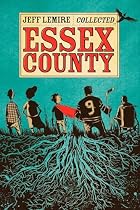
ROOT #20 - The Complete Essex County by Jeff Lemire
Challenge(s): 75 Group, 2014 Category, ROOT
2014 Category: Two Can Dine
Reading BINGO square: N/A
CAT(s): N/A
Source: TBR
Format: Trade Paperback
Original publication date: September 1, 2009
Acquisition date: May 12, 2012
Page count: 512 pages
Decimal/ Star rating: 5 out of 5 /
Book description/summary: from the Amazon.ca website:
Where does a young boy turn when his whole world suddenly disappears? What turns two brothers from an unstoppable team into a pair of bitterly estranged loners? How does the simple-hearted care of one middle-aged nurse reveal the scars of an entire community, and can anything heal the wounds caused by a century of deception? Award-winning cartoonist Jeff Lemire pays tribute to his roots with Essex County, an award-winning trilogy of graphic novels set in an imaginary version of his hometown, the eccentric farming community of Essex County, Ontario, Canada. In Essex County, Lemire crafts an intimate study of one community through the years, and a tender meditation on family, memory, grief, secrets, and reconciliation. With the lush, expressive inking of a young artist at the height of his powers, Lemire draws us in and sets us free.Review:
I picked up this omnibus collection 2 years ago, after having seen rave reviews by Judy (DeltaQueen50), Joe (jnwelch) and Mark (msf59). I now understand why this GN collection has received such great reviews. There is a depth and complexity to Lemire's stories that I wouldn't have thought possible in a GN format. I love how seamlessly Lemire takes the reader back and forth through time, opening up foggy memories, retracing steps and weaving the fabric of the various stories together, creating an evocative, spellbinding experience for this reader. The stories - relying on central themes of hockey, a rural farming community and the emotional distance of families - are filled with an overpowering sense of isolation and melancholy, with glimmers of hope. As Lemire puts it:
"You know, there are only two ways to be completely alone in this world... lost in a crowd... or in total isolation."Even his artwork - sometimes detailed and sometimes nothing more than loosly defined line art - makes full use of the stark contrast of black and white to evoke feeling and effect on the reader.
Overall, a stark, richly textured collection that captures - through look and dialogue - the familial ties that can bind and break us, the fantasies that can help get us through the tough times, the losses that can cripple and the realities of growing up in rural Canada. There is no way that anything I write here will do Lemire's collection justice so I will close off my review by saying that this is Canadian literature at its best, so move on over Margaret Laurence, Pierre Burton, Farley Mowat and the rest of you Canadian literature canons. Jeff Lemire is coming to join you.
70lkernagh

ROOT #21 - Drood by Dan Simmons - audiobook narrated by John Lee
Challenge(s): 75 Group, 2014 Category, ROOTs
2014 Category: Two Can Dine
Reading BINGO square: N/A
CAT(s): N/A
Source: TBR
Format: Trade Paperback
Original publication date: February 8, 2010
Acquisition date: May 12, 2012
Page count: 800 pages / 29 hours, 59 minutes listening time
Decimal/ Star rating: 3.30 out of 5 /
Book description/summary: from the Amazon.ca website:
On June 9, 1865, while traveling by train to London with his secret mistress, 53-year-old Charles Dickens--at the height of his powers and popularity, the most famous and successful novelist in the world and perhaps in the history of the world--hurtled into a disaster that changed his life forever.Review:
Did Dickens begin living a dark double life after the accident? Were his nightly forays into the worst slums of London and his deepening obsession with corpses, crypts, murder, opium dens, the use of lime pits to dissolve bodies, and a hidden subterranean London mere research . . . or something more terrifying?
I started off really, REALLY enjoying this one. It wasn't until I progressed further into the story that I began to realize that this was two books smashed together as one: One fictional memoir style story of the friendship, collaboration and competition of sorts between the two authors (Charles Dickens and Wilkie Collins) and a second story that tries to become more of a dark, suspenseful journey into the underbelly of London, ancient Egyptian rites, mesmerism and the hunt for a demonic being. On one level - the characterization of the relationship between Dickens and Collins, as told from Simmons' Collins point of view - the story was a delight to read/listen to. I particularly enjoyed the whole love/hate relationship Collins portrays in his rantings of Dickens as a writer, a family man, a womanizer, and a... dare I say it .... a bit of a control freak. If you try and picture a somewhat attractive, rather bright girl who is always overshadowed by her Prom Queen friend - and rather sick and tired of always being outside the limelight - that would sum up Simmons' presentation of the relationship between Dickens and Collins quite nicely. I probably would have gotten more enjoyment out of this story if I was fully versed in the works of both Dickens and Collins. I have read some of Dickens' works but sadly, none of Collins. Happily, this story has convinced me beyond all shadow of a doubt that I need to start reading some of Collins' stories, if anything, to see if I agree with comments Simmons provides in this story. I do agree with - and had the most delightful chuckle over - Collins' rant about Dickens' Bleak House. What a hoot!
Going back to that darker, mysterious aspect of the story, that just fell flat for me, especially the whole "scarab scrambling around in someone's body" thing, which made me think of the whole Brandon Fraser/Rachel Weisz/John Hannah movie franchise The Mummy and left me rolling my eyes. Suffice it to say, this part of the story was completely anticlimactic and rather 'out there' compared to the otherwise good Victorian period setting and character development. A story I can recommend for these positive bits, with a caveat that you are okay with an unreliable narrator. If you are good with that, and if you like Dickens and/or Collins or are just sitting on the fence wondering if either author is worthy of your valuable time - they were both rather prolific writers! - you might consider giving Drood a go. If anything, Simmons does present a strong bibliographic outline of both authors works, with some interesting - and rather entertaining - constructive criticism commentary. Just be prepared to wade through 800 pages.
71lkernagh

ROOT #22 - Giovanni's Room James Baldwin
Challenge(s): 75 Group, 2014 Category (mini-challenge), ROOT
Reading BINGO square: N/A
CAT(s): N/A
Source: TBR
Format: Trade paperback
Original publication date: 1956
Acquisition date: July 14, 2012
Page count: 176 pages
Decimal/ Star rating: 4.40 out of 5 /
Book description/summary: from the book back cover:
Set in the 1950s Paris of American expatriates, liaisons, and violence, a young man finds himself caught between desire and conventional morality. With a sharp, probing imagination, James Baldwin's now-classic narrative delves into the mystery of loving and creates a moving, highly controversial story of death and passion that reveals the unspoken complexities of the human heart.Review:
Written with wonderful awareness and prosaic beauty, Baldwin gives the reader an insight into expatriate life in 1950's Paris and a young man's struggles to come to terms with his sexuality and his sexual identity. Underneath this struggle lies a love story, albeit a repressed one fraught with guilt, as David struggles to avoid certain choices for reasons of social and familial acceptance. I found the feeling of isolation David experienced harrowing as he internalized his struggle and tried to put on a brave, indifferent front and a strong emotional theme of the story. The story is about awakening to reality. About climbing above the fog that society expects one to remain enveloped in. It is also about how trapped one can feel when society exhibits indications of refusing to accept someone for who they are.
Overall, a beautifully written story I am very happy to have finally read it.
75lkernagh
>74 Tess_W: - Getting closer!
-------------------------------

ROOT #23 - The Viscount of Bragelonne by Alexandre Dumas, père - translated from the French
Challenge(s): 75 Group, 2014 Category (mini-challenge)
Reading BINGO square: N/A
CAT(s): N/A
Source: Project Gutenberg / TBR
Format: e-book
Original publication date: 1847
Acquisition date: December 30, 2013
Page count: 488 pages
Decimal/ Star rating: 3.20 out of 5 /
Book description/summary: from the amazon.com website:
I am going to start this review off with a bit of an explanation, courtesy of Wikipedia:
This one - which comprises the first 75 chapters of the last D'Artagnan advenure - was a bit of a let down after the wonderful fun and excitement of The Three Musketeers and the rather suspense-building story of Twenty Years After. Now 35 years into the D'Artagnan story, this first part is more focused on building the shifts in power that occurred in 1660 - where an exiled Charles II strives to return to the English throne and a young Louis XVI of France starts his transformation from a shadow king controlled by Cardinal Mazarin (Cardinal Richileau's replacement as the most important person in France) to becoming the Sun King. Not an awful lot of skirmishes or adventuring in this one. More about political events and the corrupt powers with near absolute control over matters. Political intrugues do capture my attention, but not to the same extent and out and out swashbuckling adventures of do first and think later do. Yes I realize that D'Artagnan is now in his early 50's and his friends are even older but an adventure that becomes predominantly back room politics and underhanded dealings is a bit of a let down after the previous adventures of the younger musketeers. D'Artagnan is still the naive individual we met in The Three Musketeers and still seems to find himself taking paths that might be less than ideal. At least experience has made him a more jaded individual, not quite so willing to blindly follow his masters and finally realizing that one does require some financial security as one grows older. While Athos plays a large role in this one with D'Artagnan, there is very little of Porthos, Aramis or even the Viscount of Bragelonne. One can only hope that the Viscount has a larger role in the next part, "Ten Years Later", but it does make me wonder why the English editions that broke this one into four books, didn't think to call the first book "Ten Years Later" as being a fitting explanation of where the story resumes from (ten years after the end of the adventures told in "Twenty Years After") and then called the second book "The Viscount of Bragelonne". Here is hoping that things start to pick up.... maybe with the Viscount taking the lead in the swashbuckling aspect of the adventures. Besides, Louis XVI - or at least Dumas' representation of him - is starting to intrigue me.
-------------------------------

ROOT #23 - The Viscount of Bragelonne by Alexandre Dumas, père - translated from the French
Challenge(s): 75 Group, 2014 Category (mini-challenge)
Reading BINGO square: N/A
CAT(s): N/A
Source: Project Gutenberg / TBR
Format: e-book
Original publication date: 1847
Acquisition date: December 30, 2013
Page count: 488 pages
Decimal/ Star rating: 3.20 out of 5 /
Book description/summary: from the amazon.com website:
It is May 1660 and the fate of nations is at stake. Mazarin plots, Louis XIV is in love, and Raoul de Bragelonne, son of Athos, is intent on serving France and winning the heart of Louise de la Valliere. D'Artagnan, meanwhile, is perplexed by a mysterious stranger, and soon he learns that his old comrades already have great projects in hand. Athos seeks the restoration of Charles II, while Aramis, with Porthos in tow, has a secret plan involving a masked prisoner and the fortification of the island of Belle-Ile. D'Artagnan finds a thread leading him to the French court, the banks of the Tyne, the beaches of Holland, and the dunes of Brittany.Review:
I am going to start this review off with a bit of an explanation, courtesy of Wikipedia:
The Vicomte of Bragelonne: Ten Years Later is the third and last of the d'Artagnan Romances, following The Three Musketeers and Twenty Years After. It appeared first in serial form between 1847 and 1850. In the English translations the 268 chapters of this large volume are usually subdivided into three, but sometimes four or even five individual books.For this final push in my personal mini-challenge to read all of the books that comprise the d'Artagnan Romances in 2014, I have decided to read the English edition that comprise the text of The Viscount of Bragelonne on Project Gutenberg, broken down into the following four books: "The Vicomte de Bragelonne", "Ten Years Later", "Louise de la Vallière", and "The Man in the Iron Mask".
This one - which comprises the first 75 chapters of the last D'Artagnan advenure - was a bit of a let down after the wonderful fun and excitement of The Three Musketeers and the rather suspense-building story of Twenty Years After. Now 35 years into the D'Artagnan story, this first part is more focused on building the shifts in power that occurred in 1660 - where an exiled Charles II strives to return to the English throne and a young Louis XVI of France starts his transformation from a shadow king controlled by Cardinal Mazarin (Cardinal Richileau's replacement as the most important person in France) to becoming the Sun King. Not an awful lot of skirmishes or adventuring in this one. More about political events and the corrupt powers with near absolute control over matters. Political intrugues do capture my attention, but not to the same extent and out and out swashbuckling adventures of do first and think later do. Yes I realize that D'Artagnan is now in his early 50's and his friends are even older but an adventure that becomes predominantly back room politics and underhanded dealings is a bit of a let down after the previous adventures of the younger musketeers. D'Artagnan is still the naive individual we met in The Three Musketeers and still seems to find himself taking paths that might be less than ideal. At least experience has made him a more jaded individual, not quite so willing to blindly follow his masters and finally realizing that one does require some financial security as one grows older. While Athos plays a large role in this one with D'Artagnan, there is very little of Porthos, Aramis or even the Viscount of Bragelonne. One can only hope that the Viscount has a larger role in the next part, "Ten Years Later", but it does make me wonder why the English editions that broke this one into four books, didn't think to call the first book "Ten Years Later" as being a fitting explanation of where the story resumes from (ten years after the end of the adventures told in "Twenty Years After") and then called the second book "The Viscount of Bragelonne". Here is hoping that things start to pick up.... maybe with the Viscount taking the lead in the swashbuckling aspect of the adventures. Besides, Louis XVI - or at least Dumas' representation of him - is starting to intrigue me.
76lkernagh

ROOT #24 - The Pale Blue Eye by Louis Bayard
Challenge(s): 75 Group, 2014 Category (mini-challenge), ROOTs
Reading BINGO square: N/A
CAT(s): N/A
Source: TBR
Format: Trade paperback
Original publication date: May 31, 2007
Acquisition date: December 30, 2010
Page count: 448 pages
Decimal/ Star rating: 3.40 out of 5 /
Book description/summary: from amazon.ca website:
IAt West Point Academy in 1830, the calm of an October evening is shattered by the discovery of a young cadet's body swinging from a rope. The next morning, an even greater horror comes to light. Someone has removed the dead man's heart. Augustus Landor—who acquired some renown in his years as a New York City police detective—is called in to discreetly investigate. It's a baffling case Landor must pursue in secret, for the scandal could do irreparable damage to the fledgling institution. But he finds help from an unexpected ally—a moody, young cadet with a penchant for drink, two volumes of poetry to his name, and a murky past that changes from telling to telling. The strange and haunted Southern poet for whom Landor develops a fatherly affection, is named Edgar Allan Poe.Review:
Being a lover of historical murder mystery stories, I was really looking forward to reading this one. I wasn't expecting it to take me 18 days to read it, though. I was looking forward to flying through the book in 2-3 days, like I did with his wonderful 19th century French police detective Vidocq mystery The Black Tower and his interesting take on Dicken's A Christmas Carol and and adult Tiny Tim in Mr. Timothy. Bayard has shown some consistency in the stories I have read. They all have a dark undercurrent to them that oozes off the pages. Bayard is good with the atmosphere and even the character portrayals, but darn it all, he does have this habit of going too deep, delving too far into the details of his characters, setting the stage, or, in the case of this story, in losing track of whether he is creating a unique portrayal of a historical/literary figure or plotting out the story structure of the mystery at hand. I do love a well built story. The plot is tight, the setting is detailed/descriptive and the characters are for the most part well rounded, but by the mid-point of this story I was starting to groan about the slog I felt it was becoming. After some distractions in the form of other books, I came back to The Pale Blue Eye, determined to complete it. I am glad I did. The story continued to have its slogging bits but Bayard provides a very interesting conclusion and reveal that has now actually whet my appetite to go back and re-read the book all over again, with an eye for the subtle clues I did not pick up on my first read through. For straightforward mystery lovers, this book will probably drive you to frustration, until you get to the very end. For historical fiction lovers, this story may have its appeal but as the story has its schizophrenic issues of one minute being a straightforward historical fiction piece and then the next minute being a dark, brooding murder mystery piece, I struggle to find an audience that will completely love this one. After having read Dan Simmon's Drood, I can now see that the authors share some similar story telling tricks, like talking directly to the reader - Bayard refers repeatedly to 'Reader' while Simmons, in Drood refers to 'Dear Reader' - with a focus of trying to weave complex characters into a cohesive story.
Not my favorite Bayard novel but he continues to be a writer who's works I look forward to exploring further.
77lkernagh

ROOT #25 - Ten Years Later by Alexandre Dumas, père
Challenge(s): 75 Group, 2014 Category (mini-challenge), ROOTs
Reading BINGO square: N/A
CAT(s): N/A
Source: TBR
Format: e-book (Project Gutenberg)
Original publication date: seriallized October,1847 - January, 1850
Acquisition date: December 30, 2013
Page count: 441
Decimal/ Star rating: 2.90 out of 5 /
Book description/summary: adapted from the amazon.ca website listing:
Princess Henrietta's arrival in 1660 to the French court for her marriage to King Louis XIV's younger brother Philippe, throws the French court into complete disorder, where jealousies, scandal- hungry members of the French court and new power struggles for control of the country finances are at play.Review:
Okay, this was not the swashbuckling adventures of The Three Musketeers. Not by a long shot. Given that so many of the characters in this one are the next generation, so to speak, I was hopeful for some youthful adventures. Instead, all we get is over 400 pages of drama of the jealous, lustful and scandal-hungry members of the French court, along with various pastoral fancies and a growing love triangle that can only become bad news for someone. Even the power struggles that arise between Fouquet, the superintendent of finance, and Cardinal Mazarin's clerk Colbert, don't have enough teeth to make them interesting. It all just comes across as petty antics. Aramis and D'Artagnan both play minor roles in this one, with Porthos and Athos only being vaguely mentioned. Nice to see Raoul taking on the role of the voice of reason, when he is in the picture, but for the most part, this one is all about French court life. What I did find rather odd - and it might have just been me - was not so much the lack of swords play and missing the whole protect, honor and glory thing, but the weird, almost Shakespearean manner in which the court activities during the fête at Fontainbleau are portrayed. It is because of this aspect, I can really only recommend this one to readers who might enjoy Louis XIV's court becoming a variation on Shakespeare's A Midsummer's Night Dream. To its credit, the story does contain some wonderful references to the possible background of a mystery man locked up in the Bastille, and the secret that is larger than all other secrets. Foreshadowing for what is to come... too bad that bit only occupies about 25 pages of the story!
79rabbitprincess
Yay, congratulations! Re your last review, I think I'll stick to the first Musketeers book!
80lkernagh
Thank you both, Connie and RP! I think I have found to number of ROOT books I am comfortable setting as a challenge so I am raring to go for next year!
>79 rabbitprincess: - Good idea. I am almost finished Louise de la Valliere but I am a little worried I won't be able to close out the D'Artagnan series and The Man in the Iron Mask this year as planned.
>79 rabbitprincess: - Good idea. I am almost finished Louise de la Valliere but I am a little worried I won't be able to close out the D'Artagnan series and The Man in the Iron Mask this year as planned.
81lkernagh

ROOT #26 - Louise de la Valliere by Alexandre Dumas, père
Challenge(s): 75 Group, 2014 Category (mini-challenge), ROOT
Reading BINGO square: N/A
CAT(s): N/A
Source: TBR
Format: e-book (Project Gutenberg)
Original publication date: seriallized October, 1847 - January, 1850
Acquisition date: December 30, 2013
Page count: 395 pages
Decimal/ Star rating: 3.10 out of 5 /
Book description/summary: adapted from varous sources to be spoiler-free:
Picking up where Ten Years Later left off, Louis XIV's court continues to be one filled with behind doors intrigues and power struggles. While our four musketeers engage in musings or intrigues of their own, it becomes a question as to how far Louis XIV will go to get what he desires.Review:
A slight improvement over the silly melodrama that was Ten Years After but still filled with a fair bit of unnecessary fluff. I can now see why these books may have appealed to 19th century readers: Dumas goes to great pains to perpetuate what we now know as "the soap opera". The D'Artagnan Romances are a soap opera. It has all of the right elements: characters in love/conflict/alliance; a plot that is drawn out in small doses over a huge swath of time; some repetition of information to refresh the reader's memories; and the whole heart-ache angst bit. I am not a big fan of soap operas so that is probably why I am struggling a bit with this one. Characters who pose and posture and don't really seem to get down to the business at hand without monologuing try my patience. The good news is that Louise de la Valliere did have some good bits that now have me looking forward to reading the last book in the series, The Man in the Iron Mask. I just wish the journey to this point had not involved some 3,600 pages of text. Dumas was as prolific a serial writer as Dickens, if that can be imagined! He must have been paiod by the word, just like Dickens' was. ;-)
Onwards to The Man in the Iron Mask.
82lilisin
79, 81 -
I actually didn't like the swashbuckling of The Three Musketeers but love the final books of the d'Artagnan series. I read them like a child eats candy. Dumas is best when he is intertwining his myriad of characters amongst the backdrop of court life. In fact court life becomes the main character of his books and its fascinating. So much that I think Dumas is best when he is allowed to take his time writing about all the little plots and discretions. But I think many people know Dumas only has a swashbuckler so when they don't see that they get disappointed and lose sight of his real genius. (Not to say that is you, of course)
I actually didn't like the swashbuckling of The Three Musketeers but love the final books of the d'Artagnan series. I read them like a child eats candy. Dumas is best when he is intertwining his myriad of characters amongst the backdrop of court life. In fact court life becomes the main character of his books and its fascinating. So much that I think Dumas is best when he is allowed to take his time writing about all the little plots and discretions. But I think many people know Dumas only has a swashbuckler so when they don't see that they get disappointed and lose sight of his real genius. (Not to say that is you, of course)
83Tess_W
I have the entire series on my Kindle. I think I would probably prefer the court-life! We shall see when I get to them in my TBR mountain!
84lkernagh
>82 lilisin: and >83 Tess_W: - Good points! The story would work better for me in its original serial format, reading only snippets of the story over a 6 year period. It does seem to be more set up for dipping in and out of. ;-) I think my experience reading The Count of Monte Cristo, which is one of my all time favorite classic literature reads, tends to overshadow my experience of Dumas' D'Artagnan series. I want the same tight simmering build in the plot. I still have high hopes that The Man in the Iron Mask will pull me back in and reaffirm my love for Dumas stories. ;-)

