This topic is currently marked as "dormant"—the last message is more than 90 days old. You can revive it by posting a reply.
1StevenTX
Reposted from my Club Read 2013 thread:
India Song by Marguerite Duras
First published 1973
Translation by Barbara Bray 1976
(The title is the same in the French and English editions: the English phrase "India Song.")

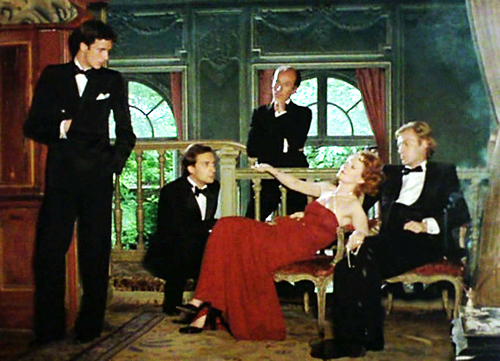
India Song is a play Marguerite Duras wrote in 1973 based largely on her own 1965 novel The Vice-Consul, which, in turn, used characters from her 1964 novel The Ravishing of Lol Stein. The play was both produced on stage and, in 1975, made into a film by Duras herself.
The drama takes place mostly in Calcutta (now Kolkata) at the French embassy. (Duras says in her preface that she knows full well the embassy would have been in New Delhi, not Calcutta, but she is deliberately imprecise in her geography.) The story centers on the ambassador's promiscuous wife, Anne-Marie Stretter, whose languorous beauty is irresistible to the younger men around her. She and her lovers suffer from a self-destructive despair because of the tropical heat and the human misery surrounding them, especially the leprous beggars who encircle every European compound.
The play is unique in that no words are spoken on stage. In the opening act the players are silent, and all we hear are two disembodied female voices. Voice 1 is fascinated with Anne-Marie and wants to know details of her background. Voice 2 supplies some of the answers, but is clearly in love with Voice 1. In the long second act the players speak, but only when they are off stage. We hear them conversing in an adjacent room, but when they step into sight they are silent. In the final three short acts the female voices return, accompanied by a pair of male voices. And once again the actors on stage are merely posing.
Like many of Duras's other works, India Song combines strong political opinions on colonialism and inequality with a haunting story of erotic obsession. It is well worth reading both the play and The Vice-Consul. The novel has many additional elements not found in the play, but the disembodied voices in the play add a new dimension to the story.
India Song by Marguerite Duras
First published 1973
Translation by Barbara Bray 1976
(The title is the same in the French and English editions: the English phrase "India Song.")
India Song is a play Marguerite Duras wrote in 1973 based largely on her own 1965 novel The Vice-Consul, which, in turn, used characters from her 1964 novel The Ravishing of Lol Stein. The play was both produced on stage and, in 1975, made into a film by Duras herself.
The drama takes place mostly in Calcutta (now Kolkata) at the French embassy. (Duras says in her preface that she knows full well the embassy would have been in New Delhi, not Calcutta, but she is deliberately imprecise in her geography.) The story centers on the ambassador's promiscuous wife, Anne-Marie Stretter, whose languorous beauty is irresistible to the younger men around her. She and her lovers suffer from a self-destructive despair because of the tropical heat and the human misery surrounding them, especially the leprous beggars who encircle every European compound.
The play is unique in that no words are spoken on stage. In the opening act the players are silent, and all we hear are two disembodied female voices. Voice 1 is fascinated with Anne-Marie and wants to know details of her background. Voice 2 supplies some of the answers, but is clearly in love with Voice 1. In the long second act the players speak, but only when they are off stage. We hear them conversing in an adjacent room, but when they step into sight they are silent. In the final three short acts the female voices return, accompanied by a pair of male voices. And once again the actors on stage are merely posing.
Like many of Duras's other works, India Song combines strong political opinions on colonialism and inequality with a haunting story of erotic obsession. It is well worth reading both the play and The Vice-Consul. The novel has many additional elements not found in the play, but the disembodied voices in the play add a new dimension to the story.
Join to post

