Avaland and Dukedom_Enough's 2015 Reading: A Co-literary Experiment
This topic was continued by Avaland and Dukedom_Enough's 2015 Reading. Part II.
Talk Club Read 2015
Join LibraryThing to post.
This topic is currently marked as "dormant"—the last message is more than 90 days old. You can revive it by posting a reply.
1avaland
Happy New Year to all our bookish friends and acquaintances! Welcome to Michael and Lois's 2015 joint thread. Having both failed to be very active or post regularly in 2014, we thought we might try this little experiment.
Michael, a retired scientist, reads mostly random things on the internet, but here he will be reporting on the novels, short stories and nonfiction he reads (often in paper form!). The fiction is most likely to be science fiction and some fantasy; the nonfiction could be anything from current events to poetry to economics to politics. Don't rule anything out.
Lois, a semi-retired jill-of-all-trades (the most recent careers involving the book trade), reads mostly fiction (any genre, in any form, translated from any language), but also dips into nonfiction, which could be anything from poetry to literary criticism to social history to women's studies. But, again, don't rule anything out. She also reads random things on the internet (but a tiny fraction of what dukedom does!)
----------------------------
Michael's top books of 2014:
Echopraxia by Canadian author Peter Watts.
The Hockey Stick and the Climate Wars: Dispatches from the Front Lines by Michael E. Mann.
Lois's top five reads of 2014 were:
Enon by Paul Harding (2013, US).
Before I Burn by Gaute Heivoll (T 2014, Norwegian)
The Accursed by Joyce Carol Oates (2014, US)
Leon and Louise by Alex Capus (2011, Swiss/German)
Annihilation by Jeff VanderMeer (2014, US; the first in his Southern Reach trilogy)
--------------------------------
We are, of course, very different people, so we will post differently. Michael is much more economical with his words than Lois, for example. Lois reads way more books than Michael, as another example.
Our physical library is mostly merged, 2/3rds of our books are finally out of their moving boxes (will post some bookshelf pºrn in the near future). Come visit if you have time, and we will try to get out of "the house" a bit more!
----Michael and Lois
PS: We have talked about both reading Middlemarch this year; a first reading for Michael, an-it's-time-for-another-reread for Lois.
Michael, a retired scientist, reads mostly random things on the internet, but here he will be reporting on the novels, short stories and nonfiction he reads (often in paper form!). The fiction is most likely to be science fiction and some fantasy; the nonfiction could be anything from current events to poetry to economics to politics. Don't rule anything out.
Lois, a semi-retired jill-of-all-trades (the most recent careers involving the book trade), reads mostly fiction (any genre, in any form, translated from any language), but also dips into nonfiction, which could be anything from poetry to literary criticism to social history to women's studies. But, again, don't rule anything out. She also reads random things on the internet (but a tiny fraction of what dukedom does!)
----------------------------
Michael's top books of 2014:
Echopraxia by Canadian author Peter Watts.
The Hockey Stick and the Climate Wars: Dispatches from the Front Lines by Michael E. Mann.
Lois's top five reads of 2014 were:
Enon by Paul Harding (2013, US).
Before I Burn by Gaute Heivoll (T 2014, Norwegian)
The Accursed by Joyce Carol Oates (2014, US)
Leon and Louise by Alex Capus (2011, Swiss/German)
Annihilation by Jeff VanderMeer (2014, US; the first in his Southern Reach trilogy)
--------------------------------
We are, of course, very different people, so we will post differently. Michael is much more economical with his words than Lois, for example. Lois reads way more books than Michael, as another example.
Our physical library is mostly merged, 2/3rds of our books are finally out of their moving boxes (will post some bookshelf pºrn in the near future). Come visit if you have time, and we will try to get out of "the house" a bit more!
----Michael and Lois
PS: We have talked about both reading Middlemarch this year; a first reading for Michael, an-it's-time-for-another-reread for Lois.
2dukedom_enough
My Real Children by Jo Walton 4-1/2 stars
The Peripheral by William Gibson 4-1/2 stars
The Jazz Palace by Mary Morris 2-12 stars
Echopraxia by Peter Watts 5 stars
Burning Paradise by Robert Charles Wilson 3-1/2 stars
The Three-Body Problem by Cixin Liu, translated by Ken Liu 4 stars
The Peripheral by William Gibson 4-1/2 stars
The Jazz Palace by Mary Morris 2-12 stars
Echopraxia by Peter Watts 5 stars
Burning Paradise by Robert Charles Wilson 3-1/2 stars
The Three-Body Problem by Cixin Liu, translated by Ken Liu 4 stars
3avaland


Currently Reading:
A Price to Pay by Alex Capus (2013, T2014 Franco-Swiss author)
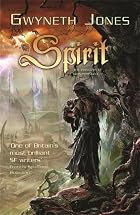
Spirit; or The Princess of Bois Dormant by Gwyneth Jones (2008, SF redo of the Count of Monte Cristo, UK)
Jane Eyre's Sisters: How Women Live and Write the Heroine's Story by Jody Gentian Bower (2015)
Wolf Kahn by Justin Spring (Art, contains 3 essays)
Books Read 2015



Dreamless by Jørge Brekke (2014, T 2015, Norwegian)
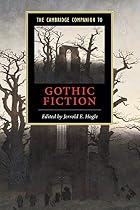
The Cambridge Companion to Gothic Fiction (2002, essays from)
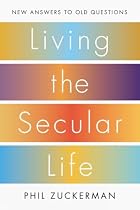
Living the Secular Life by Phil Zuckerman (2014, nonfiction)
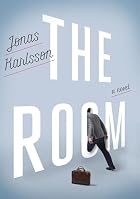
The Room by Jonas Karlsson (2009, translation 2015, no touchstone yet, Swedish)
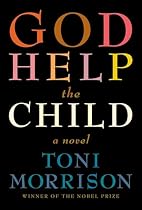
God Help the Child by Toni Morrison (2015)
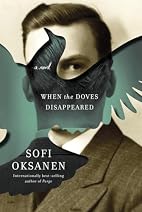
When the Doves Disappeared by Sofi Oksanen (2012, translation 2015, Finnish-Estonian, WWII story set in Estonia)
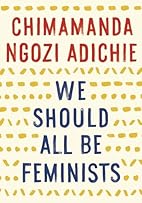
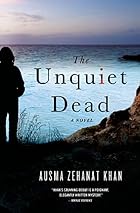
We Should All Be Feminists by Chimamanda Ngozi Adichie (2015, from a TED talk)
“The Contemporary Gothic: Why We Need It” by Stephen Bruhm and
"The Rise of American Gothic" by Eric Savoy in The Cambridge Companion to Gothic Fiction
Northanger Abbey by Val McDermid (2014, novel)
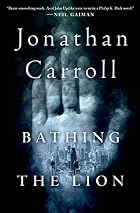
Bathing the Lion by Jonathan Carroll (2014, novel)
A Matter of Time by Alex Capus (2009, Franco-Swiss, T. from the German, new edition 2013)
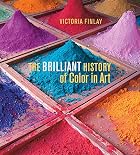
The Brilliant History of Color in Art by Victoria Finlay (2014, Art)
The Unquiet Dead by Ausma Zehanat Khan (2015, Canadian, crime novel)
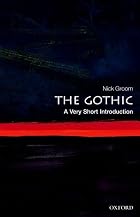
The Gothic: A Very Short Introduction by Nick Groom (nonfiction)
Partial readings in:
Poem Depot: Aisles of Smiles by Douglas Florian, Falling Up by Shel Silverstein, and A Pizza the Size of the Sun by Jack Prelutsky. A domestic poetry slam of funny poetry. Michael, me and one 9 year old.
Claiming the Spirit Within: A Sourcebook of Women's Poetry (1996, poetry anthology)
The Norton Anthology of Modern and Contemporary Poetry, Third Edition, volume II.
4Caroline_McElwee
Hi Lois and Michael
I'll take a peek at what you are up to from time to time. I have been planning a re-read of Middlemarch myself, so may join you in that, if I'm not committed to some other reading project at the time. It is an old friend.
I've bought mainly non-fiction in the past 18 months, so I'm looking forward to reading some of that in the New Year.
Good luck with your joint Club Read adventure.
I'll take a peek at what you are up to from time to time. I have been planning a re-read of Middlemarch myself, so may join you in that, if I'm not committed to some other reading project at the time. It is an old friend.
I've bought mainly non-fiction in the past 18 months, so I'm looking forward to reading some of that in the New Year.
Good luck with your joint Club Read adventure.
5NanaCC
What an interesting way to do a thread, Lois and Michael.
I will be interested to see how this goes. I'd like to get Chris to be more active again.
Starring your thread.
I will be interested to see how this goes. I'd like to get Chris to be more active again.
Starring your thread.
6avaland
>4 Caroline_McElwee: Hi Caro, thanks! I'll be sure to drop you a note when we think we'll pick it up.
>5 NanaCC: Good to see you, Colleen. I read many excellent police procedurals this past year, most recently the excellent standalone Hell to Pay by Garry Disher and the first in a trilogy, The Blackhouse by Peter May. The one I am reading now, a new author's debut, The Unquiet Dead, has been excellent thus far.
>5 NanaCC: Good to see you, Colleen. I read many excellent police procedurals this past year, most recently the excellent standalone Hell to Pay by Garry Disher and the first in a trilogy, The Blackhouse by Peter May. The one I am reading now, a new author's debut, The Unquiet Dead, has been excellent thus far.
7NanaCC
Lois, You have steered me towards a few new to me mystery writers, so will be checking those out. Thank you. Happy New Year.
8avaland
>6 avaland: Anytime, Colleen. It's been a weird year. We watched a lot more television (many of them non-US crime shows), and my reading included a larger than usual proportion of crime novels. There was an awful lot of change and stress in our lives this year and these have always been my comfort reads. I didn't list favorite crime novels in my favorite 2014 reads because I've forgotten the specifics of the ones read earlier in the year, but I'd recommend all the ones listed in my 2014 thread, with the exception of perhaps An Event in Autumn, a Wallander mystery, which I was disappointed with (Mankell does admit that it was written as a free handout for a Dutch book promotion).
9NanaCC
>8 avaland: I've listened to all of the Wallender series, and enjoyed them all, but the last one, The Troubled Man, left me feeling a bit meh. I'm not sure if it was because the translation was different, or if it was that the reader was different. I did read a stand alone Mankell, The Man from Beijing, which I thought was pretty good.
11laytonwoman3rd
I"m excited about this idea, Lois, and will follow your reading(s) with enthusiasm. You've hit me with so many BB's in the past that I've developed a thin layer of kevlar! Notwithstanding, I always take note of your recommendations regarding crime novels and new-to-me Americans. Have a great reading year, you and the mister.
12janeajones
Welcome to the New Year!
14baswood
This is all very weird. Will you be vetting each others posts?
Nice to see you both here again
Nice to see you both here again
15timjones
This sounds like a good idea! If Kay and I did this, her reading would completely outweigh mine - 200 books a year at minimum, I expect. But my efforts to interest her in LT haven't borne fruit so far.
16Oandthegang
>8 avaland:, >9 NanaCC: I've generally been disappointed by the Wallander books, which is particularly a pity because I want to like them. I've loved all the Scandinavian film/TV programmes based on or dramatizing them (not a fan of the Brannaghs), but the books seem flat. But then I felt the same about Tinker Tailor Soldier Spy - my main memory of that is wondering how the BBC production had got so much out of something so sparse.
With such diverse reading between the pair of you this will be an interesting thread to watch.
With such diverse reading between the pair of you this will be an interesting thread to watch.
17dukedom_enough
Thanks to all for your kind welcome messages! I always start the year with good intentions; hope I'm better about them this year.
18rebeccanyc
Cool idea to share a thread. I'll be interested to follow along.
19dukedom_enough
My Real Children by Jo Walton
Jo Walton’s Among Others won the 2012 Hugo, Nebula, and British Fantasy Awards. I had been intending to read that novel, but went for this this one when avaland brought it back from the bookstore. It’s an alternate-history story, but one that’s much more about its characters than its imagined histories.
“‘Confused today,’ they wrote on her notes.” When we meet Patricia (Patsy, Patty, Tricia, Pat) Cowan, the year is 2014 or 2015, and she is a 90-something Englishwoman, with Alzheimer’s disease, living in a nursing home. To her, many of her confusions appear to stem, not from memory loss, but from remembering two separate lives; two alternate stories both of herself and the world. The book then moves back to her childhood and youth, at first telling a single story that takes her to a particular moment in 1949, when she does, or does not, accept a marriage proposal. Her butterfly-wing of a choice divides her life’s story into those of the married Tricia and the unmarried Pat. Each of the two will have her own constellation of children, friends, work, and loves - her own life, each life lived against the background of different sets of imagined, alternate-historical events.
One version of Patricia lives early years of struggle, deprivation, and narrow horizons, then wins herself a more expansive existence, where she has the respect and love of those around her. The other version has such a life much earlier, with, usually, a wider path in the world so far as her personal experiences go. The worlds they live in contrast even more. In one, gradual progress is made toward world peace and ecological sanity. Same-sex marriage is legalized in Britain in the 1980s. Alan Turing survives the 1950s. Nuclear disarmament becomes a “won battle.” The other world is darker: neoliberalism steadily gains greater sway, terrorism and fears of terrorism are everywhere, and at least three nuclear “exchanges” occur during Patricia’s lifetime - just a few explosions, but millions dead and increased fallout worldwide. Nuclear firebases stand ready on the Moon.
I don’t often wish that a novel had been longer, but my main criticism of My Real Children centers on its relative brevity. Many of the crises in Patricia’s lives are passed over too quickly, not given the weight they deserve. When the darker world’s 1962 Cuban Missile Crisis goes hot, and Miami and Kiev vanish in nuclear flame, the reader gets 2-1/2 pages of Patricia’s and her family’s attention to that before the narrative moves on. Walton has only about 130 pages per lifetime. I think these stories needed to expand to make more space, not for history, but for the impact on Walton’s characters both of historical and personal events.
Also, fans of alternate-history stories will not find any explanation of how, or whether, these historical differences result from Patricia’s choice. That’s not Walton’s purpose here.
The steady progression of these two narratives, in counterpoint by alternating chapters, gives us a marvellous view of the quotidian progress of human days. Children are born, grow, and provide grandchildren in turn. Careers come and go. Motherhood and relatedness bring stress and joy. Both Patricias escape blinkered views of sex instilled by their upbringing. The sea and the Moon remind us of the interconnectedness of things, even as contingency brings change between and within timelines.
Walton’s epigraph is John M. Ford’s wonderful, sad Sonnet: Against Entropy, on senile dementia, and Alzheimer’s is one constant between the two stories. In both worlds, Patricia must watch her mother decline under the weight of the disease, and then must experience its destruction of her self.
Against the fog of memory loss, and the uncertainty of the existence of two worlds, we have the author’s insistence on the reality of lives: “She stopped by the canal bridge and looked down at the mallards. Most of the ducks were followed by rows of brown-fluffed ducklings. There were the children, of course. She couldn’t imagine a world without them. The children were real, were the justification of what she and (...) had done together.” SF doesn’t often show real people; not it’s purpose really. But here, we have two real lives:
Regret, by definition, comes too late;
Say what you mean. Bear witness. Iterate.
Jo Walton’s Among Others won the 2012 Hugo, Nebula, and British Fantasy Awards. I had been intending to read that novel, but went for this this one when avaland brought it back from the bookstore. It’s an alternate-history story, but one that’s much more about its characters than its imagined histories.
“‘Confused today,’ they wrote on her notes.” When we meet Patricia (Patsy, Patty, Tricia, Pat) Cowan, the year is 2014 or 2015, and she is a 90-something Englishwoman, with Alzheimer’s disease, living in a nursing home. To her, many of her confusions appear to stem, not from memory loss, but from remembering two separate lives; two alternate stories both of herself and the world. The book then moves back to her childhood and youth, at first telling a single story that takes her to a particular moment in 1949, when she does, or does not, accept a marriage proposal. Her butterfly-wing of a choice divides her life’s story into those of the married Tricia and the unmarried Pat. Each of the two will have her own constellation of children, friends, work, and loves - her own life, each life lived against the background of different sets of imagined, alternate-historical events.
One version of Patricia lives early years of struggle, deprivation, and narrow horizons, then wins herself a more expansive existence, where she has the respect and love of those around her. The other version has such a life much earlier, with, usually, a wider path in the world so far as her personal experiences go. The worlds they live in contrast even more. In one, gradual progress is made toward world peace and ecological sanity. Same-sex marriage is legalized in Britain in the 1980s. Alan Turing survives the 1950s. Nuclear disarmament becomes a “won battle.” The other world is darker: neoliberalism steadily gains greater sway, terrorism and fears of terrorism are everywhere, and at least three nuclear “exchanges” occur during Patricia’s lifetime - just a few explosions, but millions dead and increased fallout worldwide. Nuclear firebases stand ready on the Moon.
I don’t often wish that a novel had been longer, but my main criticism of My Real Children centers on its relative brevity. Many of the crises in Patricia’s lives are passed over too quickly, not given the weight they deserve. When the darker world’s 1962 Cuban Missile Crisis goes hot, and Miami and Kiev vanish in nuclear flame, the reader gets 2-1/2 pages of Patricia’s and her family’s attention to that before the narrative moves on. Walton has only about 130 pages per lifetime. I think these stories needed to expand to make more space, not for history, but for the impact on Walton’s characters both of historical and personal events.
Also, fans of alternate-history stories will not find any explanation of how, or whether, these historical differences result from Patricia’s choice. That’s not Walton’s purpose here.
The steady progression of these two narratives, in counterpoint by alternating chapters, gives us a marvellous view of the quotidian progress of human days. Children are born, grow, and provide grandchildren in turn. Careers come and go. Motherhood and relatedness bring stress and joy. Both Patricias escape blinkered views of sex instilled by their upbringing. The sea and the Moon remind us of the interconnectedness of things, even as contingency brings change between and within timelines.
Walton’s epigraph is John M. Ford’s wonderful, sad Sonnet: Against Entropy, on senile dementia, and Alzheimer’s is one constant between the two stories. In both worlds, Patricia must watch her mother decline under the weight of the disease, and then must experience its destruction of her self.
Against the fog of memory loss, and the uncertainty of the existence of two worlds, we have the author’s insistence on the reality of lives: “She stopped by the canal bridge and looked down at the mallards. Most of the ducks were followed by rows of brown-fluffed ducklings. There were the children, of course. She couldn’t imagine a world without them. The children were real, were the justification of what she and (...) had done together.” SF doesn’t often show real people; not it’s purpose really. But here, we have two real lives:
Regret, by definition, comes too late;
Say what you mean. Bear witness. Iterate.
20dukedom_enough
And I didn't read that today; I'm cheating by reviewing in 2015 a number of books read in 2014.
21laytonwoman3rd
>19 dukedom_enough: Excellent review, Michael. That dual life set-up is hard to pull off, I think. It's so intriguing, and it sounds as though this one worked fairly well. You're as dangerous as your wife, I see.
22Caroline_McElwee
>19 dukedom_enough: Fascinating Michael, if one of the worst flaws, being too short. Fine review.
23dukedom_enough
>21 laytonwoman3rd:
Hey, we're both perfectly safe.
>22 Caroline_McElwee:
Thanks. Most science fiction is better when shorter, but that's not really what alternate history is, though it started out partly as an offshoot of SF.
Hey, we're both perfectly safe.
>22 Caroline_McElwee:
Thanks. Most science fiction is better when shorter, but that's not really what alternate history is, though it started out partly as an offshoot of SF.
24baswood
>19 dukedom_enough: enjoyed your excellent review of My Real Children. Looking back over our past lives it's interesting to think what might have happened if we had made different choices, but if the difference in choice meant an alternative universe that's another story.
25Poquette
>19 dukedom_enough: The idea behind My Real Children is certainly unusual and intriguing to boot. Enjoyed your thoughtful comments.
26AsYouKnow_Bob
>2 dukedom_enough: , >19 dukedom_enough:
Hey, Happy New Year to you both -
and I just finished My Real Children yesterday.
Hey, Happy New Year to you both -
and I just finished My Real Children yesterday.
27AsYouKnow_Bob
>19 dukedom_enough: Walton’s epigraph is John M. Ford’s wonderful, sad Sonnet: Against Entropy, on senile dementia, and Alzheimer’s is one constant between the two stories.
It's interesting (for a lot of reasons) that the Nielsen Haydens are claiming copyright to make sure that poem sees the light of day.
It's interesting (for a lot of reasons) that the Nielsen Haydens are claiming copyright to make sure that poem sees the light of day.
30avaland
>9 NanaCC: Colleen, I'm not bothering to read The Troubled Man as I just watched it in Season 6 of the Swedish series, and it's possible that is was written in conjunction with that, but I'm not sure. Either way I know the plot.
>11 laytonwoman3rd: Thanks, Linda. I think we figure that between the two of us we can keep one thread going!
>10 kidzdoc:, >12 janeajones:, >13 mabith: Thanks!
>14 baswood: Gosh, no, Barry.
>15 timjones: Hi Tim, yes, I understand that could be a problem!
>16 Oandthegang: Thanks, O!
>18 rebeccanyc: Hi Rebecca. Yeah, not sure how it will work, but nothing ventured, nothing gained :-)
>27 AsYouKnow_Bob: hiya, Bob, nice to see you.
>11 laytonwoman3rd: Thanks, Linda. I think we figure that between the two of us we can keep one thread going!
>10 kidzdoc:, >12 janeajones:, >13 mabith: Thanks!
>14 baswood: Gosh, no, Barry.
>15 timjones: Hi Tim, yes, I understand that could be a problem!
>16 Oandthegang: Thanks, O!
>18 rebeccanyc: Hi Rebecca. Yeah, not sure how it will work, but nothing ventured, nothing gained :-)
>27 AsYouKnow_Bob: hiya, Bob, nice to see you.
31tiffin
Found. Starred. Excellent review, Michael. Good luck with this enterprise and boldly going!
32kidzdoc
Fabulous review of My Real Children, Michael. Your description of it reminds me a little bit of Kate Atkinson's novel Life After Life, which I thoroughly enjoyed.
33dukedom_enough
>31 tiffin:
Thank you. No guarantee I don't flake out again this year.
>32 kidzdoc:
At one point, Patricia is reading an unnamed book by Margaret Drabble. I don't know Drabble at all, but maybe there's an element of homage to Walton's book. I'll have to look into Life After Life, thanks.
Thank you. No guarantee I don't flake out again this year.
>32 kidzdoc:
At one point, Patricia is reading an unnamed book by Margaret Drabble. I don't know Drabble at all, but maybe there's an element of homage to Walton's book. I'll have to look into Life After Life, thanks.
34qebo
>19 dukedom_enough: My Real Children
>32 kidzdoc: reminds me a little bit of Kate Atkinson's novel Life After Life
I read both books a week apart for this reason. The alternate history aspect My Real Children didn’t sufficiently register to me because of the disconnect. I was also hoping for more crossover of characters.
>32 kidzdoc: reminds me a little bit of Kate Atkinson's novel Life After Life
I read both books a week apart for this reason. The alternate history aspect My Real Children didn’t sufficiently register to me because of the disconnect. I was also hoping for more crossover of characters.
36AsYouKnow_Bob
The two lives are indeed very different.
Sure, there's that - but the fact that neither one lives in our baseline timeline has me scratching my head about the author's intention.
Sure, there's that - but the fact that neither one lives in our baseline timeline has me scratching my head about the author's intention.
37dukedom_enough
>36 AsYouKnow_Bob:
I suspect it's for symmetry. If one of the Patricias lives in our baseline world, she'd seem more real than the other. Walton could have had both living in our world, I guess - but that wouldn't support Walton's suggestion that we never know how our personal choices add up to an influence on the world. We only see that if the two worlds are different. The better world/darker world contrast echoes the better life/poorer life contrast. And after all, which is the better life? Maybe Tricia's work for Campaign for Nuclear Disarmament means her life is more expansive, more attuned to what matters, than Pat's superficially broader life of travel and domestic love, which has little or no engagement with politics.
I suspect it's for symmetry. If one of the Patricias lives in our baseline world, she'd seem more real than the other. Walton could have had both living in our world, I guess - but that wouldn't support Walton's suggestion that we never know how our personal choices add up to an influence on the world. We only see that if the two worlds are different. The better world/darker world contrast echoes the better life/poorer life contrast. And after all, which is the better life? Maybe Tricia's work for Campaign for Nuclear Disarmament means her life is more expansive, more attuned to what matters, than Pat's superficially broader life of travel and domestic love, which has little or no engagement with politics.
38AnnieMod
>19 dukedom_enough:
Great review. I loved that book last year - Walton seems to have a way with words and building novels like that.
>36 AsYouKnow_Bob:
As both worlds are not ours, can't it mean that there are more Patricias - one in our world and more of them in other worlds - the ones that she had forgotten/never known. Kind of a never ending spiral of worlds, each of them created when someone made a choice... At least I decided to understand the choice this way when I read it.
Great review. I loved that book last year - Walton seems to have a way with words and building novels like that.
>36 AsYouKnow_Bob:
As both worlds are not ours, can't it mean that there are more Patricias - one in our world and more of them in other worlds - the ones that she had forgotten/never known. Kind of a never ending spiral of worlds, each of them created when someone made a choice... At least I decided to understand the choice this way when I read it.
39AsYouKnow_Bob
>37 dukedom_enough:, >38 AnnieMod:
Yeah, no... I pretty much got that point about 'symmetry' from the denouement (...though AnnieMod's idea of an infinite number of versions hadn't quite occurred to me...). But I can't tell if it's a book of domesticity (and how our choices shape our lives); or a book of alternate history; or both, or what.
It was quite a clang for me - and it dropped me out of the story - when (p. 133) it's 1966 and Tricia moves to Lancaster:
Now, as it happens, here on Earth Prime I have vivid memories of 1966, and "home computers" were not on the horizon. I met my first computer right about then: and it was several cubic yards in volume, and had ferrite-core memory. The first home computer I saw here on Earth Prime was a roommate's KayPro, around 1982.
Suddenly Tricia's world of ca. 1966 was fully fifteen years ahead of our world, scarcely fifteen years after the change-point - and for the life of me, I can't figure out how Walton got her world there.
Yes, Pat/Tricia's choices lead her down different paths; and yes, the Cuban Missile Crisis had many possible outcomes; but I utterly don't get the relationship between the two different scales of the story.
Yeah, no... I pretty much got that point about 'symmetry' from the denouement (...though AnnieMod's idea of an infinite number of versions hadn't quite occurred to me...). But I can't tell if it's a book of domesticity (and how our choices shape our lives); or a book of alternate history; or both, or what.
It was quite a clang for me - and it dropped me out of the story - when (p. 133) it's 1966 and Tricia moves to Lancaster:
"The library had a little entrance hall, with a noticeboard covered in little notices. She saw signs for The Mikado and an art exhibition, for piano and guitar lessons, for help with home computers, for meetings of the CND and the Socialist Workers Party."
Now, as it happens, here on Earth Prime I have vivid memories of 1966, and "home computers" were not on the horizon. I met my first computer right about then: and it was several cubic yards in volume, and had ferrite-core memory. The first home computer I saw here on Earth Prime was a roommate's KayPro, around 1982.
Suddenly Tricia's world of ca. 1966 was fully fifteen years ahead of our world, scarcely fifteen years after the change-point - and for the life of me, I can't figure out how Walton got her world there.
Yes, Pat/Tricia's choices lead her down different paths; and yes, the Cuban Missile Crisis had many possible outcomes; but I utterly don't get the relationship between the two different scales of the story.
40avaland
>39 AsYouKnow_Bob: Bob, you and Michael reading the same book at the same time? Does that mean you two are cycling together? :-)
41AsYouKnow_Bob
I bought the book Monday, started it Tuesday, finished it Wednesday... and Thursday morning I logged on to LT only find dukedom_enough's review.
It would be spookier if I didn't already know that we share so many of the same interests....
It would be spookier if I didn't already know that we share so many of the same interests....
42avaland
>41 AsYouKnow_Bob: Pssst. I think he's going to review the Gibson next....
44dukedom_enough
>38 AnnieMod:
>39 AsYouKnow_Bob:
It does seem unlikely that Alan Turing, left undisturbed by homophobia, would have advanced the field that fast. The Apple II is from 1977, so only maybe 11 years - but still. Maybe Walton's Jonbar point happens earlier than Patricia's choice - maybe her choice is flipped by some difference between the worlds that happened earlier.
Another possibility: as I noted, later in the book Walton suggests that we never know how our personal choices add up to an influence on the world. Maybe, in this story, she is implicitly rejecting the idea of a single branch point, a causal difference that is as based in physics as the disintegration, or not, of an unstable nucleus. Instead, we have a zeitgeist of sorts, where everyone's choices take the world this way or that, with no spot where someone might step in and change the world. Walton grew up in the SF&F genre, and you'd think she'd be clearer about that, if I'm right. It'd be an unusual, perhaps even unique, approach to alternate history - at least I don't know of any other story that assumes that.
>39 AsYouKnow_Bob:
It does seem unlikely that Alan Turing, left undisturbed by homophobia, would have advanced the field that fast. The Apple II is from 1977, so only maybe 11 years - but still. Maybe Walton's Jonbar point happens earlier than Patricia's choice - maybe her choice is flipped by some difference between the worlds that happened earlier.
Another possibility: as I noted, later in the book Walton suggests that we never know how our personal choices add up to an influence on the world. Maybe, in this story, she is implicitly rejecting the idea of a single branch point, a causal difference that is as based in physics as the disintegration, or not, of an unstable nucleus. Instead, we have a zeitgeist of sorts, where everyone's choices take the world this way or that, with no spot where someone might step in and change the world. Walton grew up in the SF&F genre, and you'd think she'd be clearer about that, if I'm right. It'd be an unusual, perhaps even unique, approach to alternate history - at least I don't know of any other story that assumes that.
45dukedom_enough
>39 AsYouKnow_Bob:
This isn't Earth Prime, it's Earth 899556216872367890181562. We're lucky to have such a low number.
This isn't Earth Prime, it's Earth 899556216872367890181562. We're lucky to have such a low number.
46AnnieMod
>44 dukedom_enough:
Yeah, but she is trying to also pull in the mainstream readers - so leaving it open to interpretations allows people to see just as much as they want - consider it a dream if you claim you do not read SF; or read it as intended otherwise. I like your theory of the no single branch points though... It's part of the between the lines of that novel - try to figure out how some things happened - and allowing everyone to make their own choices.
As for Turing - we will never know if he was left undisturbed, he would not have found some bright students or someone else would not have come up with a bright idea.
Yeah, but she is trying to also pull in the mainstream readers - so leaving it open to interpretations allows people to see just as much as they want - consider it a dream if you claim you do not read SF; or read it as intended otherwise. I like your theory of the no single branch points though... It's part of the between the lines of that novel - try to figure out how some things happened - and allowing everyone to make their own choices.
As for Turing - we will never know if he was left undisturbed, he would not have found some bright students or someone else would not have come up with a bright idea.
48markon
Lois, thanks for stopping by my thread. Michael, I haven't read either Among others or My real children yet, but you're review has motivated me to get My real children (The hold list at the library is shorter.)
50dukedom_enough
>47 AsYouKnow_Bob:
Here you go:
The Peripheral by William Gibson
William Gibson has always been concerned with the ultra-rich. The events of Neuromancer are driven by the power and wealth of the decaying Tessier-Ashpool family. Billionaire Hubertus Bigend has his fingers in every pie in the Pattern Recognition trilogy. And from 1986’s Count Zero: “And, for an instant, she stared directly into those soft blue eyes and knew, with an instinctive mammalian certainty, that the exceedingly rich were no longer even remotely human.” Plutocracy’s future is one of today’s most important questions, and Gibson is on the case.
His latest takes on this question in a fast-paced thriller, peopled by characters who must live as best they can under threat of dispossession and murder by the ultrawealthy. About 15 years from today, in a small town in Georgia, the decidedly nonwealthy Flynne Fisher is coping resourcefully with persistent economic downturn. Her brother and his friends are back from the wars, all more or less damaged. One night, Flynne takes over her brother’s shift on a sort of virtual security-guard job - and witnesses a murder. Extremely powerful and dangerous people will now find her inconvenient, and she must rely upon an ally, Netherington, whom she finds via the same online channel that provided the guard job.
The Peripheral's short chapters, from Flynne’s and Netherington’s viewpoints, alternate in a smooth, steady tick-tock, while immense forces maneuver around them both. Gibson’s view of the future of the 1% has a grim verisimilitude, and his speculative technology convinces. Gibson grew up in South Carolina and Virginia, so it’s no surprise he perfectly captures Flynne’s US Southern speech patterns, but he also gets Netherington’s English ones. Witty dialog, clever observations, interesting characters: the book is everything we’ve come to expect from the Gibson of recent years. The book appears to be setting up a trilogy, but stands alone perfectly well
What disappoints here, somewhat, is that this novel is not terribly different, in its take on the future, from those of many other authors published in recent years. Thirty years ago, in 1984, the future seemed to glow through Neuromancer - a future that was really a present, one then understood by relatively few people. I suppose one revolution is enough for a writer’s career; we must be contented here with an excellent story, and another take on whatever the plutocrats have in store for the rest of us.
4-1/2 stars
Here you go:
The Peripheral by William Gibson
William Gibson has always been concerned with the ultra-rich. The events of Neuromancer are driven by the power and wealth of the decaying Tessier-Ashpool family. Billionaire Hubertus Bigend has his fingers in every pie in the Pattern Recognition trilogy. And from 1986’s Count Zero: “And, for an instant, she stared directly into those soft blue eyes and knew, with an instinctive mammalian certainty, that the exceedingly rich were no longer even remotely human.” Plutocracy’s future is one of today’s most important questions, and Gibson is on the case.
His latest takes on this question in a fast-paced thriller, peopled by characters who must live as best they can under threat of dispossession and murder by the ultrawealthy. About 15 years from today, in a small town in Georgia, the decidedly nonwealthy Flynne Fisher is coping resourcefully with persistent economic downturn. Her brother and his friends are back from the wars, all more or less damaged. One night, Flynne takes over her brother’s shift on a sort of virtual security-guard job - and witnesses a murder. Extremely powerful and dangerous people will now find her inconvenient, and she must rely upon an ally, Netherington, whom she finds via the same online channel that provided the guard job.
The Peripheral's short chapters, from Flynne’s and Netherington’s viewpoints, alternate in a smooth, steady tick-tock, while immense forces maneuver around them both. Gibson’s view of the future of the 1% has a grim verisimilitude, and his speculative technology convinces. Gibson grew up in South Carolina and Virginia, so it’s no surprise he perfectly captures Flynne’s US Southern speech patterns, but he also gets Netherington’s English ones. Witty dialog, clever observations, interesting characters: the book is everything we’ve come to expect from the Gibson of recent years. The book appears to be setting up a trilogy, but stands alone perfectly well
What disappoints here, somewhat, is that this novel is not terribly different, in its take on the future, from those of many other authors published in recent years. Thirty years ago, in 1984, the future seemed to glow through Neuromancer - a future that was really a present, one then understood by relatively few people. I suppose one revolution is enough for a writer’s career; we must be contented here with an excellent story, and another take on whatever the plutocrats have in store for the rest of us.
4-1/2 stars
51Jargoneer
I'm worried about this thread. Look what happened to Sonny & Cher when they worked together.
I read Among Others at the end of last year and while I could see why it won the Hugo & Nebula I couldn't see why it won them. The reason for its success appeared to have more to do with massaging the egos of SF readers of the right age (i.e., those in their 40's or later) who make up the majority of the voters rather than being a good book in its own right. Walton is a competent enough writer but the book felt flimsy. In full disclosure I have to say while I was reading I was cheered by the authors the lead character reads; on reflection I wondered why the paperback hacks were missing - where were the paens to Mack Reynolds & E. C. Tubb & Perry Rhodan & all the other very very cheap books in Woolworths.
I read Among Others at the end of last year and while I could see why it won the Hugo & Nebula I couldn't see why it won them. The reason for its success appeared to have more to do with massaging the egos of SF readers of the right age (i.e., those in their 40's or later) who make up the majority of the voters rather than being a good book in its own right. Walton is a competent enough writer but the book felt flimsy. In full disclosure I have to say while I was reading I was cheered by the authors the lead character reads; on reflection I wondered why the paperback hacks were missing - where were the paens to Mack Reynolds & E. C. Tubb & Perry Rhodan & all the other very very cheap books in Woolworths.
52dukedom_enough
>51 Jargoneer:
"Look what happened..." We got a terrible copyright law?
I haven't read Among Others (maybe later this year) but the missing paperbacks may be due to Walton's growing up in Wales? Different sets of books available? Also, I think I read somewhere that Walton mostly read books from her local library when young, so maybe the paperbacks weren't present there.
"Look what happened..." We got a terrible copyright law?
I haven't read Among Others (maybe later this year) but the missing paperbacks may be due to Walton's growing up in Wales? Different sets of books available? Also, I think I read somewhere that Walton mostly read books from her local library when young, so maybe the paperbacks weren't present there.
53tiffin
I am very fond of people who can both use and spell verisimilitude correctly. I was wondering about The Peripheral. Nothing Gibson has written since has quite done it for me the way Neuromancer did (oh how I wanted Zeiss Icon implants!). But 4.5 stars isn't chopped liver so maybe I'll stick my toe in the Gibson waters one more time. I'm enjoying your reviews, Michael.
54baswood
Great review of The Peripheral I have several William Gibson's on my shelf, but have not yet dipped into them. I suppose I had better start with Neuromancer
55AsYouKnow_Bob
Yeah, that's a 5-star review.
56AnnieMod
>51 Jargoneer:
It was a love letter to the genre readers more than it was a genre novel. Plus in that year, it was actually better than the other nominees...
And as someone that did not grow up in the States - most of the books she had listed were the ones that were available back home (most of them after the changes but that is a different story). The softcovers that the US SF readers grew up with were not really translated - before or after. Walton had been part of the fandom so I suspect that at least in part, that influenced her as well - filling the book with references that noone outside of the US will understand would have made the novel a bit less understandable for the general public.
It was a love letter to the genre readers more than it was a genre novel. Plus in that year, it was actually better than the other nominees...
And as someone that did not grow up in the States - most of the books she had listed were the ones that were available back home (most of them after the changes but that is a different story). The softcovers that the US SF readers grew up with were not really translated - before or after. Walton had been part of the fandom so I suspect that at least in part, that influenced her as well - filling the book with references that noone outside of the US will understand would have made the novel a bit less understandable for the general public.
57dukedom_enough
>53 tiffin:
>54 baswood:
Thank you.
>55 AsYouKnow_Bob:
You should reprint that note in the New York Review of Reviews of SF...
>54 baswood:
Thank you.
>55 AsYouKnow_Bob:
You should reprint that note in the New York Review of Reviews of SF...
58dukedom_enough
>56 AnnieMod:
Ah, more or less as I expected. I've lately developed a practice of browsing the SF Encyclopedia's random cover images, and I'm always thinking how many British books I see that never made it to the US paperback racks in my youth.
Ah, more or less as I expected. I've lately developed a practice of browsing the SF Encyclopedia's random cover images, and I'm always thinking how many British books I see that never made it to the US paperback racks in my youth.
59AnnieMod
>58 dukedom_enough:
And it is even worse outside of the English-speaking world :) There is a core set of books that every SF (and fantasy) reader will at least recognize regardless of where they are and where they fell in love with the genre - they either had read them or at least heard about them. But outside of it, there is so many books that never crossed the borders (or the languages) - and before internet and Amazon (and similar stores) were impossible to find... And while some of them are hacks, some of them are actually not bad... It is so much easier to find any book now than it was 15-20 years ago... and it is so much easier to miss a good book in the shuffle.
I do recommend Among Others though - as long as you understand the idea behind the book - it is not great literature but it is what the fans like(d). I voted for it for the Hugo - and if I have to vote again, I would do it again...
And it is even worse outside of the English-speaking world :) There is a core set of books that every SF (and fantasy) reader will at least recognize regardless of where they are and where they fell in love with the genre - they either had read them or at least heard about them. But outside of it, there is so many books that never crossed the borders (or the languages) - and before internet and Amazon (and similar stores) were impossible to find... And while some of them are hacks, some of them are actually not bad... It is so much easier to find any book now than it was 15-20 years ago... and it is so much easier to miss a good book in the shuffle.
I do recommend Among Others though - as long as you understand the idea behind the book - it is not great literature but it is what the fans like(d). I voted for it for the Hugo - and if I have to vote again, I would do it again...
61dukedom_enough
At the Guardian, a review of Joyce Carol Oates' latest novel, The Sacrifice.
62Jargoneer
>56 AnnieMod: - I was growing up in the UK more-or-less at the same time Jo Walton was and lot of those books were not easy to get hold of, even in the library system. On the other hand cheap American paperbacks were, they were in just dumped in boxes in Woolies and they really were a mixed bag, from Norman Spinrad & Roger Zelazny to the lowest hacks known to man (and woman).
>58 dukedom_enough: - that's quite funny. I remember reading the digest magazines, usually F&SF or IASF when they occasionally turned up in Smiths or Menzies and looking at the books that were available with envy. Not to mention multi-channel television, multiplexes, etc. Of course, now I have access to all these things I look back to simpler times with nostalgia.
>50 dukedom_enough: - interesting perspective about the rich. Made me think of F. Scott Fitzgerald's on the rich, "Let me tell you about the very rich. They are different from you and me. They possess and enjoy early, and it does something to them, makes them soft, where we are hard, cynical where we are trustful, in a way that, unless you were born rich, it is very difficult to understand." This idea of the rich being something 'other' is quite persuasive in North American literature.
>58 dukedom_enough: - that's quite funny. I remember reading the digest magazines, usually F&SF or IASF when they occasionally turned up in Smiths or Menzies and looking at the books that were available with envy. Not to mention multi-channel television, multiplexes, etc. Of course, now I have access to all these things I look back to simpler times with nostalgia.
>50 dukedom_enough: - interesting perspective about the rich. Made me think of F. Scott Fitzgerald's on the rich, "Let me tell you about the very rich. They are different from you and me. They possess and enjoy early, and it does something to them, makes them soft, where we are hard, cynical where we are trustful, in a way that, unless you were born rich, it is very difficult to understand." This idea of the rich being something 'other' is quite persuasive in North American literature.
63dukedom_enough
>62 Jargoneer:
The grass is always greener...
The Fitzgerald line was written at the last time the rich held as big a fraction of the wealth of the US as they do now. Interesting combination of qualities: soft, and cynical. I think the real problem is that they are not special in any way except wealth and power - so, compared with the level of intelligence they need properly to deploy that power, they are, effectively, stupid.
The grass is always greener...
The Fitzgerald line was written at the last time the rich held as big a fraction of the wealth of the US as they do now. Interesting combination of qualities: soft, and cynical. I think the real problem is that they are not special in any way except wealth and power - so, compared with the level of intelligence they need properly to deploy that power, they are, effectively, stupid.
64avaland
>61 dukedom_enough: Thank you, dear, for the pointer to the JCO review. Excellent and lovely review there by Rose Tremain....(almost as lovely as the flowers you just brought me).
65dukedom_enough
I see that the syfy channel is doing a six episode miniseries of Robert Charles Wilson's Spin. This 2005 book is one of the better SF novels of the 21st century so far.
I wish they wouldn't. Film and TV rarely do good jobs with literary SF. I predict lots of added explosions.
I wish they wouldn't. Film and TV rarely do good jobs with literary SF. I predict lots of added explosions.
66avaland
The Unquiet Dead by Ausma Zehanat Khan (2015)
British-born, Canadian author Khan has written a near perfect, debut crime novel that stands up well against the best of police procedurals. She deftly balances and blends complex characters with and intelligent mystery for a truly satisfying read.
Esa Khattak is a homicide detective—a 2nd generation Canadian Muslim—who has recently been promoted to Canada's new Community Policing section. He's been asked to investigate the death of a local man and has chosen his former homicide division partner, Rachel Getty, to assist him. Khattak is handsome, middle-aged, quietly devout man, and clearly a skilled and talented detective. His character reminded me a bit of P.D. James's Adam Dalgliesh and Susan Hill's Simon Serraillier; with his faith used to deepen the character in the way Dalgliesh's poetry and Serraillier's art does. Rachel Getty is also clearly a skilled and talented detective, the daughter of a noted police officer (of the old school of policing), and it is her troubled family life which informs her character.
I would rather not give too much of the plot away, except to say that the local man may or may not have committed suicide by falling off the bluffs outside his prestigious home, and that it is quickly suspected that he may not be "the upstanding Canadian citizen he appeared to be," and there may be ties to wartime Bosnia (here I should mention that the author has a PhD in International Human Rights).
The Unquiet Dead is an intelligent and powerful onion of a mystery, the author peels away mesmerizing layer after layer until the end, leaving the reader both deliciously satisfied and deeply affected.
67avaland
>65 dukedom_enough: Of the "century so far" ? That's quite a recommendation.
>51 Jargoneer: Perhaps then...Hepburn & Tracy? Lucille Ball and Desi Arnez?
>51 Jargoneer: Perhaps then...Hepburn & Tracy? Lucille Ball and Desi Arnez?
68AnnieMod
>66 avaland: This sound very interesting....
69NanaCC
>66 avaland: The Unquiet Dead sounds interesting. I've added to my wishlist. You are dangerous in that way, but I've always enjoyed the crime series you've recommended.
70laytonwoman3rd
>67 avaland: Perhaps the concern is for the marriage, rather than the creative output? I mean, Lucy and Desi didn't last forever either.
71baswood
The unquiet dead sounds good.
72avaland
>70 laytonwoman3rd: Ah, I see. I think we'll be alright with regards to the marriage, though with regards to the thread, I'm suffering from a bit of apathy about doing reviews.The previous was done in the middle of the night when I had hoped to be sleeping.
>69 NanaCC: I'm glad. Anything for a fellow crime novel enthusiastic (another title I really liked from 2014 was The Blackhouse by Peter May, the first of a trilogy set in the Outer Hebrides. The other two novels in the trilogy have also already been published.
>68 AnnieMod: Yes, very much so. I was rather preoccupied in the mid-90s and missed some of the Balkans coverage, so it was a bit of a review and further education.
>69 NanaCC: I'm glad. Anything for a fellow crime novel enthusiastic (another title I really liked from 2014 was The Blackhouse by Peter May, the first of a trilogy set in the Outer Hebrides. The other two novels in the trilogy have also already been published.
>68 AnnieMod: Yes, very much so. I was rather preoccupied in the mid-90s and missed some of the Balkans coverage, so it was a bit of a review and further education.
73tiffin
>65 dukedom_enough:: *guffaw* about explosions.
>66 avaland:: goodoh! And Canadian to boot. We aren't usually very mysterious, so this sounds intriguing.
>66 avaland:: goodoh! And Canadian to boot. We aren't usually very mysterious, so this sounds intriguing.
74NanaCC
>72 avaland: noted and added! :)
75AnnieMod
>72 avaland: I lived on the Balkans in the 90s - next door to the war actually. Plus I love crime novels and your comparisons to Dalgliesh is enough to make me curious.
76Caroline_McElwee
>66 avaland: not out here yet, but I've noted it!
77wandering_star
Oh my goodness, great recommendations. I have Among Others and haven't read it yet, so I'll have to resist buying My Real Children for the moment. The Unquiet Dead however is straight onto the wishlist.
Thanks also for the link to that wonderful poem.
Thanks also for the link to that wonderful poem.
78avaland
>73 tiffin:, >74 NanaCC:, >75 AnnieMod:, >76 Caroline_McElwee:, >77 wandering_star: Thanks, all. I like to try debut novels from time to time (can be risky, but it's the kind of risk I can handle these days) and this one was excellent. I am hoping to catch up on my book notes / reviews (whatever they turn out to be) in the near future.
79avaland
The Gothic: A Very Short Introduction by Nick Groom (2012)
I bought this book because I wanted to learn a bit about the entire history of the Gothic, beyond just Victorian Gothic literature and Gothic architecture, both of which I have had some study in. I wanted to see if the diversity of what is thought to be Gothic had a common history.
The author begins this small book with a congested chapter on the history of the Goths, Visigoths...etc before moving on to Gothic Architecture (in more detail than perhaps I would have liked this time). My interest picked up considerably when he brings us into the Reformation, Counter Reformation, the iconoclasts (in England) and their aftereffects, where one starts to see how this will influence later culture. I enjoyed his exploration of the early texts and ballads that influenced the later literature, and his discussion of "revenge tragedy" (which links nicely with my reading in classical tragedy). From here we delightfully stroll through literary Gothic history in the 18th and 19th centuries, some very familiar territory. In chapter 11 he crosses the pond with "New England Goths" and begins to talk about American Gothic literature (not connected to the English tradition), and while an interesting presentation, I was dissatisfied with his assessment of it. He finishes up touching on 20th century Gothic cinema and relatively contemporary music.
Overall, this was a very decent, short, chronological introduction to the diversity that is "the Gothic," The book serves its purpose as noted by the publisher as: "a stimulating and accessible way into a new subject." While I read the book from beginning to end, I also found myself often going back to reread earlier sections as connections became apparent. It is what it is - a very short introduction, some chapters likely more interesting than others (certainly for me). It did inspire me to pull out my copy of The Cambridge Companion to Gothic Fiction, edited by Jerrold E. Hogle (2002), and read Stephen Brume's very intriguing essay, "The Contemporary Gothic: Why We Need it" as a nice followup.
-----
Oxford University Press's "Very Short introduction" series began in 1995 and now has over 400 titles for the inquiring mind. I came across these books a few years ago and have read the one on Bestsellers, and another on Tragedy. I have the one on Consciousness in the TBR pile. The full list can be found on the Oxford University Press website
80avaland
The Brilliant History of Color in Art by Victoria Finlay
This wonderfully illustrated book of color history is, more or less, a takeoff from Finlay's 2002 or 2003 collection of essays in Color: A Natural History of the Palette, which I enjoyed very much (despite the fact that there were no actual colors t osee beyond that of the text and the page!) In The Brilliant History of Color in Art Finlay gives us 30+ fascinating, short pieces on various colors as they were discovered or became known in art history, from the ice age to the contemporary. The book, published by the J. Paul Getty Museum, is full of wonderful, feast-for-the-eye illustrations. Examples of colors include:"Greek White: The Myth of the White City," "Tyrian Purple: Cleopatra's Royal Color," "Titian Blue: Simply Unbelievable" and "Madder Red: Inventing the Color Wheel."
The pieces convey stories simply told, so at times I wondered if I was reading a book written for "young people." Or perhaps this is the author's pared down style. Either way, it wasn't much of a flaw (if it was indeed one) and was easily overlooked by a color junkies such as myself. It's the perfect book to feast on when you need to tune out the rest of the world (and would make a great gift).
81dukedom_enough
>70 laytonwoman3rd:
We've got some 'splainin' to do?
>73 tiffin:
Well, that's Hollywood.
>77 wandering_star:
Hope you like Among Others.
We've got some 'splainin' to do?
>73 tiffin:
Well, that's Hollywood.
>77 wandering_star:
Hope you like Among Others.
82SassyLassy
>80 avaland: Colour junkie... what better thing to be? Sounds like a wonderful gift, even if only to oneself.
83AnnieMod
>79 avaland: It is a great series, isn't it? The only issue with it is that once you finish any of those books, you end up wanting to read more on the topic...
85AnnieMod
It's LT. I am more surprised when there isn't a group about something than when there is one :)
86avaland
>82 SassyLassy: Agreed!
>83 AnnieMod: I've done okay thus far, although I will take that as a warning :-)
>83 AnnieMod: I've done okay thus far, although I will take that as a warning :-)
87NanaCC
I like the sound of The Brilliant History of Color in Art. And a plus for the beautiful cover. It does look like it would be a great gift.
89avaland
Lois & Michael's domestic bookshelf pºrn:
Early in 2014 we sold our home of 15 years, and bought another home further north. Somewhere along the way we decided that we wanted to integrate our books into our home a bit more than just putting up umpteen bookshelves where space would allow. On the 2014 thread you may have seen our delightfully clever "crate wall" or our 48 ft. long hallway shelf, about half of which is pictured below:


(We realized having 8 ft ceilings is really an opportunity, don't you think?) Following the successful hallway shelves, we sent the carpenter into the master bedroom to do two walls there:

And for our big finale, we asked our carpenter to build this "wall of books," which will be complete when the custom library ladder arrives in a few weeks. Yep, a bit of fantasy-come-true, a rolling library ladder.

And since someone will ask: The shelves in the master bedroom begins hardcover & trade SF, alpha by author. The hallway continues the genre from Gaiman to Z (might be Zelazney or Zoline, I'd have to check). We heavily purged this part of our library (sadly, we purged an estimate of around 1000 books from our library total) before we moved, so it now this part of SF all fits on about 70 linear ft. Also in the master bedroom is a collection of Michael's early SF hardcovers, including his Avalon collection (fans of a certain age will be familiar), and a few small shelves for some of my TBRs (not, by any means, limited to SF).
The "wall of books" contains mostly fiction authors A-Z along with associational books (lit crit, biographies...etc) related to them. There are also various "collections" singled out, including: Alcott, Eliot, Atwood and Oates (the latter having about 75 books!), Fiction anthologies are near the top and Art books (and other large books like the OED) are in the larger shelves at the bottom. We have other shelves in the house on which rest the remainder of our nonfiction and poetry. The remaining parts of the SF collection (about 24 linear feet of mass market fiction, some pre-1970 stuff not in LT yet, SF reference and anthologies are slated to be housed in the future "man room," along with several hundred vinyl LPs...etc.
I should mention that we haven't decided what to put in the peak of the wall, so we're waiting for the ladder before we decide (we had to haul in the 16 ft extension ladder in order for me to paint that peak section). Interestingly, we can't decide now which way to face the furniture in this room: towards the fireplace that is on one wall, towards the very large bay window which looks out into the woods that is on another wall, or towards the wall of books which is on a third wall....
ETA: I think, because of the purge, the fiction on the Wall could contain more TBRs than already-reads, which could be a kind of realization of yet another reader fantasy—living in the public library.
Early in 2014 we sold our home of 15 years, and bought another home further north. Somewhere along the way we decided that we wanted to integrate our books into our home a bit more than just putting up umpteen bookshelves where space would allow. On the 2014 thread you may have seen our delightfully clever "crate wall" or our 48 ft. long hallway shelf, about half of which is pictured below:


(We realized having 8 ft ceilings is really an opportunity, don't you think?) Following the successful hallway shelves, we sent the carpenter into the master bedroom to do two walls there:

And for our big finale, we asked our carpenter to build this "wall of books," which will be complete when the custom library ladder arrives in a few weeks. Yep, a bit of fantasy-come-true, a rolling library ladder.

And since someone will ask: The shelves in the master bedroom begins hardcover & trade SF, alpha by author. The hallway continues the genre from Gaiman to Z (might be Zelazney or Zoline, I'd have to check). We heavily purged this part of our library (sadly, we purged an estimate of around 1000 books from our library total) before we moved, so it now this part of SF all fits on about 70 linear ft. Also in the master bedroom is a collection of Michael's early SF hardcovers, including his Avalon collection (fans of a certain age will be familiar), and a few small shelves for some of my TBRs (not, by any means, limited to SF).
The "wall of books" contains mostly fiction authors A-Z along with associational books (lit crit, biographies...etc) related to them. There are also various "collections" singled out, including: Alcott, Eliot, Atwood and Oates (the latter having about 75 books!), Fiction anthologies are near the top and Art books (and other large books like the OED) are in the larger shelves at the bottom. We have other shelves in the house on which rest the remainder of our nonfiction and poetry. The remaining parts of the SF collection (about 24 linear feet of mass market fiction, some pre-1970 stuff not in LT yet, SF reference and anthologies are slated to be housed in the future "man room," along with several hundred vinyl LPs...etc.
I should mention that we haven't decided what to put in the peak of the wall, so we're waiting for the ladder before we decide (we had to haul in the 16 ft extension ladder in order for me to paint that peak section). Interestingly, we can't decide now which way to face the furniture in this room: towards the fireplace that is on one wall, towards the very large bay window which looks out into the woods that is on another wall, or towards the wall of books which is on a third wall....
ETA: I think, because of the purge, the fiction on the Wall could contain more TBRs than already-reads, which could be a kind of realization of yet another reader fantasy—living in the public library.
91DieFledermaus
Good review of The Gothic: A Very Short Introduction. Might have to keep an eye out for that one - the relation of the Visigoths and earlier history to 18th and 19th c. literature sounds like it would be interesting to read about.
Also, I was very impressed with the shelves as well as the wonderful colors.
Also, I was very impressed with the shelves as well as the wonderful colors.
92mabith
I remain incredibly jealous of your house. The shelves, the crates, the colors (and obviously the library ladder!).
93avaland
>90 NanaCC: Colleen, this kind of change would have been next to impossible to do in the old house for a number of reasons, but doable here after the move while the books were in boxes (some still are in boxes).
>91 DieFledermaus: Thanks! I didn't see a huge relationship, but it was interesting, nonetheless. And it was interesting to see how early historians applied the label. Re: the colors. I've come to the point in my life where I could care less whether I'm following fashion or decorum (or what the neighbors might say), I'm having fun (and Michael is very indulgent).
>92 mabith: Thanks, mabith.
>91 DieFledermaus: Thanks! I didn't see a huge relationship, but it was interesting, nonetheless. And it was interesting to see how early historians applied the label. Re: the colors. I've come to the point in my life where I could care less whether I'm following fashion or decorum (or what the neighbors might say), I'm having fun (and Michael is very indulgent).
>92 mabith: Thanks, mabith.
94RidgewayGirl
Lois, I love the green in the bedroom. It's very close to the color of the new linen pillows on my bed. It's a cheerful, exuberant green.
95avaland
>94 RidgewayGirl: I do so love "exuberant"! Hey, if I don't get to the Mary Doria Russell (so so many books), I might send it to you. Are you back in the states or still in Germany? I liked Doc, too.
98wandering_star
What a wonderful house! I particularly love the crate wall - and also the beautiful colours of the walls.
99Jargoneer
Lovely house. Whenever I see bookcases I find myself straining to see what's on the shelves. It's very distracting when you have talking heads on factual programmes, who are always filled in front of books because that it shorthand for "this person is clever".
100dukedom_enough
>99 Jargoneer: Very often those books on those programmes appear to be old Reader's Digest Condensed volumes, probably because they're cheap.
102laytonwoman3rd
>100 dukedom_enough: Or law books. Outdated law books.
105avaland
I have some catching up to do! Here's the first:
The Cambridge Companion to Gothic Fiction.(2002, essays)*
“The Contemporary Gothic: Why We Need It” by Stephen Bruhm
In this essay Bruhm examines Gothic literature (and some film) post World War II to present* (more or less from Shirley Jackson to Stephen King) and discusses what it derives from and, as his title suggests, why we need it. He acknowledges that Classic and Contemporary do share central concerns: “the dynamics of family, the limits of rationality and passion, the definition of statehood and citizenship”, and “the cultural affects of technology..” He goes on to further define the contemporary Gothic by some of the social and domestic anxieties they arrouse and assuage (also noting those mentioned by Stephen King in his nonfiction Danse Macabre), anxieties born of WWII, the Cold War and the space race (the fear of foreign otherness and monstrous invasion); or the technological explosion in the last half of the century, particularly the development of advanced weaponry: (cultural vulnerability and fear of invincible superhumans or cyborgs), the rise of feminism, gay liberation and African-American civil rights (assaulting the ideological supremacy of straight white males) and an attack on Christian idealogy as that which “should define values and ethics in (Euro-American) culture.” Bruhm takes us into the world of Freudian dynamics and discusses how contemporary Gothic is the supreme interpreter of human compulsions and repressions, and is acutely aware and self-conscious about it (the latter a difference from classical Gothic)..
Why do we need and crave it? He suggests it is because contemporary Gothic dramatizes the trauma, both personal and societal, that the latter half of the 20th century has bestowed upon us, “the loss of a coherent pysche, a social order to which we can pledge allegiance in good faith, and a sense of justice in the universe”.
This synopsis is an oversimplification, of course, of Bruhm’s essay, which I found in parts to be both intriguing and enlightening. It segues nicely with a class I once took on the 1950s which, in part, discussed science fiction as a venue for the anxieties of the time. I don’t consider myself a big reader of contemporary Gothic (Horror, if you prefer), but Bruhm certainly reminds me that I have indeed read more than I think I have, but it seems to be the less sensational and gorey stuff..This essay was written more than 10 years ago, and I think one can look at the bookstore shelves of the 21st century and extrapolate further.
*I'm not likely to read this collection cover to cover, so I thought I'd just comment on the essays I do read from it. I think next up will be the essay on American Gothic.
The Cambridge Companion to Gothic Fiction.(2002, essays)*
“The Contemporary Gothic: Why We Need It” by Stephen Bruhm
In this essay Bruhm examines Gothic literature (and some film) post World War II to present* (more or less from Shirley Jackson to Stephen King) and discusses what it derives from and, as his title suggests, why we need it. He acknowledges that Classic and Contemporary do share central concerns: “the dynamics of family, the limits of rationality and passion, the definition of statehood and citizenship”, and “the cultural affects of technology..” He goes on to further define the contemporary Gothic by some of the social and domestic anxieties they arrouse and assuage (also noting those mentioned by Stephen King in his nonfiction Danse Macabre), anxieties born of WWII, the Cold War and the space race (the fear of foreign otherness and monstrous invasion); or the technological explosion in the last half of the century, particularly the development of advanced weaponry: (cultural vulnerability and fear of invincible superhumans or cyborgs), the rise of feminism, gay liberation and African-American civil rights (assaulting the ideological supremacy of straight white males) and an attack on Christian idealogy as that which “should define values and ethics in (Euro-American) culture.” Bruhm takes us into the world of Freudian dynamics and discusses how contemporary Gothic is the supreme interpreter of human compulsions and repressions, and is acutely aware and self-conscious about it (the latter a difference from classical Gothic)..
Why do we need and crave it? He suggests it is because contemporary Gothic dramatizes the trauma, both personal and societal, that the latter half of the 20th century has bestowed upon us, “the loss of a coherent pysche, a social order to which we can pledge allegiance in good faith, and a sense of justice in the universe”.
This synopsis is an oversimplification, of course, of Bruhm’s essay, which I found in parts to be both intriguing and enlightening. It segues nicely with a class I once took on the 1950s which, in part, discussed science fiction as a venue for the anxieties of the time. I don’t consider myself a big reader of contemporary Gothic (Horror, if you prefer), but Bruhm certainly reminds me that I have indeed read more than I think I have, but it seems to be the less sensational and gorey stuff..This essay was written more than 10 years ago, and I think one can look at the bookstore shelves of the 21st century and extrapolate further.
*I'm not likely to read this collection cover to cover, so I thought I'd just comment on the essays I do read from it. I think next up will be the essay on American Gothic.
106avaland
And another:
Bathing the Lion by Jonathan Carroll (2014)
Five people share a dream and eventually discover, using the clues they recognize in the dream, and regaining lost memory in the process, that they all shared a common past in a world elsewhere in the universe. There are a lot of twists and turns, and layers that Carroll takes us through, with a rising sense of urgency, to get to the climax—the discovery of just WTF is going on. The initial premise is interesting, and there were some intriguing (but not new) things said about the unreliability of memory. He imagined moving through memory almost like a time traveler. That said, I read the book with a nagging sense of dissatisfaction. If I were to guess where my disatisfaction lay, I might say that, for me,the ideas of the story were not enough to carry the book when the characters were little developed beyond pawns in service to the ideas. The idea has to be cool enough to hold court single-handedly, and for me it didn’t. I kept wondering what some of the surreal ideas in the first half of the book would become in the hands of a different author (surely a bad sign for the reader's mind to be wandering off like that?).
I have read a lot of Jonathan Carroll over the years and have thought him reliably entertaining in his messing with reality through magical realism. But, while reading this book, I considered that I may have outgrown his work, or perhaps “outgrown” is not the right word, maybe I’ve just “moved on” as I have with some kinds of SF. I also considered that perhaps his powers to entertain have declined. It's likely to be a combination of factors.
----------------------
One more book to do and I'll be caught up!
Bathing the Lion by Jonathan Carroll (2014)
Five people share a dream and eventually discover, using the clues they recognize in the dream, and regaining lost memory in the process, that they all shared a common past in a world elsewhere in the universe. There are a lot of twists and turns, and layers that Carroll takes us through, with a rising sense of urgency, to get to the climax—the discovery of just WTF is going on. The initial premise is interesting, and there were some intriguing (but not new) things said about the unreliability of memory. He imagined moving through memory almost like a time traveler. That said, I read the book with a nagging sense of dissatisfaction. If I were to guess where my disatisfaction lay, I might say that, for me,the ideas of the story were not enough to carry the book when the characters were little developed beyond pawns in service to the ideas. The idea has to be cool enough to hold court single-handedly, and for me it didn’t. I kept wondering what some of the surreal ideas in the first half of the book would become in the hands of a different author (surely a bad sign for the reader's mind to be wandering off like that?).
I have read a lot of Jonathan Carroll over the years and have thought him reliably entertaining in his messing with reality through magical realism. But, while reading this book, I considered that I may have outgrown his work, or perhaps “outgrown” is not the right word, maybe I’ve just “moved on” as I have with some kinds of SF. I also considered that perhaps his powers to entertain have declined. It's likely to be a combination of factors.
----------------------
One more book to do and I'll be caught up!
107SassyLassy
>105 avaland: Well that was one of those strike the forehead "Where have I been moments?" While I love classic Gothic tales and have read my share of Stephen King and some Shirley Jackson, I had never made the leap of a continuum of Gothic writing. Obviously I need to read this!
I'm looking forward to your thoughts on more of the essays.
I'm looking forward to your thoughts on more of the essays.
108laytonwoman3rd
>106 avaland: Another possibility, which I think has happened to me with a couple of my favorite authors, is that you've just had enough of his kind of thing to meet your needs. He hasn't "lost it", you haven't "outgrown" it...you've just had an elegant sufficiency of what he has to offer.
109avaland
>107 SassyLassy: In the "Short Intro" book I read, there was suggested a disconnect between classical Gothic the UK and the more contemporary American Gothic. That author claimed all of American Lit from its very beginnings in the late 18th century is Gothic on some level, but Poe, Melville and Lovecraft took it to new levels (a poor paraphrase). Which is why I'd like the next essay to be the one on American Gothic and see how it jives with what he had to say.
>108 laytonwoman3rd: Exactly, I have experienced that with more than a few authors. There is a lot to be said for what we as readers bring or don't bring to a work of fiction (attention? ability to suspend disbelief? maturity? expectations?), certainly as much as can be said for what the fiction brings to the reader.
>108 laytonwoman3rd: Exactly, I have experienced that with more than a few authors. There is a lot to be said for what we as readers bring or don't bring to a work of fiction (attention? ability to suspend disbelief? maturity? expectations?), certainly as much as can be said for what the fiction brings to the reader.
110baswood
Very interesting review of "The Contemporary Gothic". Give me classic gothic any day as I think contemporary gothic reflects a sick society and I avoid it when I can.
I have been impressed with the Cambridge Companion series and this one sounds very worthwhile, they are expensive though and so my purchase of them is usually driven by which ones are cheaper second hand offers.
I have been impressed with the Cambridge Companion series and this one sounds very worthwhile, they are expensive though and so my purchase of them is usually driven by which ones are cheaper second hand offers.
111avaland
>110 baswood: I have 4 or 5 of the Cambridge Companion series, Barry, and some were quite reasonably priced. I wondered if perhaps they had been remaindered over here (didn't sell so they sold the overstock for much less).
112avaland
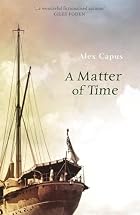
A Matter of Time by Alex Capus (2007, translated from the German 2009)
After reading and very much enjoying Alex Capus’s Leon and Louise last year, I went in search of more of his work in translation and found this novel, which I have equally enjoyed.
In a fictionalized account of very real events, Anton Ruter, a master shipwright, and his team build a steamship for the Kaiser Wilhelm II in 1913, that is then immediately dismantled and transported by ship and rail in pieces to Lake Tanganyika, in German East Africa. The shipbuilding team is sent along to rebuild the ship, which they hope to do within a year and then return home to their families.
Meanwhile, in England, Churchill sends two decrepit, mahogany gun boats named Mimi and Toutou, along with the eccentric Commander Geoffrey Spicer-Simpson (and perhaps a motley crew), to the other side of the very same lake, in the Belgian Congo. But not before they have to transport the two boats by ship to South Africa and then overland through the African bush. The game plan changes when World War I begins ...
Some of the content of this short novel has been covered in other books, both in fiction and nonfiction, but Swiss author Alex Capus has given it to us as a kind of farce*, a type of comedy where “in which all rules of propriety, likelihood, and common sense are equally violated.” Where the real and the fictional lines are drawn in the details, I don’t know, but while the absurdities of war are certainly on show here, and the set up is certainly farcical, the author also deftly manages to elicit sympathy for the often colorful characters involved. A Matter of Time is an excellent little novel that is both interesting and entertaining. Capus is now two for two with me. Note: I couldn't help but picture John Cleese as Spicer-Simpson while reading the book...
Below is pictured the German Ship Goetzen: Fun Fact: the ship appeared in the film “The African Queen.”

*for more on farce: http://www.conservapedia.com/Farce_(Literature)
113Jargoneer
>105 avaland: - BBC4 had a season on the gothic just before Christmas and while much of it was focused on the usual suspects the last episode was on the 20th century. What struck me was the definition of 'gothic', it has expanded to such a large decree that now seems to cover anything that is 'dark'.
>106 avaland: - I'm surprised to hear that. Carroll has always to me someone who could easily be published as mainstream and was only by a quirk of publishing that his work came out as SF/Fantasy.
While I agree we 'outgrow' some writers I do think there are other times when a book doesn't connect with you but that doesn't mean if you were to read that book at another time you wouldn't enjoy it.
>112 avaland: - incredibly that boat is still in service.
>106 avaland: - I'm surprised to hear that. Carroll has always to me someone who could easily be published as mainstream and was only by a quirk of publishing that his work came out as SF/Fantasy.
While I agree we 'outgrow' some writers I do think there are other times when a book doesn't connect with you but that doesn't mean if you were to read that book at another time you wouldn't enjoy it.
>112 avaland: - incredibly that boat is still in service.
114avaland
>113 Jargoneer: Very true about the definition of Gothic.
Here in the states, in the past, Carroll has sold from the mainstream fiction shelves, at a time when equally good authors of similar "interstitial" stuff have struggled (here I think of Graham Joyce). This book was published by St. Martin's Press proper, not by Tor, its SF/F imprint. Of course, the interstitial is very "in" these days. Glowing blurbs on the book are from Gaiman and Lethem, both who blurb, imo, altogether too much to be considered credible.
I also agree with your comments re the timing of a reading, but I'd be unlikely to pick this up again...there are just too many books out there. Btw, I have thought of you and your past reports of the Fringe festival as I've been reading Val McDermid's retelling of Northanger Abbey.
Here in the states, in the past, Carroll has sold from the mainstream fiction shelves, at a time when equally good authors of similar "interstitial" stuff have struggled (here I think of Graham Joyce). This book was published by St. Martin's Press proper, not by Tor, its SF/F imprint. Of course, the interstitial is very "in" these days. Glowing blurbs on the book are from Gaiman and Lethem, both who blurb, imo, altogether too much to be considered credible.
I also agree with your comments re the timing of a reading, but I'd be unlikely to pick this up again...there are just too many books out there. Btw, I have thought of you and your past reports of the Fringe festival as I've been reading Val McDermid's retelling of Northanger Abbey.
115dchaikin
Capus sounds interesting.
With Cormac McCarthy i have stumbled into southern Gothic, although he is sort of one-off from the rest of American Gothic.
With Cormac McCarthy i have stumbled into southern Gothic, although he is sort of one-off from the rest of American Gothic.
116rebeccanyc
I keep meaning to try some of the Very Short Introductions series and your post reminds me of that! And The Brilliant History of Color in Art sounds intriguing as well.
117avaland
>115 dchaikin: Oh Dan, I stumble occasionally into Southern Gothic myself every once in a while, so it will be interesting to see what is said about it. I've not studied American lit from this perspective, it's intriguing. The "American Gothic" essay is already interesting, the author talks about the paradox of embracing both dream and nightmare ;-)
>116 rebeccanyc: You are much more a reader of nonfiction than I, so I wonder if you might find them unsatisfying? My next short intro book is "Consciousness."
>116 rebeccanyc: You are much more a reader of nonfiction than I, so I wonder if you might find them unsatisfying? My next short intro book is "Consciousness."
118rebeccanyc
>117 avaland: Well, I would read them in subjects I don't know anything about or am only minimally interested in. But realistically, I have so many books on the TBR I'm not likely to try them.
119avaland
>118 rebeccanyc: True confessions! (the older I get the more often I use the word "realistically"!)
120rebeccanyc
Hmm. I wonder if I use it more too . . .
121avaland
Northanger Abbey by Val McDermid (2014)
If you've plucked this book from the bookstore or library shelves, it's likely that, like me, you have read Austen's original. And I've enjoyed most of Val McDermid's non-series crime novels, so the idea of this modern retelling became doubly intriguing. We know the story: Naive, seventeen-year-old girl, infatuated with pulpy Gothic novels, is taken by family friends to Bath, the happenin' place at that time. There she meet the Thorps and the Tilneys....eventually she will visit the Tilneys at their Gothic estate and will work herself into froth with her wild imaginings, be kicked out and sent home....
Val McDermid has done a very good job of bringing the whole story into the 21st century, a challenging prospect. She retains Catherine "Cat" Morland's essential character while updating it (she's been homeschooled and a reader of perhaps too much of the plethora of YA Gothic novels out there now). Instead of being taken to Bath as in the original, Cat is taken by the Allens to the Edinburgh Fringe Festival, which surely must be a contemporary cool place to be. It is here she meets the Thorps and the Tilneys (whom McDermid also updates nicely while preserving their characters) and the story moves along much as expected.
It's a fun story, but predictable, of course, although there are few things from the original left out. Certainly the dialogue of young people can get tedious in places. I thought Cat occasionally sounded more like a modern twelve-year-old, as it is a stretch of the reader's imagination to imagine a modern older teen so naive (even a homeschooled one from a rural area). What kept me reading and smiling were the details of McDermid's of modernization, what she merely updated, and what she converted. Two examples: Ellie Tilney's use of an expletive under her breath when her father catches her trying to show Cat her mother's bedroom. It completely caught me off guard and I got a chuckle out of that. Then there's the sense of isolation created when Cat can't seem to get a wi-fi or cell signal at Northanger Abbey, and thus is unable to text, post to FaceBook, or even email. While I'm not sure it all worked as well as Austen's original, the book is amusing, the characters familiar, the modernization imaginative, and it was a quick read—easy to follow if you're on the beach or stuck in a waiting room.
122NanaCC
>121 avaland:. I've just caught up with your reviews, and I think that I'll put this version of Northanger Abbey on my wishlist. It sounds as if it was successful, which some of the retellings are not. I have to find out. :-)
123avaland
We Should All Be Feminists by Chimamanda Ngozi Adichie (2014)
As it says at the beginning of this tiny 50-page book, this is a modified version of Adichie's "TED" talk given in the UK at TEDxEuston, a yearly conference focused on Africa. It's an interesting and engrossing little read, full of anecdotes from her own experiences, a spirited and sensible call to feminism that, though addressed to Africans, can be applied universally. I'm fairly certain that, as an unapologetic feminist already, I'm not her intended audience, as I found nothing particularly new in what she had to say, but I enjoyed how she said it and I hope it reaches many other ears.
124RidgewayGirl
Thanks for posting your thoughts on the McDermid version of Northanger Abbey. I keep running into it and I've been wondering whether to pick up a copy.
And even if it's repetitive, I'm beginning to think that we aren't talking about feminism enough. I don't know how many women I've chatted with who don't think the term applies to them or think being a feminist requires plentiful body hair and a hatred off all men, without exception. All this while it seems we're moving slowly backwards. /rant
And even if it's repetitive, I'm beginning to think that we aren't talking about feminism enough. I don't know how many women I've chatted with who don't think the term applies to them or think being a feminist requires plentiful body hair and a hatred off all men, without exception. All this while it seems we're moving slowly backwards. /rant
125avaland
>124 RidgewayGirl: That's very true, and she addresses the baggage that comes with the term with anecdotal humor in her first pages. Referring to her anecdotes prior, "Of course this was all tongue-in-cheek, but what it shows is how that word feminist is so heavy with baggage, negative baggage: you hate men, you hate bras, you hate African culture, you think women should always be in charge, you don't wear make-up, you don't shave, you're always angry, you don't have a sense of humor, you don't use deodorant." (pg 11)
Perhaps I should edit the review to clarify, I'm likely not her intended audience because I'm already an unapologetic feminist.
Perhaps I should edit the review to clarify, I'm likely not her intended audience because I'm already an unapologetic feminist.
126rachbxl
I've caught up at last.
The Unquiet Dead has gone straight on my wishlist, and I'll be keeping an eye out for We Should All Be Feminists (I've been meaning to listen to her TED talk for ages, so thanks for the reminder). As my recent experience shows, these things NEED repeating, sadly.
The Unquiet Dead has gone straight on my wishlist, and I'll be keeping an eye out for We Should All Be Feminists (I've been meaning to listen to her TED talk for ages, so thanks for the reminder). As my recent experience shows, these things NEED repeating, sadly.
127wandering_star
I have noticed recently that younger women I am working with (late 20s) seem to be happier to speak up about feminist issues than women my age (early 40s) or in between.
I wonder if this is anything to do with the fact that social media has highlighted or exacerbated some of the crappiest things about gender relations (sample depressing reads here and here), and made it easier for women to share and compare their stories? Greater understanding of gendered perceptions of acceptable behaviour at work? It certainly doesn't seem to reflect positive trends in the wider world.
I wonder if this is anything to do with the fact that social media has highlighted or exacerbated some of the crappiest things about gender relations (sample depressing reads here and here), and made it easier for women to share and compare their stories? Greater understanding of gendered perceptions of acceptable behaviour at work? It certainly doesn't seem to reflect positive trends in the wider world.
128reva8
>121 avaland: Thank you for this review: I loved the original Northanger Abbey and so I've been wondering whether to give this retelling a shot. Now, I think I will!
129rachbxl
>127 wandering_star: Yes - the most vociferous feminist I know is 17. Women our age (I'm in my early 40s too) all too often seem to have given up. I've been trying to get friends worked up recently, because we SHOULD be worked up about this, but they just shrug.
130Jargoneer
>127 wandering_star: >129 rachbxl: - that's interesting. There has a fair amount of coverage over the last couple of years about how young women feel pressured to have sex, be more overtly sexual, etc, which does seem a step backward. This really hit home when I saw an old episode of Top of the Pops with Blondie, The Pretenders and Siouxsie & the Banshees - they just seemed much more positive female role-models than the half-dressed pop-moppets of today. Of course, you could argue that people like Rhianna or Miley Cyrus are the exploiters and not the exploited.
Also why is there significantly more pressure on women to remain youthful than men, the old adage of women growing old while men grow distinguished is all over the media.
Thirdly, it is more asking whether the acceptance of feminism ideas are much more ingrained in a middle/upper class environment than in a working class one.
Also why is there significantly more pressure on women to remain youthful than men, the old adage of women growing old while men grow distinguished is all over the media.
Thirdly, it is more asking whether the acceptance of feminism ideas are much more ingrained in a middle/upper class environment than in a working class one.
131avaland
>126 rachbxl: Good to see you, Rachel. I think you will like The Unquiet Dead.
>127 wandering_star: Very likely. I'm just shy of 60 and I've been somewhat disappointed in later generations that they couldn't see the continued problems, or were, as Rachel notes, apathetic.* However, I have read some feminist writing over the last decade or so which encourages me that another wave might be coming (because, you know, I'm really not tireless).
*both my daughters did come with me for the 2004 March for Women's Lives in D.C. when they were in college/grad school.
>127 wandering_star: Very likely. I'm just shy of 60 and I've been somewhat disappointed in later generations that they couldn't see the continued problems, or were, as Rachel notes, apathetic.* However, I have read some feminist writing over the last decade or so which encourages me that another wave might be coming (because, you know, I'm really not tireless).
*both my daughters did come with me for the 2004 March for Women's Lives in D.C. when they were in college/grad school.
132avaland
The Cambridge Companion to Gothic Fiction.(2002, essays)
"The Rise of American Gothic" by Eric Savoy
I've studied American Literature but haven't looked at it through the lens of the Gothic and so, I found some of the content here fascinating. Let me share some tidbits:
"From the turn of the eighteenth into the nineteenth century and the beginnings of a distinctive American literature, the Gothic has stubbornly flourished in the United States. Its cultural role, though, has been entirely paradoxical: an optimistc country founded upon the Enlightenment principles of liberty and "the pursuit of happiness," a country that supposedly repudiated the burden of history and its irrational claims, has produced a strain of literature that is haunted by an insistent, undead past and fascinated by the strange beauty of sorrow." (that's most of his first paragraph).
Savoy discusses the rise of this "strain of literature" during the last of the 18th and first half of the 19th centuries. He discusses the influence of British Gothic and the adoption of some of its "narrative situations, conflicts, settings, and motifs" but goes on to say that what makes it distinctly American is the formal "adaptability and innovative energy" of it.
D. H. Lawrence's intriguing comments on American literature are discussed. Lawrence had little use for figures like Benjamin Franklin, who represented the ideal self-made man and said, "the ideal self! Oh, but I have a strange and fugitive self shut out and howling like a wolf or a coyote under the ideal windows...This is the self who is coming into his own." With Lawrence's ideas in mind, Savoy discusses the Gothic as a vehicle for all things culturally and personally repressed, "this shadow knows the underbelly of American history".
Savoy discusses the earliest literature, and then spends time in a truly fascinating discussions of Hawthorne and Poe, and mentions Dickinson, Melville and Henry James in his final chapter. Here's a teaser from the Poe discussion:
"Given his {Poe's} preference for the narrative setting of "elsewhere," it seems odd that Toni Morrison would claim that no early American writer is more important to the concept of African Americanism than Poe" (is that lip-smacking intrigue!). Continuing..."Certainly Poe does not write directly about the repugant facts, appalling ethics, or national shame of slavery. Yet several of his most celebrated texts are rightly understood now as profound meditations upon the cultural significance of "blackness" in the white American mind. A surprising amount of Poe's work may be said to Gothicize the deep oppression and violence inherent in his culture's whiteness and thus to transform America's normative race into the most monstrous of them all." (and that's just a teaser!)
I'm now reading "Colonial and Post Colonial Gothic: the Caribbean," which will be my last essay in this collection for a while.
134dukedom_enough
Not a book, but something people might find interesting. For one week only, ZBS is making the science-fiction audio drama Ruby available as a free download. Originally produced for radio in 1981, this 3-hour-long story of "galactic gumshoe" Ruby's adventures has a plot that rambles around the planet Summa Nulla, never quite resolving, each 2-1/2 minute episode best enjoyed just for itself. Ruby's escapades are droll and often witty. Like other ZBS productions, the soundscape is the thing here, though - very 1980s in its enthusiasm for buzzy, tingly electronic music. ZBS updated the musical track and sound effects recently, but it's the same dialog, with Ruby voiced by Laura Esterman - who is still playing the part in the recent Ruby 9. You should at least check out the Android Sisters' episodes.
The first chapter may be heard here.
The first chapter may be heard here.
135dchaikin
>132 avaland: "the Gothic as a vehicle for all things culturally and personally repressed"
Thinking on the ways to apply that to McCarthy...there are many.
Thinking on the ways to apply that to McCarthy...there are many.
136DieFledermaus
Enjoying your review of the Gothic essays.
>105 avaland: - Did they give any examples of specific Gothic literature that was inspired by the Cold War/space race? I've heard a lot about sci-fi being influenced by that, like you say, but I don't think I've heard it linked to Gothic works.
>123 avaland: - I like the author, so might look for this. I think I need to read more about feminism - I took a college course as an undergrad, but most of the reading I've done is random new sites and blogs.
>105 avaland: - Did they give any examples of specific Gothic literature that was inspired by the Cold War/space race? I've heard a lot about sci-fi being influenced by that, like you say, but I don't think I've heard it linked to Gothic works.
>123 avaland: - I like the author, so might look for this. I think I need to read more about feminism - I took a college course as an undergrad, but most of the reading I've done is random new sites and blogs.
137avaland
>135 dchaikin: Dan, the author here is speaking of earlier Gothic, of course. And I should have used the word "societal" instead of "cultural" there. McCarthy would be an interesting study. And a quick search produces this :
Even though Cormac McCarthy's fiction is not generally classified as American Gothic, many of his works contain Gothic elements. Set in Tennessee, his early works sporadically utilize the tropes of the American Gothic in order to investigate the relationship between personal, societal, and national guilt; however, it is not until his later work set in the American West, Blood Meridian, Or the Evening Redness in the West (1985), that the Gothic tropes used for this inquiry have resulted in a full-fledged Gothic novel. McCarthy's investigation of moral ambiguity and guilt continues and comes full circle in its return to the east coast in his latest novel up to date, The Road, published in 2006. In it, McCarthy investigates questions of guilt by looking at people who attempt to make morally sound choices when faced with the harshest circumstances imaginable, namely a post-apocalyptic American landscape.
This seems to be a synopsis of an essay "When the Blood Trail Comes Full Circle: Cormac McCarthy's Gothic of Guilt" in a book, A Companion to American Gothic edited by Charles Crow (which I now want badly and would run off and purchase if it weren't a nearly $200 textbook.*shakes fist* in frustration!)
-----
>136 DieFledermaus: I don't see any works linked to the space race specifically. Some of the 50s authors he mentions include Shirley Jackson (The Haunting of Hill House and "The Lottery"), Tennessee Williams (Suddenly Last Summer),and Robert Bloch (Psycho), John Wyndham (The Midwich Cuckoos), but uses them to illustrate other points. In checking back, I now see that the "space race" comes in his discussion of what Stephen King has to say in his nonfiction, Danse Macabre* (I've never read a Stephen King work, but I might have to read this one now). I do think science fiction was the primary vehicle for dealing with many of the anxieties of the 1950s.
However, the author does mention "Cold War anxieties" in "Village of the Damned" (the film made from John Wyndham's The Midwich Cuckoos) and in Margaret Atwood's The Handmaid's Tale)
*I've now edited my notes so that is clear.
Even though Cormac McCarthy's fiction is not generally classified as American Gothic, many of his works contain Gothic elements. Set in Tennessee, his early works sporadically utilize the tropes of the American Gothic in order to investigate the relationship between personal, societal, and national guilt; however, it is not until his later work set in the American West, Blood Meridian, Or the Evening Redness in the West (1985), that the Gothic tropes used for this inquiry have resulted in a full-fledged Gothic novel. McCarthy's investigation of moral ambiguity and guilt continues and comes full circle in its return to the east coast in his latest novel up to date, The Road, published in 2006. In it, McCarthy investigates questions of guilt by looking at people who attempt to make morally sound choices when faced with the harshest circumstances imaginable, namely a post-apocalyptic American landscape.
This seems to be a synopsis of an essay "When the Blood Trail Comes Full Circle: Cormac McCarthy's Gothic of Guilt" in a book, A Companion to American Gothic edited by Charles Crow (which I now want badly and would run off and purchase if it weren't a nearly $200 textbook.*shakes fist* in frustration!)
-----
>136 DieFledermaus: I don't see any works linked to the space race specifically. Some of the 50s authors he mentions include Shirley Jackson (The Haunting of Hill House and "The Lottery"), Tennessee Williams (Suddenly Last Summer),and Robert Bloch (Psycho), John Wyndham (The Midwich Cuckoos), but uses them to illustrate other points. In checking back, I now see that the "space race" comes in his discussion of what Stephen King has to say in his nonfiction, Danse Macabre* (I've never read a Stephen King work, but I might have to read this one now). I do think science fiction was the primary vehicle for dealing with many of the anxieties of the 1950s.
However, the author does mention "Cold War anxieties" in "Village of the Damned" (the film made from John Wyndham's The Midwich Cuckoos) and in Margaret Atwood's The Handmaid's Tale)
*I've now edited my notes so that is clear.
138avaland
Friday night while at the bookstore I sold several copies of Fifty Shades of Gray as the movie opened to audiences. In light of my reading about contemporary Gothic as a vehicle of expression, and in light of earlier readings around bestsellers and popular literature, I started thinking and that led to this article in "The Atlantic", which discusses the book and the phenomenon at length. It quotes the US publisher mentioning that the last book that was a phenomenon like this one was Larsson's The Girl with the Dragon Tattoo, which no one would argue is a revenge fantasy about a rape victim . Now, thinking of both those books together is interesting...and it seems both play into our current cultural discussion of rape. I'm not going to discuss the issue of rape here, but I wanted just throw that out there as an interesting observation of how issues and anxieties are reflected in popular fiction, and share the article.
139dchaikin
>137 avaland: thanks for that quote about McCarthy.
140Caroline_McElwee
>138 avaland: hmmm, interesting Lois. I'm still not planning to read FSG, beyond the half page I read in a paper - couldn't stand the bad writing!
141dukedom_enough
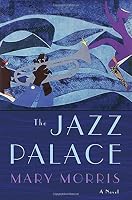
The Jazz Palace by Mary Morris
This novel, about Chicago and jazz in the early 20th Century, starts with a historical event. On July 24, 1915, the Great Lakes passenger ship Eastland pushed away from a Chicago dock carrying 2000+ Western electric employees and their families, heading out for a picnic. Top heavy, the ship immediately capsized, killing 844 people.
Watching from a bridge above is 15 year old Benny Lehrman, on an errand to deliver caps stitched at his father’s small factory. He dives into the water to help, but cannot. Also on the bridge are two younger children, Pearl and Opal Chimbrova, in tow behind their widowed mother. Four of their older brothers are killed in the disaster.
In the coming years, Benny struggles with the conflict between his obligations to the family business and his parents, and the great appeal that jazz has for him. A pianist, he skips his Bach and Beethoven lessons to lurk outside South Side saloons, listening to the new music being invented there by African-Americans. Pearl and Opal inherit their mother’s saloon, and hire some of those musicians to play for customers. The saloon becomes a speakeasy during Prohibition. Both girls also feel a conflict between obligation to family and their desires for a better life. Both families are Jewish, and we see some of the prejudices they face.
Other characters move through the lives of Benny, Pearl and Opal. Some real - an older Opal one day dances with Al Capone. Some invented - trumpet player Napoleon Hill plays music with Benny, and for the Chimbrovas, and struggles to escape the strictures that the Chicago gangs laid on African-American musicians in the era.
The novel is solidly written, filled with period detail about a great city and the early years of America’s greatest music, but I felt that author Morris did not bring Benny, Opal and Pearl to life convincingly. The arcs of both families’ fortunes in good and bad times are told but not shown. It’s as though Morris was more interested in the history than in her characters. Adequate, but not recommended.
My copy is an ARC. This book is due to be published 4-7-2015.
142avaland
>140 Caroline_McElwee: I suppose I might have been talking out loud there. I have no plans to read it either, but the phenomenon of popular lit can fascinate me.
>141 dukedom_enough: Sounds like there was potential there for an excellent story. Too bad it was disappointing...but your review is splendid!
>141 dukedom_enough: Sounds like there was potential there for an excellent story. Too bad it was disappointing...but your review is splendid!
143AsYouKnow_Bob
>134 dukedom_enough: Not a book, but something people might find interesting. For one week only, ZBS is making the science-fiction audio drama Ruby available as a free download.
Hey!
Ruby was mostly after after my time - but ZBS is local to us - and my college radio station was pretty big on their stuff back in the day. (We even organized a field trip to go up to Ft. Edward to meet them....)
Hey!
Ruby was mostly after after my time - but ZBS is local to us - and my college radio station was pretty big on their stuff back in the day. (We even organized a field trip to go up to Ft. Edward to meet them....)
144Caroline_McElwee
>141 dukedom_enough: shame The Jazz Palace didn't make the grade Michael. It sounded like an interesting prospect. Characters for me are very important, I can go plotless with good characters.
145dukedom_enough
>143 AsYouKnow_Bob:
I heard parts of ZBS's first production, The Fourth Tower of Inverness, in the early 1970s. I was still in college. Heard most of Ruby during drive time while I was a postdoc on Long Island. Acquired the cassette version of Ruby at some point, and CD boxes of Fourth Tower and Moon Over Morocco also. A couple of years ago I listened to the entire Fourth Tower. That one's fun, but it has a very 1960s flavor that has lost a bit of its charm over the years. Haven't tried Moon Over Morocco yet. Ruby feels a bit more contemporary. I have a notion that I'll listen to more of these series sometime, but don't feel any urgency to do so.
Were you on that field trip? Must've been interesting. Laura Esterman is actually in Fourth Tower (she's the Energy Vampire) - not many artistic collaborations last so long.
I heard parts of ZBS's first production, The Fourth Tower of Inverness, in the early 1970s. I was still in college. Heard most of Ruby during drive time while I was a postdoc on Long Island. Acquired the cassette version of Ruby at some point, and CD boxes of Fourth Tower and Moon Over Morocco also. A couple of years ago I listened to the entire Fourth Tower. That one's fun, but it has a very 1960s flavor that has lost a bit of its charm over the years. Haven't tried Moon Over Morocco yet. Ruby feels a bit more contemporary. I have a notion that I'll listen to more of these series sometime, but don't feel any urgency to do so.
Were you on that field trip? Must've been interesting. Laura Esterman is actually in Fourth Tower (she's the Energy Vampire) - not many artistic collaborations last so long.
146dukedom_enough
>144 Caroline_McElwee:
Maybe Morris is taking some sort of minimalist approach? Anyway, didn't work for me.
Maybe Morris is taking some sort of minimalist approach? Anyway, didn't work for me.
147laytonwoman3rd
>132 avaland: "an insistent, undead past and fascinated by the strange beauty of sorrow"-- surely the author must get around to Faulkner, with a statement like that...
148avaland
>147 laytonwoman3rd: There is a mention of Faulkner only in passing as this essay was not about the 20th century. (gawd, I must get back to Faulkner!)
149avaland
And the big finale....drum roll, please!!!

The library ladder from the Putnam Ladder Co. of NYC was installed today. It's a beautiful piece of work, but I don't think it overshadows the books. Now, we will rearrange the shelves a bit and fill those upper shelves!

The library ladder from the Putnam Ladder Co. of NYC was installed today. It's a beautiful piece of work, but I don't think it overshadows the books. Now, we will rearrange the shelves a bit and fill those upper shelves!
150NanaCC
>149 avaland:. Now that deserves an Ohhh and Ahhhh! :) Fabulous!
153DieFledermaus
A genuine book ladder - impressive!
154Jargoneer
I couldn't help smiling at the thought of smaller and smaller books being stacked on the eaves shelves.
155dukedom_enough
Thanks for the kind remarks, everyone.
>154 Jargoneer: We'll have to buy some small books to go there.
>154 Jargoneer: We'll have to buy some small books to go there.
156Jargoneer
>155 dukedom_enough: - I read an article about a Hungarian man who collected minature books. His collection of over 4000 books hardly took up any space. Perhaps modern publishers are missing a trick - with space at premium the time may have finally arrived for minature books.
157NanaCC
>156 Jargoneer:. And then for me, great big magnifying glasses to read them. :-)
158qebo
>149 avaland: So cool! And yes, now those top shelves must have books!
http://www.ebay.com/bhp/miniature-book
http://blog.pshares.org/index.php/lets-get-small-on-loving-miniature-books/
http://www.mbs.org/store.html
http://bopressminiaturebooks.com/
http://www.ebay.com/bhp/miniature-book
http://blog.pshares.org/index.php/lets-get-small-on-loving-miniature-books/
http://www.mbs.org/store.html
http://bopressminiaturebooks.com/
159avaland
>155 dukedom_enough: Ha! He's using that as an excuse to buy more books! We've moved out the anthologies (which were on the 2nd shelf from the top) and moved in single-author poetry collections and some of the poetry anthologies, putting the taller books on their sides in the eaves. We still haven't filled that central top space. It's about 20 inches high, I think, so we're still thinking about it.
161avaland
>160 torontoc: Thanks, Cyrel.
162baswood
Just catching up with your thread. Very interesting to read your precise of American Gothic. Lovely pictures of your book shelves: do you aim to keep them tidy?
163avaland
>162 baswood: Thanks, Barry. Yes, the aim is to keep them tidy. Guess we will see how that goes!
God Help the Child by Toni Morrison (2015)
In this short book (180+ pages), Toni Morrison tells the story of Lula Ann Bridewell (or "Bride," as she now calls herself) and through her and the other people who touch her life, a tale of the way "childhood trauma shapes and misshapes the life of the adult." Bride, a gorgeous and successful businesswoman in the cosmetics industry, is emotionally thrown back, more or less, to the state of an injured child by the sudden exit of her lover, and it is this catalyst that sets her off on a journey of self-discovery and healing. Though certainly not Morrison's best work, there is still a lot to be said about this novel and its theme, but I'd rather not tell its whole story to those who haven't read it yet. I picked the book up from my pile on impulse, was immediately caught in its narrative current, and nearly read it in one sitting. I'll leave it at that.
God Help the Child by Toni Morrison (2015)
In this short book (180+ pages), Toni Morrison tells the story of Lula Ann Bridewell (or "Bride," as she now calls herself) and through her and the other people who touch her life, a tale of the way "childhood trauma shapes and misshapes the life of the adult." Bride, a gorgeous and successful businesswoman in the cosmetics industry, is emotionally thrown back, more or less, to the state of an injured child by the sudden exit of her lover, and it is this catalyst that sets her off on a journey of self-discovery and healing. Though certainly not Morrison's best work, there is still a lot to be said about this novel and its theme, but I'd rather not tell its whole story to those who haven't read it yet. I picked the book up from my pile on impulse, was immediately caught in its narrative current, and nearly read it in one sitting. I'll leave it at that.
164avaland
When the Doves Disappeared by Sofi Oksanen (2012, Translated for 2015 pub)
Through three connected characters, Oksanen's novel tells the story of Estonia in WWII as it changes hands from one oppressive occupation to another and back again—first the Soviet Union from 1940-41, then the Germans from 1941-44, and the Soviets once again from 1944 to 1991.
It is a riveting tale of precarious survival in difficult circumstances, and each character, though connected, choses his or her path. Roland, a nationalist, becomes part of an underground movement. His wily cousin Edgar finds ways to ingratiate himself with whomever is in power. Edgar's estranged wife, Juddit, takes up with a German officer.
Of course their stories are more complicated than this, and Oksanen has filled them out well and inextricably imbedded them in an equally three-dimensional wartime Estonian setting. She's added psychological detail and a bit of mystery and suspense. It's easy to see why this was a bestseller in the Nordic countries. This is one of those novels which one escapes into and it's difficult not to feel acutely the precariousness of living in Estonia in this time...how much of who you are do you give away in order to survive?
165rebeccanyc
I had very mixed feelings about Oksanen's Purge, but this new one sounds intriguin.
166avaland
>165 rebeccanyc: I might have to read Purge now, Rebecca. Mixed feelings intrigues me.
167rebeccanyc
>166 avaland: My review is on the book page, but you may want to read it with an open mind!
168avaland

Living the Secular Life: New Answers to Old Questions by Phil Zuckerman.
Zuckerman is a professor of sociology and secular studies, and presents here an interesting overview of secular living based on his extensive research and study. After a discussion of the rising trend in secularism in our culture (which in itself is interesting), he then, in each of eight chapters, focuses on a different life issue or topic and discusses the secular approach to each. Issues include: morality, community, death & dying, trying times and raising children. "A life lived without religion is not 'nothing', the author says, perhaps to those who are convinced it is or must be. Turns out that we secular people are very diverse in our beliefs but tend as a sociological group to share "certain key traits and values" in common; such as, self-reliance, freedom of thought, intellectual inquiry, cultivating autonomy in children, pursuing the truth, basing morality on the empathetic reciprocity embedded in the Golden Rule*, accepting the inevitability of our eventual death, navigating life with a sober pragmatism grounded in this world (not the next), and still enjoying a sense of deep transcendence now and then amid the inexplicable, inscrutable profundity of being."
I've read a lot in the subject of religion over the years, even took some classes to broaden my perspective (comparative history of, and the sociology of). It has intrigued me, not only because I once was religious, and I could now explore it from the "outside", but because of how it functions in societies, the positive and the negative. But I have never read a book about secularism, which is the life I have pretty much been living for the last 35 years or so.
This book is a kind of manifesto for those of us who live without religion, but it is also meant for those readers who are religious who might wish to understand those who are not. There is no religion-bashing in this book. I found the book well-written, interesting, and inspiring in spots (although I admit to skimming some of the illustrative stories), and I heartily recommend it.
*which predates the Christian Bible.
169laytonwoman3rd
I've been waiting to hear what you thought of that book, Lois. Your comments confirm that I would like to read it myself.
170baswood
Great review of Living the Secular Life. For those of us who are not religious it must seem like an affirmation of our belief system, perhaps a book that hits on issues that make you say to yourself "Yes thats just what I think"
It sounds like a book that I might want to read.
It sounds like a book that I might want to read.
171avaland
>169 laytonwoman3rd: Thanks for stopping by, Linda.
>170 baswood: That's exactly it, Barry. I think he might also have one or more previous books.
>170 baswood: That's exactly it, Barry. I think he might also have one or more previous books.
172h-mb
I read the sample of this book and was struck by the differences with my experience. He speaks of meeting people who consider it's impossible to be "good", to have a strong sense of ethics or morality if one hasn't faith in a god. I never met someone believing such a thing nor read about it. France seems to be a country where religious practice and belief are rather low : 34% believers (but much fewer actually going to the church, temple, etc.), 33% avowed atheists in 2005. How could we live together if two thirds of us were considered inadequate for moral decency? I doubt if an equivalent of this book exists in French but I'll have a look.
173mabith
>172 h-mb: Definitely different in the US. Many people will hedge about not being religious but being "spiritual" because it can be very very hard to be an atheist here. Even though we learn all the lessons about how to be a good person in school early on (since they are largely just about being part of a community easier) many still insist religion is the only way to have morals. This despite the many apparently very religious people involved in a variety of scandals and criminal acts, and the devoted "Christians" who think it's okay to bomb abortion clinics and kill anyone associated with them (baffled at why they think Jesus would be okay with that...).
174avaland
>172 h-mb: h-mb, that's interesting. The book is written for an American audience, but in his discussion of the trend towards secularism, he does talk about similar trends in other parts of the world. France is on his list of "most secular nations in the world" when he talks about an association between secularism and countries which are faring the best (p. 47). I think France, as with other countries on his list are ahead in the trend.
175h-mb
>174 avaland: I do like to live in France, even though it's not Paradise for all that! The street demonstrations against same sex marriage last year took everybody by surprise and I think it was a sign of how traditionnal believers feel unsafe - unsafe like an undangered species. But fact is, religious beliefs don't rule daily behavior and core thoughts anymore, not for the vast majority of French people: that's why I've never met or heard of someone recused, on principle, because of his lack of faith.
176avaland
>175 h-mb: Thanks for sharing. It's interesting.

The Room by Jonas Karlsson (2009, T 2015, Swedish)
Bjorn, a lowly office worker, carves out his own little psychological niche in this short, funny novel. New on the job at "the Authority", Bjorn suffers a natural superiority over his co-workers, perhaps lucky for them, he keeps a majority of his dry thoughts to himself (but we the reader are, of course, privy). He's an insufferable man trying to control his piece of the corporate environment and he finds some respite in a small room he discovers in the hallway between the toilets and the elevator. Within the room he find order and comfort and he chronicles for the reader every visit he makes to it. Thing is, his co-workers don't quite see the room (or him) the way he does...
The Room is a enjoyable, funny novel. Bjorn is generally an unlikable protagonist, but one can't help, by the end of the book, to offer a wee bit of sympathy.

The Room by Jonas Karlsson (2009, T 2015, Swedish)
Bjorn, a lowly office worker, carves out his own little psychological niche in this short, funny novel. New on the job at "the Authority", Bjorn suffers a natural superiority over his co-workers, perhaps lucky for them, he keeps a majority of his dry thoughts to himself (but we the reader are, of course, privy). He's an insufferable man trying to control his piece of the corporate environment and he finds some respite in a small room he discovers in the hallway between the toilets and the elevator. Within the room he find order and comfort and he chronicles for the reader every visit he makes to it. Thing is, his co-workers don't quite see the room (or him) the way he does...
The Room is a enjoyable, funny novel. Bjorn is generally an unlikable protagonist, but one can't help, by the end of the book, to offer a wee bit of sympathy.
177avaland
Dreamless by Jørgen Brekke (2014, T 2015, Norwegian)
In contemporary Trondheim, Norway, a woman is found dead, brutality beaten, and with her vocal cords cut out. Chief Inspector Odd Singsaker, still somewhat recovering from brain surgery, is in charge of the case. In 18th century Trondheim another enterprising policeman is busy with his own murder mystery. It will be no surprise to you, when I tell you that both crimes are connected in this excellent tale of murder and music.
Dreamless is a beautifully written book, not so much in its prose style, but in the way Brekke deftly moves us through the book; his use of common motifs is almost a kind of music. Of course, the crimes do have links, and the investigations provide the reader with very nice, brief introductions to early Norwegian and Swedish musical tradition, music boxes and the Ringve Museum.
While this is the 2nd in Brekke's "Odd Singsaker" series, but the first to be published in English (apparently the 1st book is also soon to be published), I did not find any difficultly settling into his well-wrought cast of characters. I'm always looking for new crime series as authors end their series (i.e. kill of or retire their detectives) or I tire of them for one reason or another. I'm picky -- I like good, cerebral procedurals, or something else that might be on offer instead, such as, cultural or historical insights, and in Dreamless, I've have the satisfaction in being given a bit of both.
178rachbxl
Well, I just popped in for a quick catch-up, and all of a sudden there are 3 new samples on my Kindle (Oksanen, Karlsson, Brekke). Fancy that.
179dukedom_enough
>178 rachbxl:
That's an idea - to the "More" button, Tim could add a link that automatically downloads the Kindle/Kobo/Nook/whatever preview to the device of you choice. Hmm, dangerous.
That's an idea - to the "More" button, Tim could add a link that automatically downloads the Kindle/Kobo/Nook/whatever preview to the device of you choice. Hmm, dangerous.
180dukedom_enough
Echopraxia by Peter Watts

Dark, dark, even when brightly sunlit. This science fiction novel is a sequel to Watts' brilliant Blindsight, which made the Hugo Award shortlist in 2007 and, in my opinion, should have won. Possibly the best hard SF novel of the 21st century so far, Blindsight was the first book I reviewed for LT. That review was a failed, cutesy try at exemplifying Watts' theme of the limitations of human consciousness - that consciousness is the pointy-haired boss taking credit for what the nonconscious parts of the brain actually do, and that an intelligent organism would be better off without it.
Set in the late 21st century, Echopraxia covers events on Earth and in the inner solar system, occurring a few years after the Theseus’s voyage to the Oort Cloud in Blindsight. Some elements of this second novel contrast with the first - where Blindsight happened in the icy deeps of the Oort, with the Sun just a bright star, Echopraxia is set on Earth, and on Earth’s principal solar energy station, orbiting in tremendous radiance near the Sun and beaming back to Earth the energy it needs. Where Blindsight‘s point of view was that of a person existing right at the edge of imaginable ranges of the human condition, Echopraxia’s is that of a more or less ordinary man. Where Blindsight displayed a resolutely irreligious view of the universe, stressing evolution, Echopraxia takes religion’s claims more seriously.
But continuity outweighs contrast. Both books track perilous expeditions responding to the threat posed by the 2082 alien probe of Earth; both give us glimpses of the almost-as-alien human world of the 2080s and 2090s, both supply cool spaceship p0rn - here, a diagram of the spacecraft Crown of Thorns:

And both books take as their theme the inadequacy of human brains for comprehending a much more complex universe than the veldt we evolved on. The protagonist, Daniel Brüks, is that most unreliable of Wattsian narrators, an ordinarily bright human being, trying to keep pace with upgraded humans, vampires, AI’s, and hive minds, no more able to understand their thinking than a cockroach might understand yours and mine. The model of reality that his scientific, PhD-trained mind creates is, he learns to his grief, tragically inadequate.
At the start of the story, Brüks is simply trying to stay out of this new world’s way, hoping that a certain secret from his own past will not catch up with him. But some of those superior intelligences have detected an alien influence, possibly related to the Theseus expedition, on that solar power station. They drag Brüks along on an expedition there, far inside the orbit of Mercury. His fellow expeditionaries pose danger both to himself and each other. And all, and Earth itself, are in peril from whatever waits in the Sun’s glare.
The leaders of this expedition are the Bicameral Order, a hive mind - human brains connected by high speed, implanted links - embodied as a religious order of monks. Brüks, with the thoroughly secular outlook characteristic of scientists of the 20th and 21st centuries, is puzzled that the Bicamerals see themselves as pursuing God: a literal, existing God. He never really understands why they take the concept seriously, but notes there’s no arguing with the Nobel Physics Prizes that they win. He cannot query the Bicamerals on this matter himself, because they no longer speak so an ordinary person can understand, but his conversations on this subject with Lianna, a human who has been upgraded to be the Bicamerals’ sort-of-herald and the book’s most appealing character, are fascinating and frustrating.
Among the others along for the ride are Valerie, a vampire who slaughters her human keepers in the book’s prologue. We also have the Colonel: a man who has been upgraded to be the ultimate military operative, whose true love for his wife comes “with a lifetime warranty”, and who obsesses over messages trickling in from his son, Siri Keeton, the viewpoint character of Blindsight. When this crew gets to the solar power station - well, this is Watts, so remember I did use the words “grief” and “tragically” above.
Also, this being Watts, the story is decorated by epigrams and scientific references, both made up - the Pontifical Academy’s 2093 report on the Bicamerials is quite funny - and real. Turns out there now exist a number of actual scientific papers on the apparent evolutionary advantages of religious belief, from which Watts extrapolates. The general atmosphere of stress and doom is leavened by these extras, and by Watts’ sharp neo-noir voice, as in this conversation about hibernating through a space journey:
"It's not the burn that bothers me. It's the coma afterward."
"You won't even feel it."
"That's what I mean. If I'm going to fall into the sun I'd at least like to be awake enough to jump into an escape pod if things go south."
"Then you've got nothing to worry about. No escape pods."
Echopraxia can be read without having read Blindsight, but of course the reader will better appreciate the second book in the light (the dark?) of the first, which can be found free, online at the author’s website. A third novel will eventually fill out the trilogy, though probably not soon.
Peter Watts is that rare creature, a real scientist (marine biology) producing well-written science fiction, with an imagination that will not quit. Watts’ neuroscientific orientation raises uncomfortable questions about our very existence as persons in the literary sense - as unitary beings - suggesting instead that we might best think of ourselves as bundles of neural functions, the most important of which are nonconscious. Echopraxia and Blindsight, while perfectly solid as novels, thus challenge humanistic understandings of motivation and character: the understandings we readers look for in our stories, the very stuff of novelists’ trade. For this reason, these stories are much more than just entertainments. Watts is asking questions no other contemporary writer is asking, and there’s little chance of us liking the answers, even as we enjoy his books.
Five stars.
...Oh, vampires? Watts’ vampires are a species closely related to humans, gone extinct centuries ago - some of those scary legends were true - and then recreated by modern genetics. Bad idea (link is to ca. one hour long Flash video, disguised as a presentation from a scientific conference). Hey, and I forgot to mention the zombies!

Dark, dark, even when brightly sunlit. This science fiction novel is a sequel to Watts' brilliant Blindsight, which made the Hugo Award shortlist in 2007 and, in my opinion, should have won. Possibly the best hard SF novel of the 21st century so far, Blindsight was the first book I reviewed for LT. That review was a failed, cutesy try at exemplifying Watts' theme of the limitations of human consciousness - that consciousness is the pointy-haired boss taking credit for what the nonconscious parts of the brain actually do, and that an intelligent organism would be better off without it.
Set in the late 21st century, Echopraxia covers events on Earth and in the inner solar system, occurring a few years after the Theseus’s voyage to the Oort Cloud in Blindsight. Some elements of this second novel contrast with the first - where Blindsight happened in the icy deeps of the Oort, with the Sun just a bright star, Echopraxia is set on Earth, and on Earth’s principal solar energy station, orbiting in tremendous radiance near the Sun and beaming back to Earth the energy it needs. Where Blindsight‘s point of view was that of a person existing right at the edge of imaginable ranges of the human condition, Echopraxia’s is that of a more or less ordinary man. Where Blindsight displayed a resolutely irreligious view of the universe, stressing evolution, Echopraxia takes religion’s claims more seriously.
But continuity outweighs contrast. Both books track perilous expeditions responding to the threat posed by the 2082 alien probe of Earth; both give us glimpses of the almost-as-alien human world of the 2080s and 2090s, both supply cool spaceship p0rn - here, a diagram of the spacecraft Crown of Thorns:
And both books take as their theme the inadequacy of human brains for comprehending a much more complex universe than the veldt we evolved on. The protagonist, Daniel Brüks, is that most unreliable of Wattsian narrators, an ordinarily bright human being, trying to keep pace with upgraded humans, vampires, AI’s, and hive minds, no more able to understand their thinking than a cockroach might understand yours and mine. The model of reality that his scientific, PhD-trained mind creates is, he learns to his grief, tragically inadequate.
At the start of the story, Brüks is simply trying to stay out of this new world’s way, hoping that a certain secret from his own past will not catch up with him. But some of those superior intelligences have detected an alien influence, possibly related to the Theseus expedition, on that solar power station. They drag Brüks along on an expedition there, far inside the orbit of Mercury. His fellow expeditionaries pose danger both to himself and each other. And all, and Earth itself, are in peril from whatever waits in the Sun’s glare.
The leaders of this expedition are the Bicameral Order, a hive mind - human brains connected by high speed, implanted links - embodied as a religious order of monks. Brüks, with the thoroughly secular outlook characteristic of scientists of the 20th and 21st centuries, is puzzled that the Bicamerals see themselves as pursuing God: a literal, existing God. He never really understands why they take the concept seriously, but notes there’s no arguing with the Nobel Physics Prizes that they win. He cannot query the Bicamerals on this matter himself, because they no longer speak so an ordinary person can understand, but his conversations on this subject with Lianna, a human who has been upgraded to be the Bicamerals’ sort-of-herald and the book’s most appealing character, are fascinating and frustrating.
Among the others along for the ride are Valerie, a vampire who slaughters her human keepers in the book’s prologue. We also have the Colonel: a man who has been upgraded to be the ultimate military operative, whose true love for his wife comes “with a lifetime warranty”, and who obsesses over messages trickling in from his son, Siri Keeton, the viewpoint character of Blindsight. When this crew gets to the solar power station - well, this is Watts, so remember I did use the words “grief” and “tragically” above.
Also, this being Watts, the story is decorated by epigrams and scientific references, both made up - the Pontifical Academy’s 2093 report on the Bicamerials is quite funny - and real. Turns out there now exist a number of actual scientific papers on the apparent evolutionary advantages of religious belief, from which Watts extrapolates. The general atmosphere of stress and doom is leavened by these extras, and by Watts’ sharp neo-noir voice, as in this conversation about hibernating through a space journey:
"It's not the burn that bothers me. It's the coma afterward."
"You won't even feel it."
"That's what I mean. If I'm going to fall into the sun I'd at least like to be awake enough to jump into an escape pod if things go south."
"Then you've got nothing to worry about. No escape pods."
Echopraxia can be read without having read Blindsight, but of course the reader will better appreciate the second book in the light (the dark?) of the first, which can be found free, online at the author’s website. A third novel will eventually fill out the trilogy, though probably not soon.
Peter Watts is that rare creature, a real scientist (marine biology) producing well-written science fiction, with an imagination that will not quit. Watts’ neuroscientific orientation raises uncomfortable questions about our very existence as persons in the literary sense - as unitary beings - suggesting instead that we might best think of ourselves as bundles of neural functions, the most important of which are nonconscious. Echopraxia and Blindsight, while perfectly solid as novels, thus challenge humanistic understandings of motivation and character: the understandings we readers look for in our stories, the very stuff of novelists’ trade. For this reason, these stories are much more than just entertainments. Watts is asking questions no other contemporary writer is asking, and there’s little chance of us liking the answers, even as we enjoy his books.
Five stars.
...Oh, vampires? Watts’ vampires are a species closely related to humans, gone extinct centuries ago - some of those scary legends were true - and then recreated by modern genetics. Bad idea (link is to ca. one hour long Flash video, disguised as a presentation from a scientific conference). Hey, and I forgot to mention the zombies!
181avaland
>180 dukedom_enough: Another excellent review!
>178 rachbxl: OMG, Rachel, I was just thinking about you! I was beginning my third Alex Capus novel and I'm not sure what specifically it was that brought you to mind, but you did and I wondered how you and your not-so-little-anymore baby were doing. I also think you would like Alex Capus, if you haven't read him. Swiss-French, I think, writing in German (I'm reading the English translations, of course). If you read any of those three books, I will certainly be interested in what you think of them.
>178 rachbxl: OMG, Rachel, I was just thinking about you! I was beginning my third Alex Capus novel and I'm not sure what specifically it was that brought you to mind, but you did and I wondered how you and your not-so-little-anymore baby were doing. I also think you would like Alex Capus, if you haven't read him. Swiss-French, I think, writing in German (I'm reading the English translations, of course). If you read any of those three books, I will certainly be interested in what you think of them.
182baswood
Enjoyed your excellent review of Echopraxia and I am tempted to dip into Blindsight. I know I won't understand all the hard sci-fi, but I have learned not to worry about that.
183AnnieMod
>180 dukedom_enough: Very nice review. Now let me check where is my library with this book (and Blindsight probably need a reread...). Watts' vampires are like McCaffrey's dragons - fantasy concept turned into a SF one :)
184dukedom_enough
>182 baswood:
If you're willing to track down the references, you could learn a lot about this stuff. Important to remember that Watts uses these sources as springboards for his stories, not necessarily as the definitive word on the subject. Somewhere recently he has noted that the paper underlying one of his ideas has failed to be replicated by another study.
>183 AnnieMod:
Not really all that scientific, and it's hard to see why vampires would be that much smarter than humans, but it's fun nonetheless.
If you're willing to track down the references, you could learn a lot about this stuff. Important to remember that Watts uses these sources as springboards for his stories, not necessarily as the definitive word on the subject. Somewhere recently he has noted that the paper underlying one of his ideas has failed to be replicated by another study.
>183 AnnieMod:
Not really all that scientific, and it's hard to see why vampires would be that much smarter than humans, but it's fun nonetheless.
185AnnieMod
>184 dukedom_enough: SF concepts do not need to be scientific (soft SF is still SF after all - and even in the hardest SF, a nod to the not so hard one is acceptable).
186dchaikin
Catching up a bit.
Lois, Intrigued by your Toni Morrison review and your review of The Room by Jonas Karlsson.
Not sure i'm up for Watts Dd_e. Cool picture though.
Lois, Intrigued by your Toni Morrison review and your review of The Room by Jonas Karlsson.
Not sure i'm up for Watts Dd_e. Cool picture though.
187avaland
>186 dchaikin: Thanks, Dan. They were both quick reads, too.
188dukedom_enough
>185 AnnieMod:
I like to toy with a definition of hard SF for which only Hal Clement qualifies. Still, in most of his work Watts is trying to base his imaginings on actual science.
>186 dchaikin:
Watts has a lot of material on his website illustrating his books. It's great fun to investigate. I do recommend that Flash-animated lecture on vampires, though. "FizerPharm: Trust. Profit. Deniability."
I like to toy with a definition of hard SF for which only Hal Clement qualifies. Still, in most of his work Watts is trying to base his imaginings on actual science.
>186 dchaikin:
Watts has a lot of material on his website illustrating his books. It's great fun to investigate. I do recommend that Flash-animated lecture on vampires, though. "FizerPharm: Trust. Profit. Deniability."
189DieFledermaus
>164 avaland: - Good review - I'm interested in the period so will have to try to look for this one.
>176 avaland: - This one sounds like a fun absurdist read. I will admit that the name reminded me of The Room, a movie with the same name, which often gets suggested for worst movie of all time.
http://en.wikipedia.org/wiki/The_Room_%28film%29
>176 avaland: - This one sounds like a fun absurdist read. I will admit that the name reminded me of The Room, a movie with the same name, which often gets suggested for worst movie of all time.
http://en.wikipedia.org/wiki/The_Room_%28film%29
190avaland
>176 avaland: Stephanie, I wouldn't call it absurdist, but it's certainly funny. Now that I think of it, it is a comedy of manners of sorts, as the protagonist does follow his own odd code of conduct.
Not sure I'd heard of that movie, thanks (I think) for enlightening me :-)
Not sure I'd heard of that movie, thanks (I think) for enlightening me :-)
191chlorine
>177 avaland:: I read few mystery/crime novels but this one sounds like it would totally be my cup of tea.
>180 dukedom_enough:: Very interesting review of Echopraxia. I still have to read Blindsight though. Maybe this will prompt me to read it sooner rather than later!
>180 dukedom_enough:: Very interesting review of Echopraxia. I still have to read Blindsight though. Maybe this will prompt me to read it sooner rather than later!
193dukedom_enough
Burning Paradise by Robert Charles Wilson
In an alternate-history 2014, the world has not known a large-scale war since the Great War ended in armistice, in 1914. Cassie Iverson, 18, is among a few people who know that this peace has been carefully cultivated by an alien influence, and not for human benefit. This influence rules through control of radio and television transmissions, and it is intent on keeping its presence unknown to the majority of the human species. Cassie’s world is a better place than ours, but only for those of us ignorant of this influence, and only for as long as it needs us.
Seven years earlier, her parents were murdered by its agents - apparent humans whose bodies are filled mainly with amorphous green material. Now she is again pursued by these “sims”, and must flee with her 12 year old brother, beginning a journey that will end in a confrontation with the alien force, and discovery of its uses for humanity.
Wilson’s signature move as a science fiction writer is to contrast everyday, small, human dramas of growth, ambition and love against the vast, ancient, indifferent cosmos discovered by science. Burning Paradise provides a resolution of the Fermi Paradox in terms of evolution acting over timespans longer than the age of the Earth; it also gives us a young protagonist coming of age under a remorseless threat unknown to her peaceful contemporaries.
This novel is more of a thriller than most of Wilson’s books. He handles Cassie’s and others’ run from peril competently, but this sort of story isn’t his strongest point. If you haven’t read Wilson before, then, rather than this book, I suggest his Hugo Award-winning Spin, or his wise dystopian Julian Comstock: A Story of 22nd-Century America.
3-½ stars
In an alternate-history 2014, the world has not known a large-scale war since the Great War ended in armistice, in 1914. Cassie Iverson, 18, is among a few people who know that this peace has been carefully cultivated by an alien influence, and not for human benefit. This influence rules through control of radio and television transmissions, and it is intent on keeping its presence unknown to the majority of the human species. Cassie’s world is a better place than ours, but only for those of us ignorant of this influence, and only for as long as it needs us.
Seven years earlier, her parents were murdered by its agents - apparent humans whose bodies are filled mainly with amorphous green material. Now she is again pursued by these “sims”, and must flee with her 12 year old brother, beginning a journey that will end in a confrontation with the alien force, and discovery of its uses for humanity.
Wilson’s signature move as a science fiction writer is to contrast everyday, small, human dramas of growth, ambition and love against the vast, ancient, indifferent cosmos discovered by science. Burning Paradise provides a resolution of the Fermi Paradox in terms of evolution acting over timespans longer than the age of the Earth; it also gives us a young protagonist coming of age under a remorseless threat unknown to her peaceful contemporaries.
This novel is more of a thriller than most of Wilson’s books. He handles Cassie’s and others’ run from peril competently, but this sort of story isn’t his strongest point. If you haven’t read Wilson before, then, rather than this book, I suggest his Hugo Award-winning Spin, or his wise dystopian Julian Comstock: A Story of 22nd-Century America.
3-½ stars
194avaland
>177 avaland: It did take me a bit to settle into it, but then did so. I believe they are publishing the first in this series also this year.
>193 dukedom_enough: You remind me that I mean to read Julian Comstock at some point...
>193 dukedom_enough: You remind me that I mean to read Julian Comstock at some point...
195stretch
Just catching up. So many books added to the various wishlists. Keep up the excellent work you two. The bookshelves look magnificent by the way.
196dukedom_enough
>195 stretch:. Good to hear from you.
197dukedom_enough
The Three-Body Problem by Cixin Liu, translated by Ken Liu
The first of a trilogy, Cixin Liu's The Three-Body Problem is an excellent story, reminiscent of past SF eras, but told by modern China's most popular SF author. The book has occasioned tremendous interest among readers over recent months, and sits on the Hugo Awards novel short list as I write this review. I'm going to go a bit long here, so, briefly, the novel, while flawed in some ways, is absolutely worth your time.
Liu's title refers to the three-body problem in classical physics. Given three objects of known masses, with specified initial positions and velocities, interacting via gravity, what will their future paths be? The two-body version of this problem is simple: absent collisions, the objects will either orbit each other, or pass by and fly apart. Adding a third body complicates matters immensely, making prediction of their paths sometimes nearly impossible. Liu imagines a distant solar system where the uncertain motion of three suns makes life extremely hazardous for the planet they illuminate. This gives him a rich metaphor, wherein disorder in the skies is mirrored in human affairs.
The story begins in 1967 during China's Cultural Revolution (spoiler warning for the following discussion). Student Ye Wenjie witnesses her physicist father's murder at the hands of several young women, Red Guards, who accuse him of teaching reactionary theories: relativity, the Copenhagen interpretation of quantum mechanics, the Big Bang theory...
Ye herself is exiled to the countryside, and ends up at a classified research station. We eventually learn that Red Coast Station exists to detect and, perhaps, communicate with extraterrestrial intelligence. Ye sends out an unauthorized message of her own.
In the contemporary 21st century, materials researcher Wang Miao is brought into a secret group which is exploring a scientific mystery. Cutting-edge, fundamental physics experiments are returning impossible results. Other scientifically impossible events occur. Some physicists commit suicide in despair. Somehow connected is the online game called "Three Body". The game asks Wang to puzzle out the mystery of a game world, Trisolaris, whose three suns orbit erratically through the heavens, causing endless catastrophes of heat, cold, and gravity for the planet. He finally realizes that the three-body dynamics of the suns means that liveable eras cannot be predicted, and that eventually the world will be destroyed.
He learns that the game is based on an actual extrasolar planet. Its inhabitants know of Earth, think it a paradaise compared to their own planet, and are on the way to disposses us of it. Some humans are disgusted with our species and want to help the aliens. This attack will be the tale of the second and third volumes of the trilogy, as yet unreleased in English.
Gary K. Wolfe's review at Locus Magazine suggests that The Three-Body Problem is a hard-SF novel. It's not; Liu posits numerous untrue scientific "facts". What this book mainly reminds me of is a principal mode of US/British SF of the 1940s, 1930s, and even the 1920s, where the science took decided second place to imagery of the vast and strange, meant to evoke the much-desired "sense of wonder". The game-world scenes, where giant pyramids stand guard over desolate plains as flaming stars ping-pong through the sky, do provide this sensation in good supply, and are worth the price of the book by themselves - for those of us who go for that sort of thing.
The translation is in an easy-to-read, transparent voice, with rhythms that sometimes fall a bit oddly on my ear. Ken Liu has a translator's note at the end. The story does not spend much time telling us how the characters feel; we must infer emotion and character from the events they experience and how they act. Most are colorless everypeople. The exceptions are Ye Wenjie, whome we come to know well as she experiences danger and unbearable sorrow, and Shi Qiang - "Da Shi" - a tough cop, out of place among the scientists and military personnel, who always comes through in a pinch. If the novel ever comes to the screen, this is the role the character actors will be fighting for.
A further, smaller exception in characterization is seen in the murderous Red Guards of the early pages, some of whom we meet briefly, decades later, as aging laborers, who were robbed of their education by their role in the Cultural Revolution, and robbed again of their revolutionary prestige by modern, prosperity-seeking China. I don't know much at all about Chinese politics, but Liu appears to feel free to take a forthright stance on the horrors of the Cultural Revolution era - though Mao Zedong is never explicitly criticized. Cixin Liu supplies a biographical note at the end - as a young child, he was a refugee from the Revolution too, sent to live with his grandparents in safe but materially-deprived obscurity.
My principal complaint is that Liu riddles the story with unnecessary scientific errors. The main error is that the wild, pinball-like Trisolaran solar system is meant to be the Alpha Centauri system. He seems to want this for that star's proximity to Earth, so that a Trisolaran fleet can be expected to arrive in only four centuries.
But we know a great deal about Alpha Centauri. Its third, smallest star, Proxima, is 1/5 light year distant from the other two stars and may not be associated with them at all. It cannot have been bouncing around near them in recent millennia. Alpha Centauri is at most a boring, stable, two-star system with a distant satellite. The star cannot have provided the locale of the history that the Trisolarans relate.
Also, the sun cannot serve as a hugely powerful amplifier of radio signals, as Ye uses it. Also, the apparent brightness of a star does not change discontinuously with distance. Also, a spacecraft flying from Alpha Centauri to our own planet will not be able to collect propulsion-relevant quantities of antimatter from the local interstellar medium. This is a sampling; I could go on.
My complaint here is not so much that the book is not a hard-SF story, but that some people claim it is. Much better to approach this book for what it is: a deliriously imaginative tale reminiscent of early 20th-Century sf, but as renewed by a modern Chinese sensibility.
4 stars
The first of a trilogy, Cixin Liu's The Three-Body Problem is an excellent story, reminiscent of past SF eras, but told by modern China's most popular SF author. The book has occasioned tremendous interest among readers over recent months, and sits on the Hugo Awards novel short list as I write this review. I'm going to go a bit long here, so, briefly, the novel, while flawed in some ways, is absolutely worth your time.
Liu's title refers to the three-body problem in classical physics. Given three objects of known masses, with specified initial positions and velocities, interacting via gravity, what will their future paths be? The two-body version of this problem is simple: absent collisions, the objects will either orbit each other, or pass by and fly apart. Adding a third body complicates matters immensely, making prediction of their paths sometimes nearly impossible. Liu imagines a distant solar system where the uncertain motion of three suns makes life extremely hazardous for the planet they illuminate. This gives him a rich metaphor, wherein disorder in the skies is mirrored in human affairs.
The story begins in 1967 during China's Cultural Revolution (spoiler warning for the following discussion). Student Ye Wenjie witnesses her physicist father's murder at the hands of several young women, Red Guards, who accuse him of teaching reactionary theories: relativity, the Copenhagen interpretation of quantum mechanics, the Big Bang theory...
Ye herself is exiled to the countryside, and ends up at a classified research station. We eventually learn that Red Coast Station exists to detect and, perhaps, communicate with extraterrestrial intelligence. Ye sends out an unauthorized message of her own.
In the contemporary 21st century, materials researcher Wang Miao is brought into a secret group which is exploring a scientific mystery. Cutting-edge, fundamental physics experiments are returning impossible results. Other scientifically impossible events occur. Some physicists commit suicide in despair. Somehow connected is the online game called "Three Body". The game asks Wang to puzzle out the mystery of a game world, Trisolaris, whose three suns orbit erratically through the heavens, causing endless catastrophes of heat, cold, and gravity for the planet. He finally realizes that the three-body dynamics of the suns means that liveable eras cannot be predicted, and that eventually the world will be destroyed.
He learns that the game is based on an actual extrasolar planet. Its inhabitants know of Earth, think it a paradaise compared to their own planet, and are on the way to disposses us of it. Some humans are disgusted with our species and want to help the aliens. This attack will be the tale of the second and third volumes of the trilogy, as yet unreleased in English.
Gary K. Wolfe's review at Locus Magazine suggests that The Three-Body Problem is a hard-SF novel. It's not; Liu posits numerous untrue scientific "facts". What this book mainly reminds me of is a principal mode of US/British SF of the 1940s, 1930s, and even the 1920s, where the science took decided second place to imagery of the vast and strange, meant to evoke the much-desired "sense of wonder". The game-world scenes, where giant pyramids stand guard over desolate plains as flaming stars ping-pong through the sky, do provide this sensation in good supply, and are worth the price of the book by themselves - for those of us who go for that sort of thing.
The translation is in an easy-to-read, transparent voice, with rhythms that sometimes fall a bit oddly on my ear. Ken Liu has a translator's note at the end. The story does not spend much time telling us how the characters feel; we must infer emotion and character from the events they experience and how they act. Most are colorless everypeople. The exceptions are Ye Wenjie, whome we come to know well as she experiences danger and unbearable sorrow, and Shi Qiang - "Da Shi" - a tough cop, out of place among the scientists and military personnel, who always comes through in a pinch. If the novel ever comes to the screen, this is the role the character actors will be fighting for.
A further, smaller exception in characterization is seen in the murderous Red Guards of the early pages, some of whom we meet briefly, decades later, as aging laborers, who were robbed of their education by their role in the Cultural Revolution, and robbed again of their revolutionary prestige by modern, prosperity-seeking China. I don't know much at all about Chinese politics, but Liu appears to feel free to take a forthright stance on the horrors of the Cultural Revolution era - though Mao Zedong is never explicitly criticized. Cixin Liu supplies a biographical note at the end - as a young child, he was a refugee from the Revolution too, sent to live with his grandparents in safe but materially-deprived obscurity.
My principal complaint is that Liu riddles the story with unnecessary scientific errors. The main error is that the wild, pinball-like Trisolaran solar system is meant to be the Alpha Centauri system. He seems to want this for that star's proximity to Earth, so that a Trisolaran fleet can be expected to arrive in only four centuries.
But we know a great deal about Alpha Centauri. Its third, smallest star, Proxima, is 1/5 light year distant from the other two stars and may not be associated with them at all. It cannot have been bouncing around near them in recent millennia. Alpha Centauri is at most a boring, stable, two-star system with a distant satellite. The star cannot have provided the locale of the history that the Trisolarans relate.
Also, the sun cannot serve as a hugely powerful amplifier of radio signals, as Ye uses it. Also, the apparent brightness of a star does not change discontinuously with distance. Also, a spacecraft flying from Alpha Centauri to our own planet will not be able to collect propulsion-relevant quantities of antimatter from the local interstellar medium. This is a sampling; I could go on.
My complaint here is not so much that the book is not a hard-SF story, but that some people claim it is. Much better to approach this book for what it is: a deliriously imaginative tale reminiscent of early 20th-Century sf, but as renewed by a modern Chinese sensibility.
4 stars
198Caroline_McElwee
>197 dukedom_enough: Wow Michael. Great review. I don't read masses of SF but I do read some, and that might just find itself on my list of possibilities.
199dukedom_enough
Well, it's not for everyone, but we do seem to be having a foreign-SF moment.
200baswood
Enjoyed your review. I have trouble telling hard SF from fiction, because of my lack of some basic science knowledge, but I love a good story.
201dukedom_enough
It is a pretty good story. And the likely Hugo Award winner.
202AsYouKnow_Bob
Wow, great review, thanks.
(Me, I'm simultaneously reading all three of the 'real' Hugo nominees; and at this point, I could make a case for any one of the three. I only regret not having the chance to know even the identity of the two unknowns that were forced off the ballot by assholes.)
(Me, I'm simultaneously reading all three of the 'real' Hugo nominees; and at this point, I could make a case for any one of the three. I only regret not having the chance to know even the identity of the two unknowns that were forced off the ballot by assholes.)
203dukedom_enough
>202 AsYouKnow_Bob: Thanks. And we'll see the nominating stats after the ceremony, right?
204reva8
>197 dukedom_enough: Fantastic review, and now I want to read this book.
205dukedom_enough
>204 reva8: Thanks!
206DieFledermaus
The Three Body Problem sounds really intriguing - will have to add it to the list. Great review.
This topic was continued by Avaland and Dukedom_Enough's 2015 Reading. Part II.

