This topic is currently marked as "dormant"—the last message is more than 90 days old. You can revive it by posting a reply.
1missizicks
Another year, another challenge to myself. Don Quixote is the book I'm determined to read this year, as I've had it on my bookcase for 22 years. Last year's books were doing a call and response with it, so I should do it the honour of reading it.
I'm still reading The Elephant Vanishes, which I started the day before last year ended, though, so Don Q can wait a while.
Tickers!


I'm still reading The Elephant Vanishes, which I started the day before last year ended, though, so Don Q can wait a while.
Tickers!


2missizicks

I really enjoyed The Elephant Vanishes by Haruki Murakami. I thought it was a strong collection. I particularly liked Sleep, Burning Barns and The Dancing Dwarf.
3rocketjk
Happy reading in 2015. For what it's worth to you, Don Quixote is on my short list of funniest books I've ever read.
4missizicks
Don Quixote by Miguel de Cervantes Saavedra was a treat! I laughed out loud on many occasions, but most of all at the episode at the Duke & Duchess' castle with the wooden horse. I was expecting something as 17th century impenetrable as Shakespeare. Don't get me wrong, I like Shakespeare, but Don Quixote as a story is more accessible. Poor Alonso Quixano.
5missizicks
#3> I agree, Jerry, such a delight! I wasn't expecting such humour. And brilliantly mixed with pathos, too.
6abwahl1998
Thanks for posting your selections! I think I will add these to my February/March reads!
7missizicks
#6> I hope you enjoy them, Amanda!
8missizicks
Oh Librarything, playing up and making me think my initial post had been unsuccessful!
9missizicks
The Guest Cat by Takashi Hiraide was a quick read. I had a train journey for work purposes today, and it made up my there and back reading. There is an unexpected event about halfway through that hit me squarely in the reading equivalent of the solar plexus, but that aside the book is of a philosophical bent, and quite gentle in style. As a cat owner (ownee?), I appreciated the honest depiction of the titular feline as a creature that got the most out of the owners of the house she uses as a hotel without giving too much back. I also enjoyed the exploration of the impact that having a cat in your life, whether looked for or not, can have on your life. Good stuff!
10BlancaOller
Wow, I own a cat too and reading your post has made me want to read The Guest Cat. I will add it to my list! Don Quixote has been on my list forever! Maybe I will finally go for it this year ;D
11missizicks
#10> Go for it! I wish I had taken the plunge with Don Quixote years ago, now that I've finally read it. And The Guest Cat is lovely. Very Japanese, and very true about cats and who is owned by whom!
12missizicks

I thought Wolf Hall by Hilary Mantel was a great read. I'm watching the TV adaptation at the same time, which has been merging characters and shifting the chronology around, which has been confusing, so I don't know whether I'll do simultaneous reading along with an adaptation again! I liked the writing style, I know some people don't get along with it, but I found it helped me feel like I was inside Thomas Cromwell's head. Hilary Mantel really brought him to life for me. I'm now jumping straight into Bring Up The Bodies because I can't let Cromwell go just yet!
13missizicks
I've been laid up with a bad head cold this weekend, so I've had the luxury of uninterrupted reading time. Consequently I made light work of Bring Up the Bodies. I preferred the writing style in Wolf Hall. That's not to say I didn't enjoy the sequel, just that it felt like Hilary Mantel had given in to her critics and made it more like your average novel than the first book. She must have been told to make the distinction of when he meant Cromwell, it was done so clumsily. The story also suffered for me by the distance created between the reader and Cromwell by the change in narrative style. Still an exceptional book, though, for its corralling of historical fact and interlacing of fiction.
14missizicks
Today I've been waiting in for a secret delivery (it still hasn't been delivered) and nursing my cold. This has given me time to read Strange Weather in Tokyo by Hiromi Kawakami, which has also been published in translation as The Briefcase, hence the Touchstone. (I tried putting the LT work number inside the square brackets, but it linked to something random...)
Anyway, the book was good. Lots of drifting along, accepting things as they come, then taking a risk and pushing it because there's no other choice. It's about love - unrequited, platonic, quietly passionate, frustrating love. There was one surreal interlude that I didn't really get, which is odd because I love surrealism, but otherwise it was a pleasant way to spend a day off.
15missizicks
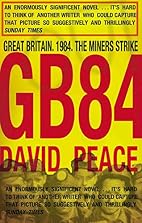
GB84 by David Peace confused me. I was in my early teens when the Miners' Strike of 1984/5 and the belligerence of the Thatcher government changed the shape of unionisation and worker rights in the UK. I saw the government sanctioned propaganda on the news, but at the time didn't know it was propaganda. It seemed on the face of it that the striking miners were violent, but it also seemed like the police were too. Later, I learned more about what went on, how billions of pounds were pumped into marshalling police around the country to control the strikers through road blocks, violence and intimidation. All while the miners were being portrayed as the violent and intimidating ones. Those billions of pounds could have been spent on making pits more efficient, protecting jobs, supporting an industry that at the time was still vital to the UK economy.
But there was a different agenda, and a LT review probably isn't the best place for me to rage against things that can't be changed now.
The book confused me because it combined a fictional recreation of historical facts in the style of a farce, with the imagined first person experiences of two flying pickets, and a completely off the wall and unnecessary crime thriller involving brutal murder, wife swapping and a graphic ritual disembowelling, but I don't know why. For laughs? Because the author had a point to make? I'd like to say I enjoyed it. I'd like to say it was worth the time spent reading it. I feel a little traumatised by it, though.
This is my full review.
16missizicks
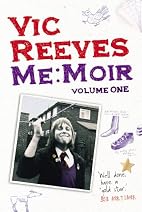
After the trauma of GB84, Me: Moir Volume 1 by Vic Reeves was the tonic I needed. I'm cautious about reading the autobiographies of people whose work I love in case they turn out to be horrible. Vic Reeves, aka Jim Moir, aka Rod Moir, is just as daft, clever and likeable as his TV persona suggests. I laughed out loud a few times and annoyed my husband by reading passages out to him. Splendid stuff!
17missizicks
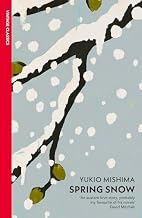
I feel deeply moved by the sadness of Yukio Mishima's Spring Snow. The sadness of the doomed love affair, and the sadness of the loss of an old, courtly way of living in favour of the Western idea of modernity. I felt very involved with the two young lovers. It's the third book I've read by Mishima. Each one has been different. I like that.
18missizicks

Maybe it's because the world we currently live in is full of disaffected youths searching for meaning and, in some cases, willing to die or to kill to create that meaning, and a place where disaffected adults turn to fascist viewpoints to assuage their sense of injustice, but I found Runaway Horses by Yukio Mishima very depressing. It lowered my mood all week. It is beautifully written and an interesting window into Japanese society and politics in the 1930s, but it's not at all a joyful read.
19missizicks
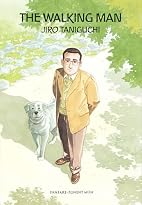
The Walking Man by Jiro Taniguchi was just the interlude I needed. Beautiful illustrations. A snapshot of Japanese suburban life. A very restful way to spend an hour or so on a wet February afternoon.
20missizicks
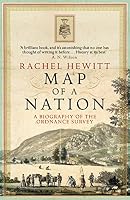
I wanted Map of a Nation by Rachel Hewitt to be a different book. It was okay. I learned about the development of the Ordnance Survey and some of the men involved. I didn't feel very engaged, though, and the book suffered from over repetition in the form of regular recaps, as though the reader had as short an attention span as the producers of popular TV culture assume their viewers have.
21lilisin
I adore Japanese literature but unfortunately Mishima is just not my cup of tea. I will however look for that Taniguchi so thanks for your reviews.
22missizicks
#21> Mishima is quite grim in his world view, I agree. He seems to have relished cruelty and brutality, portraying it as a sign of strength. I don't share his political viewpoint, and I can't read a lot of his stuff on the trot, but I appreciate his writing style.
The Taniguchi book is beautiful. I envy the eponymous character's life.
The Taniguchi book is beautiful. I envy the eponymous character's life.
23missizicks
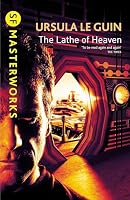
The Lathe of Heaven by Ursula le Guin was a gripping read. I initially found it hard to get my head round the way the book was talking about the year 2002 as an imagined future which was at odds with the reality of the 2002 that eventually came to pass, but once immersed in the story, I was completely absorbed.
24missizicks

Dead Simple by Peter James was just that. In James' previous life as a film producer, he would probably describe it as high concept. It has all the elements you'd expect in a detective mystery, with a sprinkling of attitudes towards women that would be more at home in the 1970s. It didn't take long to read, but it wasn't really my cup of tea. Shan't be reading any more in the series!
25missizicks
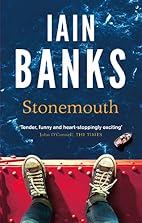
Stonemouth by Iain Banks was great. If you've never read any of his books, this is a good introduction to Banks at his best. Sometimes he could be a bit of a lazy writer, too pleased with himself, but most of the time he got it perfectly right. This is one of those times. The Crow Road is another. I personally love his most famous book, The Wasp Factory, but you have to have a dark streak in your sense of humour with that book, I think!
26missizicks
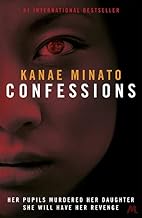
I saw the film version of Confessions a couple of years ago. Kanae Minato's book is more interesting and works better than the film, which lost the multiple perspectives of the different narrators. It's not the most consistently plotted crime novel I've ever read, but it diverted me for a couple of hours at least.
27missizicks
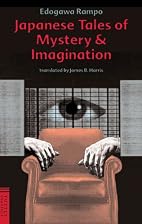
Old fashioned mystery from Edogawa Rampo, Japan's answer to Edgar Allen Poe, in the form of Japanese Tales of Mystery and Imagination. I was expecting ghost/horror stories, given the Poe connection, but these are mainly crime mysteries that reflect on the way seemingly civilised people can have a hidden streak of criminality and murderous intent. Good fun!
28lilisin
>26 missizicks:
I really enjoyed the movie but unfortunately, although I tried reading the book, it was just a little bit above my Japanese reading level at the time so I'll have to try again later in my studies. I'm interested in the multiple narrators angle.
I really enjoyed the movie but unfortunately, although I tried reading the book, it was just a little bit above my Japanese reading level at the time so I'll have to try again later in my studies. I'm interested in the multiple narrators angle.
29missizicks

You know when an author dies and a publisher decides to release a forgotten, unfinished typescript and, because you like the author's other work, you read it and then wish you hadn't? That's how I feel about Nightmare in the Street by Derek Raymond.
30missizicks

I really enjoyed The Hunger Games by Suzanne Collins. It was a gripping read, despite having seen the film and knowing the outcome. There's enough that's different in the book to create genuine heart-in-mouth moments, and the descriptions of Katniss' dehydration and trackerjacker hallucinations were grim. I can understand why they were left out of or toned down for the film. I understand why Collins has Katniss backpedal from her feelings for Peeta at the end of the book (there are two more in the series to sustain!), but it grated more than it did in the film. It lacked subtlety, somehow. Still, I'm itching to crack on with the next in the series.
31missizicks

I was told by a couple of friends who had already read it that Catching Fire was less exciting (they actually said boring) than The Hunger Games. They were wrong. It's just as exciting and has more in the way of plot development that made me care more about the characters. The author's habit of recapping things from book 1 as though the reader was incapable of remember plot or was watching a mini series annoyed me slightly, but fortunately that only happens a couple of times.
32notmyrealname
I really have to read the Mockingjay series!! Glasd you enjoyed them. You're reading some great stuff this year.
33missizicks
#28> The telling of the story by different participants was a good choice by the author. It added some uncertainty to the mystery. My Japanese studies have fallen by the wayside! A colleague gave me The Capricious Robot by Shinichi Hoshi in the Secret Santa at Christmas - in Japanese! I'm still waiting for the courage to tackle it!
34missizicks
#32> I'm glad that I've given them a go. I assumed for a long time that they would be similar to the Twilight Saga, which I've heard bad things about, but then I saw The Hunger Games film on TV and was hooked by how strong the story is. Suzanne Collins writes well - there's very little filler, everything happens for a reason, and the story is about finding your place in the world in a meaningful, community-oriented way.
35notmyrealname
Sounds really good - I also thought they were quite similar to Twilight until someone disabused me of that notion!
36missizicks

I am extremely impressed by this series of books. Mockingjay is a powerful end to the story. I like the space Collins gives to the characters to develop. I like how she hasn't shied away from difficult events, and has created a realistic world where people behave in very human ways, but she doesn't use it as an opportunity to preach her own world view. She shows very skilfully that people are contradictory, there are many ways to view a situation, and you don't always get the happy ending you want. There is a happy ending, but it's tinged with the sadness and horror of what has gone before. I'm going to miss the cast of characters a lot.
37missizicks
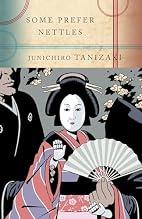
Some Prefer Nettles is the third book I've read by Junichiro Tanizaki. I enjoyed it. Not as much as I did The Makioka Sisters, because it was a more languid work that drifted along telling the tale of two indecisive, ennervated people, but it was an interesting window on a world constrained by appearance. The thing I enjoyed most was Kaname's increasing interest in Bunraku, which meant I learned a little of its history. I want to see some now - more than the snippet that forms part of the Gion Corner show in Kyoto, for sure!
38missizicks
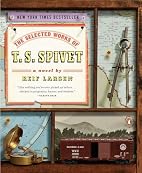
The Selected Works of T S Spivet by Reif Larsen is the best thing I've read so far this year, and I've read some pretty good stuff. It's part adventure story, part road trip, part acclamation of science. I was entertained and educated, made nervous and gripped, delighted by the beauty of the prose. I want everyone to read this book, in a way similar to how I want everyone to read Crime and Punishment. It has the same honest way of fronting up to the vagaries of humanity as C&P. I don't know that it will become a classic. It's probably not Literary enough for that. But still, I loved it and am mentally shelving it with my favourite books.
39missizicks
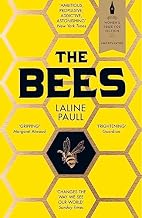
I enjoyed Laline Paull's The Bees. It isn't the book I was thinking it would be. For some reason I thought it was going to be an imaginary future where the bees have taken over. Instead, it's an imagining of how bee society works and what might happen if a lowly worker bee rose up to challenge the totalitarian regime. It was exciting for the most part, but I found the anthropomorphism a bit much at times. Worth reading, though.
40missizicks
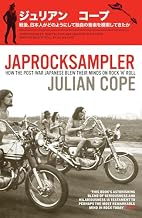
I thought Japrocksampler by Julian Cope was an informative introduction to the development of popular music, in particular prog, experimental and avant garde rock and free jazz, in post war Japan. Cope is passionate about the subject and, for the most part, writes well. His style is very engaging but sometimes he presumes the reader has as much in depth knowledge of the subject as he does and other times he repeats stories as though the reader won't remember them from a dozen or so pages back. The book is also in need of some serious editing to remove typos and mis-transliterations of Japanese words. Other than that, I learned a lot and now have some records to look out for next time we're in Japan!
41missizicks
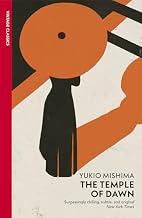
I thought The Temple of Dawn was an improvement on Runaway Horses, but not quite as good as Spring Snow. Honda made me think of Don Draper. He seems to be following a similar path as he ages through the novels. Of course, Don Draper believes in a different kind of reincarnation, but both characters seem to stand aside from what's going on around them in order to follow their own desires, whether that's good or bad.
42missizicks

I loved Kokeshi: From Tohoku with Love by Manami Okazaki. We went Aomori last year and brought a couple of Tsugaru style Kokeshi. Learning about the history behind these traditional Japanese dolls and reading the interviews with the men and women who still make them was really interesting.
43missizicks
No picture for WE by Yevgeny Zamiyatin because the LT selection is dire.
I really enjoyed this futuristic dystopian SciFi tale. Tempting to read all kinds of things into it, given the time of its publication and subsequent banning in Russia, but actually I think it's just a reflection on how things can go wrong when you try to make everything equal by eliminating the complexities of human nature, and how conforming to the prevalent culture can sometimes feel safe, even when it's not. Pertinent to all societies, not just overtly oppressive ones.
I really enjoyed this futuristic dystopian SciFi tale. Tempting to read all kinds of things into it, given the time of its publication and subsequent banning in Russia, but actually I think it's just a reflection on how things can go wrong when you try to make everything equal by eliminating the complexities of human nature, and how conforming to the prevalent culture can sometimes feel safe, even when it's not. Pertinent to all societies, not just overtly oppressive ones.
44missizicks
My copy of Almayer's Folly is in a compendium of Joseph Conrad's collected works, so again no picture.
I loved it. Conrad's prose is beautiful. His understanding of human nature is complete. Almayer's Folly is a tragic tale of hopes thwarted by the hardship of life and the weak spirit of one man. Almayer's Folly is the name given to the house built by the titular hero to house his family and demonstrate his wealth and success. It is also the theme of his life - from presuming he would inherit the fortune of his boss by marrying his adopted daughter, to thinking he could throw that daughter off when he no longer needed her, and his belief that his position as the only white man on the east coast of Malaysia would secure his fortunes. He is a weak man, who can't rid himself of the angry woman who has been forced to marry him, can't prevent his father in law from taking his own daughter from him, and ultimately can't make reparation with his only child. In the middle is a love story, told simply and perfectly. It's only a short book, but it properly filled my brain.
I loved it. Conrad's prose is beautiful. His understanding of human nature is complete. Almayer's Folly is a tragic tale of hopes thwarted by the hardship of life and the weak spirit of one man. Almayer's Folly is the name given to the house built by the titular hero to house his family and demonstrate his wealth and success. It is also the theme of his life - from presuming he would inherit the fortune of his boss by marrying his adopted daughter, to thinking he could throw that daughter off when he no longer needed her, and his belief that his position as the only white man on the east coast of Malaysia would secure his fortunes. He is a weak man, who can't rid himself of the angry woman who has been forced to marry him, can't prevent his father in law from taking his own daughter from him, and ultimately can't make reparation with his only child. In the middle is a love story, told simply and perfectly. It's only a short book, but it properly filled my brain.
45rocketjk
missizicks, I'm so glad you liked Almayer's Folly so well. Amazing that that was his very first novel.
46missizicks
It's an incredible first novel, Jerry. So intense and truthful. I love how well Conrad understands what makes people tick, and especially the interplay between men and women.
47missizicks

We're going to Matsuyama as part of our upcoming trip to Japan, so I thought I would re-read Botchan. I have the free Project Gutenberg translation on my e-reader, and I remember enjoying it but finding the translation a little stilted and oblique, so I decided to buy a copy of the J. Cohn translation of Natsume Sōseki's classic.
It was much better, far more accessible. Botchan is a comic character, cartoon like in his extremes. Some of his escapades made me snigger out loud, while the deviousness of his colleagues made me want to grind my teeth. I could really visualise the story as I read this translation.
48missizicks
I was unsure whether to count Sōseki's English translation of Hojoki by Kamo no Chomei, because it only took me 15 minutes to read and is very slight, but I enjoyed it. It made me reflect on how I like the idea of solitude, but can't live a life of solitude. I have experience of living alone without a support network of friends, and long stretches of time with no human contact wasn't good for my mental health. So it's going on the list!
49missizicks
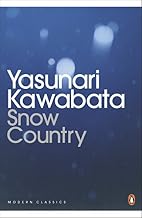
I thought Snow Country by Yasunari Kawabata was wonderful. I can't adequately describe why. Not a lot happens, but it is described beautifully. I could visualise everything from the descriptions, and I felt as though I were drifting along with Shimamura and Komako in their ennui. There is something about desire that is acted on but not fully acknowledged. Kawabata describes it without describing it, somehow. Anyway, I'm tangling myself up. I loved it.
50missizicks
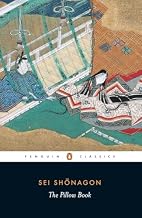
I struggled with The Pillow Book by Sei Shonagon. Every time I sat down to read, within 20 minutes I fell asleep. It slowed me down! Plus I went on holiday for a fortnight and was too busy experiencing my own life to immerse myself in someone else's life. I preferred the Diary of Murasaki Shikibu.
51missizicks
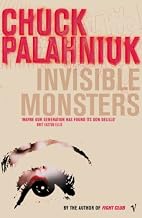
It has been a few years since I last read any Chuck Palahniuk, and it took a few pages for me to settle back in with his style. I loved Invisible Monsters. It was crazy!
52missizicks
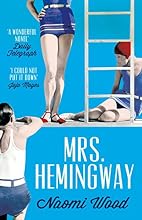
I have a love/hate thing about Ernest Hemingway. I appreciate his writing, but the things I read about him, and that are thinly disguised in his novels, make me despise him. I wasn't expecting Naomi Wood's book to change my opinion of him, and it didn't. I was more interested in finding out what kind of woman marries a man like Hemingway. It turns out that each Mrs Hemingway is a variation on the theme of "I can't help loving this creative manchild"/"I'll be the one to tame him". Hemingway also plays into this cliché by wanting to be changed by each marriage, even though he just likes the first flush of love and the writing he can wring out of it.
The wife I liked best was Mary Welsh, and I wonder whether part of the reason for her coming across best is that she was the only Mrs Hemingway to write her own memoir.
53missizicks
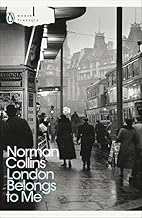
I can't describe adequately how much I loved London Belongs to Me by Norman Collins. The characters were so real, and it made me appreciate another side to London that reminded me that all big cities are home to someone. The writing style was of its time, but also as fresh as if it had been written yesterday. Even with the very specific setting of London in the Second World War, the people and their interactions with each other were timeless. The story has an engine of wry comedy that drives it on, with pathos and grit mixed in, too. I just loved it, and I wouldn't have discovered it had it not been for notmyrealname reviewing it here.
54notmyrealname
Wow - thanks for the plug!! So glad you enjoyed it. There's a bucket more great London fiction like that around the place, if that is what you're into.
55missizicks
I'm going to investigate. It has made me wish there was more literature about life in Manchester - I've read The Manchester Man, North and South, and Love On the Dole. I might hunt down a copy of Fame Is the Spur.
56missizicks
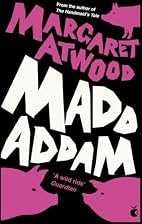
Margaret Atwood is one of my favourite authors. I loved Oryx and Crake. I thought Year of the Flood was an interesting companion, but not in the same league. I thought MaddAddam was pointless. There was no need for most of the book, as it was mostly rehashing what had gone before. The last few chapters drew the story to its conclusion, which could easily have been incorporated into the second book for me. Really disappointing.
57missizicks

I decided to read All Quiet On The Western Front to get some perspective in this tub-thumping rolling centenary of WW1. Both my grandfathers fought in that war. I never knew either of them, but my parents told me that neither would speak of what they had experienced. I studied the war at secondary school. It made no sense to me. I haven't read Pat Barker's books yet, but I have read Birdsong, which I found ridiculously romanticised and overblown. All Quiet On The Western Front seems to me to make the most sense as is possible of that senseless war. I understand a bit better what Jim and Herbert, my grandfathers, went through and how that experience would make them unable to talk about it with people who hadn't lived through it. Erich Maria Remarque's book is important for that reason.
58missizicks

438 Days (438 Dagar in Swedish) relates the experience of journalist Martin Schibbye and photographer Johan Persson as wrongly convicted prisoners in an Ethiopian gaol. Both men are extremely likeable, and very different characters. They set out to investigate the involvement of a Swedish oil company in a contested region of Ethiopia, entering the country illegally (as journalists often need to in order to investigate stories) with the assistance of the Liberation Front of the contested region. The Ethiopian government classifies the Liberation Front as a terrorist organisation, and charged Schibbye and Person with terrorism. The book records their fight for freedom within a corrupt judicial system. The story is told in an open, honest and human way. I found it utterly compelling. It really underlines how important it is that the international press is free to investigate crimes against humanity, and political and economic corruption in all its forms.
59missizicks
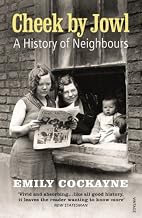
I picked Emily Cockayne's book Cheek by Jowl up because the blurb on the back cover made it sound interesting. In a way, it was, but I wish her editor had done a better job, because it felt a bit muddled in parts. But it was enjoyable to read examples of neighbourly behaviour from across some of the periods of history that have been the setting for novels I've read recently, and to think about neighbourly behaviour in the context of Schibbye & Persson's book.
60missizicks
I've had a couple of people recommend C J Sansom's books to me, so when a friend took pity on me missing Thomas Cromwell and offered to lend me the first in the Matthew Shardlake series, Dissolution, I happily accepted. It's a well plotted murder mystery, set against the dissolution of the monasteries under Henry VIII. It melds historical fiction with historical fact in a similar way to Ellis Peters in the Cadfael Chronicles. I worked it out before Sansom allowed Shardlake to reach the same conclusion, but as with all good crime novels, it didn't matter. I still enjoyed reading along as Shardlake went through the possibilities. Shardlake was likeable, Thomas Cromwell less so. I'm going to read a factual biography of Cromwell next.
61missizicks
I found the Tudors dull at school. That put me off reading Wolf Hall for ages. Then I took the plunge and found Hilary Mantel's fictionalisation of the court of Henry VIII absorbing. So much so that I wanted to read something factual. Tracy Borman's Thomas Cromwell: The untold story of Henry VIII's most faithful servant really hit the spot for me. It's a well researched, balanced and human book. You can tell that Borman feels favourably towards Cromwell, but she's not blinkered about his flaws. She weighs the available evidence well, and makes her case in a readable but not dumbed down way. I didn't like real Cromwell as much as I liked fictional Cromwell, but I think that's in Borman's favour.
62missizicks
Oh dear. A Spot of Bother was a mistake. It's been on my to read pile for a while. I picked it up because it promised to be funny. I didn't find it funny. It was well written, Mark Haddon has a good understanding of human nature, but the depiction of dysfunctional relationships and mental illness was nothing to laugh about. One of the characters was hard to care about but had a key role, and by the end it had descended into farce that seemed to have been written with an eye to TV adaptation.
Shame.
63missizicks

Another cracker from John Le Carré. I didn't enjoy Smiley's People quite as much as I did Tinker Tailor, but it was still a good read. The first 300 pages whizzed by, with lots of twists and turns and a satisfying plot, but the final quarter of the book felt a bit flat to me. Nothing seemed to happen for ages, and then when the conclusion finally arrived, it was a bit of a damp squib. The prose was a joy, though. I love Le Carré's turns of phrase and the way he paints a picture.
64missizicks

I actually read the Project Gutenberg edition of The Woman In White by Wilkie Collins, which was a decent version without too many glitches, just the odd weird page break.
The story itself is rightly a classic. I loved the setting, with the recently popular railway system providing ample means to travel to and from London, committing crimes and solving crimes. I loved the extra edge that early Victorian methods of communication added to the tension - having to wait a whole day for your letter to be delivered and a reply received! I thought all of the characters were well written, including the minor ones who felt as real as the main protagonists. My only quibble is the false ending, and what to me was the unnecessary exposition explaining all at that false ending. I was ready for the book to end, and there was Fosco's statement in full. Followed by some mopping up and a, thankfully, happy ending after everything that had gone on before.
65missizicks

I happen to like Richard Ayoade and his satirical, self-deprecating comedy. Therefore I enjoyed Ayoade on Ayoade. It made me laugh out loud in public places. It made me cry with laughter. It made me read passages out loud to my husband, which must have been annoying as I borrowed the book from him, and he hasn't read it yet. I can't imagine it would make sense to anyone who doesn't know or like Ayoade, but it might be pleasant to be bewildered by his style. I was bewildered from time to time, but that could be because I don't have in depth film knowledge and have been known to be quite credulous at times. Still, I now have a pleasing image in my head of Tilda Swinton trying to put out an unexpected fire with a navy blue tunic.
66missizicks
Disgusting Bliss by Lucian Randall doesn't know what it wants to be: hero worship tome; analysis of experimental comedy; examination of reclusive auteur? Parts of it were interesting, when it looked at what went into Chris Morris' ground breaking radio and TV shows, but much of it was frustrating and badly edited.
67missizicks

I really enjoyed How I Escaped My Certain Fate, which is part autobiography, part deconstruction of the three key stand up shows Stewart Lee put on when he came out of 'retirement'. Aside from a brief interlude when I couldn't find a way to appreciate Lee's craft, around the time of the first series of Comedy Vehicle, I like his style of delivery, as well as his futile rages and surreal interludes. I even like his sneery tone because, of course, he isn't sneering at me. No. Not at me.
If you don't know who he is, or if you do know and don't like him, this book is best avoided!
68missizicks
Not the most satisfying book in the series, but I'm glad to have read Yukio Mishima's The Decay of the Angel and completed the tetralogy.
69missizicks

I've watched all three Girl... films based on Stieg Larsson's Millennium trilogy, so knew the plot of The Girl With The Dragon Tattoo, but I still enjoyed reading the book. I enjoyed the small details that were omitted from the films, and thought the characters were pretty well written. It wasn't without its flaws, you could tell Larsson was finding his feet as a novelist, but I'm looking forward to reading the next two. Not yet, though. I need something different.
And I've achieved my book goal 4 months early! Not my hoped for page count, though. There's time yet...
70missizicks
What can I say about American Tabloid? James Ellroy has certainly written an interesting book. He's created a plausible back story to the Kennedy assassination. He even makes violent, racist, homophobic, misogynist, corrupt men likeable in a weird way. Maybe not likeable, but I certainly cared about what happened to them. The book was difficult to read, though. I had to have breaks from it. It made me feel polluted. I don't think I'll read any more of Ellroy's books!
71missizicks

I like David Mitchell's writing and imagination. I find his books easy to read but still stimulating. He's like an accessible Umberto Eco! For that reason, I enjoyed The Bone Clocks. It was an interesting continuation of his time travel/reincarnation theme, with the now expected reappearance of select characters from previous books. There were a couple of duff moments, which I mention in my review, but all in all it was an enjoyable read and quite cleansing after James Ellroy!
72missizicks

A Tale for the Time Being by Ruth Ozeki was an interesting, at times painful, read. As someone who was bullied by classmates for being different (studious, bookwormy, knowing too many facts), I found reading the scenes of schoolday bullying uncomfortable. My experience wasn't as extreme as that portrayed in the book, but I understood the feelings of the bullied character. The story has peaks and troughs and is self-indulgent in places, but it is one of the more stimulating books that I've read in recent years. I feel like I've learned some stuff, and I've been inspired to put À la recherche du temps perdu onto my reading list for next year.
73missizicks
Marius B Jansen's The Making of Modern Japan is a thoroughly researched but approachable tome that debunks a few Western myths about Japan's relationship with the wider world under the Tokugawa regime, and provides a good mix of economic, political and social history. A lot of work has gone into creating such an accessible piece of work, including original source research and referencing the existing canon of academic literature extensively. As someone with largely received wisdom on the history of Japan, garnered from the media and website potted histories of places we've visited, I found the book eye opening and exciting. I was most engaged with that earlier history than with the chronology from Meiji onwards. The wealth of detail went a long way to making sense of my snippets of knowledge.
I appreciated the background to Tokugawa Ieyasu's rise to power at the start of the book, which helped set the scene for what followed. The breakdown of the political system Ieyasu imposed in order to control the warring factions was also useful, and the exploration of the internal power struggles instigated by the arrival of Commodore Perry and Townsend Harris put a different slant on events that led to the Tokugawa collapse and Meiji restoration.
I enjoyed how Jansen, throughout the book, reinforced the broad historical points he was making by reference to the specific and the personal. His willingness to frame things in social history terms made the book easy to read. Some sections lacked weight compared with other, meatier sections, and were a little dry, but they were important as bridges explaining the transition from one key set of events to another.
Possibly the most interesting part for me was Jansen's description of Osaka's development from Hideyoshi's military headquarters to commercial centre and Kitchen of Japan status. It explains a lot about the nature of Osaka as a city today. Moukarimakka/ もうかりまっか (“Are you making much money?”) indeed! As someone who lives and works in Manchester, the self-styled First Modern Industrial Metropolis, I was struck by the similarities in the development of a warehouse system run by commoner warehouse managers, rather than by the ruling samurai class, and by the city's importance as a distribution hub and trading centre. And all this a good 200 years before Manchester got its act together!
The second half of the book, dealing with Japan's modernisation and emergence as a world power, was less intriguing for me, perhaps because the Tokugawa era is so different to Western economic and social progress, and the Meiji and other 20th century machinations seemed more familiar. Again, the research and detail was good, and Jansen outlines the path to military influence over decision making very well. There were fewer surprises, though, and it felt more bogged down in political machinations than the first half.
Going into the book, I knew little about the Taisho era and was glad to learn more, but it was a little disappointing that Jansen opened the discussion with a complete dismissal of the Taisho emperor. Jansen's reason seems to be based in a dislike for people with mental illnesses. The Taisho emperor is described by Jansen as demonstrating embarrassing signs of mental illness, of being unimportant in life and irrelevant in death. Wow. It seemed to me that many of the decisions made and paths followed were precisely because the Taisho emperor wasn't as involved in government, so to say that he was unimportant and irrelevant seems overly dismissive. I would have liked more exploration of the lack of imperial leadership and the consequences for the nation. Although only 15 years long, Taisho was a period of interesting movements, particularly in the areas of suffrage and education, which spoke of a desire for democracy and equality. Perhaps those movements would have been more restrained had the Taisho emperor been more engaged politically. Jansen isn't interested enough to comment.
Towards the end of the book there are also hints that both author and editor were losing focus and/or interest. Anecdotes are occasionally repeated more than once, there are strange syntactical choices (mostly to do with punctuation) that meant some sentences I had to read more than once in order to get the gist, and there are a fair few typos to boot. I suppose summarising 400 years of a country's history is a big job, but still.
I am biased, of course, because I am intrigued and bewitched by Japan, but overall Jansen's exploration of Japan's development over a 400 year period has made me feel closer to Japan and helped me to appreciate its culture and history even more.
74missizicks
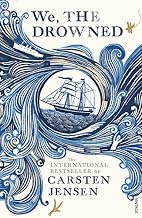
We, The Drowned by Carsten Jensen is a beautiful book. Although it's a fiction, it is based around real events that happened to the inhabitants of the Danish shipping town of Marstal. As well as the excitement of the characters' adventures at sea, there is also a deep understanding of what it is to be human. The good and the bad in people is described unflinchingly. The characters deal with their weaknesses and inadequacies through fellowship. As I was reading, I kept thinking about Joseph Conrad's writing, and I was pleased to see Conrad acknowledged by Jensen, who had drawn on The Shadow Line for detail about what it was like to be an inexperienced sea captain at the end of the 19th century. I've decided to read The Shadow Line next.
I will be thinking about Jensen's characters for a while.
75missizicks
No picture for this entry, as it's part of my Definitive Joseph Conrad Collection.
The Shadow Line is a short but very gripping account of a sailor who unexpectedly has captaincy of a stricken ship thrust upon him. Over less than 200 pages, Conrad weaves a spell from strands of madness, stoicism, compassion and bloody mindedness. Utterly brilliant.
The Shadow Line is a short but very gripping account of a sailor who unexpectedly has captaincy of a stricken ship thrust upon him. Over less than 200 pages, Conrad weaves a spell from strands of madness, stoicism, compassion and bloody mindedness. Utterly brilliant.
76rocketjk
The Shadow Line is one of the very few Conrad works I haven't read yet. I have been leaving myself a few, as I hate the prospect of having no new Conrad to read. He is my favorite author. I read We, the Drowned earlier this year and was enthralled. I think your comment, "The characters deal with their weaknesses and inadequacies through fellowship," is spot on. Cheers!
77missizicks
I'm so glad that I've discovered Conrad. He is remarkable. I'm between two stools - now that I've taken the plunge, I want to swim and swim in his prose, but I also don't want to read him too quickly, to have no more Conrad to read. So I can understand you leaving yourself a few.
We, The Drowned really moved me with its honesty and its willingness to front all of human nature head on. I feel that in the Conrad novels I've read as well.
We, The Drowned really moved me with its honesty and its willingness to front all of human nature head on. I feel that in the Conrad novels I've read as well.
78missizicks
I'm not adding The Jolly Corner to my official tally, as it's only 70-something pages long. I was a little disappointed at first, because I was expecting a true ghost story. I read it for a Halloween challenge on a blog I follow. The theme was Dead Things, and I thought a ghost story would be just the thing.
This isn't a ghost story, though. Not in the traditional sense. It's more of a What If story, and in it Henry James explores a kind of version of Hugh Everett's Many Worlds theory of quantum physics. Spencer Brydon is haunted by the ghost of the man he didn't become by not staying in New York. He might be having a breakdown. I think The Jolly Corner is actually a love story. If I think about it that way, I like it.
79missizicks
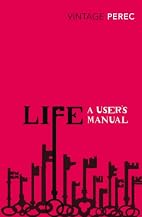
I loved Life, A User's Manual by Georges Perec. I loved the structure of the story, the way the pieces of people's stories fitted together like the jigsaw pieces, crossword clues and recursive images scattered through the book. I loved the setting of the apartment block and the way the inhabitants were gradually inventoried, their stories unfurling. I found it beautiful.
80missizicks
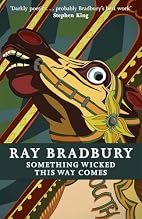
This is only the second book I've read by Ray Bradbury, and I loved it. I'm a fan of horror, fantasy, spooky Gothic, whatever you want to call books that deal with the supernatural and human fears of death. I'm more than willing to suspend my otherwise rational disbelief and be pulled into another realm if the writing is good enough, if the plot has just enough realism to make the magic feel true. Something Wicked This Way Comes worked for me. The characters were compelling, the bizarre evil of the carnival believable. There is nothing gory or gruesome or violent in the tale, but that made the underlying threat all the more unsettling. The tension starts to mount from the very first page, when a man described as clothed in the colours of storms makes a gift of a lightning conductor out of concern for the well being of one of the main protagonists. Bradbury's prose is sheer poetry, his descriptions as elaborate as the supernatural world he is describing. For all its magic and mystery, I'd describe this as a metaphysical novel. It understands what makes the world go round, and what keeps some people awake at night. In a sentence, it's The Wizard of Oz meets To Kill A Mockingbird via Wise Blood.
I want to read the other books in the Green Town series now, as well as some of Bradbury's short stories.
81missizicks
I read another short story for the Halloween reading challenge I'm doing. I found The Body Snatcher by Robert Louis Stevenson on a website called East of the Web. It was a pretty tame tale, based loosely on the activities of Burke and Hare, but it had some interesting elements. It was only 19 pages long, so I'm not counting it towards this year's total.
82missizicks
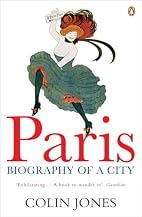
If you're after a book that gives minute detail about the changes to the boundaries, streets and buildings of Paris from Roman times to the late 20th century, Colin Jones's Paris: Biography of a City is the book for you. If you're looking for a book that marries geographical history with engaging social history so you can get under the skin of Paris and its inhabitants, you'll be disappointed.
I was the latter. I also fell asleep far more often than a well written book should have prevented me doing.
83missizicks
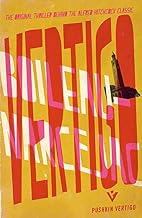
I loved Vertigo. I thought the book was much better than the Hitchcock film. I enjoyed Boileau-Narcejac's writing partnership. Even though I knew the twist from the film, there was enough that was different to hook me in. I much preferred the wartime Parisian setting.
84missizicks
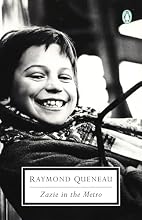
Raymond Queneau's book about a young girl who visits Paris and wreaks havoc in her uncle's already eccentric life is tremendous fun. I wish my French was better, so that I could read Zazie in the Metro in its original language.
85lilisin
>84 missizicks:
My mother and grandmother have been trying to get me to read that book for ages! Next time I visit home maybe I'll finally pick up that copy sitting on the bookshelves.
My mother and grandmother have been trying to get me to read that book for ages! Next time I visit home maybe I'll finally pick up that copy sitting on the bookshelves.
86missizicks
>#85 You definitely should! I imagine that the original is even funnier - there must be wordplay that doesn't translate from French into English. I loved it. Everyone in it is beautifully realised.
87missizicks
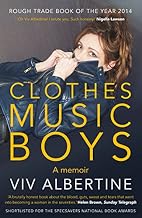
I didn't know much about Viv Albertine before I read Clothes Music Boys, other than that she had been in The Slits. I think I expected a typical celebrity memoir, but set in the punk era. The book is much more than that. Viv Albertine has had quite a life, and comes across as normal, real and incredibly strong. I really enjoyed meeting her.
88missizicks
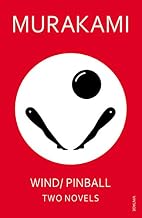
I've read both of the novellas in Wind/Pinball before, but as fan translations, so I thought I'd read the official versions. I'm a Haruki Murakami completing, I guess. I enjoyed them. Hear the Wind Sing more than Pinball 1973.
89missizicks
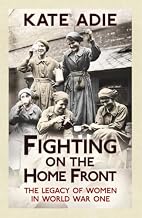
In Fighting on the Home Front, Kate Adie brings an interesting personal touch to the forgotten stories of women who struggled against a patriarchal society for the right to be taken seriously. Adie marries the story of the fight for electoral representation with that of the women who took men's places in the workplace during the war firmly on men's terms. This isn't a story often told in the more typically eulogising accounts of plucky little women filling the gap left by men who were fighting on the front. This is a story of women used cheaply as a stop gap and not recognised for the effort and the sacrifice they made to support the armed forces and the nation. There are some remarkable stories of bravery and bloody mindedness in the face of patronising male dismissal of women's abilities. There are also parallels drawn by Adie between the chauvinism of Edwardian Britain in a theatre of war and the chauvinism shown to her 80 years later as a war correspondent. There is some repetition of themes across the piece, and not everything in the book is entirely engaging, but on the whole this is a good popular history of a little-celebrated aspect of World War One.
90missizicks
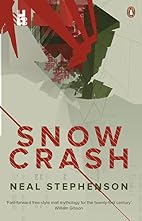
High octane. A story about theories of religion, linguistics and evolution that is plausible, not half baked. Engaging and entertaining and ahead of its time. Snow Crash will be the first of many by Neal Stephenson that I'll read.
91missizicks
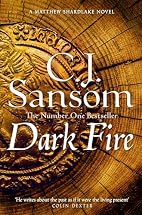
I borrowed the second instalment of C J Sansom's Shardlake series from my friend. Dark Fire was another pacy thriller that kept me gripped through all its twists and turns. I'm really enjoying this series and can't wait to borrow the next book. I can tell that a lot of research went into the background to the story and that made it more absorbing for me.
92missizicks
I got Rain Song as a free download when my husband bought me my Kindle Keyboard in 2008. No offence to Alice J Wisler, but it's not a book I would have paid money for. It was a sweet story, but nothing particularly original. I liked the characters, but found I could skim read a lot of without any sense of loss.
93missizicks

I didn't know what to expect with Theodor Fontane's classic novel Effi Briest. I was charmed and surprised by it. I read the Penguin edition from 2000 which seems to be a good translation. Some of the reviews I read led me to expect wooden characters and dull events. Instead, I found the characters very sympathetic and, while the action is subtle, the trail of events was far from dull. It was tragic, and all the more so because each of the characters involved could see the tragedy but were unable to stop it, because of the expectations of society. I really enjoyed it.
94missizicks
The Edge of the Sky by Roberto Trotta is an odd book. I read it for a book challenge. The premise is that complex ideas can be explained simply using only the 1000 most popular words in English. Some of the metaphors were laboured. I liked some parts of the narrative, but other parts felt clunky and self-satisfied.
95missizicks
Madame Sadayakko is a really engaging book, full of warmth for its subject. It is also very revealing on Japan’s social history. If Lesley Downer had included some of the photos she described in such detail, I’d have given it 5 stars!
96missizicks

The Transformation of England reminded me of studying for my first degree. I read Peter Mathias's The First Industrial Nation back then. This collection of essays is now 36 years old but still has a lot that is relevant to modern economics, as well as economic and social history. Reading it 23 years on from graduation made me realise that I hadn't lived enough back then to fully appreciate the subject I was studying!
97missizicks
 .
. 
Two short volumes slipped in but not added to my over all tally. Both were part of my Secret Santa gift from a colleague this year.
I'd never read any Yoshida Kenkō before, and I enjoyed A Cup of Sake Beneath the Cherry Trees.
Ryūnosuke Akutagawa I have read before, and the Penguin Little Black Classic The Life of a Stupid Man contains three stories from the book I've read. I'd say its a decent intro to Akutagawa for anyone who wants to try him out.
98missizicks
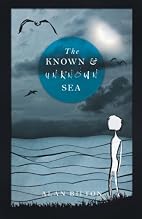
The Known and Unknown Sea is the second novel by Alan Bilton. I read it to fulfil one of the challenges in a scavenger hunt I'm taking part in, which asked us to read a book published by an independent publisher. Cillian Press in based in Manchester, and I was intrigued by the blurb for this book. It was unsettling and made me feel sad, but I'm glad that I read it. It's the memoir of a man who can only recall events as he experienced them as a child. It is surreal, nightmarish, darkly funny and poignant.
99missizicks
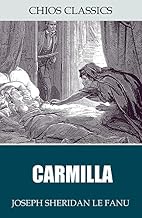
I read the Project Gutenberg version of Joseph Sheridan Le Fanu's Carmilla, which doesn't have a cover, but above is the cover chosen by LT for another eBook version of the tale. It's a short story, so I'm not including it in the official tally.
It's a fine example of 19th century Gothic literature, and one of the better vampire stories I've read. I like vampire stories to have an element of reality about them. Schlocky can be fun, but it's more spine chilling if the vampires are believable as people, and not just pasty faced weirdos who have an aversion to sunlight.
100missizicks
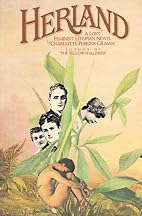
Don't bother with Herland unless you're carrying out a study of feminist literature over the past 100 years. Charlotte Perkins Gilman's treatise for a feminist utopia will add nothing to your mental well-being but will rob you of around 90 minutes of your life.
101missizicks
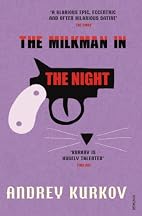
The Milkman in the Night by Andrey Kurkov was a great read. I have enjoyed everything I've read by Kurkov so far and, while this lacked the originality of his Penguin books and was a little more far fetched, it was still an entertaining read. His characters are so well drawn, the surreal events they are drawn into so bizarre that you could imagine them happening in the craziness of Ukraine. Highly recommended.
102missizicks
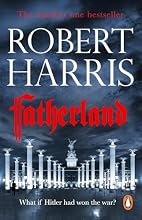
I wasn't sure about Fatherland at first, Robert Harris seemed too accepting of the Nazi régime carrying on, and it seemed nothing more than a police procedural set in an imagined world where the Third Reich was a superpower. Halfway through things changed for the better, the story came to life and the jeopardy became more believable. Imagine you had become an adult under that régime, had begun to question its purity, and then you discovered its most terrible secret. Harris made good use of historical fact to imagine a different end game well.
103missizicks

My final book of 2015! I've managed 76 full length books, and four short stories, chalking up around 28,000 pages. A good year!
Hiroshige One Hundred Famous Views of Edo by Melanie Trede is a stunning art book that brings together all 119 woodblock prints from an early surviving first edition of Hiroshige's work. Beautifully bound and with an interesting and informative commentary on each print, it has been a beautiful way to round off my reading year. Happy New Year!

